Fraction Decimal Percent Clothesline
This morning we worked on understanding the connection between fractions and decimals and percents.
I prepared some cards (I cut index cards in half) and put decimals on some, fractions on others and percents on others. The values ranged from 0 to 2.5, and I tried to include equivalent representations, and also some interesting things like repeating decimals.
I split each pile of cards up so each table group had a different mix of cards and I instructed each group to sort the small pile on their table and to be sure that they have them in order from smallest to biggest.
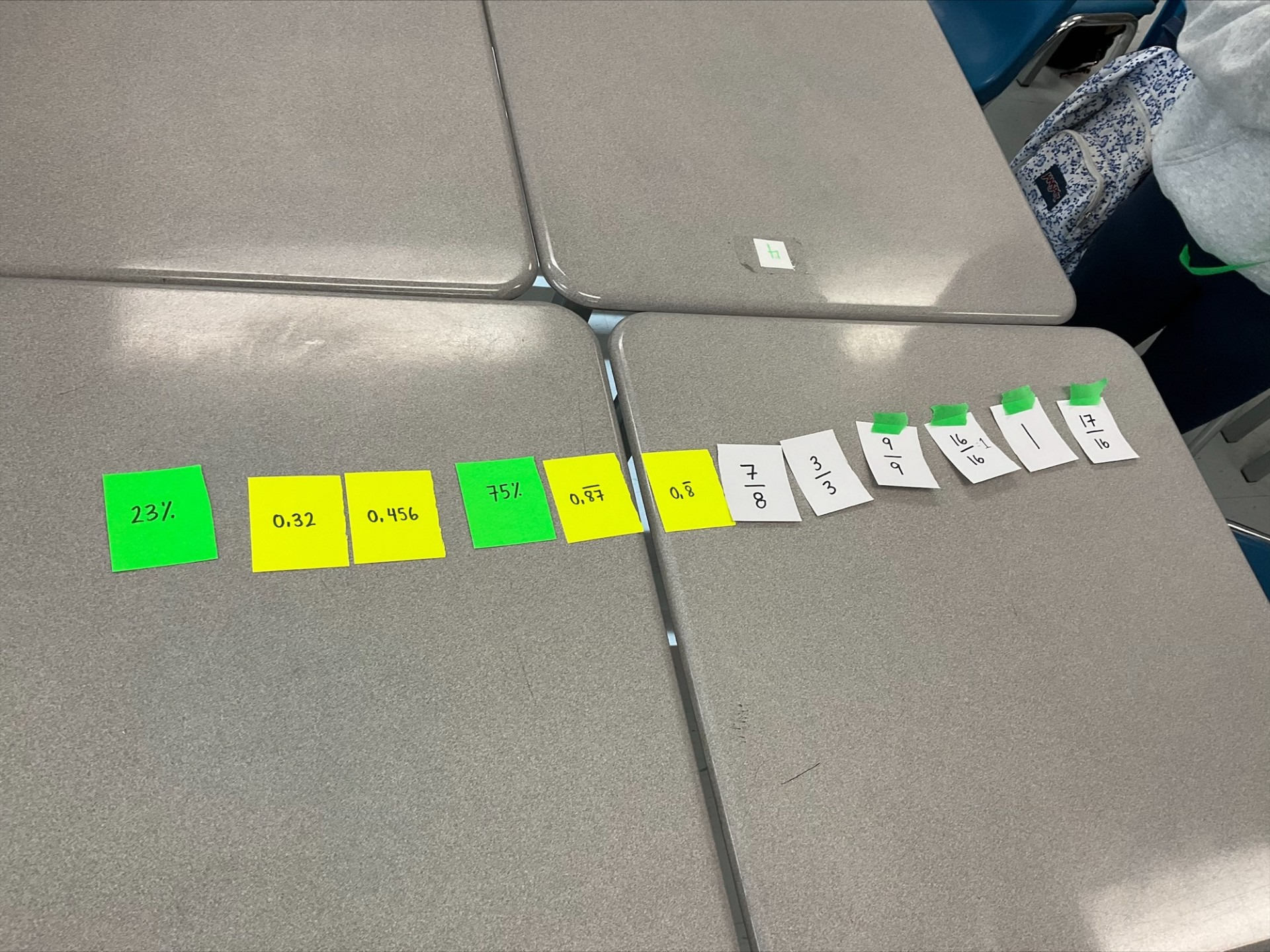
Next I asked for a volunteer from each group to bring their biggest value up to the board and decide what was the biggest of the big values, and we established one end of our continuum. We did the same with another volunteer from each group comparing the smallest values to determine the other end of the continuum.
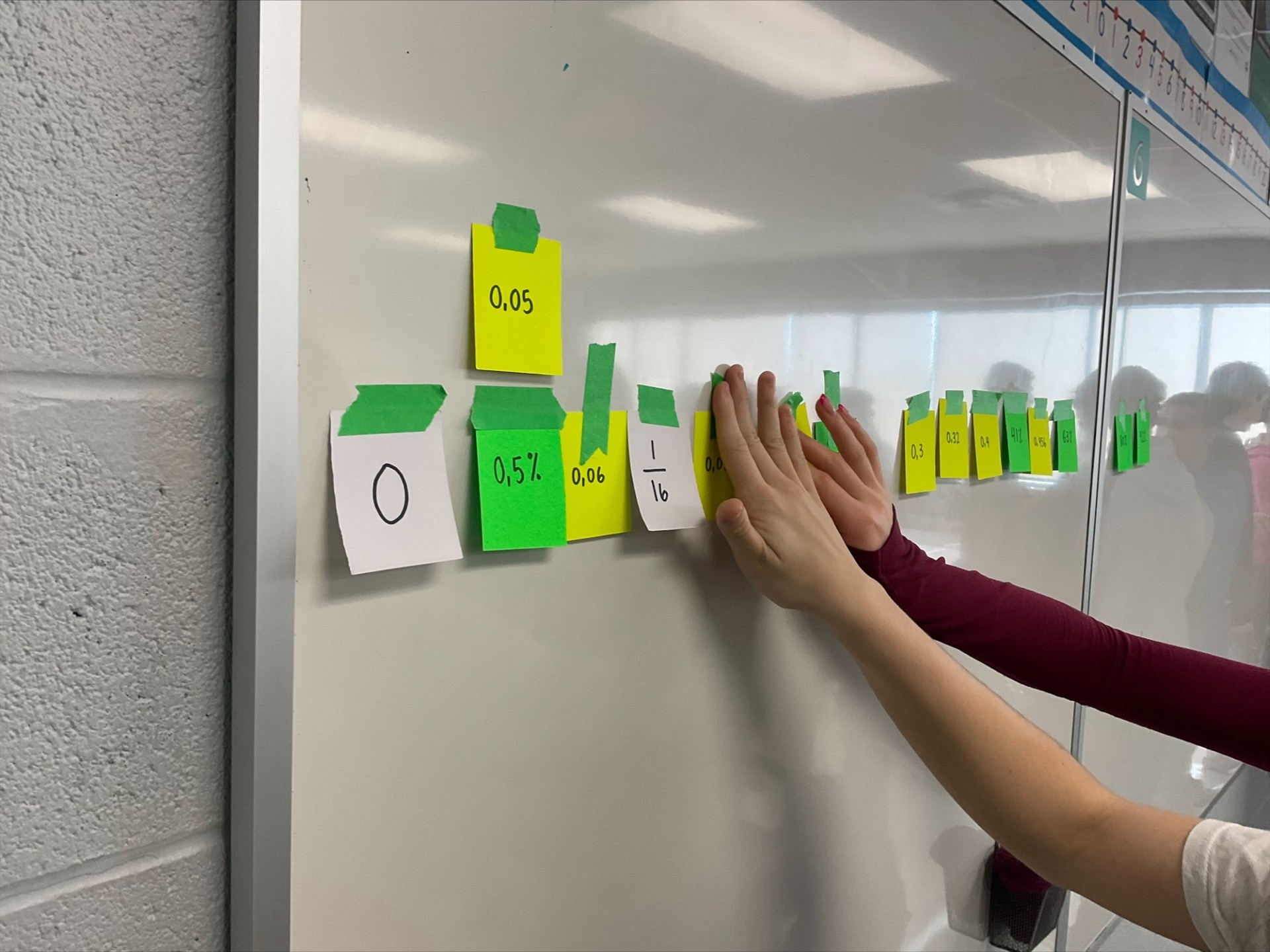
Next we had the entire class up organizing all of the cards into the right order on the whiteboards across the room. Students placed things that they thought were equal in a vertical list. We needed to do some discussing about whether 0.5% and 0.05 were the same thing.
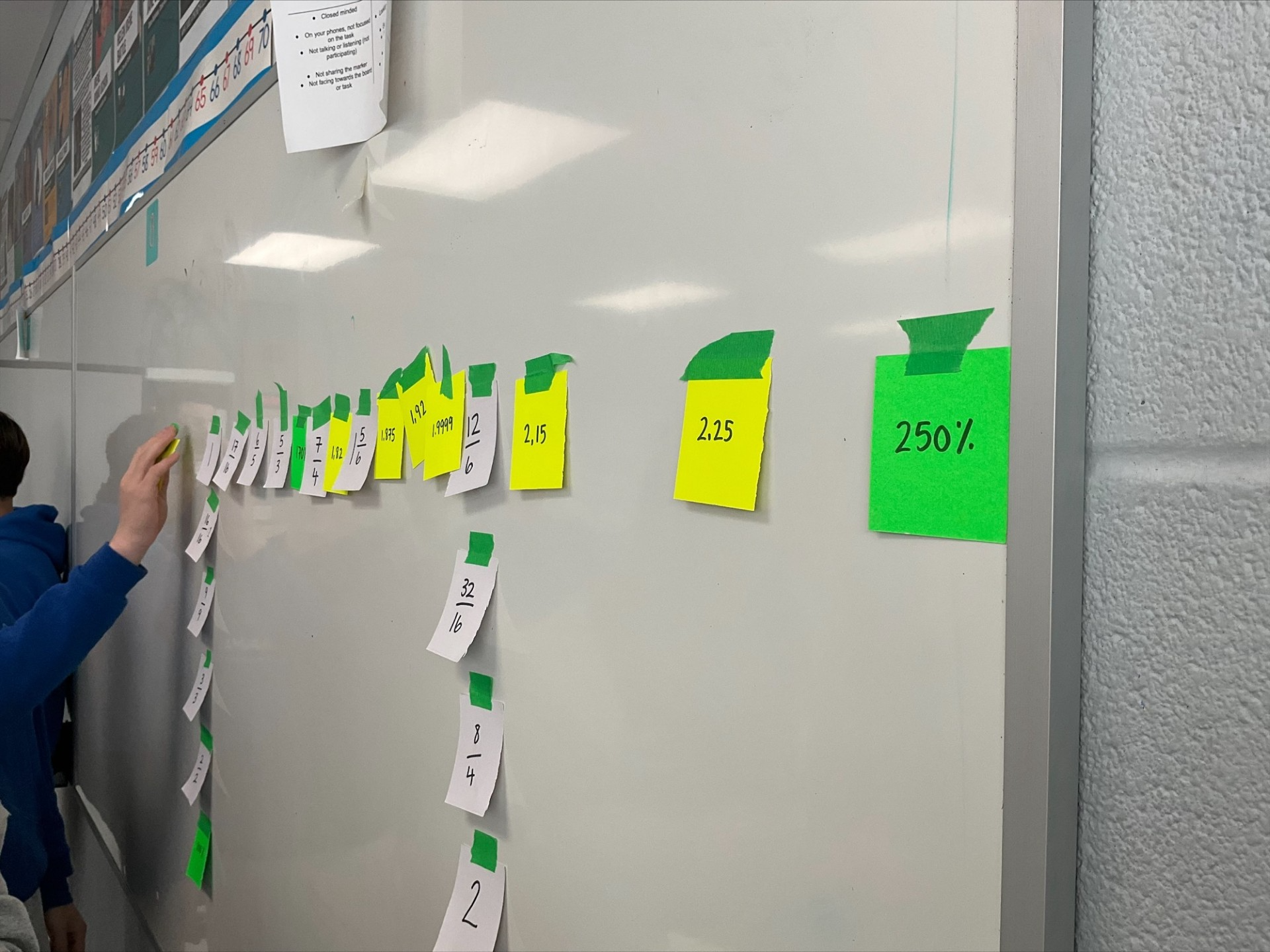
Finally we worked on spacing out our values well, so we set some benchmark values of 0.5 and 1 and 1.5 and 2 and 2.5 equally spaced on the board, and tried to assemble a scaled version of our list.

I was impressed that there were some great conversations happening as students were comparing values. Many converted things to decimals to compare, but some were using their knowledge of percents and looking at fractions with the same numerator and different denominators, or same denominators and different numerators to compare.
It took about half a period including a lot of discussion. This type of activity could work well for doing place value, or scientific notation too. I have done something similar looking at radians in a 4U advanced functions class, where we made the clothesline on an actual string which we took down off the board then assembled into a circle, and we could see how good our spacing was since 2π radians should be a full circle.
 Ms. Bearse's Site