Representing Exponents
Today my grade 9 class built exponent models using toothpicks and plasticine. The mild version included x^2, x^3, 2x^2, 2x^3, (2x)^2, (2x)^3, 1/2x^2 and (1/2)^2.

The x is a toothpick, so x^2 is a square (x by x). We made connections between the exponent being a 2 meaning we build a square, and if the exponent is 3 we build a cube. The base of the exponent represents the side length of the cube or square, and the coefficient will tell you how many to build.

We had a very carefully prepared (2x)^3. We can clearly see that it is made up of 8 little x cubes. This helps us see that if we double the side length of a cube, the volume will be multiplied by 8 (2^3=8). In the same photo you can see a (2x)^2 which helps us see that there are 4 x squares in it. When the side length of a square is doubled, the area is multiplied by a factor of 4 (2^2=4).
We moved on to a spicy concept circle, including skewers for y and toothpicks for x.
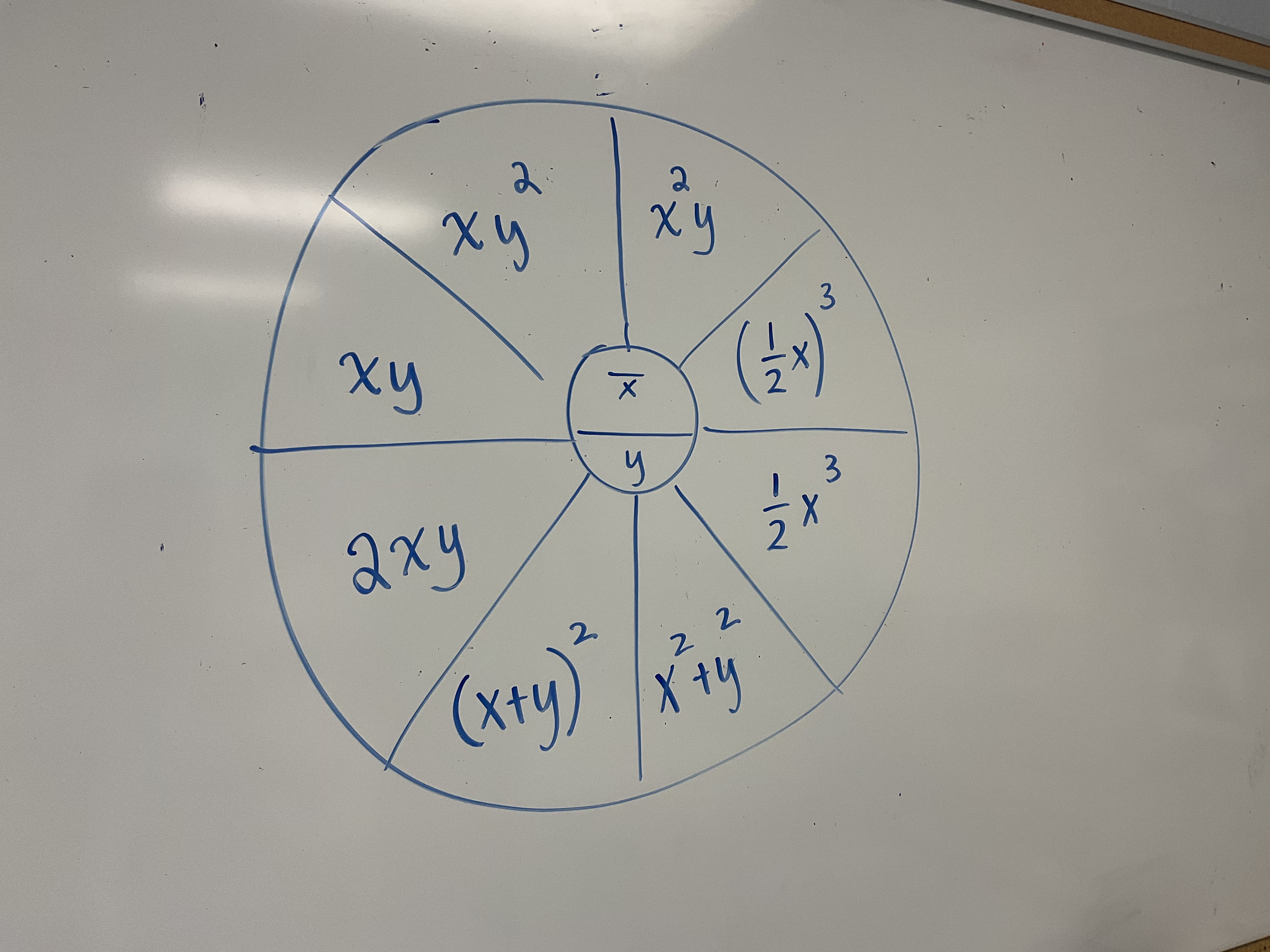
We had some interesting conversations about where to start. Some groups gravitated to the (x+y)^2 since they knew they were making a square with side lengths of (x+y).

We were able to split up the (x+y)^2 into x^2+y^2+2xy. We also showed that (x+y)^2 is NOT equal to x^2+y^2.
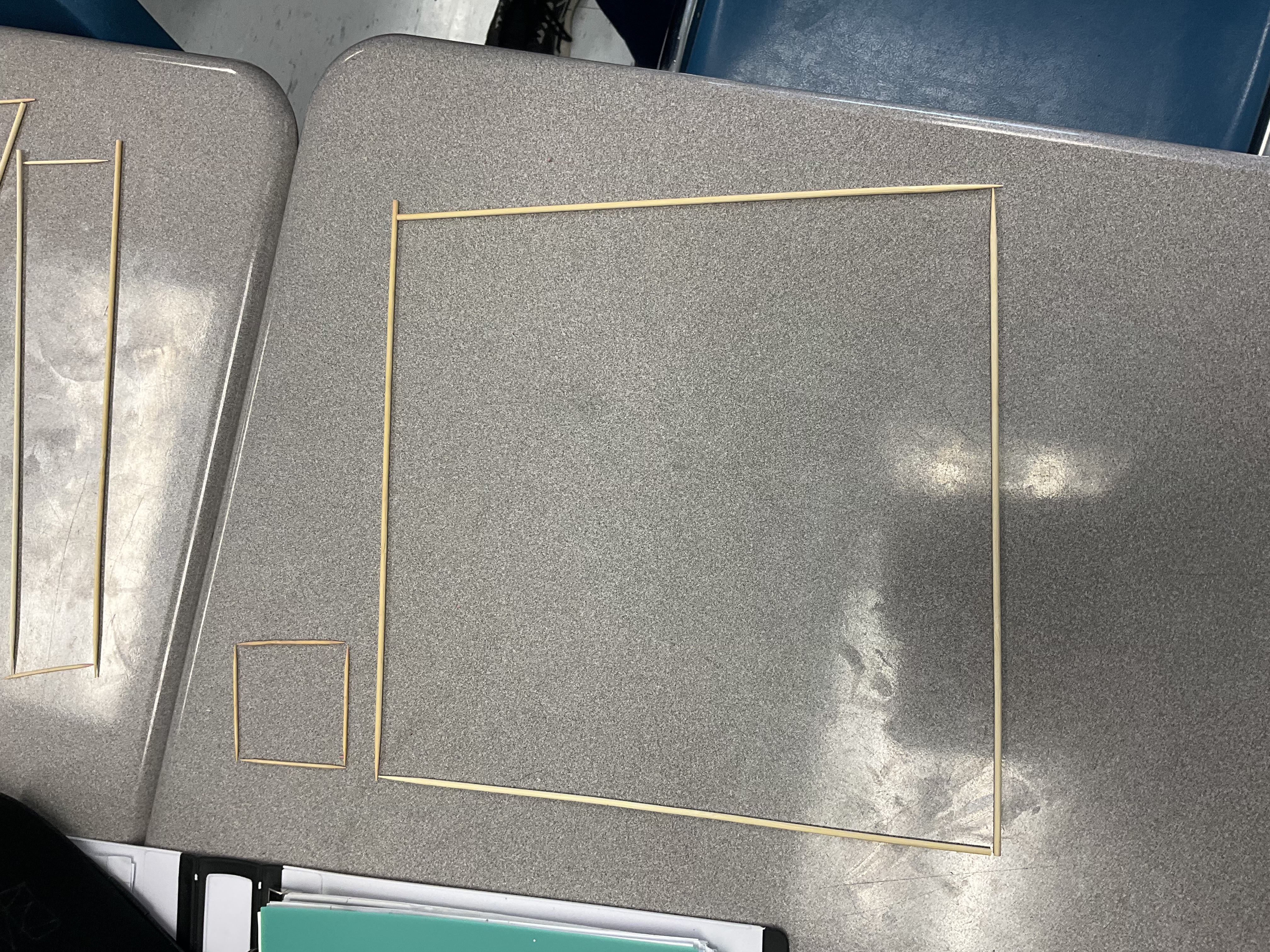
Other groups got into building the rectangular prisms with dimensions (x)(y)(y) or (x)(x)(y)

We noticed that an x^2y and an xy^2 were not the same. We could identify which was which based on the square that we saw. This one in the picture is an xy^2 since we see the skewers making a square.
I think we had many lightbulb moments today as we explored what exponents mean. We will continue exploring exponents for the next few days as we look at exponent laws.
 Ms. Bearse's Site