Exploring the Math of Sound
This morning I was invited to share an experiment with a grade 9 math class. It was inspired by the resonance that you get when blowing over the mouth of a bottle, and how that can change with more or less liquid (and thus air) in the bottle.
Each group needed the “sonic tools” app (free!) a bottle full of water and a ruler. They empty the bottle until they can blow over the neck and make it resonate. They record the frequency produced, and measure the height of the water in the bottle.


Then they empty a bit of water, and try again. We kept our data in a table, and then used it to make a graph.
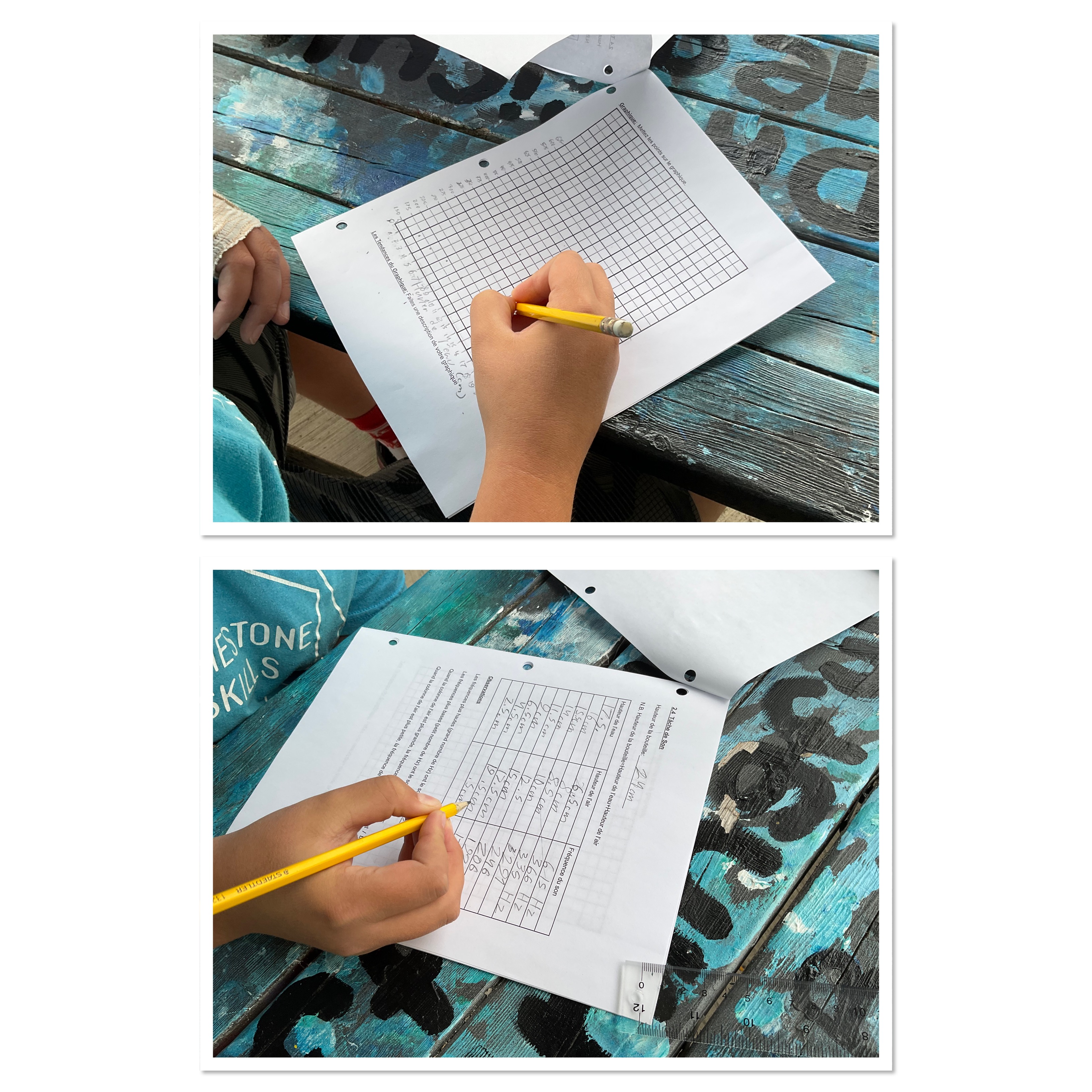
We worked outside because it was nice out, and we could spread the groups apart a bit and we could empty the bottles on the flowers. When the class came back inside we put the data together into a big table, and graphed it on desmos. We graphed water height and frequency, and found a pretty strong positive non-linear correlation.
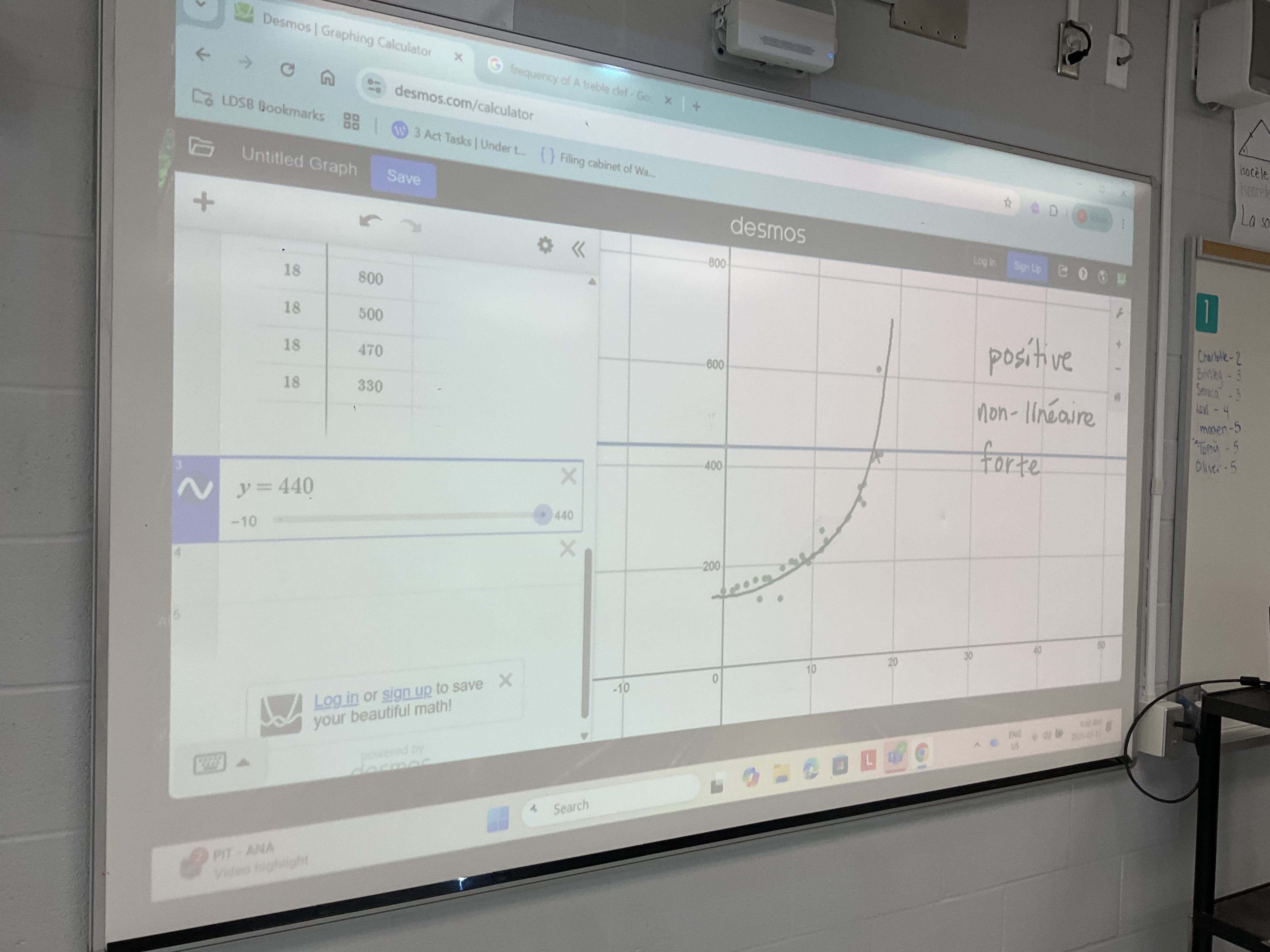
We looked at tuning our bottle instrument to a specific frequency, for example an A is 440 Hz, so we’d need a water height of about 17cm to make an “A” sound from our bottles.
The physics behind this is as follows: Air resonating in an air column that is closed at one end will resonate so a node is formed at the water, and an antinode at the mouth of the bottle. This will allow one quarter wavelength in the air column. The height of the air column will then be used to identify the wavelength of sound, often given the variable lambda.
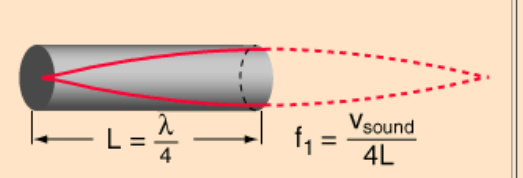
We know that the speed of sound is determined by the temperature of the air it travels through, which is not changing for the experiment. The relationship between frequency and speed of sound is v=(f)(lambda). If we isolate frequency, f=v/(lambda). If the wavelength gets bigger (this happens when there’s a taller air column) the frequency will go down. This is an equation of the type y=1/x which we explore more in grade 11 math and also physics.
 Ms. Bearse's Site