Building Pyramids
Grade 9s today learned about the volume ratio of pyramids and prisms with the same base and height. We used the 3D solids and poured pyramids full of water one at a time until we filled the prism. Many guessed that the prism is half the volume of the pyramid at first, but after seeing it 3 times realized that the pyramids are always 1/3 the volume of the prism.
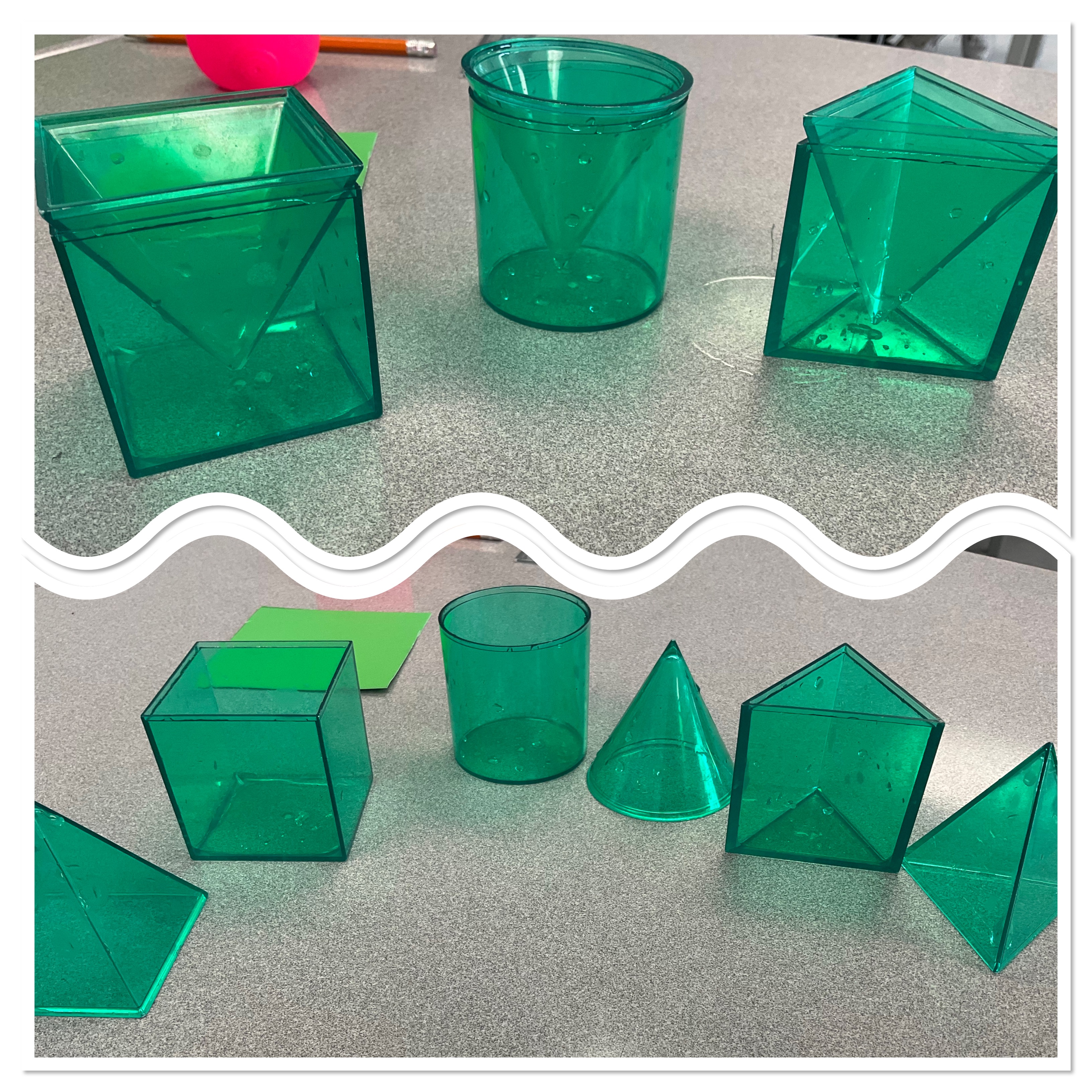
Next we had a design challenge. Students were asked to build square bases pyramids with a volume of 300 cubic centimetres.

Groups had file folders, scissors, rulers and tape, and they were able to make some design choices about their dimensions, but in the end the pyramid needed the correct volume.
I did this task not that long ago with my grade 10 applied class, and noticed that my grade 9s were much more confident with starting the task. They drew a plan, and divided the task up, and worked together to build.
When faced with the fact that many were not tall enough (because usually students do not realize that the slant height and pyramid height are not the same), this class was very resilient and regrouped and made a new plan.

When some group members were frustrated, others encouraged them to keep going. Other groups knew thar I was trying to shake their confidence (because I’ve told them that sometimes teachers inject some doubt into situations to check to see how certain students are with their answers.) so they didn’t want me to shake their confidence and kept spirits high throughout the process.
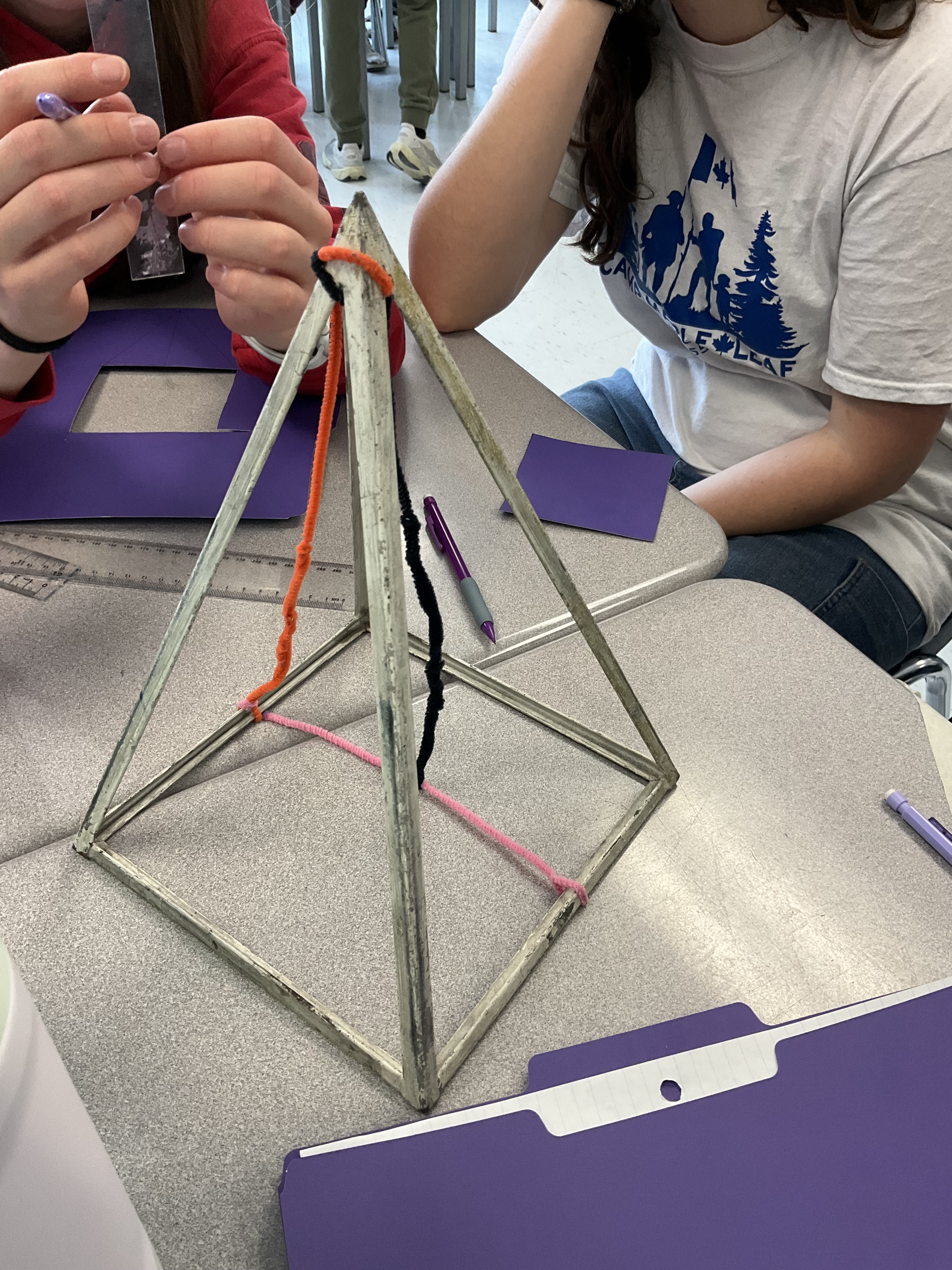
My model helped to illustrate how the slant height (orange pipe cleaner) and the pyramid height (black pipe cleaner) are not the same, but are related though the pythagorean theorem.
One group had such a novel approach to solve the problem that avoided using the pythagorean theorem altogether. They created a skeleton for their pyramid. They knew the height needed to be 9 and their base was 10, so they made 2 triangles like that, and slit one from top to middle, and one from bottom to middle along the vertical axis, and slid them together.

They then measured the slant height that they needed, and built triangles to cover the pyramid. It was the first time I’d seen that approach, and it worked really well.
We debriefed at the end of class about how to calculate the height or the slant height using the pythagorean theorem, and hopefully we’ll remember over the weekend. I enjoy creating memorable moment through activities like this that help students connect to the math in a (hopefully) meaningful way.
 Ms. Bearse's Site