Painted Cube
Today I was invited to lead the painted cube problem in a colleague’s grade 10 math class. We are working on modelling and representing, creating equations, tables and graphs.
The problem: imagine a 3x3x3 cube that is dipped in paint, then dried. The cube is then disassembled, and we need to determine how many little cubes had 3 sides painted, 2 sides painted, 1 side painted or no paint at all.
As we worked through the task groups were prompted to try a 4x4x4 or 5x5x5 or nxnxn cube.
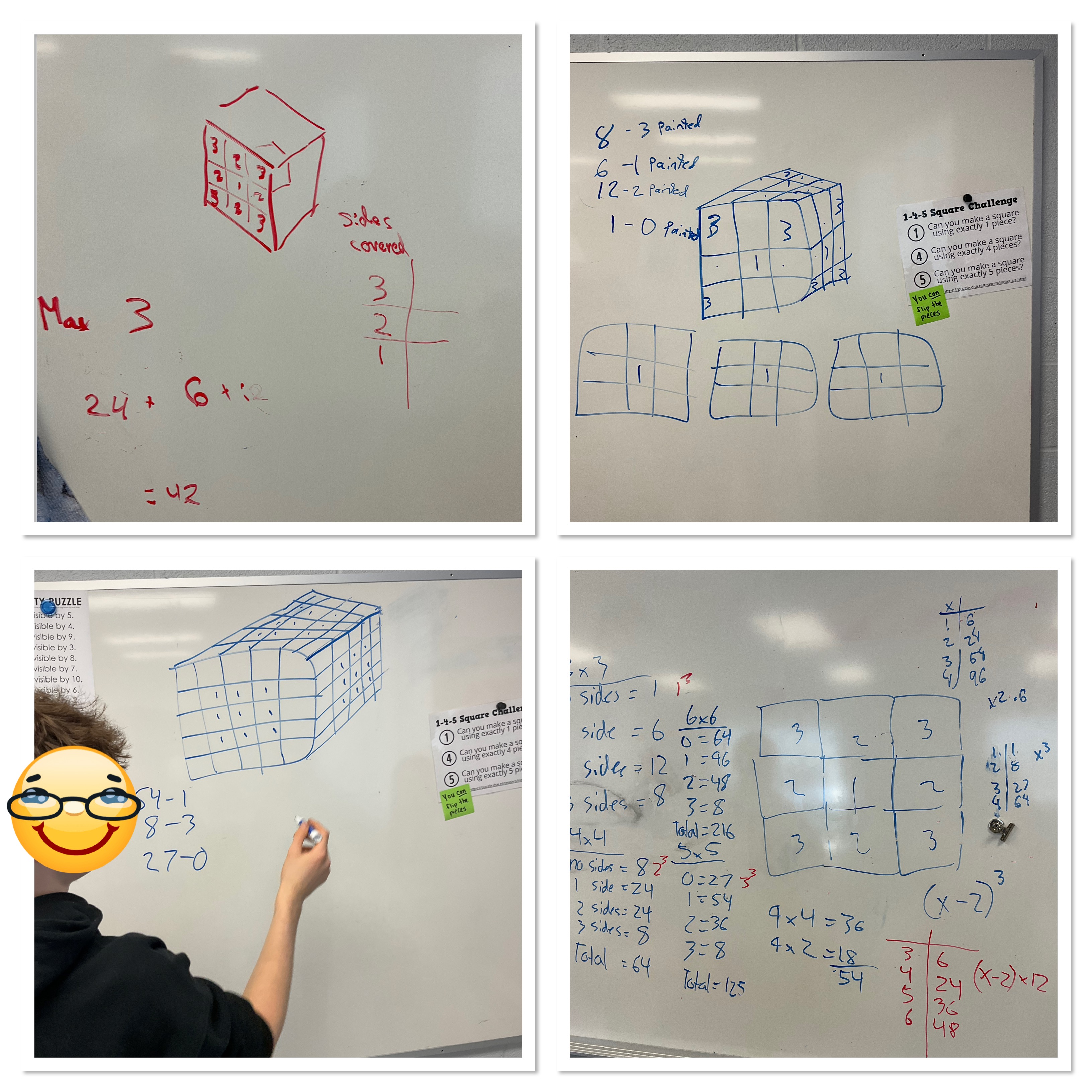
Groups had different ways to represent the number of painted sides. Many did drawings, and made tables.
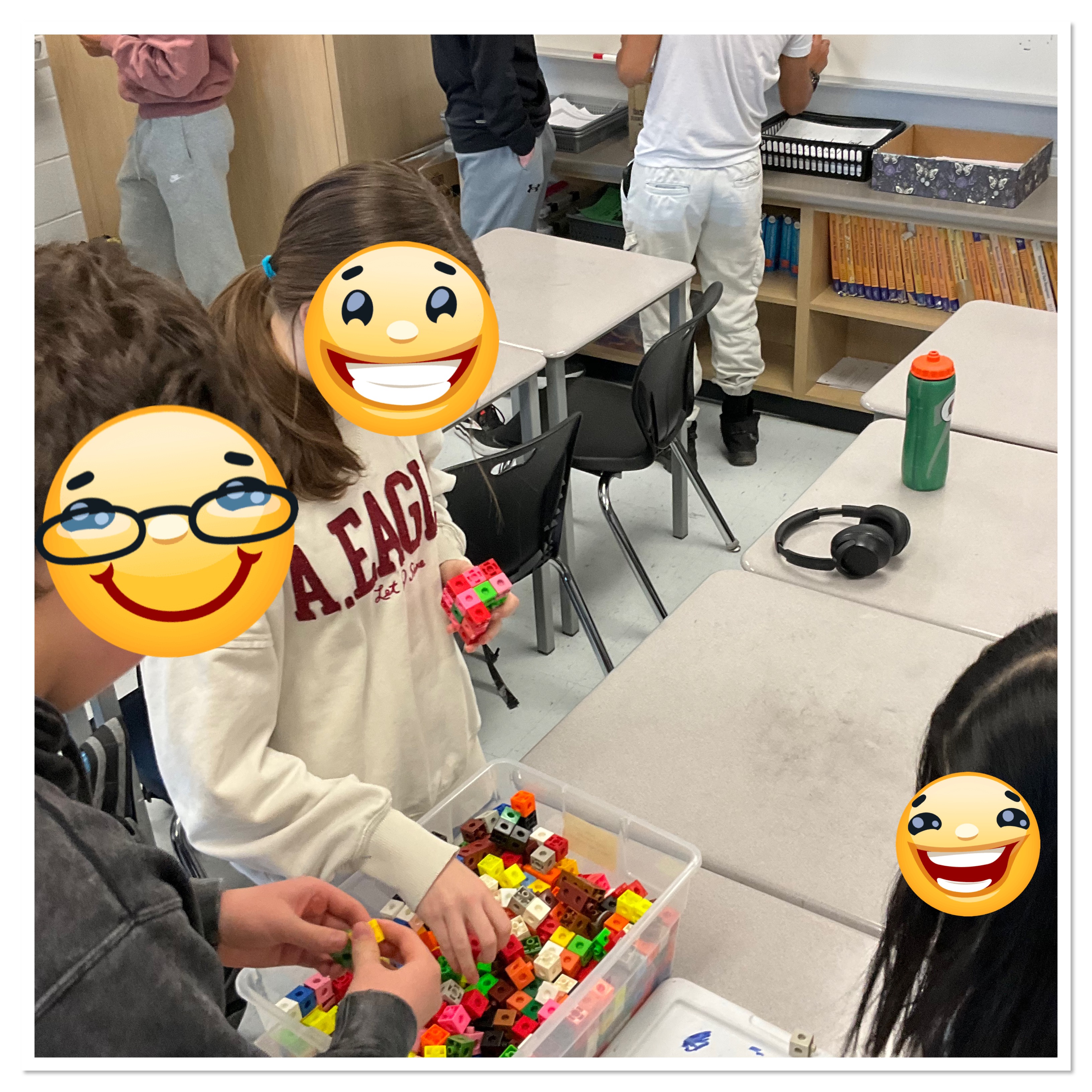
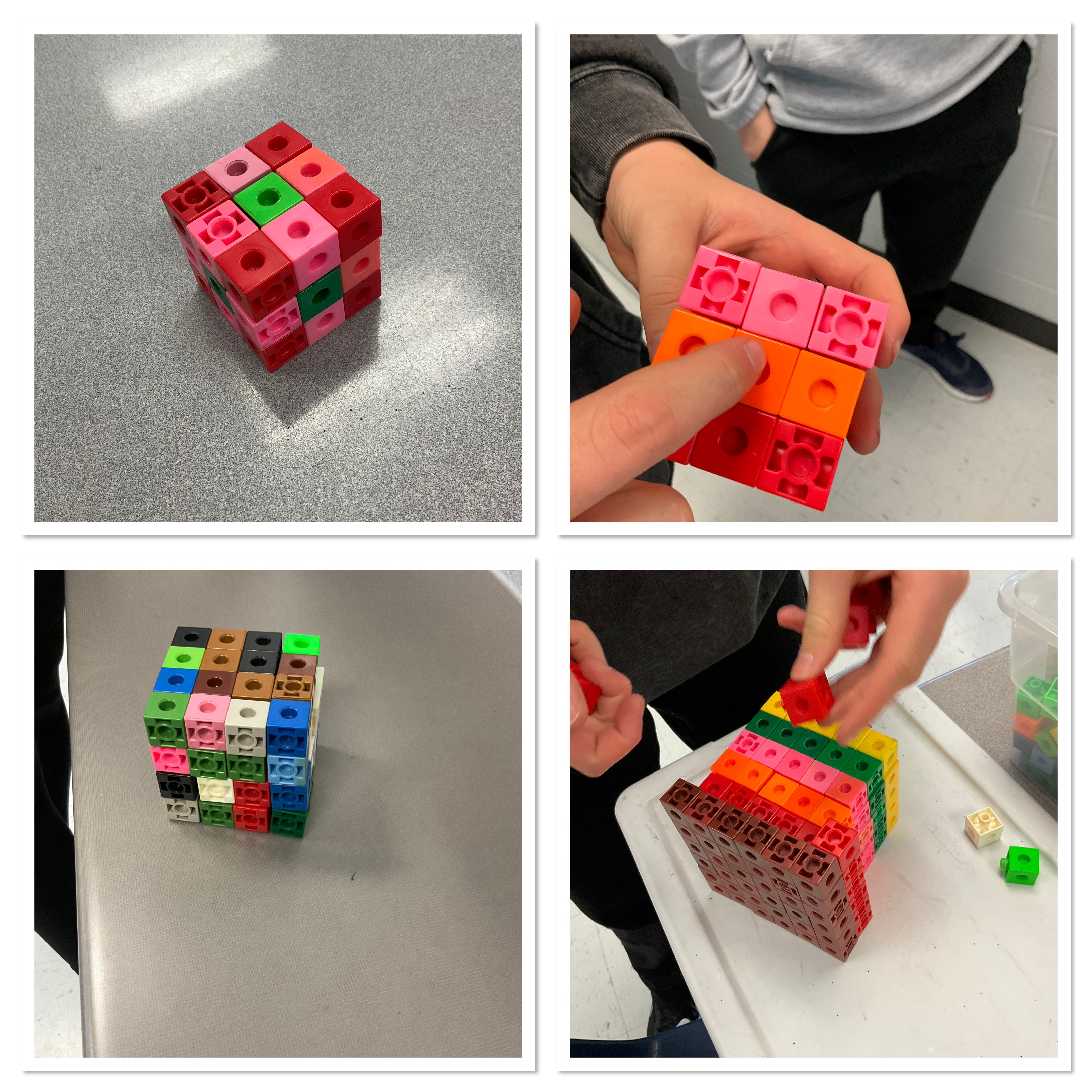
Groups realized quickly that using a 3D model was really helpful. We used linking cubes to build different sized cubes. Some used colours as a legend for the number of sides painted, which was a neat idea.
It was excellent to see groups connecting the physical representation of the cube, and the algebraic representation. We saw that there was a quadratic equation which was connected to squares on the face of the cube, and a cubic equation that was connected to the interior cube.
Students made tables of values and saw that one relation had first differences that were the same, one had second differences that were the same, and one had third differences that were the same.
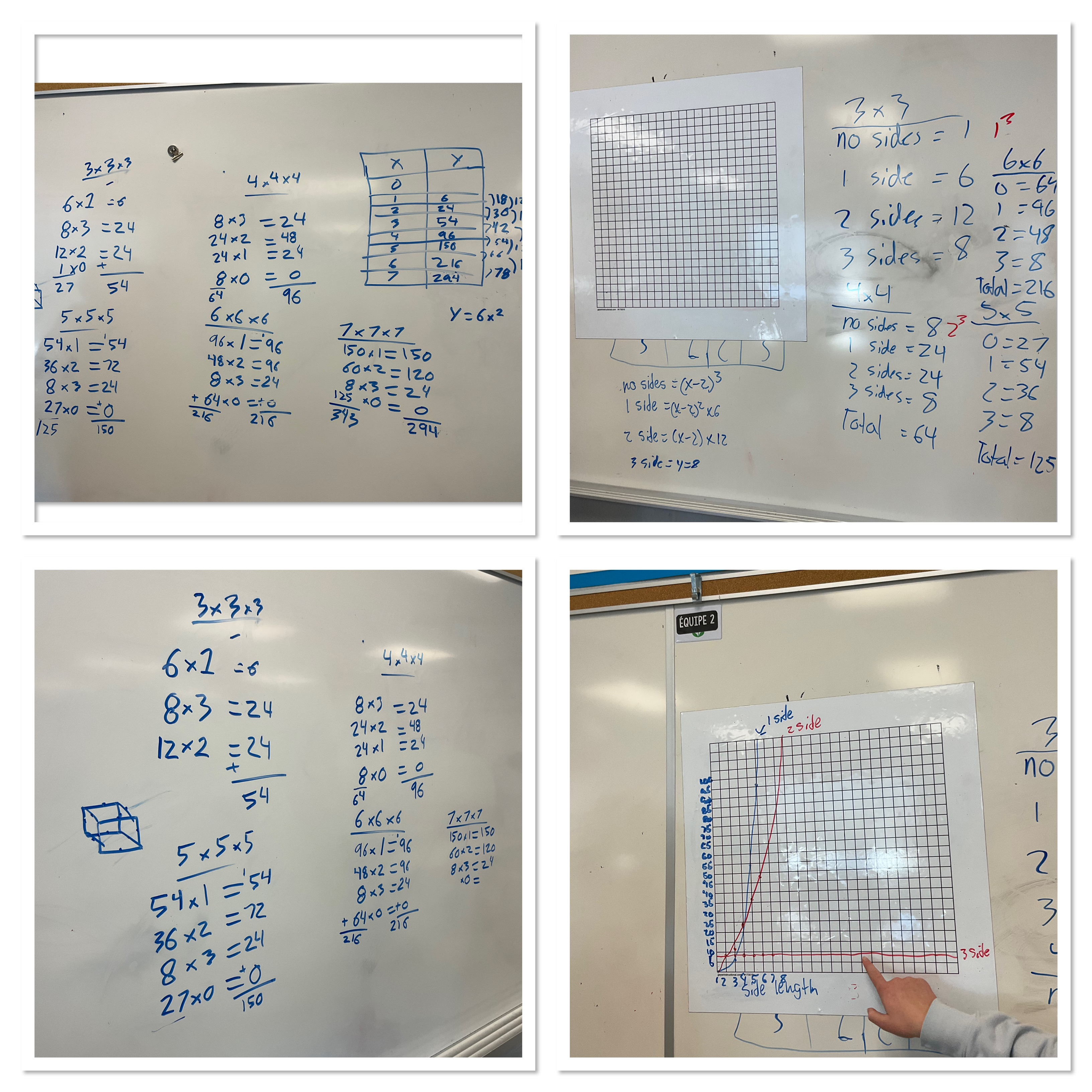
Students made graphs and saw trends. They explored all kinds of relationships, finding some patterns that have piqued my interest.
It was a lovely way to end our week. Good job grade 10s.
 Ms. Bearse's Site