Building Exponents
My grade 9s built exponent models today. We were working with toothpicks (representing x) and plasticine to construct models of x^2 and x^3.
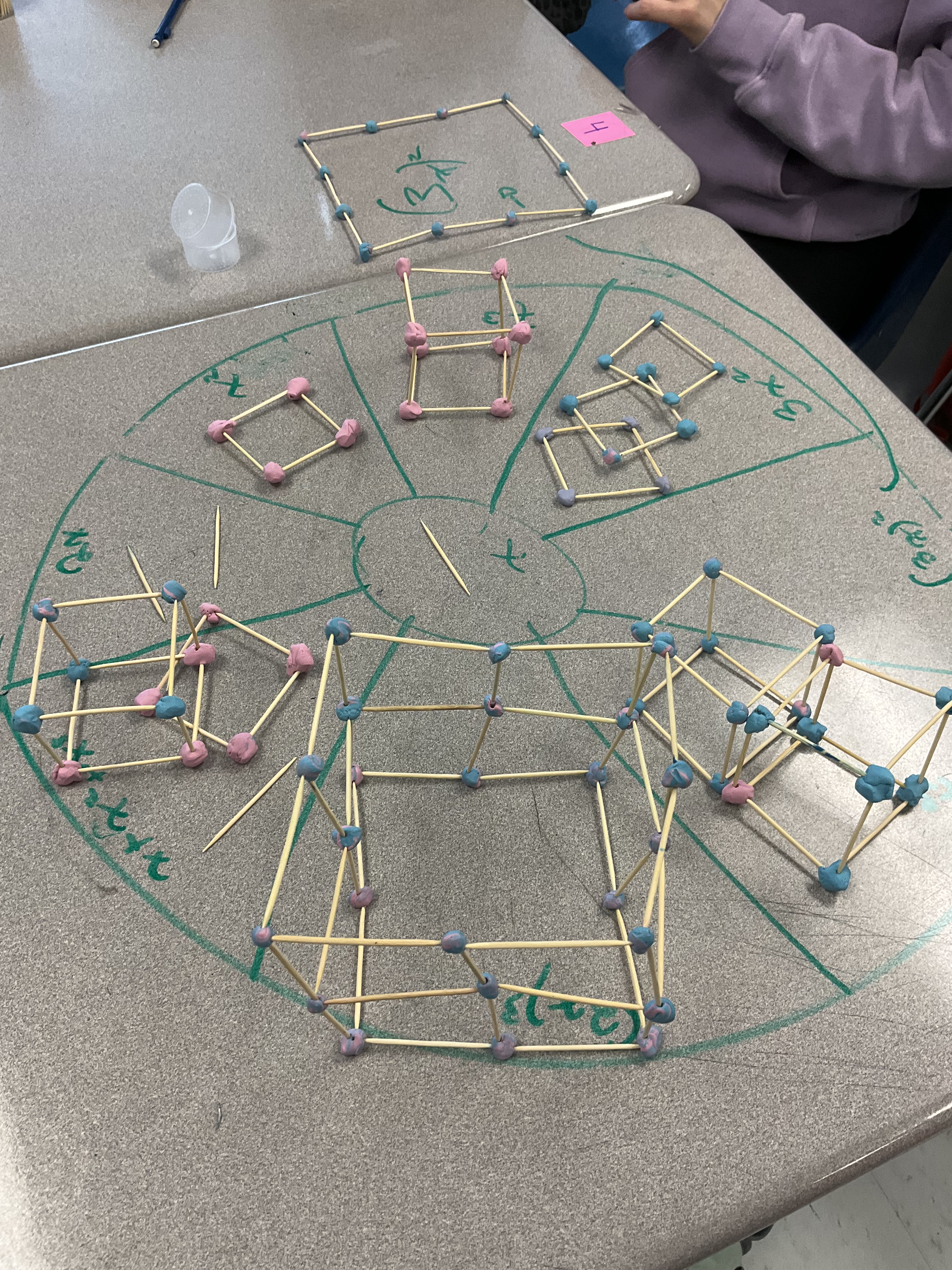
We used the concept circle framework where we can show our knowledge by building a lot of different expressions, and then compare them. Students were told the list to build: 2x, x^2, x^3, 3x^2, (3x)^2, 2x^3, (2x)^3, x^3+x^2+x.
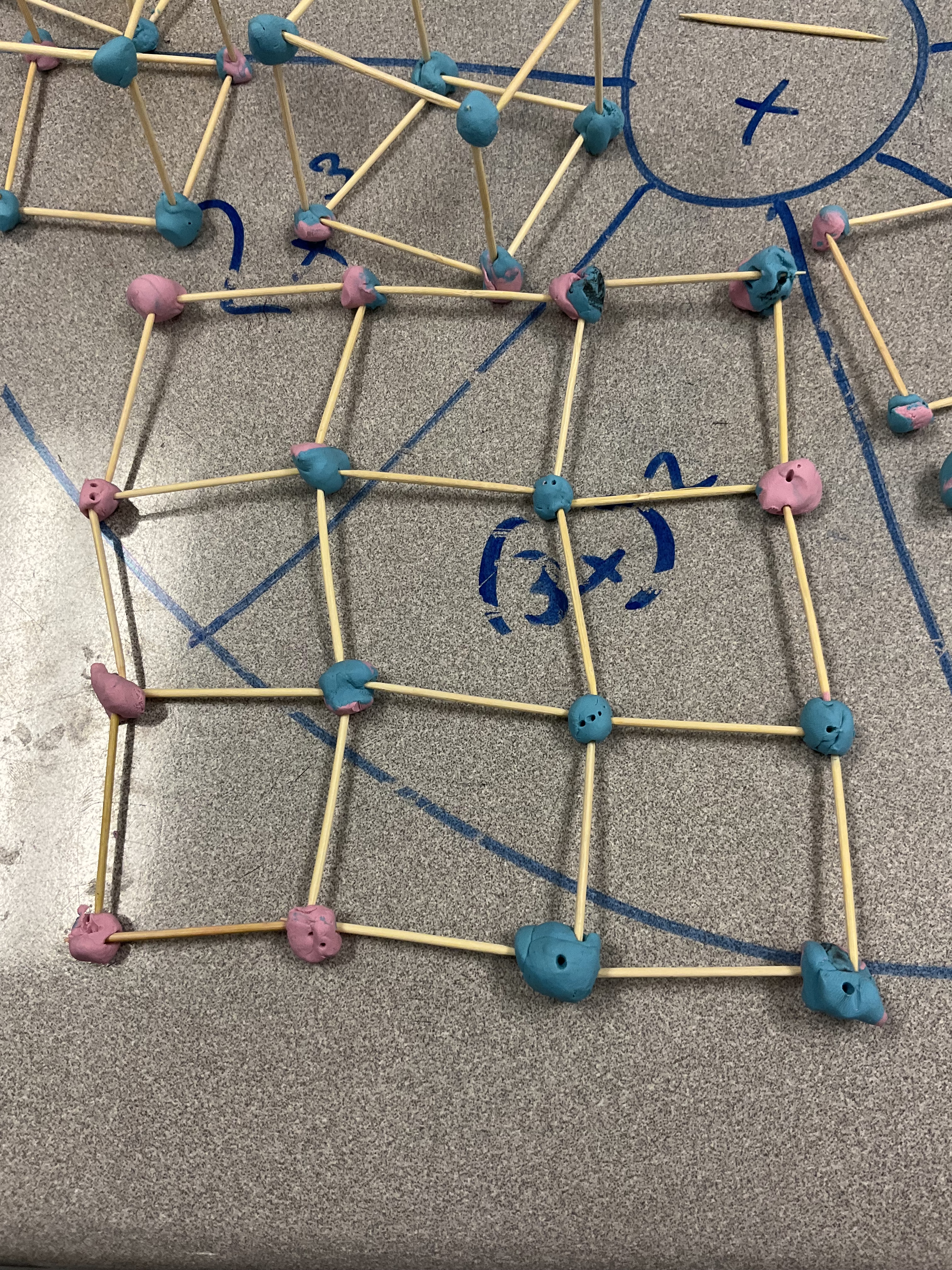
We always have an interesting conversation about what the brackets mean. Here we can see (3x)^2 is a square with side lengths of 3x. The side length is always the base of the exponent (what the exponent touches). We noticed that it is equivalent to 9x^2 visually, but also in algebra since (3x)(3x)=9x^2.
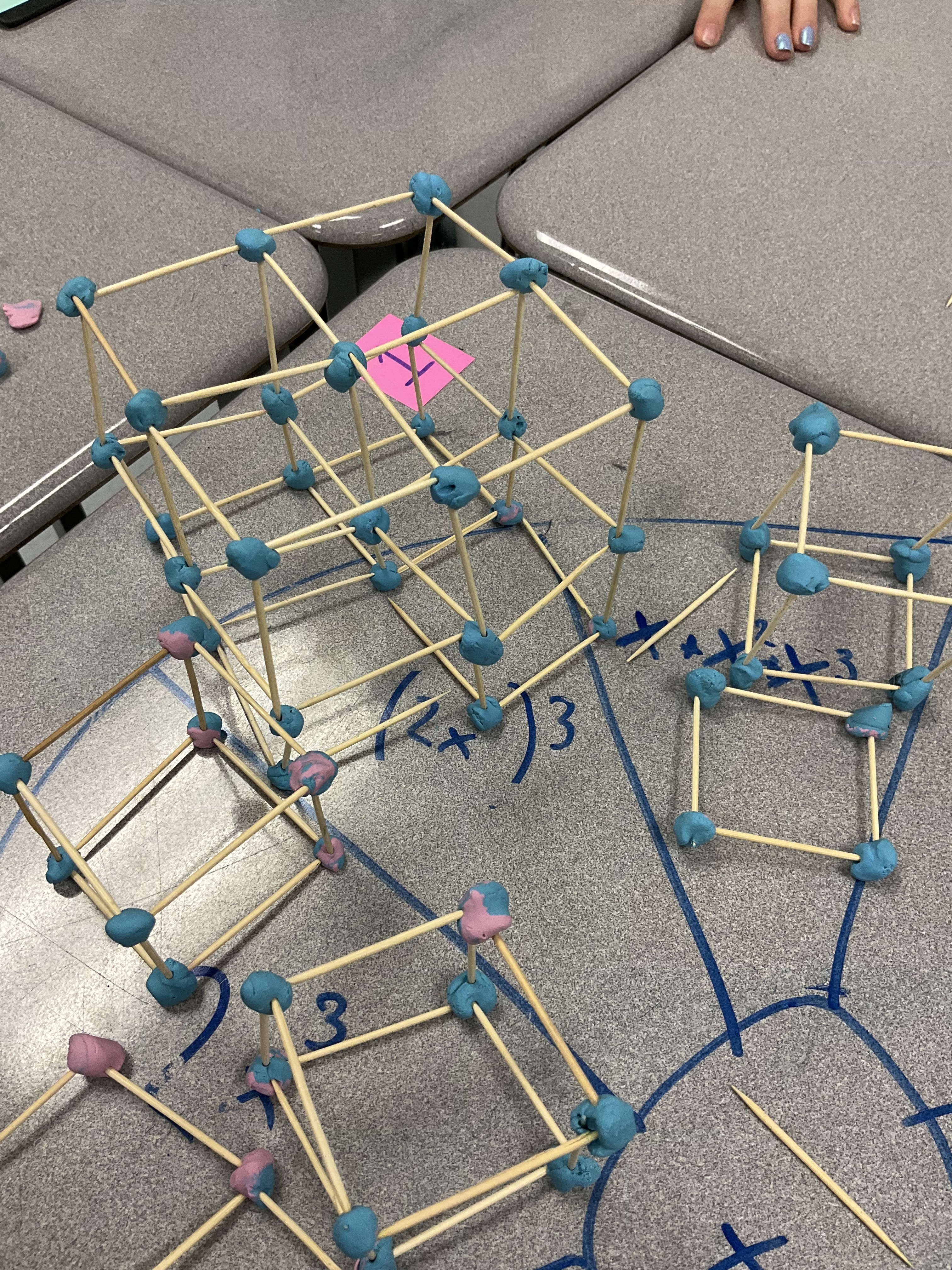
The same is apparent with (2x)^3 which is a cube with side lengths of 2x. We can see that it is equivalent to 8x^3 visually, but also algebraically (2x)(2x)(2x)=8x^3.
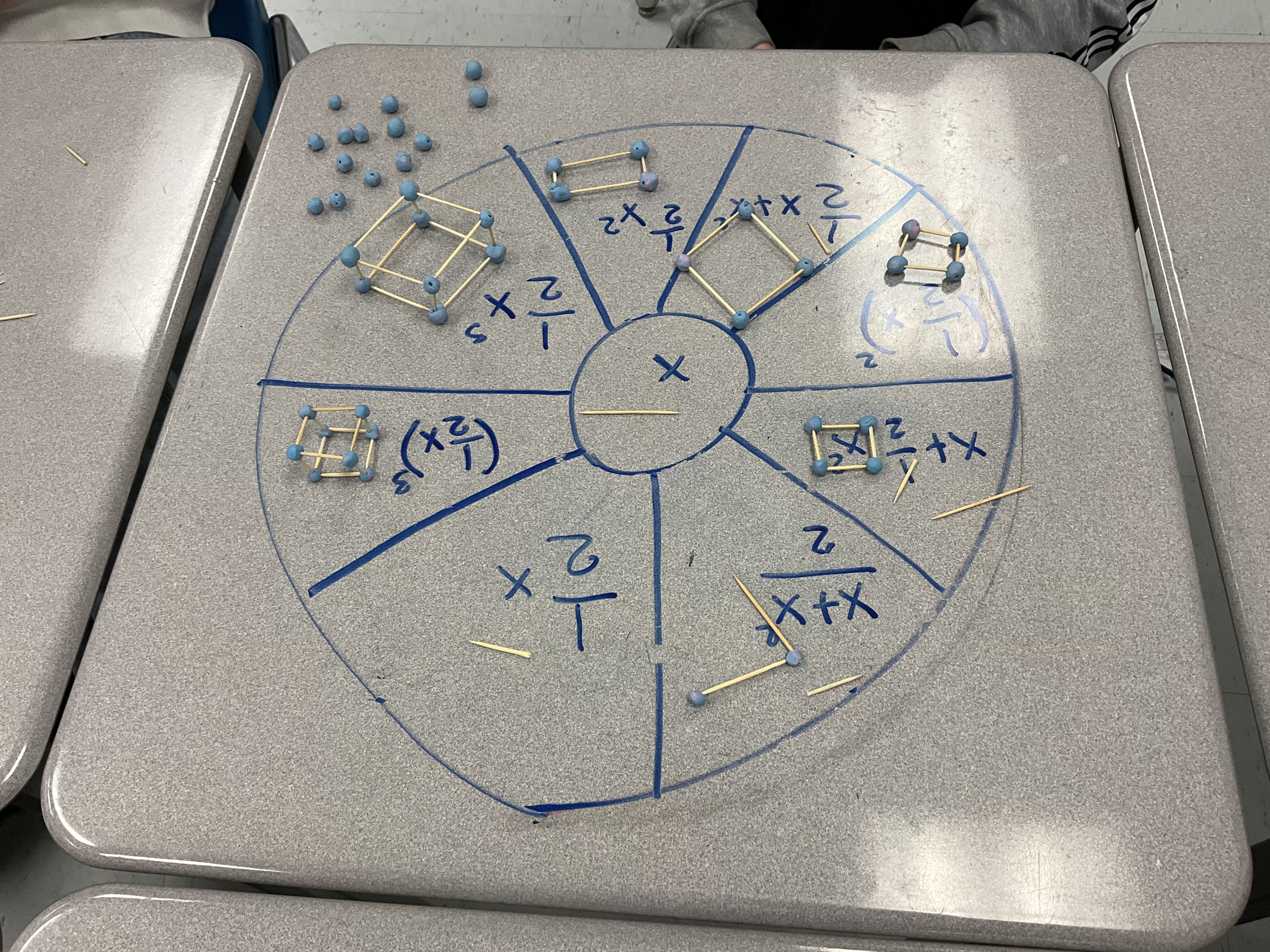
We extended to another more “spicy” concept circle with fractions. We can show 1/2x^2 and (1/2x)^2 and see the difference. For (1/2x)^2 we make a square with side lengths of half a toothpick, which ends up being 1/4x^2 since (1/2x)(1/2x)=1/4x^2.
We’re just starting on our exploration of exponents, but this task helps explain lots of things: how x and x^2 and x^3 are physically different so we cannot add or subtract them. It also shows how volume corresponds to cube units and area corresponds to square units. It also helps get at the idea of doubling or tripling the side lengths and how that affects the volume and area.
We’ll be learning more exponent representations and exponent laws in the coming days.
 Ms. Bearse's Site