Cheerio Stacking Race
I’ve been working with a colleague this term to bring more data collection tasks and hands on activities to his Grade 10 applied math class. We sure had an interesting time with this one!
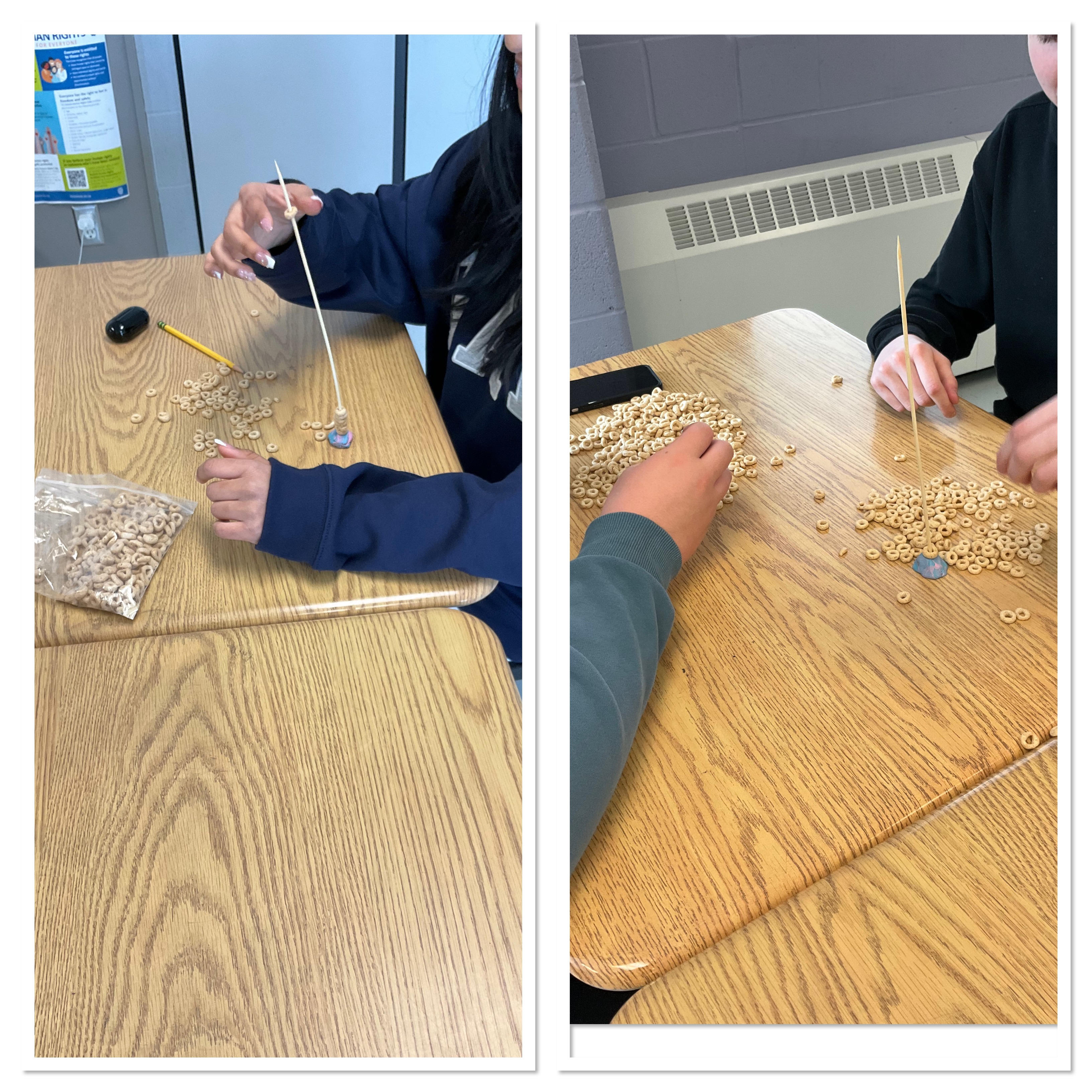
I’ve run this activity a few times, and it’s different with each group that tries it. This time, there was a lot of initial competition, and potentially some falsified data which affected what we could do in the end.
To start with each partnership had 1 skewer and a blob of plasticine to stick it upright on the desk. Each partnership took turns to see how many cheerios they could stack on the skewer in one minute. This established our stacking speed. (If I were to do this again, I’d stipulate that they got one try to do this, and they couldn’t keep redoing it to get a better time)
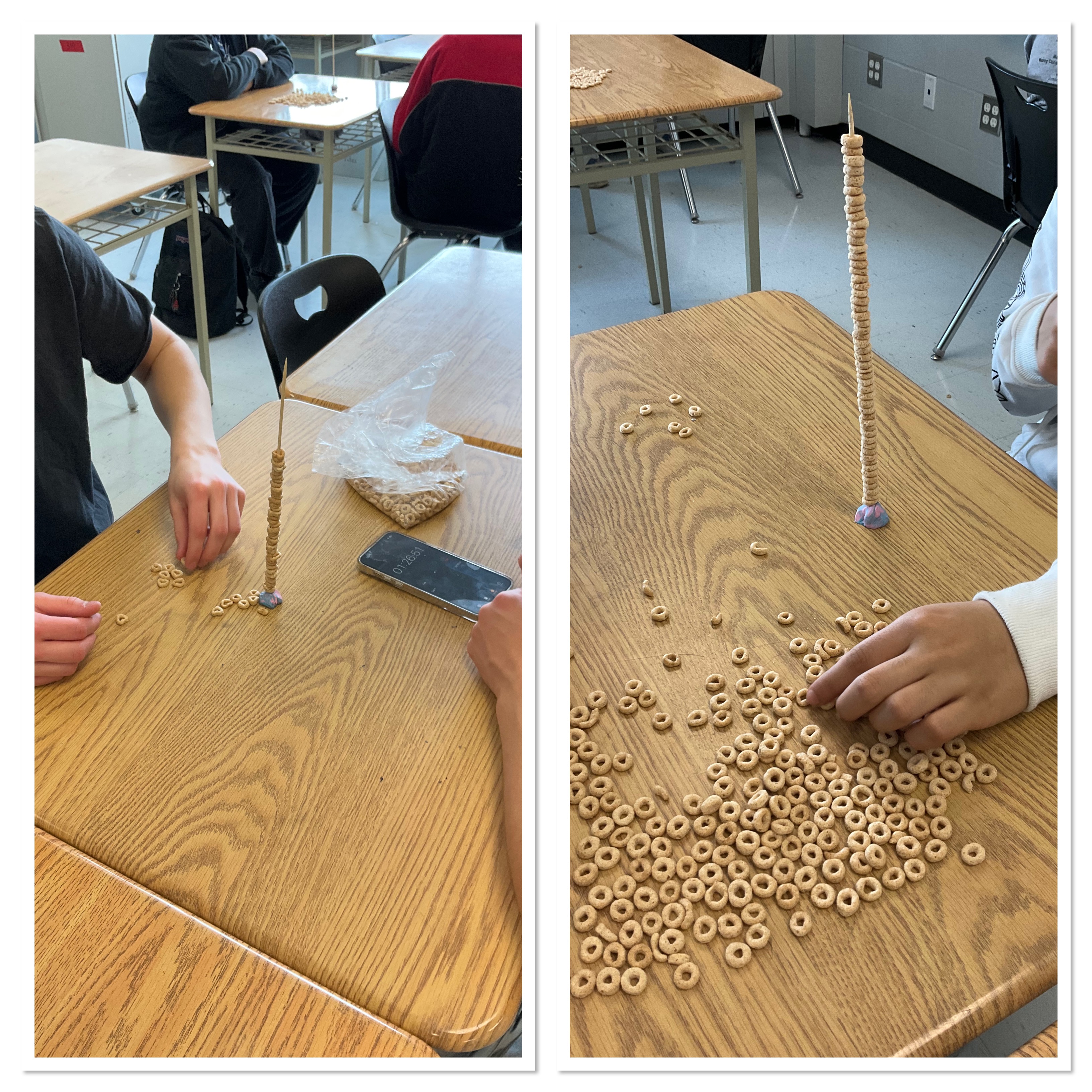
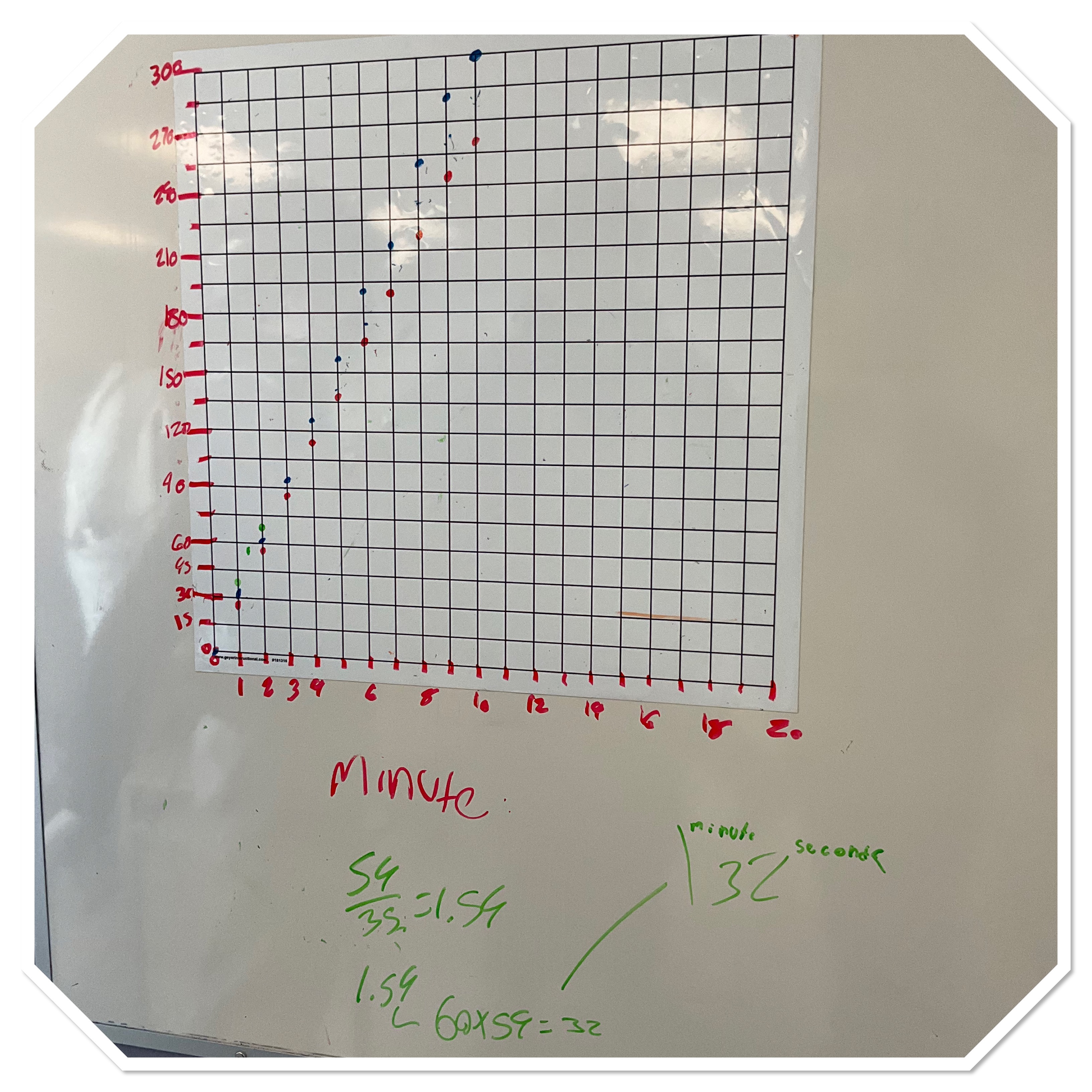
Once we had everyone’s stacking speed data we made a table to show how many Cheerios you’d be able to stack in 2 minutes or 3 minutes based on the initial data. We then made graphs to show both partners data and compare their speeds. (Because so many students had practiced, their speeds that they recorded were pretty close to the same so the graphs didn’t really show major slope differences).
The next part of the challenge was to see if we could create a photo finish between ourselves and the fastest stacker in the room (who may have inflated his stacking speed..which ended up being problematic). We wanted to create a photo finish with a full skewer between each of us and the fastest stacker, so we all needed a head start of a certain number of cheerios.
We counted the number of cheerios that could fit on a skewer, then groups used their graphs or their understanding of ratios and proportions, to figure out how many cheerios of head start they’d need. Below are the calculations for the time it’d take for the fastest stacker to fill their skewer. Several students were keen on calculating precisely, in minutes and seconds. It’s great to see their enthusiasm!
In the end we got people to prepare their head start skewers and then we all started stacking at the same time, and raced to make a photo finish.
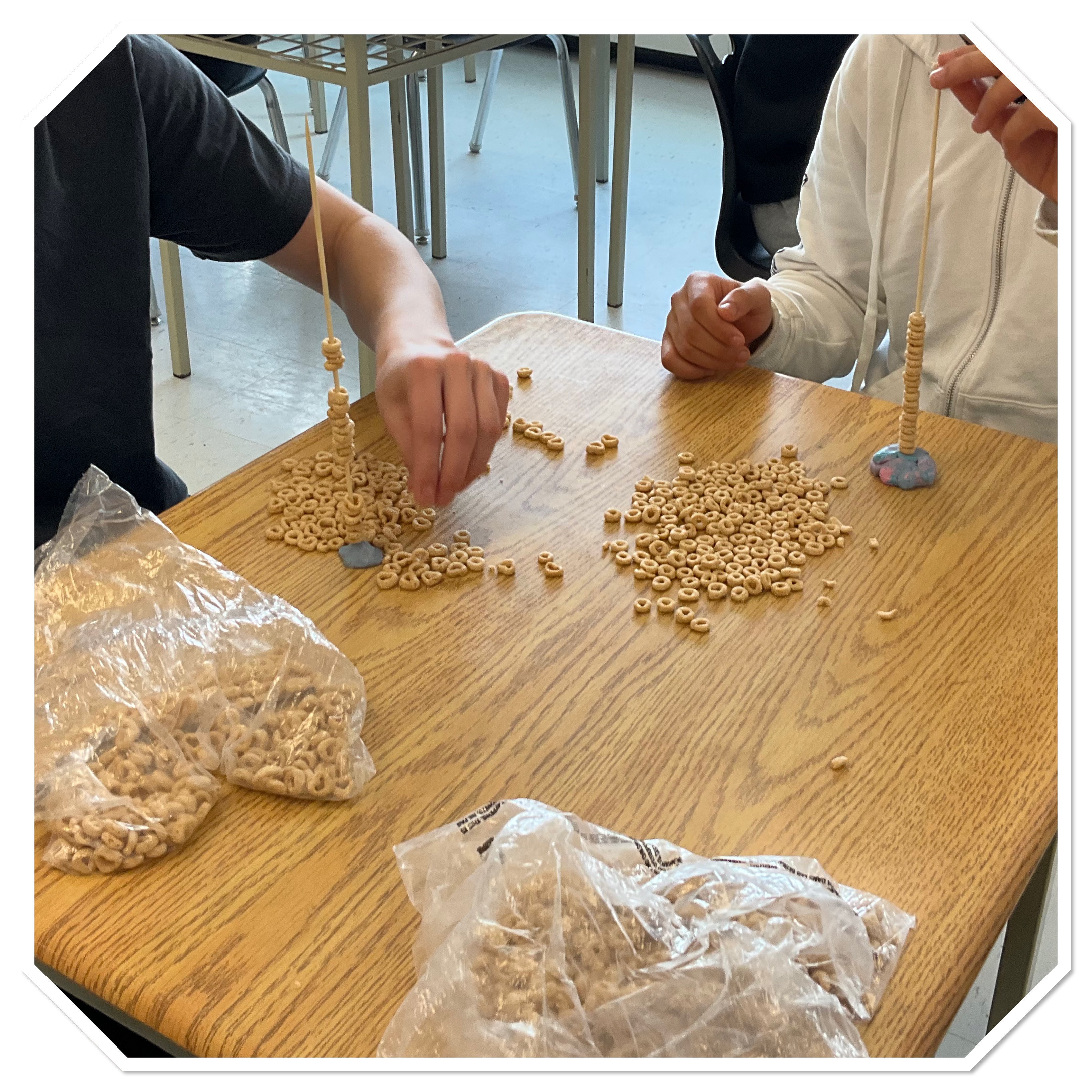
It didn’t work because our “fastest stacker” had claimed a speed that was not repeatable, so everyone ended up finished before him.
We had major issues with cheerios on the floor, and others who wanted only to stack and stack and stack, and avoid all analysis because they were busy stacking. I’m hopeful that my colleague can use this task as a springboard to further discussions about points of intersection, rates, “head starts” (y intercepts) and more as they continue their work with solving systems of linear equations.
Even though the lesson didn’t go as imagined, I think that some students made connections, and thought about the problem. They did an experiment, collected and represented their data, and made predictions and compared their rates with others.
 Ms. Bearse's Site