Building Prisms in Grade 10
This morning in MFM2P we were building rectangular prisms with a volume of 300cm^2. It was an interesting challenge for the class, to find dimensions that would work, and then to actually construct the prism.
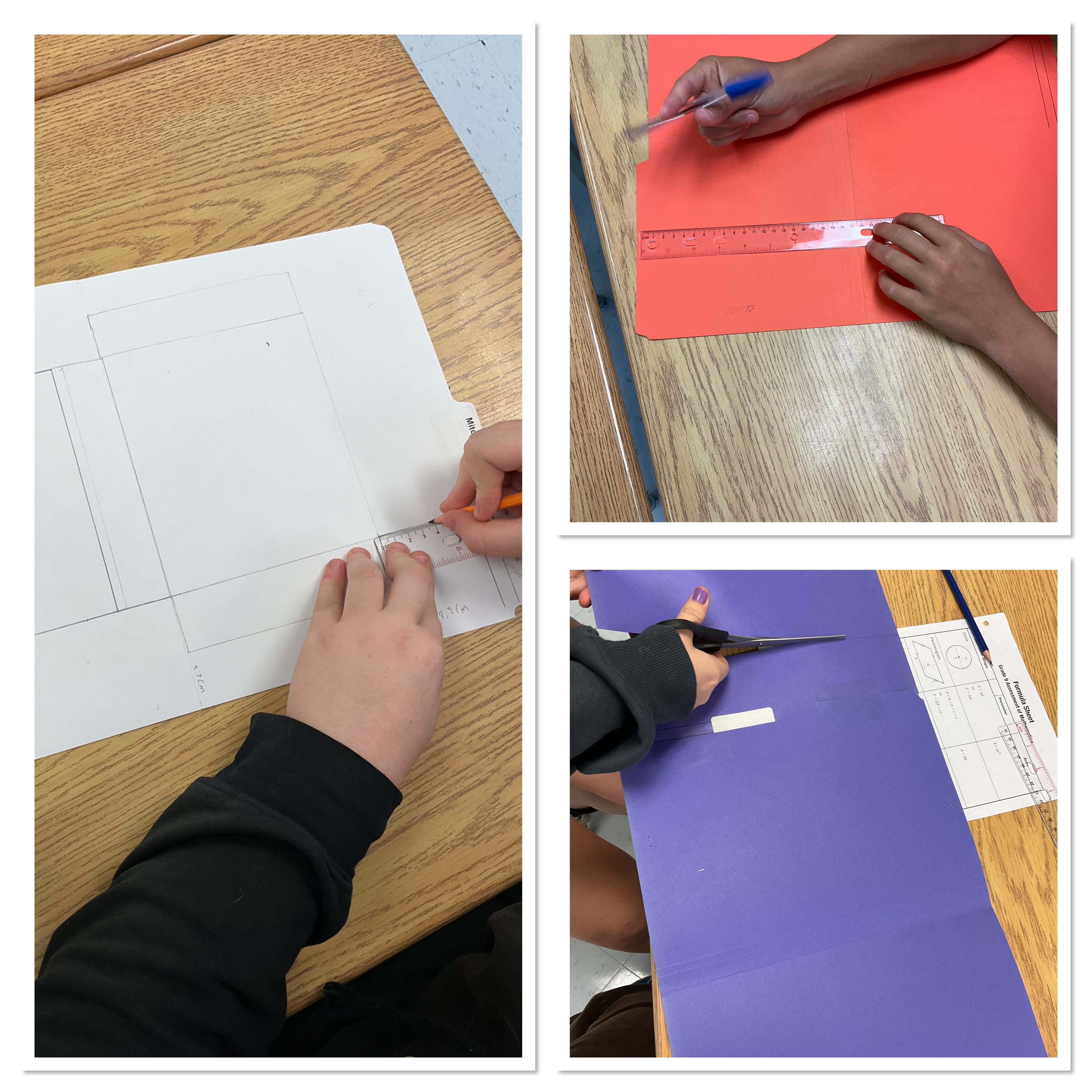
We used old file folders donated from our main office, and we needed rulers, tape and scissors. Students were in groups of 2 or 3.
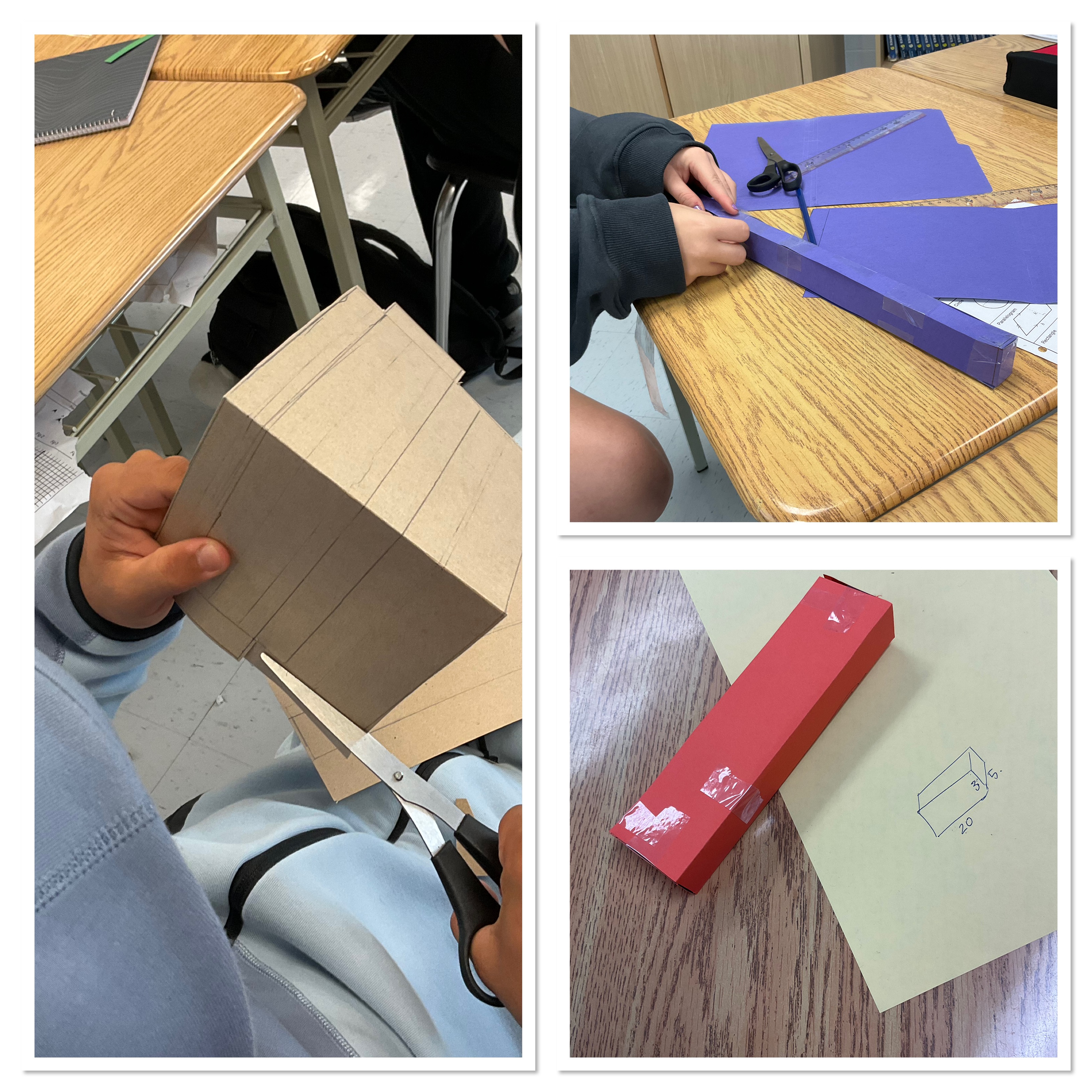
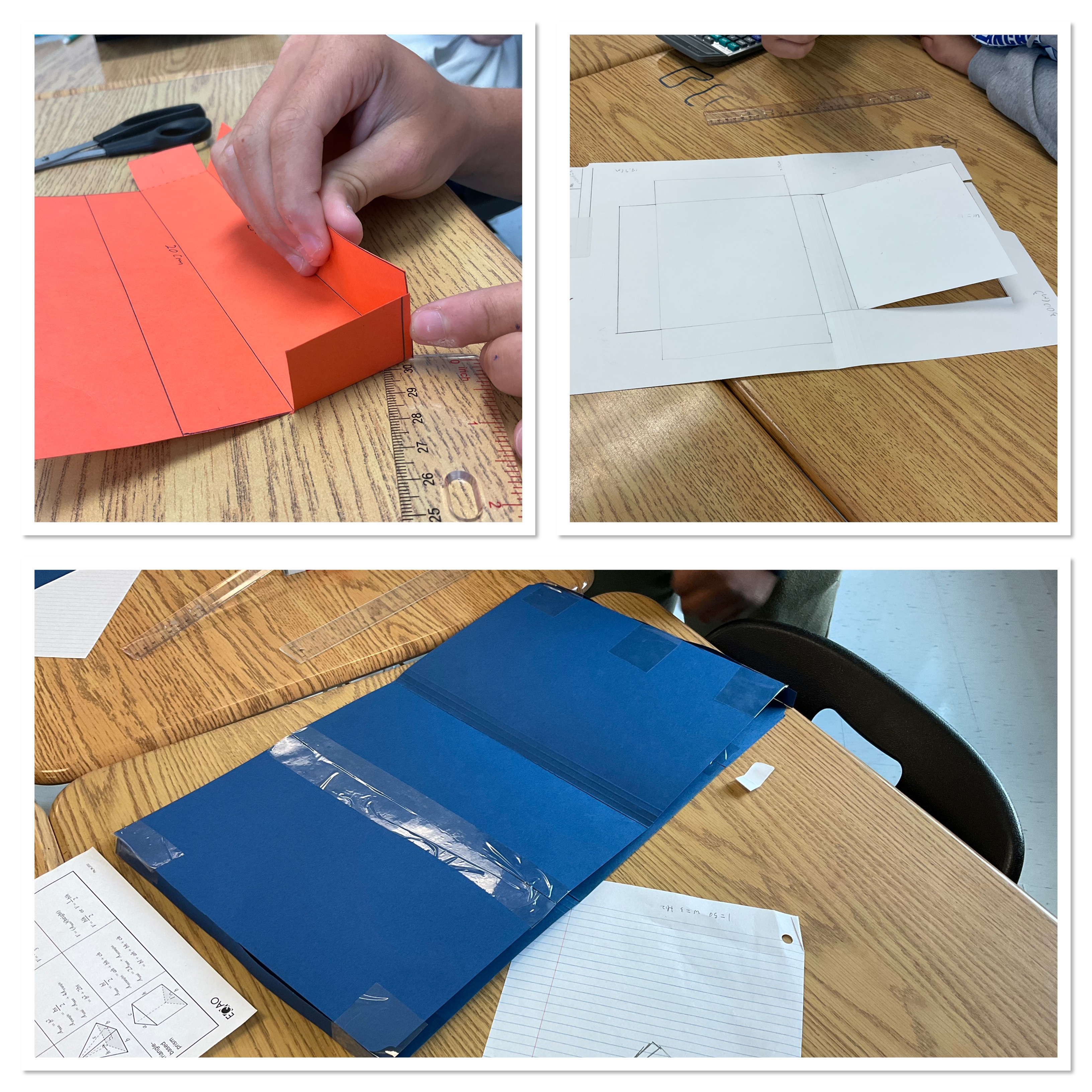
some groups made a net, and then had a much easier time assembling the prisms. The groups that cut out 6 individual faces had some frustration putting it all together.
There was some great learning that happened when assembling the boxes. Some people learned that if sides fold to join, they should be the same length. Something that you realize pretty quickly when your prism has a hole in it! Others realized part way through that they had chosen numbers that would not actually multiply to 300. I recommend not choosing a side length of 17 if you are working without a calculator!
Another group made a side 30cm instead of 3cm, so they have a much larger volume than everyone else!
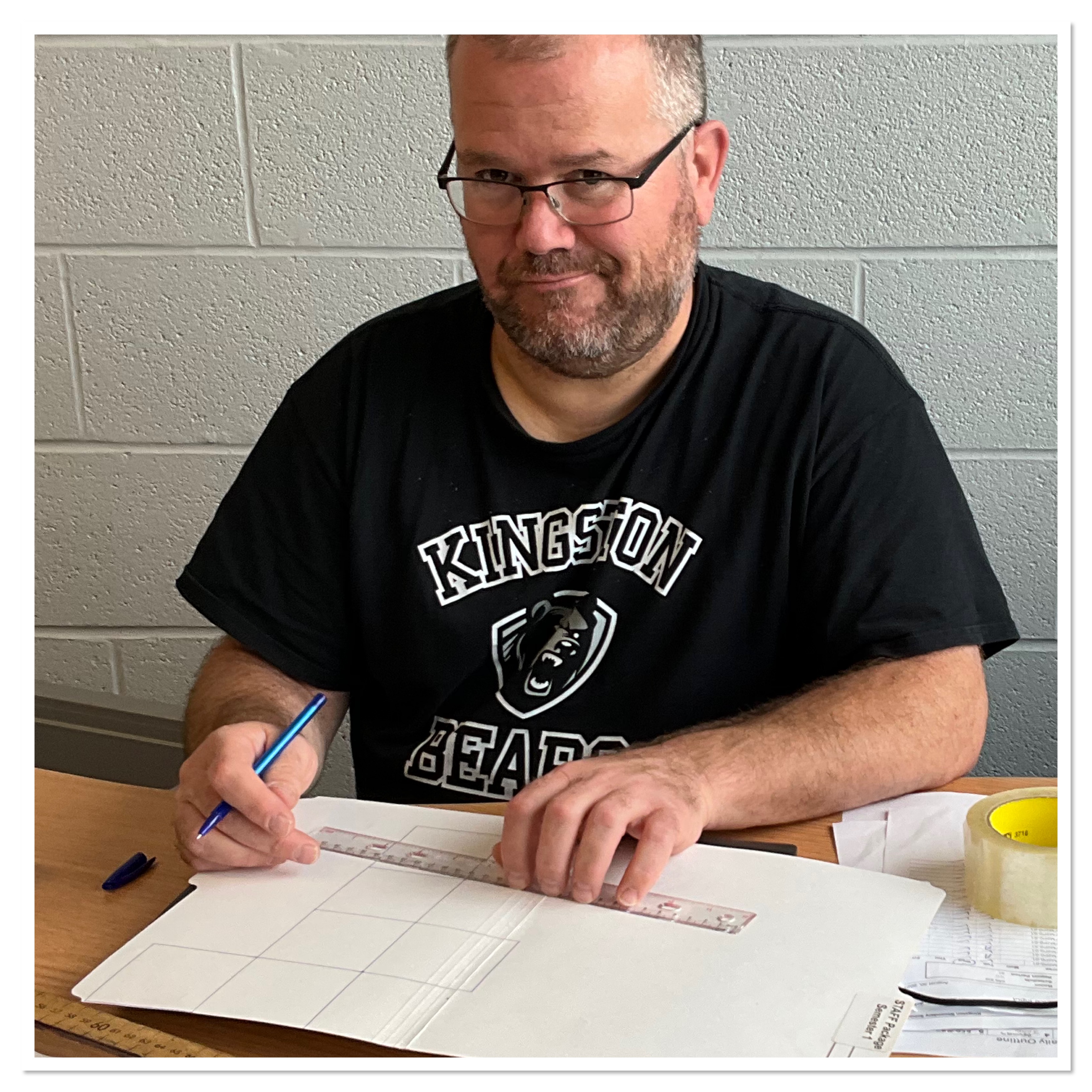
We have a cube that was made by our fearless leader. There was some discussion about if that counts as a rectangular prism. Some students are still not convinced!
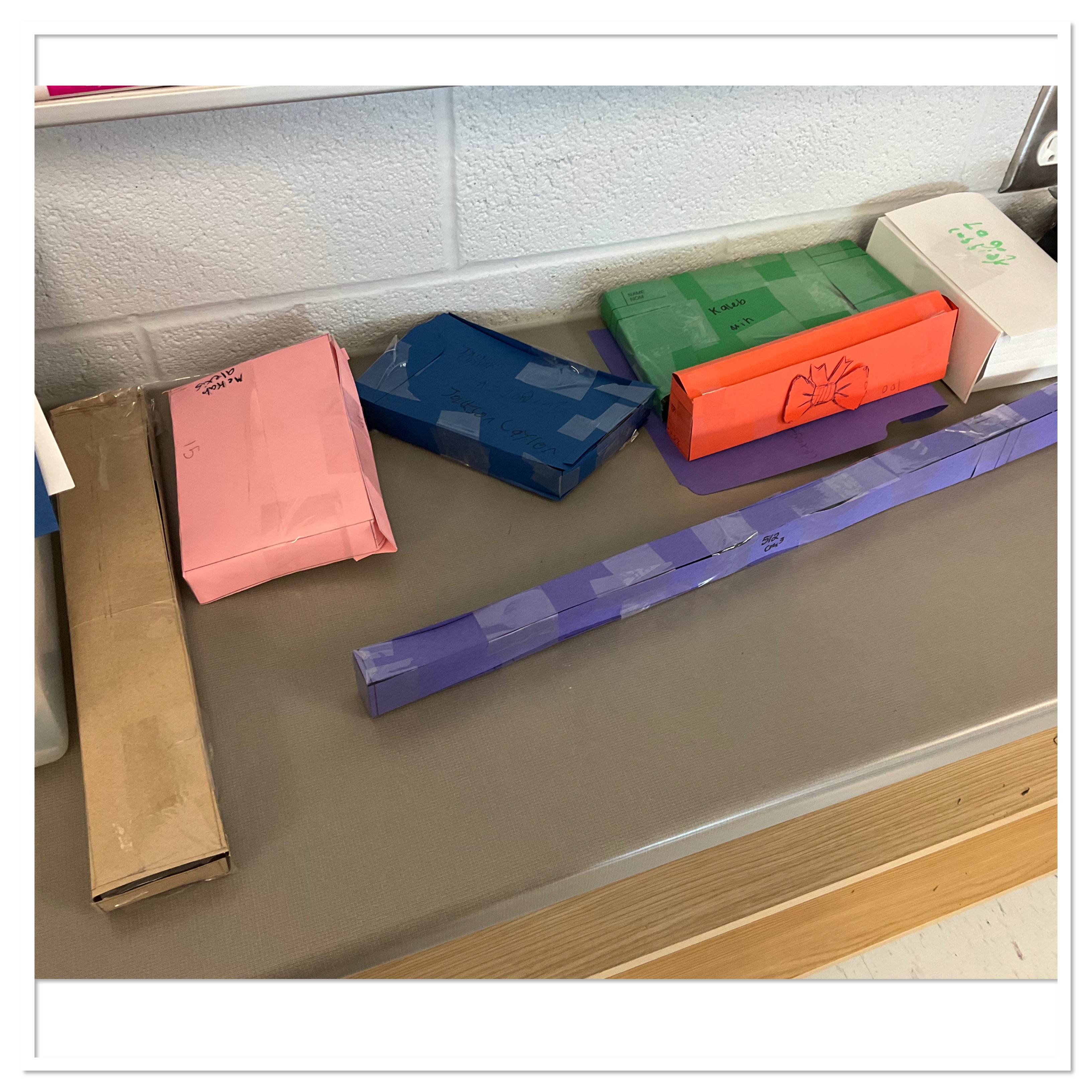
At the end we calculated the surface area of the prisms, and we will look at them again tomorrow and put them in order from smallest surface area to biggest, and notice any patterns. It is a neat way to experience how prisms may have the same volume, but that doesn’t mean they have the same surface area.
Great work everyone!
Day 2: we organized the prisms from biggest to smallest surface area, to look for trends.
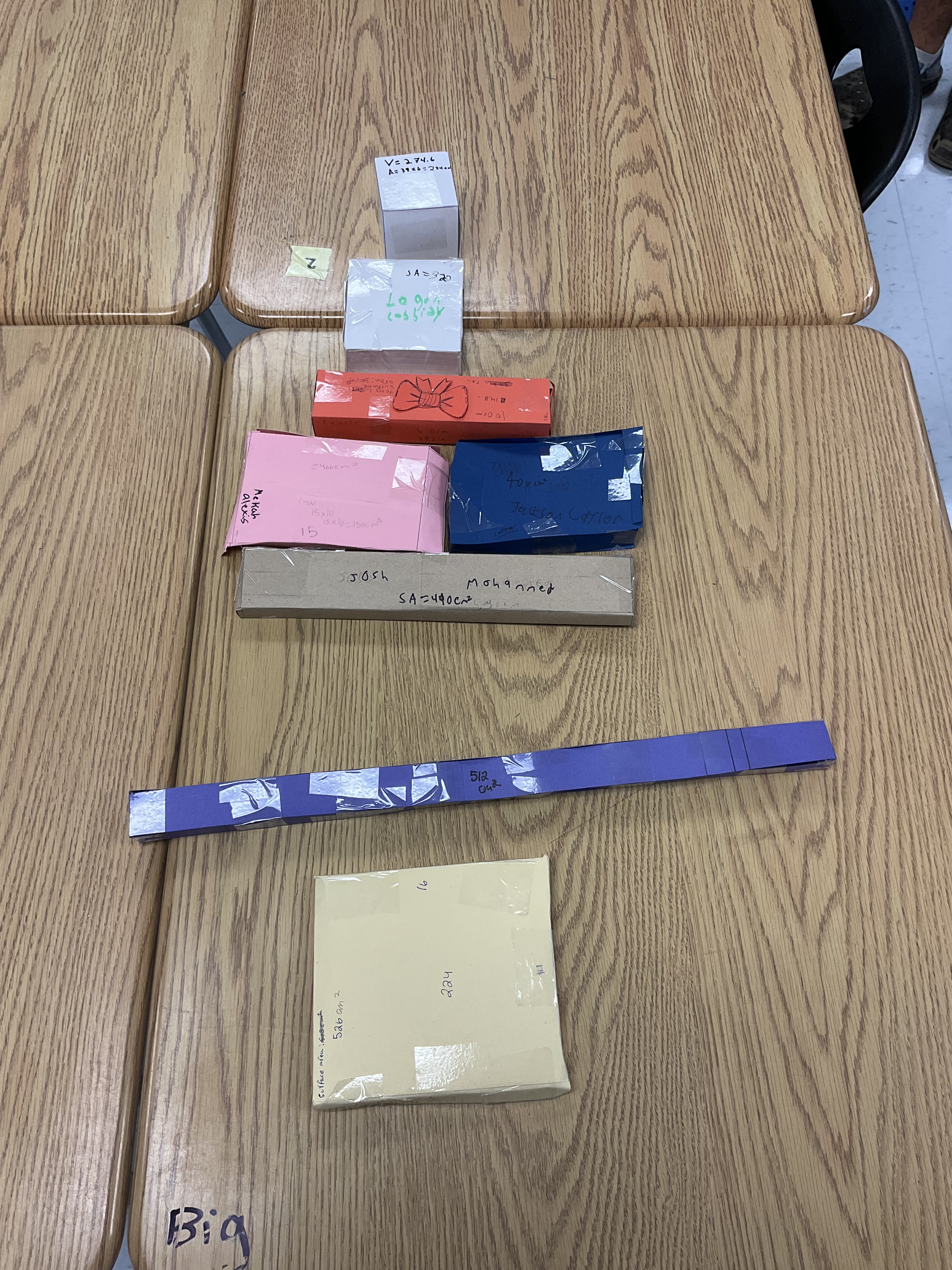
we noticed the cube is the one with the smallest surface, and the ones that are longer or flatter have bigger surface areas.
we talked about surface area in terms of doing drywall, or flooring, and we noticed the floor tiles are a square foot. We talked about packaging items, and why choices are made to minimize packaging, or not. We talked about how surface area and volume are important to biology, with cells dividing to maintain an optimal surface area to volume ratio, or how worms can breathe through their skin, and how our lungs by design, increase the surface area for gas exchange.
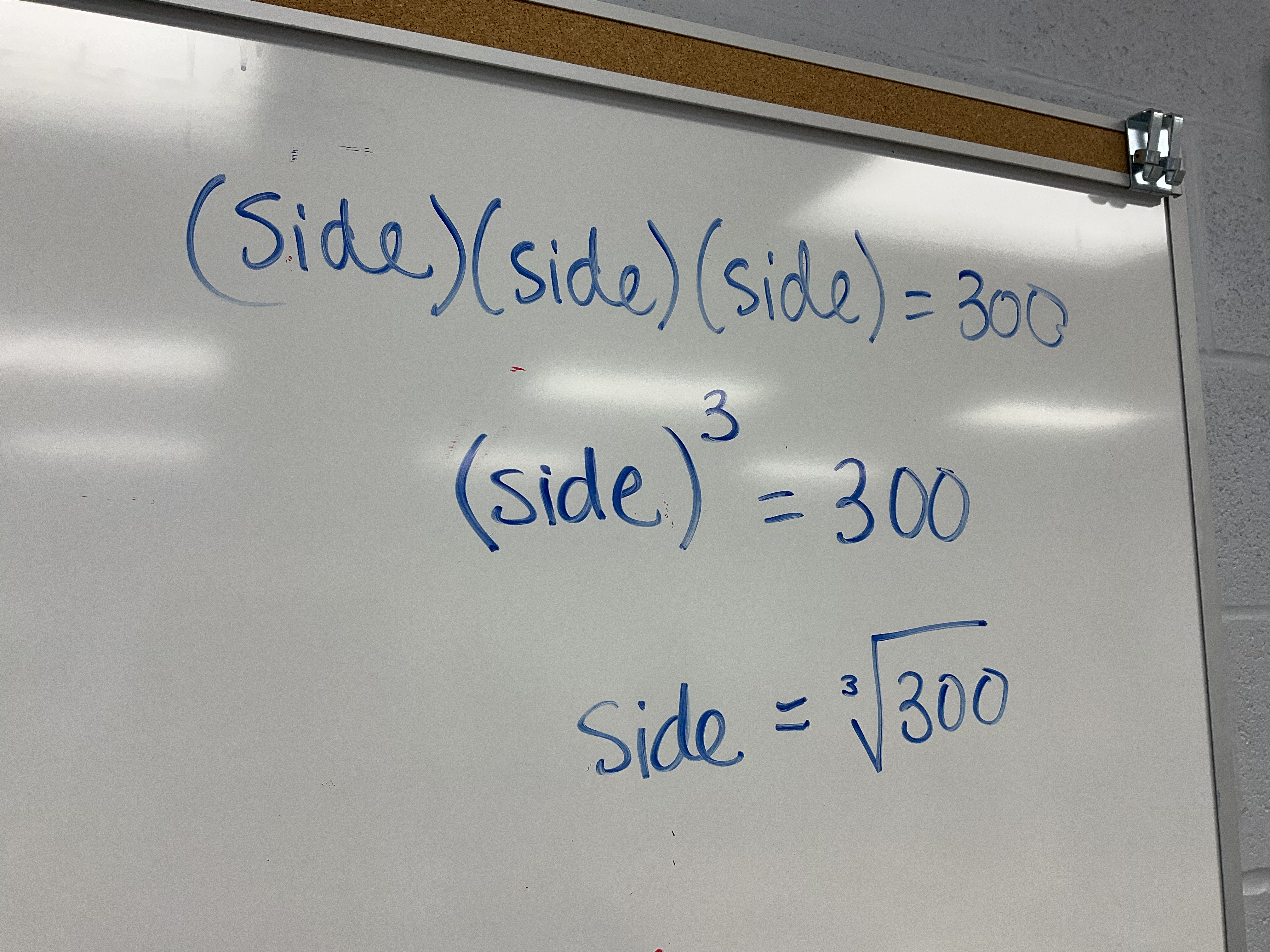
we talked about how many groups had integer dimensions, and these values are all factors of 300. Some groups had side lengths that were decimals, so they needed to use division or trial and error to get the correct side lengths. The cube led to an interesting discussion about how to get the sides correct. We need to take the cube root to undo the effect of cubing a number. The cube root of 300 will give us the side lengths of a cube with volume 300.