Fraction Work and Building Pyramids
Today we did a bit of numeracy work at the start of class to work on giving students a way to visualize fractions and solve problems. Here’s the sequence we did.
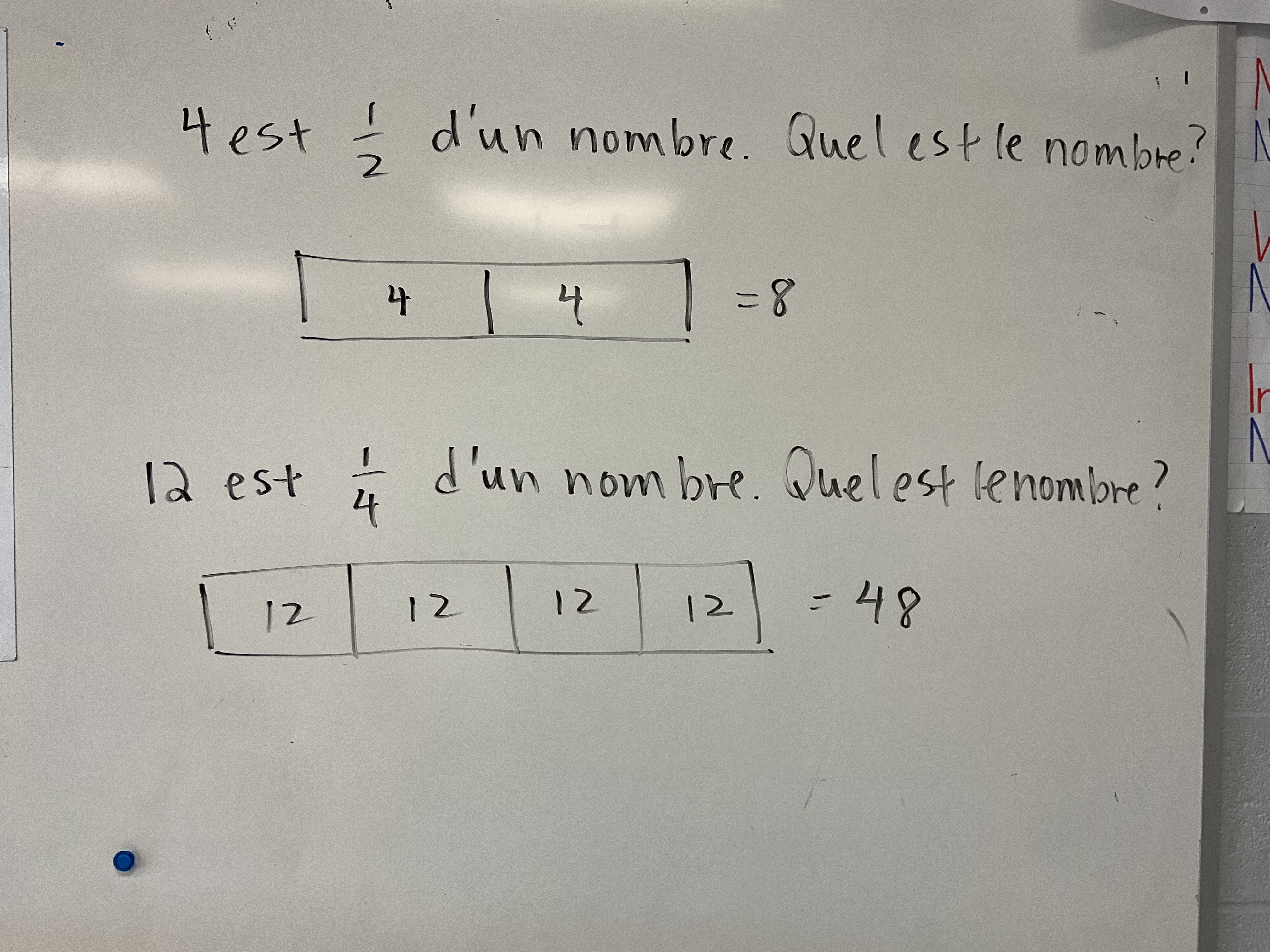
we looked at solving a problem like 4 is 1/2 of a number, find the number. This was an easy enough entry point to show the model: we made a rectangle, split it into 2 halves. One half is 4, so the other half is also 4, and the whole number is 8.
We levelled up a bit with the next: 12 is 1/4 of a number, what is the number. We drew our rectangle, split it into 4, and wrote 12 in one quarter. Each other quarter is also 12 so the whole number is 48.
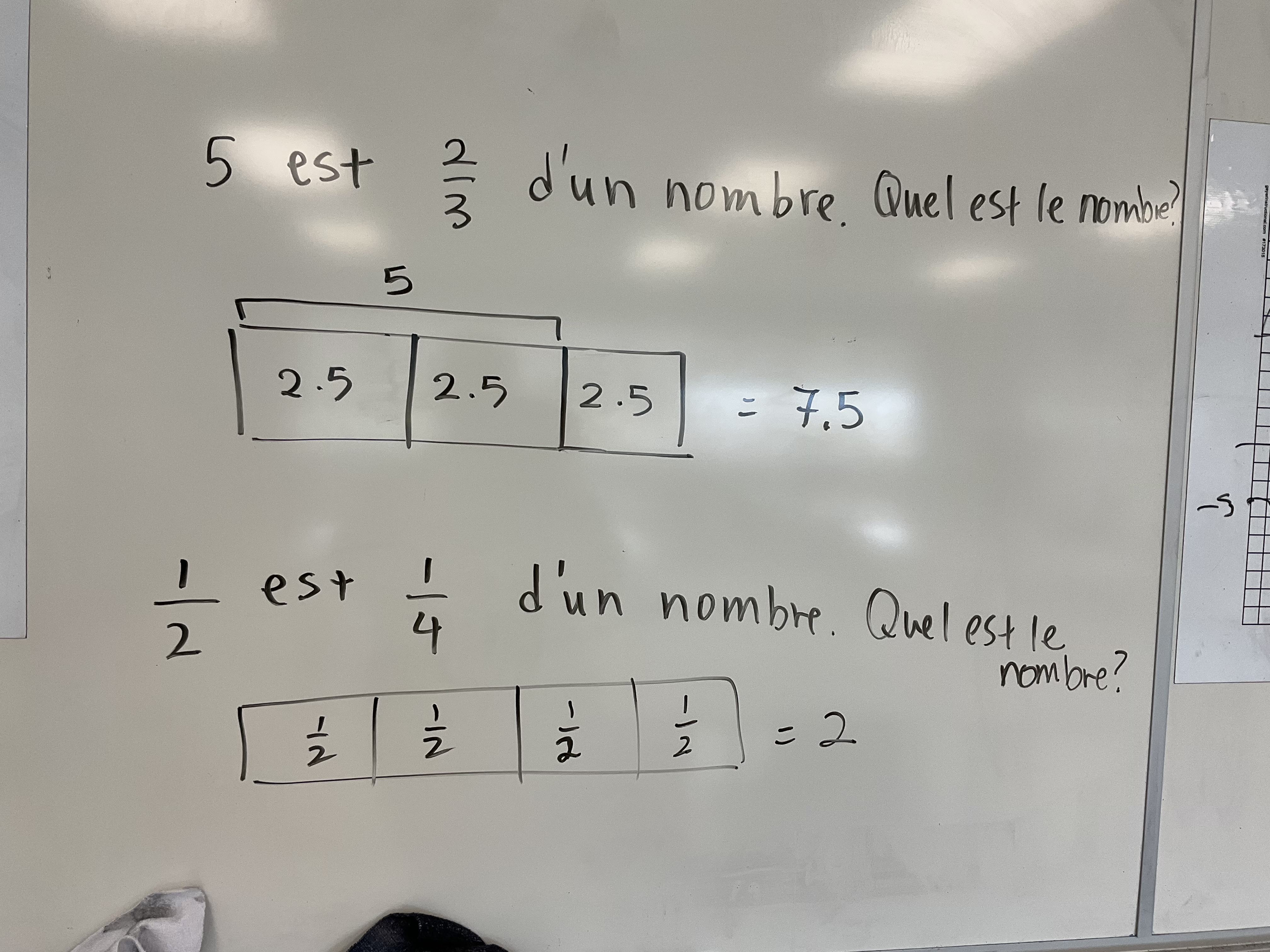
next we did 5 is 2/3 of a number, what’s the number. We made a rectangle, split it into 3, and since 2/3 is 5, each third is 2.5, so the whole number is 7.5
Next we looked at a very fractionny example where 1/2 is 1/4 of a number, what’s the number. We figured it is 2.
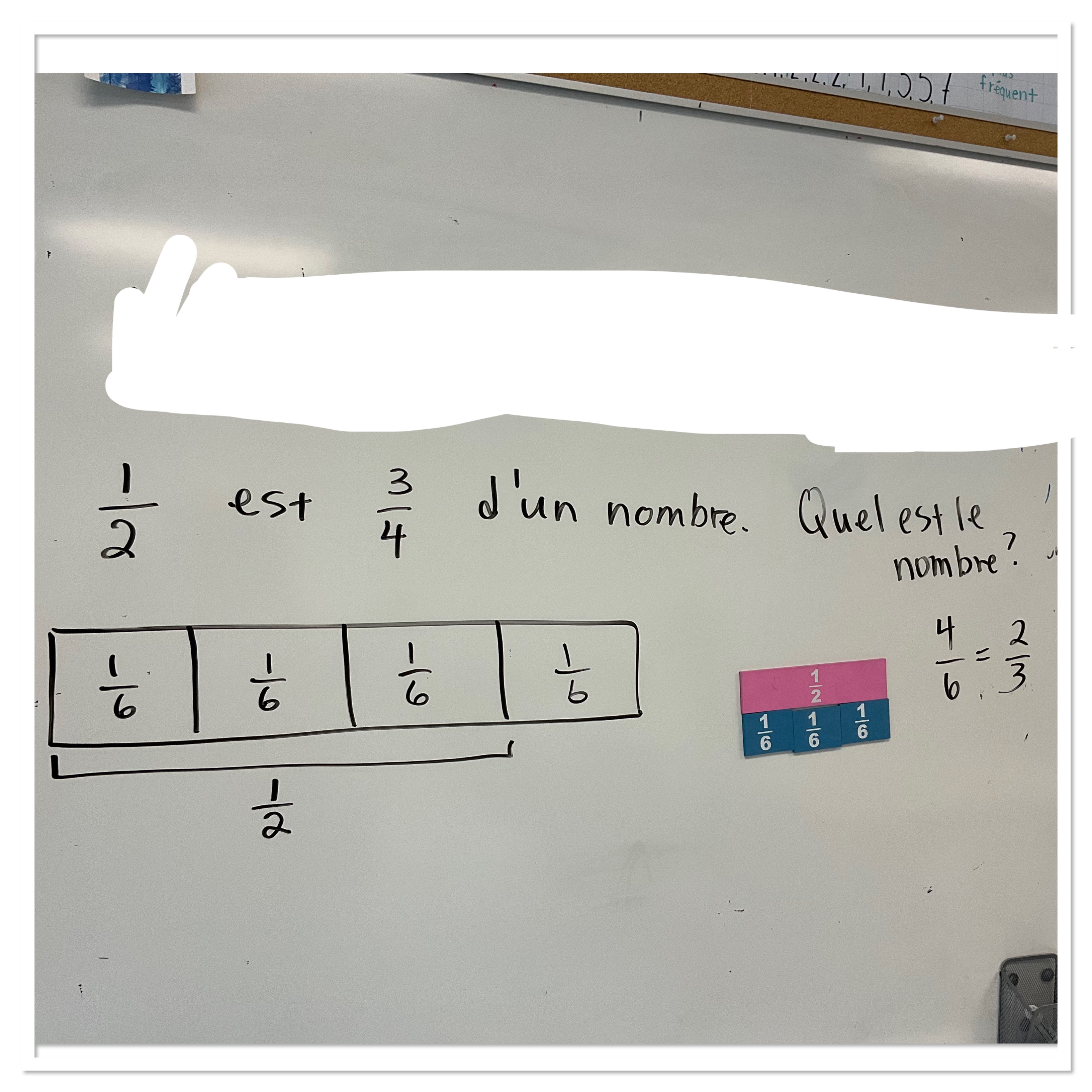
the last one we looked at was 1/2 is 3/4 of a number, what’s the number. We made a rectangle, split it into 4 pieces, 3 of the pieces totalled 1/2, we used our fraction magnets to test the theory that each piece is 1/6. We also can use ratios 1/2=3/? And then calculate that the ? is 6. Next we determine the whole number is 4/6 or 2/3.
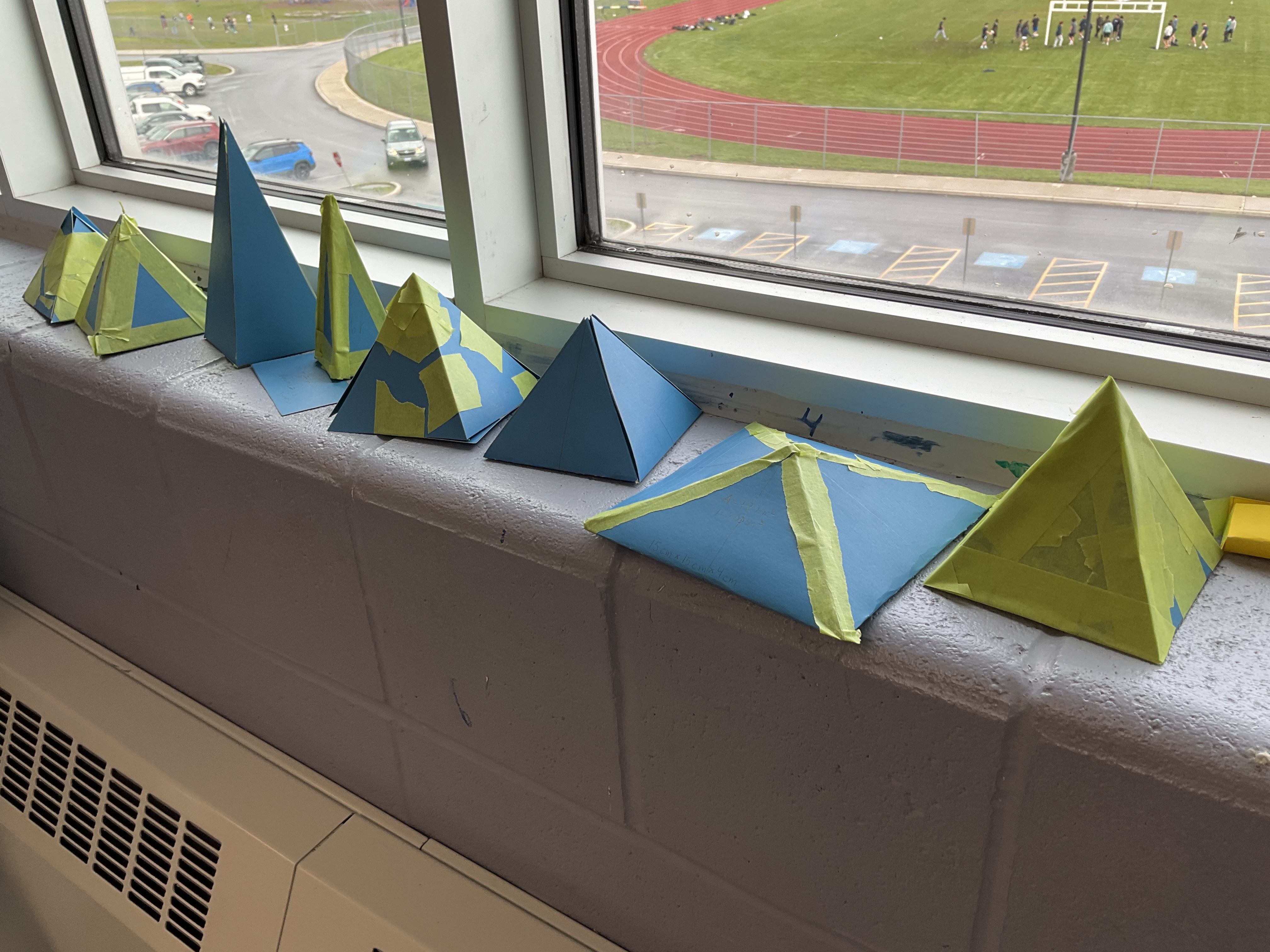
After that progression we switched back to working on volume and today our challenge was to build a square based pyramid with a volume of 300cm^3. We’ve build rectangular prisms with the same volume, and we know the volume relationship between prisms and pyramids so this was a good combination challenge.
Many groups decided on dimensions of 10×10 with a height of 9. Groups got to the end of their fabrication and it was time to check for accuracy. Most groups have a frustrated “ahaa” moment at this point when they realize their pyramid is too short. For most groups, they made the slant height of the side triangles equal to 9, so when inclined, the triangles form a pyramid that is 8cm tall.
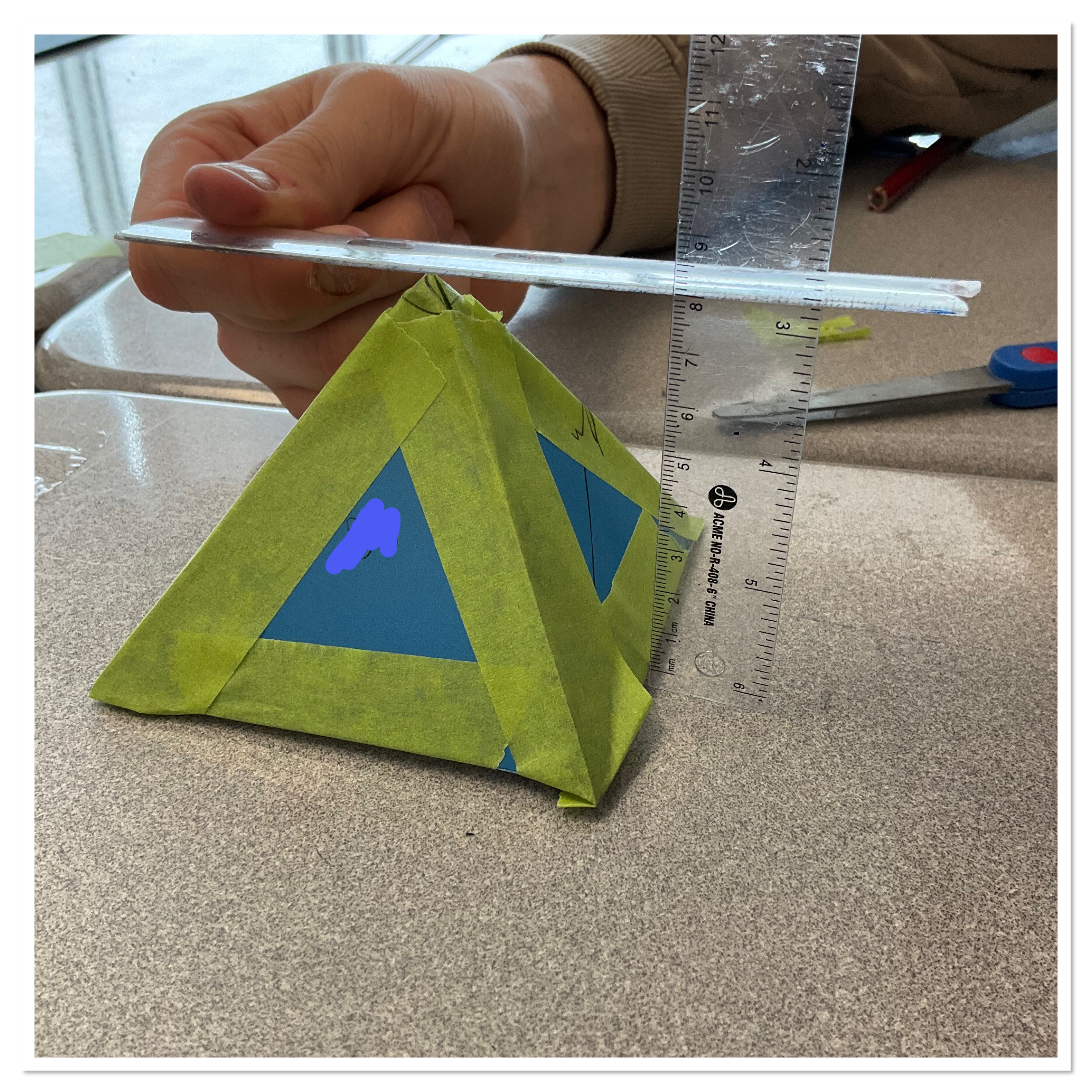
Several groups thought about this before constructing and added an extra cm to be safe. We all had a moment to realize that the pythagorean theorem is hiding in these questions, and we can make use of it to help us calculate the exact slant height needed.
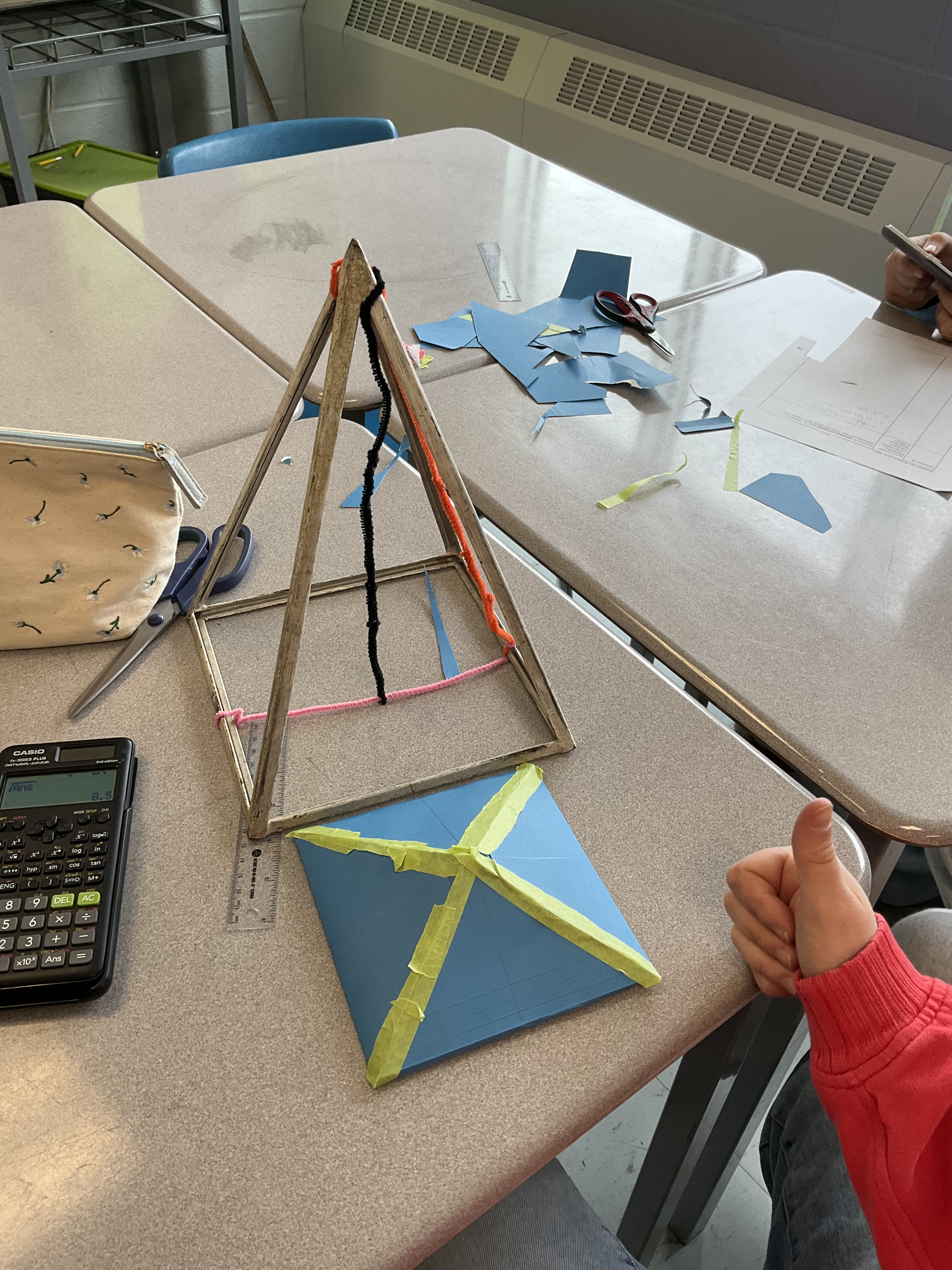
We then calculated the surface area of our pyramid and we put them all in our gallery of pyramids on the windowsill.