Fractions with Cuisinaire Rods
I was working with grade 8s again this week and we’re building our fraction number sense. This time we worked through a sequence of steps from this document. The goal is to work with fractions greater than 1 and less than 1, and to understand that quantities are fractions of other quantities. We would give different rods different fractional identities and then solve using other rods.
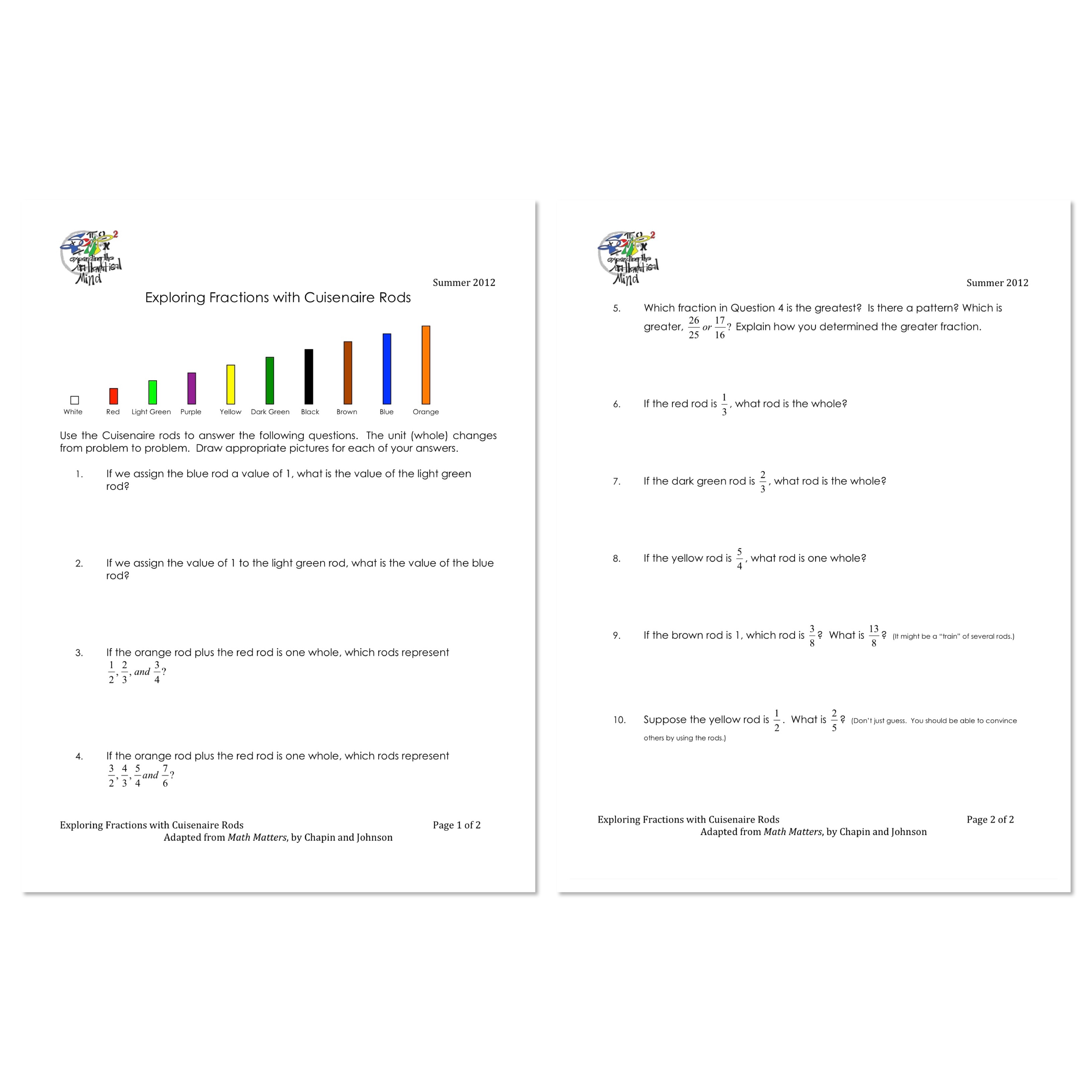
For #3 if the orange rod and red rod together is one whole, make 1/2, 2/3, 3/4 and then #4 make 3/2, 4/3, 5/4 and 7/6, we could wrestle with the understanding of the numerator and denominator, seeing that in #3 the numerator is 1 less than the denominator, and in #4 the numerator is 1 greater. Then we use the learning to help us solve #5 which can’t be done with the rods.
We needed to first figure out which block showed thirds, then find a block as long as 2 of them, which would show 2/3.
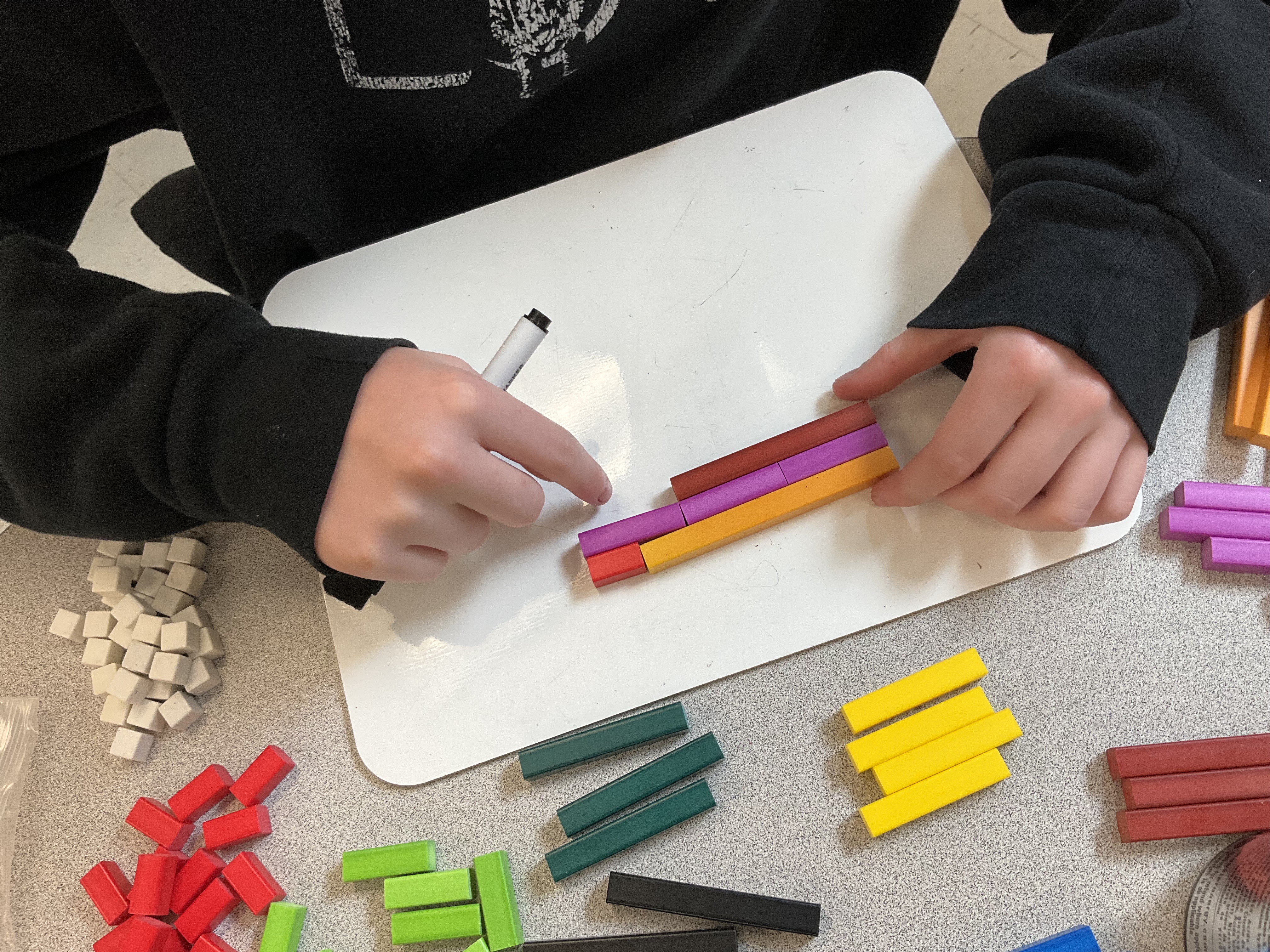
We did something similar for 3/4. We found out which block represents quarters, then found a block that was the length of 3 of them.
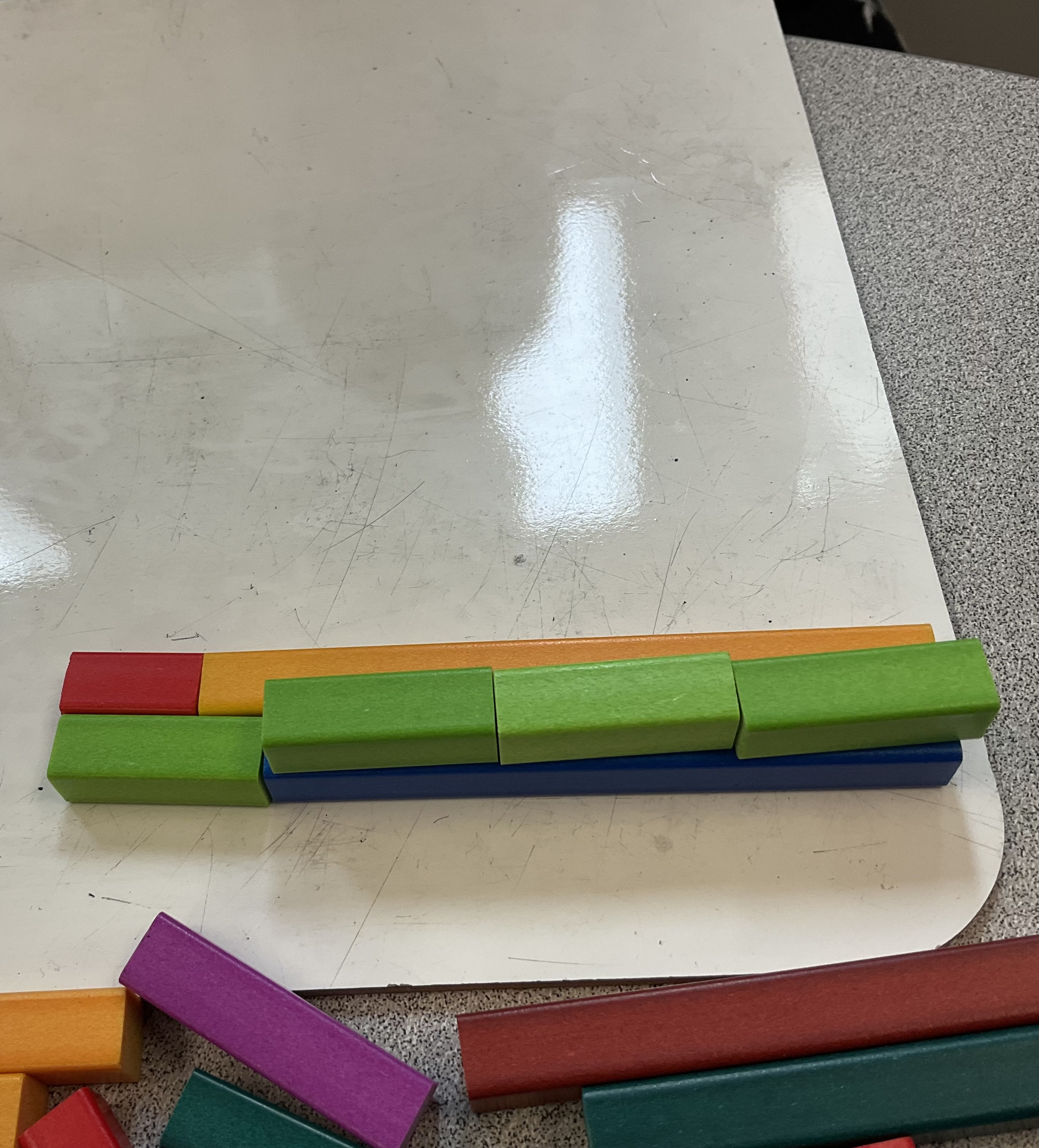
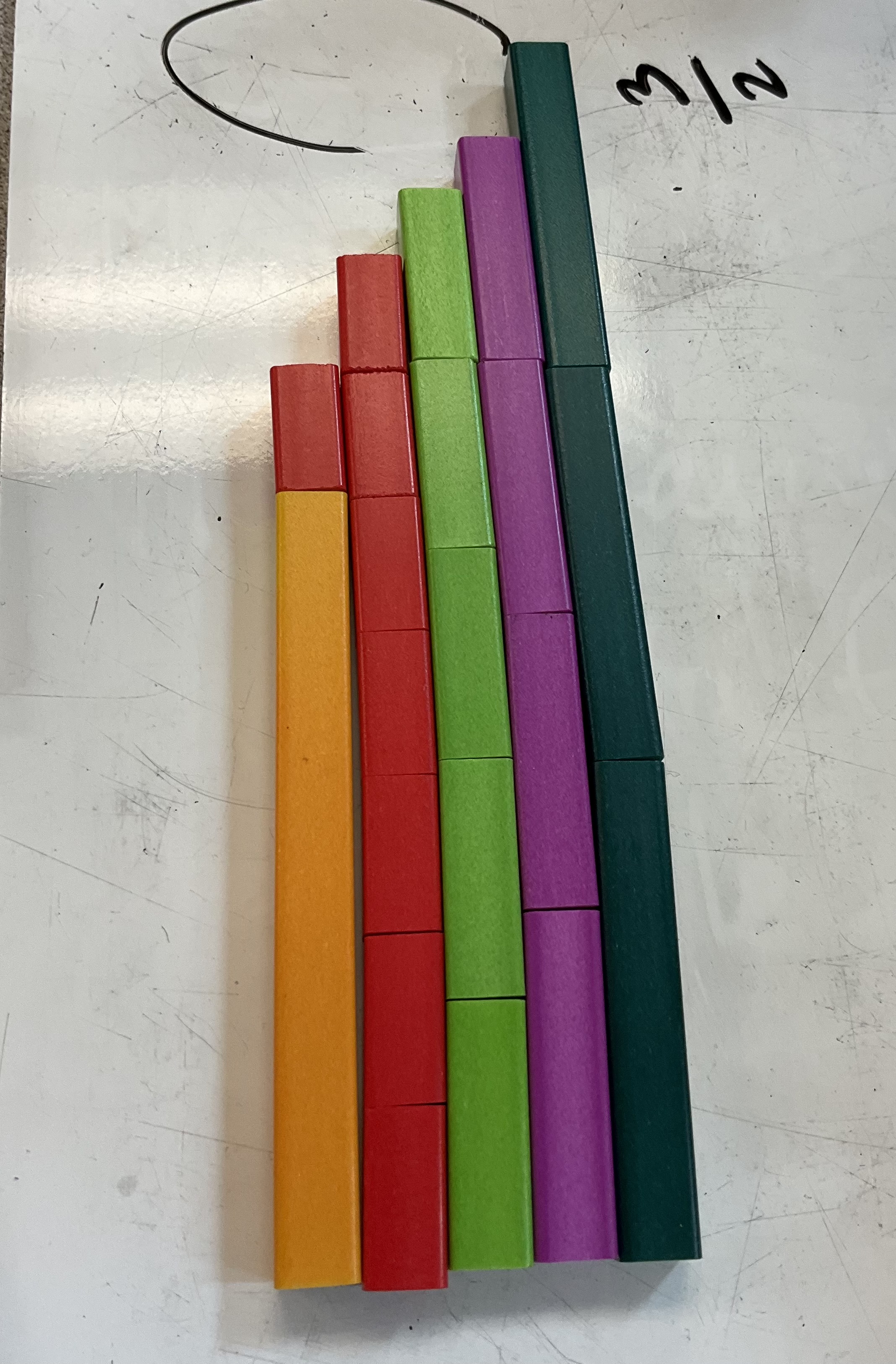
Here’s the compilation of all of the fractions greater than 1 to help make some inferences about what makes them bigger or smaller. Some guessed that 7/6 is bigger than 3/2 because the numbers are bigger. The rods really help show that 3/2 is bigger because the unit fraction 1/2 is larger than the other unit fractions since the “one” is split into fewer pieces.
Next we assigned some rods different fractional values, and use that to solve problems. Here the yellow is 5/4, and out job was to find the rod that is 1 whole.
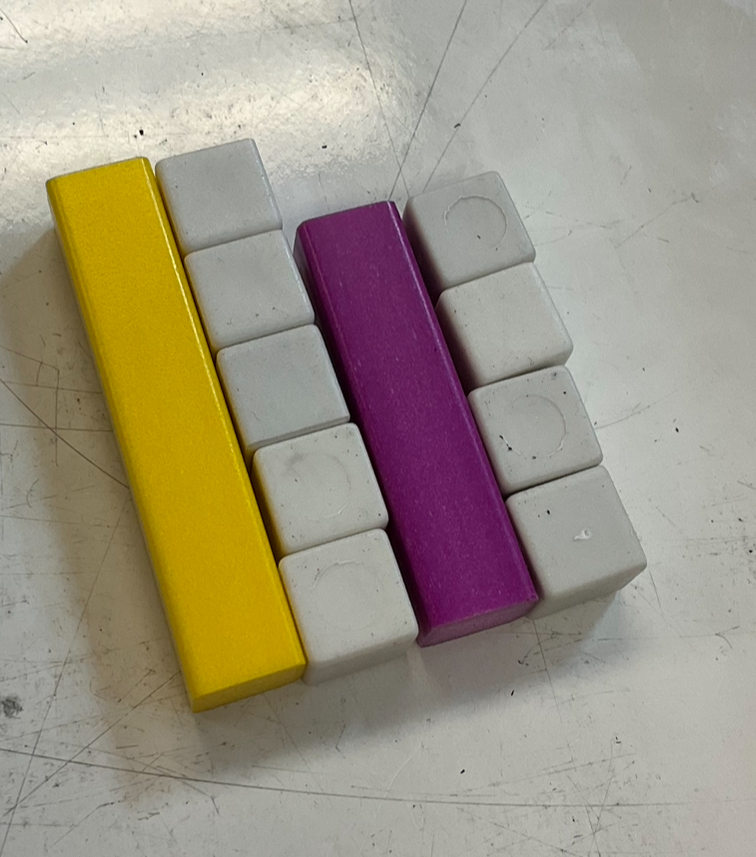
It was a good sequence to work through. We had some moments of struggle as we got used to the blocks having different names sometimes. The red could be 1/2 in one question or 1/4 in another, because the “whole” was changing. Hopefully associating the fractions with concrete objects help with the understanding, and that it can endure over the summer!

