inverses
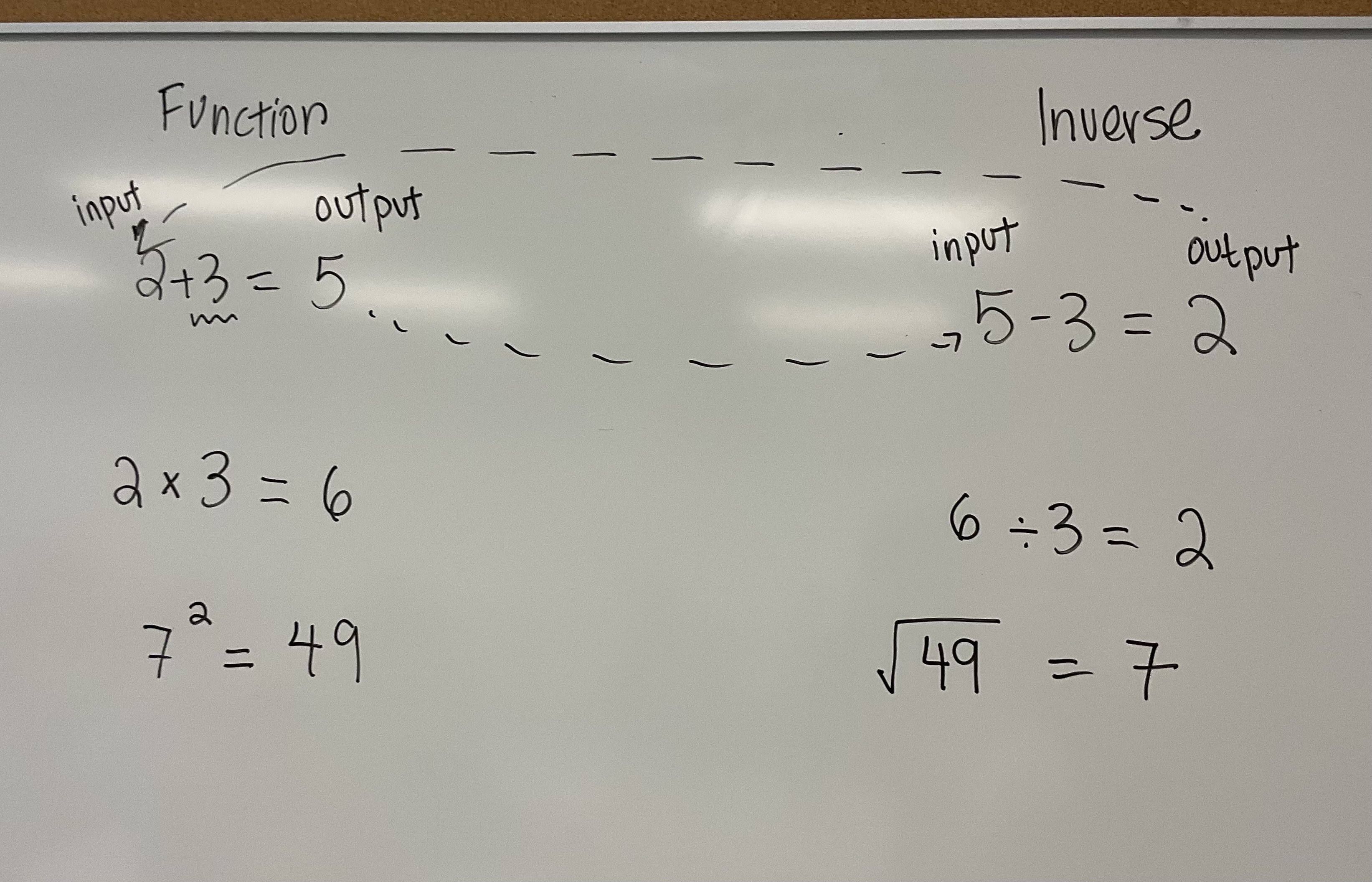
We’re working on understanding inverses in grade 12 math. We’re exploring what operations are inverses of each other. Inverses undo what the original function does. It takes the output of the function as the input of the inverse, and will return as output of the inverse what was the input of the function. Basically we swap inputs and outputs. All input related (x related) things for the function, including domain restrictions, will show up as output related (y related) things for the inverse, including range restrictions.
We talked about how we sometimes need to restrict the domain of the function so that it will be invertible. It must pass the horizontal line test to be invertible. Some notation confusion cropped up while we were talking about how we’d need to restrict the domain of the sine function to make it invertible. We’d choose from -90 to 90 so it passes the vertical line test. The inverse of sine x is sin^-1x, which some students thought was the same as cscx. The misconception and somewhat confusing notation of the exponent of -1 sometimes representing inverse, and when placed on numbers represents the reciprocal. What adds extra complication is that in French (some students are immersion) the word reciprocal is translated as “l’inverse”. We’ll have to keep working on this!
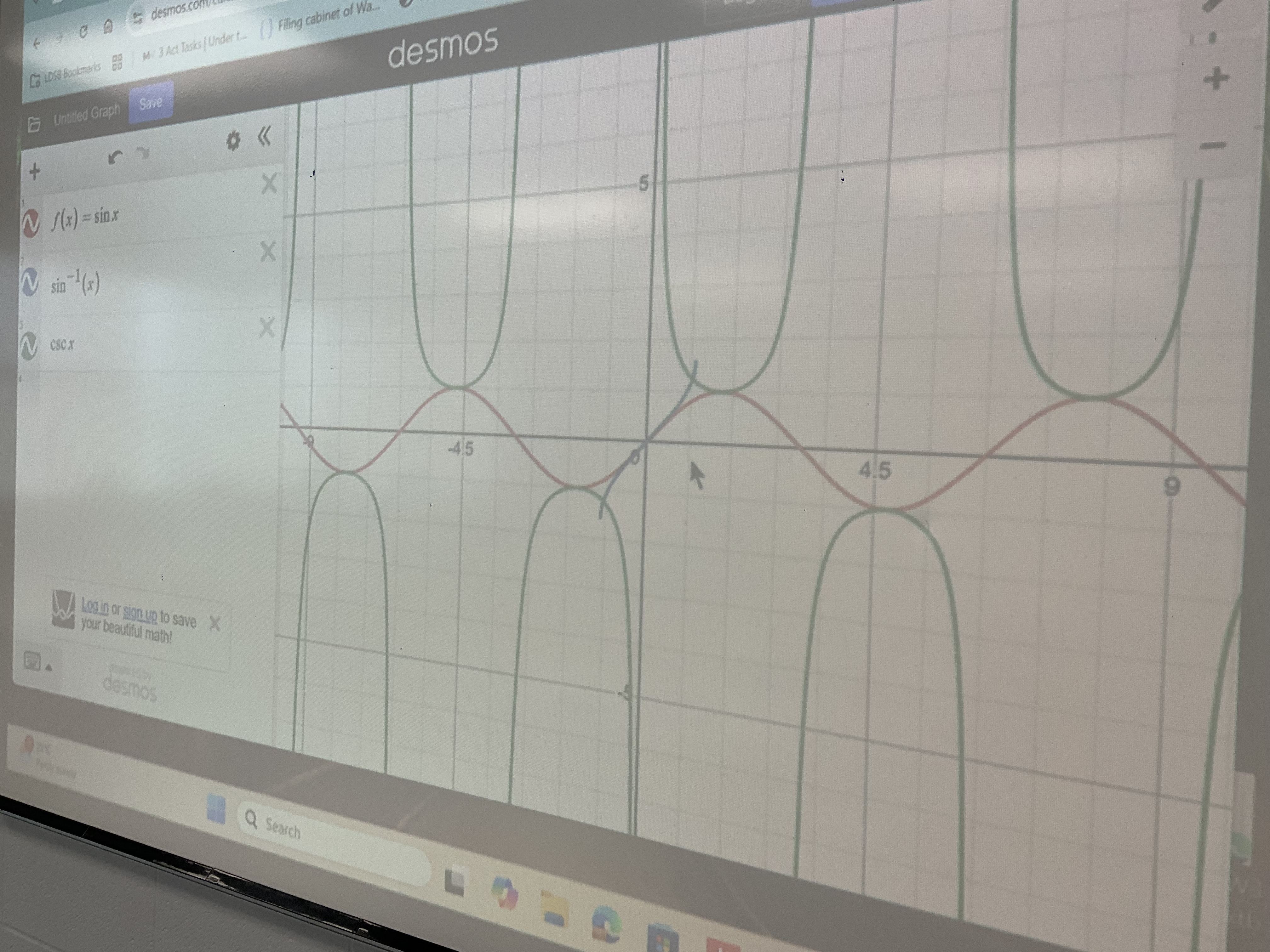
To be sure of the differences we plotted all 3 graphs together on desmos.

