College week 2
This week at college we were working on unit conversion, based heavily on our practice with multiplying fractions. To help us understand how to convert square and cube units we explored how changing a square’s side length changes its area, and how changing a cube’s side length changes its volume. We built some squares and cubes to help with the sense making.
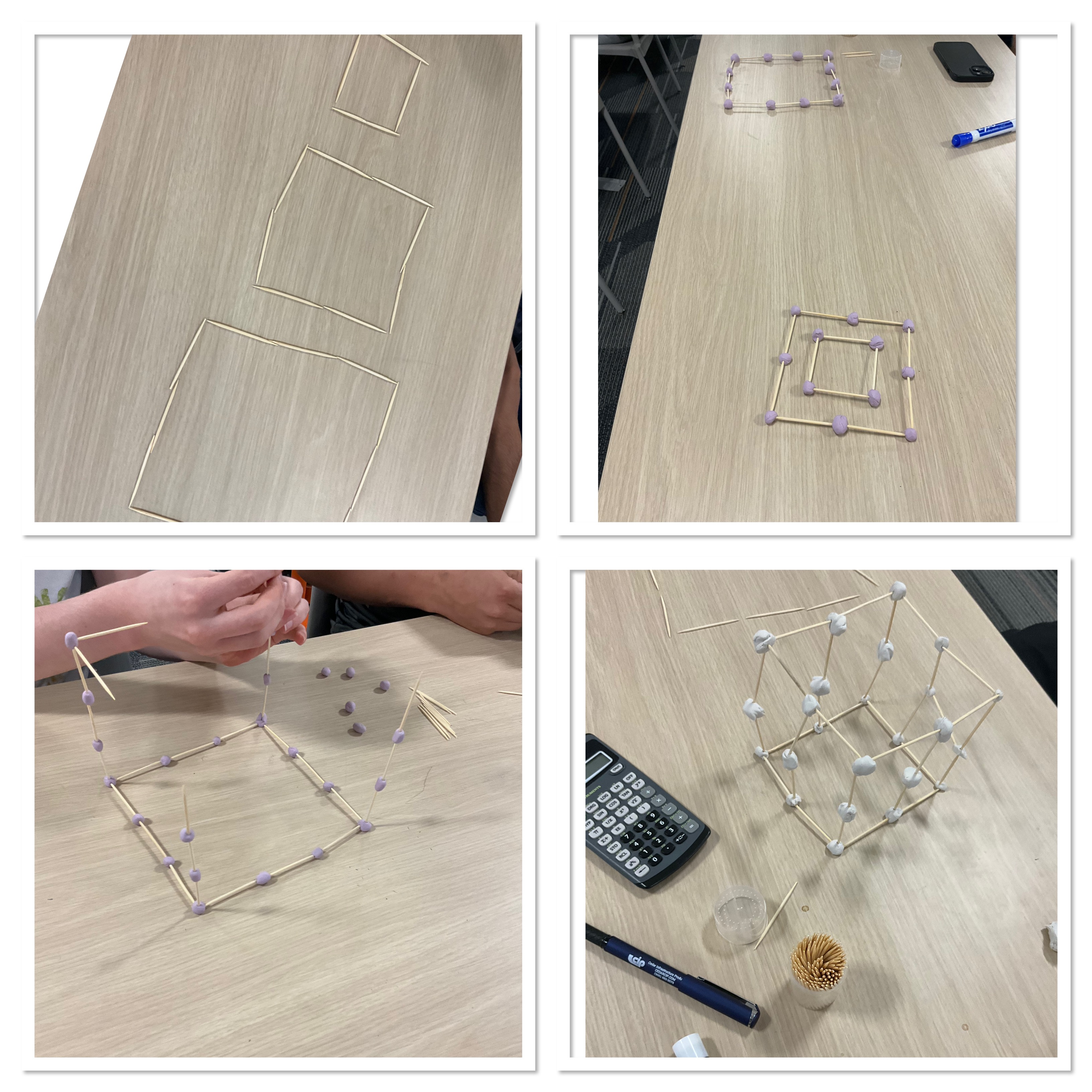
We now have a better sense of why we need to square or cube our conversion factors when we are working with square and cube units.
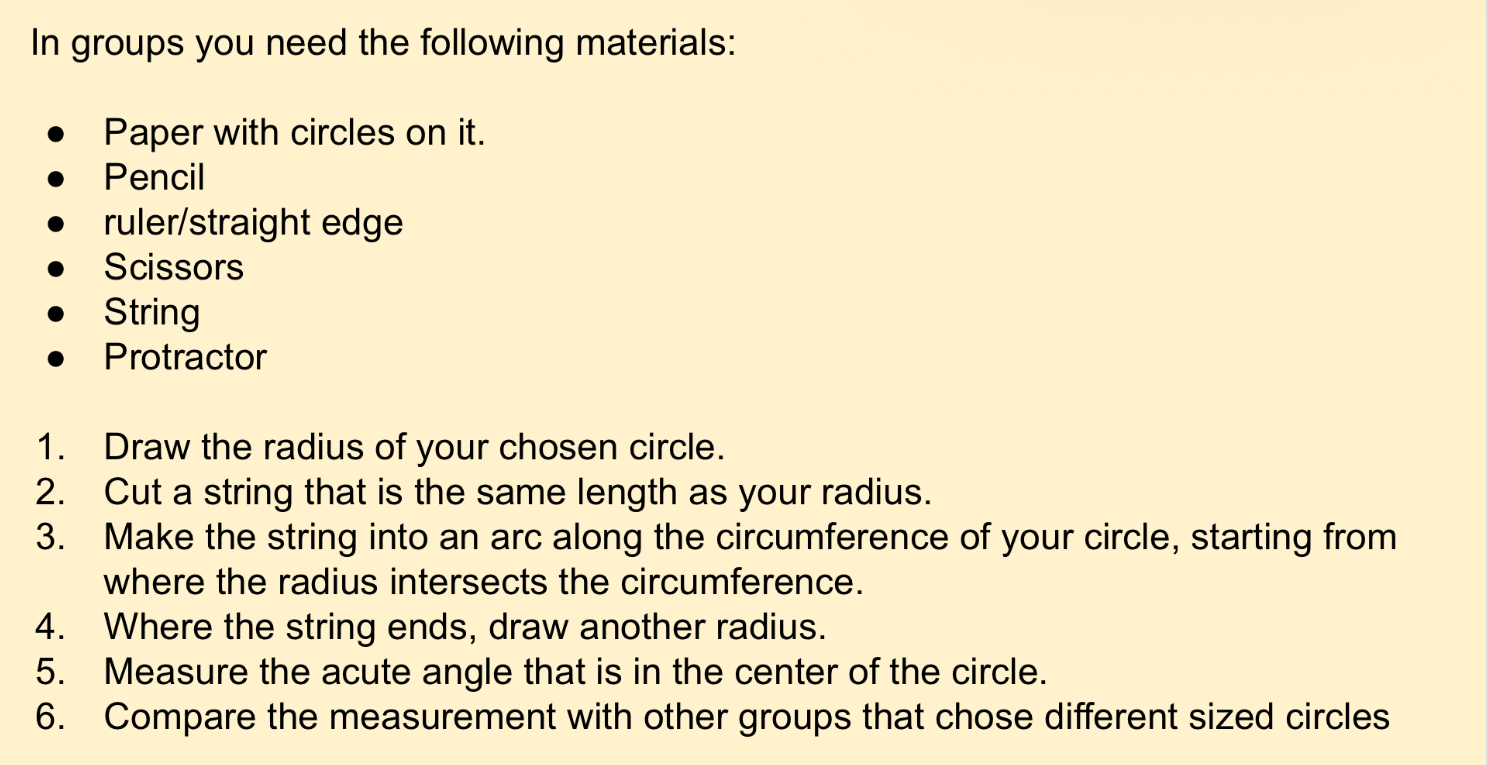
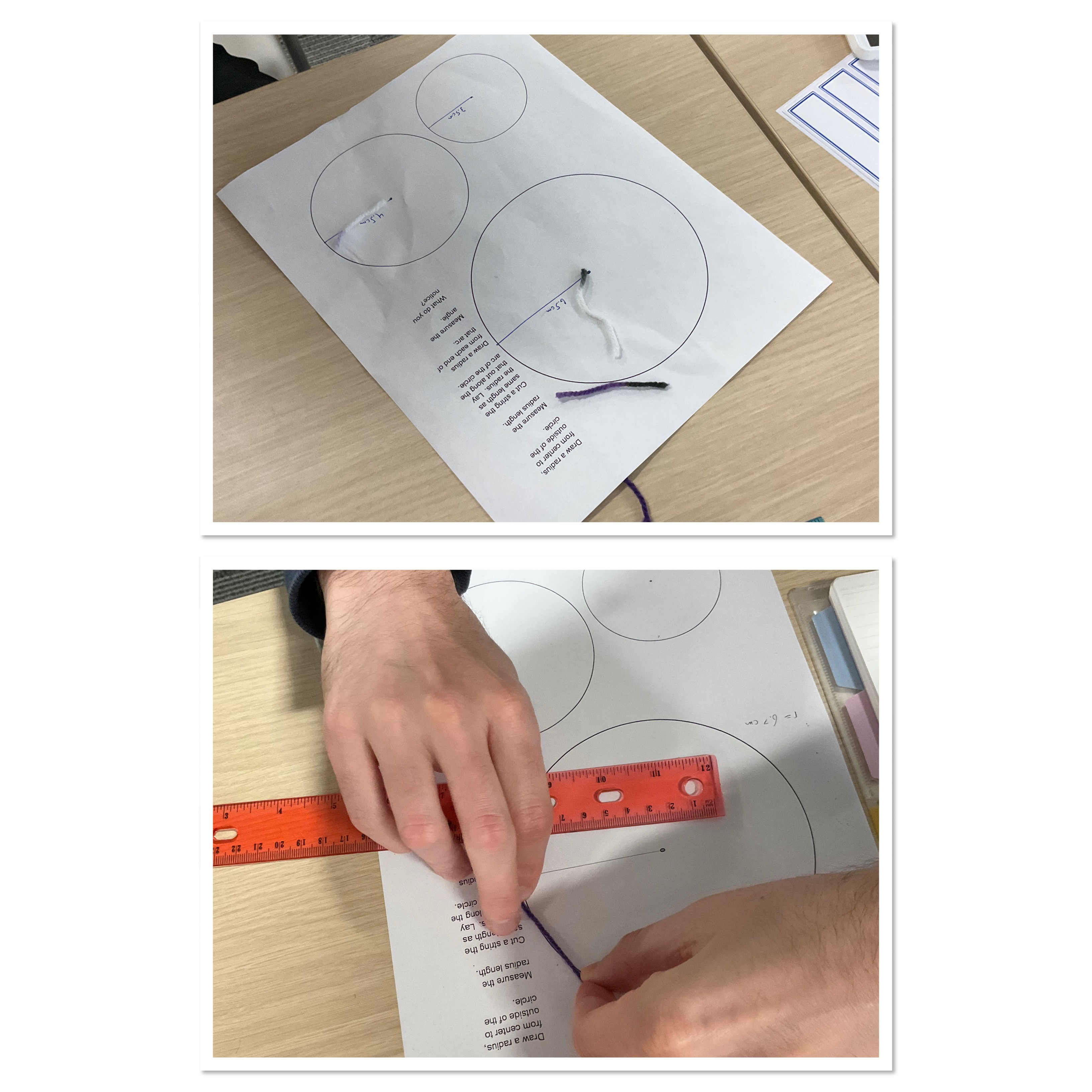
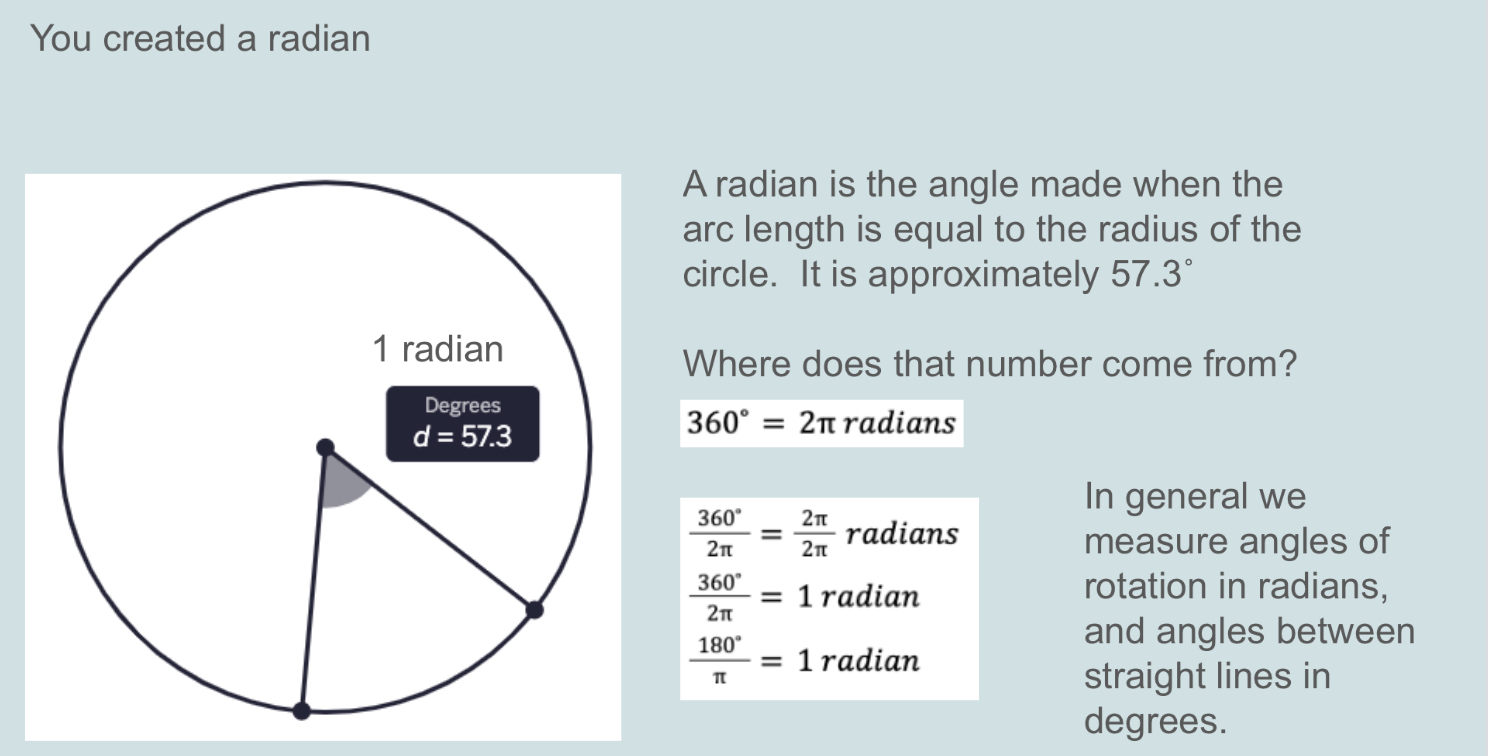
We used string to help us build a radian. For some of us, this was the first time we heard of this new way of measuring angles.
Later we put radian measures in order and made a number line, and tried to space out the radian measures appropriately along the string.
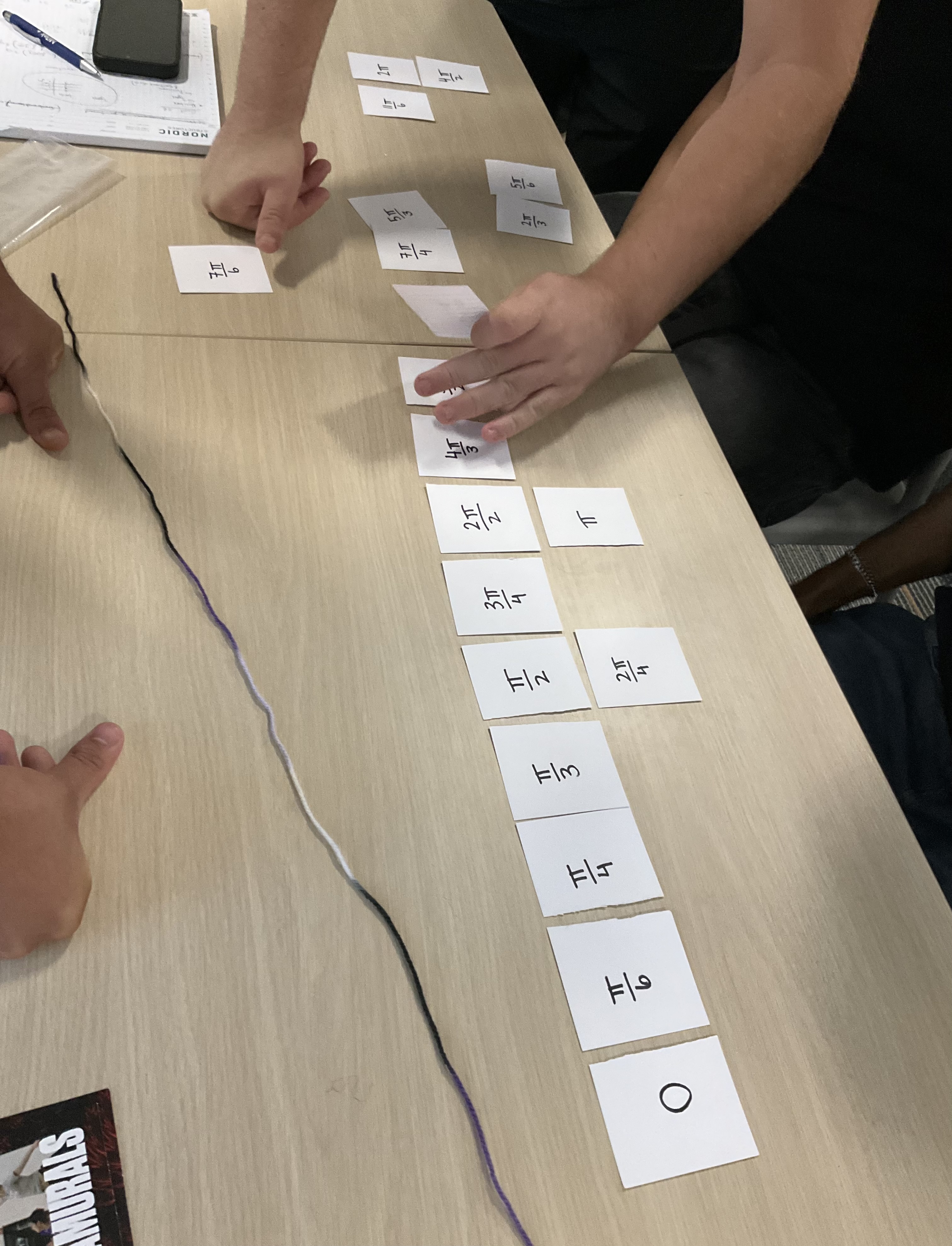
Then we joined up the string to make a loop and saw how each of the radian measures would correspond to the degrees that we are familiar with.
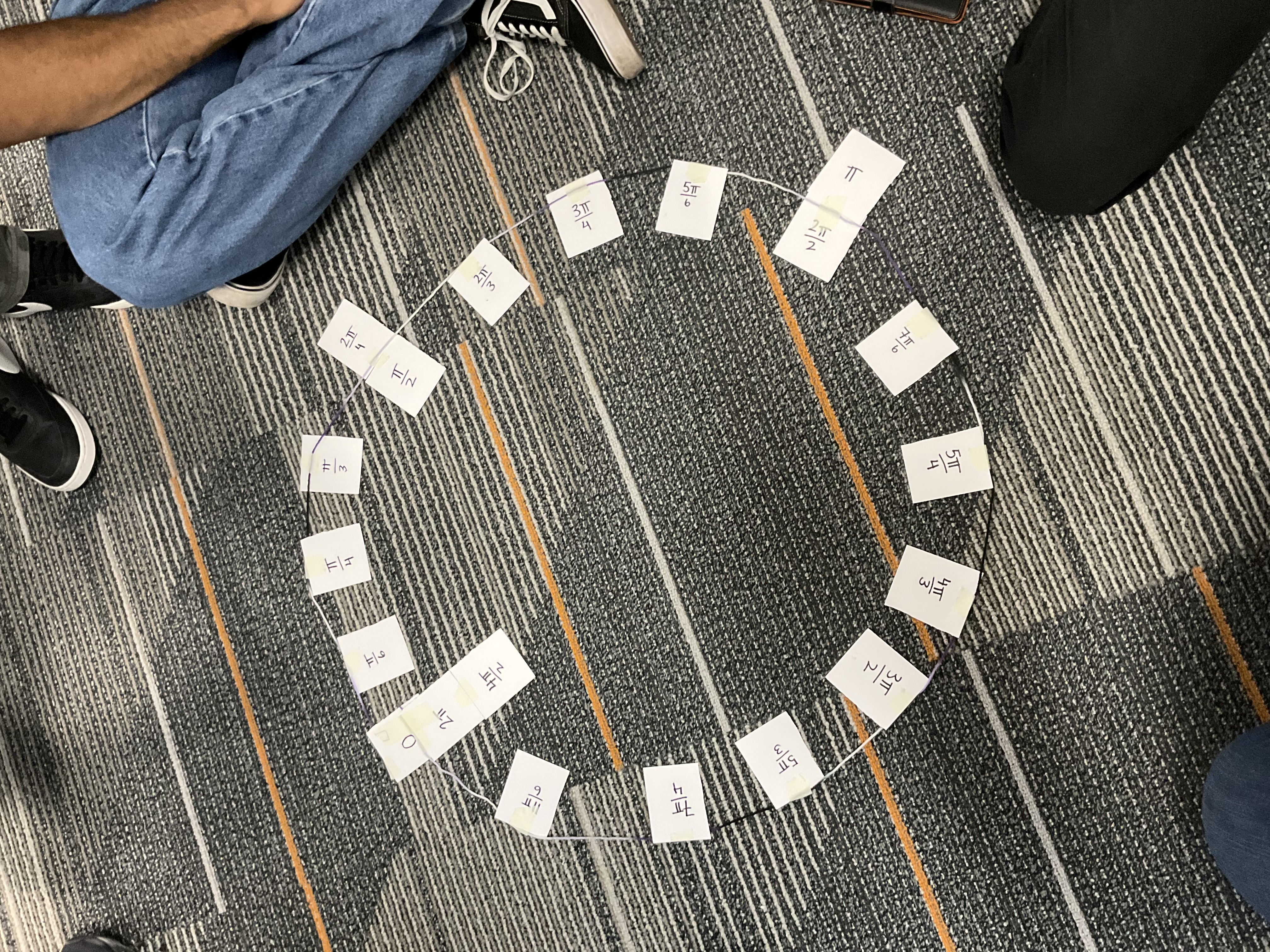
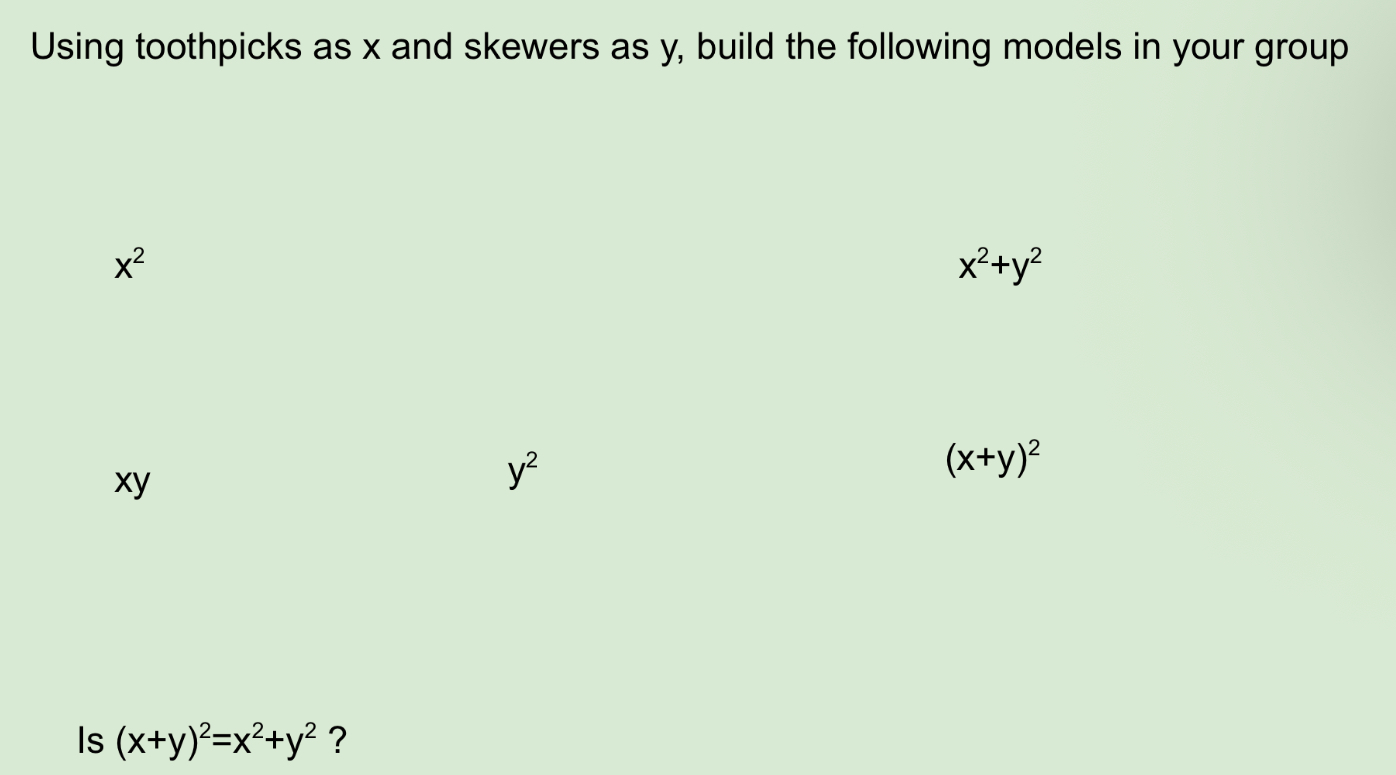
We did some more conversion practice with degrees and radians, then moved to a different building challenge to continue working on algebra understanding without the pressure of doing algebra.
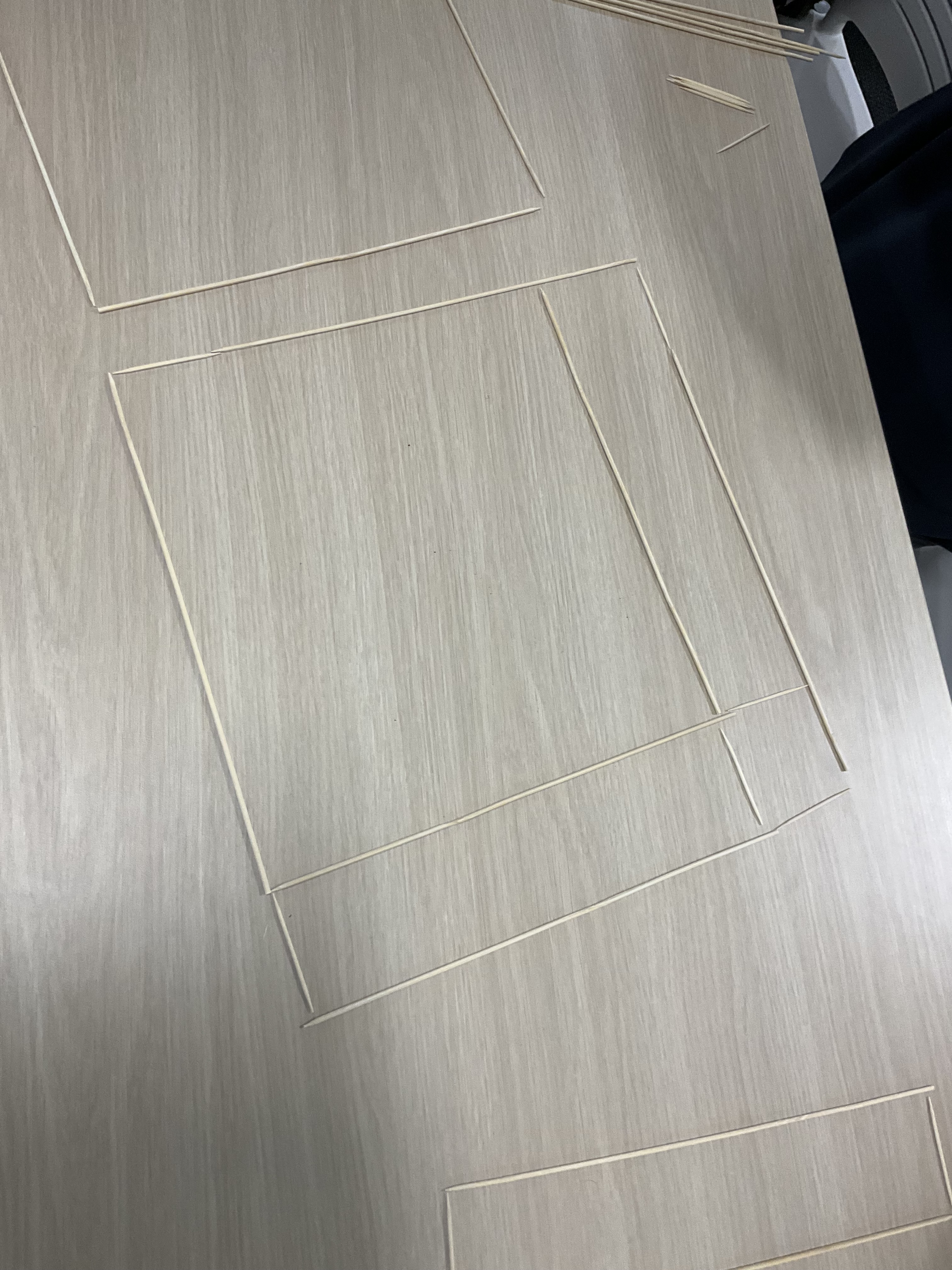
The most interesting model here was (x+y)^2. We can see the subdivision of x^2 and y^2 and 2 xy rectangles within the big square that has side lengths (x+y).
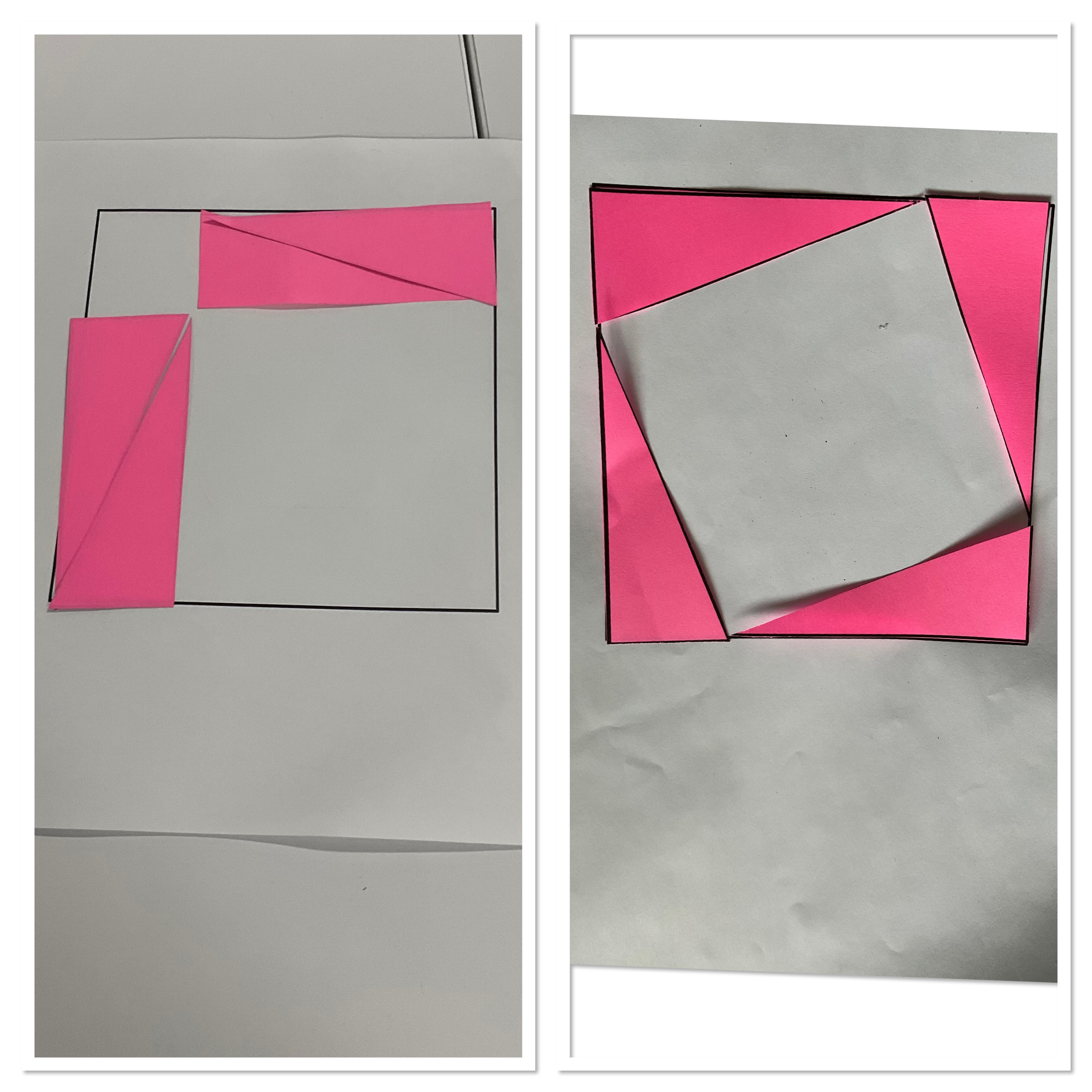
We carried on from this task to explore the Pythagorean theorem. Each pink triangle has legs of a and b, and hypotenuse c. They can be arranged on this square (a+b)^2 to mask off parts of the area. In one way there are 2 squares of negative space which are a^2 and b^2, or they can be moved around so they have only one square of negative space which is c^2, because we are using 4 triangles each time, the negative space is the same in each, so a^2+b^2=c^2.
We practiced some calculations, then got into an introduction/review of right angle trigonometry which we will continue next week.

