Review
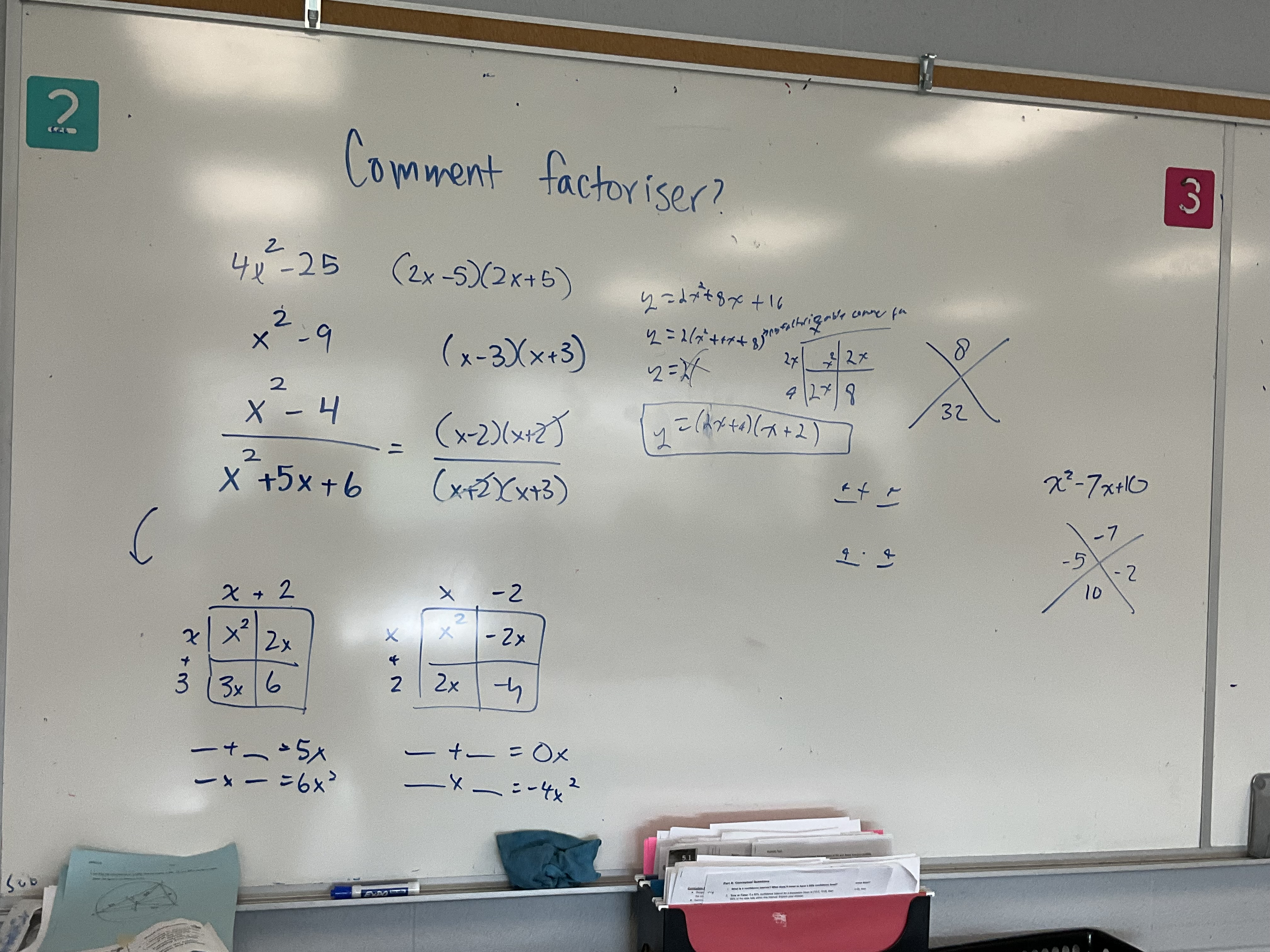
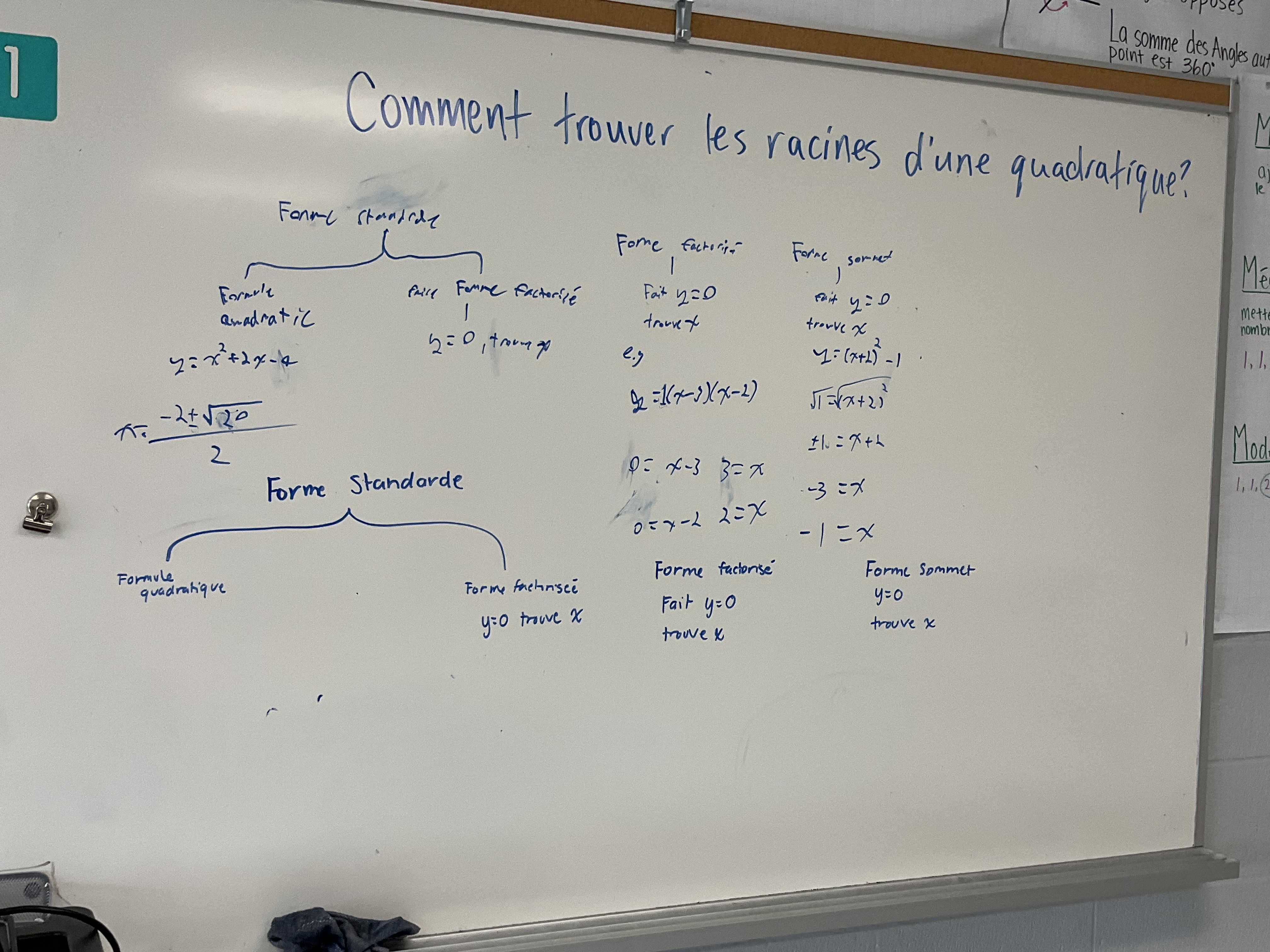
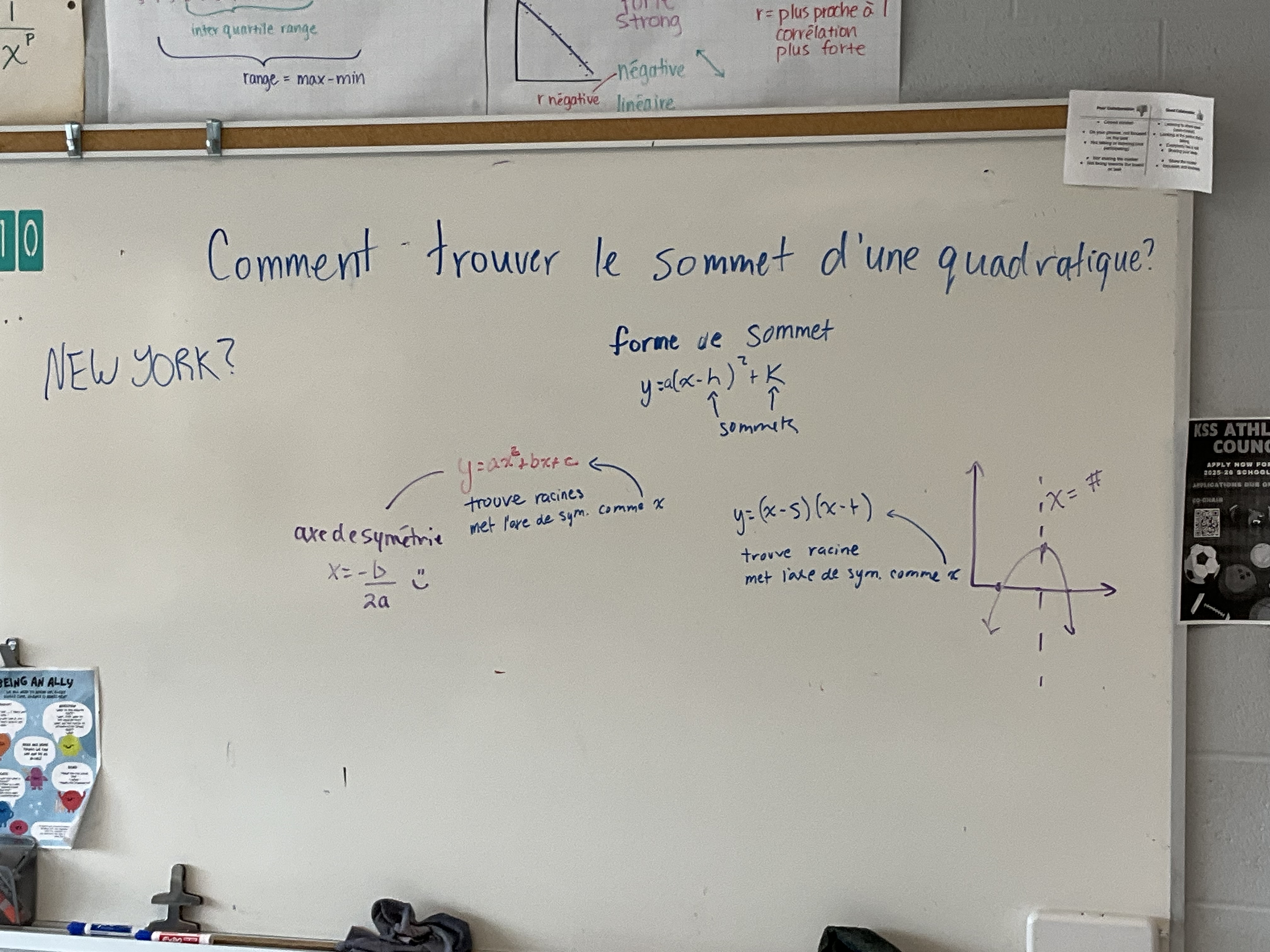
I was helping in a grade 10 class and saw a neat strategy for review. Several topics were written as titles on the boards and students circulated adding in their strategies for achieving the goals.
how to factor
how to find the roots/x intercepts/zeros of a quadratic
how to find the vertex
how to go from factored form to vertex form

how to go from standard form to vertex form

how to go from standard form to factored form

This was a work in progress as I snapped these photos. Students were collaborating, and adding their strategies to those listed, and editing what was written if something was missed.
Students were then working on a review package with a great deal of support material on the walls to help. This was a nice way to reactivate prior knowledge.
Exams are coming soon, it’s a good time to be reviewing!
Calculus Review
Today we did a calculus review puzzle. Here is the file.

It’s a nice review of all the derivatives we did a while ago. We’ve got a few days to review before our exam on Tuesday. Good to see so many smiling faces working hard until the very last day!
Problem Solving Workshop for Teachers
Today we had a great time solving math problems after school with teachers from various schools in our region.
Many thanks to Dr. Peter Taylor from Queen’s University, and his students for bringing us some great problems to explore.
The first problem was about 2 concentric circles that had a special property. The segment AB which is a cord to the outer circle, and tangent to the inner circle has length 10. We needed to find the area of the outer ring.

We had lots of ideas, and approaches. Some used trig, others substitution and pythagorean theorem. Some made assumptions at the beginning, others didn’t. It was very neat to see the various strategies all get us to the same answer in different ways.
The next problem was about mirrors. 2 mirrors are placed with a 50 degree angle between them. If you sit so your eyes are 1 m from where the mirrors meet you can see 6 images. The goal is to determine how far from each of your images you are.

We set up the mirrors, got to measuring, and then had a lot of fun mapping out light rays.

We needed our knowledge of reflection from science, and triangles from math. We didn’t get to the answer for this problem, but we have lots to consider and think about. Sometimes we think that math needs to happen in 75 minutes, but for some problems they need more time. Time to make connections with other math/science, time to think of different approaches, time to do the calculations, or time to make a good plan, or a generalization of patterns that you see. We need to give ourself the time to be playful with the math, and enjoy the collaboration and the journey to the solution.

Often teachers are caught up in the busy seasons of marking and setting exams, and we lose the spark of excitement that comes from working together and doing the math. Today was a lovely refreshing evening of collaboration which I hope we can do again in the fall.
Many thanks to all who came, and to Dr. Taylor for bringing us some great problems to try.
Paper Planes
We looked at intersection of planes this week in calculus and vectors. To test our knowledge groups got a system of 3 planes and used their skills to determine if the system was consistent (there was a point/line/plane of intersection) or whether the system was inconsistent (no point/line/plane of intersection) and how.
The next step was to cut out their system, and slide the pieces together to see how the planes intersect.

We had 4 groups and 4 different results.

It was a fun way to visualize what our matrices told us!
Problem Solving Review
My class of grade 10s has come a long way since February, in terms of math skills, confidence as problem solvers, and our sense of community in our classroom.
Today we started looking at some interesting problems that mix a lot of ideas together. It’s a nice way to end the term, and show them how far they’ve come. We also get a good exam review by doing problems that involve many aspects of our course.
To start the class we looked at what types of math we’d learned, and what are some of the key words or equations or strategies they might need.

After listing all this we started to work on our first question.

We needed to do a bit of brainstorming with our groups. What type of question is this? We noticed key words, and units. The word angle made us think of trigonometry. The squared units made us think of area and quadratics. The 2 equations for perimeter and area made us think of substitution. We know we need to make a diagonal line, and we know diagonals join opposite corners. We need a good picture and some variables and some equations!
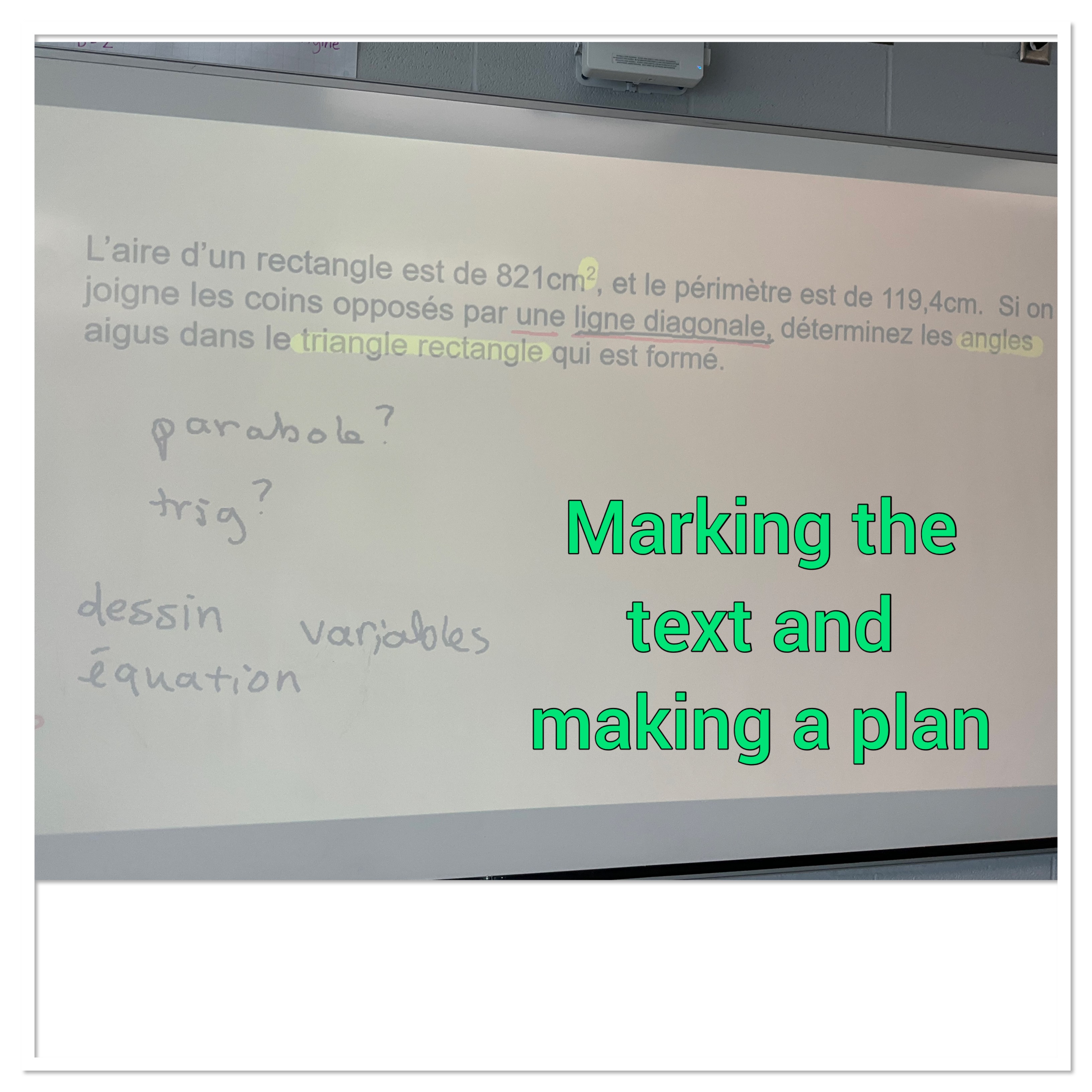
what happened next was magical. Groups got to work. Independently, and collaboratively. There was such a hum of activity in the room.

It’s a pleasure to be able to stand back and watch them work, but also it’s great to interact and see and hear what each group is thinking. There are good questions being asked, and students are helping each other to know what the next step is. They are checking to see if they are on the right track, and reassuring each other. They are checking to see if their work is reasonable, and what’s even better is that they are having fun with each other and also with the math.

In this particular question many students questioned if we are looking for x intercepts or for the vertex. There was good conversation about what to do with 2 positive x values as roots to their equation. We talked about if we could use sine cosine or tangent or if sine law or cosine law were better.
we moved on to look at some questions with systems of equations and percents

Here’s a group mid trouble-shooting…they are figuring out why they ended up with a negative value. They figured it out…it all had to do with how they set up their equations to start with. Hopefully by working through these situations now, if it happens on a test they will know what to check for and how to correct it.

The next problem we did was one involving rates and trigonometry.

I added an extension for groups who finished early, asking how far the boats would be from each other after 45 minutes. This allowed us to enter into a nice discussion about similar triangles.

We had almost everyone engaged in problem solving for almost all of the class today. We’ve built up this stamina over time. It’s a process, but at the end of term it’s great to see how far we’ve all come.
It felt good today. Hopefully this can continue into tomorrow’s review as well.
Exam review begins
We’re blending our final rest review into our exam review. This is one of the joys of spiralling the curriculum material. At the end of the year we are doing exam review for quite a while, and everything has been covered recently, so there’s less of an issue with forgetting major concepts.
Today we looked at solving some word problems.
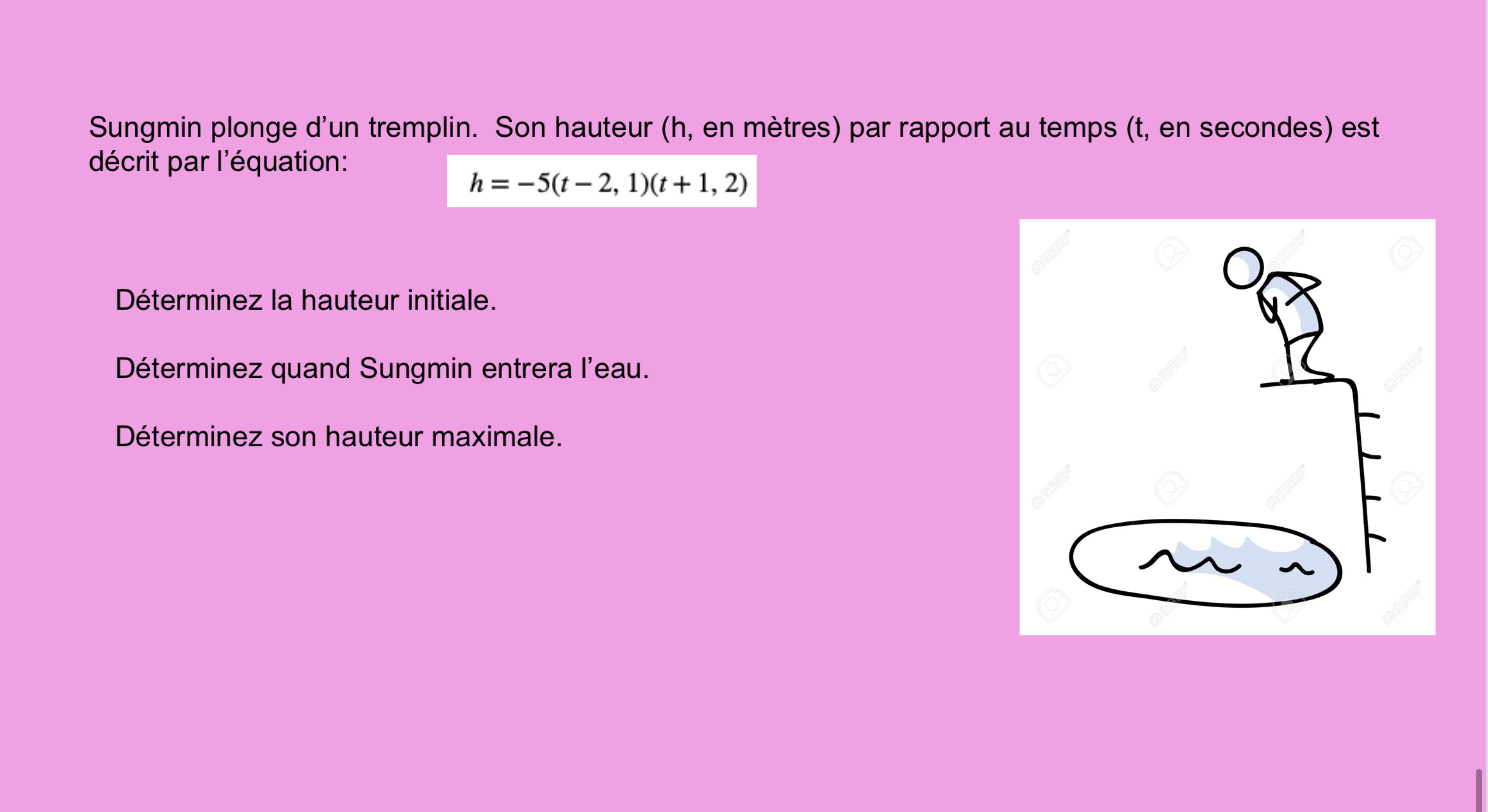
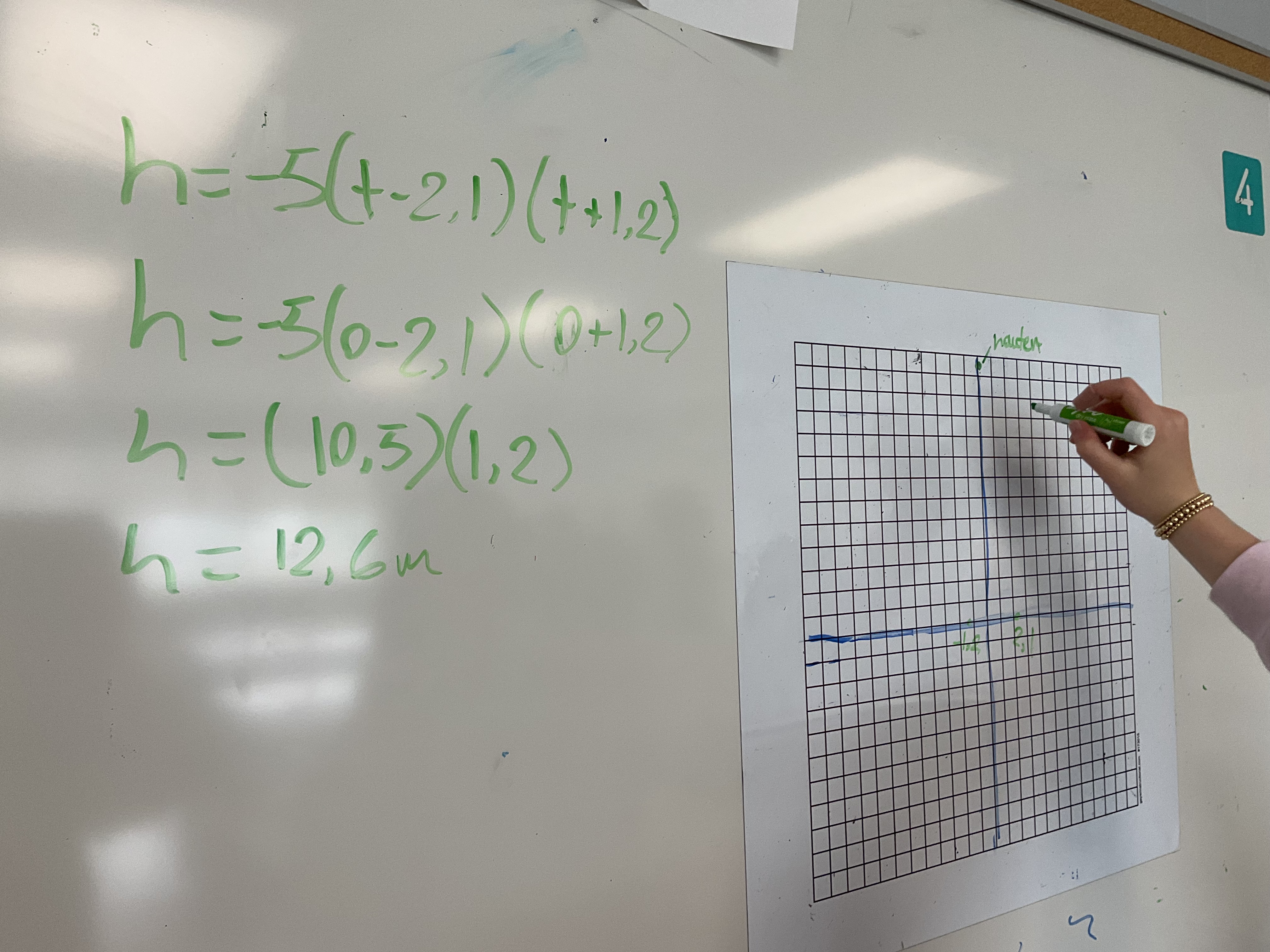
We are working on connecting our knowledge of quadratics to the context of word problems. We’re remembering lots about different forms of quadratics, and what we can read quickly from equations, and what needs a bit of calculating.
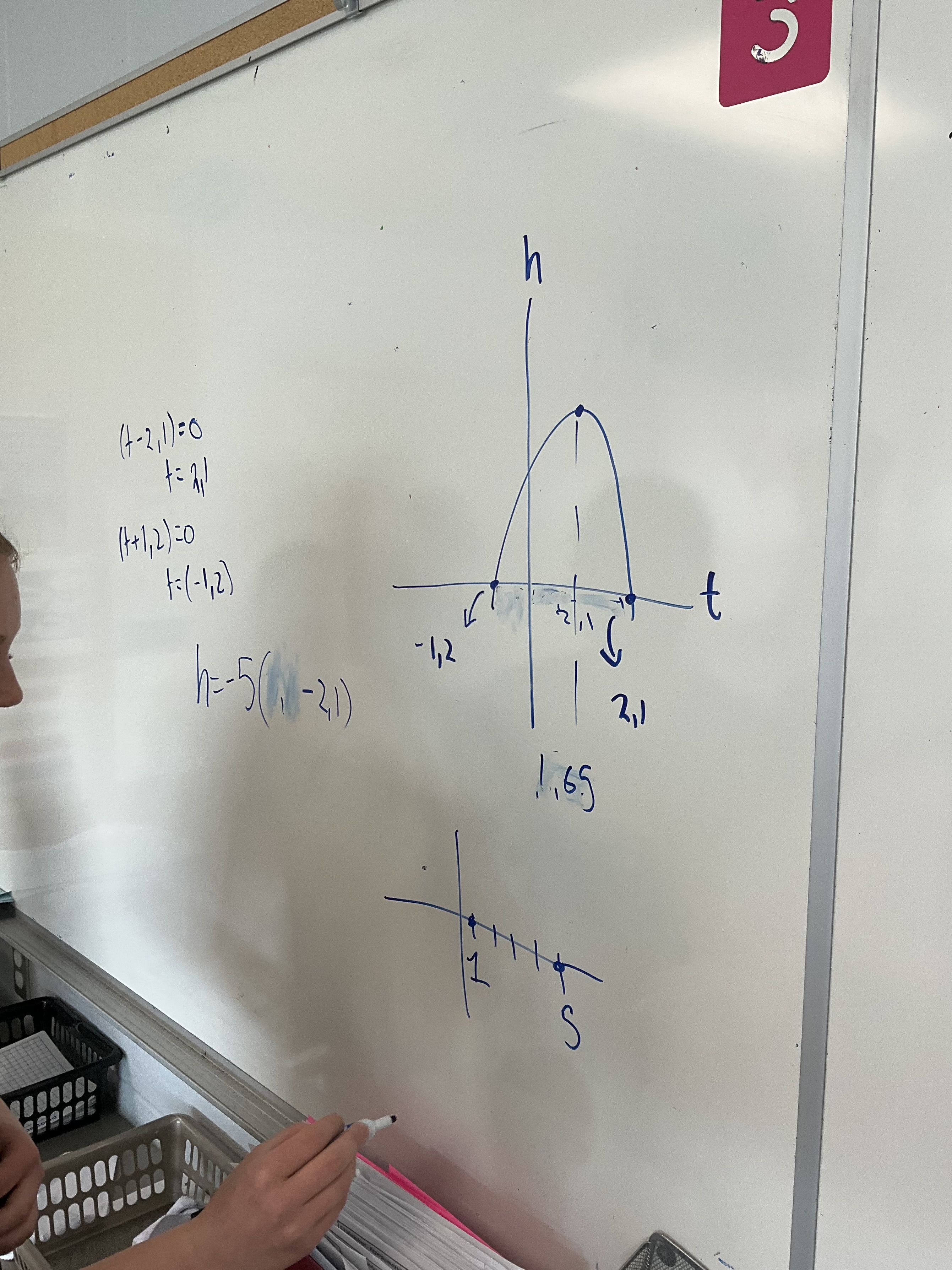
It’s great to hear the students working together and helping each other. We have so much expertise in the room!
We looked at a trigonometry word problem too where we needed to draw our own picture.
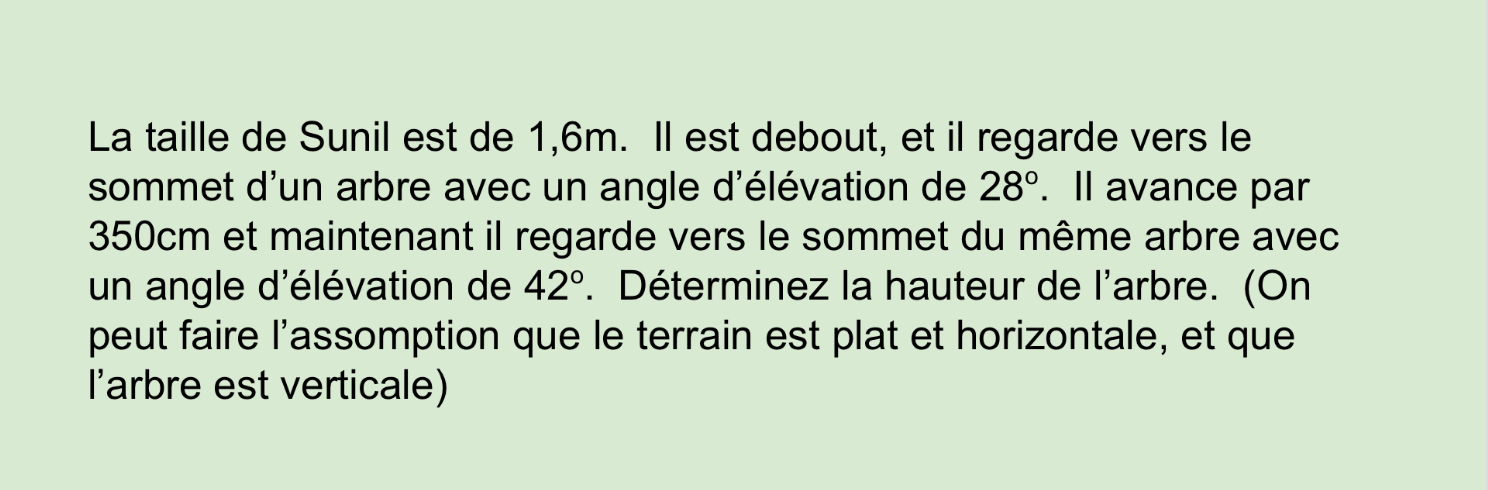
We’re getting better with translating words into pictures, and making a plan to solve.
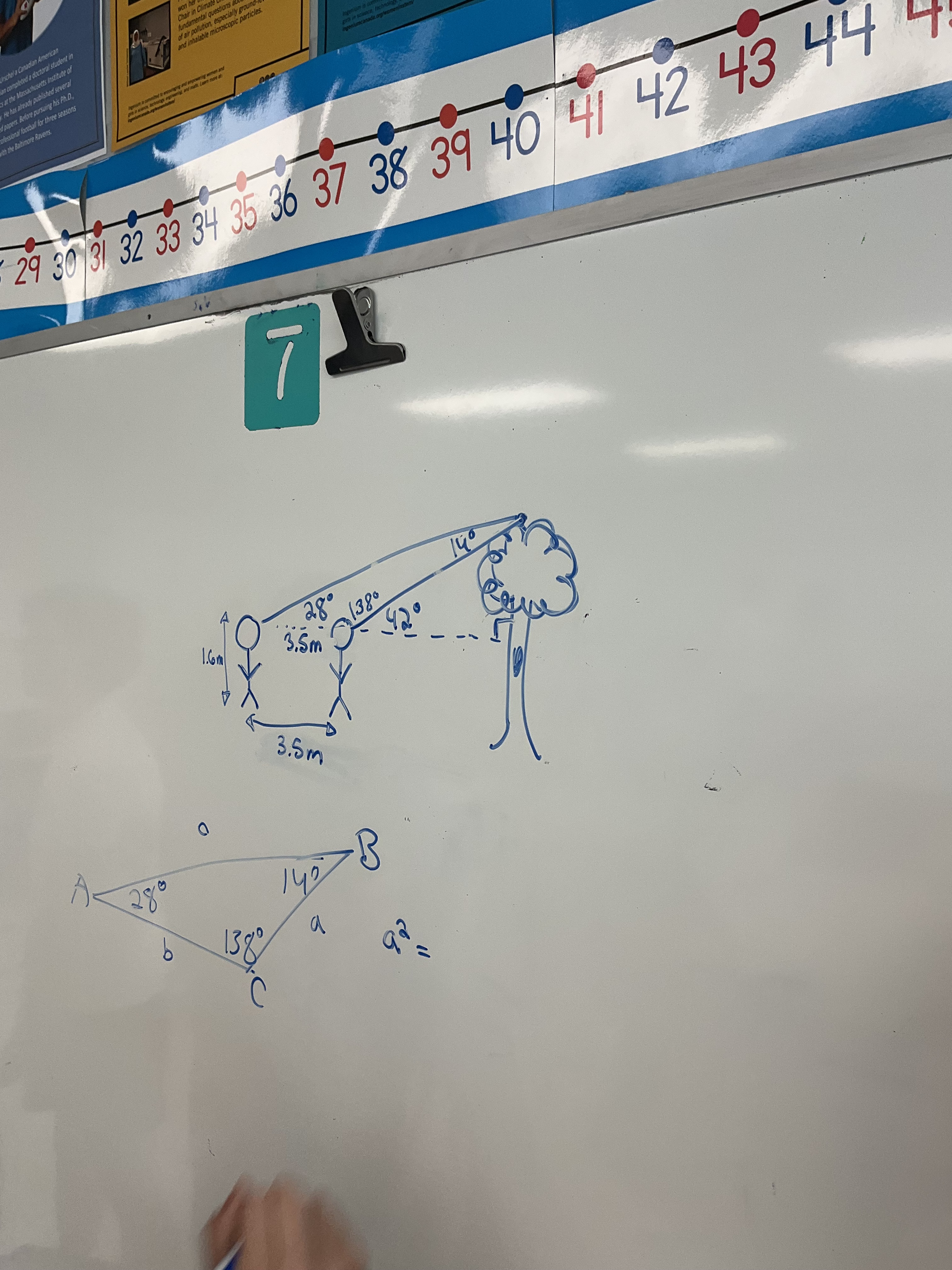
We’ve come a long way since February!
Catapult Results
Today we looked at our catapult results for the entire class.
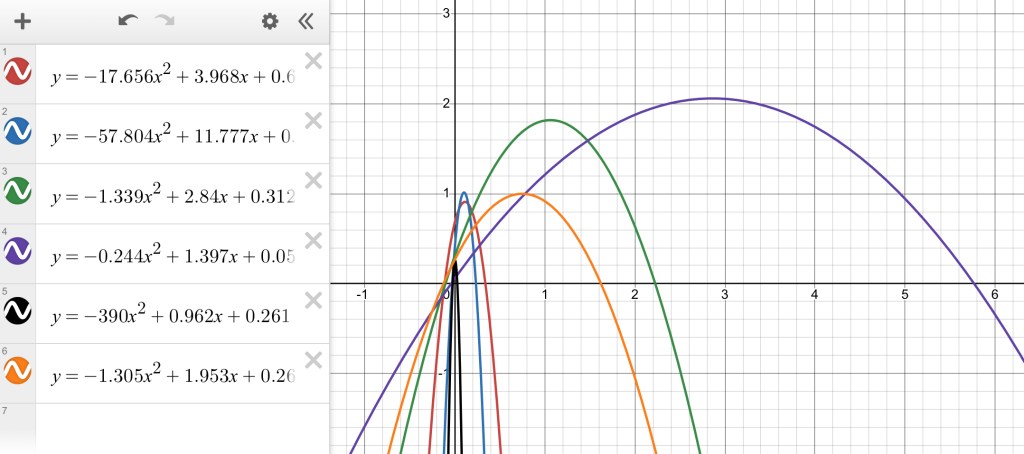
It was interesting to see how varied the results are. Some groups had to work in the atrium to have a bigger height, since they kept hitting the ceiling. It had the farthest range, and the highest vertex.
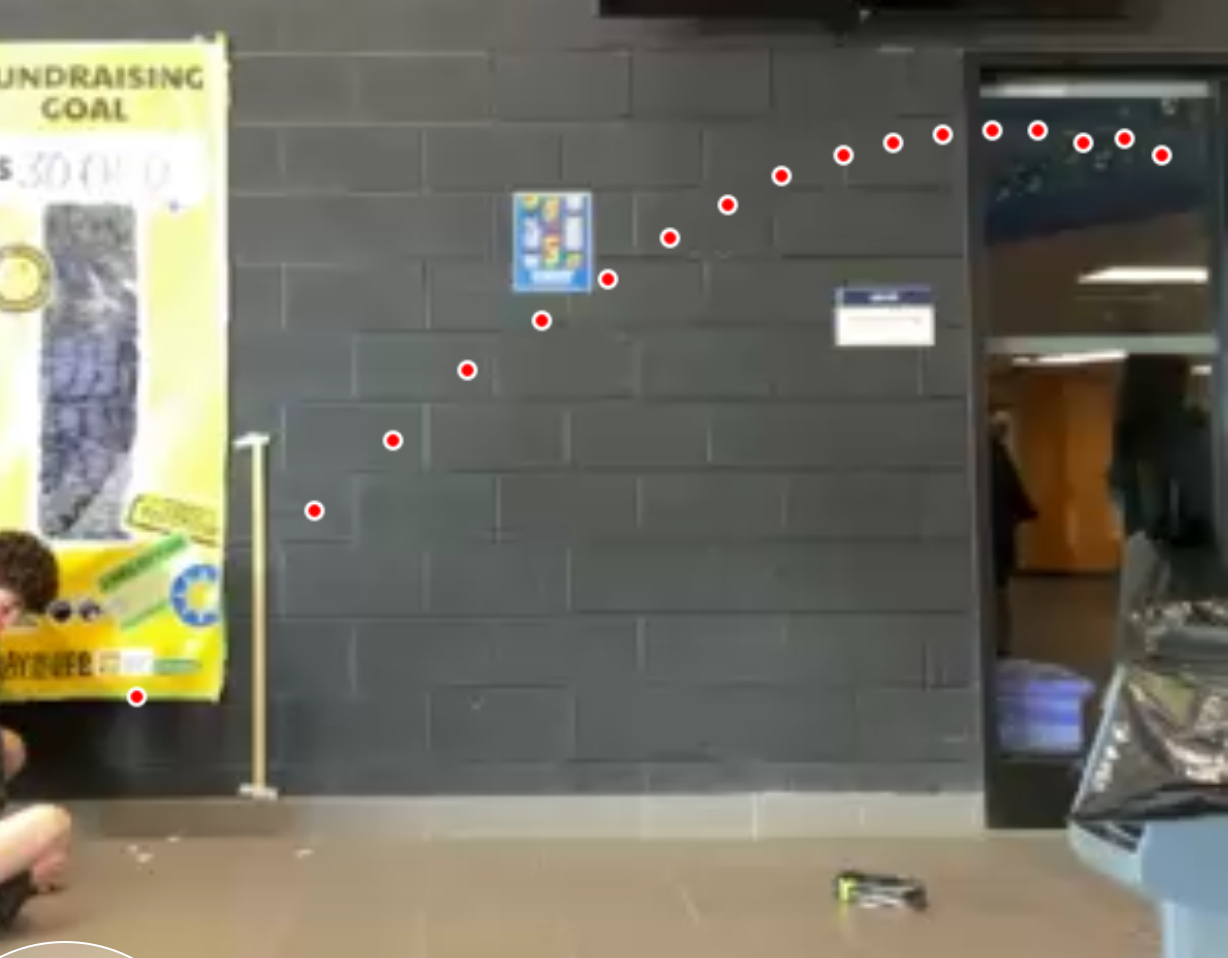
Other groups with closer x intercepts had much more repeatable experiments.
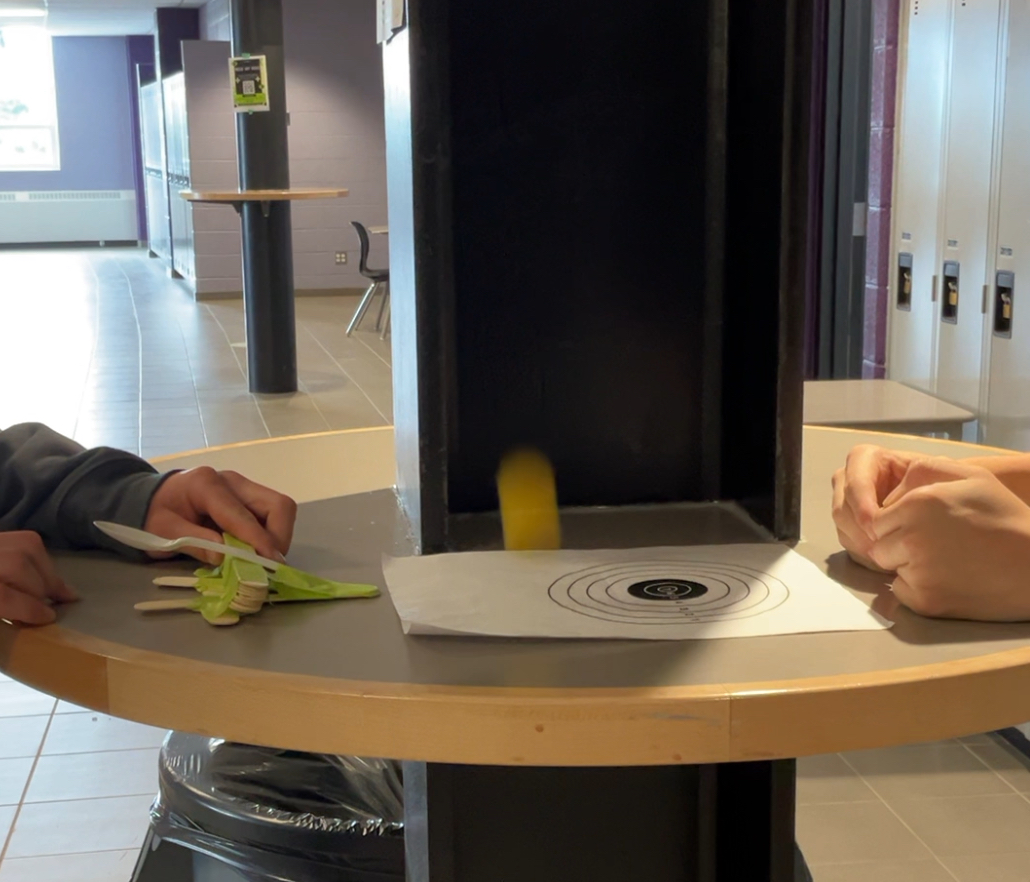
We have practiced doing lots of calculations to be ready for our individual portion of the task on Monday.
Tech Weigh In: 3 act task in vectors class
Today we did a 3 act task in grade 12. It’s one I have done in grade 10 before, but this time I introduced it as a way to review elimination, and to introduce matrices as a way to solve a system of equations.
Here’s act 1: to set the scene
There are 3 parts to act 2
Each scenario gives enough to build an equation. Groups tended to do elimination at first, and then substitution to follow, or substitution at each step.

We need to work on our elimination skills so we can use matrices and understand how to reduce them. We’ll keep working on that tomorrow.
At the end of the lesson we looked at act 3 to check our answers to see if we were close.
Catapults: Culminating Task in Grade 10
In grade 10 we started working on our culminating task: analysing the trajectory of catapults that we build in class.
Today we started building and testing and collecting data.

Each group gets about 10 tongue depressors or popsicle sticks, a plastic spoon, several elastic bands and some tape. We use painters tape because we are aiming for something that can be disassembled, so the pieces can be used again next term. Each group also gets a target, a pompom, and a package of work to do.
After they have created a catapult (with or without online tutorials) we go into the hallway and collect some data.
We film the pompom being catapulted, then use the app Visual Physics to track it.
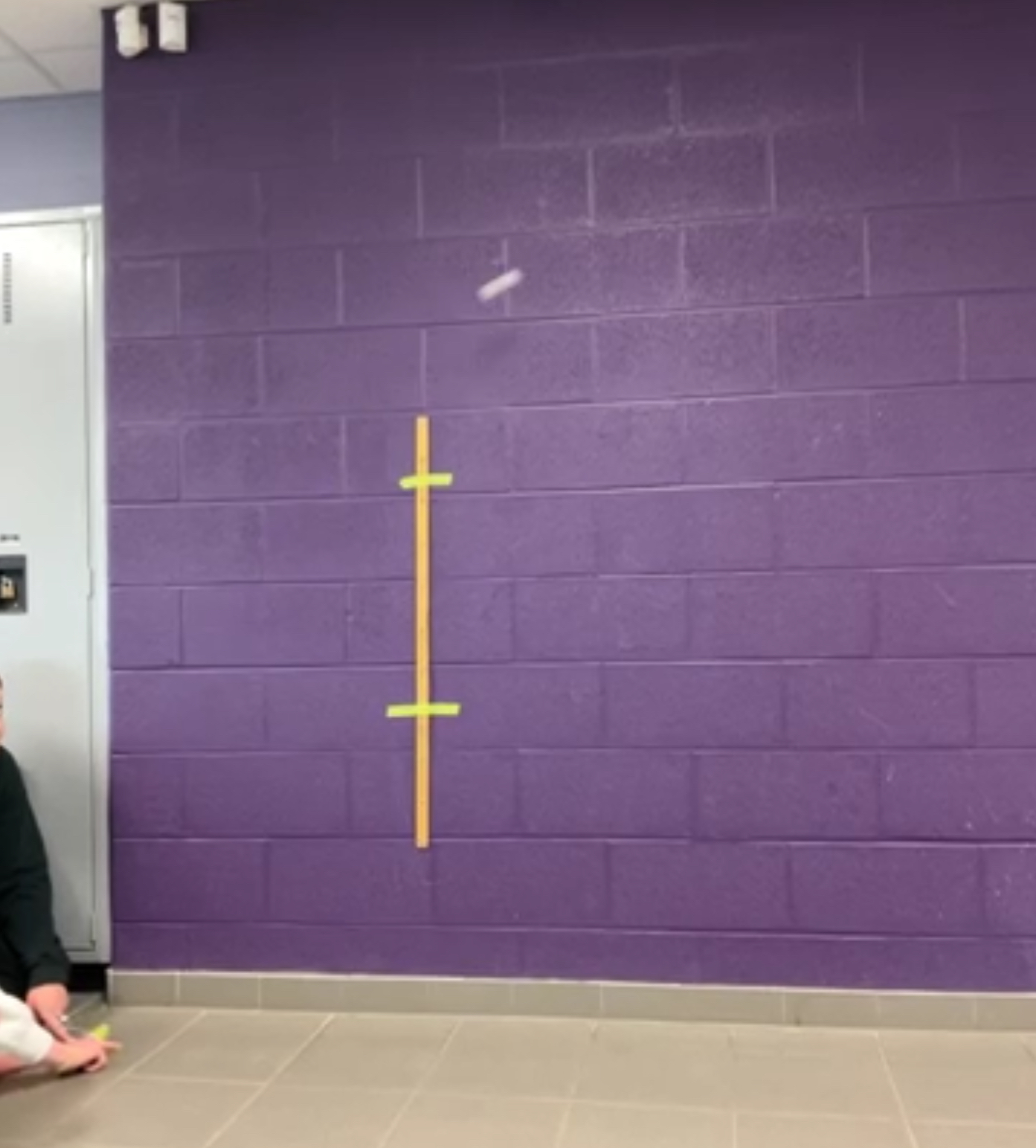
Here’s a different one being tracked. We need to scale the image (that’s why there’s a meter stick on the wall). We need to touch the screen where we see the pompom (we track the leading edge of the blur). The program advances time slowly so we can see the pompom at many points along its trajectory.

Finally we upload the file to a different app where some analysis can be done. In this case we can see a table of values, and a graph with a smoothed quadratic overlayed. The a b c values are given for the quadratic.

The next step for students is to see if they can use the table of values to calculate a similar “a” value to the one the program gives. Also they use both equations to calculate where the pompom lands.
The extensions are questions like: if the catapult was on the floor and trying to hit a target on a chair, determine how far back the chair should be. If the catapult is on a desk, where should the target be on the floor? By adjusting the initial conditions we can play around with how that changes our calculations.
After working in groups for a few days, we will each try to do something similar individually as part of the culminating task.
PD presentation
This morning my colleague and I presented some of our OAME presentation to our staff at our PA Day.
We were tasked with having an ice breaker, and then sharing some of our work on mindset and creating brave spaces for our students.
We started the day with random groups done by team shake, to have everyone mixed up with people they don’t always socialize with.
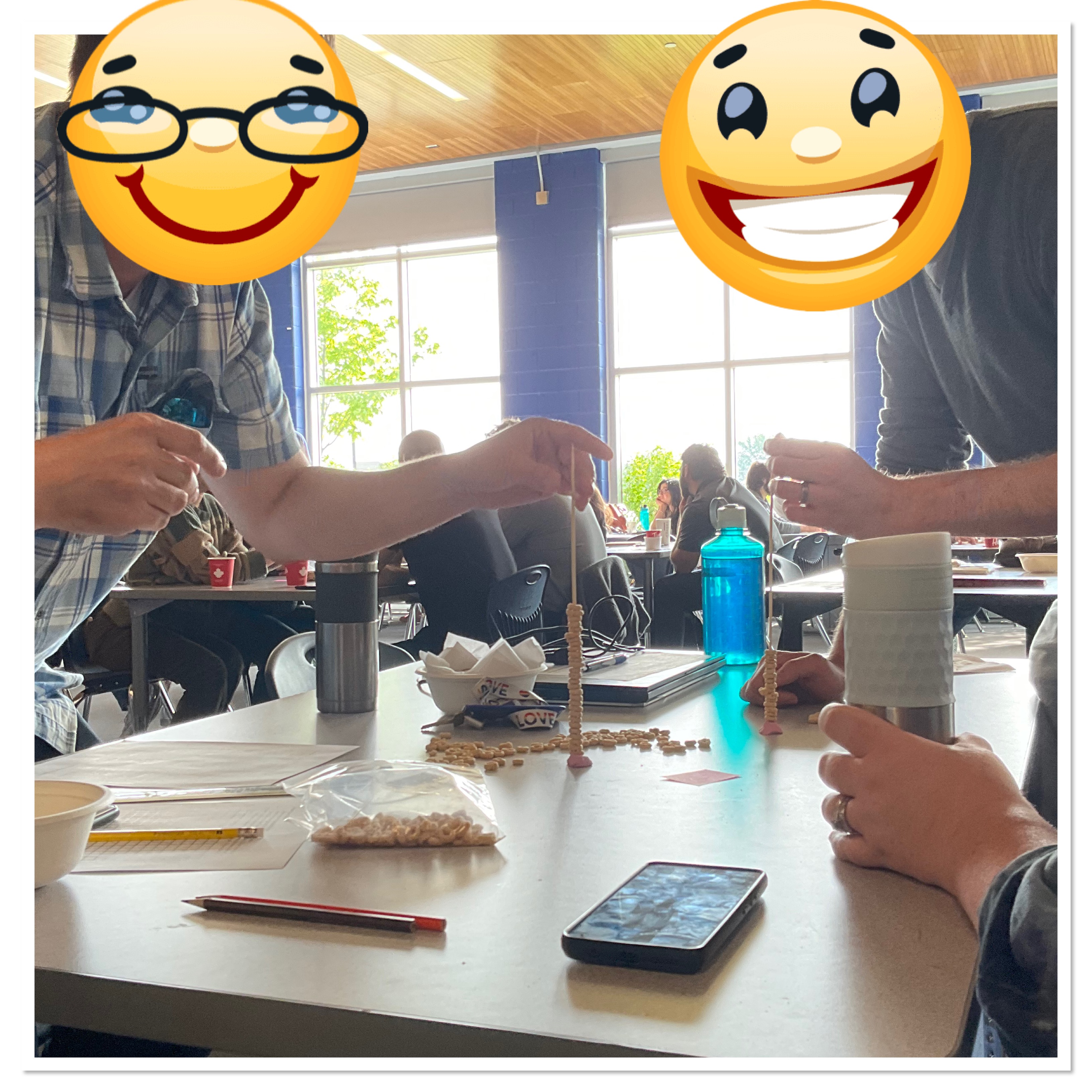
We had a Cheerio stacking competition, which was pretty fun, and allowed for everyone to do some work.
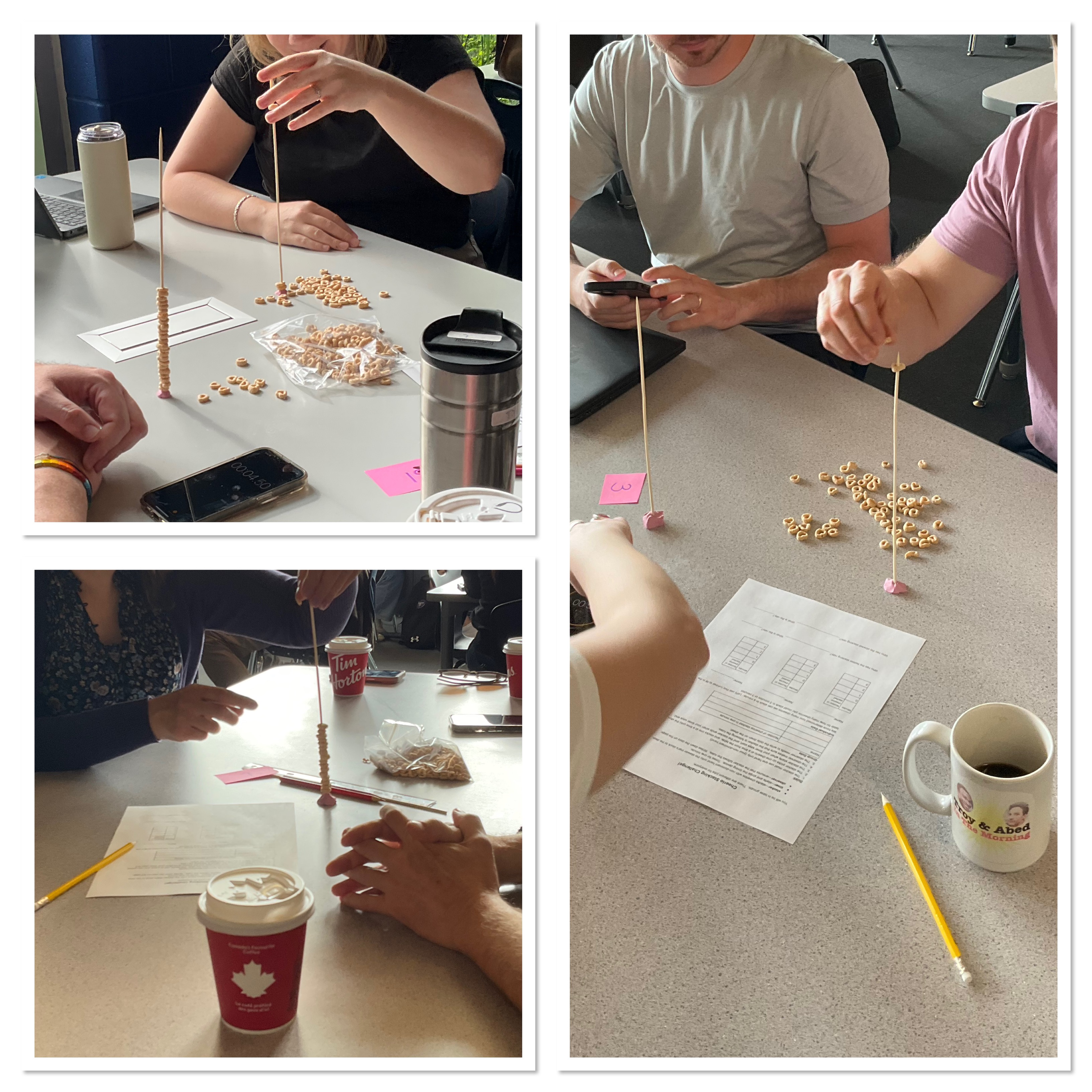
Here’s the document if you want to run the task. I’ve tried it with grade 9 and 10 (both academic and applied)
Everyone needed to be timed for a minute of cheerio stacking. Then they predicted how many Cheerios they’d stack for 2 minutes and 3 minutes. Next they graphed the slowest and fastest stackers data.
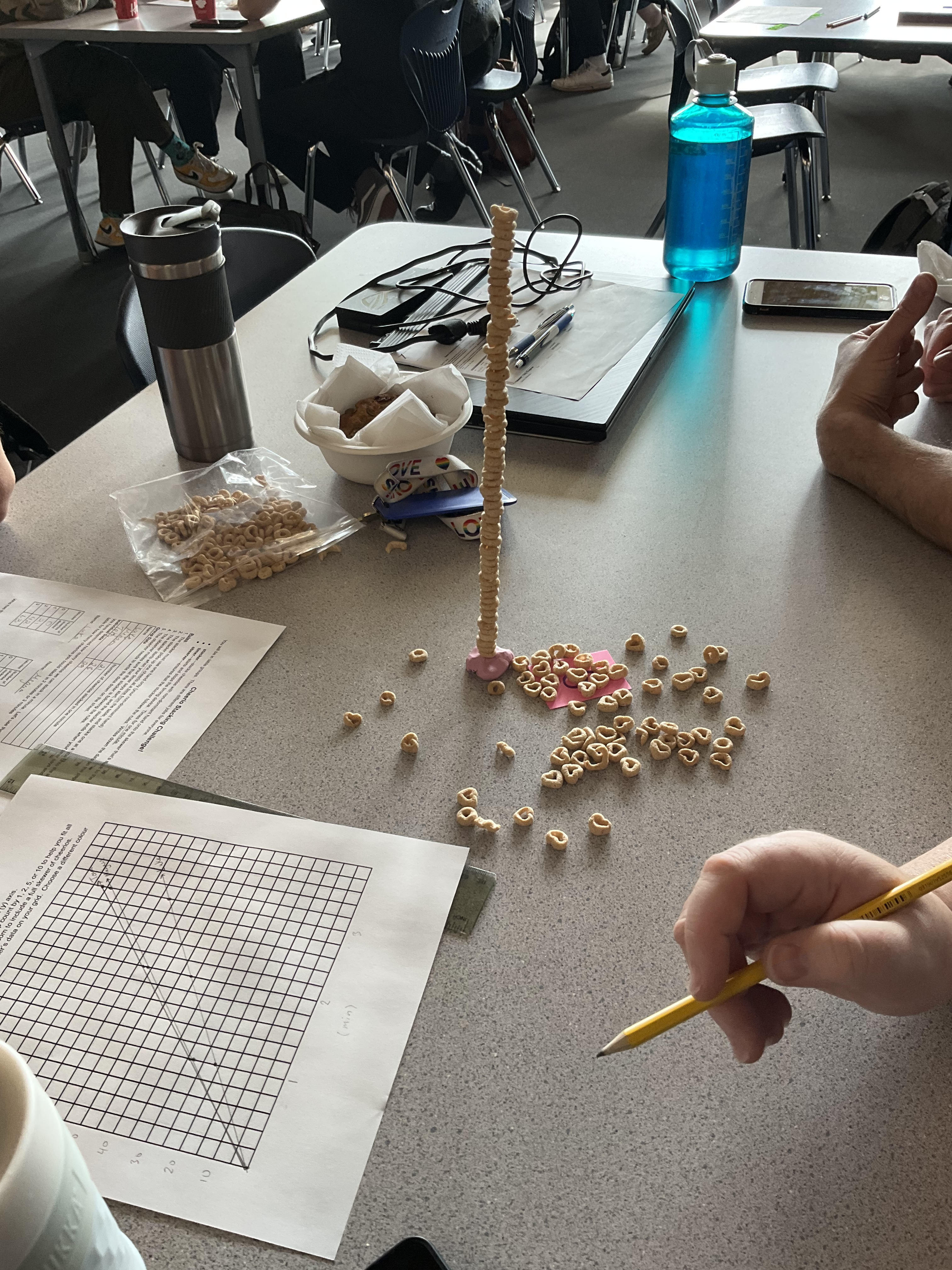
Finally we looked at how to make a photo finish with a full skewer. We looked at how many Cheerios of a head start would be needed to balance the competition, and then we tried to see the photo finish occur.
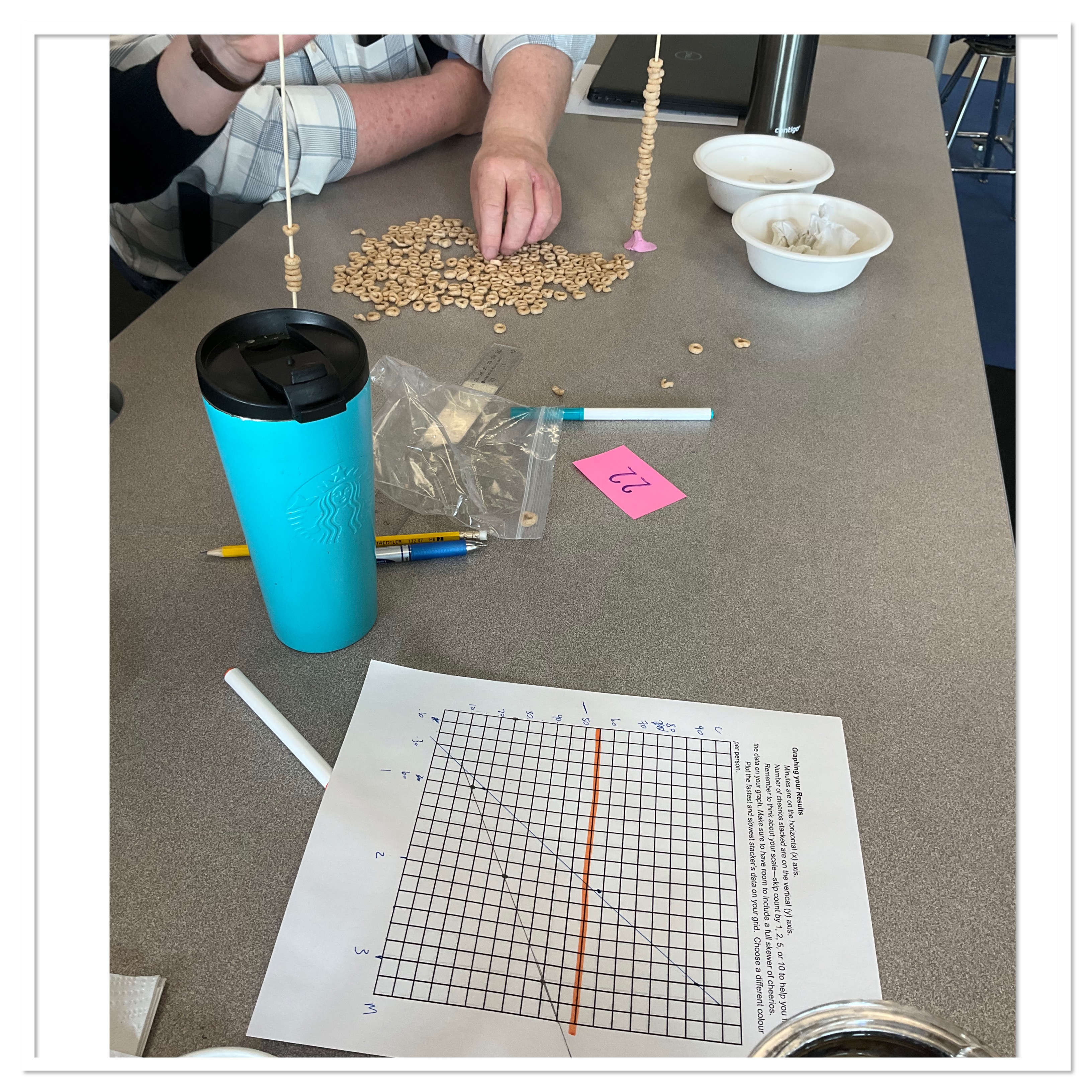
We had a few epic photo finishes!
Later we spoke to our work to create brave spaces in our classrooms. We gave examples of what we do to create a comfortable space for students to try new things. We showed an example of a dot talk, and had lots of great interaction and participation from our staff.

we talked about our first week in grade 9, and how we introduce thinking routines, and communication structures, and explicit discussion of mindset which will continue through the year.
Here’s the slide deck if you are interested.
 Ms. Bearse's Site