Patterns to Algebra
Yesterday in grade 9 we started looking at patterning. We created several growing patterns that have this as figure 2.
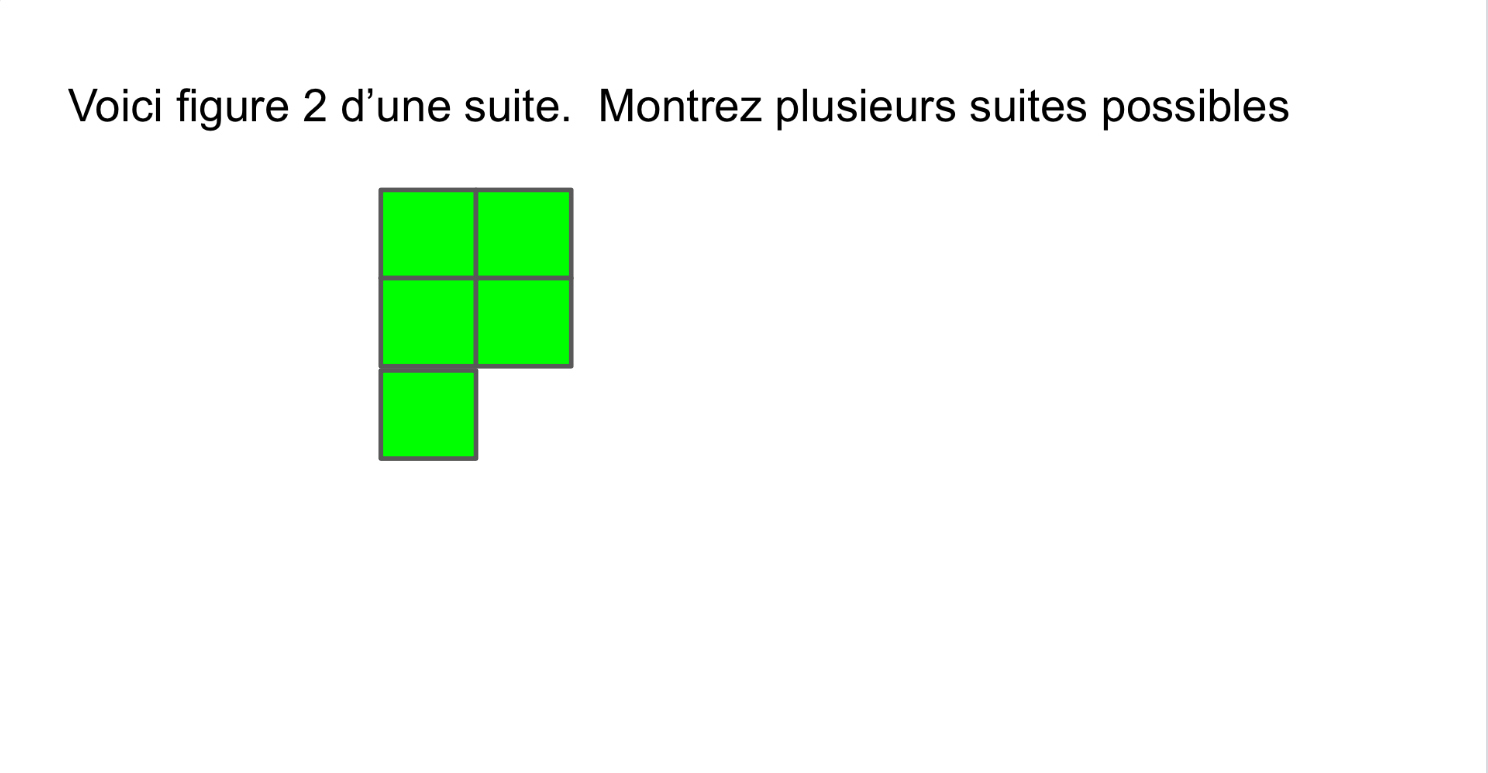
We worked on figuring out the pattern rule. We know that if we increase by the same number of blocks between figures each time, it is a linear relationship. The slope, or rate, for the line is equal to the common first difference. The constant is the value of figure 0. Some equations are not linear, and we notice that those ones grow by more and more and more each time. Those equations can have exponents in them.

Sometimes the pattern looks different, but the rule is the same.
We had a challenge to determine if this pattern is linear or not.
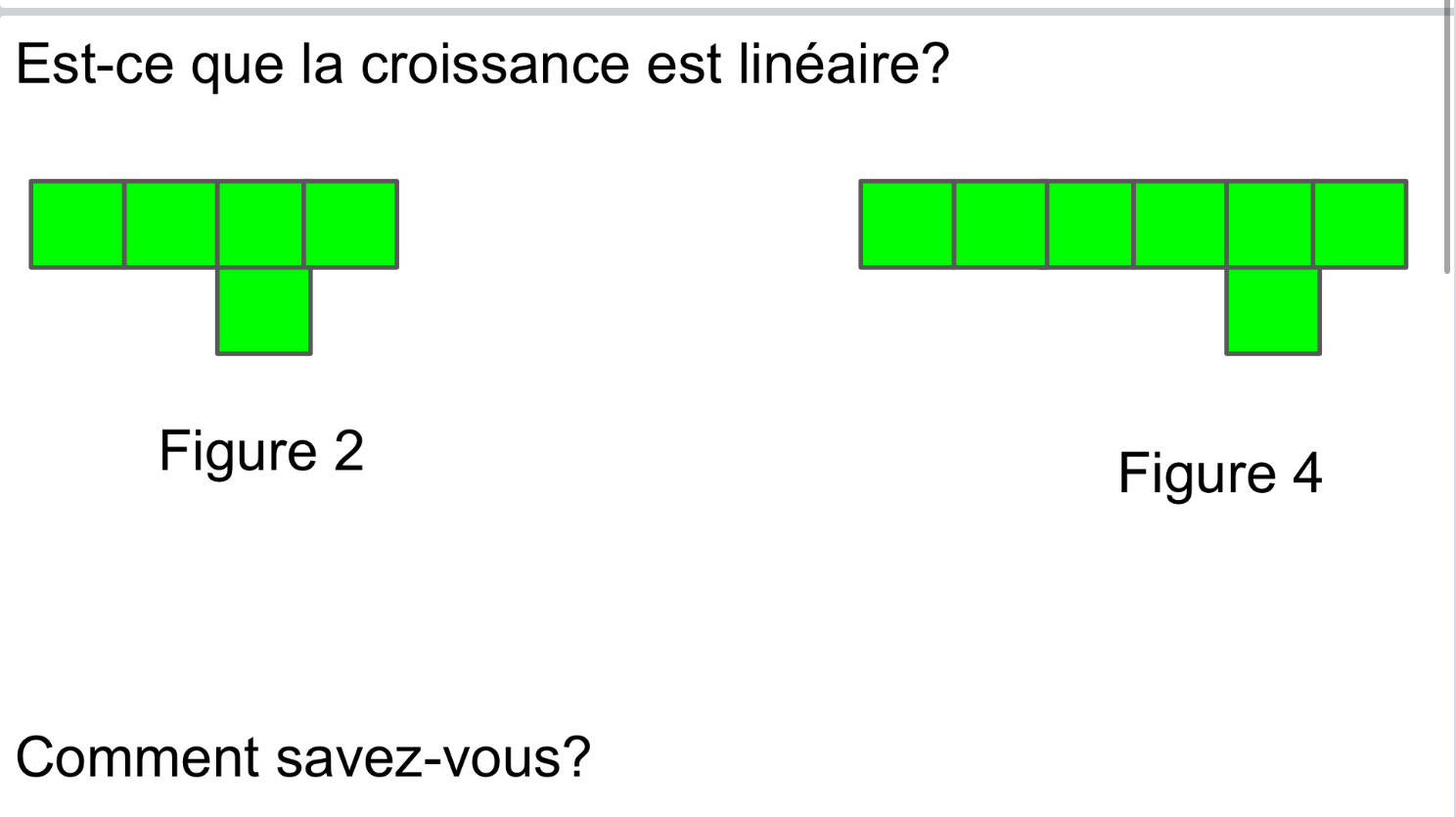
Students built what figure 3 would be, and extended the pattern back to figure 0. We noticed that the pattern grows by 1 each time. Figure 0 is the constant, which is 3. The pattern rule is y=x+3

This pattern is not linear. We know that because when we build figure 2 it will look like a square that is 3×3 and then 2 blocks at the top left. The pattern rule can be written as y=(x+1)^2+x. We know that we are adding different amounts to get from figure 1 to figure 2, than when we go from figure 2 to figure 3.
Our next step today was to start with the equation for a pattern rule, and then build figures 0,1,2,3,4 out of tiles.

Each group had different equations to build.

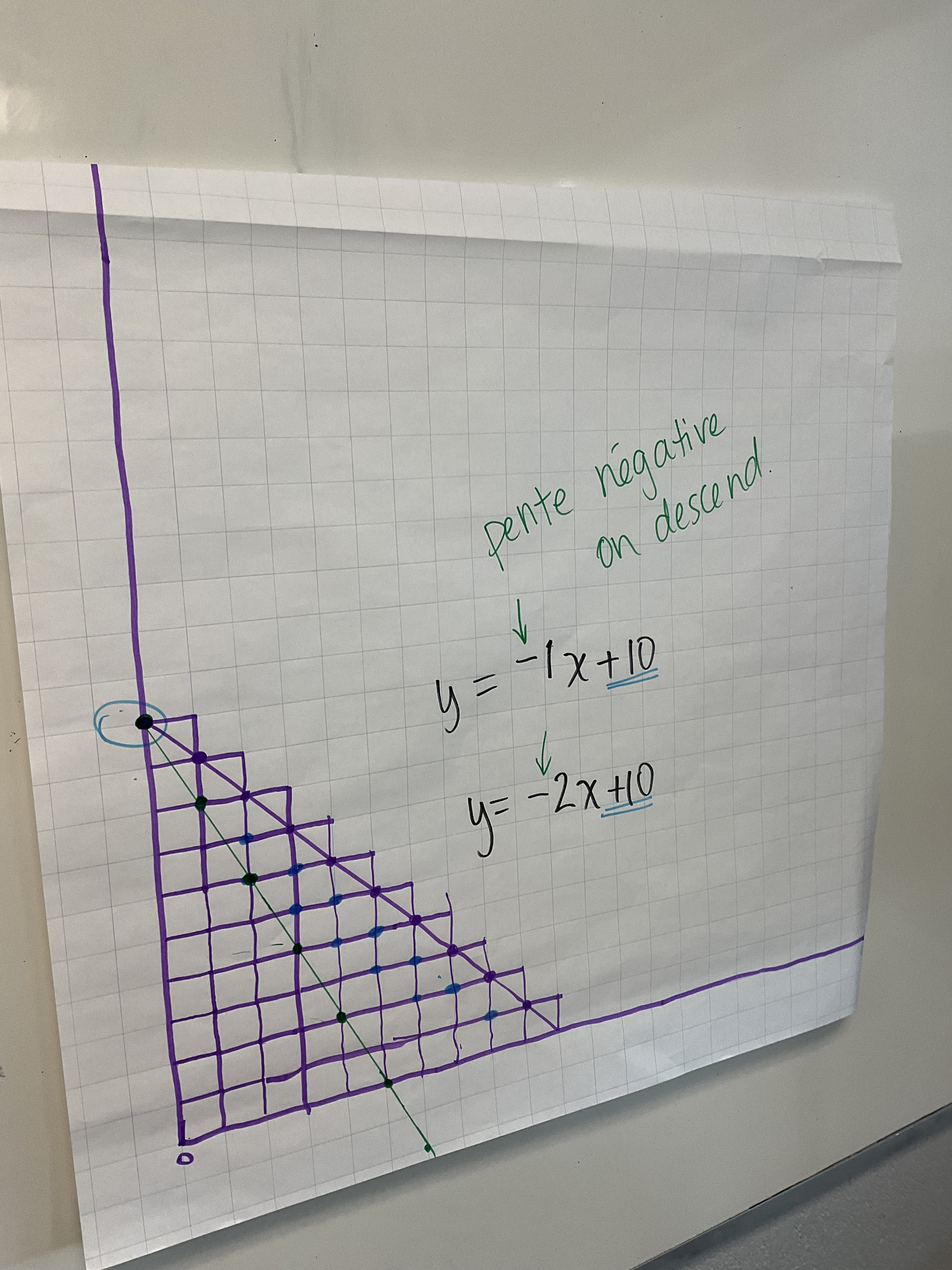
Groups then worked to dismantle each figure one at a time, and line the blocks up to fit on the 1 inch grid chart paper. We made each figure into a column, and then placed a dot at the top left corner. Figure 1 is then dismantled and all the blocks placed in a column and a dot drawn at the top left.

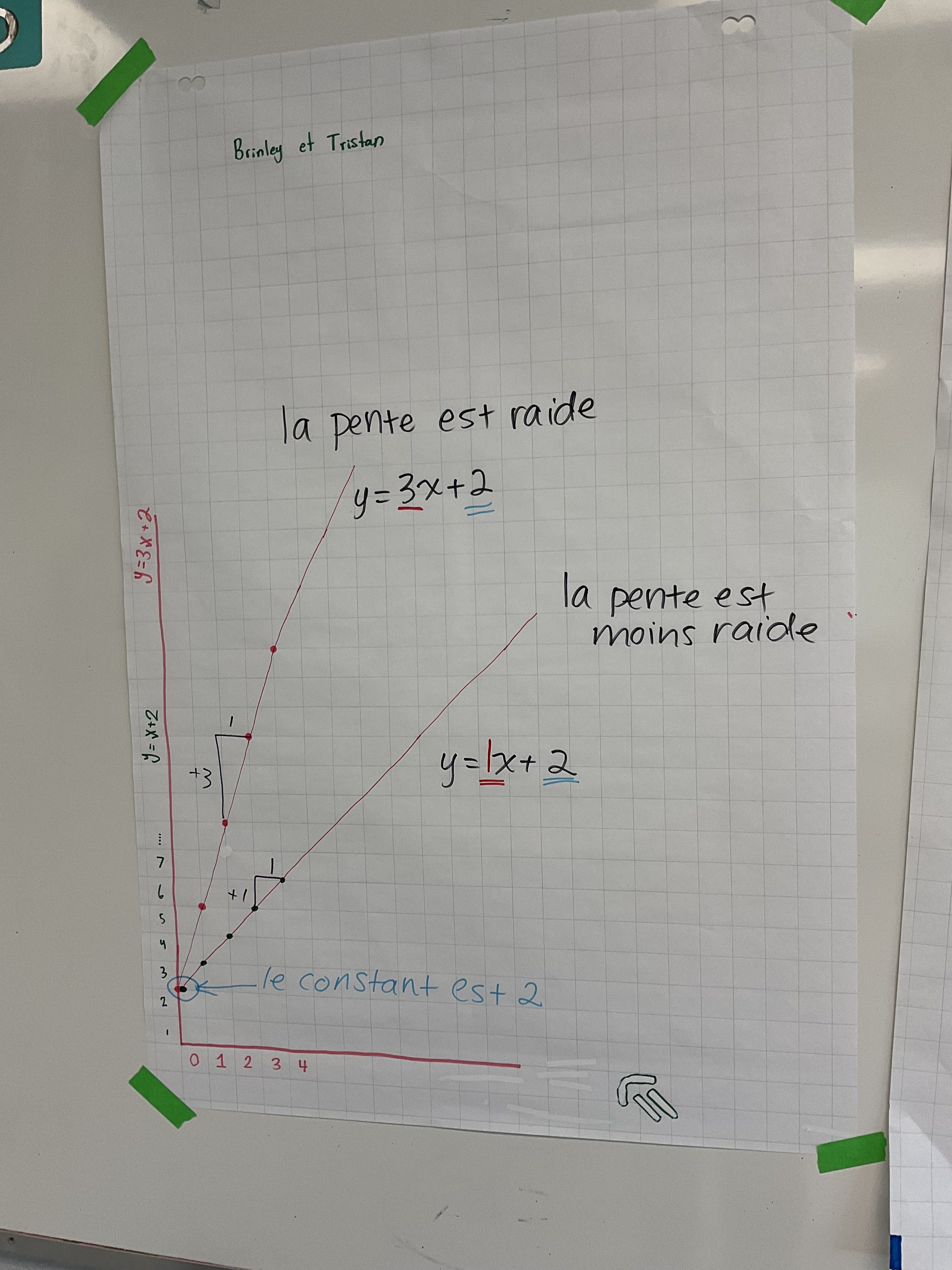
We can see that the constant, the y intercept, is 2, and the slope in this case is 3, since the “stairs” go up by 3 each time.
After groups had their graph complete, they were given a new pattern rule to do, and they used a different colour marker to make dots, so they ended up with 2 unique lines.

Groups all placed their work on the wall, and we did a consolidation lesson which talked through some new vocabulary, and we learned about slopes, y intercepts, and parallel lines. We looked at points of intersection, and were able to compare steepness of lines using their equations.
I wrote on the graphs as we went through the material. Here are the final chart papers.



We covered a great deal today! It was impressive work on a Friday afternoon.
A Visit to Grade 7
This morning I had the pleasure of visiting a grade 7 class to see what they are doing in math. It was a great experience, and interesting to see what’s going on.

They were working with counters to create a bucket of zeros, and using that to represent operations with integers. Thos particular question was an adding question and didn’t need zeros in the bucket, but yellow represented positive, and red negative and students knew to add the quantities together and create zero pairs and see that there is -1 that remains as their answer.
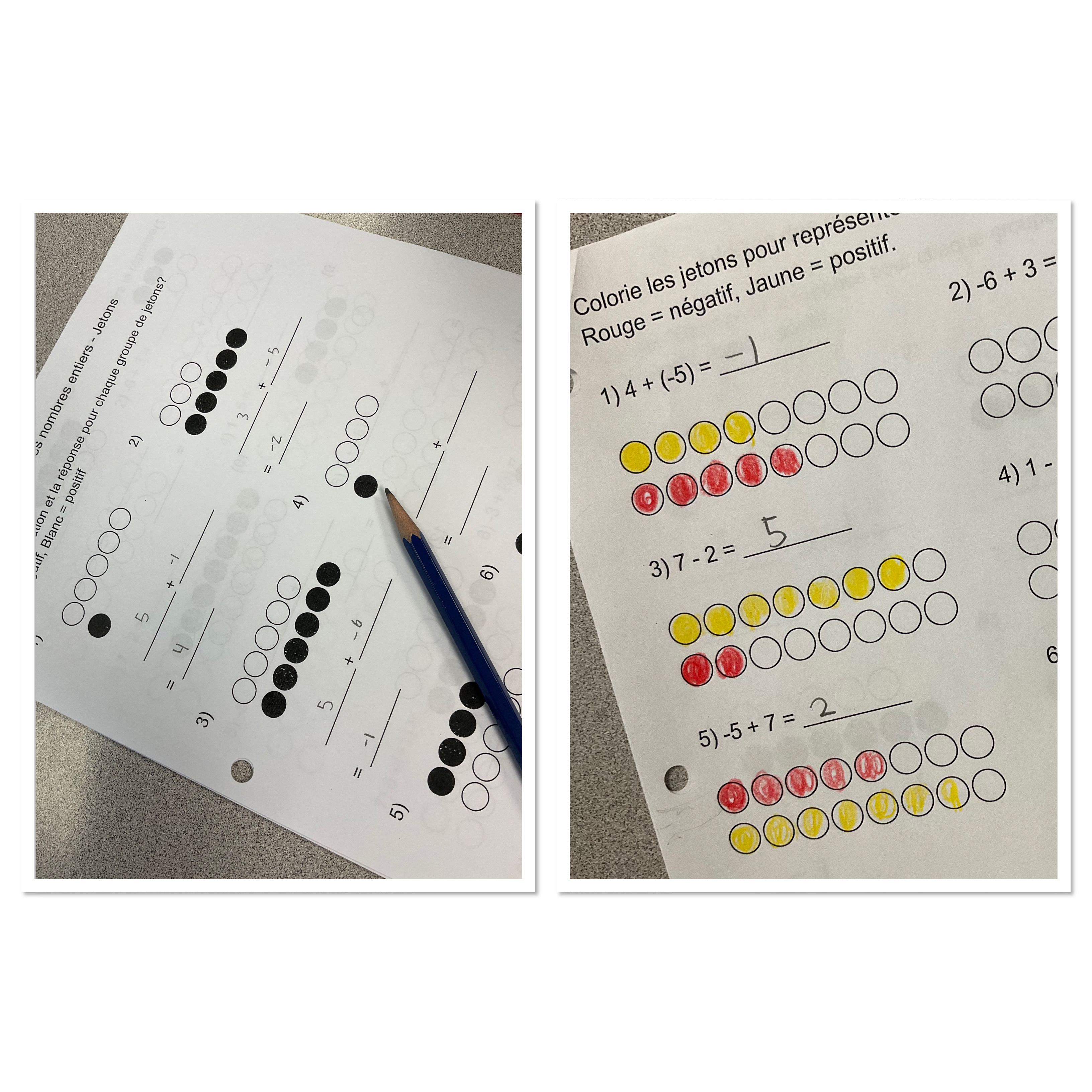
Students did purposeful practice reading and interpreting using visual representation of counters and also colouring in counters to arrive at their answer. After students got their work checked, they moved on to the next task which was to solve a Tarsia puzzle in groups. The puzzle was again practice with integer addition.

The bucket of zeros came back out and they worked through how to subtract using the bucket. They solved several subtraction questions as a class. They started off being sure their bucket has zero pairs. Next they placed their first value at the top of the bucket. This question starts out with -1 (one red counter) at the top. The instructions then say to remove/subtract/takeaway +6 (6 yellow counters). Students then removed 6 yellow counters from inside the bucket. What was left were 7 red counters and a bunch of zero pairs. The answer to the question is -7 due to the 7 red counters remaining.

After several examples and chances to practice, students had time to use their integer skills while playing cards. The red was negative and black was positive. Face cards were worth 10. Students flipped cards over and raced to determine the sum of their cards. Whoever got it right first got the cards. It became a little heated! Students were actively involved. Some used counters still, and others were feeling quite confident to add integers without concrete tools.

Thank you very much for inviting me to experience such an active and engaging lesson! I look forward to connecting further as the year progresses.
The Great Cheerio Stacking Competition
We had a fun time this morning in an MFM2P class. We worked on understanding linear systems and what the solution to the system is, by doing a competition.
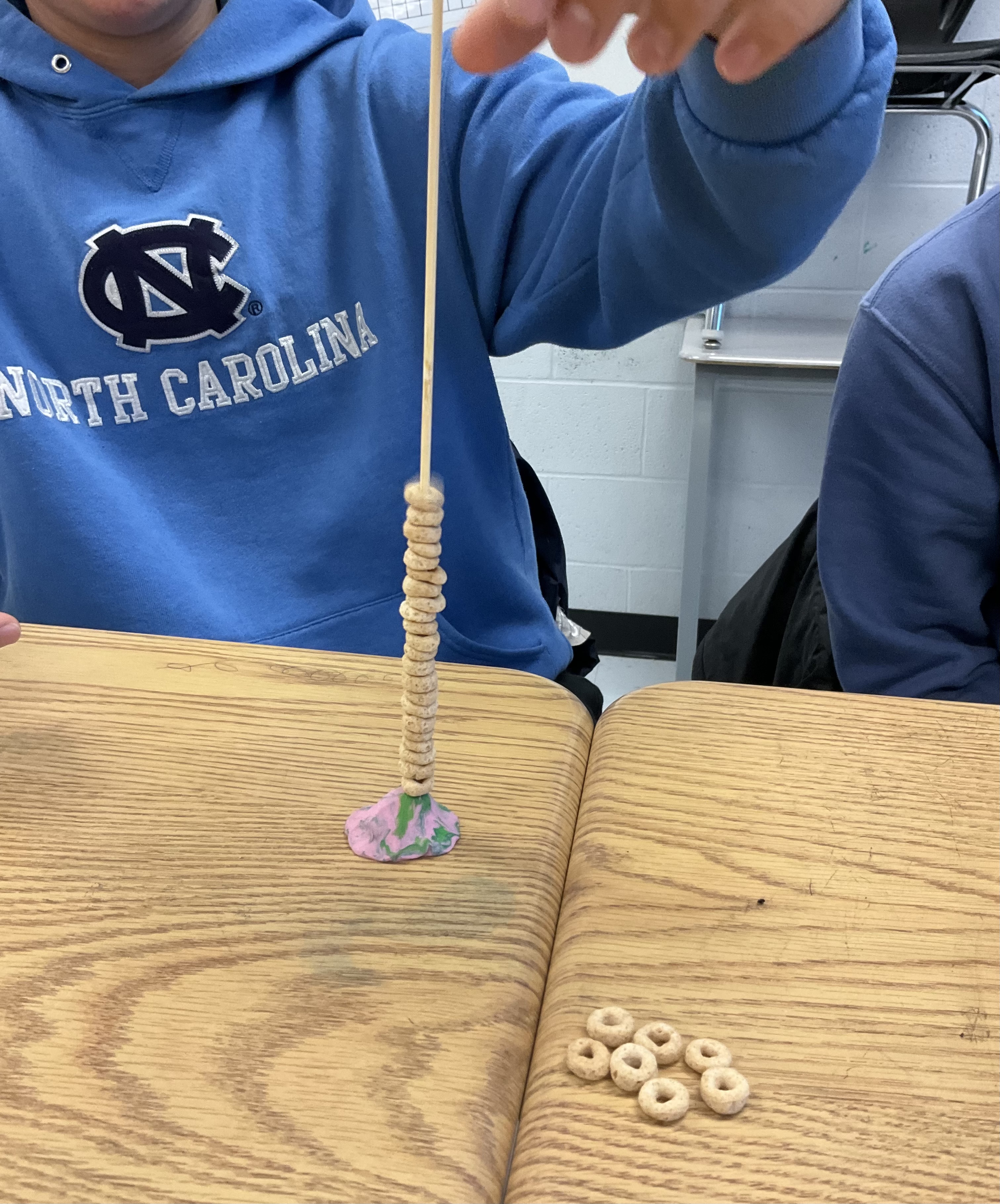
Students took turns seeing how fast they could stack cheerios onto a skewer. In their groups they needed to determine who was the fastest stacker.

Some chose to do this by measuring how many they stacked in a minute, or how much time it took to fill a skewer completely, or up to an arbitrary height decided by the group.

Once everyone was satisfied with their stacking, we determined who was the fastest stacker in the class. To do this we needed to decide on a good metric to compare. We came up with cheerios per second as our units of speed that we used to compare everyone in the class.
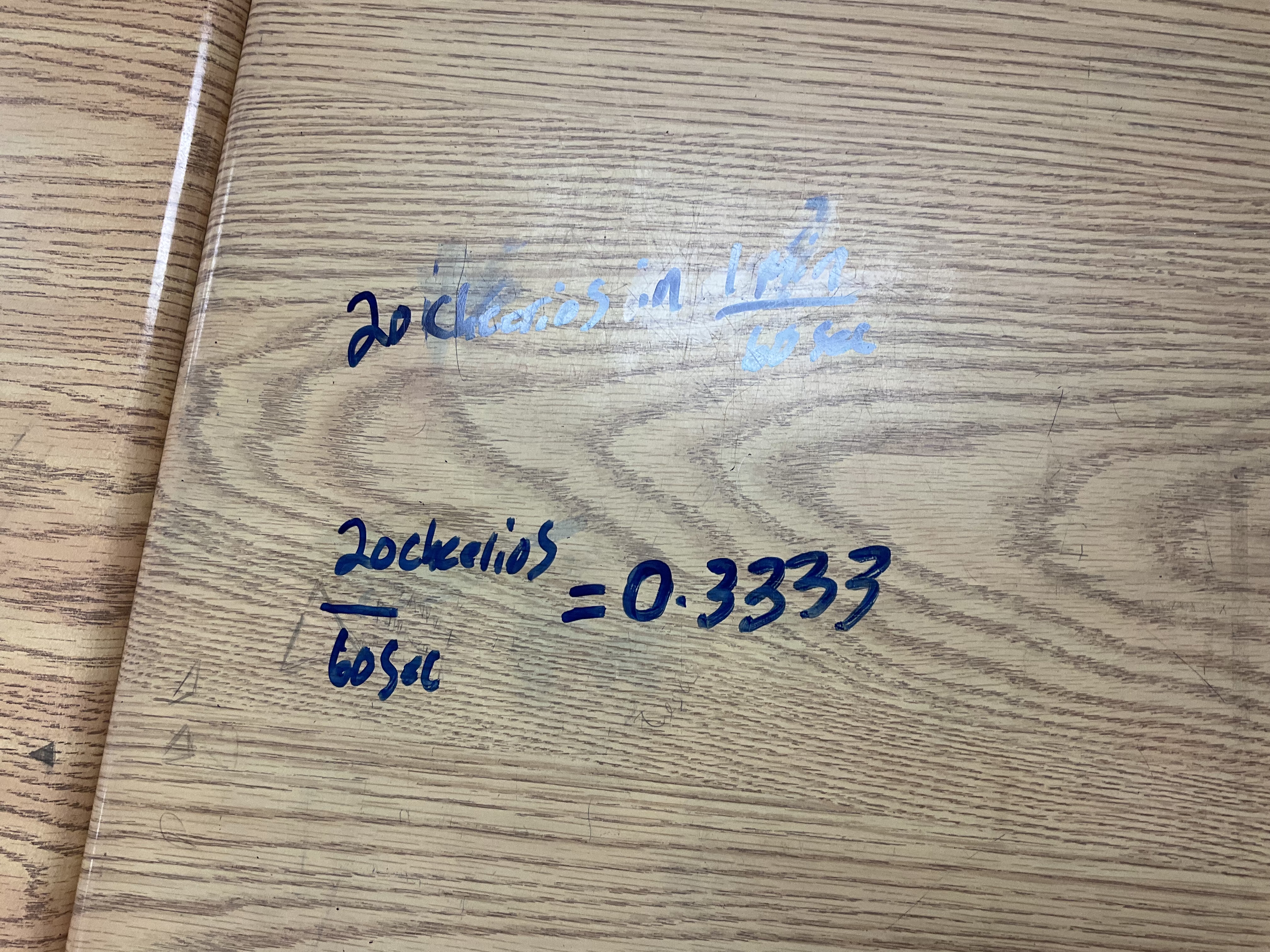
The next step was to work on creating an exciting photo finish at the end of the class. The goal was for each group to figure out the number of cheerios needed to add to their skewer as a head start when competing against the fastest stacker.
We tied the ideas of rate and slope of cheerio stacking to what it would look like on a graph. We know that the faster stacker would have a steeper slope.
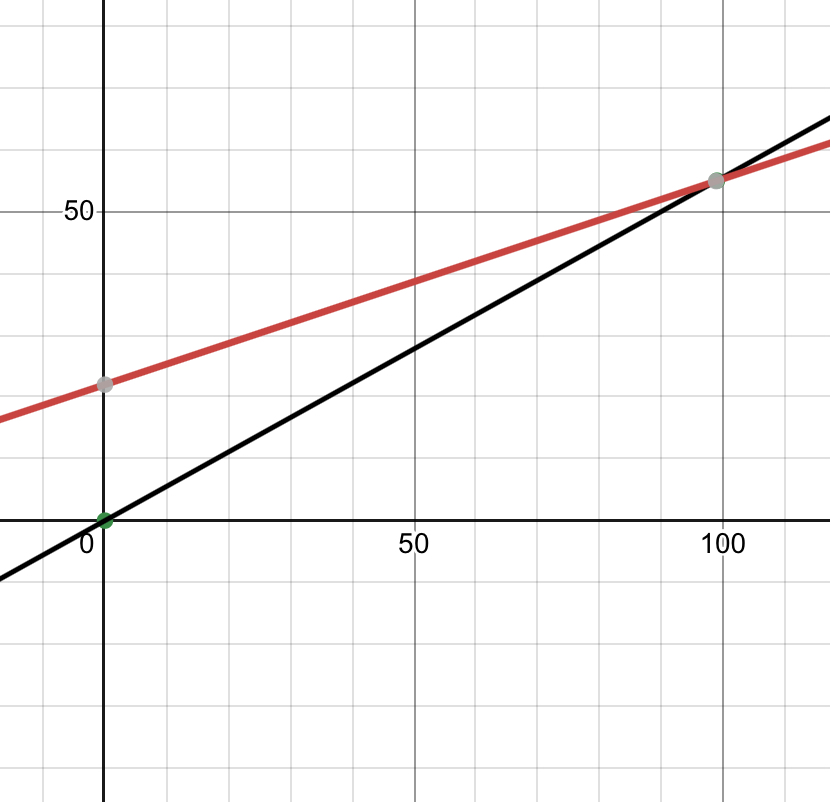
In the end we had our stackers line up with their calculated head starts and see how close to a photo finish we can create.

Many groups came pretty close to having a full skewer at the same time! It was a lot of fun to see how close they came.
competition was friendly but intense!
Solving Systems with Elimination
Today grade 10s are starting a new cycle of learning. We started off thinking classroom style at the boards to do a three act task.
We noticed that they are weighing piles of tech devices.
we watched 3 parts of Act 2 and wrote down information and equations, and started to solve for the weight of each device.
It was a hive of activity as students attempted for the first time to solve a system of 3 equations with 3 variables.
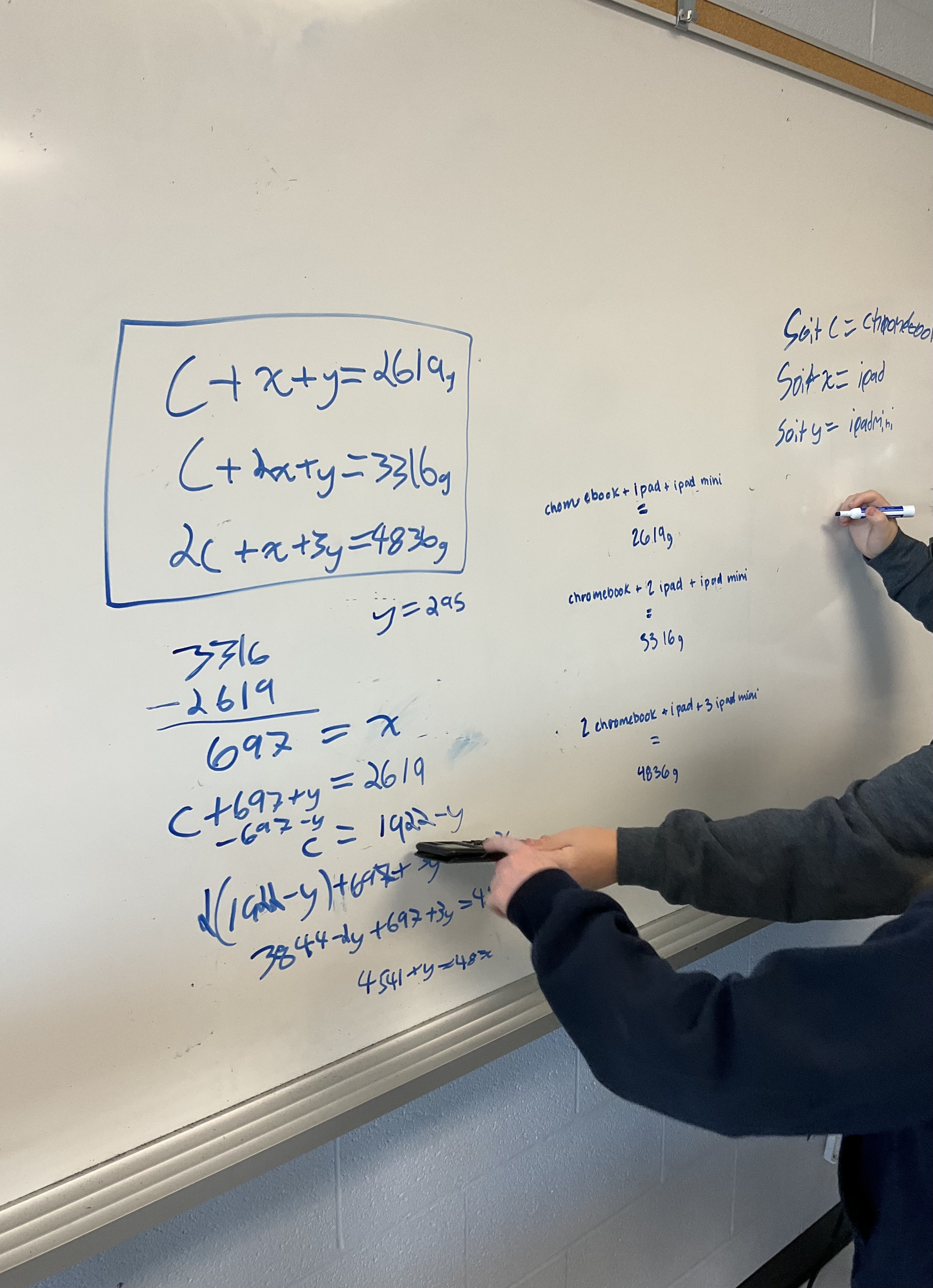
Students noticed that by subtracting 2 equations they could determine one of the values, and they then could use substitution and the 2 remaining equations to solve.
It was interesting to see how students drew out their first steps and distilled the information into equations.
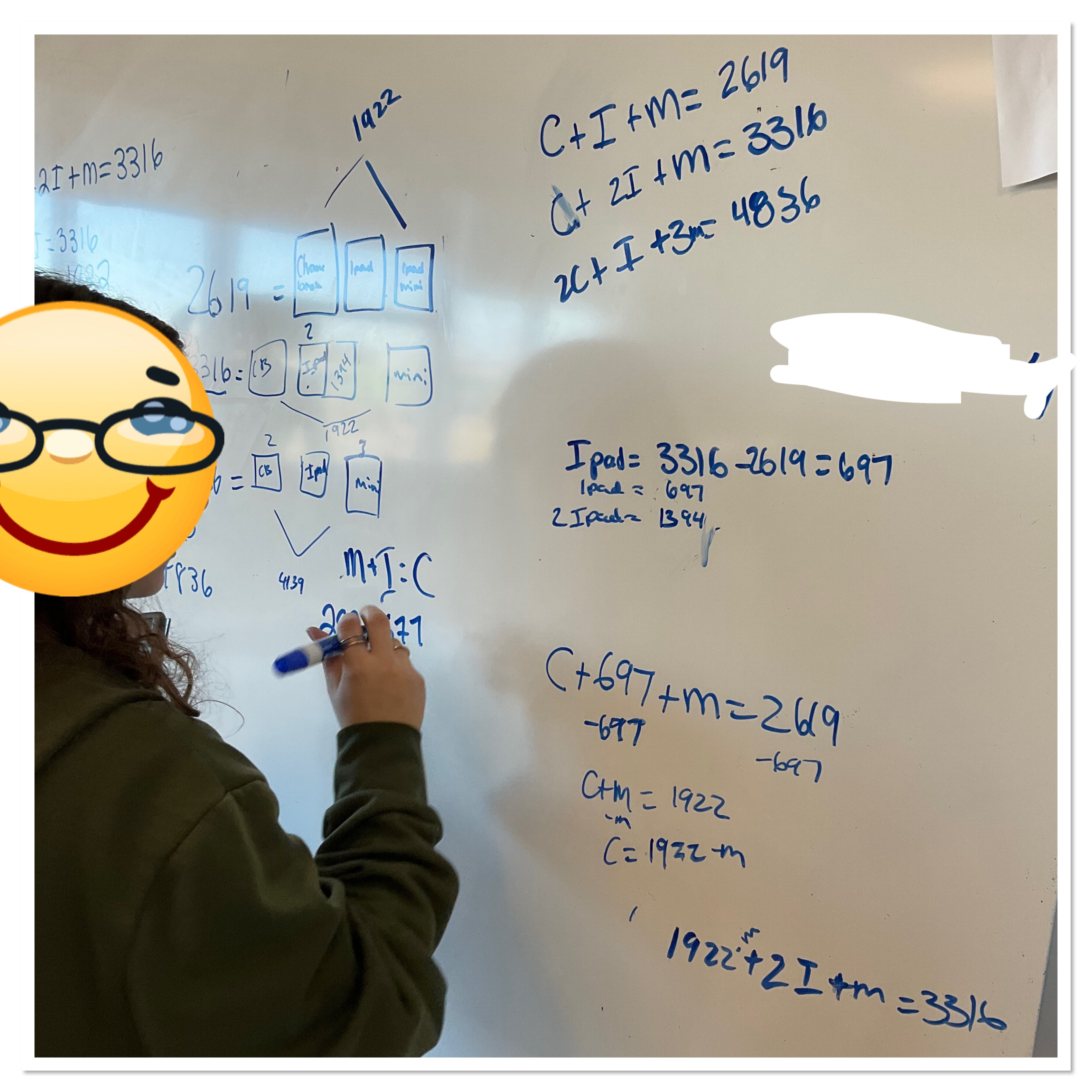
We talked about how to introduce variables, and how it’s best to have one letter or symbol represent one variable, and how choosing letters that do not look like numbers or symbols are better choices. In the following example the choice of “o” as a variable is challenging as it looks like 0.
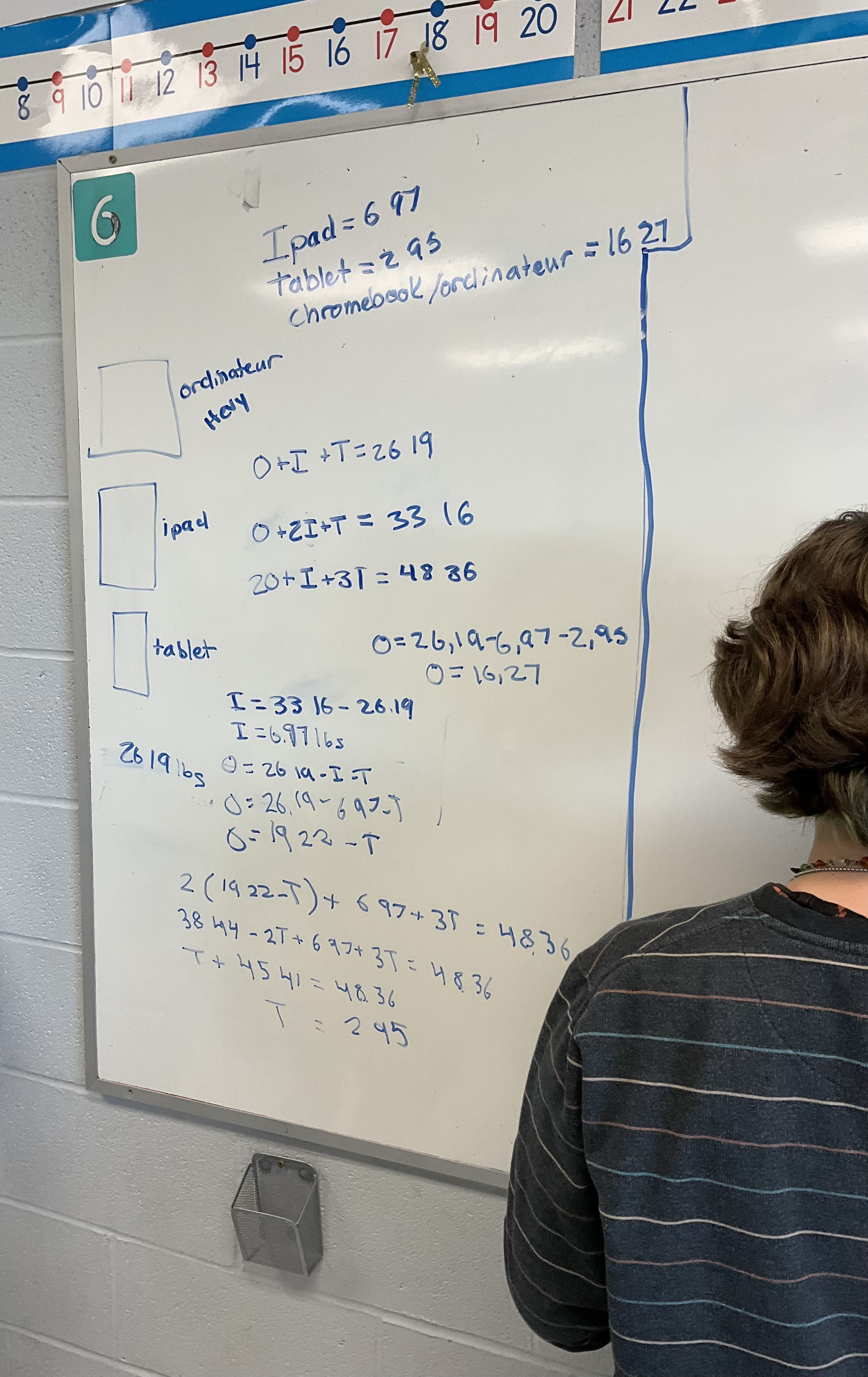
There were high fives today as students figured out how to solve problems with the new method of elimination.
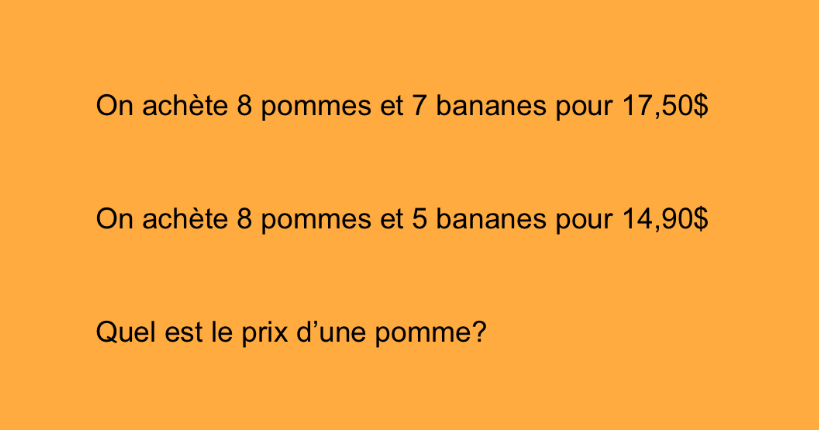
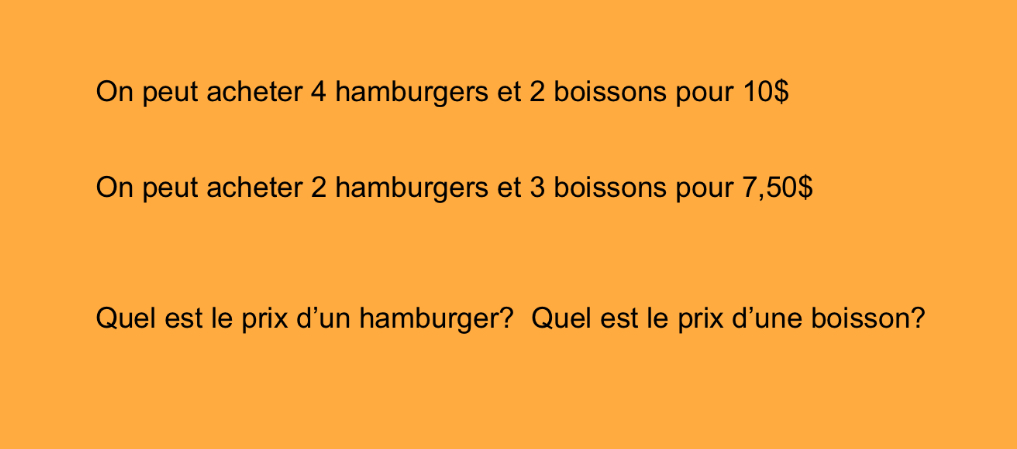
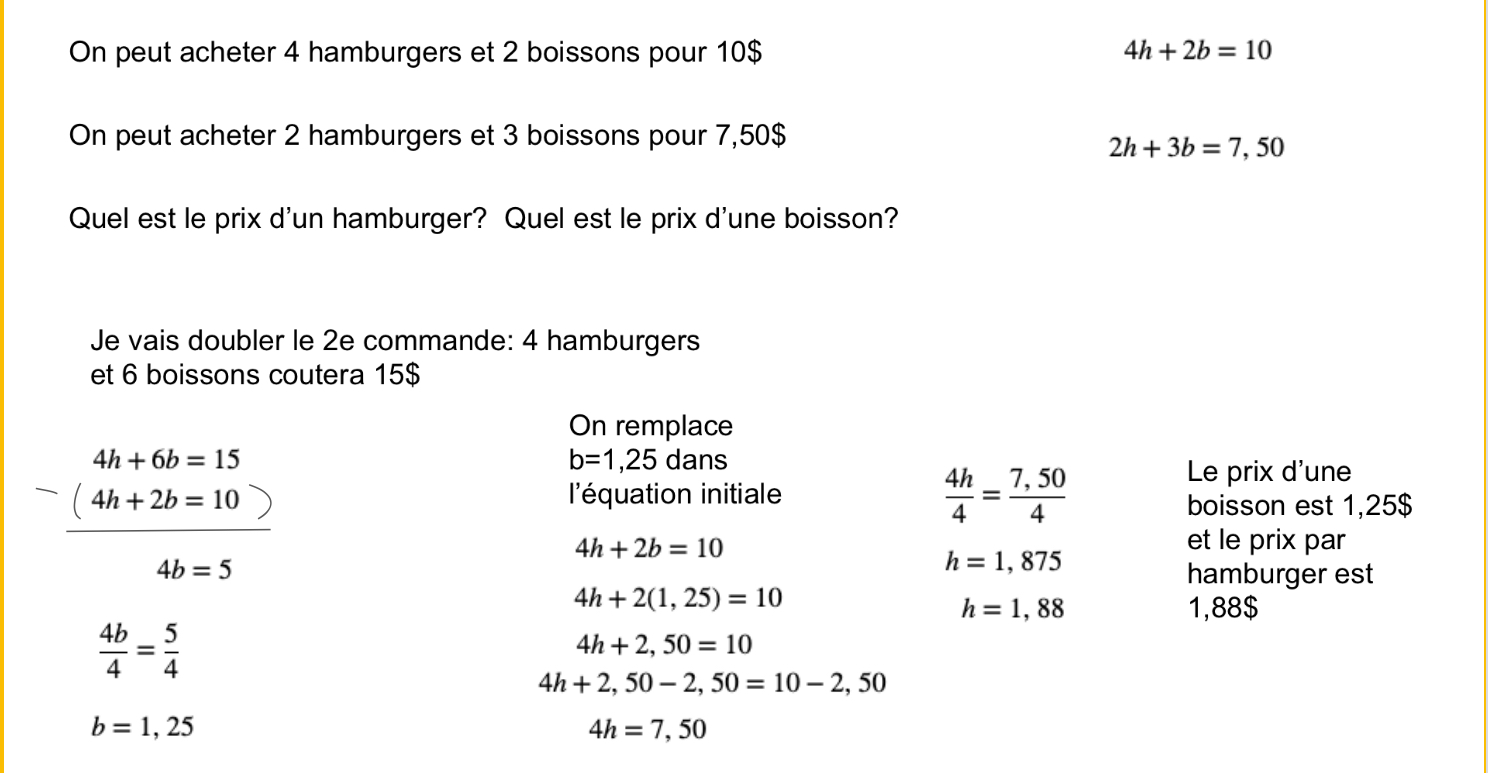
Here are the problems we worked through. We could use substitution to solve these, but since we have equations with coefficients for each variable it is an easier process to use elimination.

Solving Equations With Algebra Tiles
Grade 9s were working on solving equations today, and we started off with algebra tiles as a way to represent our equation. We started solving 2x+3=9. We know that equations are showing two expressions that are equal and balanced. We know both sides are equivalent.
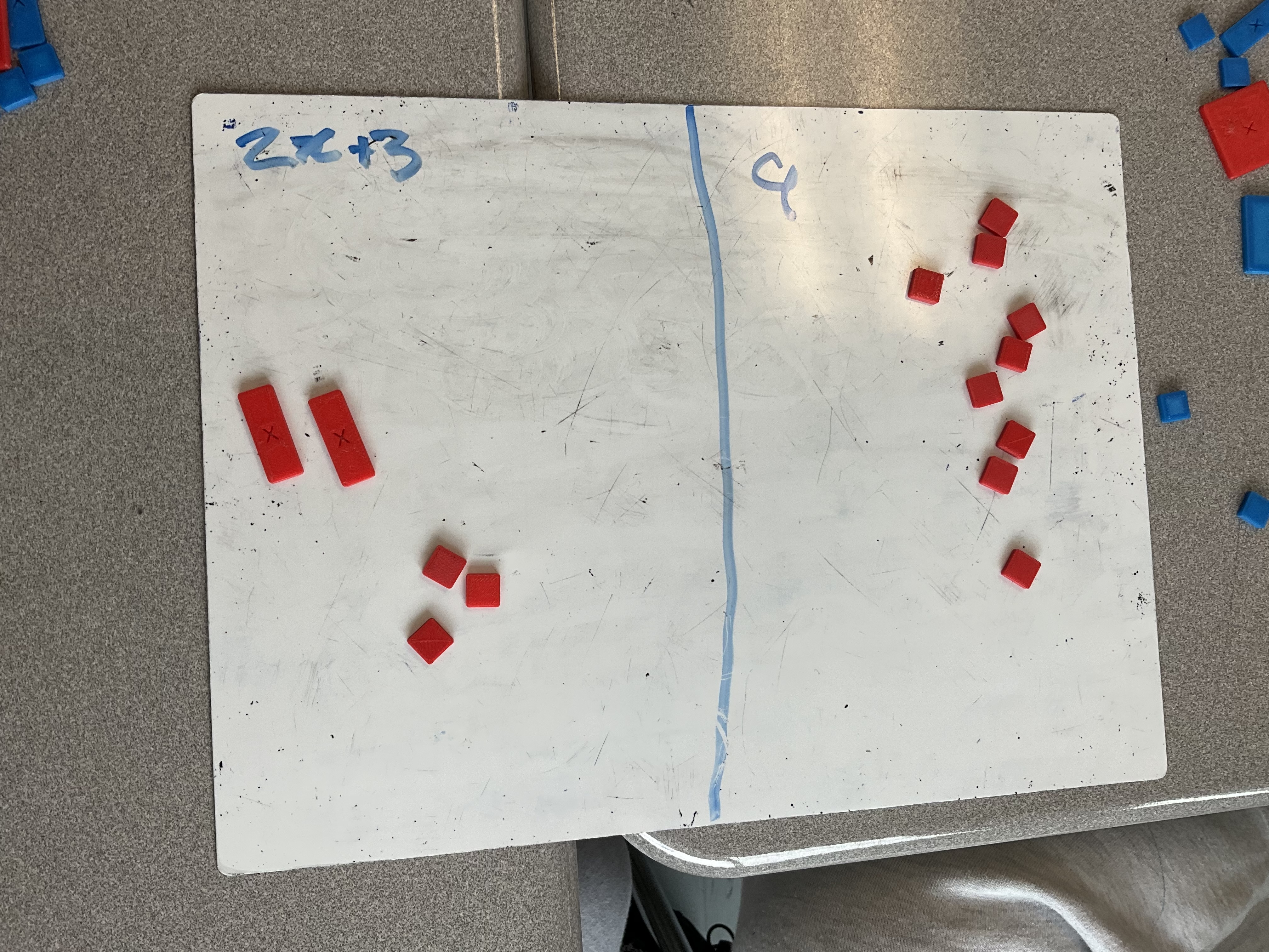
When we are trying to figure out the value of x, our goal is to have x on one side of the equation, and the value of x on the other side. Starting out though, we have 2x+3. We want to just have x terms on one side, so we want to get rid of the +3. To do this we use the concept of zero pairs. We can place -3 on both sides of the equation and it will remain balanced and equal.
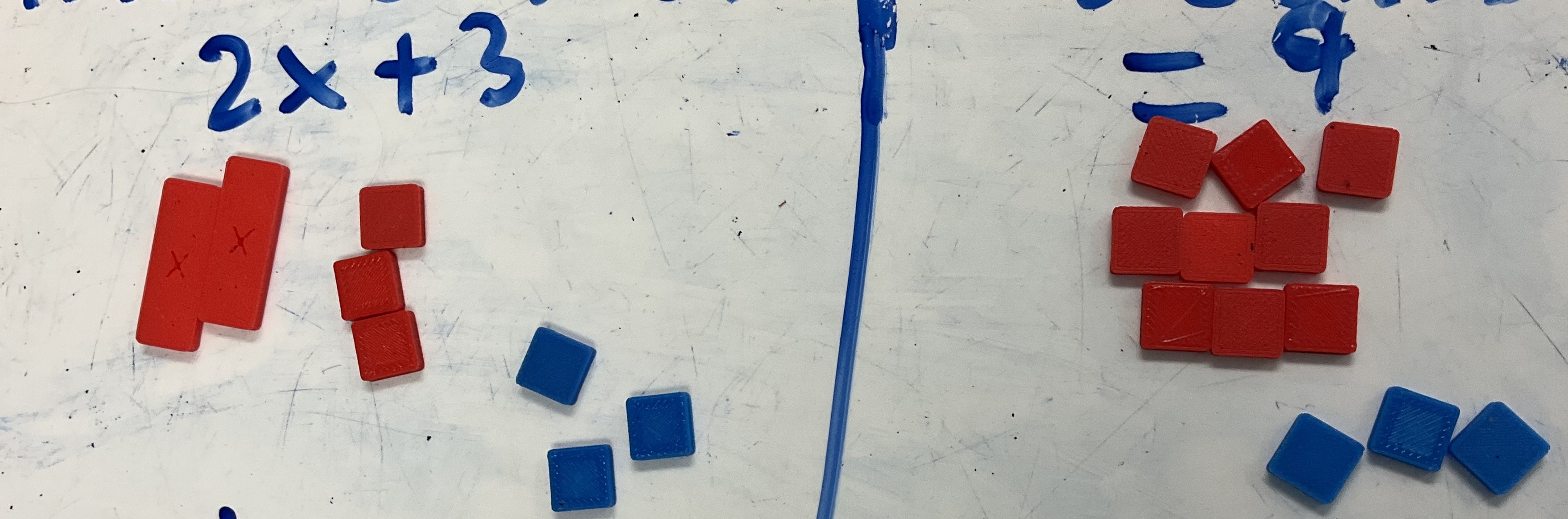
It will also help us simplify the equation. We know that +3 and -3 make 0, so the left side is now just 2x, and we know the right side simplifies to +6.
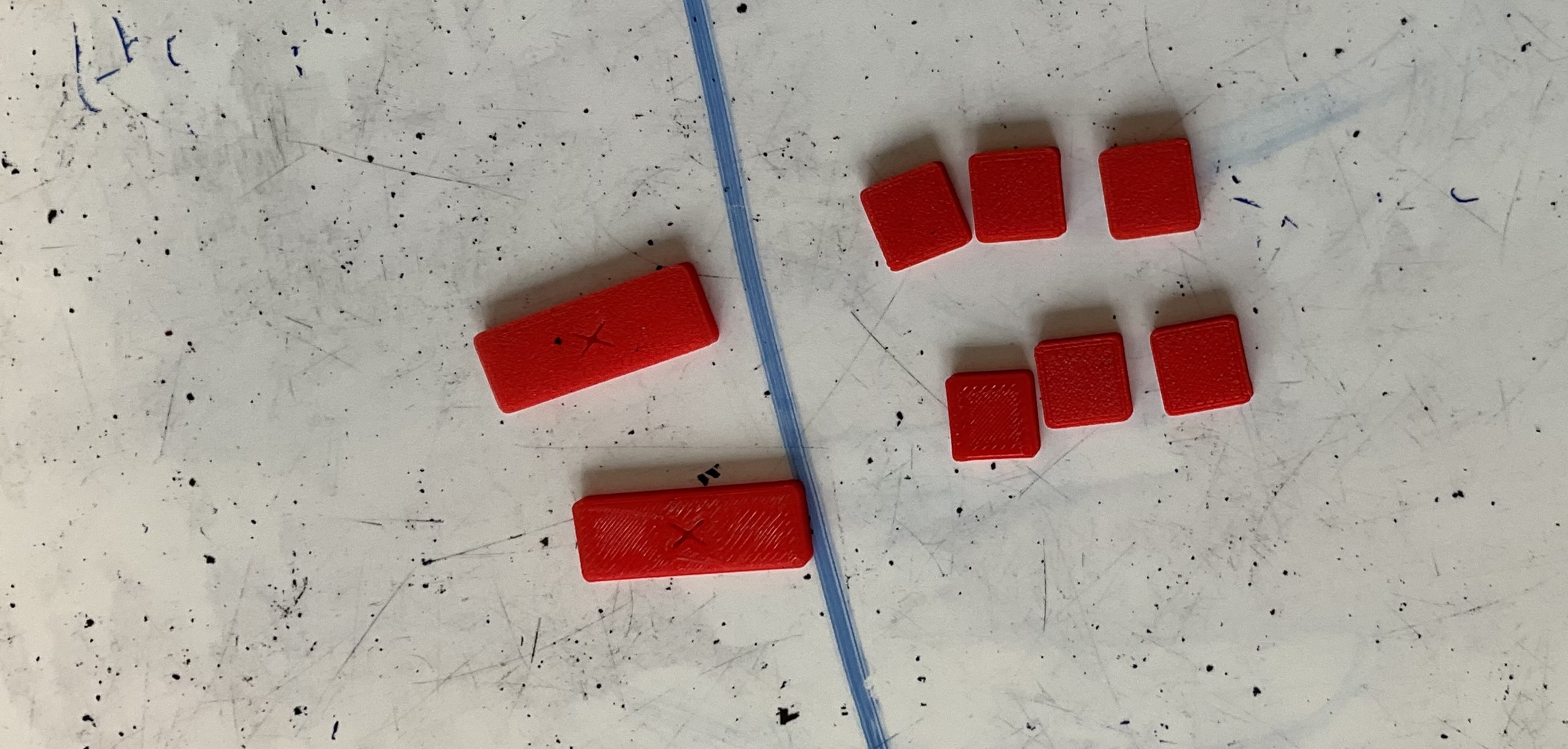
Now we arrange our 2x horizontally, and we split the +6 into 2 groups. We can see that each x corresponds to 3, so we know that x=3 is our answer.
Loom beading: continued
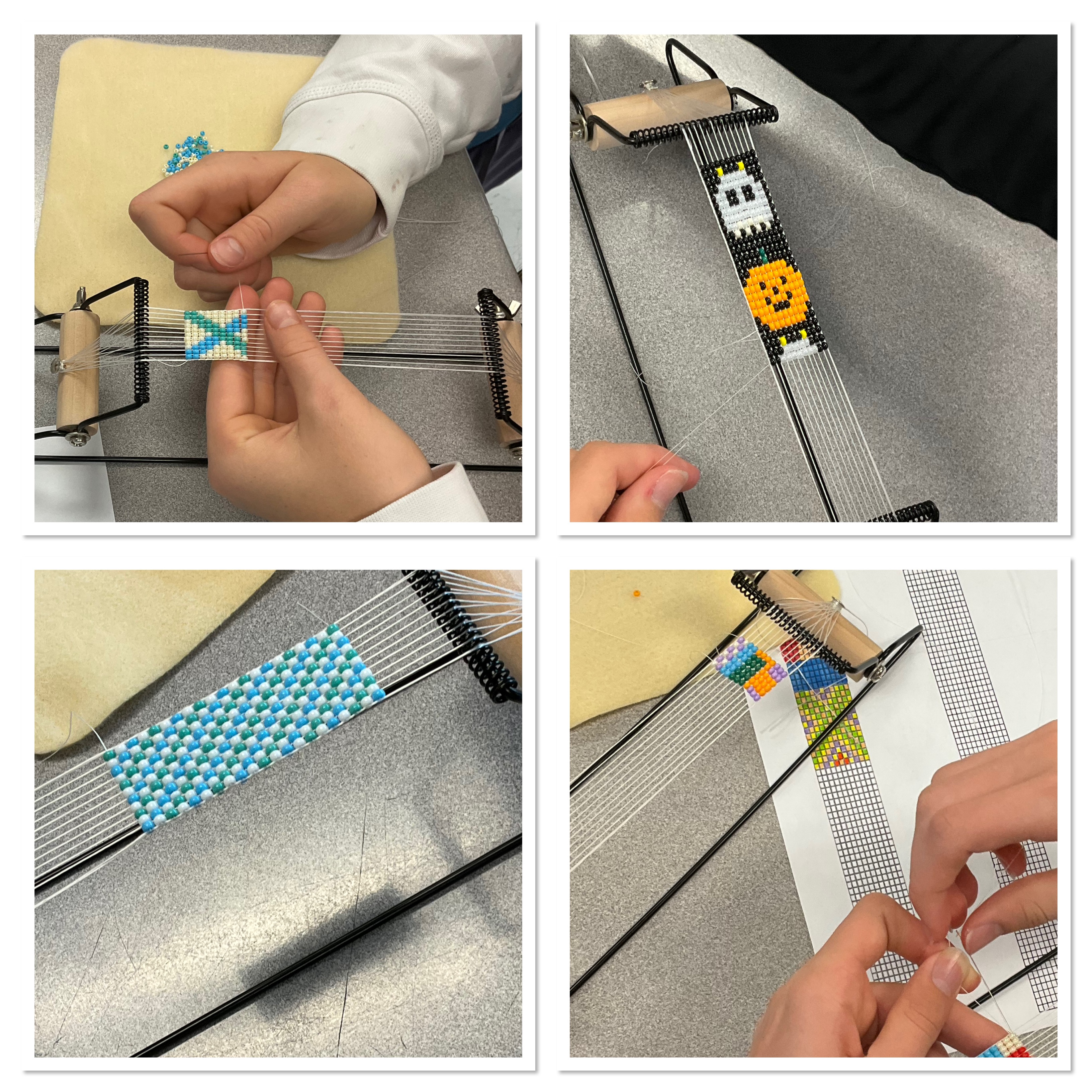
We have worked hard over the last 2 days to complete our beadwork.
After beading the pattern to completion we needed to weave the thread back and forth to finish the work. We then glued the threads to keep the beads together when the work is cut off the loom.

After gluing the threads, we attached leather to the ends and many students chose to create a keychain. Here are some of our finished pieces.

The next part of our project includes taking a photo of our plan and our final product, and then writing a paragraph about the math that is shown in the work, and a paragraph about the other skills we learned. Some students have learned a lot about managing frustration when attempting a challenging task. Some have learned that it is ok to ask for help. Some have learned that a bead that is out of place or a slight deviation in the pattern is not the end of the world, in fact it can be valued as a spirit bead. Some are excited to see how they have progressed over time, becoming proficient with practice. There are so many skills that transfer to our mindset when working on math!
Loom beading: day 2
Today we continued to make progress with our beading.
We learned how to add more string today, and some even finished their work and learned how to weave the ends in to prepare for gluing.
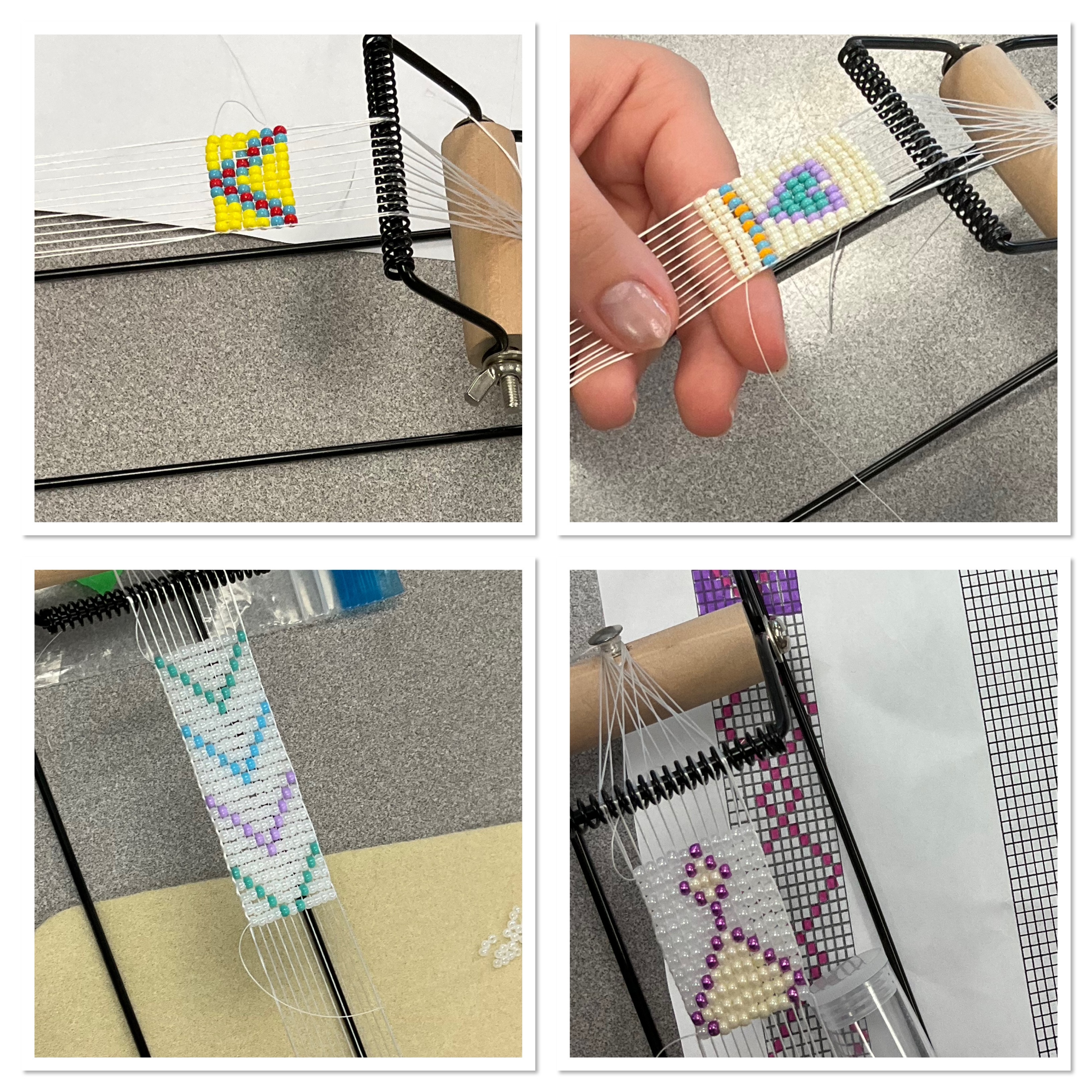
There are so many mathematical connections for students to explore through this work, and also the practice of keeping in a positive frame of mind while approaching a challenging task is very applicable to math!
Introduction to Loom Beading
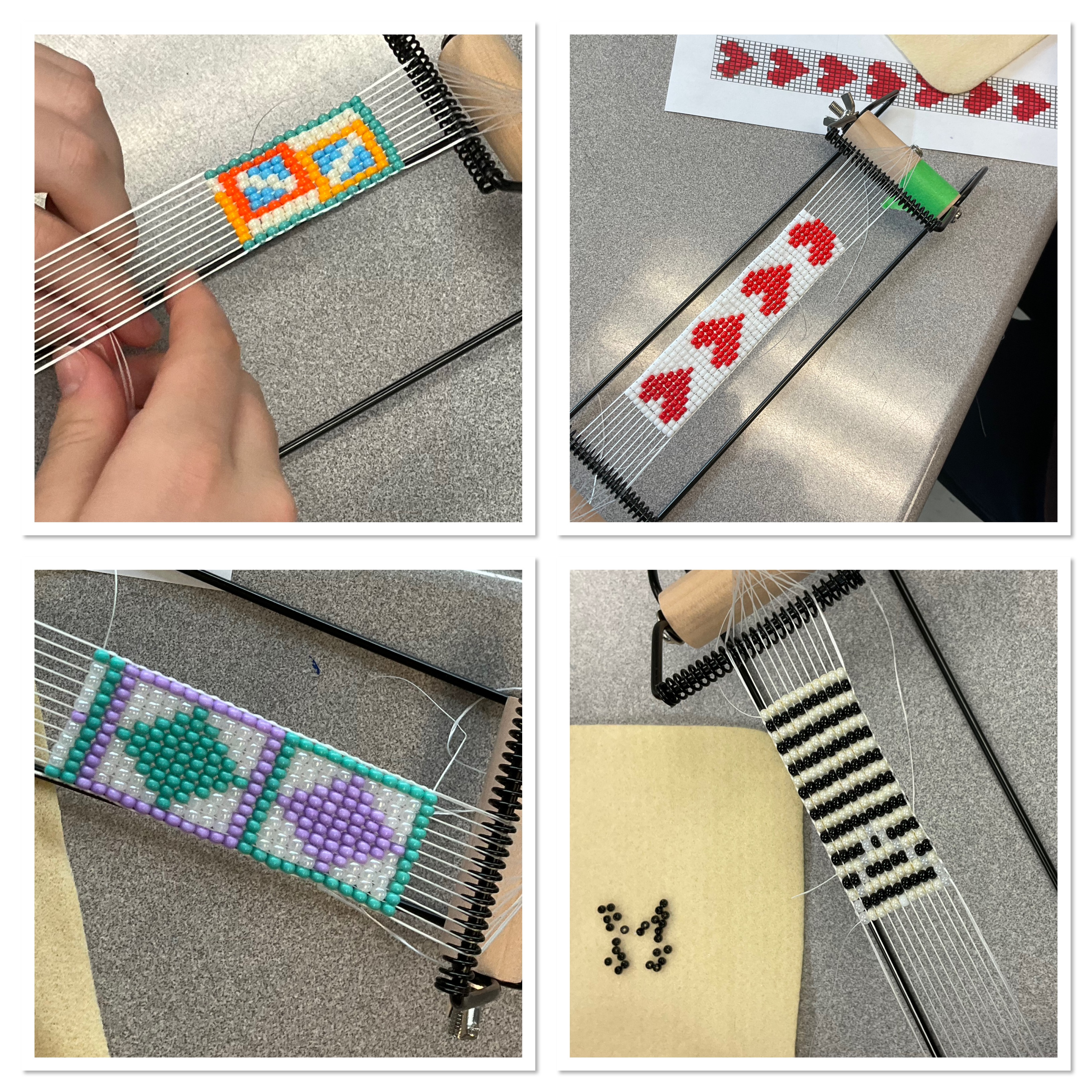
We are happy to have the Indigenous Program team with us this week as we do loom beading with 2 of our grade 9 classes. Today we started with an introduction to loom beading, and the sharing of teachings. We learned to keep a good mind while working, and to put positive intentions into our work.

We talked about the different math that can be explored through beading. Concepts like symmetry, rotations, reflections, area model, percent that is a certain colour, lines, parallel lines, slopes, intersections, shapes, angles, proportional reasoning about how many red beads to add for each pattern repeat of 3 rows etc…the list goes on!
Students then designed their patterns, and started beading.
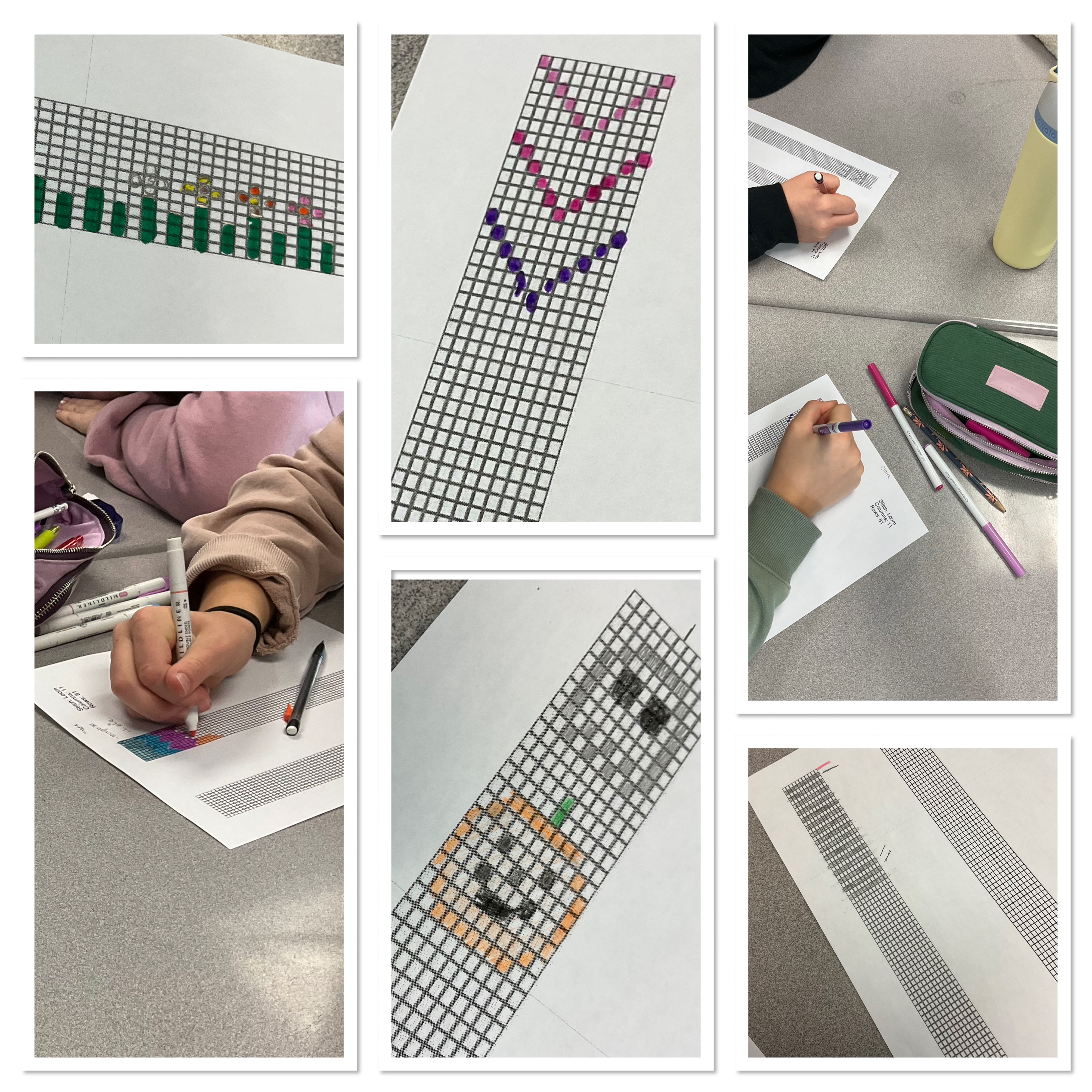
We learned the process for getting started. Thread 11 beads onto the needle. Bring them under the work. Pop them up through the strings with one bead between each pair of strings, and then thread the needle back through, on top of the strings this time.

it was impressive to see the progress students made in one period!

Thanks to our guests who shared their knowledge, experience, and teachings with us today.
Speed Dating Review
We’re working on reviewing material for our upcoming test next week. Today we looked at algebra: simplifying with exponent laws and also expanding and simplifying polynomials with distributive property, and collecting like terms.
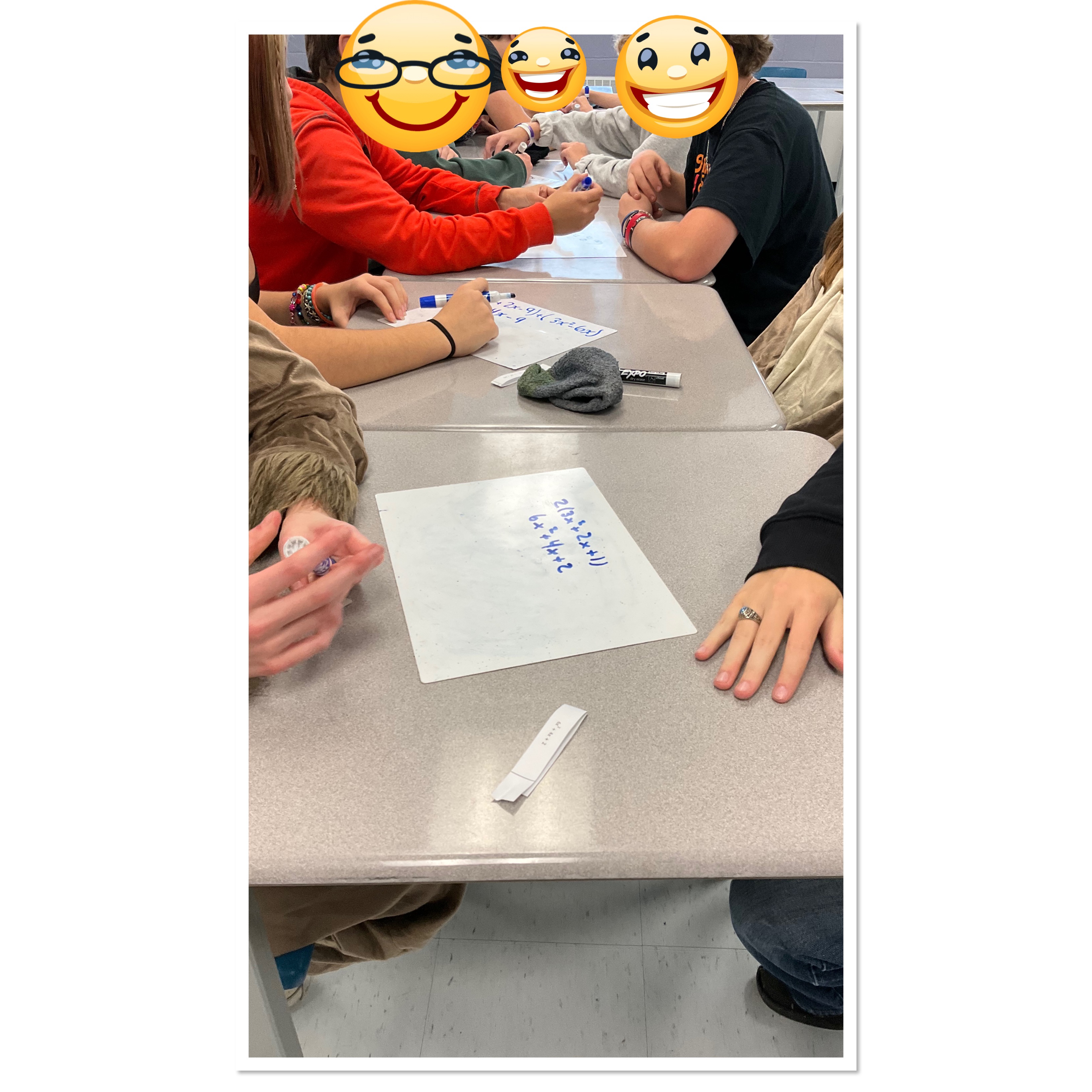
Partners sat across from each other and solved the question together. Then one side of the partnership stayed as the expert, and the other side stood up and moved one space to their right. They then attempted the new question with help from the expert that remained.

They then stayed as the expert and the other side of the table moved to their right. Students have the opportunity to work in multiple partnerships, and they work through each question twice, once as a beginner and then again as an expert.
It’s a pretty fun way to do review!
Thin Slicing: Solve By Factoring
Grade 10s are working on applying their factoring skills. We have looked at how we can graph parabolas from factored form, and now we are looking at how to solve quadratic equations by factoring. This is the sequence I used to develop the skills today.
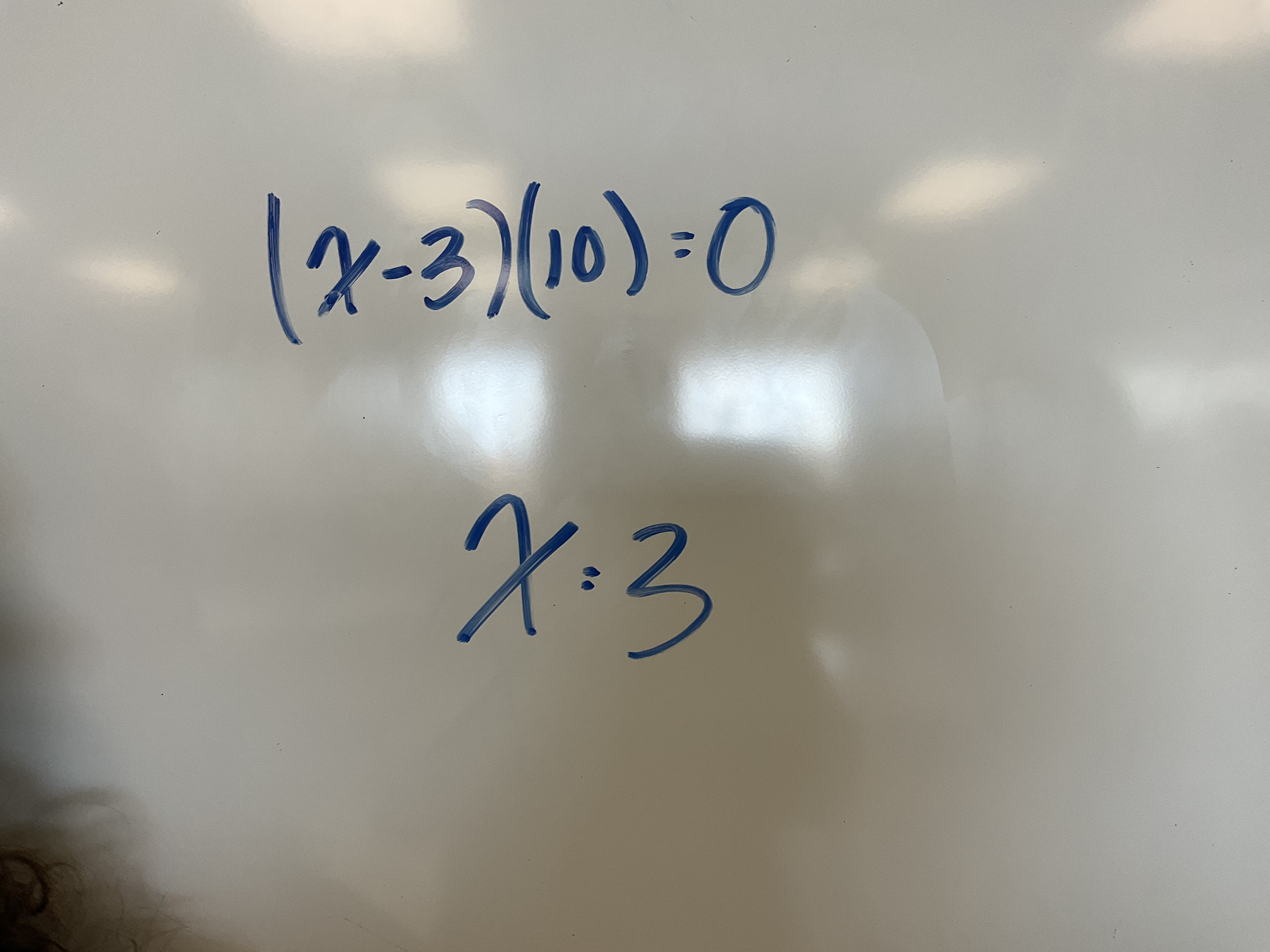
(x)(6)=0 and (8)(x)=0
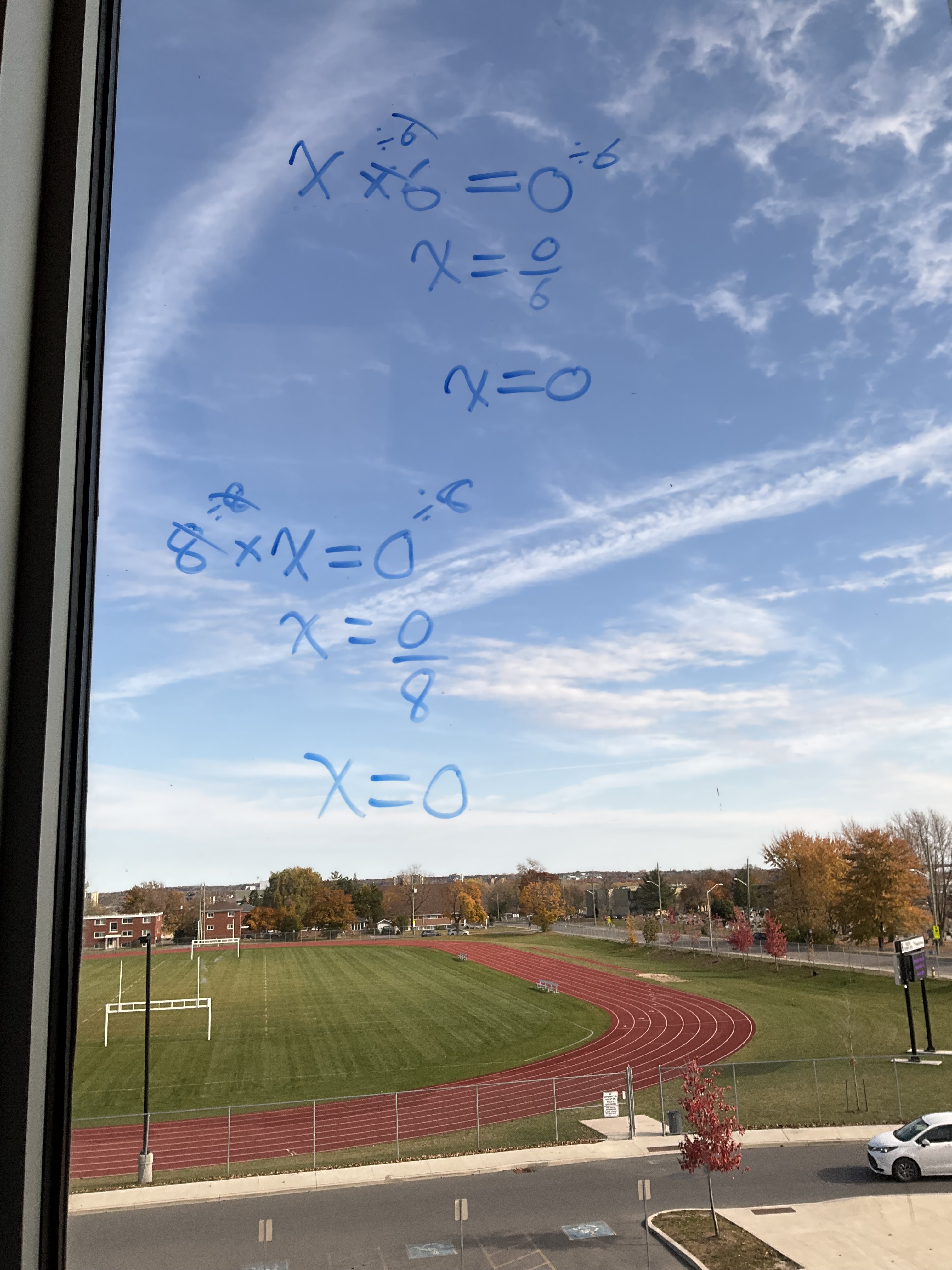
Then we included coefficients. Some groups really clicked into the idea that if the product is 0 one of the factors must be 0.
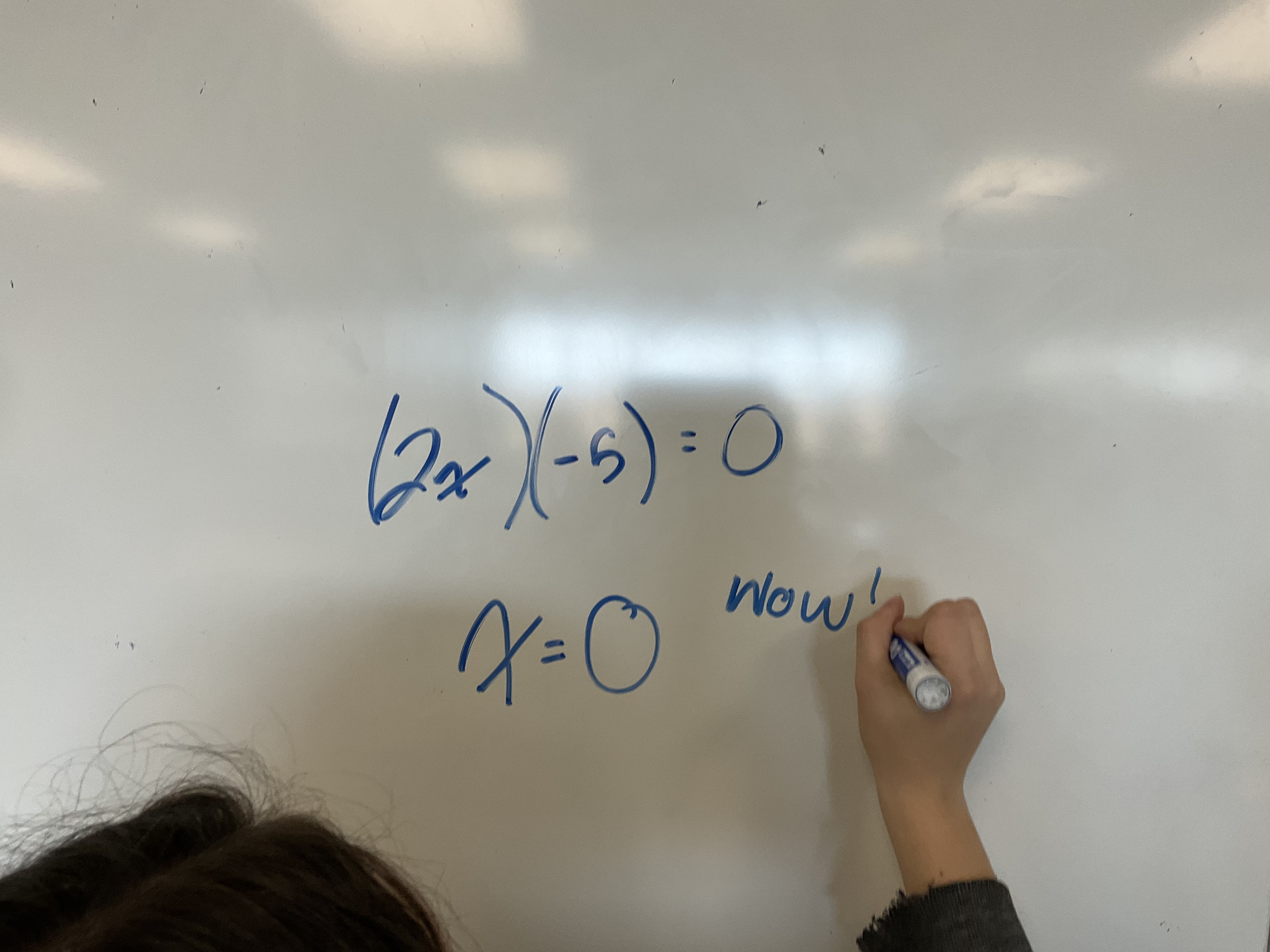
The next question was interesting, as there were 3 representations of solutions.
(11)(x+1)=0
One group did the area model to expand, another used the distributive property without the area model to expand then solve, and there was one group who knew that (x+1) would need to be 0 and solved quickly.

We practiced a few more examples and many groups latched onto the idea of solving without expanding.
The next introduced a coefficient, and it was interesting to see how students approached it. Some realized that we multiply 2 by 2.5 to get 5 which is the zero pair of -5 which is in the bracket. Others approached it as if it was x-5 in the bracket the x would be 5. Since it’s 2x in the bracket then the x must be 2.5.

Our next step happened after students were comfortable solving by setting brackets equal to 0. We tried (x-1)(x+2)=0

It was neat to see how they were ok with their being 2 answers. We made the connection to a parabola passing through the x axis twice, so it’s ok to have 2 answers.
I wanted to avoid students always thinking that the constant in the brackets is connected to the answer, so I introduced coefficients quite quickly to enforce the idea that we need to fin the x which makes the bracket equal to 0.

Next we looked at what happens if we are not given factored form, but instead a trinomial equal to 0. We need to factor first and from there it’s all the same as before. We use the area model for factoring because it connects so well to algebra tiles and how we expand polynomials too.

The next step sequentially was to start with an equation without 0 on one side. Students knew to use zero pairs to create an equation equal to 0 and then to factor and solve.

The sequence worked really well, and I hope that students will continue to be able to apply their skills to solve quadratic word problems next!

