Good problem solvers do all of these things
We looked at the pages we brainstormed yesterday….we cut out strips and categorized all of our ideas.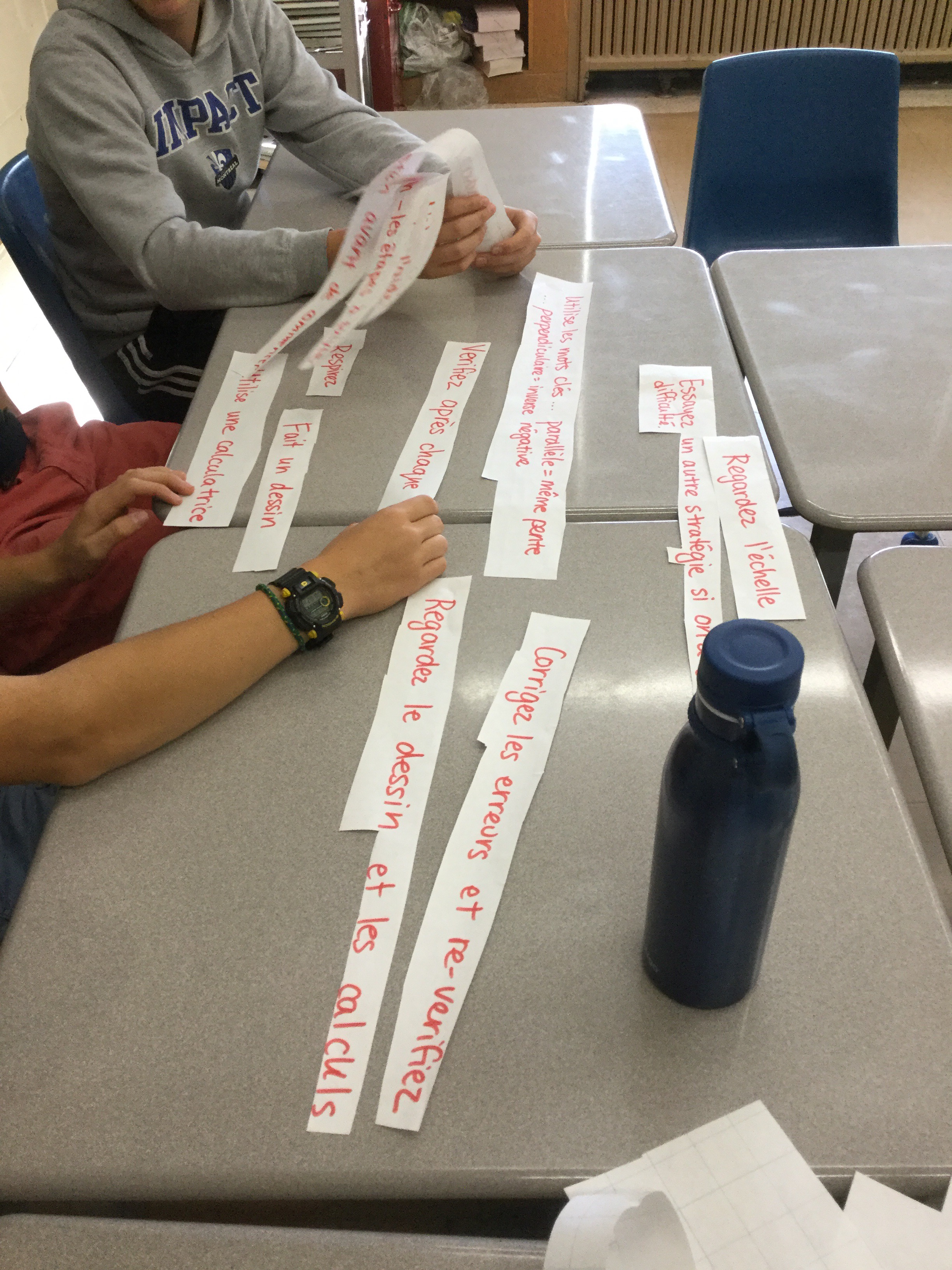
We grouped similar ideas together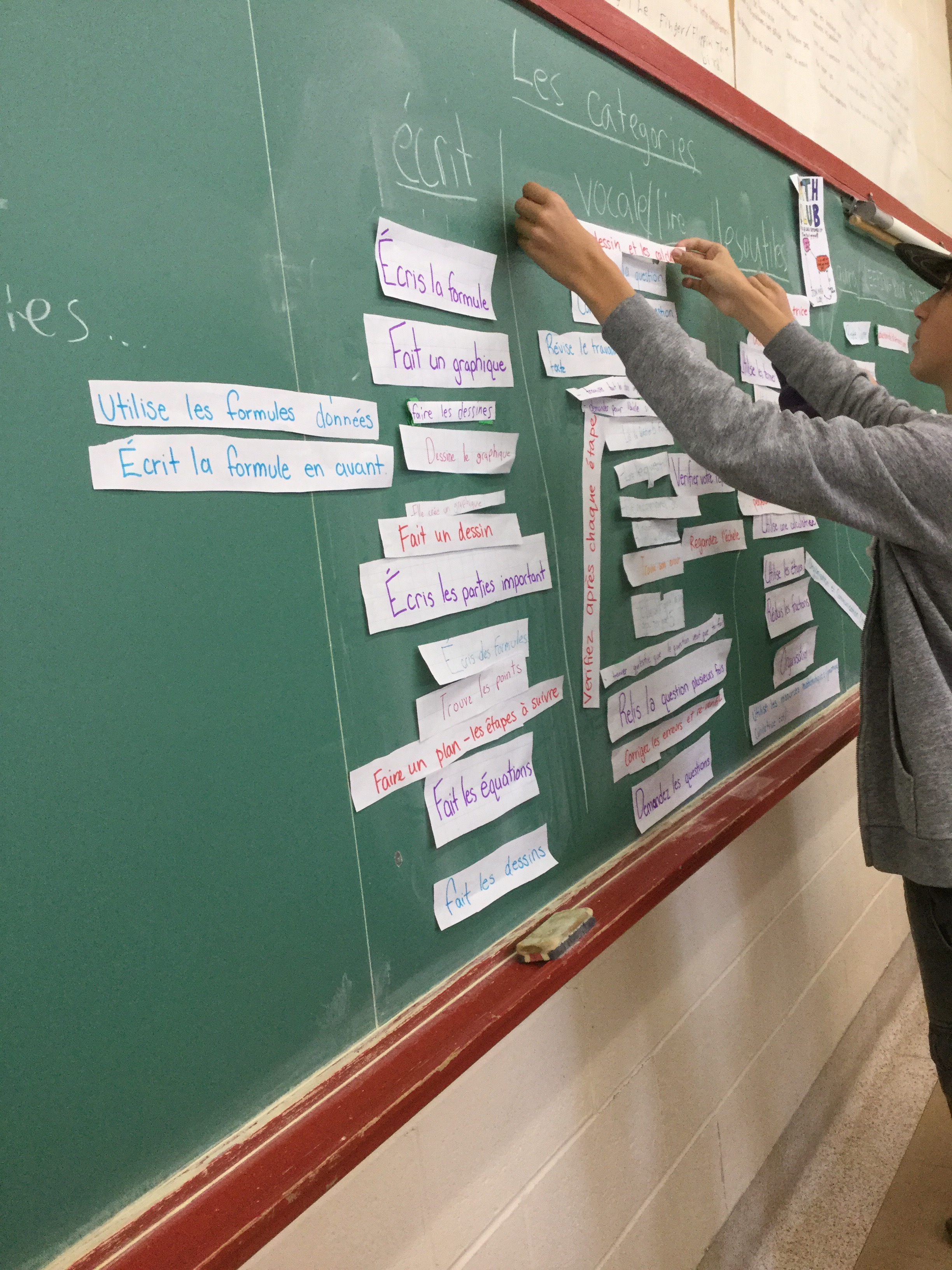
And tried to make sense of it all.


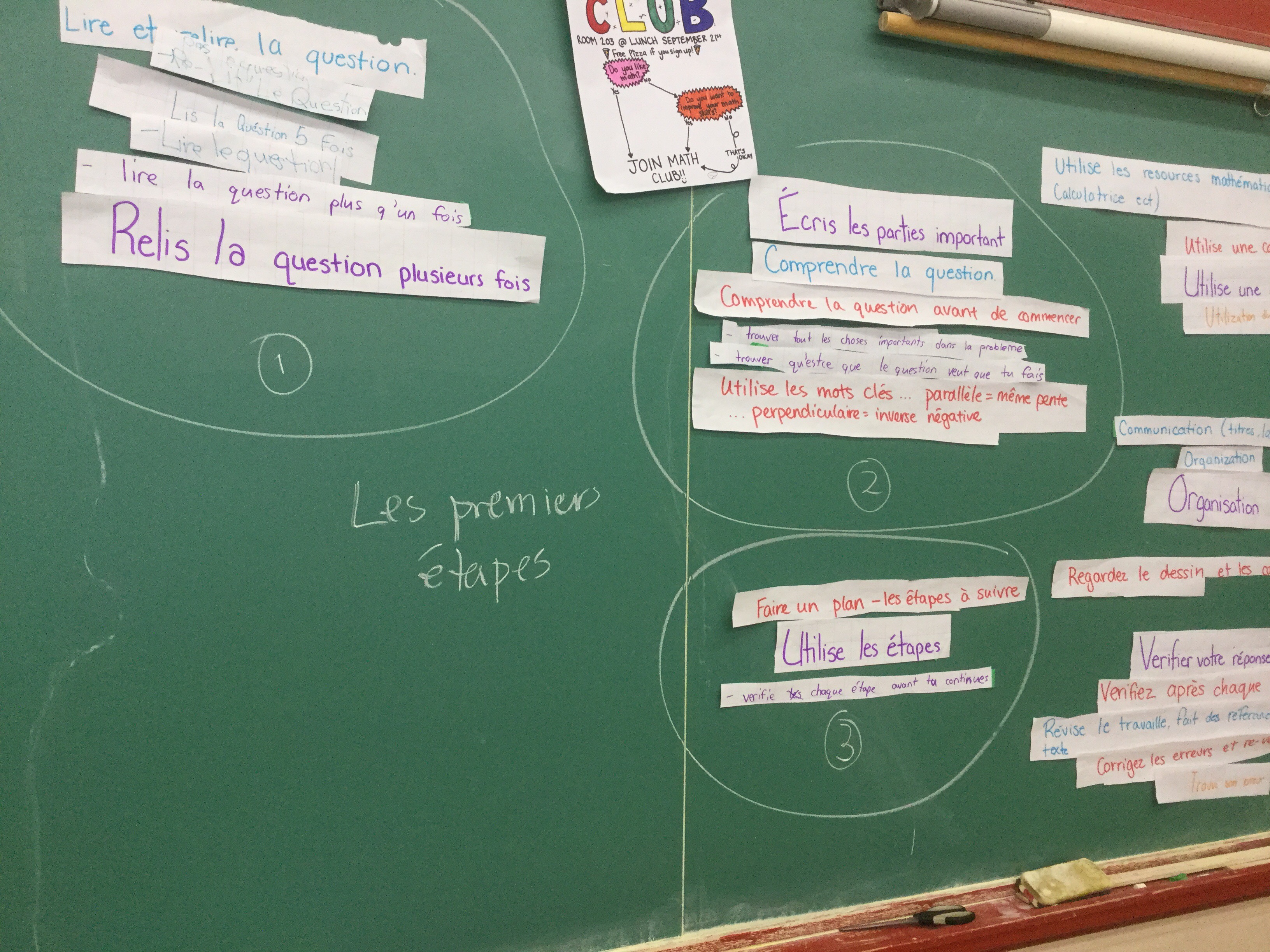
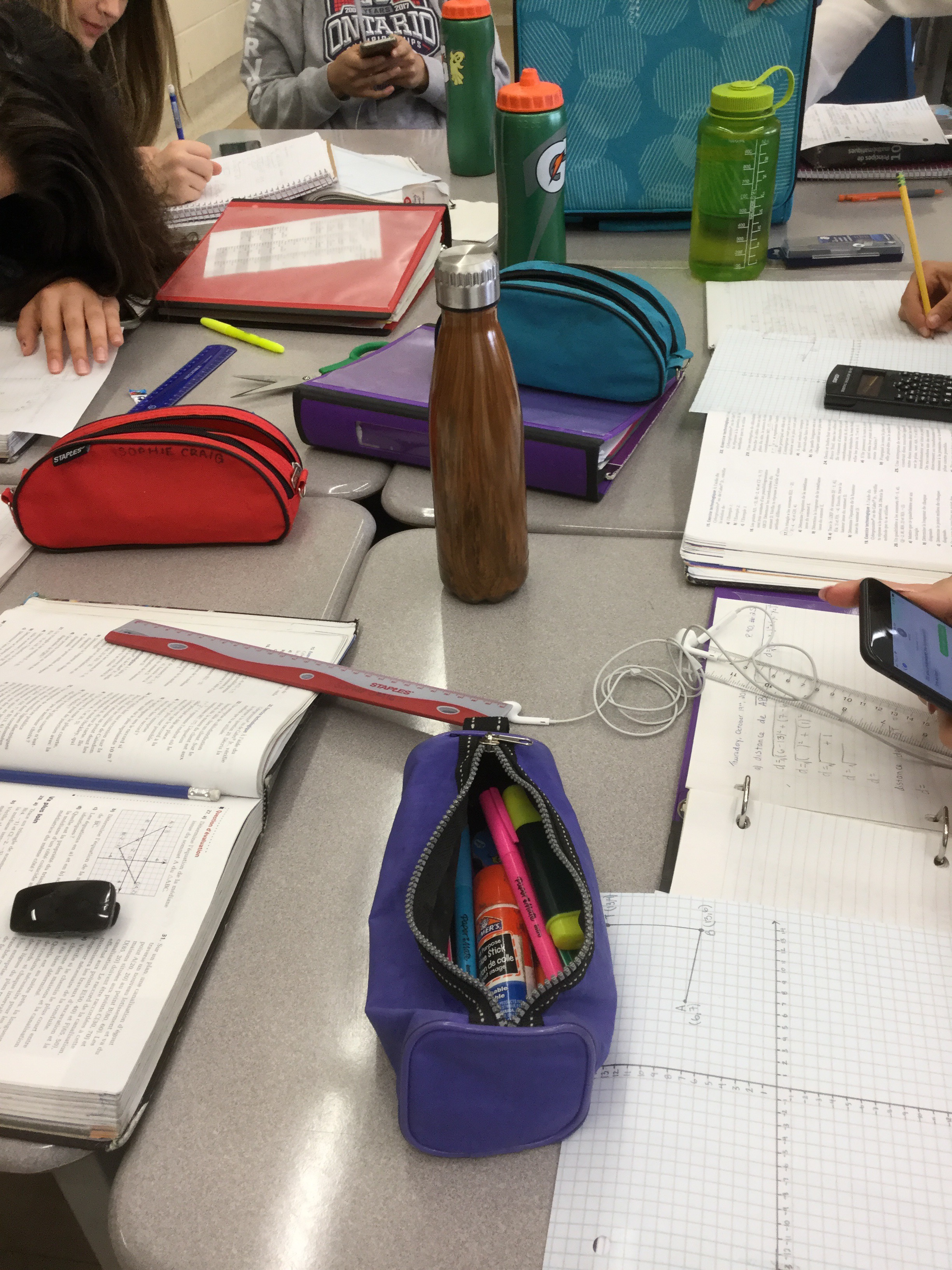
We then used all of our inspiration to solve a tricky word problem.
Guest Speaker
We had a guest speaker with us today to discuss technical drawing. He is an instructor at Queen’s and teaches first year engineers their technical drawing course.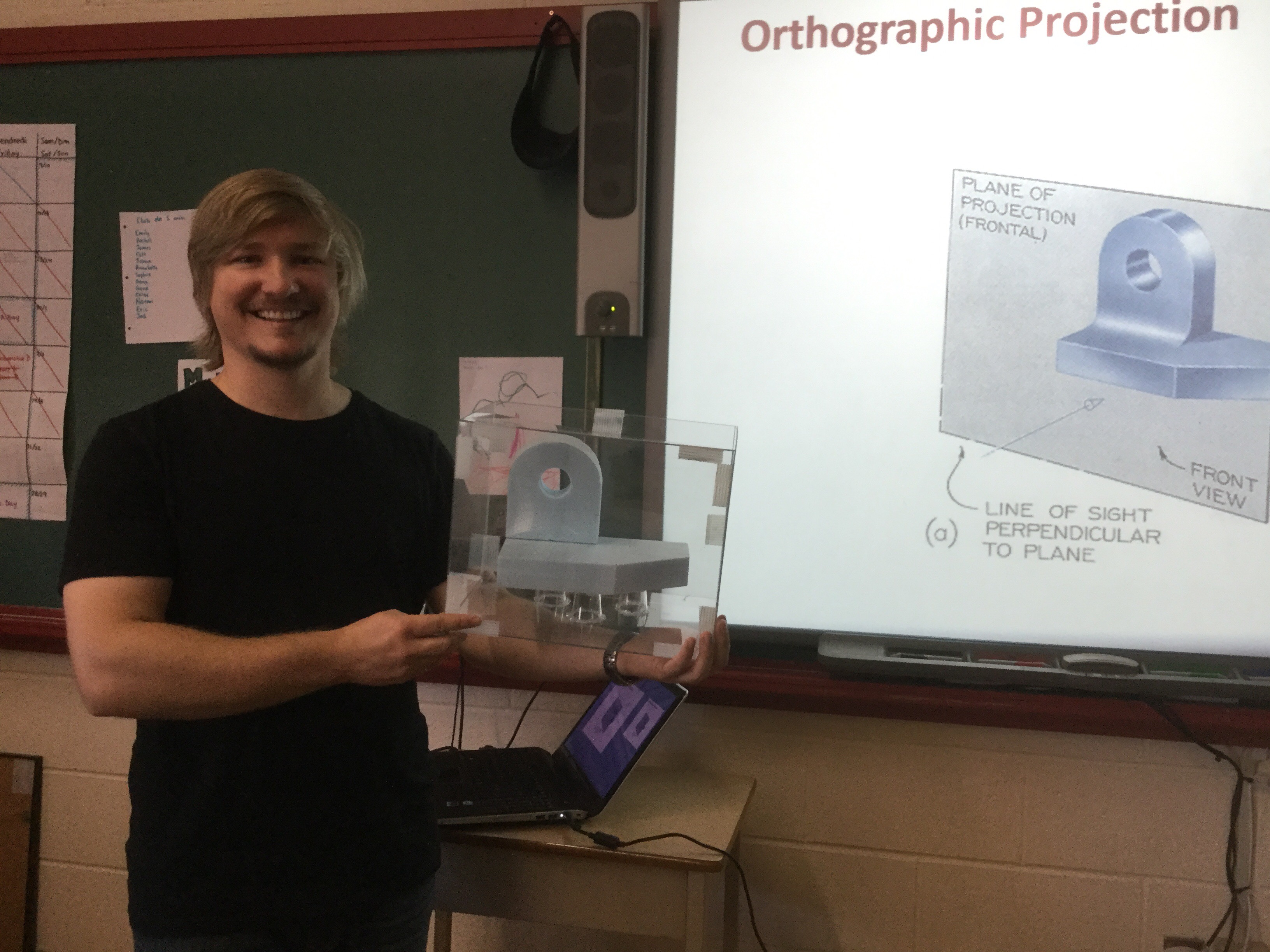
What do “good problem solvers” do?
Today we had a look at how people solve problems. We had one member of each group solve a problem out loud, while the other group members looked for strategies that were used, and kept a log of what techniques and words were used.
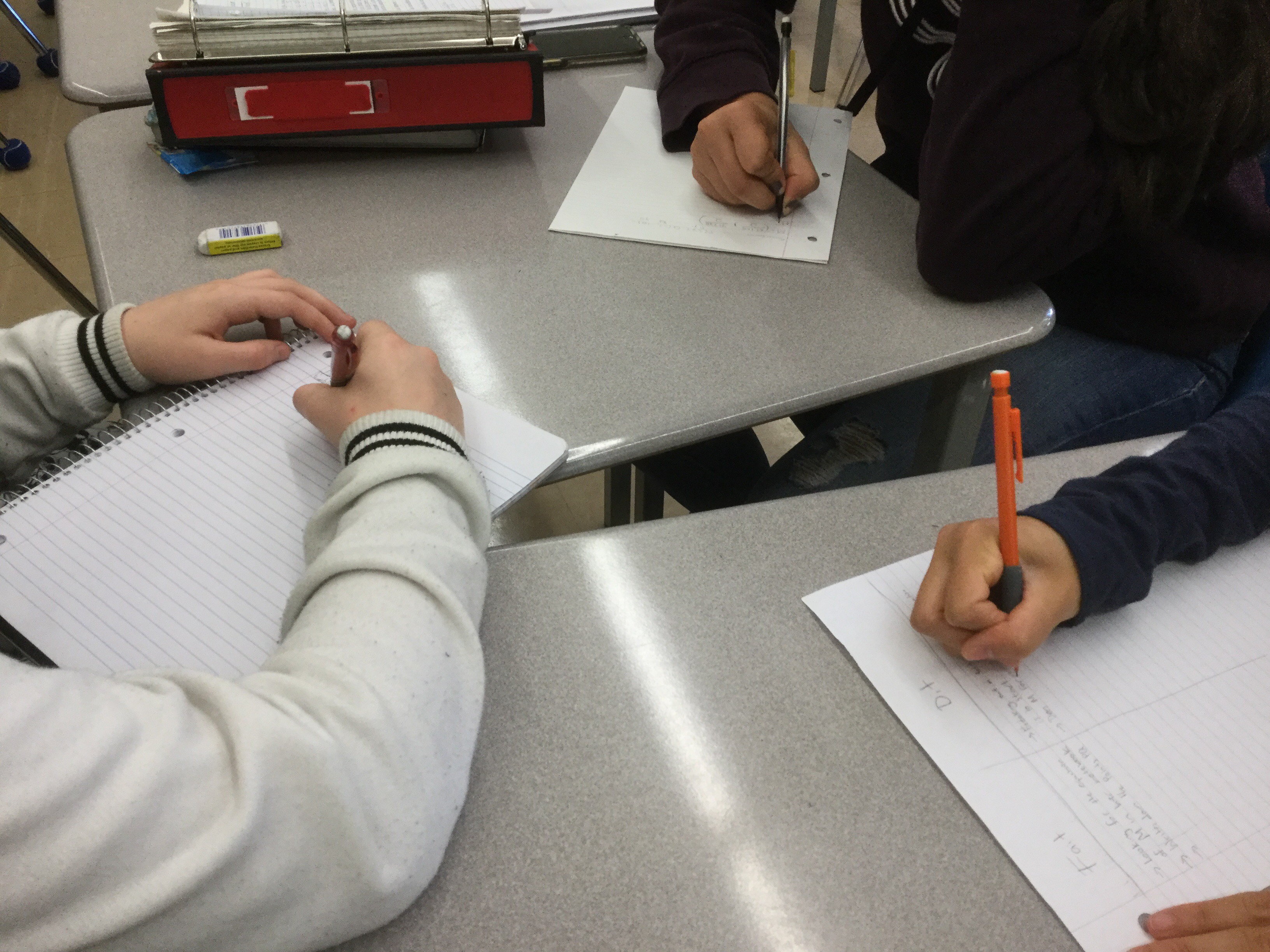
We noticed how weird it is to say alll he things that go through your mind while solving problems. We also noticed how hard it is to observe and take notes.

We will be compiling a list of things that good problem solvers do, and then hopefully using that list a lot this term to help us improve our problem solving skills.
How to not give up
While looking at learning skills today, a classmate asked “how do you ‘not give up’?” Wanting clarification about what it means to persevere, and strategies to get through difficult problems (in life and in math).
We took a break from the math, and looked at all the strategies we could brainstorm to keep going, and get motivation….we looked at changing our thoughts, to setting small goals, to asking for help, and changing up approaches. Here’s our list.
Hopefully we will all become more resilient problem solvers in math and in life.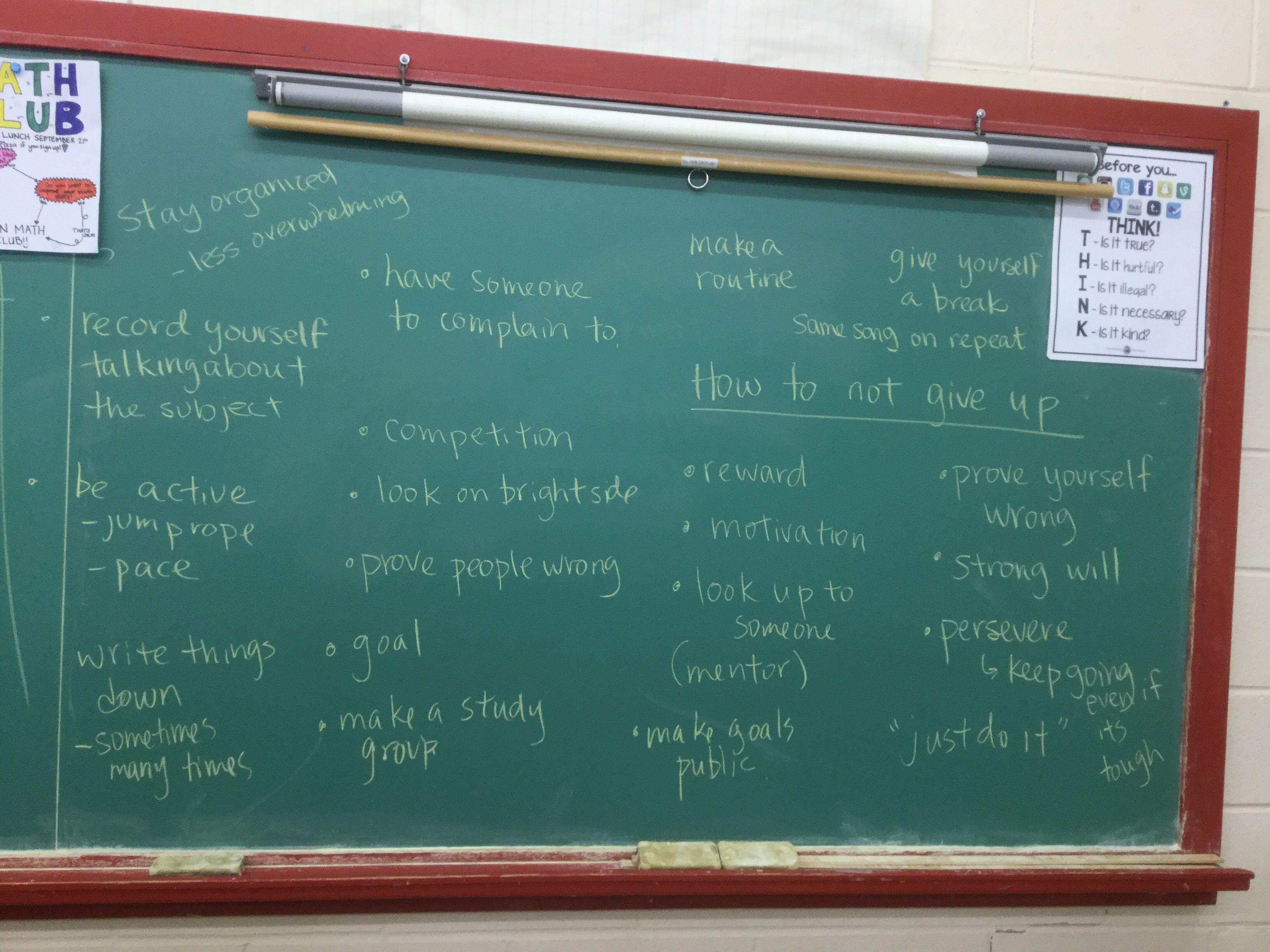
Beans!
 Look at that blossom! The beans are no longer getting taller. Their energy is being used for other purposes….like blooming.
Analyzing our Errors
We are looking at our first test, and figuring out what went wrong for the questions we didn’t do well. We are classifying our errors (inattention, computation, precision, and problem solving) and writing out solutions. It’s interesting to see the patterns emerge. Some of us need to pay more attention!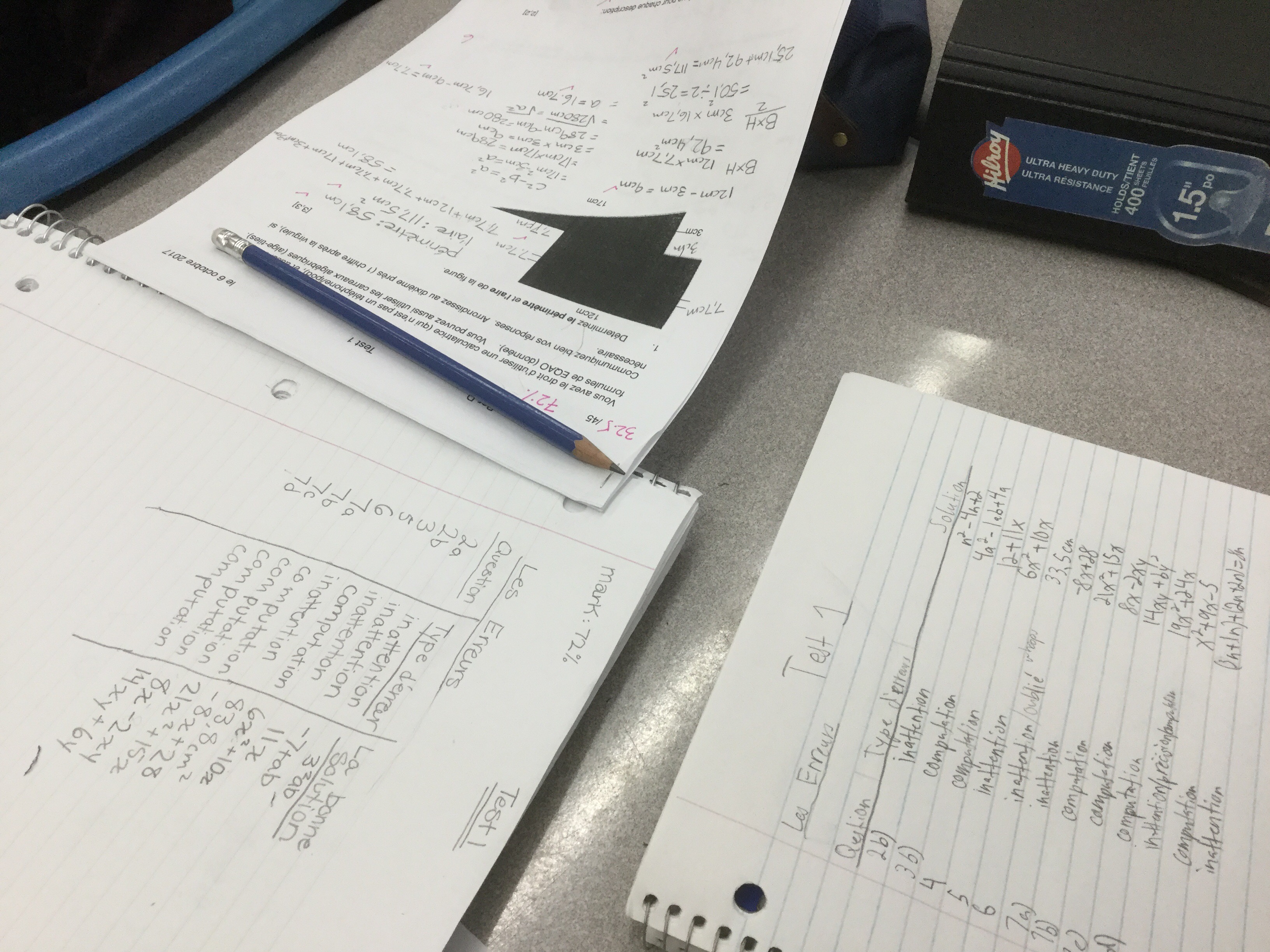
Exploring exponents
We looked at exponents today, and built models using toothpicks.
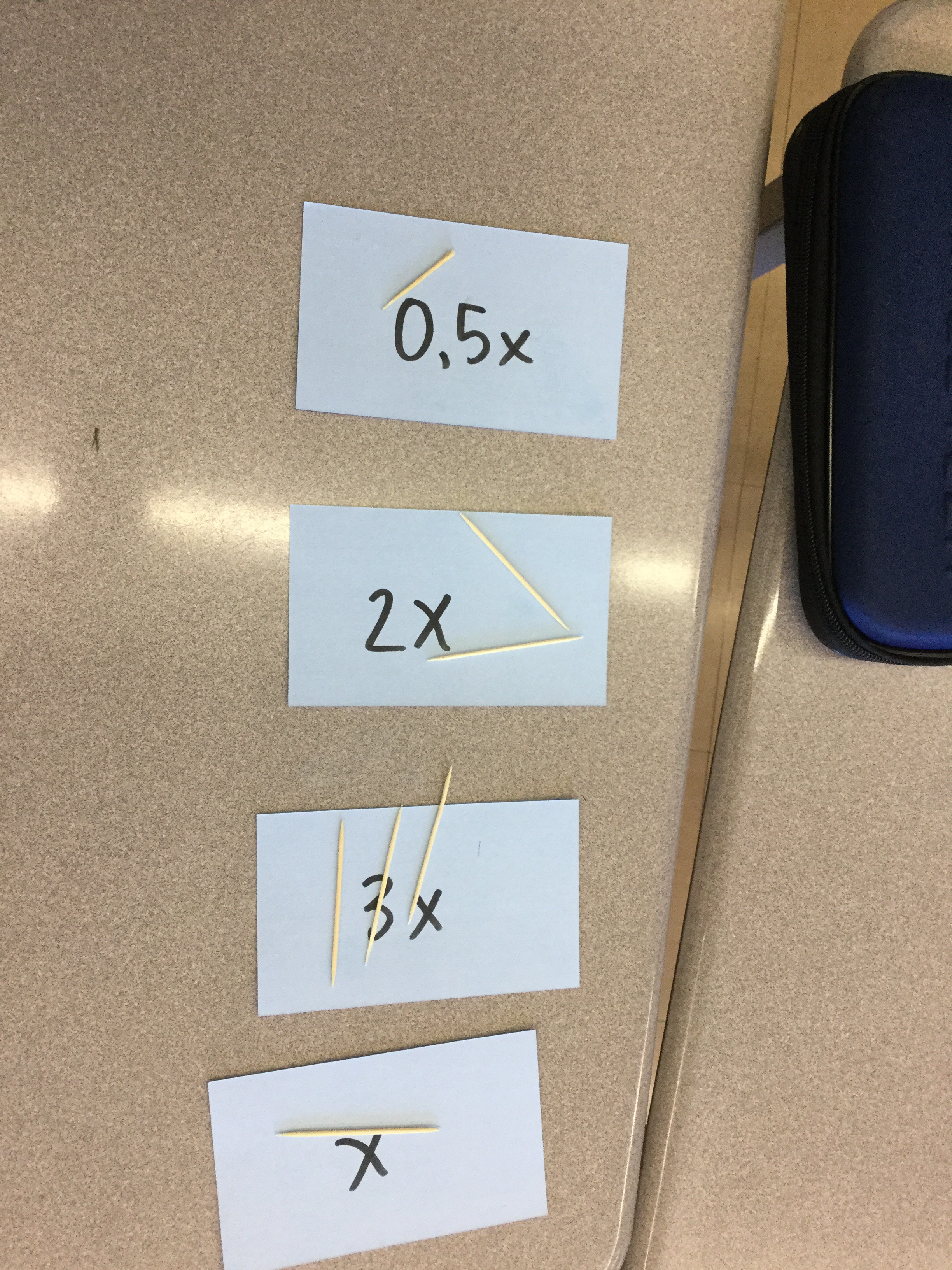
We looked at the effect of the brackets, and the coefficients
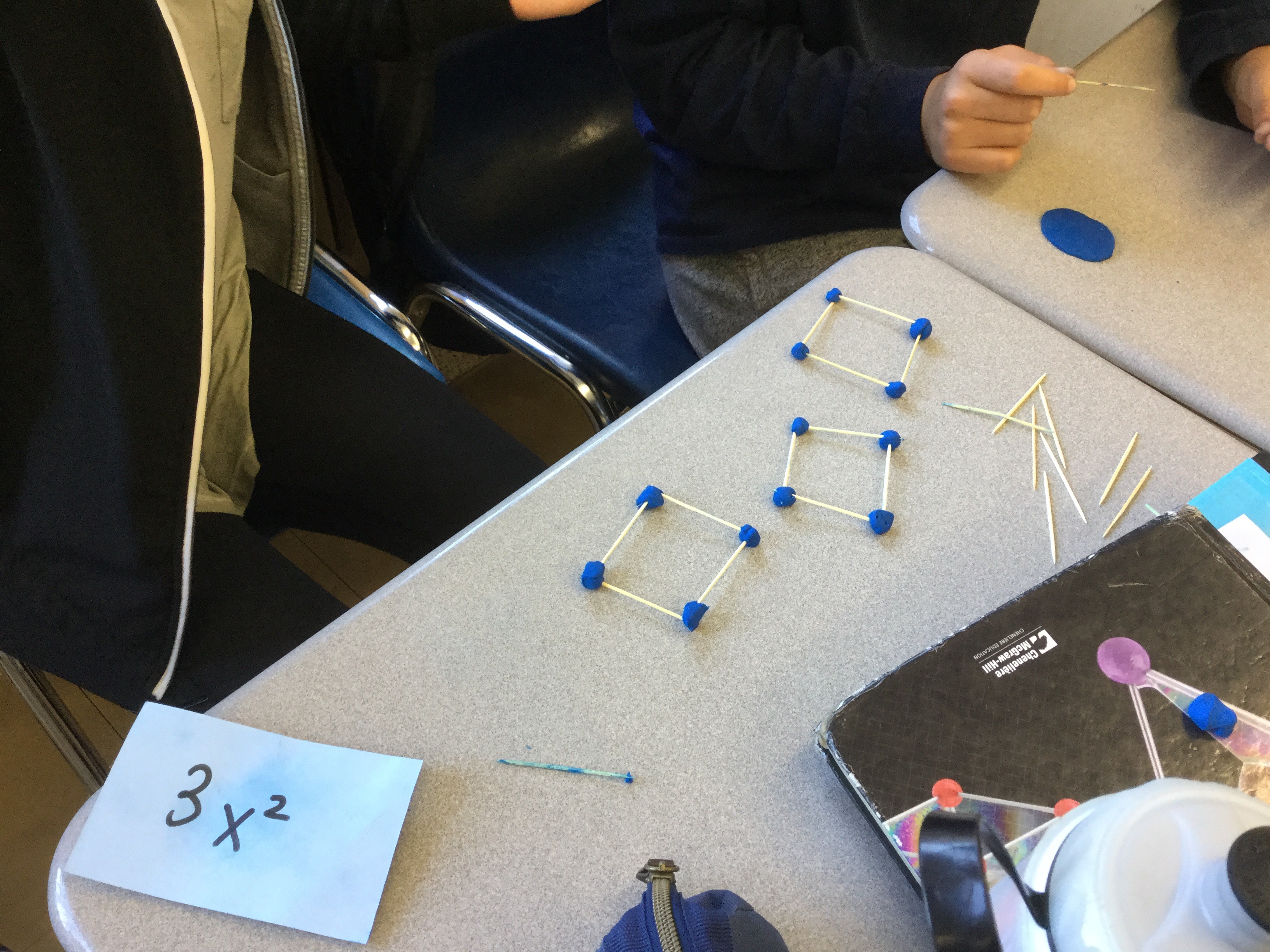

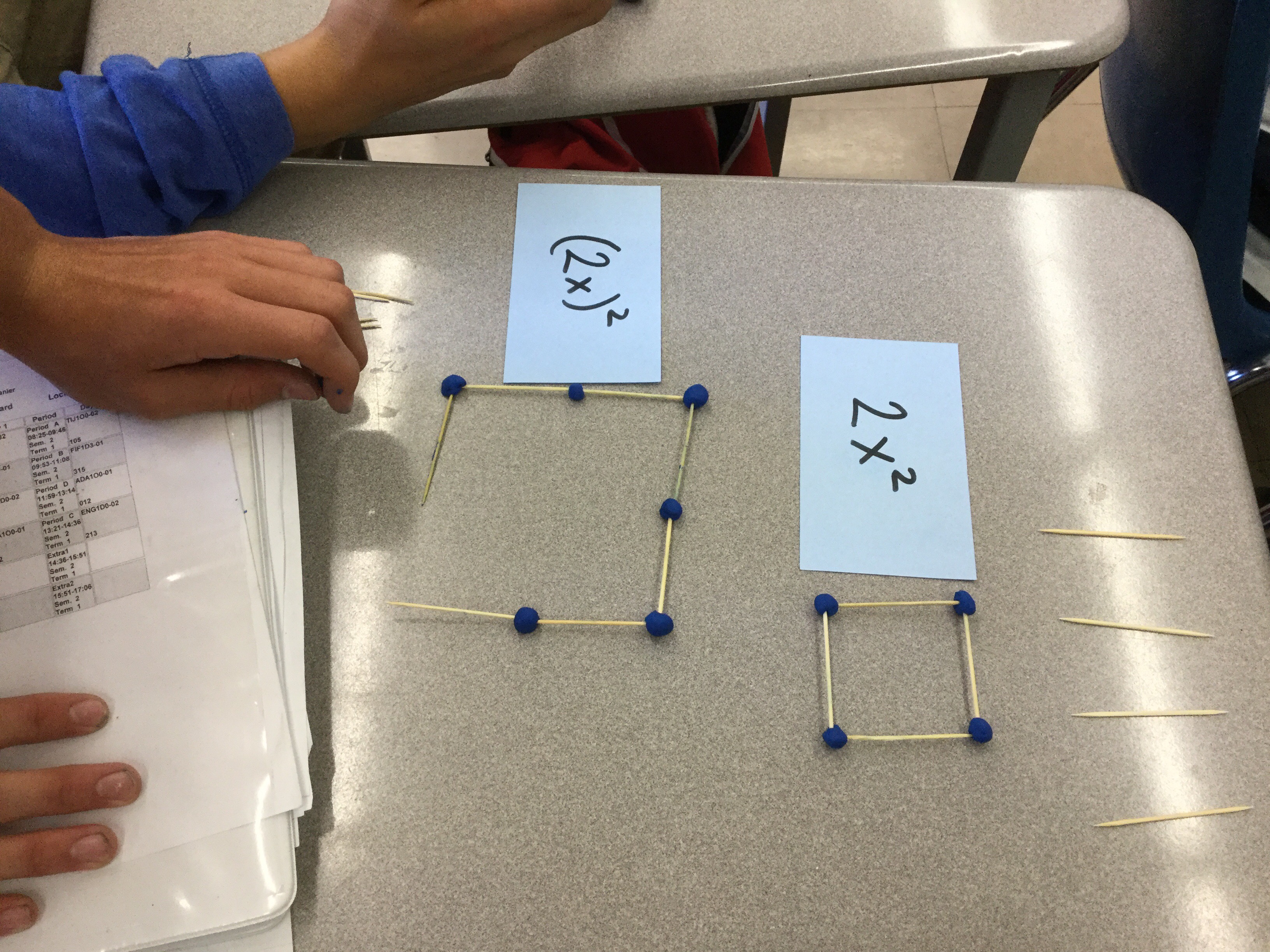
We also looked at what squared and cubed mean.
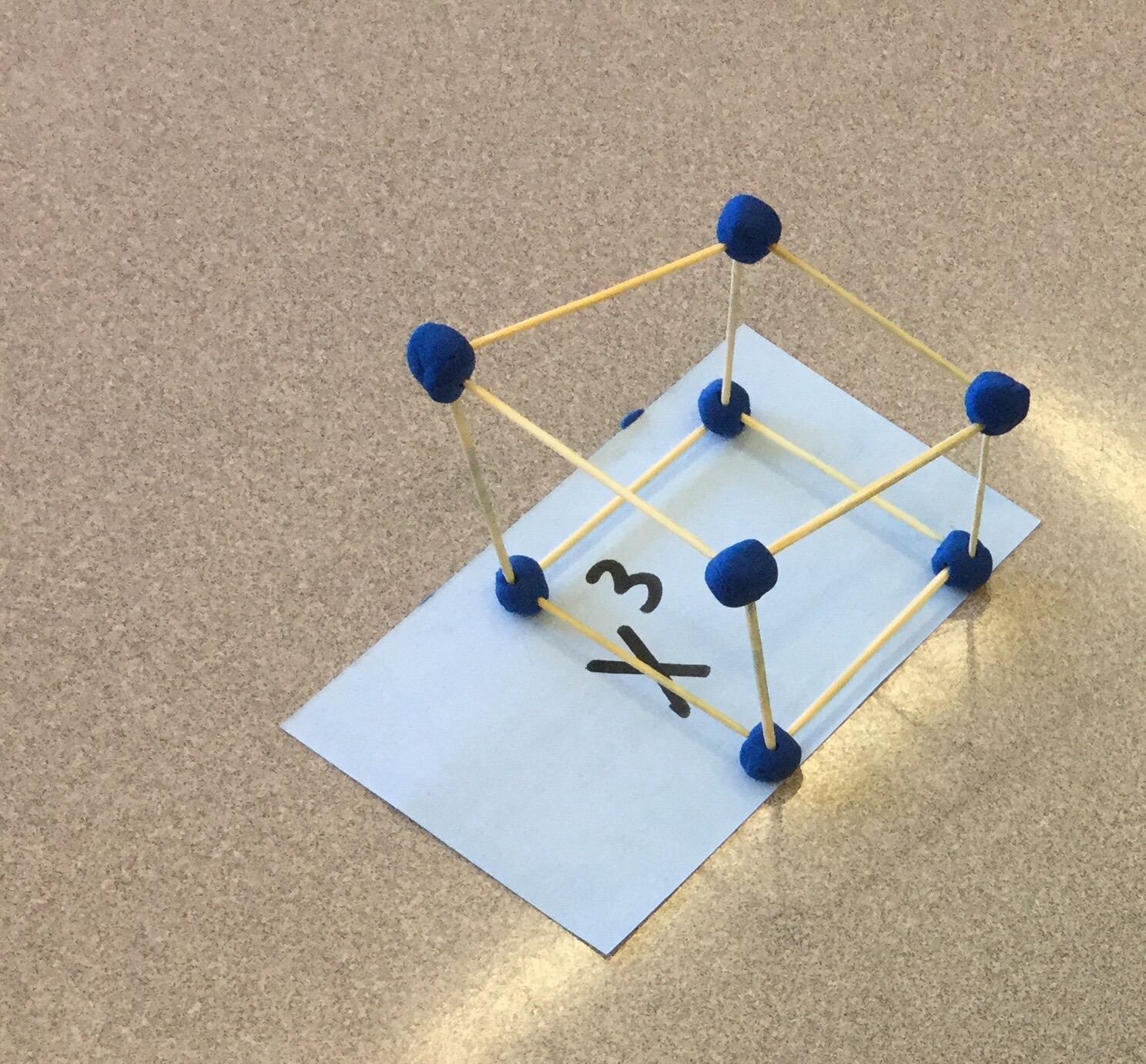


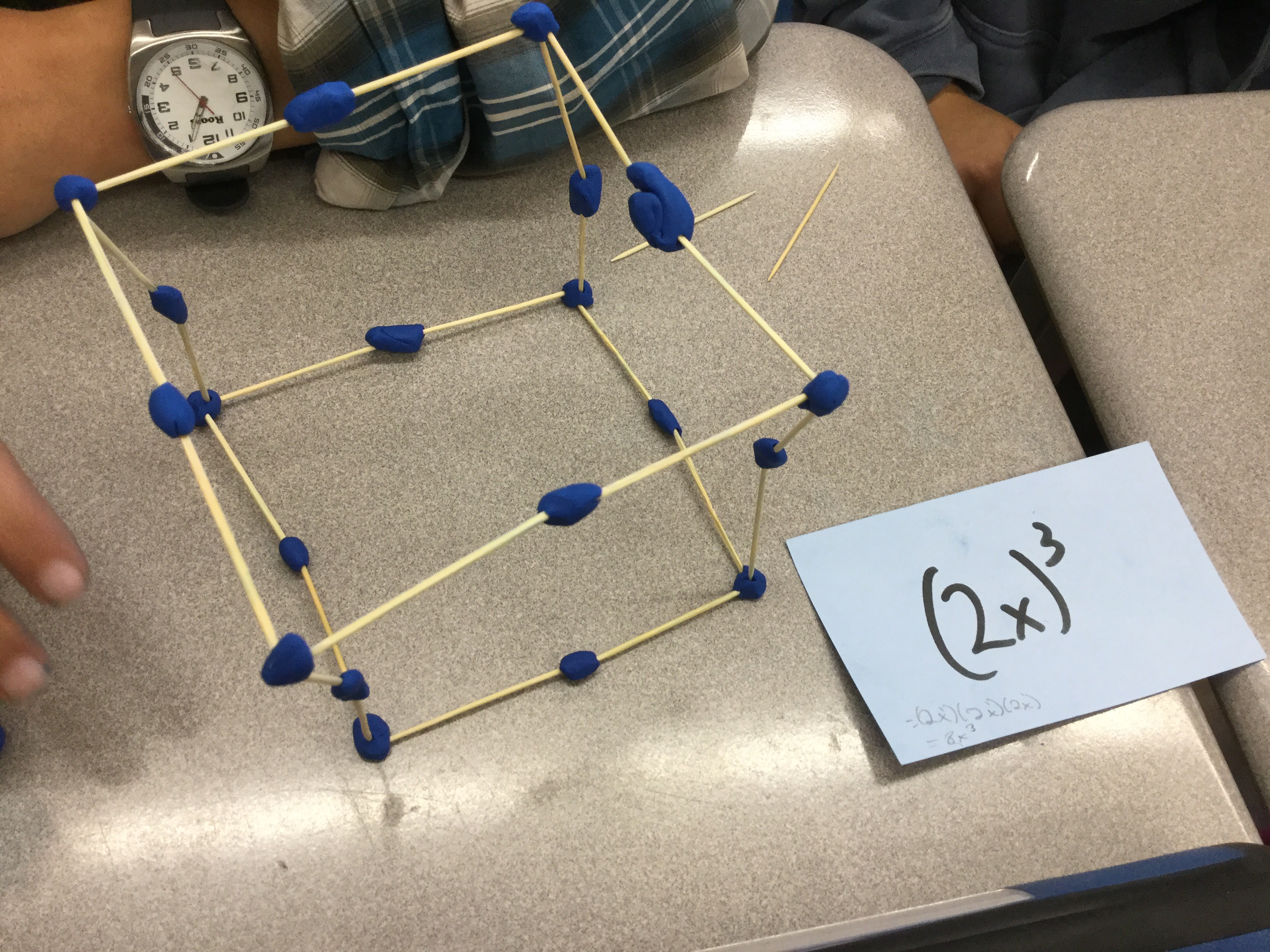
We noticed that within this big cube, with side length 2x, we can fit 8 little cubes with side length x. We can expand the expression (2x)^3 to be (2x)(2x)(2x) which is 8x^3.
Building from drawings
Today we looked at how to convey information for fabrication by means of drawings and also paragraphs. We made models using plasticine. We noticed how important dimensions are, and how hard it is to be precise.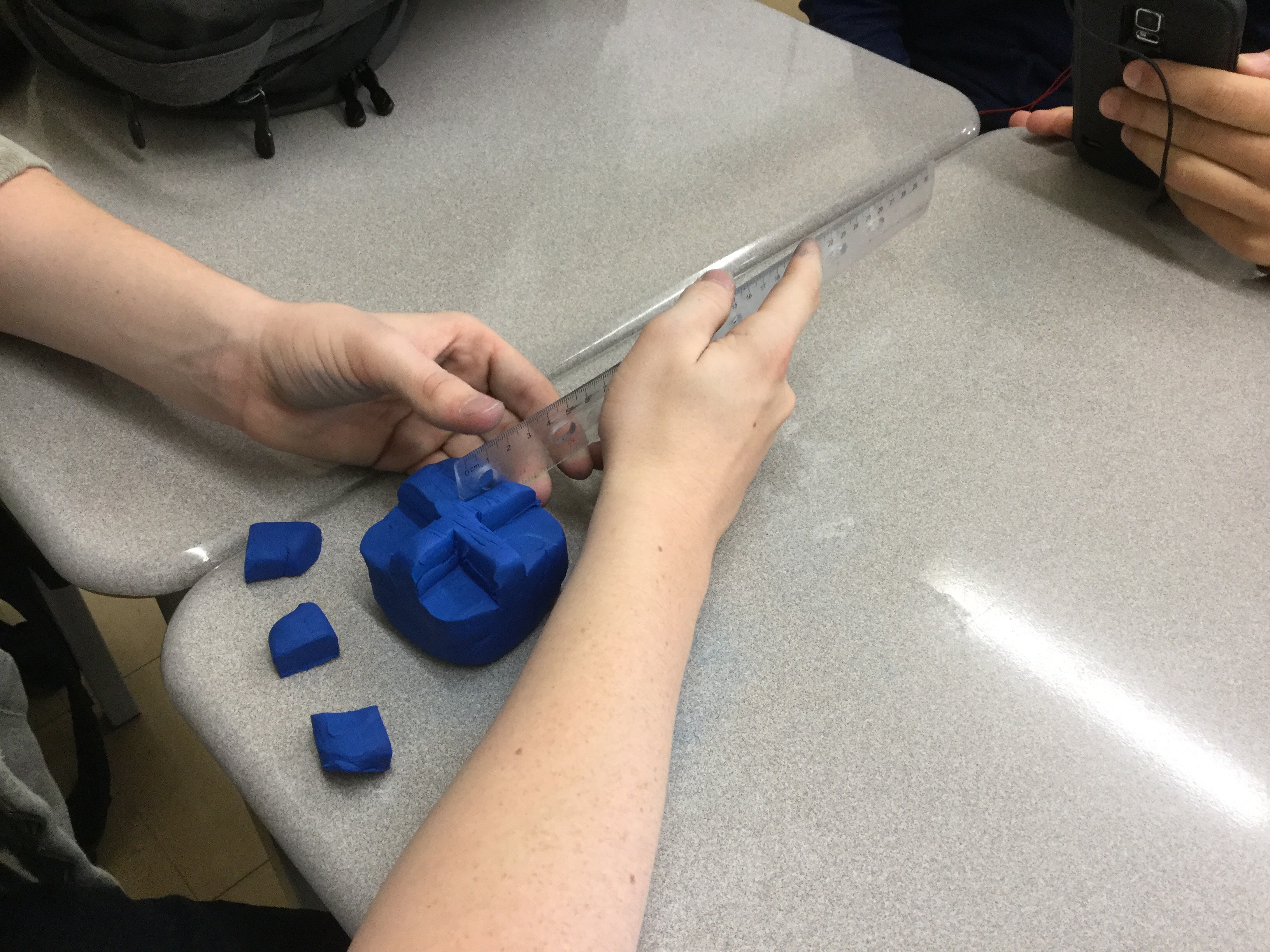
Learning about College
 We are learning about St Lawrence College today.
Technical Drawing
What do you notice? What do you wonder?

