Brackets are Important
We are exploring exponents and algebraic expressions. We are looking at what an exponent means, and how coefficients change expressions, and how important brackets are. We are representing coefficients here. The corfficient shows how many of someing there are. The next set show what thee exponent 2 means. It makes the model a square. The coefficient, not in brackets, indicates how many squares we need.

Here is another example.

When the coefficient is a fraction, we need a fraction of the square.
An expression with a coefficient in brackets, and an exponent outside changes things. The base of the exponent 2 in this case is 2x. This means the side length of the square is 2x. You will notice that this is equivalent to 4 x squared.

A similar relationship extends to the following…
An exponent of 3 makes the model a cube.

A coefficient outside brackets shows how many cubes to make.

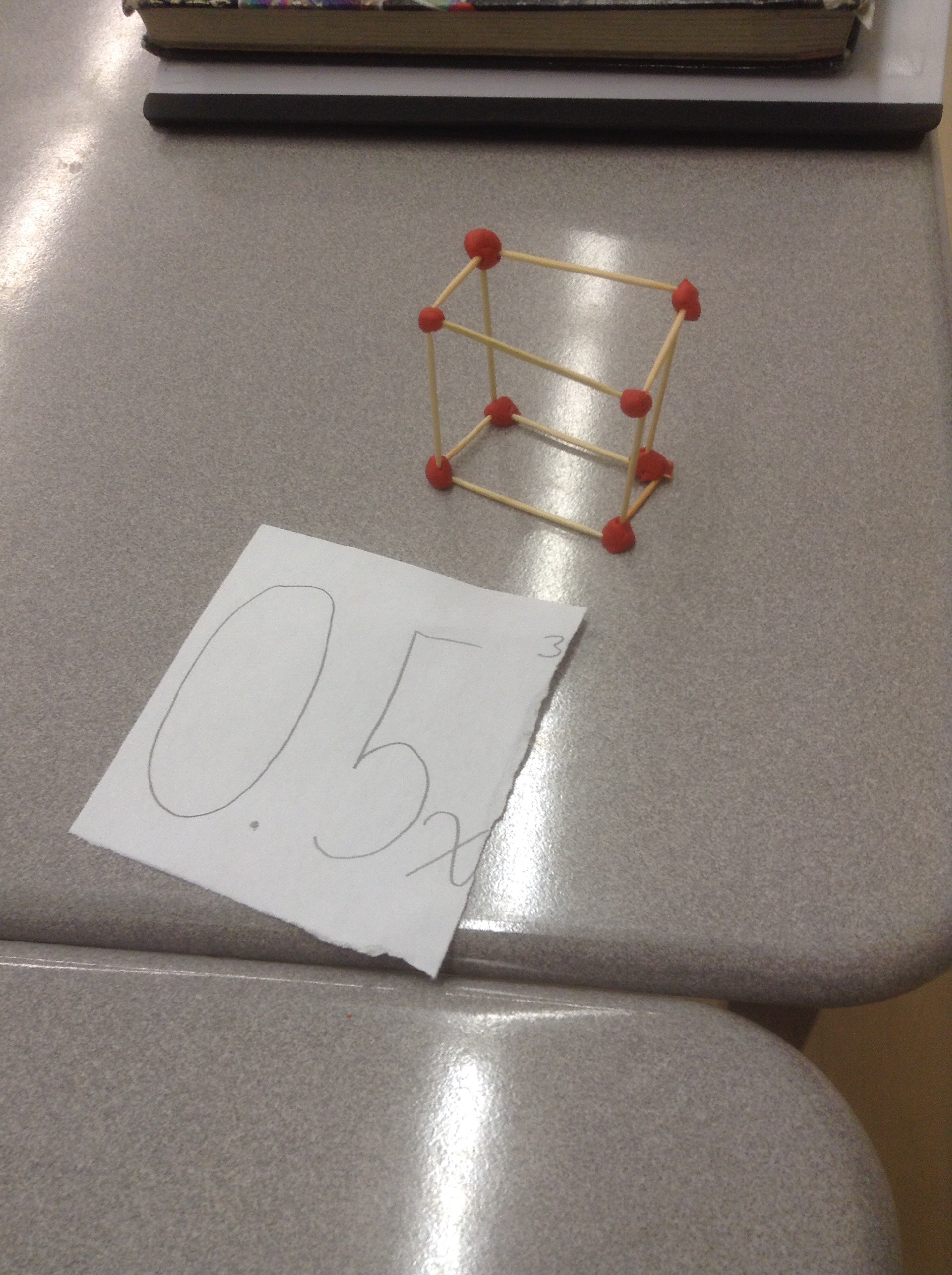
And if the coefficient is in the brackets it shows the side length of the cube. Here 8 x cubes could fit inside this bigger cube.

We are attempting to build (3x)^3 here, it’s a big challenge! We need to make 27 cubes all linked up to make a big cube

Here is a tiny cube, one eigth of the x cube. Note how (0.5)^3 is equal to 1/8.
We need to remember to pay close attention to the power, the coefficient, and whether there are brackets!
Planted!
We unwrapped our beans today and were thrilled to see so many roots. 
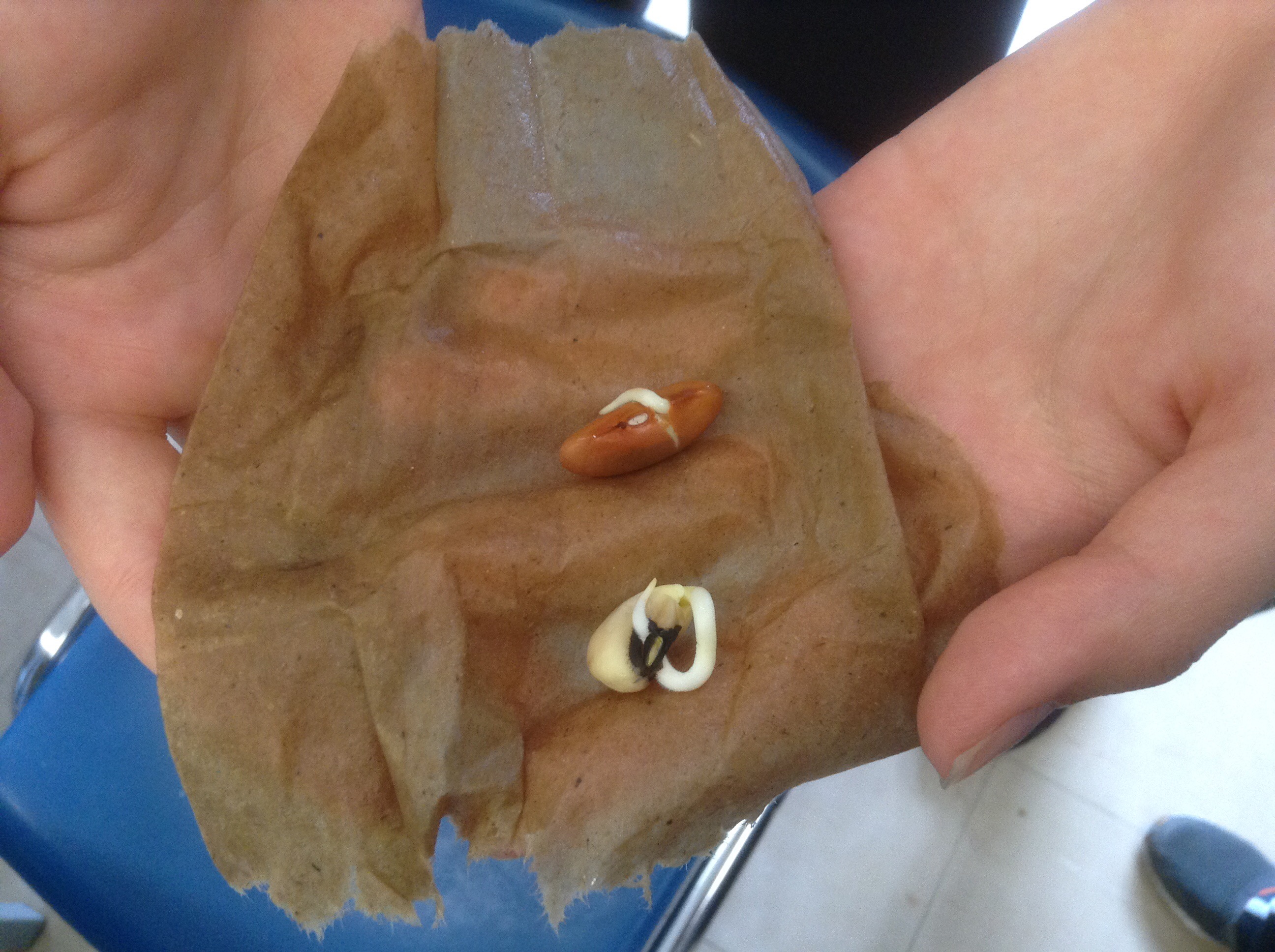
We planted the beans in soil, marking the type of bean on a popsicle stick.

We have a windowsill garden now. We are watering each day, and will keep track of the growth when we see it. The goal is to determine the growth rate of each type of bean, and compare them.

Perfect squares
We experimented today with algebra tiles. The goal was to make squares.


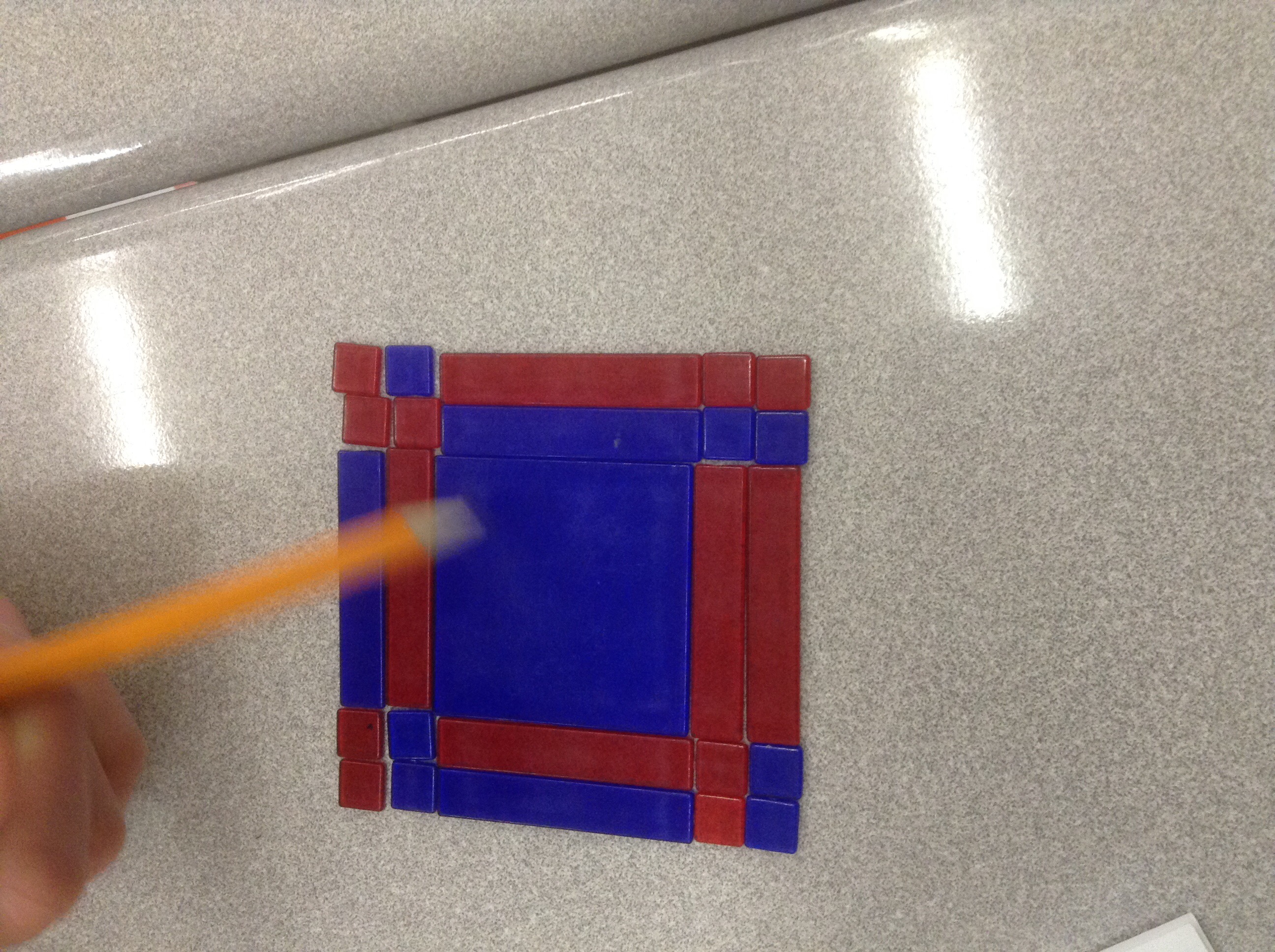
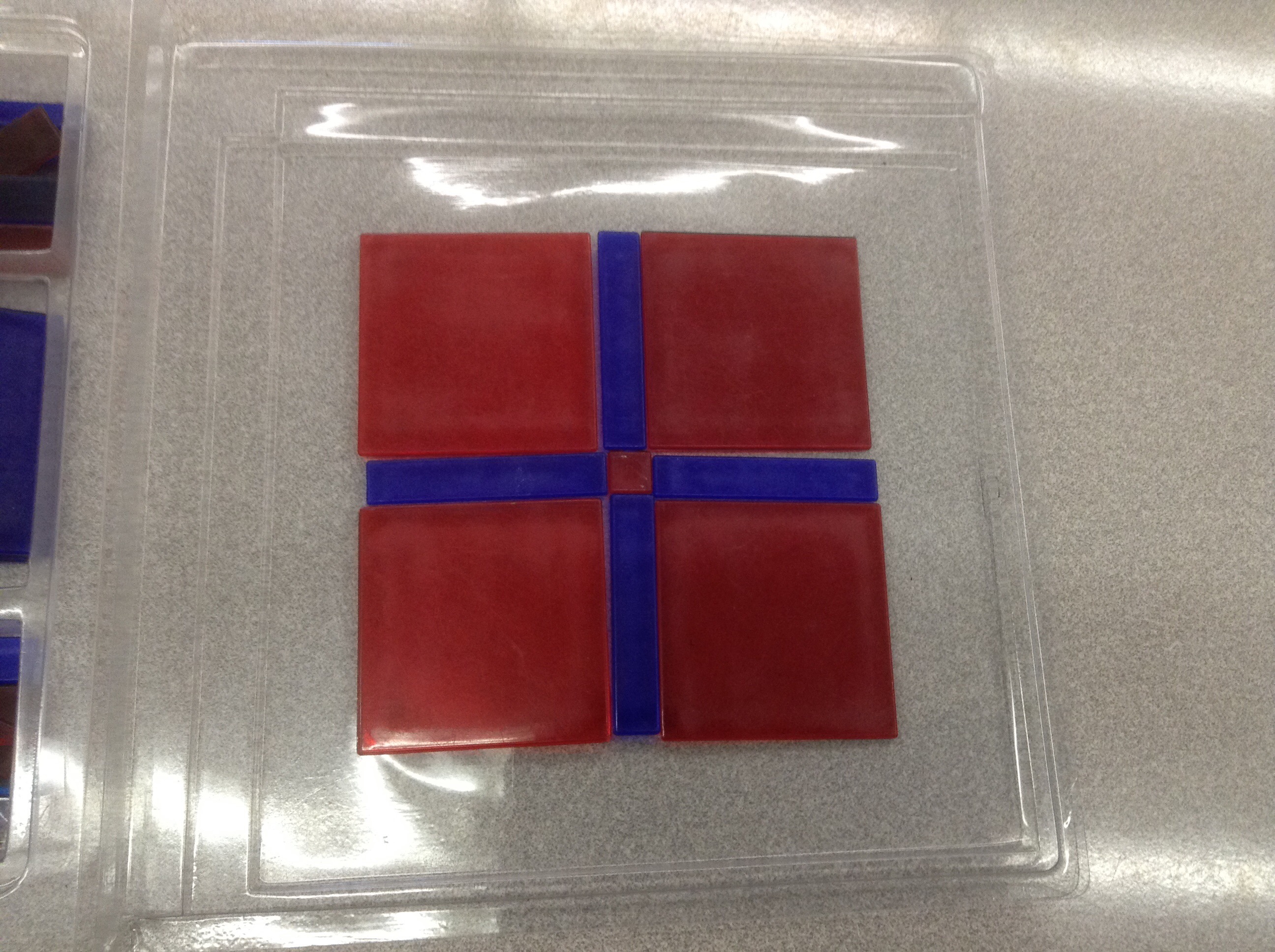
We are connecting the dimension of the square with the polynomial that represents the area. We talked about perfect squares and difference of squares today.
Beans!
We are full of beans thse days. We started planting our garden today. The first step is germinating the beans. We are planting black eyed peas and kidney beans.

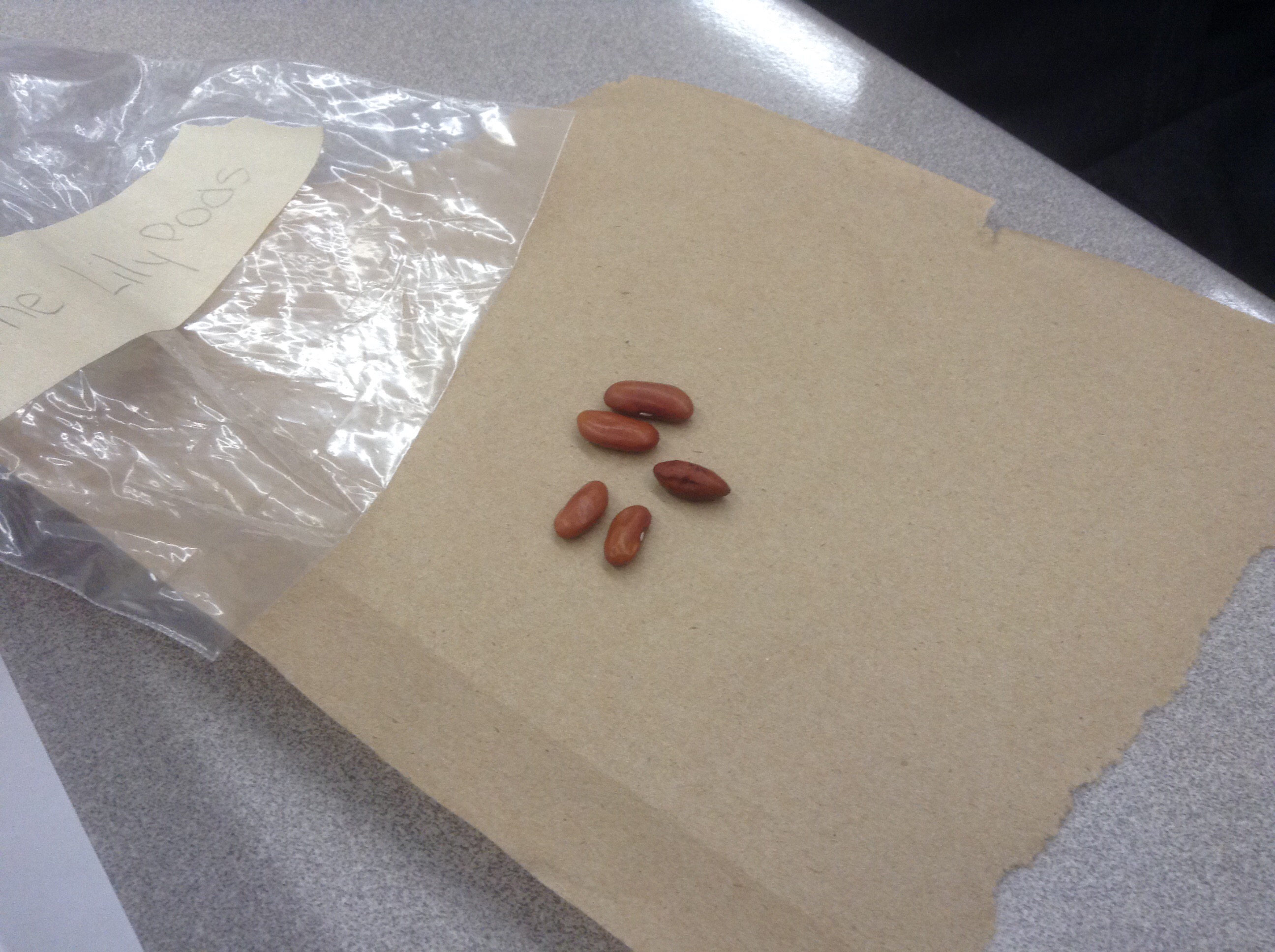
We have beans wrapped in moist paper and placed in plastic bags on our windowsill.
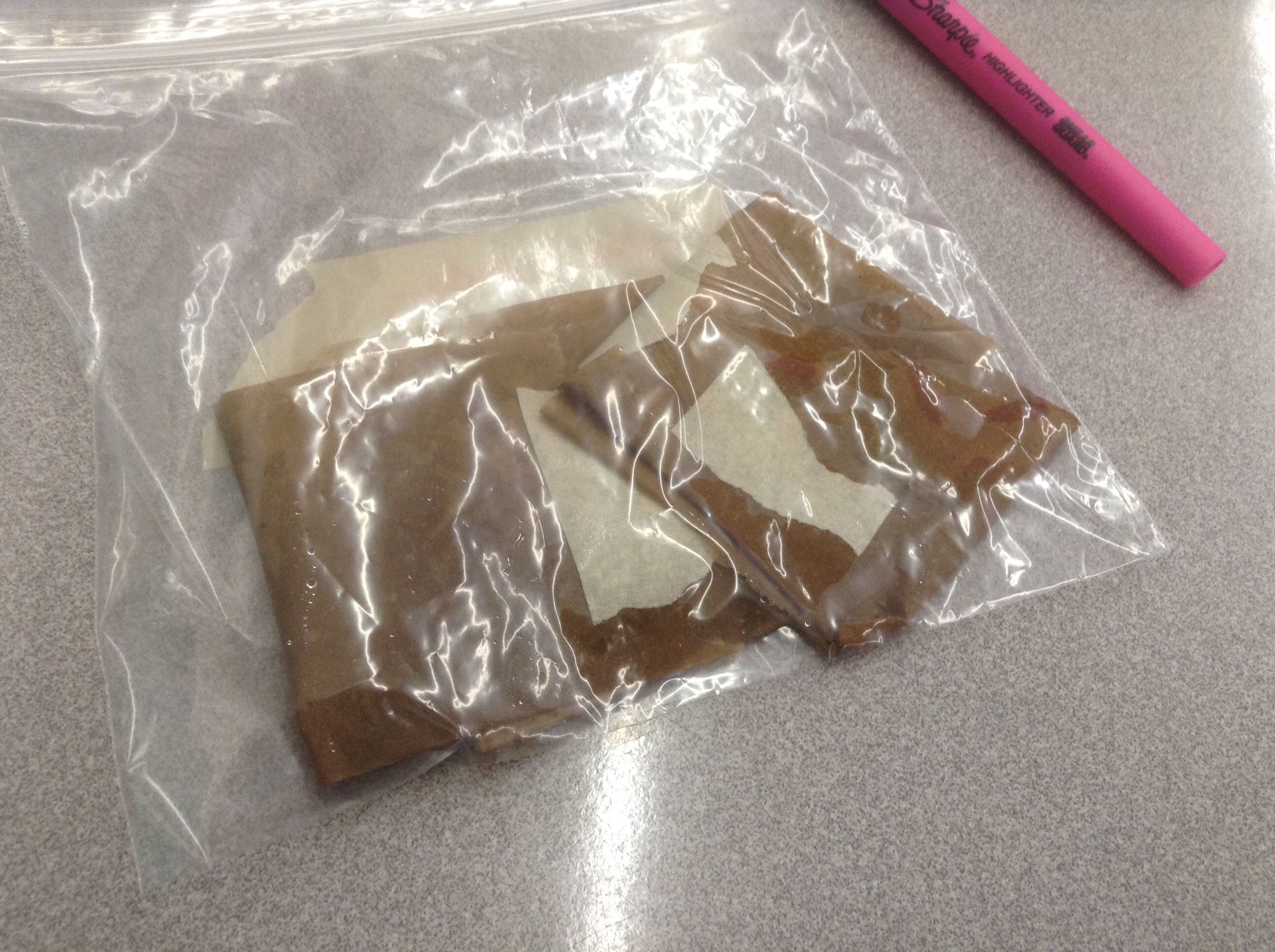

We made a hypothesis of the percentage of beans that will sprout. We’ll see if we are right in a week.
Happy (Belated) Pi Day
We celebrated today because we missed the real pi day because of march break. Pi day is celebrated March 14th (3/14).
We had an amazing recitation of pi…
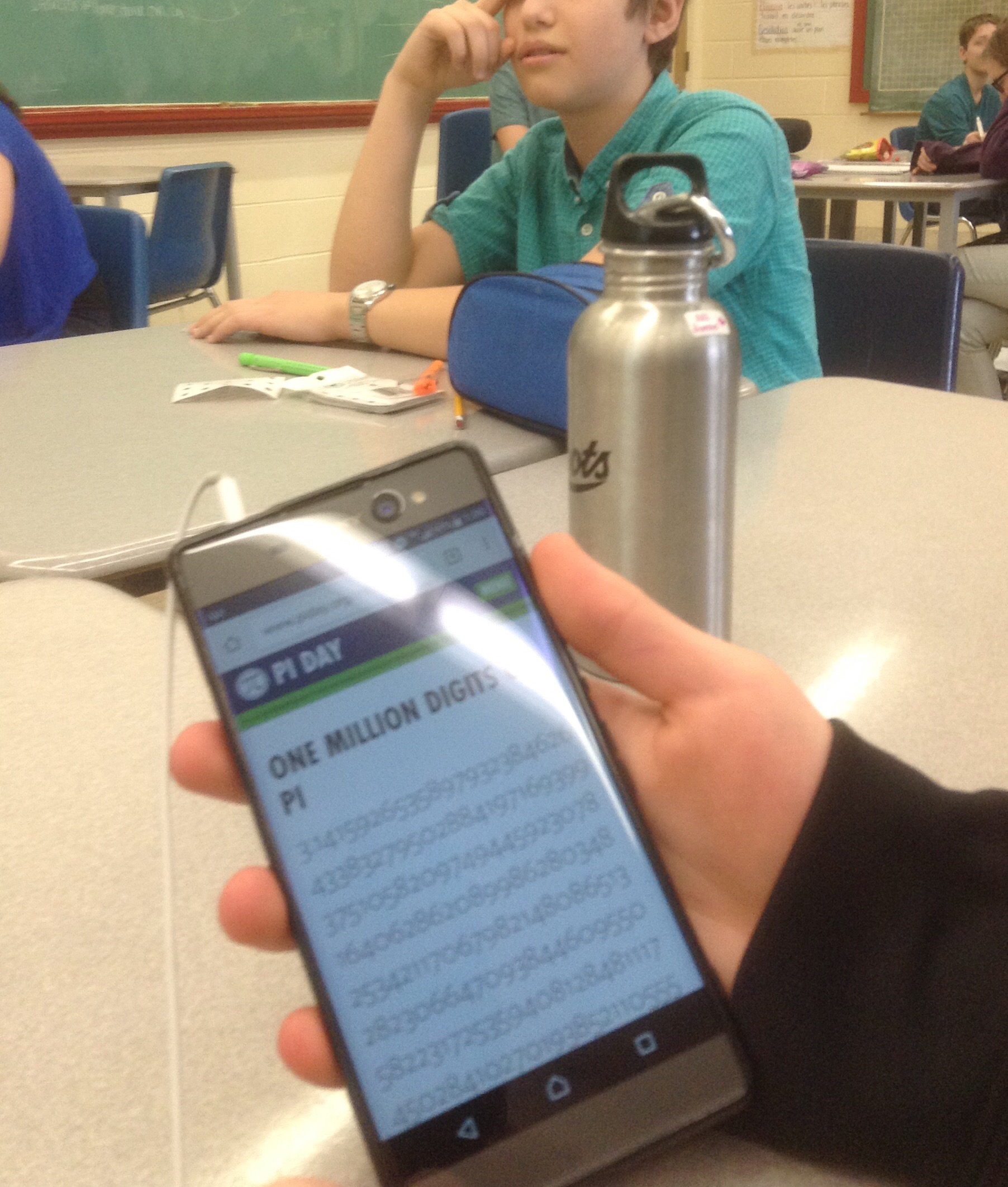
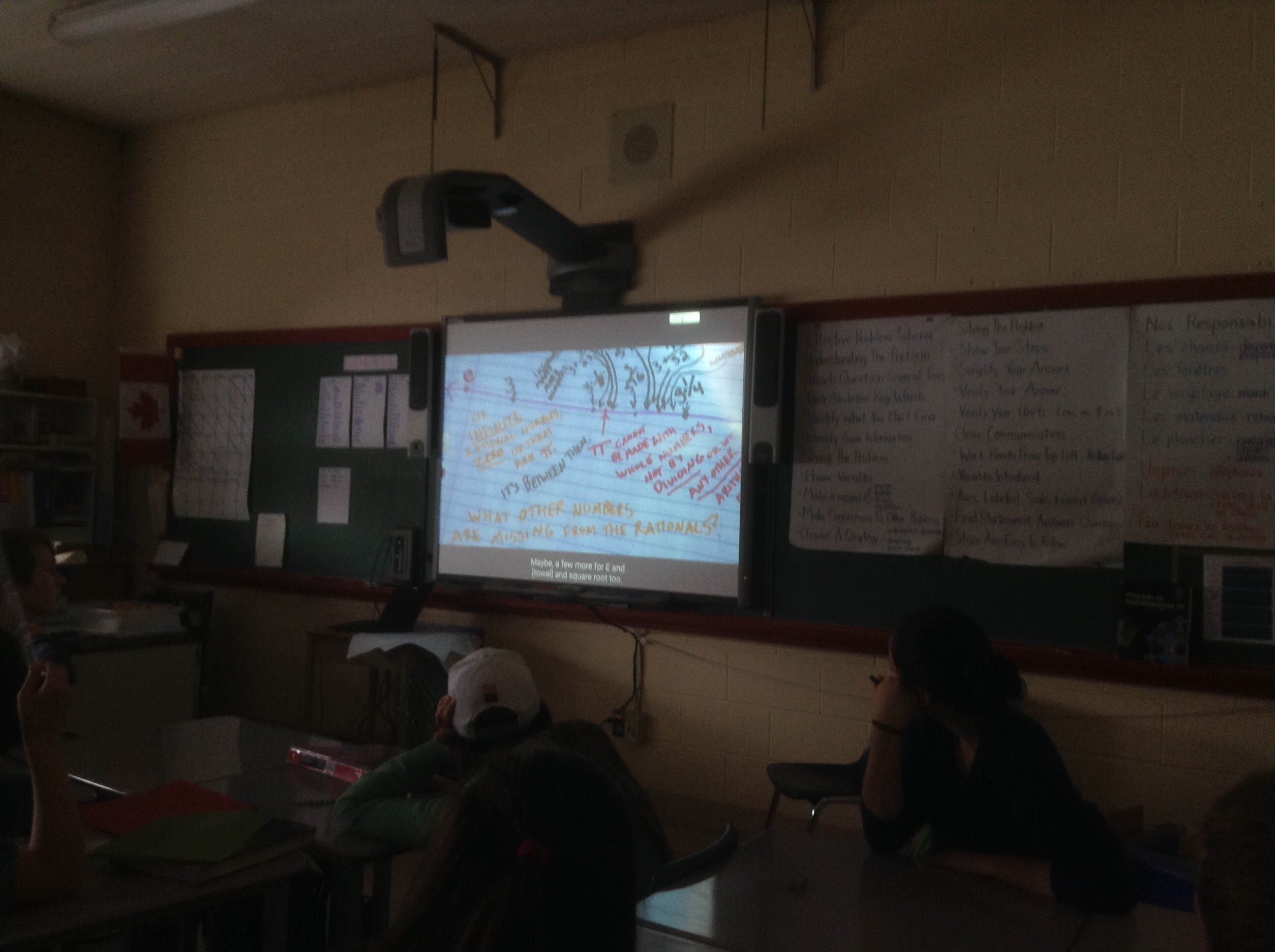
We watched a Vi Hart video all about pi
We also experimented to determine the relationship between the circumference and diameter of a circle. To make it more tasty we used licorice laces to make the circles.
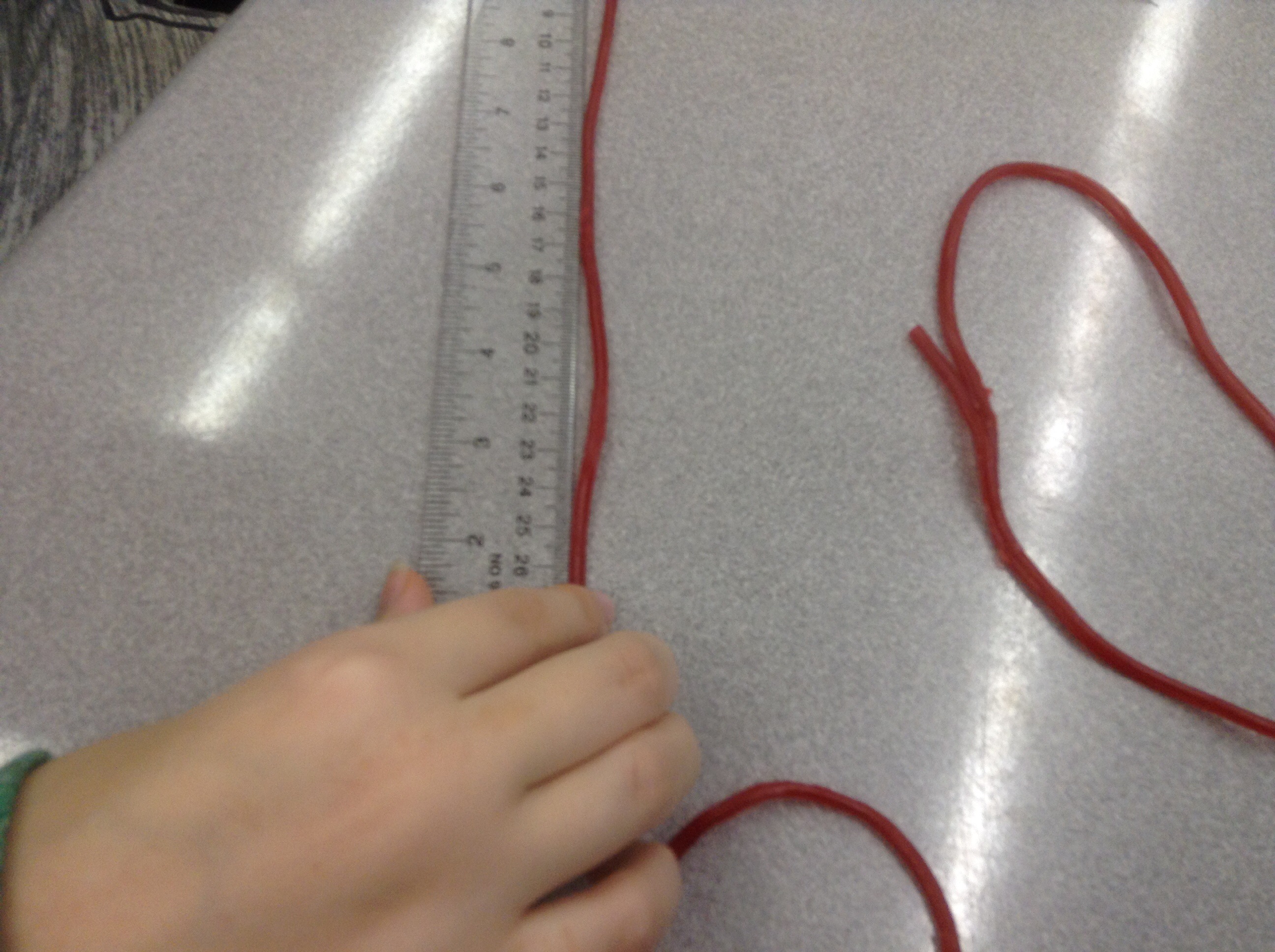
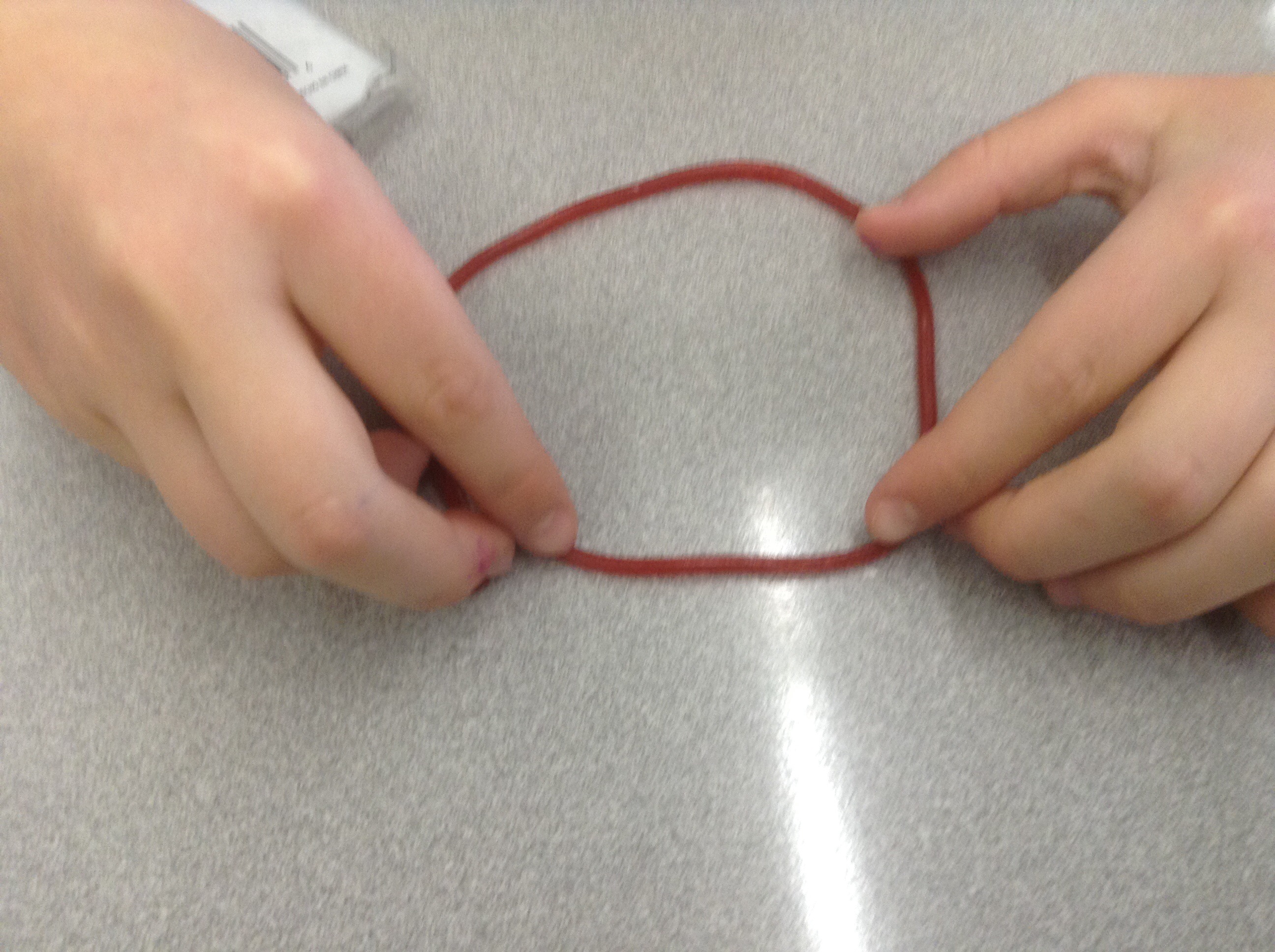
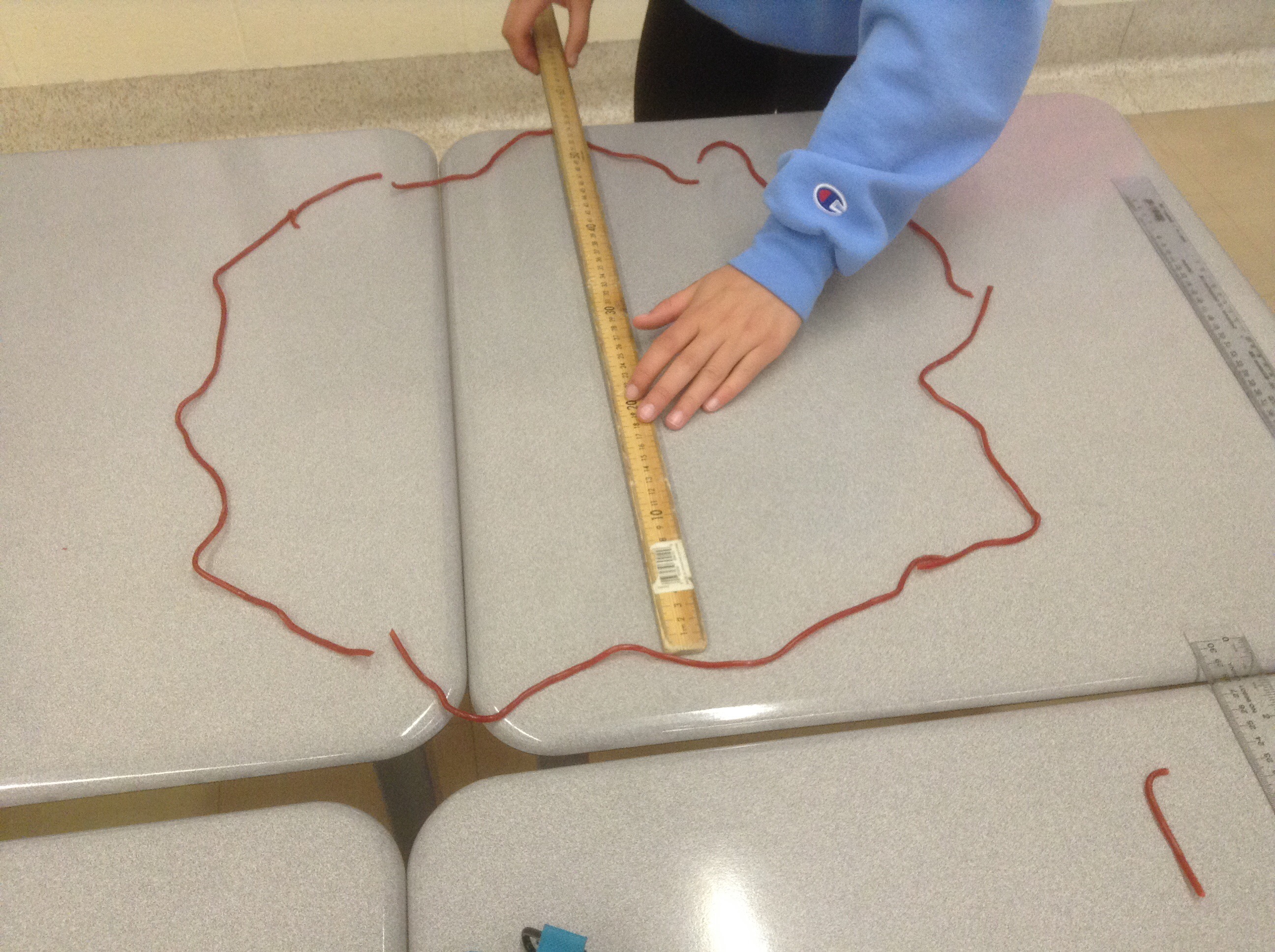
We had to approximate some circles, so our data wasn’t perfect.
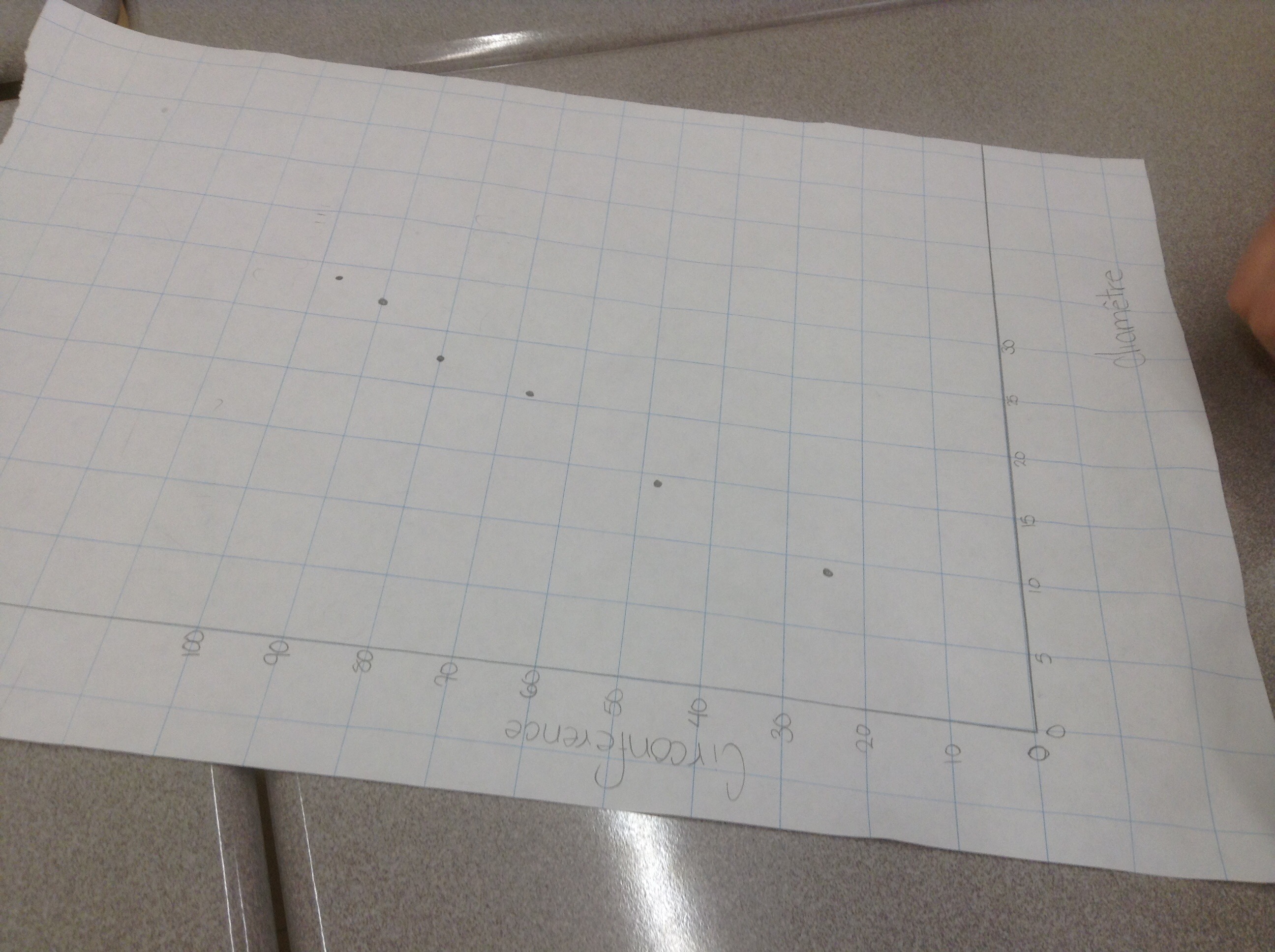
We made lines of best fit and looked at the rate of change. On average it was a bit more than 3. We know it should have been pi.

We ate mini pie and sang our favourite math carol “oh number pi”
All in all it was a good celebration!
Work period
Rather than hand out a long list of questions today, each group of two or three were given one question to do, and then they switched cards when complete.
Our questions dealt with proving what shape was created when 3 or 4 given points are connected. And calculating perimeter or area or comparing lengths or slopes of diagonals.
Some students were working on the blackboard
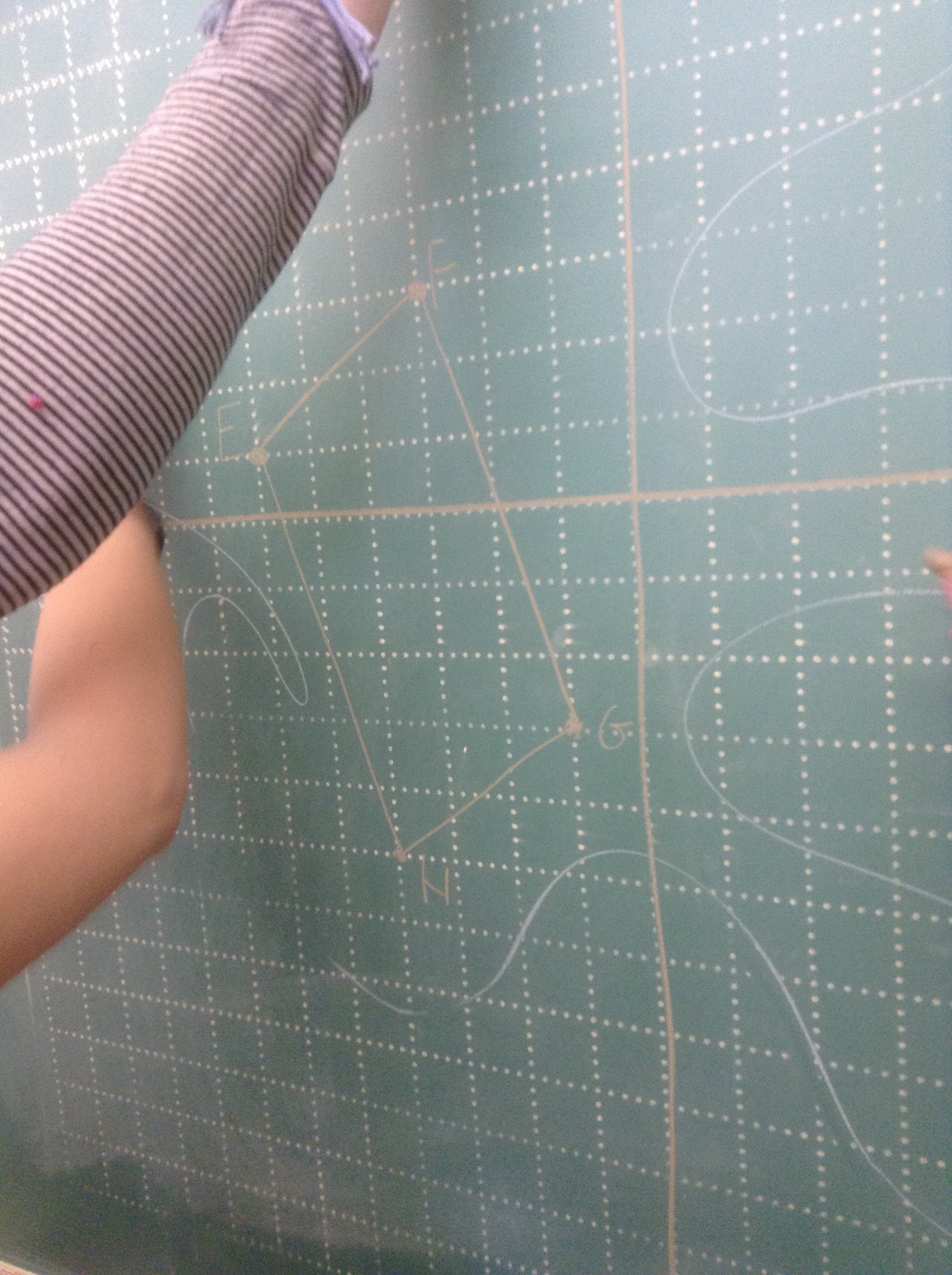 And others were hard at work with the whiteboards
A major break through has come in our class…whiteboard cleaning has been a challenge in the past, but a colleague has suggested that fuzzy socks from the dollar store make the best erasers. The whiteboards are now always clean, because cleaning them is fun!
Simplifying polynomials with algetiles
We are working on simplifying polynomials. We made pictures using algetiles and then made zero pairs (identical red and blue tiles) and simplified the images.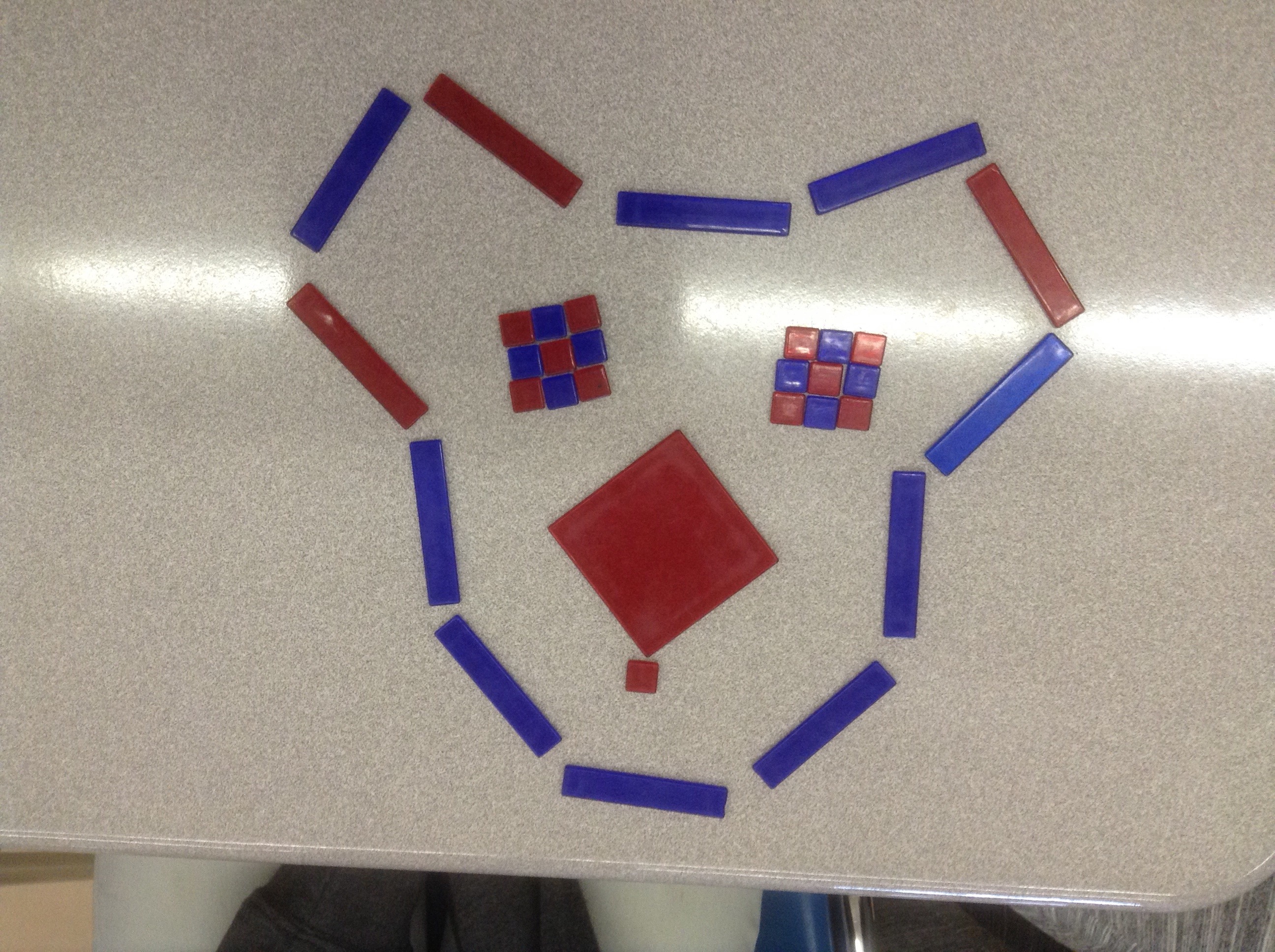

How can you learn problem solving skills
Practice with someone who solves problems well!
We are working on using analytic geometry to solve problems, and it can be tricky for some people to decide what tools to use to solve the problem. Slopes, midpoints, distances are all straightforward calculations-the trick is to come up with an effective plan to solve the problem.
Here’s how the activity worked: One person per group of three begins as the expert. The groups were designed so that at least one member is a very effective problem solver. The expert’s job is to verbalize all of their thinking as they solve the problem. They need to explain what they are thinking, what information they have, what they need, how they can find it. They need to verbalize if they get stuck, and what they do to get back on track.
The other two people in the group are there to document the strategies employed by the expert. We chunked the time so that for each time period, the observers had to write two strategies done by the expert.

Once the problem was solved, the next group member tackled the next problem while the others observed. Everyone in the class was actively solving or paying close attention to someone else as they solved a problem for a good chunk of time.
Review…”speed dating” style
We are working on our problem solving skills. We have learned how to find equations of medians and perpendicular bisectors (médiatrice) the length of segments, types of triangles, equations of circles etc. There are so many different things we can potentially solve for, so it’s important to read carefully and make a picture and come up with a plan.
We worked with partners across the table, then after both partners are experts, one half of the partnership moved one seat to the right, and started again. We used whiteboards and our new fuzzy socks(erasers) for jotting down calculations and sketches.
We are working towards excellent comprehension before the summative activity on Thursday.
Productive struggle
Today grade 10s worked thtrough a challenging problem to determine the height of a triangle algebraically.
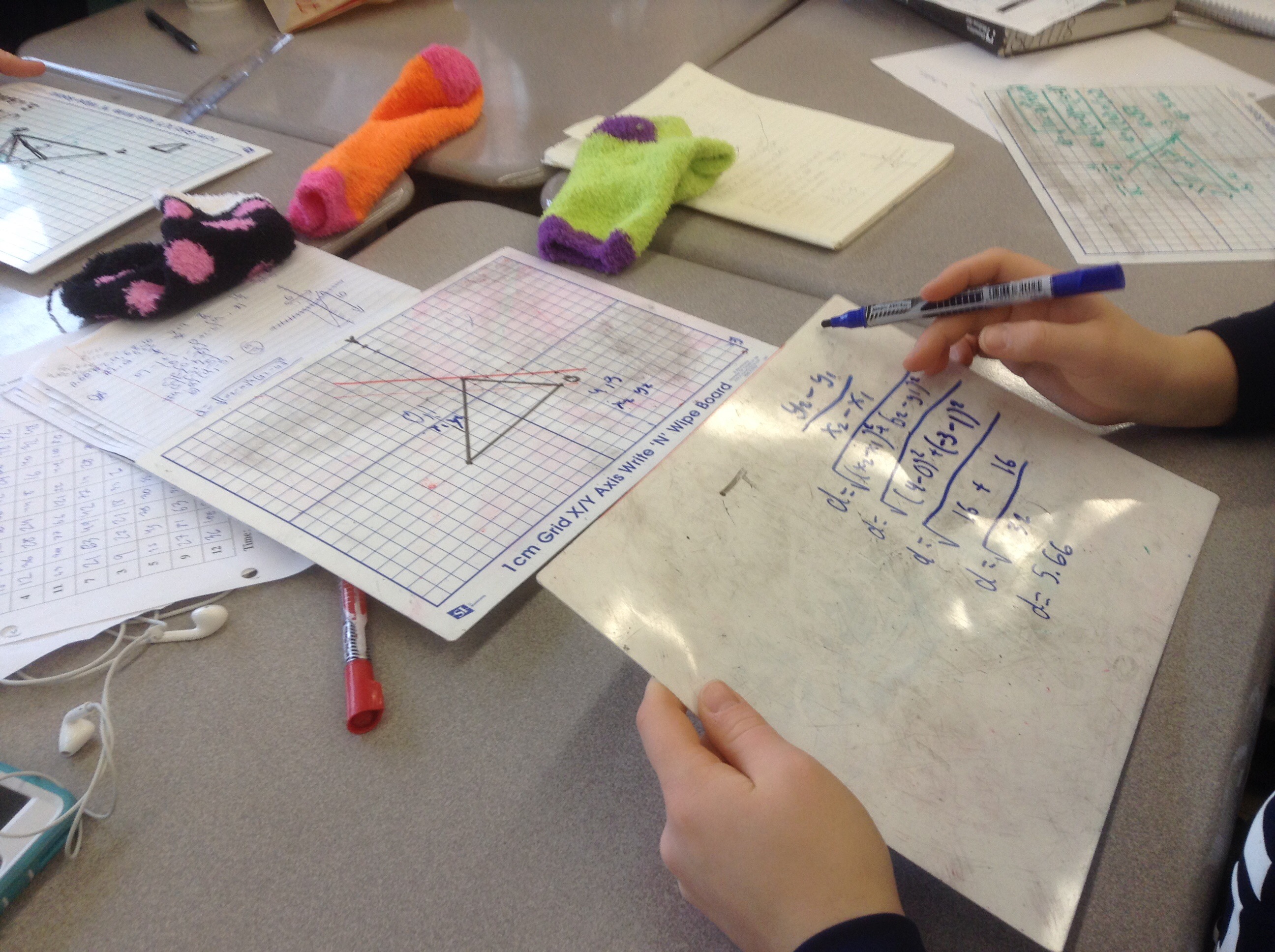
Working together, with whiteboards, was a good way to get an idea of what the problem entailed.
Some groups were able to help others once they got on the right track.
These types of questions stretch your brain, and problem solving skills. The struggle is ok, it’s expected when you do something new. We are working on being more comfortable with productive struggle.
 Ms. Bearse's Site