Algetiles
We are using algetiles to help us visualize multiplying and factoring. The area is the product of the dimensions, and the dimensions are the factors of the area.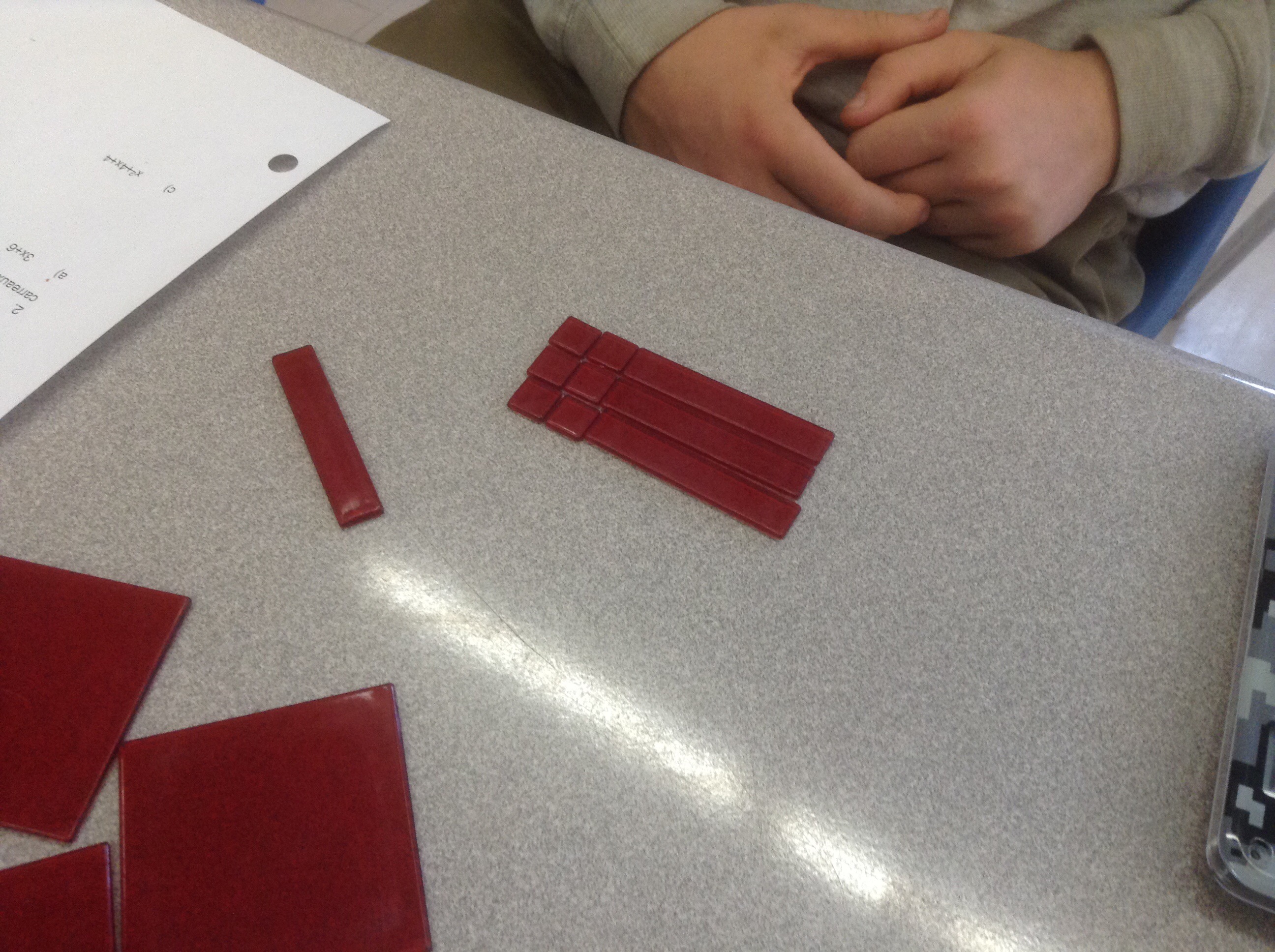
Exploding Pumpkins
We did an experiment today with the grade 12 class. We wanted to determine which measurement had the biggest impact on the number of elastics it would take to explode the pumpkins. Some groups thought the diameter, some thought the circumference, and some thought that the wall thickness would have the biggest impact.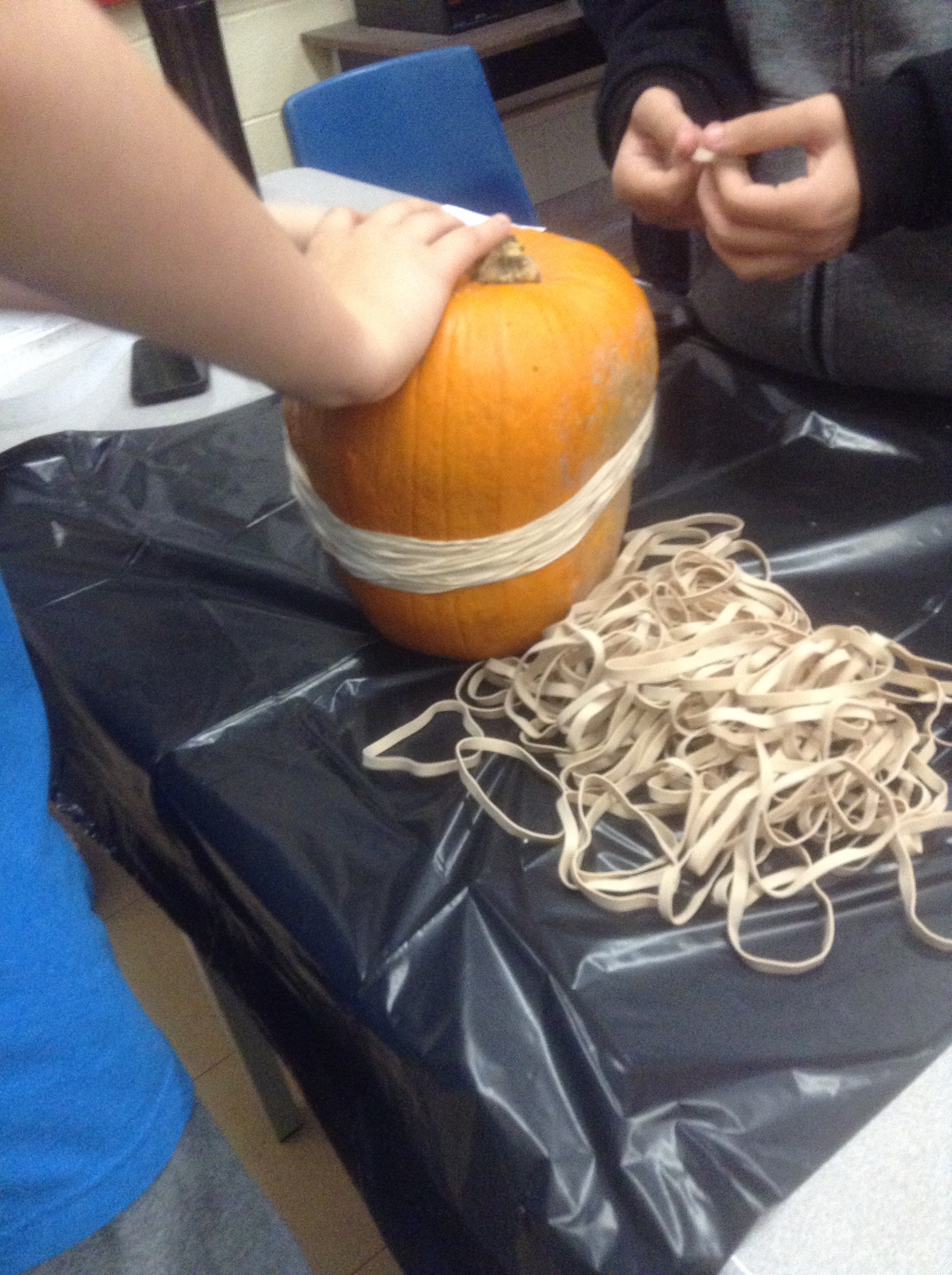
We carefully added elastics to the pumpkins.
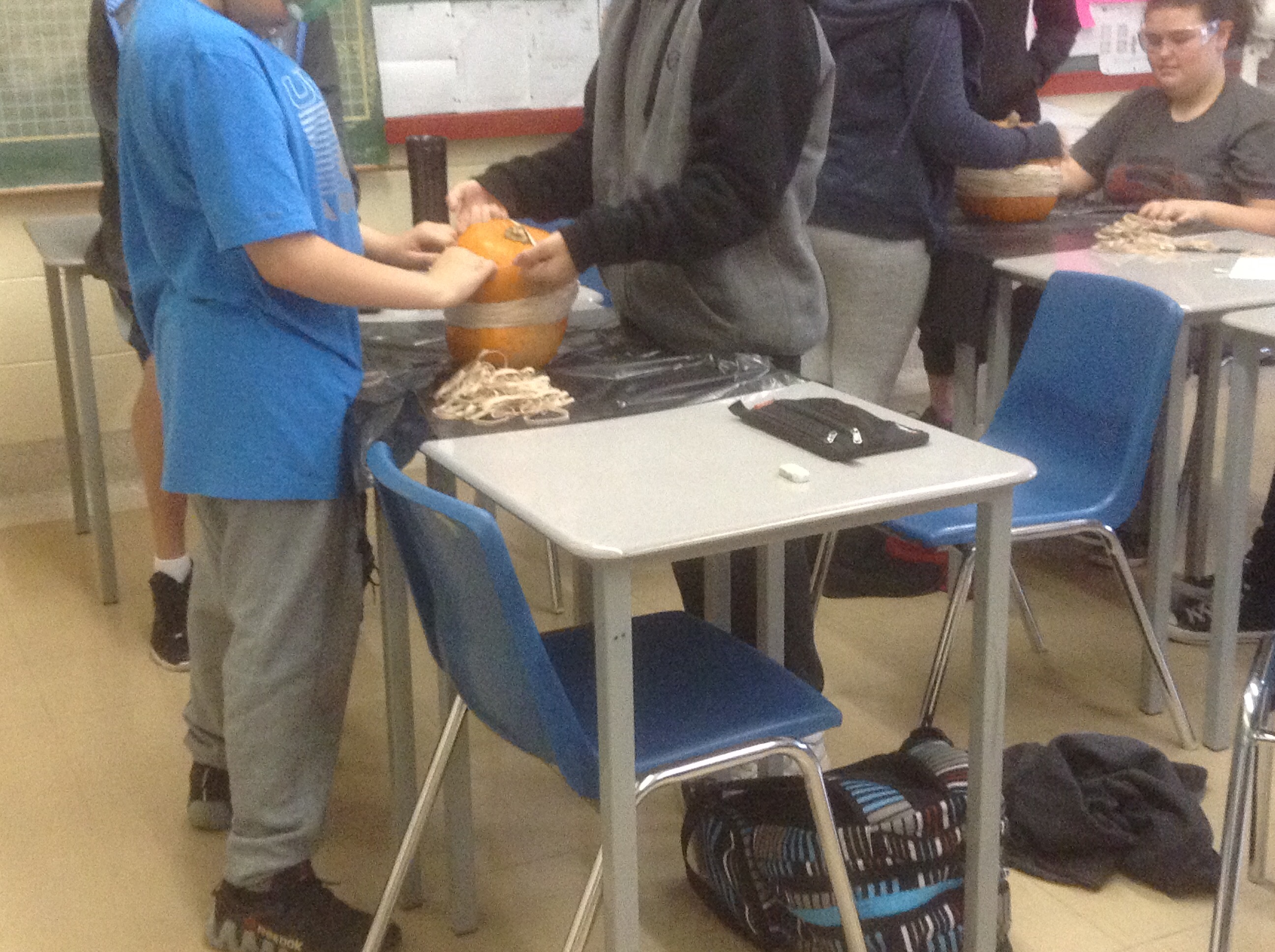
We videotaped them when we could tell that they were almost ready to explode.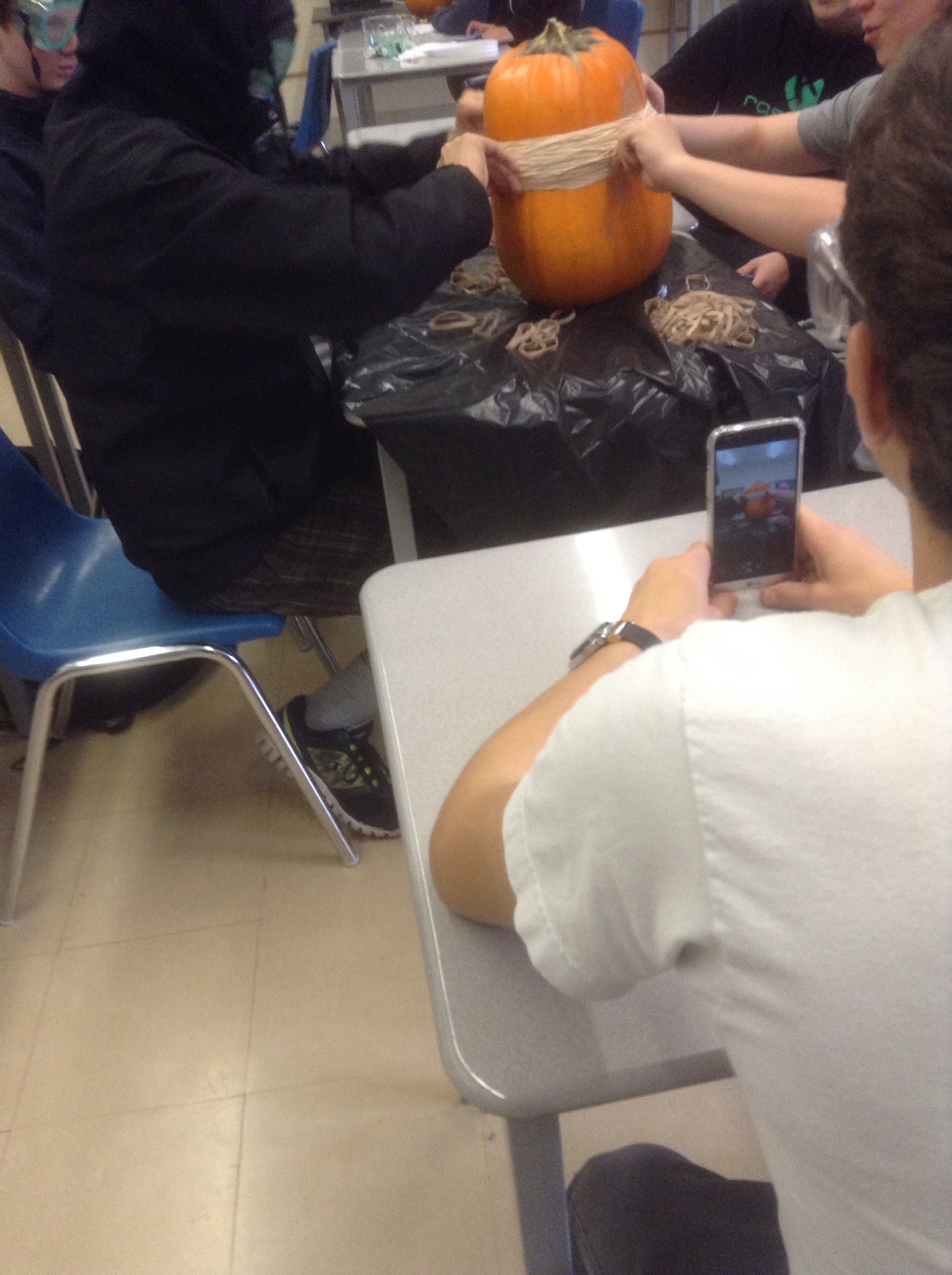
The end result was a pumpkin that was cut in half. We could easily measure the diameter and wall thickness and circumference.
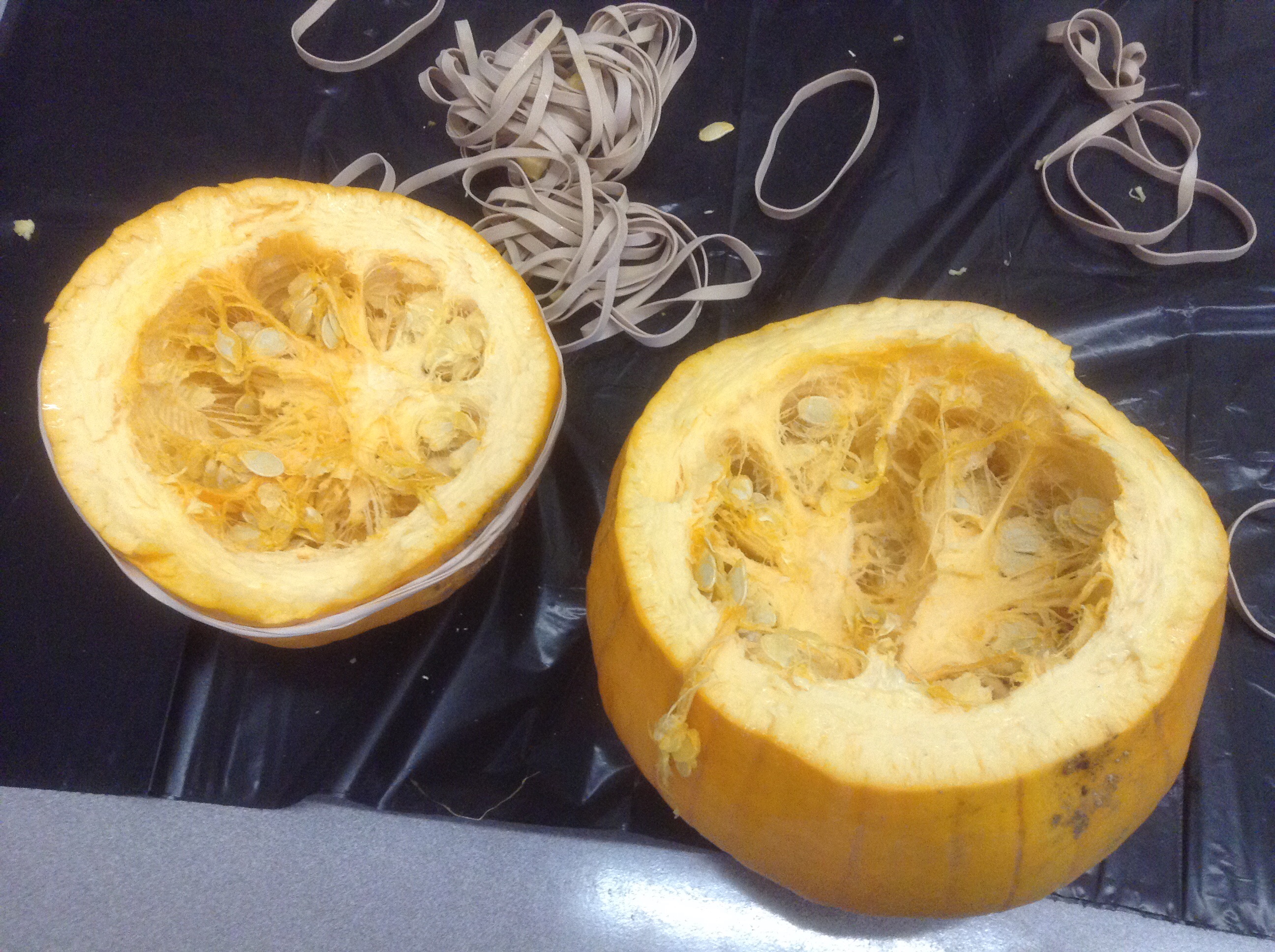
Tomorrow we will make scatter plots with the data from all 13 pumpkins to see what variables had the biggest correlation with the number of elastics it took to explode the pumpkin.
Beans!
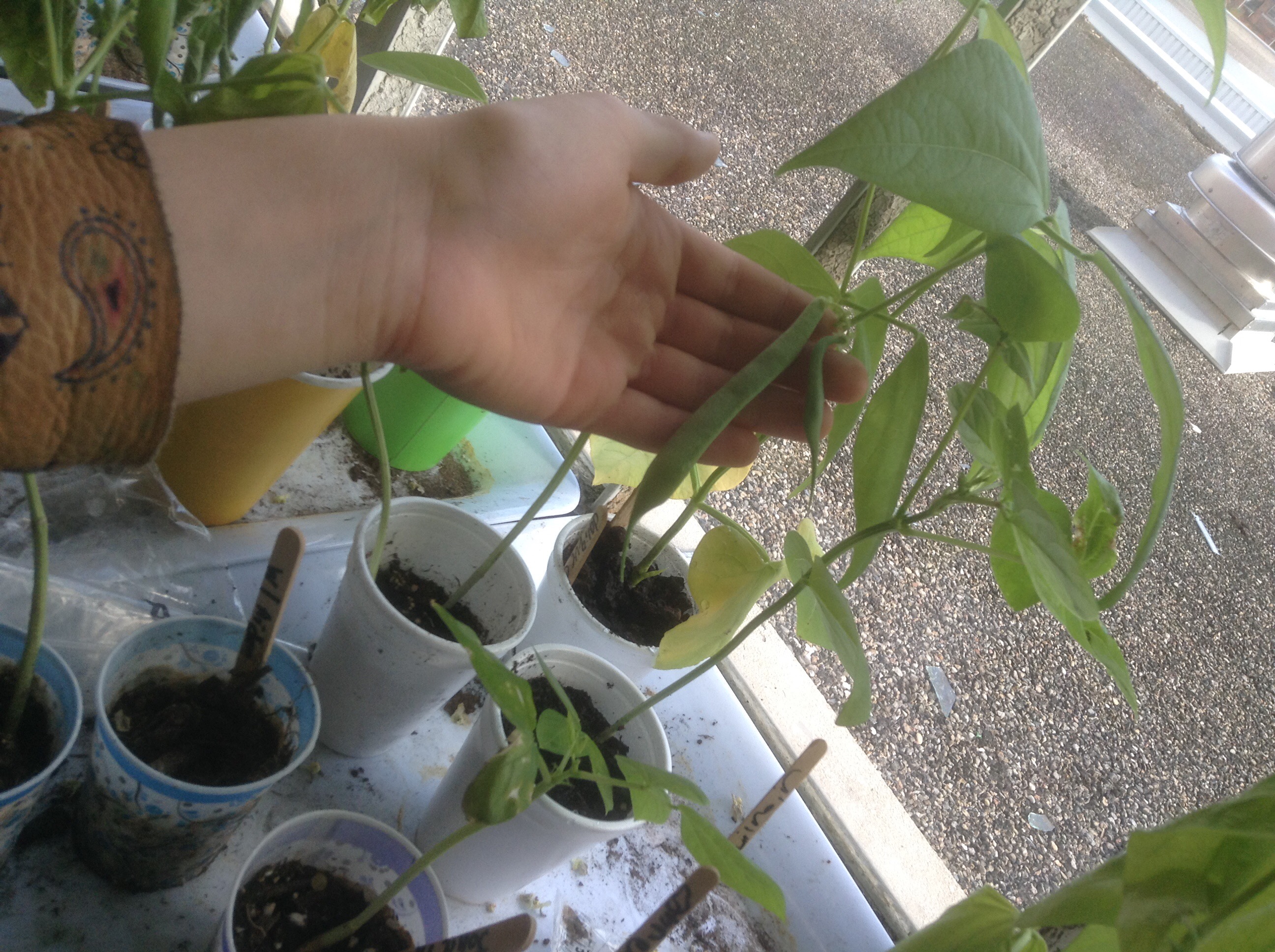
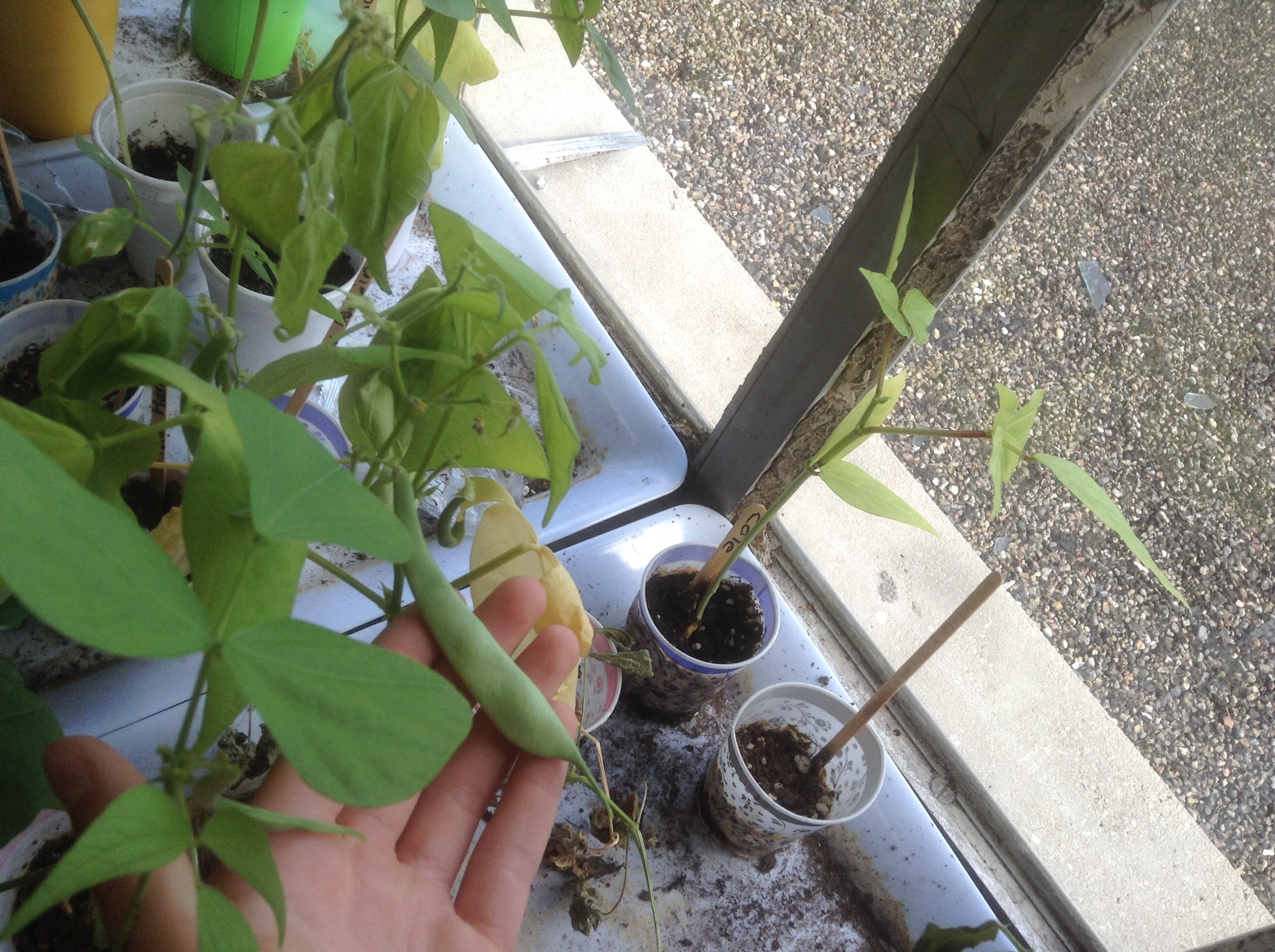
We ate some of our beans today! It is pretty exciting to see how much growth there has been since the first day of school.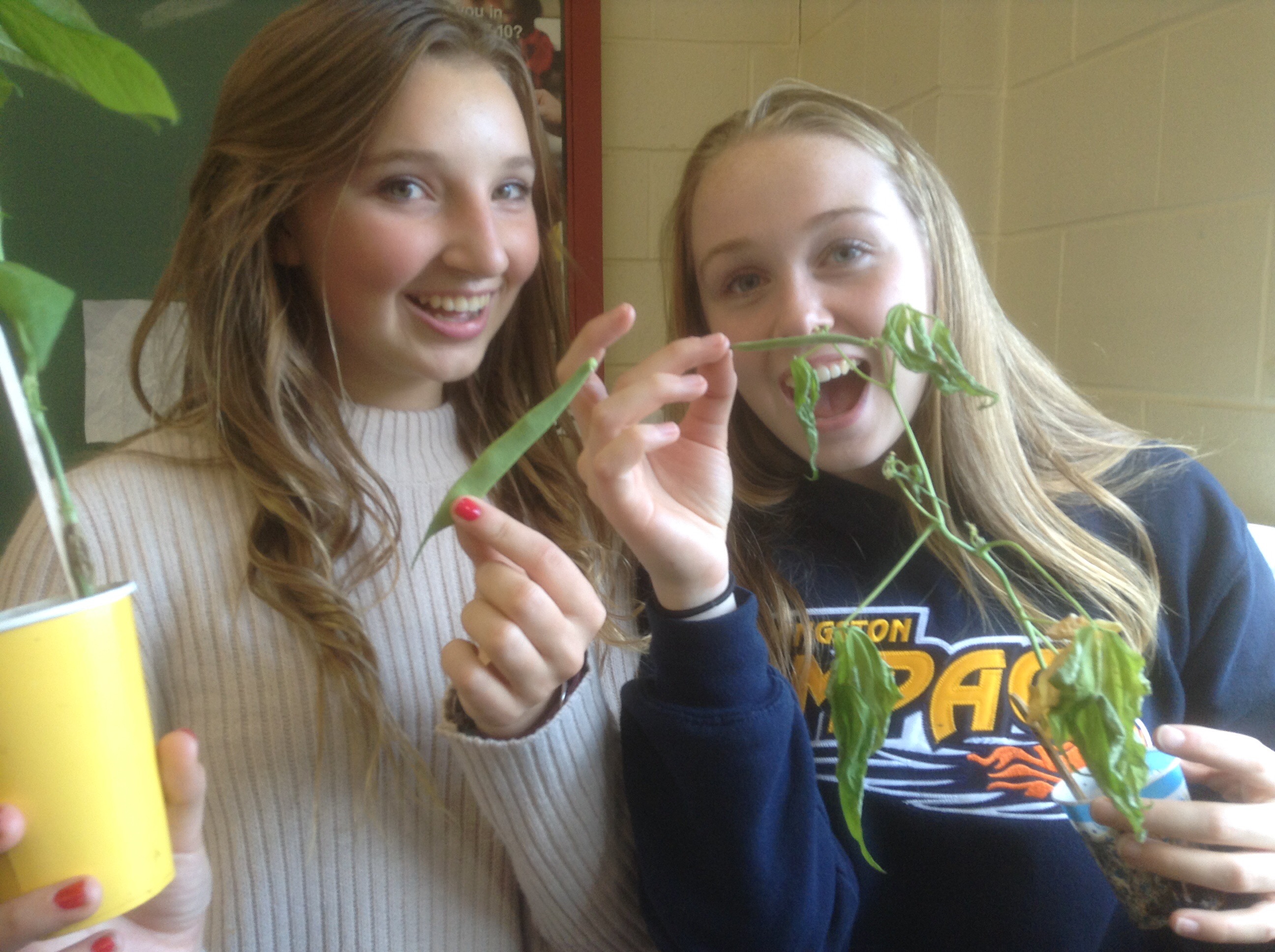
Review with Puzzles
We are working on some algebra concepts, and are using some puzzles to check our understanding and review concepts.
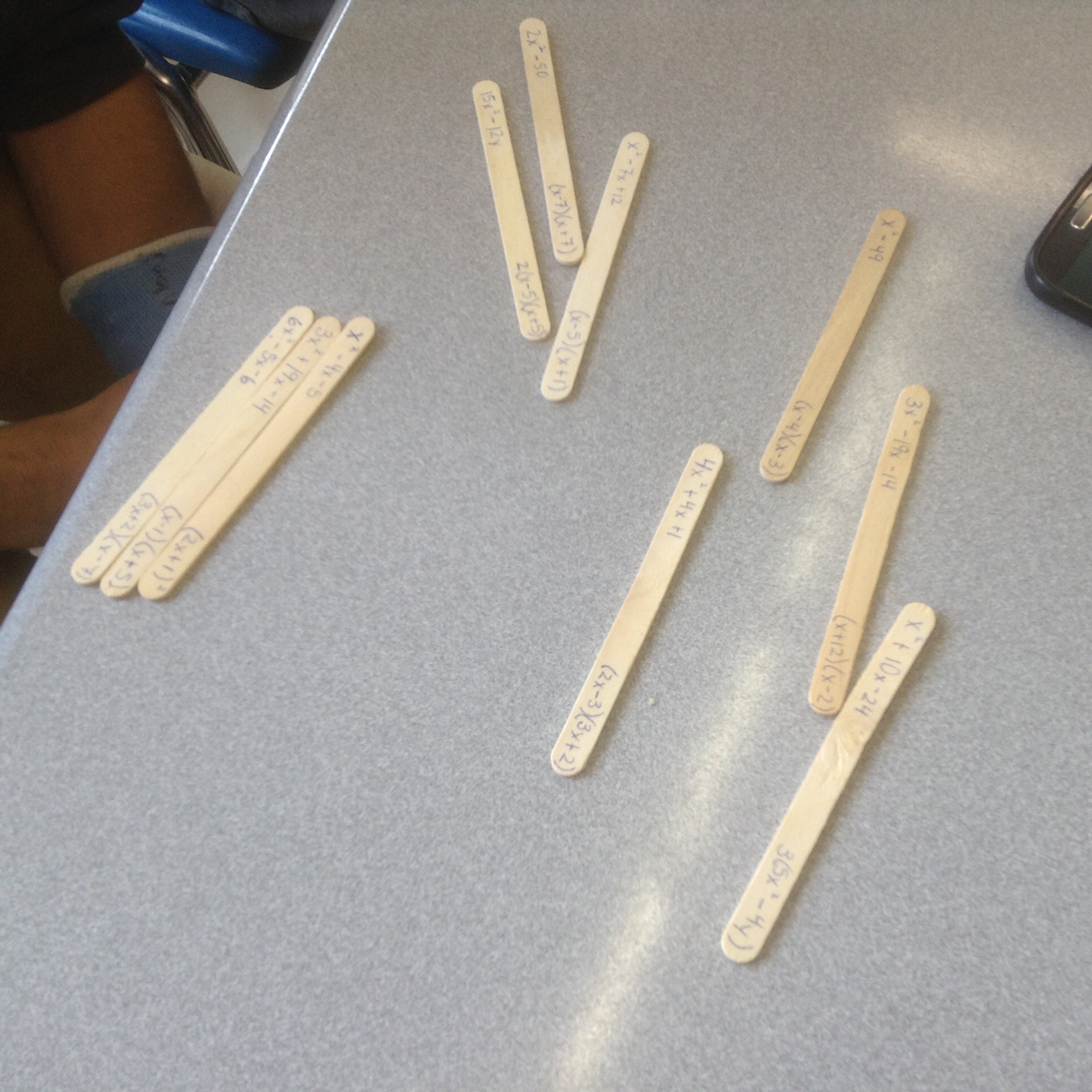
These sticks have a question on one end, and an answer on the other. Students need to match them up. We are practising expanding binomials, but other types of questions would work equally well.

To be extra tricky one stick doesnt match up, but looks pretty close to some of the question/answer pairs. It become easy to see which groups are really doing the work, and which are just faking it by what they end up with at the end.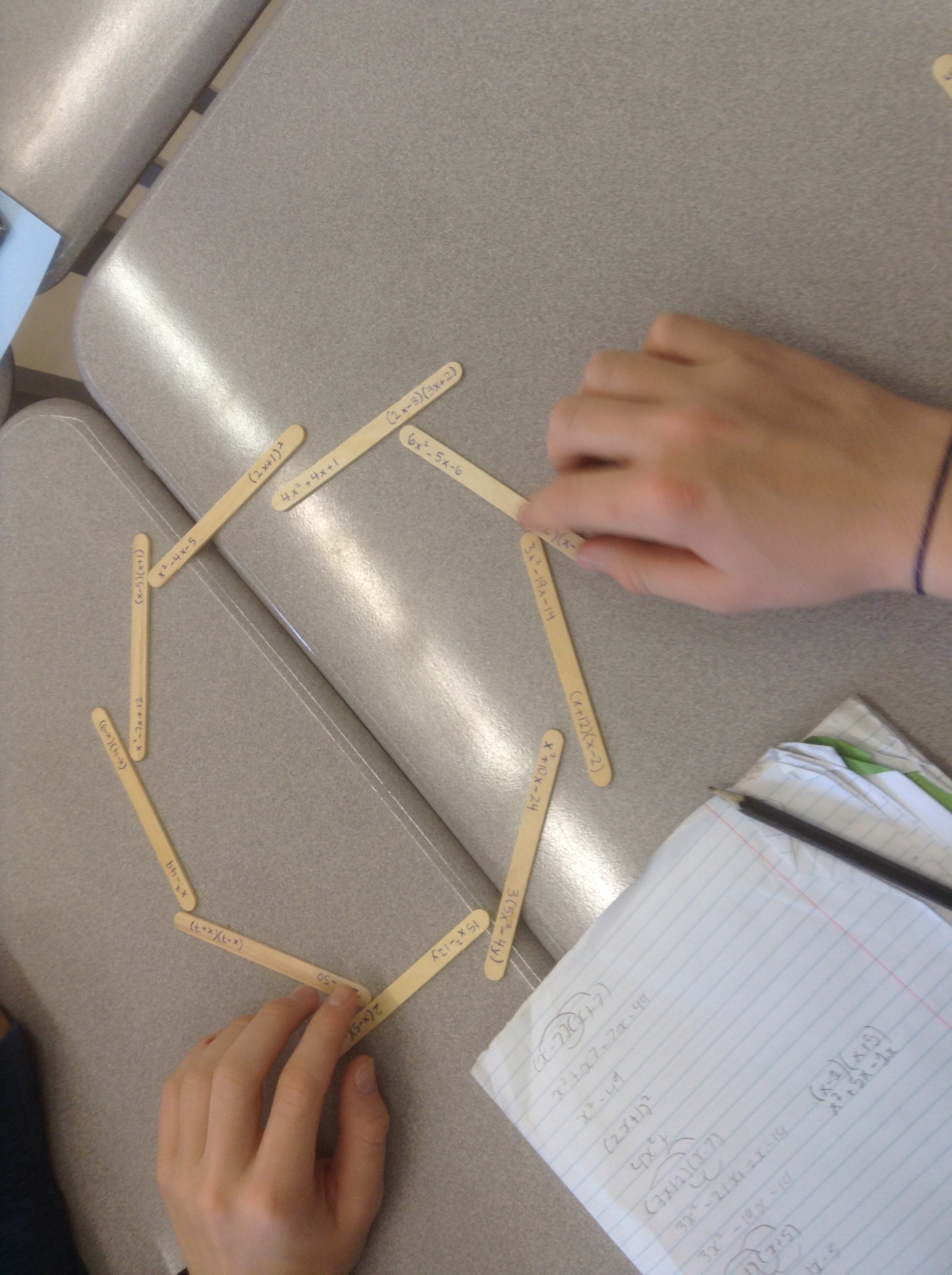
Another puzzle we did focuses on exponent laws and distributive property and combining like terms. Equilateral triangles with either a simplified or unsimplified wxpression on all or two sides are matched up so that equal expressions touch.

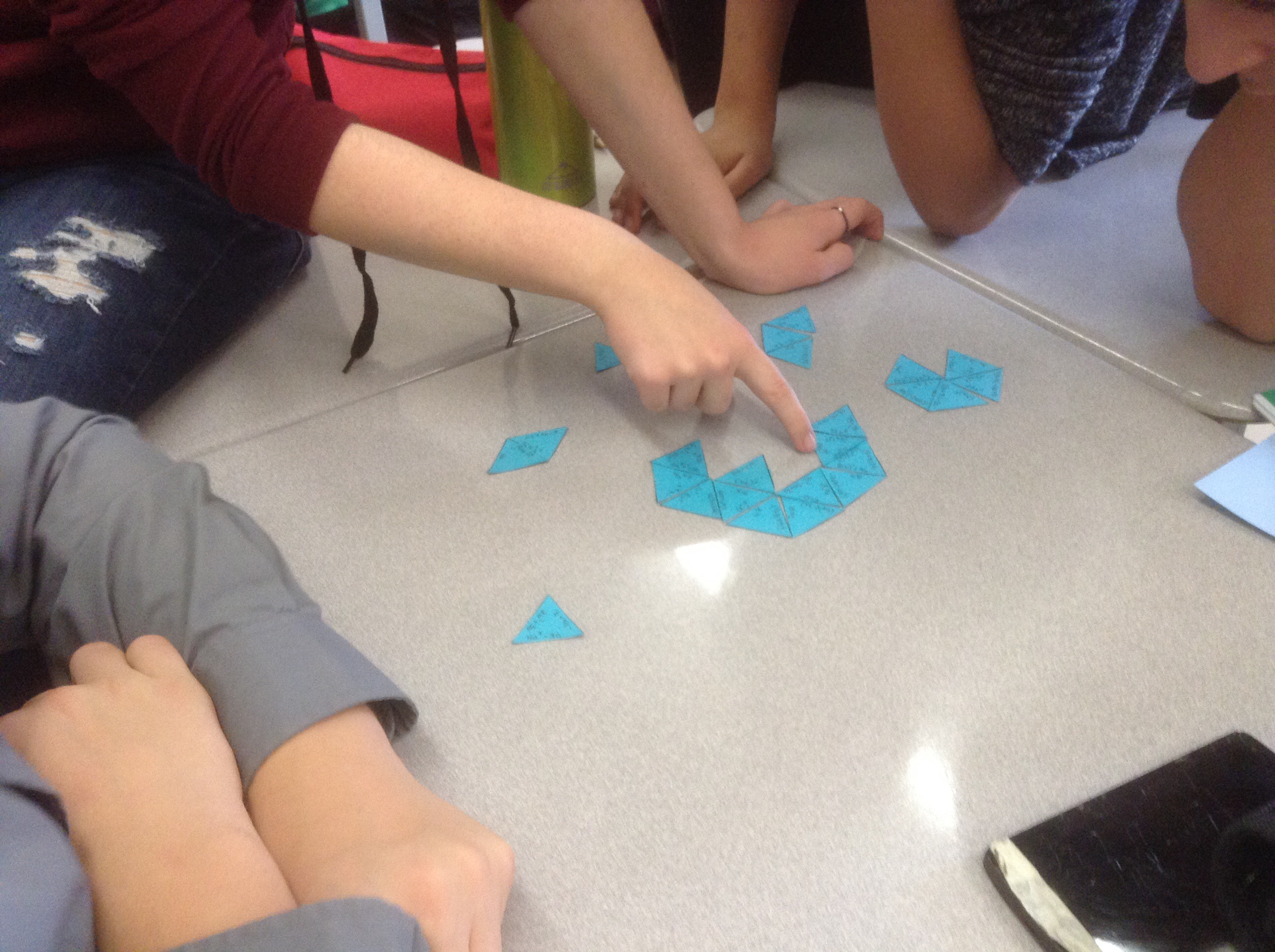
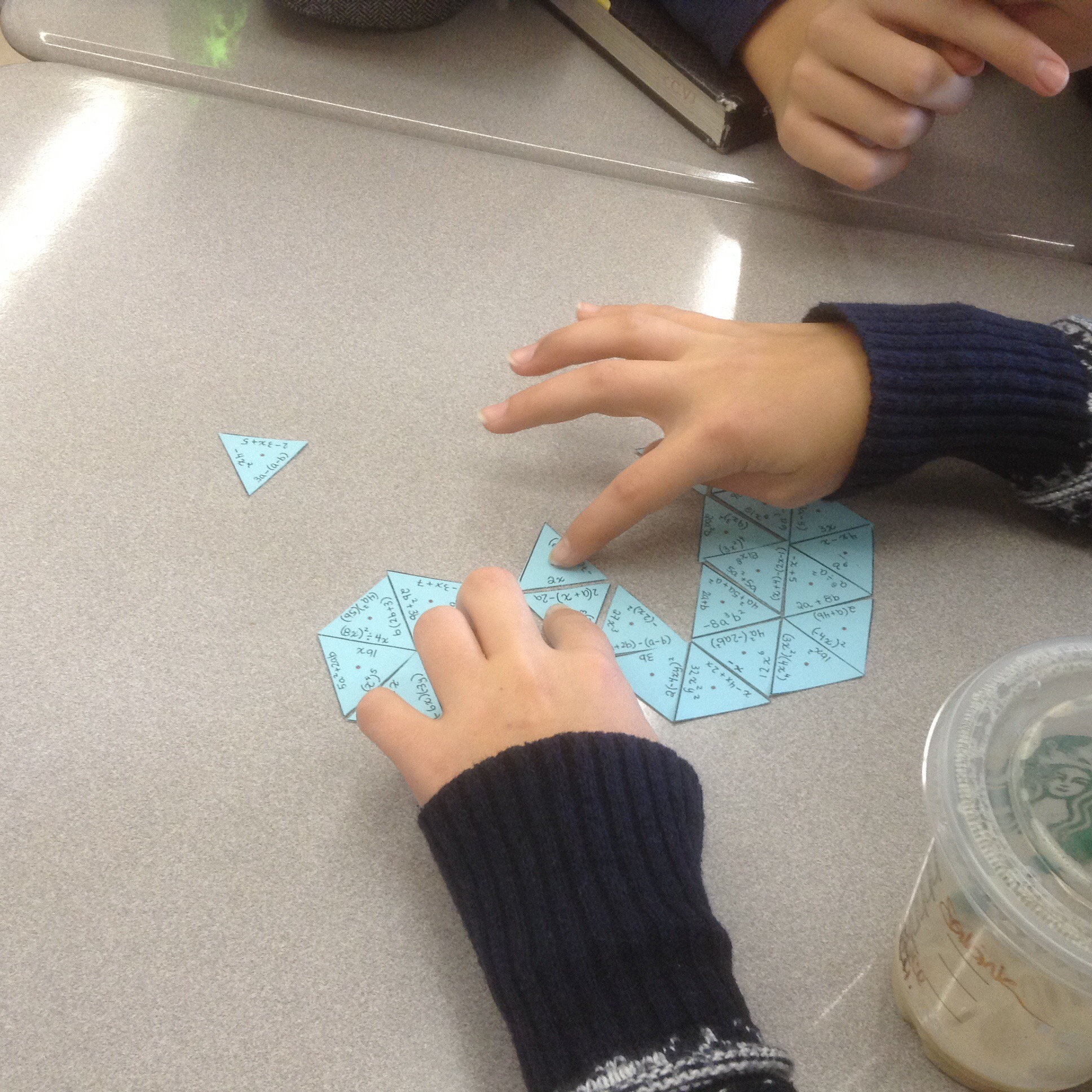

There is only one way to fit the puzzle together. Grade 9 students learned and practiced skills that were taught while some were away at leadership camp. Groups were created explicitely with at least one or two “experts”. Grade 10s used the same puzzle as a review of prerequesite skills before delving further into algebra and factoring. Both puzzles were inspired by the blog mathequalslove. Students worked very well in groups of 4 or 5 to complete these puzzles.
Cheerio stacking graphs
We had a head to head battle with a fast stacker and a slow stacker to see what their graphs will look like.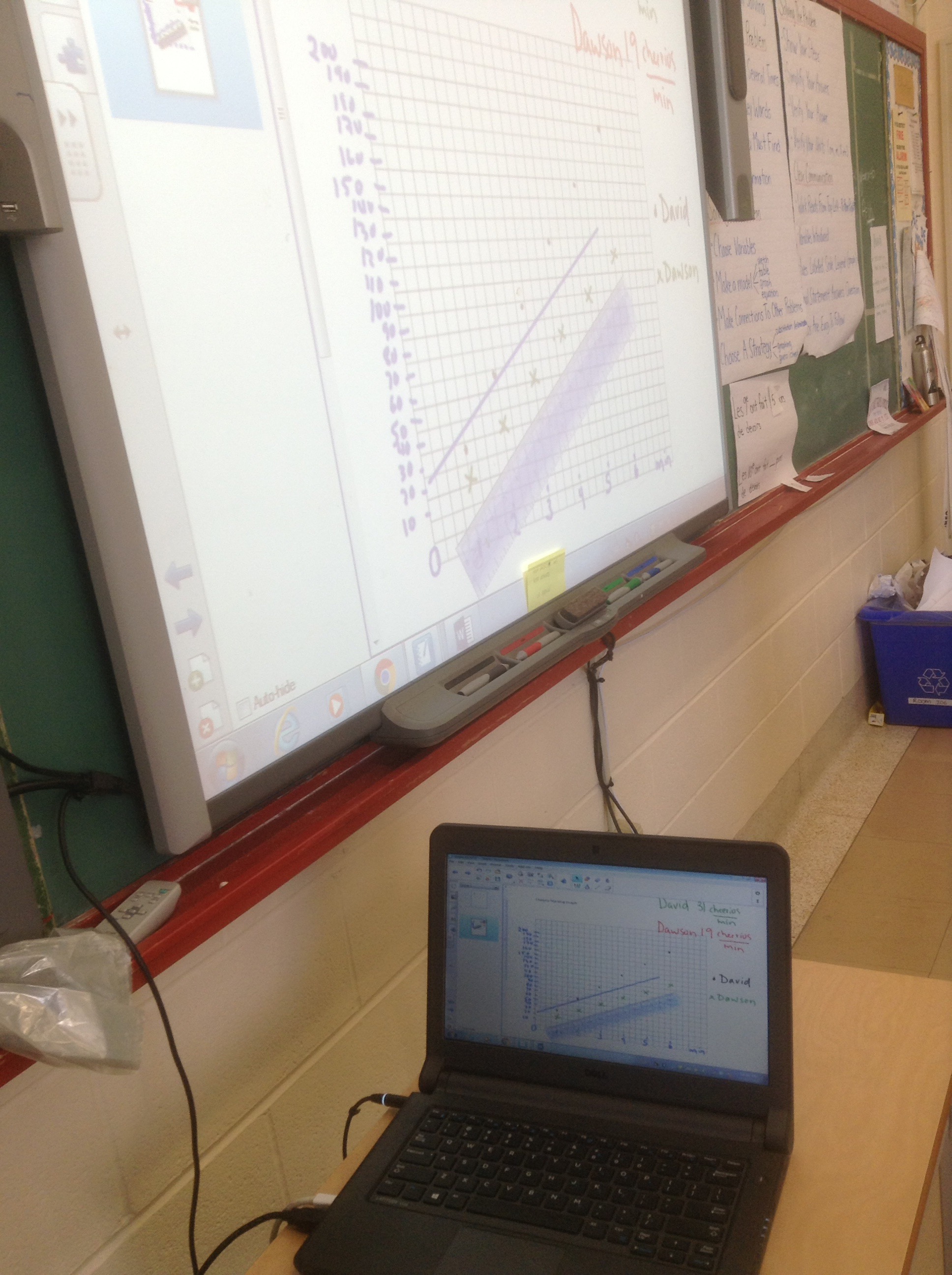
We figured out what head start would be needed to level the playing field and then tried out that scenario. 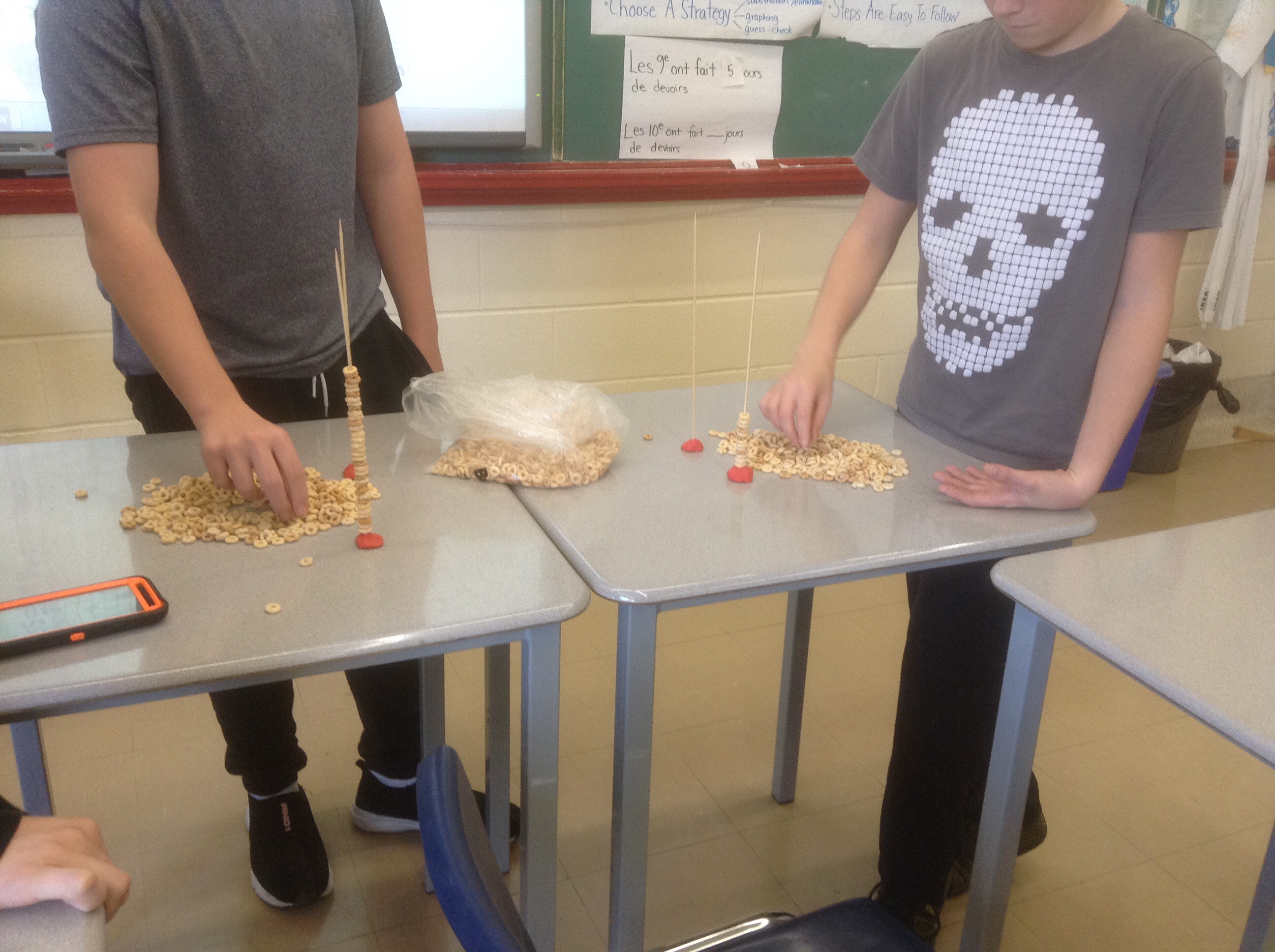
We ended up with a pretty close score at the end of 2 minutes.
Is it linear? M&M challenge
We had an activity with candy today since it was Hallowe’en. We dumped out the m&m’s and counted them. We then eliminated the candies with the m’s on the surface. We counted again, then filled in our data chart over and over.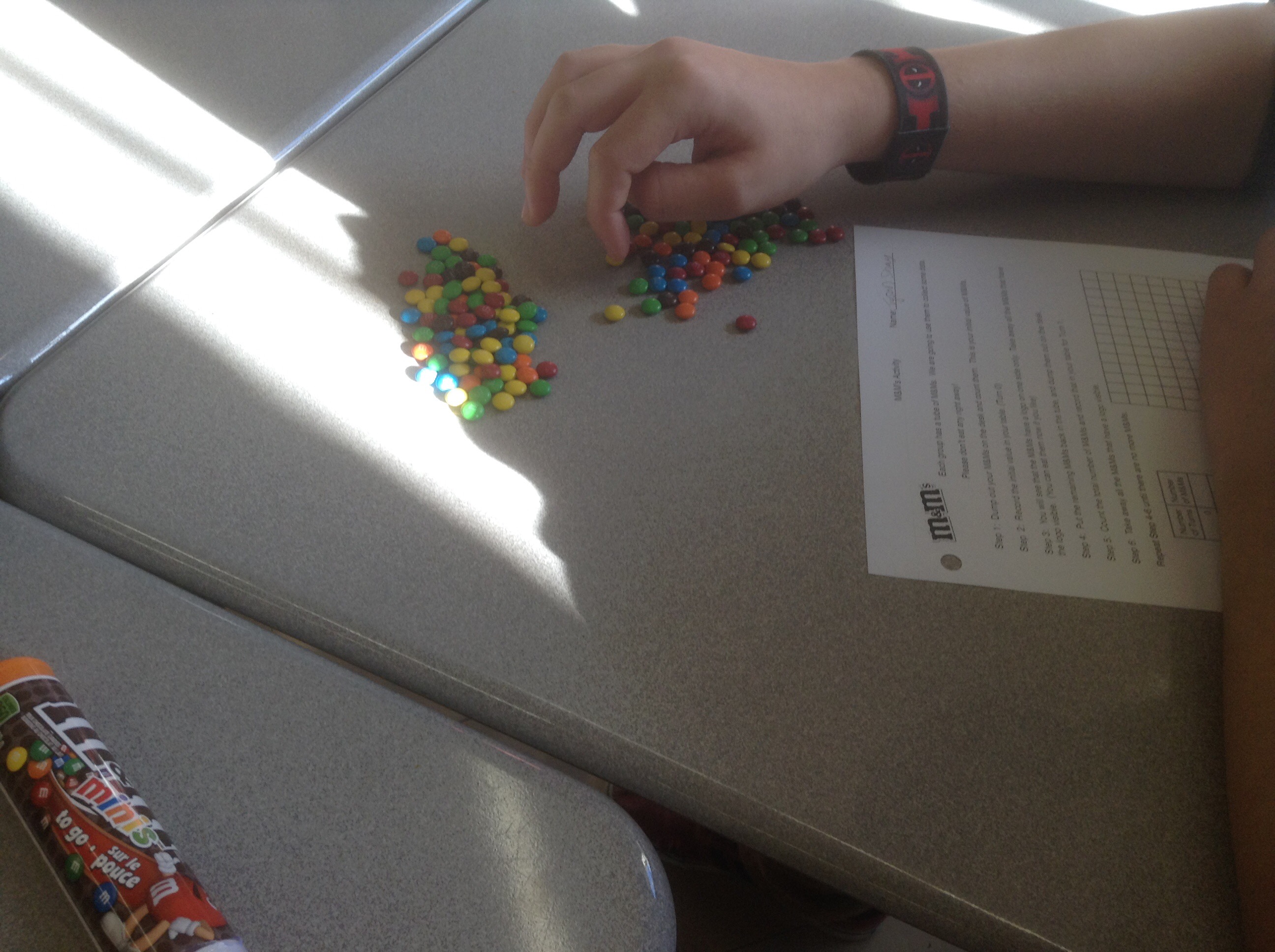

We ended up with data that was not linear. We made a curve of best fit to show the trend.

Stacking cards review game
To review exponents we played a stacking game. The idea was inspired by the blog mathequalslove. Each group has a set of cards (made from index cards cut in thirds) . Each card has a question on one side, and an answer on the other. 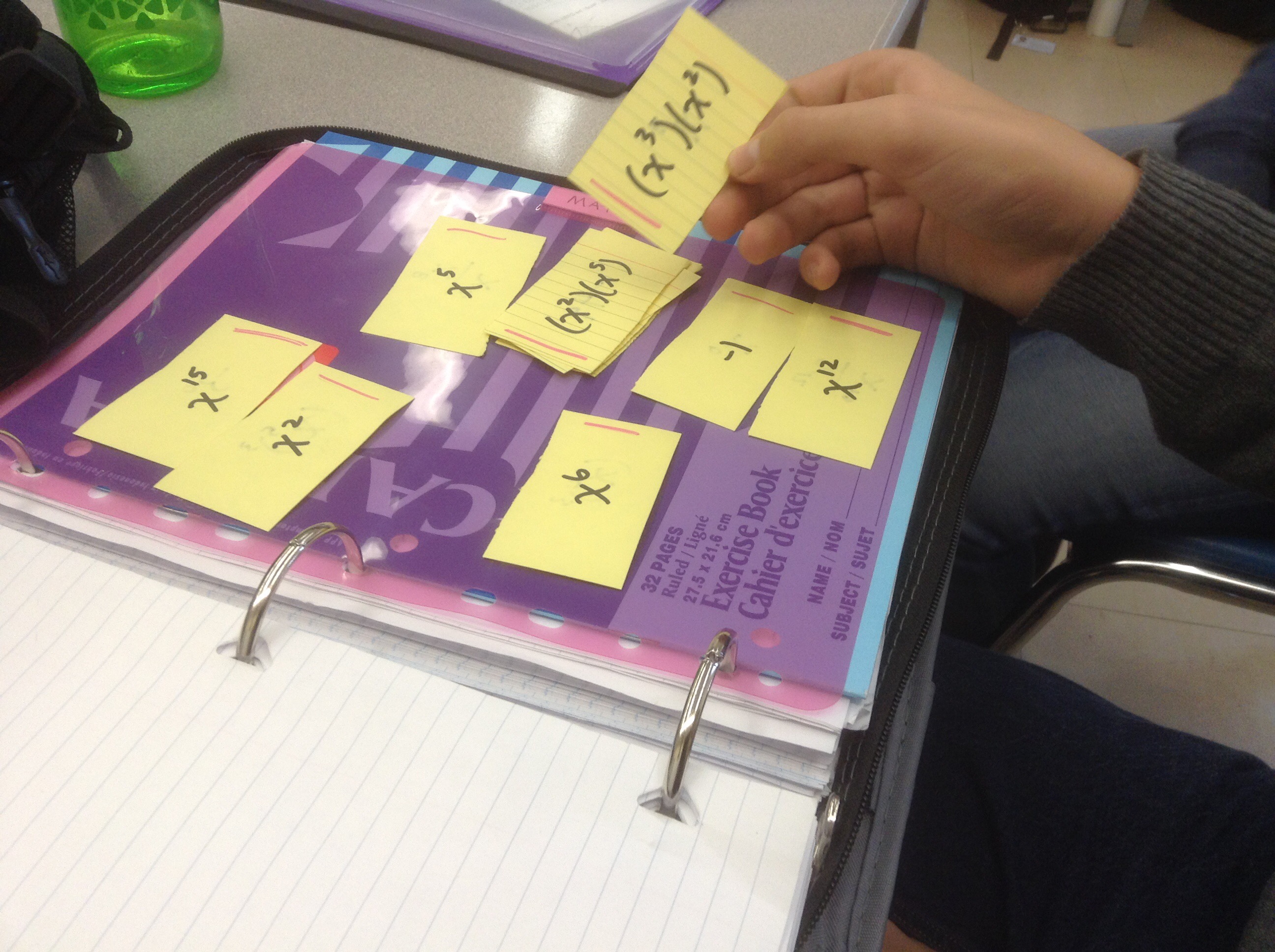
To play the game, all cards are laid out with the answers (in this case, the simplified form of the exponent question). One card is flipped to reveal a question. Working together or individually (there are many ways to play!) we look for the answer. The card is then flipped so the answer card is facing the question card to make a pile. On the other side of the card you’ll find the next question to solve. The cards are designed to all stack into one pile, which makes it easy to see if it’s been done correctly. The final question that is on the top of the pile should match up with the answer on the card at the bottom of the pile.
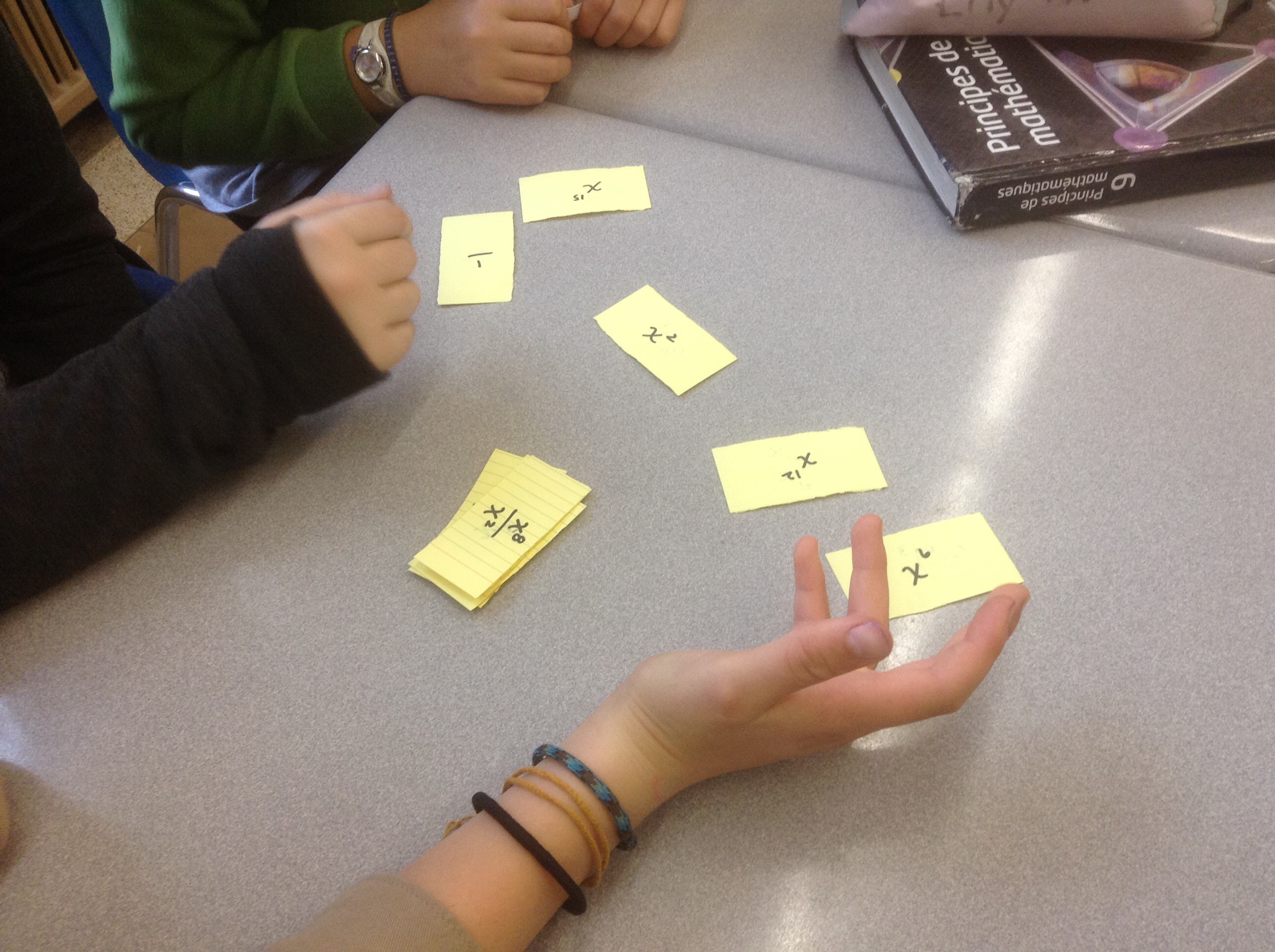
Students can work together, or try it independently, they can try to do it as fast as they can, or they can take turns going around their group.
This game worked really well as a review of exponent skills for my grade 10 class before starting to discuss quadratics. My grade 9s played this game as a consolidation step where peers worked to help others to work through the activity.
Tips for designing your cards
- Answers should appear only once
- If you are using variables make sure they appear on more than one answer card
- Address possible misconceptions. I was working on exponents of 0, 1 and also having a negative base e.g. -4^2 vs (-4)^2 and looking at exponent laws with a variable as the base.
- Design your set of questions and answers.
- Make your cards. Put question 1 on one card, then the answer on the back of the next card.
- Your stack continues to be formed in this way until the last answer which will go on the back of the first card.
Understanding exponents
We looked at how we can represent exponents in several forms. We showed how it is a short form notation for repeated multiplication.
To help reinforce this idea we made expressions we could physically expand.
This helps show how the exponent notation, the expanded form and the answer are all related.

Cheerio Stacking Competition
How many cheerios can you stack on a skewer in one minute? We levelled the playing field with a few rules: use your non dominant hand. Pick up one cheerio at a time. Stack one cheerio at a time.

After a few practice rounds we collected data for all members of the group. We used the data to predict how many we would stack in two minutes and three minutes. We plotted each group member’s data on a graph. We determined who has the fastest stacking rate.


We will return to this activity to discuss what head start (cheerios initially on the skewer) would be needed to create a tie after one minute. We will talk about how the graph would change if we stacked two cheerios at a time instead.
Battleship
We played a game of battleship today to practice plotting points on a 4 quadrant plane.
 The top half of the page was for your boats, and the bottom half was for your guesses.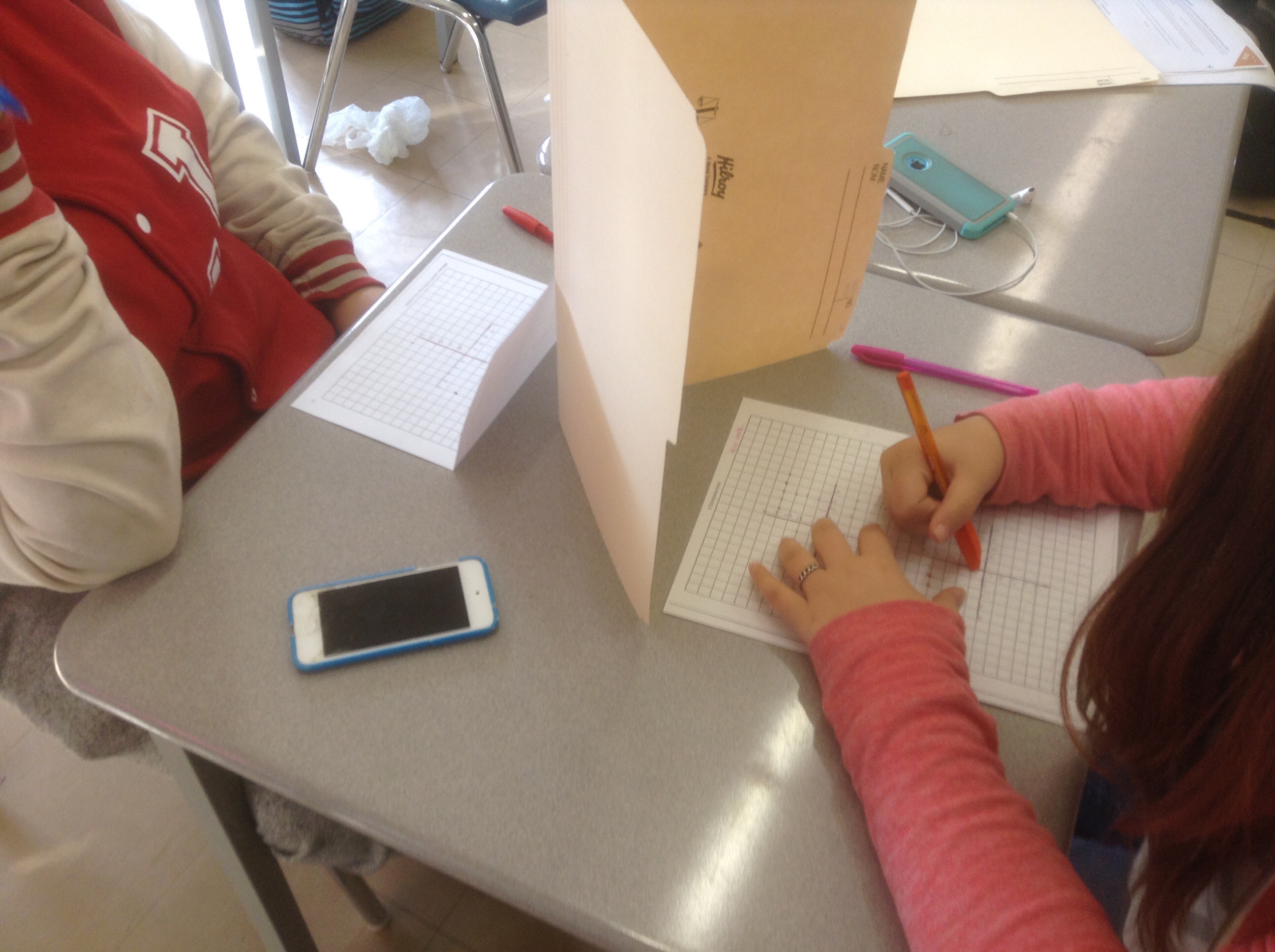
We all worked hard all period sinking battleships!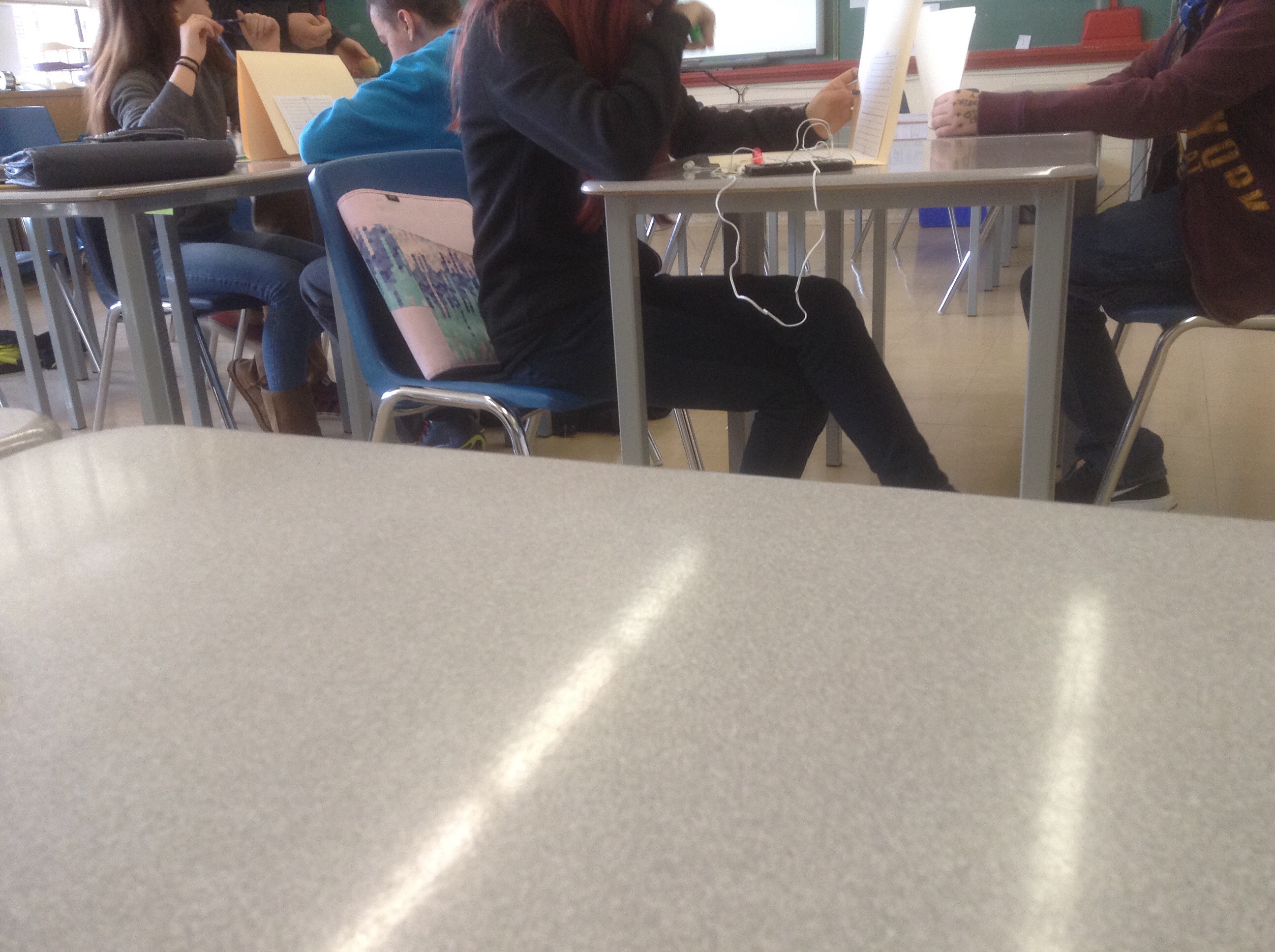
 Ms. Bearse's Site
