Exams and dates
Grade 9 eqao is June 6/7 in class. Grade 9 exam is June 22 at 8:30am
Grade 10 exam is June 22nd at noon
Cake and Desmos
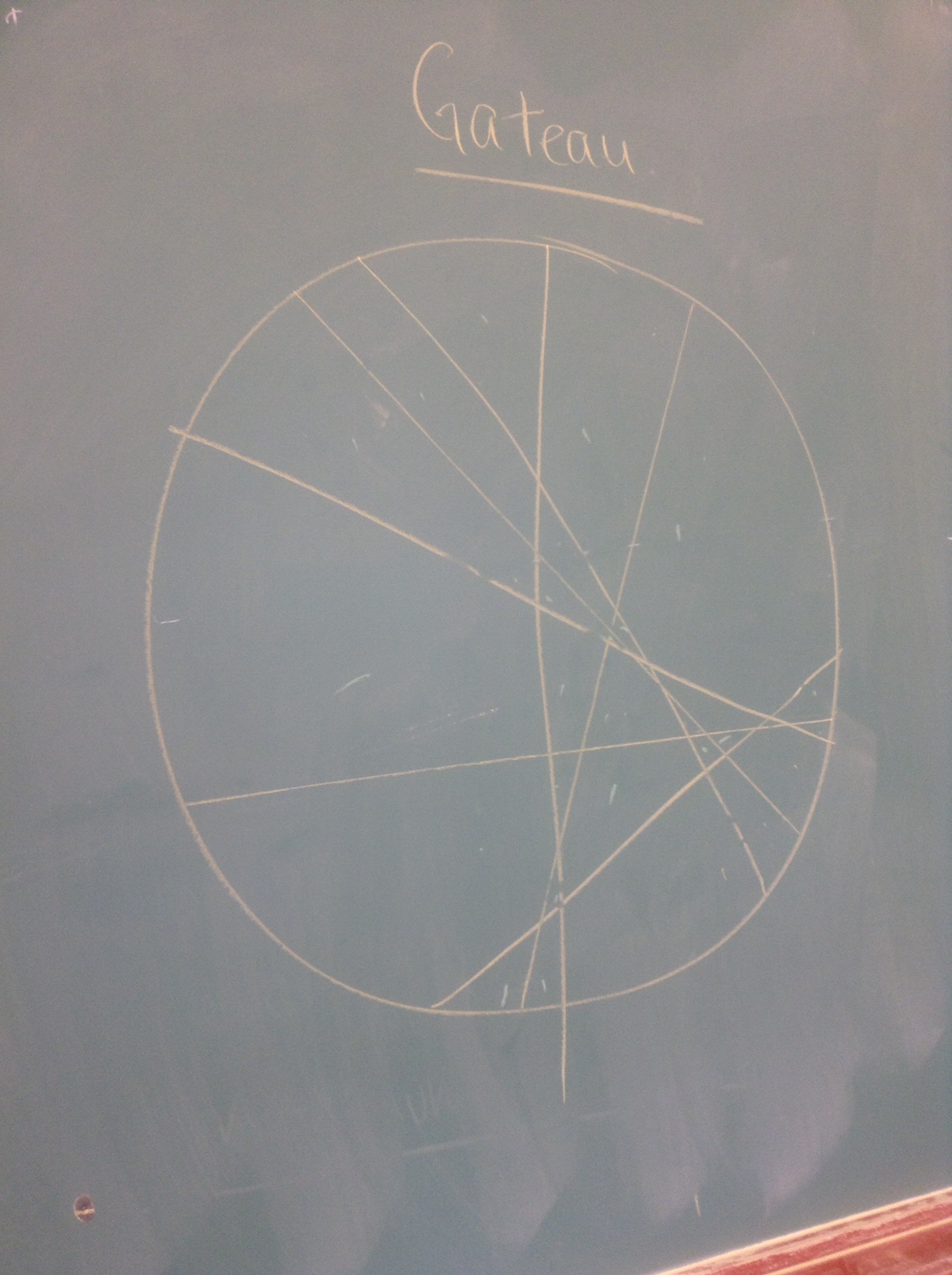
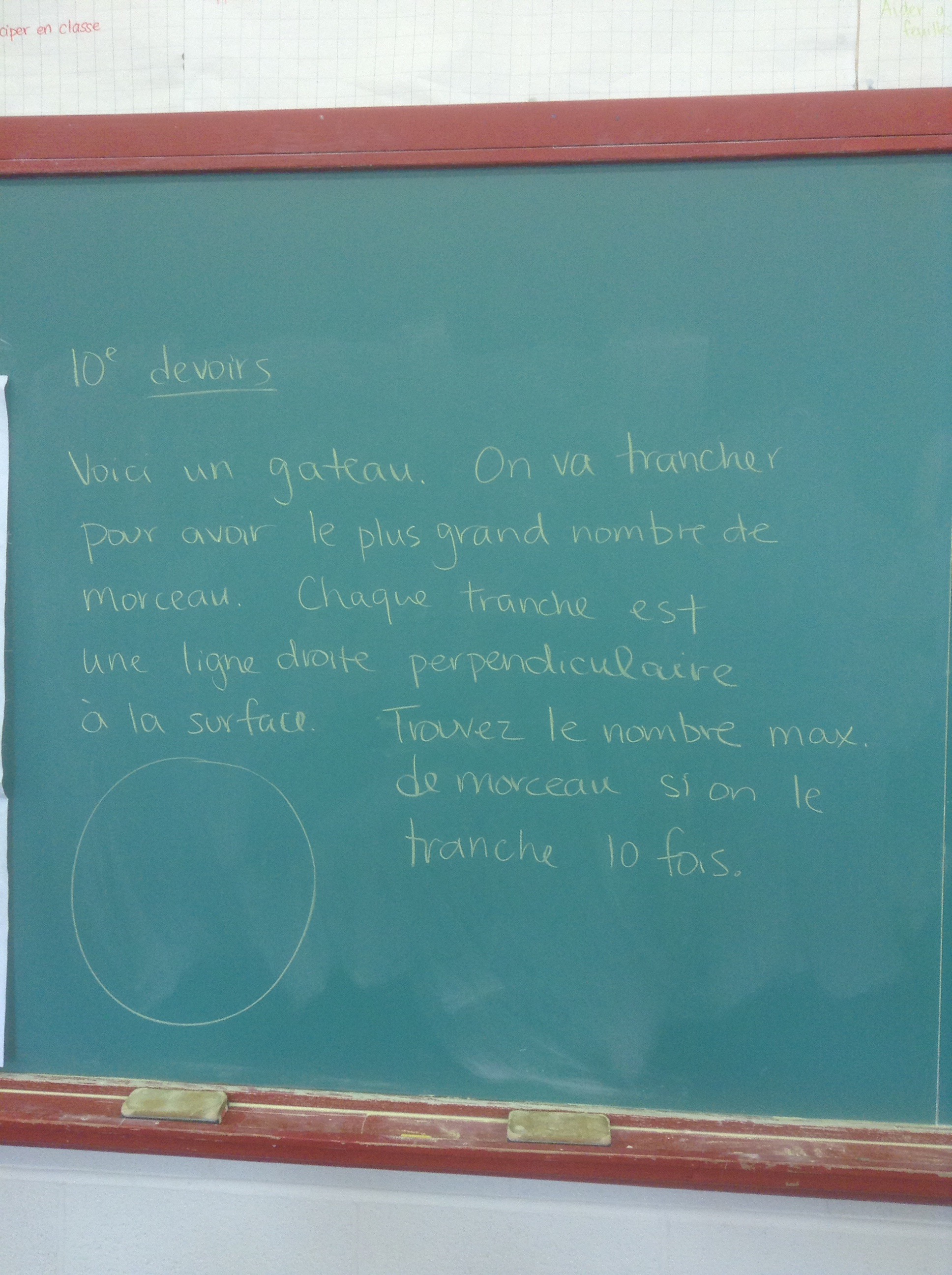
Today we looked at solving the cake cutting problem that was yesterday’s homework.
We showed how ro cut the cake into the most possible pieces
We showed our data in a chart and looked for patterns
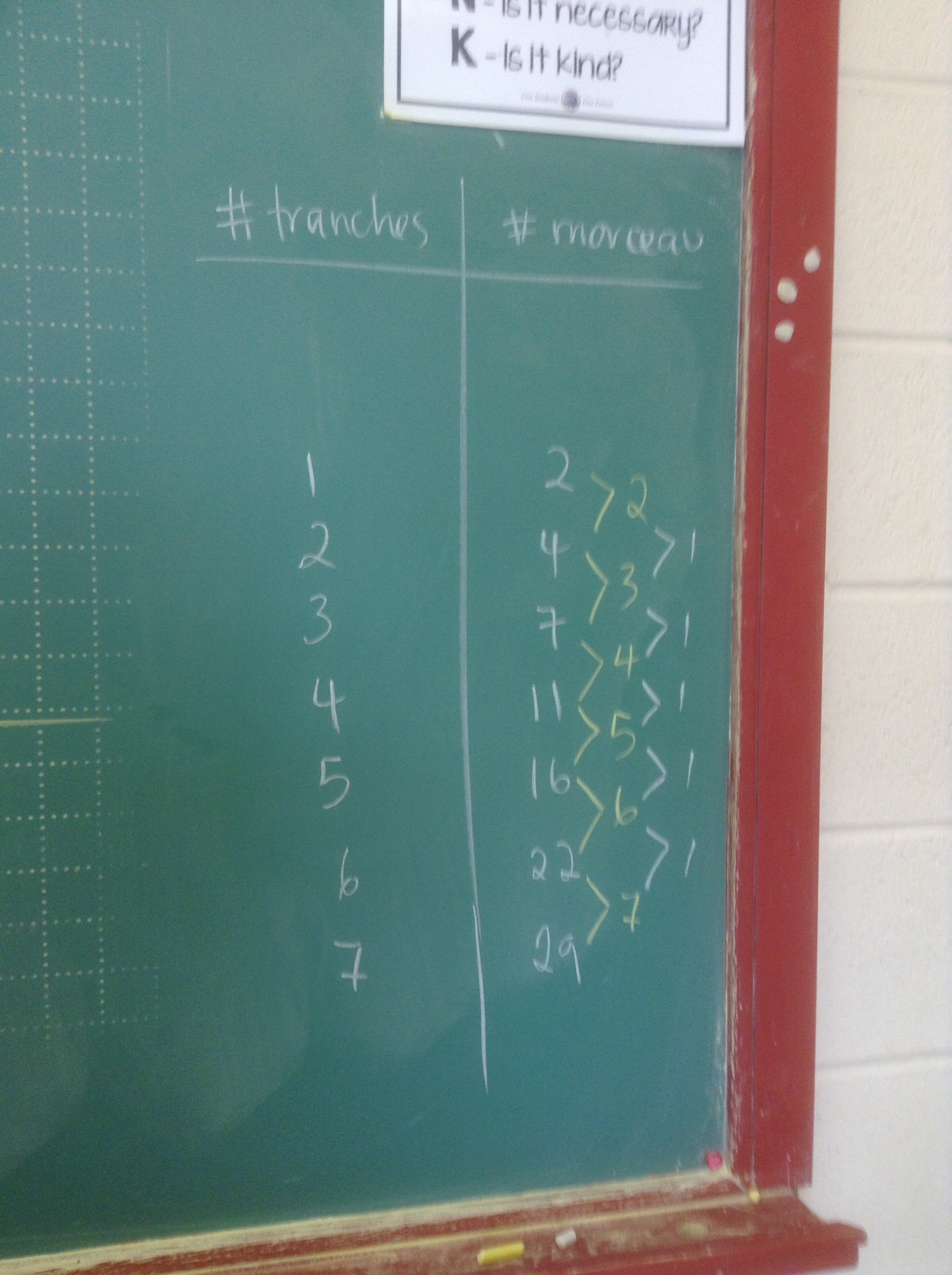
We extended the trend
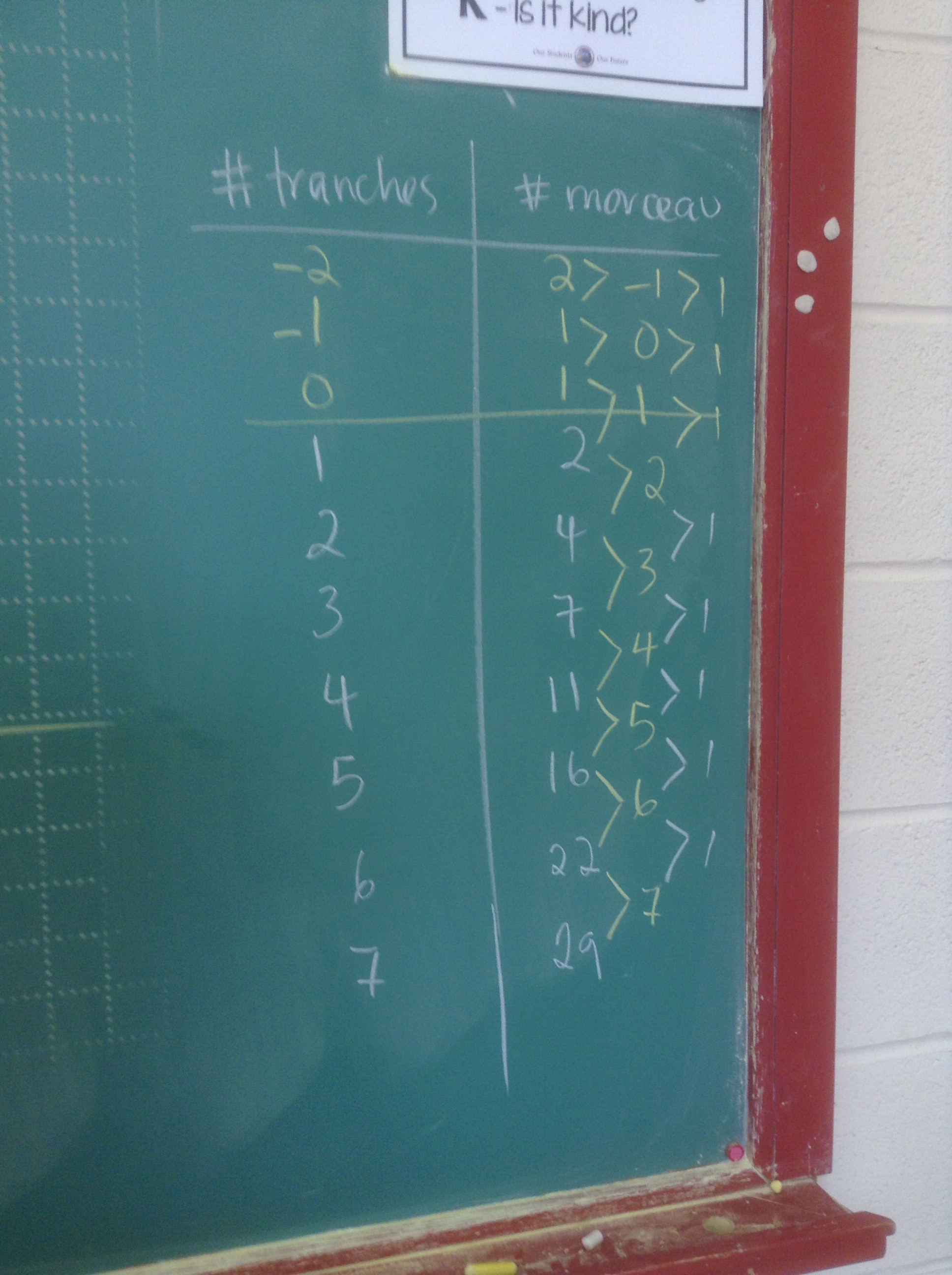
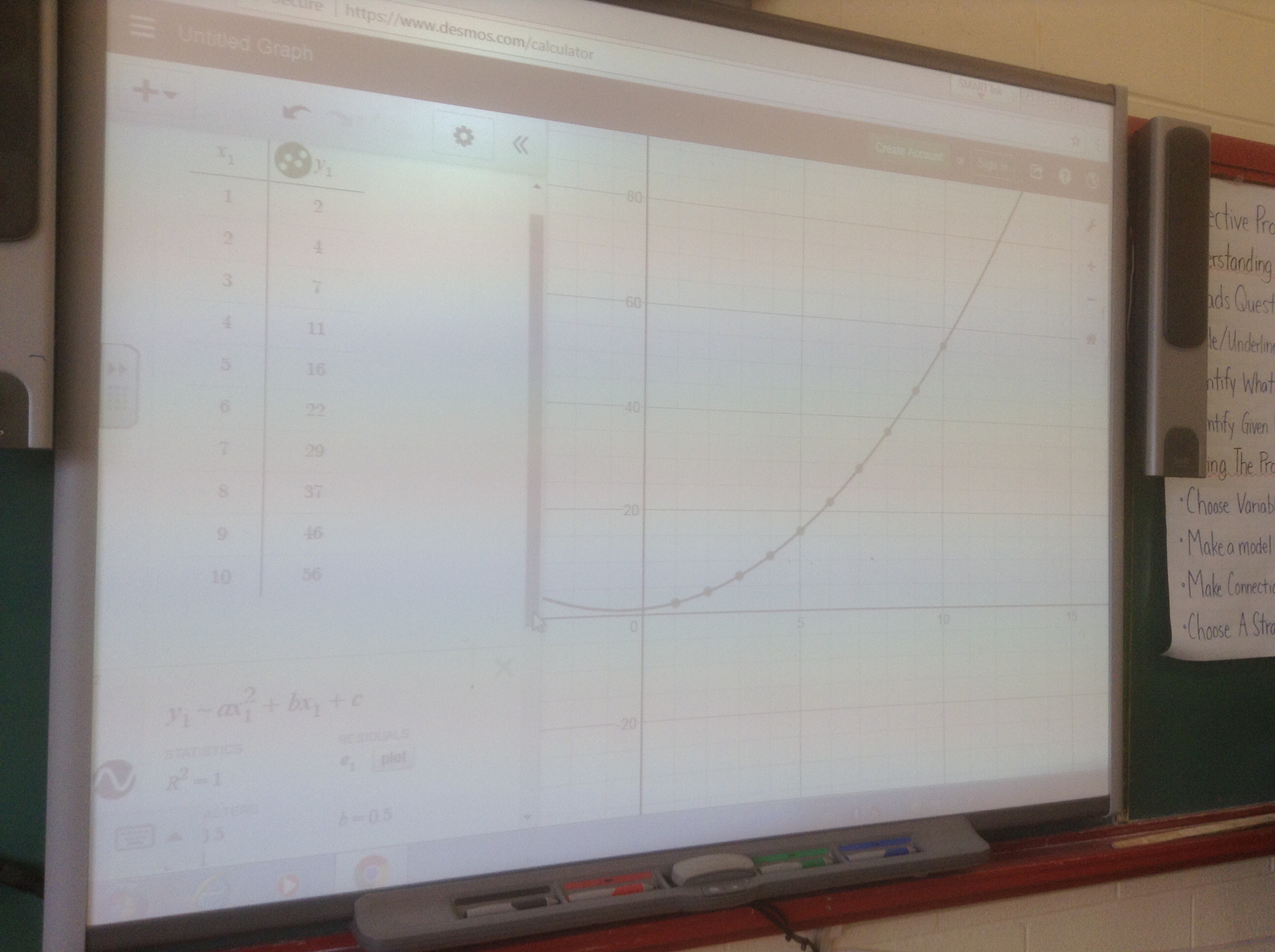
We graphed it
We came up with an equation using trial and error
Y=(x^2+x+2)/2
Y=0.5x^2+0.5x+1
Then we looked at how desmos.com can help us model the data graphically and also with an equation.
Finally we ate cake
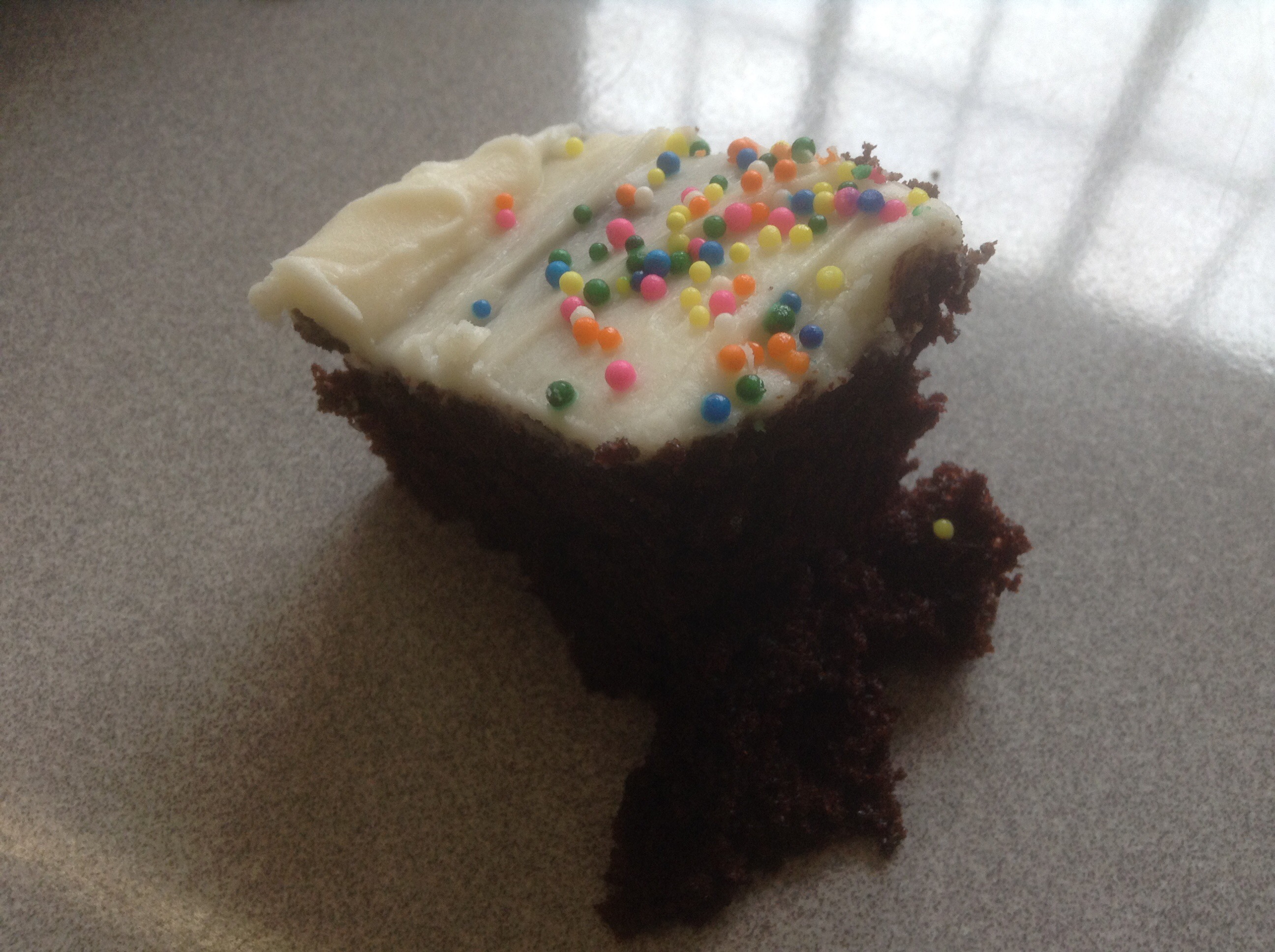
Yummmmm
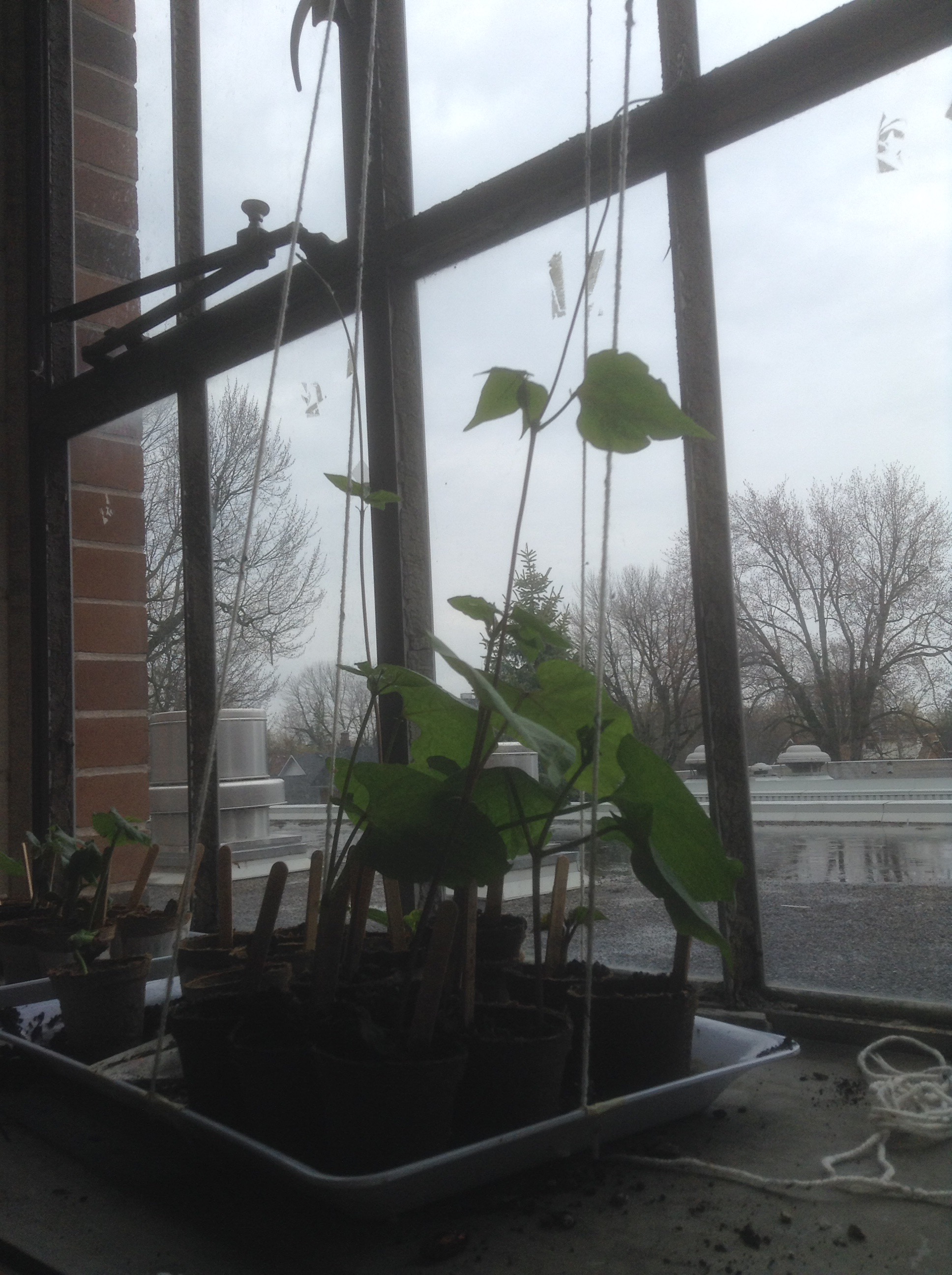
Look at those beans!
Cake cutting problem
Visual proof
 Here’s a triangle. A B and C are internal angles. D E and F are external angles. Here is a nice visual proof of some of the theory we’re working on.

The external angles, have a sum of 360 degrees. Here’s proof.

When we put them all together, they match up perfectly, completing the full circle, which is 360 degrees.
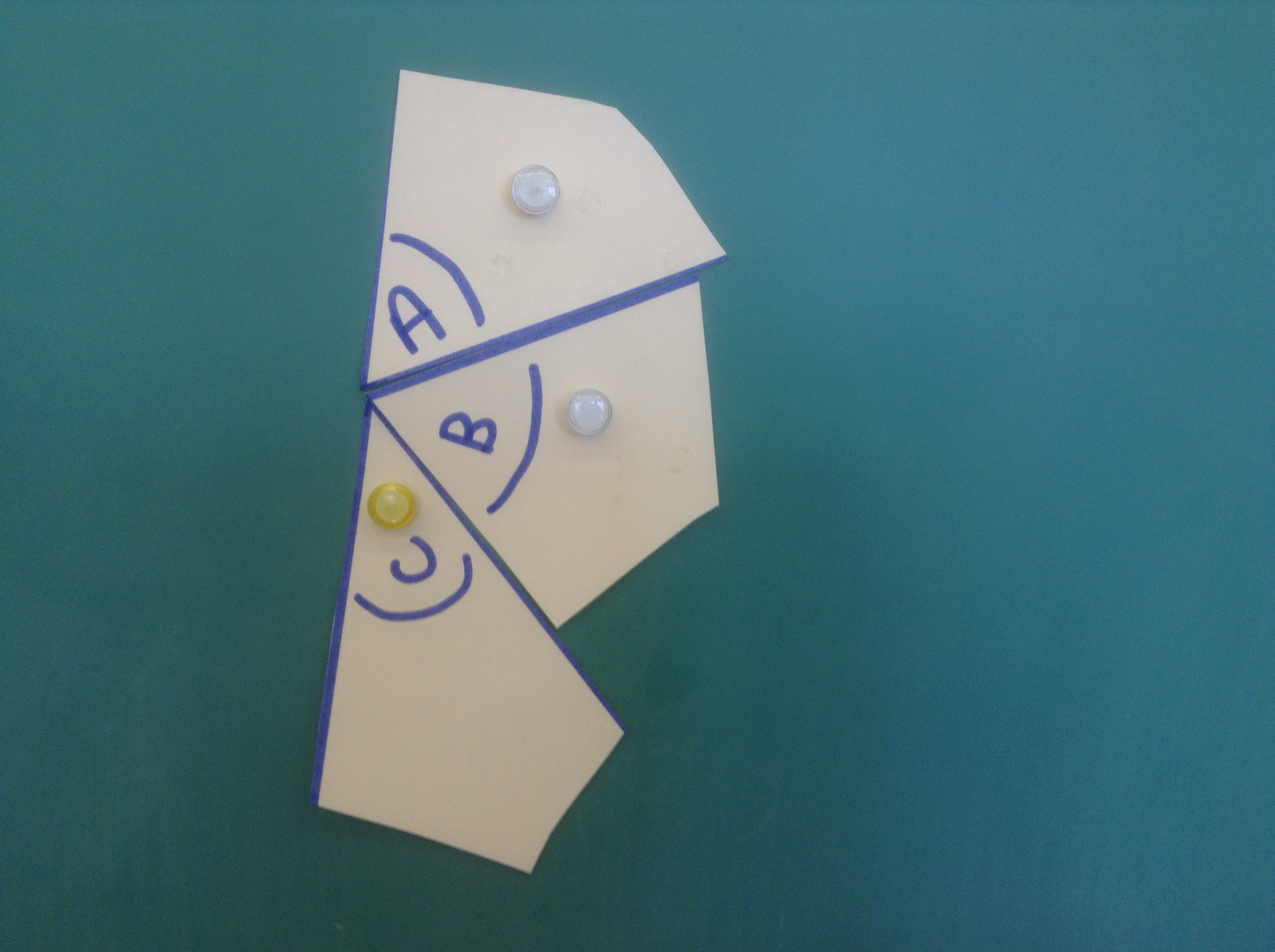
Also, when we put the interior angles together, they make a straight line. They are supplementary. They add up to 180 degrees.
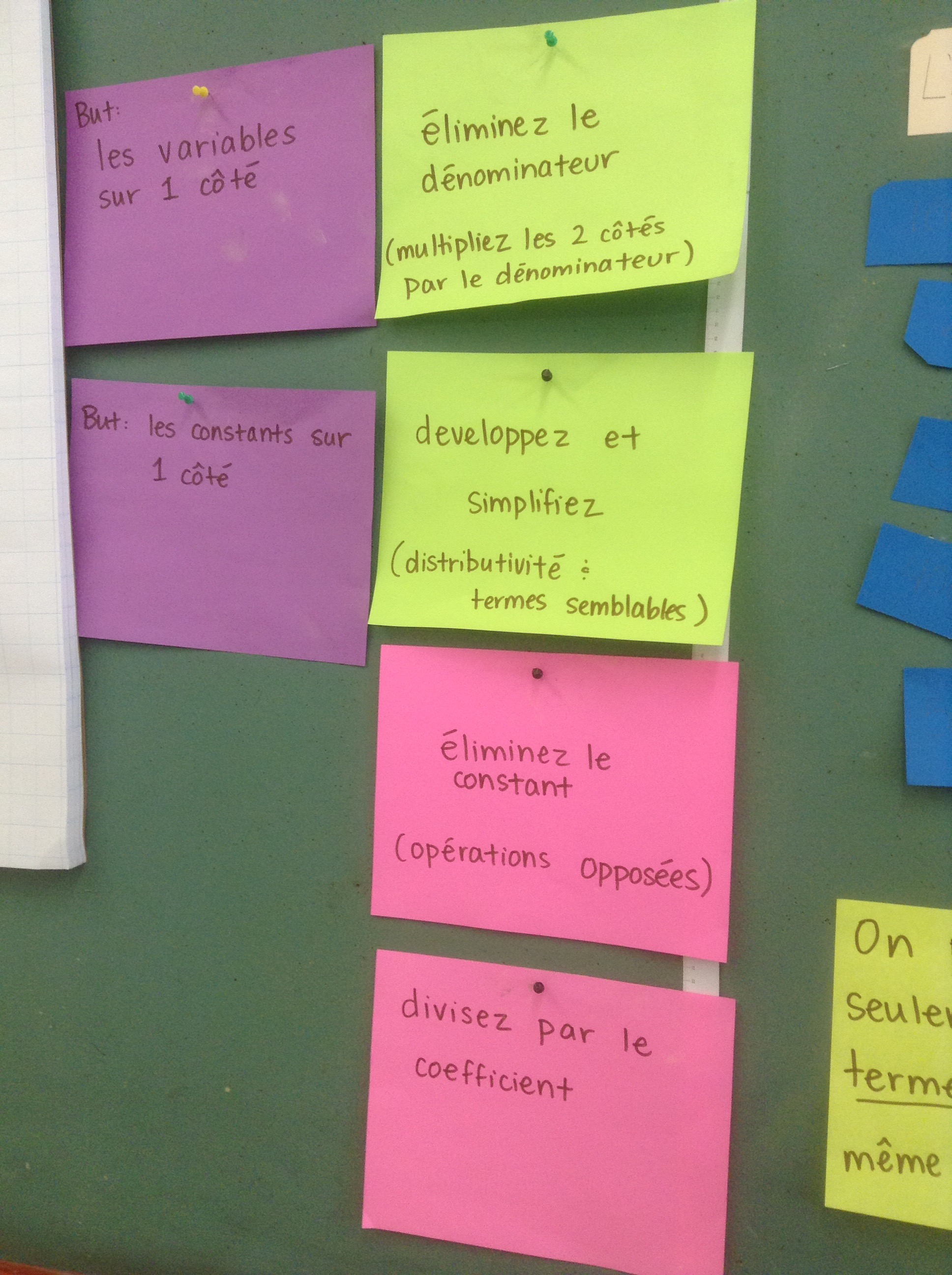
Reminders of Equation solving rules

Completing the square
 Here is an expression: 1x^2+6x-3
We are going to write it in vertex form by completing the square. To make a square, we take the x term and split it in half. Half of the x goes vertically and half horizontally.

We notice that we could complete the square with 9 little red squares. Since we don’t have any, we need to add some zero pairs.

With 9 additional blue and red squares added, we can complete the square.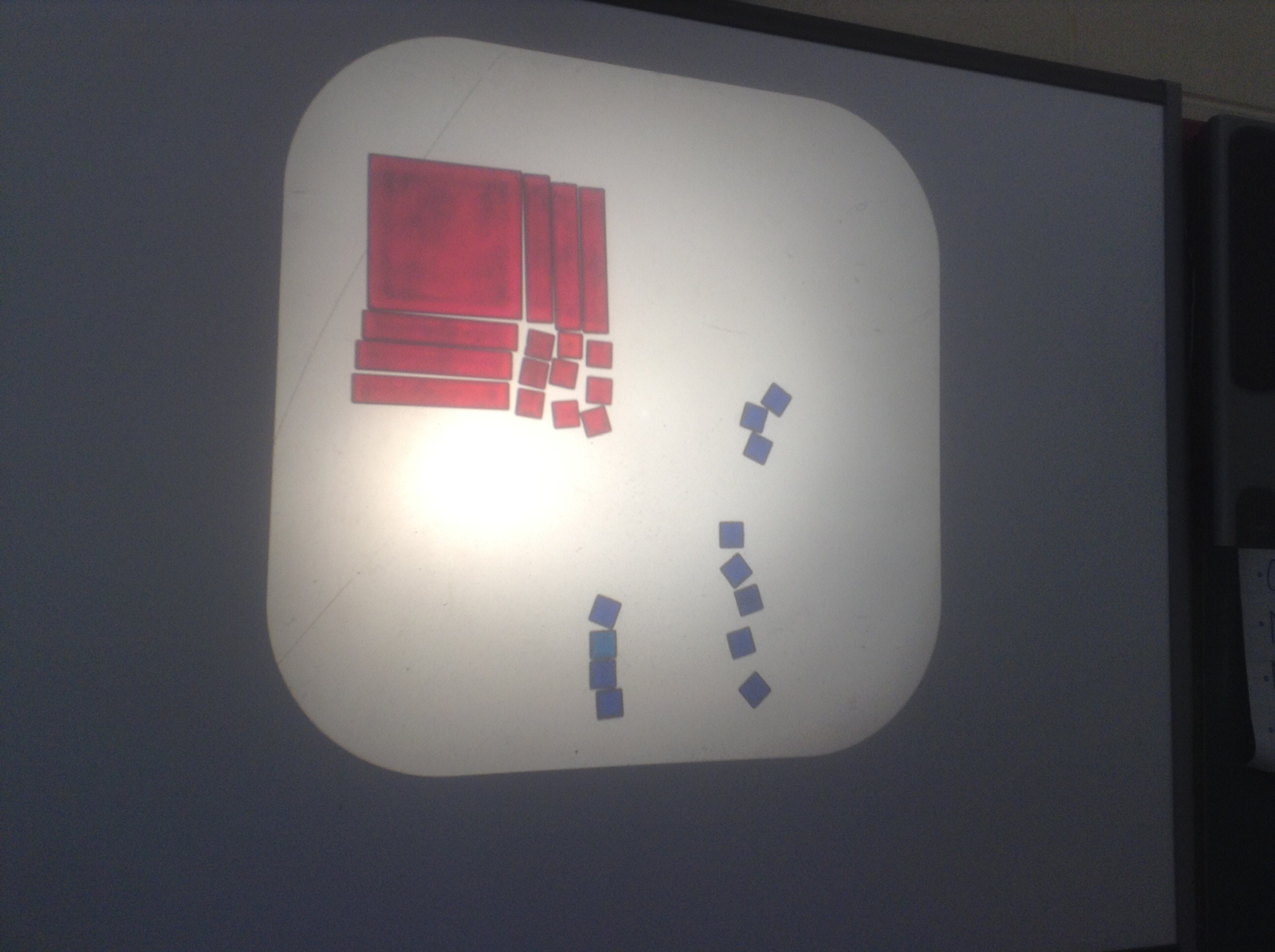
We now have a square: (x+3)^2 and also 12 blue square tiles. The expression can now be expressed as (x+3)^2-12.
Bean update
We have some sprouts! We now will start measuring their growth each day and then we can figure out the growth rate.

Solving equations with algebra tiles
We have been practicing representing expressions with algebra tiles. We are getting pretty good at it. Now that weare solving equations, these representations are becoming useful yet again. We put a popsicle stick as the equal sign, and have to do the same thing on each side, always. We can add blue or red tiles to make zeros, or divide up both sides into groups to simplify equations.
This is 2x=8. To simplify it, we can divide each side in two groups and we can see that 1x=4.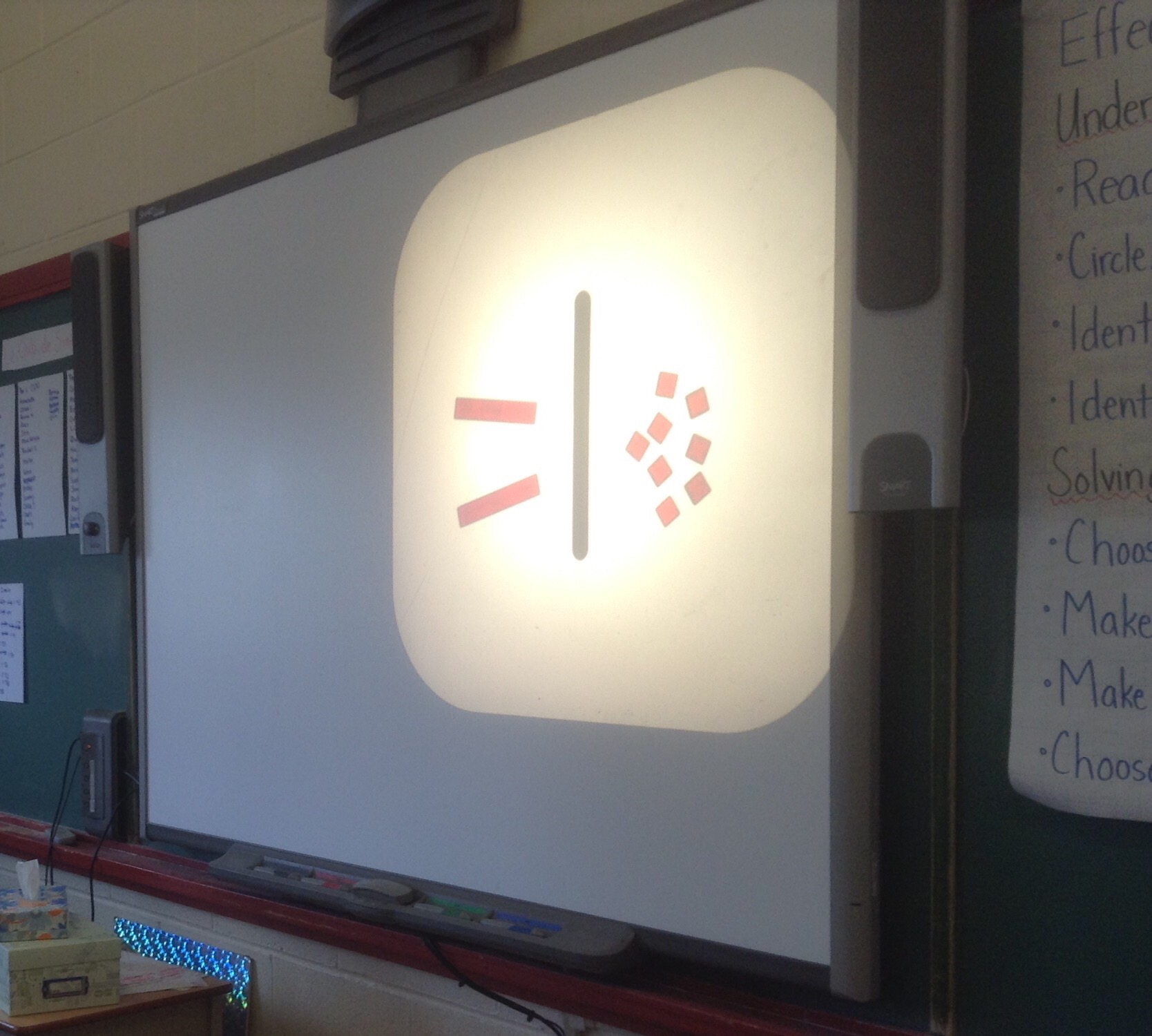
Here we have variables on both sides of the equal sign. Our goals are as follows
- Get all variables on one side
- Eliminate the constant that is on the same side as the variable
- Eliminate the coefficient beside the variable.
So this equation is 5x=3x-2
We can simplify by either removing 3 red rectangles (3x) from each side, or by placing 3 blue rectangles (-3x) on each side.

This will leave us with 2x=-2 and we split each side up into 2 groups to see that x=-1
Using algebra tiles helps us see what we are doing, and helps us understand.
Grade 10 test prep


