Beading
One of our grade 9 classes is participating in a beading workshop right now (similar to what other classes did this fall). It is so nice to see the creativity that they have, and chat with the students about the math that they see in their patterns.
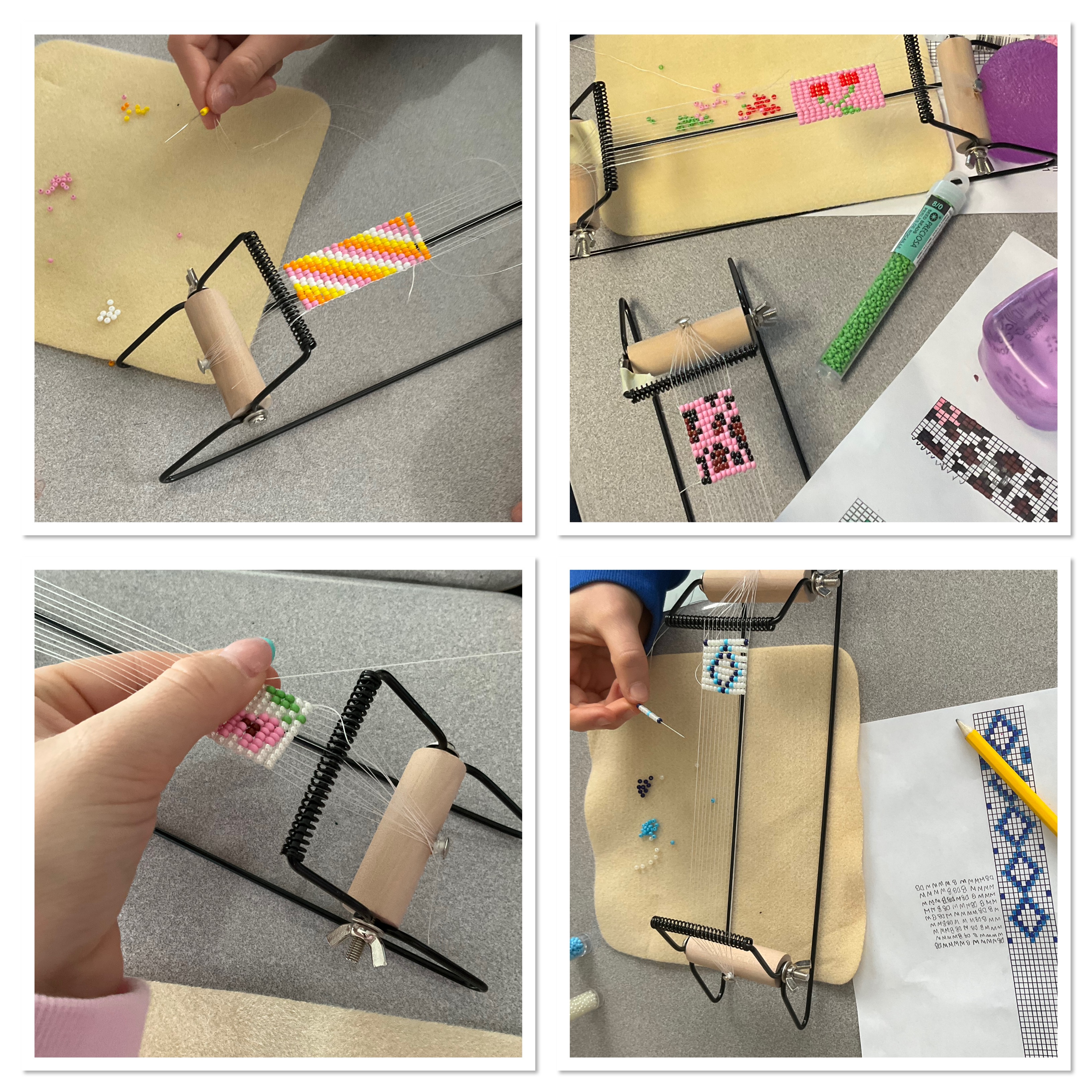
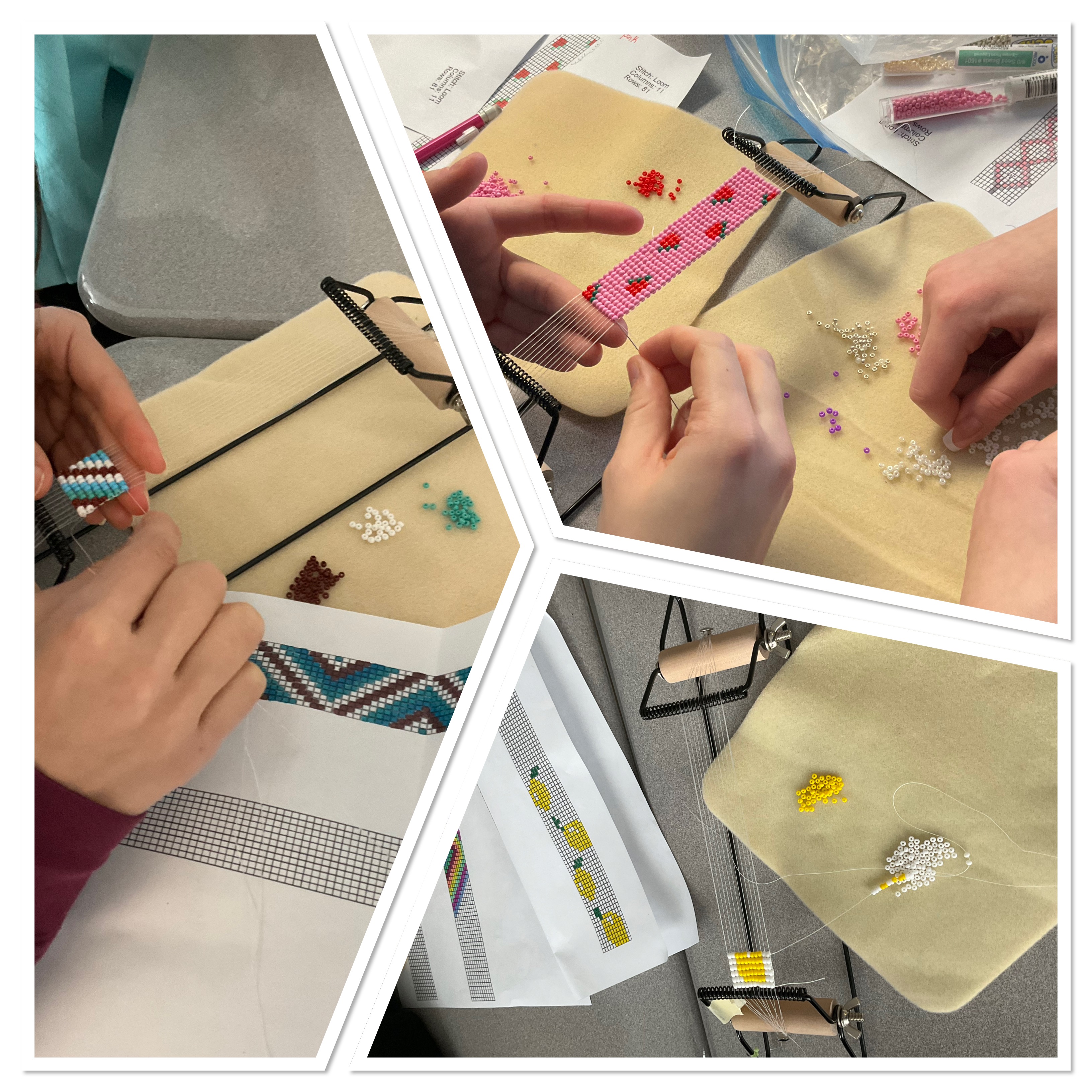
Many thanks to our Indigenous program team for facilitating these educational experiences for our students.
Ball Roll Race Finale
Today was all about analysis and making predictions, and then we did the final race.
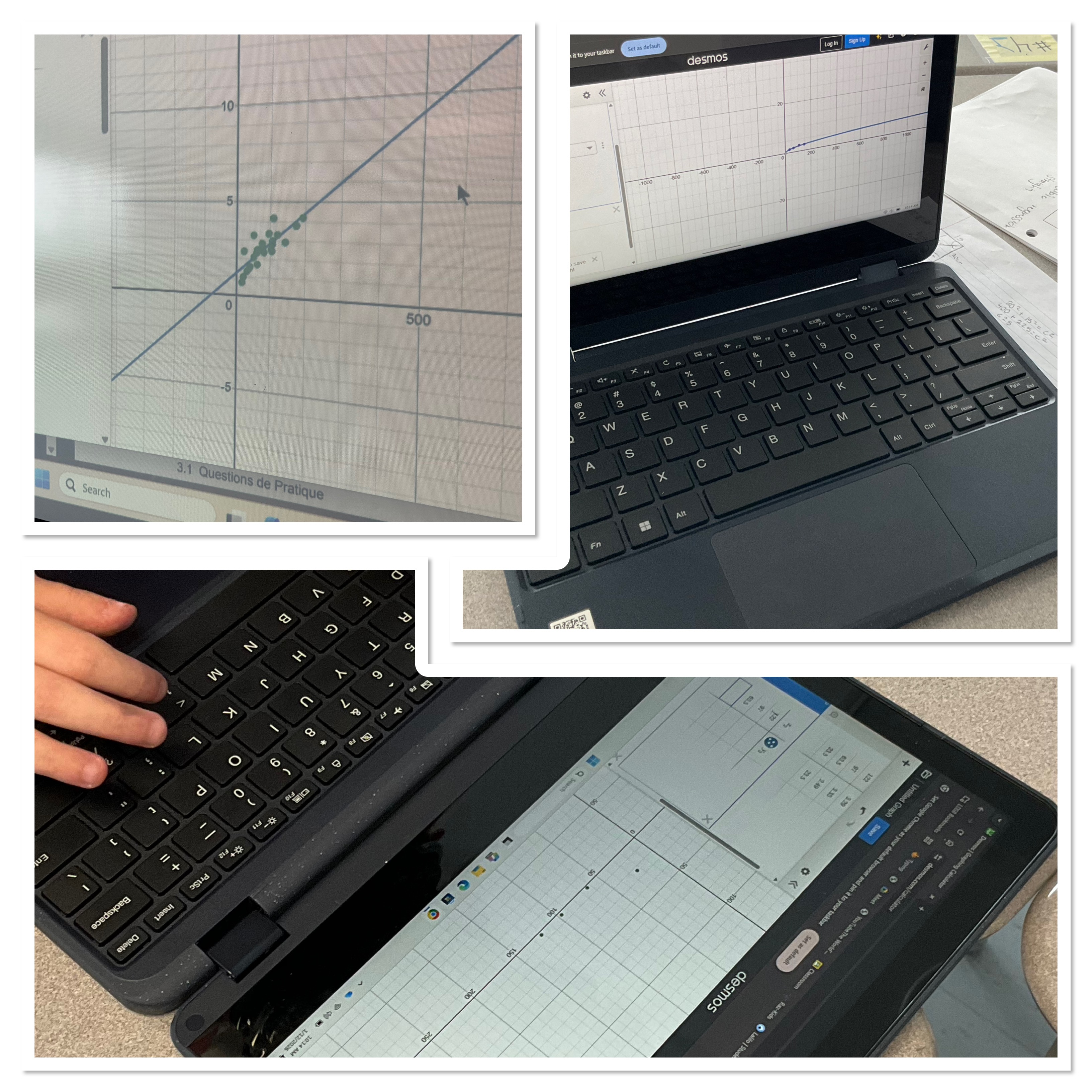
We spent some time at the start of class making graphs by hand and with Desmos in our groups, and then using them to predict what we thought would be the end results.
We looked at some composite graphs from all the groups, and since class I made one with ALL of the data here
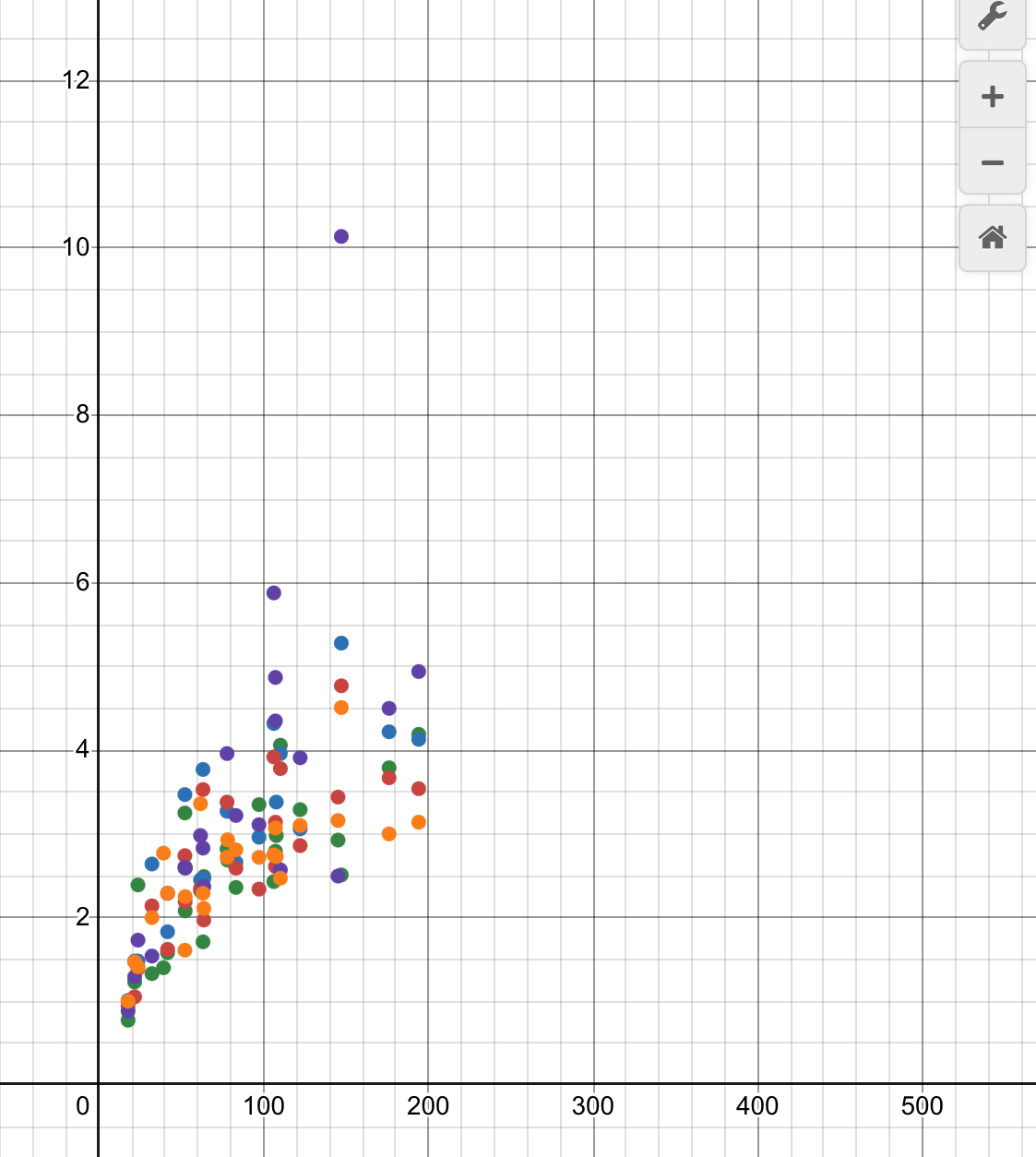
We can see a non linear trend when we have lots of data together, but most groups assumed that their 4 points of data could be fit with a line.
Once we had locked in our choices, we went downstairs to the ramp to do our final trial. We lifted the meter stick and the balls rolled down the ramp.
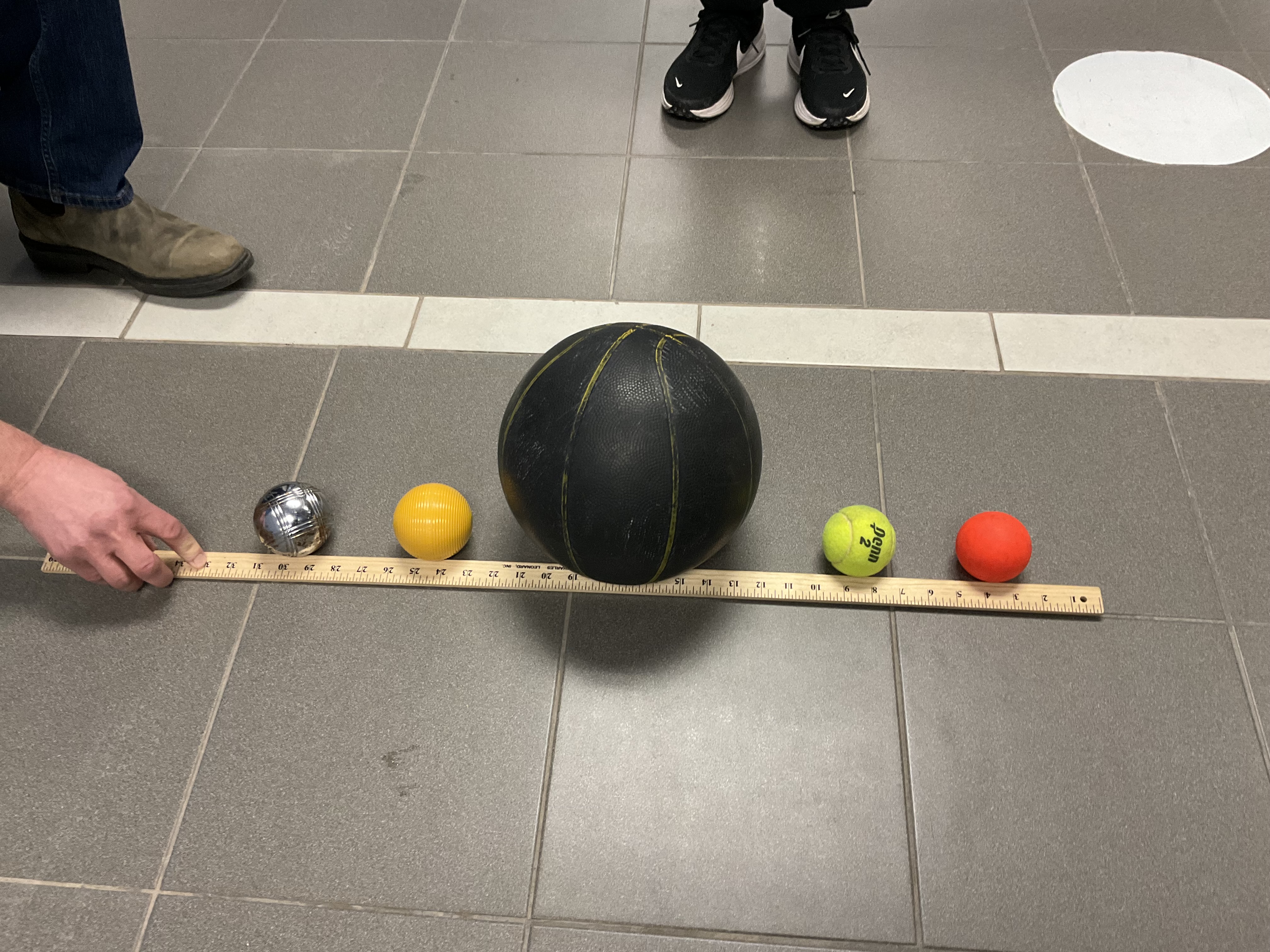
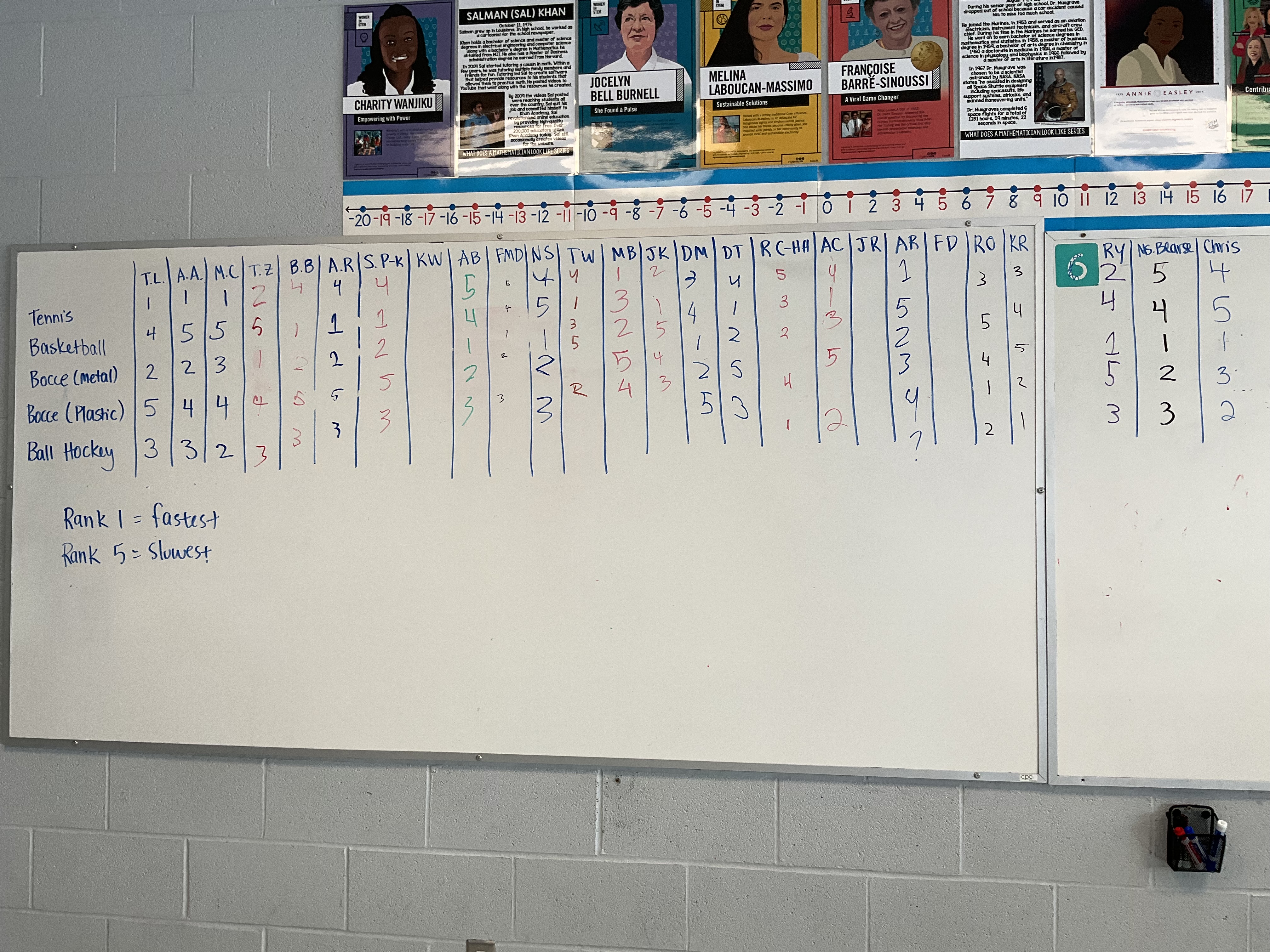
They didn’t roll in straight lines which may impact results slightly. Our order of finishers was: metal bocce, plastic bocce, basketball, ball hockey ball, tennis ball. Nobody in the class guessed the correct order!
We also noticed that the times that we got from our linear predictions were off. We had predicted that it would take more time than it did for the balls to finish the race, so that’s more proof that the graphs are non-linear.
Many thanks for everyone helping to make this a smooth activity! Students worked really hard.
Heat Loss House day 3
The houses were running all night, with their little furnaces keeping them at a temperature of 30 degrees. We came together today to learn the results, and to see where there are leaks by using a thermal imaging camera.
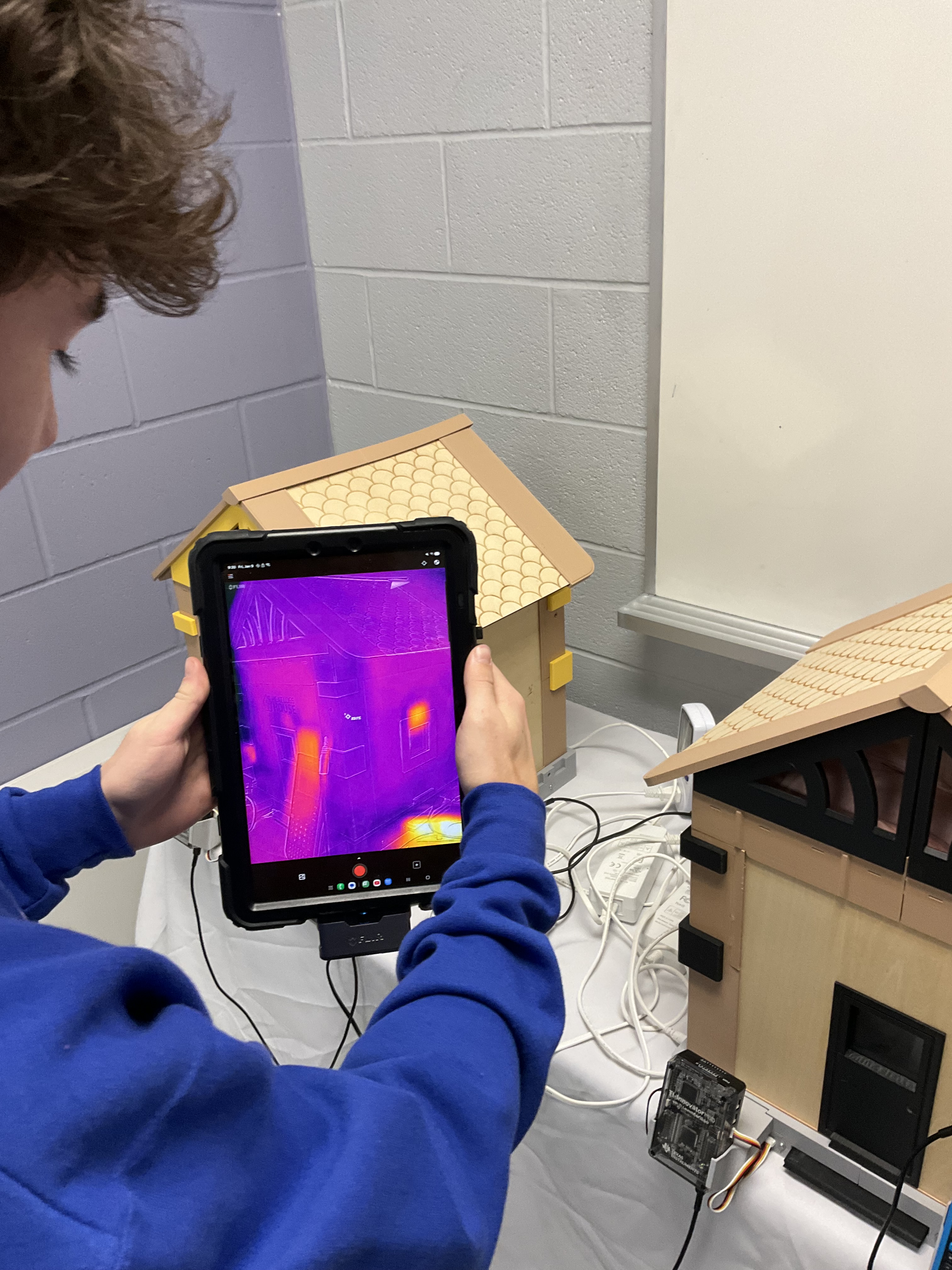
We learned about how insulation and windows affect houses in the real world, and how we might use a thermal imaging camera to find leaks in our own house. We learned about how a water leak by a windowsill could lead to fibreglass insulation compacting and sliding down inside the wall, and causing a big cold spot.
We learned about how any watt saved is good because we are burning fossil fuels to produce much of our energy and that contributes to the greenhouse effect, and climate change. We also saw how this house project has been on the road to Indigenous communities last year and hopefully is helping raise awareness of insulation and helping communities make good choices about home repair options.
There were many houses that were very well insulated and performed well, but one group won the prize. Good job Red Team!
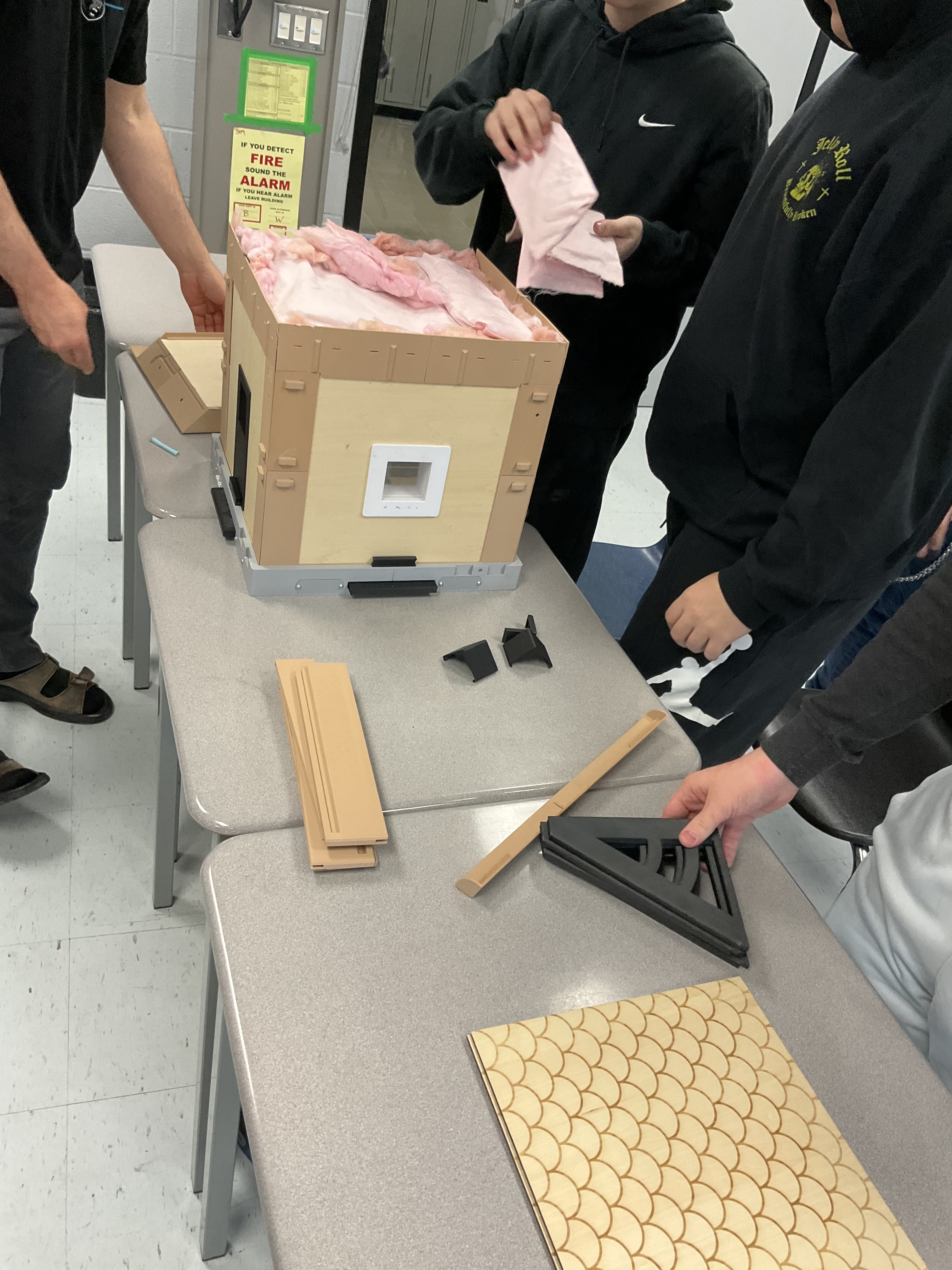
We took apart the houses in the end, so they can be used at another school.
Many thanks to the Heat Loss House Project for sharing their knowledge with us as we went through this 3 day task.
Ramp Race Day 2
Today we got to work with our ramps, finishing up all of the data collection and averages.
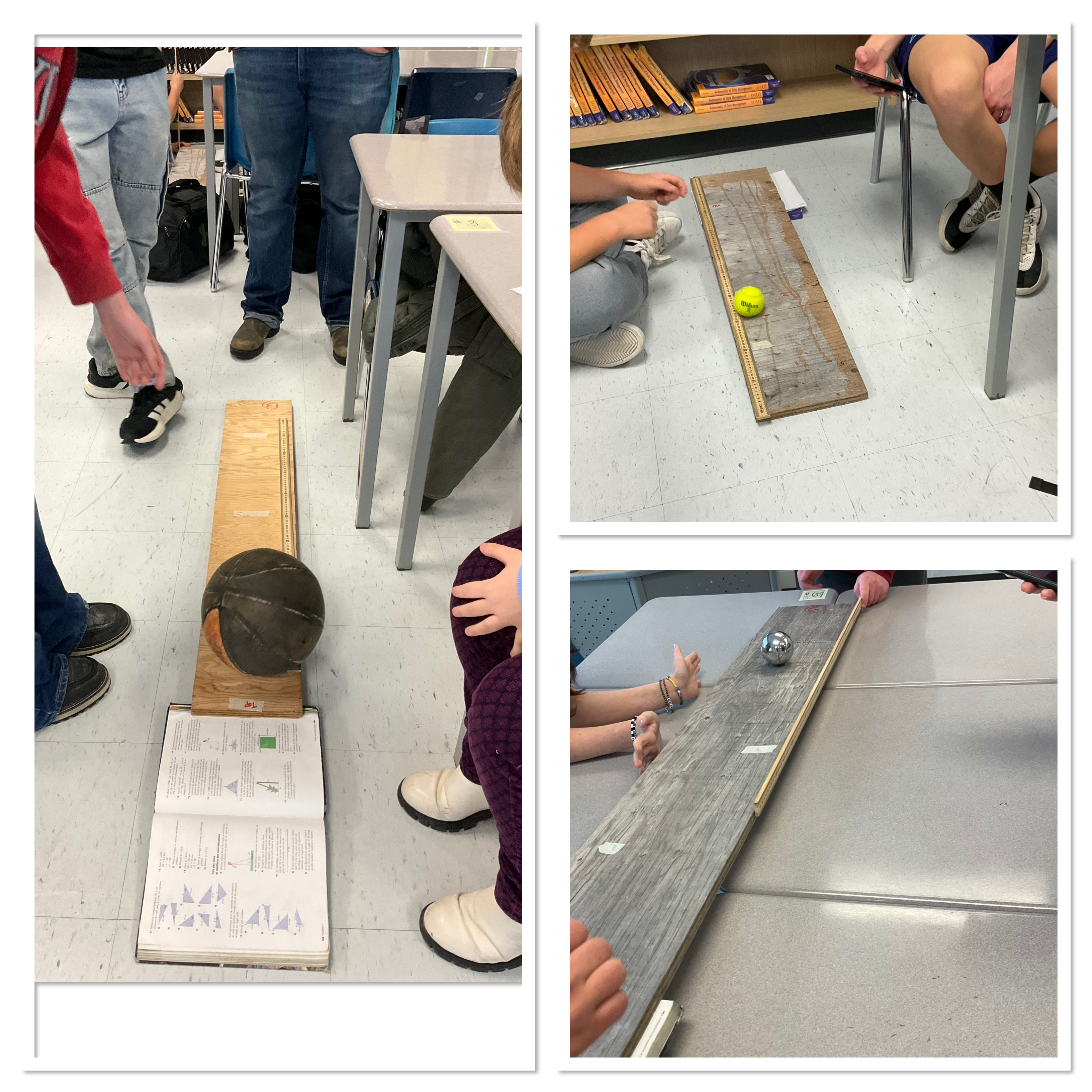
We looked at the data to see if it seemed linear or non-linear, and tried to model the data.

We used Desmos to help with our models. From the data for most groups a linear model seemed to work.
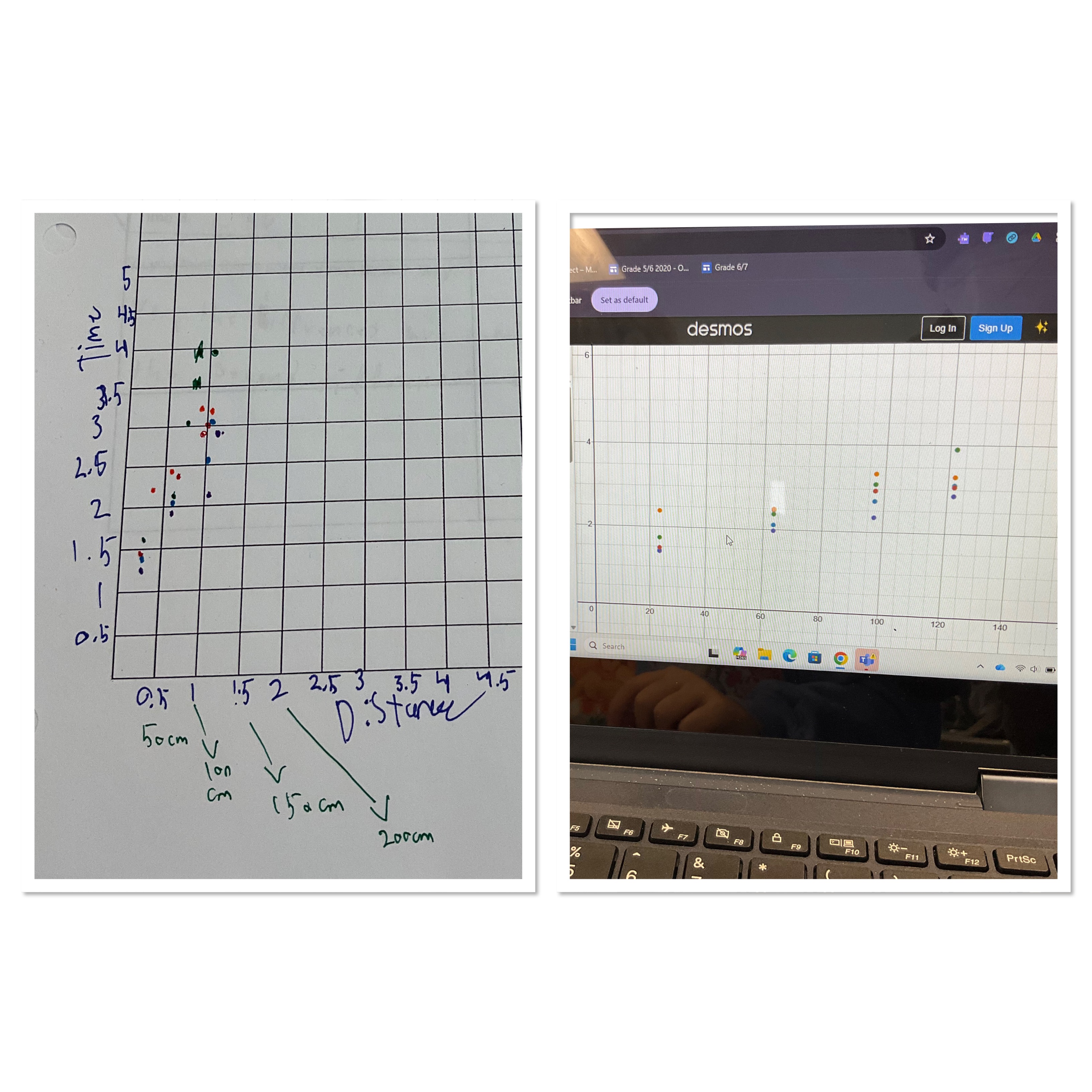
There are a few challenges we’ve noticed. Some of our boards are not straight, so for some, the tennis ball will stop part way down the ramp, because the ramp momentarily goes up. For next time we’d try to get thick boards that wont curve, and to check that they are as straight and flat as possible. We also noticed that the timing can cause some challenges. Since the ramps are short, a small error in timing will be a big percentage of the time value that we get, which is likely why our data is looking linear-ish. Having only 4 points for each ball also might not be enough to see a real trend. In any case, we’re going with the idea that they might be close enough to be linear.
Groups are using Desmos to get lines of best fit, and then Monday they are going to make predictions about how long it will take for the ball to go down the 8m ramp. We’ll hopefully be able to get the final race done on Monday as well, and we can use the final results to evaluate our models to see if the real world race is modelled by linear equations, or whether it might be more complex.
Many thanks to Pathways to Education for sending a grad connector to help with some of the groups. This is a task that takes a lot of coordination and checking in. We are much more on task now than we were in September though which is a great development.
Ramp Race Day 1
Today we are starting our culminating task inspired by Al Overwijk (blog)
We have a 3 degree ramp at our school that is 8 meters long. We are going to race 5 different balls down the ramp. To predict which one will win, we are modelling the ramp in our classroom with 6 different lengths of board.
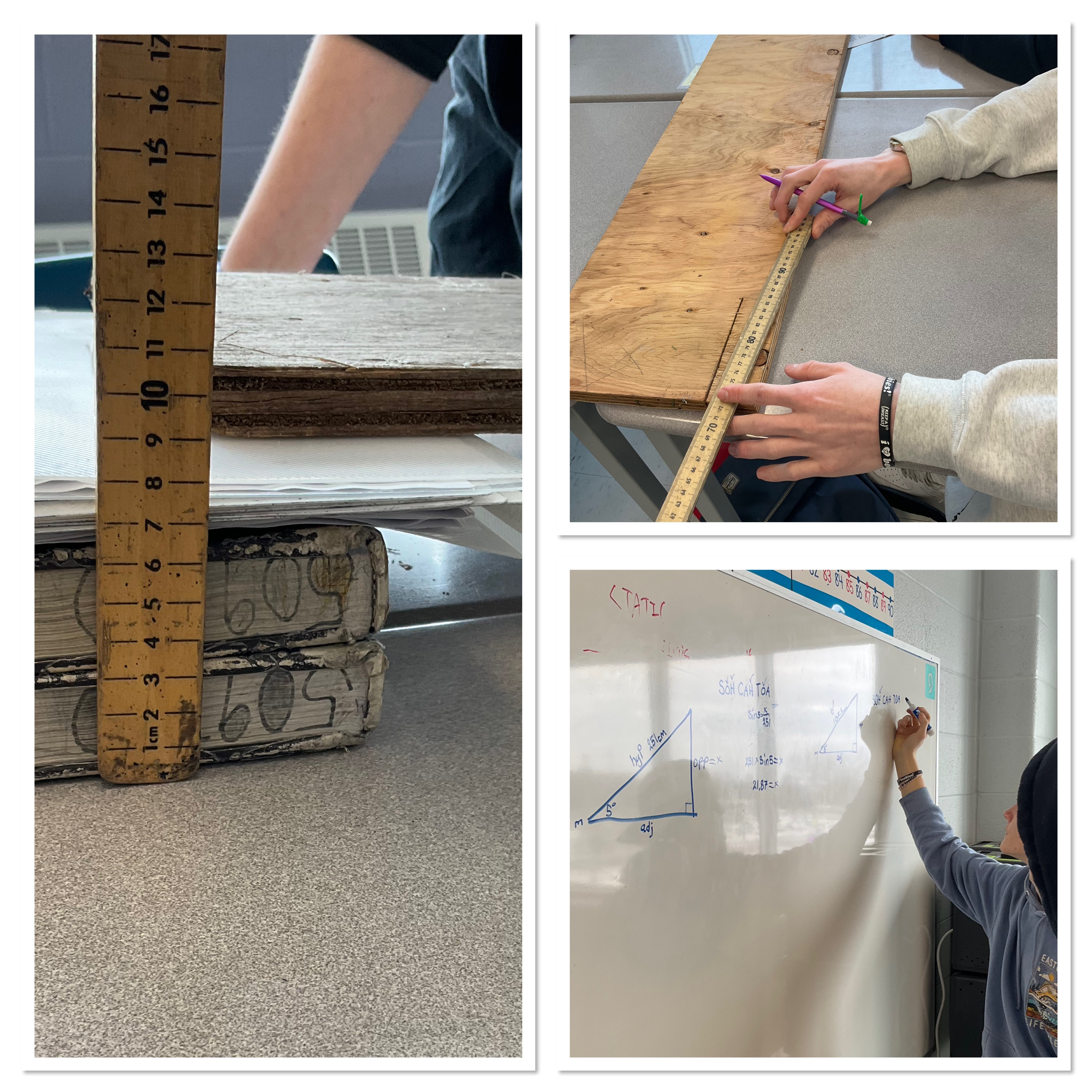
We had to calculate how high up the rise should be. We had to figure out how to elevate the board, and keep it stable.
Once the ramp was made, we chose 4 locations along the board to start rolling the ball. Each ball will be rolled 3 times from each location and averaged.
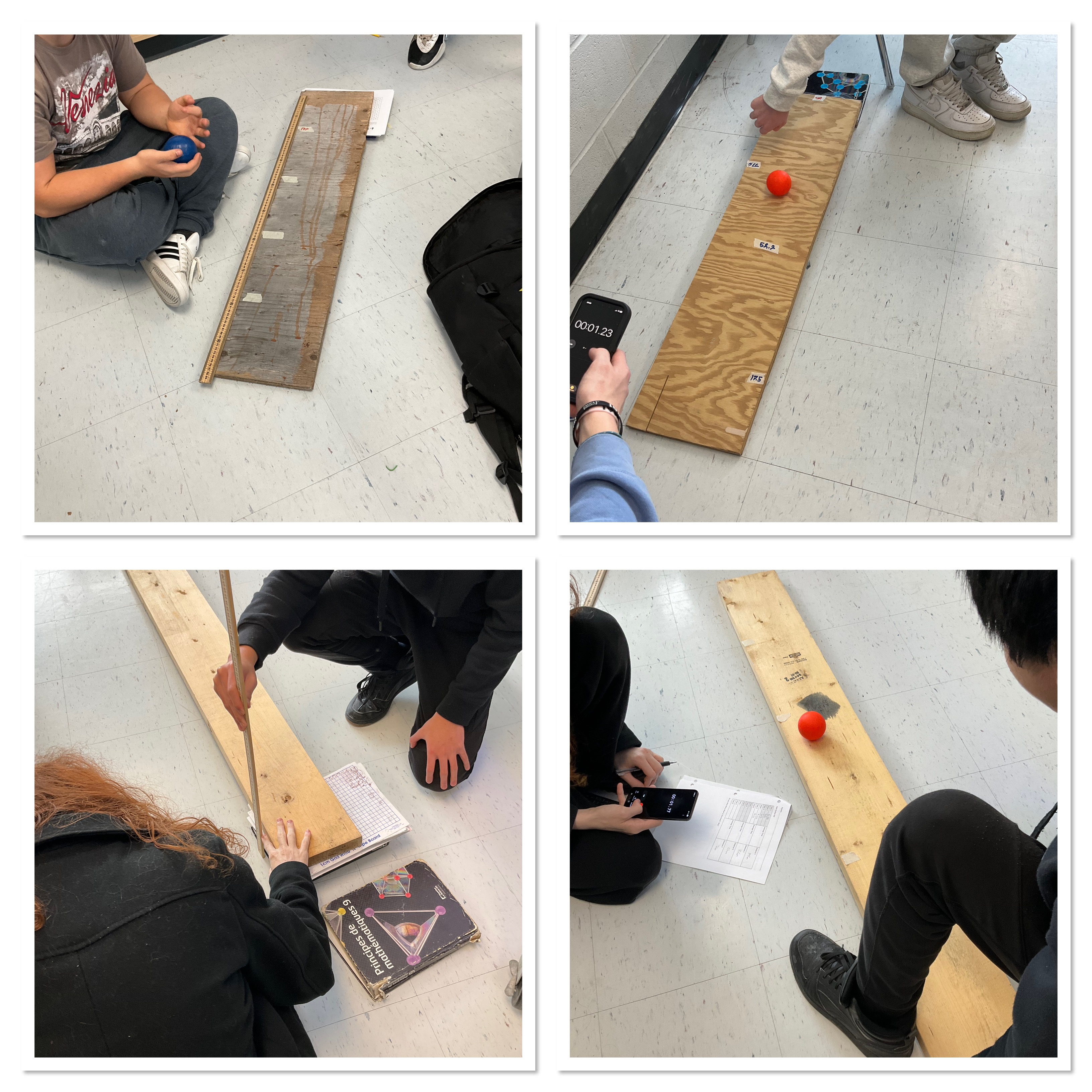
We’re busy filling data into our table of values.

We’ll keep working tomorrow, to get through testing all 5 balls at each location, then we’ll do some analysis to figure out how to model the relationships.
Heat Loss House Day 2
Day 2 of the project includes building the houses and using the insulation choices from day 1. Insulation choices were fibreglass, rockwool, or foam, and window choices were single, double or triple pane.
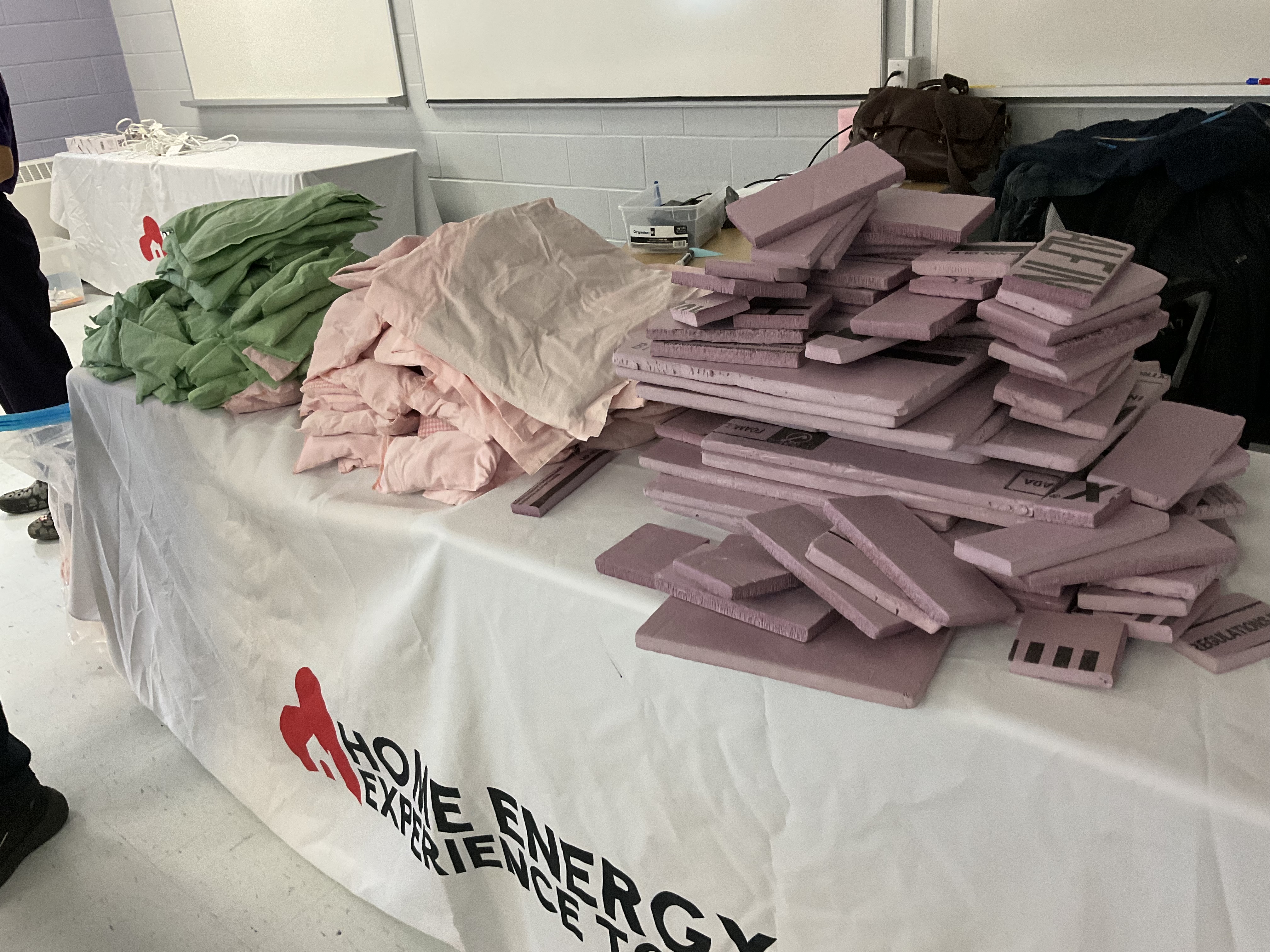
Groups worked together to get the houses built. The kits included sensors and a “furnace” walls, doors and windows which all clipped together with 3D printed parts.

In the end, the houses were set up and turned on at the same time. They will run all night with a calculator tracking the sensor output.
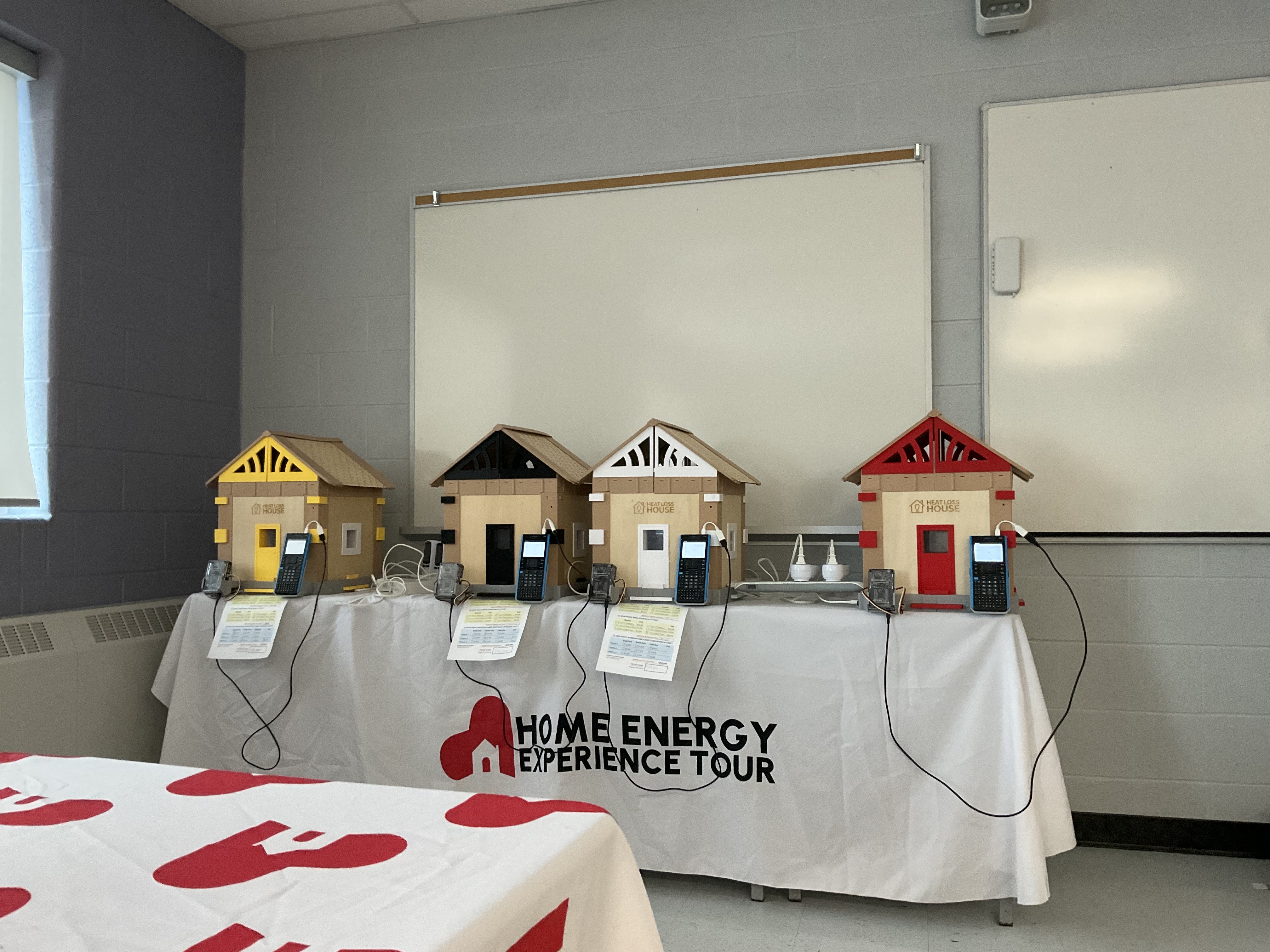
We look forward to seeing the results tomorrow.
Many thanks to St. Lawrence College for providing this opportunity for our students.
Barbie Bungee
Today we bungeed Barbies! This is a task I’ve been wanting to do for ages, but never did. I went to the thrift store and dollar store and got a variety of characters to bungee.
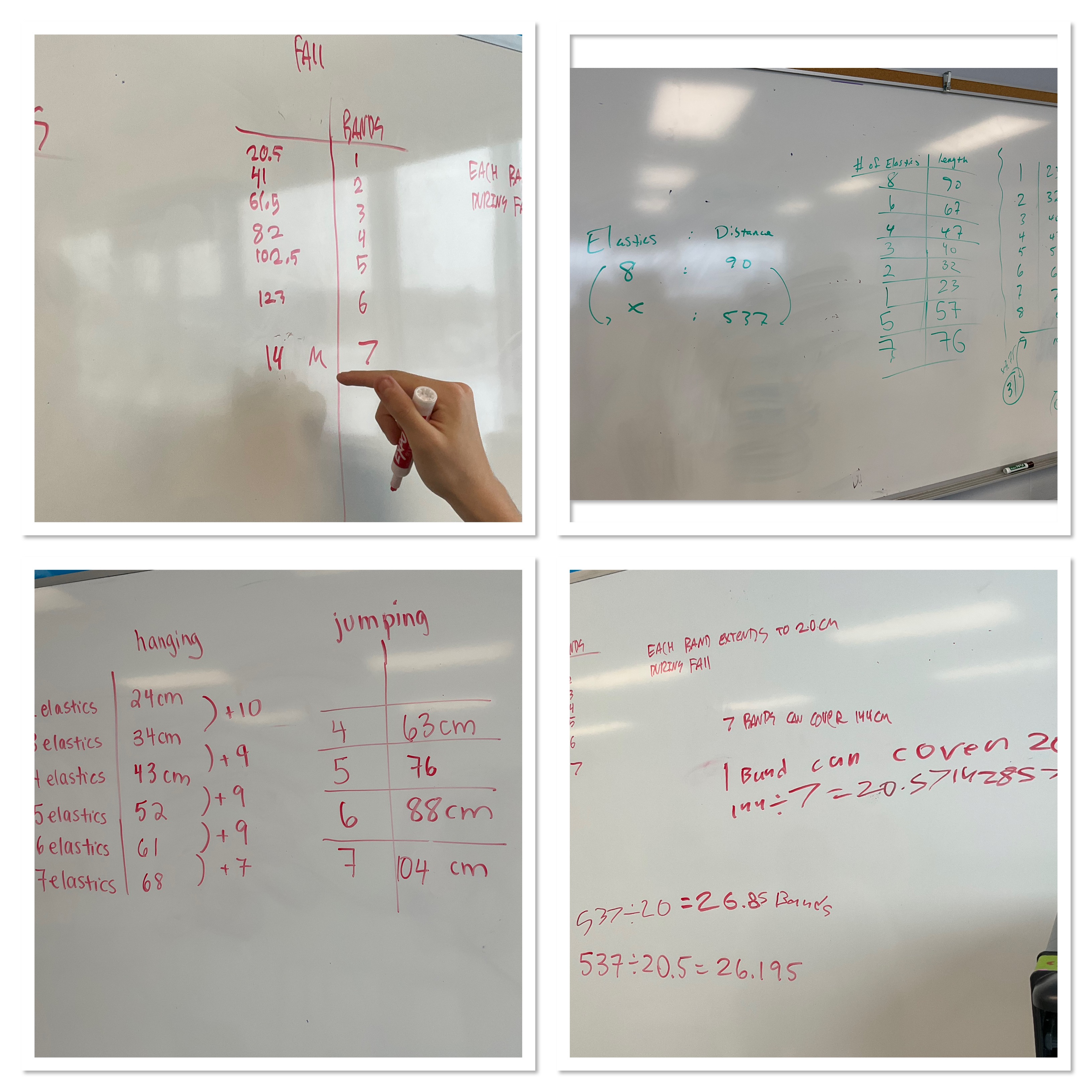
We started off with each team getting 7 elastics and then we started to test the stretch to figure out how many elastics would be needed to bungee down the 537cm from the top of the atrium stairs down to the floor. The goal was to give the character a thrilling and death defying ride.
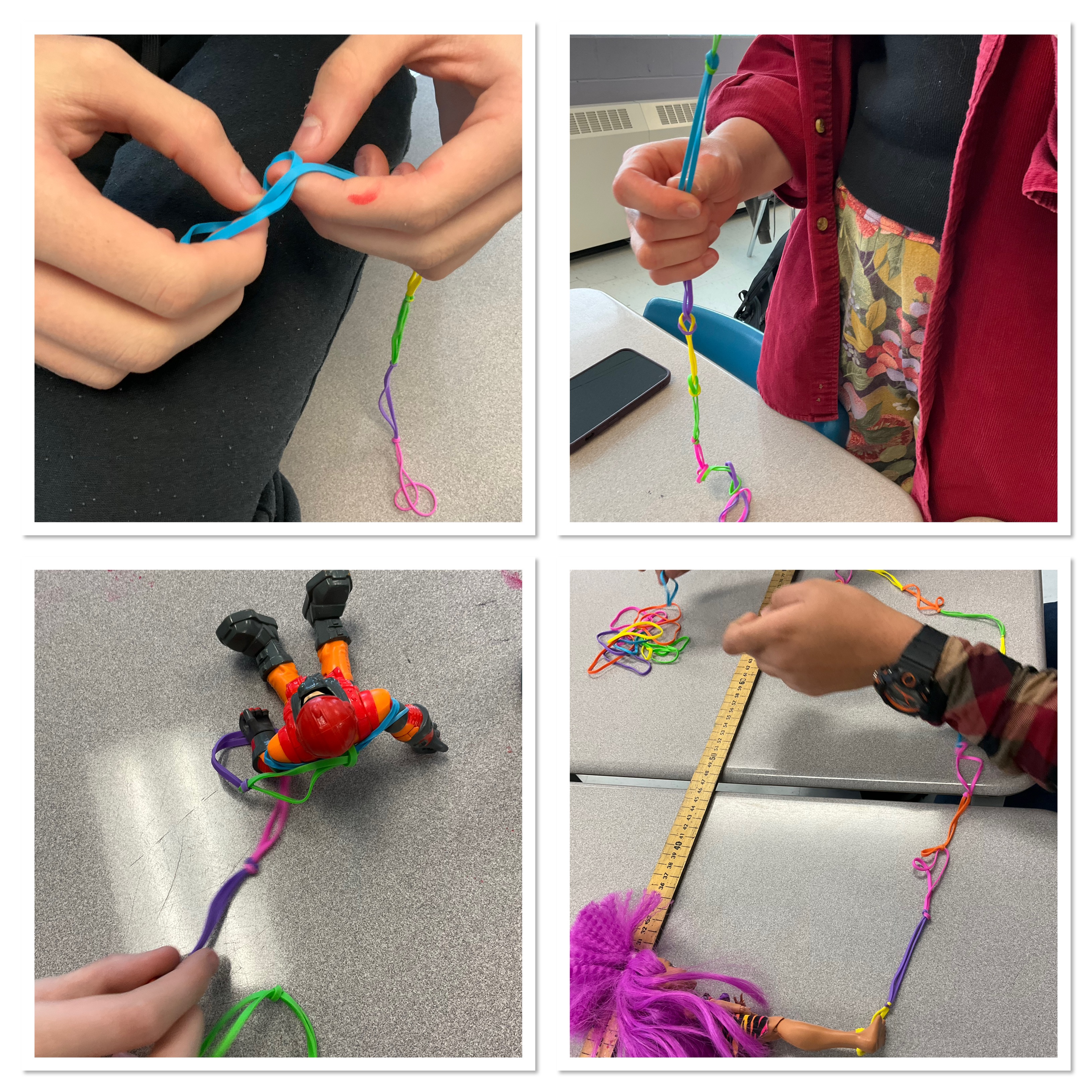
We had groups try different strategies. Many did trial and error with different number of elastics, checking how far the bungee would go.
groups put data in tables and used proportionality to find their answers.
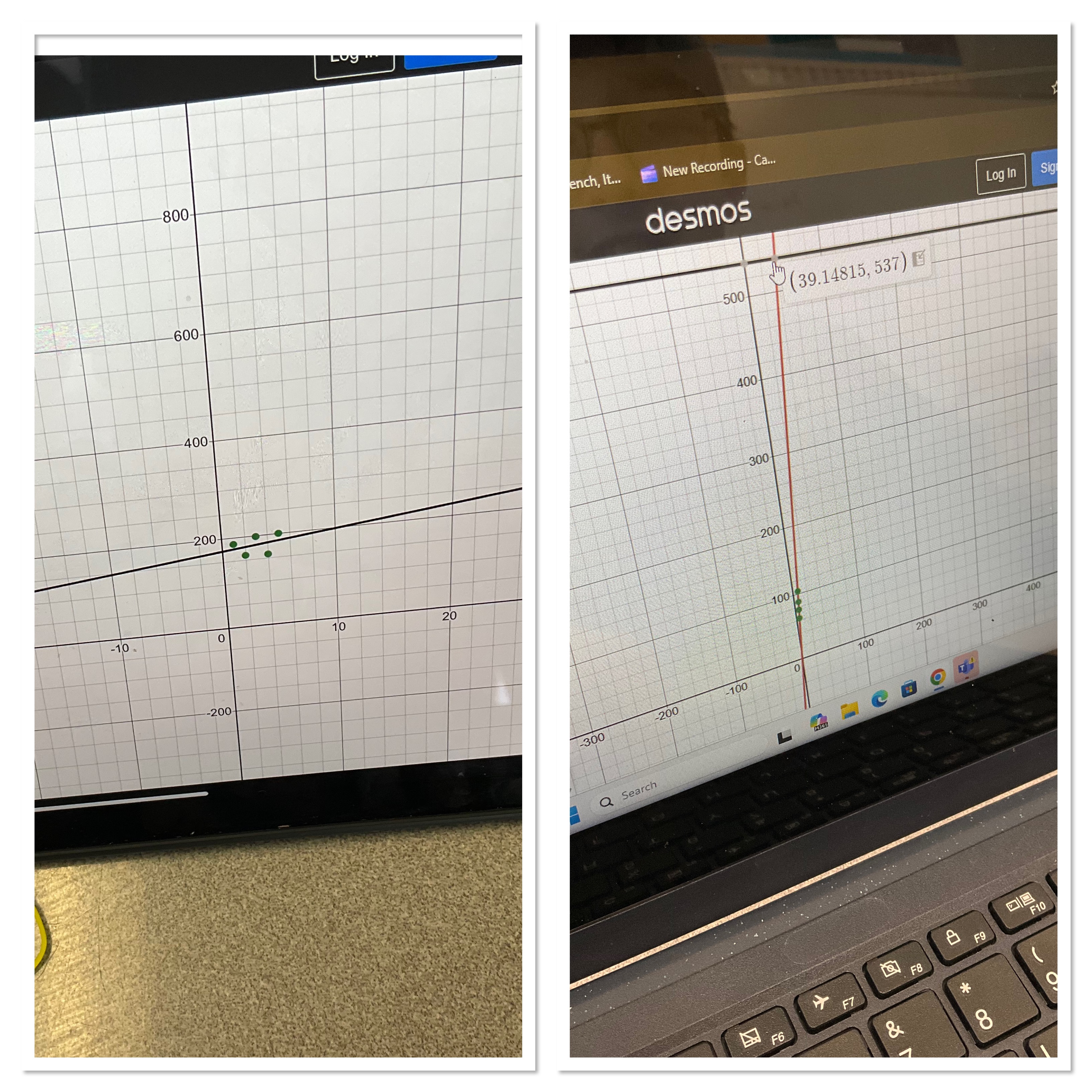
Groups used desmos to find averages, and also to solve the problem of how many elastics are needed.
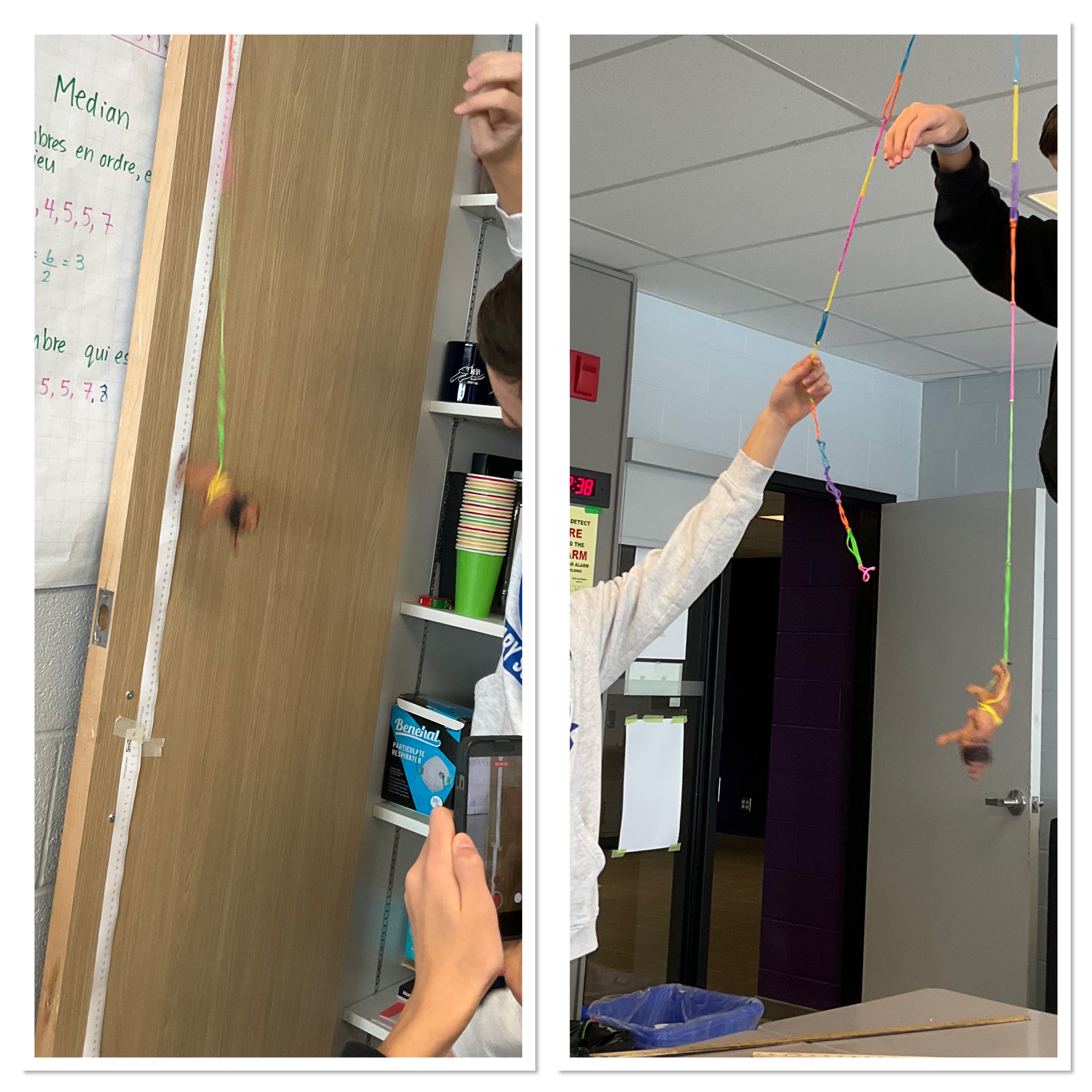
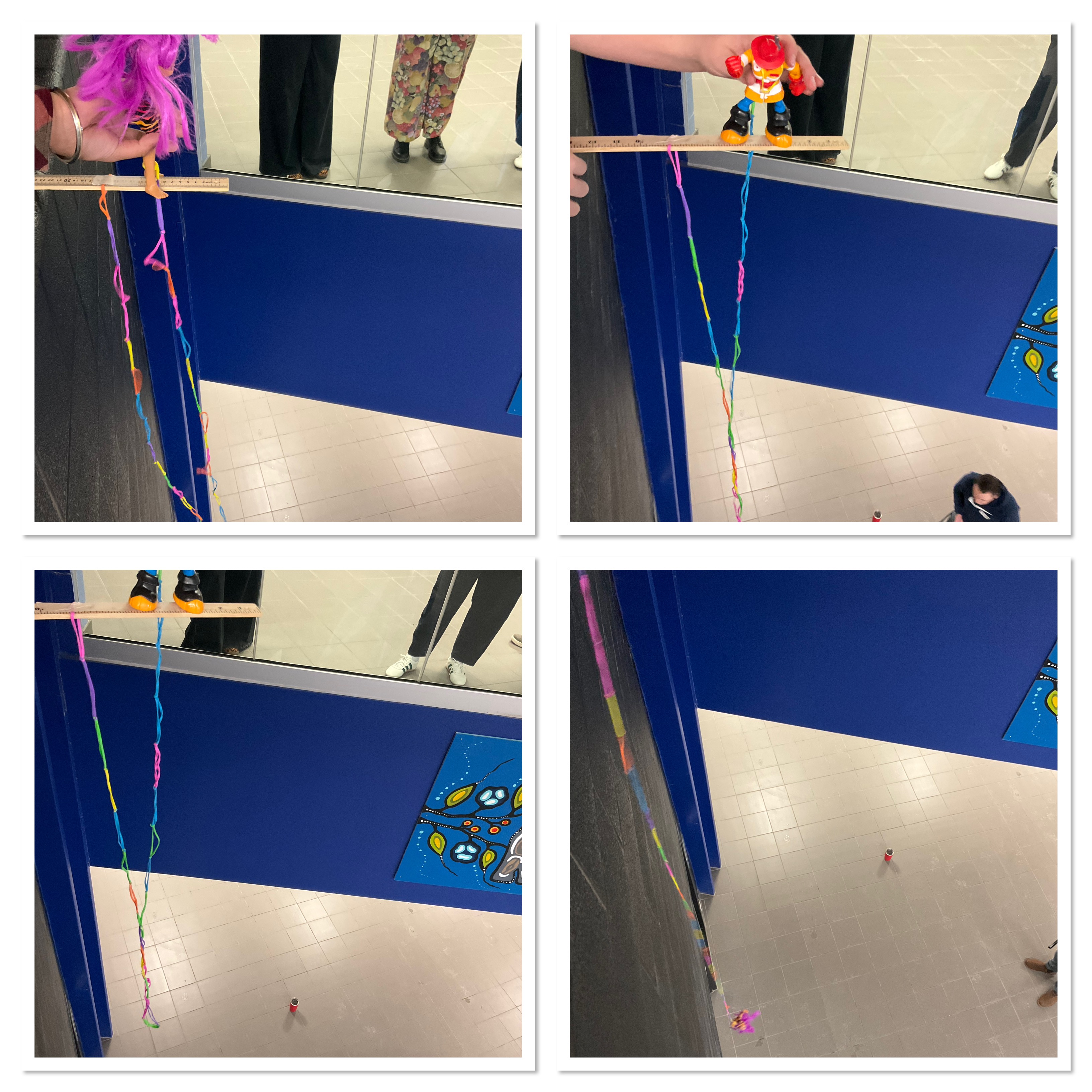
Finally we bungeed the Barbies!
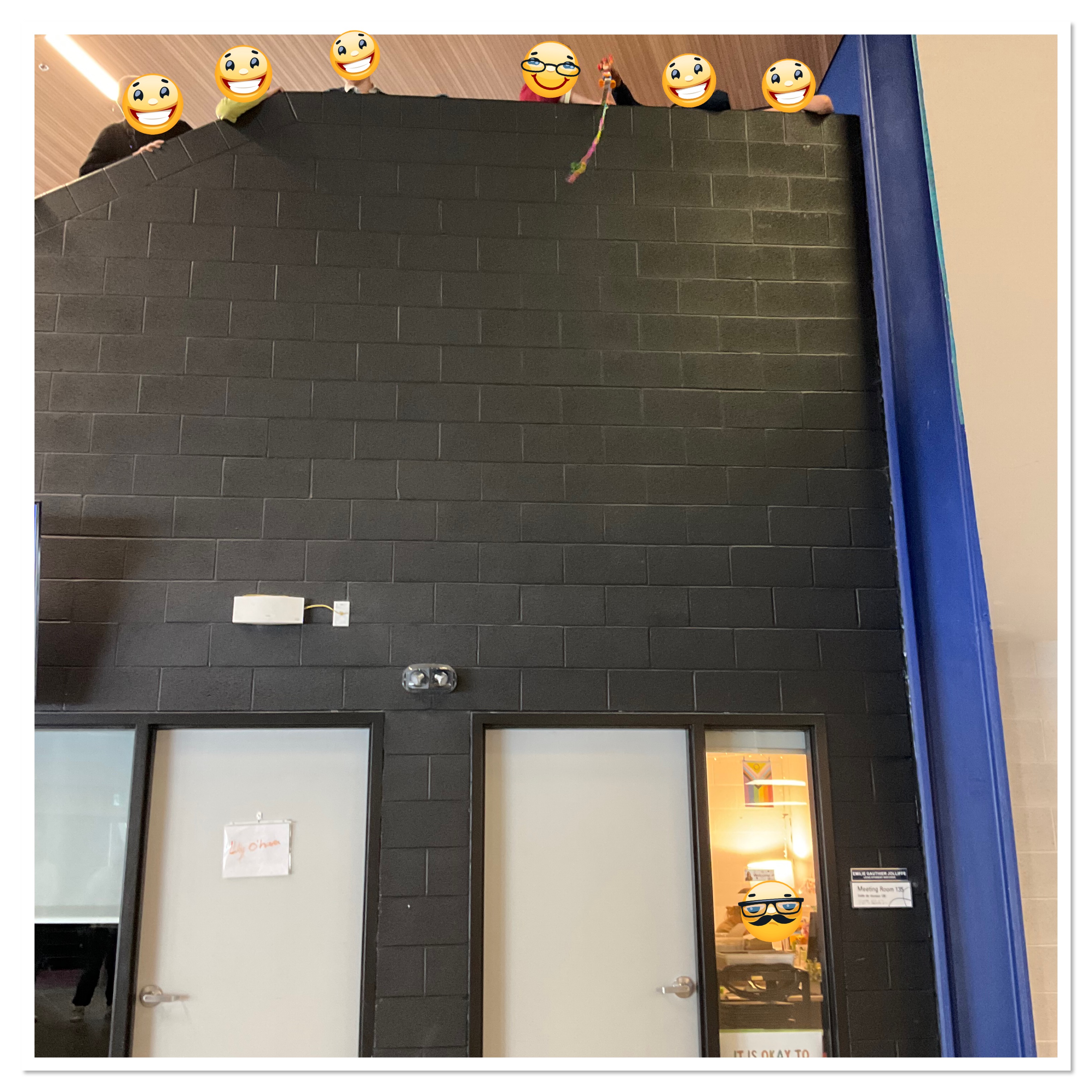
We had quite the audience for some of the plunges. It was a great success, with only one ending up on the floor.
We had a lot of fun on the snow day and working through some math!
Substitution
Today in grade 10 we worked on solving a system of equations by substitution. We started off with a tug of war puzzle.
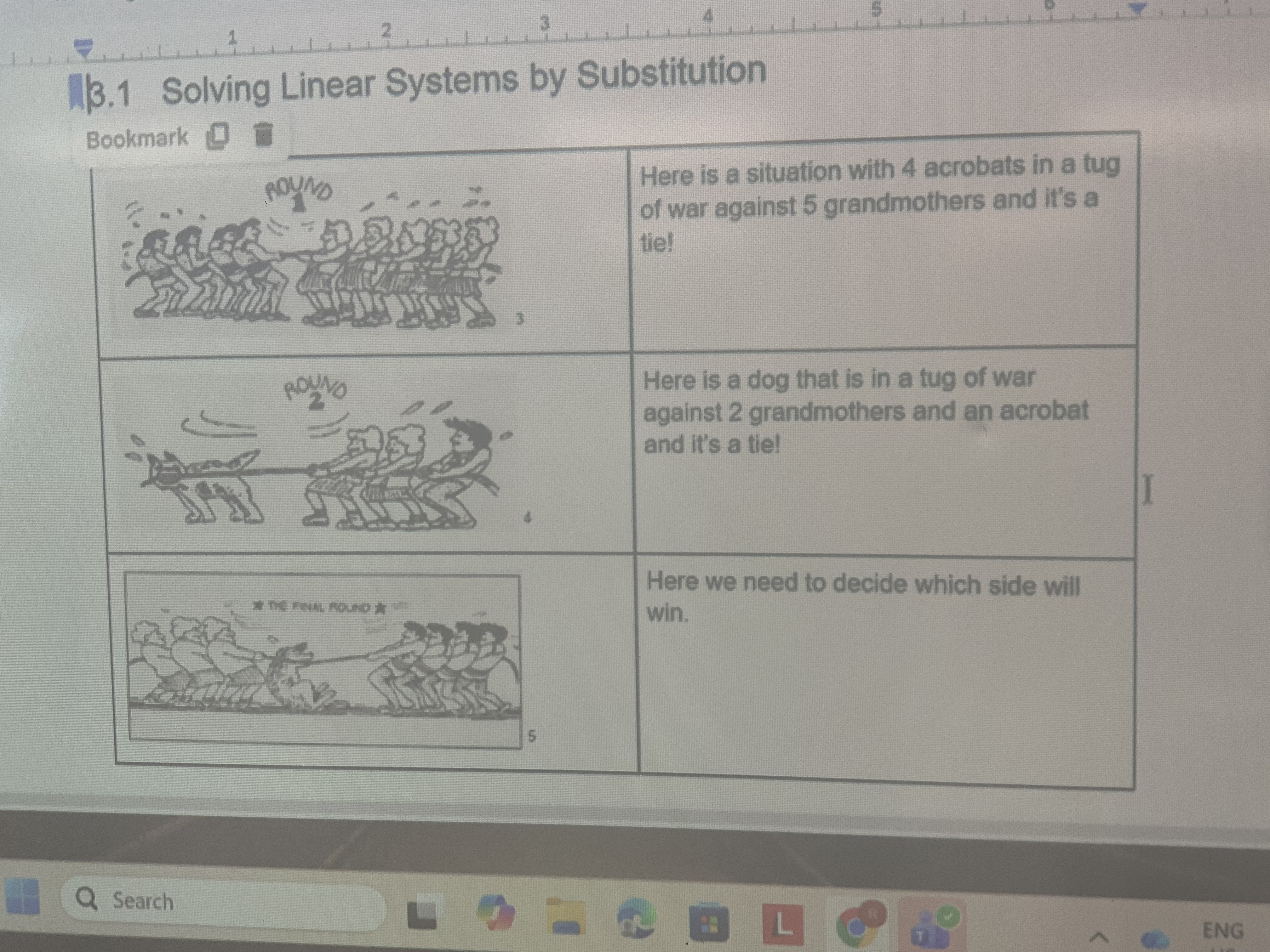
4 acrobats vs 5 grandmas are a tie
1 dog vs 2 grandmas and an acrobat is a tie
we need to figure out who will win with 3 grandmas and a dog vs 4 acrobats.
Students worked out a few ways to solve the problem. I wish I had photographed them!
One method had them assign a value for the strength of each grandma and each acrobat. They decided that if a grandma had a strength of 20, then 5 grandmas have a strength of 100, and if they are tied with the 4 acrobats, each acrobat would have a strength of 25. They figured out the strength of the dog by substituting in the values into an equation: dog=2(grandma)+acrobat to calculate that a dog has the strength of 65. Then they could calculate the final situation to see that the side with the grandmas and the dog will win.
Another method was to make equations. The idea of the tie means that both sides are equal, so:
5G=4A
1D=2G+1A
when we get to the final step:
3G+1D, we can replace the dog with (2G+A)
3G+(2G+A)
5G+A
but we know before that 5G=4A so we can replace that too
4A+A
which is 5A, so now we have a final show down with the equivalent of 5A on one side, vs 4A on the other side, so we know that the 5A side (the one that originally had the dog) wins!
We then did some substitution without a context, to practice.
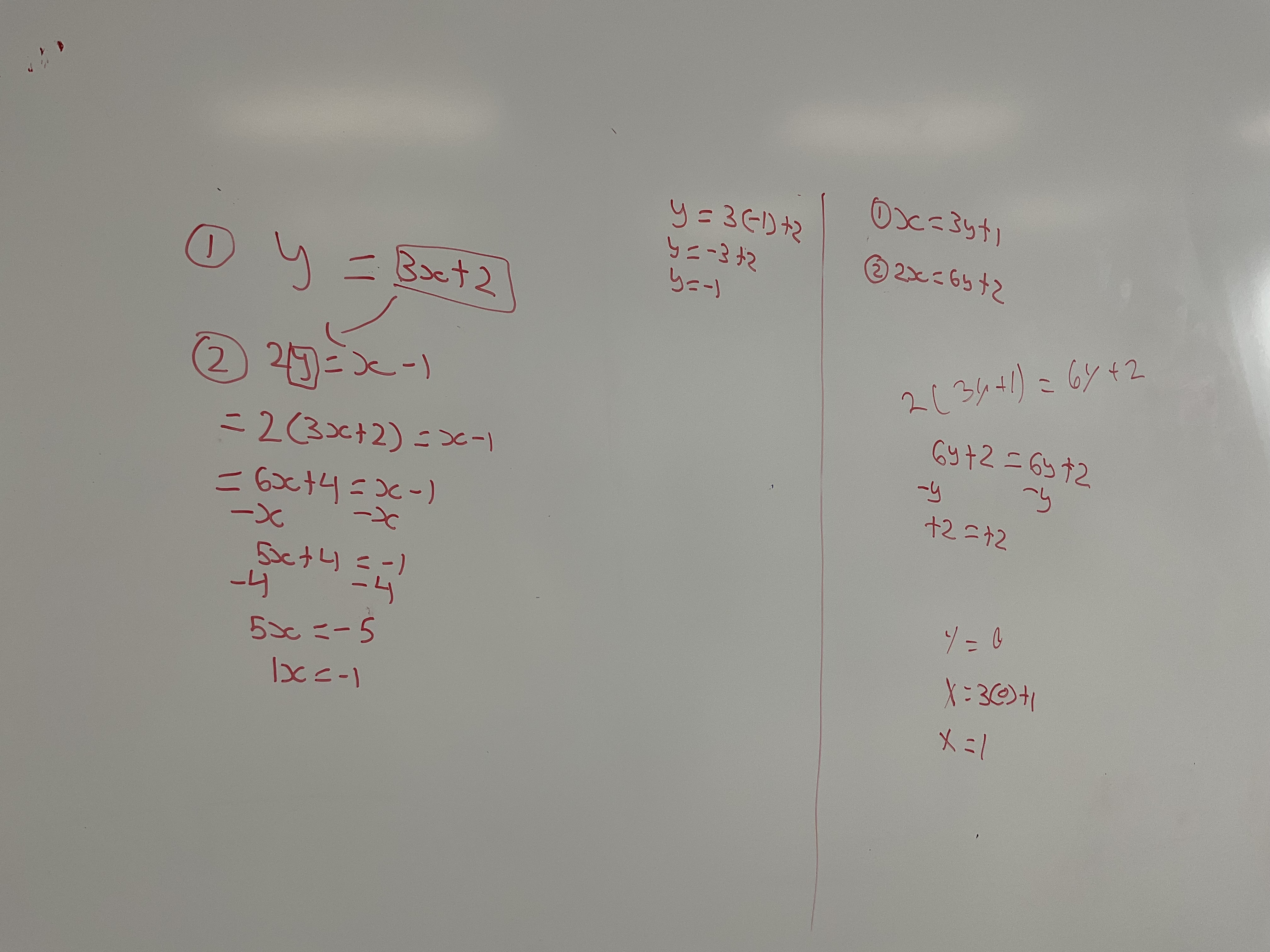
We made the connection to x=-1 and y=-1 being the intersection of the 2 lines using desmos.
Next we tried an interesting case:
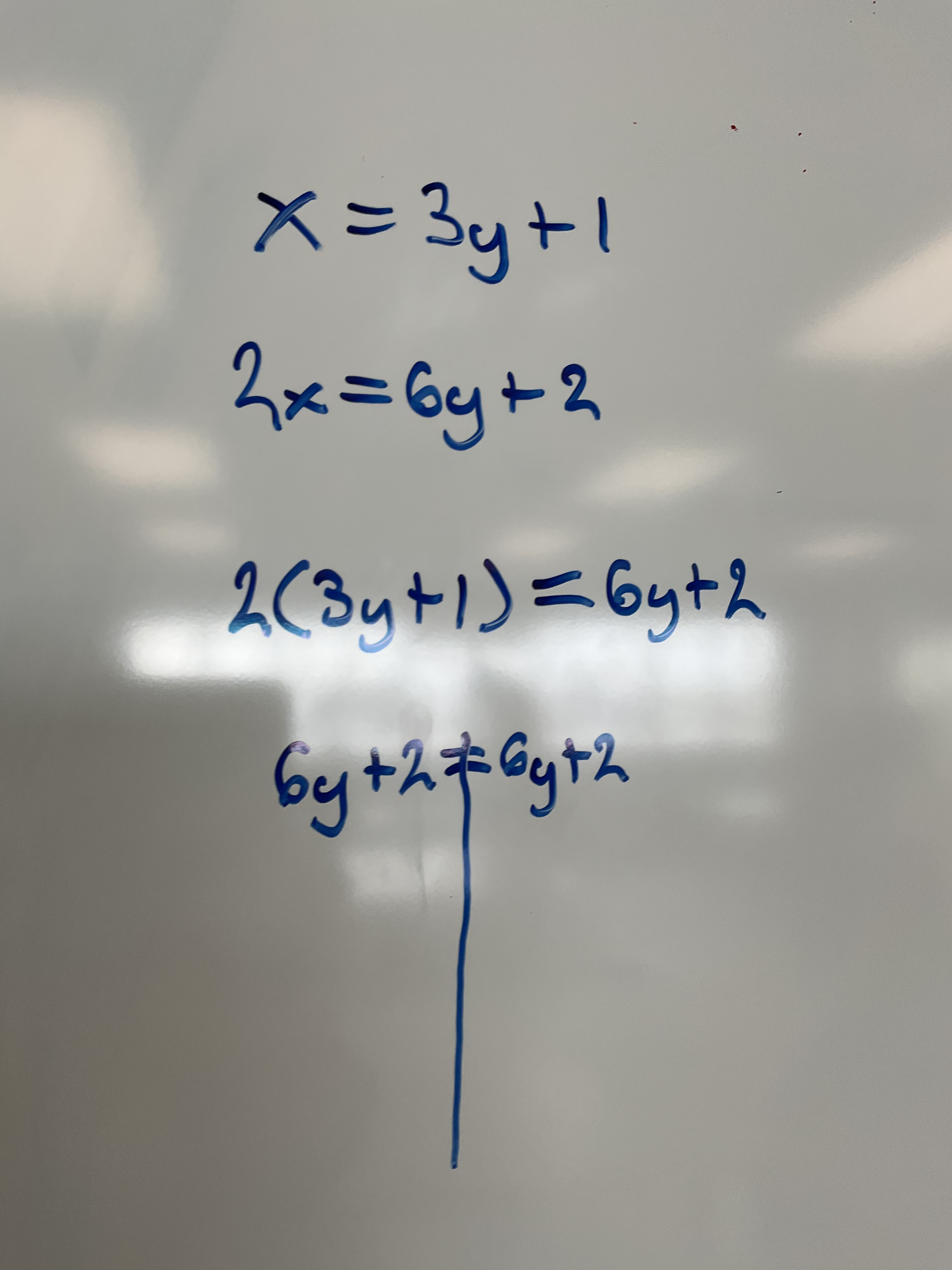
this case led to a discussion of what happens when the final line is 2=2 and what does that mean? It means “yes” because it’s true. We are looking for the intersection of 2 lines and math says yes.
these two lines are identical and intersect at all points, so all points on one line are on the other!
We did a lot, and had a fire drill too!
Heat Loss House Day 1
We are so lucky to have a group from St. Lawrence College to come and run a project with our grade 12 college math class. Day 1 involved making some choices about how to insulate a house on a budget. We also did calculations about mortgages for the land and construction loans.
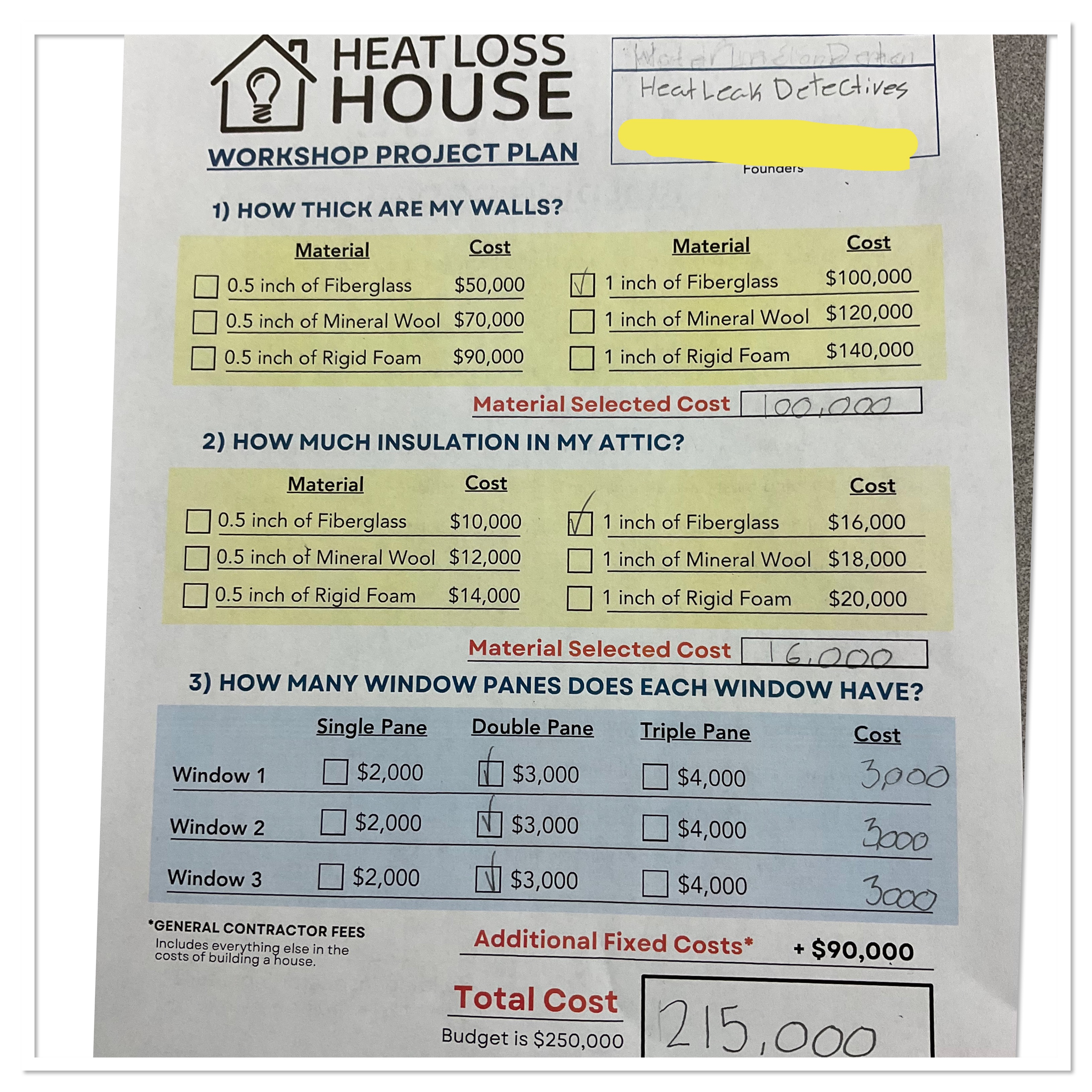
Later we will build the houses to the specifications chosen and test them overnight to see which ones lose the least heat.
Fraction Brainstorming
I worked with a colleague today to look at various approaches to conceptualizing fractions, and adding & subtracting, multiplying and dividing them.
We talked about area model and how to visually represent adding and multiplying fractions, but then we decided to dig a bit deeper and look at using concrete tools like cuisinaire rods to help us.
The plan we came up with is to start with a concept circle with the rods in place and students need to determine how to write down the value of each rod/combo. Using 12/12 as 1 is helpful for this task.
Next we’d do a concept circle with fractions written down, using quarters, thirds, halves and sixths, and the central 12/12 as 1 and have students build the fractions with the rods.
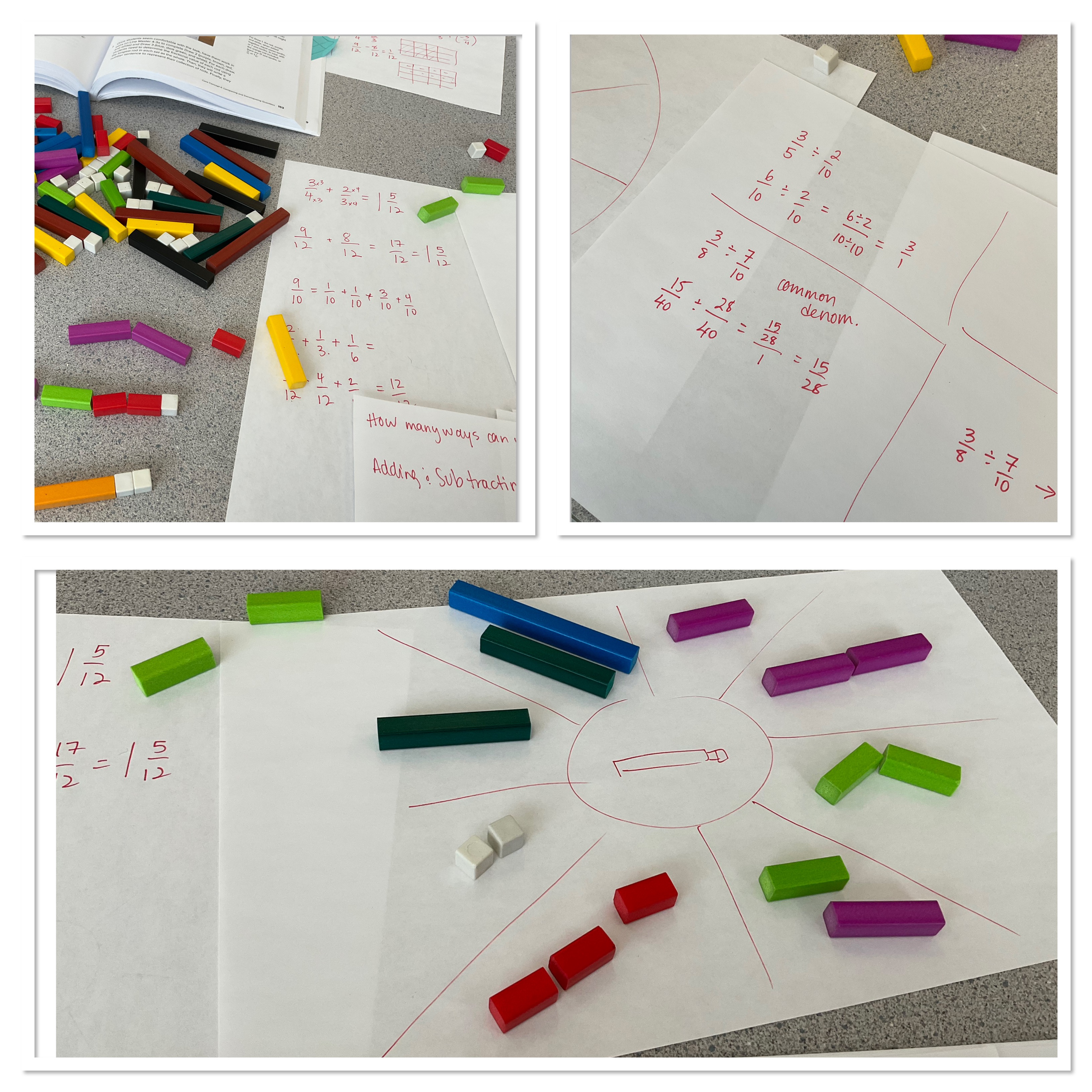
Next we thought that we could build equivalences with the rods, making combos that are the same length, and then writing them down in math. We know that if they are the same length they are equal, and if it’s a combo you can add up the various blocks. You could get at subtracting with an overshoot and return strategy using the rods as well.
After that we started talking about how to best show fraction division. I shared my recent new learning that fraction division can be done straight across just like multiplication can, and if we get a common denominator first then it simplifies beautifully.
e.g. 3/4 divided by 5/7
is the same as
21/28 divided by 20/28
dividing the numerators gets us 21/20 which would be over the quotient of 28/28 (which is 1) so the answer is 21/20. Now this isn’t a way to use visuals or manipulatives, but it sure is cool.
I was recalling the mini feud between Howie Hua and Mr G (videos are on tiktok and instagram, not sure how to link them here) about various fraction division methods.
This is something fun to dive into as a team. So glad colleagues are keen to ask and try and push me and my thinking in new directions!
I’m glad to have spent some quality time with the book rethinking fractions this summer. It has been very helpful.
 Ms. Bearse's Site