Making Study Notes

Sorting Aliens and looking for trends
In chemistry we look for trends and patterns and use that to make predictions about other things. In this game, there are 20 different aliens, but each group gets only 19 cards and uses their patterning skills to predict the missing piece.

Rectangles and intro to maximising and minimising
We looked at the different rectangles that can be created with the same perimeter (the length of a standard pipe cleaner). We calculated the area for each rectangle. We then experimented with calculating the rectangle with the biggest area and the smallest area using the same perimeter.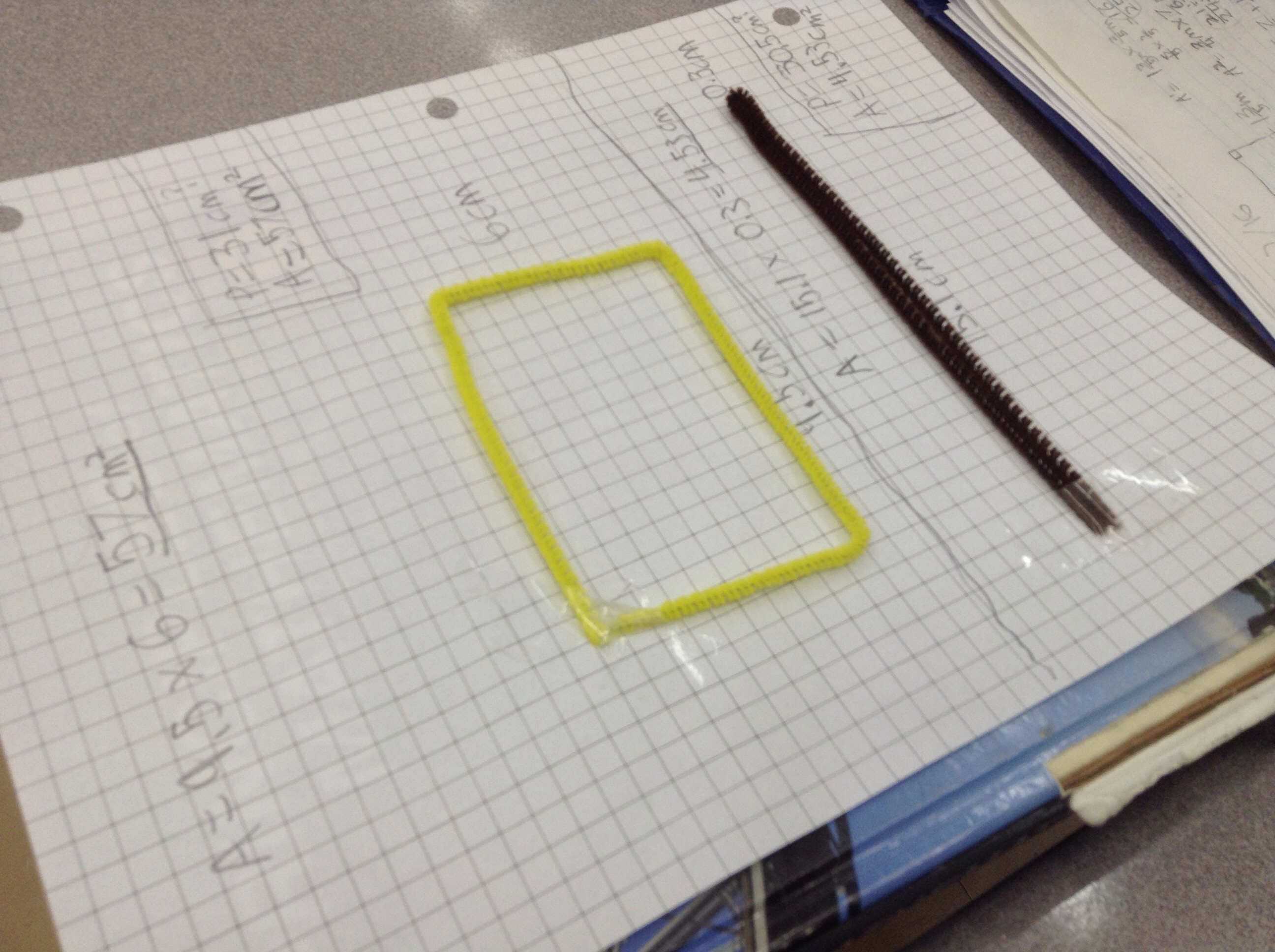
Exploring Exponents
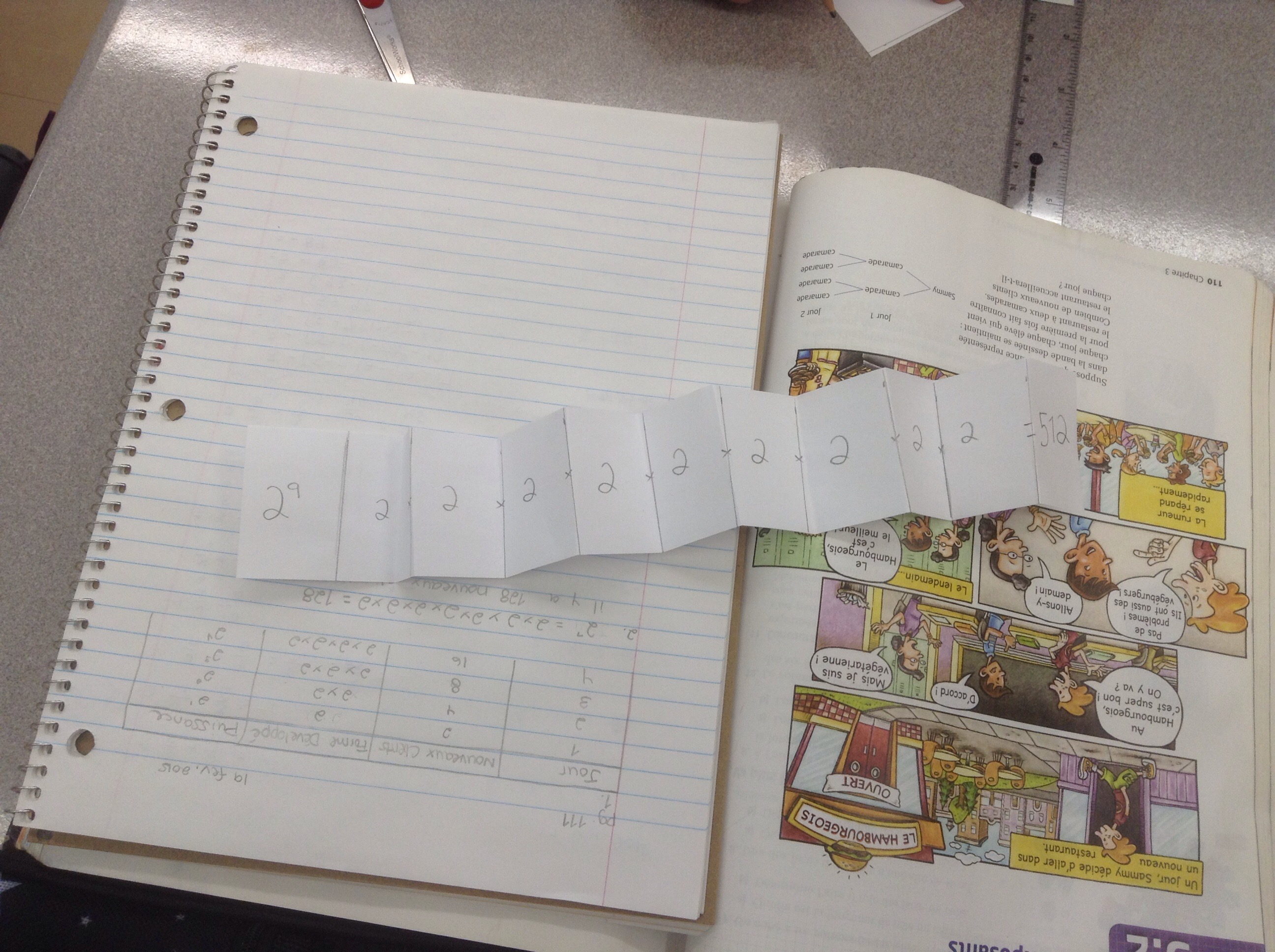
We are showing that exponents represent repeated multiplication. The higher the exponent, the more segments there are.
Stacking game with integers
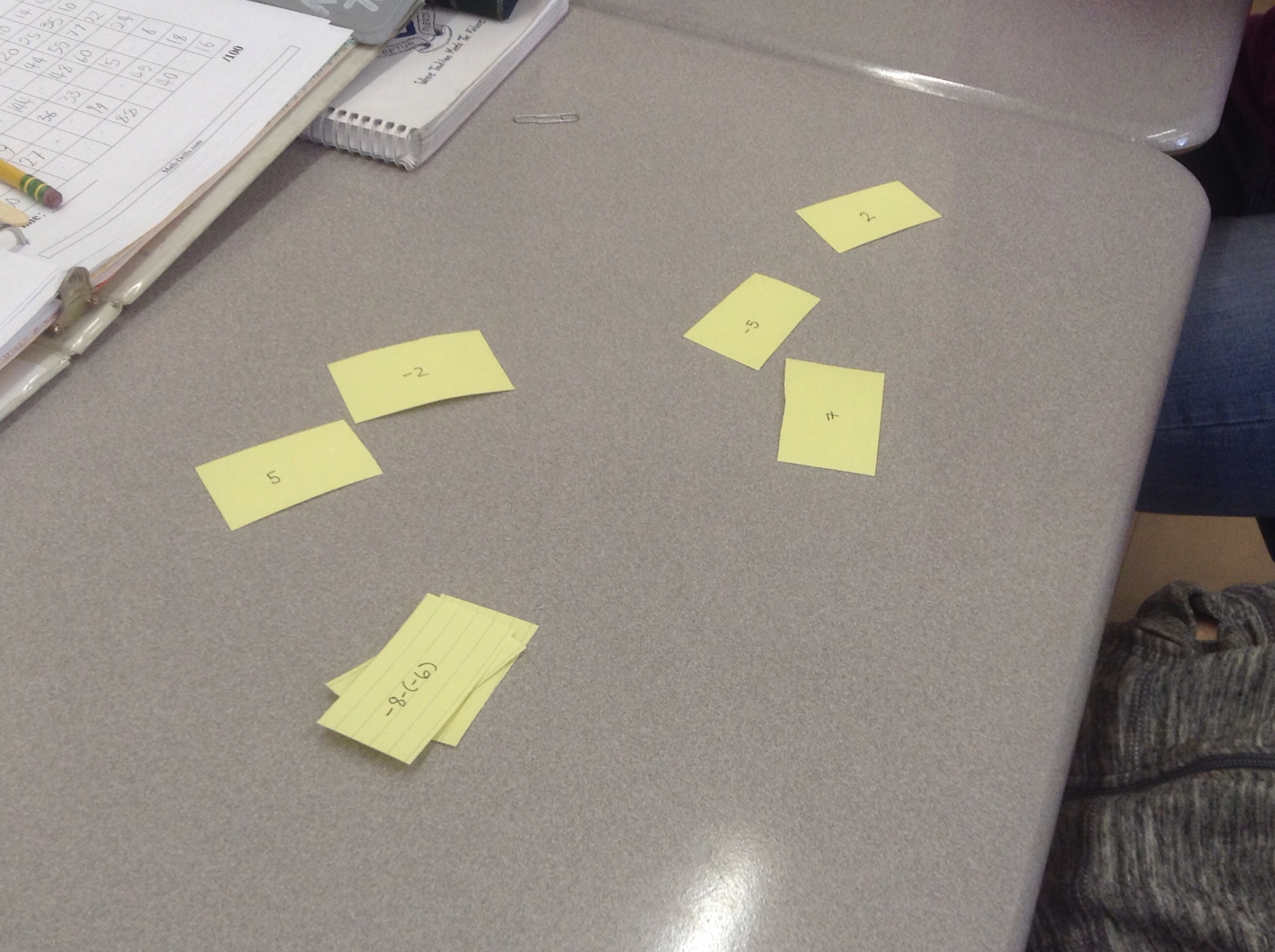
To practice integer work we used small cards and matched questions with their answers. Each answer, when flipped over revealed the next question. If done correctly, the questions/answers make a full circle.
Using number lines and popsicle stick man for integers

We drew a person on both sides of a popsicle stick. We drew a number line on the page. We now can interpret problems like -3-(-2). The -3 means start at -3 on the number line. The following – means to face your man towards the negative end of the number line. The negative 2 means the man will walk backwards (or moonwalk) 2 spaces. The final location on the number line is -1, the answer to the problem.
Using algetiles for integers
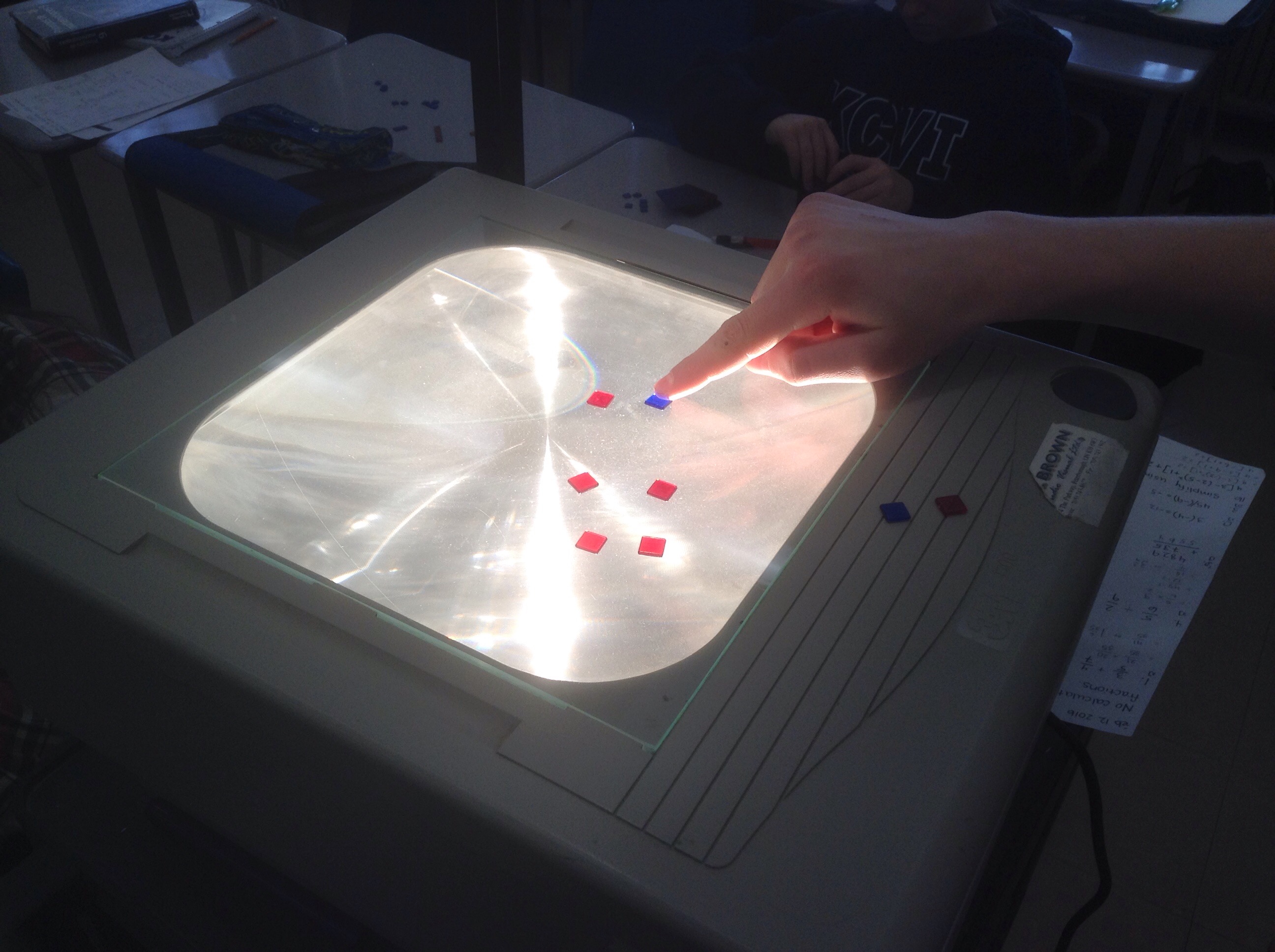
Red is positive and blue is negative… We explored what adding and subtracting integers looks like with algetiles.
Integers Homework

Exploring circles
We are using licorice laces to explore circles. We measure the length and the diameter of the circle we can make
It’s hard to make an exact circle.

We ate some of the licorice, then made a smaller circle, and tried again. We collected the data in a table of values, and made a scatter plot of the data.
Simplifying Fractions
Divisibility rules are important tools to use when simplifying fractions.
We wrote the divisibility rules behind doors in an interactive notebook page.
These pages can be used as a resource or a review tool later on.

We’re able to simplify big fractions without calculators now!

 Ms. Bearse's Site