McGyvering a battery using coins
A battery can be made using coins, salt and vinegar. All you need is some paper towel!
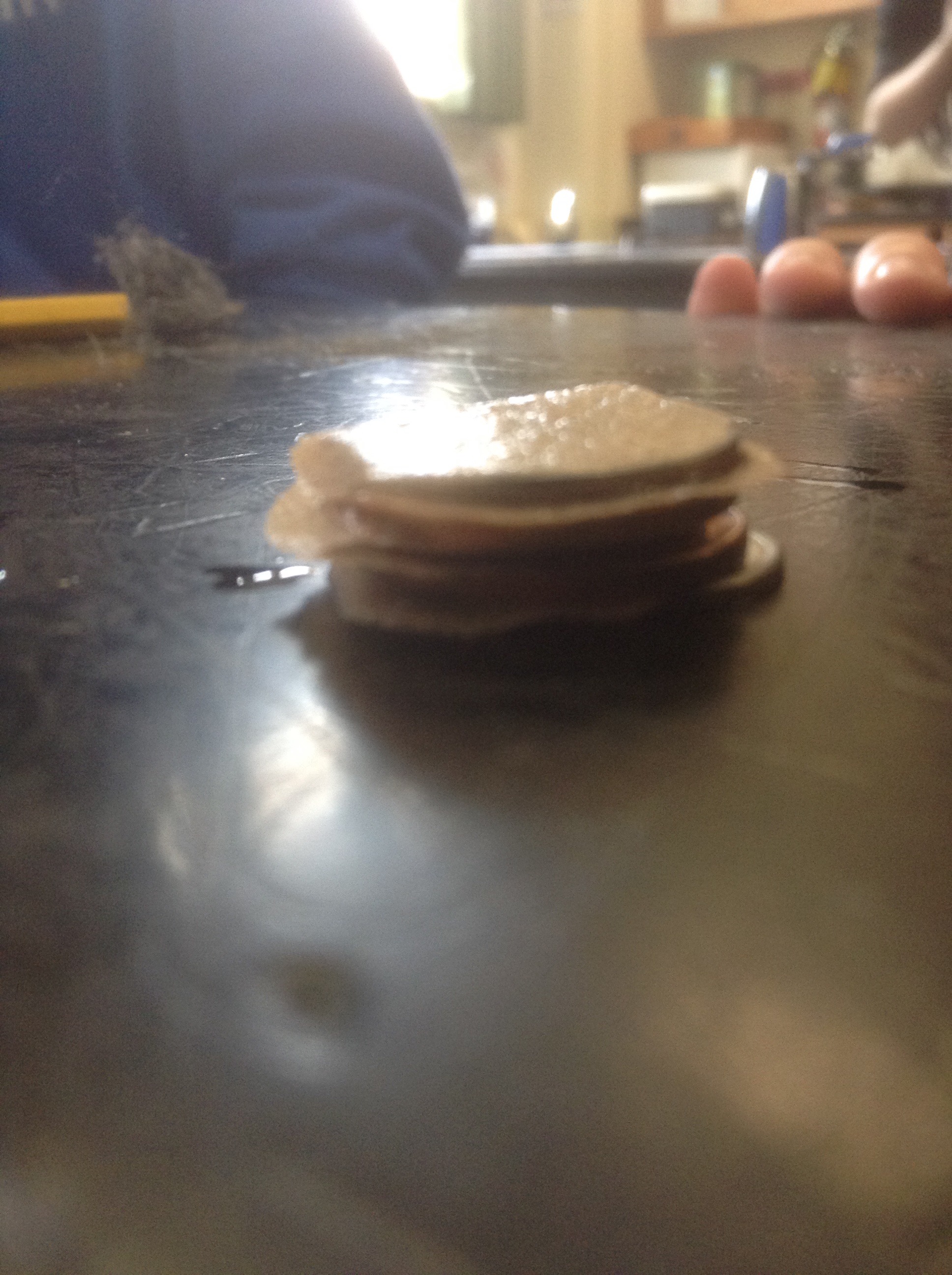
We made a solution out of salt and vinegar and dipped small circles of paper towel in it.
We stacked a penny, soaked towel, dime, soaked towel etc. Coins can’t touch, and papers can’t touch.
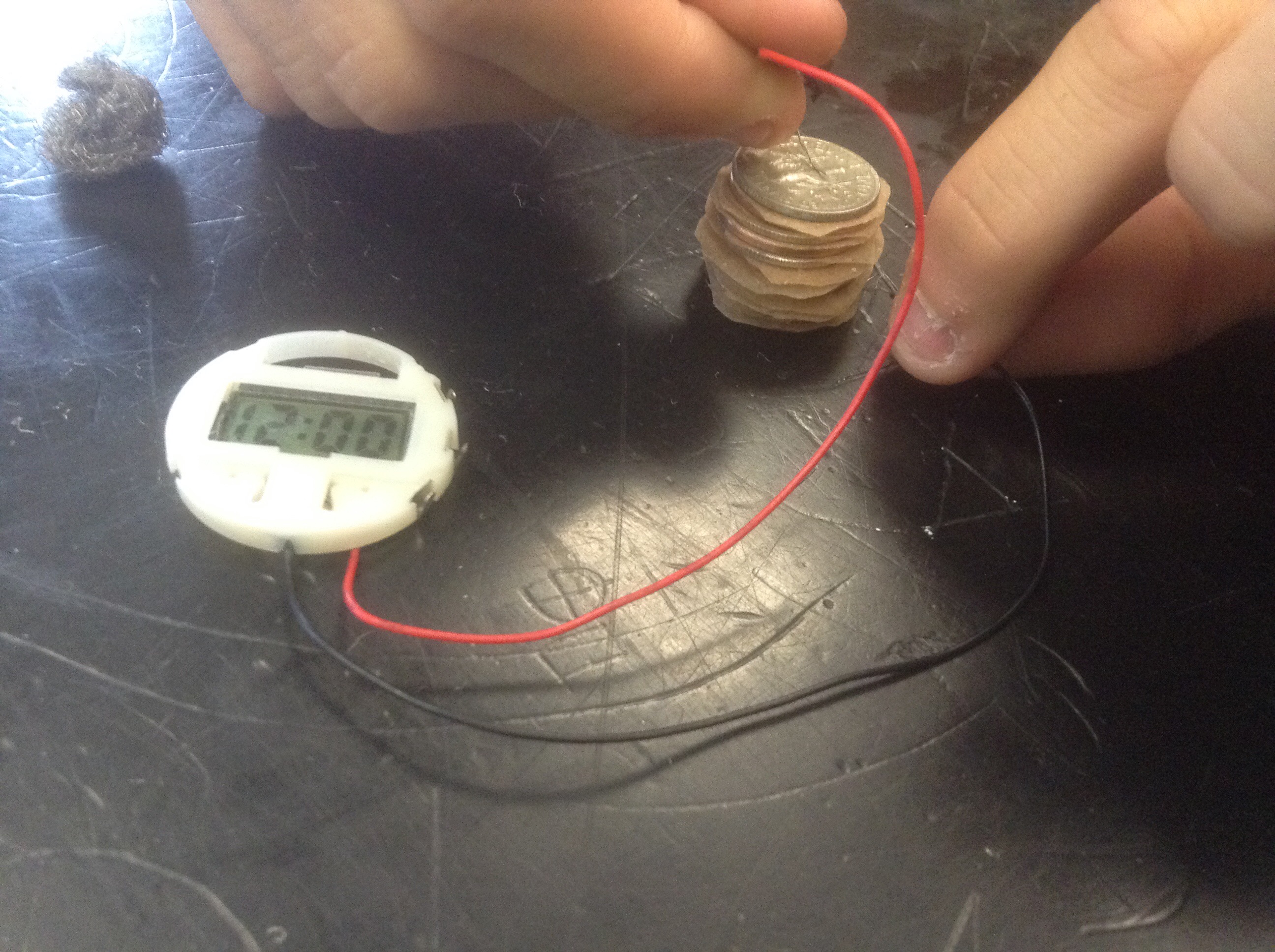
When the stack gets tall enough, there is enough potential difference to light up a clock face.
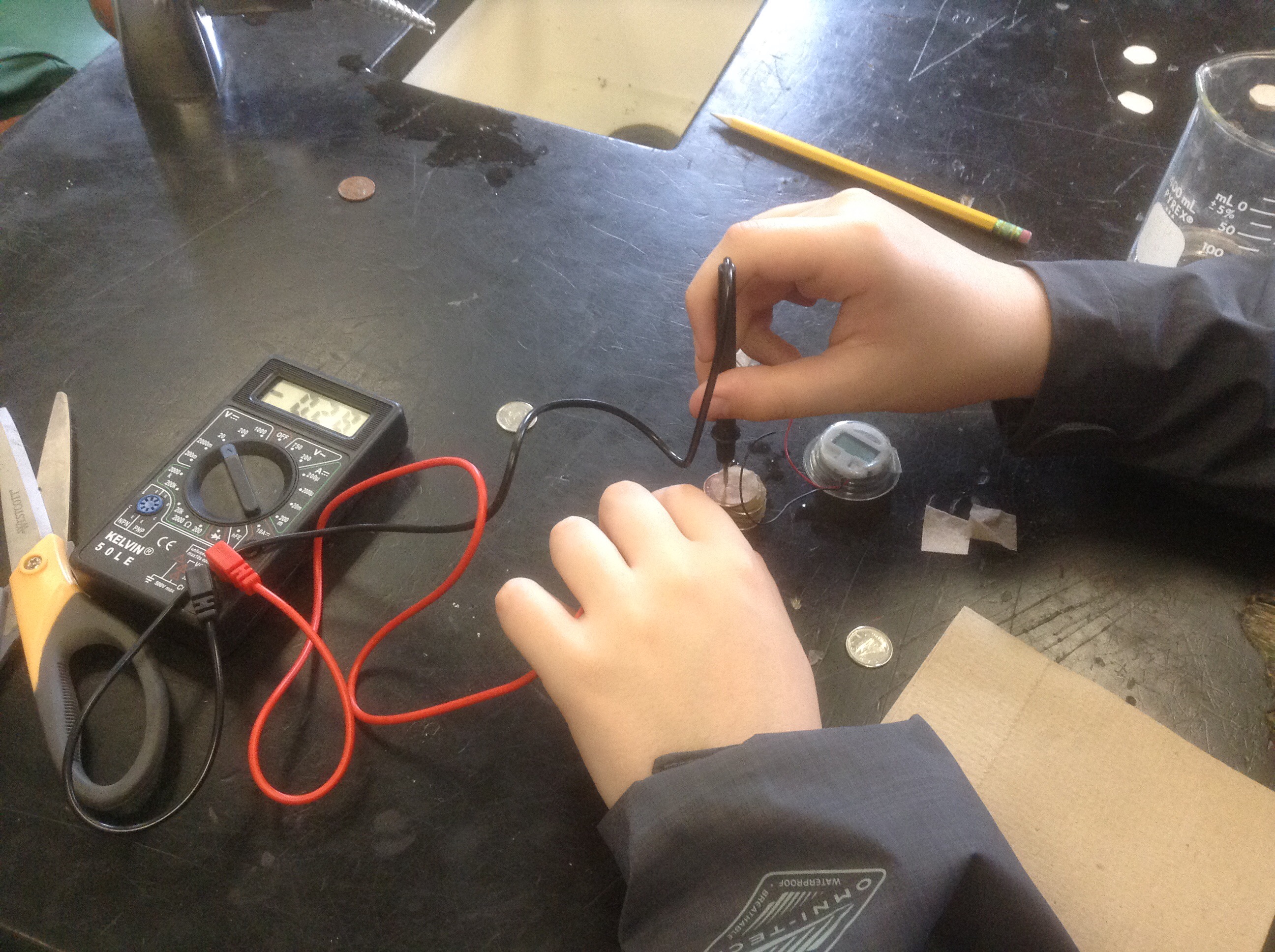
We used the multimeter to check the voltage across the battery.
It’s pretty neat to see how we can make a battery using household materials.
Exploring knots and Rope Length


Ropes of different diameters will consume more length of rope for each overhand knot tied.
Given a short piece of thick rope and a long piece of thin rope, determine wheter there will be a point of intersection on the graph.
Given a small piece of thin rope, what will the knot data look like? (Parallel to the other thin rope.)
Given a different rope that loses 2 cm per knot, if you wanted to create an intersection point, what length of rope is required?
Cleaning Silver with Redox reactions
Tarnish is silver sulfide. Place a tarnished piece of silver in a pyrex dish lined with aluminum foil. Sprinkle baking soda on it and then add boiling water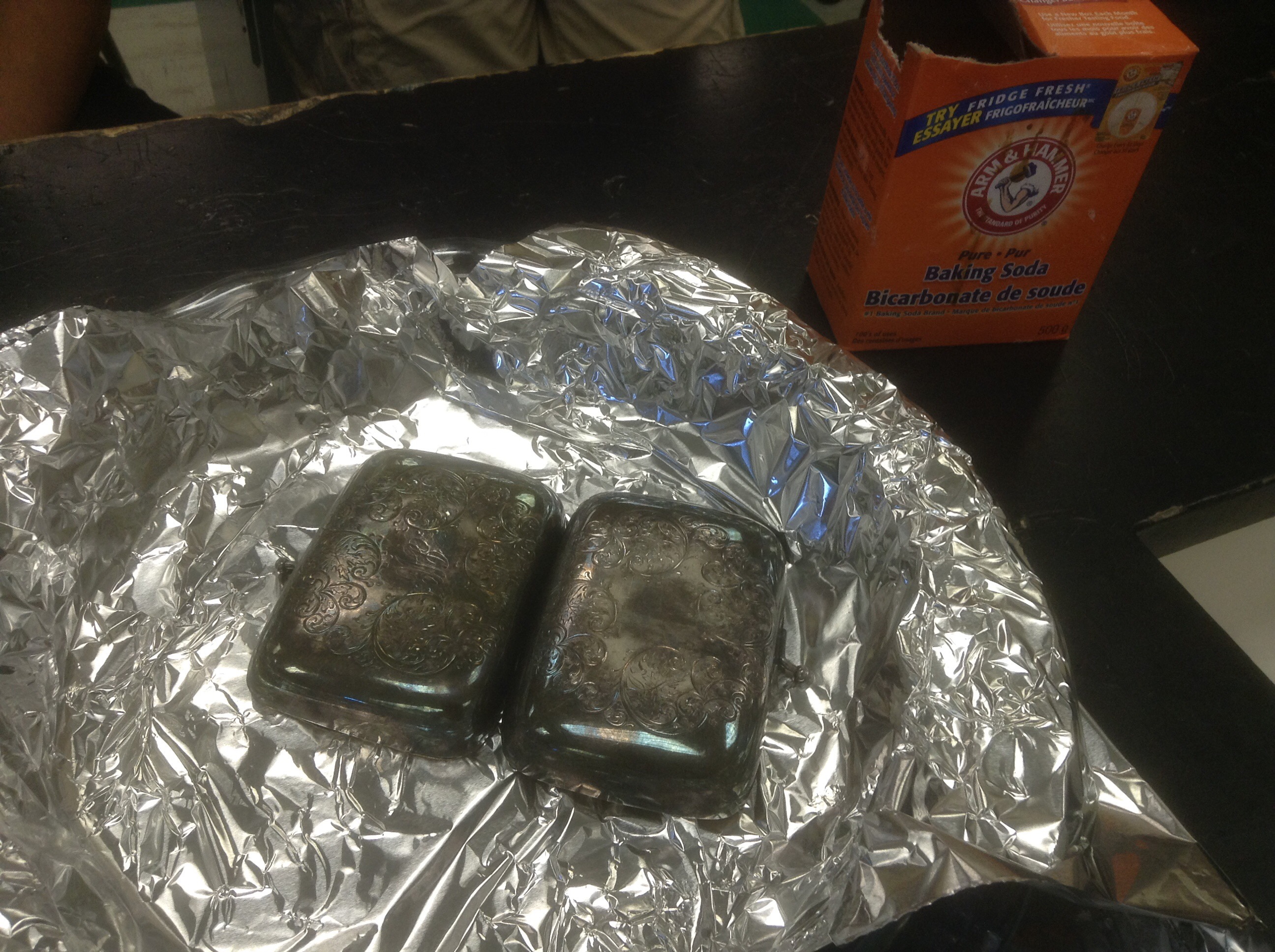
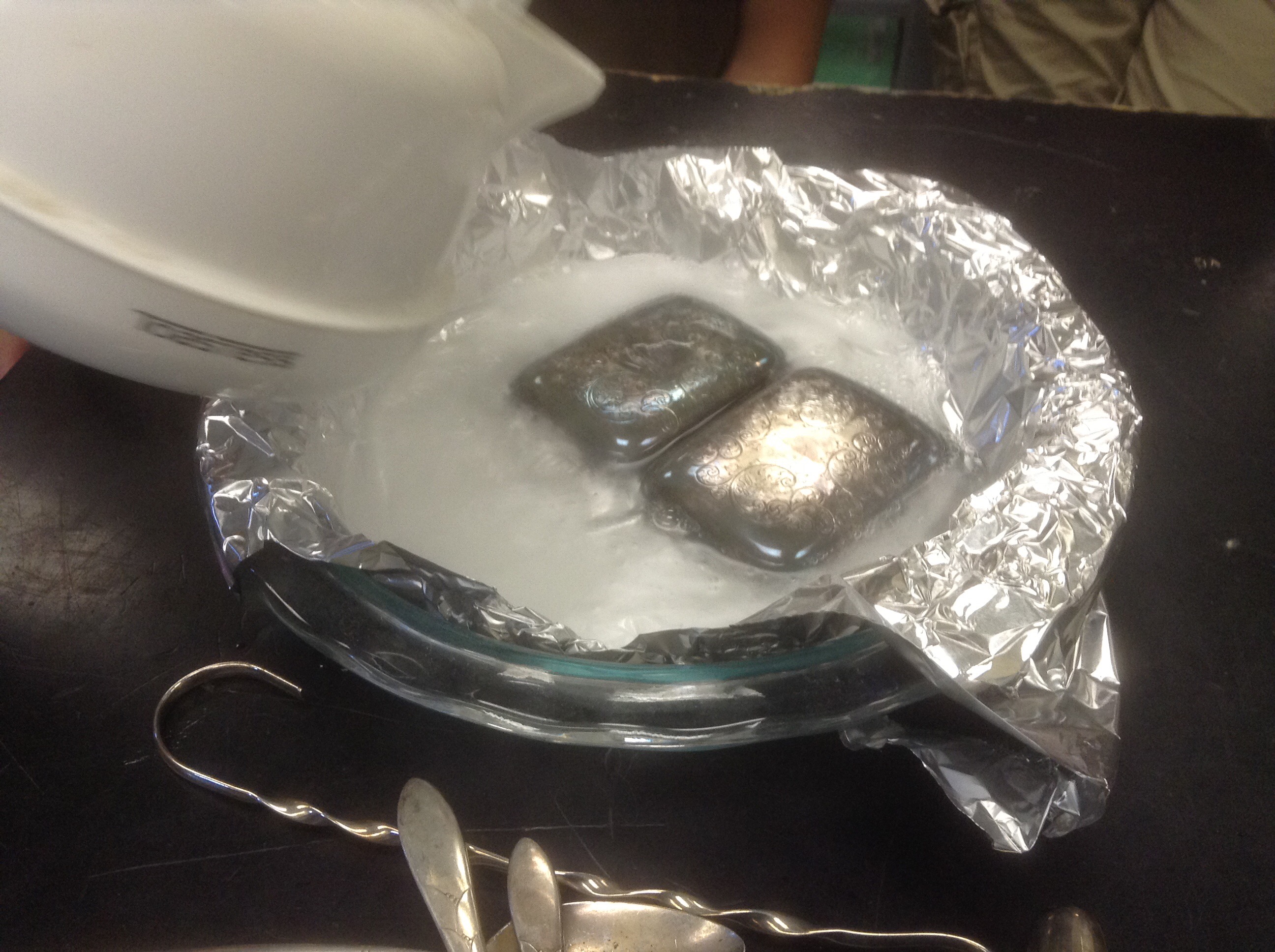


No polish needed! The sulfur is now bonded to the aluminum. We also smelled some sulfur too. The silver is clean! Aluminum lost electrons, and was oxidized. Silver gained electrons so it was reduced.
Exploring with Volume and water Depth
We are determining which option is the best for removing water from a bucket. Option 1: 3 scoops from a small cup. Option 2: 1 scoop from a large cup. The catch is that no water could be used to help determine the answer. We measured with string, and rulers, and calculated using formulae. The cups were not cylinders, so that meant we needed to make some decisions about how to model the cups. 

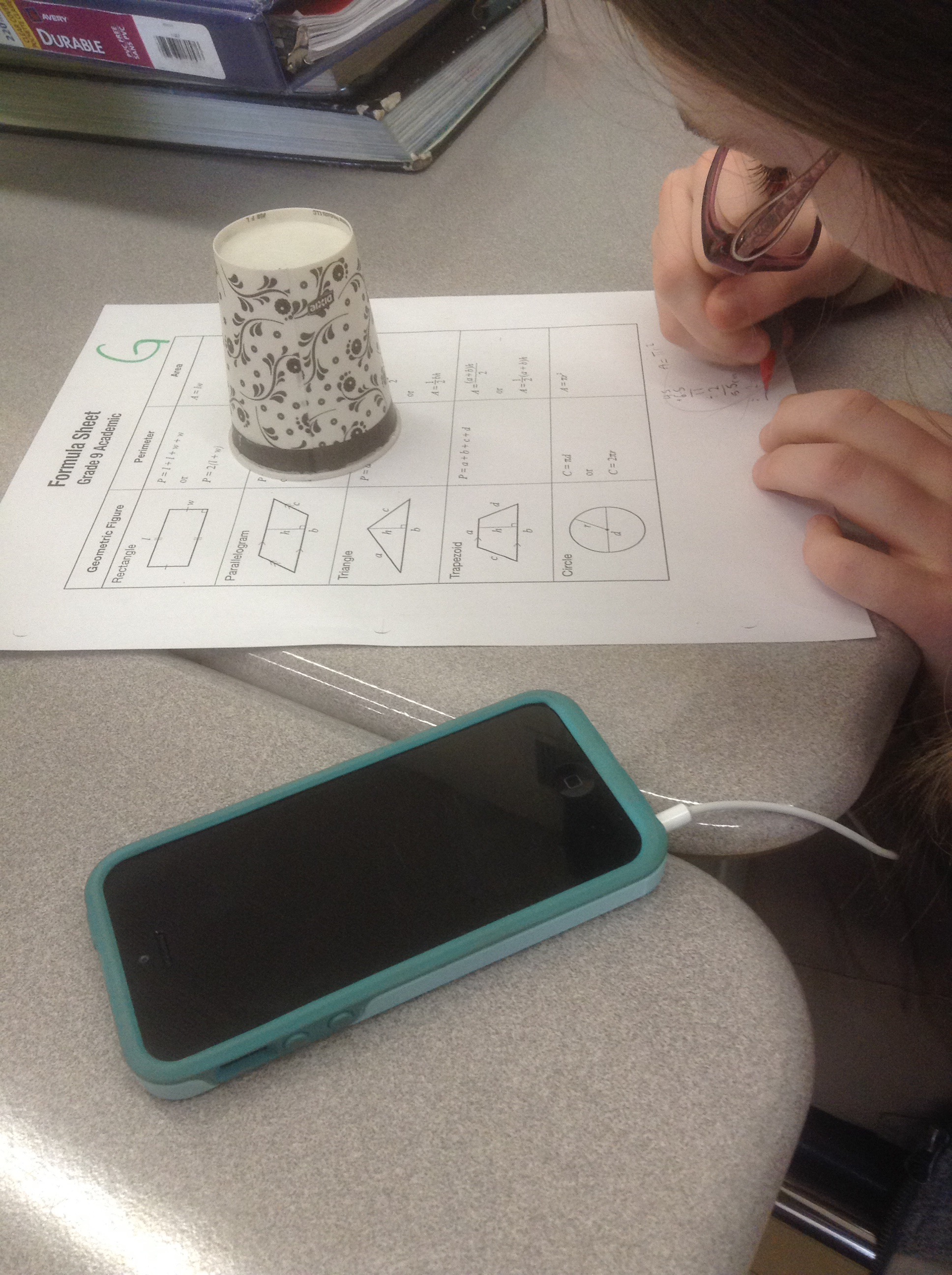
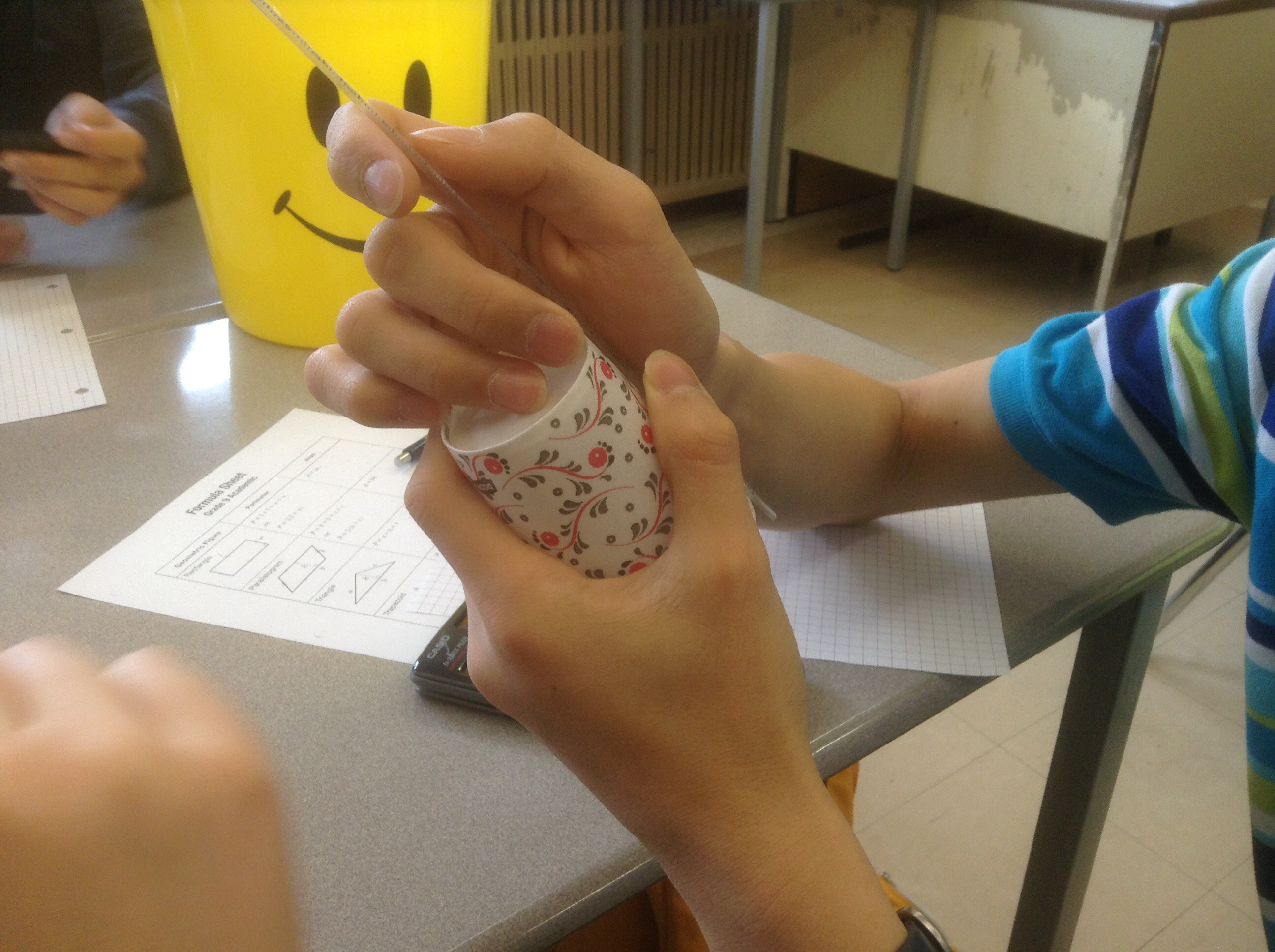
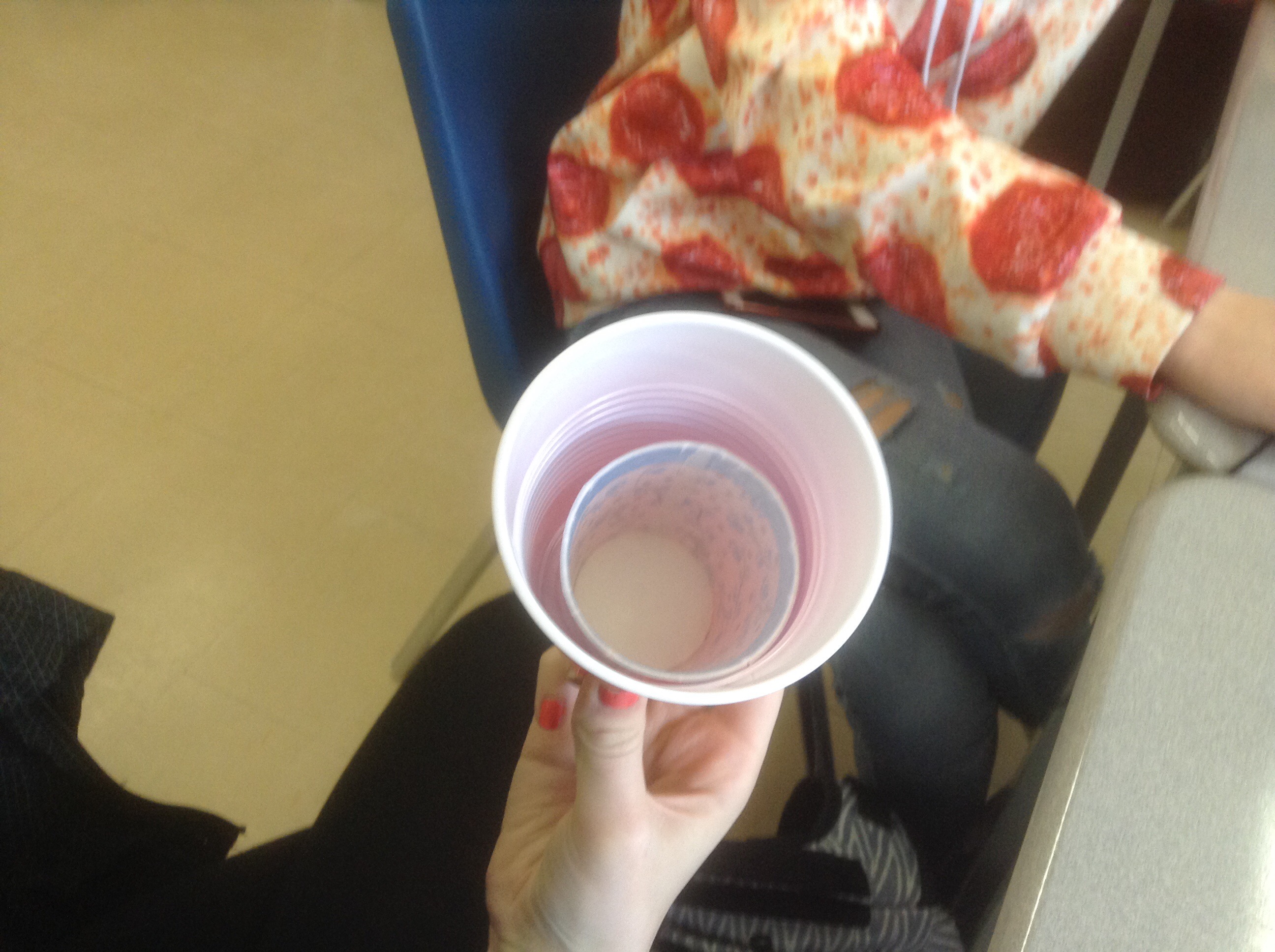
Once we chose the cups to use, we scooped water out of a big bucket and watched the height drop. This showed a linear relation, which we then found equations for.
Eqao is coming
A letter was distributed regarding EQAO testing which will happen June 7/8 in class. We will be doing some practice for this test as the date gets closer.
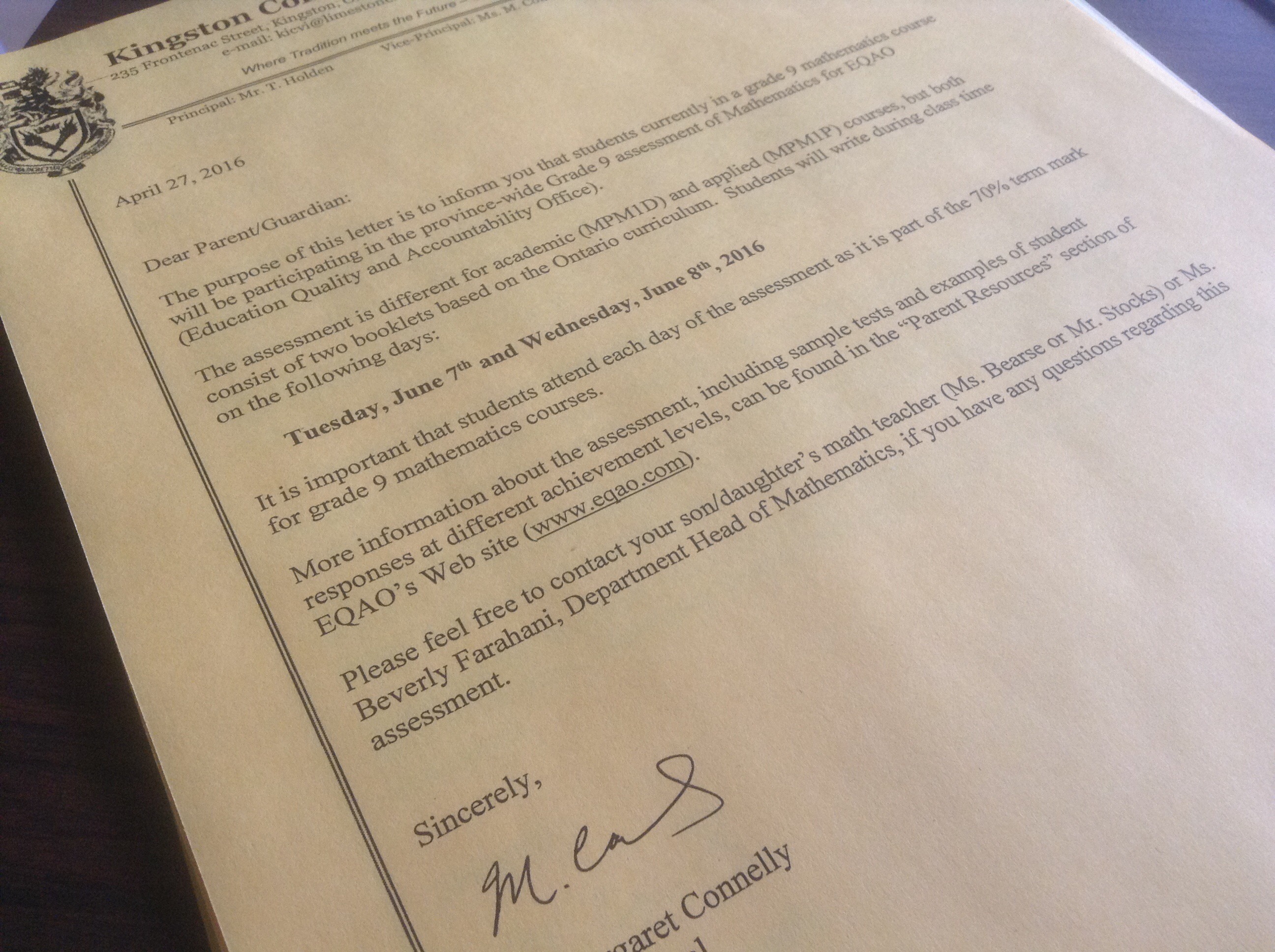
Photo Finish!
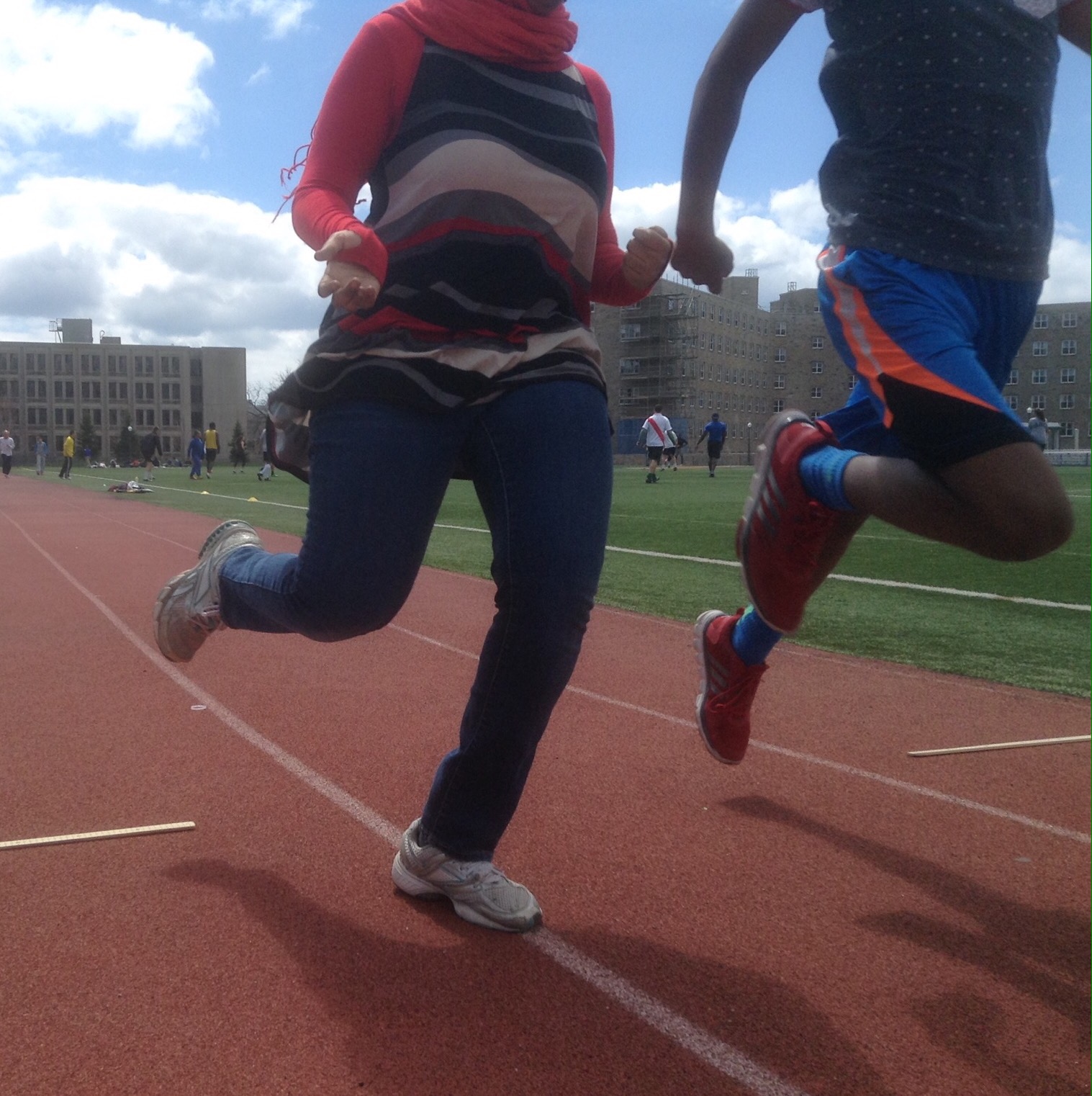
Speed=distance/time
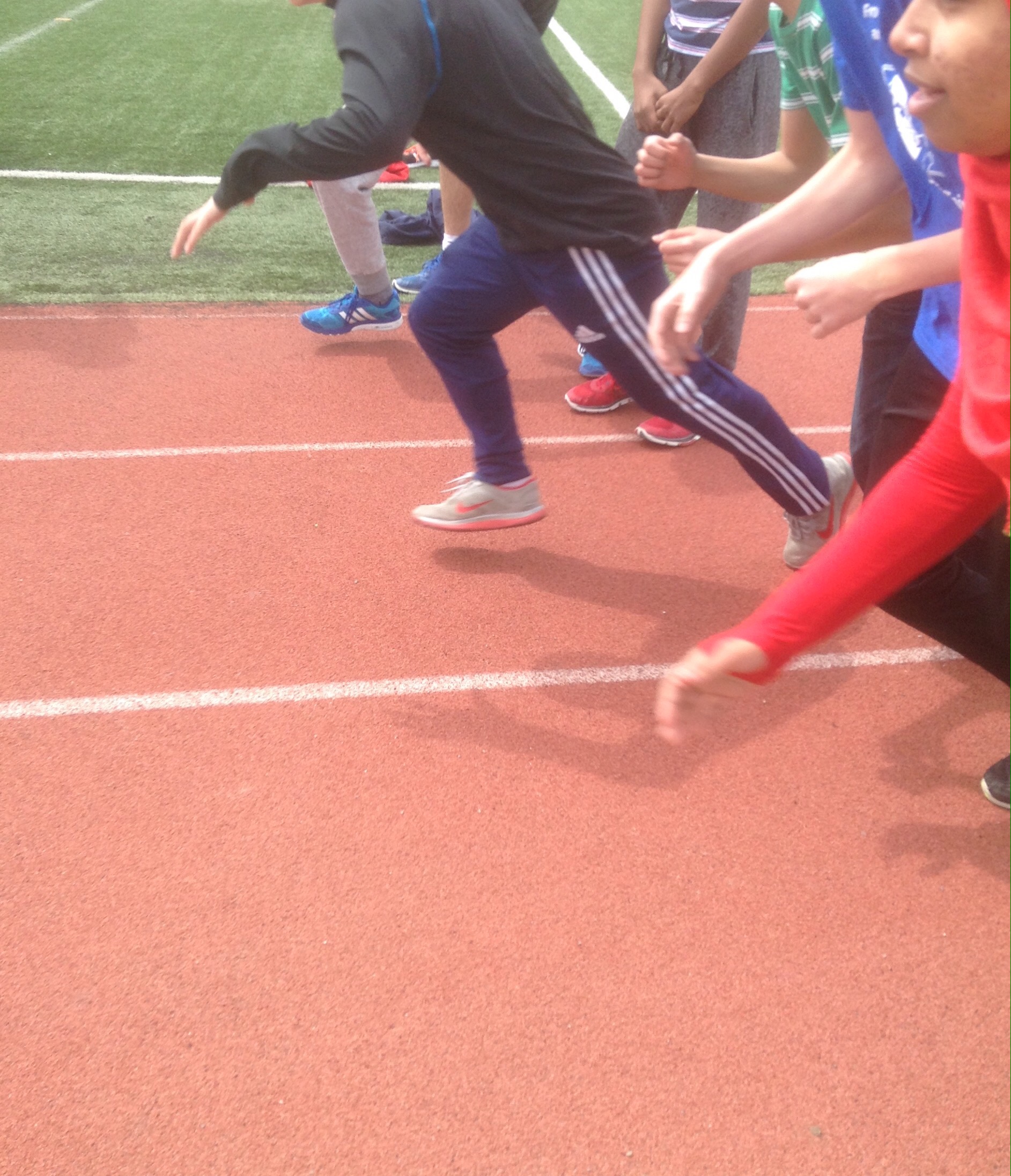
We raced today, and next we will determine what head starts are needed to level the playing field, and make a photo finish!
We learned that the head starts are represented by the x or y intercepts, and at the speed is the slope of the line on a distance-time graph.
Period B Homework

Here’s a photo embedded in a desmos worksheet. Use the photo, or one you took of the same house, to determine the slopes of the different roof sections you see.
Stacking cheerios
Groups had a skewer and plastecine to stick it to the table. Each member then had time trials of 5,10,15,20 seconds to place cheerios on the skewer with their non dominant hand.
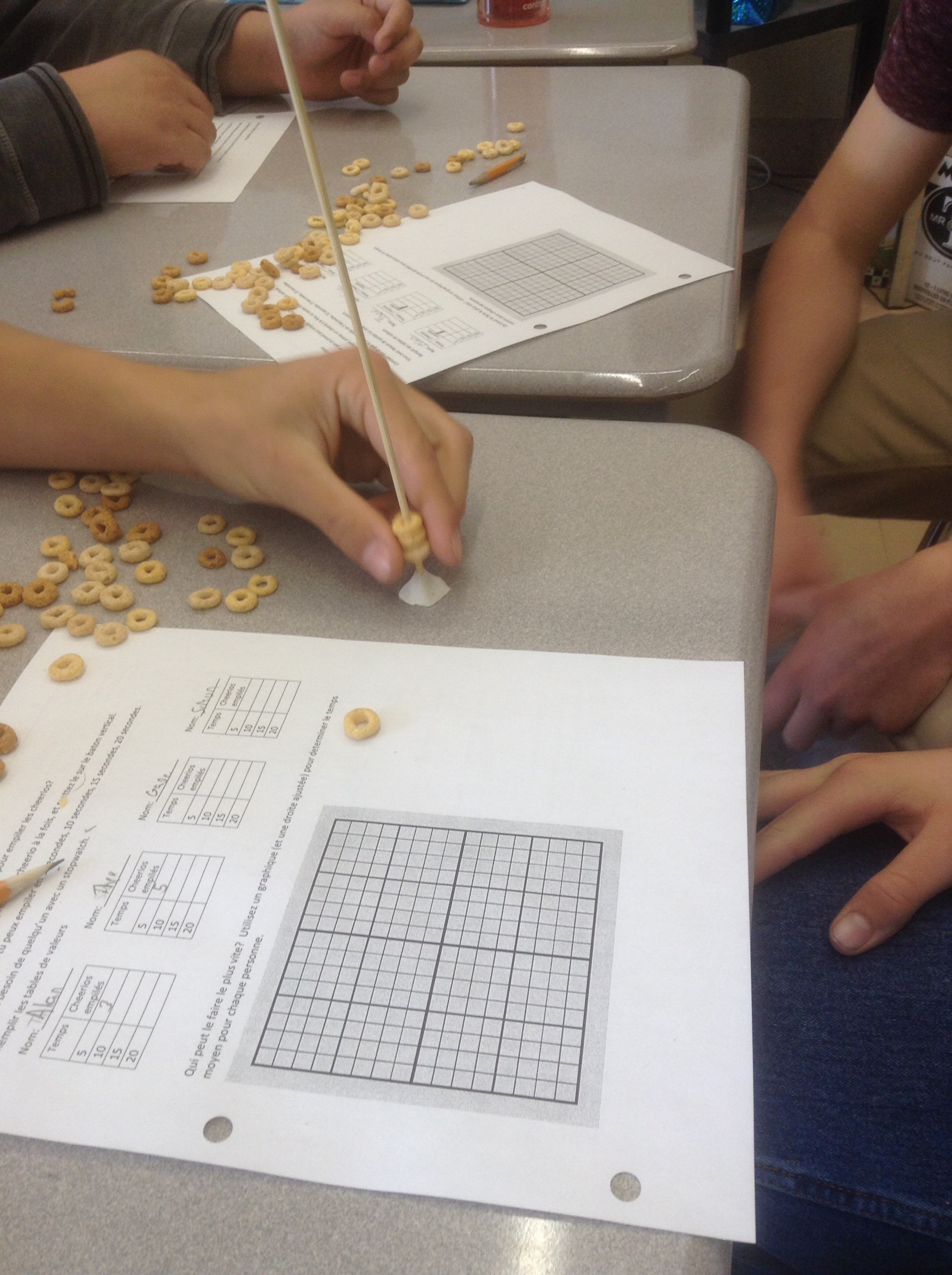
The results were shown on a graph as well as in tables of values. At the end of the class, the fastest and slowest members of each group raced. The group determined the head start (number of cheerios) to give the slower player so that they would have a tie at 20 seconds.

Competition got quite intense!
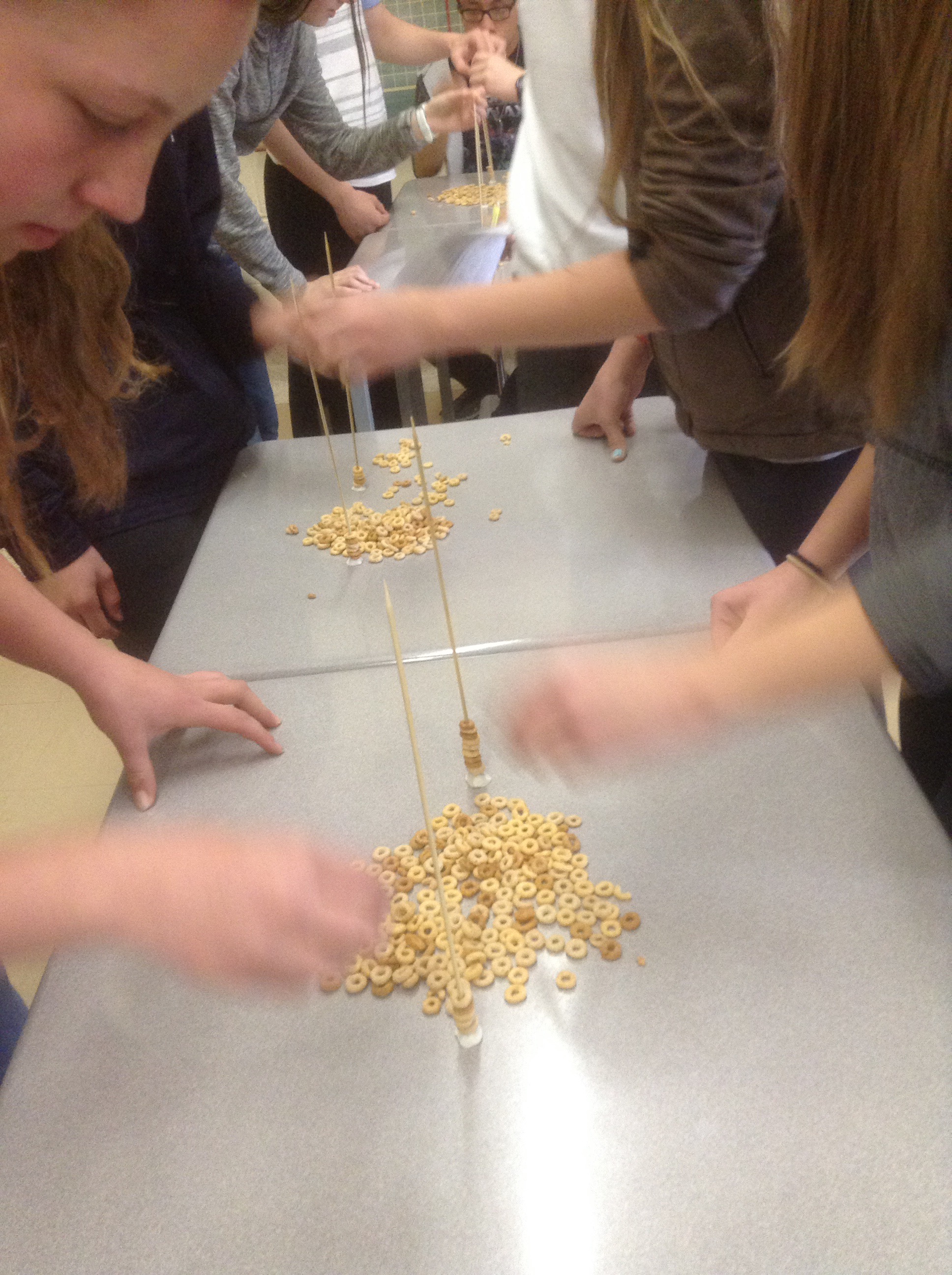 We have a better sense about what the “initial value” or y intercept means in a linear relation.
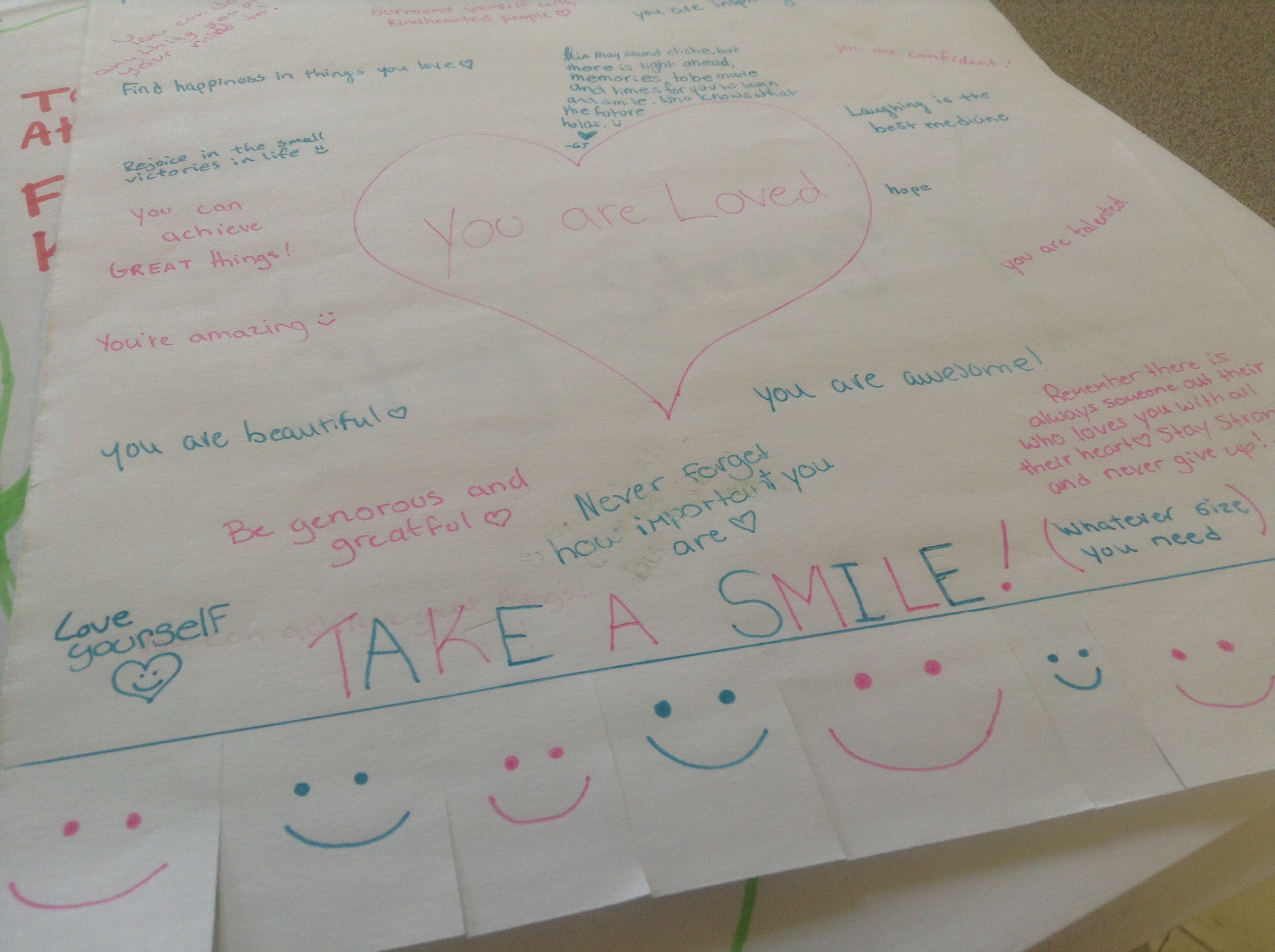
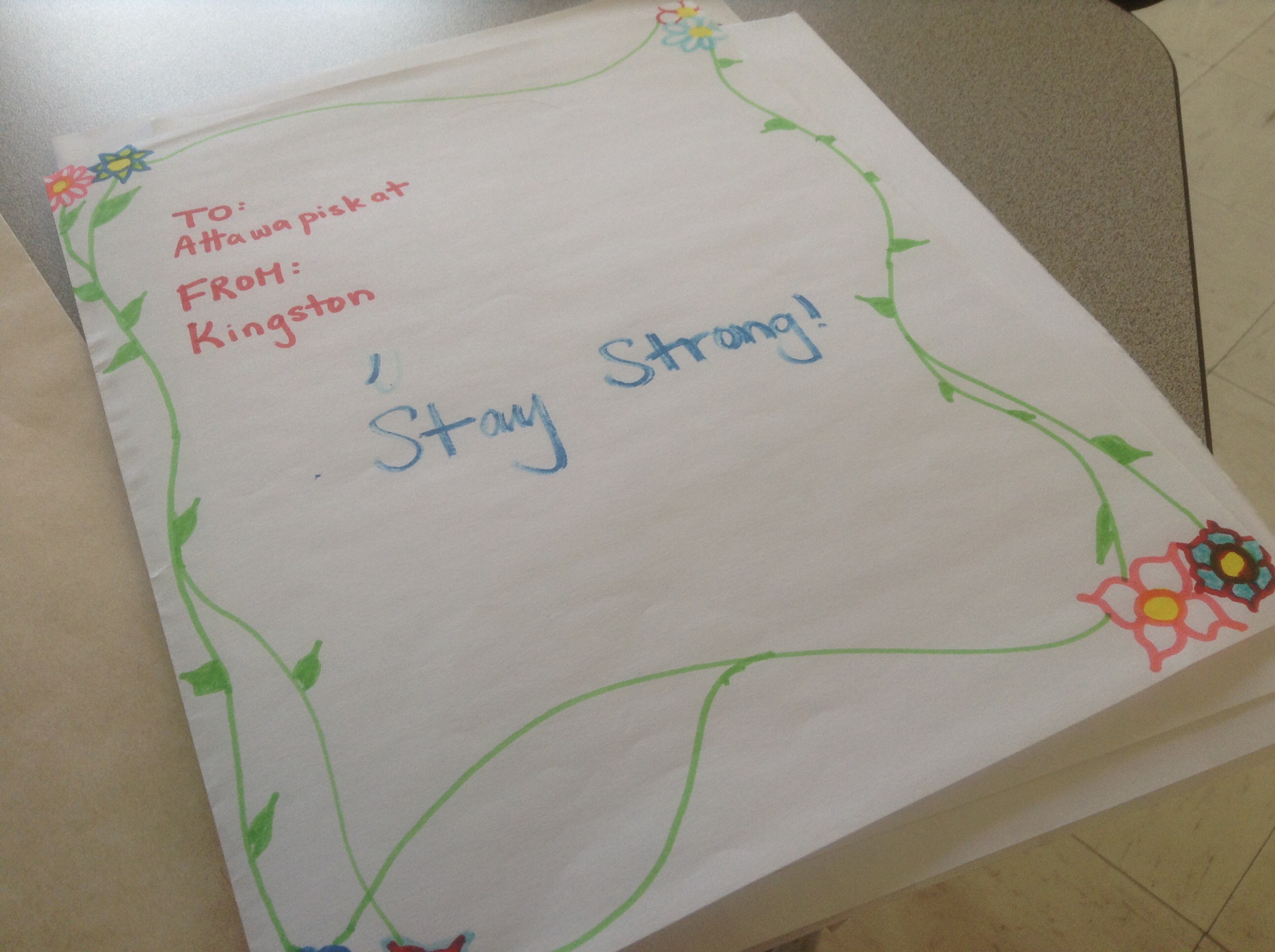
Sending Letters
We’re very aware of the difficult situation in Attawapiskat, and have written some letters to the youth. Hopefully our words will mean something to a youth far away.
 Ms. Bearse's Site