Our first lab
We experimented with the reactivity trends in the periodic table, comparing two elements in the same period, and two in the same group.
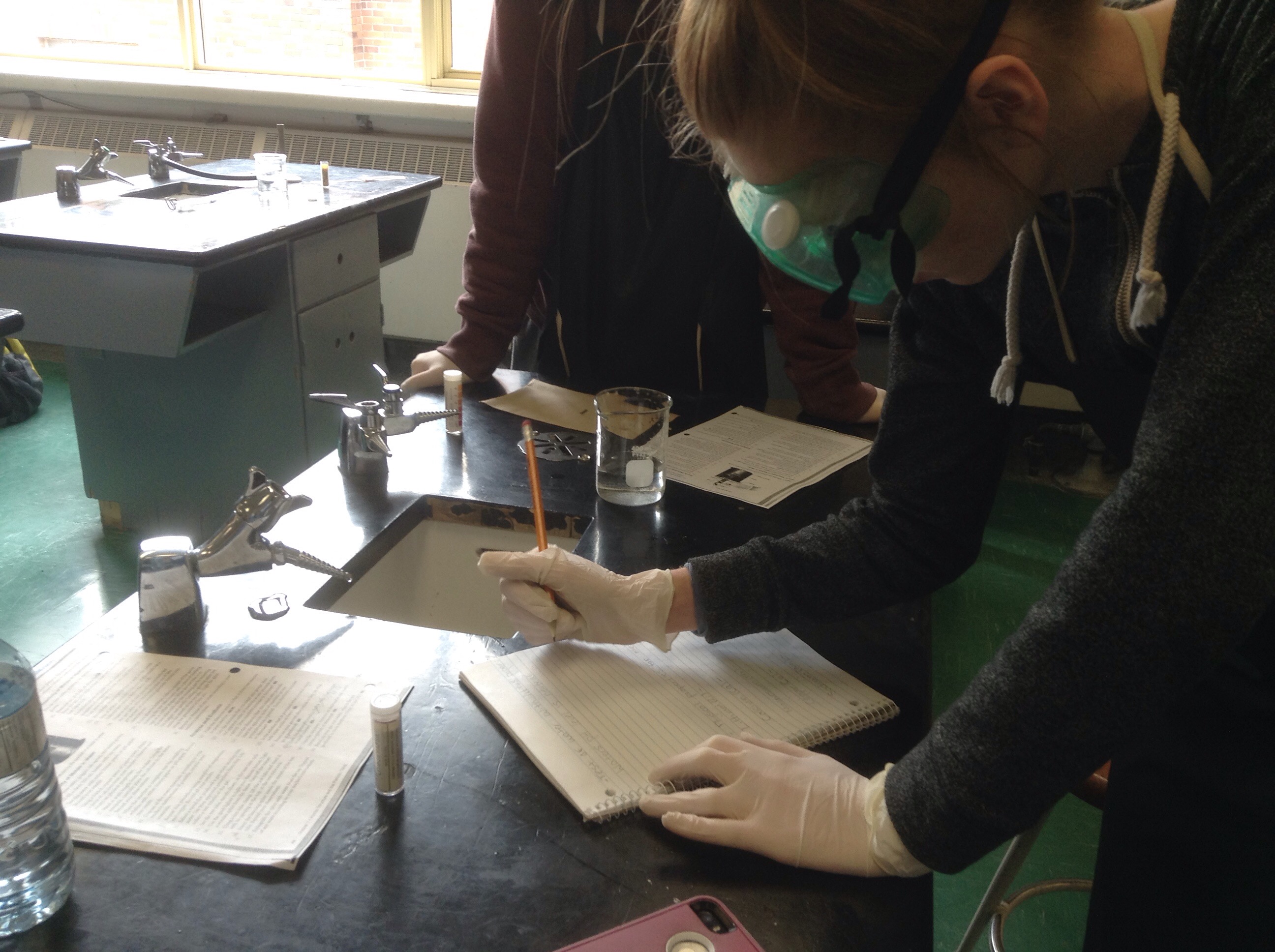
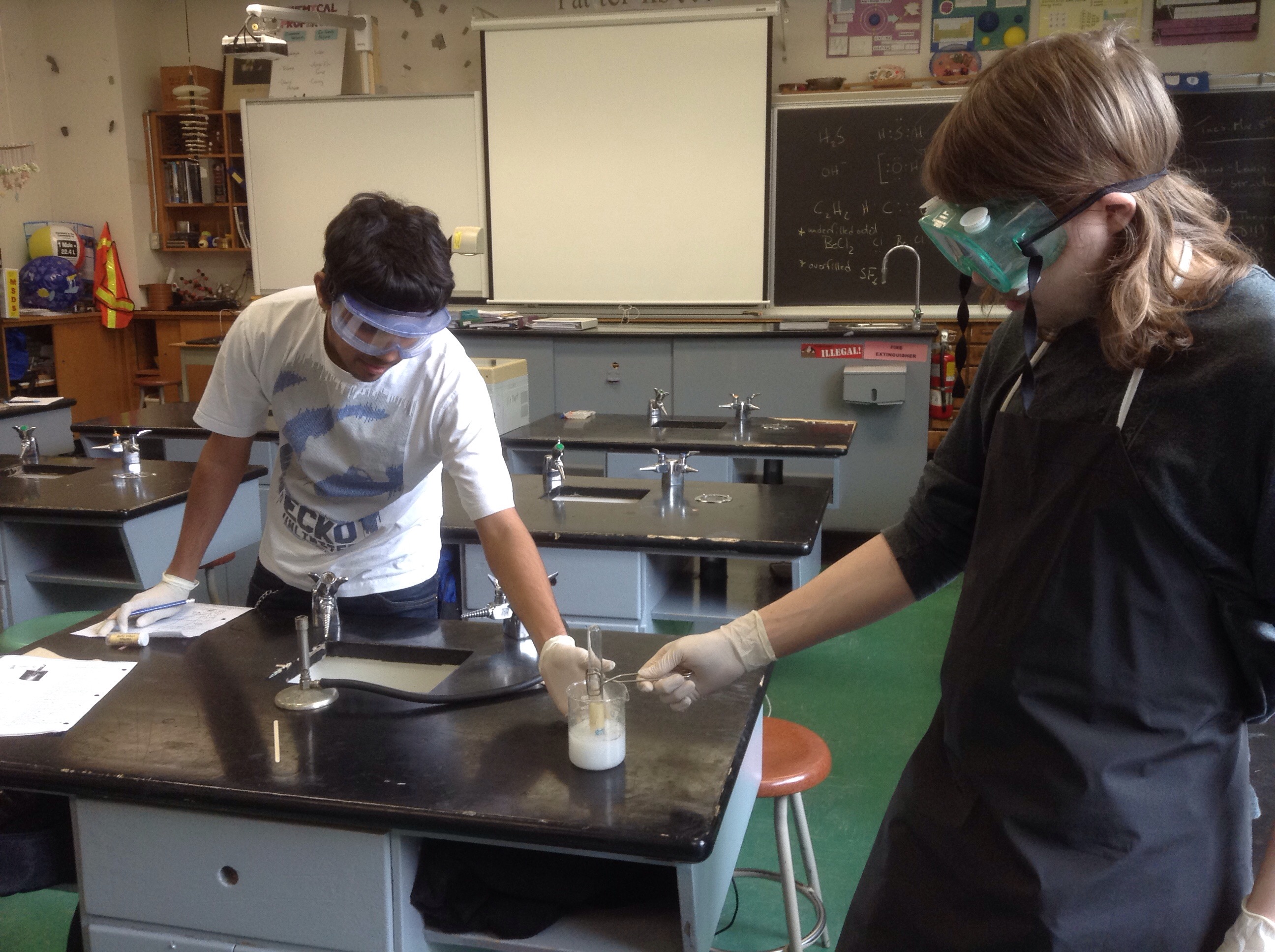
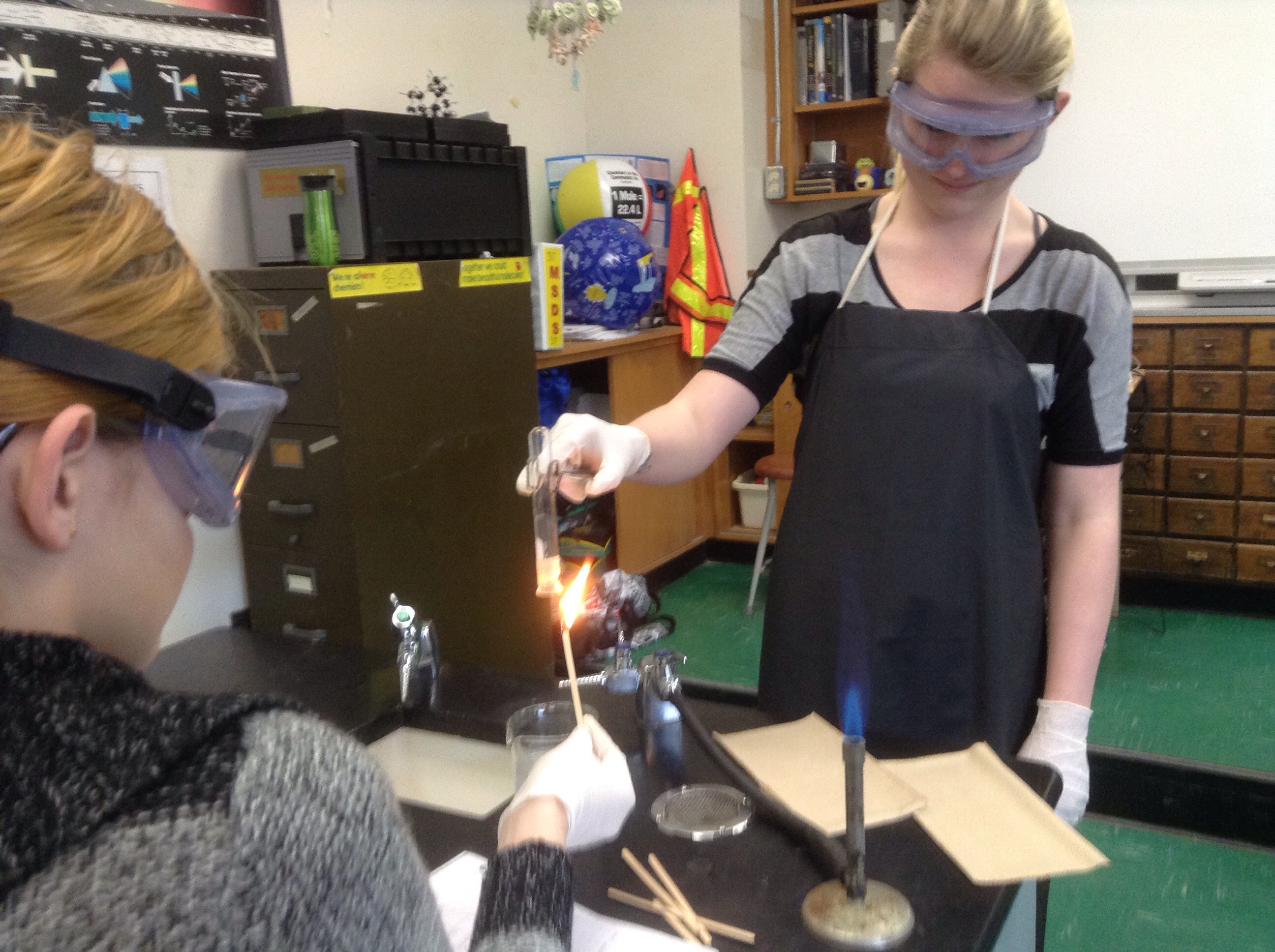
We saw that a gas was produced, so we captured and tested the gas.
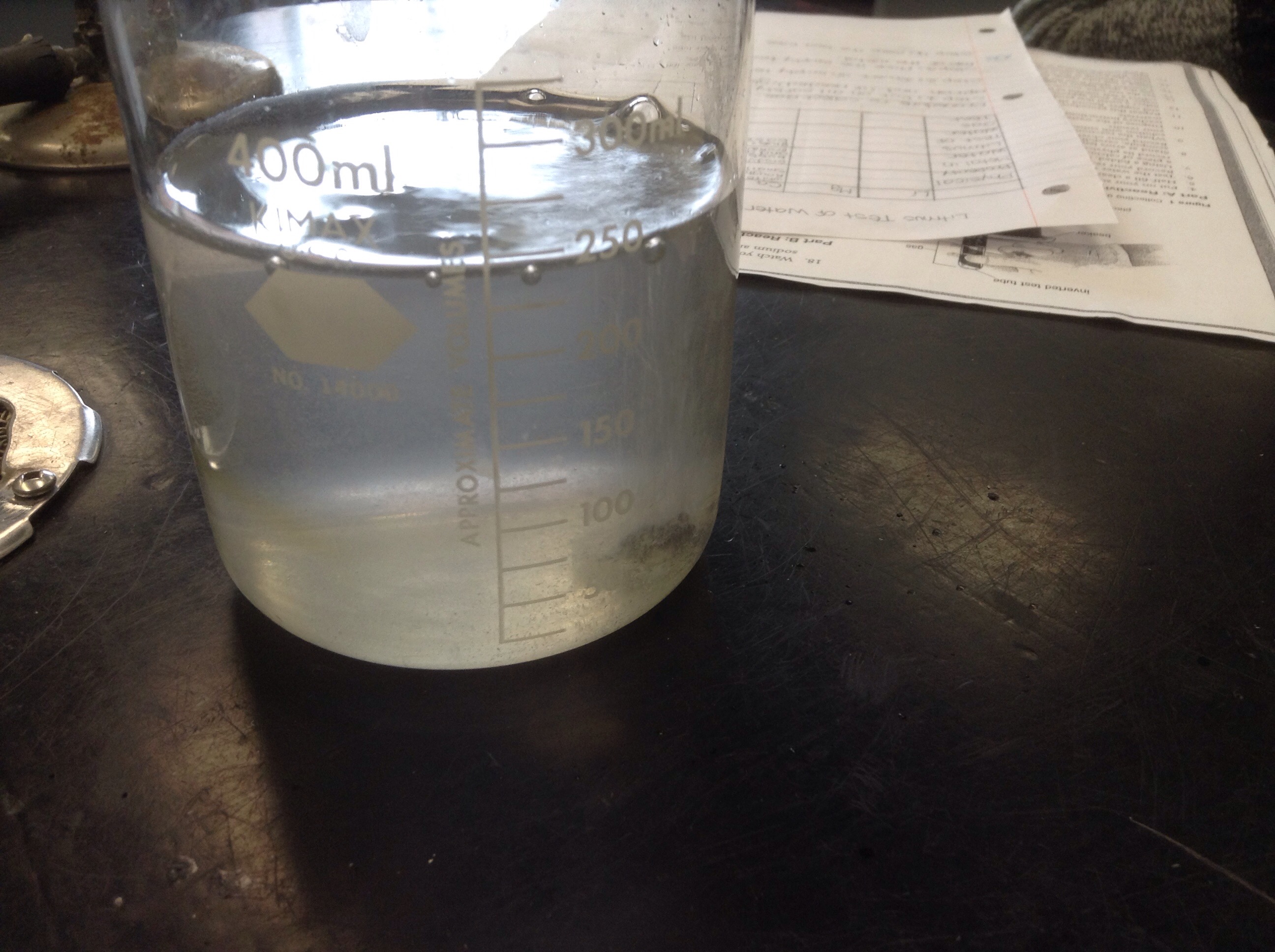
The remaining liquid was no longer a neutral pH.
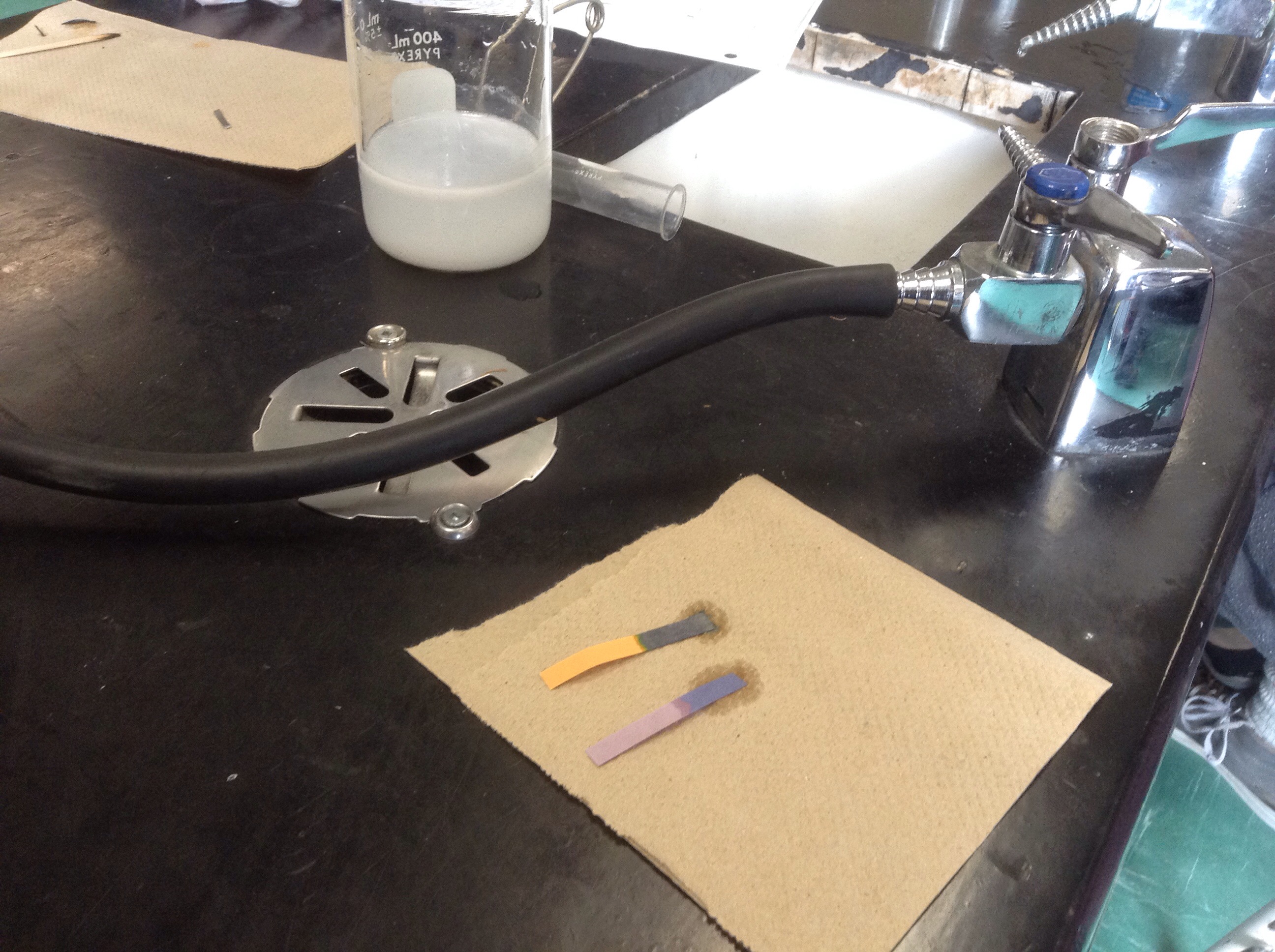
We had reacted calcium with water and produced hydrogen gas (we heard the “pop”) and calcium hydroxide (it’s a base).
Bunsen burners
We used bunsen burners to conduct a flame test. We tested copper sulfate and sodium sulfate and observed that the flames are different colours.
 The “sulfate” is the same in both chemicals so we could infer that the copper and sodium were what contributed to the colours.

Experiments
We experimented with making bouncy balls out of white glue and a borax solution 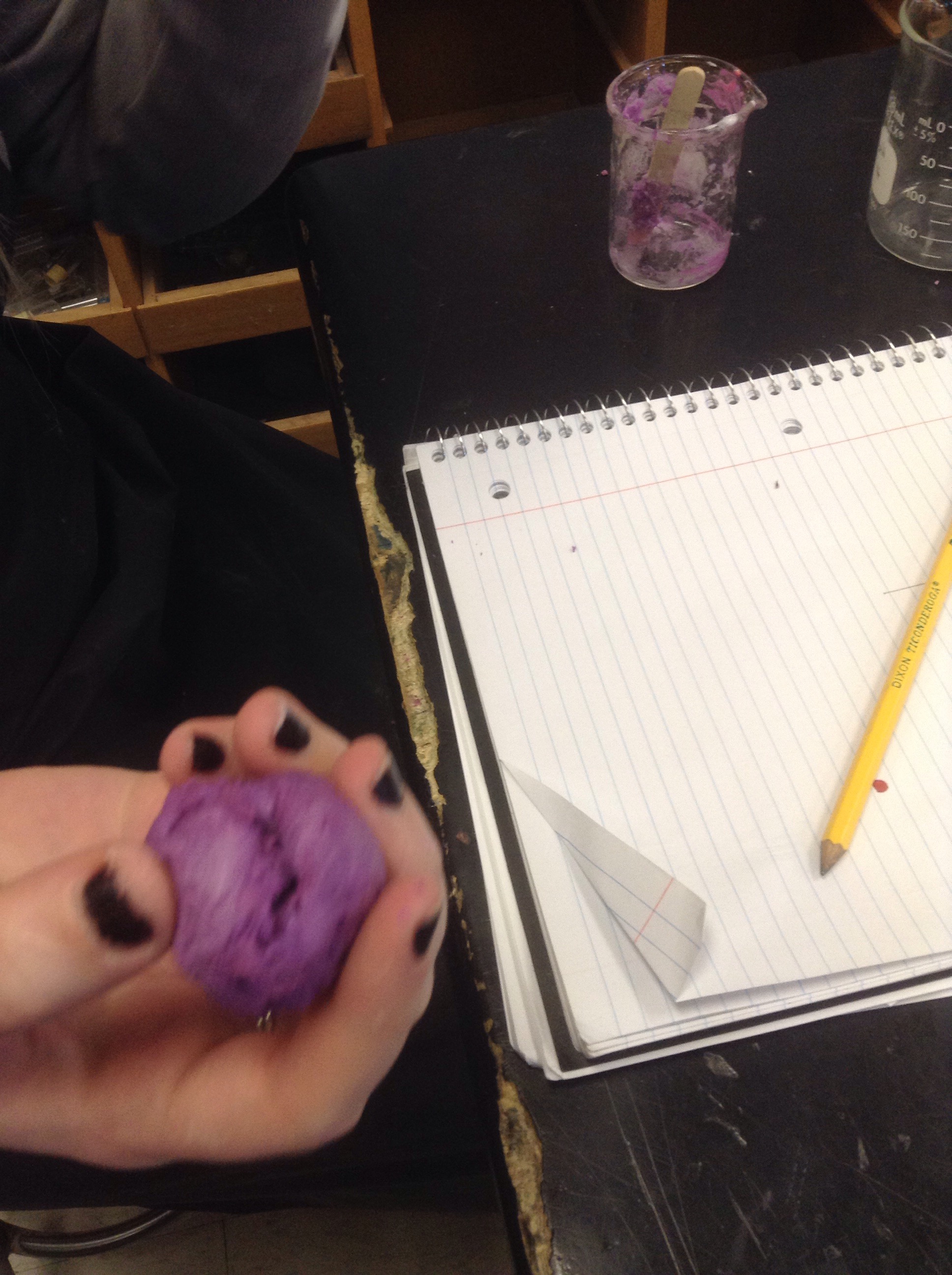
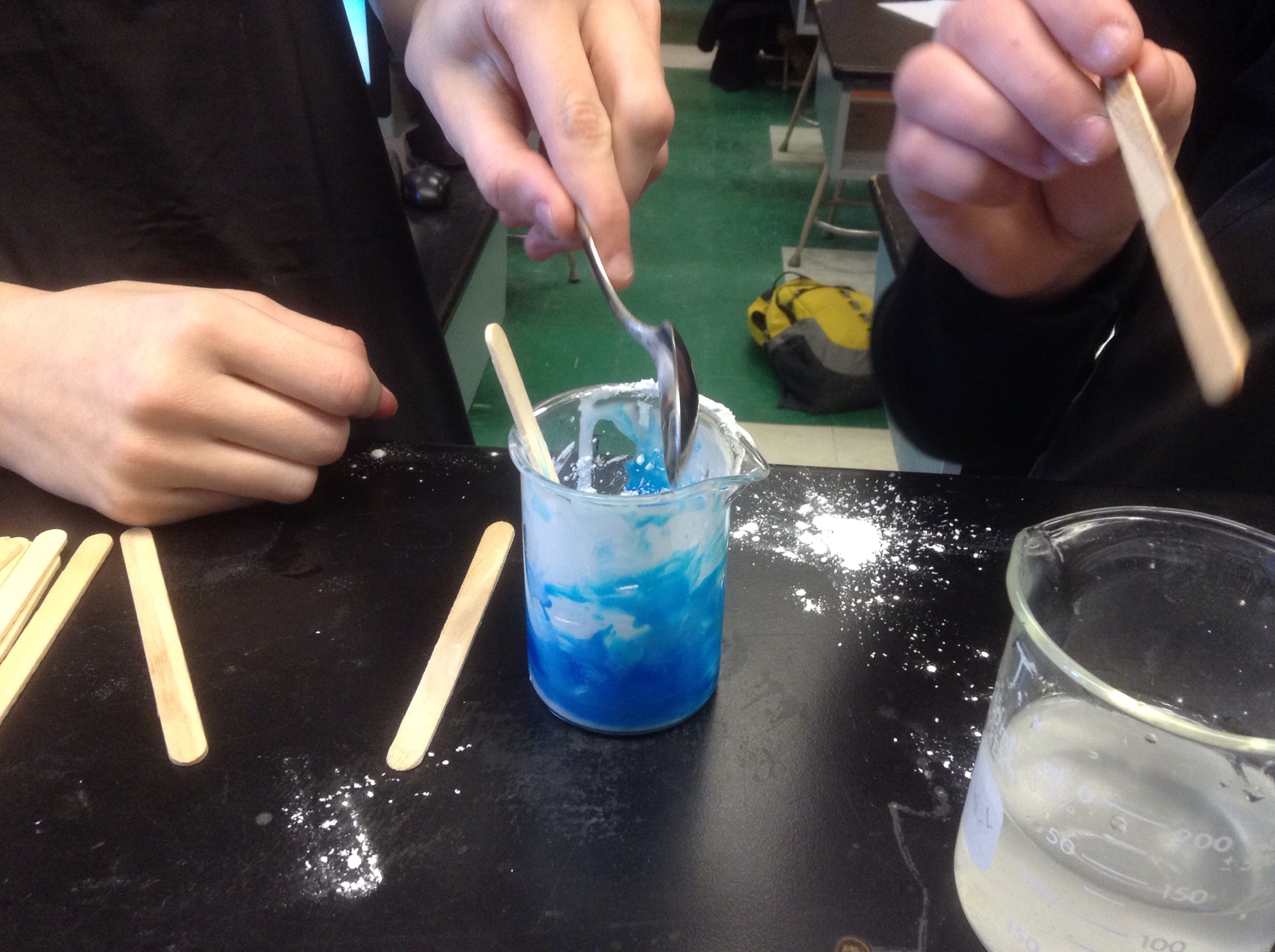 We learned what happens if you use too much or too little borax.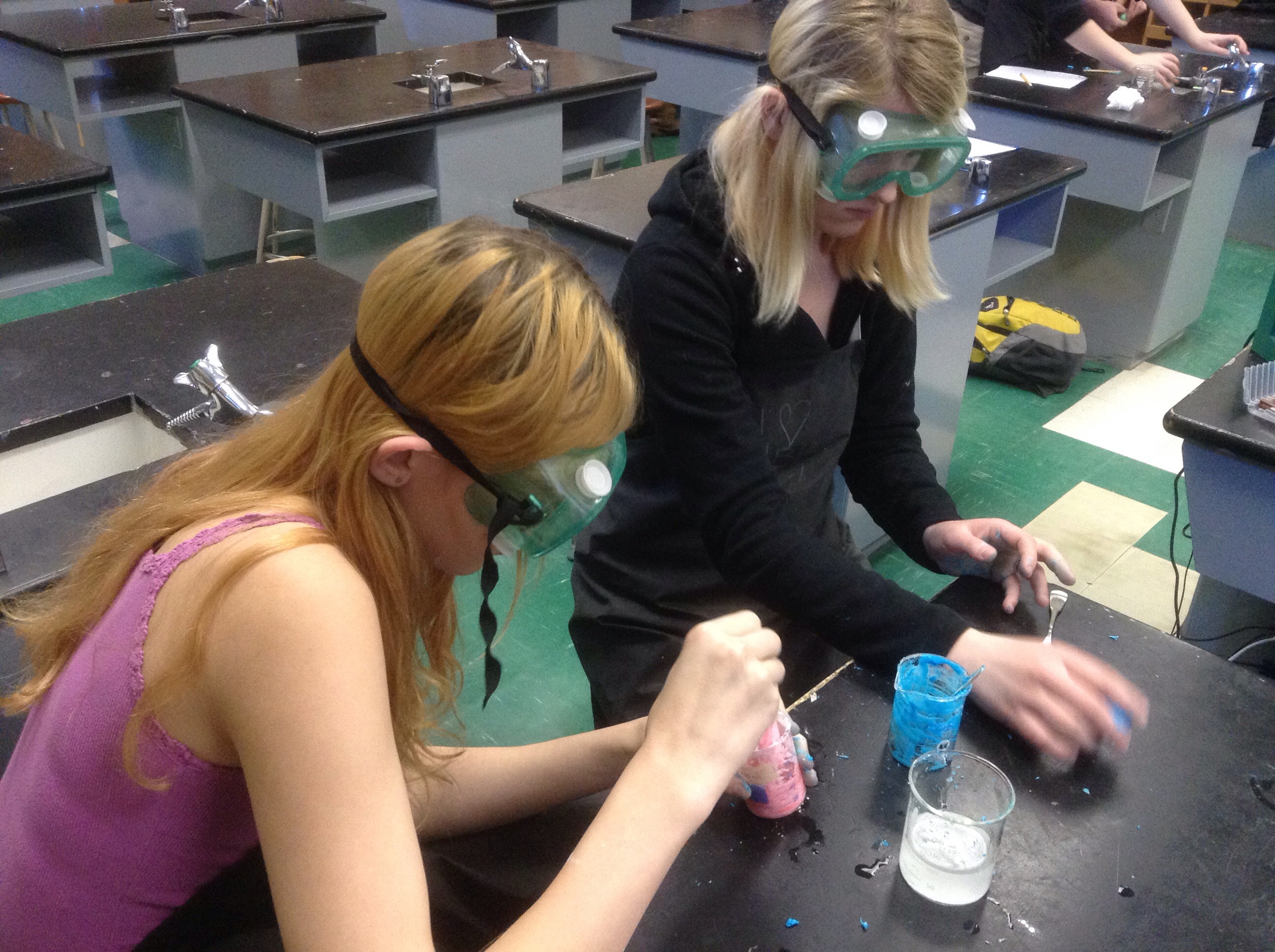
Making molecules
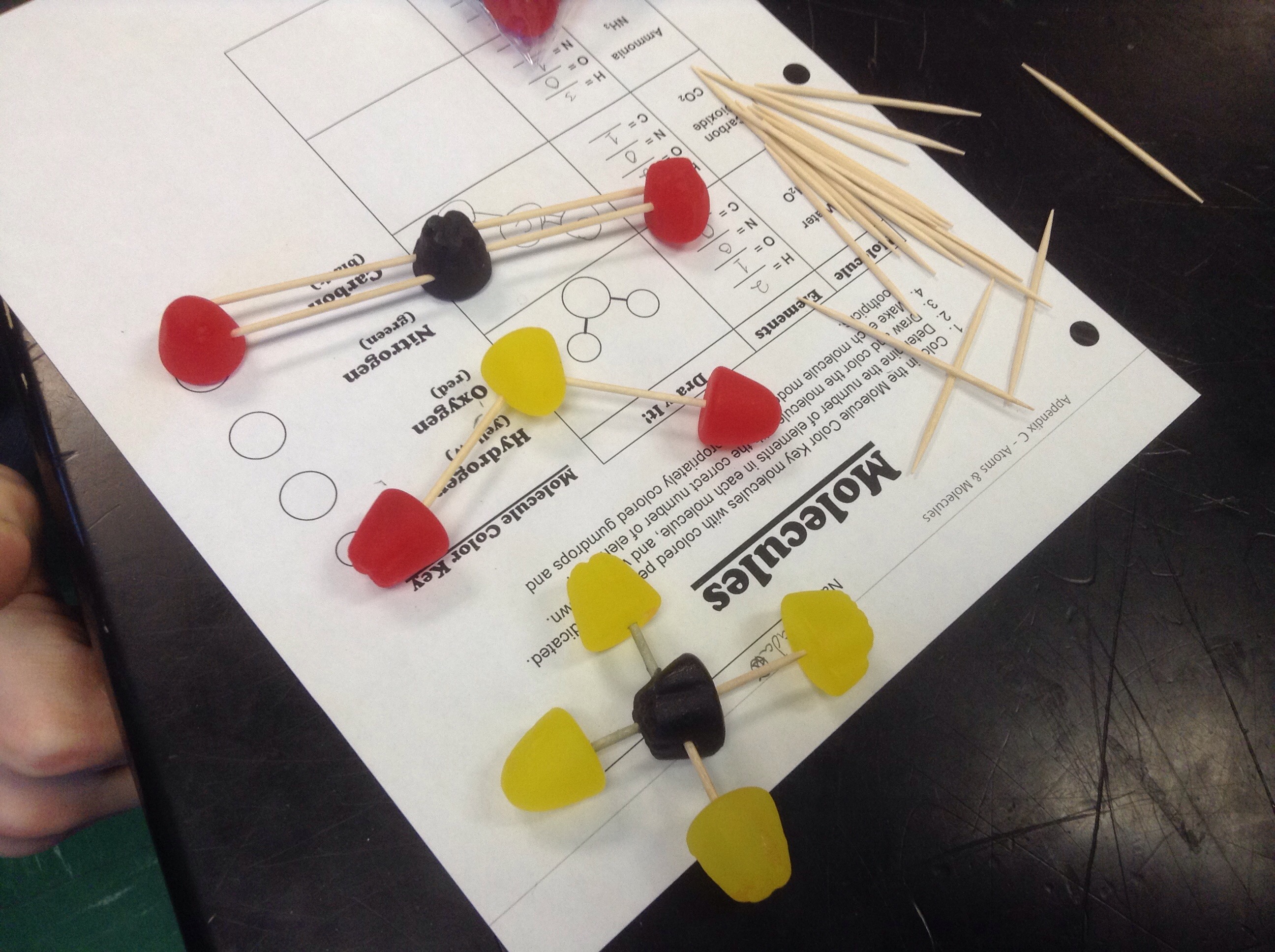
We used a variety of candies to represent atoms, and we used toothpicks to represent pairs of shared electrons.
Making Study Notes

Sorting Aliens and looking for trends
In chemistry we look for trends and patterns and use that to make predictions about other things. In this game, there are 20 different aliens, but each group gets only 19 cards and uses their patterning skills to predict the missing piece.

Rectangles and intro to maximising and minimising
We looked at the different rectangles that can be created with the same perimeter (the length of a standard pipe cleaner). We calculated the area for each rectangle. We then experimented with calculating the rectangle with the biggest area and the smallest area using the same perimeter.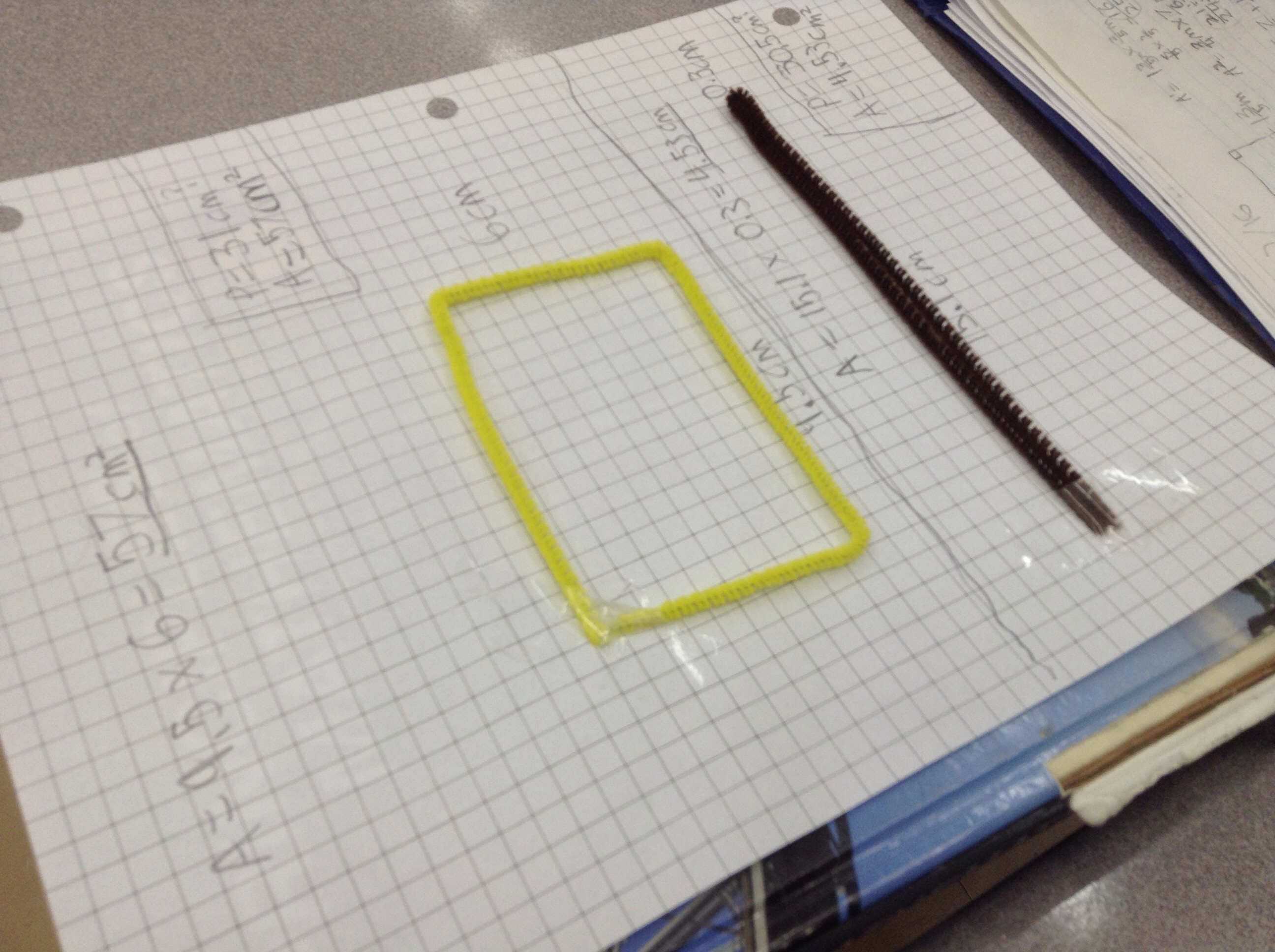
Exploring Exponents
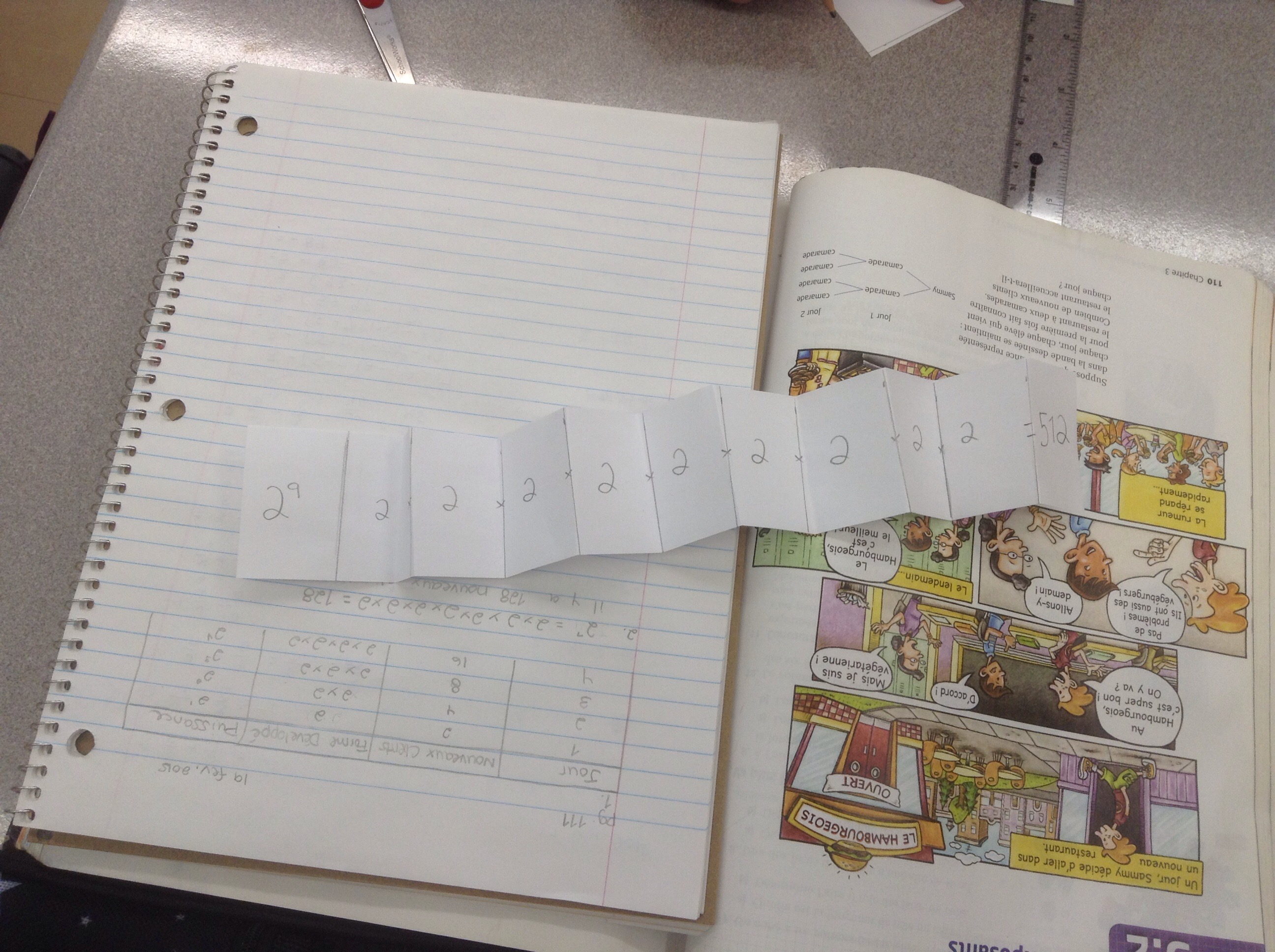
We are showing that exponents represent repeated multiplication. The higher the exponent, the more segments there are.
Stacking game with integers
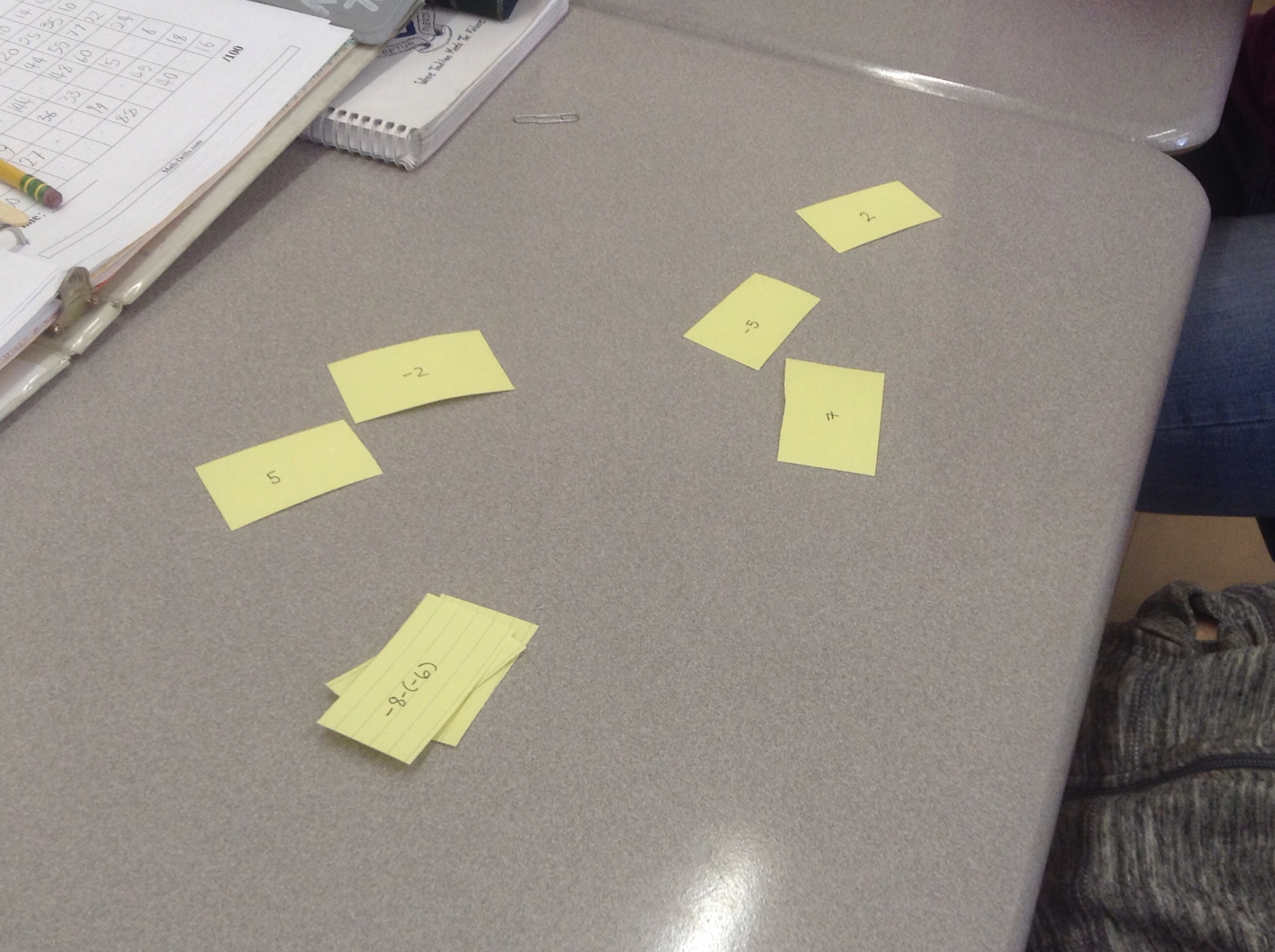
To practice integer work we used small cards and matched questions with their answers. Each answer, when flipped over revealed the next question. If done correctly, the questions/answers make a full circle.
Using number lines and popsicle stick man for integers

We drew a person on both sides of a popsicle stick. We drew a number line on the page. We now can interpret problems like -3-(-2). The -3 means start at -3 on the number line. The following – means to face your man towards the negative end of the number line. The negative 2 means the man will walk backwards (or moonwalk) 2 spaces. The final location on the number line is -1, the answer to the problem.
 Ms. Bearse's Site