Fractions Introduction
Grade 9s are working on exploring, and enjoying fractions. We got out the unit fraction strips and played a bit. We organized them, and noticed that when the denominators get big, the pieces get small. We noticed that it takes 4 of the “one fourth” pieces to make 1, and 10 of the “one tenth” pieces to make 1 etc.
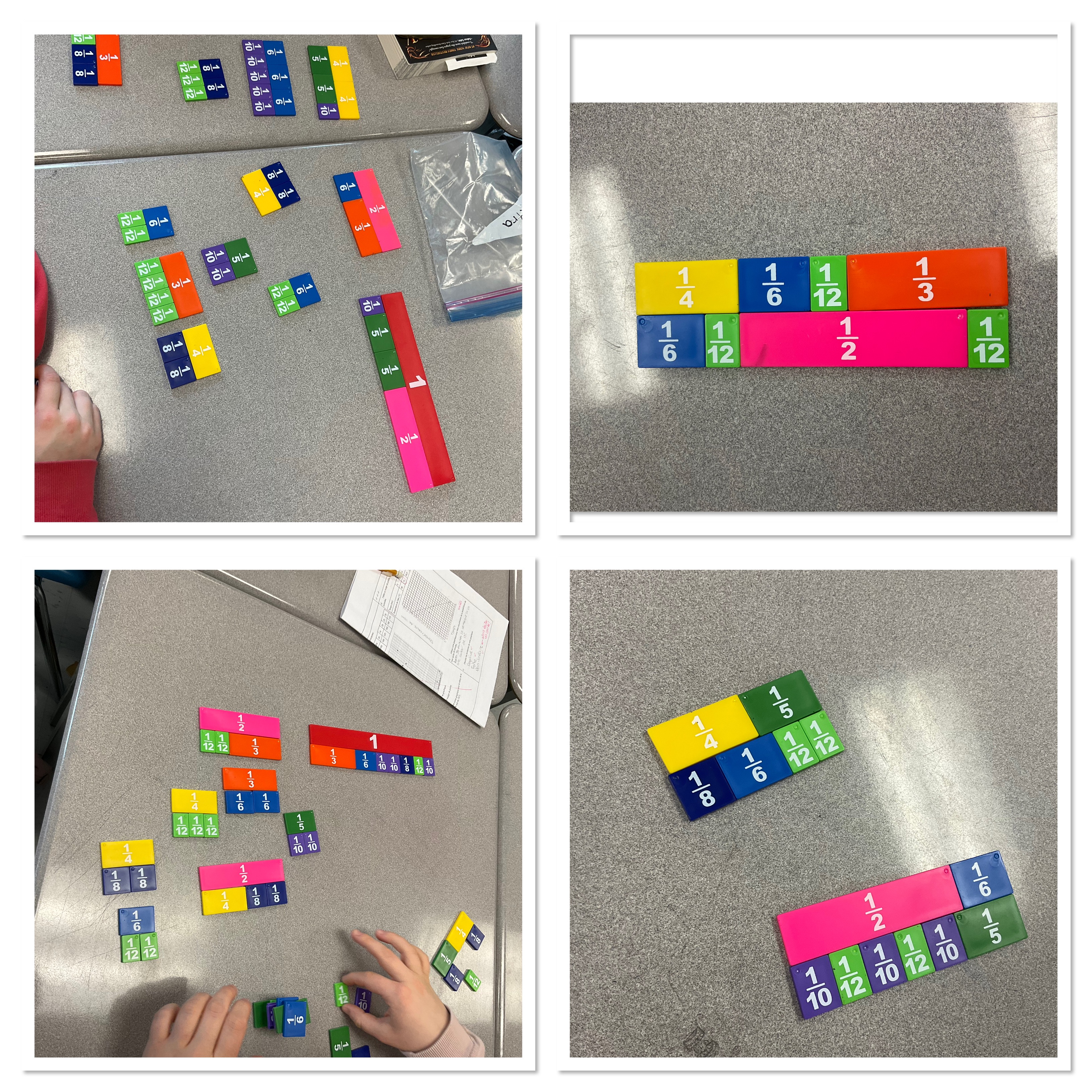
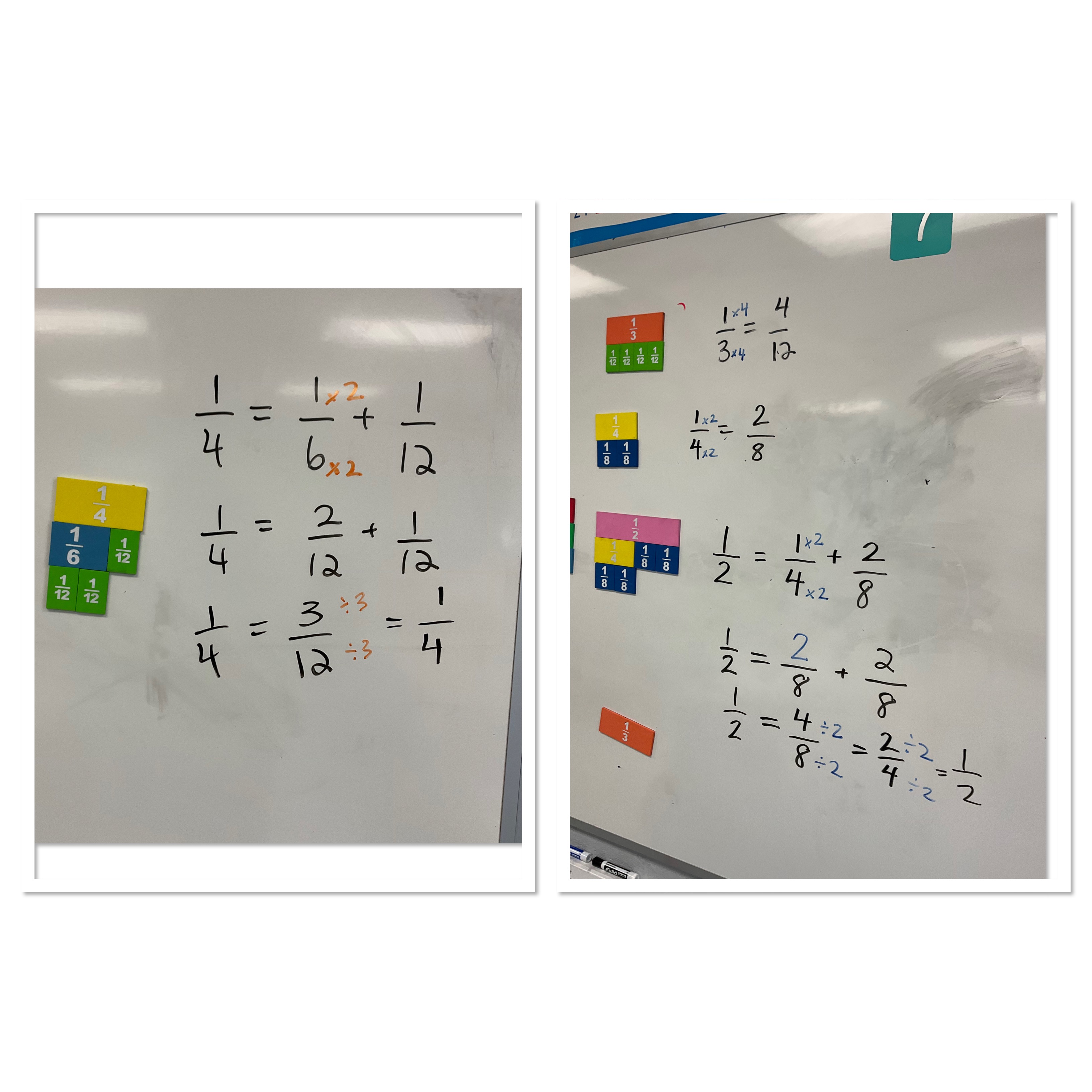
Next we started exploring other ways to make things that are equal. Some made equivalences like 1/4=1/8+1/8, and 1/3=1/12+1/12+1/12+1/12. We saw how we can quickly add unit fractions in a similar way that we add x terms in algebra. 1/4+1/4 is 2/4, just like 1x+1x=2x. When the denominators are the same, we are able to add those similar unit fractions together.
We had some interesting combinations where we needed to make common denominators before we could add unit fractions.
One neat example was given where it looked like there was equality, but we explored it further and saw that it wasn’t really equal.
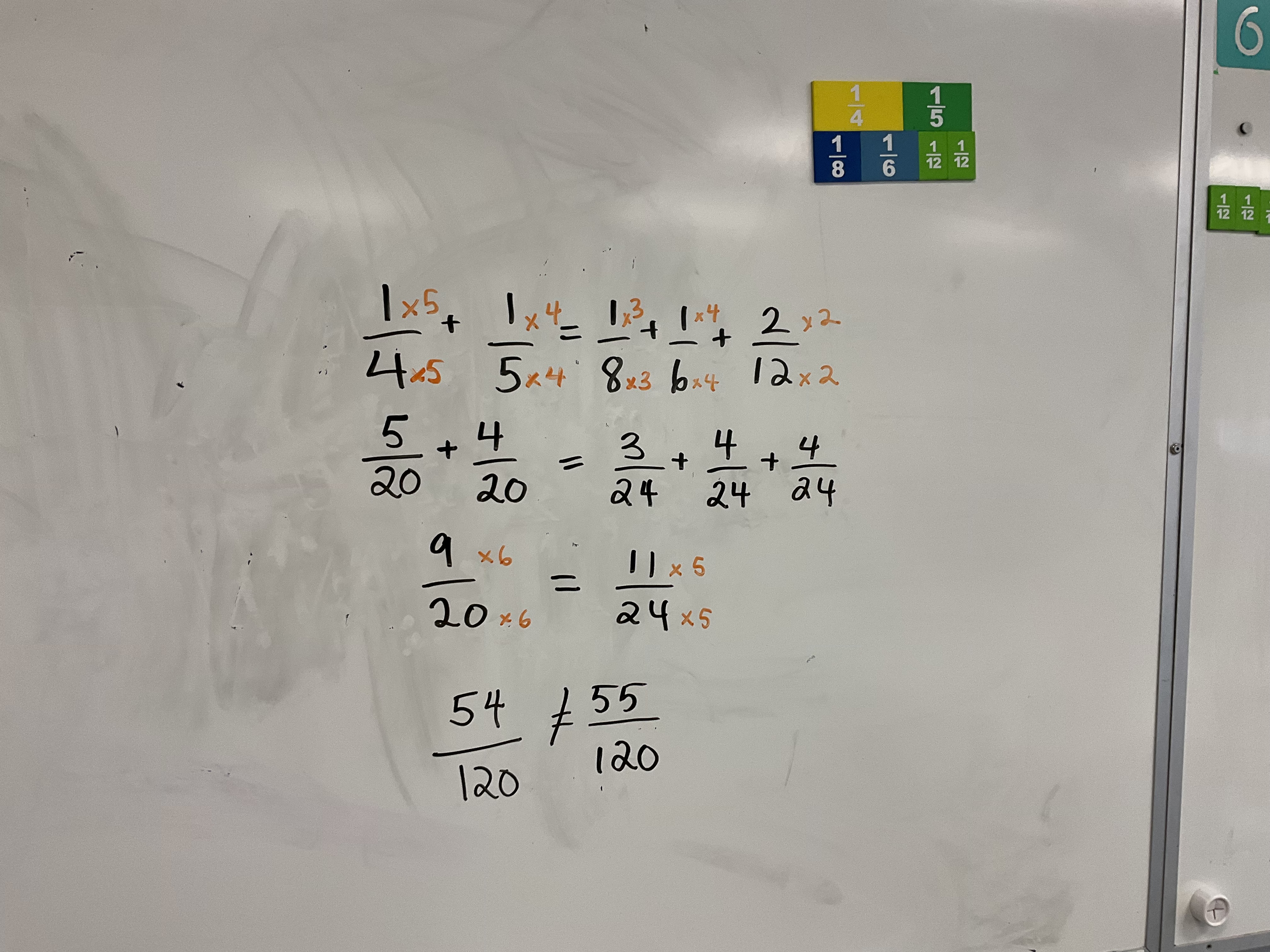
We made common denominators with each side separately, then simplified each side separately, and then eventually made common denominators with both sides so we can compare, and we saw that they were NOT equal, off by 1/120 which is tiny, but not insignificant.
Getting hands on experience with fractions and manipulatives can help us explore and communicate with fractions. It takes away some of the mystery about what fractions are, and lets us build to understand and connect to the operations.
From there we connected our understanding of area models for multiplication to multiplying fractions.
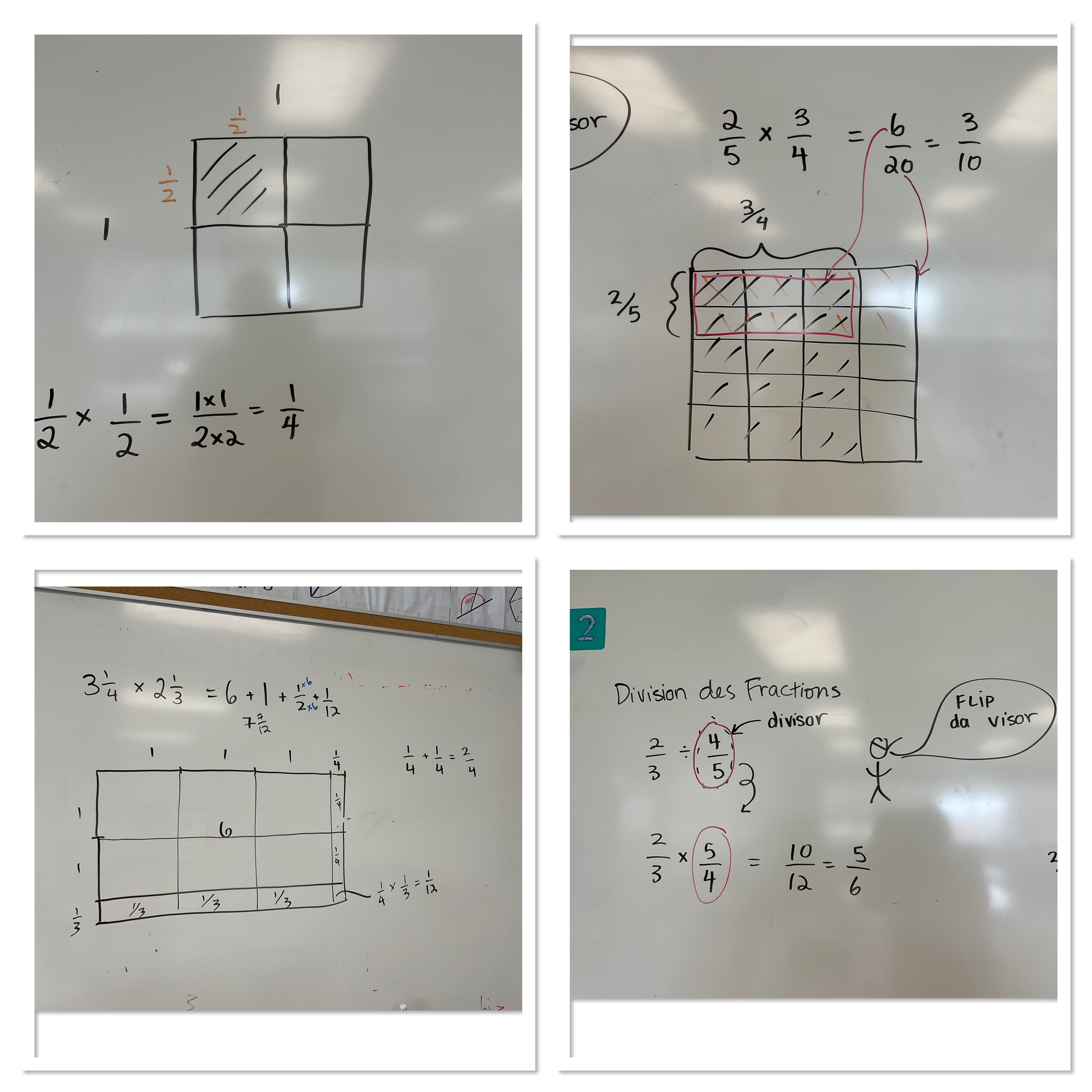
We looked at how to multiply unit fractions, non-unit fractions, mixed numbers, and then later how to divide fractions. We will keep practicing these skills and building our fluency and reasoning skills with fractions.

