Arithmetic Series
Today grade 11s were working on making rules for adding up arithmetic sequences. We started off with adding all the counting numbers from 1 to 1000. The challenge was interesting for me to watch. Some groups started adding, looking for patterns in the list. Some got overwhelmed by the 1000 and said it’ll be big, and stopped there. I redirected the class to try adding the numbers from 1 to 10 as a more simple task and then to see id they could find a strategy that might help them.
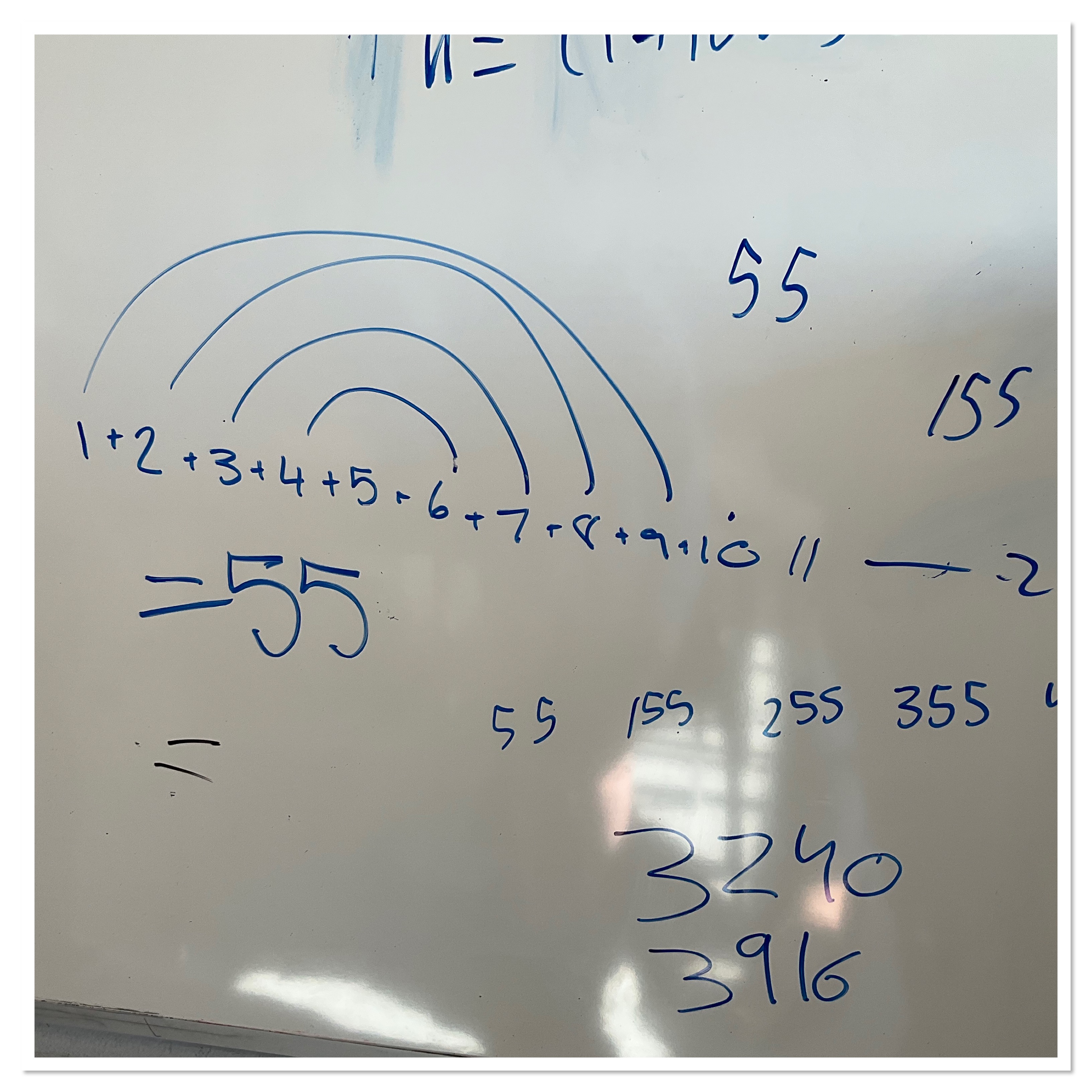
This group got right into it. They grouped numbers to make tens, they used the 1+9, then the 2+8 etc. The 5 is in the middle and dealt with at the end. The 10 was already a 10 so they didn’t change it. They knew that adding 1-10 made 55, so they then looked at adding 11 to 20 and they knew that it’d be 55 (because you are adding 1×10 again) but you’re also adding 10 more 10s, so they generalized that you’d add another 100 on top of the 55 for each group of 10 that we go up. I had not anticipated this approach at all!
Some groups added first and last, then second and second last and made groups of 11, then realized that there were 5 groups needed.
We tried some more challenges like adding 5+6+…+15, or adding 6+7+8+…+16. This was different because the “a” value changed, but not much else.
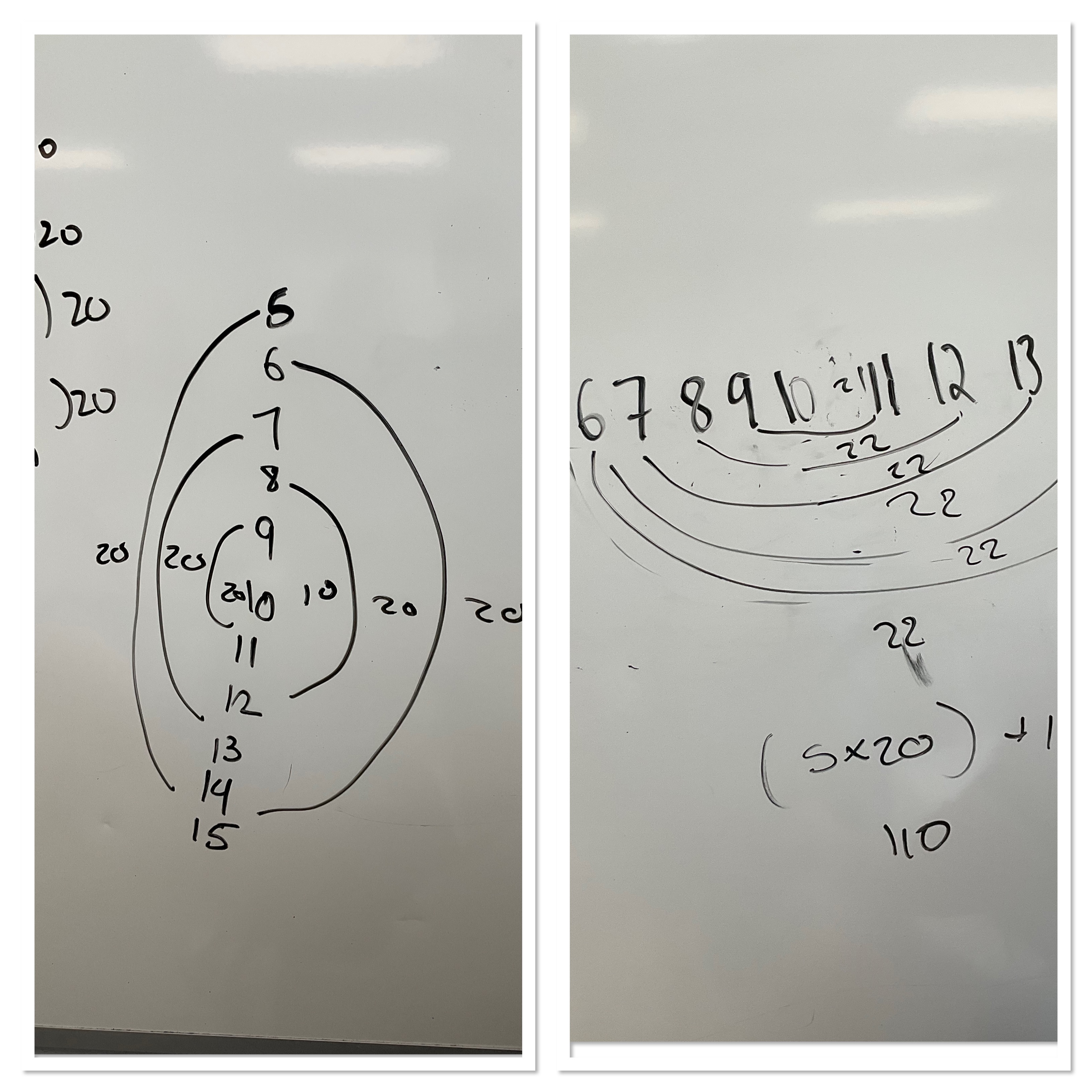
We started to see patterns like adding the first and last terms is important, then you need (n/2) groups of that sum.
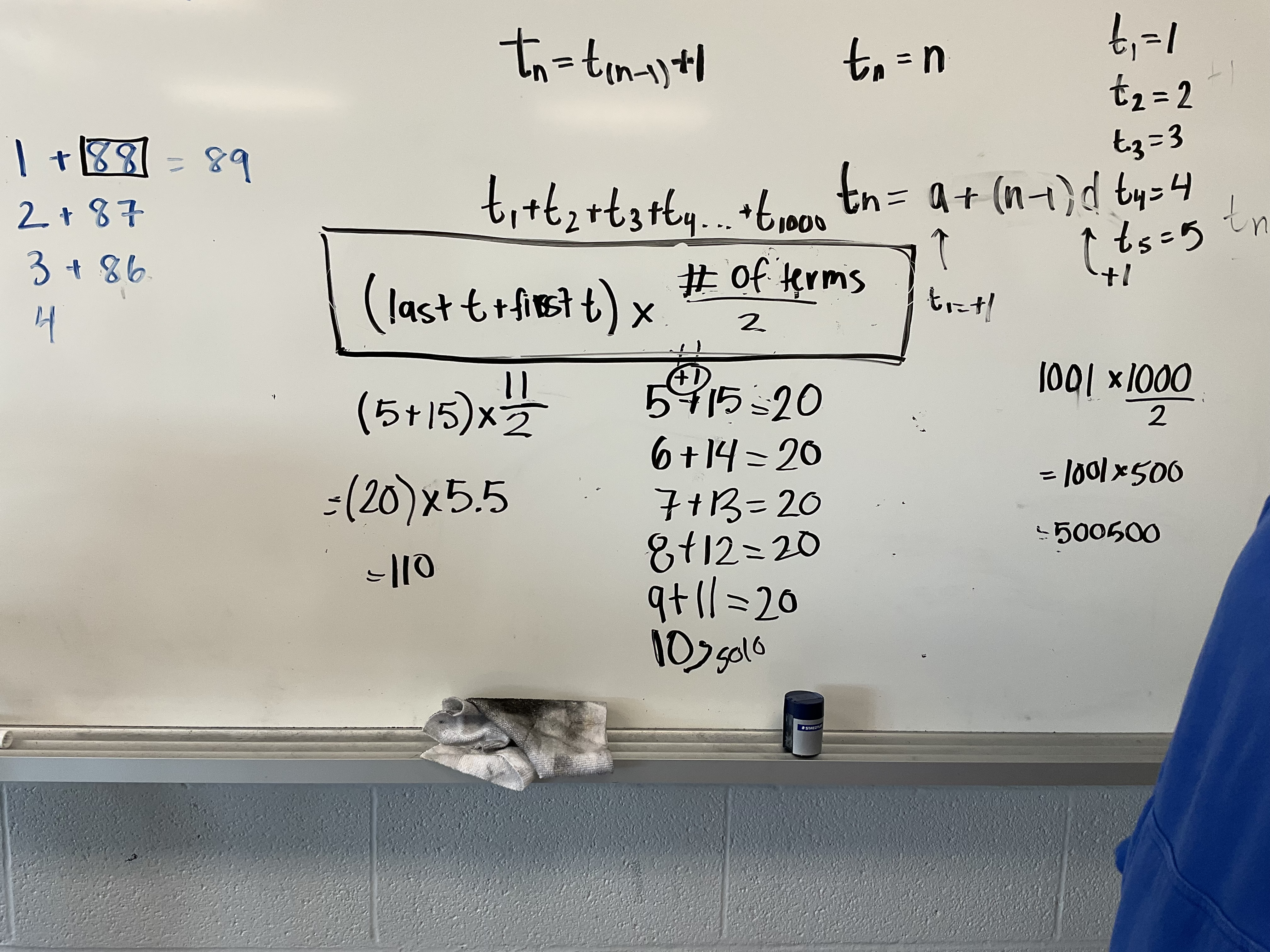
We tried this with different sequences, with different common differences next, to show that our conjectures were still true.
By the end of class we were comfortable with arithmetic series, and had developed a few working formulae.
 Ms. Bearse's Site