Fractions Decimals Percents
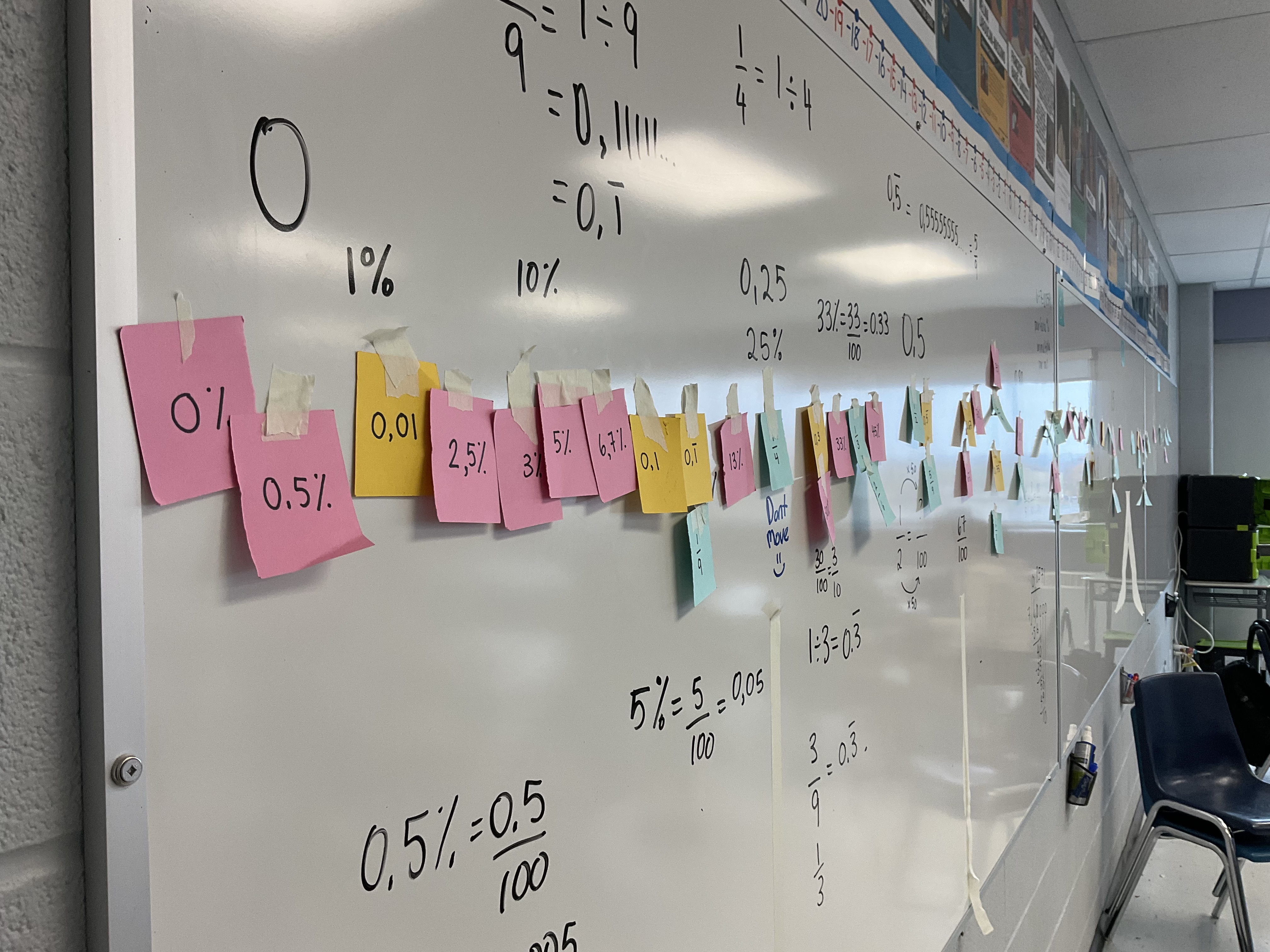
We added to our wall of fractions and decimals today. We now can slot percentages into the mix.
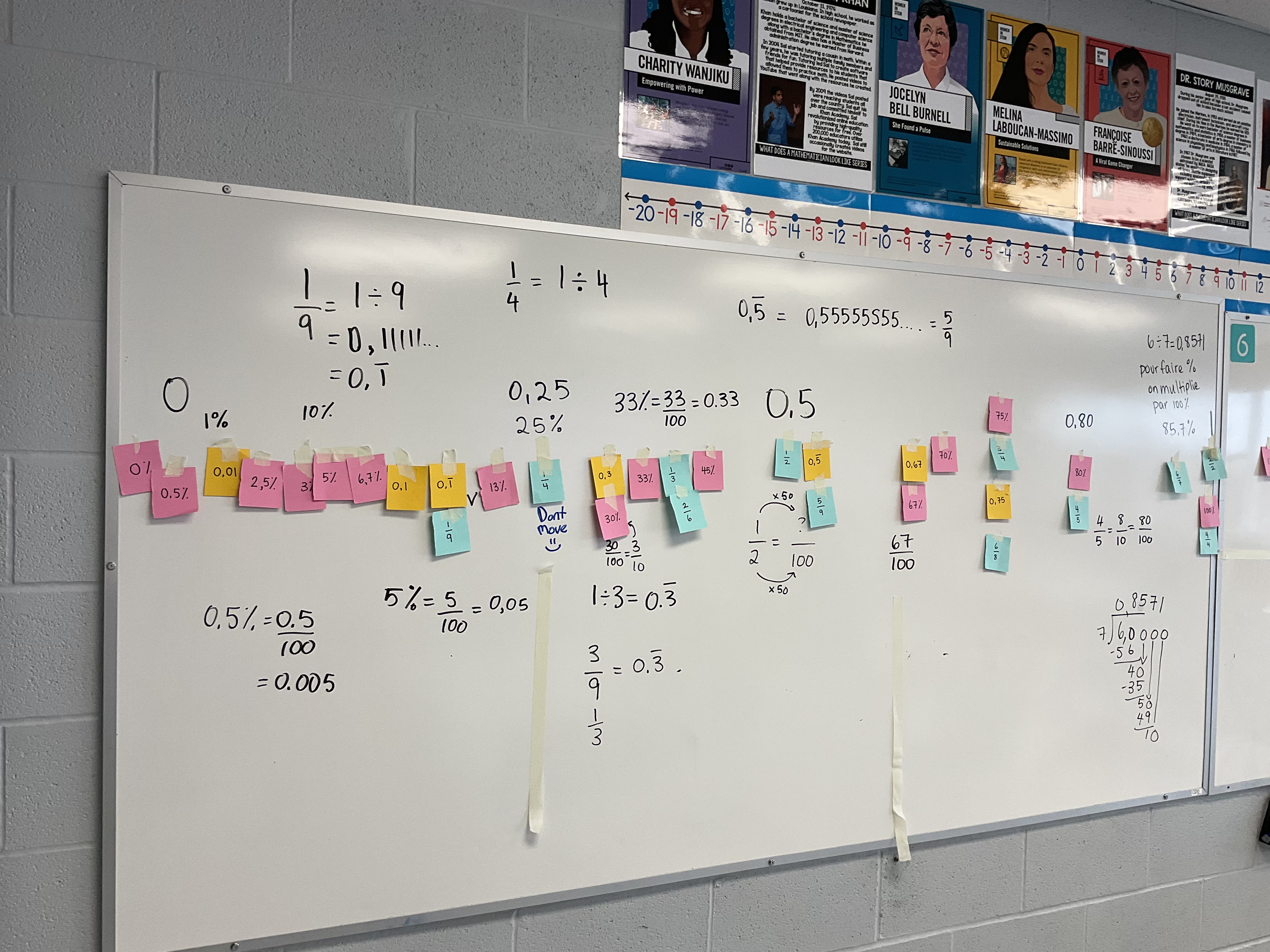
We took some time to verify the order of all of the cards, and showed some equivalences written in other forms. We noticed some challenges with small percents for example 0.2% is 0.2/100 which is 2/1000 or 1/500. In decimal form it is 0.002 (we divide percents by 100 to write them as decimals.
We also learned that fractions with denominator of 9 have a neat property. 4/9=0.44444444, 5/9=0.5555555 7/9=0.7777777
We looked at some financial implications (calculating sales tax, or looking at inflation percentages, and looking at percentage appreciation ans depreciation).
impressive collaboration today to get all these cards sorted out!
Fractions
Today in grade 9 we had a look at some fraction fluency. We practiced counting by “one eighths” and we clapped when we got to a whole number. We also worked on representing fractions, and what the numerators (parts) and denominators (total number of pieces) mean. We coloured in 1/2 in multiple ways. We know that 2/4=1/2 and 4/8=1/2 and 8/16=1/2.

Next our challenge was a card sorting task as a class. In 3 small groups students sorted through cards with fractions or decimal values on them. Each group ordered their stack of cards. We had some interesting conversations about equivalent expressions, or improper fractions and mixed numbers, or what does 0.3 with the line mean compared to 0.3 without a line over the 3.

Each group chose someone to take the smallest value that they had over to one side of the whiteboard, and another volunteer to take their largest value to the other side of the whiteboard. They had a chat to decide on the smallest and largest values in the room. We then had the edges of our number line, and worked together as a class to put all of the values in order.

There was a lot of rearranging and sorting things out as all groups merged their lists.
Next we added some benchmark values and tried to get our spacing accurate.

Tomorrow we’ll put some percentages in the mix and see if we can manage the new challenge!
Surface Area and Volume
Grade 10s have been working on surface area and volume calculations, but it seems to be overwhelming everyone a bit. For some it’s knowing the difference between surface area and volume, for others it’s that the formula sheet has so many letters and equations, and for others they don’t know how to substitute in values and solve.
We gathered everyone together and did a few examples together and they wrote down an example solution for them to follow.


We also had a look at some different nets and how they come together to make prisms and pyramids.

Hopefully we can remember and use our example next week when we do more of these questions.
Fractions
In MTH1W we were working on doing BEDMAS questions with fractions, and my students had had enough halfway through the period. They asked to do something else, or to have a “fun Friday”.
I pulled the question from our math club for grownups.

We extended the pattern, and wrote the fractions in improper form.
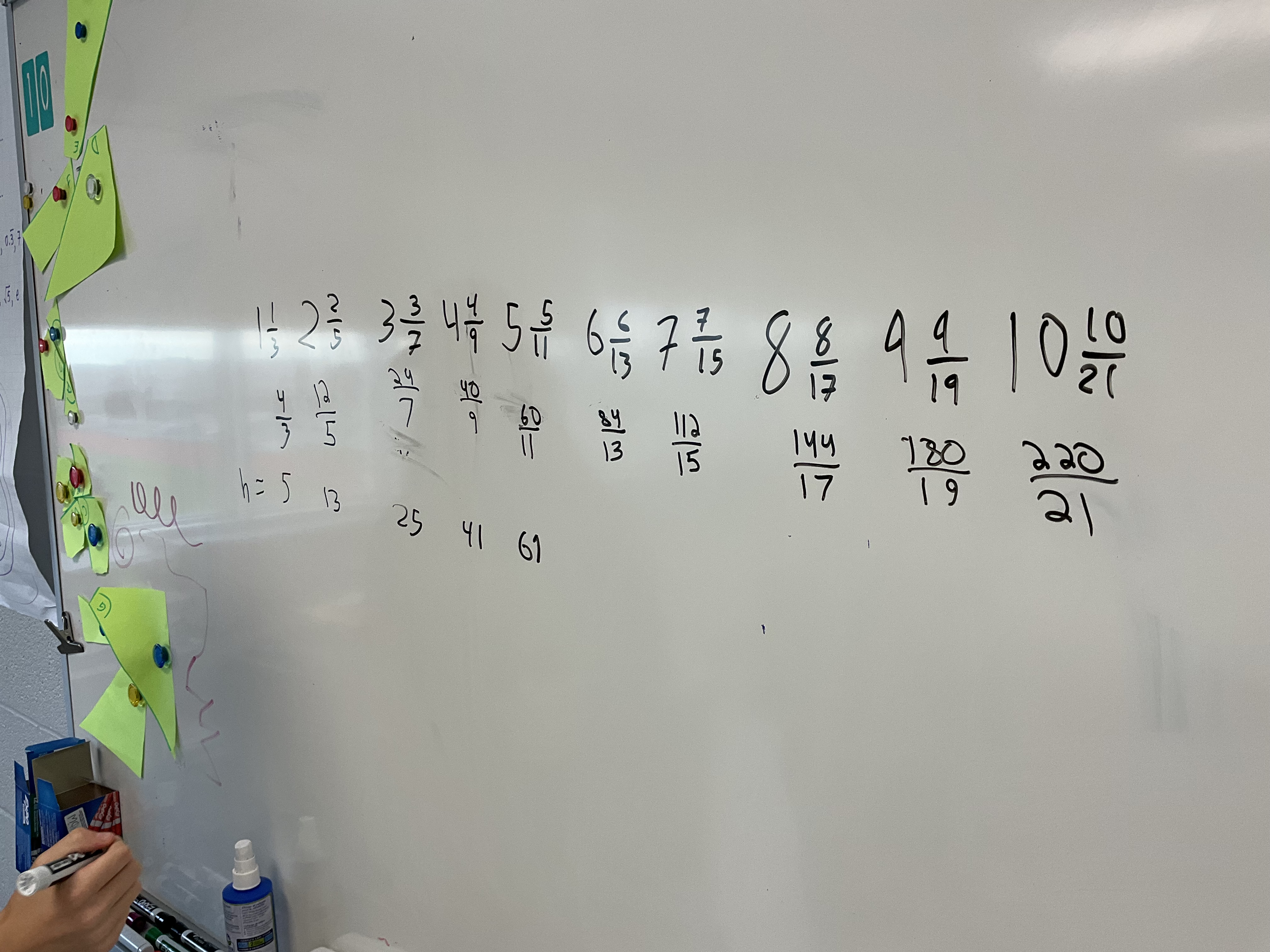
One group got excited about exploring these fractions as percents, and others were keen to use my prompt of “use the numerator and denominator as legs of right triangles” to explore and practice Pythagorean Theorem calculations.

I’m glad they knew to ask for something different to work on. This was a much more fun way to end out the week.
Math Club For Grown Ups
We had our 2nd meeting of the math club for grown ups. The first meeting was in June last year. We’re getting together as educators/admin/board office staff/EAs/teacher candidates (hence the all encompassing word “grown ups”) and doing math together.
We did several questions.
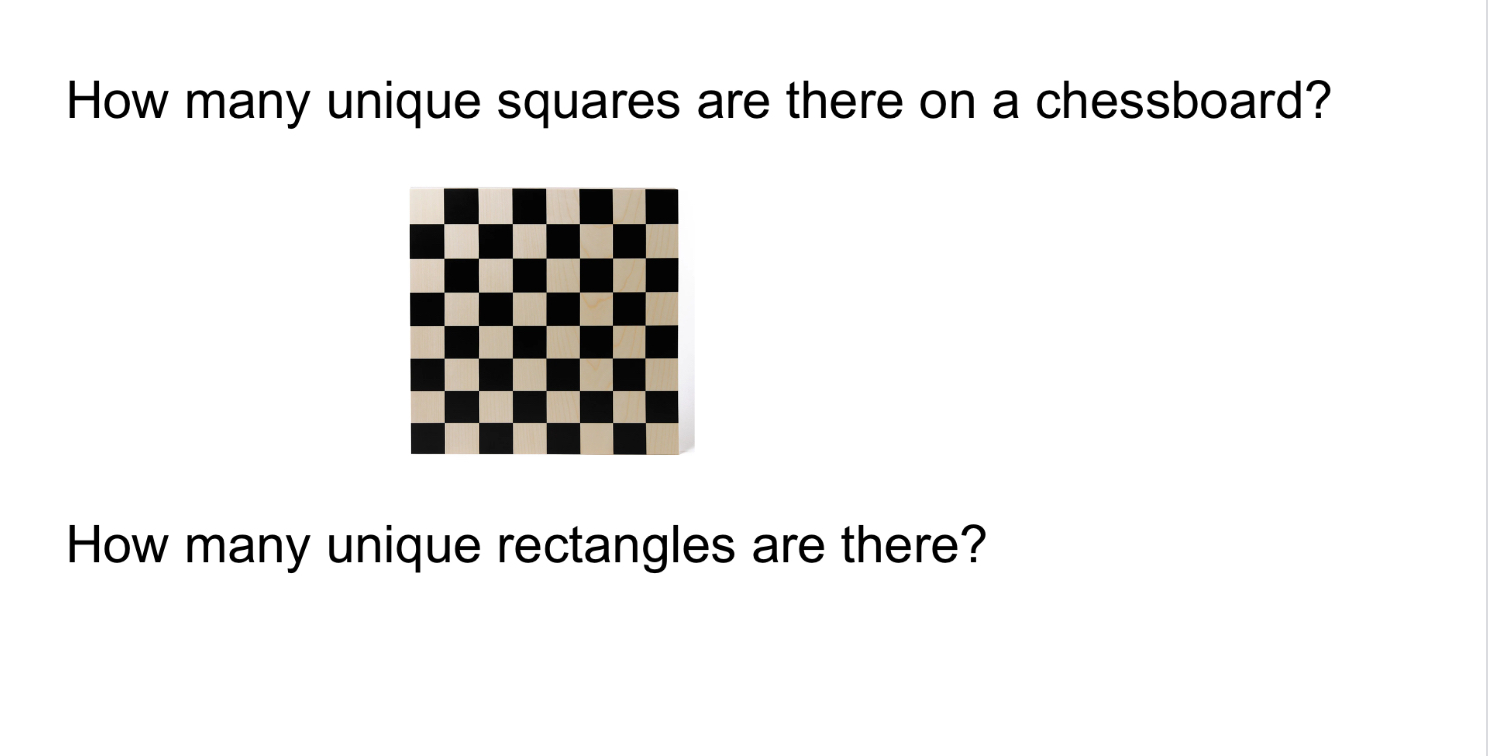
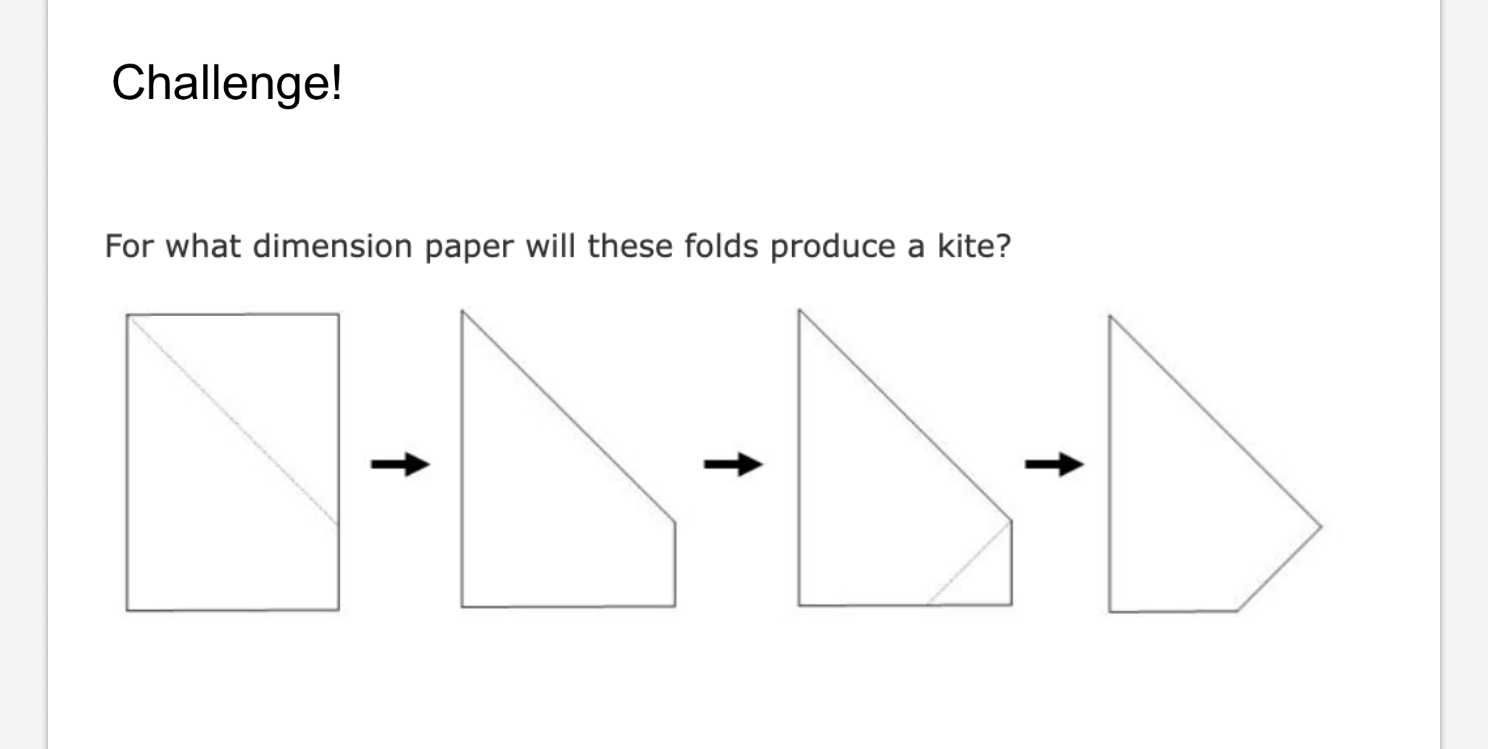

We worked on the questions in random groups and got pretty close to solving them. Part of the fun is deciding what steps to take to solve them.


It was such fun to work with colleagues from 4 different high schools, and 2 of our feeder schools, and to have our principal and several superintendents doing math all together. We look forward to another meeting in December.
The questions for this meeting came from Peter Liljedahl’s old website of good problems for teachers, and from Al Overwijk’s site slamdunkmath. Have a look there for the sequence and ideas pulled from the sequence of fractions.
Similarity and Area
I’ve been working with a colleague brainstorming ideas for exploring similarity using pattern blocks. We can make similar shapes quite nicely, and prove they are similar because the angles are the same and the side lengths are proportional. We can see that when the side length changes by a factor of 3 the area changes by a factor of 9 etc. My colleague took pictures from his class to show what they did. Students noticed that there was a quadratic pattern in the area, since the change was changing by a consistent amount (the 2nd differences are the same).
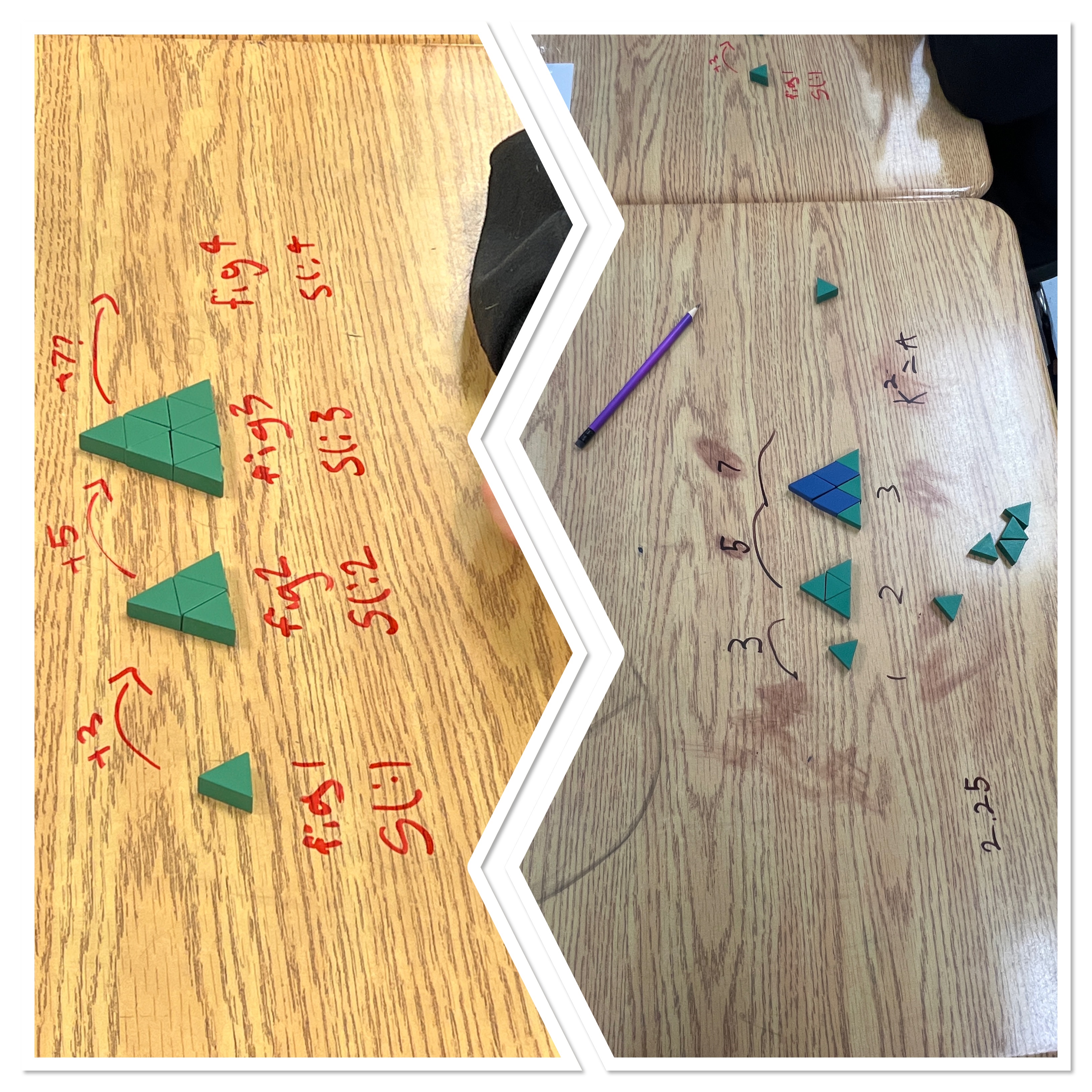
We can do this with other shapes too. This was from my brainstorming.


and this was from my colleagues class. They found creative ways to grow the shapes.

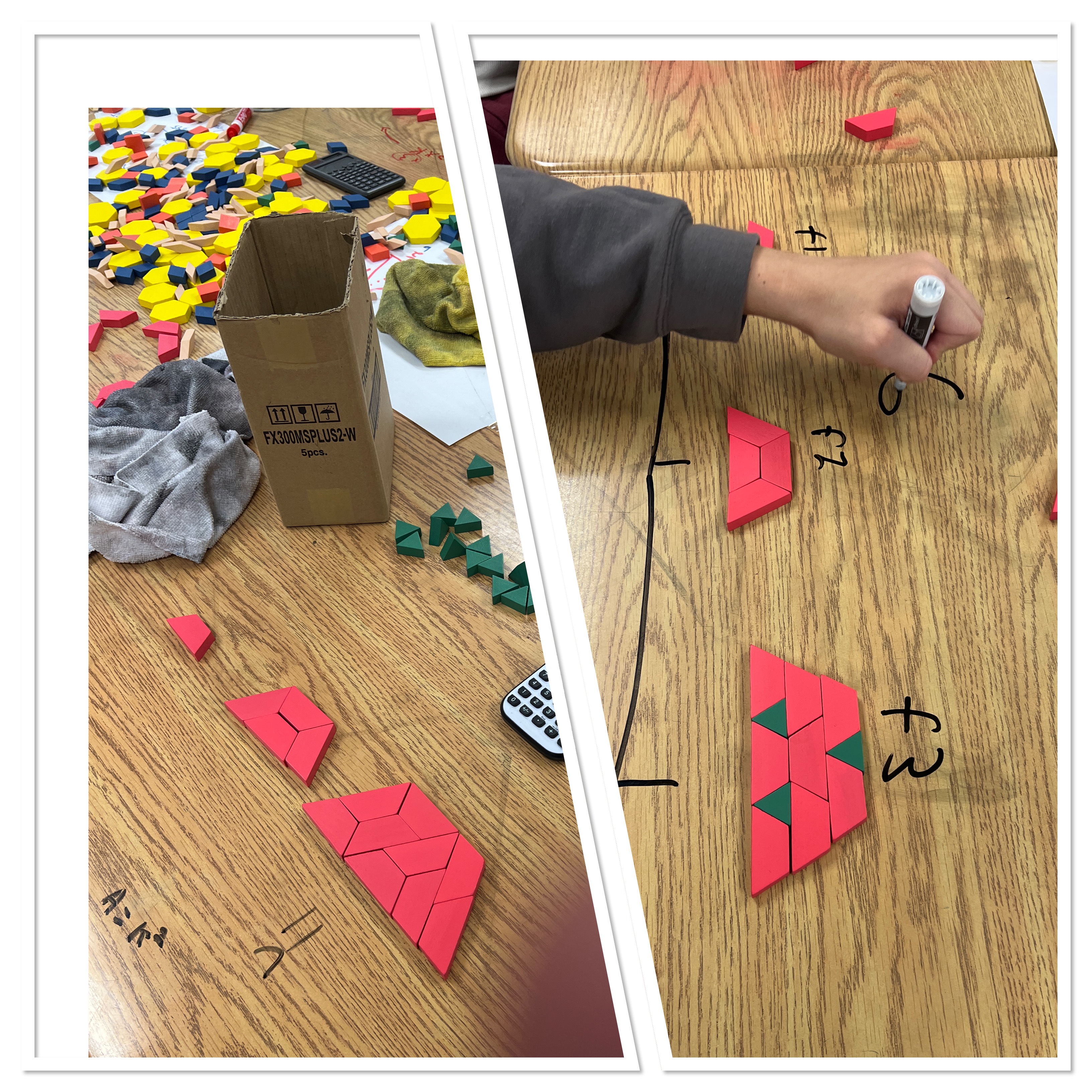
I’m thinking now about how these same pictures could be used later when fractions are discussed.

Students said they enjoyed the task and liked working with the blocks ro show their learning.
Exploring Volume and Surface Area
Today in MFM2P we had a challenge. I gave each table group the task of working as a design team to create a rectangular prism to meet my specifications. It needed to be made of card stock (old file folders) and tape, and it needed to have the volume of 300 cubic centimetres.
Groups had access to rulers, protractors, calculators, scissors, folders and tape.

As groups they had some choices to make about what the dimensions should be. We had talked about volume earlier. We know that the volume is the insides of a 3D shape. We know that for prisms it is calculated by the area of the base multiplied by the height, or specifically for rectangular prisms volume=(length)(width)(height). It took a while to find dimensions that would work, and then the struggle was with how to cut out the pieces to build it, and what pieces we’d need.

Some drew each side separately and taped them all together. Some made a foldable net.

When we got them assembled the goal was to check to see if the volume met my criteria of 300 cubic centimetres, and then I asked them to report on the surface area of paper required to build them.

Some groups had time to make several different boxes. And some realized after they made the box, that it wasn’t quite right, so they had to be redone. This small one has a volume of 90 cubic centimetres. It’s pretty cute though.
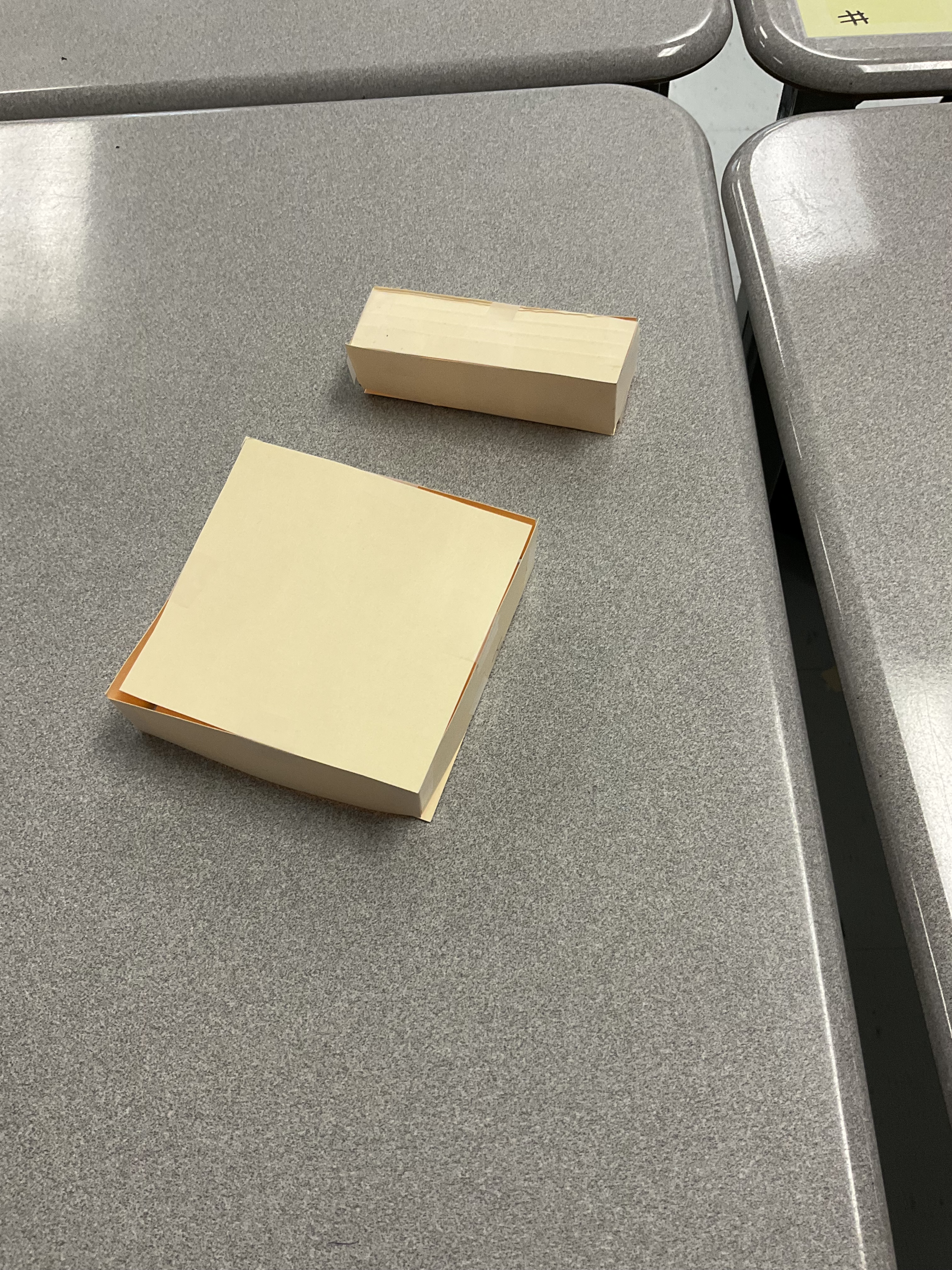
one group got really creative and persevered to make a box that was 100cm x 3cm x 1cm.
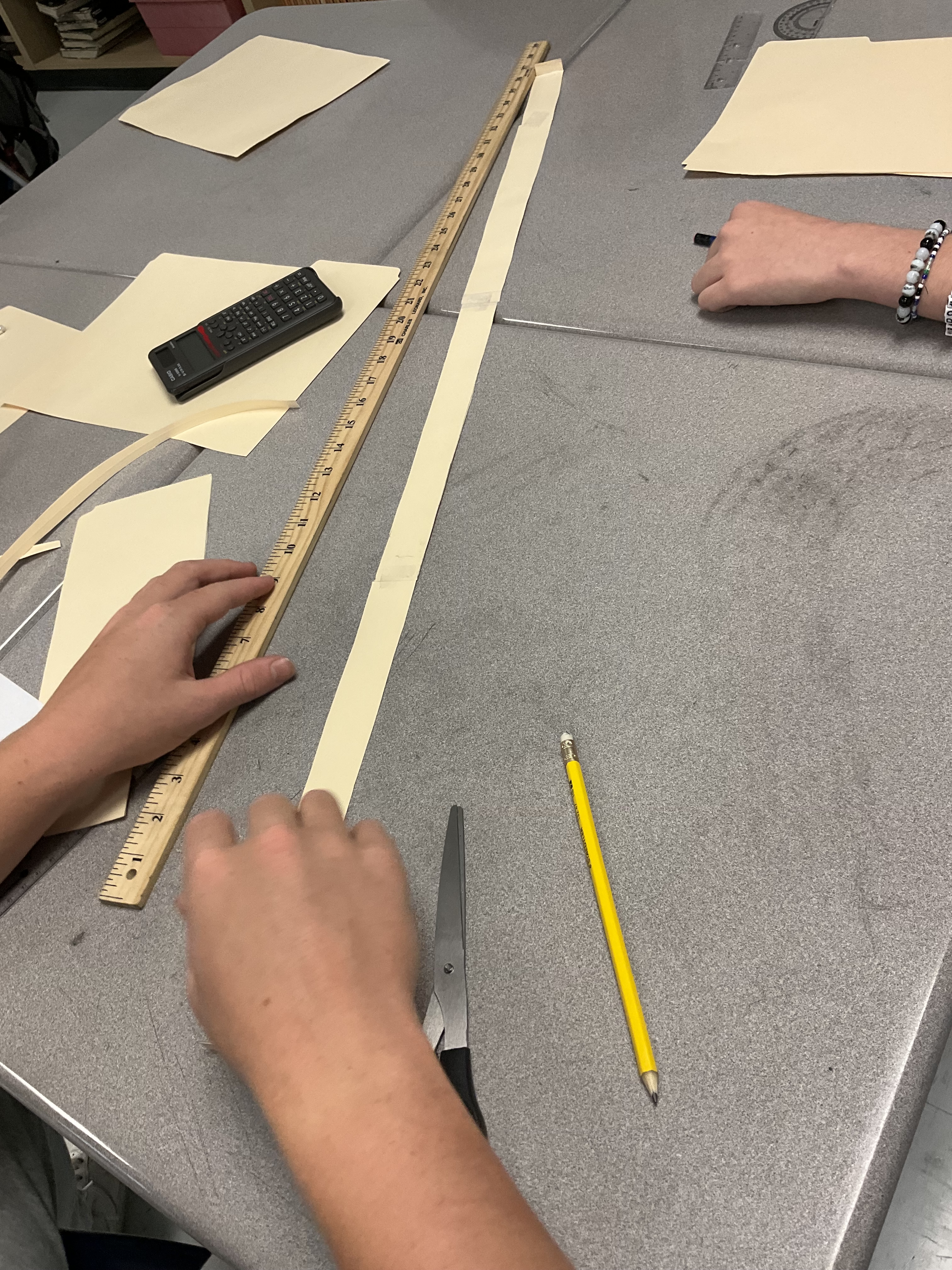
We will keep working on this tomorrow and consolidate with talking about how prisms with the same volume don’t always have the same surface area. We’ll arrange them to see any patterns, and connect the idea to surface area to volume ratio and how that’s important in packaging, and also in biology.
This task was pretty open ended, which caused some struggles getting started. We managed emotions like frustration pretty well, and we are continuing to work on our collaboration skills and working as a team to get tasks accomplished. We’re making headway on our clean-up skills which is allowing us to take more risks with hands on tasks.
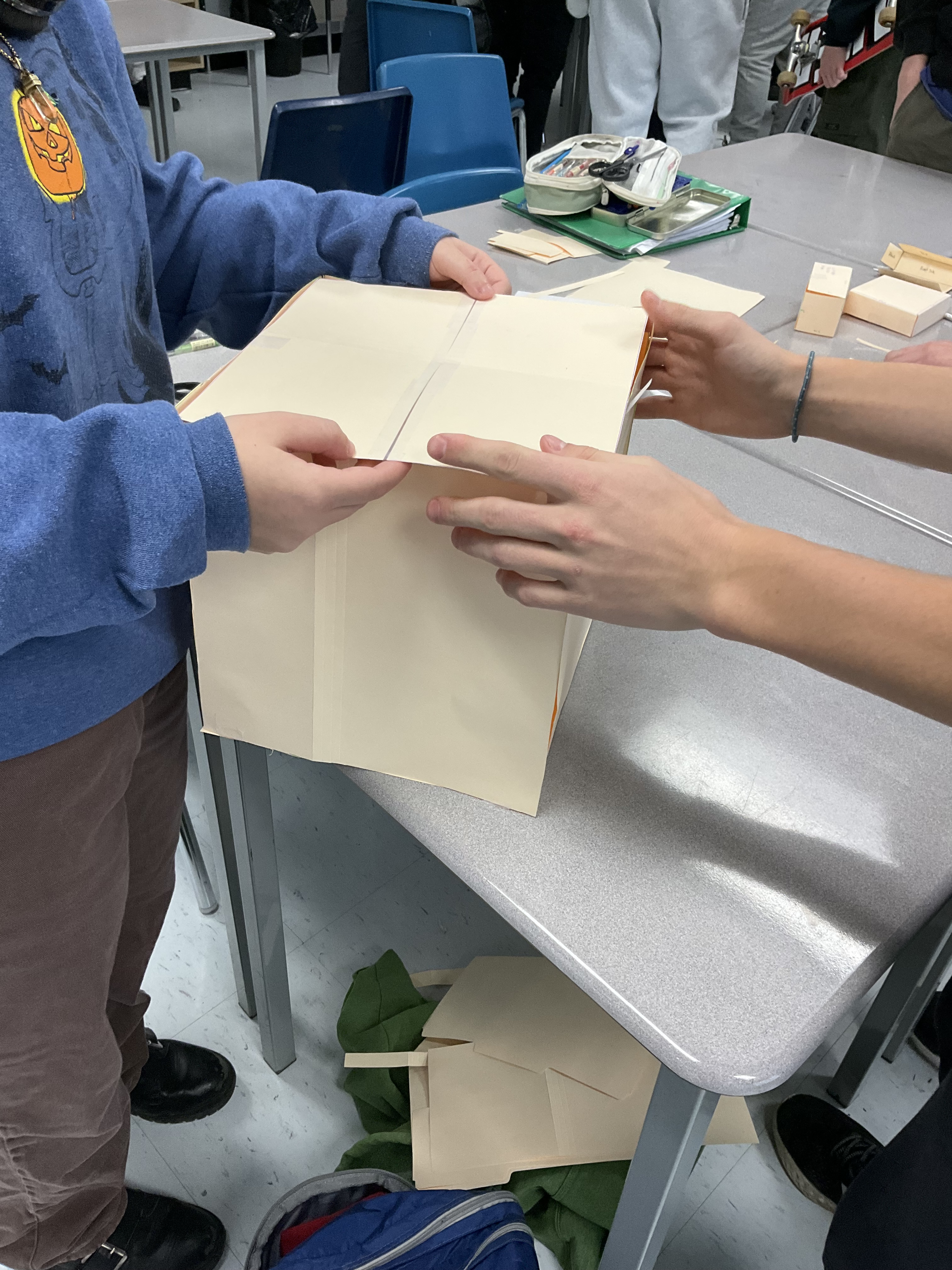
I was quite intrigued to see this box being built at the end of class. We’ll have lots to chat about when we come back to this tomorrow.
Introduction to Fractions
in grade 9 we started working on some fraction fluency tasks. Today we got out the big bin of fraction strips and explored the connections we saw.
We noticed that the denominator showed how many equal sized parts that the 1 is split up into. We also noticed that when there are more parts each part is smaller.
Then we looked at how to make some equivalent fractions. We noticed for all of the things equal to 1/2 they had even number denominators. For all of the ways to make 1/3 the denominators were all multiples of 3 etc.

Then we started to get creative. We can see here that 1/2 can be written as 1/6+1/6+1/6 or 3/6. But it could also be written as 1/3 since 1/6+1/6=2/6 which is equivalent to 1/3. So we know 1/3+1/6 is another way to write 1/2.

Next we looked at this statement. 1/4=1/12+1/6. To make sense of this students saw that the 1/6 is also equal to 1/12+1/12 so we could write 1/4 as 1/12+1/12+1/12 which is 3/12. If we divide both the numerator and denominator by 3 we get 1/4. We know that if we split 1/4 up into 3 parts each one will be 1/12.
This could be written as 1/4=1/12+2/12. We saw that this could also be a subtraction. 1/4-1/6=1/12 as well.

We showed that we could start with the question written in fractions, model it, build it in the same sized pieces and then get the answer. 3/4+1/8 was the question. We built it as written. Students then saw that we needed to make each 1/4 into 2/8. Then we can count the number of 8ths.

next we tried adding 1/4+1/2+1/3+1/12. We decided that it made sense to write it as 12ths.
3/12+6/12+4/12+1/12=14/12 which is more than 1. We wrote it as 12/12+2/12 which is 1 and 2/12 which can be 1 and 1/6, which is exactly what we got with our blocks.

We are going to keep working on fractions for the next little while, building up skills and getting more confident with the concept and the different representations and manipulatives.
The Most Special Triangles
I had the opportunity to teach a lesson in a colleague’s MCR3U class, a course that I have never taught yet, so it was fun to explore a sequence of steps to learn about special triangles.
Here’s my sequence of prompts.


We noticed that all of the hypotenuse calculations resulted in the side length multiplied by root 2. We noticed that the sine cos and tan of 45 all simplified to be the same, regardless of the side length of the initial square.
We worked through a similar task to develop our next special triangles.

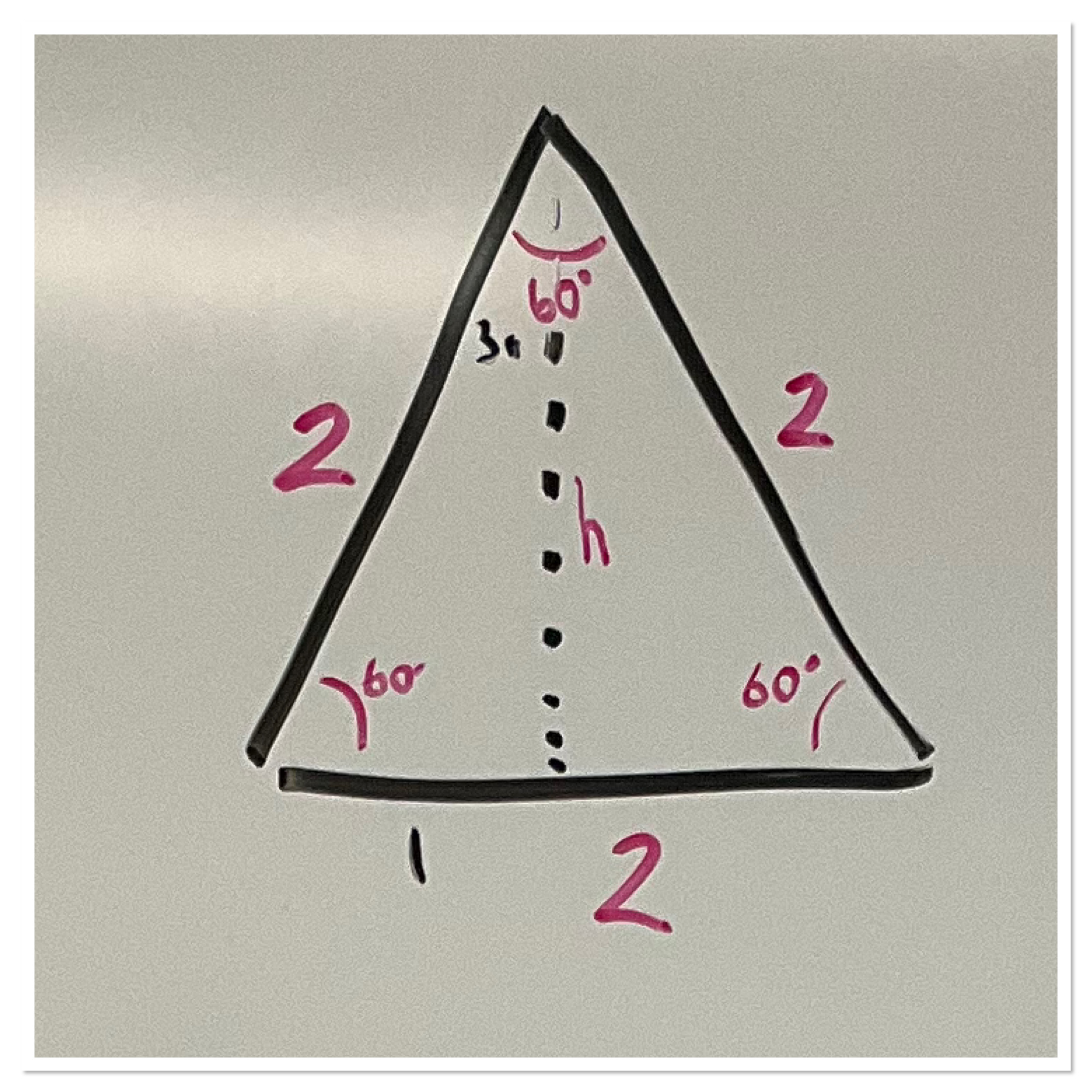
We calculated that the height is root 3. And we see that sin30 and cos60 are the same, and sin60 and cos30 are the same because when the reference angle changes the opposite and adjacent sides now refer to different sides. The adjacent to the 30 degree angle is root 3, and that is the opposite to the 60 degree angle.

Next step was to do a task. This challenge came from Peter Liljedahl’s old website of good problems for teachers.

Students worked hard to represent their thinking. We had some physical representation, some calculations of angles and sides, and some use of the new special triangle learning.

It was neat to see which direction various groups took, and whether we all arrived to the same place in the end.
Math test today
Grade 9s had a test today. We decided to make it fun and students could choose where they sat. We have a small class so I let them have free rein. It was a little chaotic. Some chose to sit so they faced the window and could look out. Some faced the whiteboard so they wouldn’t be distracted. One embraced and encouraged chaos and sat right behind the door, which would have been problematic had anyone needed to come in.
We also used Howie Hua’s test talk routine, where the first 5 minutes of the test is time to talk…pencils down, students read the test over and can talk with friends (without writing) to go over anything they’re confused about. This helps calm everyone’s nerves about the test, and encourages students to read things over and strategize about which questions to answer first.
Our tests have some questions that everyone answers, and some where there’s a choice of “mild” “medium” or “spicy” questions to do. The questions have more complexity, more steps, more thinking to do. Answering mild questions is the bare minimum, and earns a level 1, medium done well can earn level 3, spicy done well can earn level 4+.
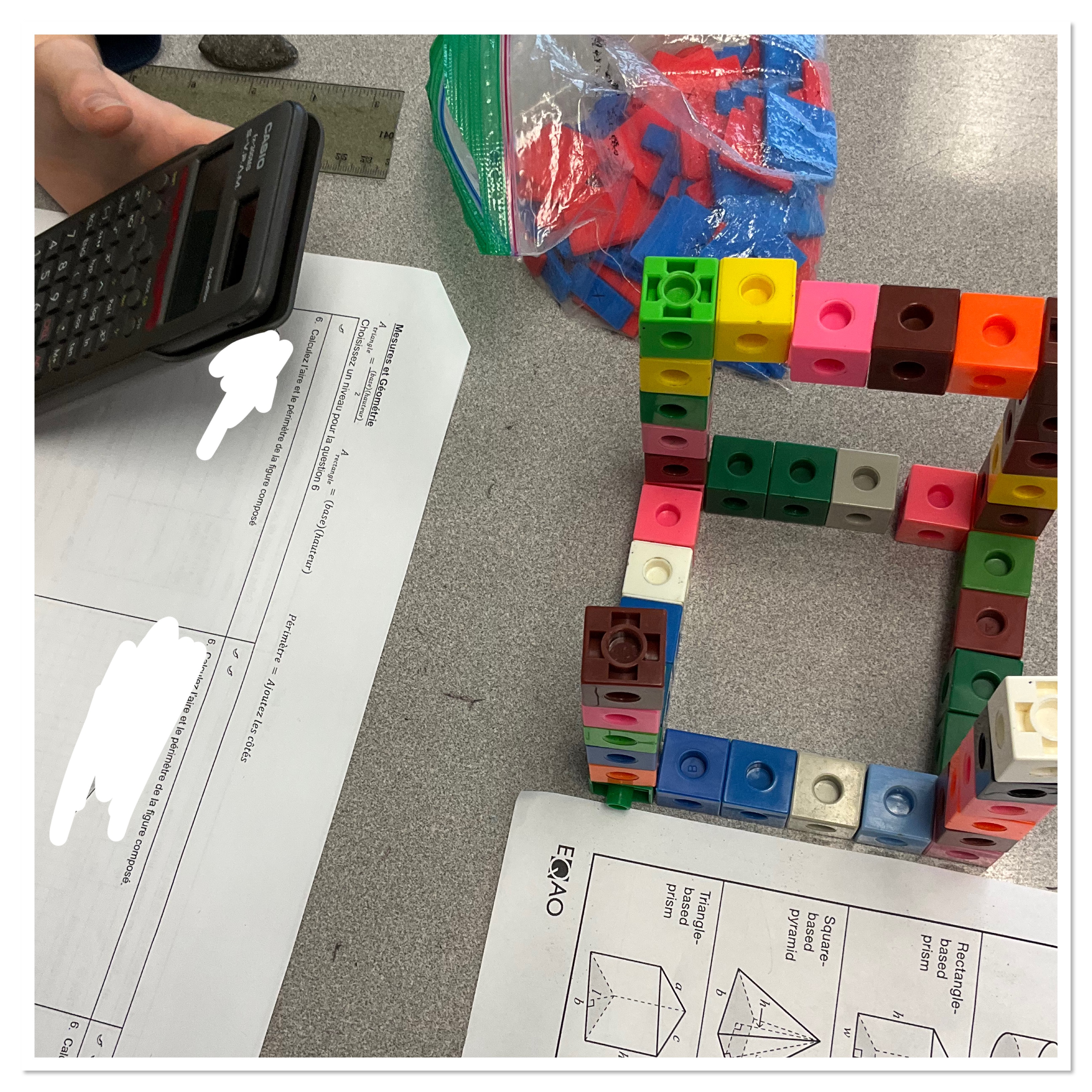
We make sure everyone has what they need, the same manipulatives as we use in class are available for the test. This test some students used algebra tiles, and linking cubes to help model the algebra and measurement questions. There’s also a little “roche dans la poche” (a smooth stone) that’s kind of like a worry rock that students have to help keep us grounded and focused.
 Ms. Bearse's Site