Speed dating in grade 9
 We worked in pairs (across from each other) to solve a problem involving building a model of an expression using exponents, and another with a simplification problem.
One side of the table stayed as “experts” and the other side of the table shifted one seat to their right. They now did the question in front of them, with the help of the expert. 
Then the other side shifted one to their right, and tried the next question, helped by the expert who had just completed that question the round before.

This method of group work is called speed dating because you meet with a partner for a short time, and then work with other different partners over the course of the class. 
We’re clearing up misconceptions, and practicing different ways to represent expressions both with algebra, and with concrete models.
In other news: our beans are starting to sprout!

Grade 10 Investigation
We looked at where to locate the sprinkler head if we wanted to water plants that are at A B C and D. We used the intersection of the perpendicular bisectors to find the point equidistant to all 4 points.

Math Music Helps!
Yesterday we were factoring polynomials, and we heard the factoring gangnam style song.
Today we were working on some new problems, involving sum and difference of cubes, we wrote out the polynomial and used the factor theorem to attack the problems.
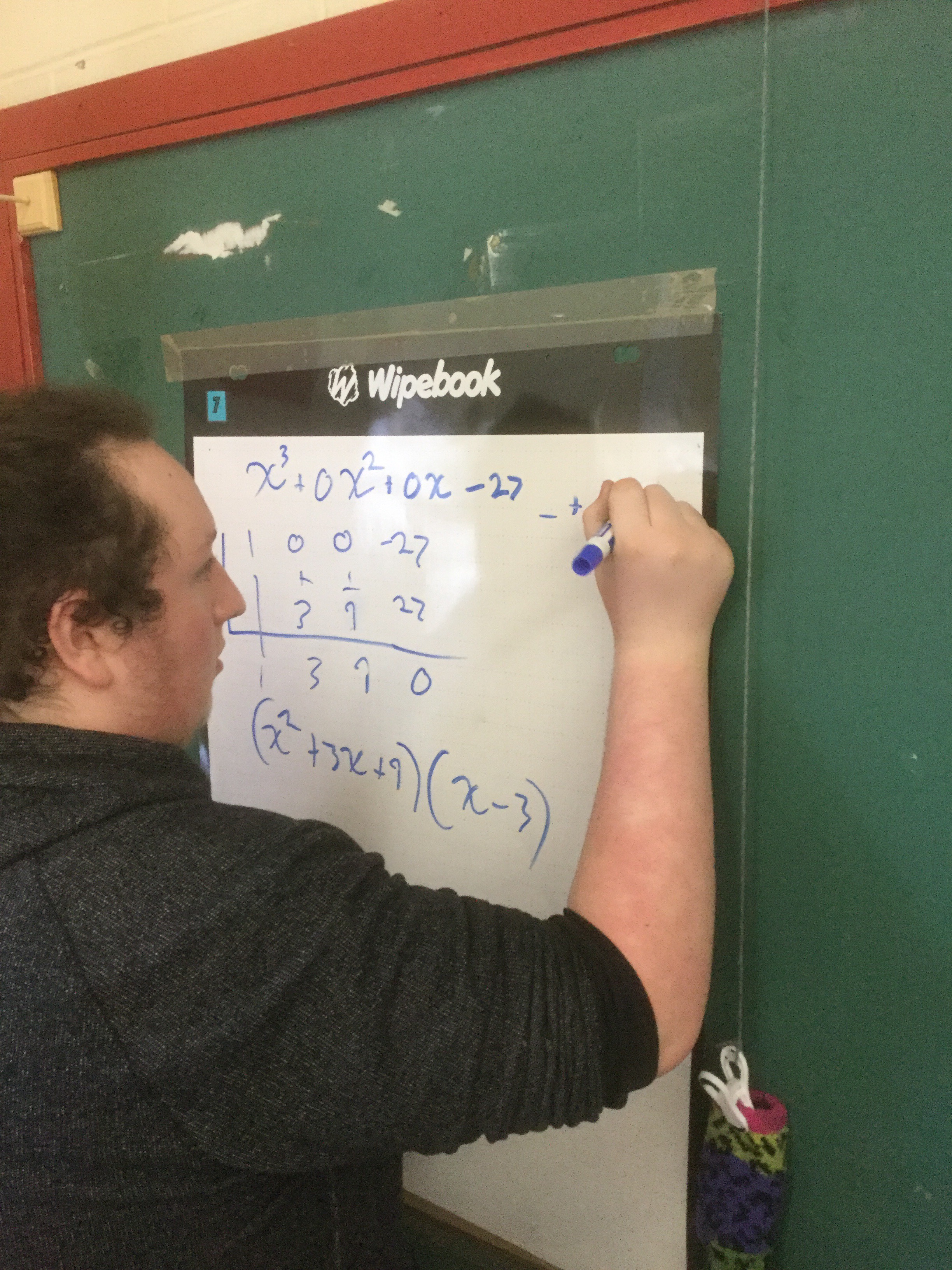
We looked for patterns, and made generalizations…and many students referenced using SOAP to help solve the problems
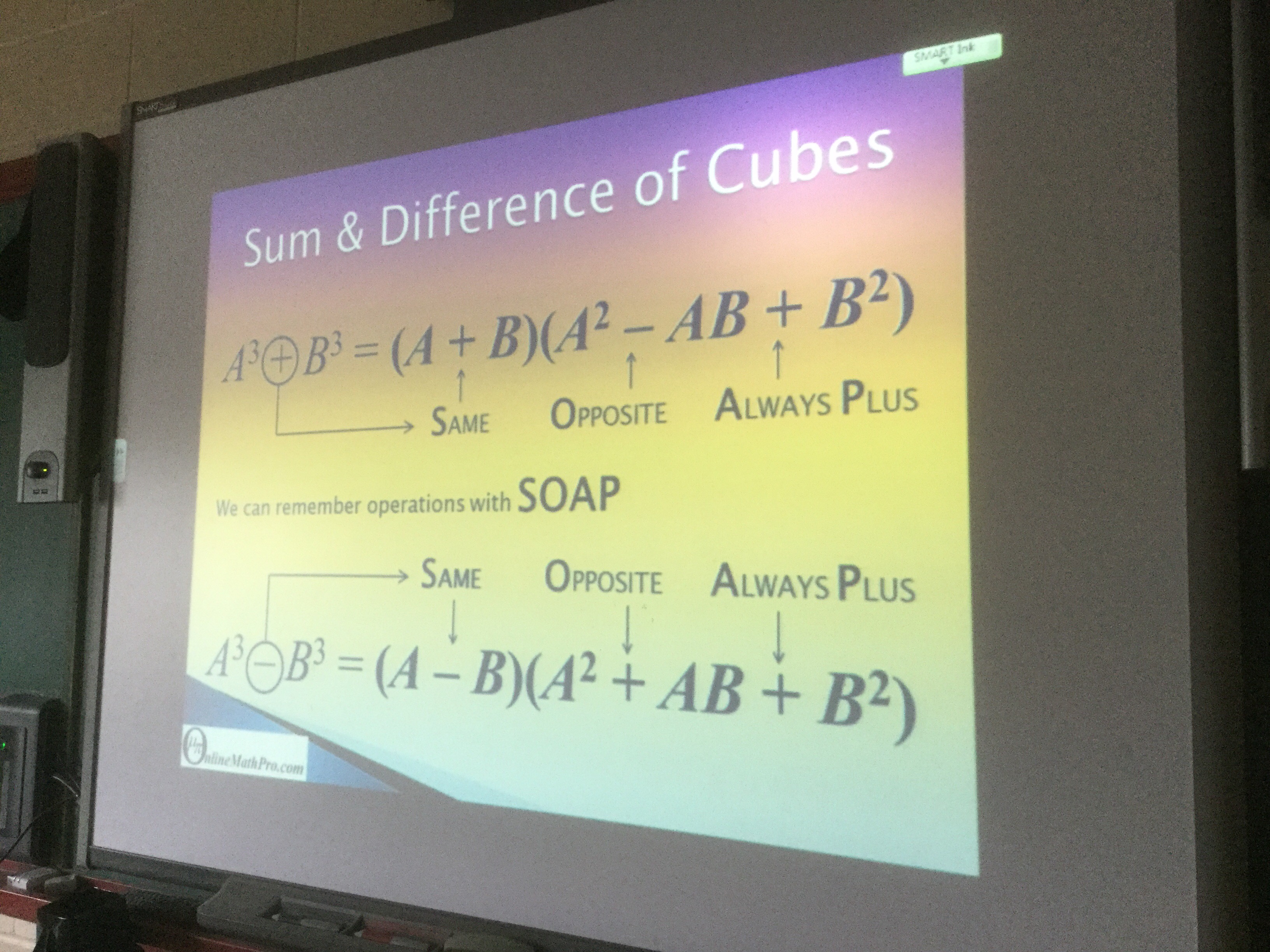
This was a reference from the wonderful song we heard the day before. Sometimes these catchy math songs can help us remember strategies and patterns.
Making plans for our portfolio submission
 Grade 9s are working on portfolio submission #2 all about surface area, perimeter, and volume, and understanding the connection between the algebraic and geometric view of exponents. We looked today at the important parts of their prompt, and how to be sure all parts get answered in their writing.
Word problems
Grade 10s are working on literacy activities a lot these days. Today we looked at word problems in math class and applied some literacy strategies as we read.
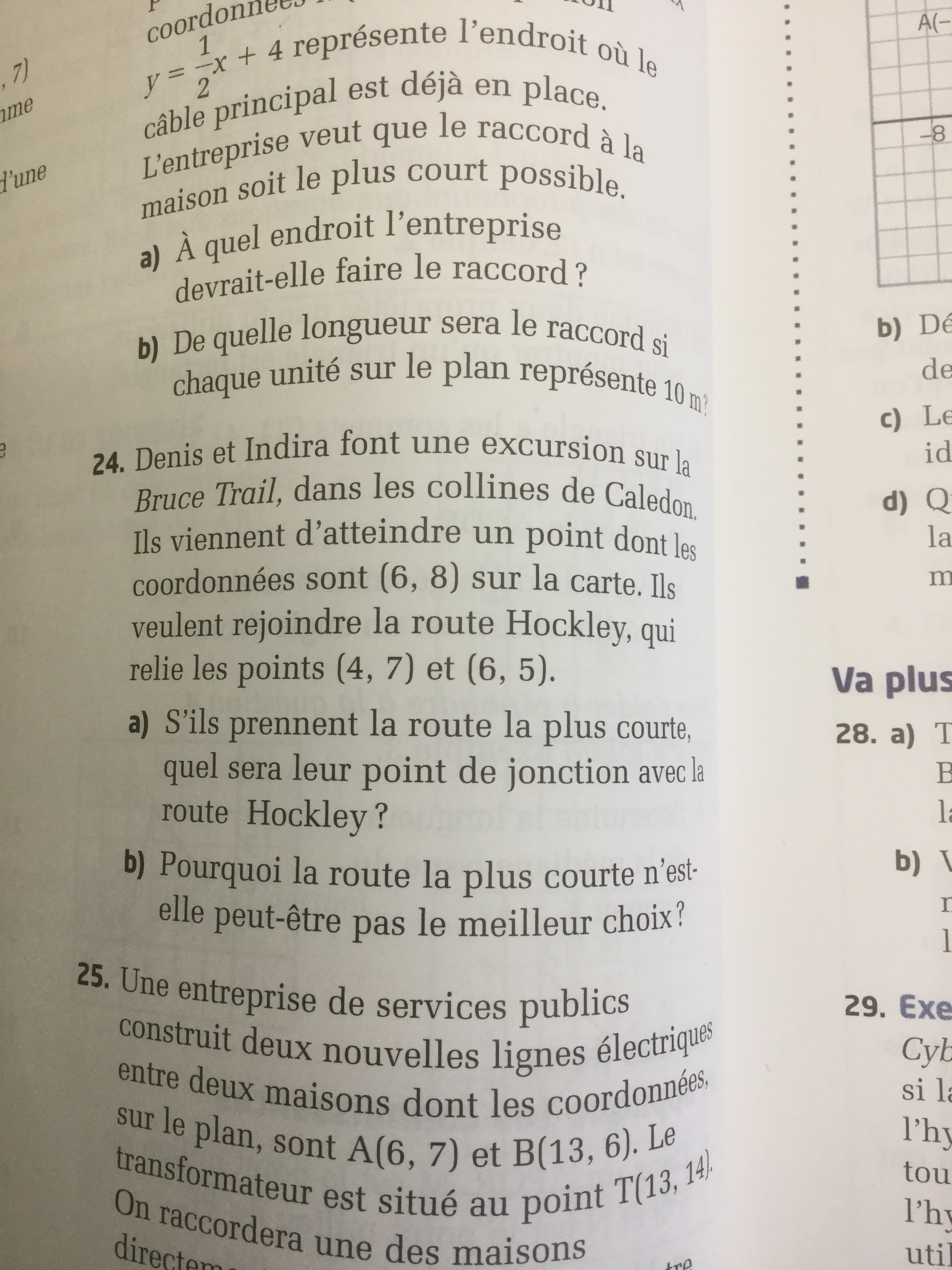
Step 1 is to read the problem a few times, and to try to make a picture to visualize the situation 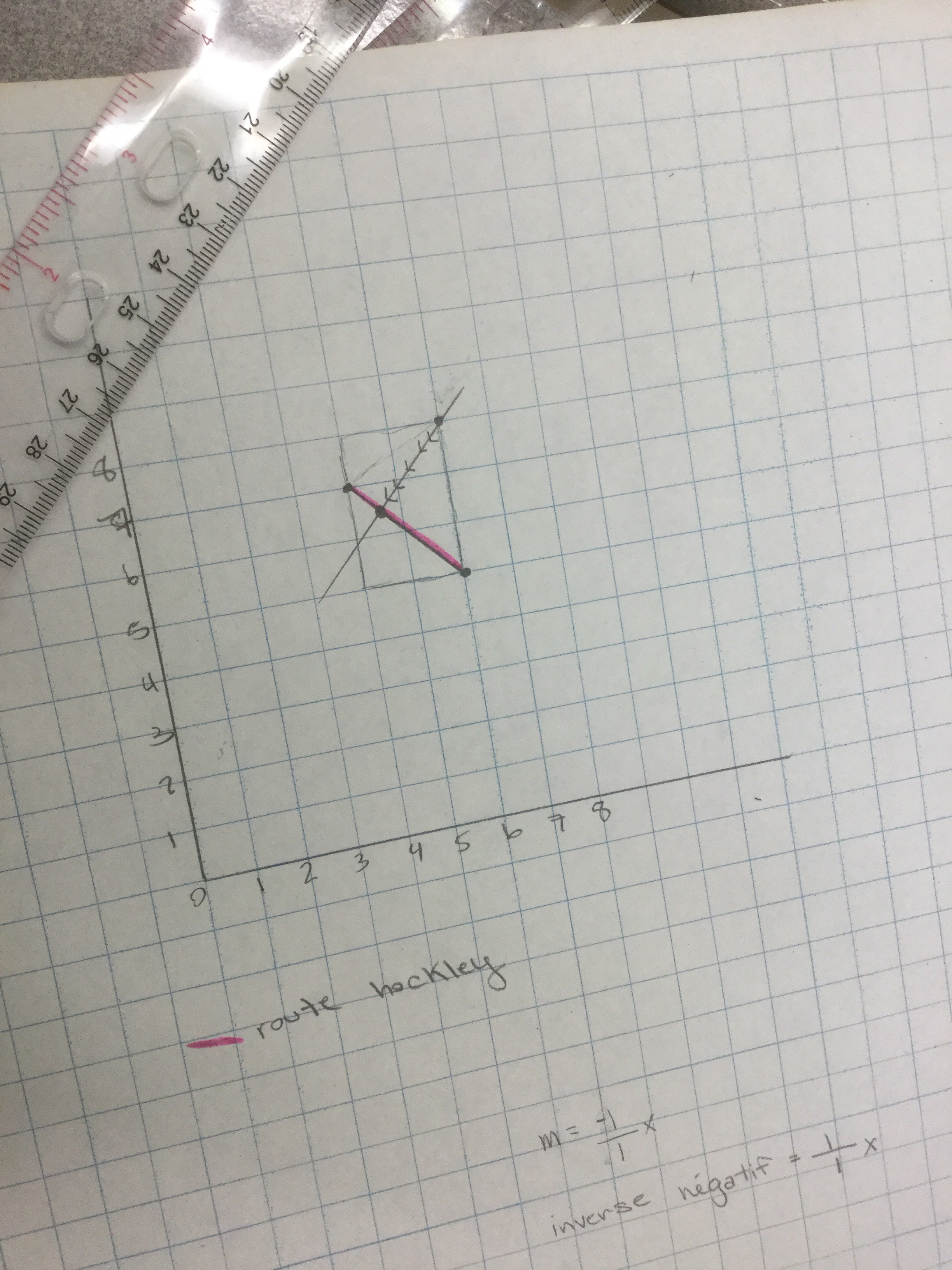
We need to then look at our information that we know, and make a good plan. We know how to calculate intersections, midpoints, slopes, distances….we just need to figure out what points to use, and what steps help us down the right path.

For some questions, the vocabulary was tricky, and we needed to use our resources to determine word meanings, and look for clues in the context. We also needed to justify our reasoning, and explain our answer for part d. Sometimes there is a lot of language needed for math class!
Evaluating, Expanding, and Simplifying
Grade 9s worked on understanding the difference between evaluating, expanding and simplifying expressions with exponents today.
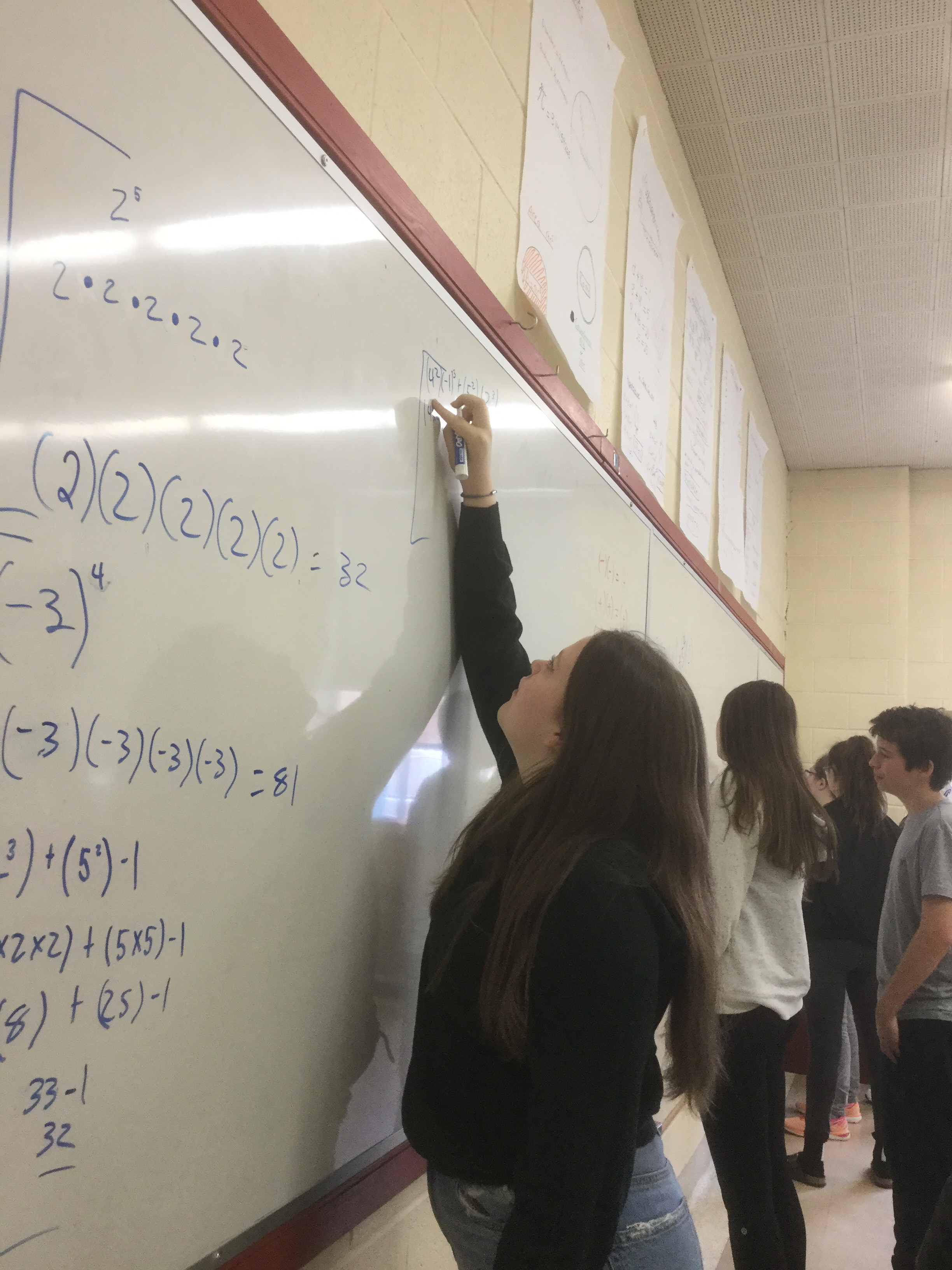
We worked with positive and negative bases, and had order of operations questions in the mix.
While we looked at order of operations, we found that a few key ideas needed some reinforcing. We looked at how we can represent our work with integers on a number line, and with coloured tiles.
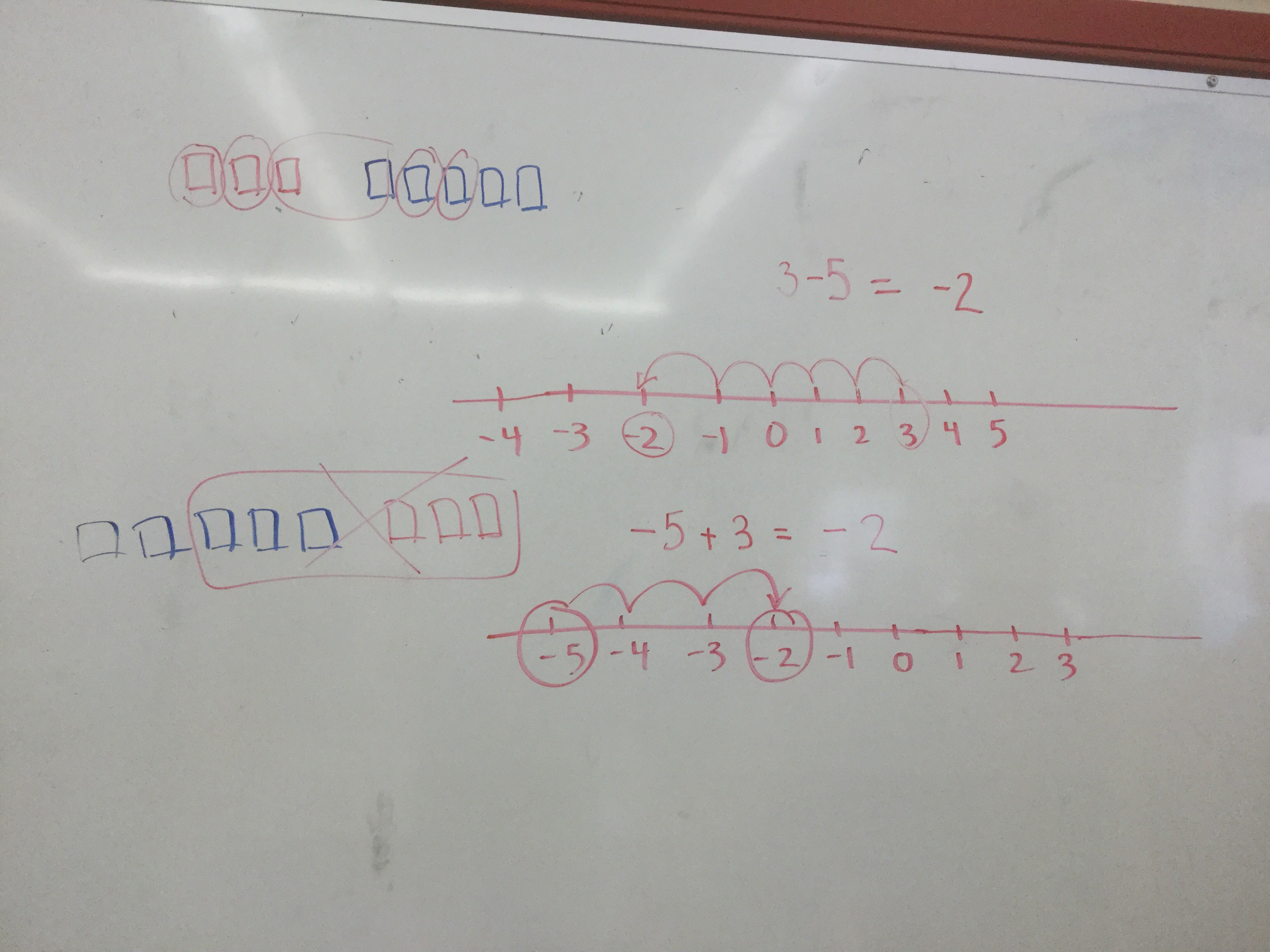
We also looked at rules for multiplying with positives and negatives.
We tested some theories…
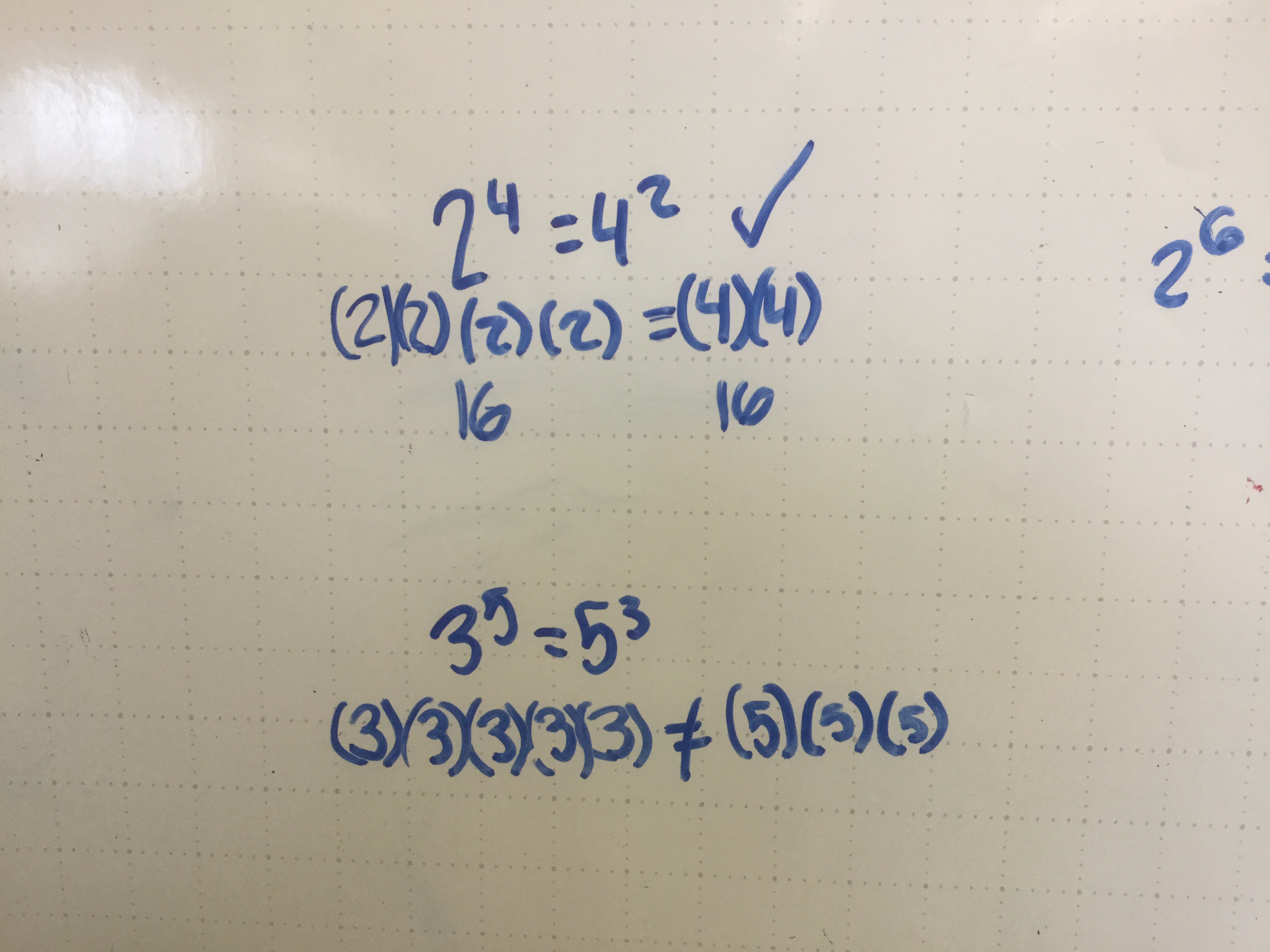
Learned what calculator buttons to use…
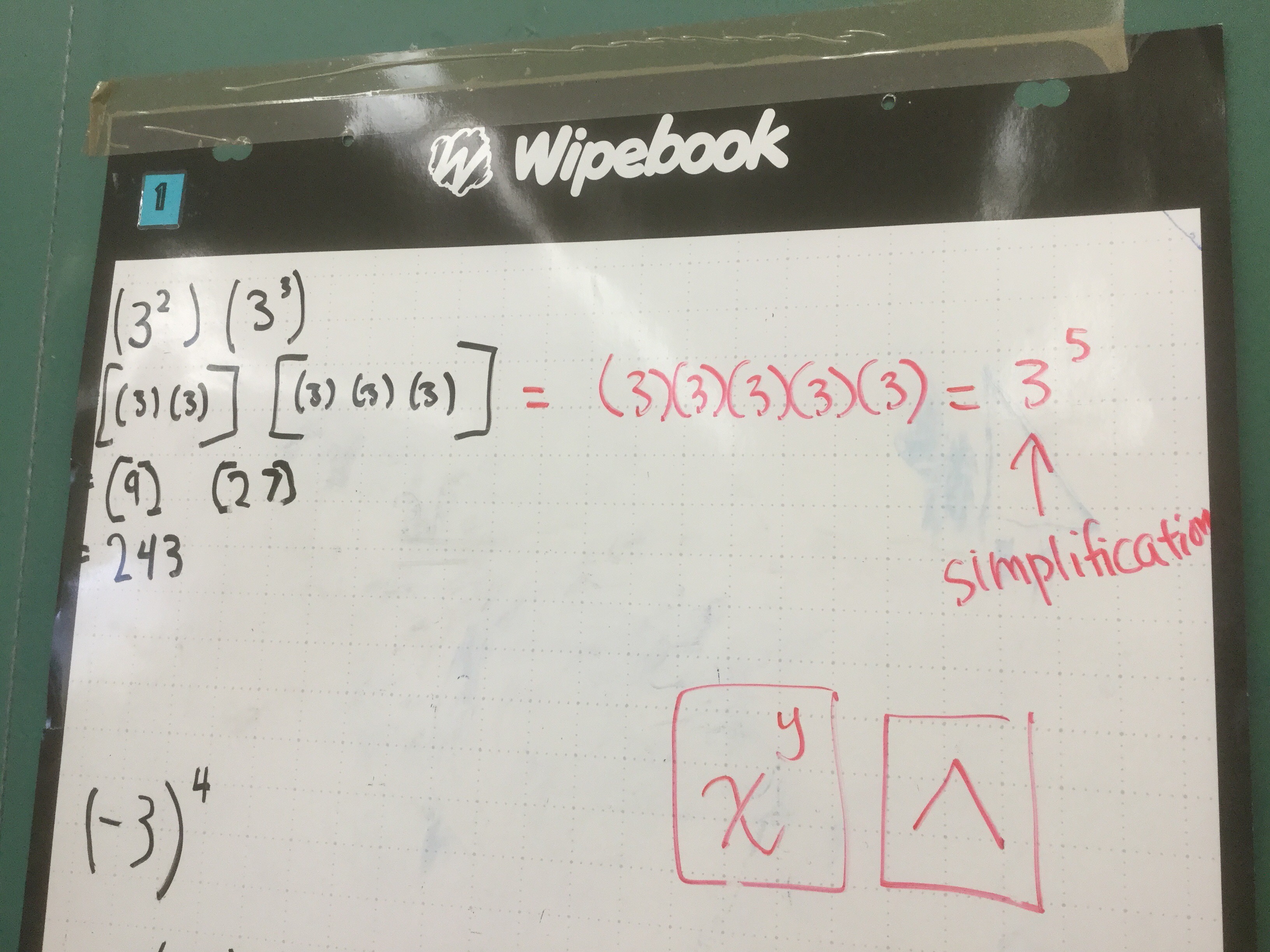
Figured out exponent laws for simplifying…
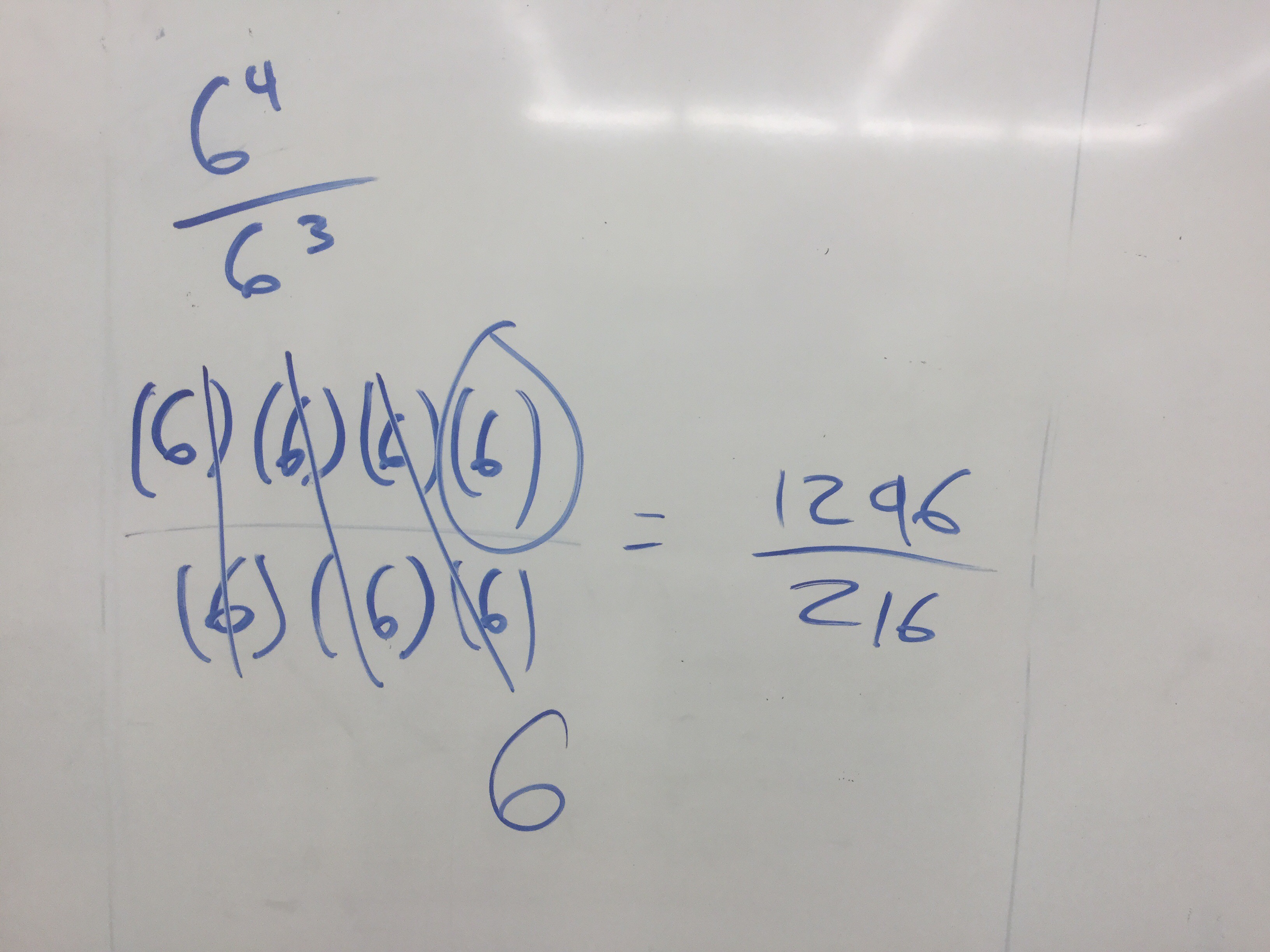
And finally transferred our skills to questions that had variables as the base.
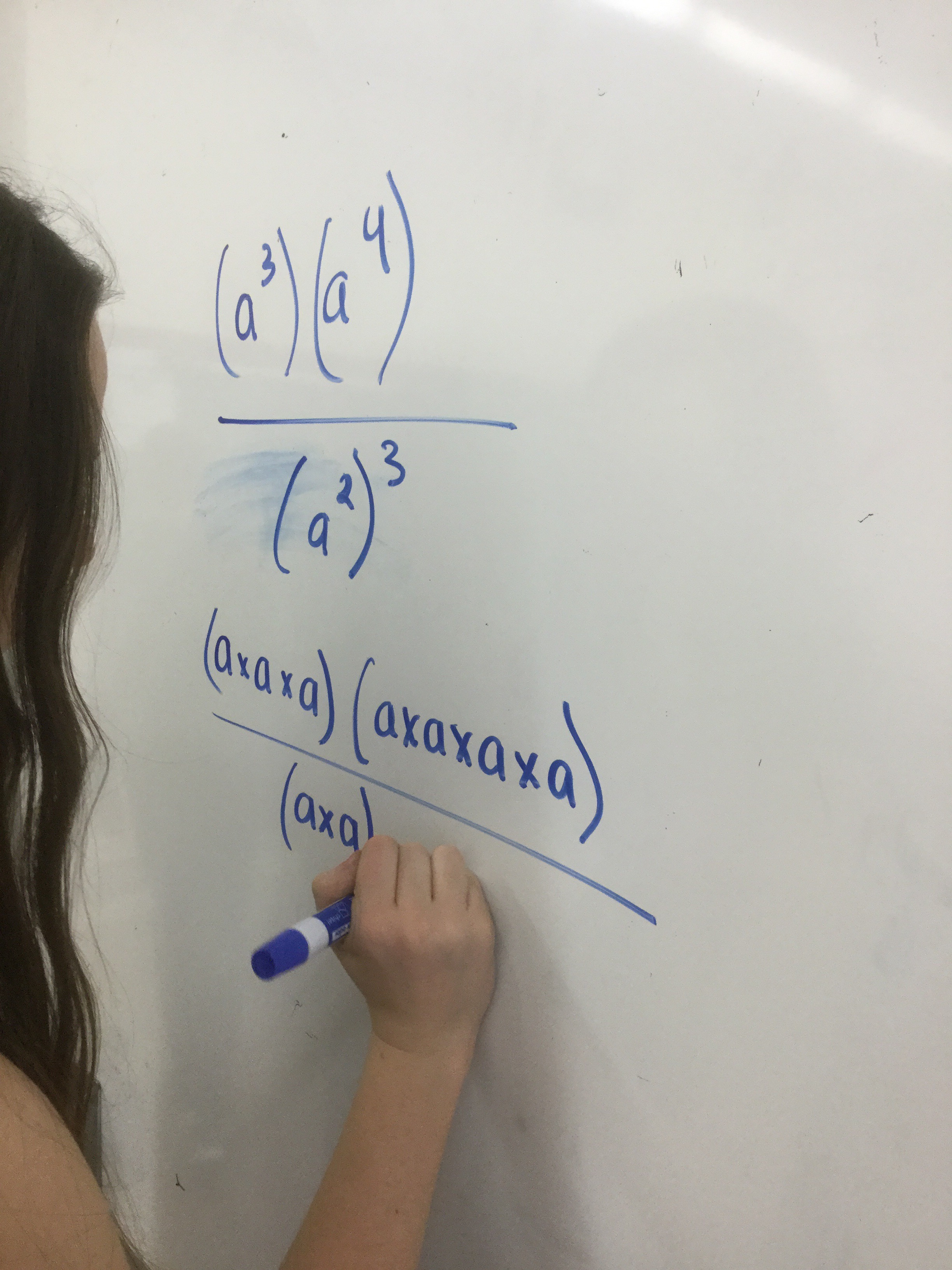
We are working on approaching new challenges with confidence, checking our answers to see if they are reasonable, and working with peers to fix mistakes that we find.
We’ll have a quiz tomorrow to check our understanding!
Visualizing Exponents in grade 9
We are working with areas and volumes and now starting to explore how exponents can represent areas and volumes.
For example, we’ll call one tooth pick x, then this is x squared. The exponent tells us it will be 2 dimensional, and the base of the exponent is x, so that’s the dimension of the square.
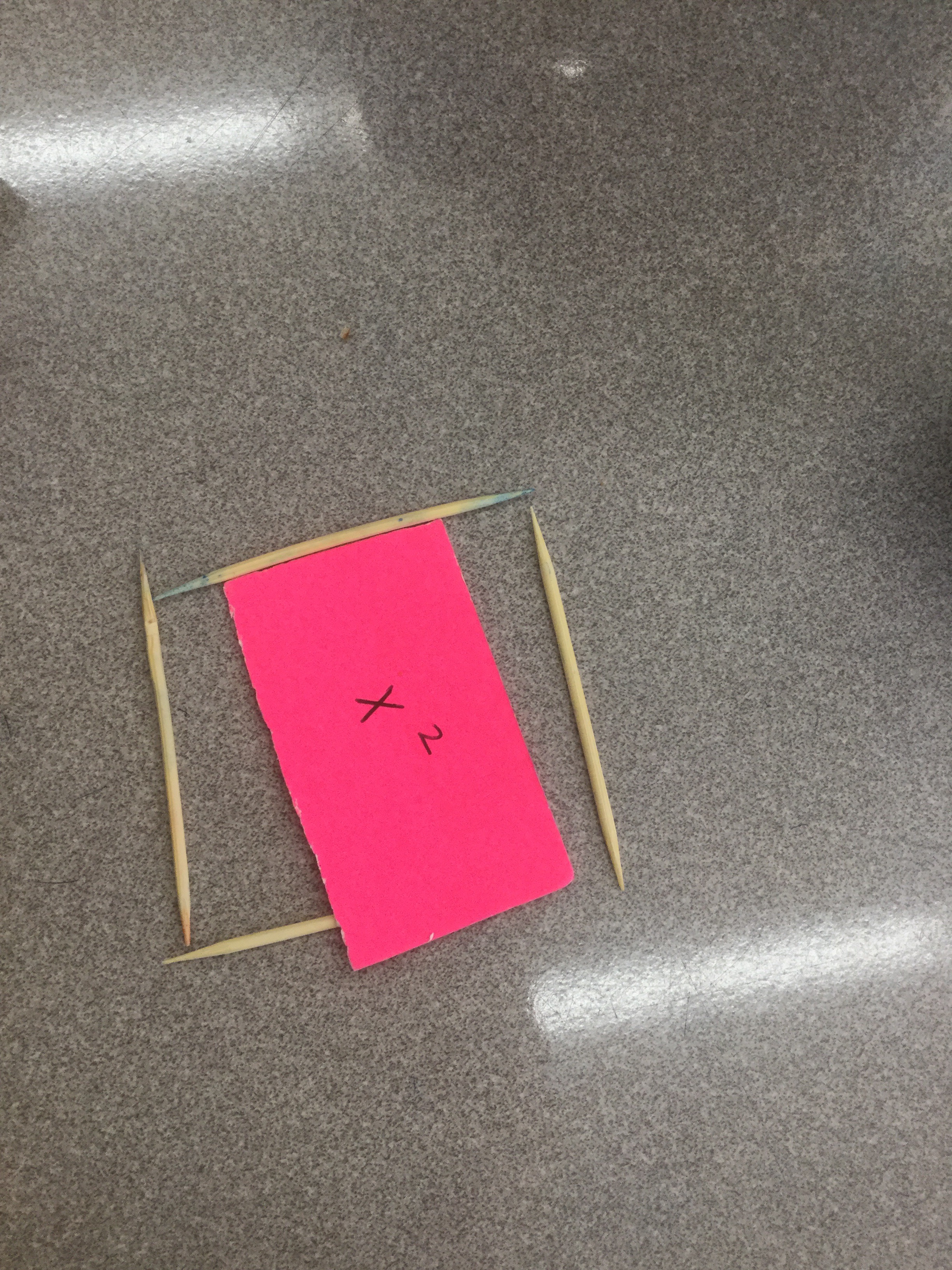
It gets more complicated if we have different dimensions. Here’s a square with side lengths of 2x. The 2x has to be the base of the exponent, so we put it in brackets to show that.

Here’s (2x)^3 or
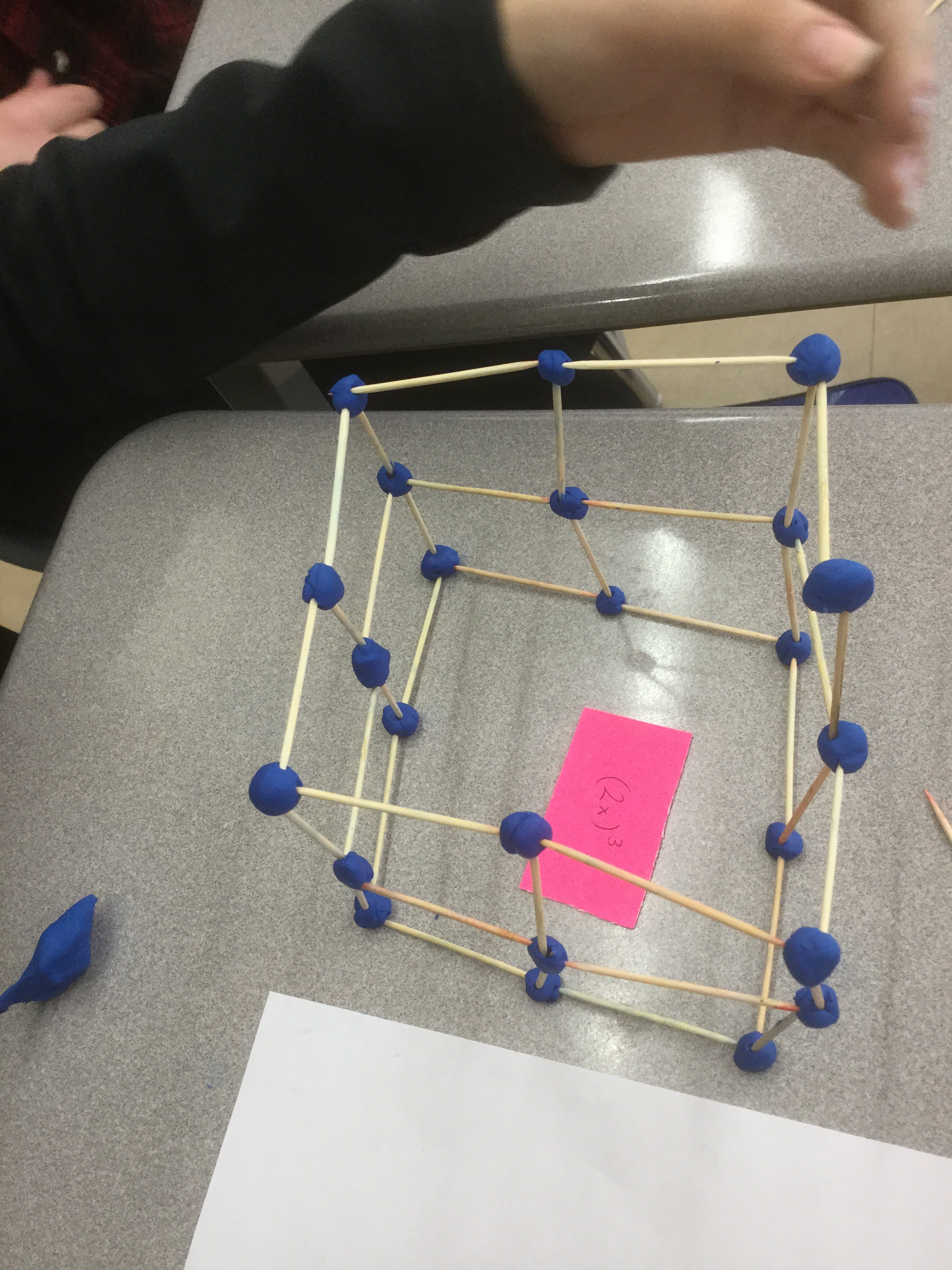
We explored a wide variety of expressions that are 2 dimensional and 3 dimensional, with brackets and without.
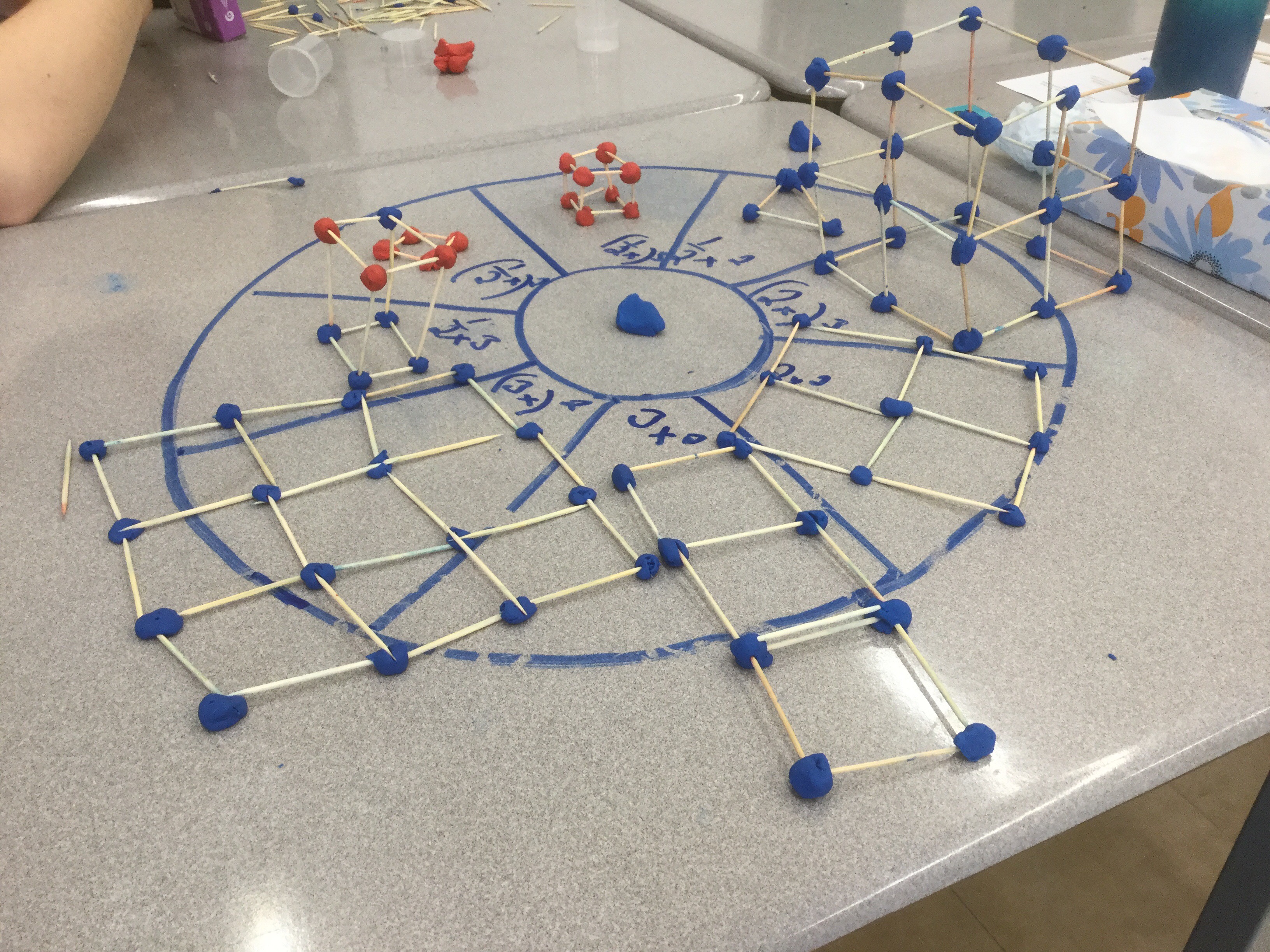
Having a good visual understanding of what exponents mean will help later on!
Problem Solving Success
Grade 10s are working on making good strategies and presenting their thoughts clearly.
When given 4 points we try to determine the type of quadrilateral. Sometimes a freehand sketch can give us enough information, other times we need to reach for a grid.

Other times Desmos is faster.

We then use our tools (calculating slopes and distances primarily) to work through whatever challenges we are given.


We are getting better at organizing our thoughts so we can check our work, and our peers can follow along.

Long division with polynomials!
In grade 12 we are working on our long division skills using polynomials. We are going to be able to use these skills to help us factor cubic and quartic functions.
A puzzling pyramid
Grade 9s challenged themselves today to calculate the volume and surface area of this container.
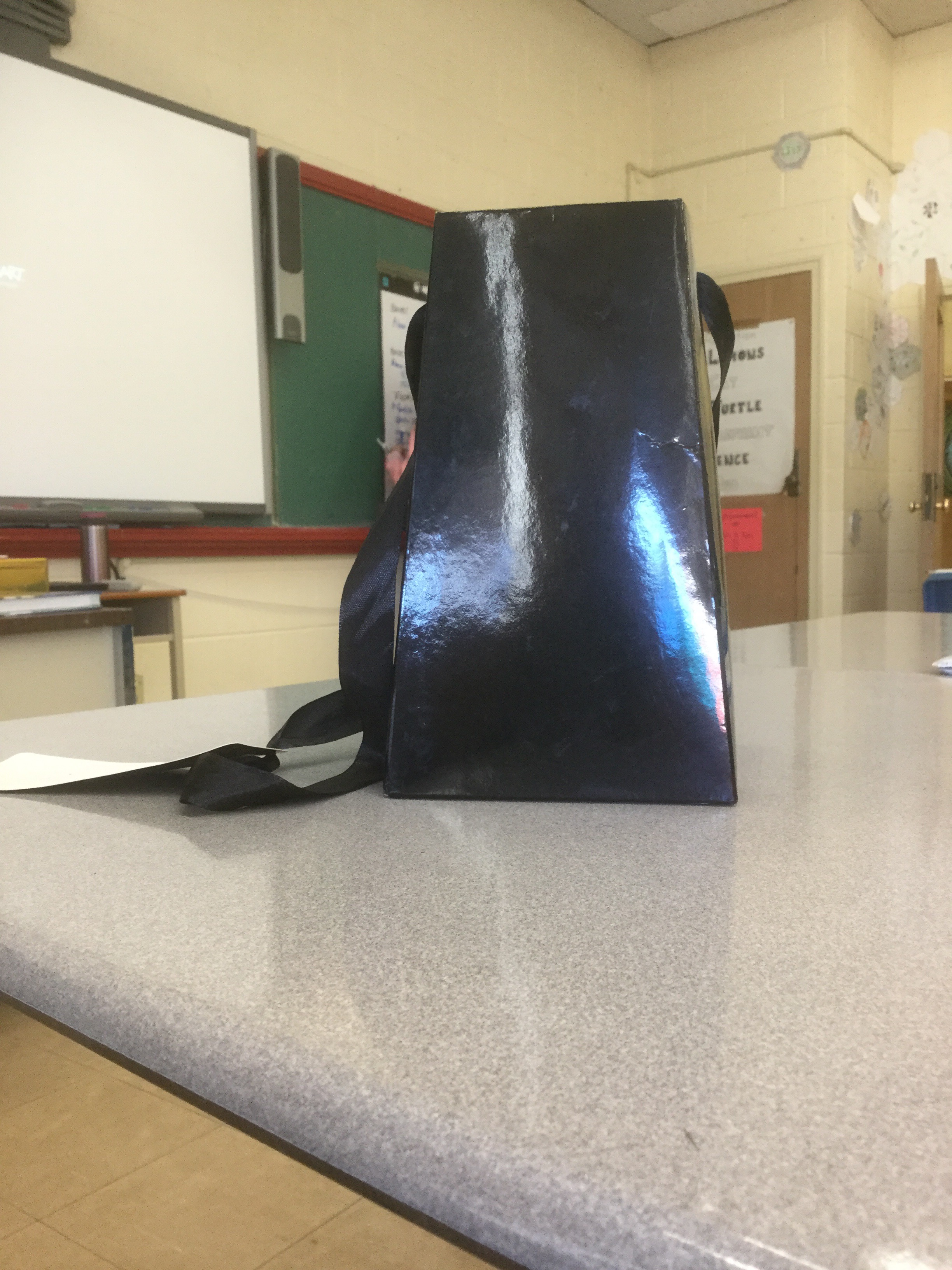
The container is not a rectangular prism. The square base on the bottom is larger than the square base on the top. The following measurements were provided: the side length of the bottom square was 12.5cm

The side length measured along the edge was 21cm

And the diagonals of the top square are 12cm

We worked hard and realized quickly that the pythagorean theorem would be important on several occasions! We also needed to use our area of a trapezoid song!

Some groups noted similarities to a pyramid, but one that had been chopped.

We noticed that it was going to be hard to figure out the height of the pyramid. The ribbon attached turned out to be a very lucky length!
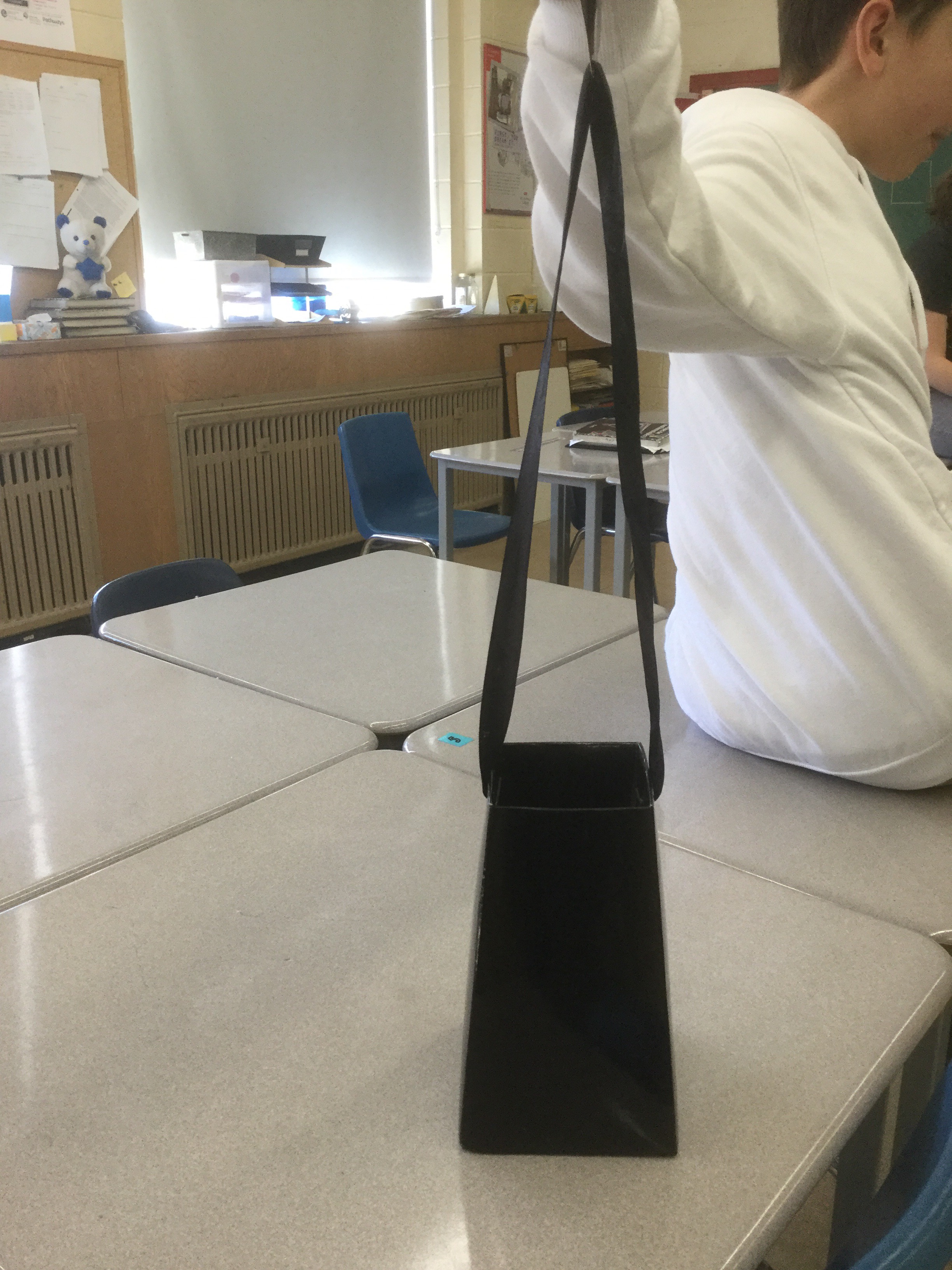
We measured the ribbon (77cm) then worked on figuring out what we’d be able to figure out with that information. We used string on the pyramid model to help us visualize our ideas.

We planned to calculate the volume of the large pyramid and subtract the volume of the small pyramid. We used the pythagorean theorem again using half the ribbon length as an addition to the original height of the trapezoid which combined to make the total slant height of the pyramid.
We learned that a cubic centimetre is a millilitre, and used that to convert our volume to litres.
We compared the container to known volumes (nalgene bottles, or 2L bottles of pop) to check for how reasonable our answers were.
One group tested their volume calculations by repeatedly filling a 1L water bottle and dumping it into the container. By doing this slowly, they determined that they had over estimated the capacity of the container, and would have had a big puddle on the floor if they had actually poured close to 3L into the container.
Best quote of the day: “this math class is more fun than my music class!” 🙂

