Grade 12 card sort
Grade 12s are looking at types of functions, and classified many different functions based on categories, like family of functions, domain and range restrictions, asymptotes, number of zeroes

For some we made a number line to help us stay organized.

First Friday Quiz in grade 9
We wrote a quiz today which involved many applications of the pythagorean theorem. The questions all came from past years’ EQAO tests. We will do a formative quiz each Friday to practice communicating our solutions and show what we know.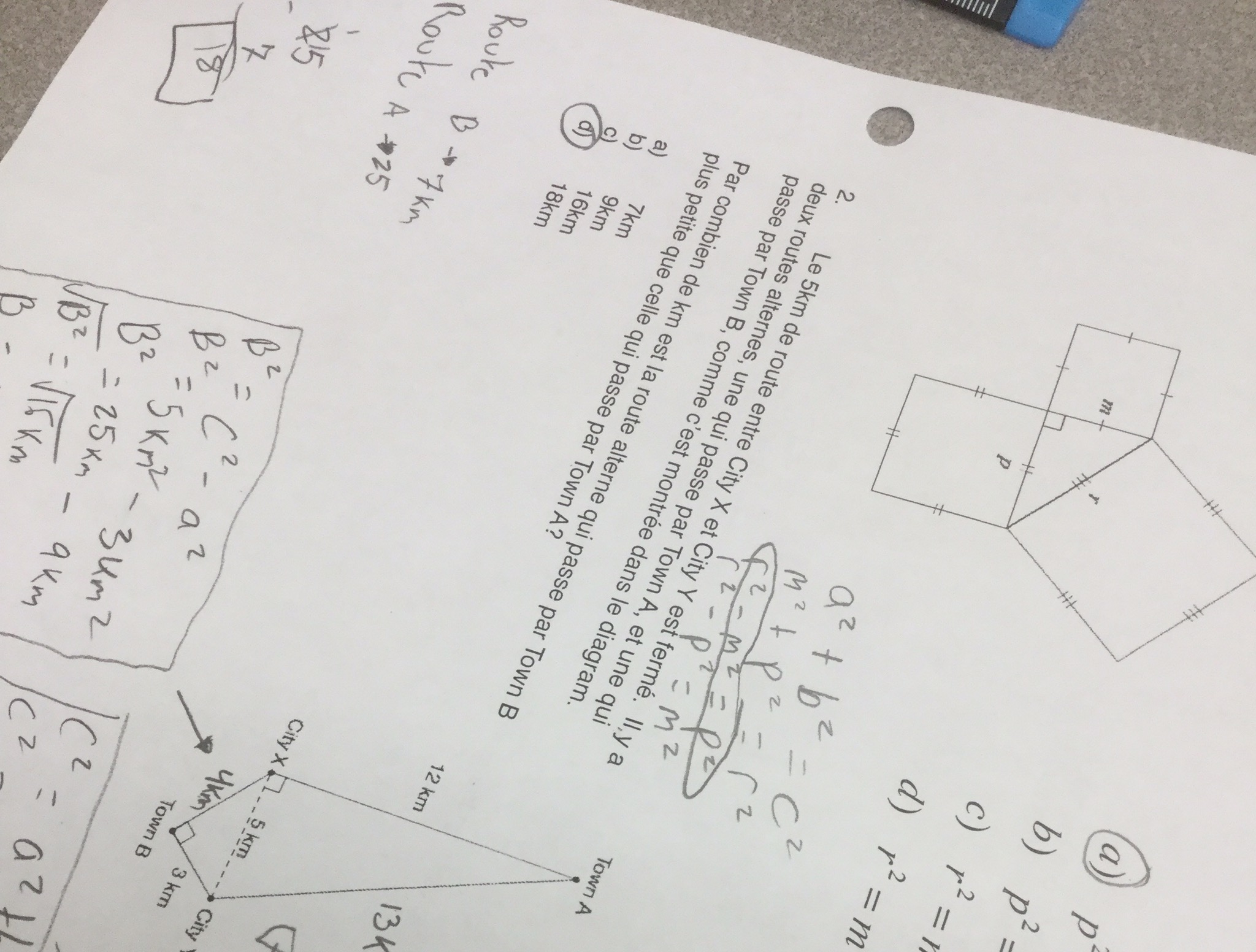
We talked a little bit about what some key vocabulary words are, like circumference, radius and diameter, parallelogram, rhombus (losange), octagon etc. Then we read the first book in the Sir Cumference series.

We also emailed our families to start off our semester of excellent communication! Over the weekend everyone needs to get a calculator, and also measure length and width dimensions of any TV you can. We are going to graph our results.
Grade 12-Function Symmetry
Please explore function symmetry on khanacademy.
There are some practice questions here to try.
Grade 9-Pythagorean Theorem
Regardez le vidéo. Que remarquez vous? Comment est-ce que c’est relié à ce que nous avons fait lundi?
Ce soir, prenez les mesures de longueur et largeur de vos écrans de télévision. Nous allons les étudier en classe demain.
Happy Valentines Day
If you are looking for some valentines cards to send to your favorite math or science buddy, check these ones out. Here’s an example, but there are 40 or so to choose from!

What a week!
 All students in my classes should log in to google classroom (invites were sent by email to board accounts) and do the desmos activity posted. Desmos activities work best on computer. Most work fine on a tablet. They do not work on phones. Desmos activities are accessed by going to student.desmos.com and entering the codes provided (all that info is in the google classroom).
Stay safe!
This is new!
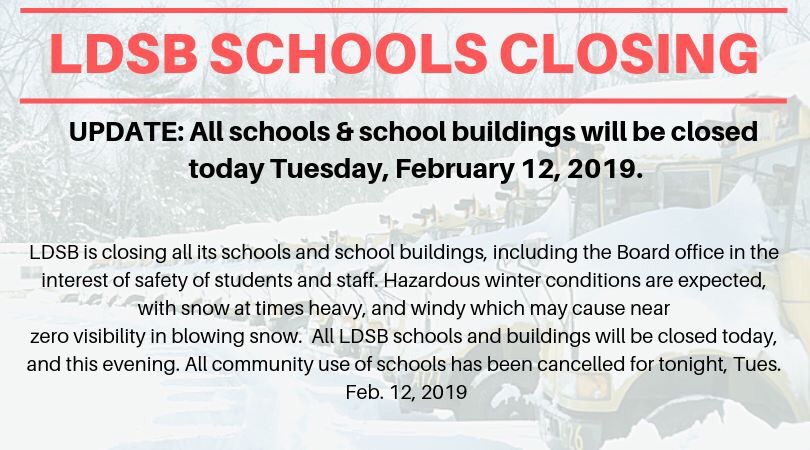
If you are looking for some inspiration today have a look at this video. We’ll watch it in class tomorrow.
Grade 10: graphing lines
Today in grade 10 we reviewed how to graph lines using their equations. We used desmos to help us visualize what the “m” and “b” values affect in the equation y=mx+b.
We then worked on a marble slides desmos task at student.desmos.com.

We had fun making the lines go in the right spots to catch the stars.

Finish up the marble slides for homework tonight grade 10s.
Grade 12: modelling
We looked at a pattern from visualpatterns.org and were given the task to take something from the pattern and model it.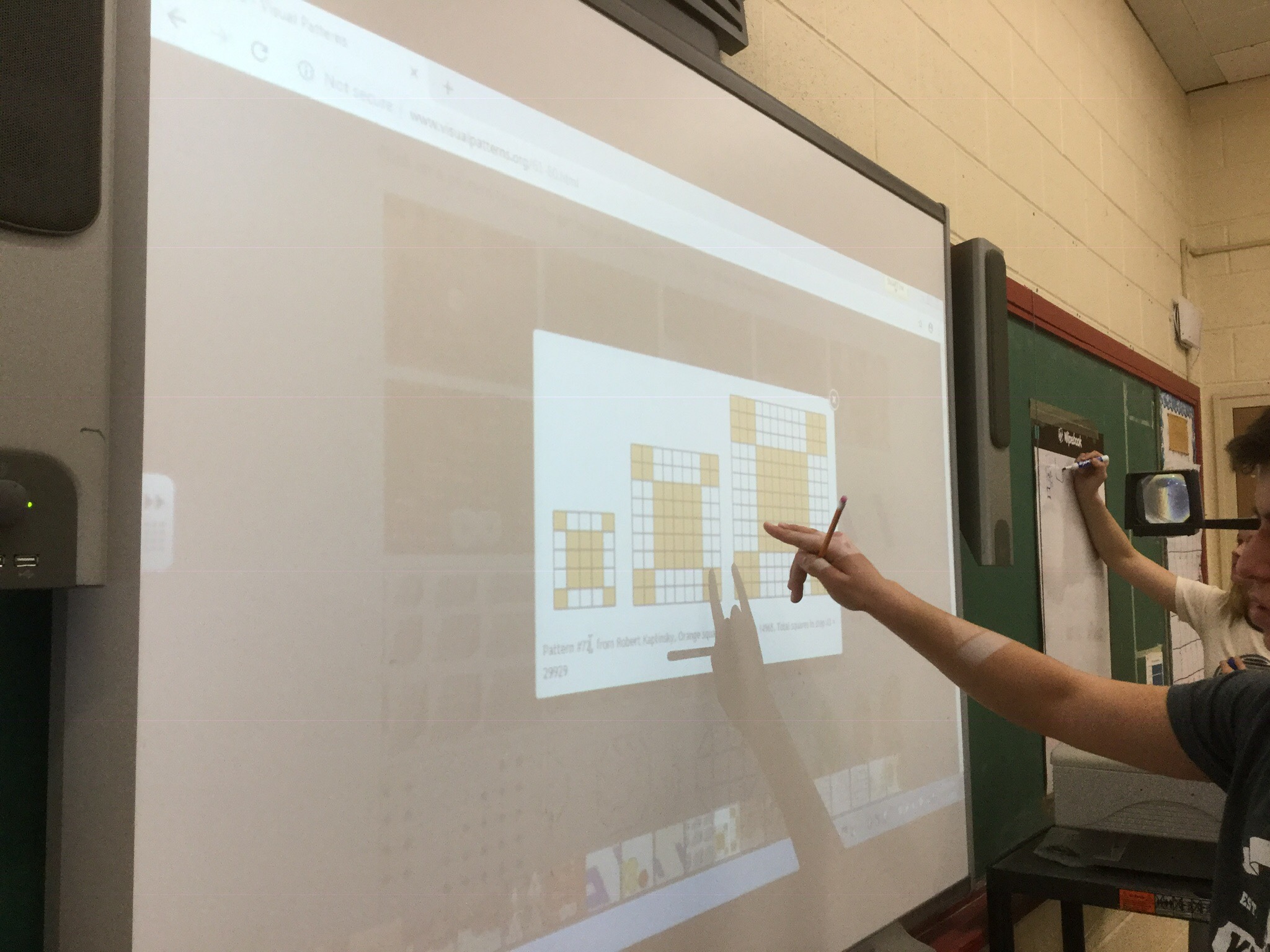
Some groups drew pictures, and used them to make equations (algebraic models)
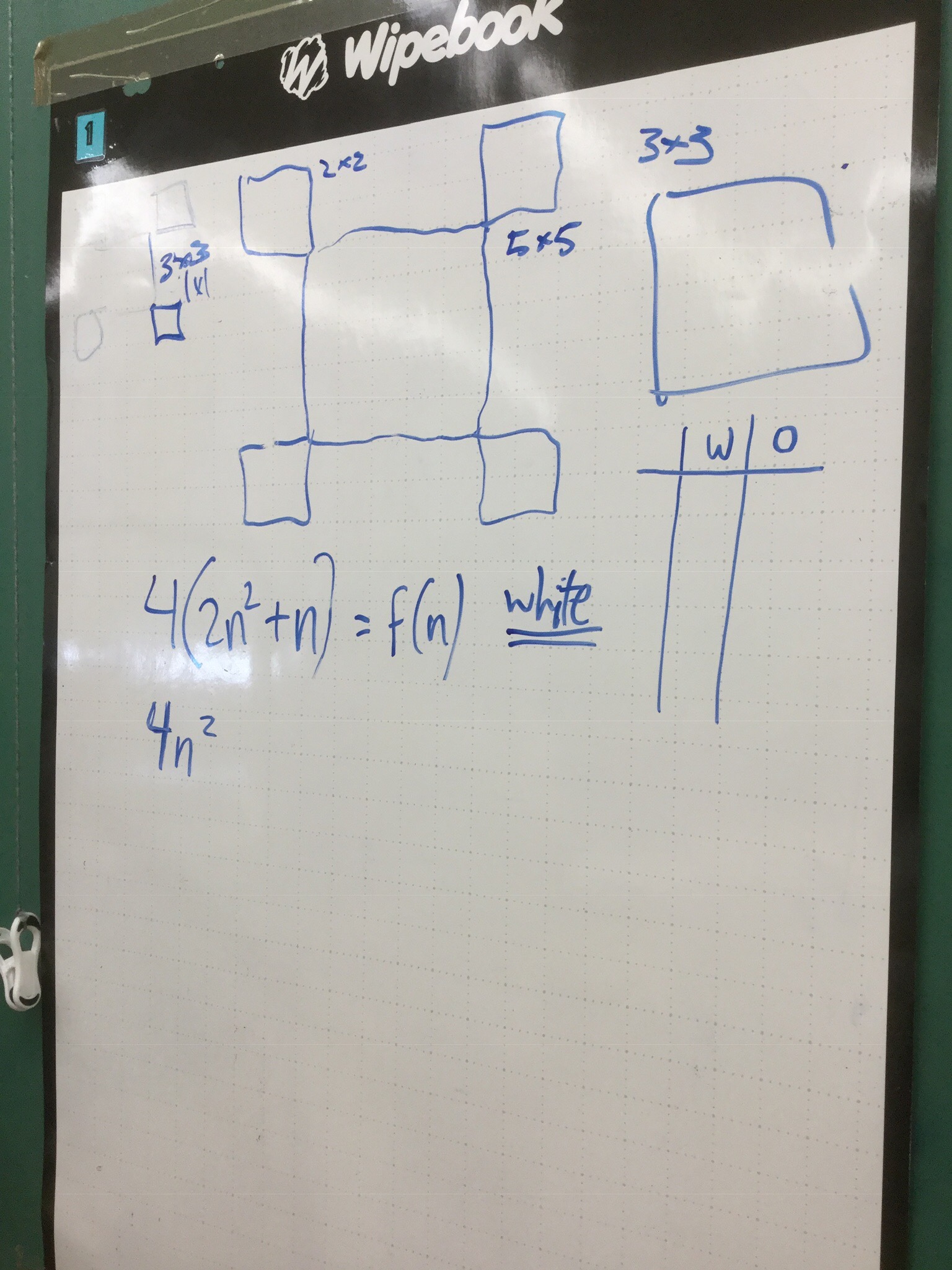
Some groups made tables and looked at the patterns in the numbers. This is a numerical model. We are noticing that the second differences are constant, so that tells us it is a quadratic that we are dealing with.
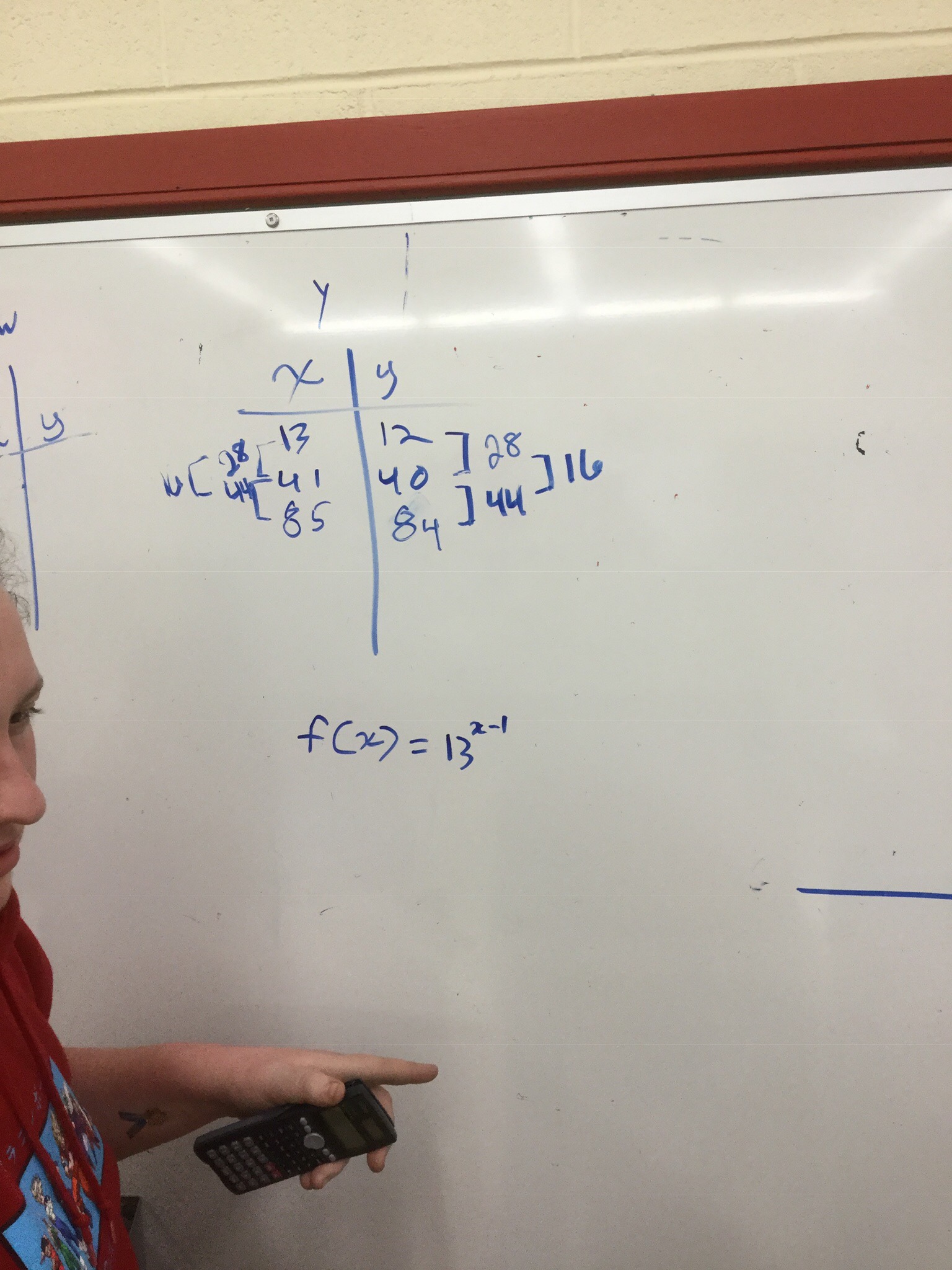
Groups started using graphical models as well.
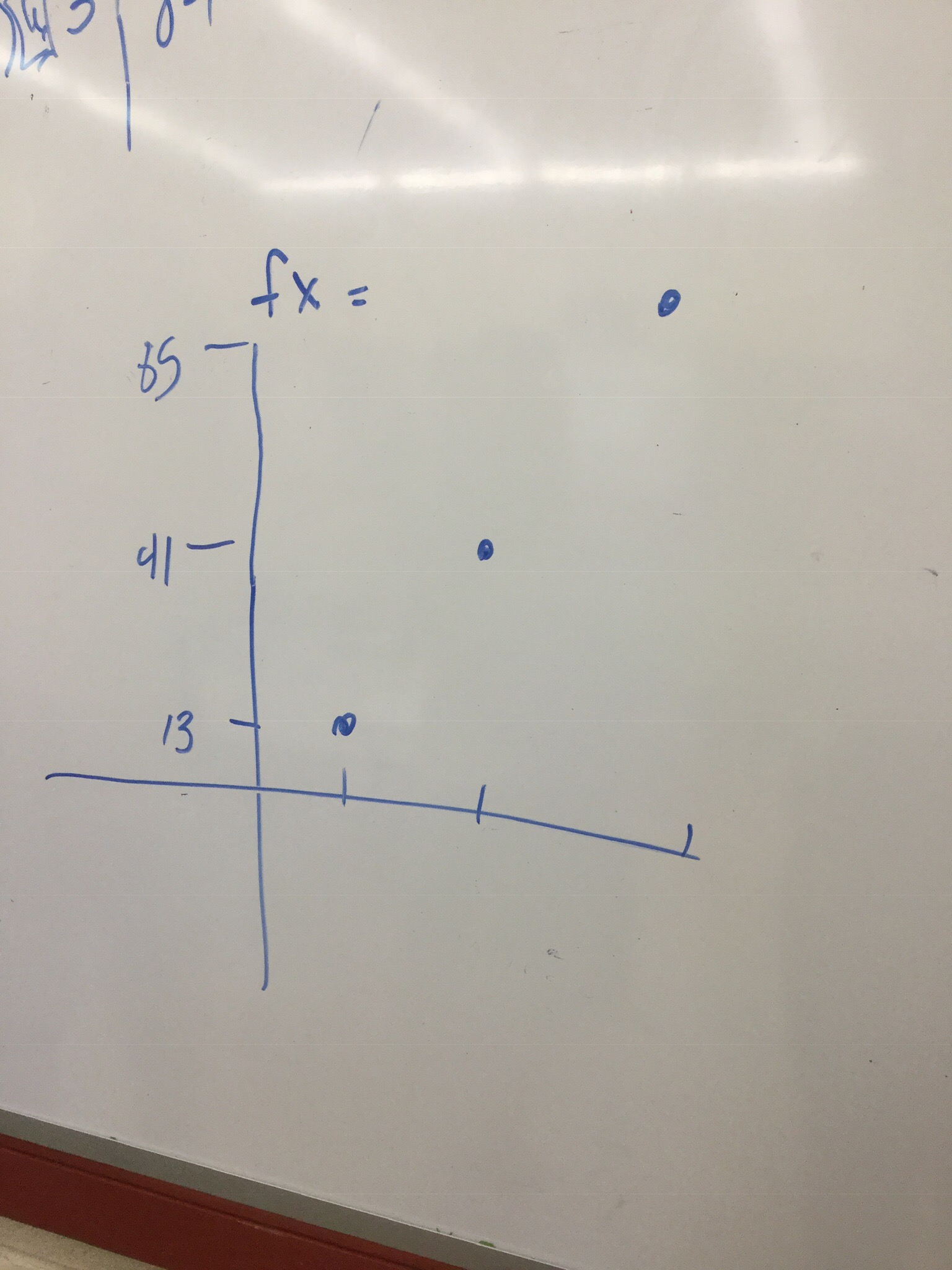
We looked at making a table on desmos and using regression to get an equation. We also explored what the vertex form would look like f(x)=8(x+0.25)^2+0.5, since the vertex is (-0.25,0.5).
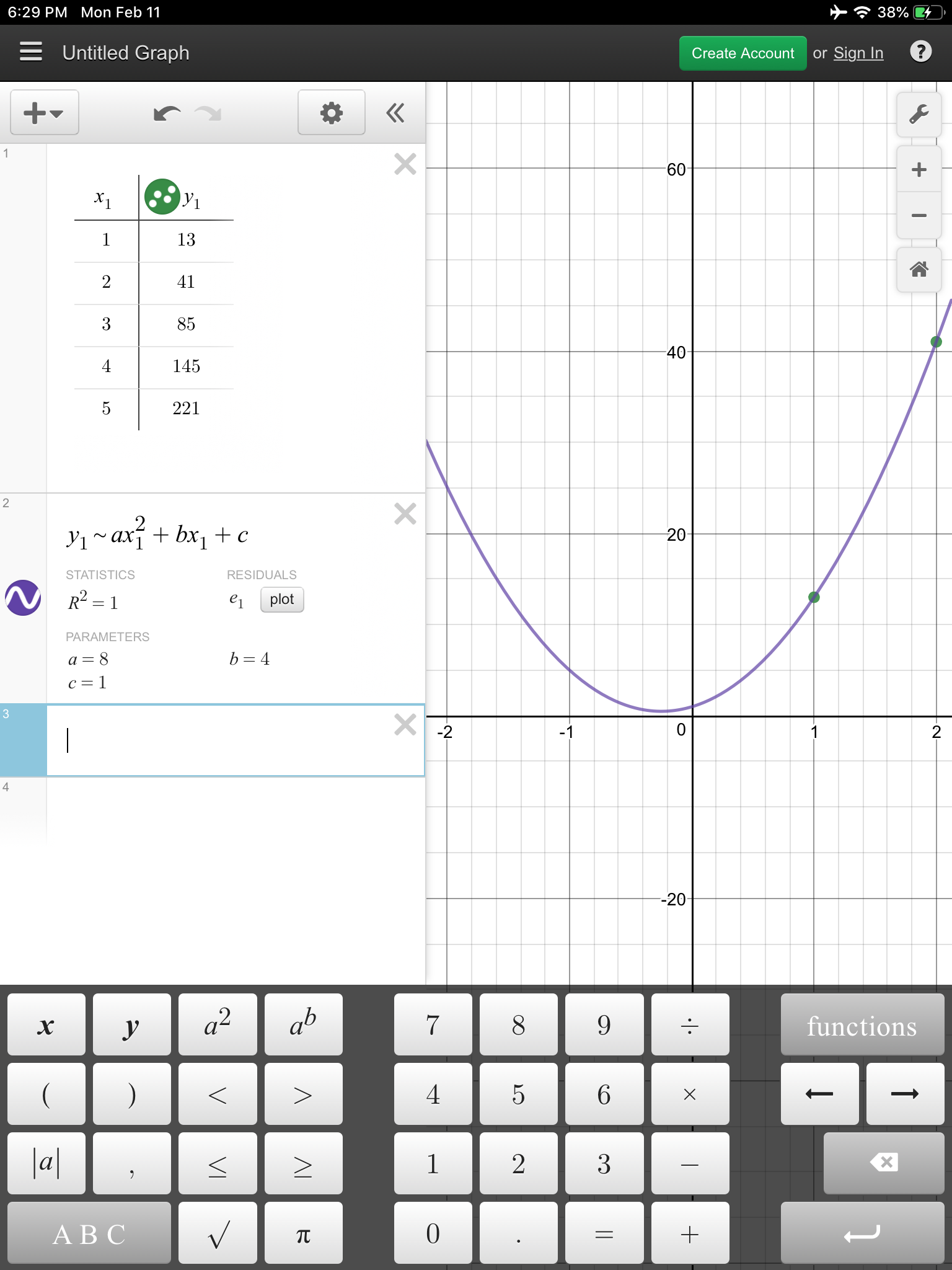
We talked a bit about the definitions of functions, and how they pass a vertical line test. We looked at mapping diagrams, and talked about domain and range. We also introduced absolute value functions and how to graph them and represent them on a number line.
Grade 9: taco cart
Today we looked at the taco cart problem. We noticed the information given in the video, and asked questions about what information was missing, or what problems we could solve.

We had some discussion about the relationship between the hypotenuse and the legs (perpendicular triangle sides), and remembered that the pythagorean theorem is going to be helpful.
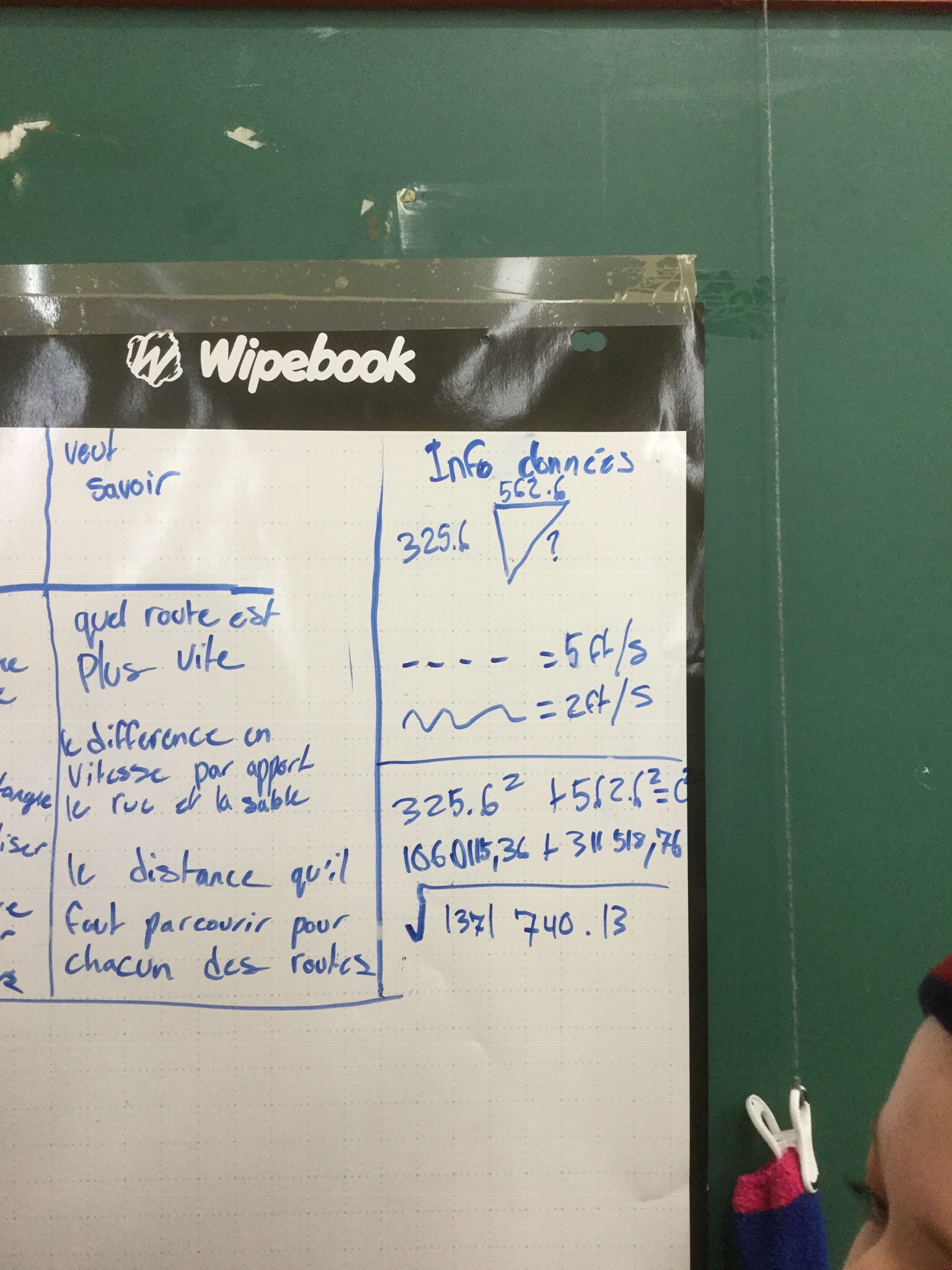
We had to incorporate different walking speeds, and ratios were a good way to approach it.
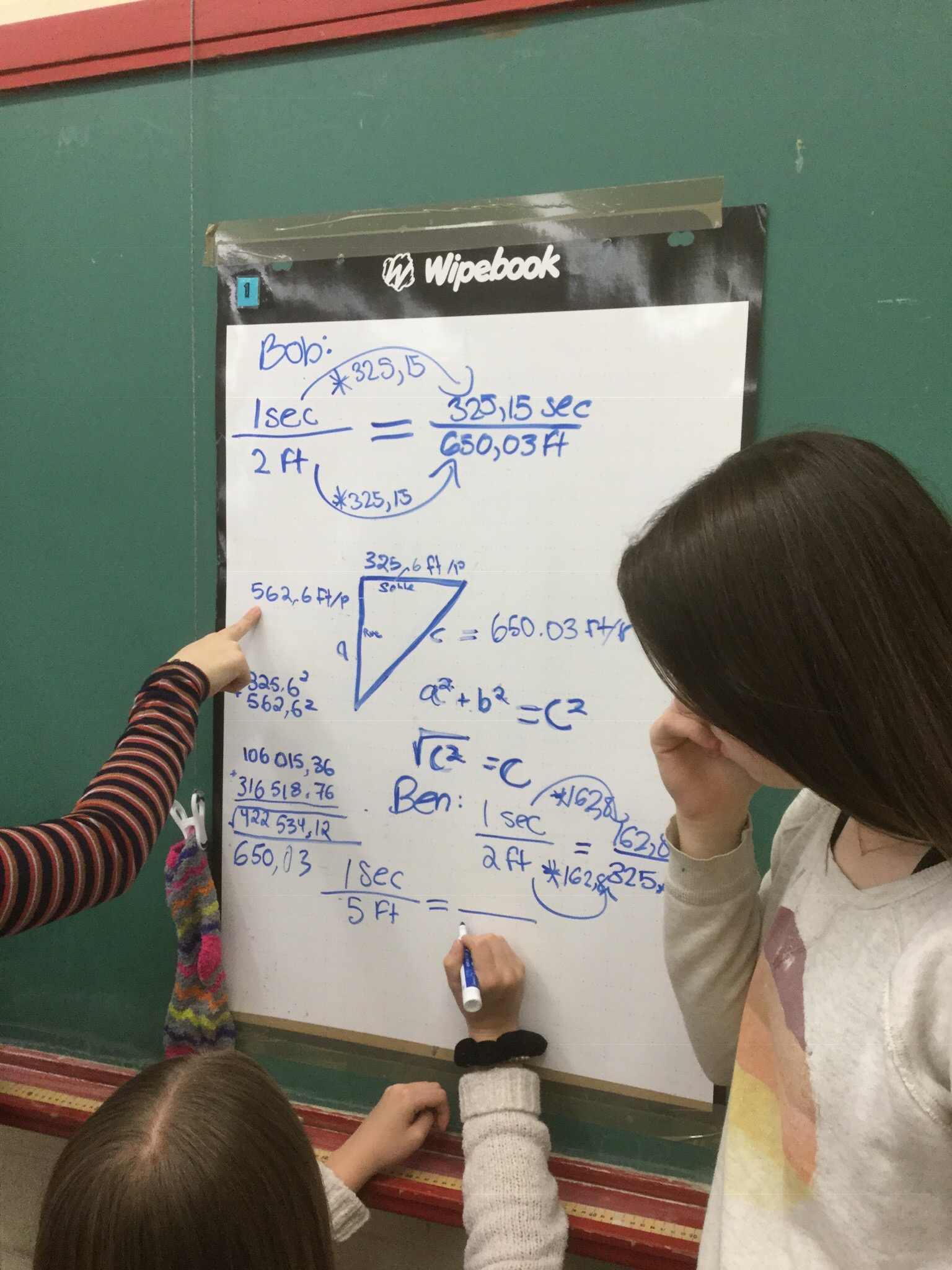
We figured out answers in the end, and had a look at the final video to confirm our calculations. Some of us made errors along the way, and we learned lots from these errors.
Good work today!
 Ms. Bearse's Site