Grade 9 test review
The next test is Friday. Here are the things you’ll need to know.
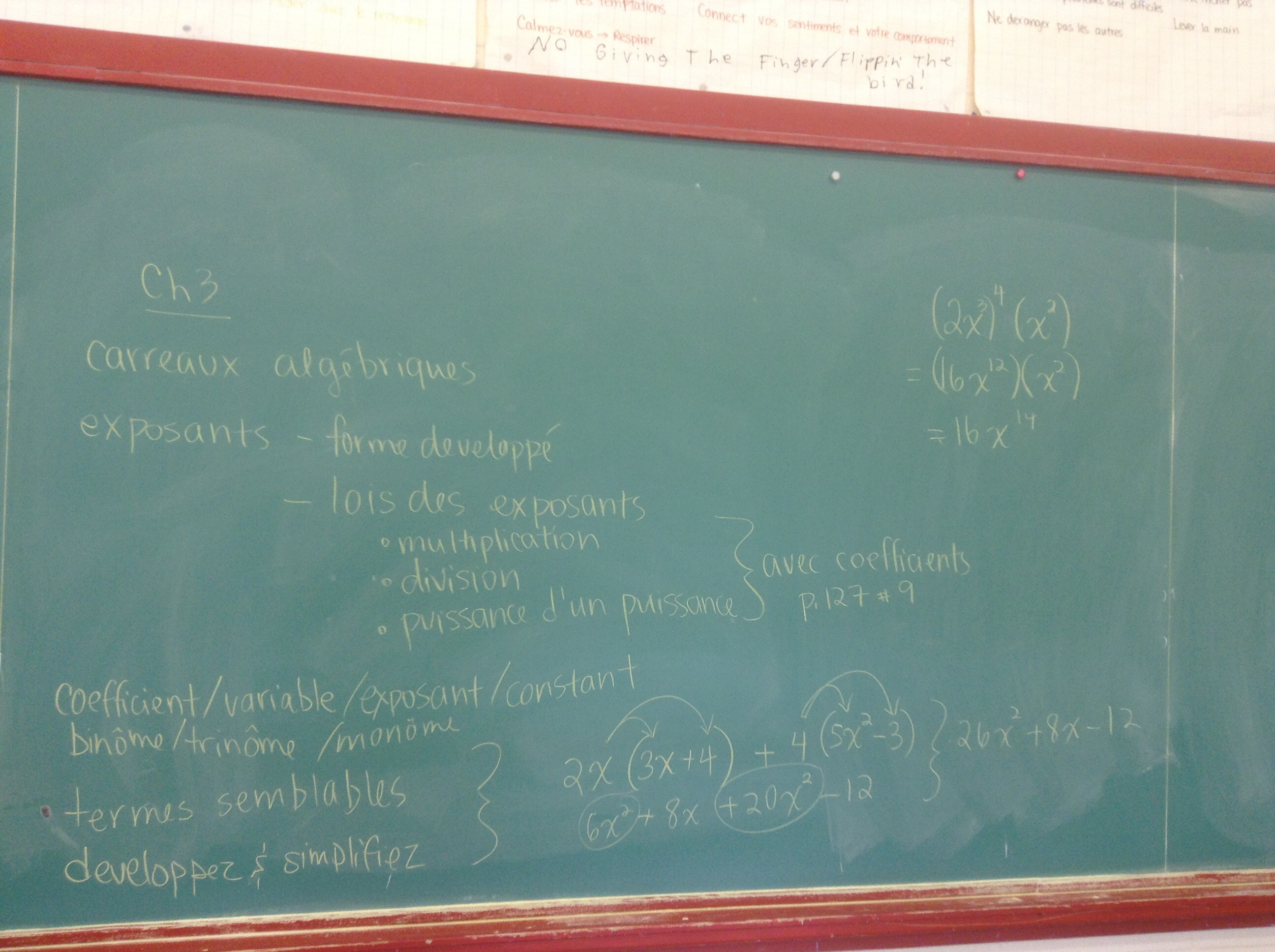
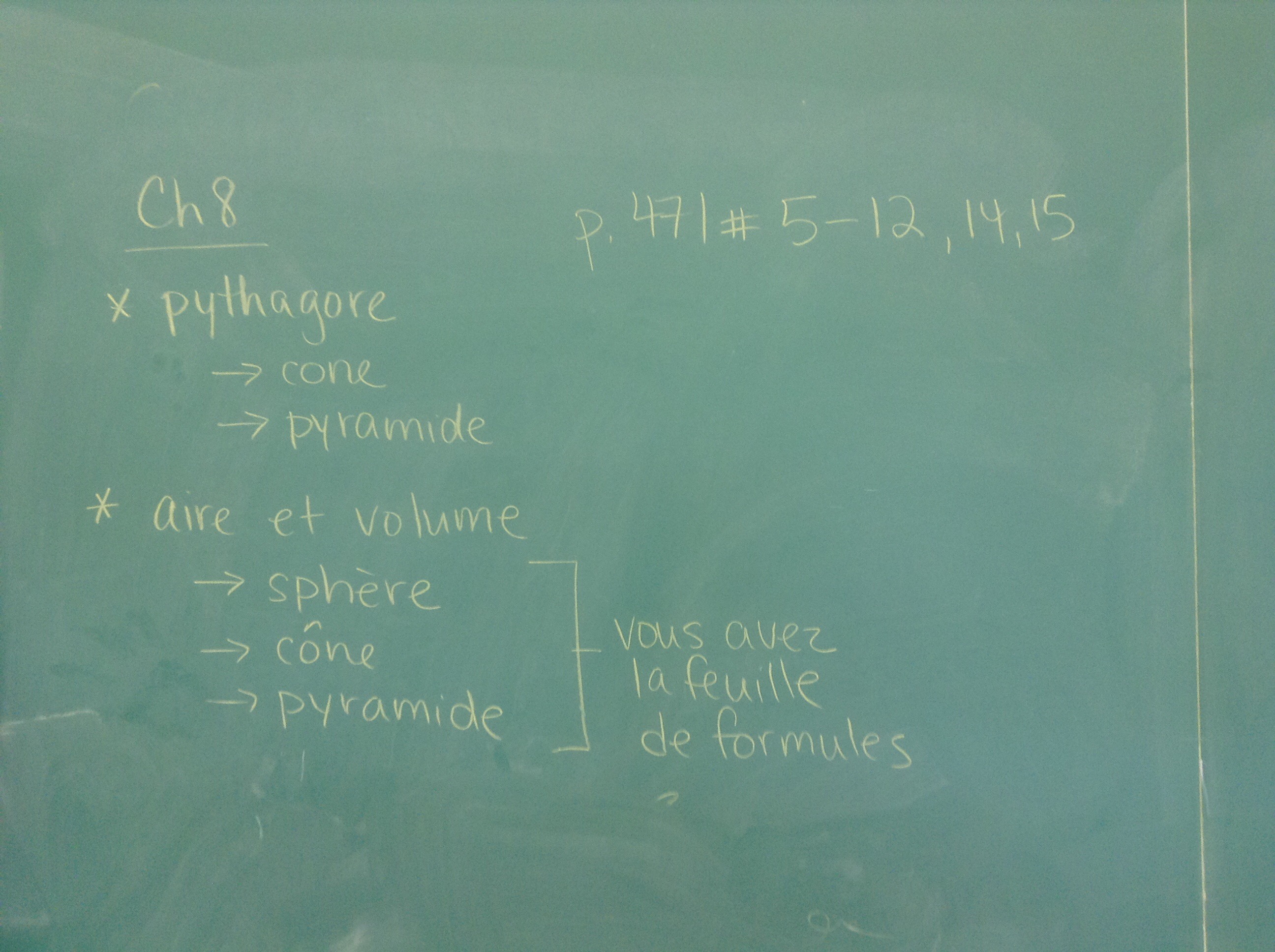
Discovering formulae
We are working on surface area and volume formulae for various solids. Today we looked at spheres and pyramids.
To calculate the volume of a sphere, we used displacement. We submerged a tennis ball in a displacement tank. The water displaced overflowed into a juice concentrate container that has been cut so that the height and diameter are equal. The juice concentrate container was selected as it has the same diameter as the tennis ball. We can substitute 2r in the place of h in the formula for the volume of a cylinder.
Since the displaced water (the volume of the sphere) is 2/3 the volume of the cylinder, through a bit of calculating we can derive the formula for the volume of a sphere.
We also looked at the area of a sphere. We used an orange to help us.
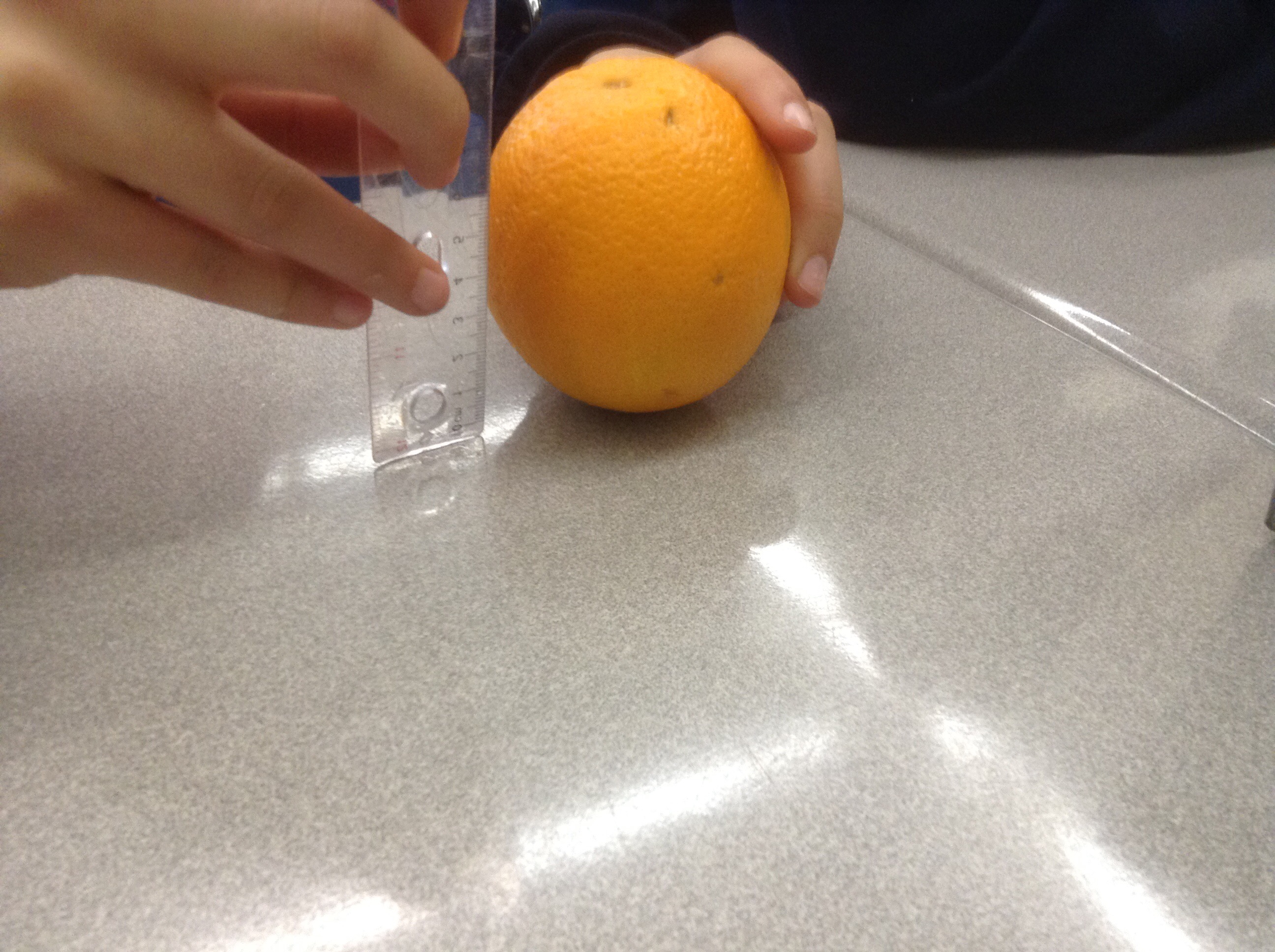
The diameter of the orange is close to 8cm.
We then peeled the orange and put the peels into a rectangle. We know how to calculate the area of a rectangle.
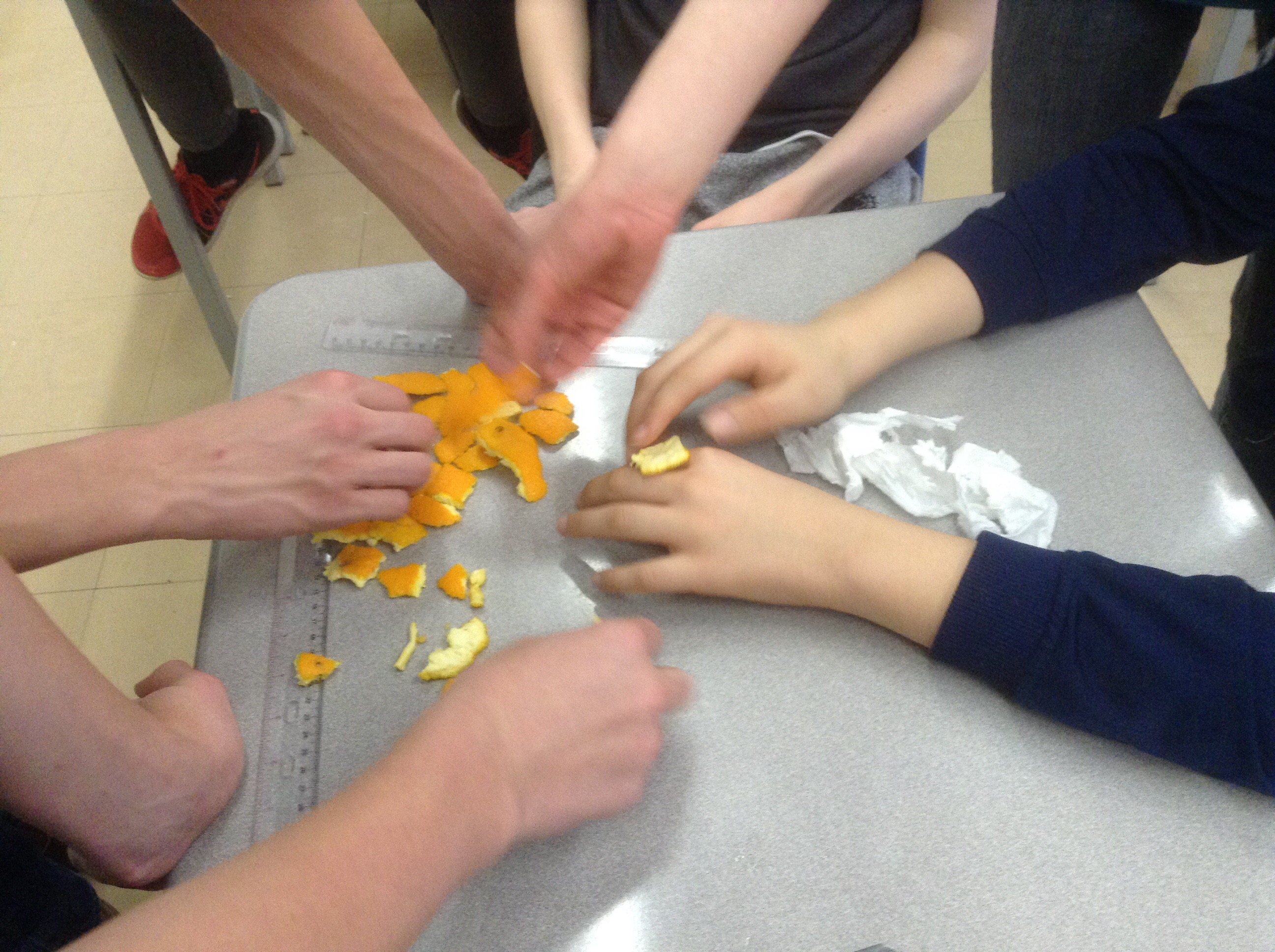

The next step is to make a relationship between the area calculated, and the diameter squared. We have to compare square units to square units.

The factor we found was always around 3. This value should be pi. Since the sphere is not exact, and neither is the rectangle, we don’t expect our pi approximation to be exact either.
We then used some algebra and exponents to derive the formula for the surface of the sphere.
Our pyramid exploration was open ended. The restrictions were that they needed a square base, and the height needed to be exactly 8 cm.

 In order to make the pyramid actually 8cm tall we need to calculate how tall each triangle face should be. We use the pythagorean theorem to do this.

Review puzzles
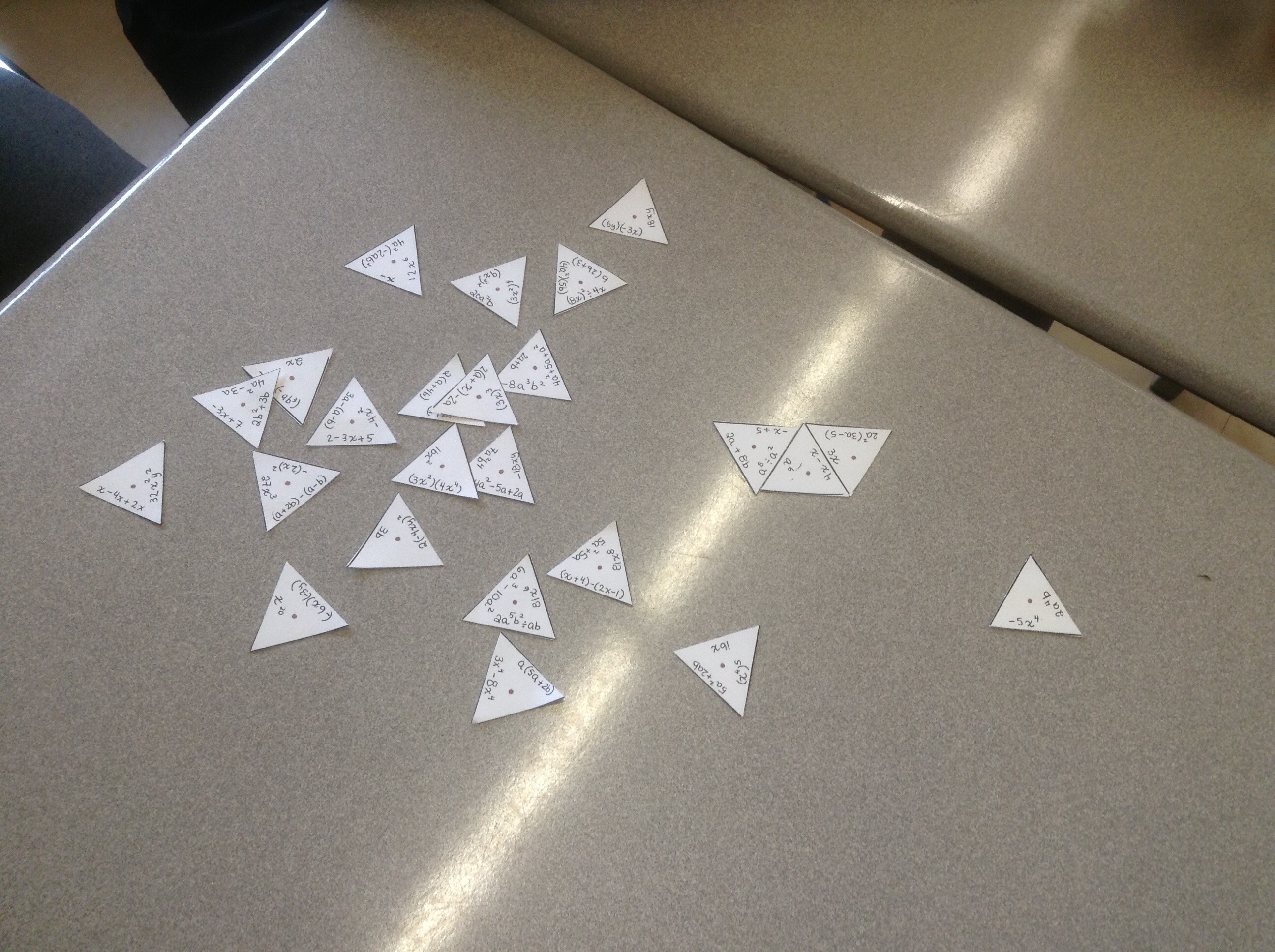
After a tough quiz today we spent some time working on some puzzles.


Brackets are Important
We are exploring exponents and algebraic expressions. We are looking at what an exponent means, and how coefficients change expressions, and how important brackets are. We are representing coefficients here. The corfficient shows how many of someing there are. The next set show what thee exponent 2 means. It makes the model a square. The coefficient, not in brackets, indicates how many squares we need.

Here is another example.

When the coefficient is a fraction, we need a fraction of the square.
An expression with a coefficient in brackets, and an exponent outside changes things. The base of the exponent 2 in this case is 2x. This means the side length of the square is 2x. You will notice that this is equivalent to 4 x squared.

A similar relationship extends to the following…
An exponent of 3 makes the model a cube.

A coefficient outside brackets shows how many cubes to make.

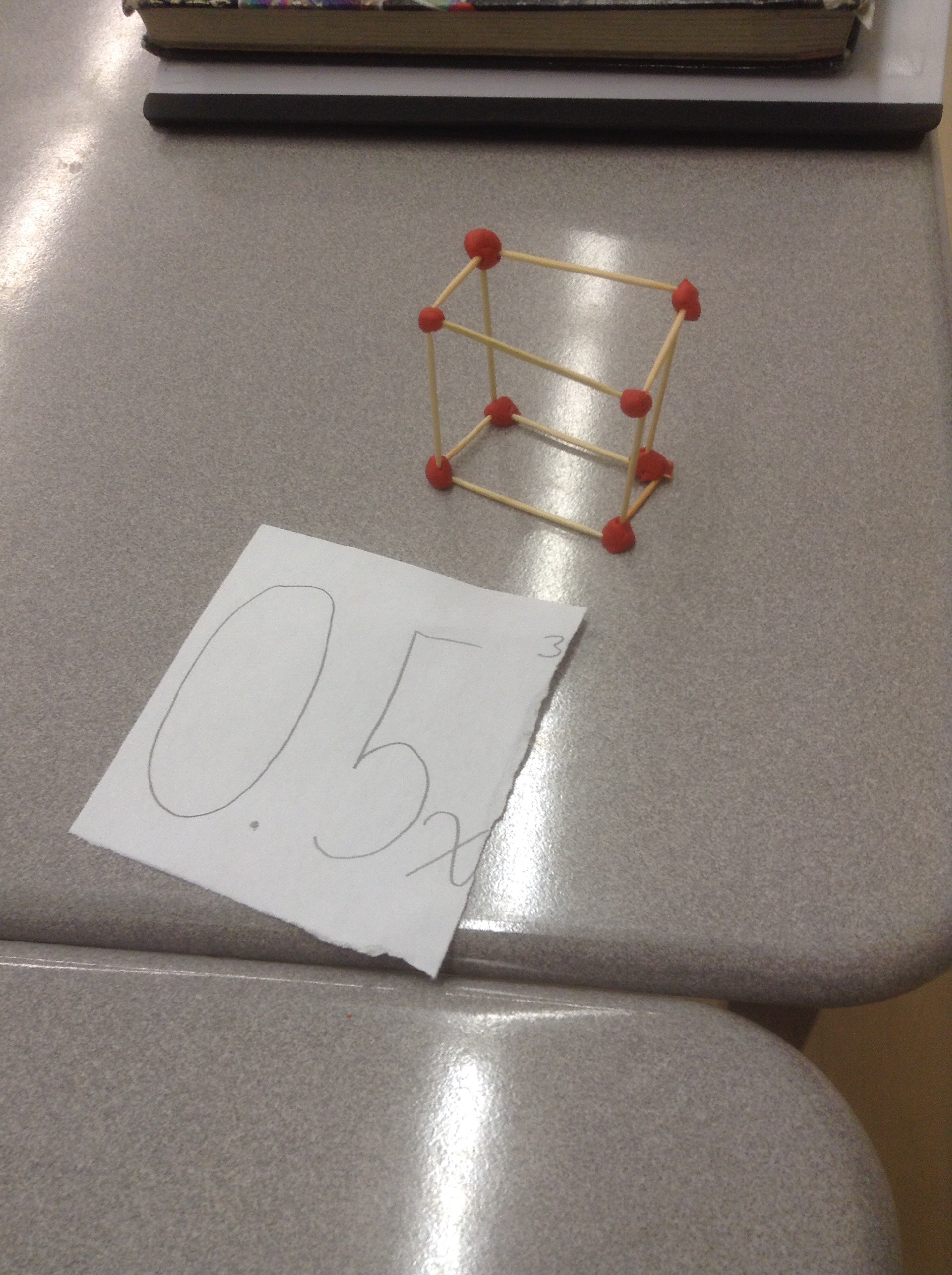
And if the coefficient is in the brackets it shows the side length of the cube. Here 8 x cubes could fit inside this bigger cube.

We are attempting to build (3x)^3 here, it’s a big challenge! We need to make 27 cubes all linked up to make a big cube

Here is a tiny cube, one eigth of the x cube. Note how (0.5)^3 is equal to 1/8.
We need to remember to pay close attention to the power, the coefficient, and whether there are brackets!
Planted!
We unwrapped our beans today and were thrilled to see so many roots. 
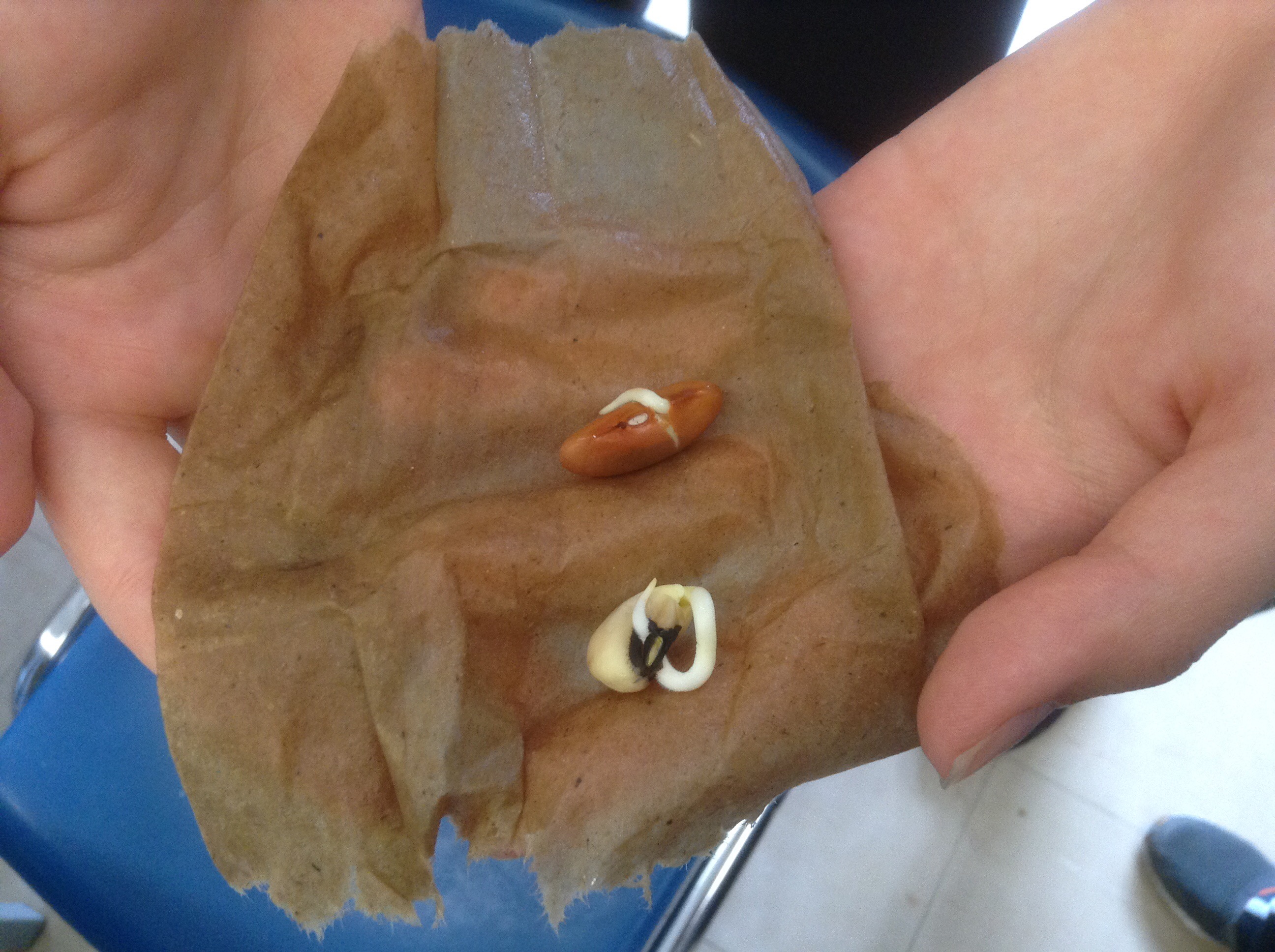
We planted the beans in soil, marking the type of bean on a popsicle stick.

We have a windowsill garden now. We are watering each day, and will keep track of the growth when we see it. The goal is to determine the growth rate of each type of bean, and compare them.

Perfect squares
We experimented today with algebra tiles. The goal was to make squares.


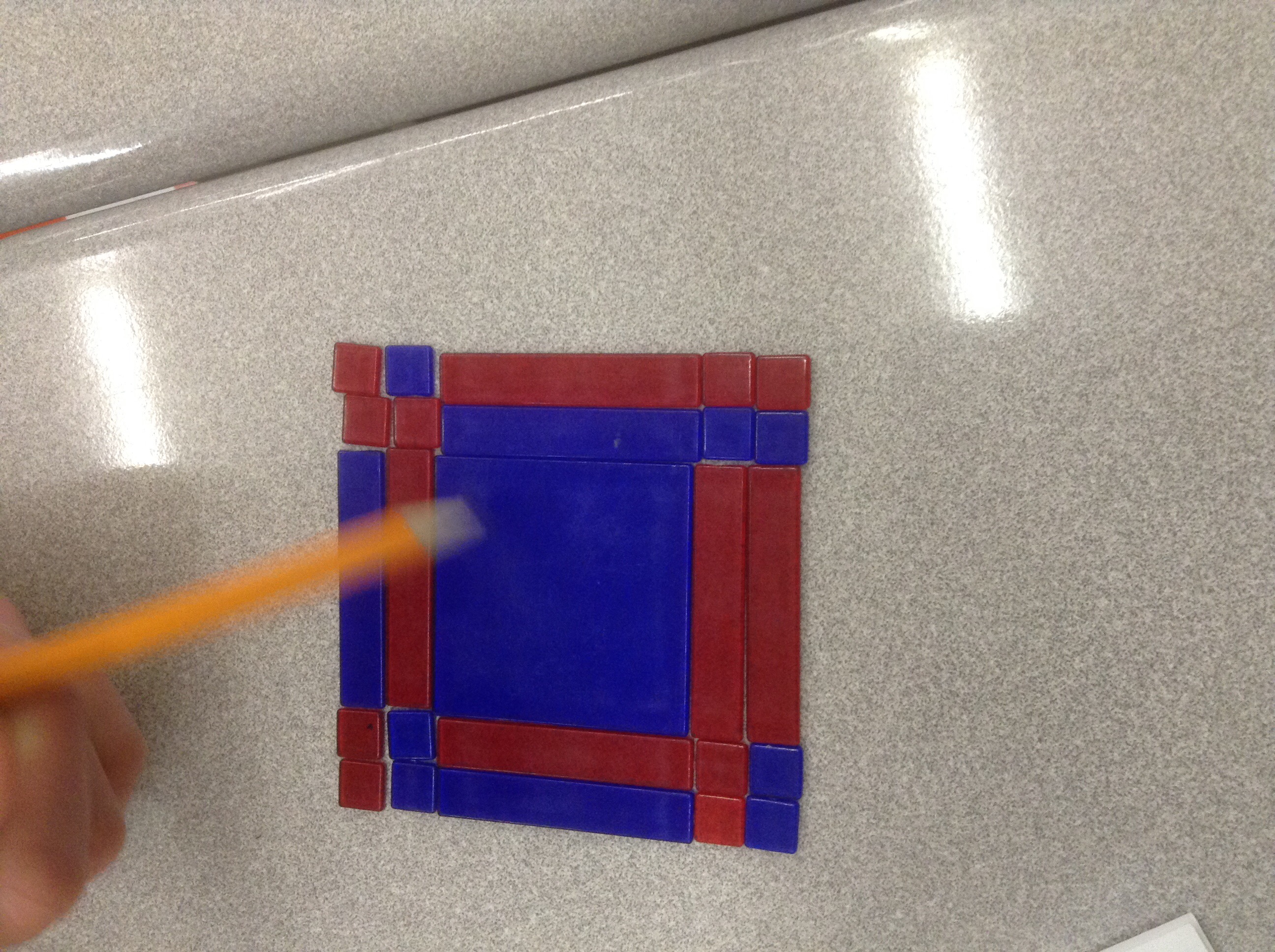
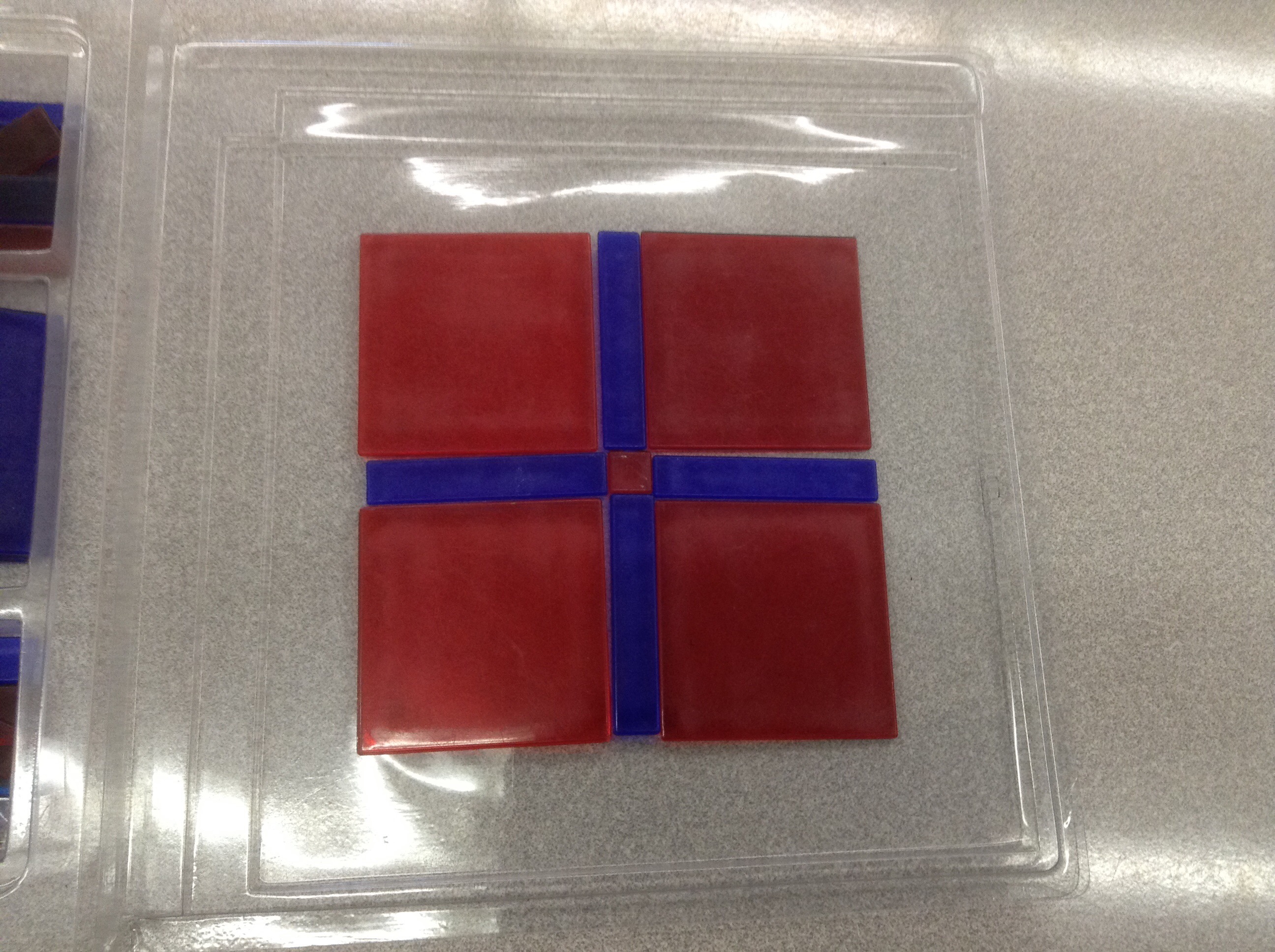
We are connecting the dimension of the square with the polynomial that represents the area. We talked about perfect squares and difference of squares today.
Beans!
We are full of beans thse days. We started planting our garden today. The first step is germinating the beans. We are planting black eyed peas and kidney beans.

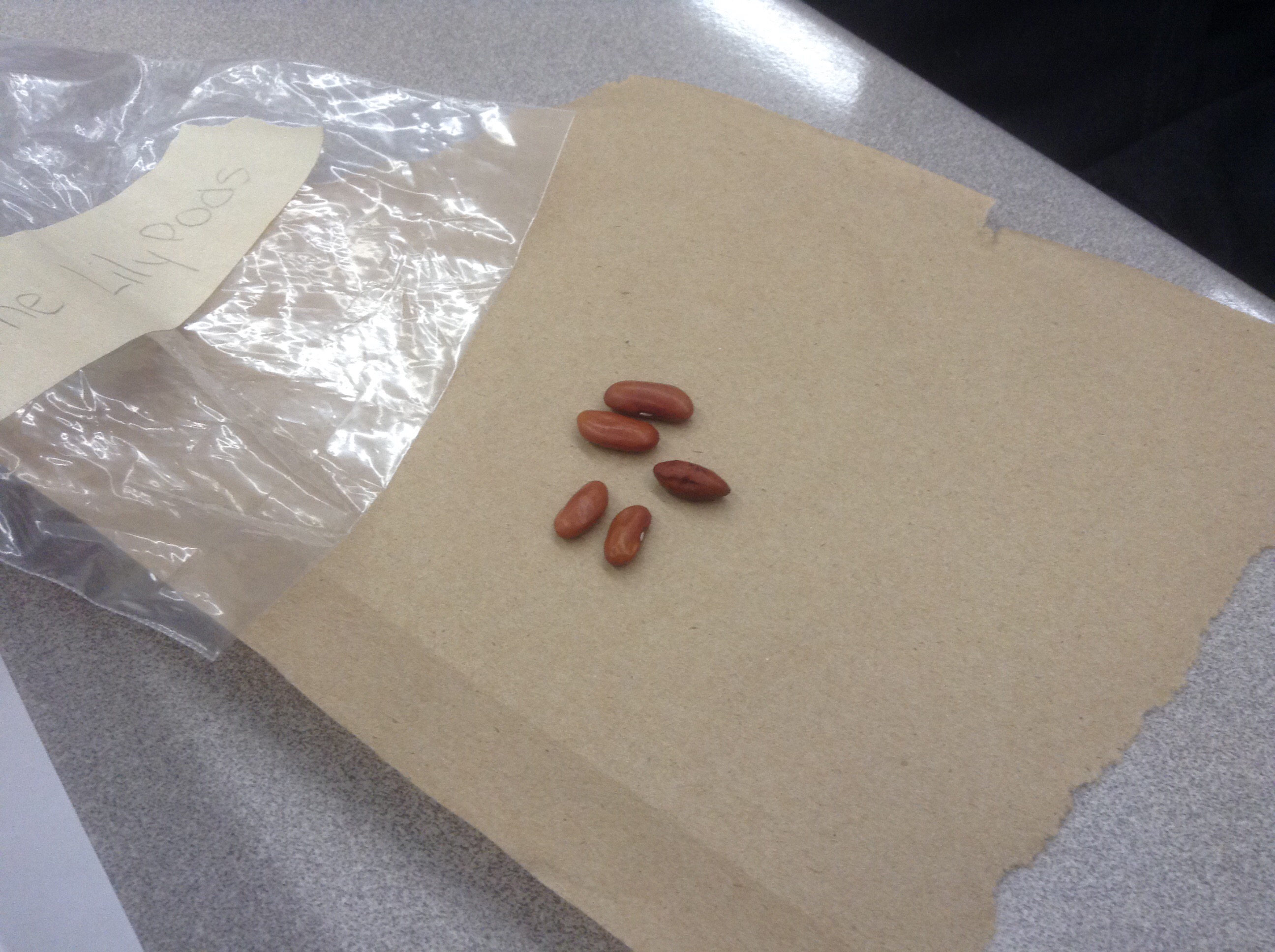
We have beans wrapped in moist paper and placed in plastic bags on our windowsill.
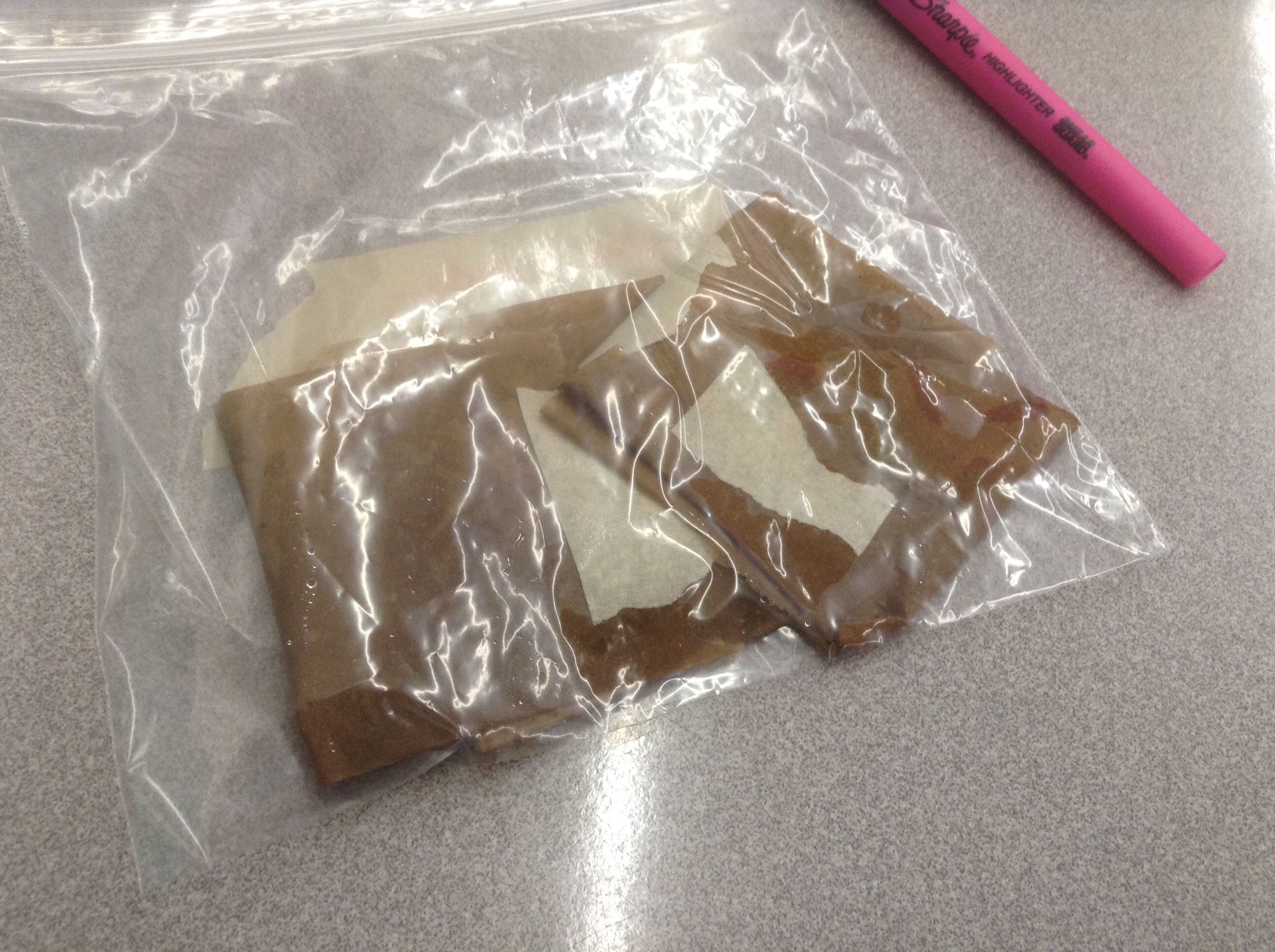

We made a hypothesis of the percentage of beans that will sprout. We’ll see if we are right in a week.
Happy (Belated) Pi Day
We celebrated today because we missed the real pi day because of march break. Pi day is celebrated March 14th (3/14).
We had an amazing recitation of pi…
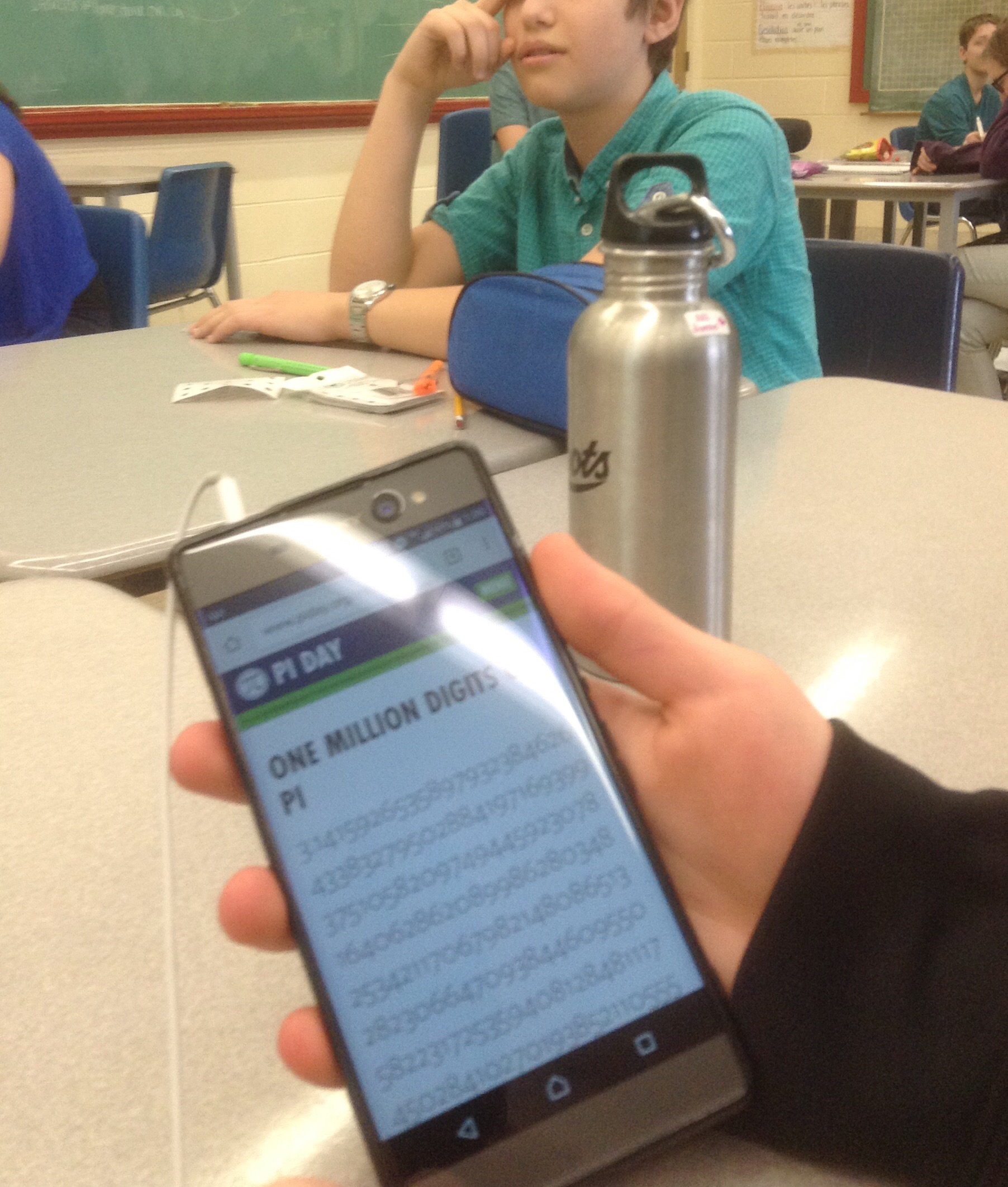
We watched a Vi Hart video all about pi
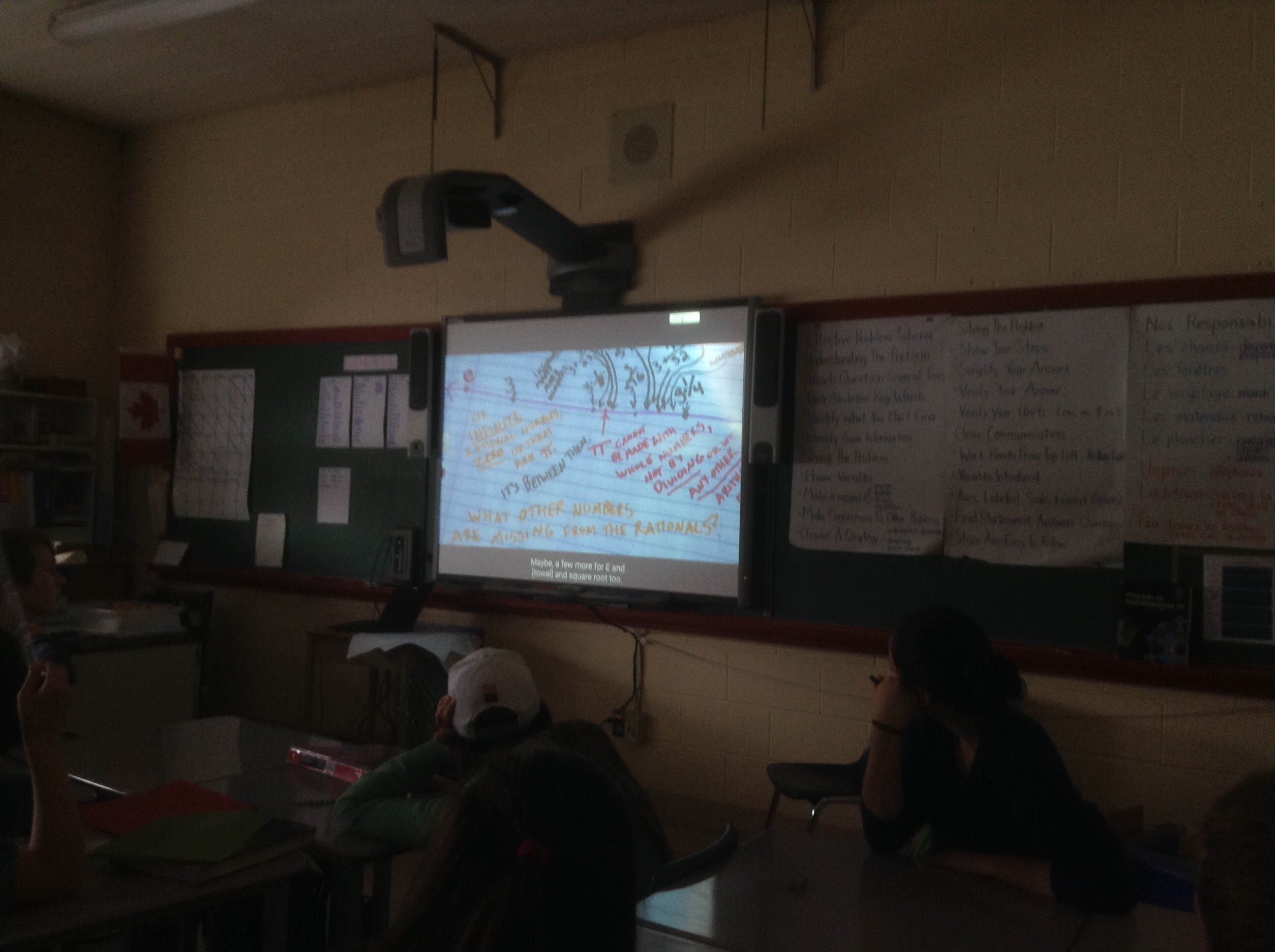
We also experimented to determine the relationship between the circumference and diameter of a circle. To make it more tasty we used licorice laces to make the circles.
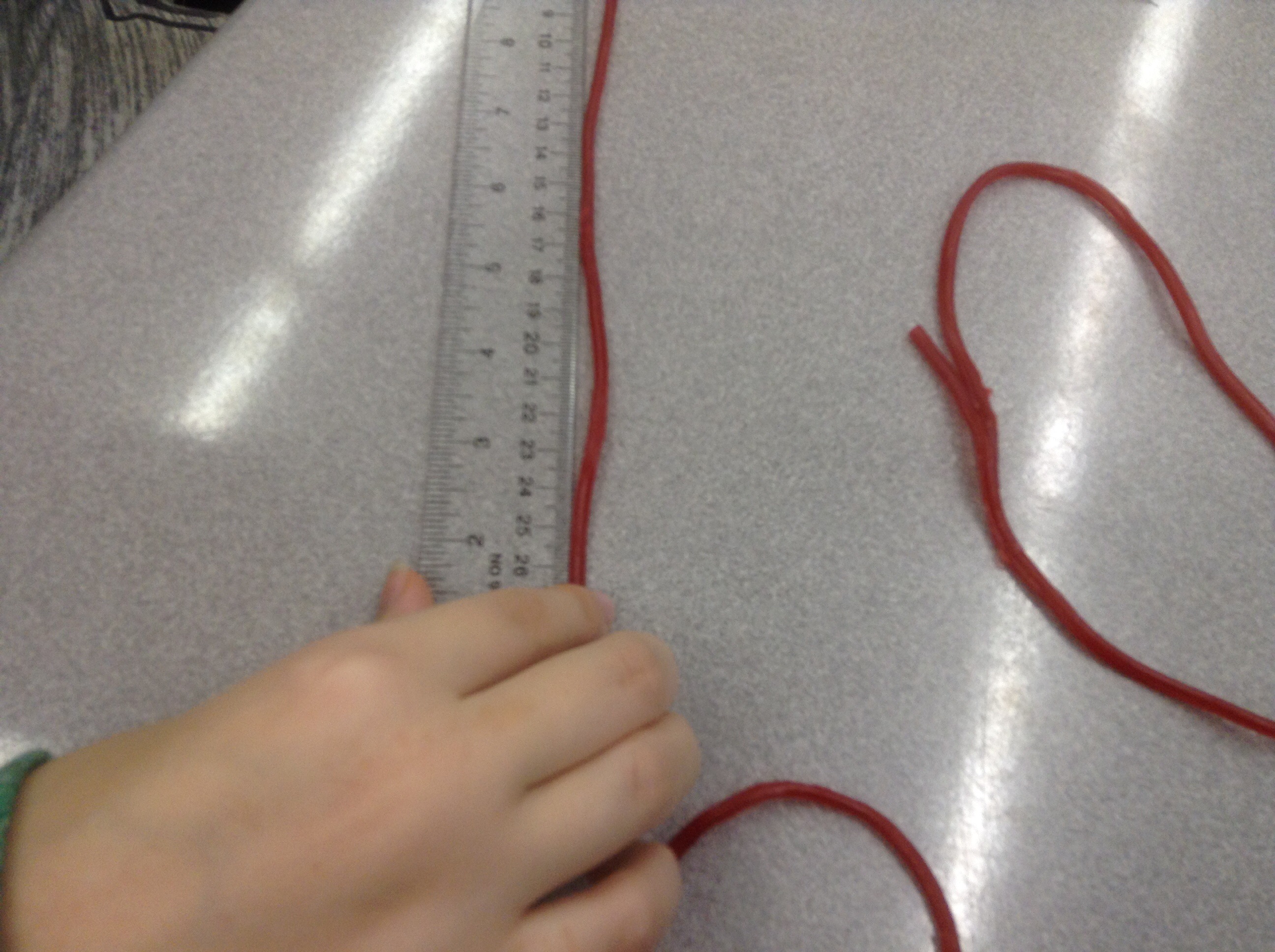
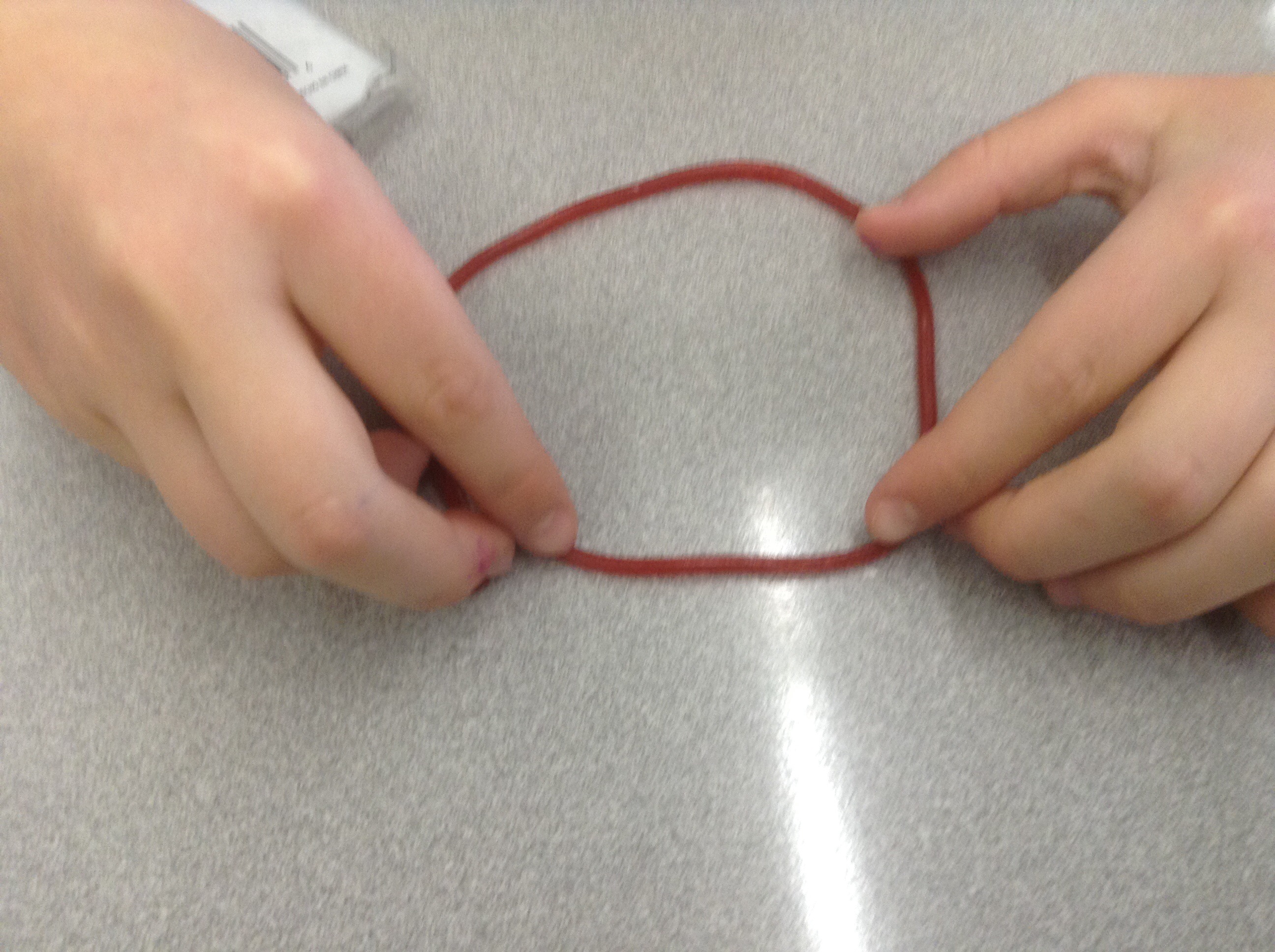
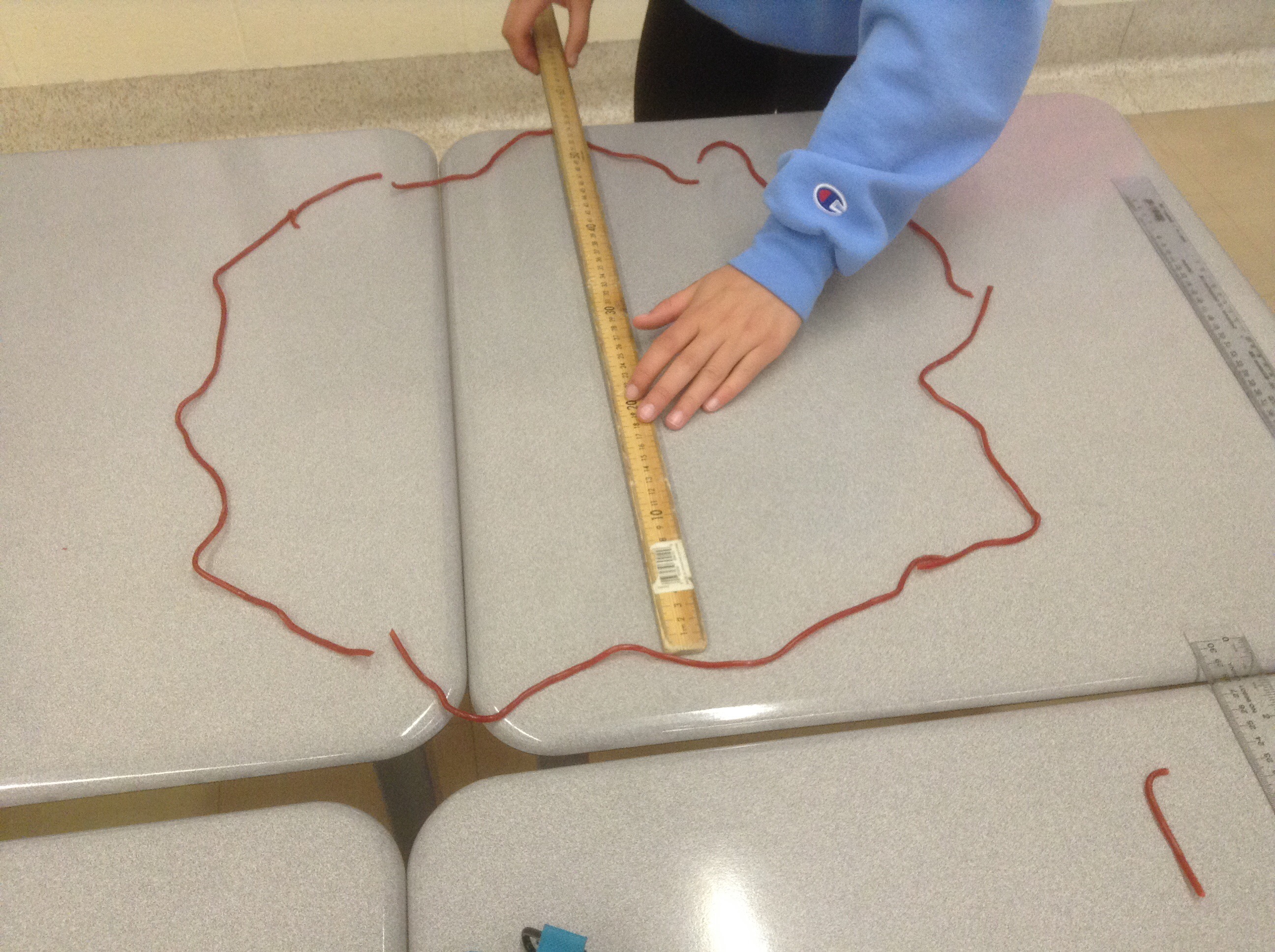
We had to approximate some circles, so our data wasn’t perfect.
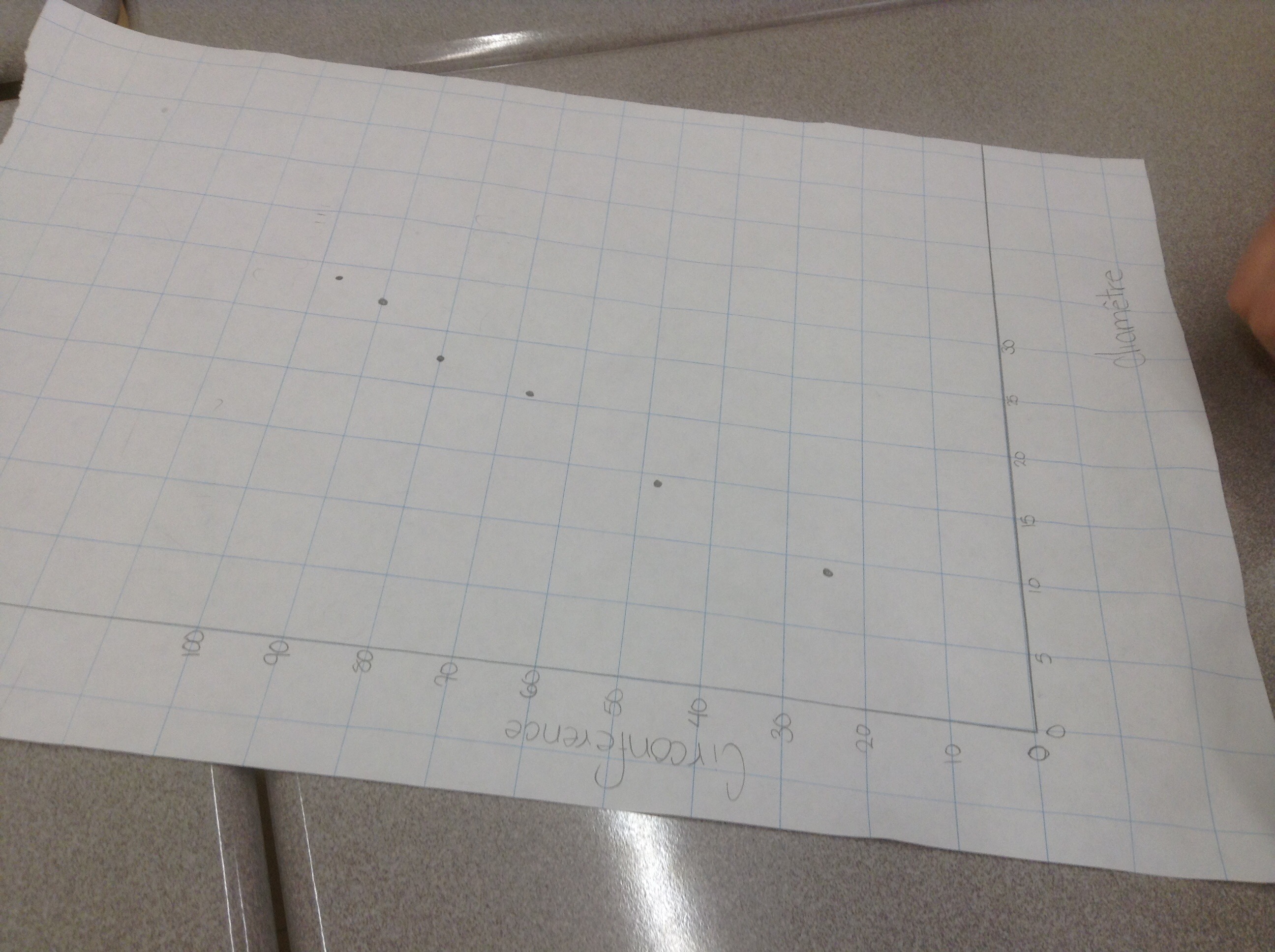
We made lines of best fit and looked at the rate of change. On average it was a bit more than 3. We know it should have been pi.

We ate mini pie and sang our favourite math carol “oh number pi”
All in all it was a good celebration!
Work period
Rather than hand out a long list of questions today, each group of two or three were given one question to do, and then they switched cards when complete.
Our questions dealt with proving what shape was created when 3 or 4 given points are connected. And calculating perimeter or area or comparing lengths or slopes of diagonals.
Some students were working on the blackboard
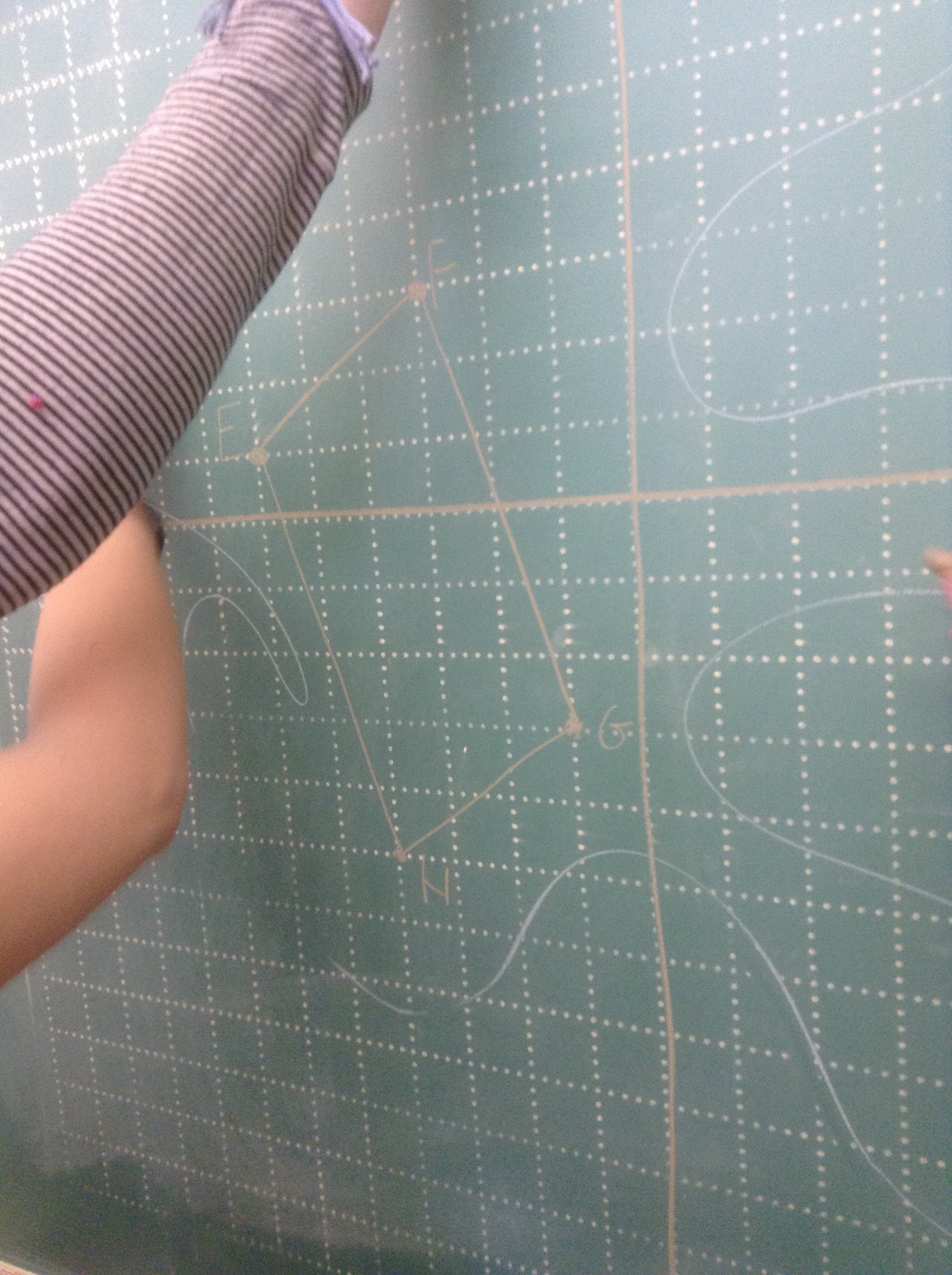 And others were hard at work with the whiteboards
A major break through has come in our class…whiteboard cleaning has been a challenge in the past, but a colleague has suggested that fuzzy socks from the dollar store make the best erasers. The whiteboards are now always clean, because cleaning them is fun!
Simplifying polynomials with algetiles
We are working on simplifying polynomials. We made pictures using algetiles and then made zero pairs (identical red and blue tiles) and simplified the images.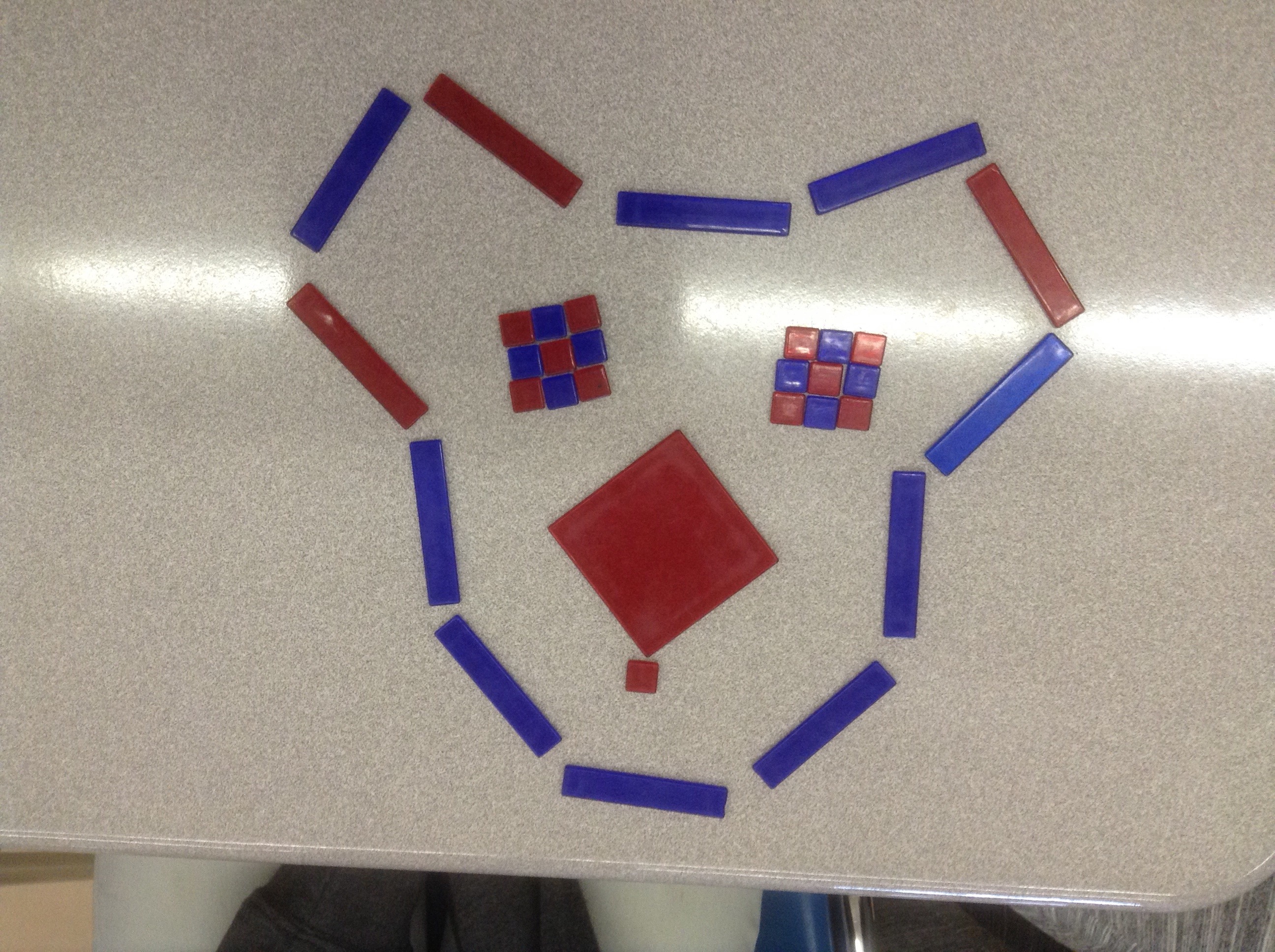

 Ms. Bearse's Site