How can you learn problem solving skills
Practice with someone who solves problems well!
We are working on using analytic geometry to solve problems, and it can be tricky for some people to decide what tools to use to solve the problem. Slopes, midpoints, distances are all straightforward calculations-the trick is to come up with an effective plan to solve the problem.
Here’s how the activity worked: One person per group of three begins as the expert. The groups were designed so that at least one member is a very effective problem solver. The expert’s job is to verbalize all of their thinking as they solve the problem. They need to explain what they are thinking, what information they have, what they need, how they can find it. They need to verbalize if they get stuck, and what they do to get back on track.
The other two people in the group are there to document the strategies employed by the expert. We chunked the time so that for each time period, the observers had to write two strategies done by the expert.

Once the problem was solved, the next group member tackled the next problem while the others observed. Everyone in the class was actively solving or paying close attention to someone else as they solved a problem for a good chunk of time.
Review…”speed dating” style
We are working on our problem solving skills. We have learned how to find equations of medians and perpendicular bisectors (médiatrice) the length of segments, types of triangles, equations of circles etc. There are so many different things we can potentially solve for, so it’s important to read carefully and make a picture and come up with a plan.
We worked with partners across the table, then after both partners are experts, one half of the partnership moved one seat to the right, and started again. We used whiteboards and our new fuzzy socks(erasers) for jotting down calculations and sketches.
We are working towards excellent comprehension before the summative activity on Thursday.
Productive struggle
Today grade 10s worked thtrough a challenging problem to determine the height of a triangle algebraically.
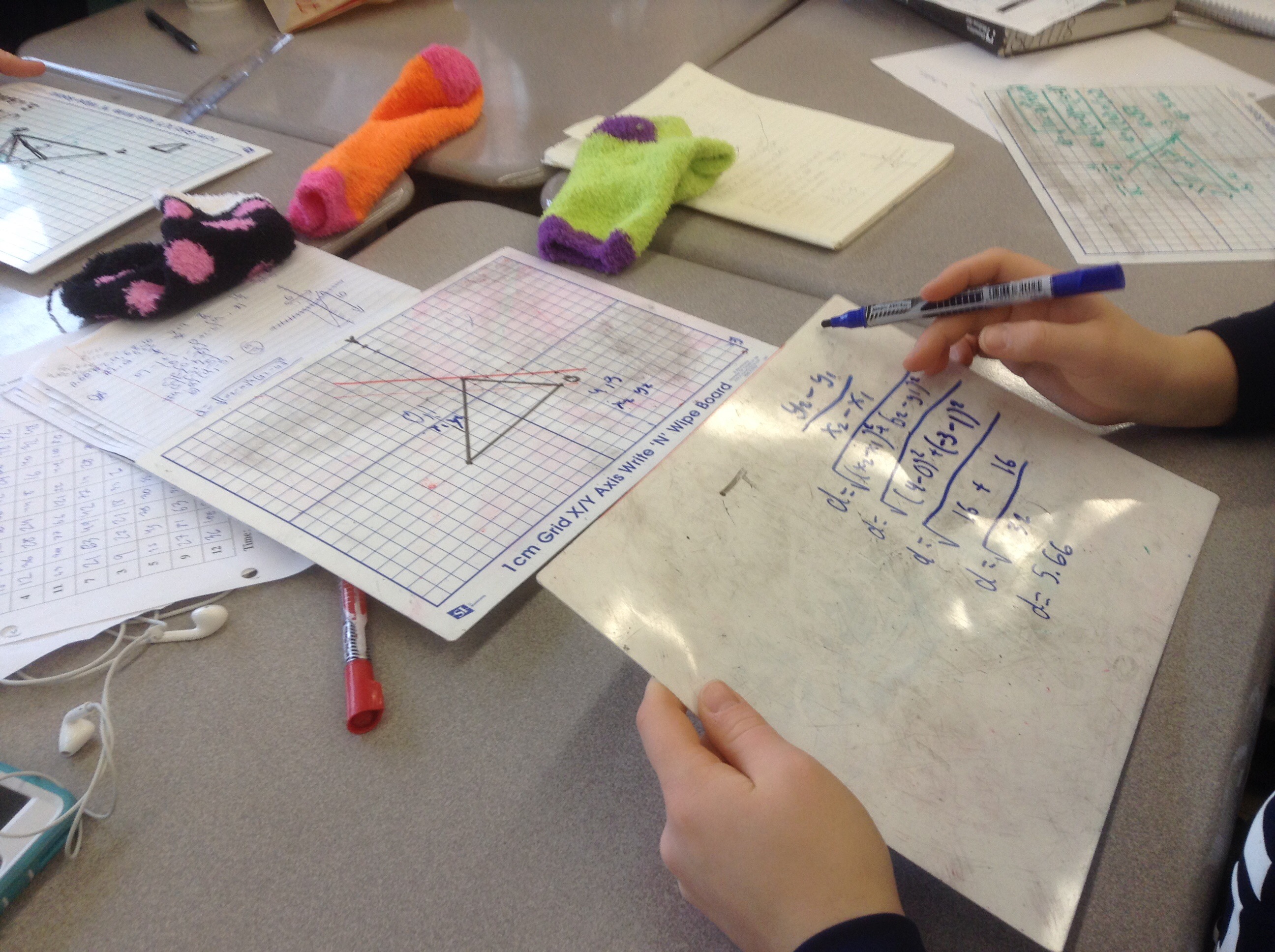
Working together, with whiteboards, was a good way to get an idea of what the problem entailed.
Some groups were able to help others once they got on the right track.
These types of questions stretch your brain, and problem solving skills. The struggle is ok, it’s expected when you do something new. We are working on being more comfortable with productive struggle.
Math Buddies
We met the grade 7 class that we are buddied up with this term. We have prepared some activities for them that review concepts that they learn in grade 7 and will need in upcoming years too.
We sang “l’aire d’un trapèze” all together and then started our stations.
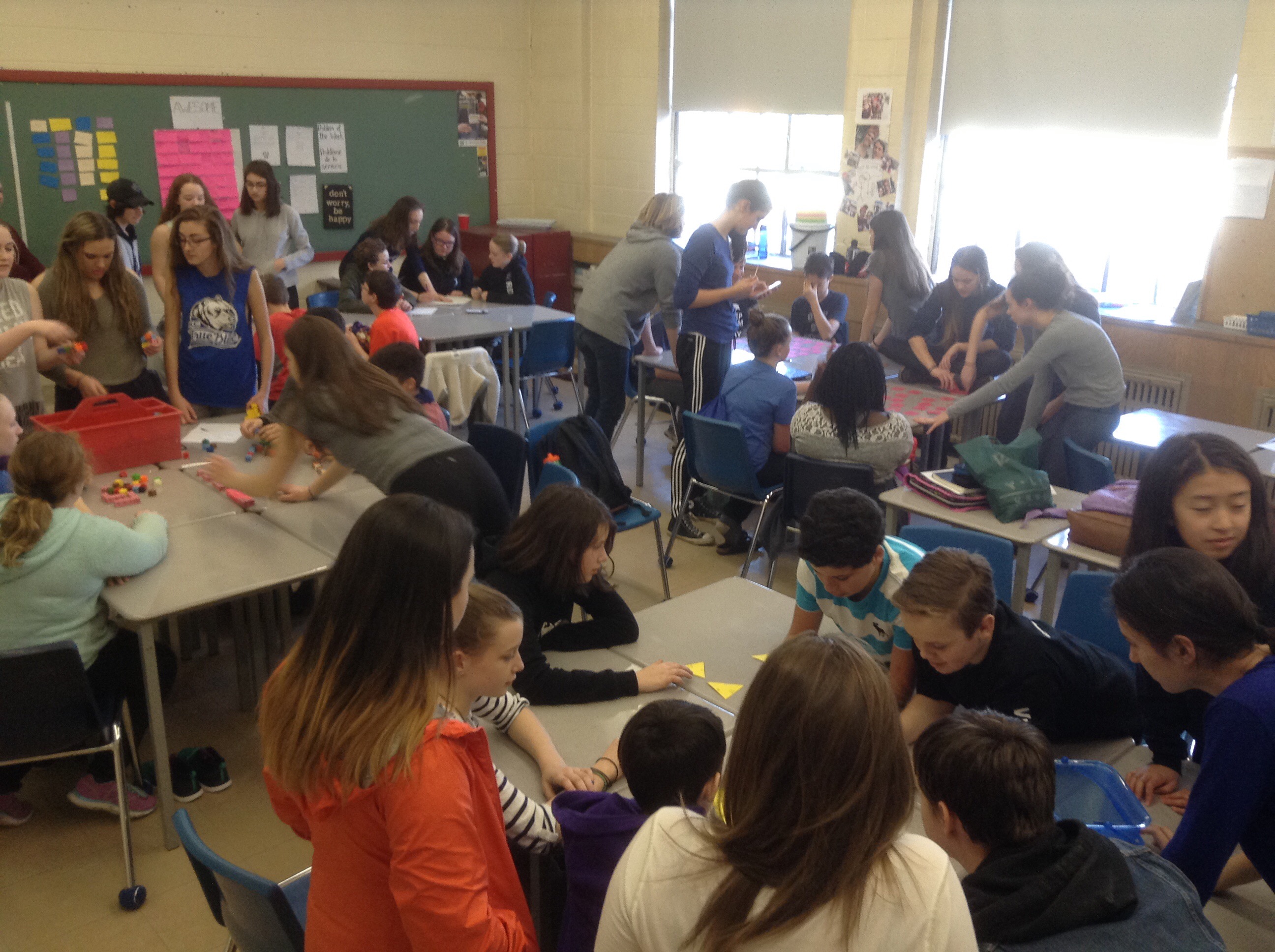
We had 4 different stations

Some were puzzles

Some were memory and matching games

Some were patterning activites
And we had a rousing game of jeopardy.
This was followed by 5 minutes of intense multiplying (we’re getting much better at it!)
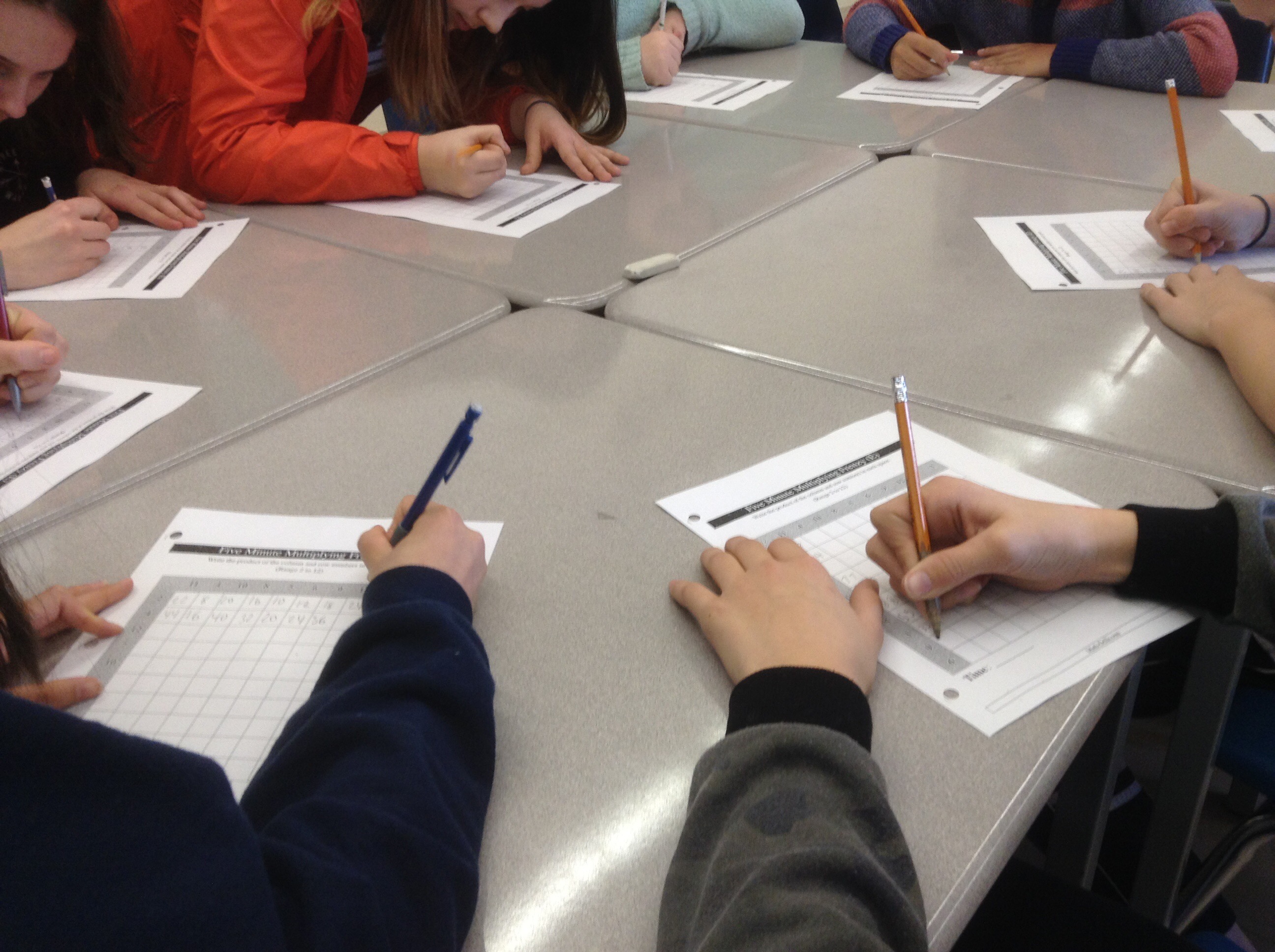
Many thanks to the grade 9s for coming up wih the activities, and to the grade 7s for participating so well.
What happened in grade 9 math today
So many grade 9s were on trips today! In case you were wondering what we did, we worked on applying formulas for calculating areas of circles, and circumference of circles to composite shapes like this one.
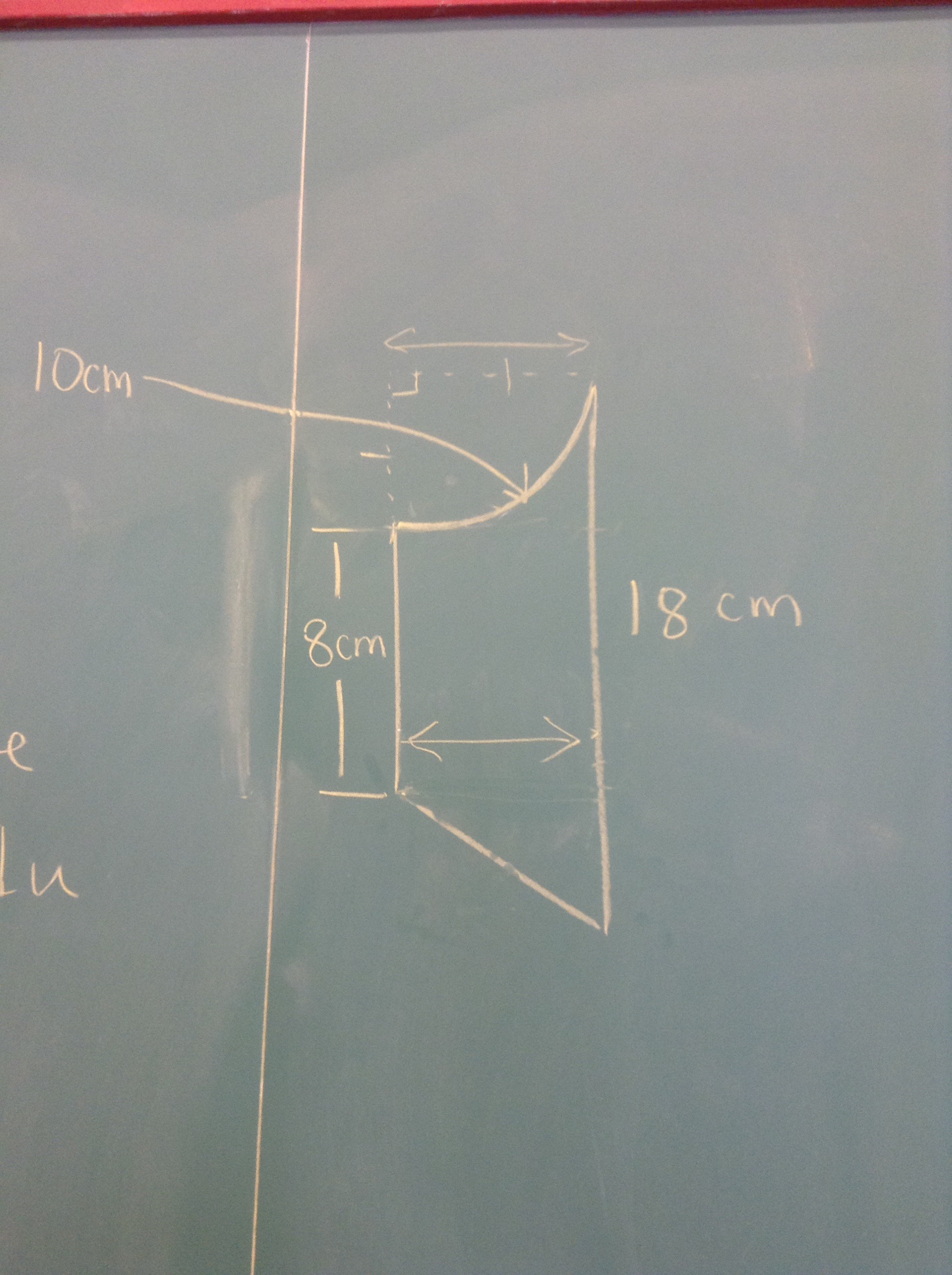
Find the area and perimeter of this shape.
Grade 9 Test Prep
Our first test is Tuesday the 7th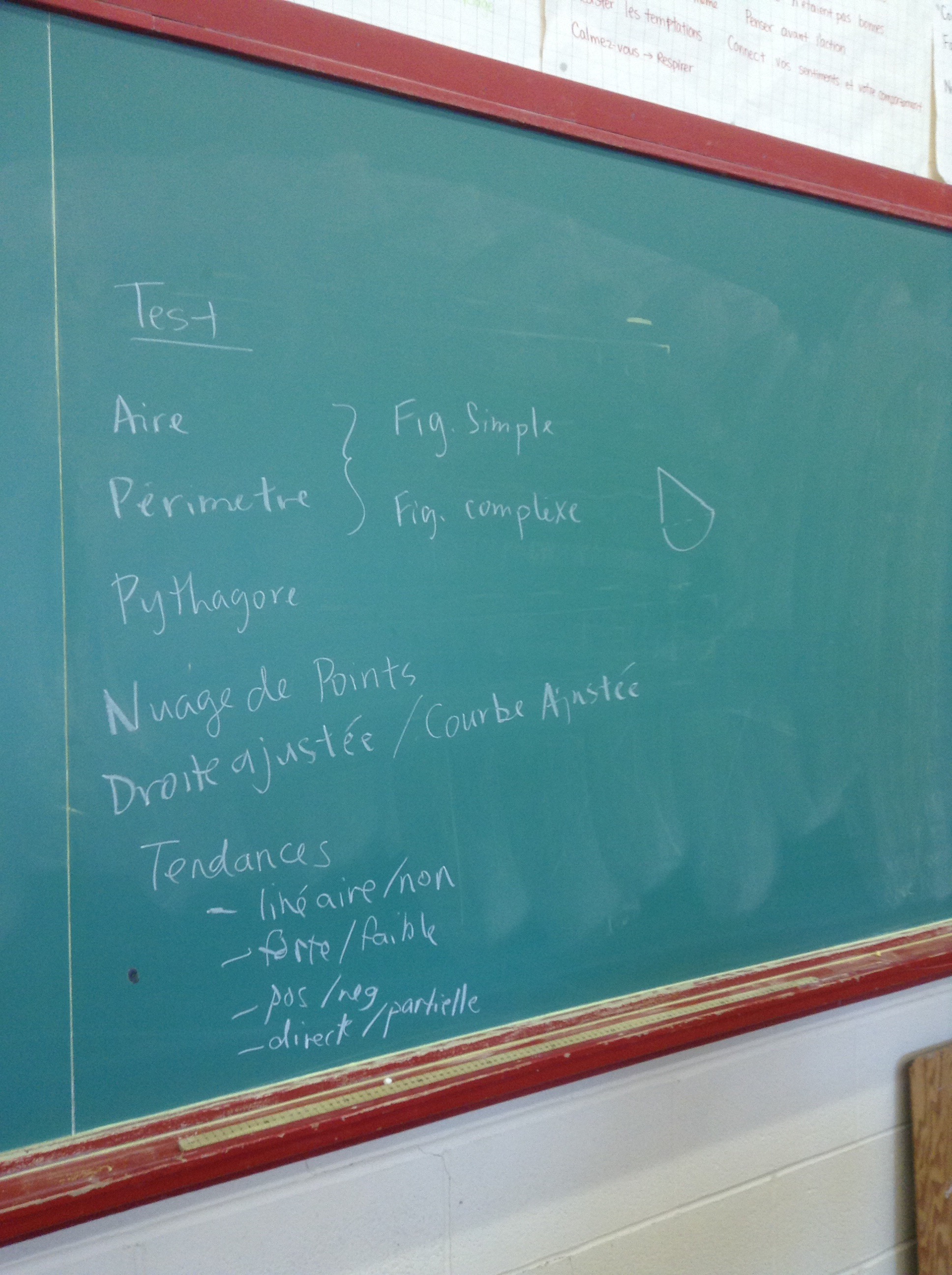
Sir Cumference
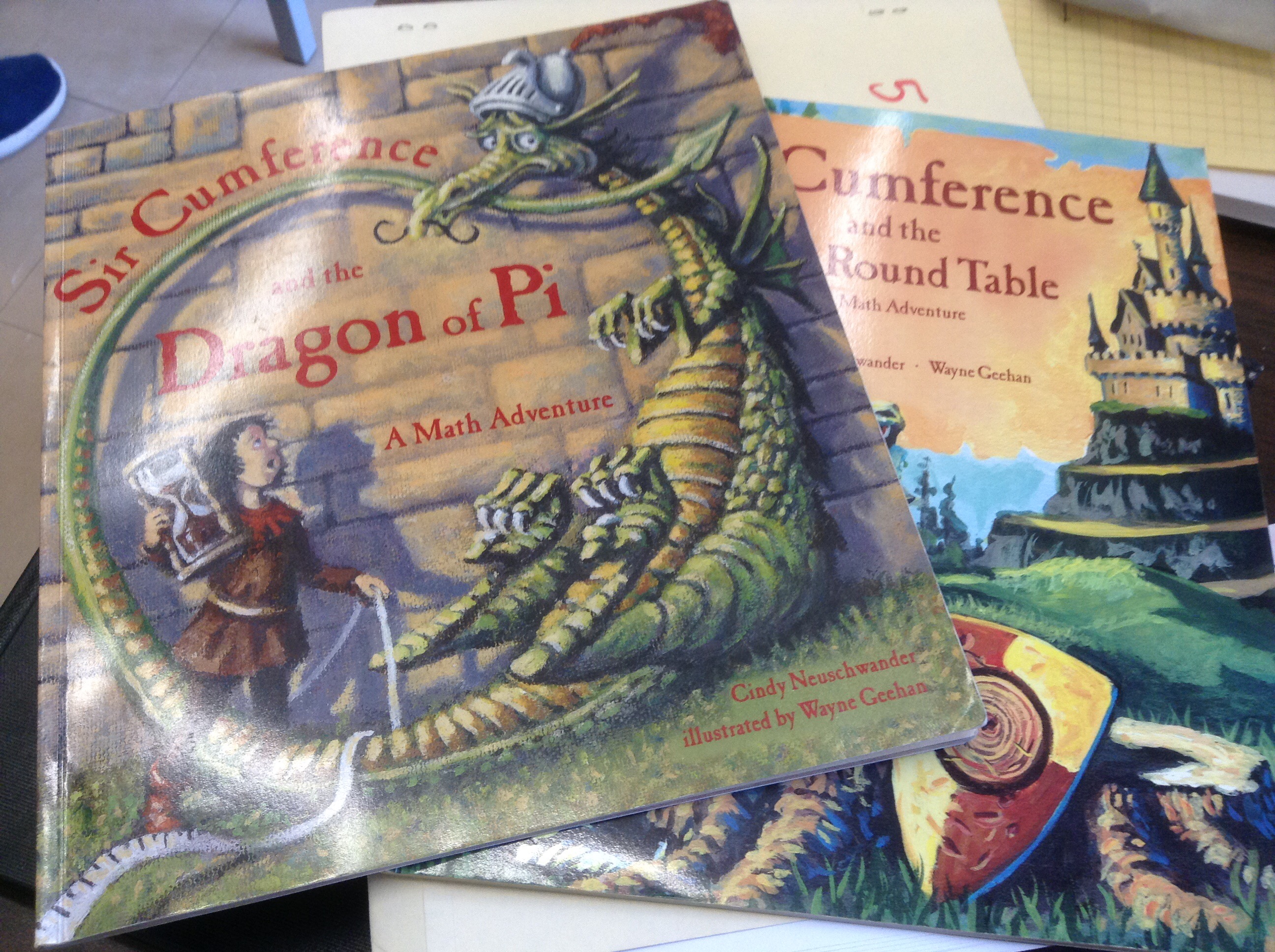 We had story time today!
Preparing for Math Buddies
We are pairing up grade 9s with grade 7s this term to do some cross panel math activities. My grade 9s are preparing two different activities to try. One class is working on a “speed dating” activity with many small questions and answers that are worked on in partners, and then the partnerships change so many students will work with different people over he course of the activity.
The other class is making stations for the grade 7s to rotate through for a 10 minute math activity.

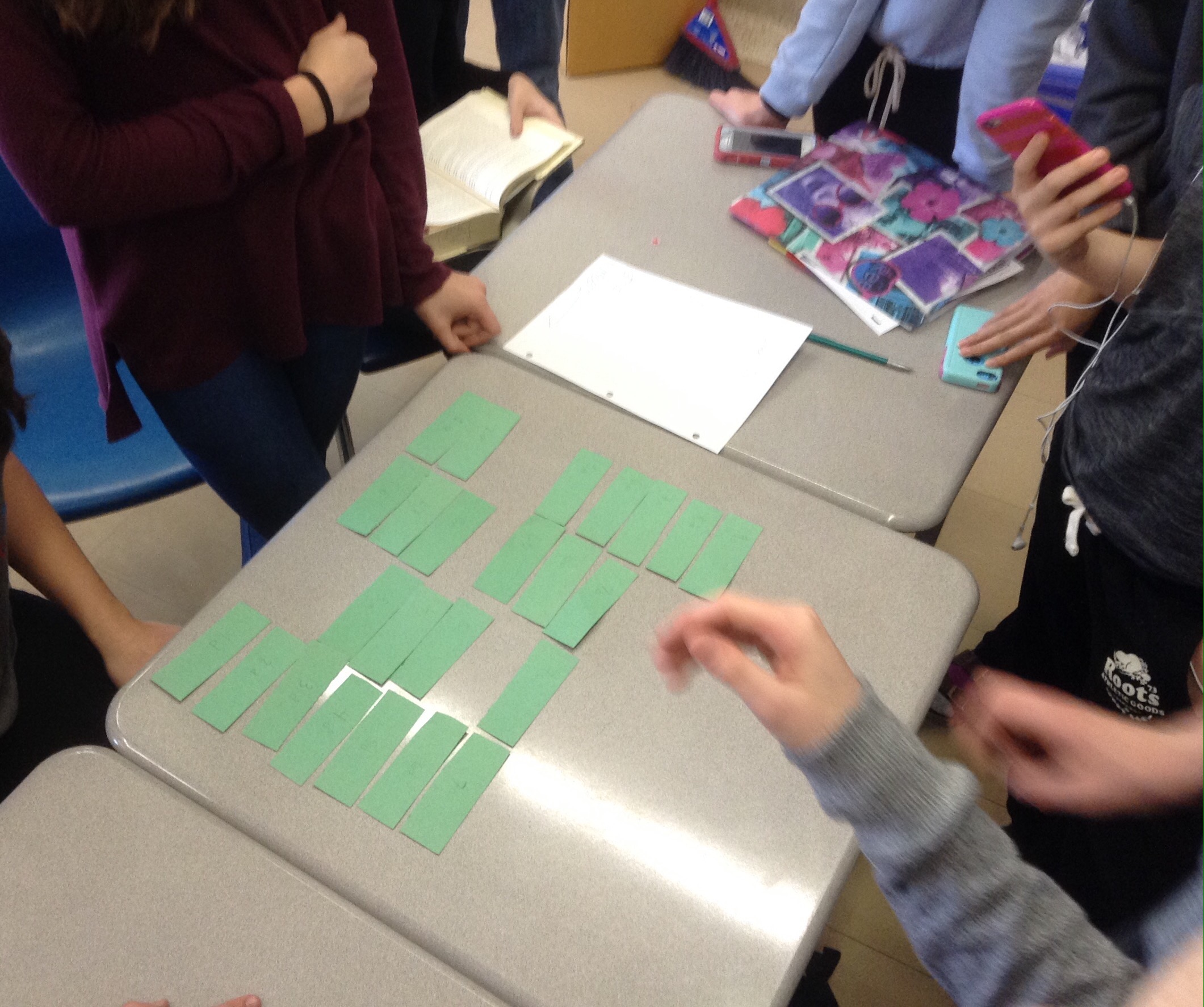


There are many exciting ideas being created. We look forward to Thursday when we will try them out!
Fun and Games math review
 We are reviewing some of our math skills in preparation to run some activities with our grade 7 math buddies. This one is a stacking game where fractions and percents are matched up.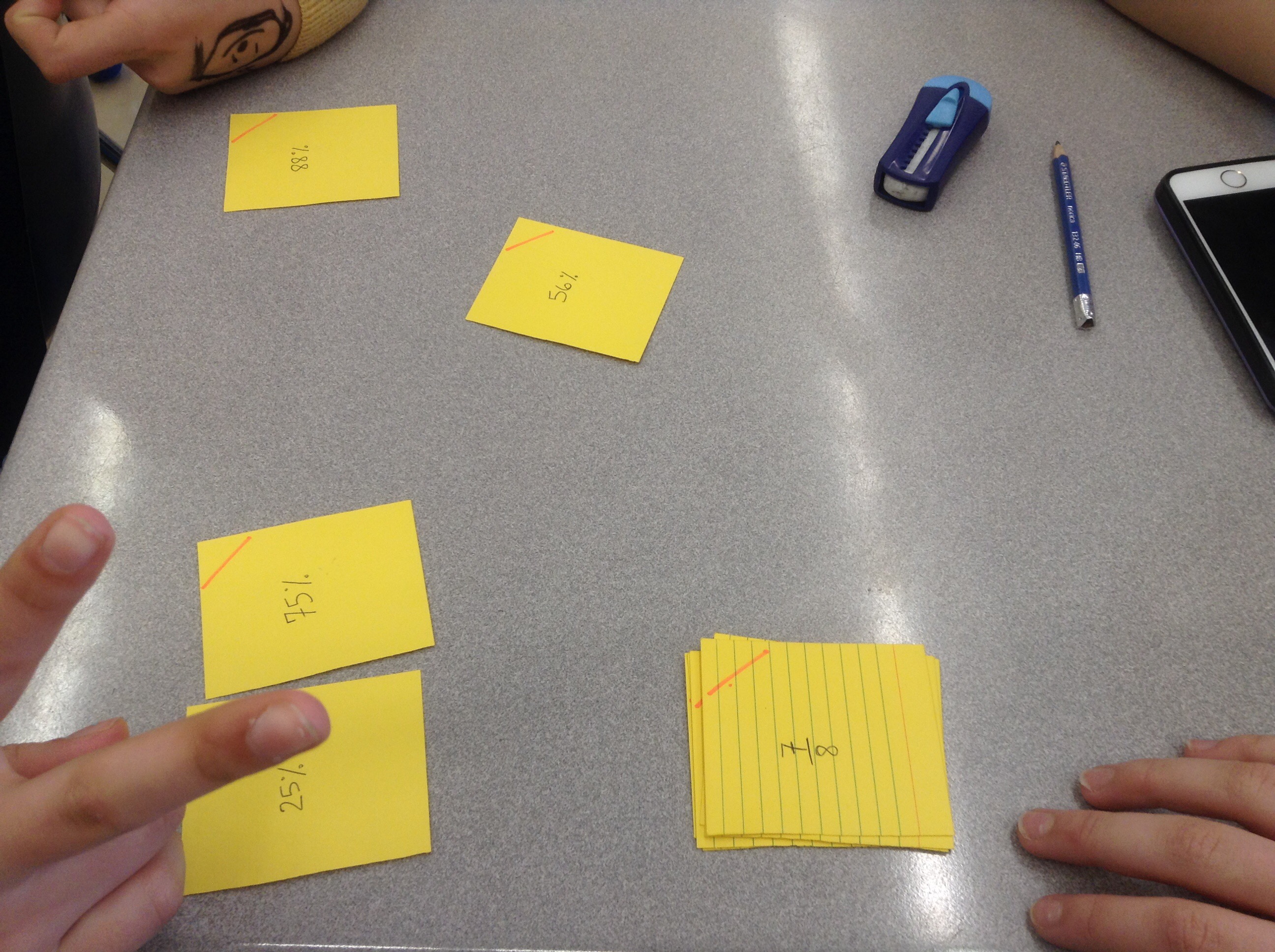
When all the cards are in the stack, you know its well done when the bottom of the stack equals the top of the stack.
To create this type of review: first make a list of the questions you will use. Make sure that none of the answers repeat. Write the question on one side of the first card, and set it aside. Write the answer to that question on the next card. Flip that card over and write the next question on the back. Continue that process until you get to the last answer, which should be written on the back of the original card. This creates a loop, so no matter what card is chosen as the starting card, the stack can be built without any trouble!
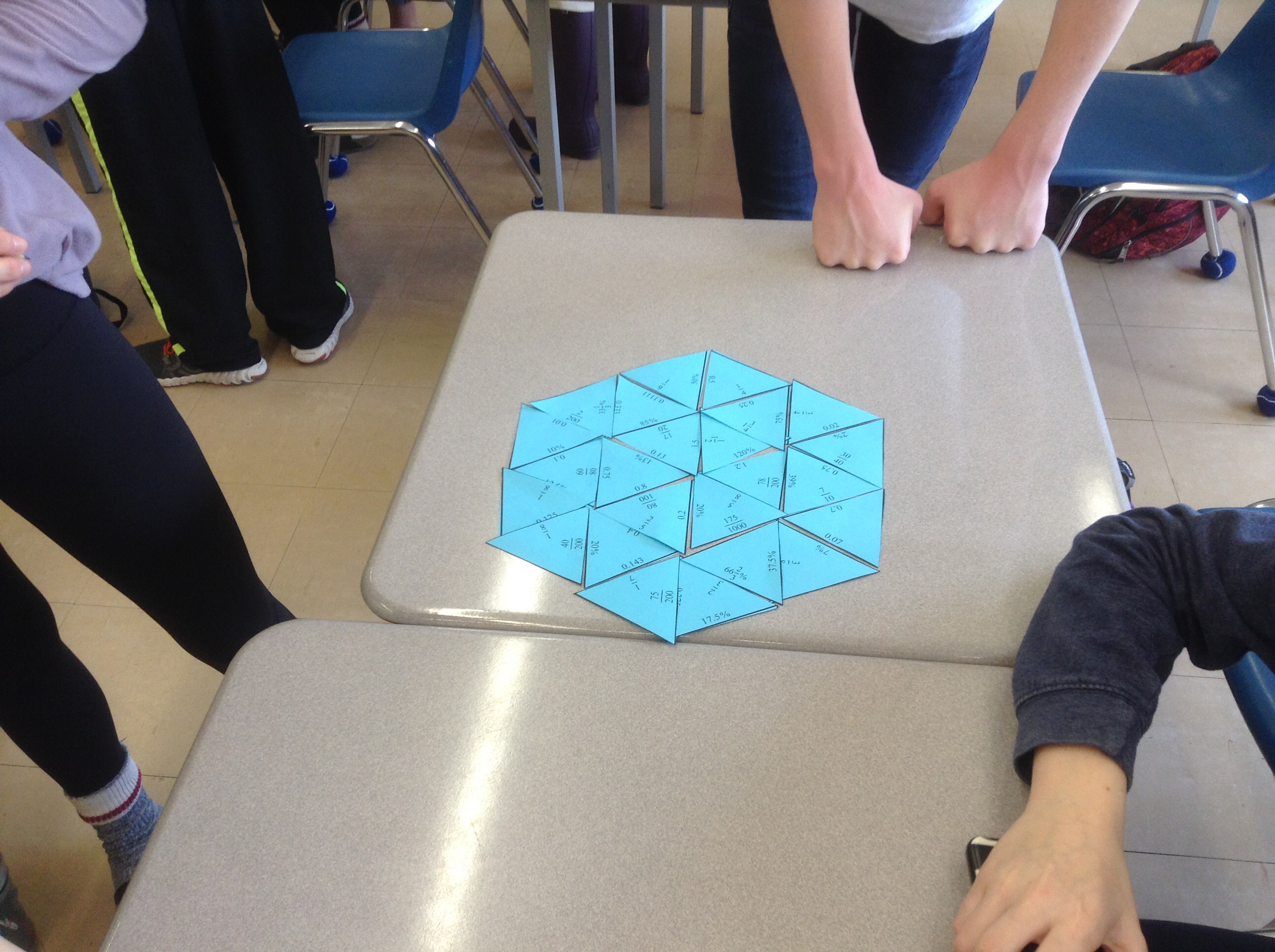
Another puzzle we did today was a tarsia puzzle reviewing fractions, decimals and percents. (source). Equivalent expressions are matched until all pieces are connected.

We did another tarsia puzzle with square roots and squares. (source)
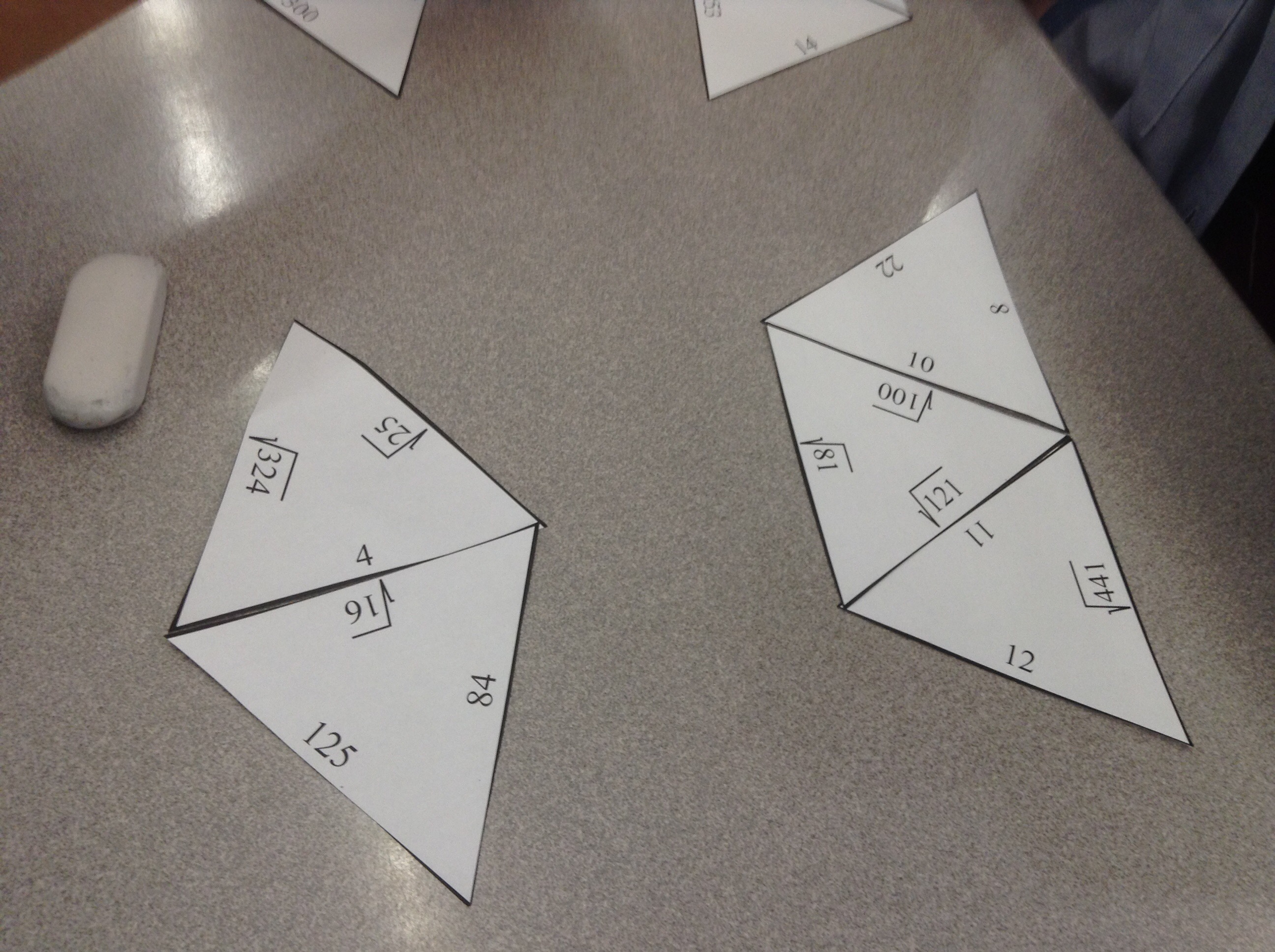

To create your own puzzle, you can find some templates online. I searched for “triangles in a hexagon” and got many options to print out and write questions onto.
Investigations
Here are some great examples of investigations and how to write them. Notice the clear communication with titles and axes well labelled. There are notations made on the graph itself explaining (using vocabulary words) the important features.

Another strategy is to write paragraphs on a separate page, which refers to the graph shown separately.

 Ms. Bearse's Site