Stacking cards review game
To review exponents we played a stacking game. The idea was inspired by the blog mathequalslove. Each group has a set of cards (made from index cards cut in thirds) . Each card has a question on one side, and an answer on the other. 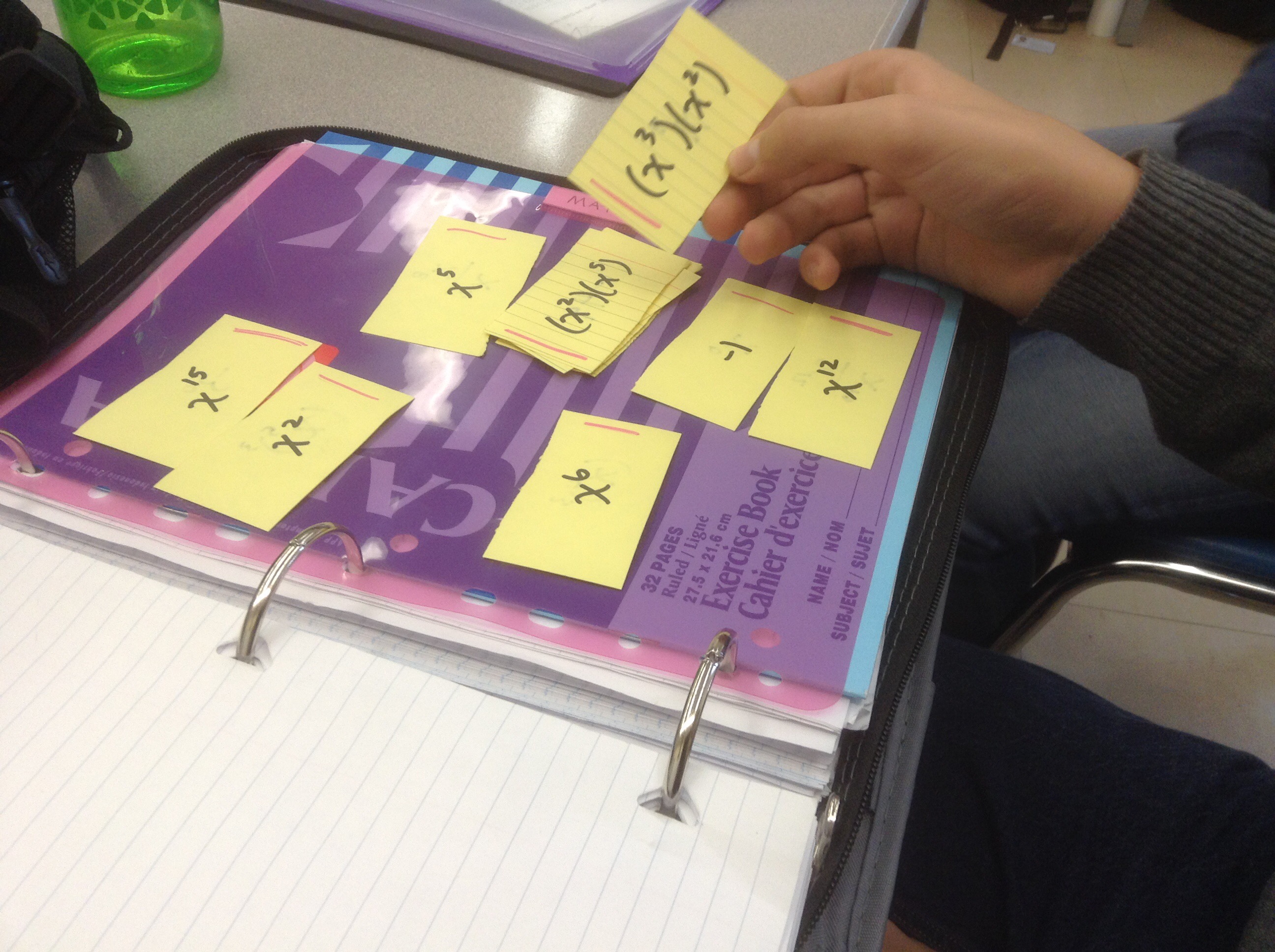
To play the game, all cards are laid out with the answers (in this case, the simplified form of the exponent question). One card is flipped to reveal a question. Working together or individually (there are many ways to play!) we look for the answer. The card is then flipped so the answer card is facing the question card to make a pile. On the other side of the card you’ll find the next question to solve. The cards are designed to all stack into one pile, which makes it easy to see if it’s been done correctly. The final question that is on the top of the pile should match up with the answer on the card at the bottom of the pile.
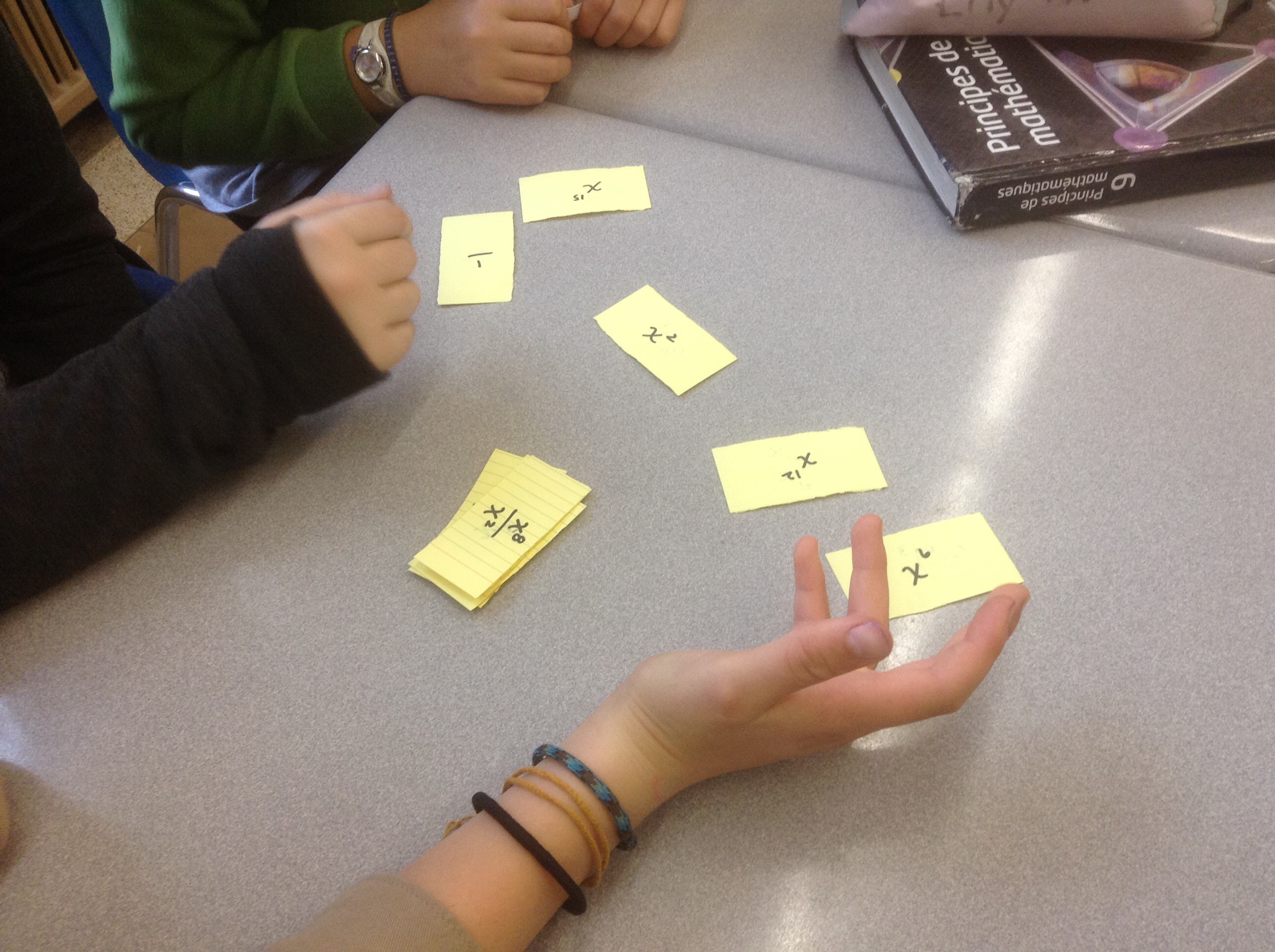
Students can work together, or try it independently, they can try to do it as fast as they can, or they can take turns going around their group.
This game worked really well as a review of exponent skills for my grade 10 class before starting to discuss quadratics. My grade 9s played this game as a consolidation step where peers worked to help others to work through the activity.
Tips for designing your cards
- Answers should appear only once
- If you are using variables make sure they appear on more than one answer card
- Address possible misconceptions. I was working on exponents of 0, 1 and also having a negative base e.g. -4^2 vs (-4)^2 and looking at exponent laws with a variable as the base.
- Design your set of questions and answers.
- Make your cards. Put question 1 on one card, then the answer on the back of the next card.
- Your stack continues to be formed in this way until the last answer which will go on the back of the first card.
Understanding exponents
We looked at how we can represent exponents in several forms. We showed how it is a short form notation for repeated multiplication.
To help reinforce this idea we made expressions we could physically expand.
This helps show how the exponent notation, the expanded form and the answer are all related.

Cheerio Stacking Competition
How many cheerios can you stack on a skewer in one minute? We levelled the playing field with a few rules: use your non dominant hand. Pick up one cheerio at a time. Stack one cheerio at a time.

After a few practice rounds we collected data for all members of the group. We used the data to predict how many we would stack in two minutes and three minutes. We plotted each group member’s data on a graph. We determined who has the fastest stacking rate.


We will return to this activity to discuss what head start (cheerios initially on the skewer) would be needed to create a tie after one minute. We will talk about how the graph would change if we stacked two cheerios at a time instead.
Battleship
We played a game of battleship today to practice plotting points on a 4 quadrant plane.
 The top half of the page was for your boats, and the bottom half was for your guesses.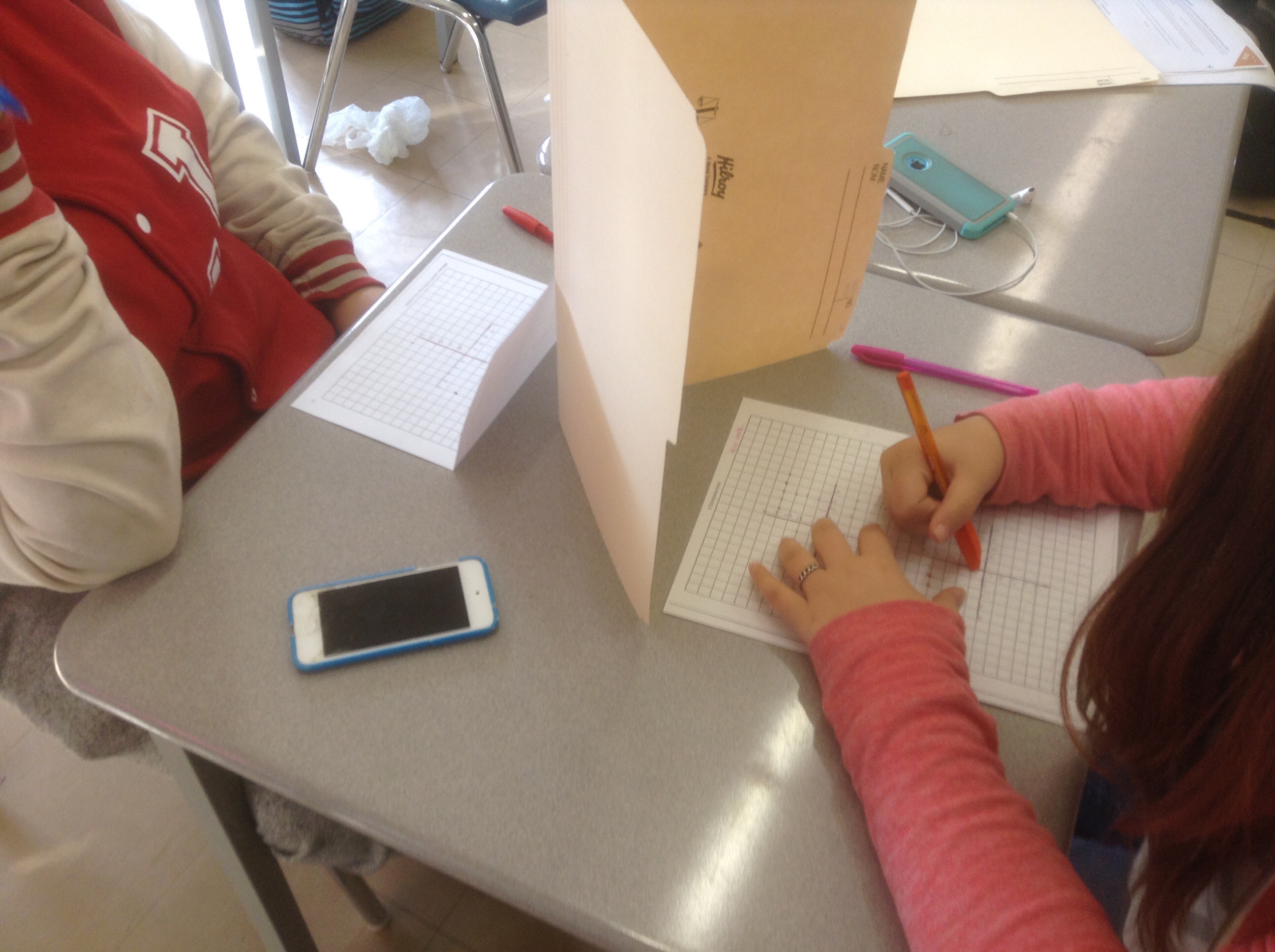
We all worked hard all period sinking battleships!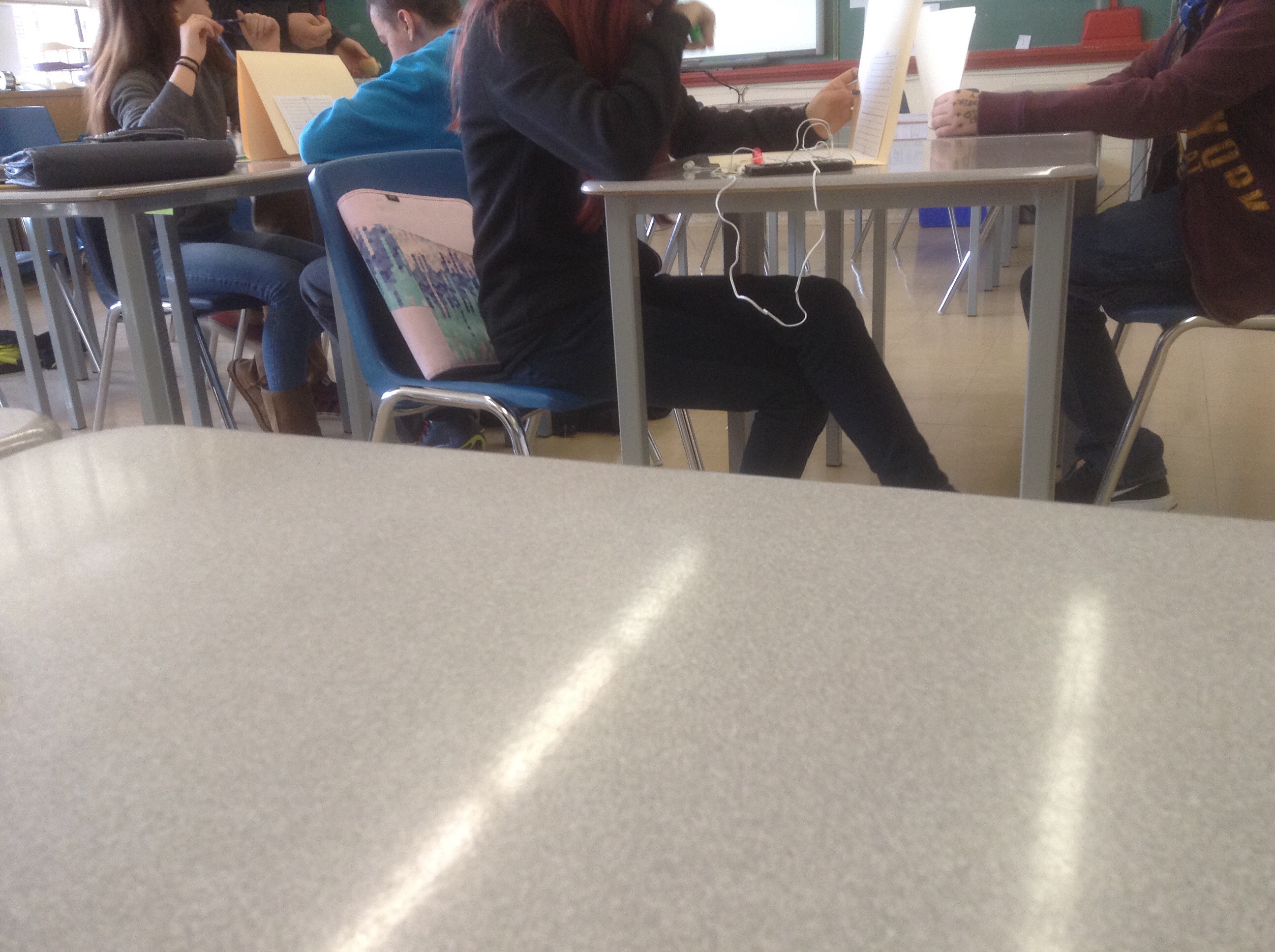
Algetiles
We are starting to talk about integers and variables, and algetiles are a great tool to use to help the concepts become less abstract.
We call the little red squares 1, and the little blue squares -1. We looked at how a red square and a blue square together would cancel each other out to make zero.
When we start talking about variables, the long rectangles represent a positive and negative x. Before long we were adding binomials: here is (2x+4)+(-3x+1).
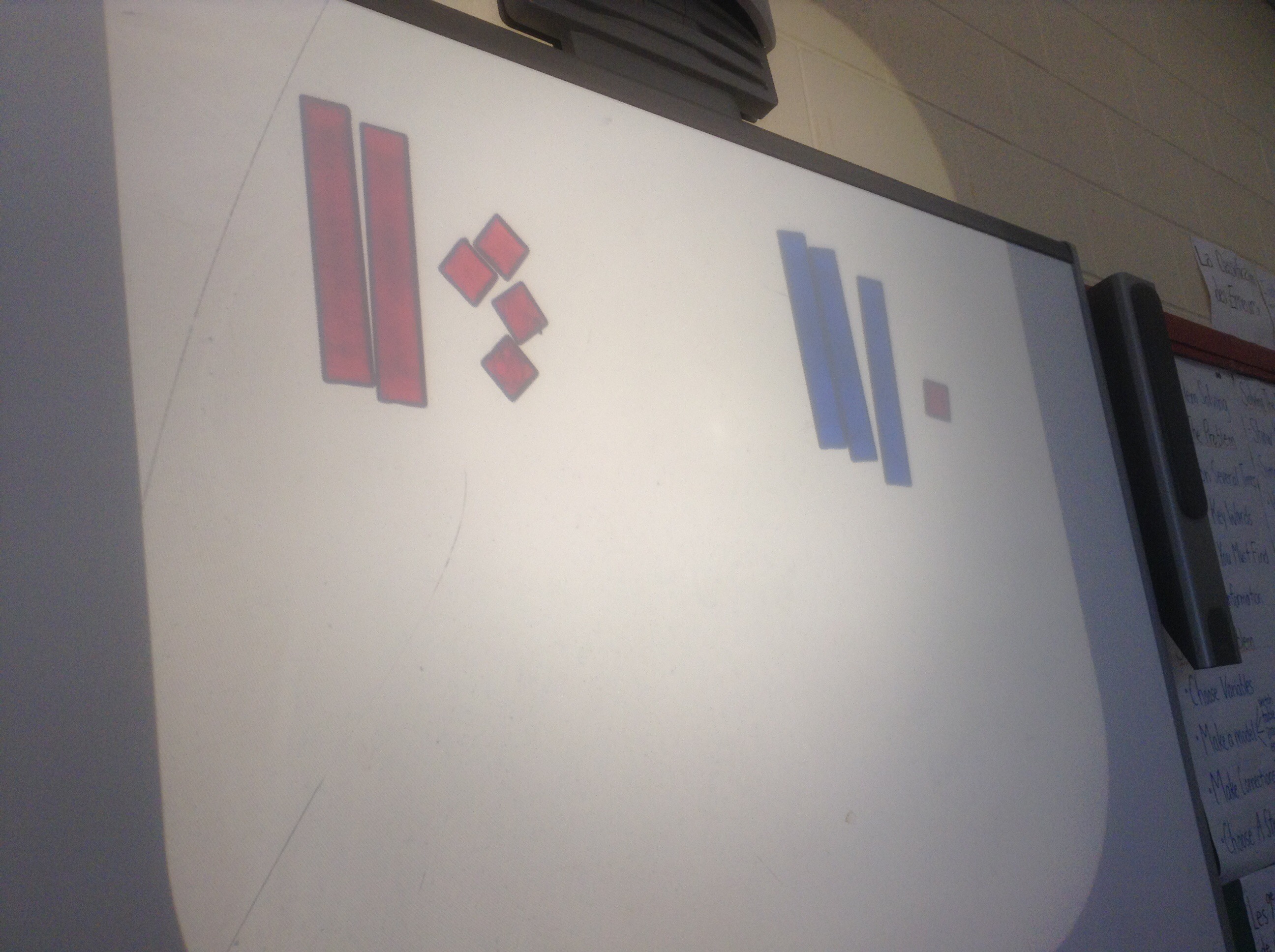
We can simplify the expression and cancel out some of the terms by matching up pairs of zeros.
We will be using algetiles a lot over the next 2 years.
Twin day!

Geometry Practice and Proofs
We’re working on reading questions clearly, and deciding which quadrilateral meets the description given.

Side length, perpendicular/parallel sides, diagonals that are the same length, or that are perpendicular, or that cut each other in half are all possible clues.
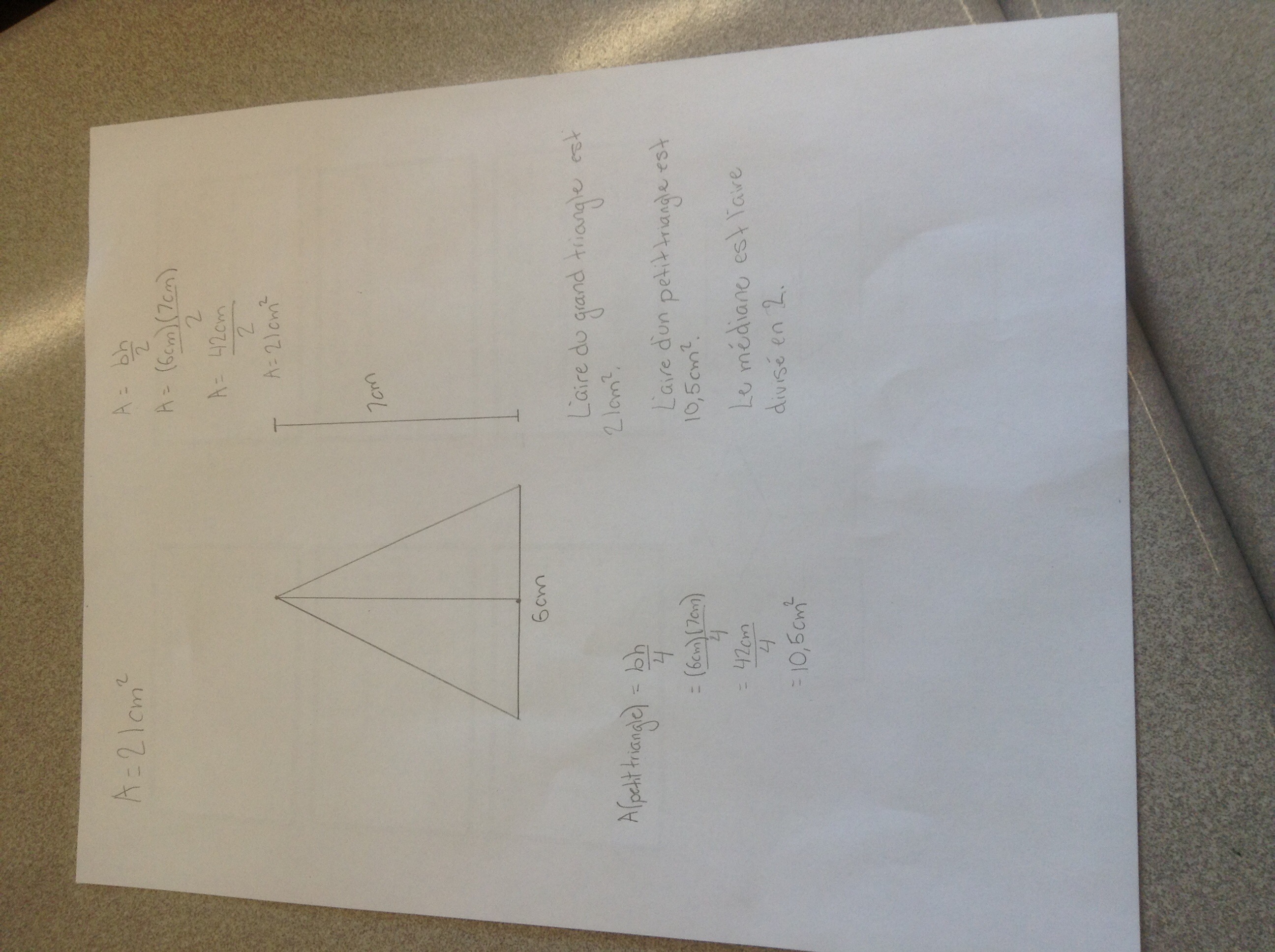
We also proved to ourselves that the median of a triangle divides the area in half.
Visual patterns
We looked at several patterns today.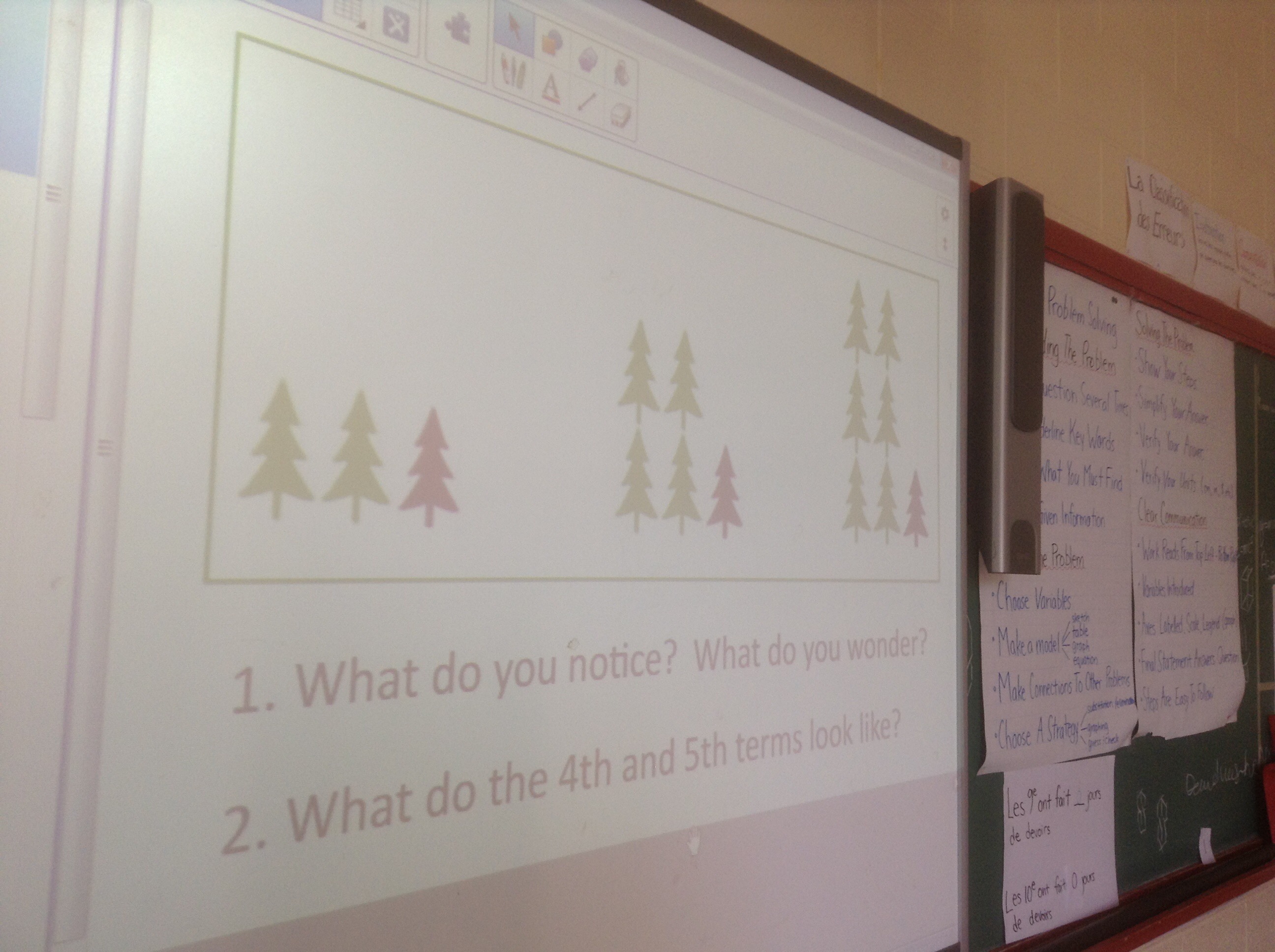
We represented what the next terms would be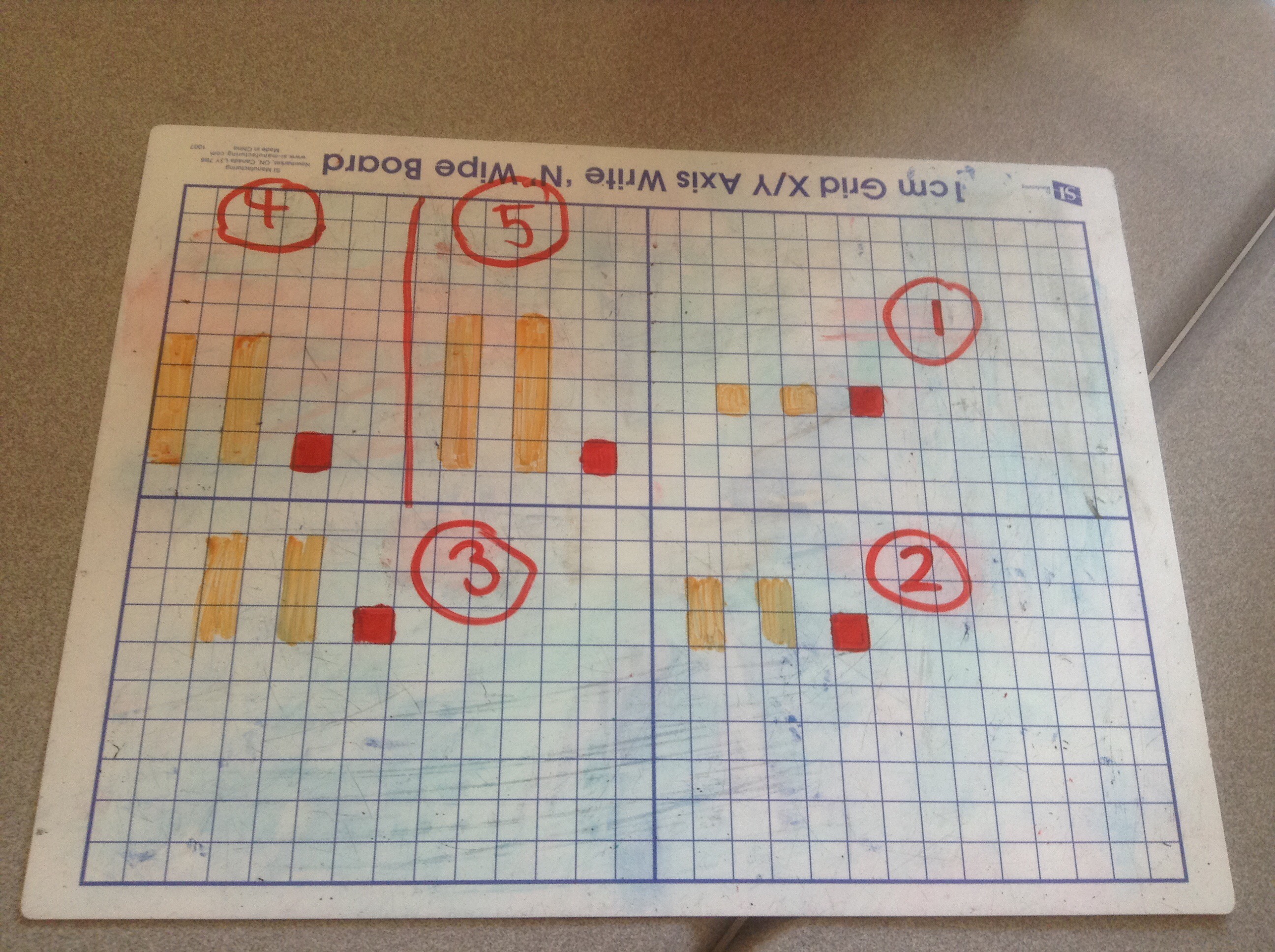

It’s interesting all the different strategies we have for finding the 10th term. Some people saw this one as an x thats getting bigger by 4 each time. Others noticed that there is one block past the middle for the first term, and two blocks past the middle for the second term, so we could draw the tenth term as 10 blocks out from the middle in 4 directions.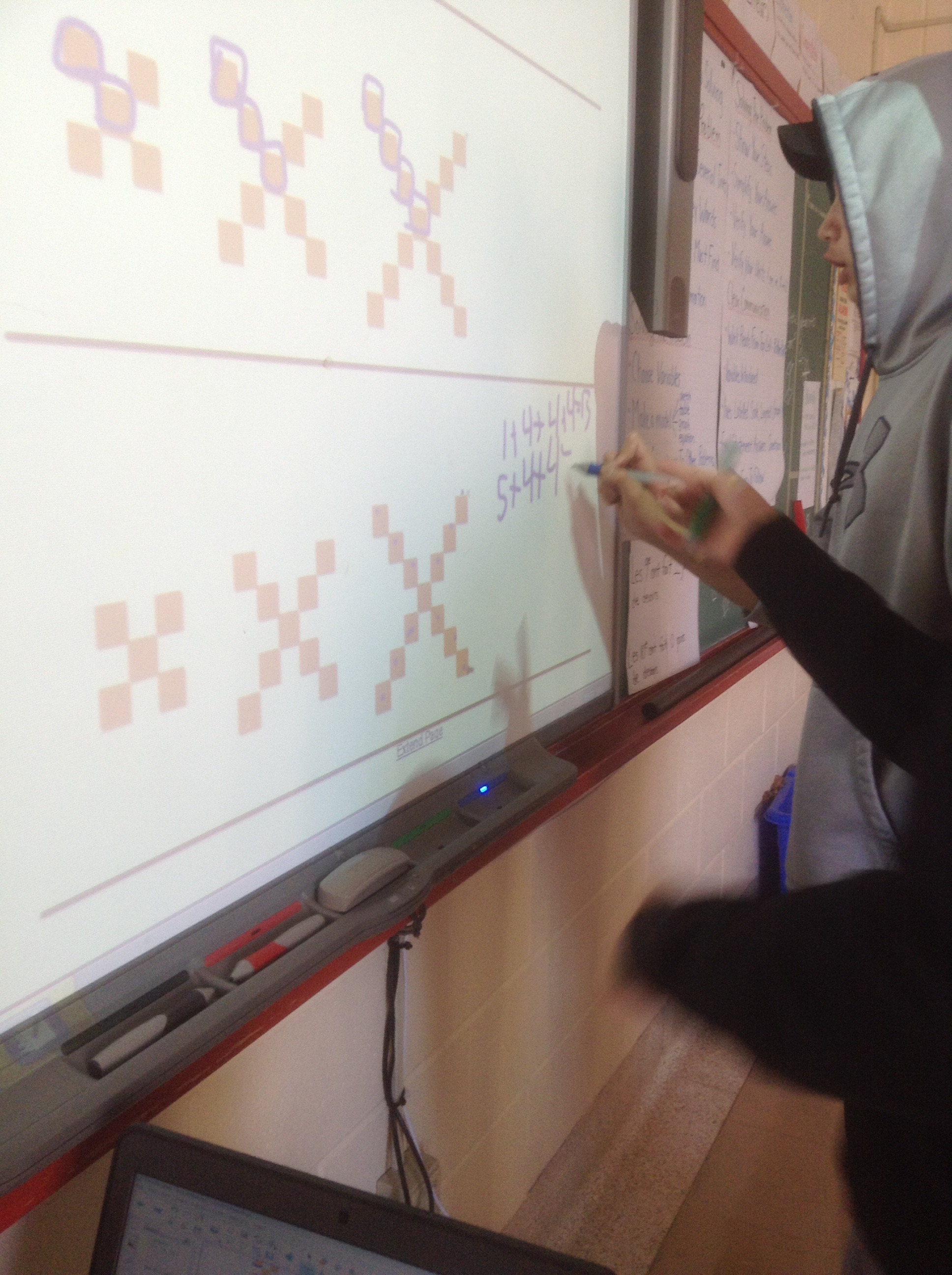
Working backwards to find the zero term was something new for us.
We are looking at weather the growth is linear or non linear for these patterns.
Geometry
We cut out random quadrilaterals, found the midpoint of each side, joined them up, and looked at the quadrilaterals inside.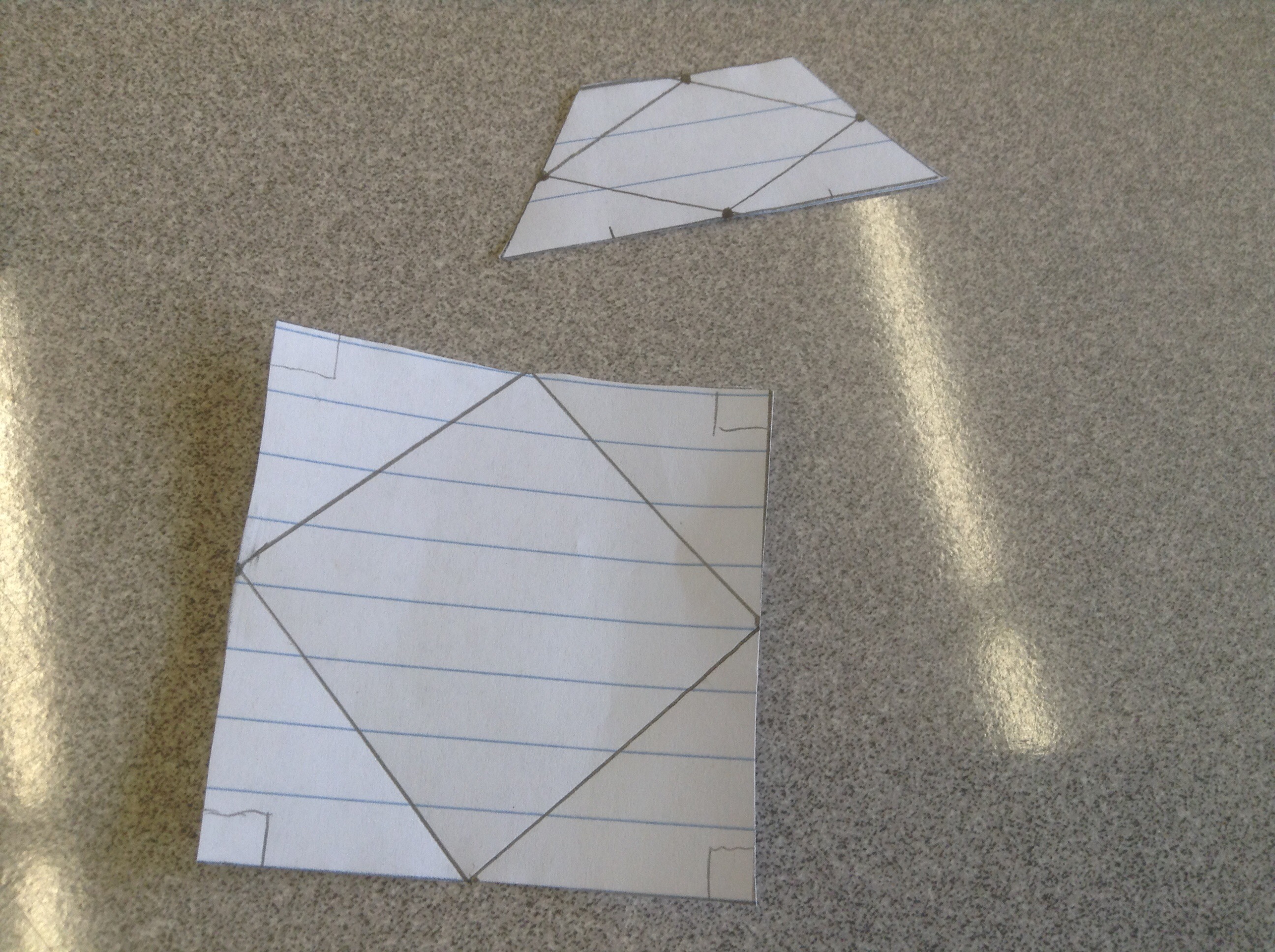
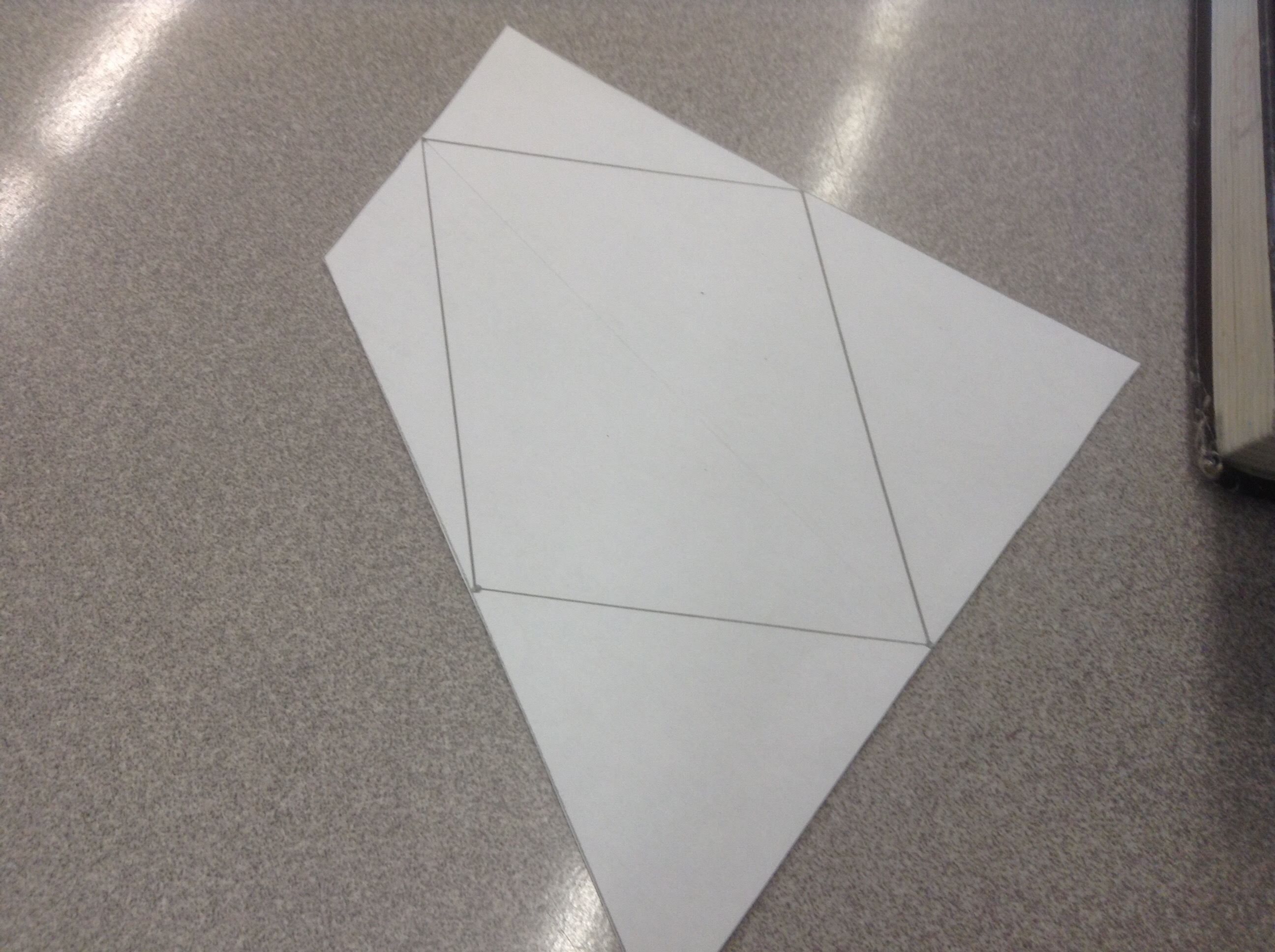
Each interior quadrilateral was a parallelogram!
Next we joined midpoints of triangle sides.
The segment drawn is parallel to the 3rd side, and half its length. The little triangle is 1/4 the area of the big one.
Beans!
Today marks the 30th day of our bean experiment. We took a look at their growth and compared it to our predictions and some were not. We noticed that the beans are starting to bud.
This poor bean grew only 1 cm in the last 20 days!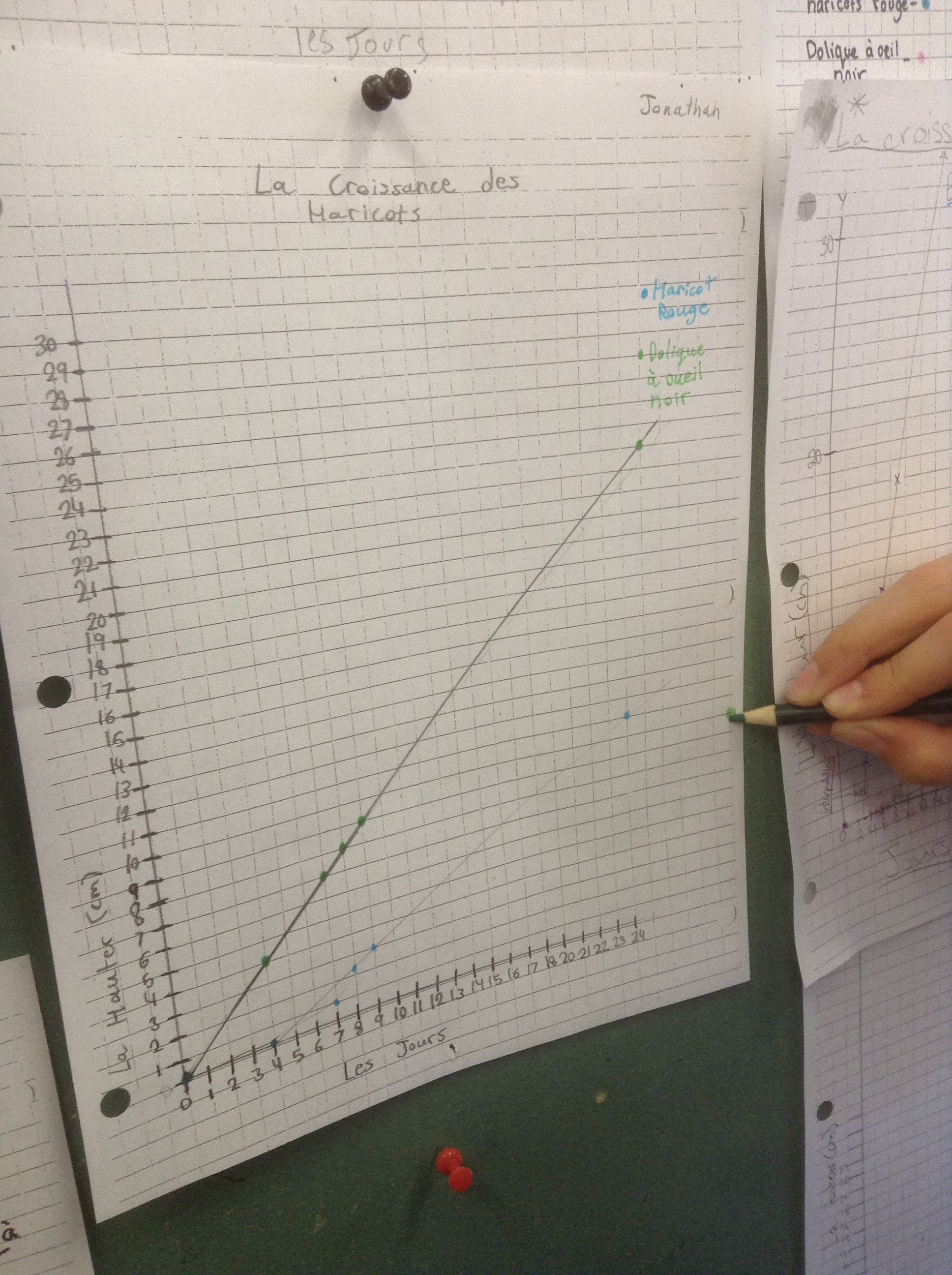
This one is closer to the projected heiht.
We will keep measuring to see what happens next.
 Ms. Bearse's Site
