Investigating water levels
Over the past few days grade 9s have been investigating with water. The water in a bucket modelled the amount of oil in a well. They had to choose which machine (cup) would be best to remove the “oil” the fastest. The big cup could be used 2 times a month and the small cup 4 times a month.

We used volume calculations and modelled each cup as a cylinder.
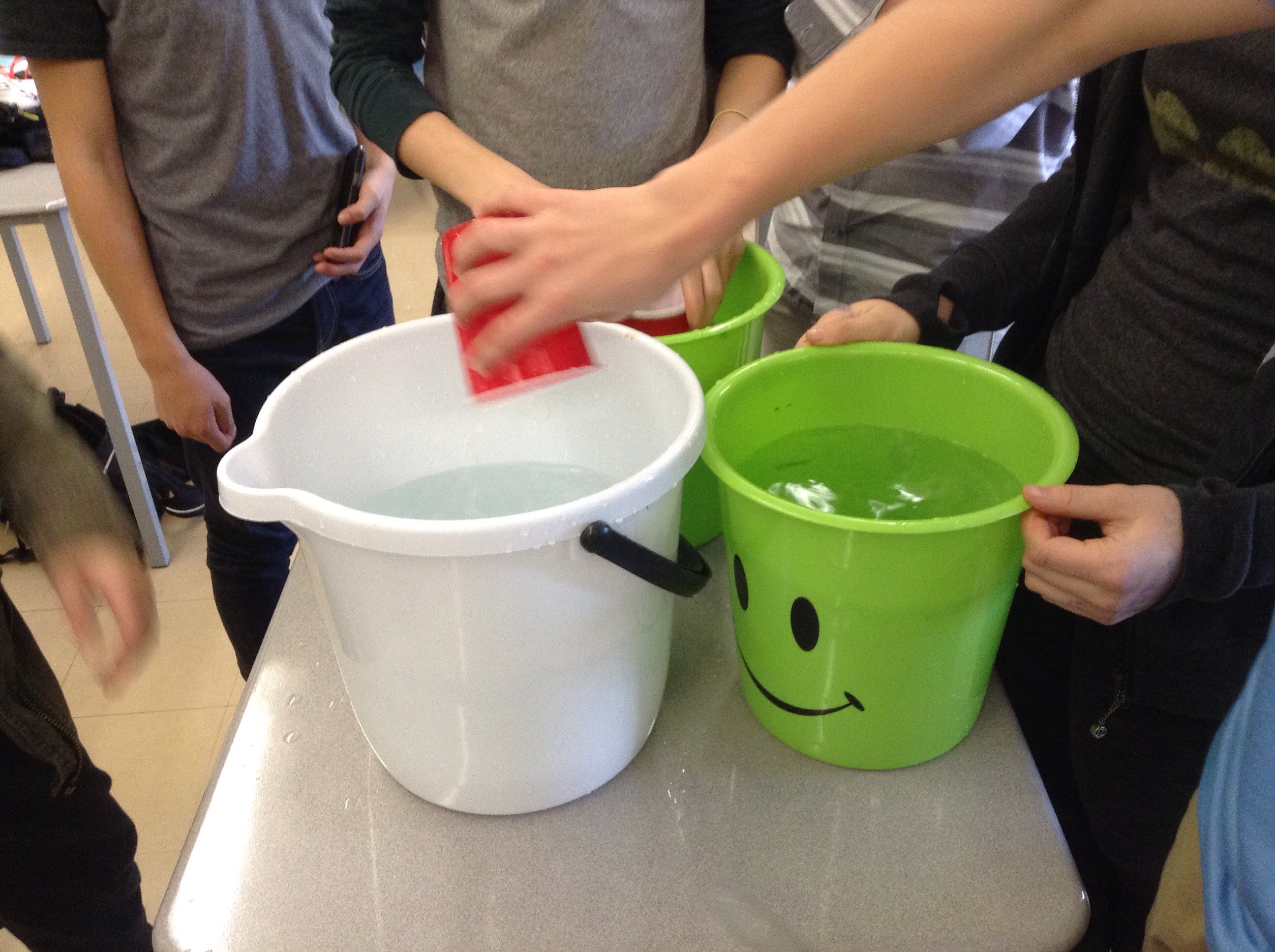
Starting with 16 cm in the bucket, we predicted when the water level would be 0cm, or how long the oil reserves would last.

After calculating and predicting we did the experiment
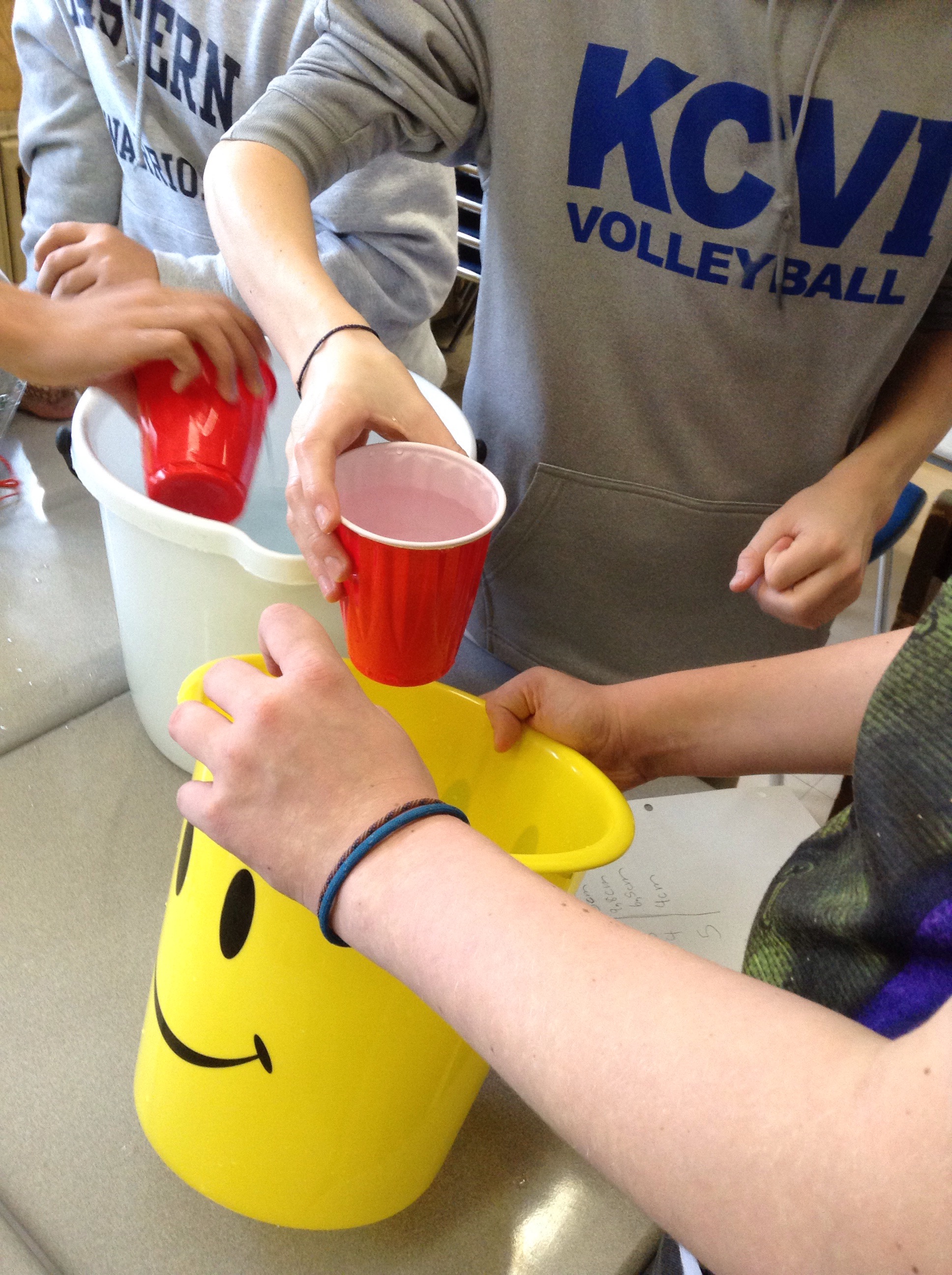
We kept track of the height of the water
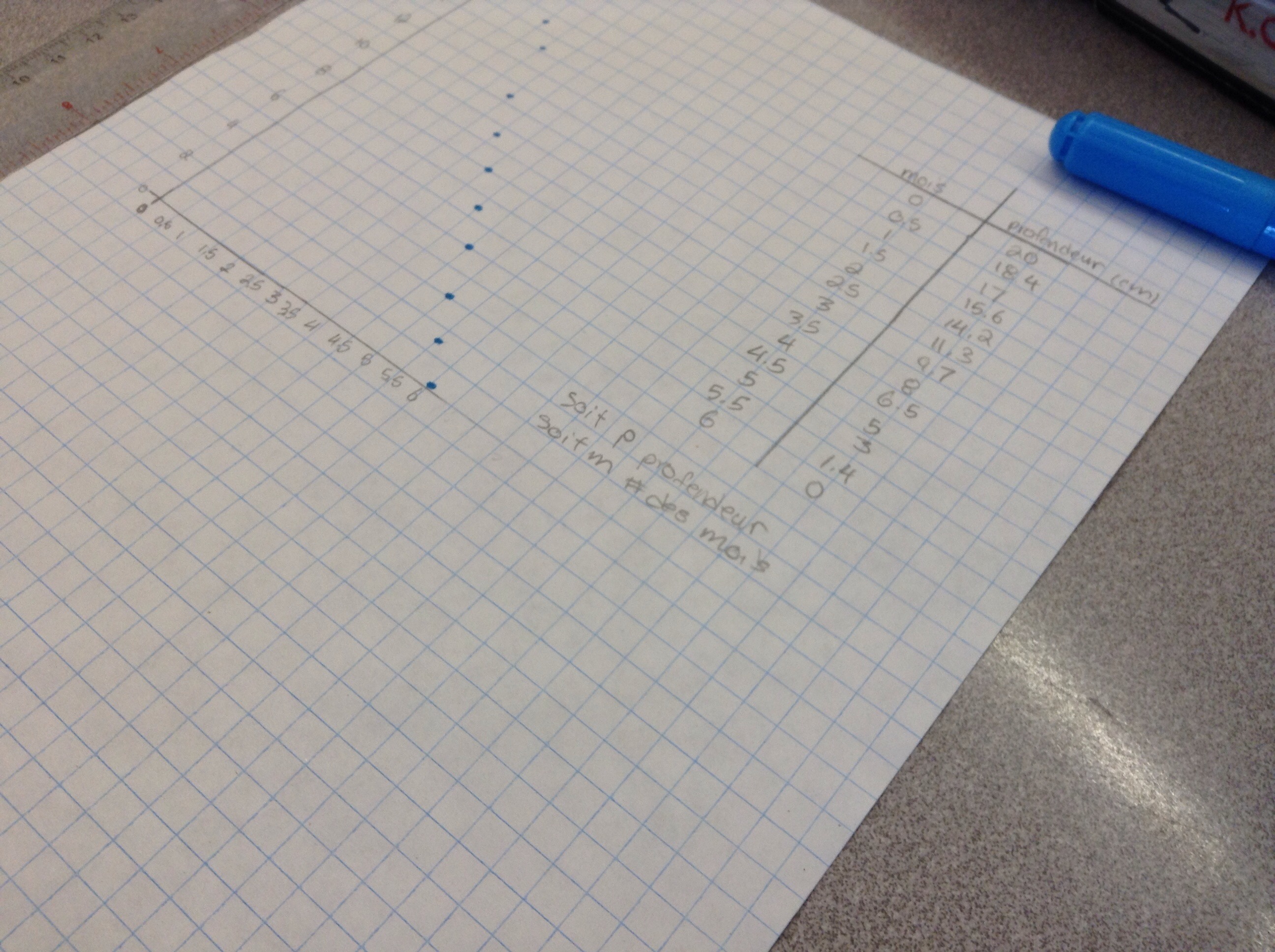
And then we made graphs to show the water level over time.
Next we made equations to calculate the water level at any point in time.
Many thanks to custodians with mops who arrive at the best time.
Parabolic teeth?!
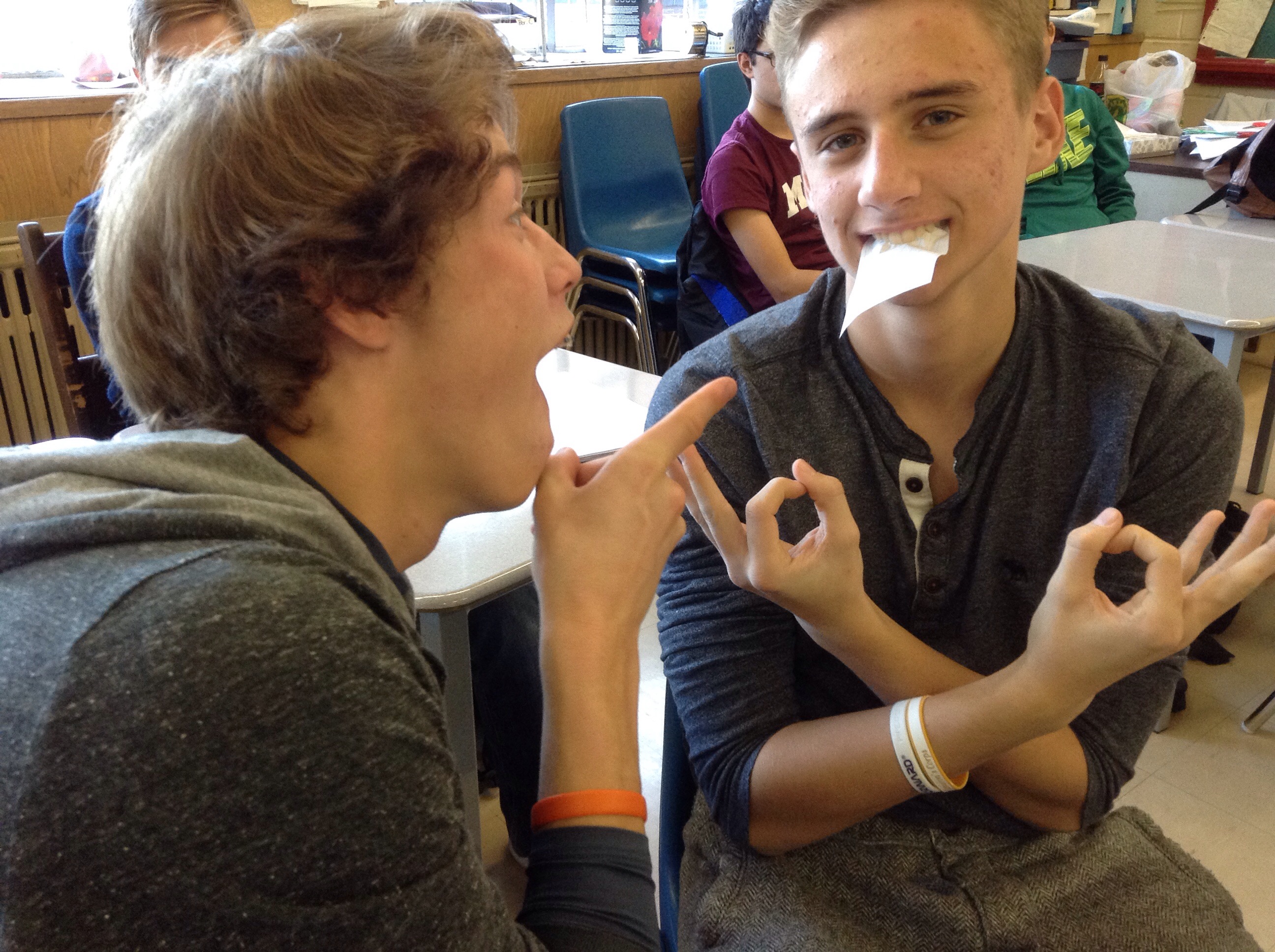

We bit graph paper, added x and y axes and then determined the “a” value for our parabolic dental arch.
Parabolas are everywhere!
What is an Engineer?

Today Elena is here teaching us about engineering. We’re excited she’ll be with us every 2 weeks for the rest of the term.

She challenge she brought today was to build a freestanding spaghetti tower that could hold a marshmallow the highest. The limits were 18 pieces of pasta and 18 minutes..
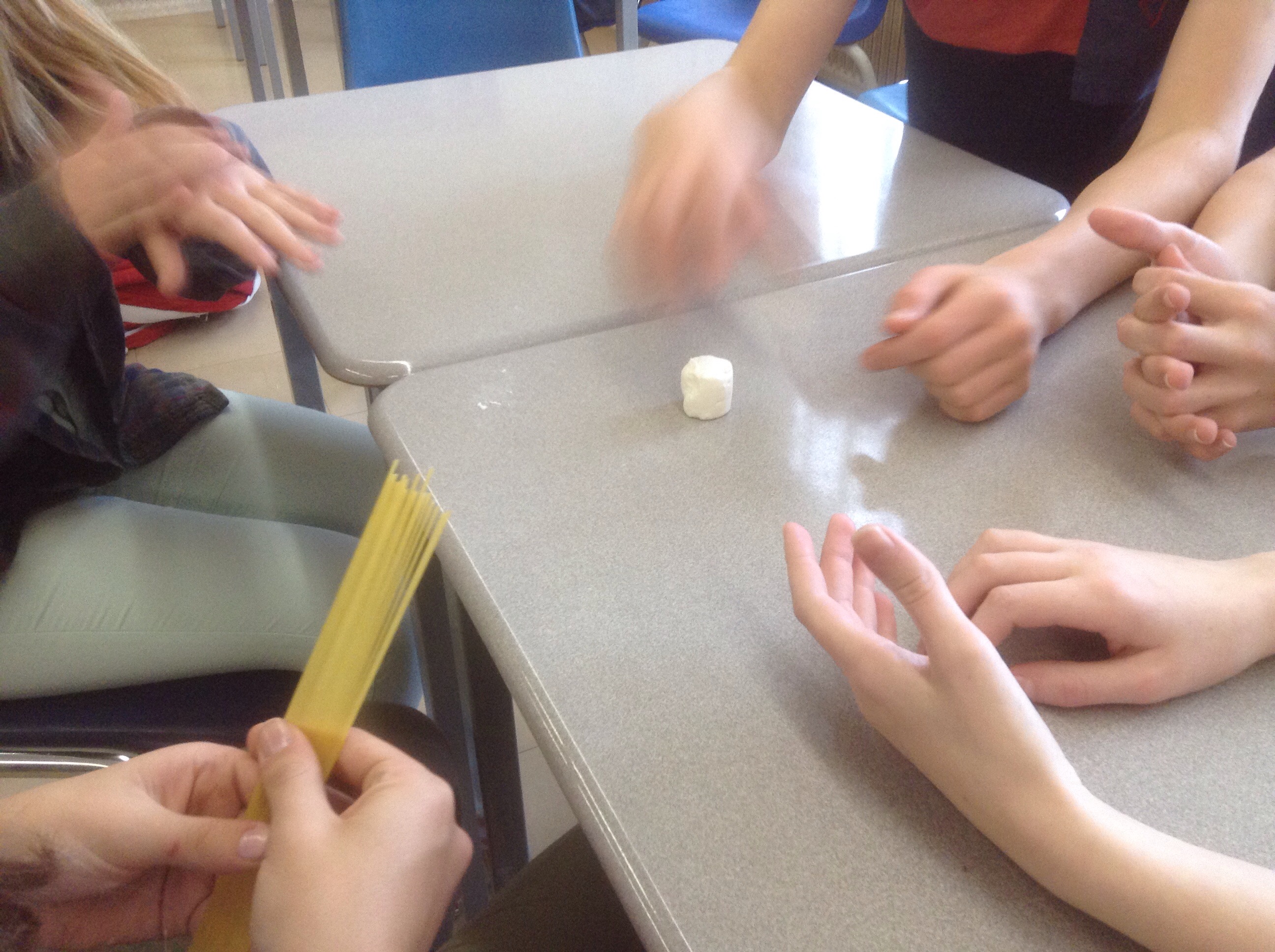
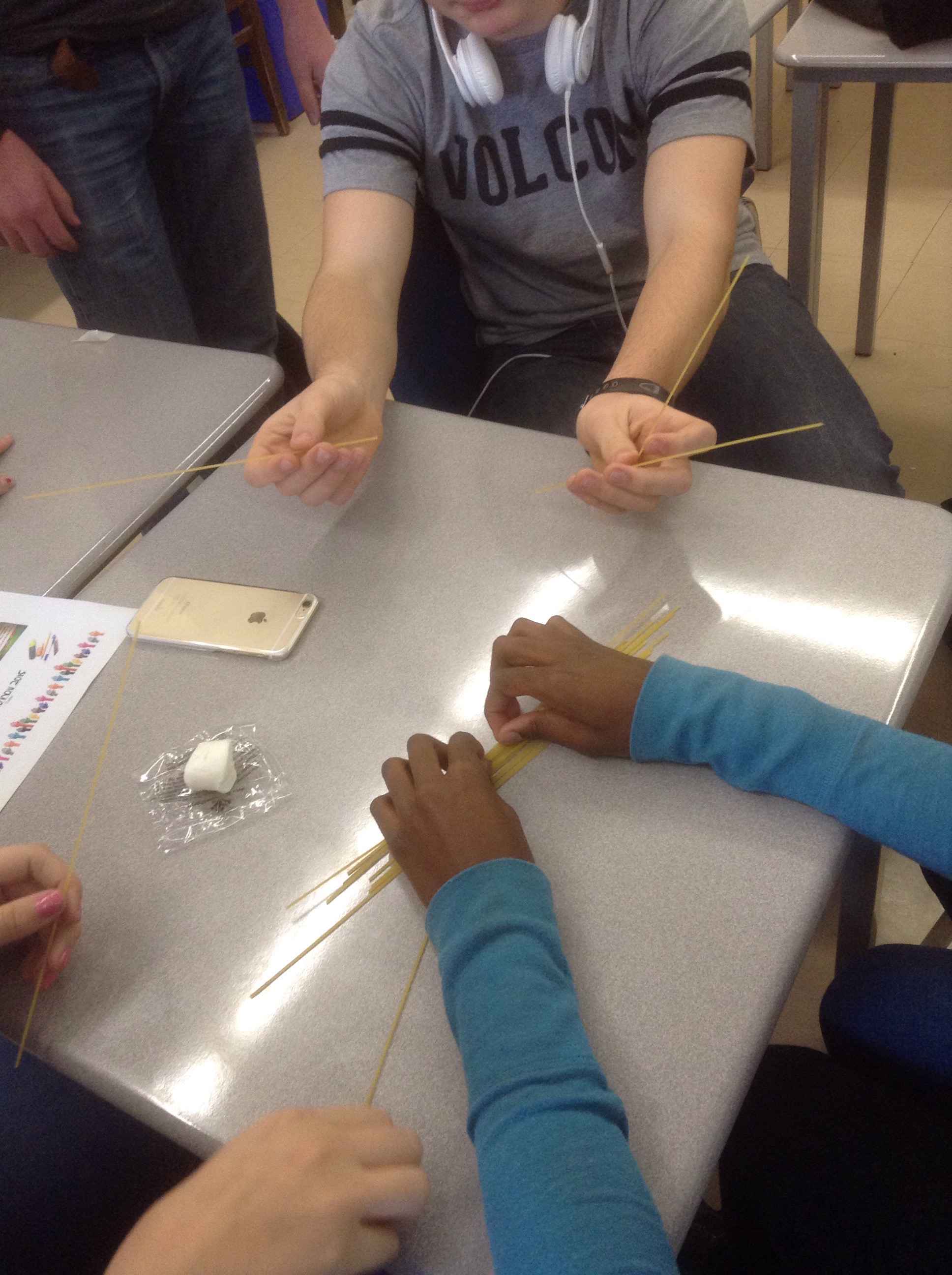
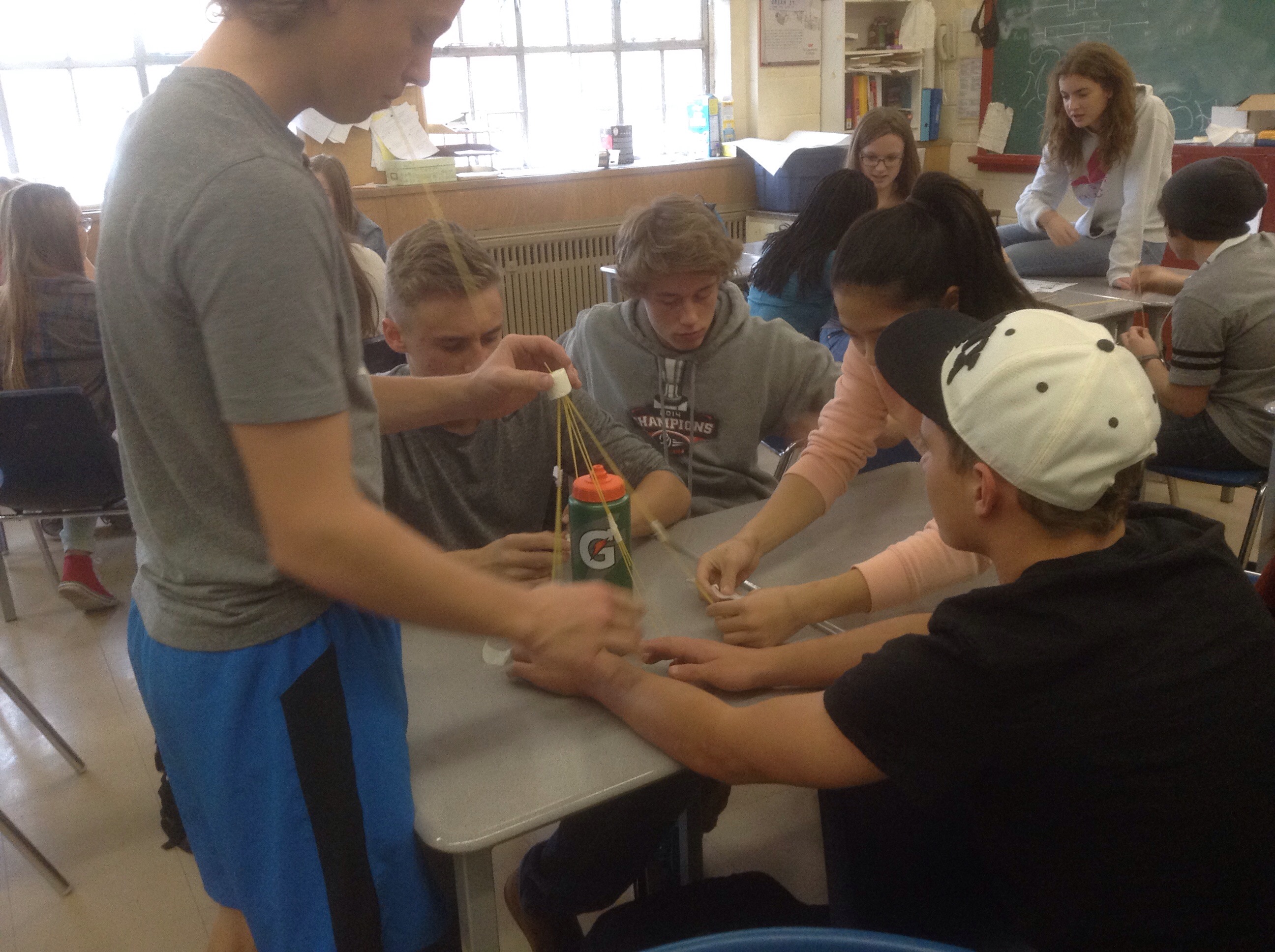


Here are the results.
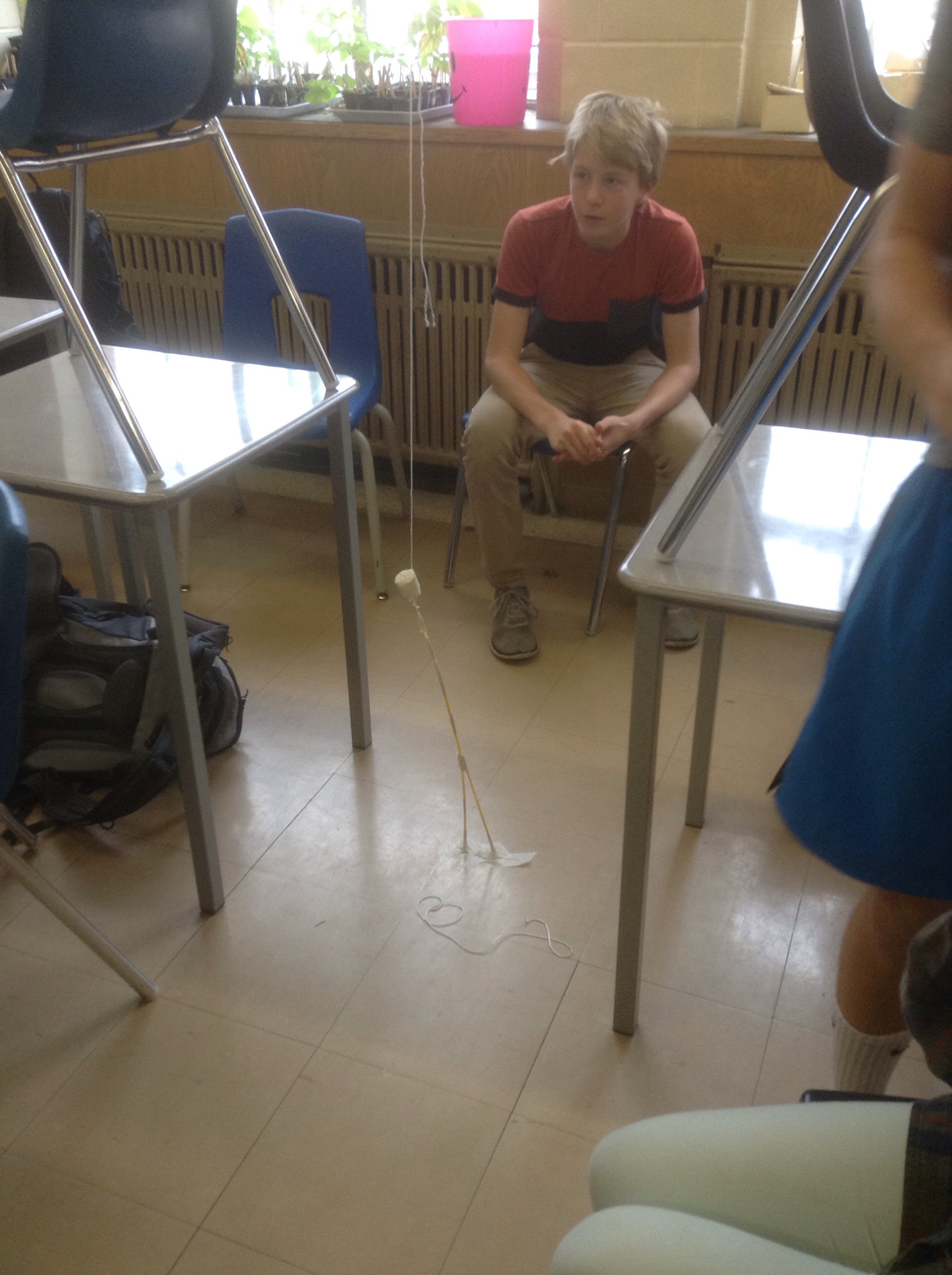


For more information about the marshmallow challenge, check out the ted talk.
Test Day=homework book submission
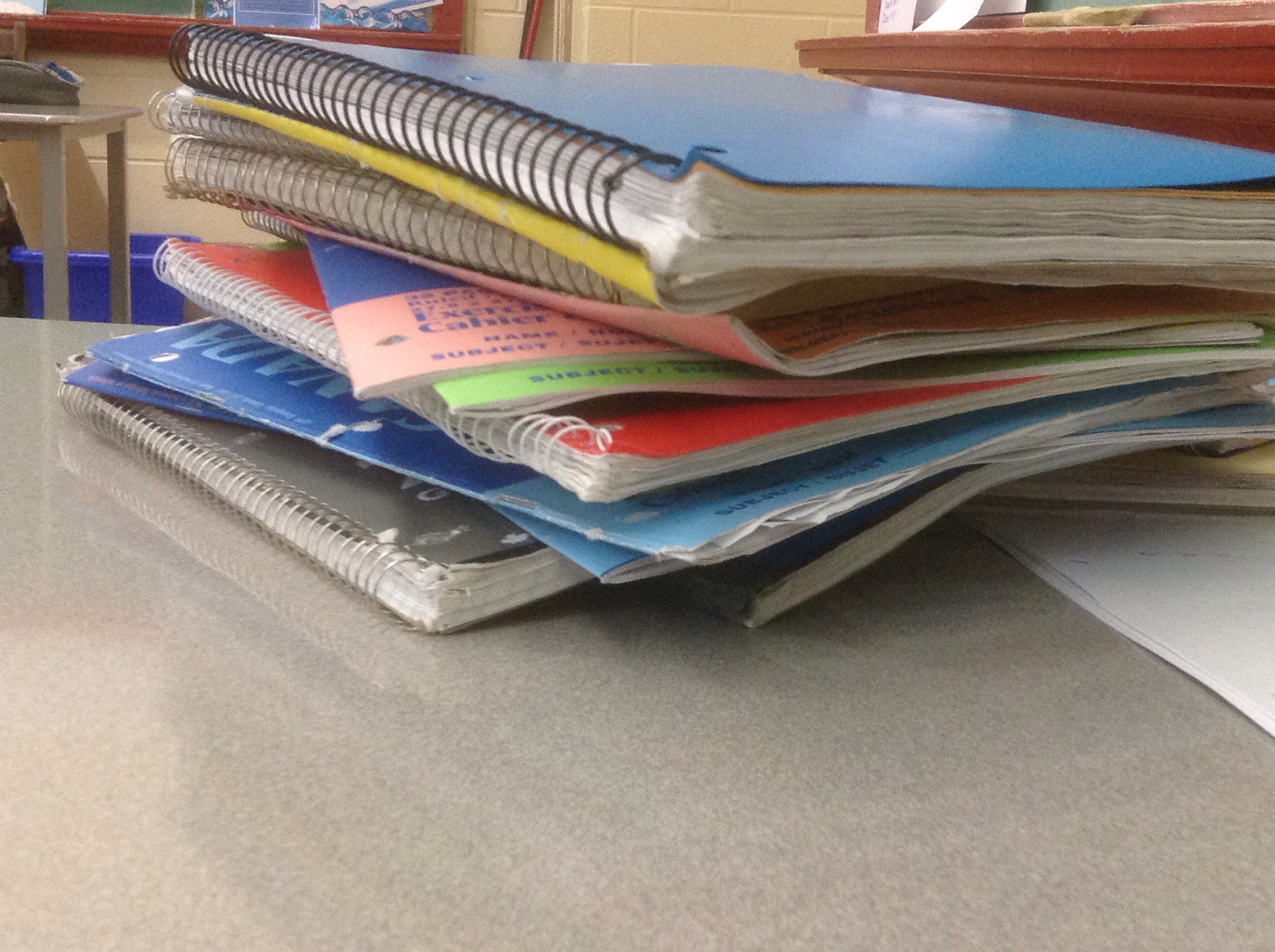
We do homework in bound books for a few reasons.
- Homework gets lost less frequently
- We can be proud of filling an entire notebook, sometimes several times per term
- We can show our progress (organizational skills, communication skills etc)
- When they all are handed in it is a manageable pile. 30 binders would be way less manageable!
Tips for organization
- Name on the book
- Page numbers and dates on pages
- Question numbers written
- Space out your work so it is easy to read
- Practice “good form” (equal signs where they should be, labels on graphs)
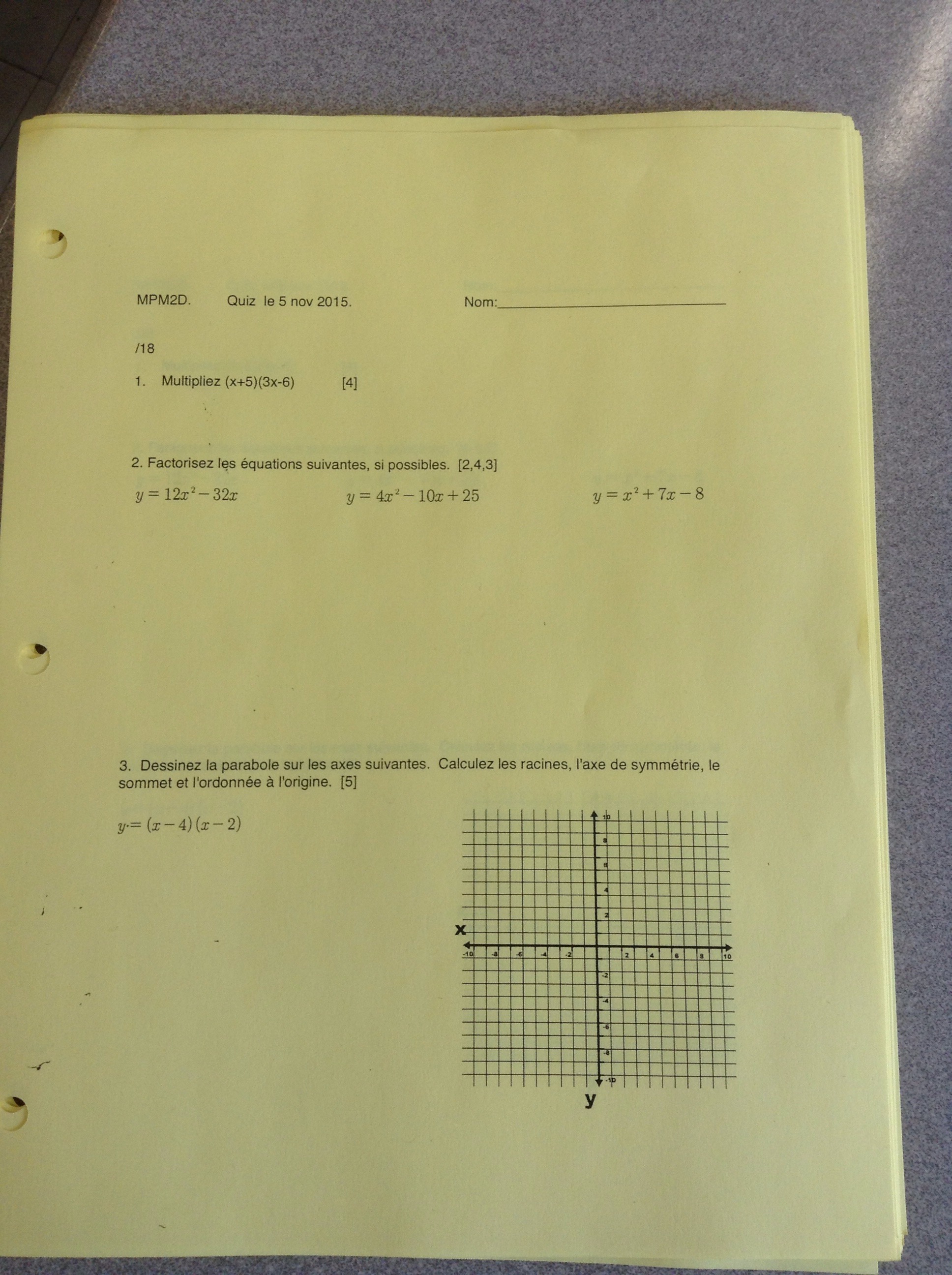
Quiz 10
For all at sports or away. The point value for question 2 should be [2,2,3] and the total is out of 16
Alge-Tiles in grade 9 and 10
We’re using algetiles to represent polynomials in grade 9. Each of the different shaped tiles represents a type of number. The small squares are units (1), the rectangles are x and the big squares are x^2 (x squared). Red ones are positive, blue ones are negative. 
Here is 2x^2+x-1

We used the algetiles to add polynomials. The neat thing is that a positive x cancels a negative x so when we combine expressions we make lots of zeros to simplify the result.
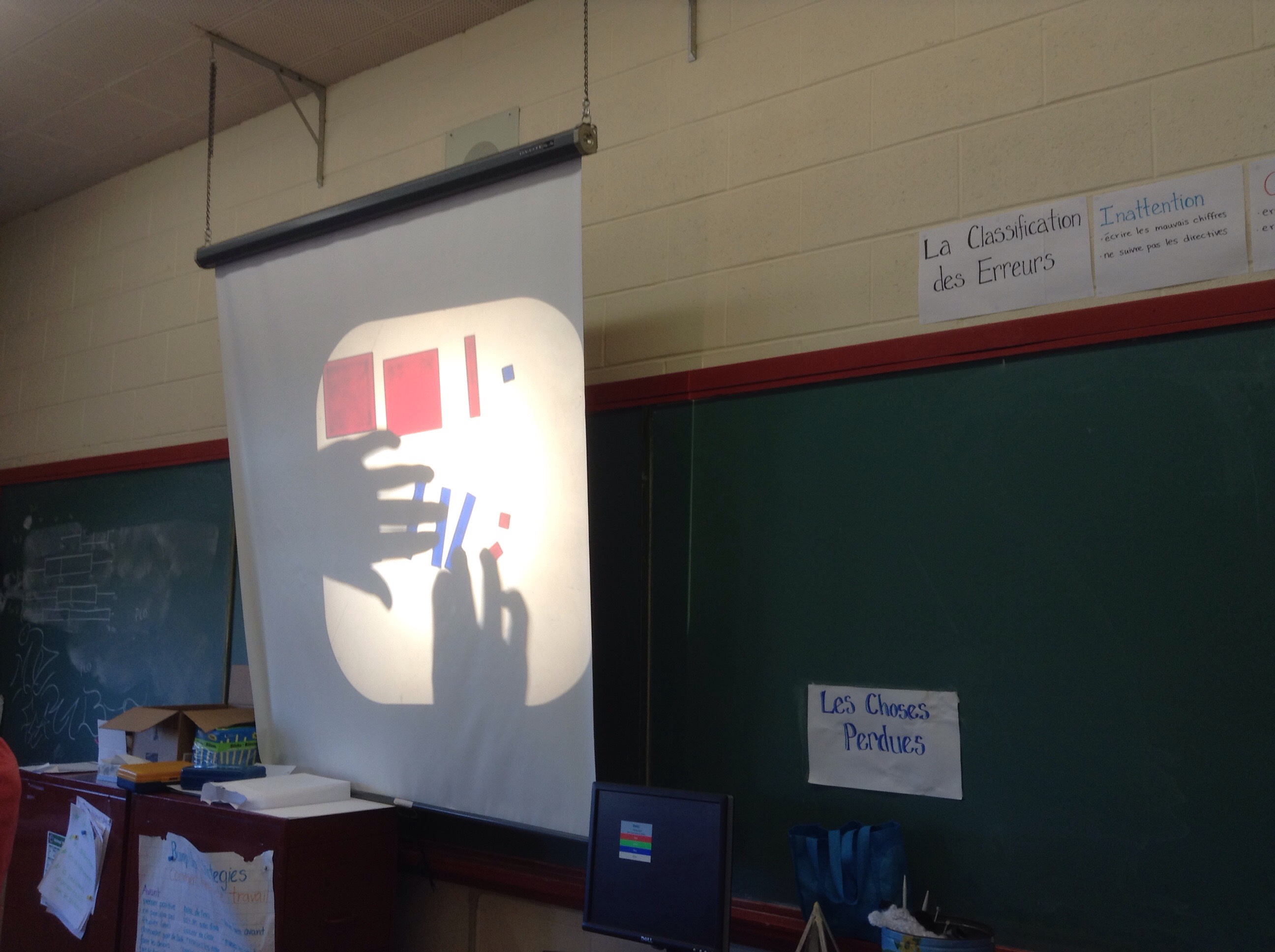
Algetiles are useful in grade 10 to work through factoring questions. If we can make an expression into a rectangle using algetiles then it’s factorable. The factors are the dimensions of the rectangle.
Expression is x^2+3x+2 (which can be put into a rectangular form). The factors of the trinomial are (x+1)(x+2) which are shown on the sides (right and bottom). We’ll come back to more algetiles to explore different types of factoring.

Times Tables
We’re working hard to master the “old school” skill of calculator-free multiplication.
We’re working towards being able to complete 100 questions perfectly in 5 minutes. Along the way we’re finding out that a little bit of daily practice can yield great improvements in timing and accuracy.
Ice cream party
To celebrate that the class had marks all over 60% on the last test we had an ice cream party. We did math about ice cream too, like the volume of the cone, and the surface area covered in sprinkles. 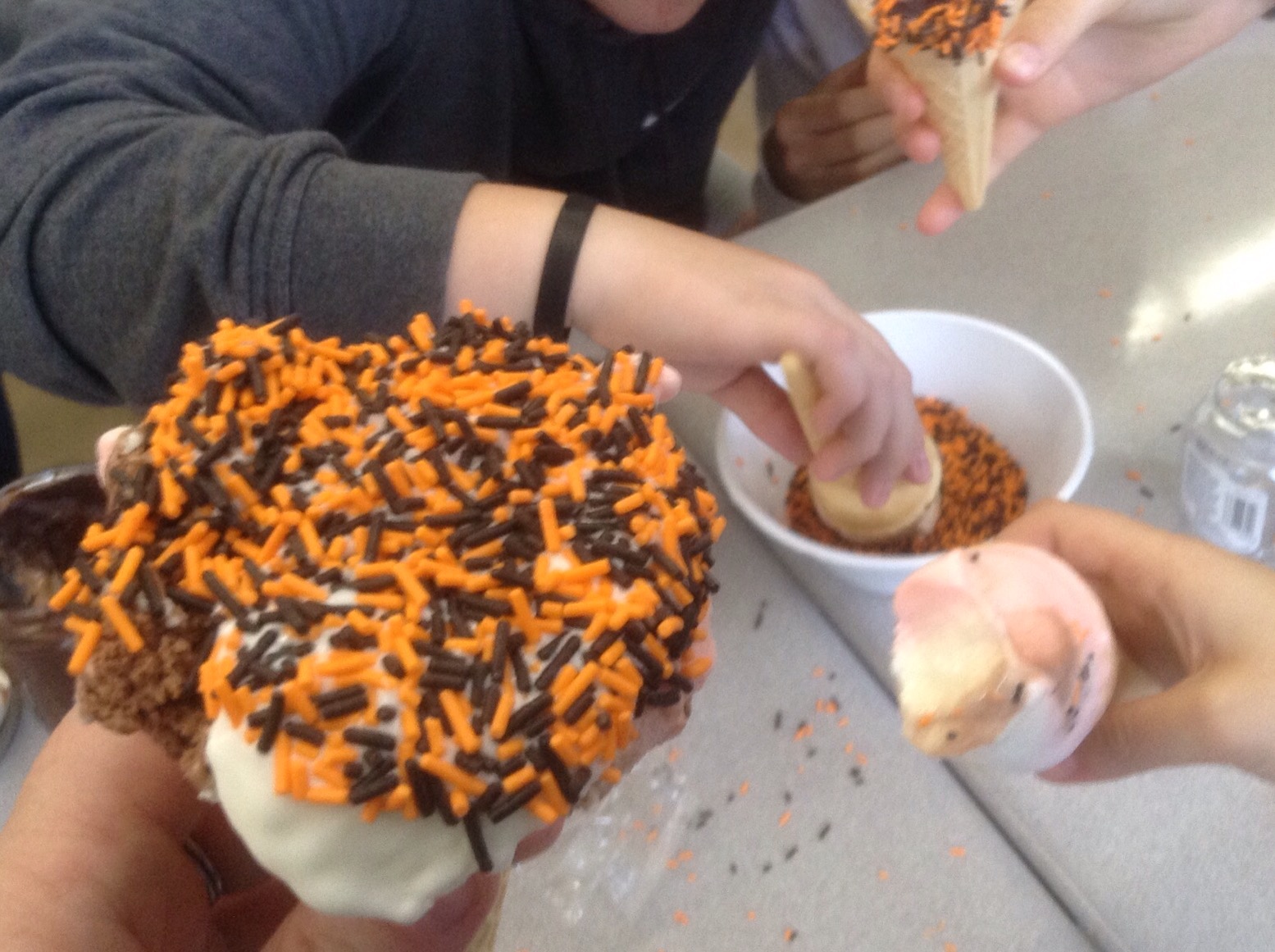
The bar is raised now… The next festivities will be when the entire class has marks over 70% on a test.
Hexagons on the wall
We’ve got our class represented now by hexagons! Not only did we practice creating regular shapes by using protractors and rulers, but we can see how special hexagons are. 
The interior angles in a regular hexagon are 120 degrees. If we put 3 hexagons together, the sum of the angles makes 360 degrees, or a full circle. This is why they fit together so well on our wall.

Measuring stairs
We’re looking for the steepest stairs around… 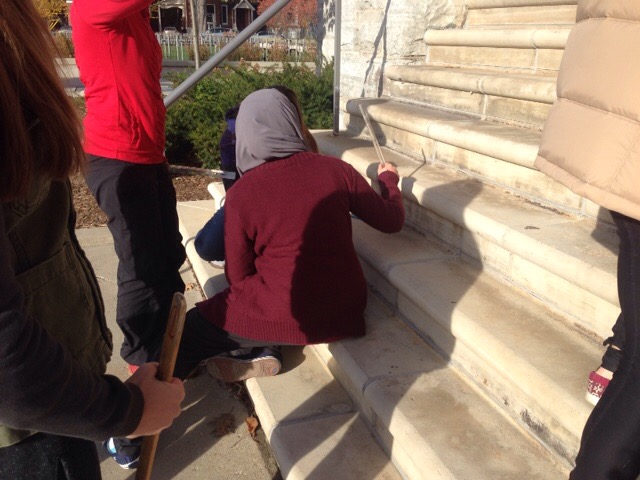
We took advantage of a small class, and a lovely day, to go for a walk and measure the stairs around Queen’s.
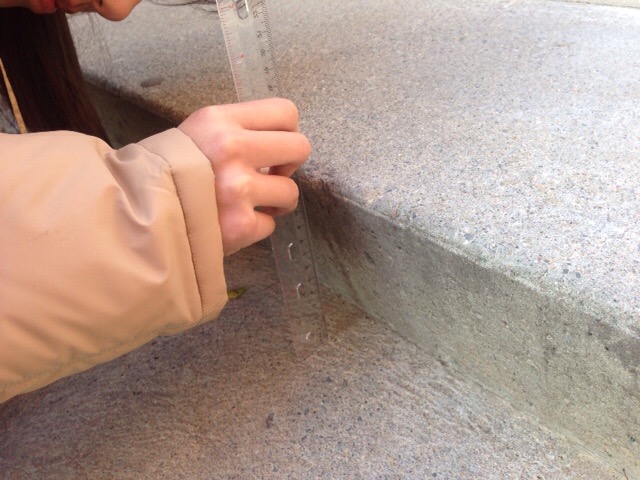
We are looking for a way to quantify steepness. We are comparing the amount each step goes up, and how wide it is.
 Ms. Bearse's Site