Field trip
We went for a walk and measured the rise and run of several staircases on Queen’s campus.
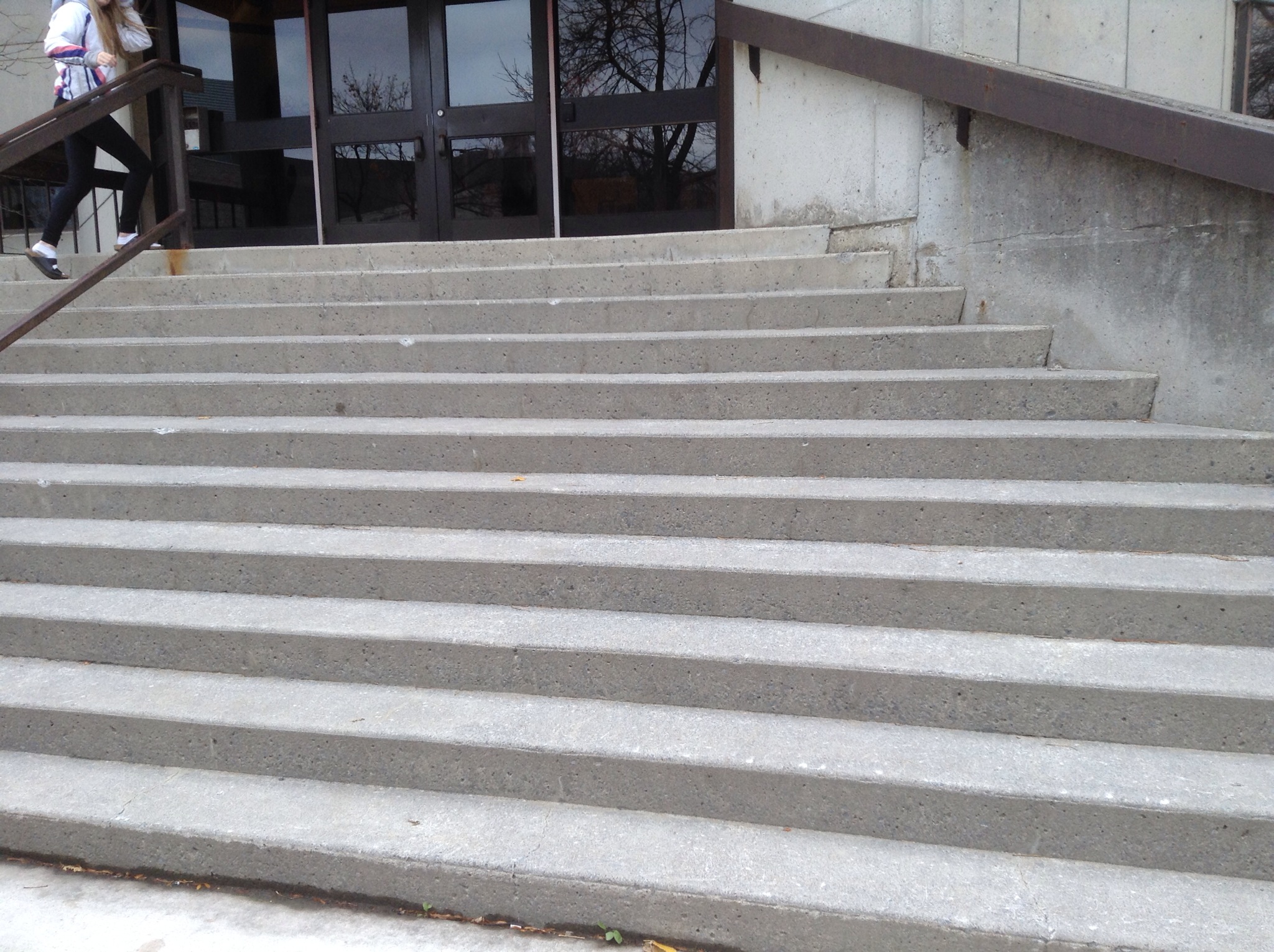
The steps up to the Bruce Wing of Miller hall have a shallow slope.
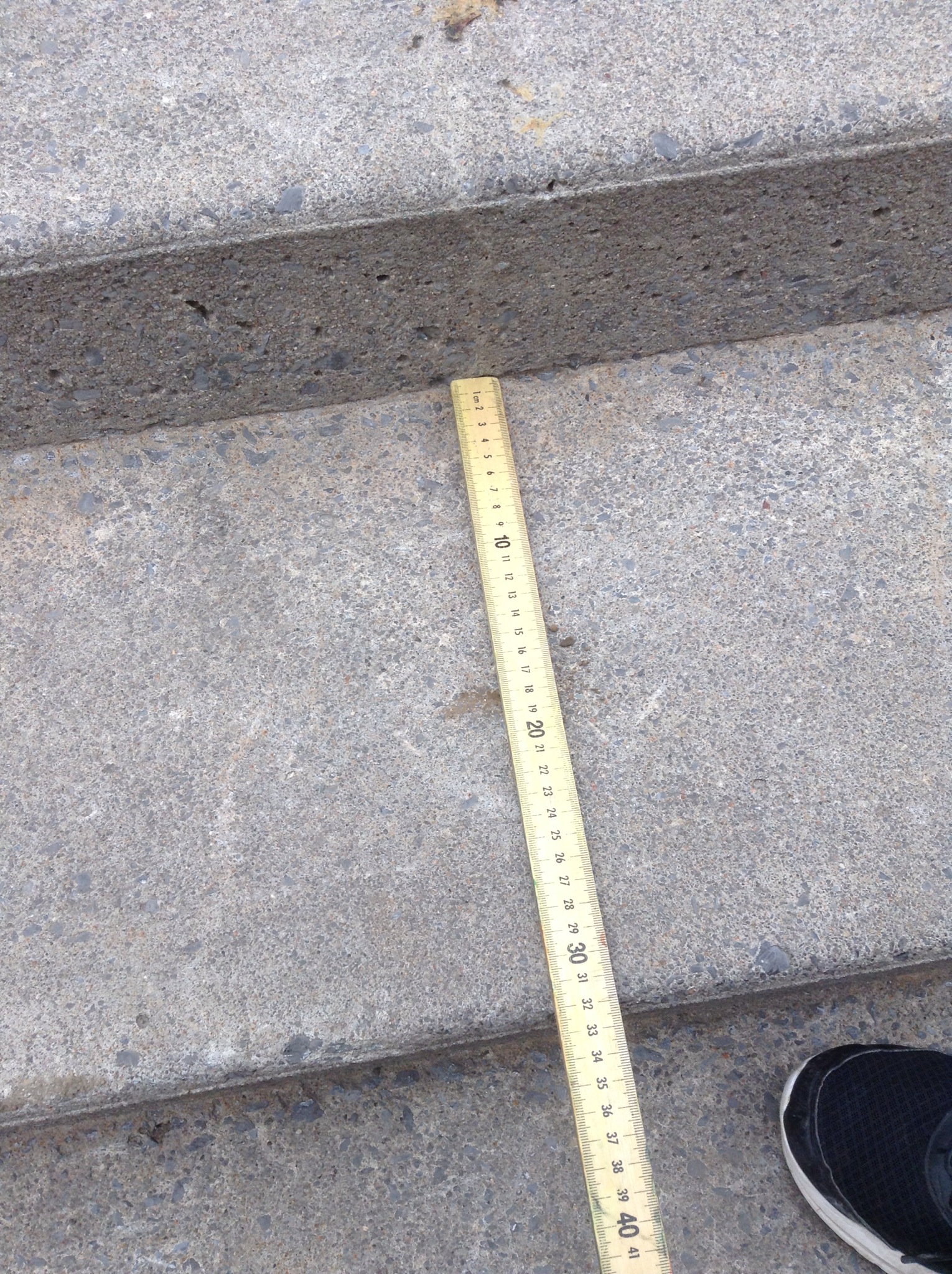
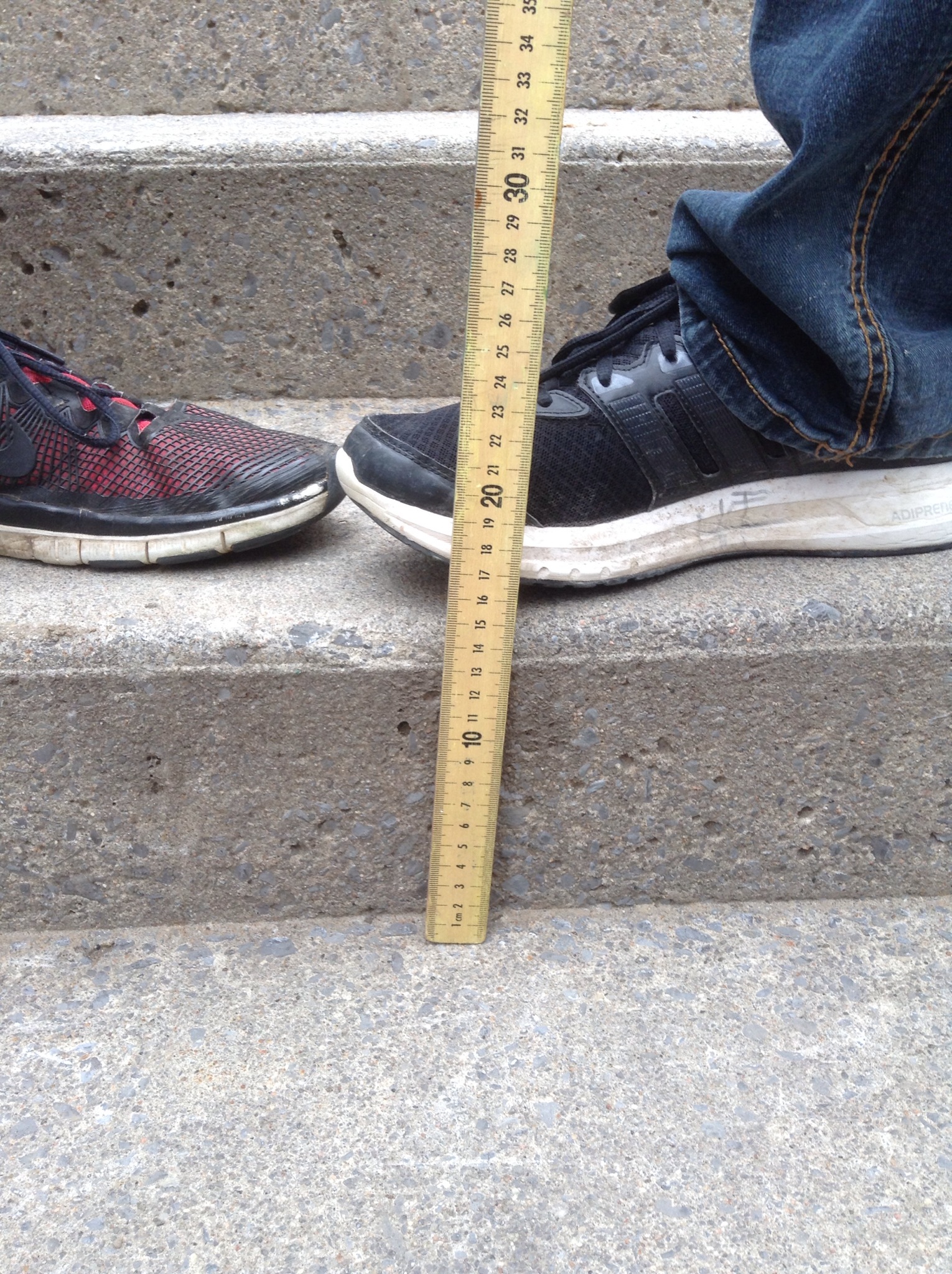
And next door at Jackson hall, the slope is steeper.
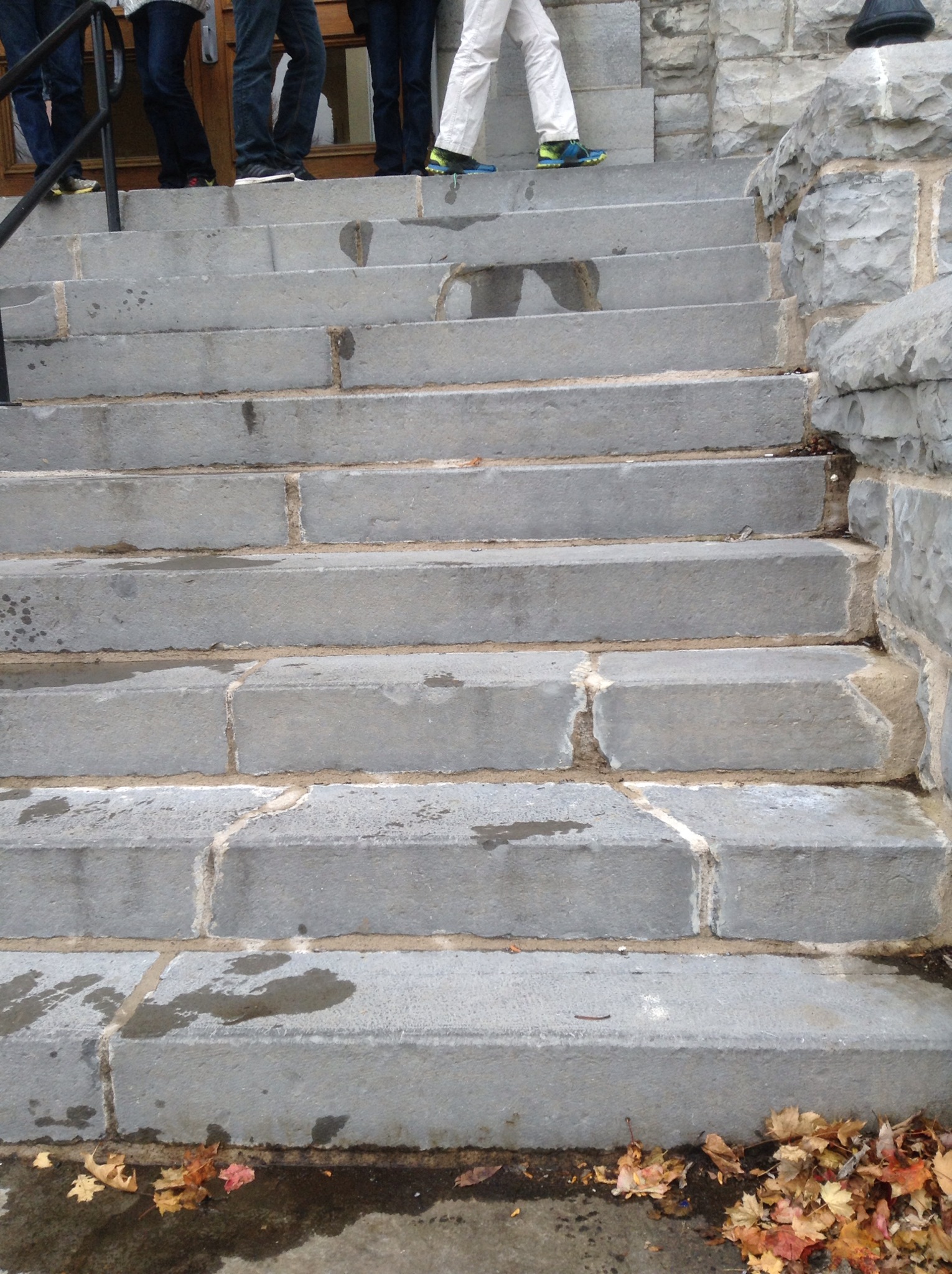


The slope shows the relationship between the vertical change and horizontal change.
What’s the slope of your stairs at home?
Finding Slopes
Today we calculated the slope of the stairs by measuring the rise and run.

We next looked at how we could find the slope of the railing.
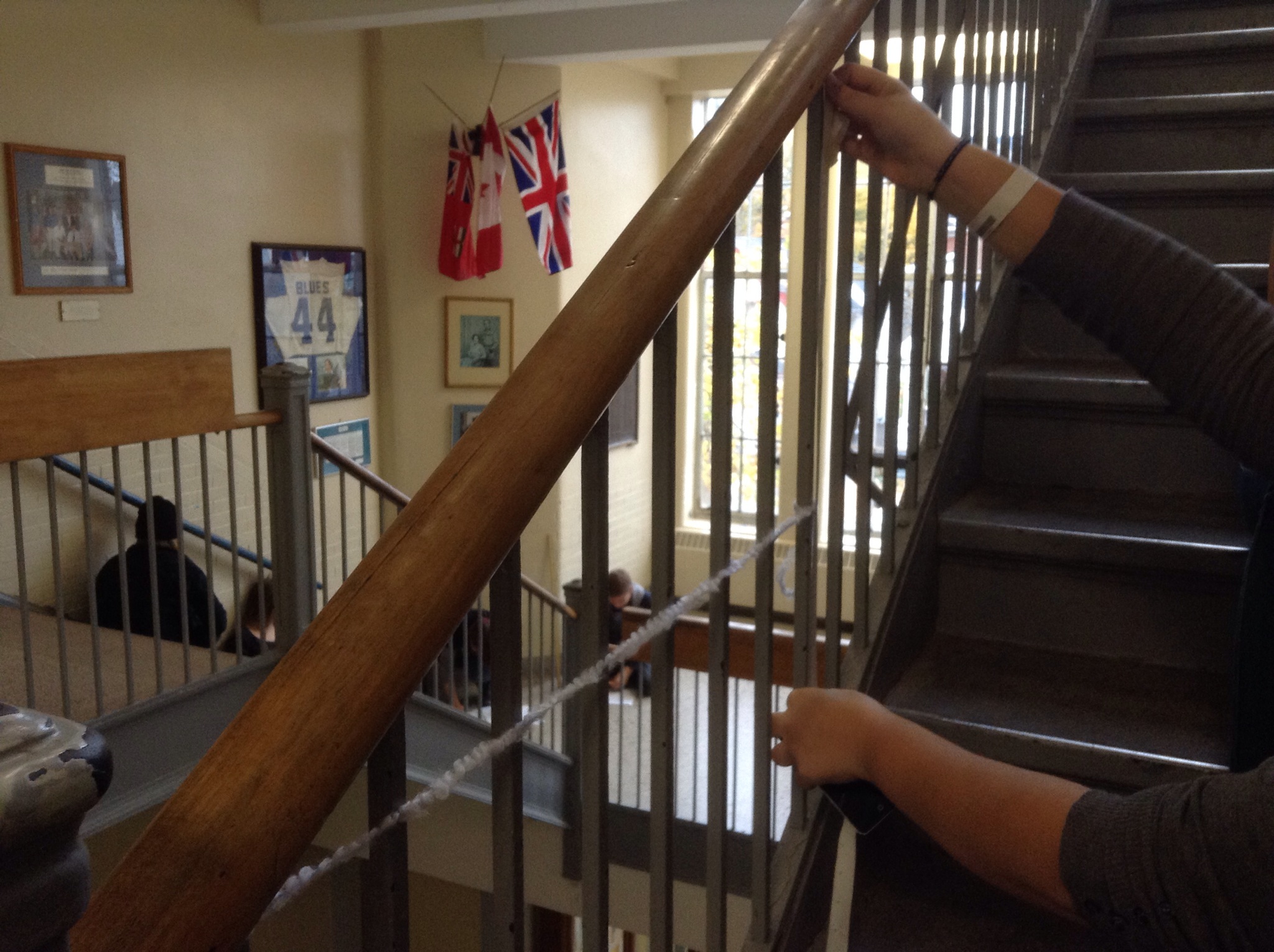
We made slope triangles with string.

Then we calculated rise divided by run to figure out the slope.

We proved that the railing and the stairs have a slope of 0.5.
Plotting points and making lines
We were plotting points that follow patterns, like the y values are double the x values, or the y values are 3 more than the x values.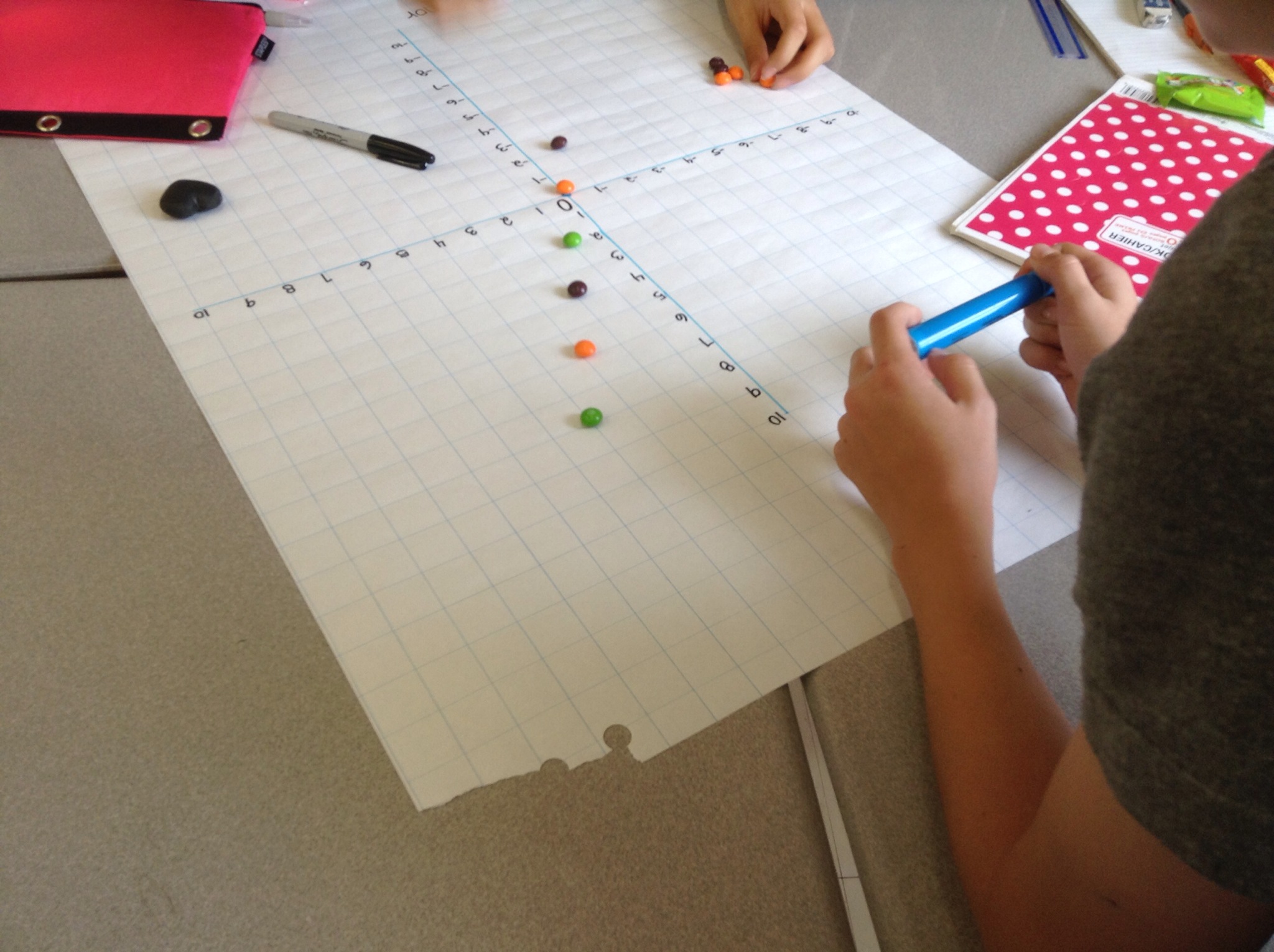
We also plotted points that make different patterns, like the y values that are the square of the x values.

We will explore the data and equations and graphs more in the coming days.

We had a happy hallowe’en, costumes and all 🙂
Tigers!

Sometimes we have moments of panic during a test where you panic. It’s like the fight or flight reaction like if you were to see a tiger.
Carving pumpkins
We had a pumpkin carving contest for the school

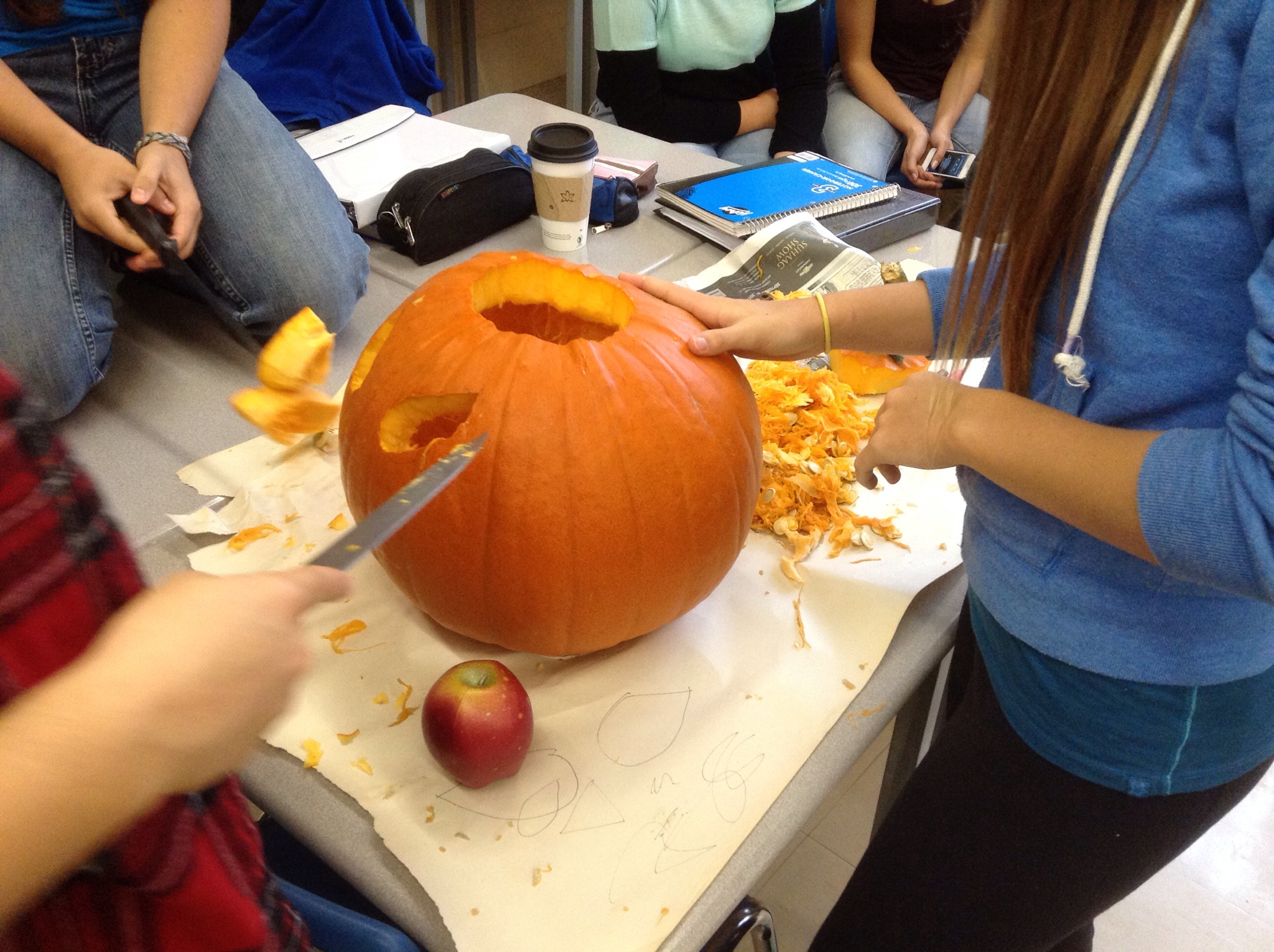
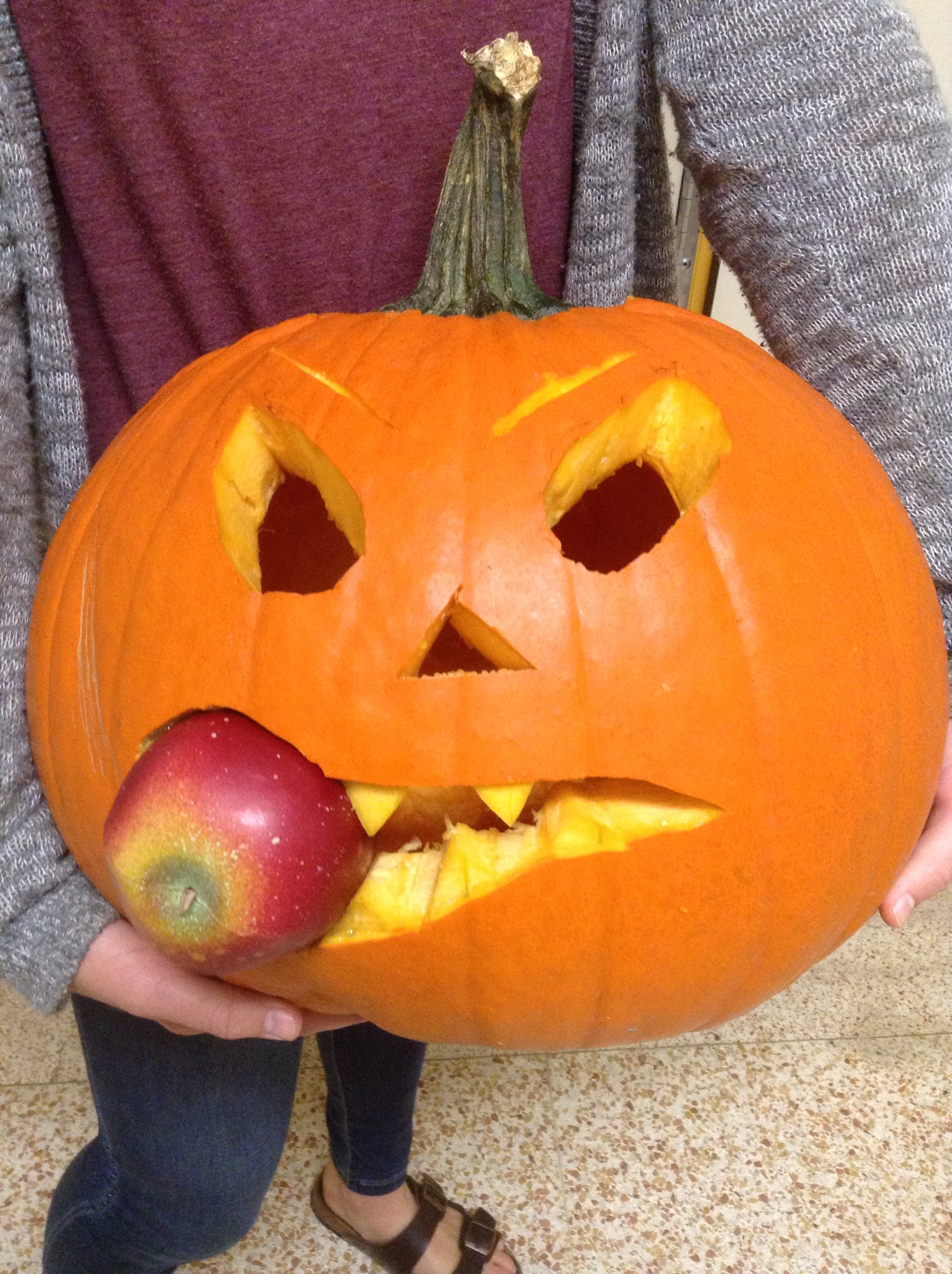
We had a lot of fun, and came up with something creative!
More balancing

Try this at home!
How full is this can?
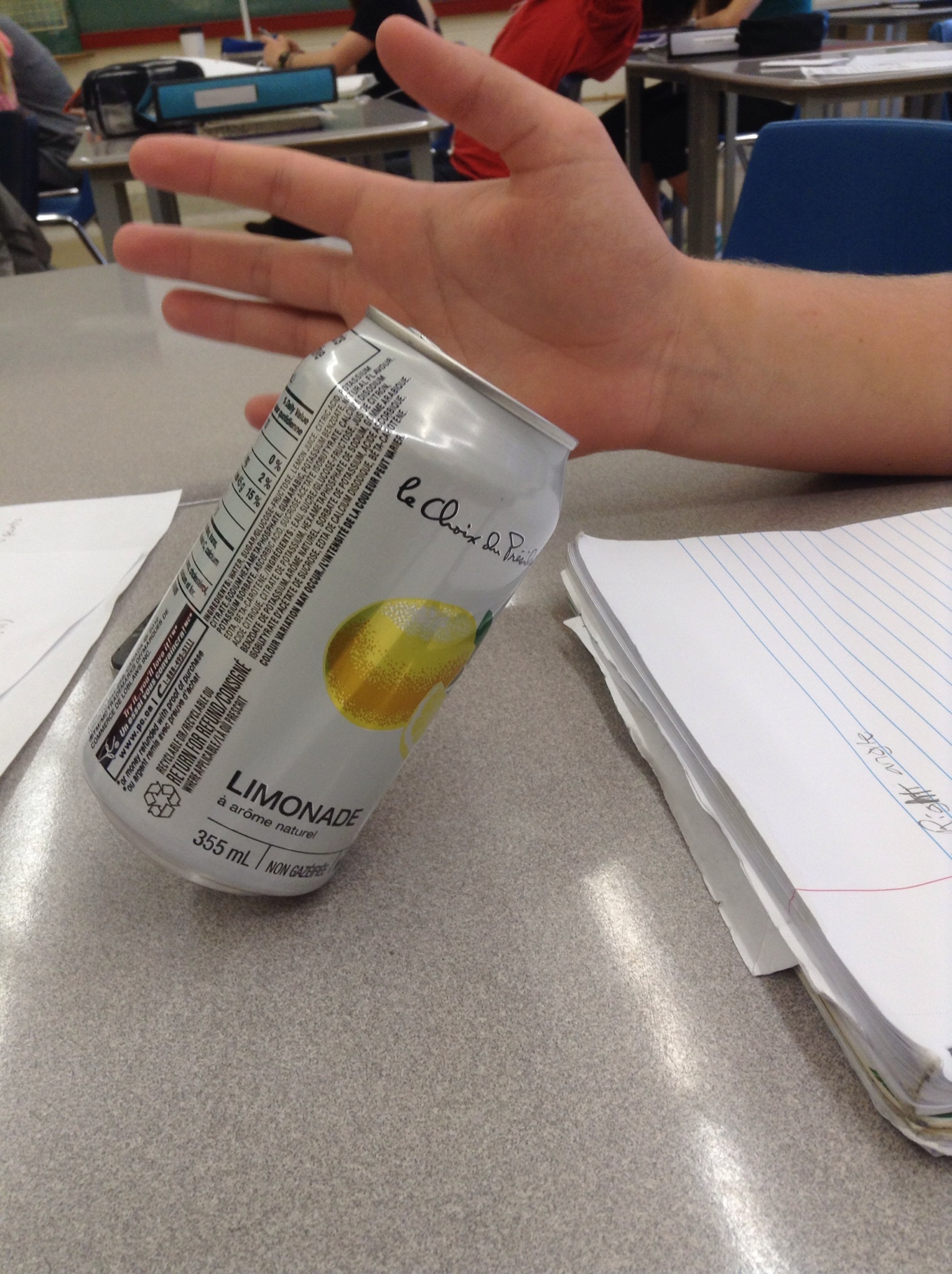
If you touch it slightly, will it fall over or will it roll around in a circle at this precarious angle?
How do objects balance?

Is there math involved?
Answer: yes, math and physics are definitely involved, and the results can be really artistic, and fascinating.
Why not go for a walk to the water and balance some rocks after school?
Showing our work
We were all up at the board today showing our work.
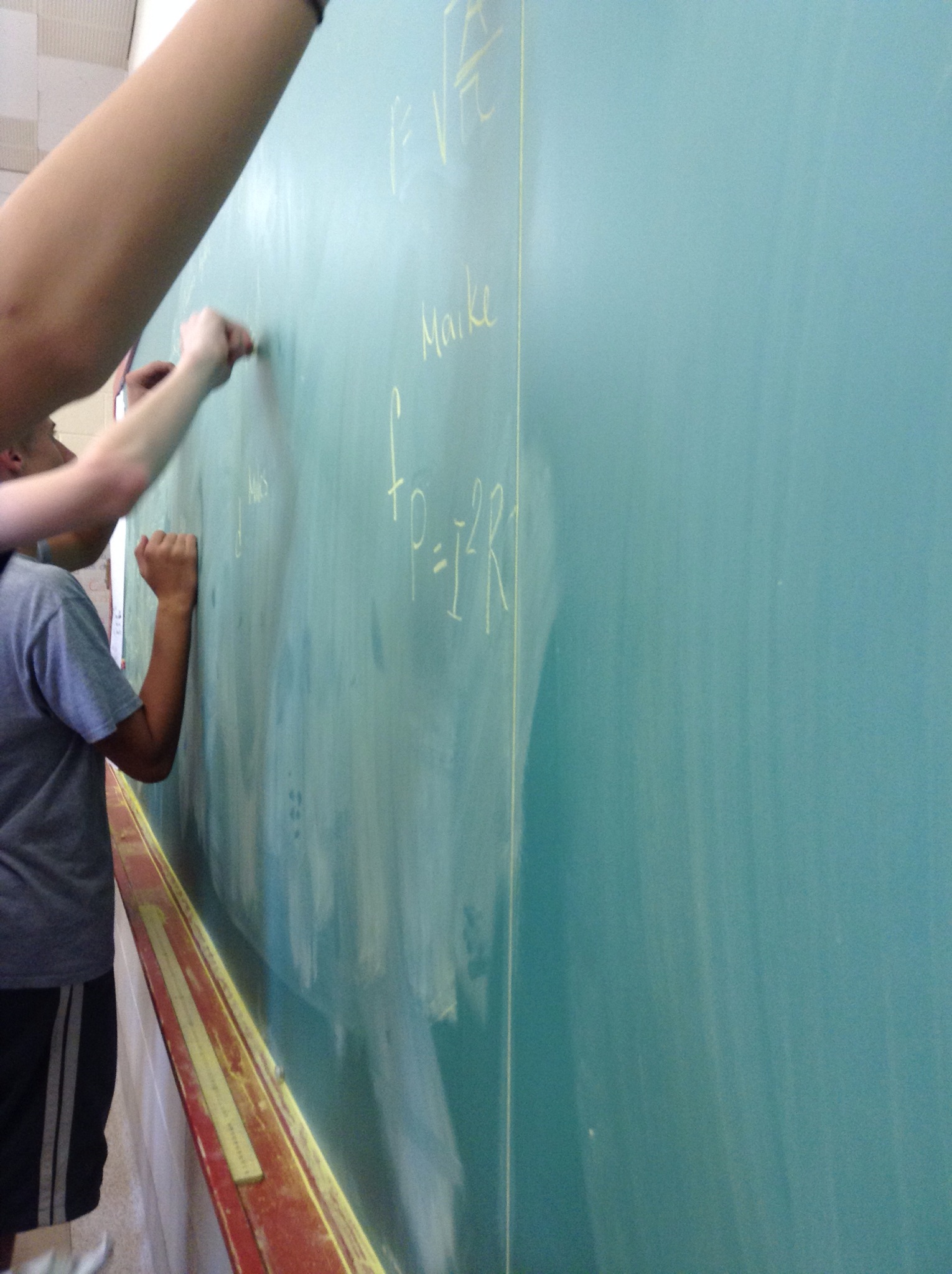
It’s a good way to take up homework and make sure we are all communicating clearly.
Bean update: we have beans!

They grew a lot over the weekend.
Learning about Anxiety and how to relax during tests
Emma-Jane came to teach us about fight or flight responses to stress like we feel during tests sometimes.

We’re learning today about how to change our thoughts to be positive. We’re learning some relaxation strategies too for our muscles and also for our breathing.
What we think affects how we feel, which affects our behaviour, and also our feelings.
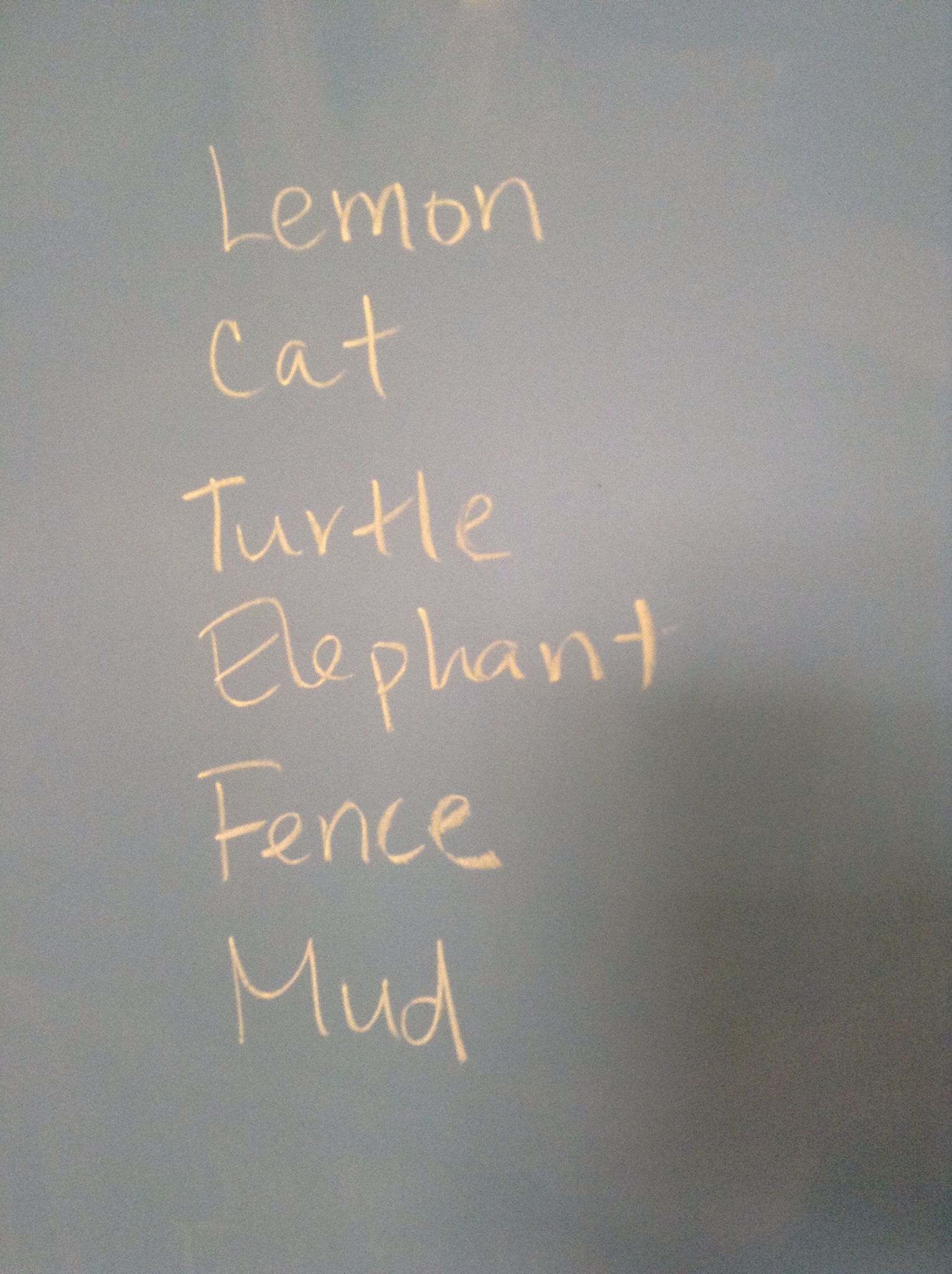
Here’s our muscle relaxation cues:
 Ms. Bearse's Site