Distributive Property
Today we looked at how to multiply polynomials. We modelled several questions, and showed how the “groups of” model and the “area model” work together. Example 2(3) is 2 groups of 3, but also a rectangle wth dimensions 2 by 3. We applied that to multiplying polynomials. Here’s 3(x-2) shown in 2 ways.
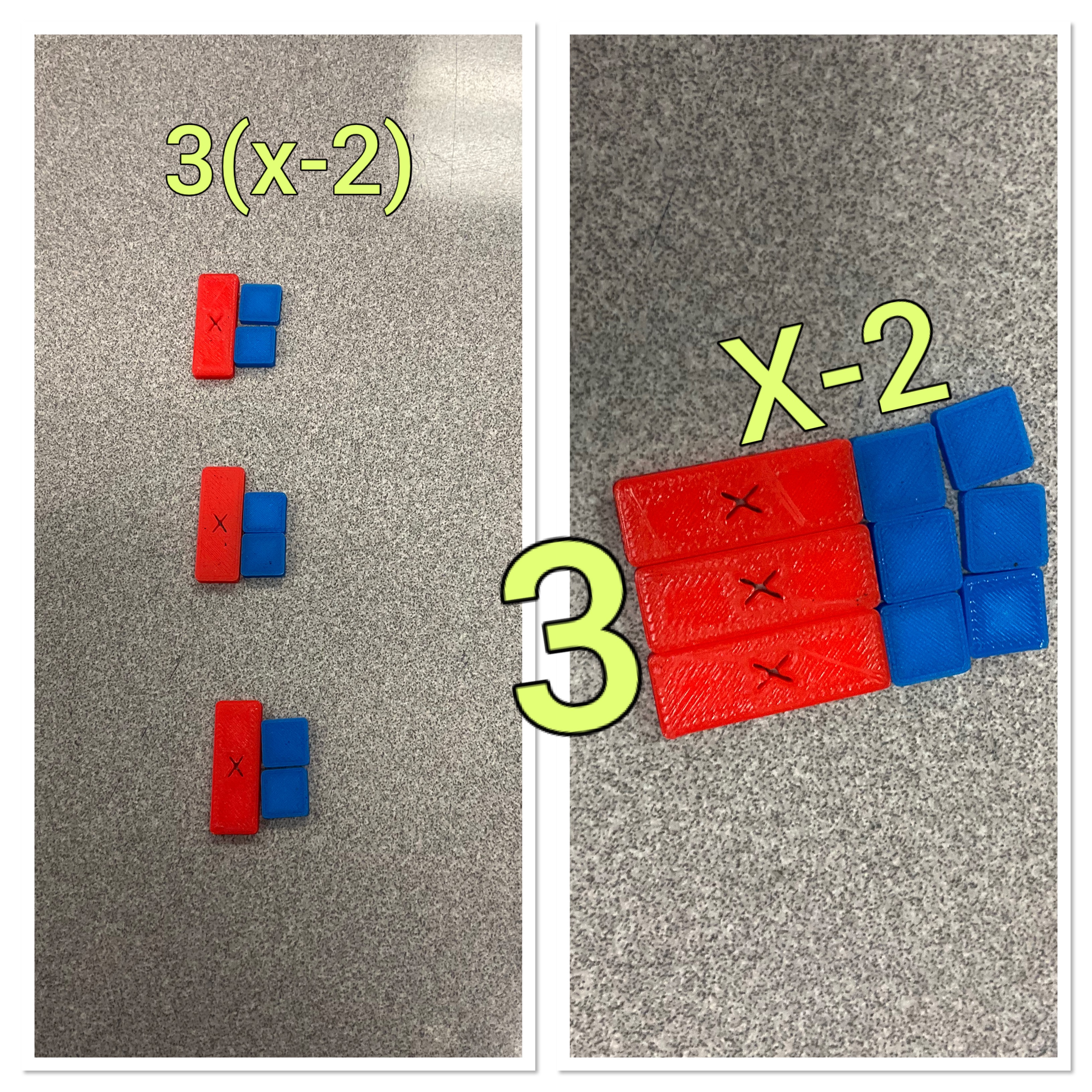
We practiced several similar examples and noticed that we can multiply the number in front by each term within the brackets. Now we have 2 ways to approach the questions.
When we have (x)(x+1) we run into a problem with the “groups of” method. We don’t know how to represent x groups of something. We need to shift to the area model, or distributive property where we multiply x by each term in the brackets.
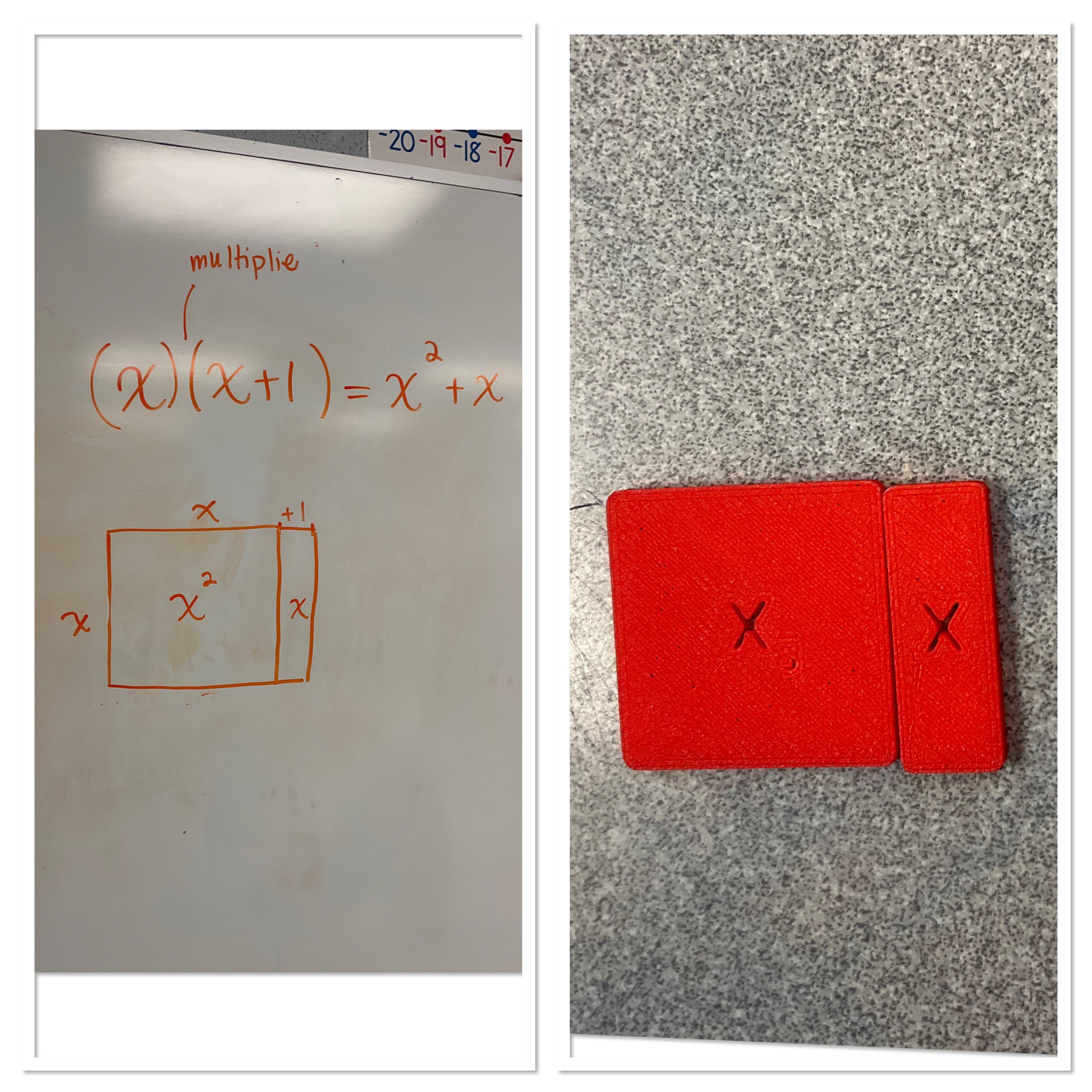
We had some breakthroughs with the visual representation, and we talked through how (5)(5) is 5 squared so (x)(x) is x squared. It’ll take some time to solidify the skill, but to practice we did a puzzle in small groups.
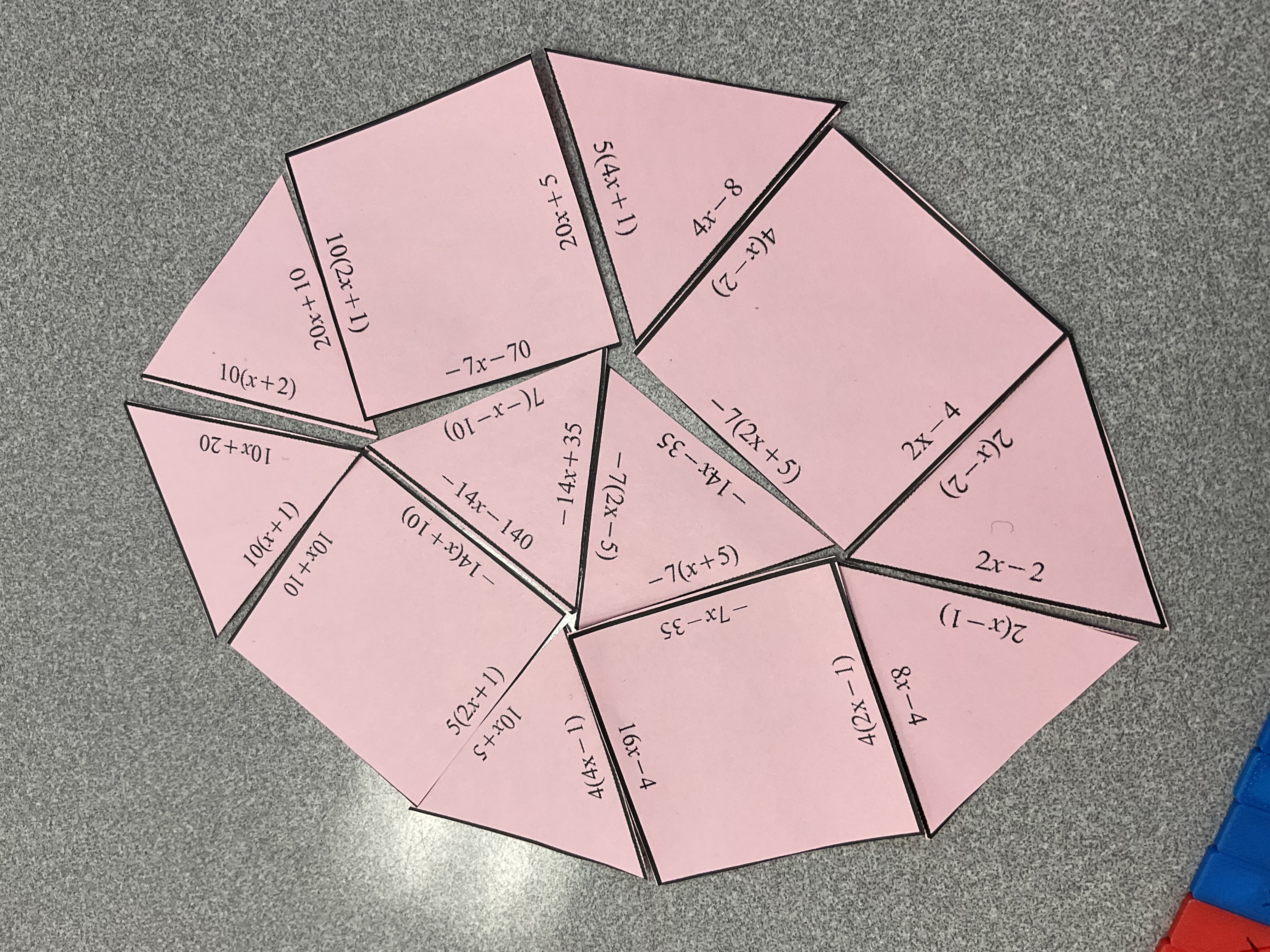
I love the puzzles from this site. There are so many neat ones.
we’ll keep working on more algebra next week.
Update: Beans and Ropes in Grade 10
The grade 10 class I’m working with has been growing beans and measuring them each day.
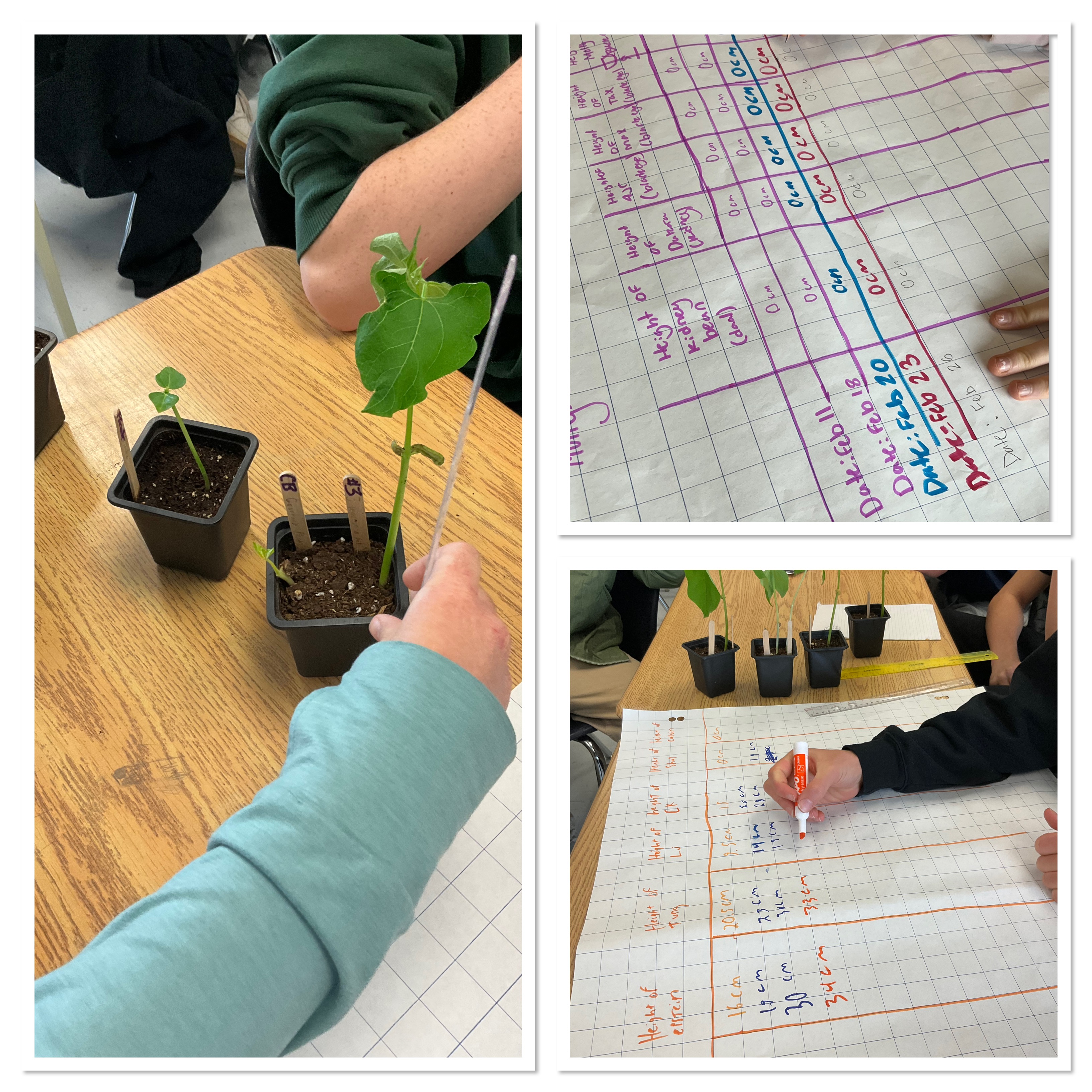
some groups have a lot of beans that are sprouting, and others are still waiting and watering. We are measuring the height each day and will do some graphs of our data after a few more days of measurements.
The other task we worked on last week was a knot tying experiment. Today we consolidated that task and worked on graphing, making equations, and interpreting the rate, initial value, and point of intersection.
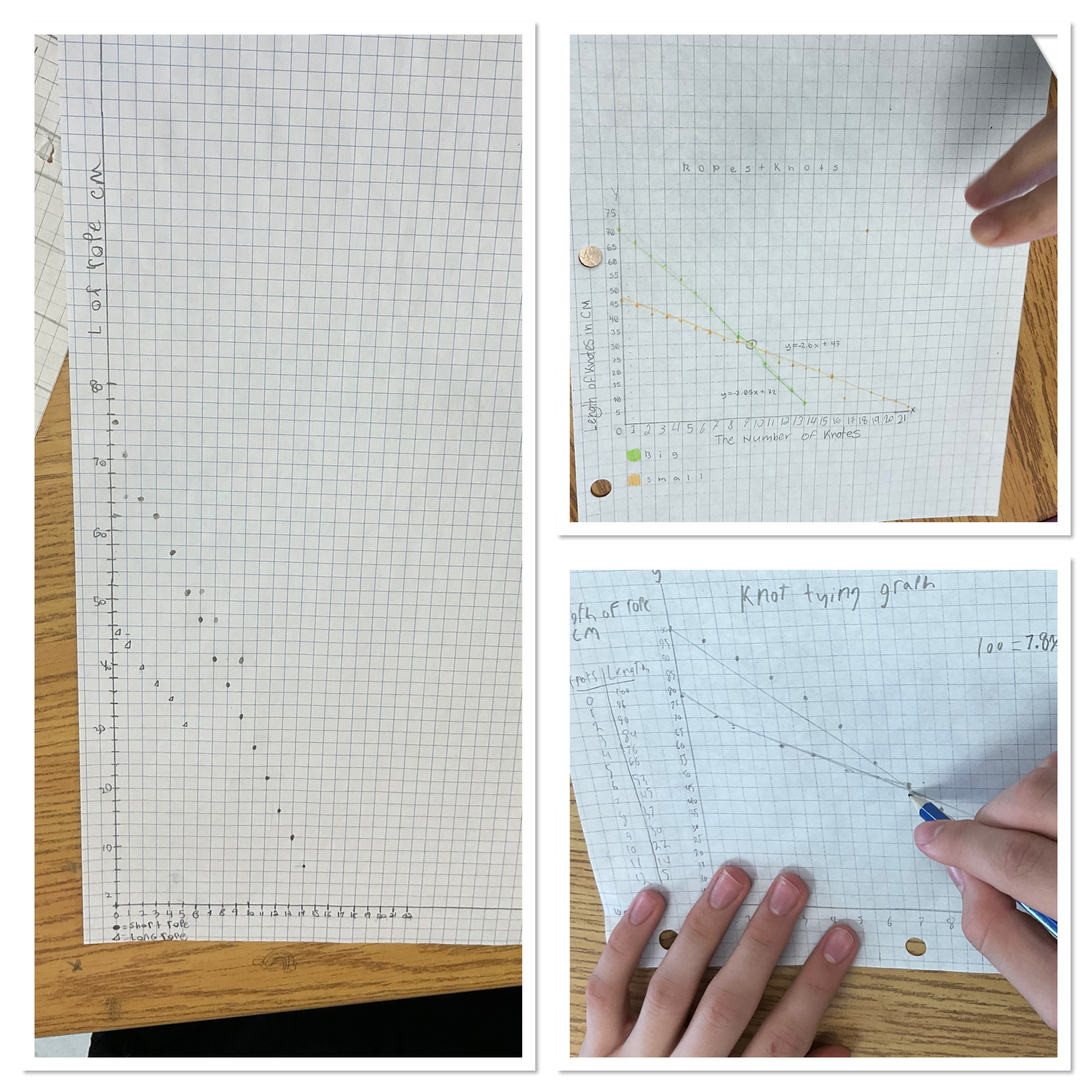
We co-constructed an exemplar of a graph, and each group made progress on interpreting their data. We made connections between the thickness of the rope and the amount of rope consumed per knot.
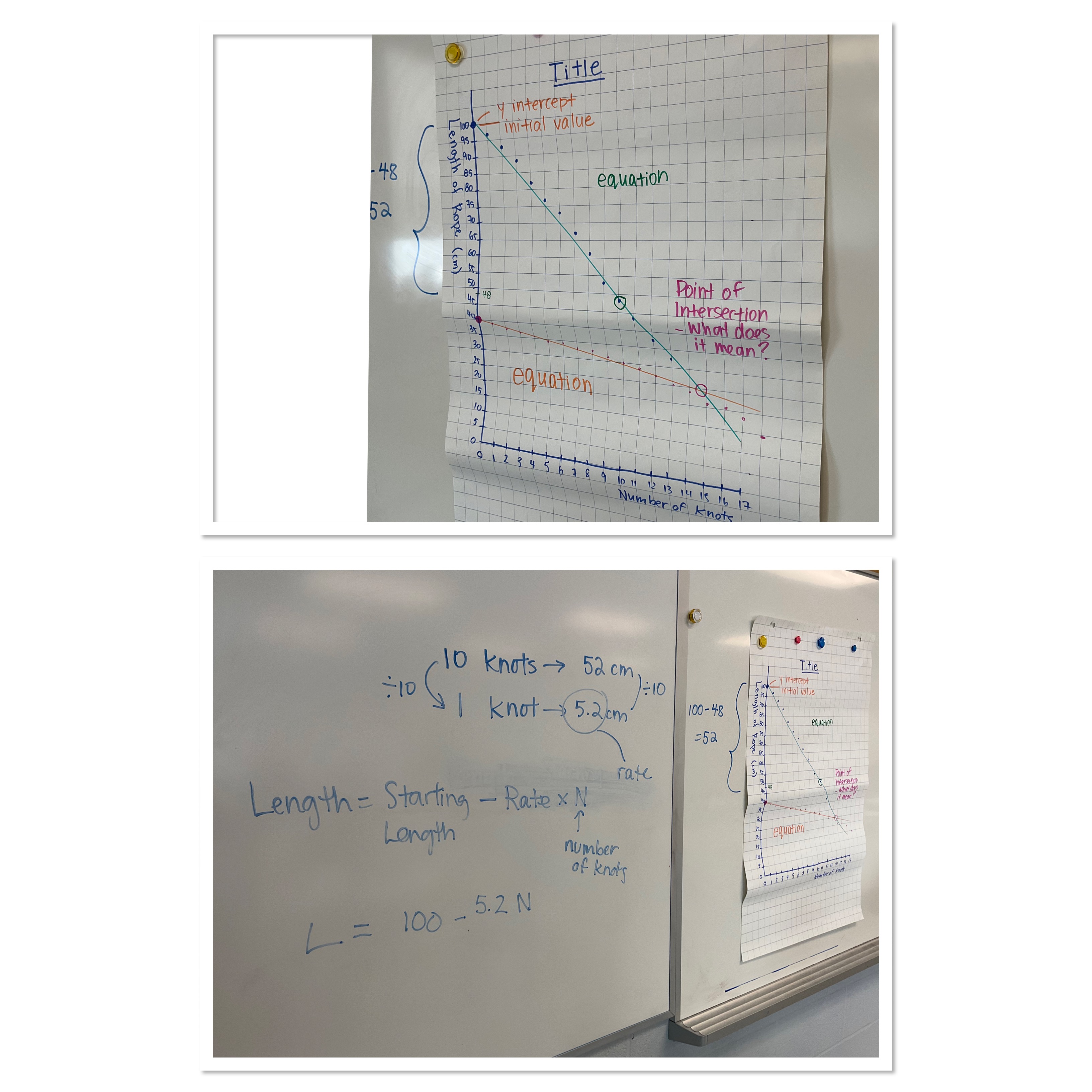
We found the average rate of change by looking at the length change for 10 knots, and then divided that number by 10 to get the average rate of change per knot.
Next week we’ll be working on some new data collecting tasks and introducing algebraic methods of solving.
Snow Day!
Today we had some fun with the small group of students that were at school on the snow day.
We did an impromptu trigonometry lesson to introduce how to use clinometers.
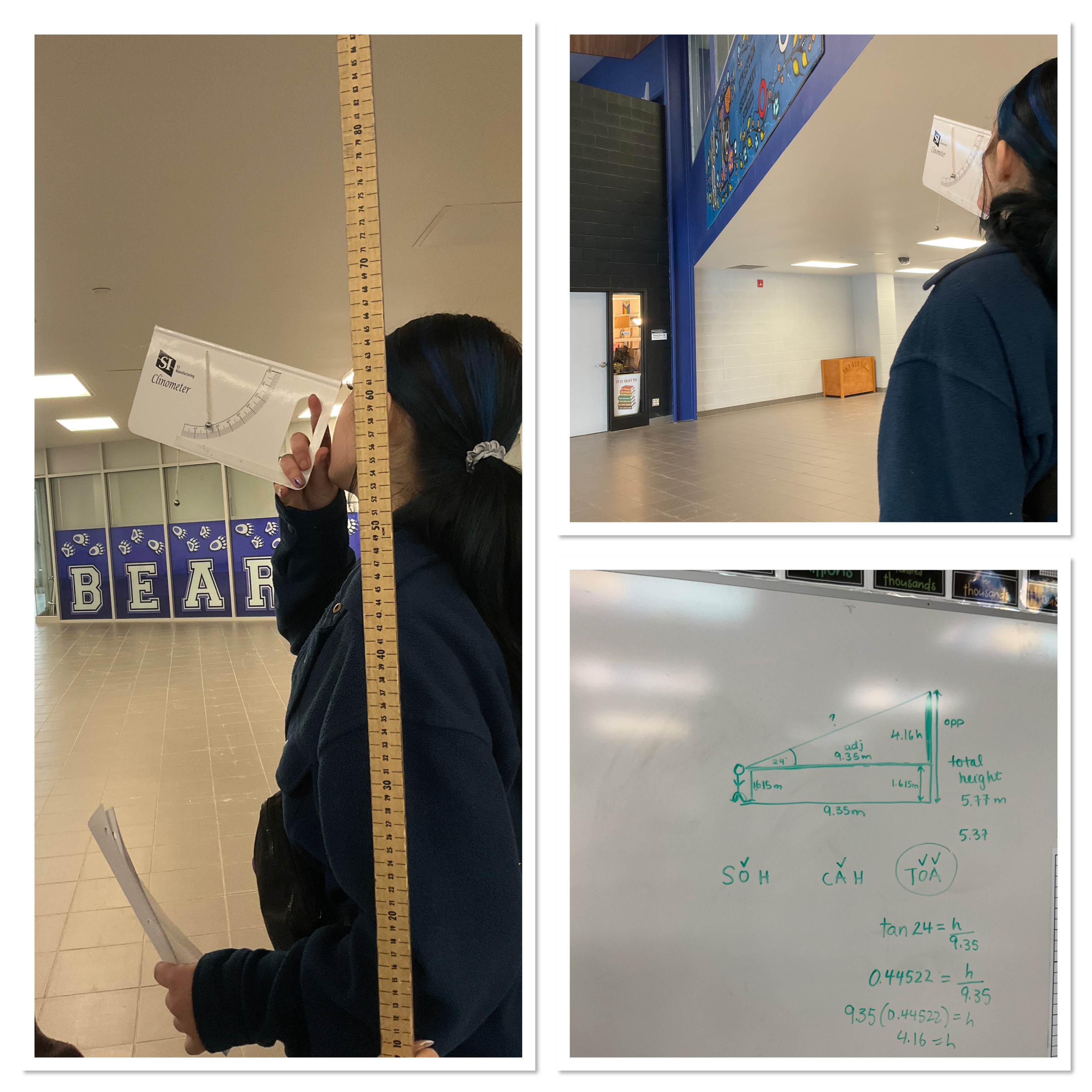
We calculated how high our atrium wall is. We got pretty accurate numbers despite the many opportunities for human error.
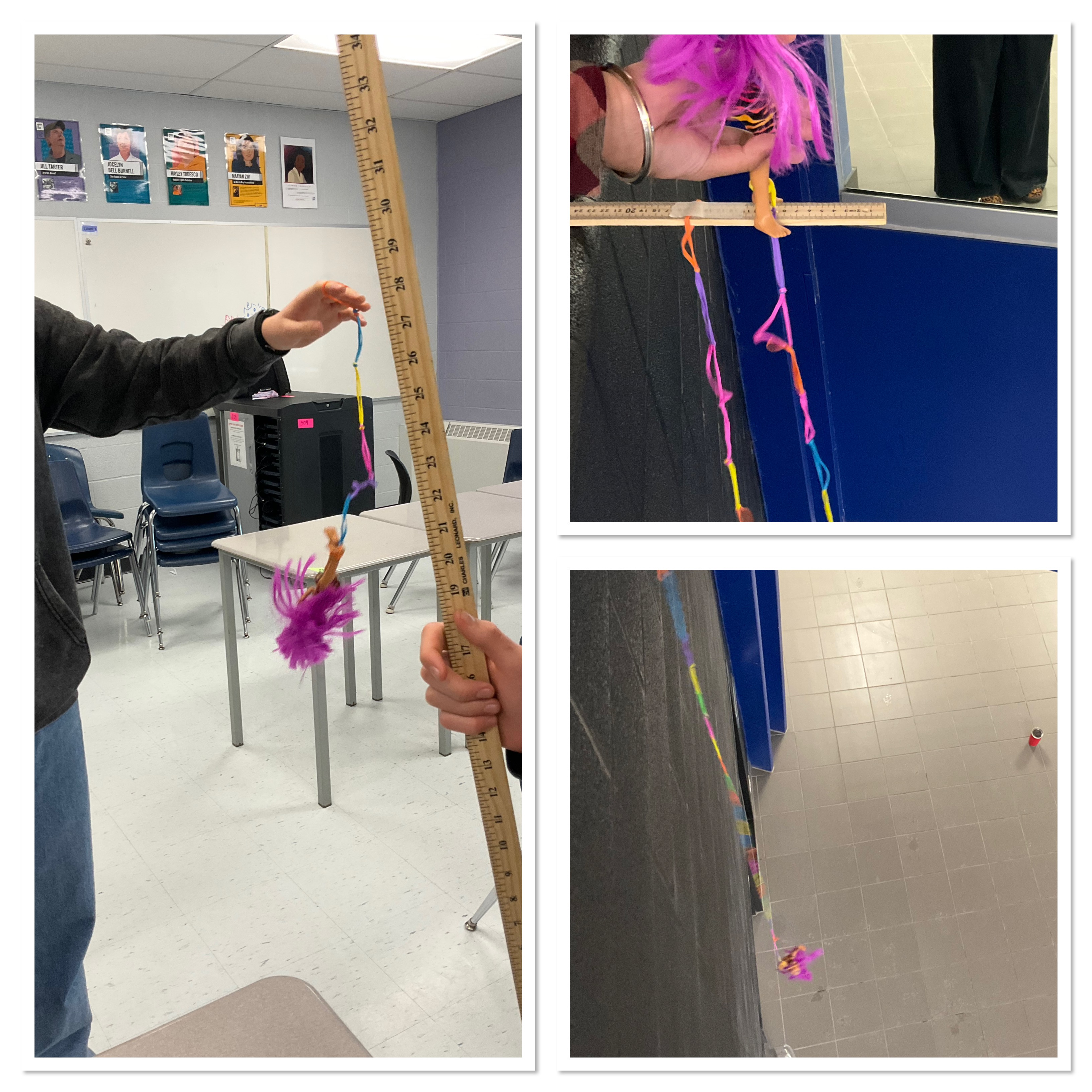
next we did some testing with a few elastics, and then used proportional reasoning to estimate the number of elastics we’d need for a safe but thrilling bungee jump.
Finally we bungeed several figures off the edge. We had 1 crash on the floor, 1 was thrilling, and 1 was a really boring bungee.
students had fun, teachers had fun, we did some math and learned some new skills, and went home with a story to tell from a very exciting snow day.
Introduction to Algebra Tiles
I was working in a colleague’s grade 9 class today and was introducing algebra tiles, an excellent way to visualize and conceptualize algebra when students are learning.
one of my first steps in introducing algebra and the tiles is to make some art. Students get very creative!
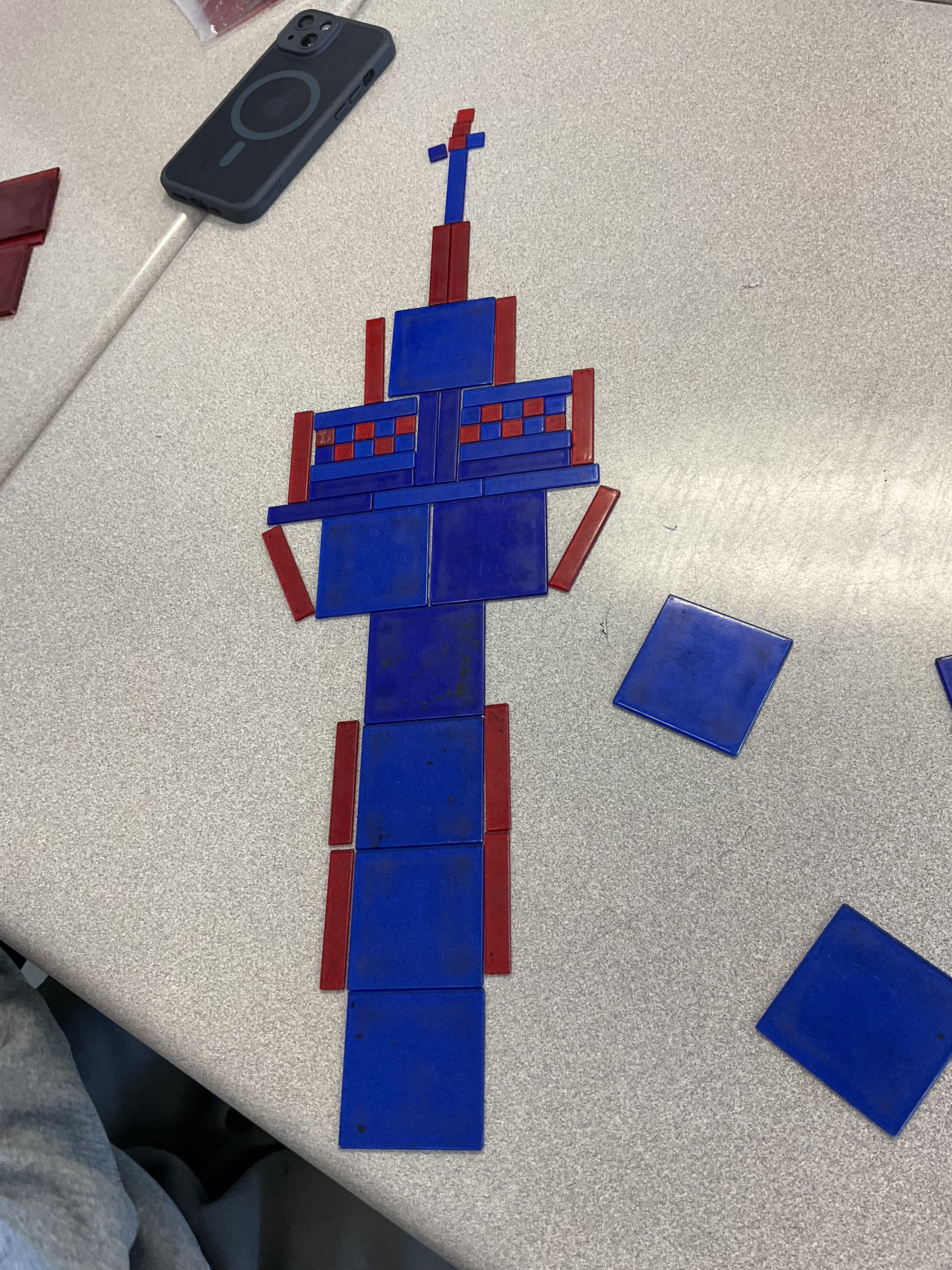
Our next step is to remove all the zero pairs to simplify their polynomial art to the simplest forms.
I posted some pictures of student work on the whiteboard, and one by one students practiced being brave and coming up to the board to cross off the zero pairs until we got it down to a monomial, binomial or trinomial.
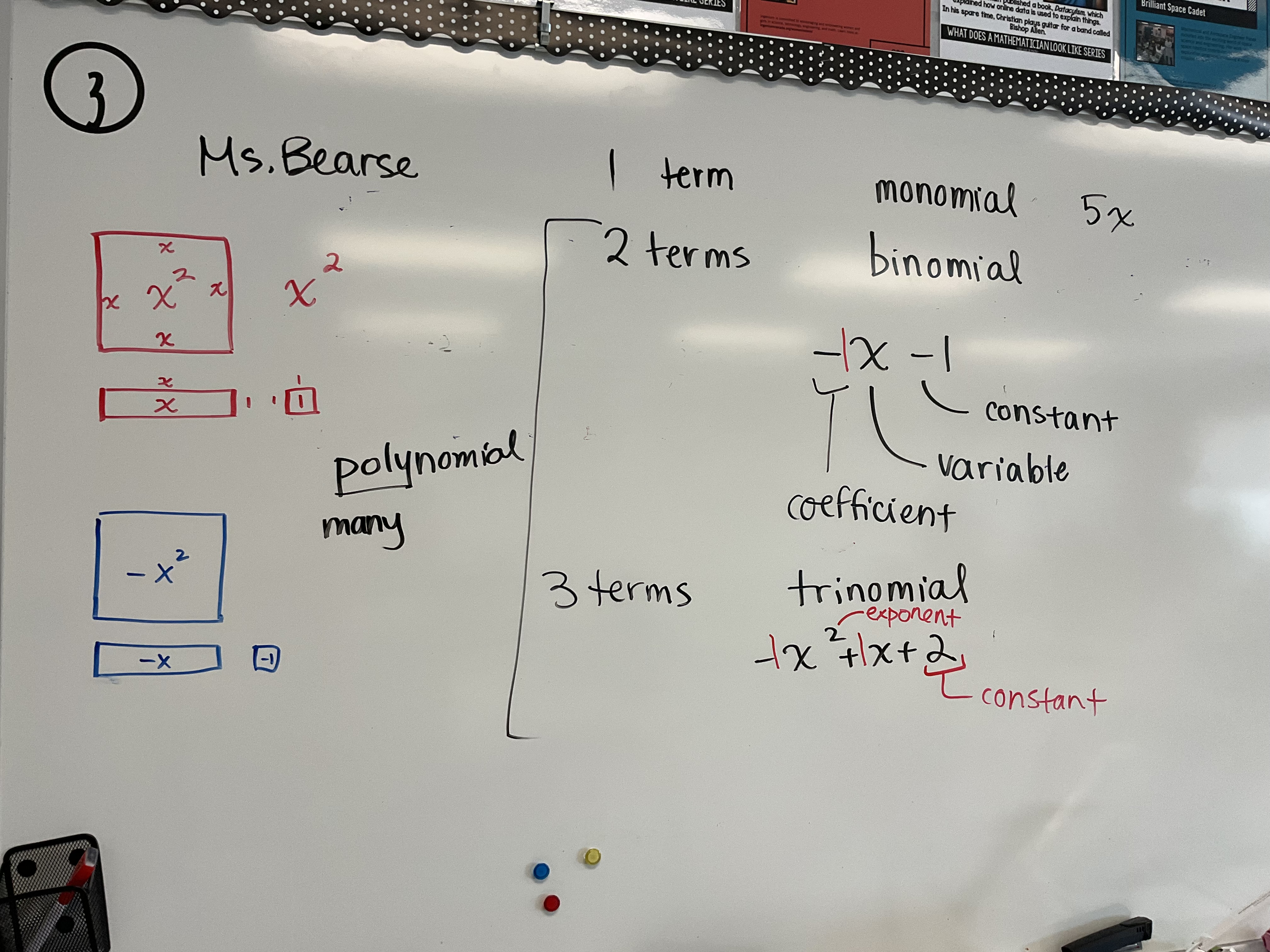
We practiced vocabulary and what constants, variables, coefficients and exponent are.
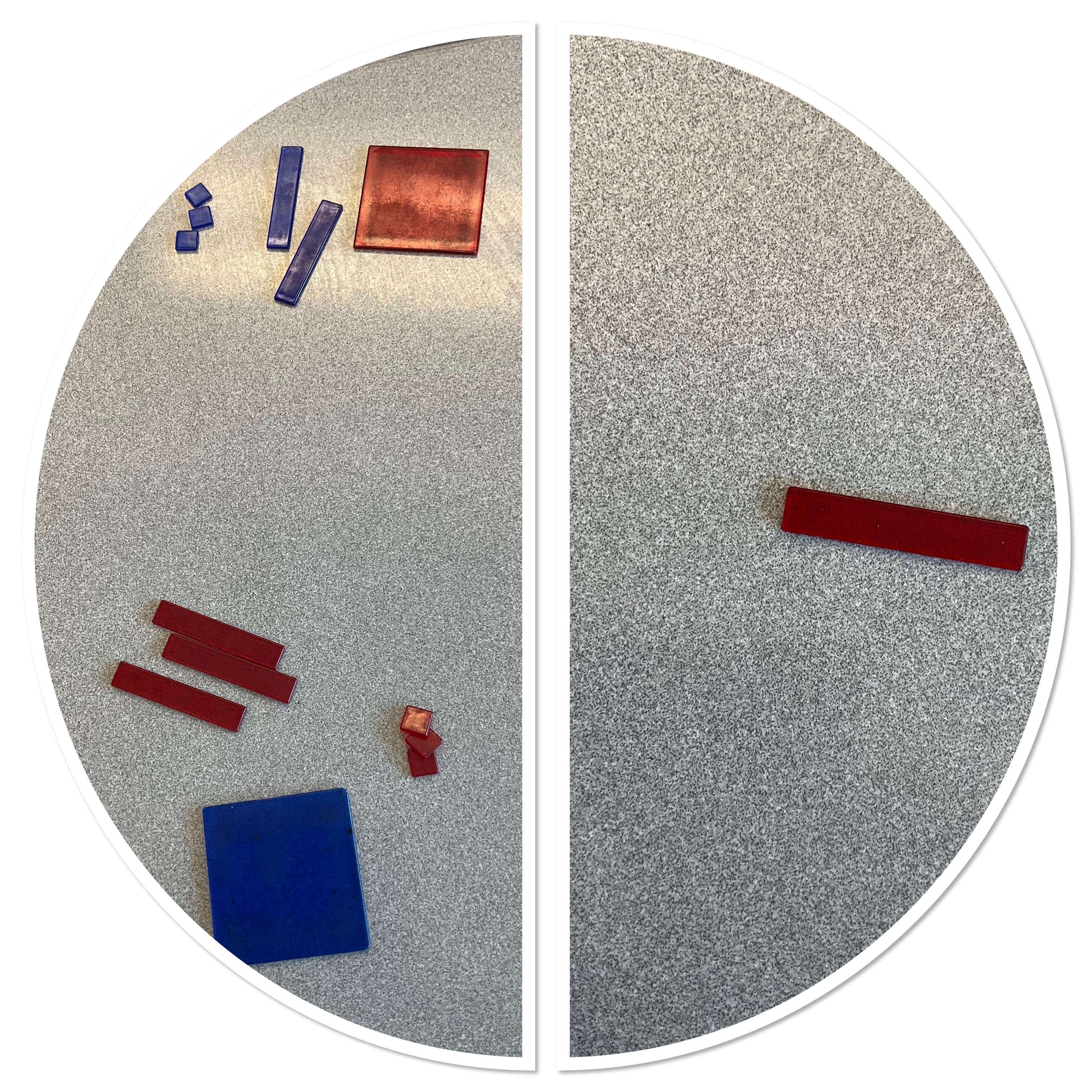
Next, we made 2 trinomials (x^2-2x-3) and (-x^2+3x+3) and then we added them up, and simplified by removing zero pairs. We ended up with a monomial, 1x
The challenge problem that followed was to create 2 binomials that add up to a trinomial, and 2 trinomials that add up to make a binomial.
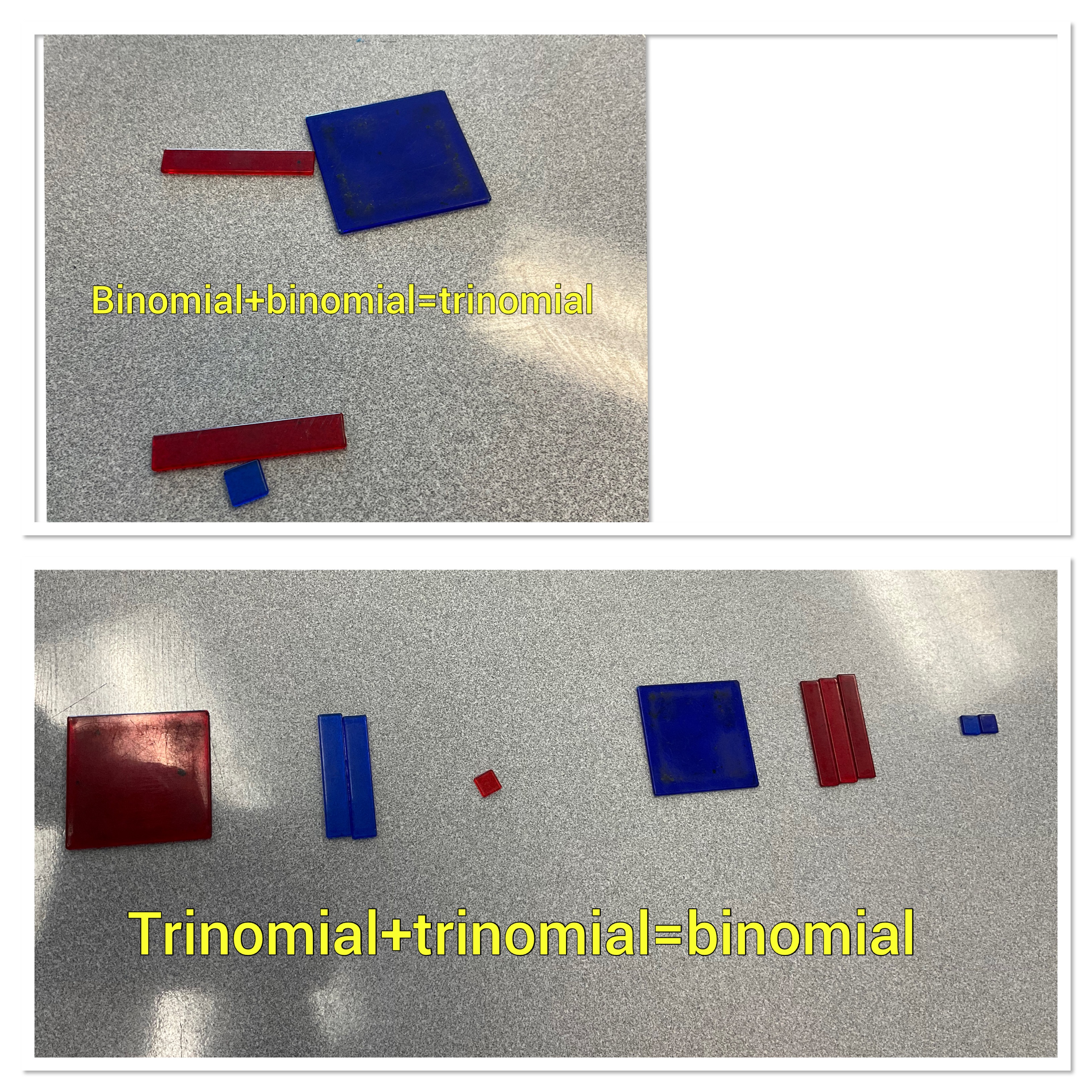
We had so many possible answers.
It was refreshing to hear students making connections between the tiles and algebra, and realizing that they could always use them if they need them. Some students were encouraging their peers and helping them to understand.
best quote of the day: “The tiles really help bro! Give them a try.”-grade 9
Inverse Functions
Today my grade 11s were working on inverses of functions. The activity requires a single hole punch, and some creative folding. Here it is to download if interested. I was inspired by a post on social media which I have now misplaced.
Step 1 was to draw the line y=x
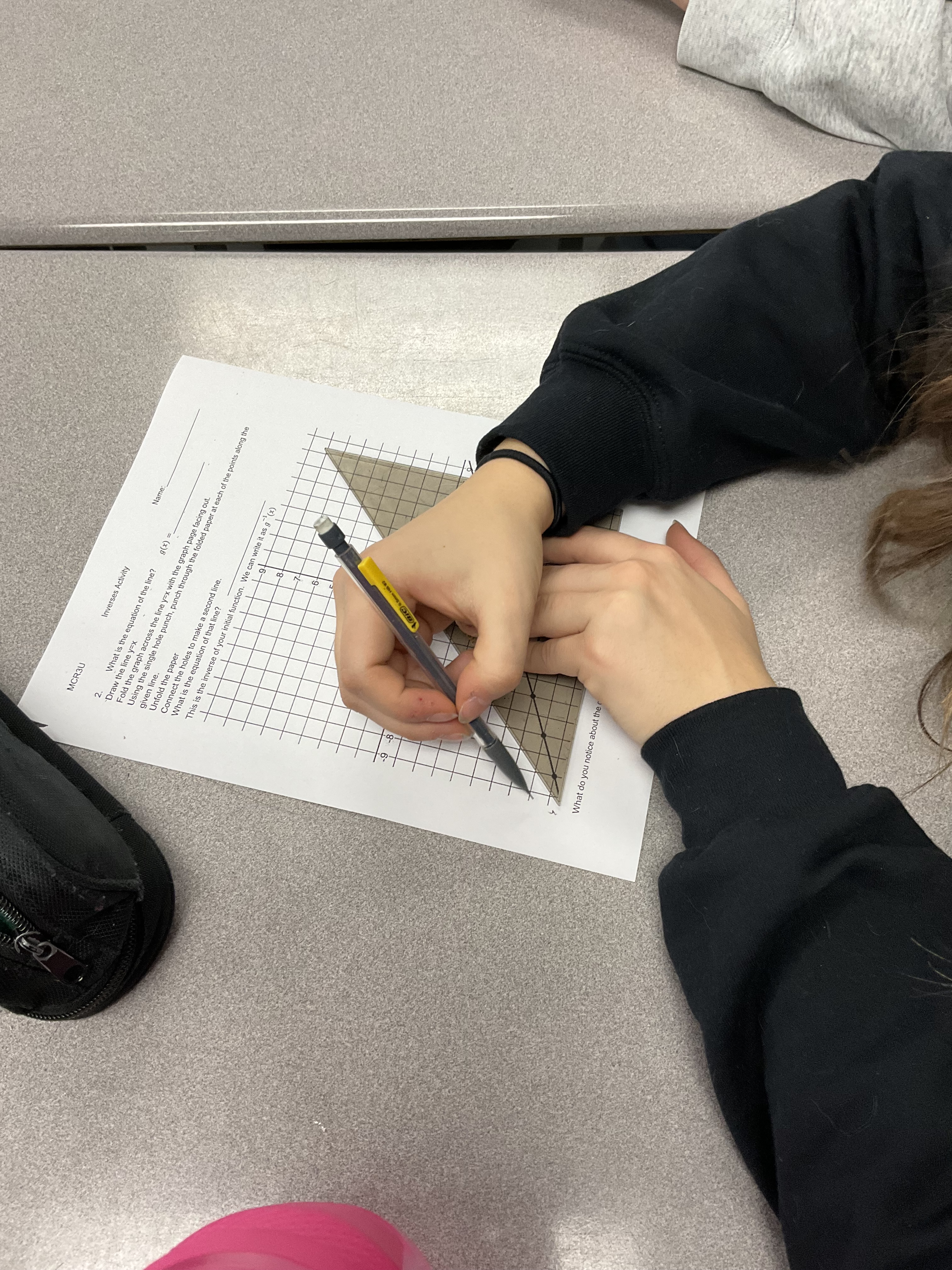
Step 2 was to fold along the line y=x
Step 3 was to use the hole punches to make holes along the given function.
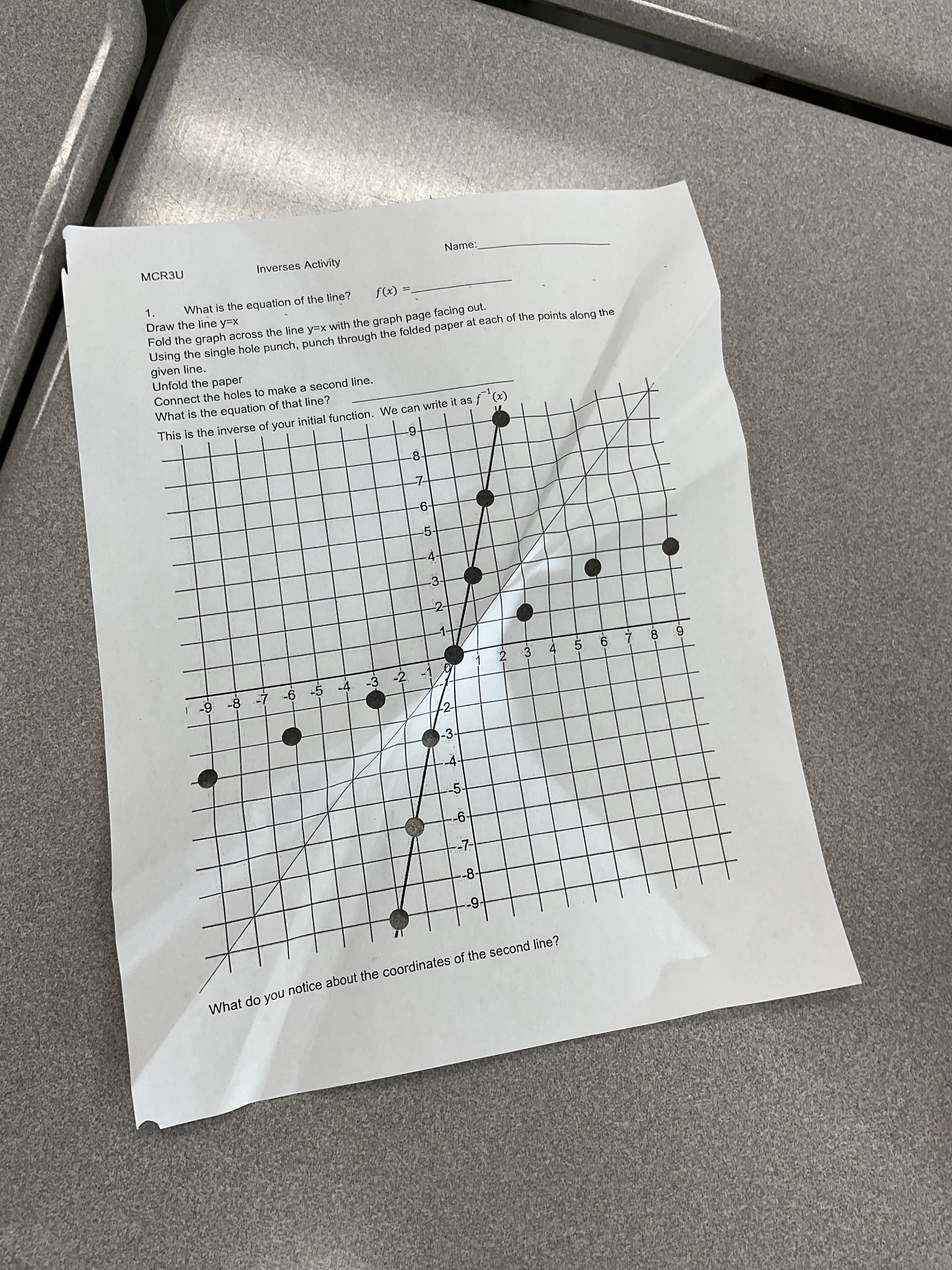
Step 4 was to join up the new dots to make a different line/curve.
We were able to debrief a lot of things through this task. We saw that the lines have coordinates thar have reversed values, e.g. (1,3) will correspond to (3,1) on the new graph. The two are also reflected across the line y=x. We can also see that the first line has a slope of 3 and a constant of 0 so the output is input times 3. For the 2nd graph the slope is 1/3 and the constant is 0 so the output is input times 1/3 or input divided by 3.
We can see how the function and its inverse will undo each other. The operations of times by 3 and divide by 3 are inverses. If the output of the function is used as the input of the inverse you’d get the initial input back again.
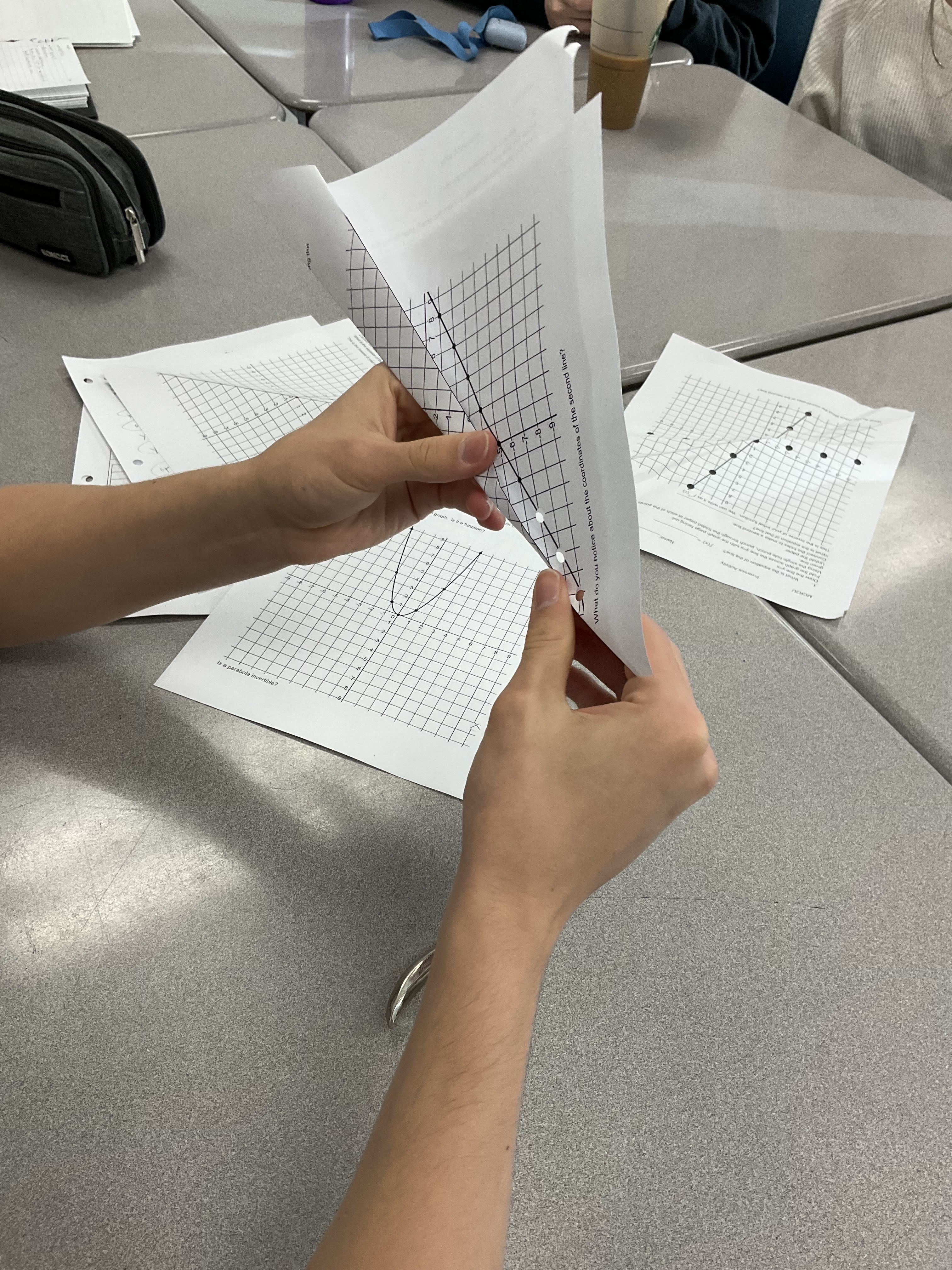
We needed some creative folding to get the hole punch to reach the dots sometimes.
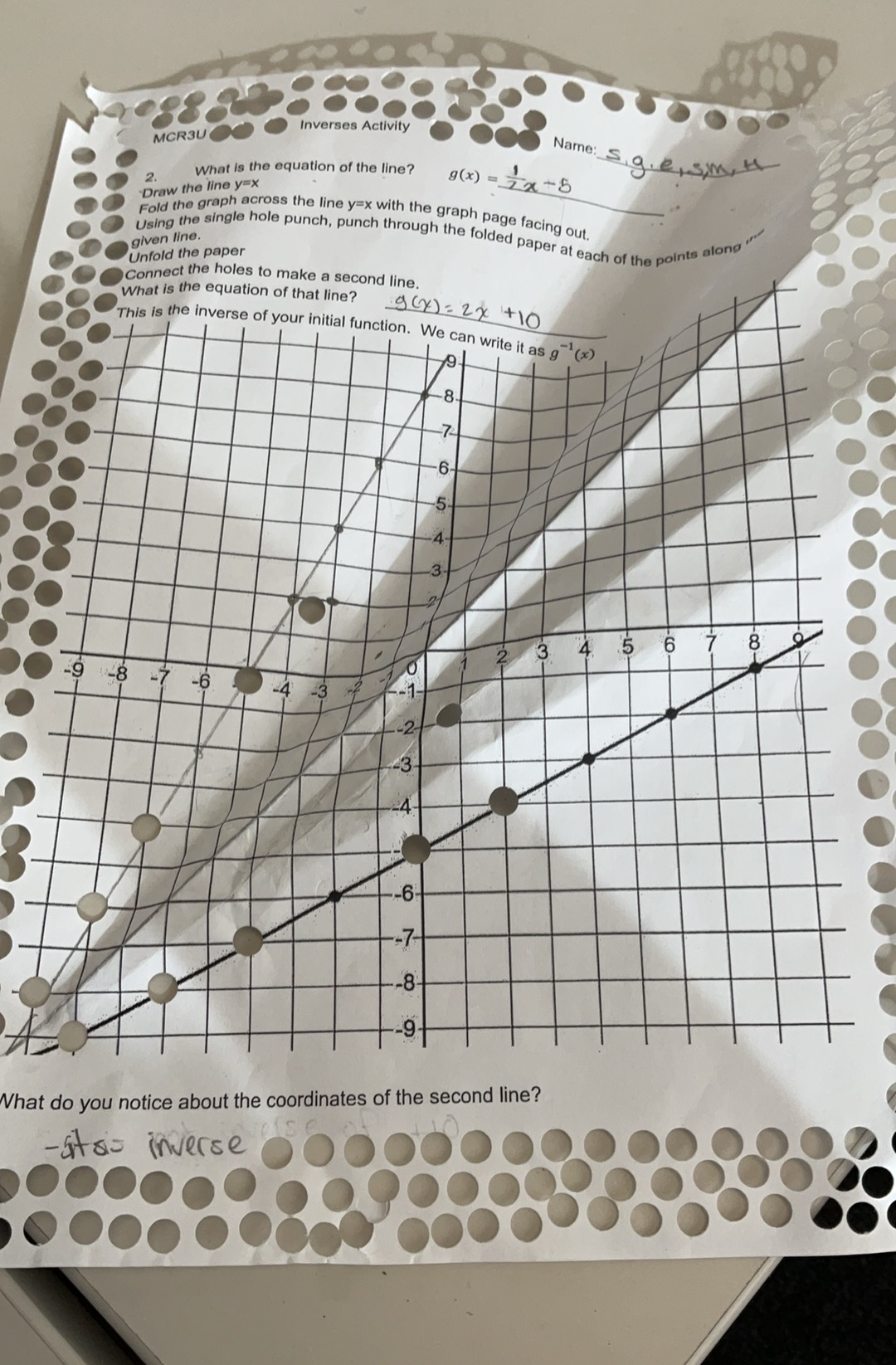
This one has a function of y=1/2x-5 and the inverse is y=2x+10
we were able to switch x and y in the function and then by using opposite operations we could isolate the y. Y=2(x+5) which is the same as the inverse if we expand.
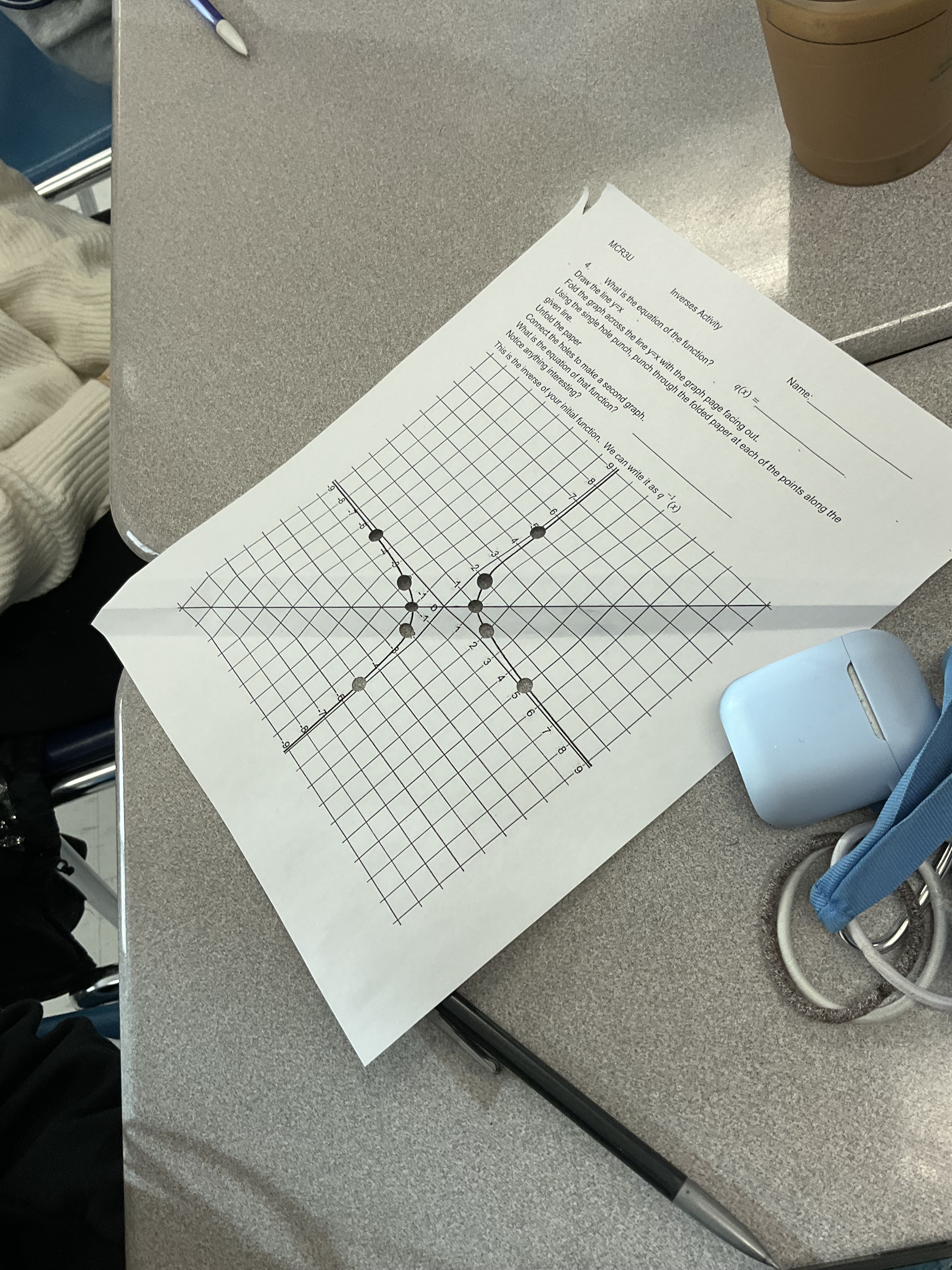
We saw that some functions are their own inverses. We showed how that works with algebra.
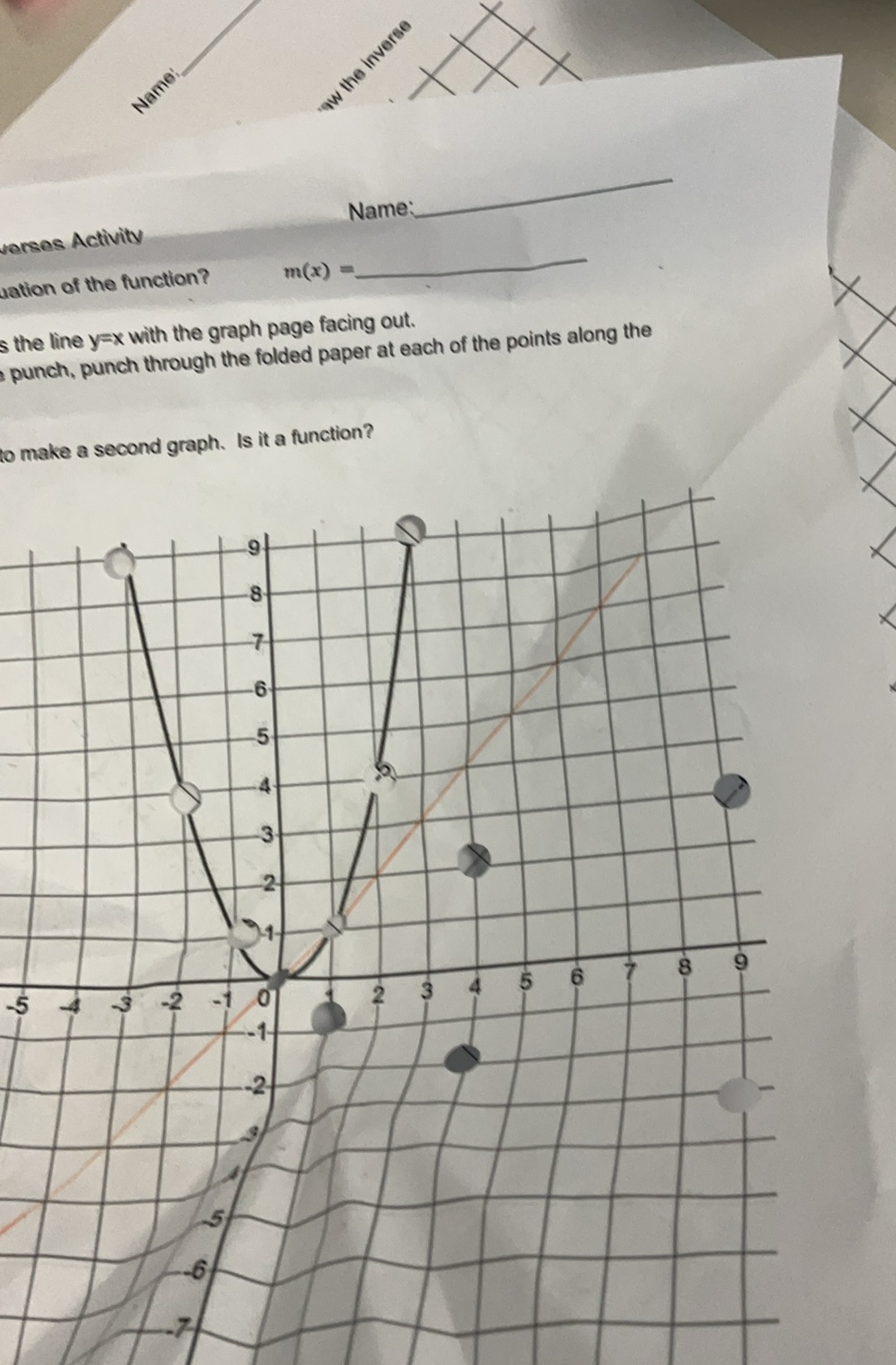
We also saw how this function is not invertible. If we follow the process we don’t get a function in the end. The original function needs to pass the horizontal line test for it to be invertible. We can restrict the domain of the function to make it invertible.
I think we have laid the groundwork conceptually, visually, and algebraically and we will be able to practice more as the course continues.
Meet the Parents
Today in grade 11 we are learning about parent functions
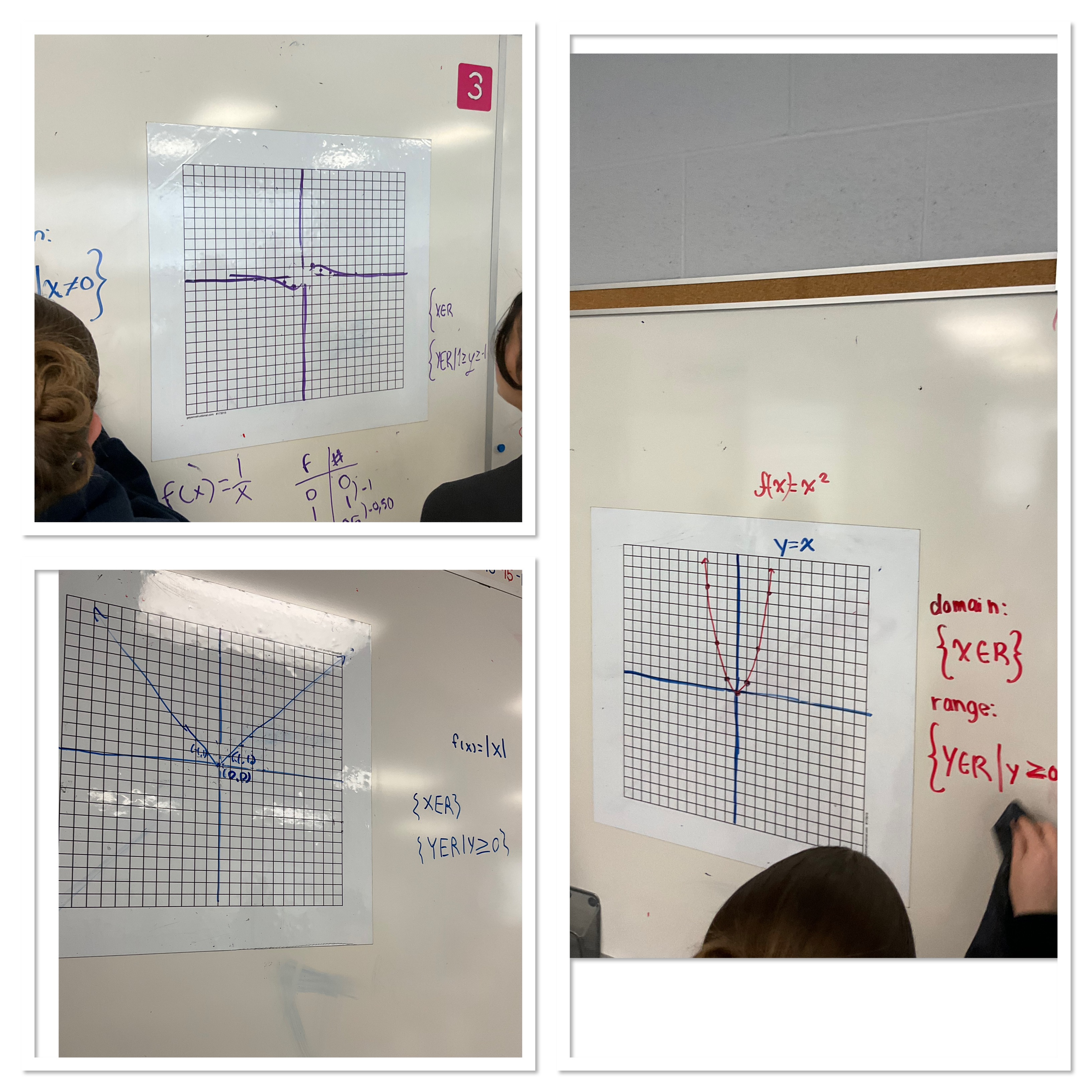
We made tables of values to help us draw each function. We noticed that f(x)=1/x has a gap in the domain since it is not defined when x=0. We needed to check what happens close to 0, on both sides, to see the behaviour near the asymptote.
we are continuing to work on domain and range, and we are identifying key points and features thar will help us when we explore transformations of the parent functions in the coming days.
Knot Tying Experiment
After we got our bean data recorded in mfm2p we started a new experiment. We had 2 different lengths and thicknesses of ropes. We measured the lengths, and then tied a knot, then repeated that process as long as we could.
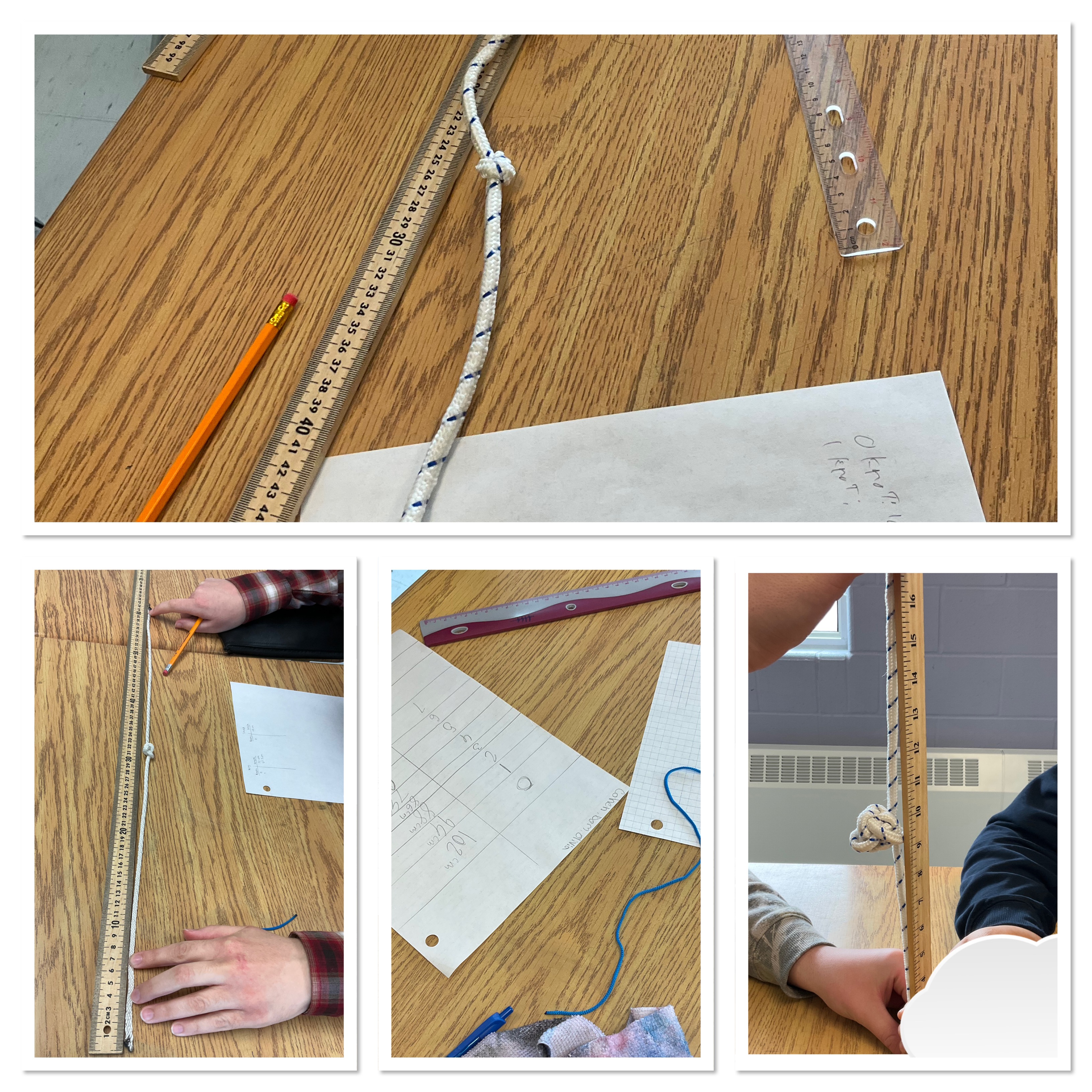
Each time we tied a knot, the rope shrunk. We kept track of the data in a table of values, and then we made graphs of our data.
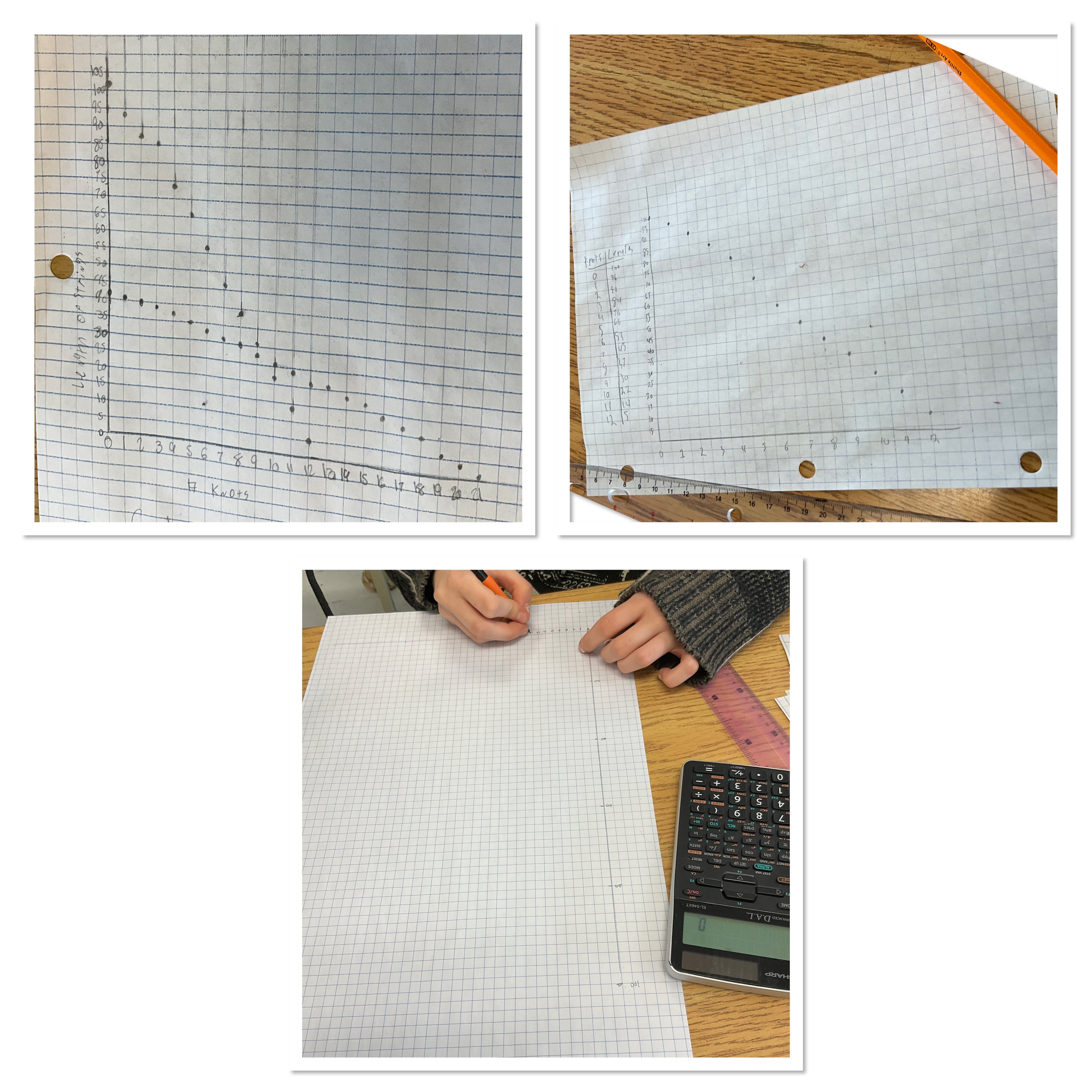
We could make some interesting observations and conclusions. Thicker ropes had lines that were steeper. Each knot used up a lot of rope, so it shrunk a lot. Thin ropes had a less steep slope. Each knot used less rope so the length shrunk less each time. When graphed we could see that the lines crossed. This is the point where the ropes would be the same length with the same number of knots tied.
Further extensions from this task could be modelling the data with equations, and then calculating intersections with an algebraic method.
I’m helping each week to incorporate a modelling/data collection task so that we can work on these skills over the term. It has been great fun so far.
Bean Update
Today I was back working with my colleague’s grade 10 applied class. We are in the middle of an experiment with beans.
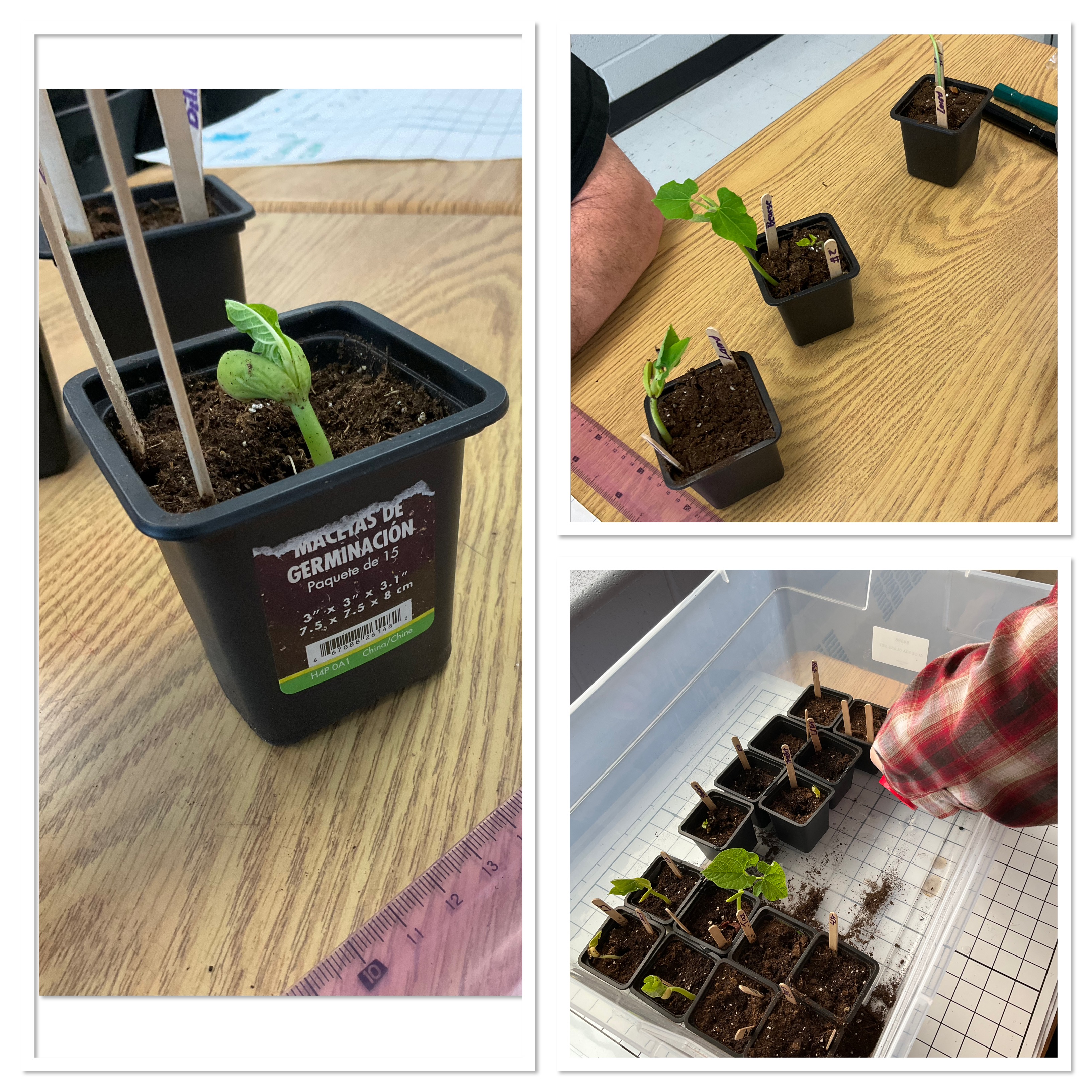
We had some beans start growing over the long weekend. We measured them, and watered them, and we will keep measuring them each day and adding to our tables of values.
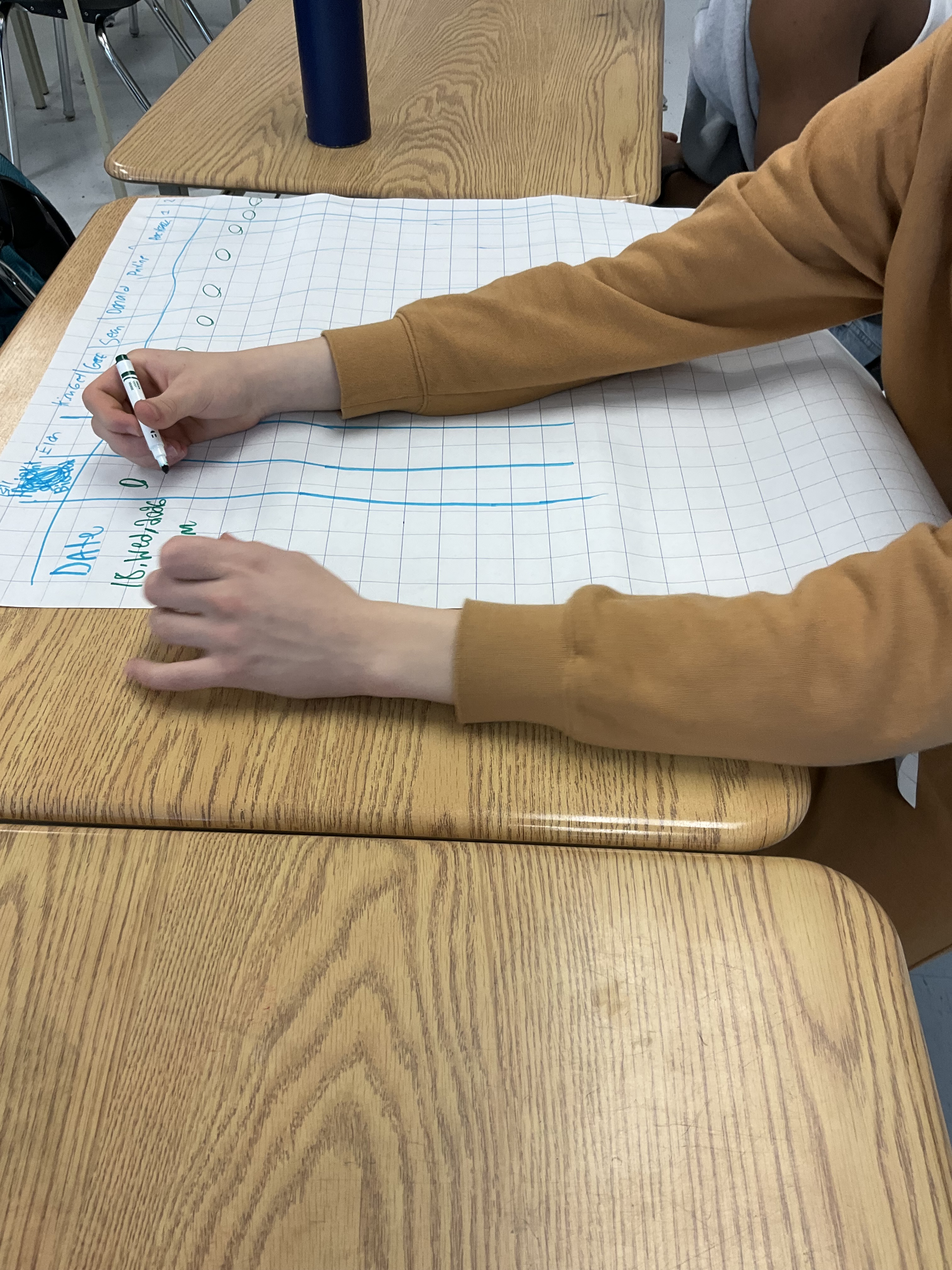
We will graph the growth after we have some more data. We can compare how the black eyed peas and kidney beans grow.
Multiplication Diagnostic
I had the opportunity to work with some grade 9s to see what strategies they use for multiplying. Some students built models or drew pictures, and some are using additive strategies and others are using partial products and using doubling or other strategies.
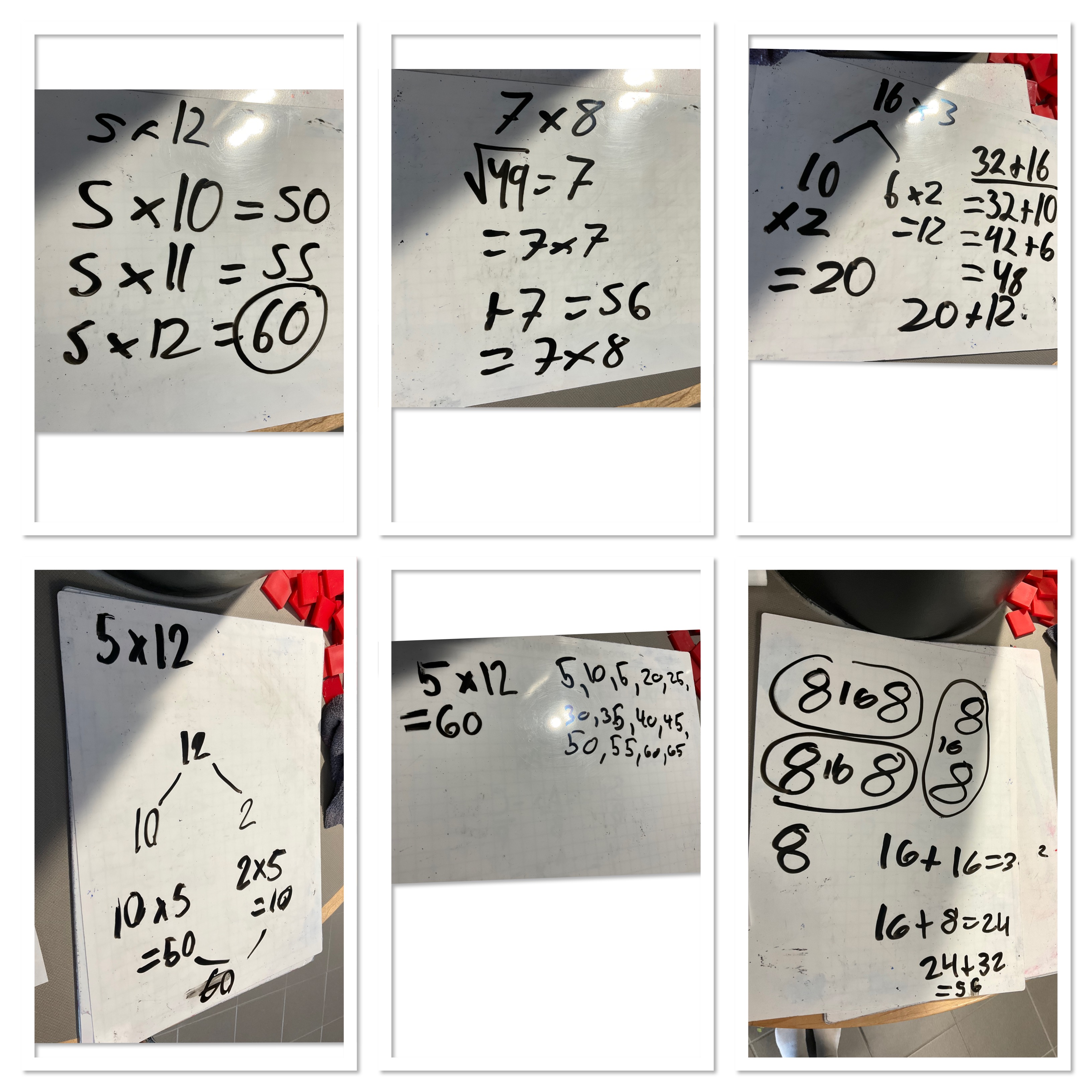
here are some examples of student work, to see how differently they approach some questions.
we will be doing some fluency tasks this term and hopefully can help students explore some different efficient strategies
Introduction to Algebra Tiles
Grade 9s have been learning about algebra tiles, and how to model algebraic expressions with concrete tools.
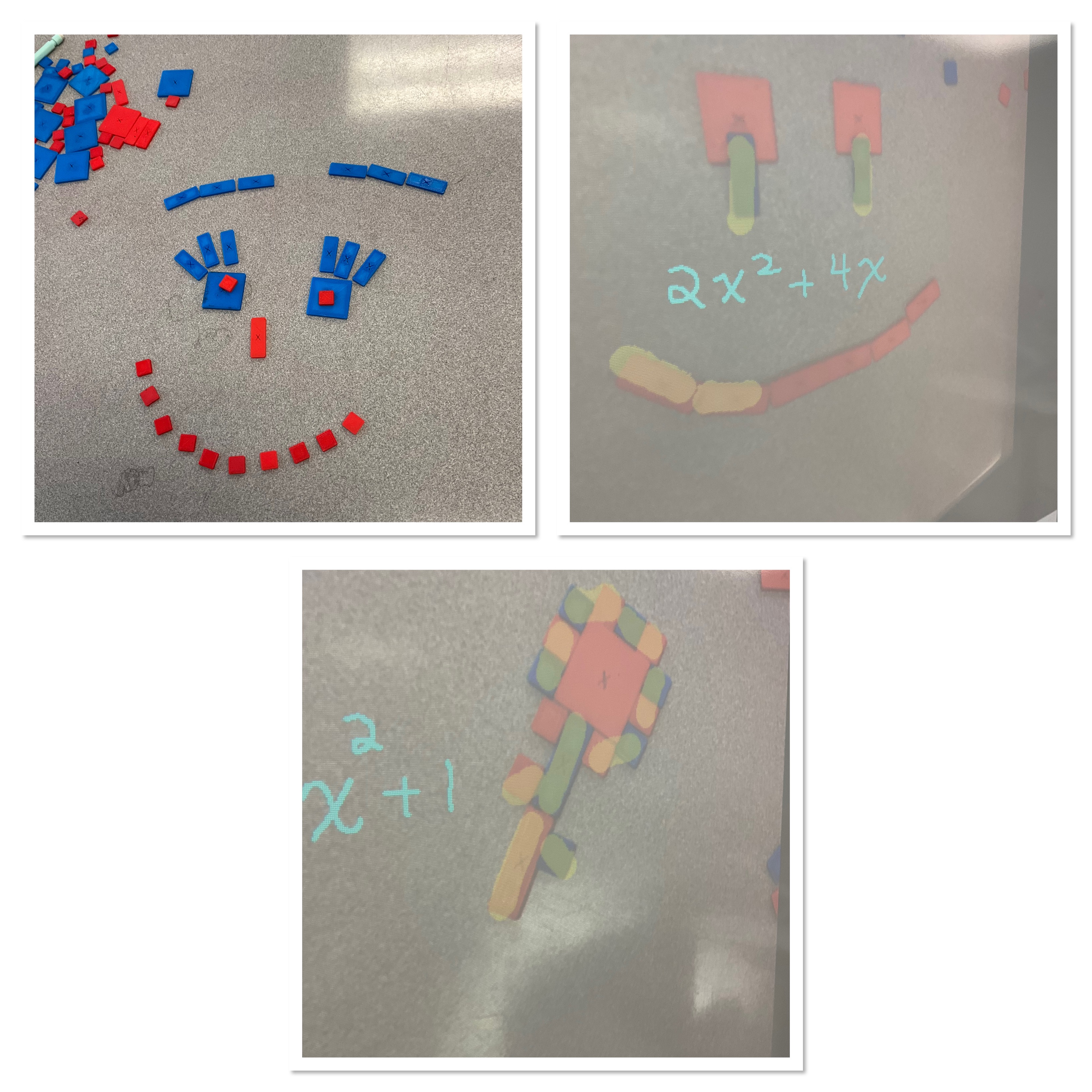
We started by doing some art. We then simplified our art by removing the zero pairs, and then we wrote our final expressions in algebra. We have learned some vocabulary, and can classify polynomials by the number of terms. We can add polynomials, and are working on subtracting them too using zero pairs to help us.
 Ms. Bearse's Site