Systems of equations
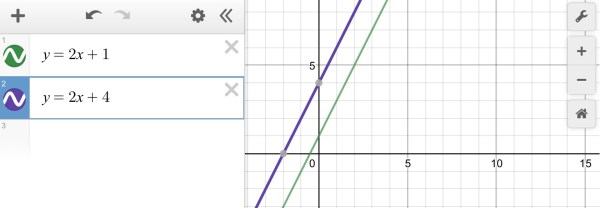
Grade 10s are working on solving systems of equations. We’ve looked at using substitution and elimination to solve problems within a context. Today we looked at equations out of context, and we made the connection that the solution that is the end result of elimination or substitution represents the intersection of the two linear equations.

Most linear equations will intersect once, and that point can be found by substitution, elimination or graphing (desmos makes it really quick to find).
Some systems will not be easy to solve. Some will end up with an equation like 0=0 at the end. Others will end up with something like 0=5.
In the case of the first, 0=0, we know that is true, so it’s like the math says…yes. As in every point is a solution. When two lines are identical we have that case.

When we see something like 0=5 that is not true, so it’s like the math says…no. As in there is no solution. This means the lines are parallel and do not intersect.
Pythagorean theorem in grade 9
We looked today at a quilt, and made a list of math questions we could solve about the quilt. 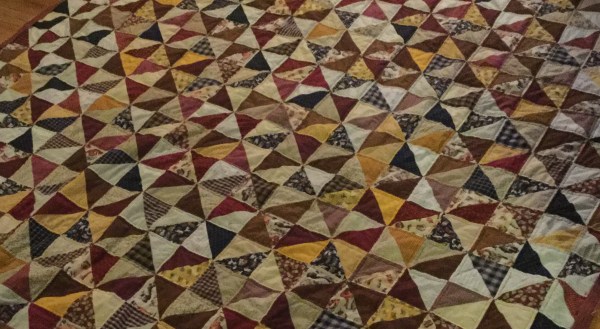 We calculated area, volume, and perimeter, looked at the number of squares and number of triangles, we talked about types of triangles, and angles. We converted measurements from imperial to metric, and then worked together to figure out how long the diagonal would be.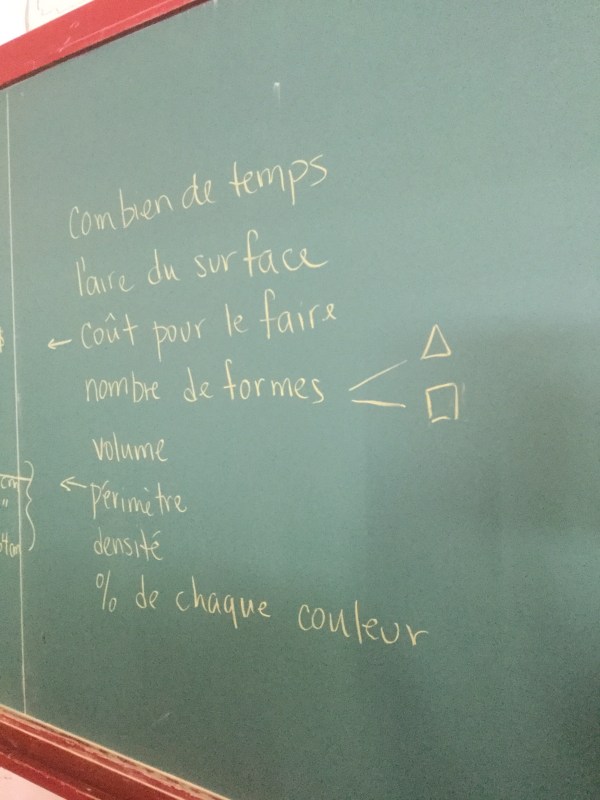
We looked at pythagorean theorem, and watched the video that shows the area method of solving.
We can use this method to help us solve for any missing side, the hypotenuse or the legs (cathètes).
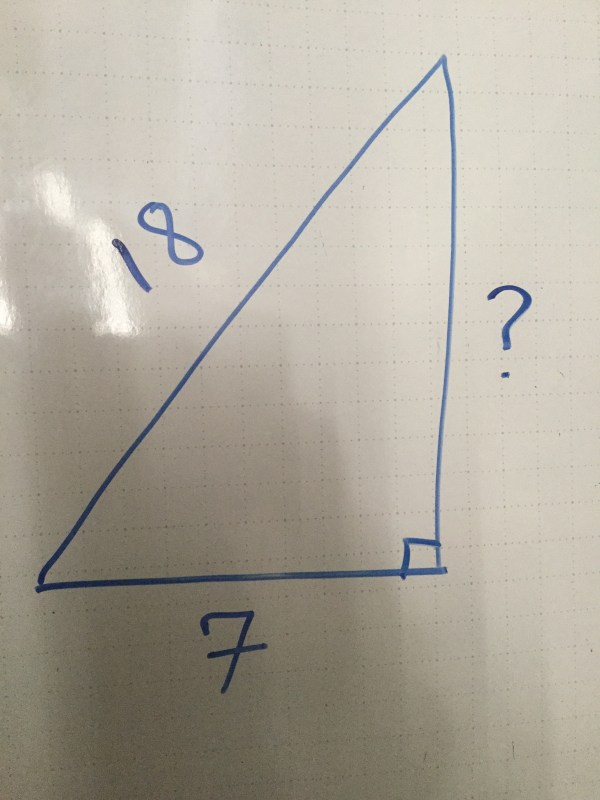
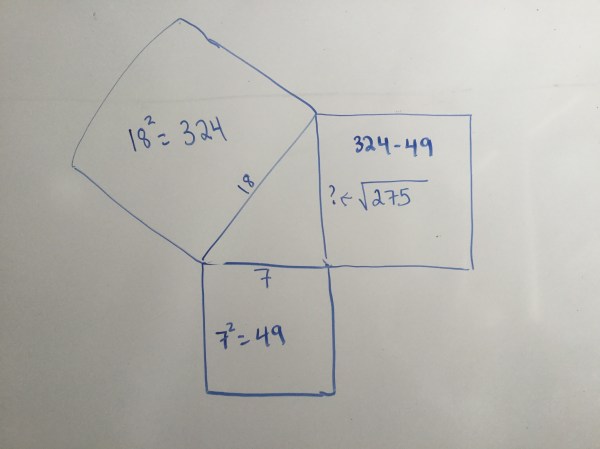
We check that our answer makes sense…the hypotenuse should always be the longest side.
Planting beans in grade 9
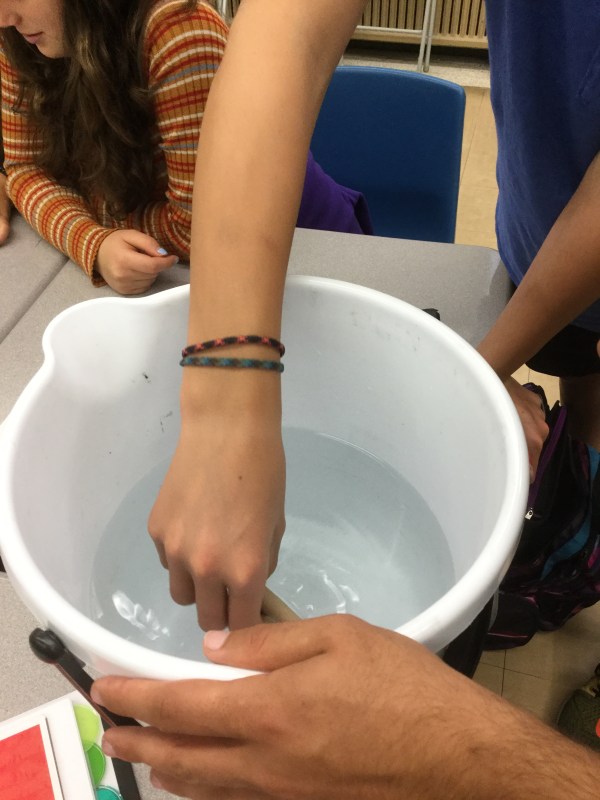
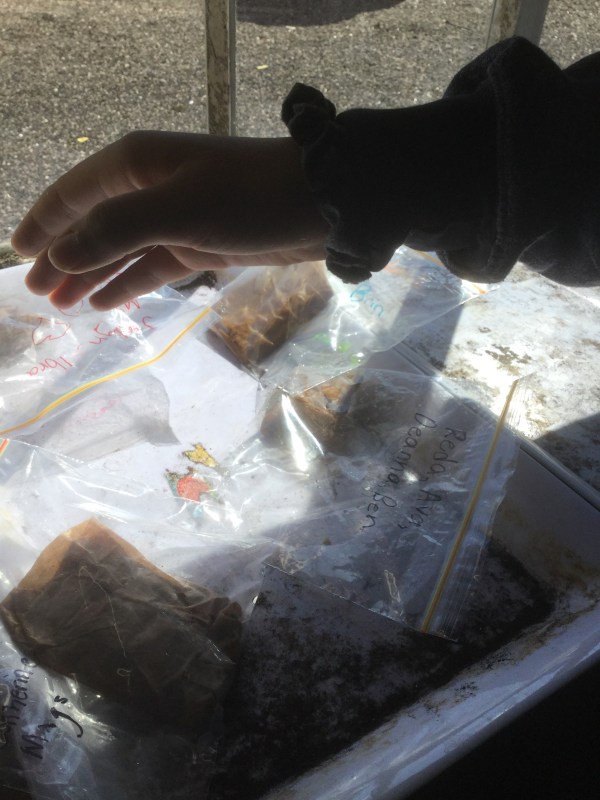
We are starting an experiment in grade 9. We are germinating beans and will be planting them after they sprout, and measuring their growth over a few weeks.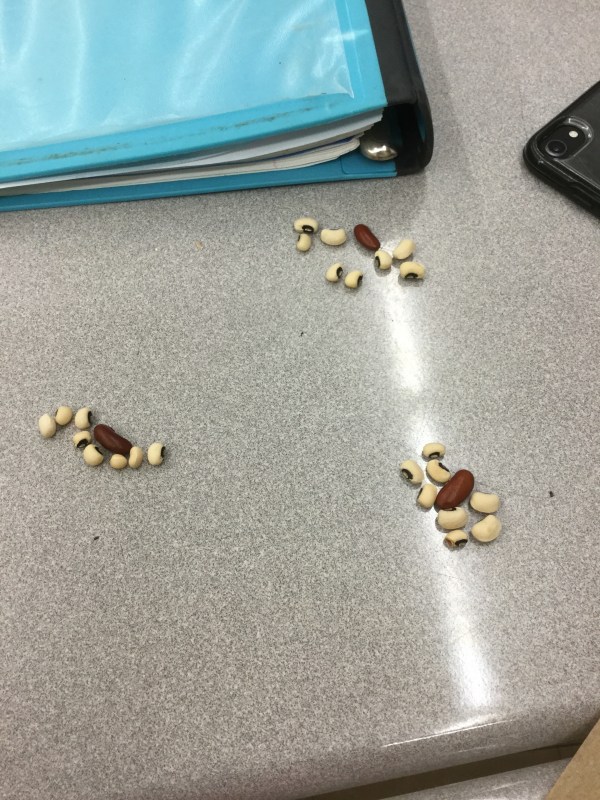 we wrapped the beans in paper towel and dunked the packet in water, and put it in baggies to germinate.
 we put our names on the baggies and left them on the windowsill.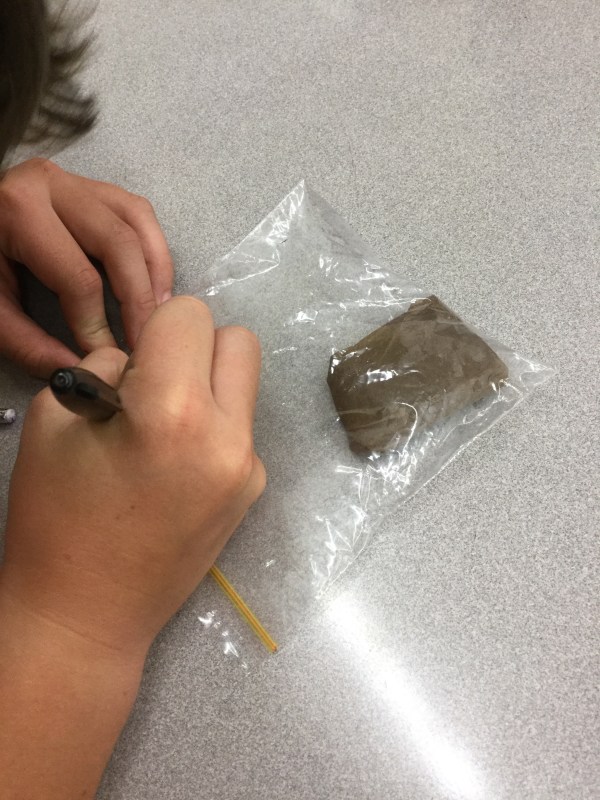
Friday in grade 10

We explored the 3act task to find out which rectangle had the biggest area. Many of us thought that the biggest area would be a square. We didn’t notice that the rectangle didn’t always have the same perimeter, so this case was very different to our experience from grade 9.
We made tables and looked for patterns. We know how to calculate area (length times width), and we noticed how the length and width were changing. Some groups noticed that the area has a constant 2nd difference, so we know it’s not linear.
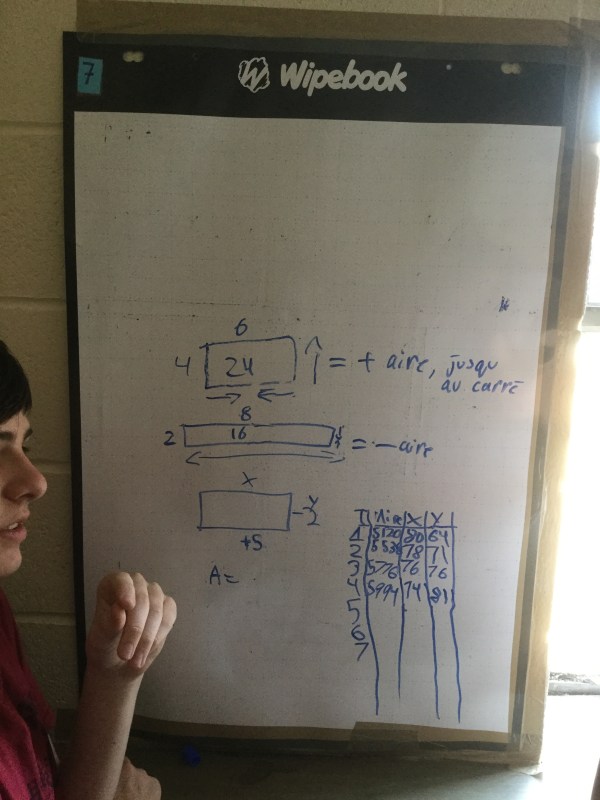 some of our groups started to use variables, and develop expressions.
We will come back to these explorations in the future. Good work this week grade 10s. There will be a practice sheet posted to the google classroom, along with the quiz solutions.
Friday in grade 9

We are working on collecting a set of data. We are multiplying each day, and tracking how many questions we can do in 5 minutes. We’ll graph our progress after a few weeks.

We looked at some strategies that can help make multiplying by 12 easier. We also saw that these strategies could help with 7s as well. We split the 12 up into 10 and 2, and we can split a 7 up into 5 and 2. An area model is a quick way to represent this.

Next we looked at a 3 act task called crazy taxi.
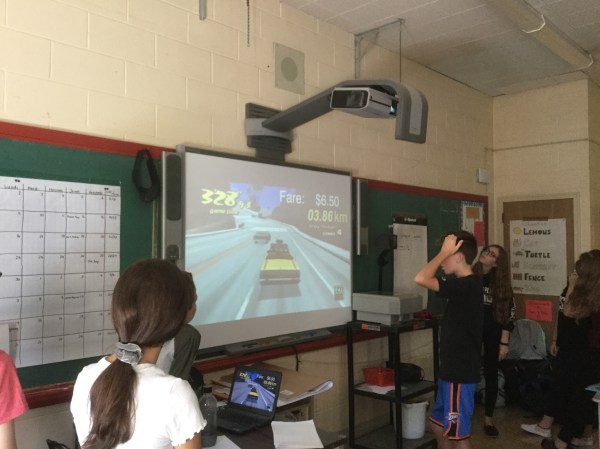
We connected how long the taxi was driving to how much the fare was. We are working on representing our work in different ways, like equations, and tables of values.
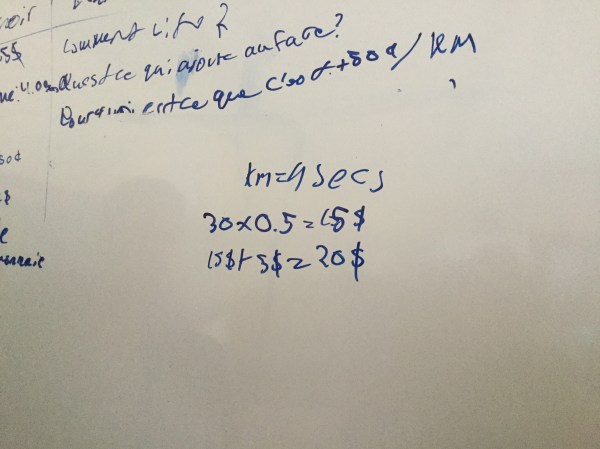


We also sent emails home to keep families up to date about what we’re doing in math. For homework, please try to sign up on knowledgehook and explore some of the challenges.

Knowledgehook
Grade 9s: have a look at knowledgehook. We’ll be trying some of these activities over the term.
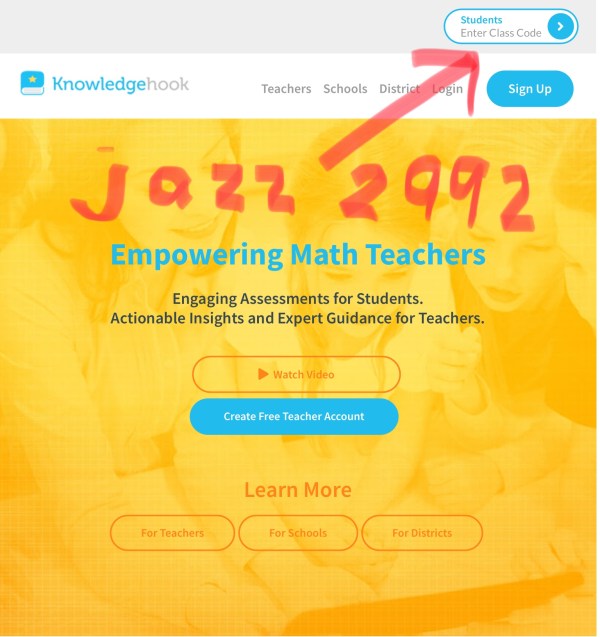



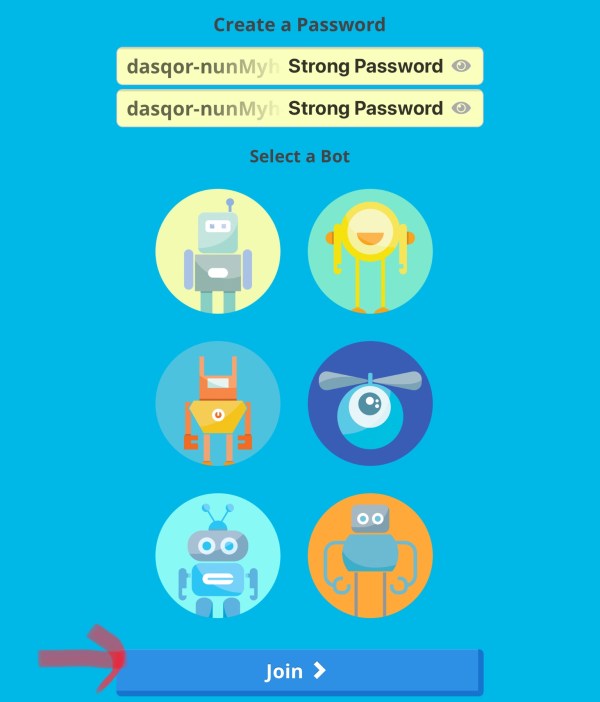 this account was used last year, so that’s why there are already missions listed…. you can go to them or to the “all skills” button.
Problème en 3 parties 10e
Problème en 3 Parties 9e
Partie #1
Partie #2
Combien coutera un voyage de 30km?
Quelle distance peut-on voyager avec 50$
Partie #3
3 act math
Today in grade 9 and 10 we worked on 3 act math problems. These problems are sparked by a video/situation, we notice things, we ask questions, we get more information and then we do math to solve the problems we can. The 3rd act is when the solutions is given and we can check our work.
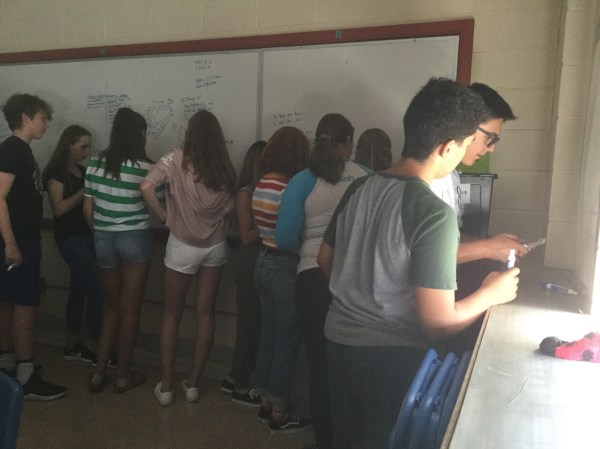
We are standing up when we are doing our work because it’s good to be up and moving, and it keeps us from being passive. Also, having our work on the boards can be helpful for our classmates to see and get hints, or we use the work that’s presented and discuss things like how to present a good solution, and various strategies used to get to the answer.
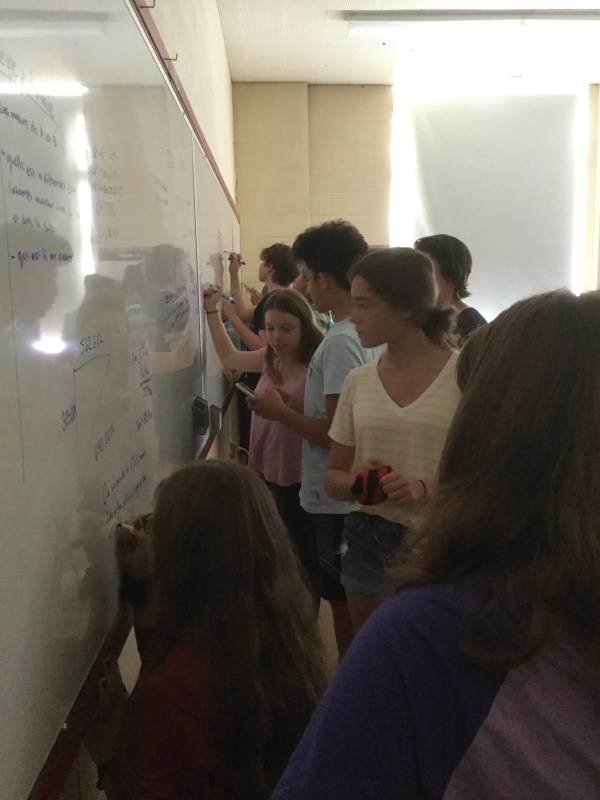
We have 1 marker per group, and everyone takes turns writing, and calculating, and thinking about what’s next.
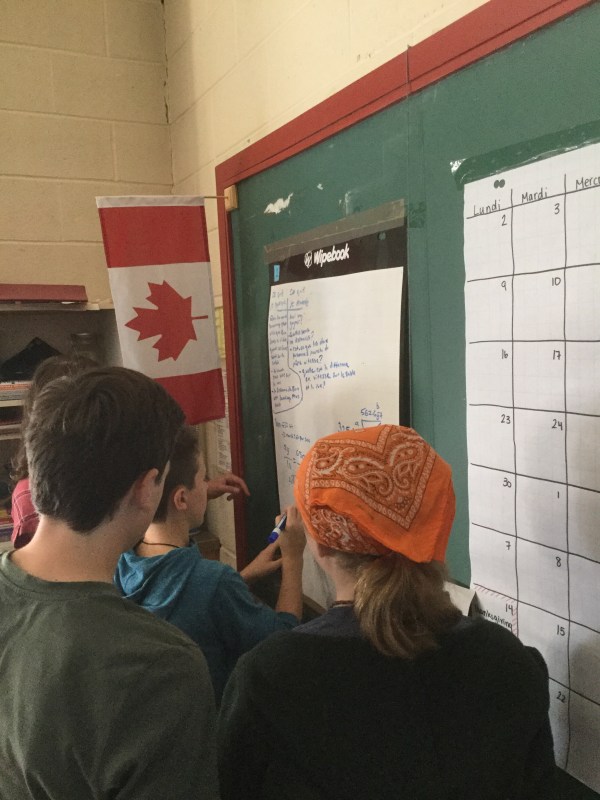
At the end of the problem, we can always check with other groups to see if our solutions make sense, or figure out where we went wrong.
Time flies when we’re doing math!
Problèmes en 3 parties 10e
Problème A
Partie #1
Partie #2
Partie #3
Problème B
Partie #1
Partie #2
Partie #3
Problème C
Partie #2
Partie #3
 Ms. Bearse's Site