We planted beans!
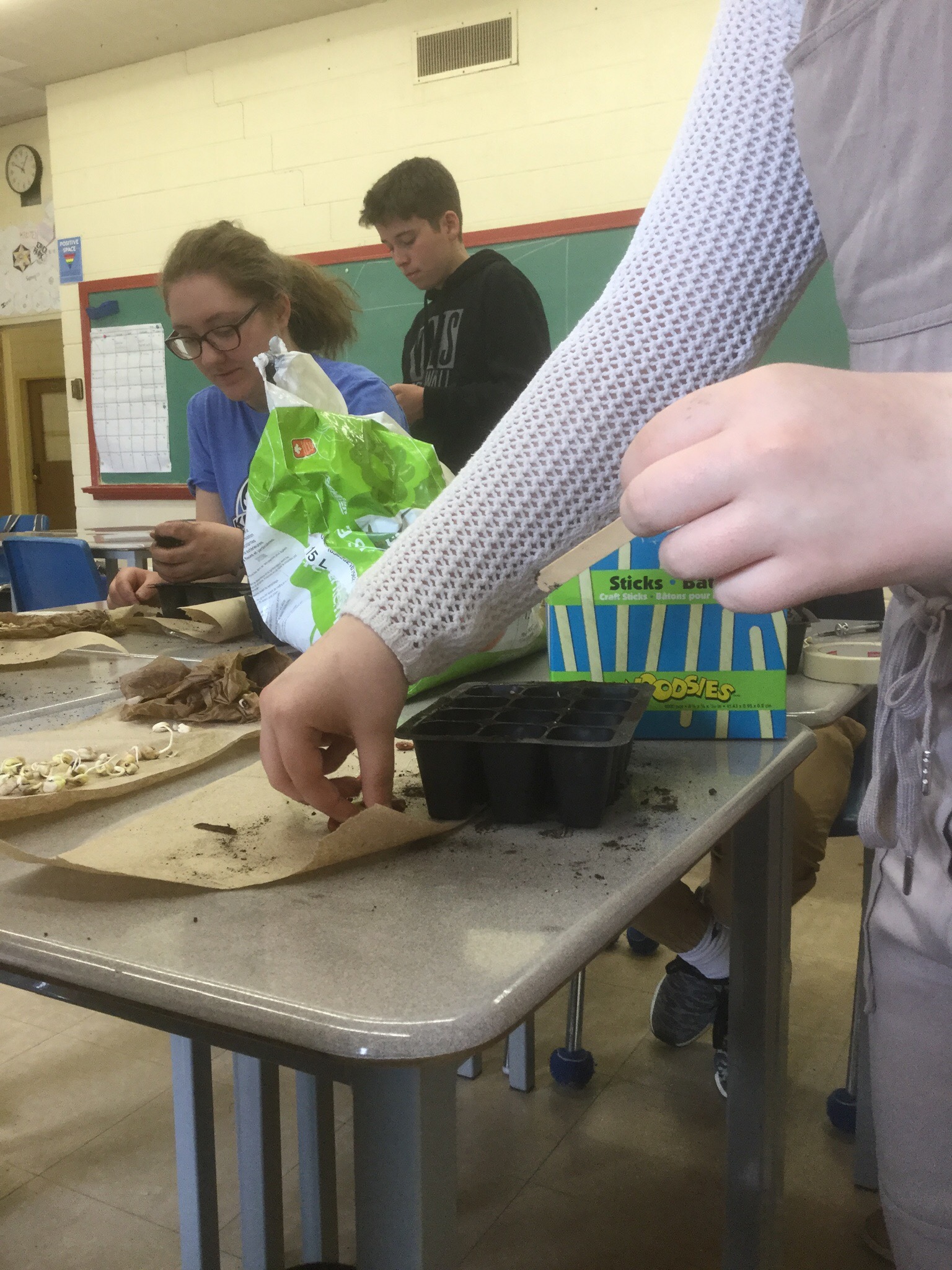
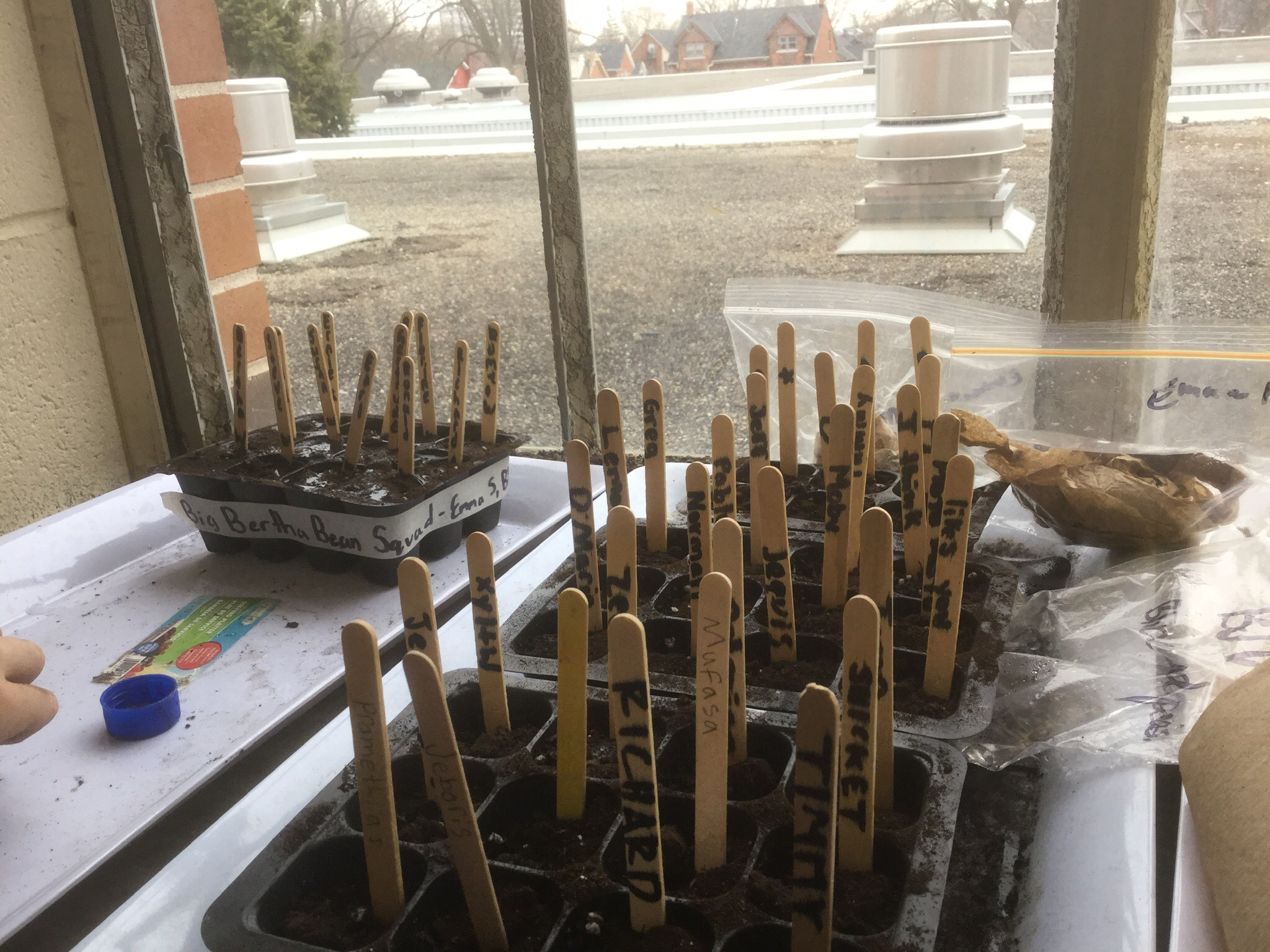
Today is day 0, planting day! We named our beans and watered them and are leaving them by the window. We’ll be measuring their growth and comparing the two types of beans over the next month.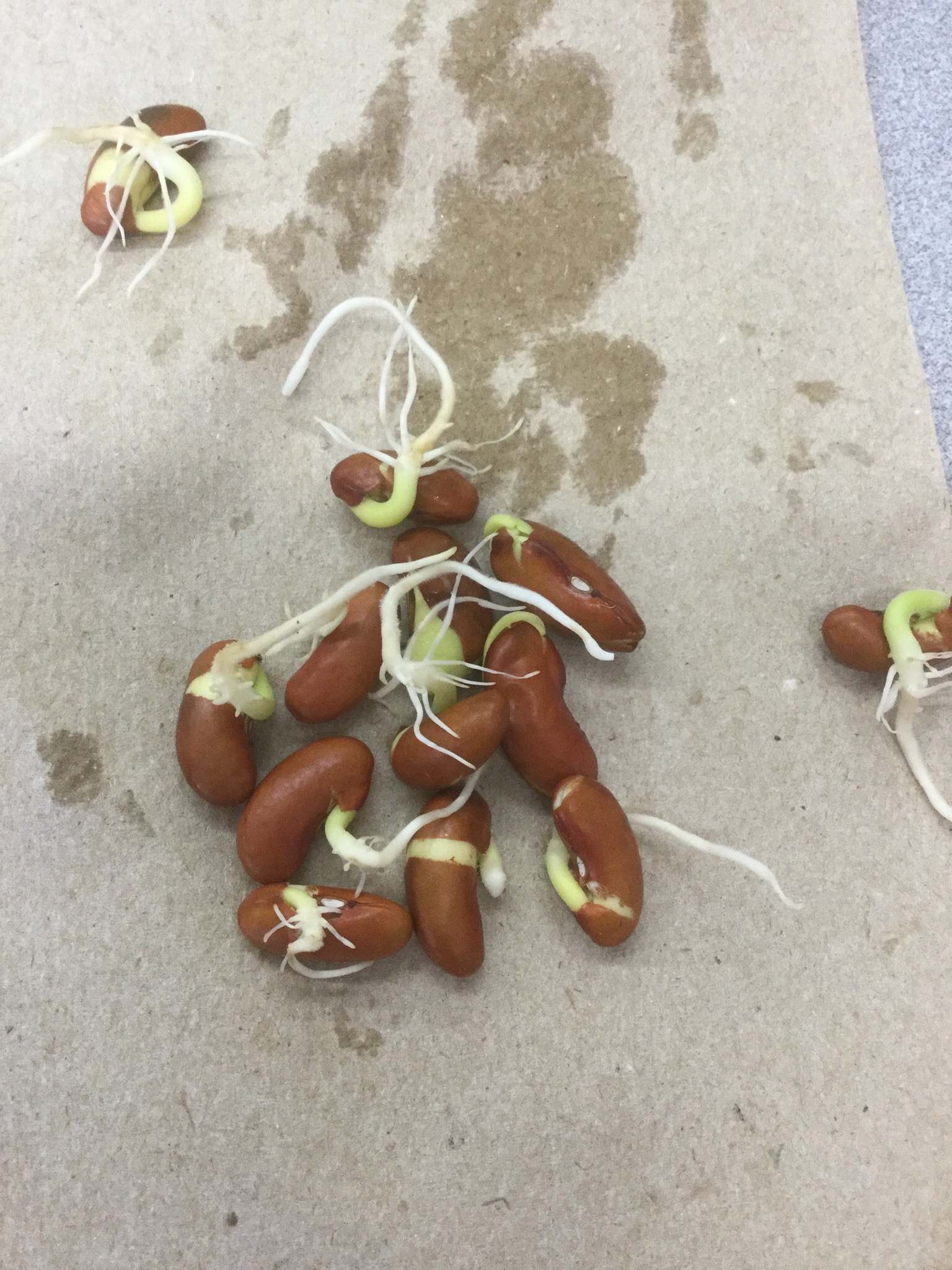
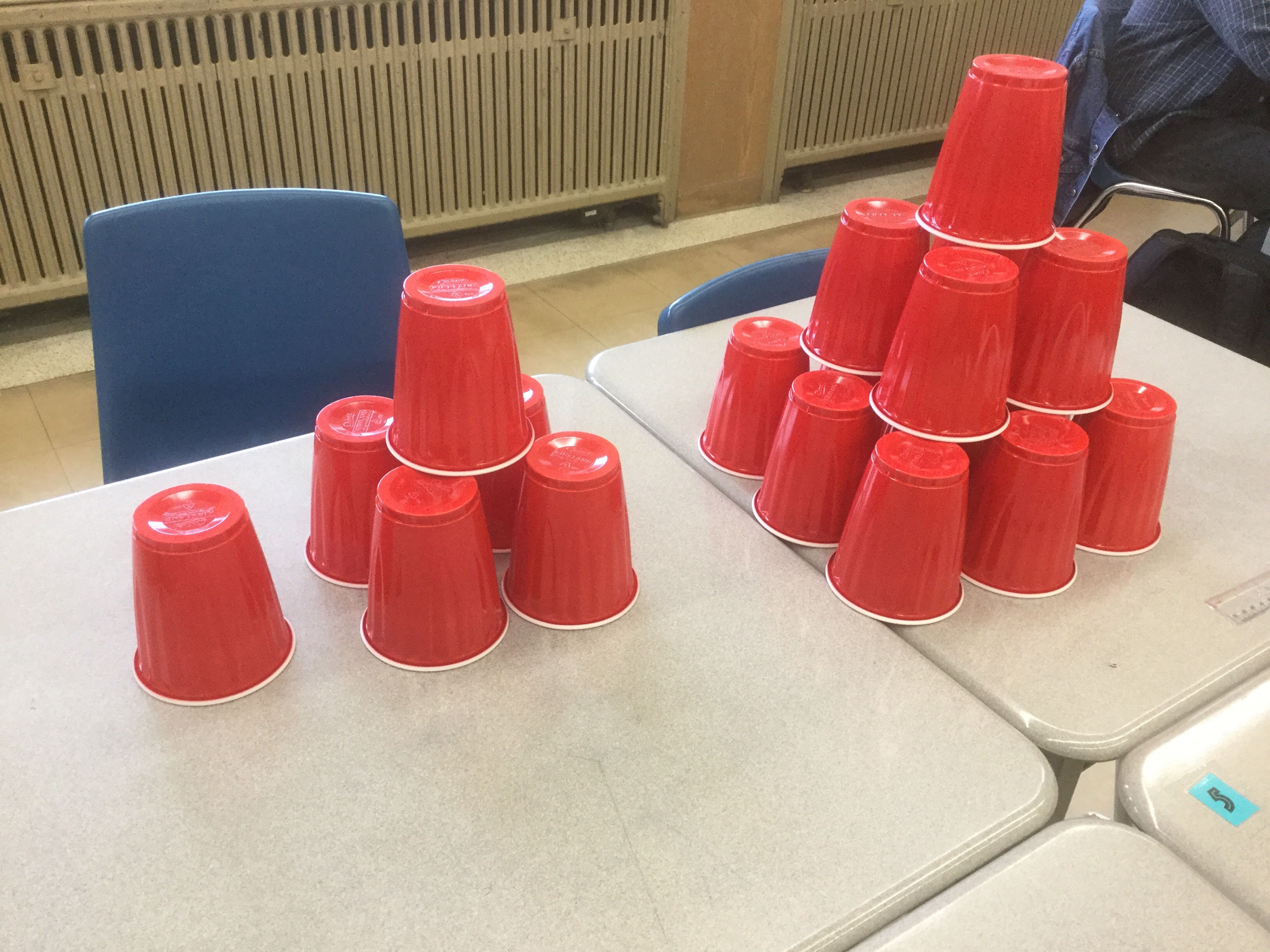
How many cups?
If we wanted to build a pyramid to fit inside our classroom, how many cups would be needed?
We made a function from our finite differences. We then calculated the coefficients for each term using substitution.
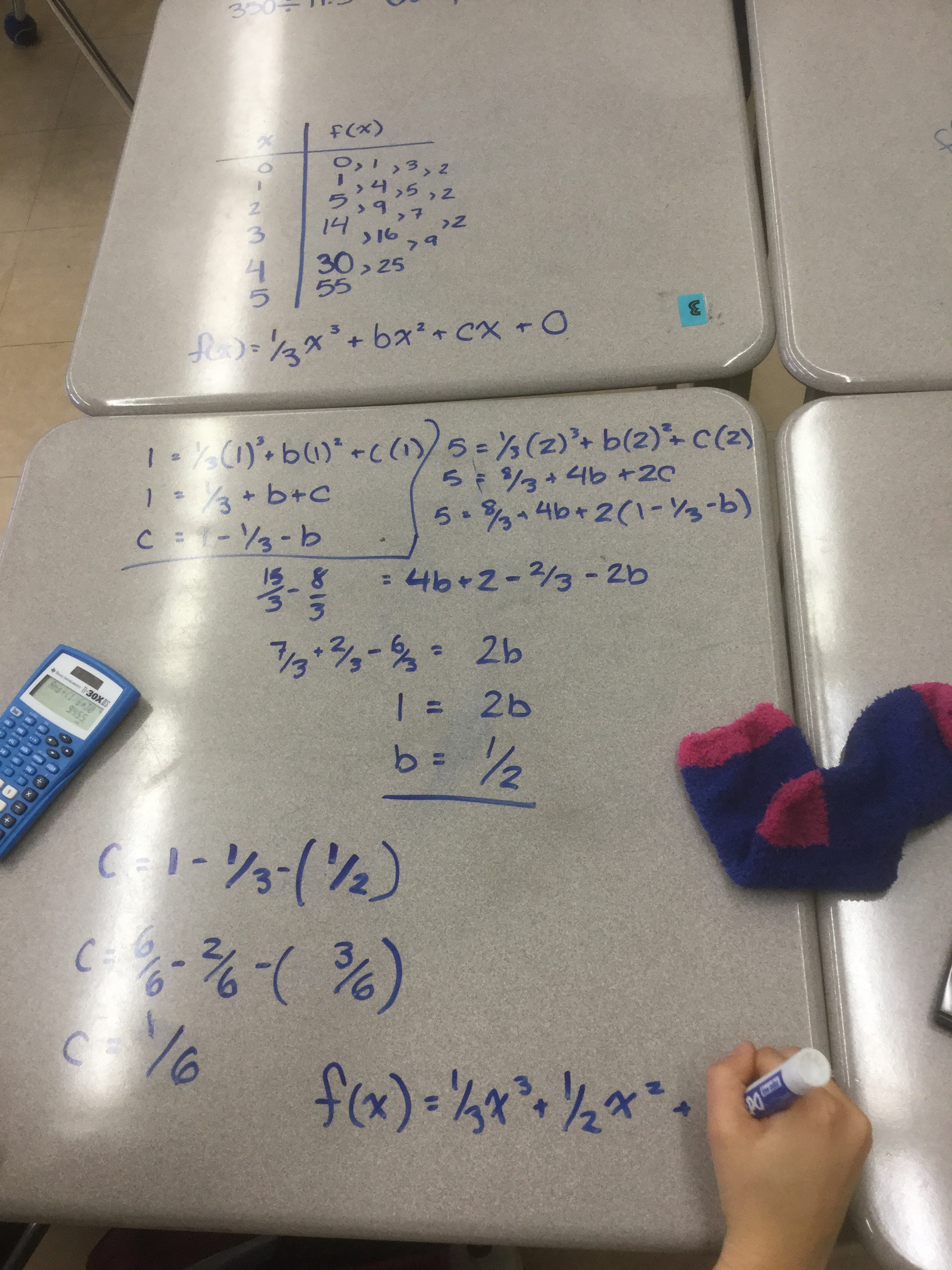
We also saw how desmos can be used to do a polynomial regression

Fractions
Our question today was: we have two cakes. Period B ate some pieces of one cake. Period C ate some pieces of the other cake. How much is left? Is it enough to offer to period D?
We counted 6/18 pieces eaten from one cake, and 6/16 eaten from the other. We simplified fractions to 1/3 of one and 3/8 of the other have been eaten.
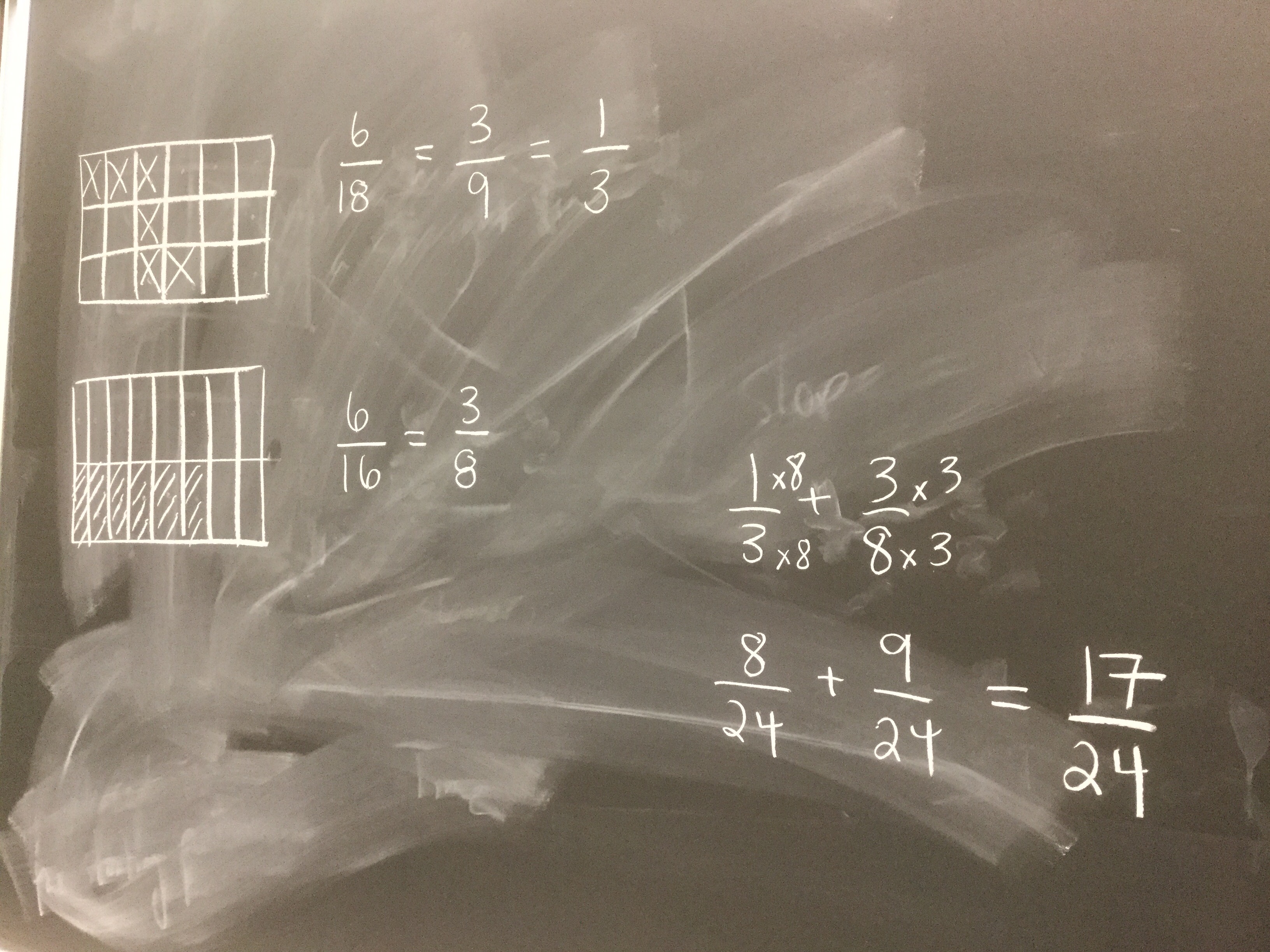
Knowing what we know about fractions and common denominators, we were able to solve the problem. But we also looked at the problem visually.
If we divide a cake in three parts, and colour in one of those parts to represent 1/3, and the second cake we cut into 8 parts and colour in 3 of them to represent 3/8. To compare the cakes and add up the pieces, we need the pieces to be the same size. We divide each cake into 24 (3 one way and 8 the other). We can then add up the 8/24 and the 9/24 to make 17/24.
We know that 17/24 were eaten, but to start with we had 2 cakes! 2 cakes have 48/24 pieces. We know we have one whole cake left over, and 7/24ths of the other.
We looked at how to convert mixed numbers and improper fractions.
We looked at improper fractions for multiplying as well. This visual model shows the multiplication of 3 and 2/7 by 1 and 1/2. If you are not converting to improper fractions, you can still multiply, but you need to remember that it’s more complicated than just multiplying whole numbers and multiplying fractions together. This grid shows all the multiplications broken down, and then added together at the end.

Good work today!
Speed dating in grade 10
We worked today on solving problems involving distance, midpoint, medians, perpendicular bisectors, and triangle/quadrilateral types.
We worked with the person across the table, and together solved the problem. One of the pair stayed to be the expert while the other side then shifter one person to the right. 
We got a chance to work with many different people, and different questions. We each got turns being the expert too.
We’re getting ready for our test at the end of the week.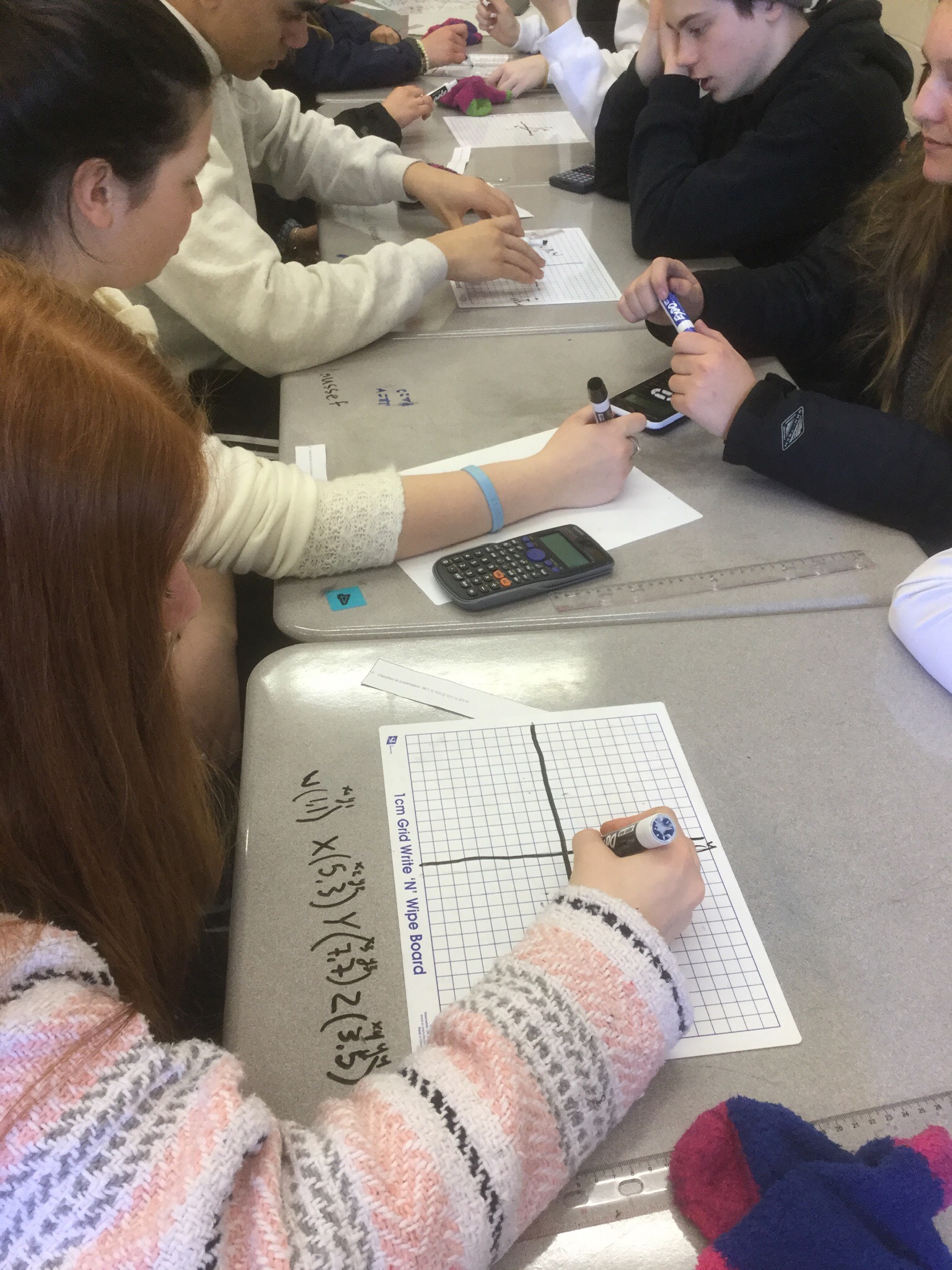
Preparing for our next portfolio task
We looked today at how to create an organized piece of writing that addresses all areas ur portfolio prompt. We need to discuss how we can choose and use appropriate formulae for calculating perimeter, area and volume, and also how to connect the algebra and geometric representation of expressions with exponents.
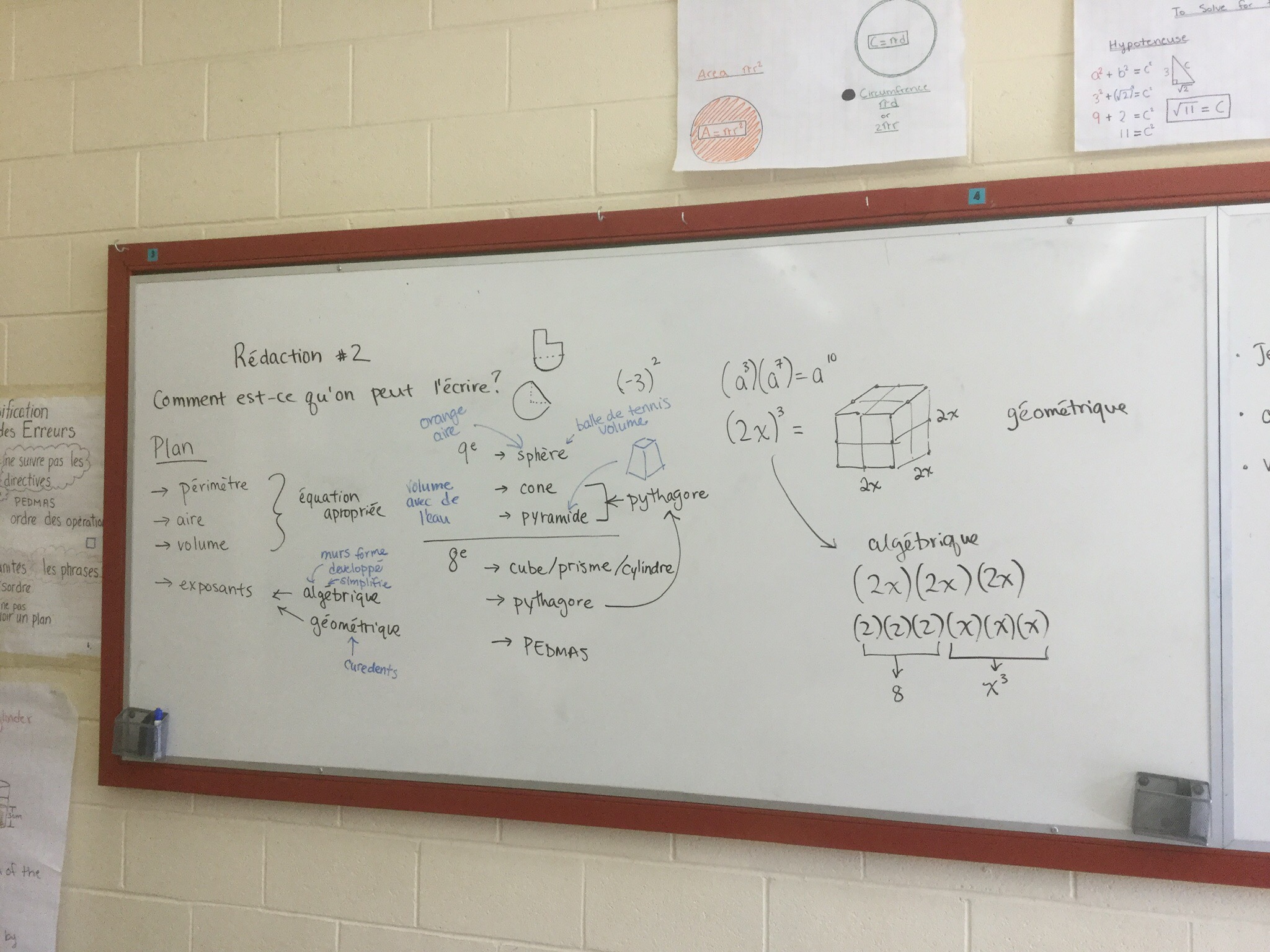
We brainstormed, and then we looked at which examples we might include, and how we could add in some reflections along the way.
Modelling polynomials in grade 12
We have been looking at polynomial functions for the last few weeks. We are getting comfortable with the equations in factored form, and understand how to draw graphs.
Today we looked at tables of values, and the information held within them.
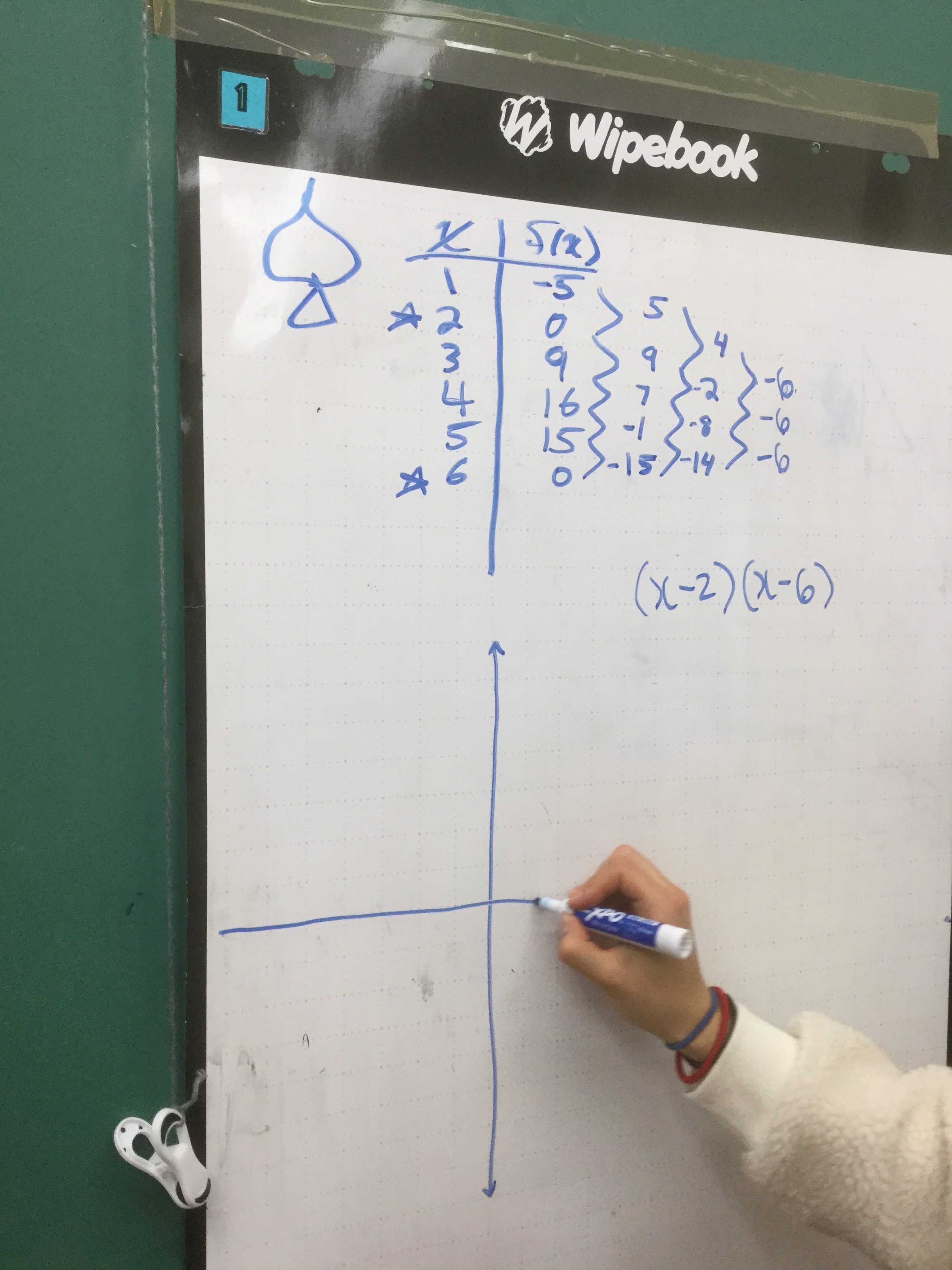
We looked for zeros, we noticed which of the finite differences is constant…
We drew graphs, and worked on making equations.

We determined that the constant 3rd difference played a part in determining the “a” value of the polynomial.
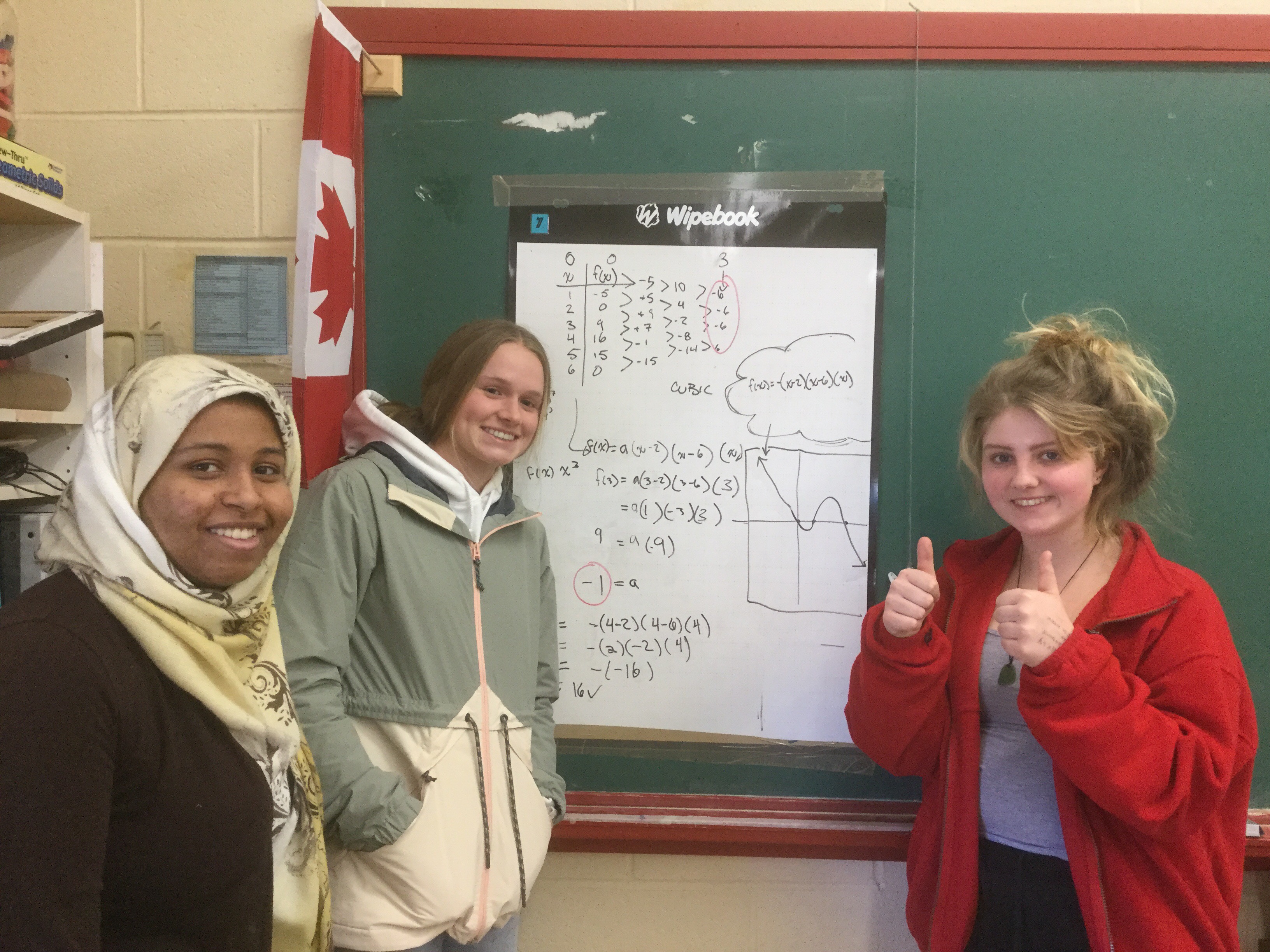
In fact, we determined that the constant differences in cubics, quartics, quintics etc all played a part in calculating the “a” value

In fact, the coefficient of “a” as shown above is equal to the factorial of the nth difference (the difference that is constant). For a quartic, n! Would be 4! Which is 4x3x2x1=24
So, if we find that the 4th difference is constant, and the value is -12 we can determine the leading coefficient (the “a” value) by recognizing that it is a quartic, so 4!a=-12 which means 24a=-12 so a=-0.5
Our problem that we ended class with dealt with pyramidal numbers.

We want to determine f(n) and f(18).
Speed dating in grade 9
 We worked in pairs (across from each other) to solve a problem involving building a model of an expression using exponents, and another with a simplification problem.
One side of the table stayed as “experts” and the other side of the table shifted one seat to their right. They now did the question in front of them, with the help of the expert. 
Then the other side shifted one to their right, and tried the next question, helped by the expert who had just completed that question the round before.

This method of group work is called speed dating because you meet with a partner for a short time, and then work with other different partners over the course of the class. 
We’re clearing up misconceptions, and practicing different ways to represent expressions both with algebra, and with concrete models.
In other news: our beans are starting to sprout!

Grade 10 Investigation
We looked at where to locate the sprinkler head if we wanted to water plants that are at A B C and D. We used the intersection of the perpendicular bisectors to find the point equidistant to all 4 points.

Math Music Helps!
Yesterday we were factoring polynomials, and we heard the factoring gangnam style song.
Today we were working on some new problems, involving sum and difference of cubes, we wrote out the polynomial and used the factor theorem to attack the problems.
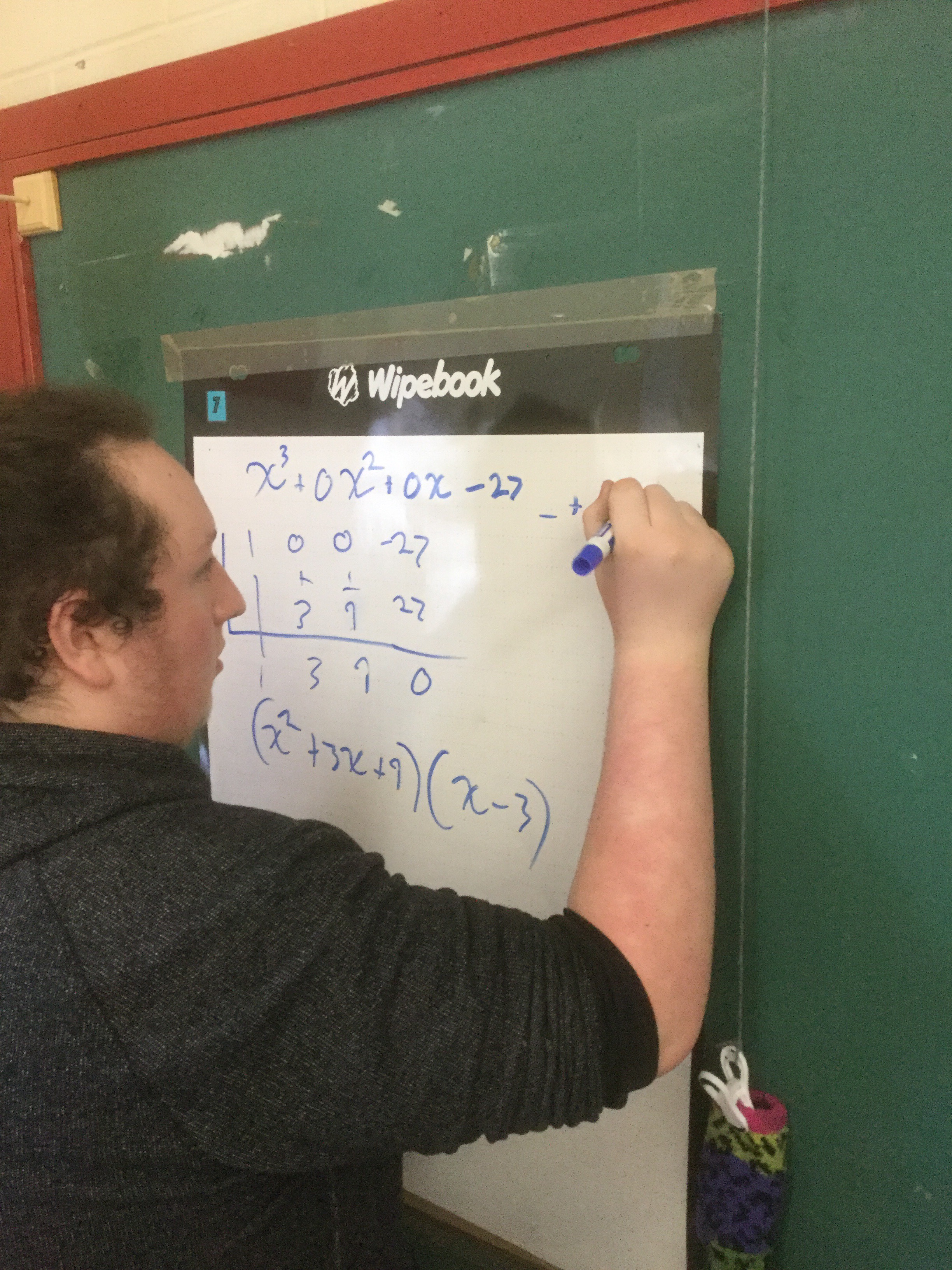
We looked for patterns, and made generalizations…and many students referenced using SOAP to help solve the problems
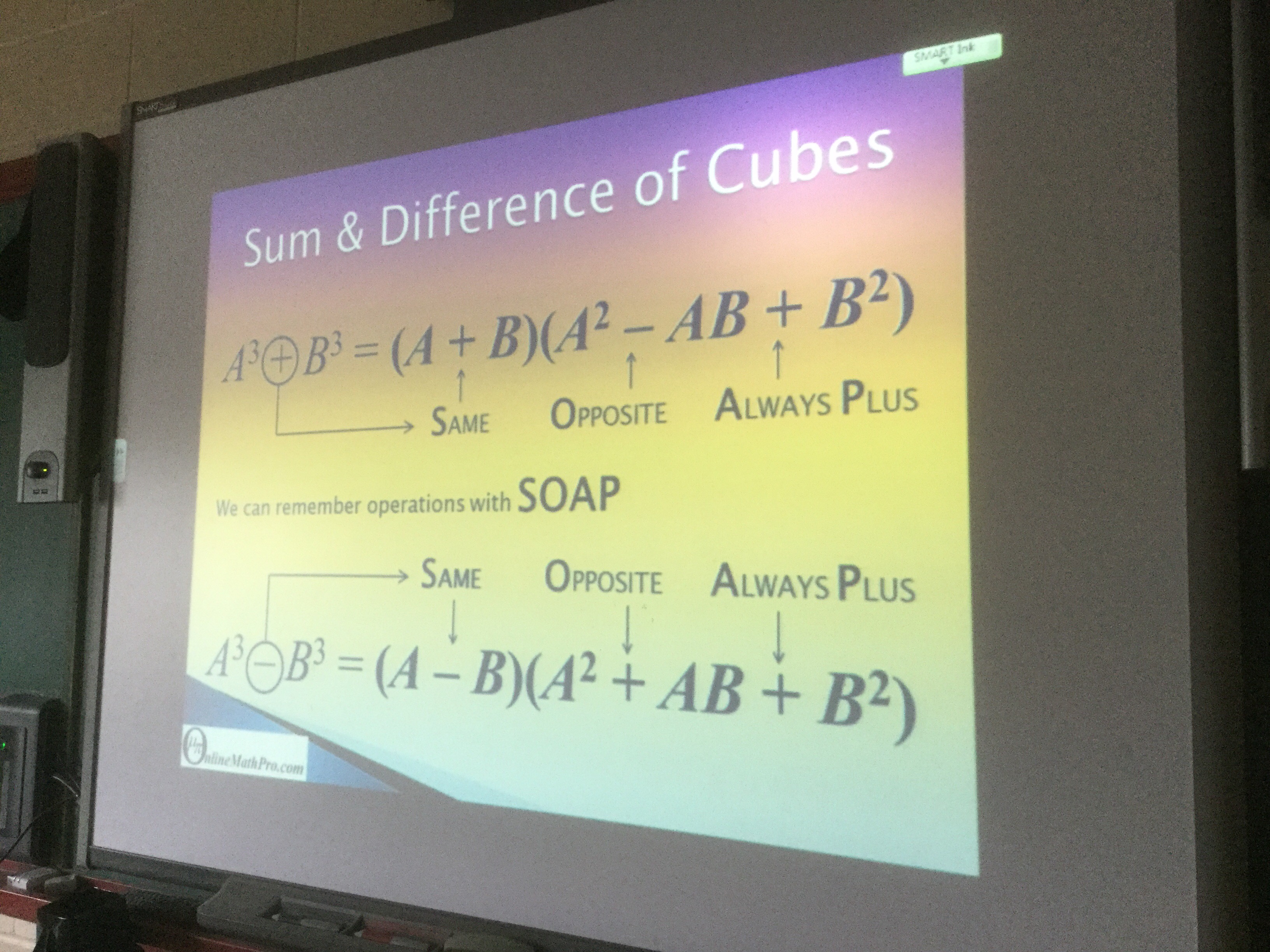
This was a reference from the wonderful song we heard the day before. Sometimes these catchy math songs can help us remember strategies and patterns.
Making plans for our portfolio submission
 Grade 9s are working on portfolio submission #2 all about surface area, perimeter, and volume, and understanding the connection between the algebraic and geometric view of exponents. We looked today at the important parts of their prompt, and how to be sure all parts get answered in their writing.
 Ms. Bearse's Site