Grade 10: graphing lines
Today in grade 10 we reviewed how to graph lines using their equations. We used desmos to help us visualize what the “m” and “b” values affect in the equation y=mx+b.
We then worked on a marble slides desmos task at student.desmos.com.

We had fun making the lines go in the right spots to catch the stars.

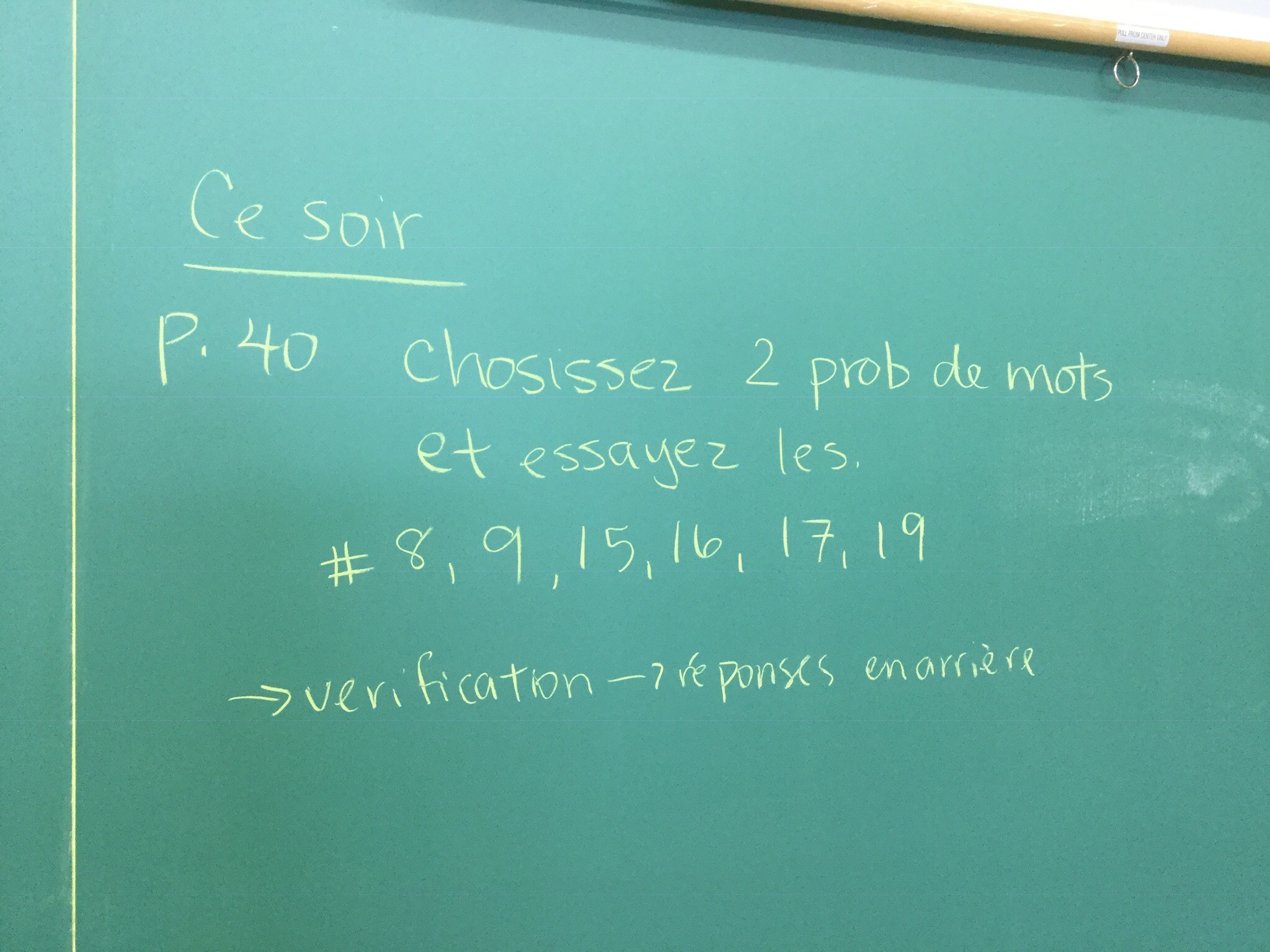
Finish up the marble slides for homework tonight grade 10s.
Grade 12: modelling
We looked at a pattern from visualpatterns.org and were given the task to take something from the pattern and model it.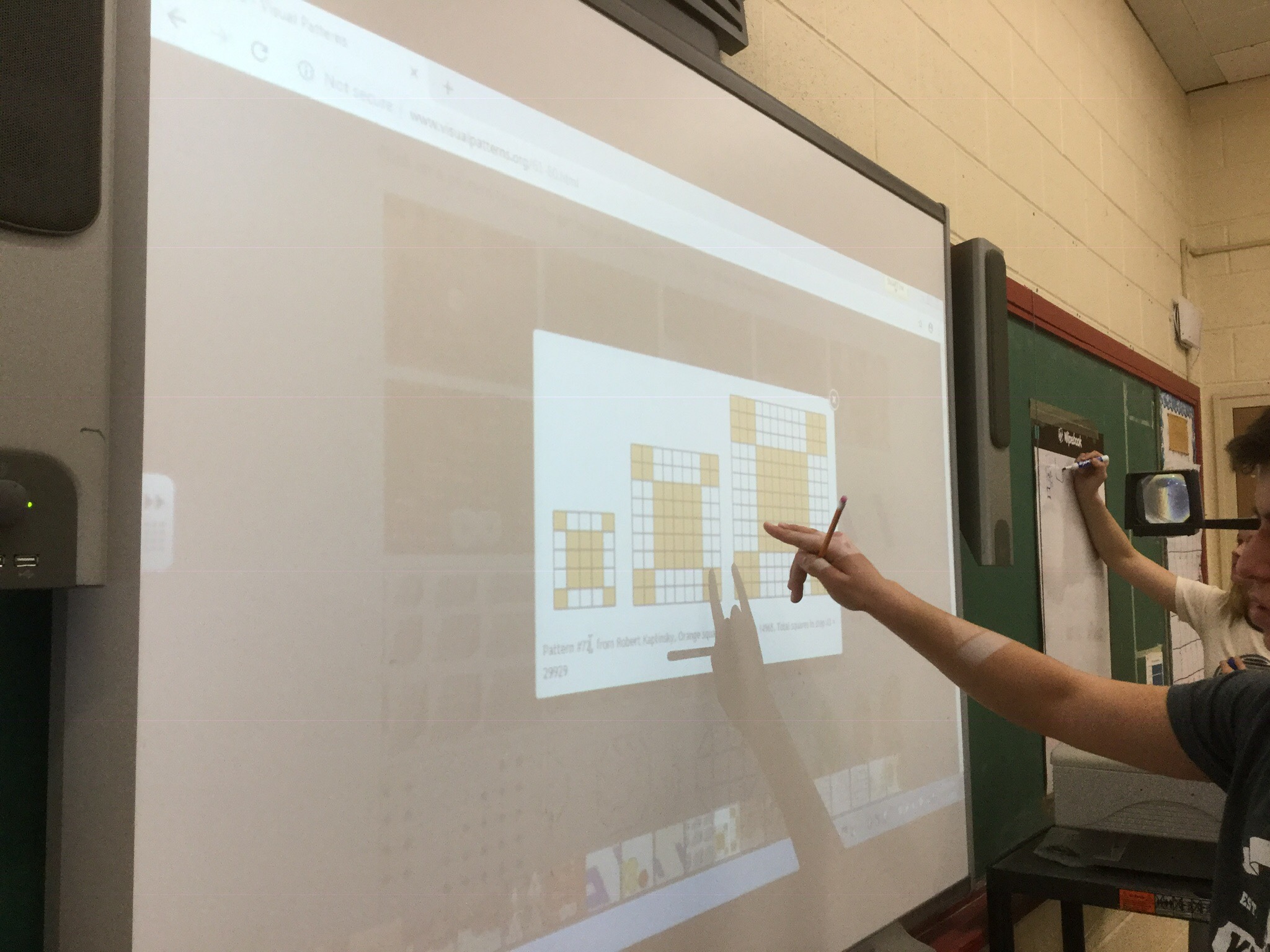
Some groups drew pictures, and used them to make equations (algebraic models)
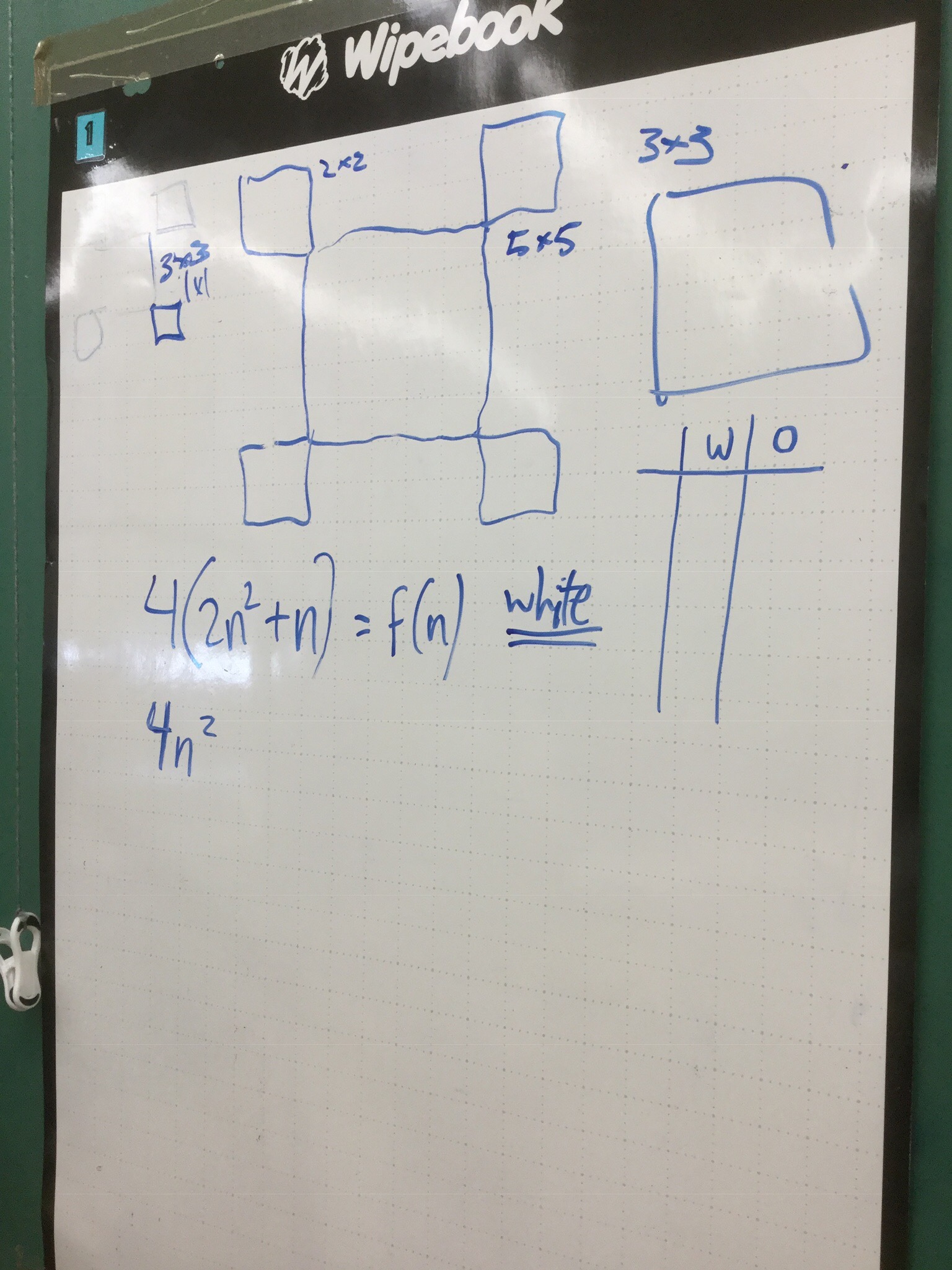
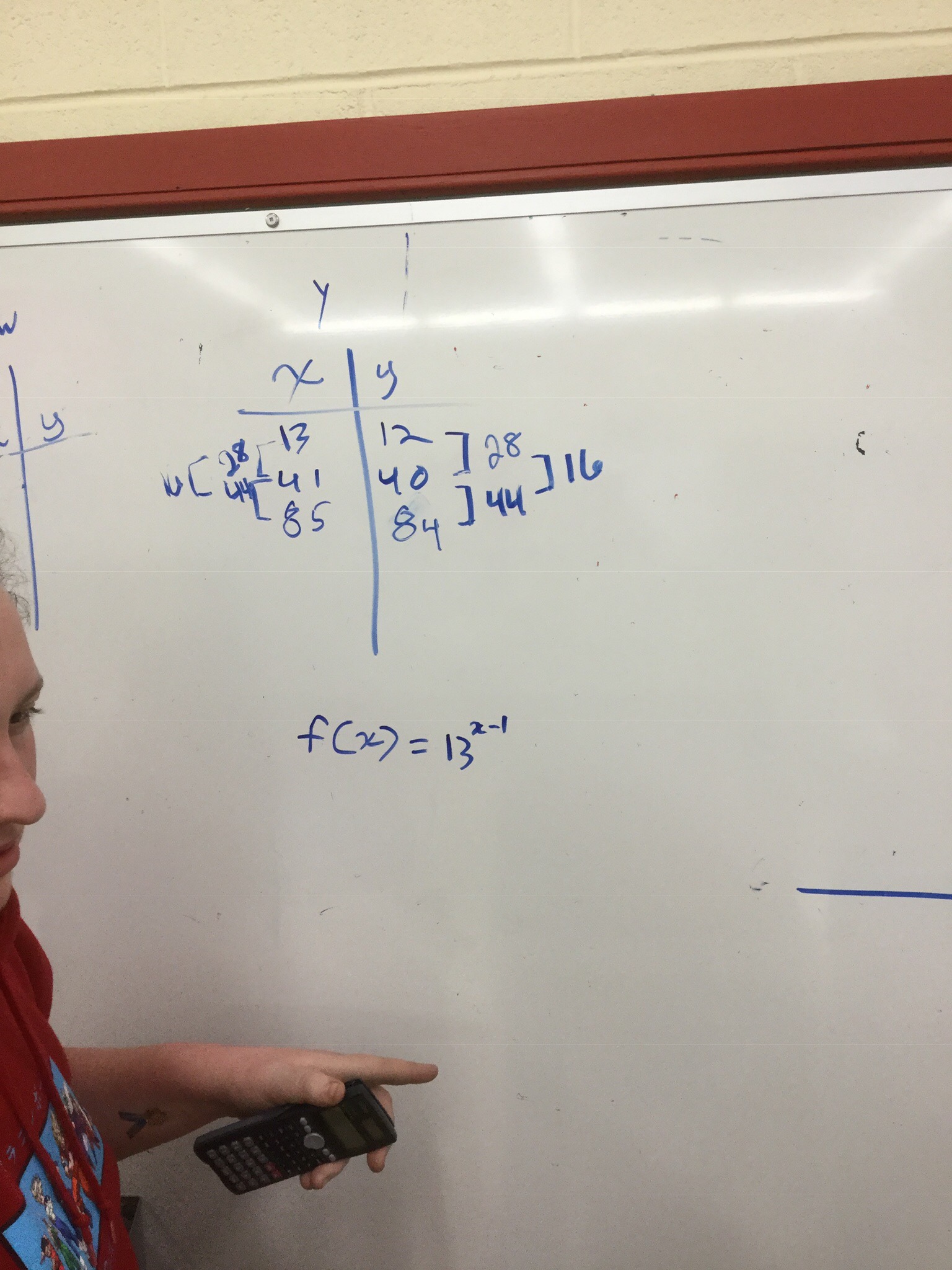
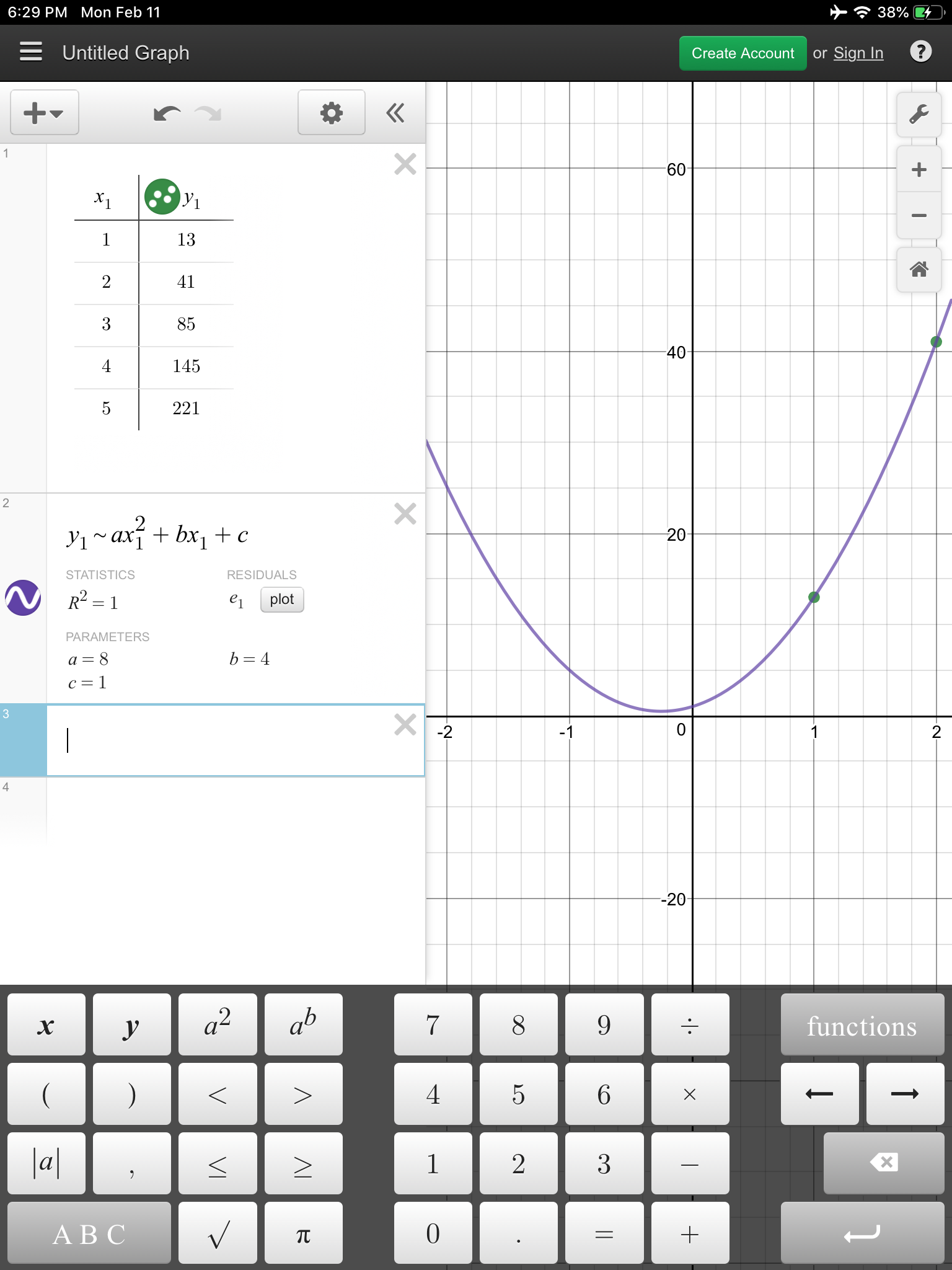
Some groups made tables and looked at the patterns in the numbers. This is a numerical model. We are noticing that the second differences are constant, so that tells us it is a quadratic that we are dealing with.
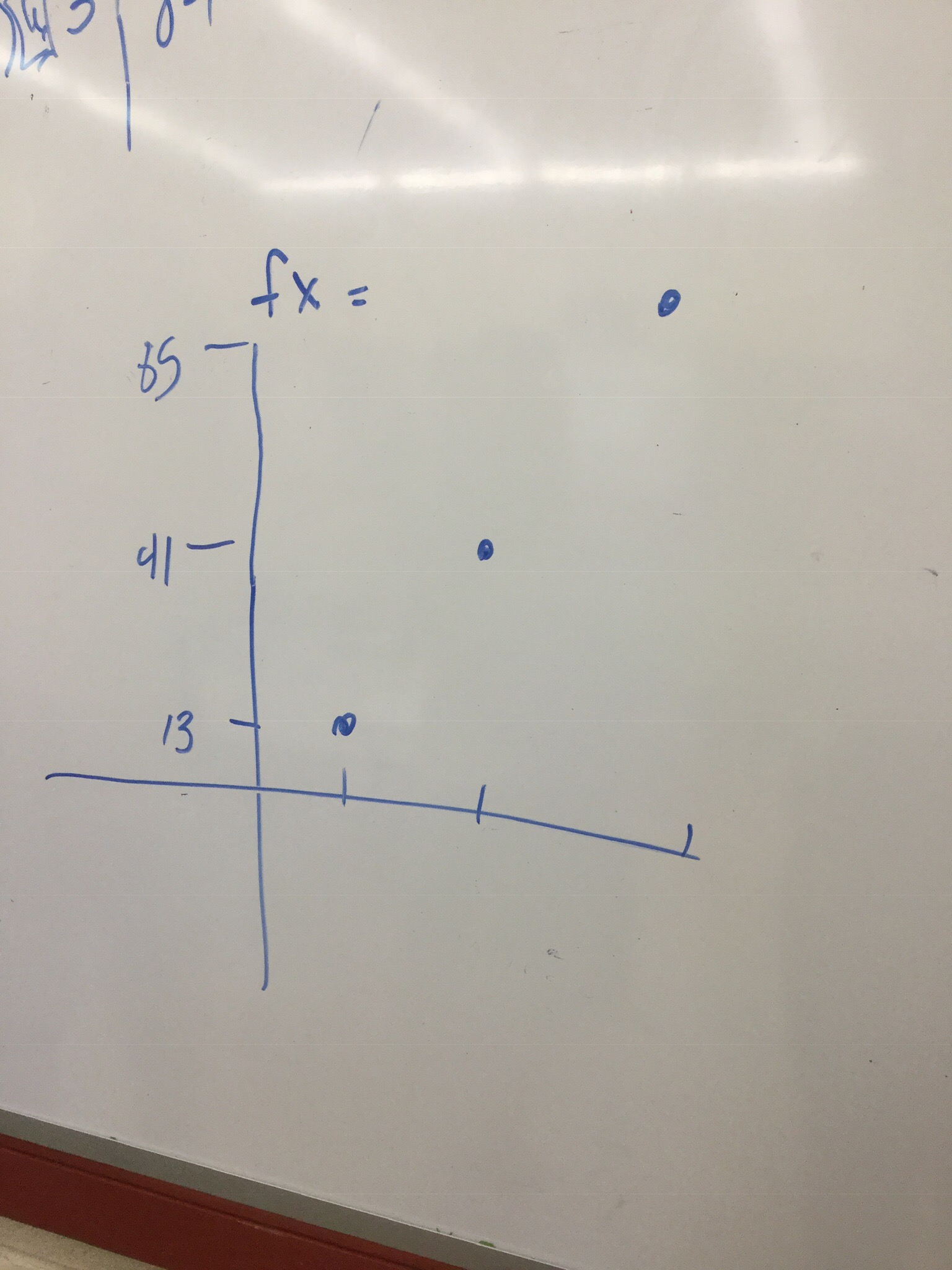
Groups started using graphical models as well.
We looked at making a table on desmos and using regression to get an equation. We also explored what the vertex form would look like f(x)=8(x+0.25)^2+0.5, since the vertex is (-0.25,0.5).
We talked a bit about the definitions of functions, and how they pass a vertical line test. We looked at mapping diagrams, and talked about domain and range. We also introduced absolute value functions and how to graph them and represent them on a number line.
Grade 9: taco cart
Today we looked at the taco cart problem. We noticed the information given in the video, and asked questions about what information was missing, or what problems we could solve.

We had some discussion about the relationship between the hypotenuse and the legs (perpendicular triangle sides), and remembered that the pythagorean theorem is going to be helpful.
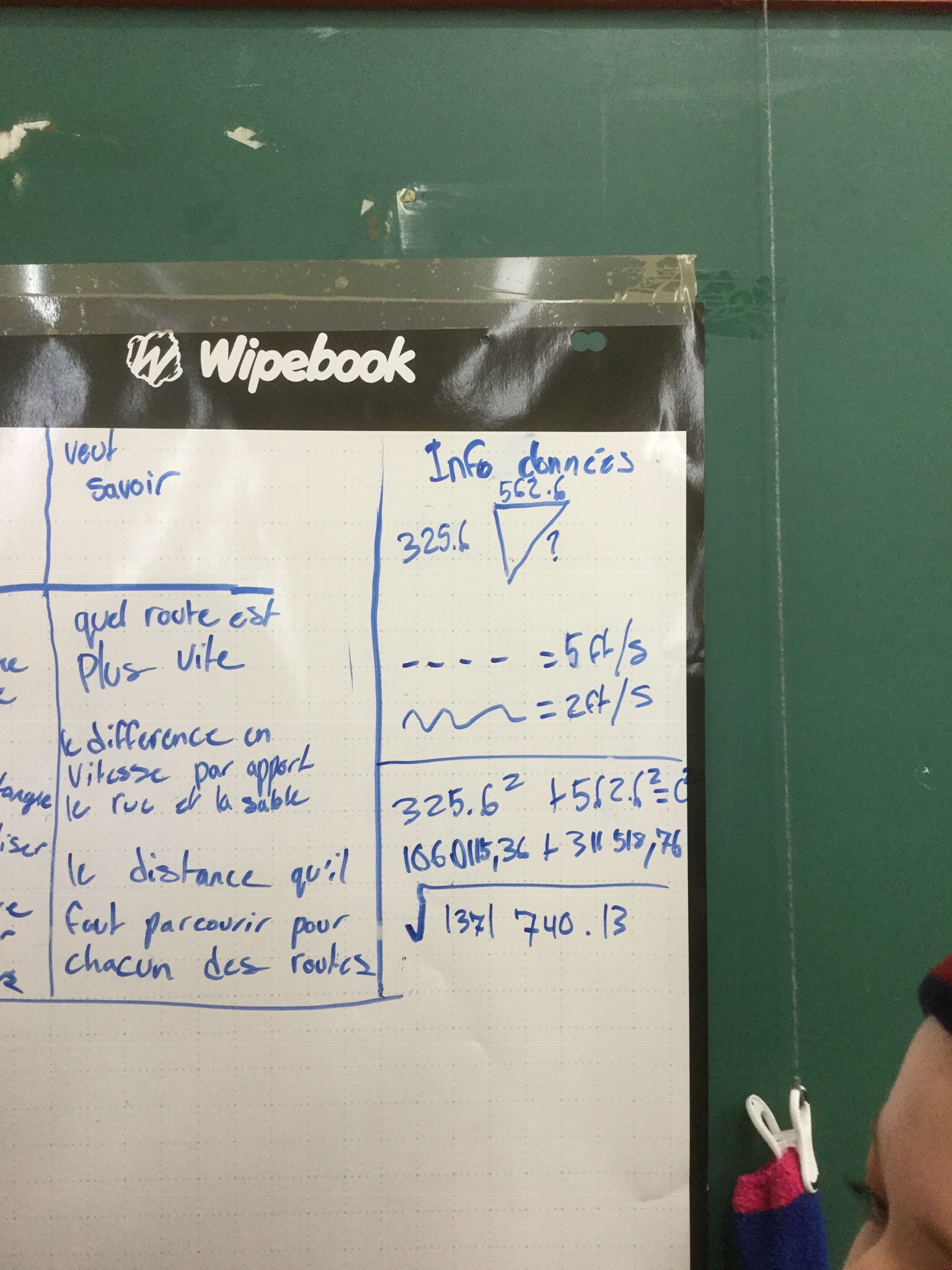
We had to incorporate different walking speeds, and ratios were a good way to approach it.
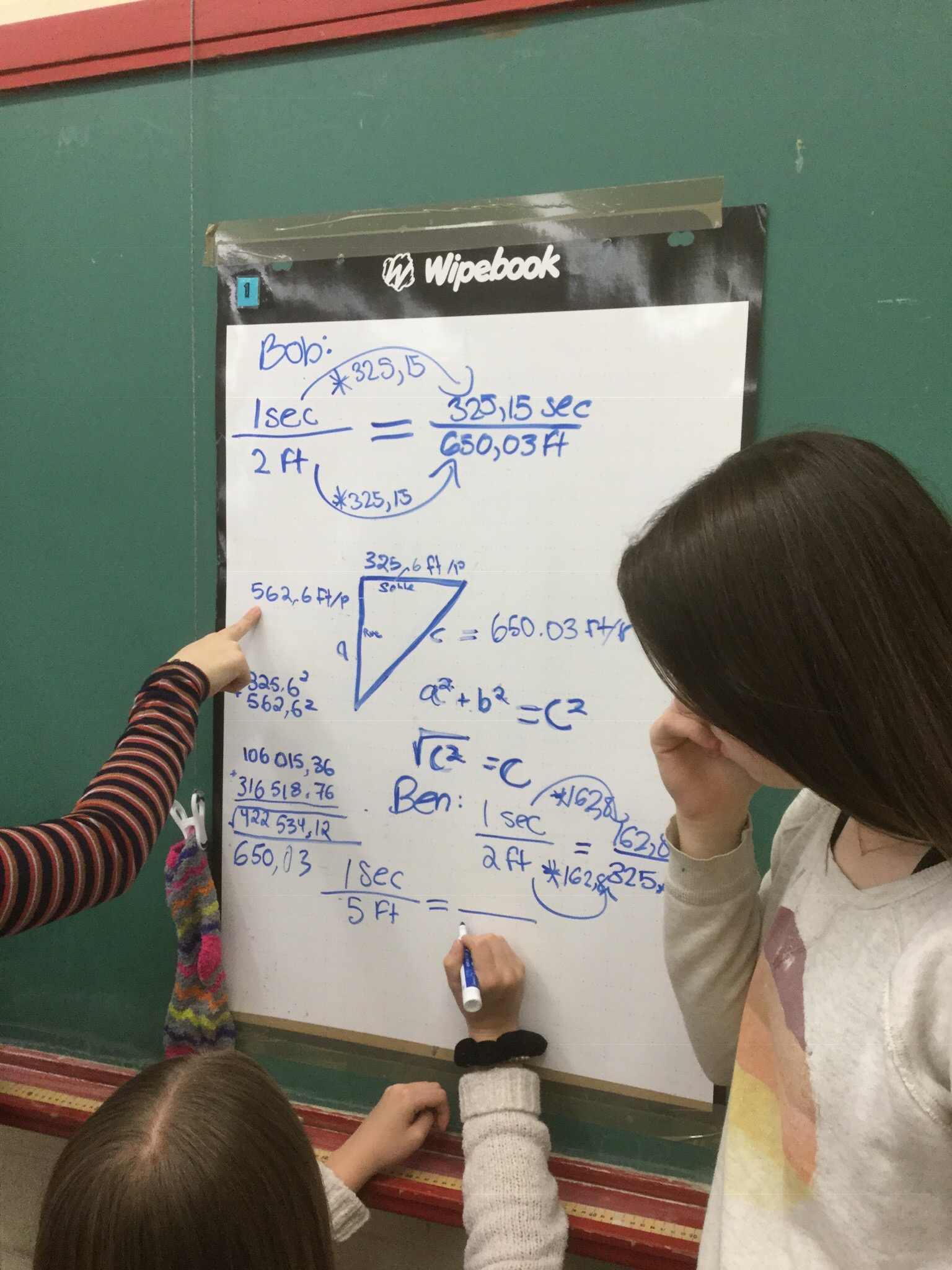
We figured out answers in the end, and had a look at the final video to confirm our calculations. Some of us made errors along the way, and we learned lots from these errors.
Good work today!
Grade 12 getting up to speed
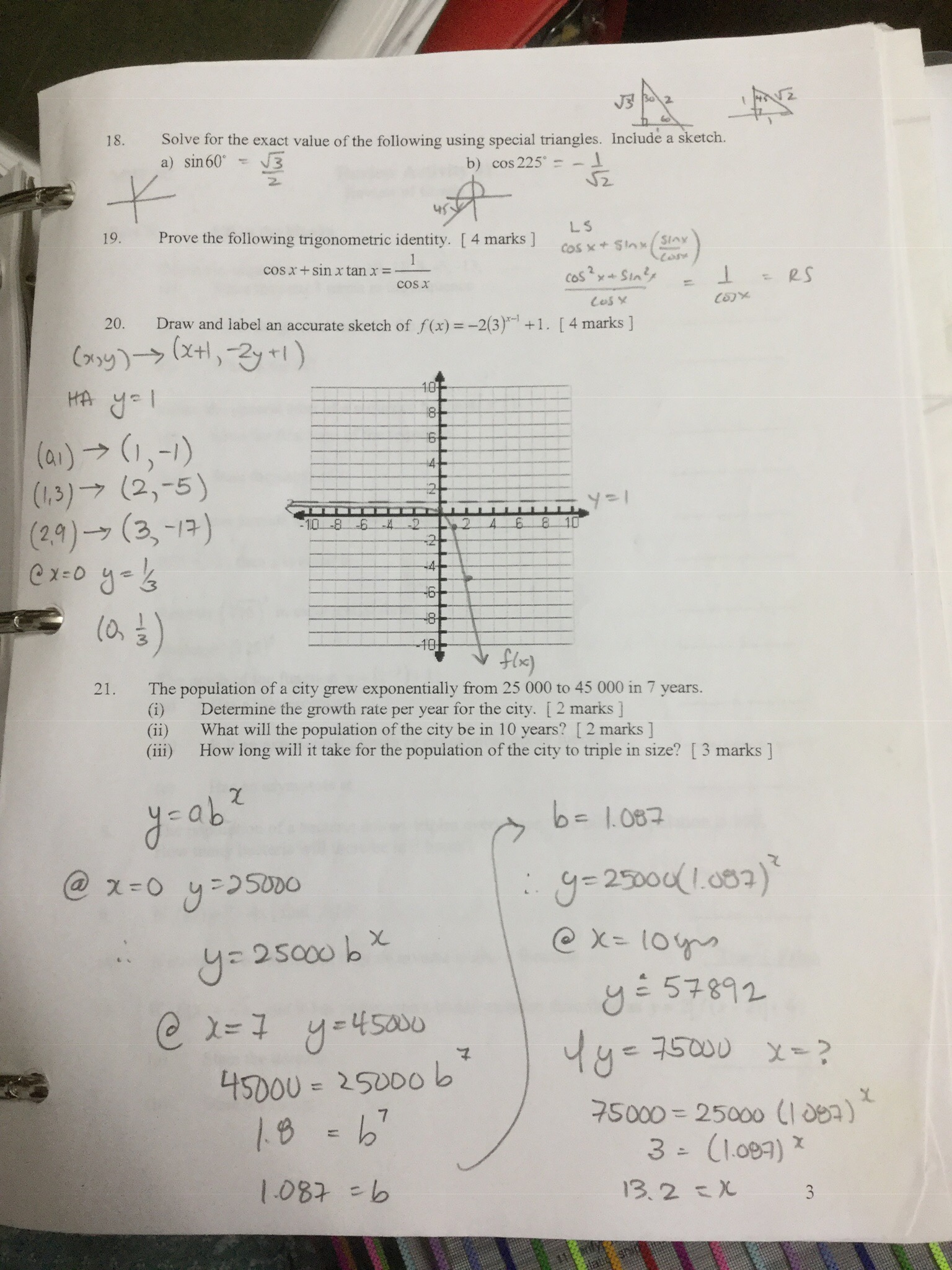
We worked through some review questions today in teams to get ourselves back in the swing of things. We will be working with many types of functions, and using very specific terminology. (So much was going on, not many photos were taken!)
Working in teams we can rely on each other for help, and can provide each other with different strategies to tackle problems. We sketched graphs, used tables of values, solved equations, drew diagrams, discussed what various parts of equations did to transform functions. Here are the answers to the worksheet.


Solving Systems in Grade 10
In grade 10 we worked on modelling word problems with equations, and solving two equations.
We started with the case of 8 apples and 3 oranges costing 12$, and 6 apples and 3 oranges costing 10.50$. We recognized that since in both situations the numbers of oranges is the same, that the price difference comes from the difference in apples.
2 apples account for a difference in price of 1.50$ which means that each apple costs 0.75$. We can then find the price of the oranges by using an equation.
6(0.75)+3(orange price)=10.50
3+3(orange price)=10.50
Subtract 3 from both sides
3(orange price)=7.50
Divide by 3
Orange price=2.50
Our next problem involved the mass of calculators and textbooks.
5 calculators and 2 books have a mass of 5kg
10 calculators and 1 book have a mass of 6kg.
The first step is to create a situation like with the apples and oranges (we want something the same between the 2 equations). We can double all quantities in the first equation to help.

Not all solution methods look the same, and that’s ok. We need to be sure we show what we are doing in a way others can follow it.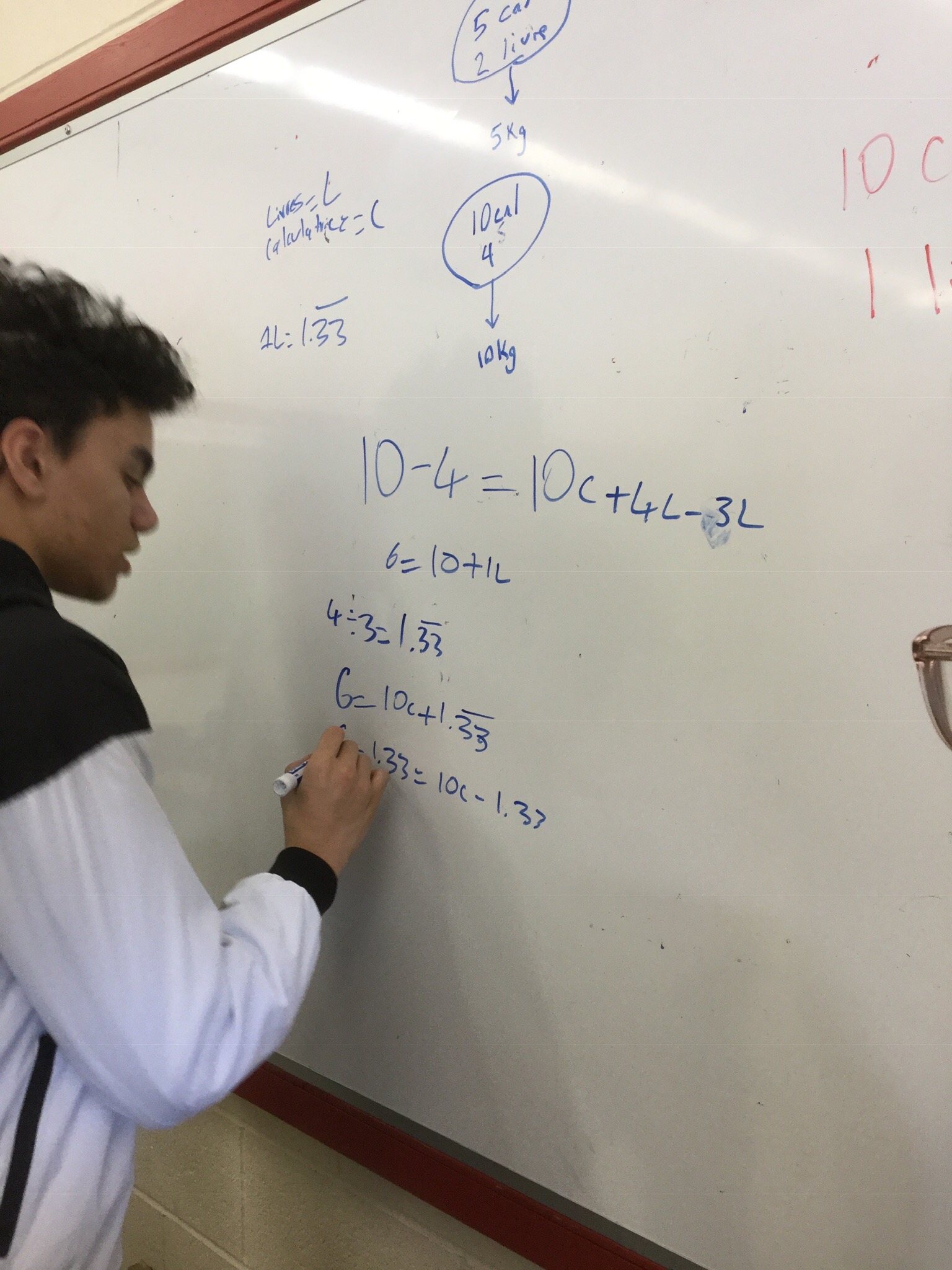
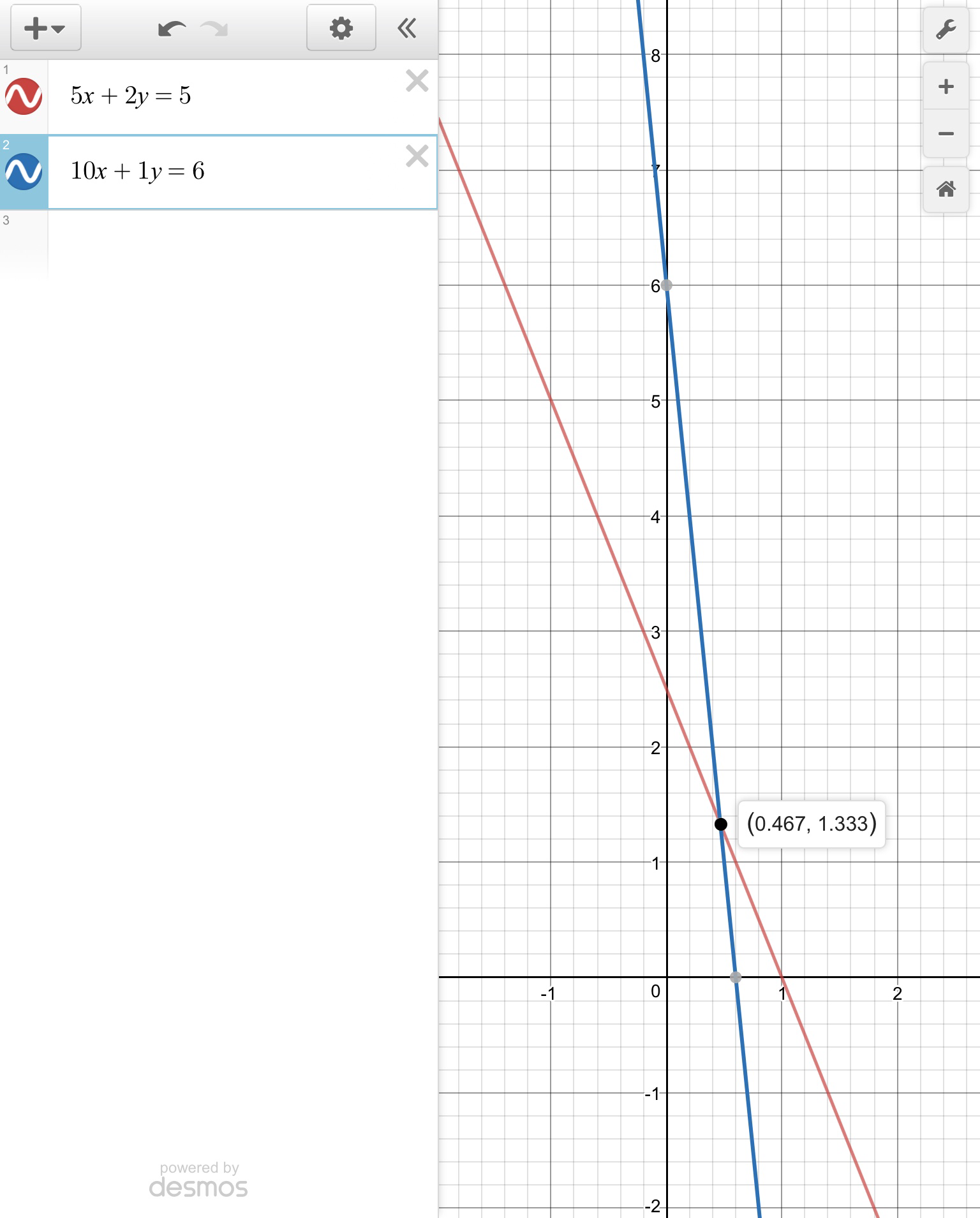
We tended to use algebra as our solving method. We can also solve quickly using desmos to graph the equations. The intersection point is the solution! Calculators have a mass of 0.467 kg and books have a mass of 1.33kg.
We finished with the same question that was tricky at the end of last class.
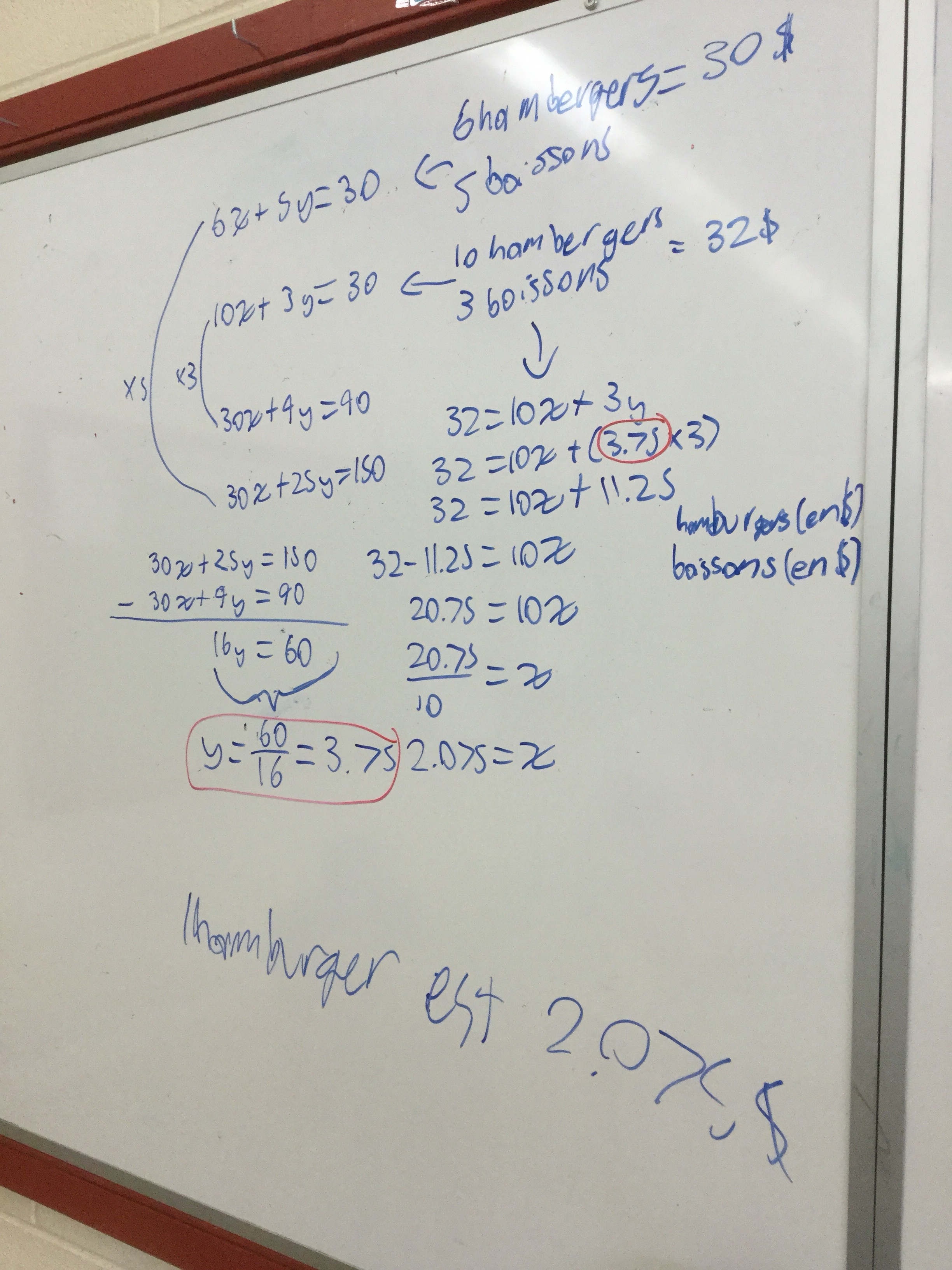
This solution method is called solving by elimination.
Teamwork in grade 9
Our task was to circle all the numbers from 1-100 in order.
It took a really long time working individually.

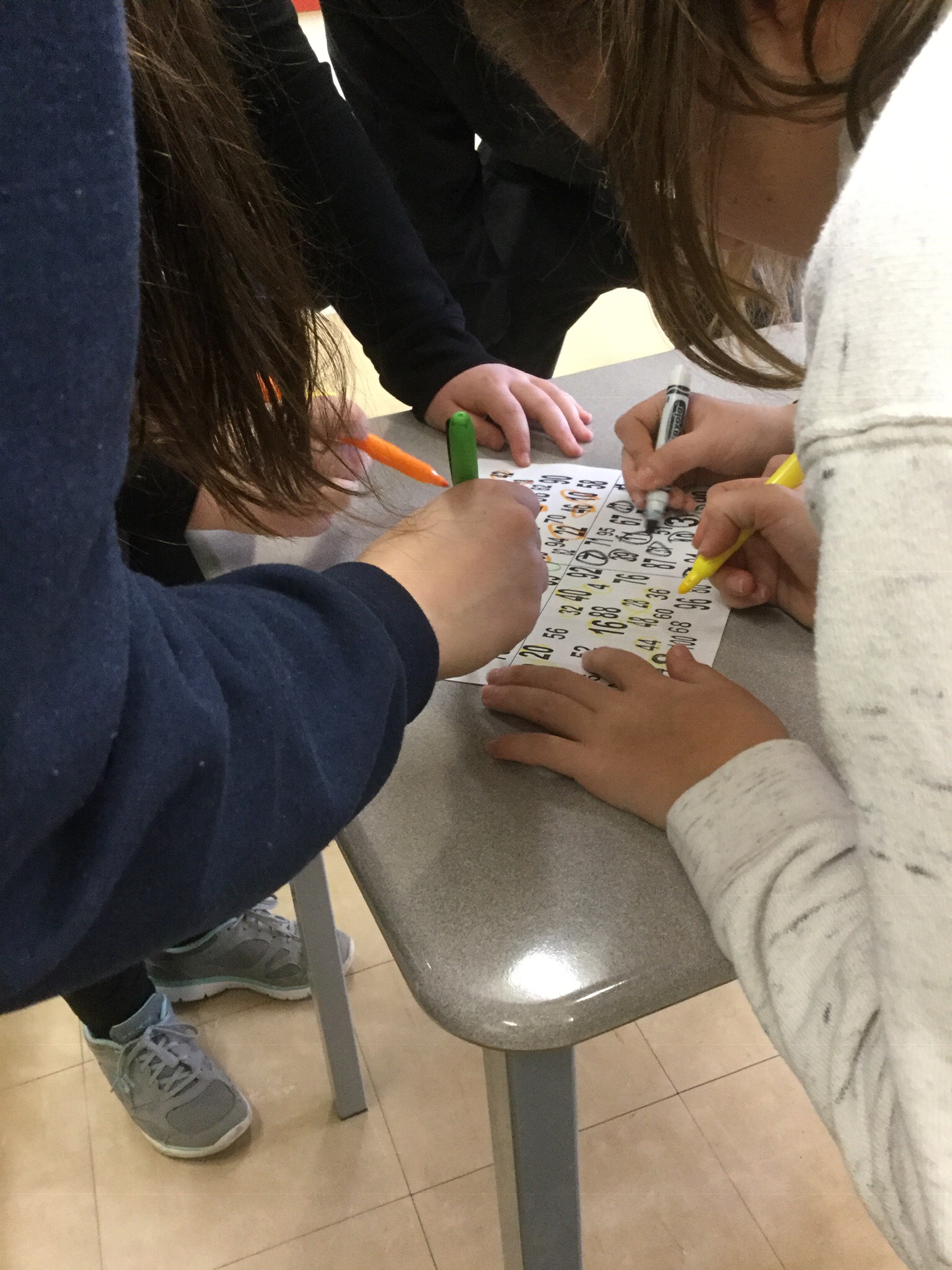
We tried the same activity in groups next. We had groups of 5 and also 4.
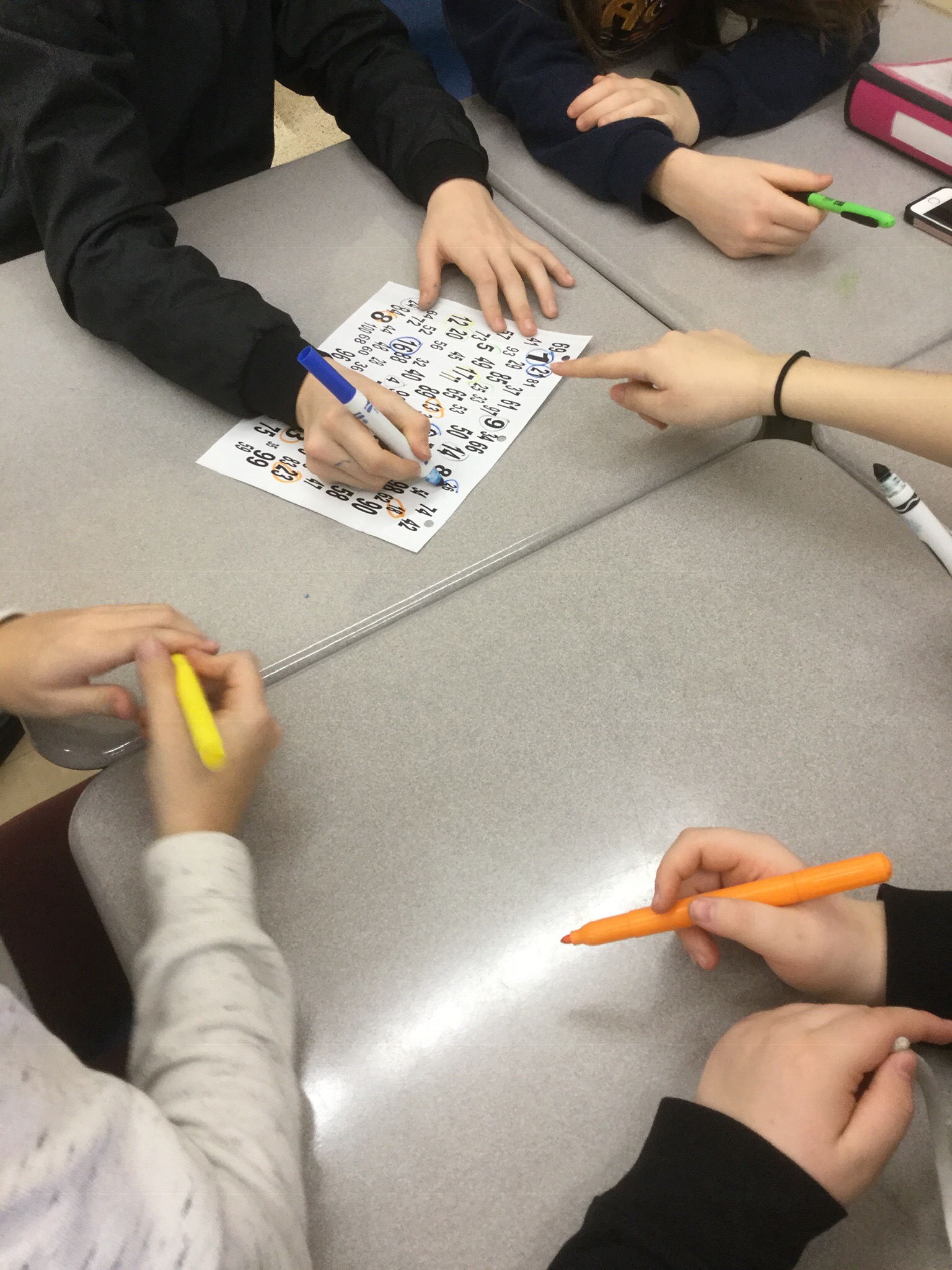
We noticed that if 4 were in the group, a pattern emerged.

Once we saw the pattern, we could make a better plan or strategy to approach the task. Some groups found that standing up helped.
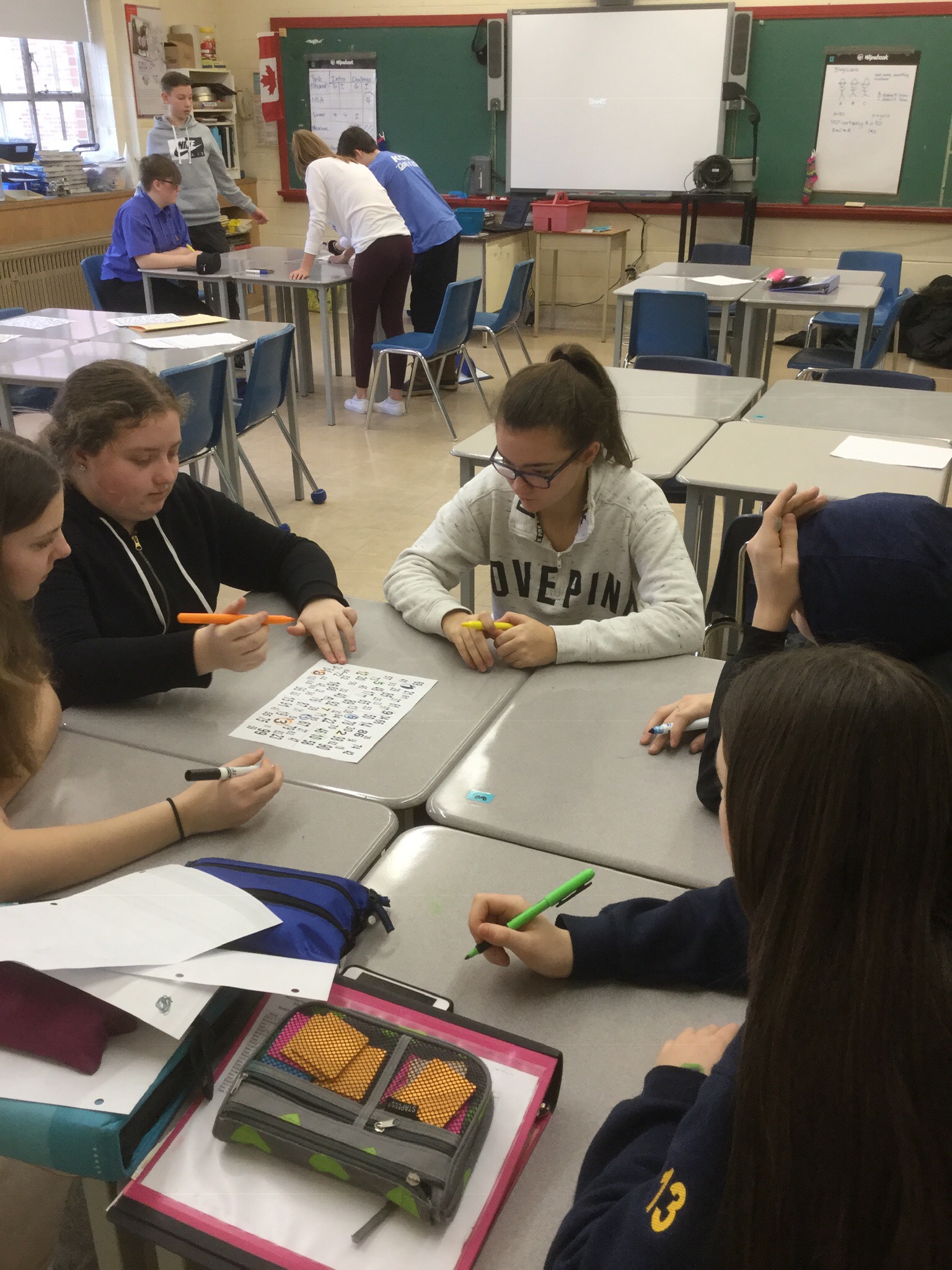
We rearranged ourselves and furniture, and made our process more efficient. We can do that sometimes with practice.

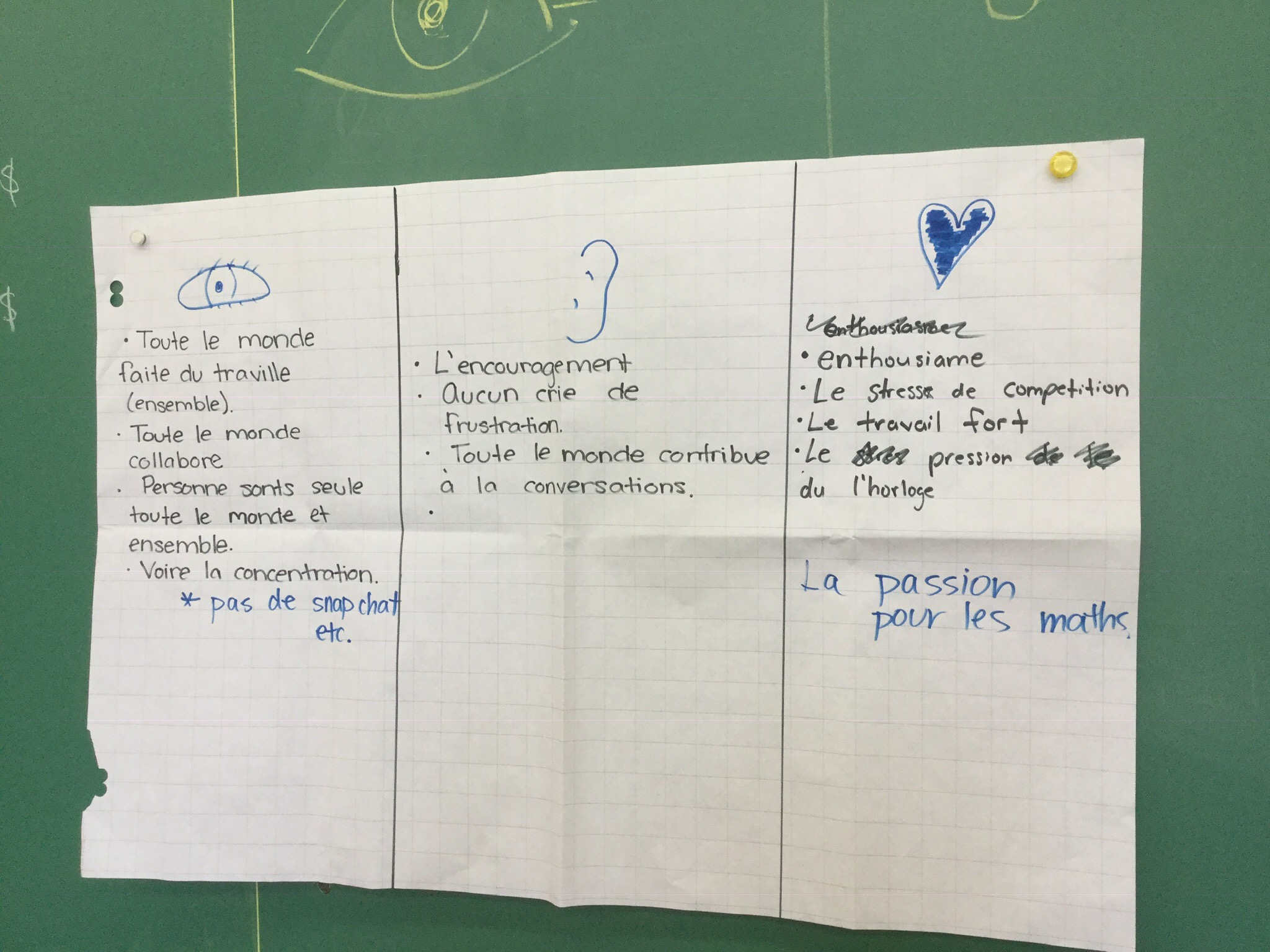
We did a brainstorm about what good collaboration looks like, sounds like, and feels like.

Day 3
 We’re off to an interesting start of the semester. Stay safe and warm everyone.
Day 2

Grade 12s Logic Puzzle
Our class today helped us get into the swing of things in a thinking classroom. We were in random groups, up at the board, tackling a challenging problem.
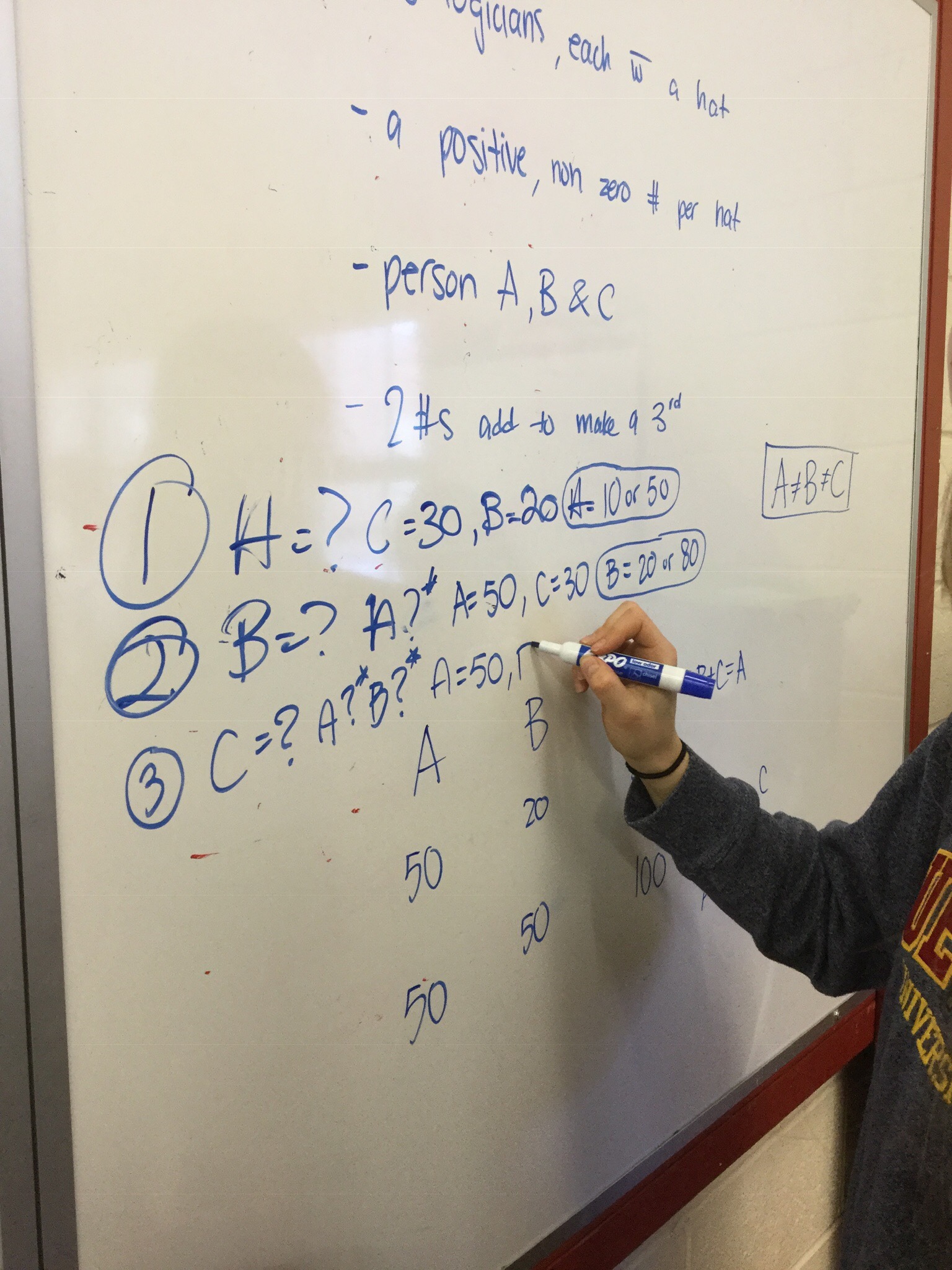
3 logicians (honest people with perfect logic) each have a hat. On each hat is a number. The numbers are positive (non zero) integers. 2 of the numbers add up to the 3rd, and each of the people know this. Person A looks at person B and C and says “I do not know my number”. Person B looks at person A and C and says “I do not know my number”. Person C looks at person A and B and says “I do not know my number”. After hearing this, person A says “I know my number is 50”. Our goal is to determine the numbers that B and C are wearing.

We wrote our ideas, and tried to get a handle on what we know and what we don’t know.
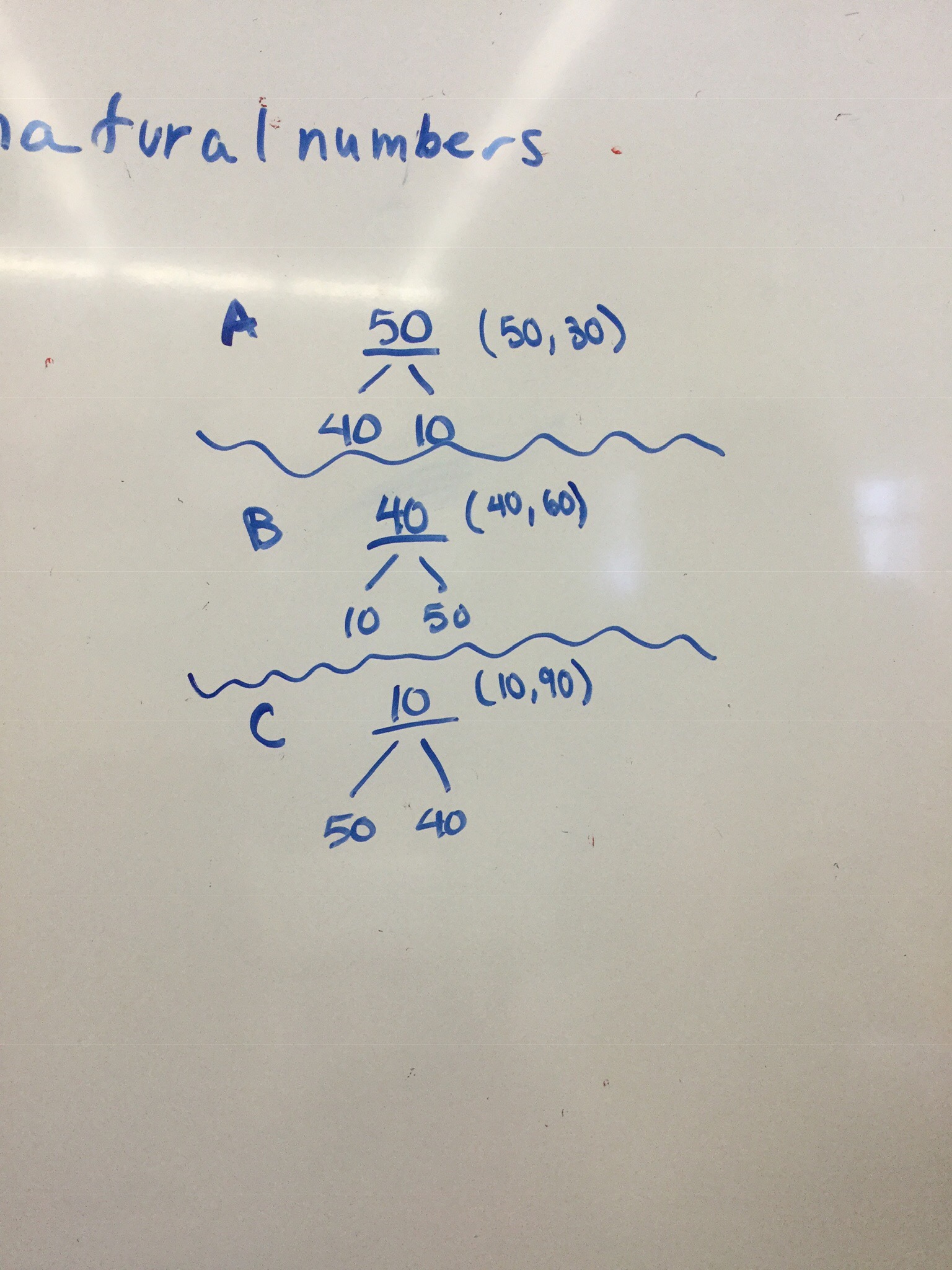
We looked at ways to represent relationships between numbers and options. We used diagrams and drawings and equations
We came across a promising strategy, and followed it through to see if it works.
We ended off by justifying our work to classmates by acting out the possible scenarios.
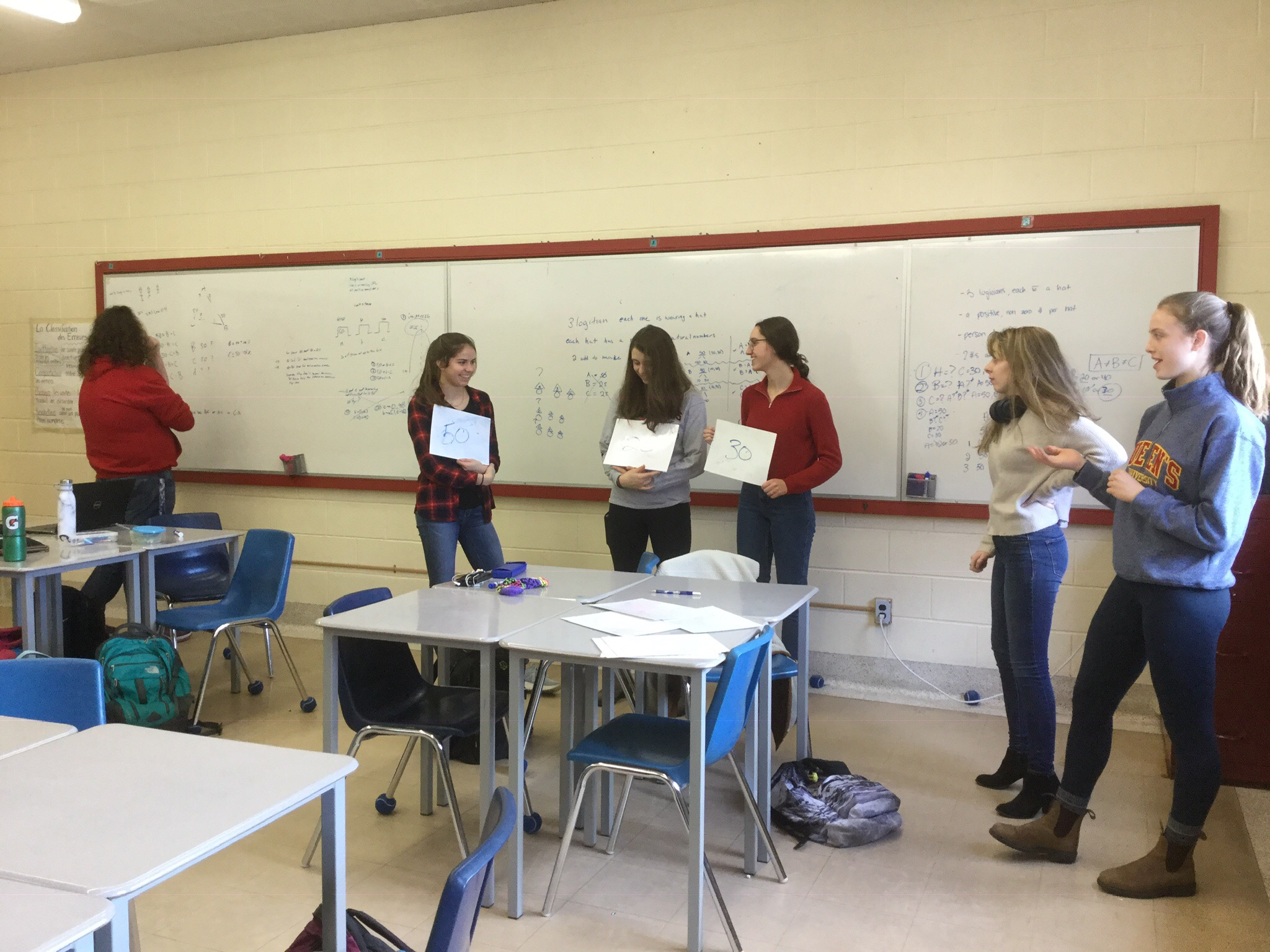
The question and solution are not straightforward. Even when we walked through them a few times we really needed to engage our reasoning skills.
It was not always a comfortable feeling to have a problem we were challenged by. We relied on each other, we looked at what other groups were doing, we tried a few different strategies, and even then the solution seemed so close you could almost touch it. We experienced struggle today. We will experience struggle often, in math and in life, and it’s good to recognize that many positive things can come about after struggling and investing time and effort.
Good work today!
Gr. 10 Quel côté gagnera?

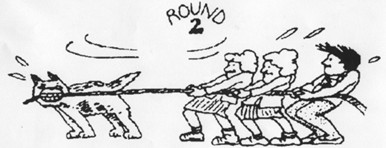
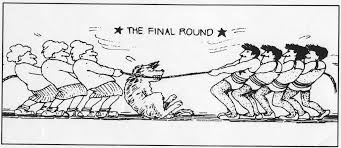
Grade 10s explored this problem today. In Round 1 and 2 the tug of war is a draw (nobody wins). The question is to determine who will win the final round, and to justify it sufficiently.
Many groups created equations and introduced variables, and solved the equations to determine which side would win.

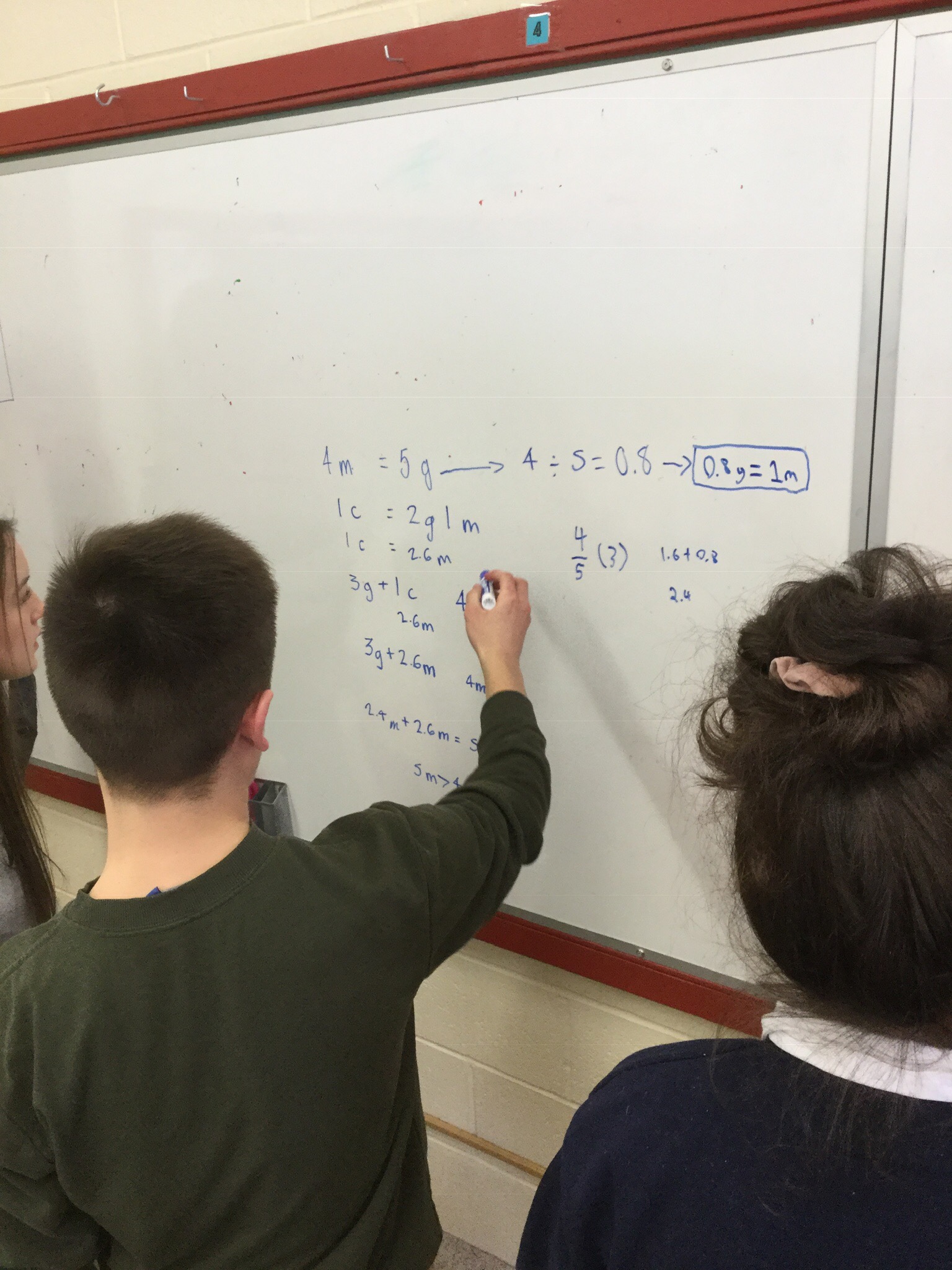
We are using ideas of ratios and fractions and decimals, and showing important information in boxes.
We’re working towards clear communication, and solid justification of our answers.
We ended up with a different question.
6 hamburgers and 5 drinks cost $30
10 hamburgers and 3 drinks cost $32
Determine the price of a hamburger.
 Ms. Bearse's Site