Desmos Geometry
Les 9e explorent Desmos géométrie. Nous allons créer les polygones, trouver les points milieux, mésurer les angles et les longueurs, et verifier les conjectures.
Period B:
“Explore” p.395 méthode 2
P.398#1-9
Assemblé pour les classes d’immersion
Period C:
“Explore” p.395 méthode 2
P.398#1-9
“Explore” p.402 and “exemple 1” p.403
P.405#1-6
Chers parents
Les 9e, dans le courriel cette semaine, prenez un moment pour réfléchir à propos de vos habilités d’apprentissage que vous avez demontré depuis septembre. Voici une grille d’évaluation pour vous guider.
Responsibilité
Organisation
Collaboration
Travail indépendante
Initiative
Régulation de soi même
Donnez vous même un niveau (1-4) avec la justification et aussi créez un but pour chaque un pour le 2e moitié du semestre.
Attachez aussi votre tâche, pour que vos parents puissent le voir.
Factoring Trinomials 2.0
Grade 10s branched out to work on factoring trinomials with a leading coefficient (a value) that is not 1.
We did it with algebra tiles, which can be very quick, and we also worked on an algorithm to separate the middle term into 2 terms, and then factoring by grouping.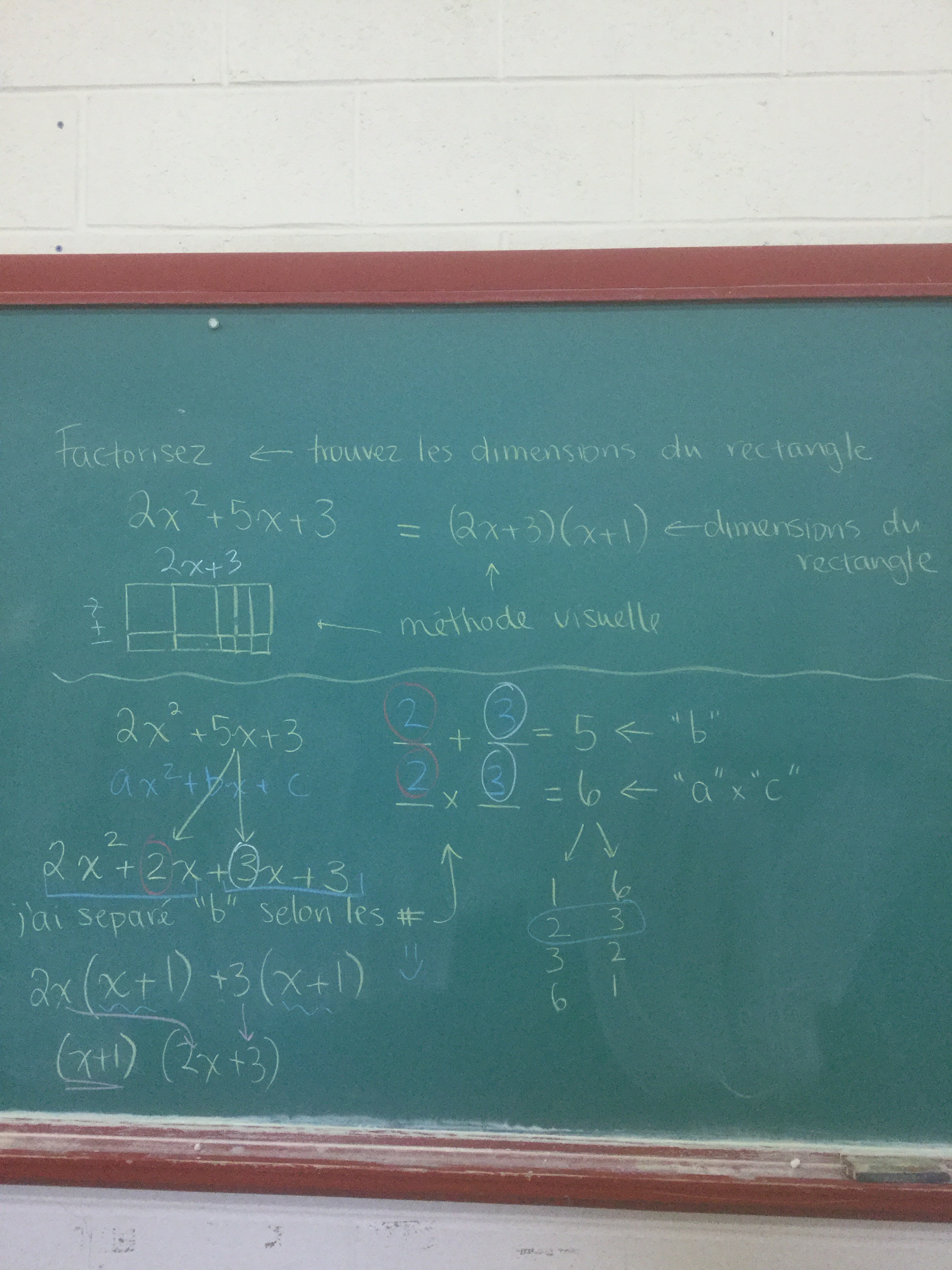
All the angles
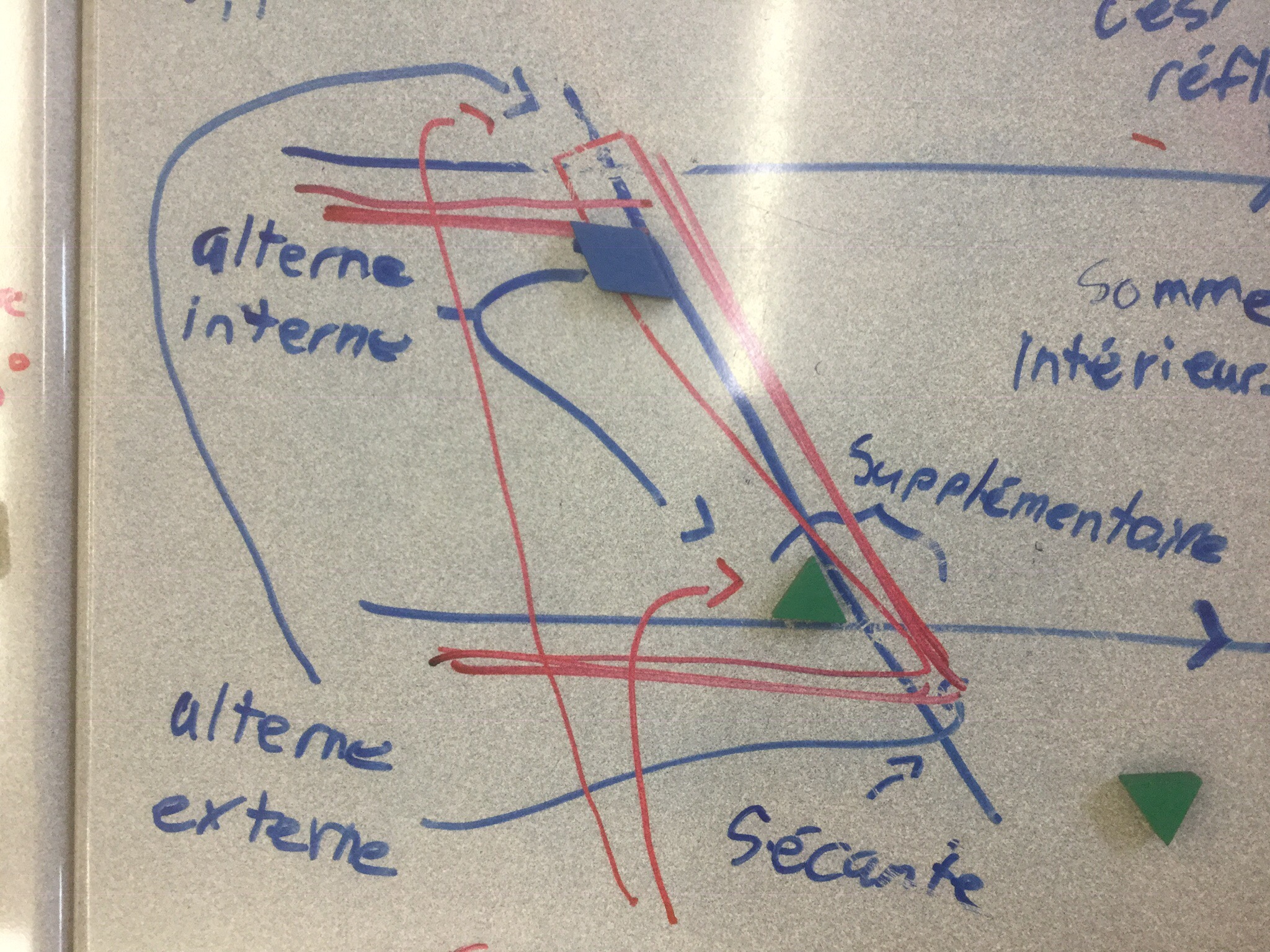
 We worked in stations today in grade 9 to solve some angle problems from the past EQAO tests. We are looking for triangles, quadrilaterals, polygons, interior and exterior angles, supplementary angles, and transversals (sécantes) through parallel lines with corresponding, alternate interior, and opposite angles.
Linking equations to graphs of parabolas
How are these two connected?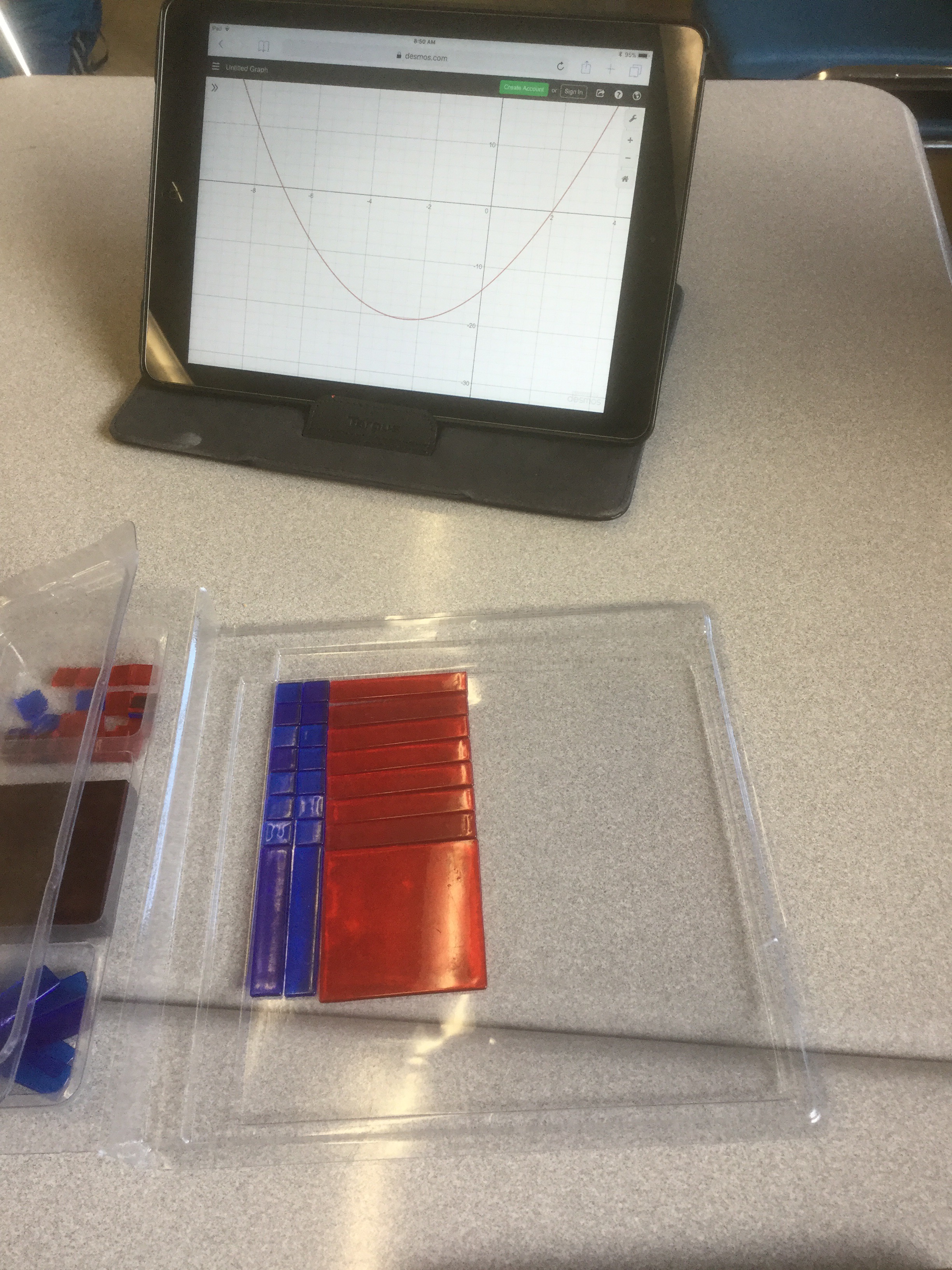
We are using algebra tiles to visualize polynomials and factor them (make them into rectangles and the dimensions are the factors), and then relating that to the graph.
Here’s the example we worked through together

We notice that the dimensions of the rectangle are related to the roots (x intercepts/zeros) of the parabola. We know that the axis of symmetry is at the midpoint of the roots (and we know how to calculate midpoints!) if we sub in the axis of symmetry for x, we can calculate the y value of the vertex. We see that the constant is the y intercept (ordonnée à l’origine).
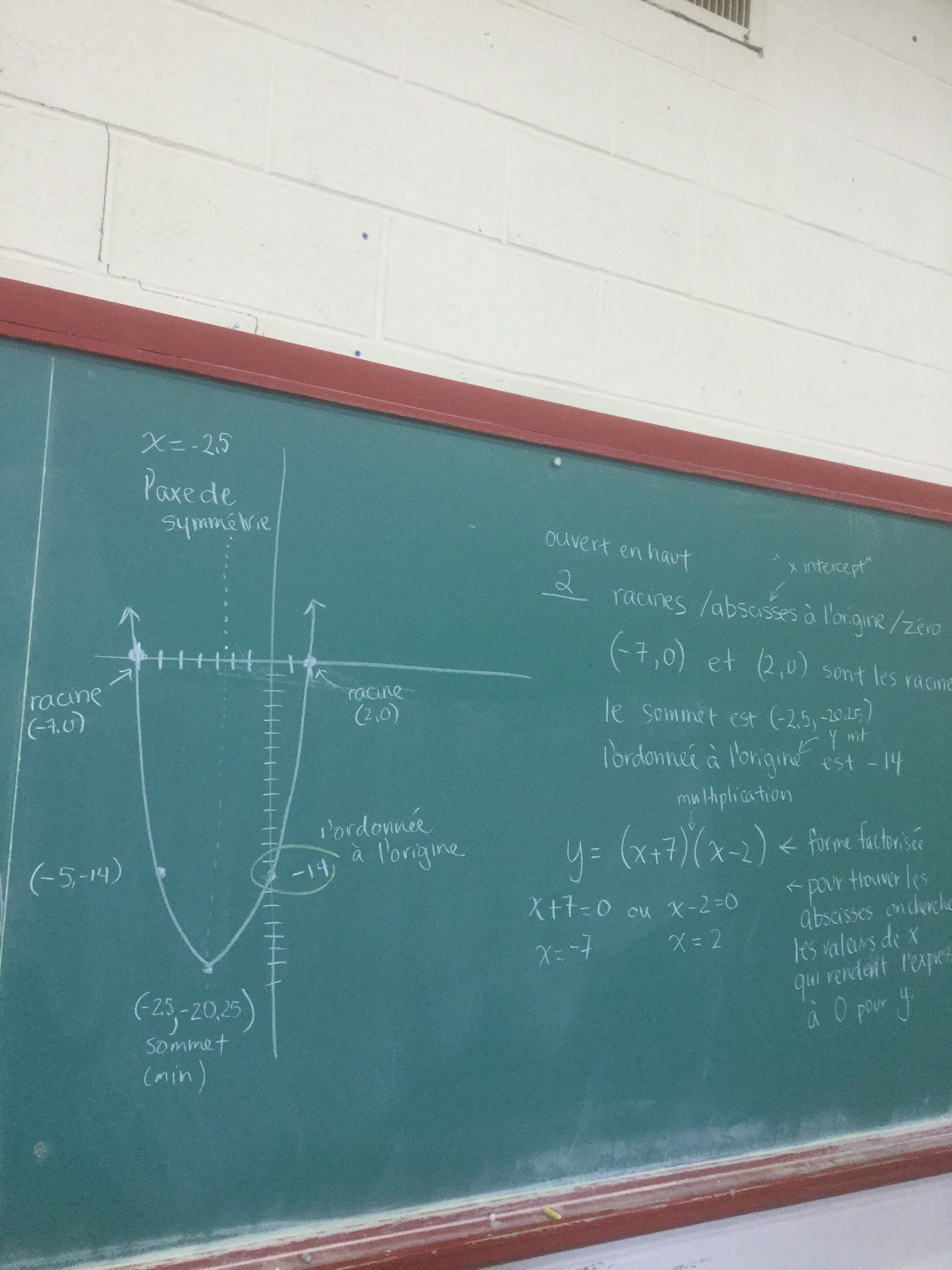
To figure out the roots, we look at factored form y=(x+7)(x-2) in order to find where the graph crosses the x axis, we need to make “y” be 0, since on the x axis the y value is always 0. For the result of a multiplication to be 0, on of the two things multiplied together MUST be 0 too. We have 2 options, either (x+7) is 0…so x=-7 or (x-2) is 0…so x=2. Those two values correspond to where the parabola passes the x axis.
Graphing Pumpkin Data
We looked at our data today. We used google sheets because of how easy it is to insert formulae into cells to calculate more things from our data.


We noticed one data point for circumference was really off, graphically it was separated from the others. We learned the vocabulary for outlier (valeur abbérante)
Our graph showed a weak negative correlation for circumference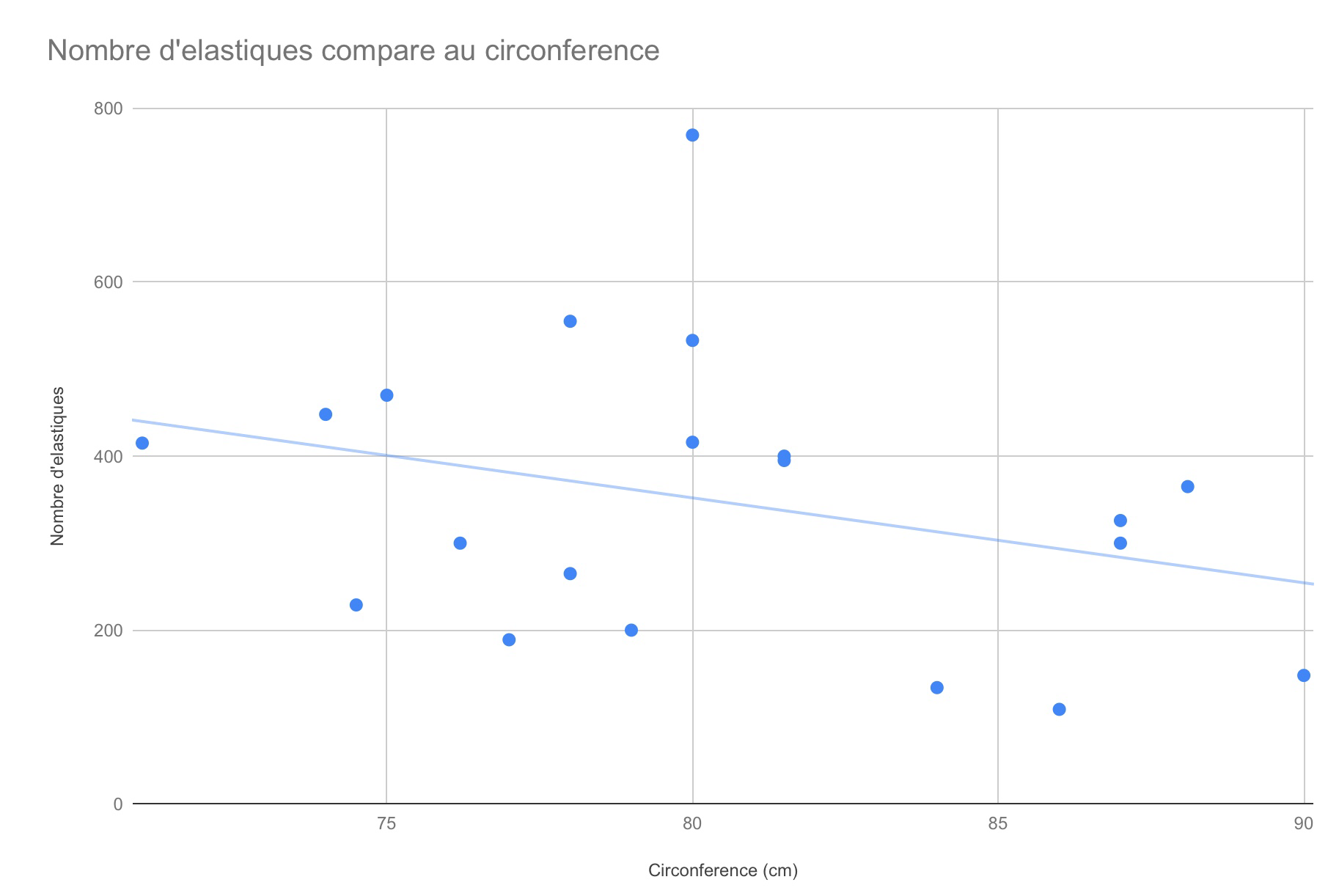
The graph with thickness showed a weak positive trend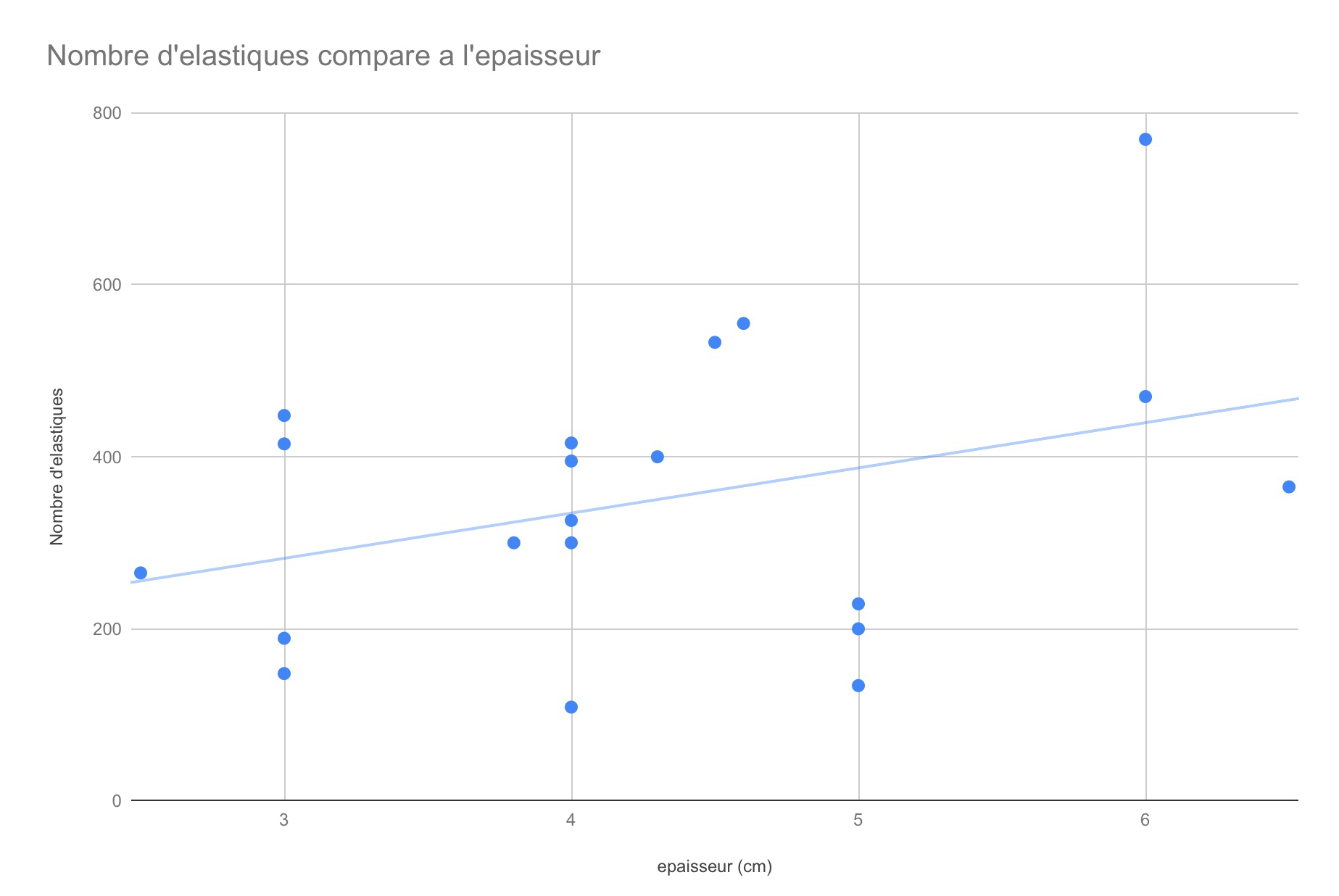
And there was no real trend visible with the height of the pumpkin.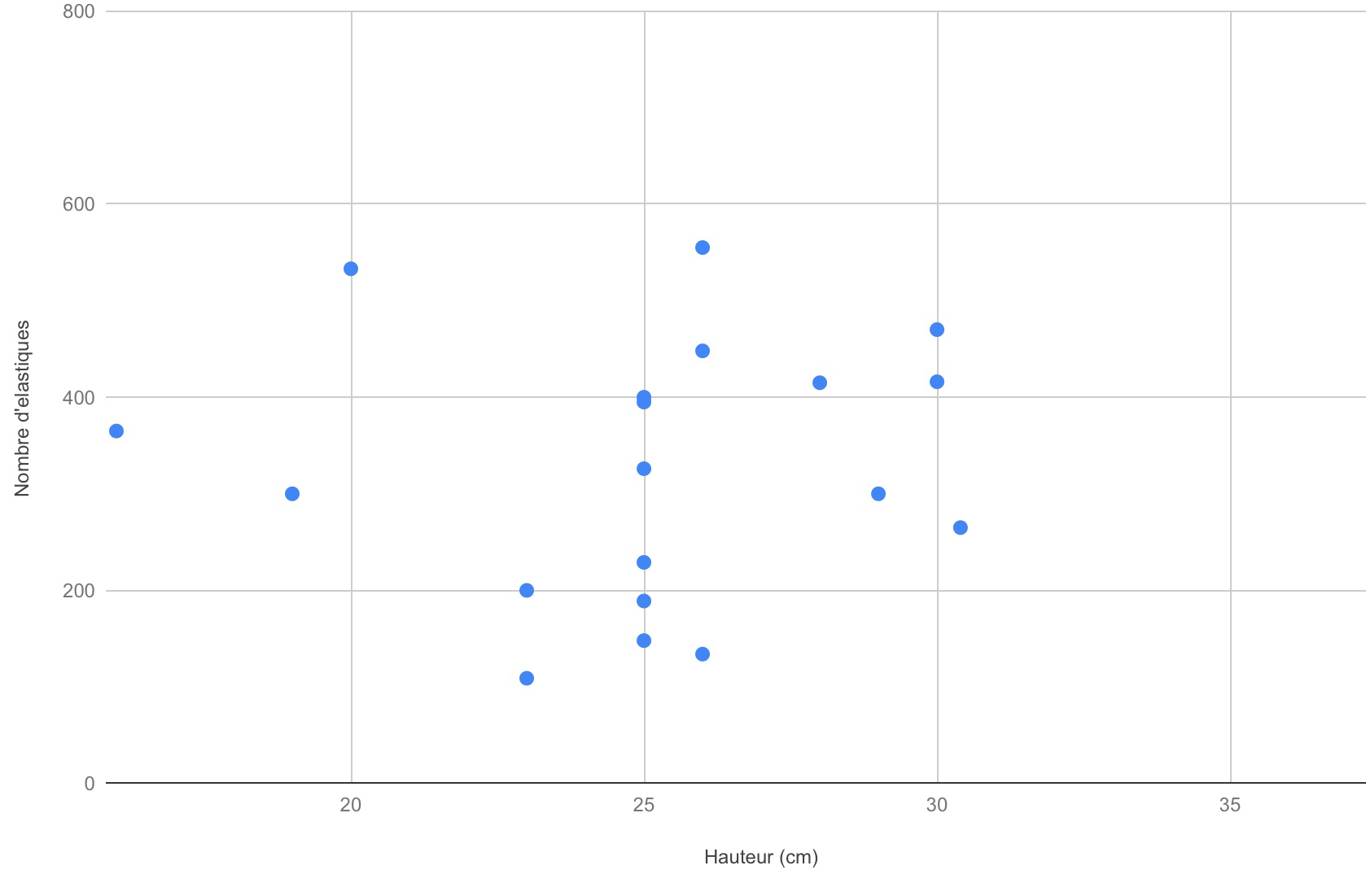
We explored how to enter a formula in a cell to calculate the radius from the data for circumference, and from that we can calculate volume, area, cross sectional area, and try to find more strong correlations.
We noted that we didn’t have pumpkins that were the same variety, also we didn’t apply the elastics consistently among all groups, which led to more variation.
Exploding pumpkins
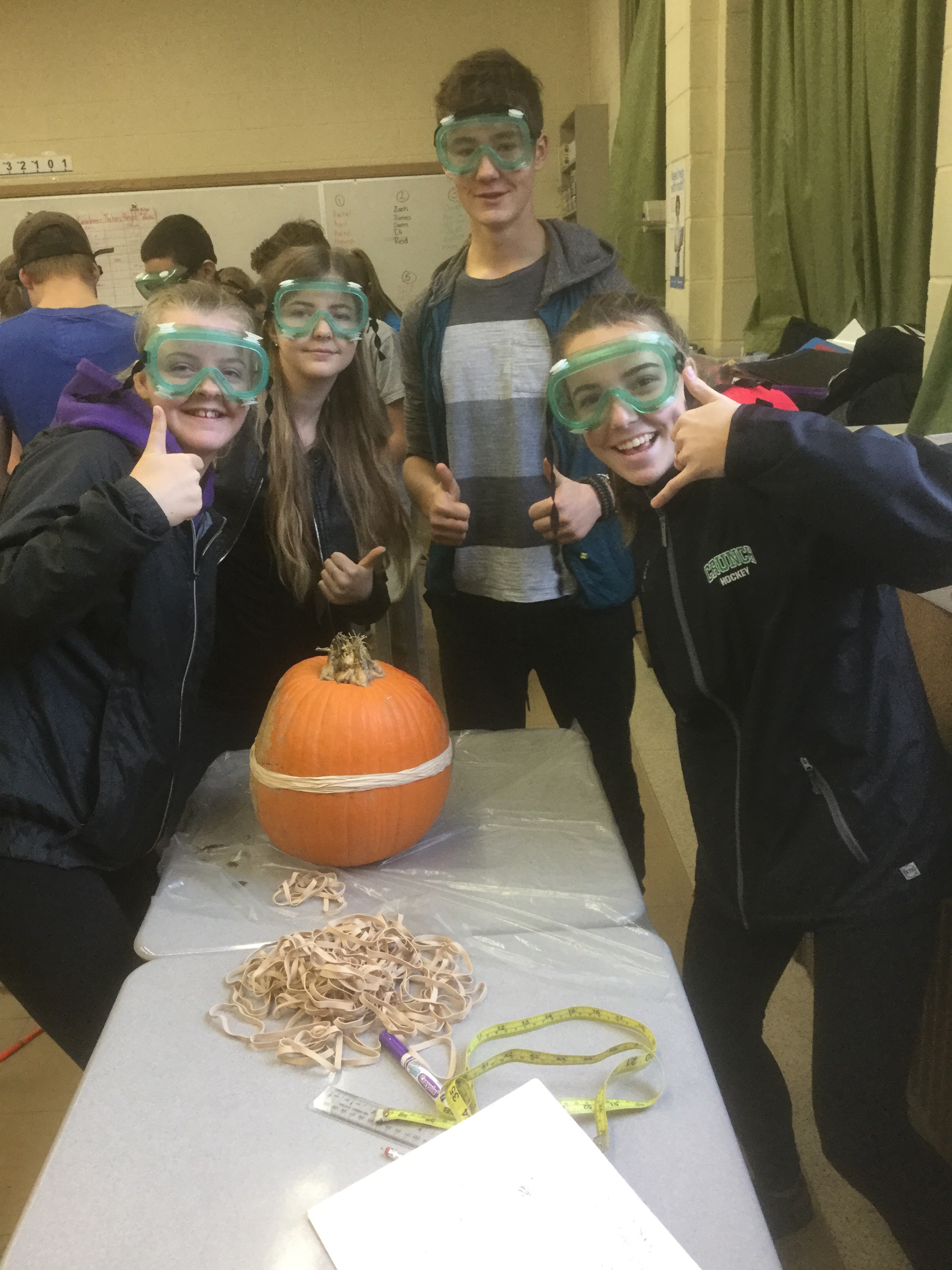
Safety first! We exploded pumpkins today using elastic bands. We made some measurements first, and put our safety glasses on, and started applying elastic bands.
We kept track of how many bands we added, and noticed that the pumpkins started to change shape.
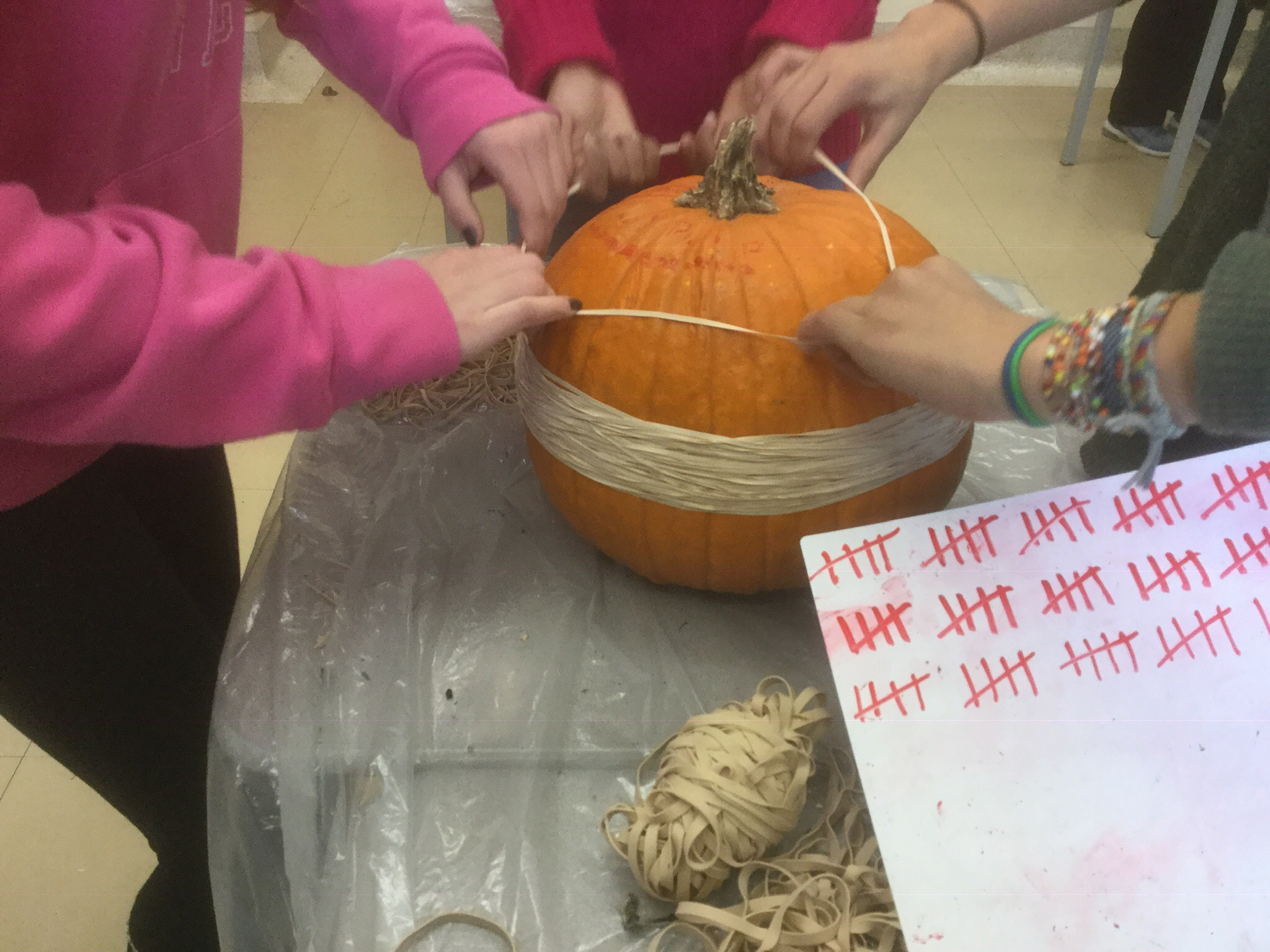
We recorded our progress with our devices as it got close. We wanted to catch the moment when it exploded.

The following are stills from one of the videos

You can see the moment
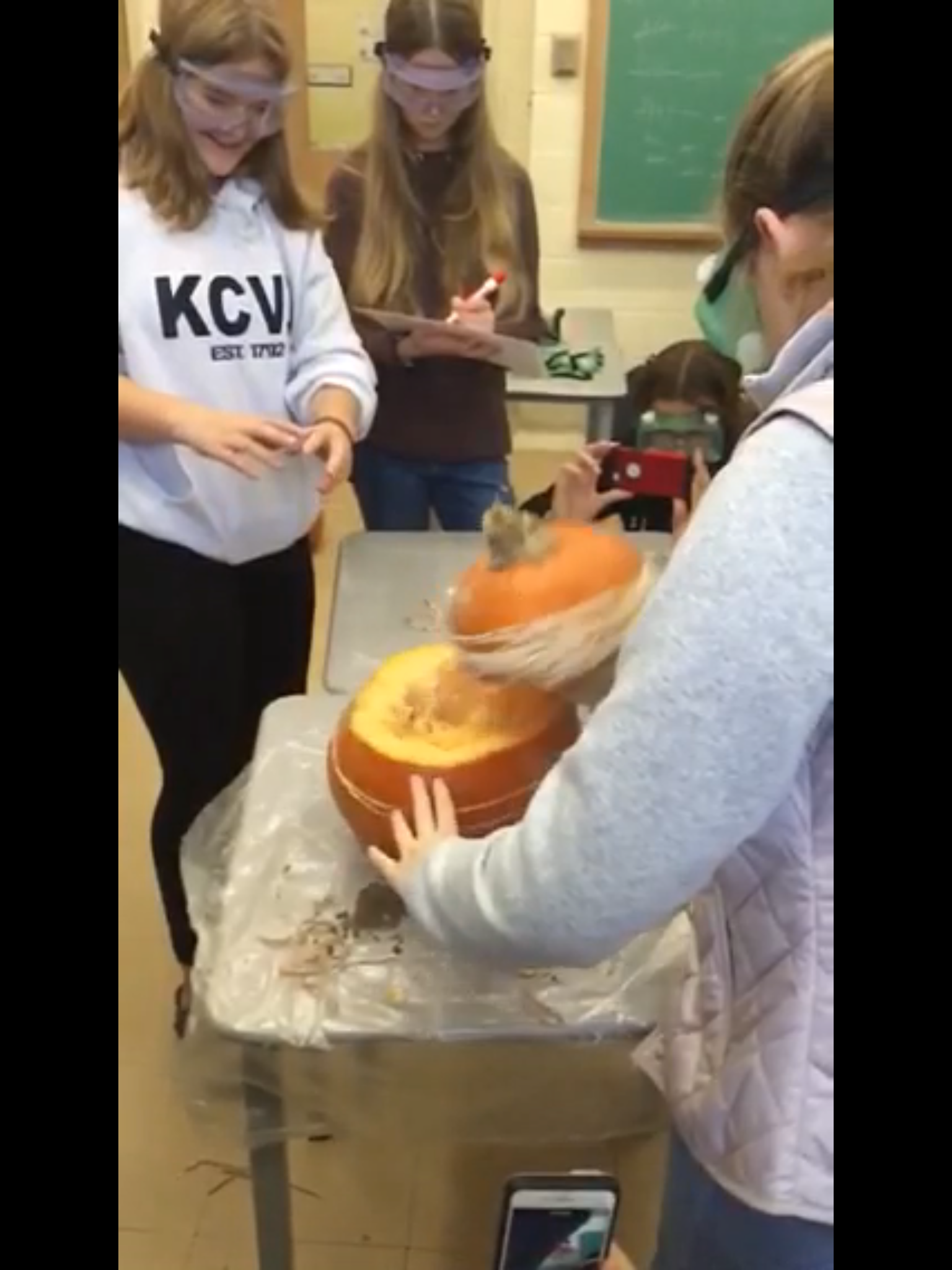
It was pretty exciting

At the end, we measured more things, including the wall thickness.

We removed all elastics and bagged up the pumpkins for donation to a farm and also a wildlife sanctuary. We will be analyzing the data next week to look for trends and correlations.

Factoring Trinomials that have Negatives
Algebra tiles are a great help when factoring trinomials.
We looked at a few. The first question happened to be impossible, but now we know why. We also were able to modify the question to create other options that are similar that do factor.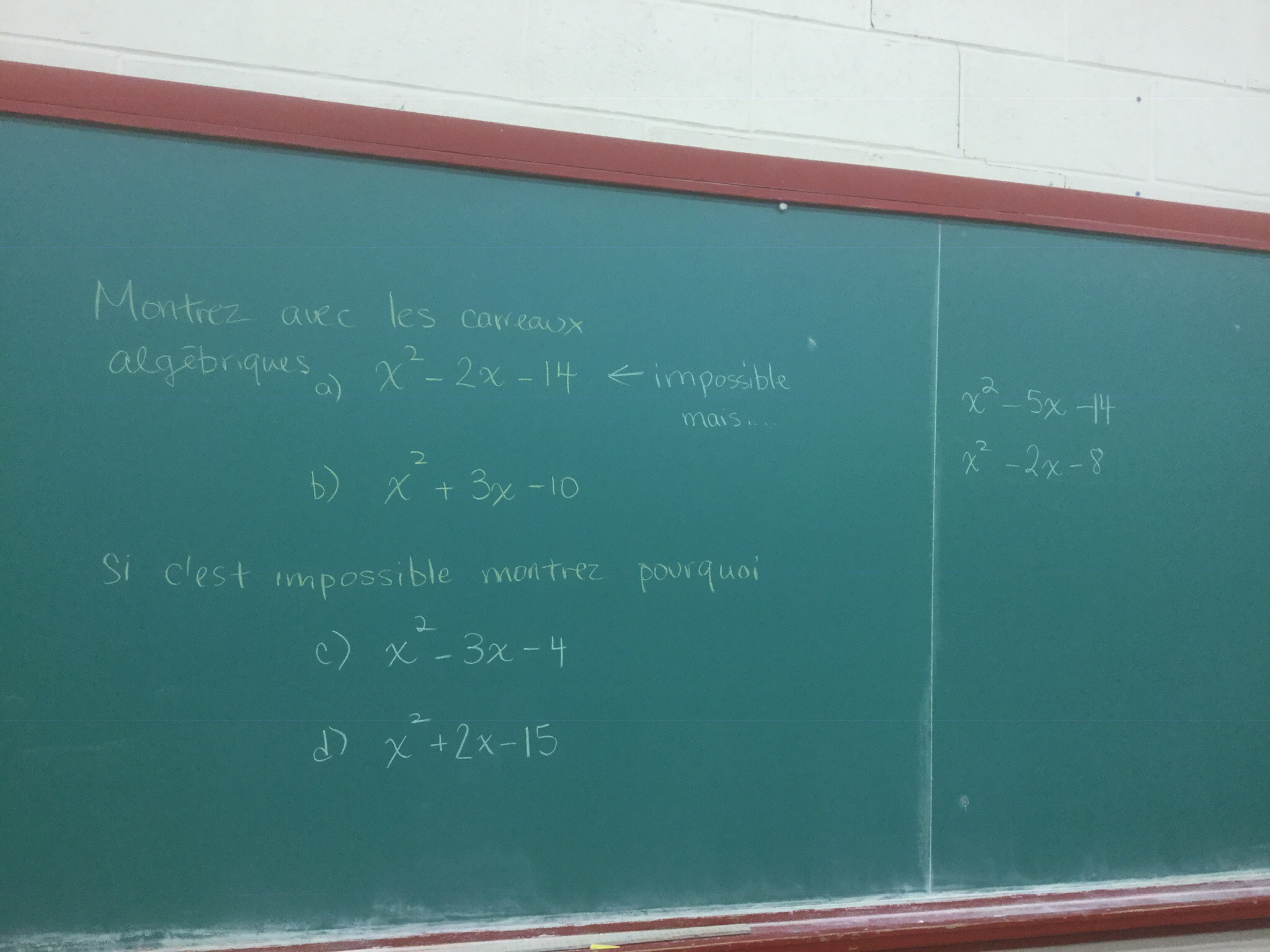
We are building rectangles out of these expressions.
Here’s the start of my rectangle. I look at different ways I can arrange 14 that make rectangles (either 1×14 or 2×7). I put my units in their rectangular arrangement diagonal to the x squared.
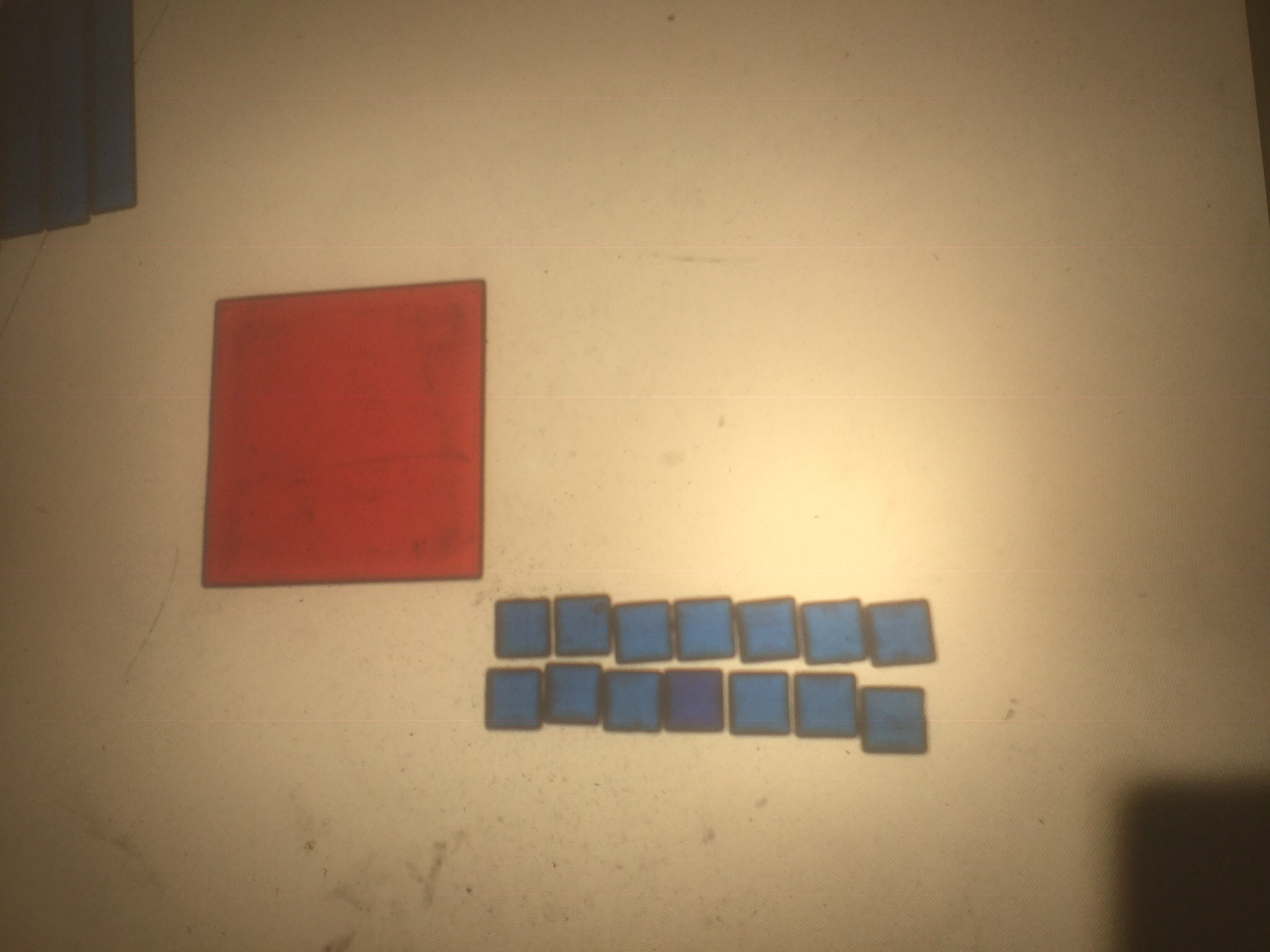
Next I try to fill in the gaps in the rectangle using my x rectangles.
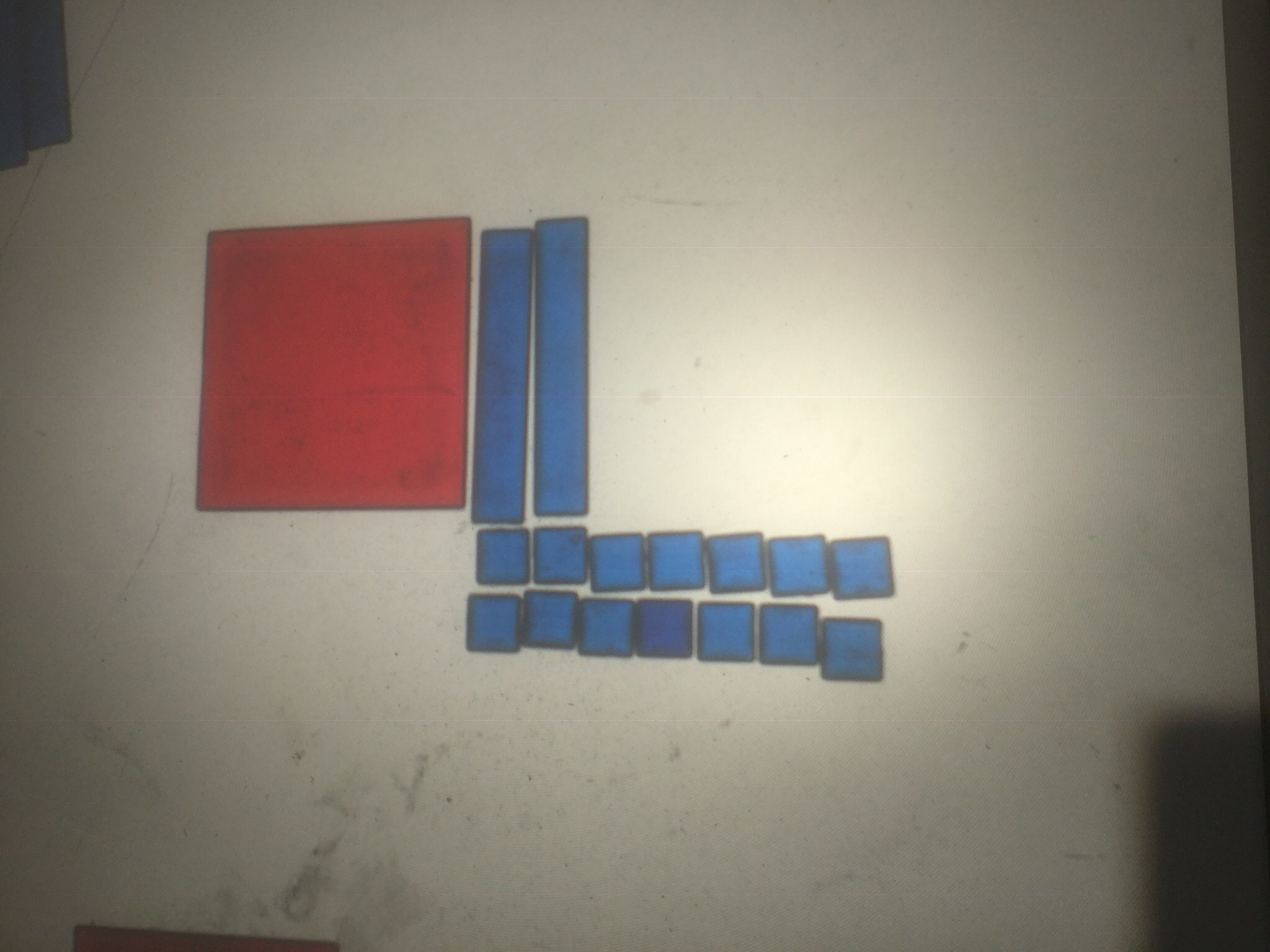
At this point the rectangle is not full, so I’ll add some zero pairs of xs. I know I need to put the positives so that they will multiply with the negatives to result in negatives in the bottom right corner.

My rectangle still isn’t full, and if I had arranged my squares 1×14 it would make another rectangle that wouldnt be complete. We know that this is an impossible question, but that we could easily make a rectangle out of the following, which simplifies to x^2-2x-8
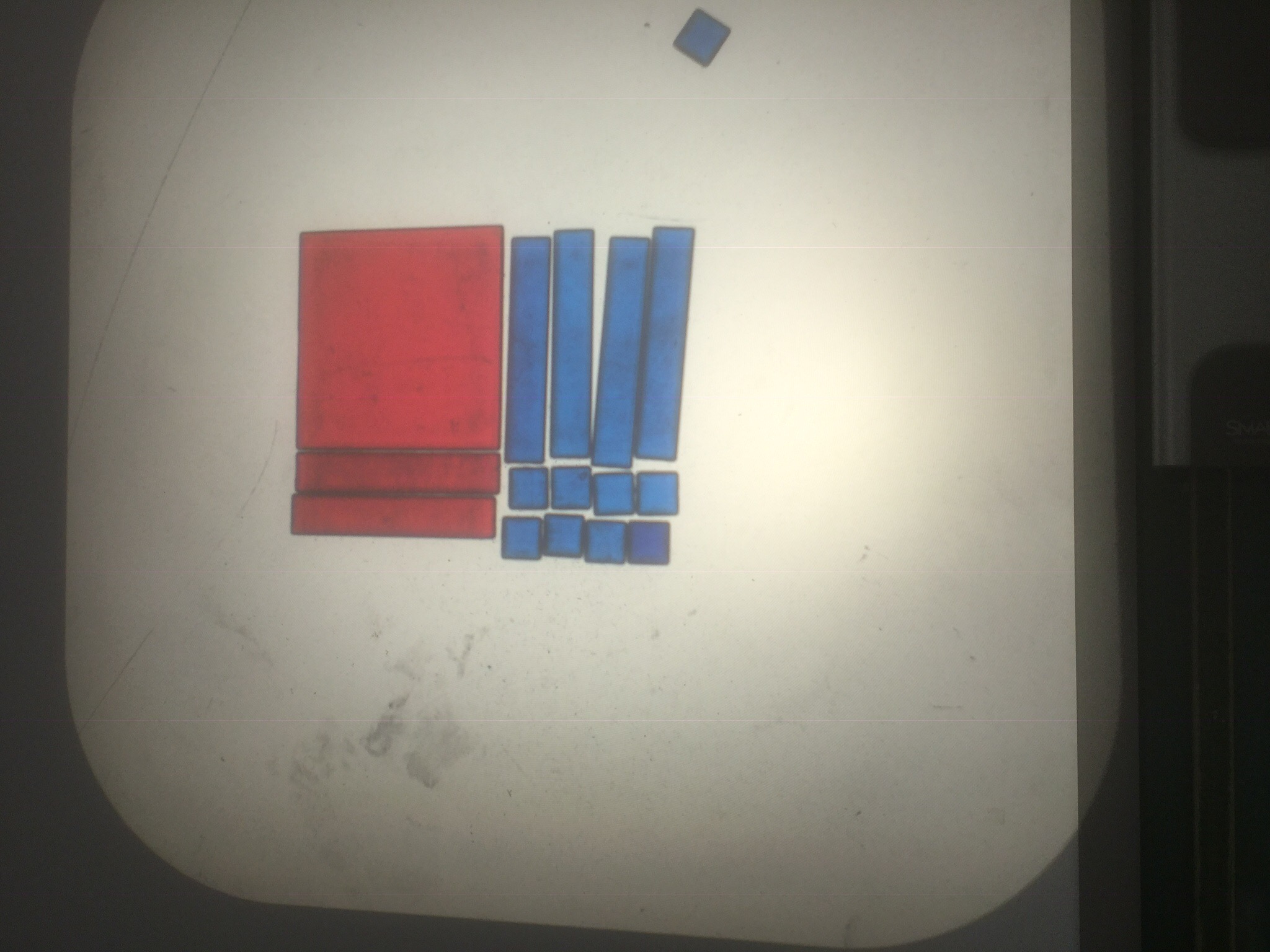
Or the following, which simplifies to x^2-5x-14.

After a lot of exploring we noticed something that is always true about the numbers in the rectangle and the numbers in the expression. We are looking for a way to form the constant term into a rectangle with dimensions that will add up to the x coefficient.
All the angles
Today grade 9s explored transversals (sécantes) and the angles created as the line cuts a pair of parallel lines.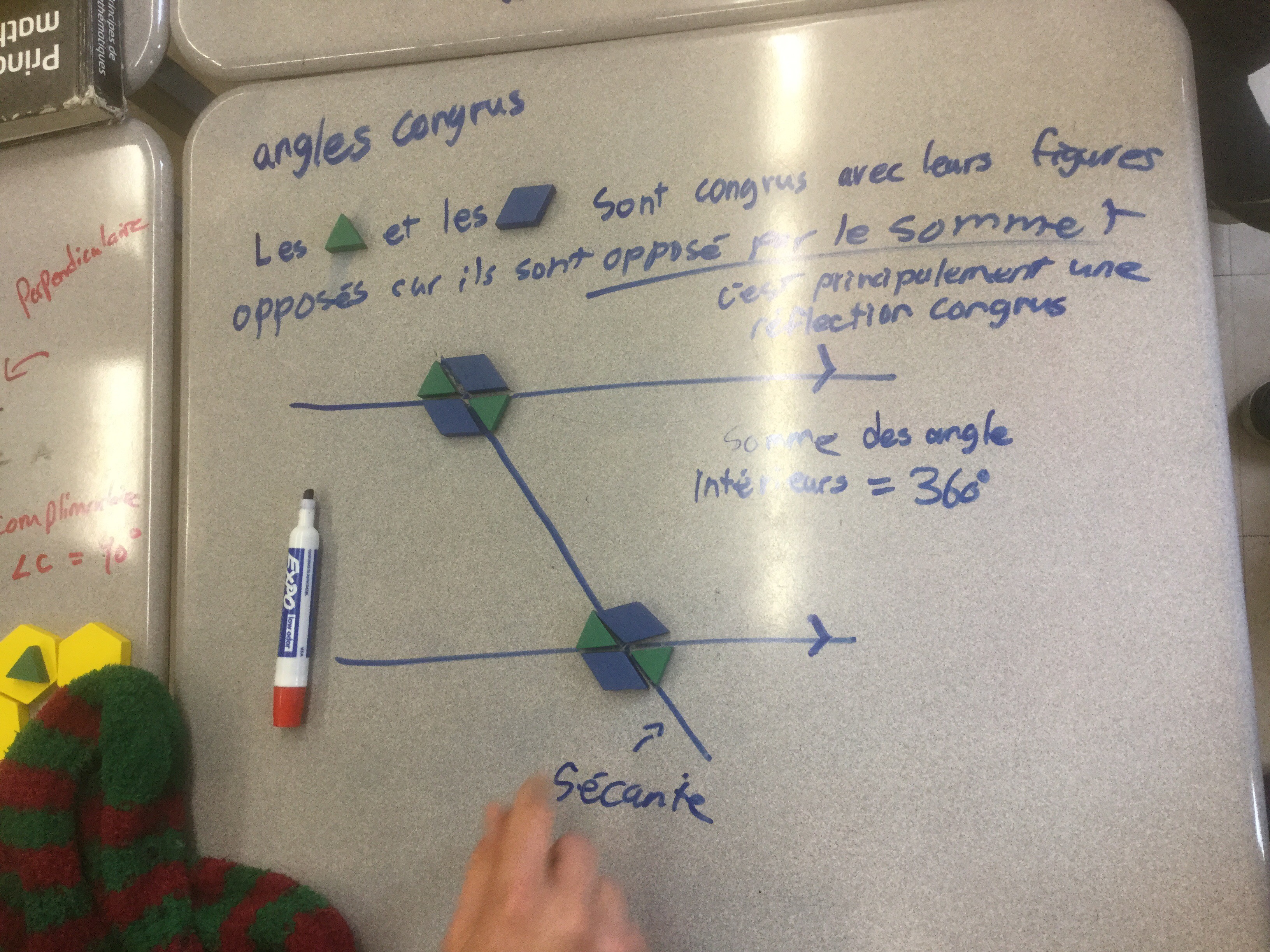
There are many congruent angles produced. Above, note how the green and blue are opposite each other for each x pattern? They are called opposite angles “les angles opposés par le sommet”
Here are “alternating internal angles” or alternes-internes that follow a z pattern.
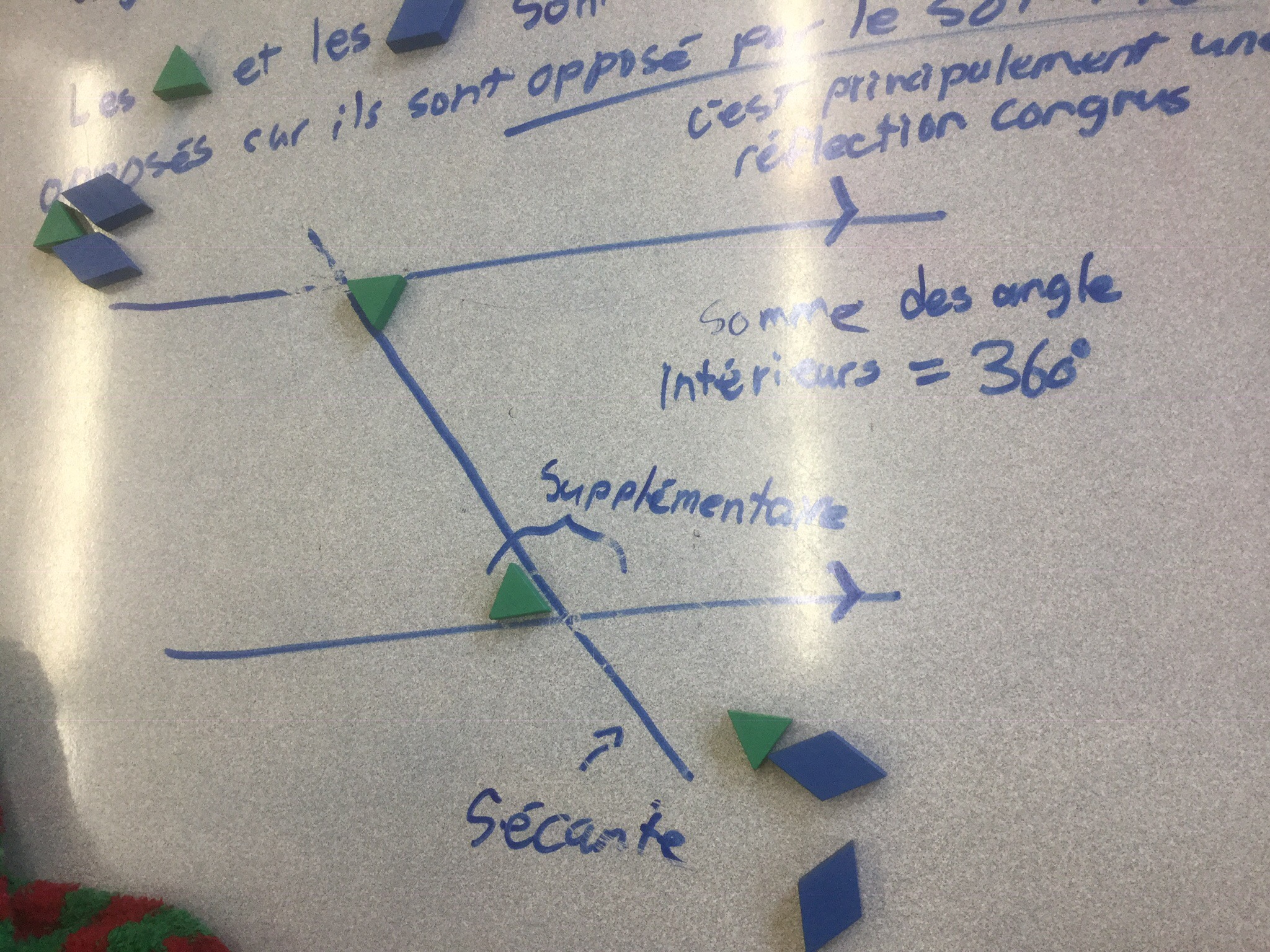
Here are corresponding angles (les angles corréspondantes) that follow an f pattern.

There are angles that are supplementary that are on the inside of a c pattern.
Celebration of Knowledge
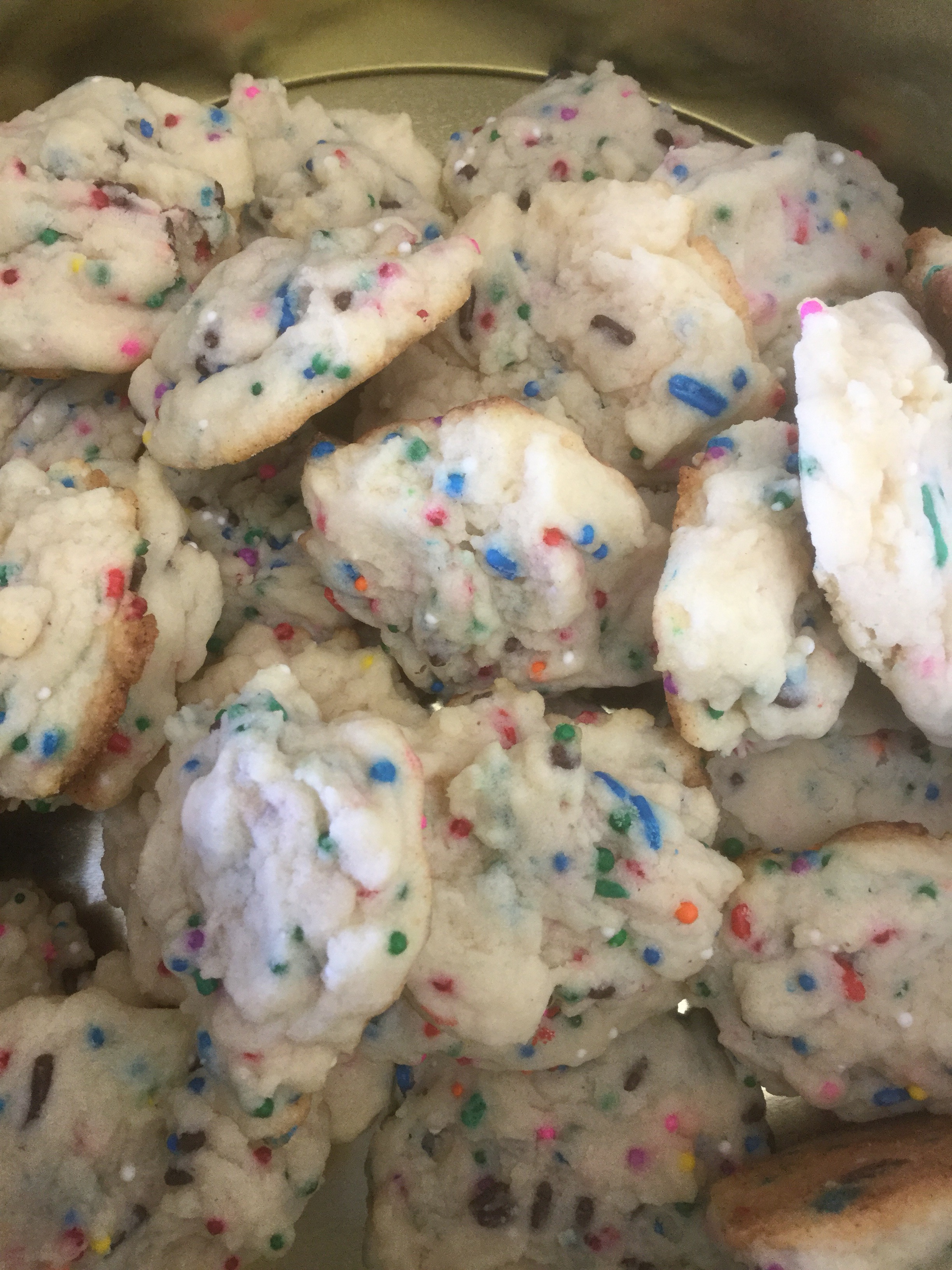
Grade 9s and 10s had summatives today. Everyone worked really hard, and we celebrated our knowledge and ate cookies too!