Interpreting tables of values
In grade 10 we are investigating tables of values, and how to determine the equation of a parabola given the table.
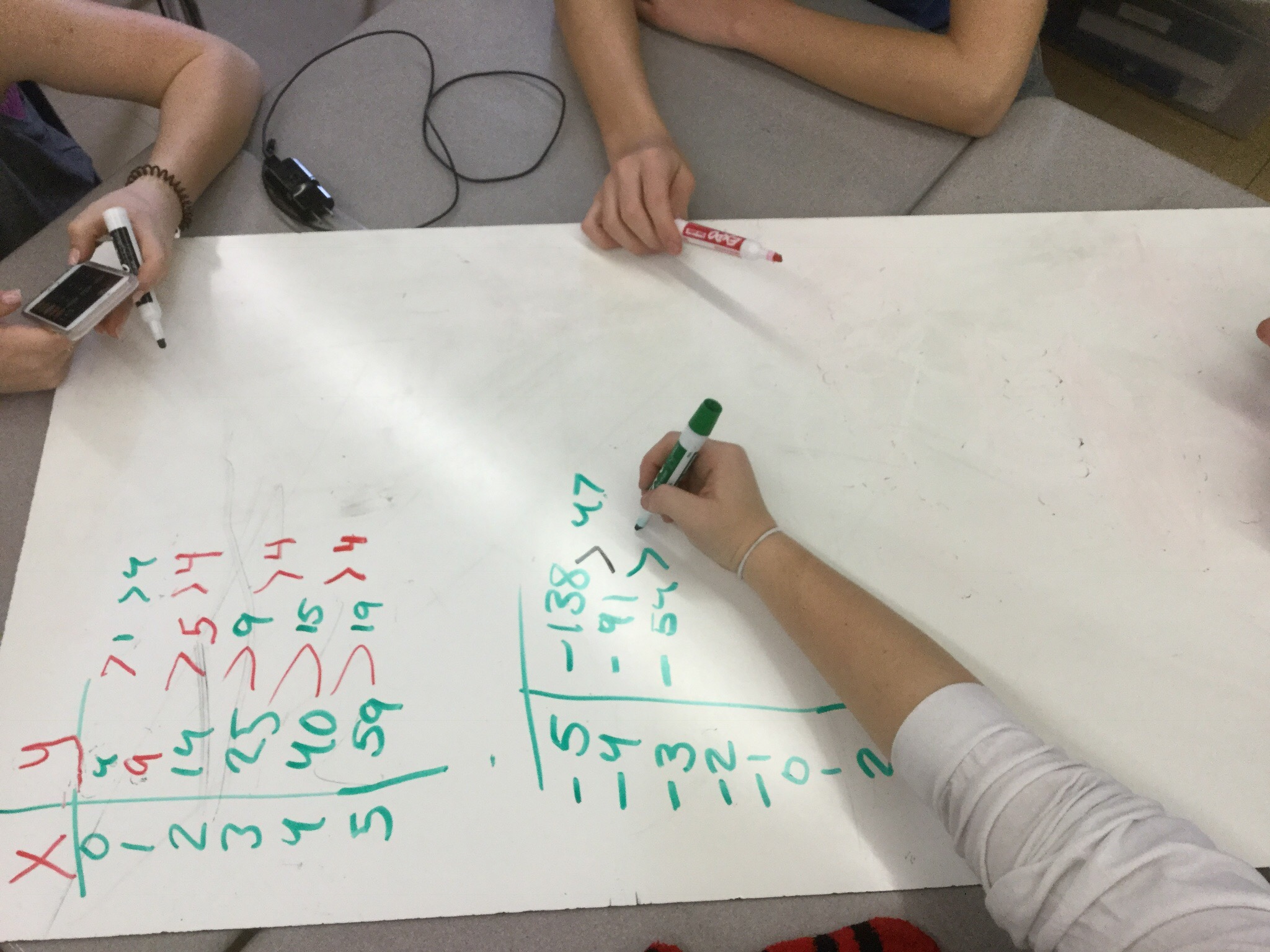
We are getting much better at calculating first and second differences. Parabolas have constant second differences.
We know that the “a” value is always half of the second difference, the “c” value is always the 6 value corresponding to an x value of 0, and then by substituting a different point for “x” and “y” along with “a” and “c” we can calculate the “b” value for y=ax^2+bx+c
Wih practice we are getting a lot better!
From patterns to Graphs
We have been building patterns recently using square tiles. Today we branched into graphing these patterns.
Each group was given 3 equations (pattern rules) to build and graph.
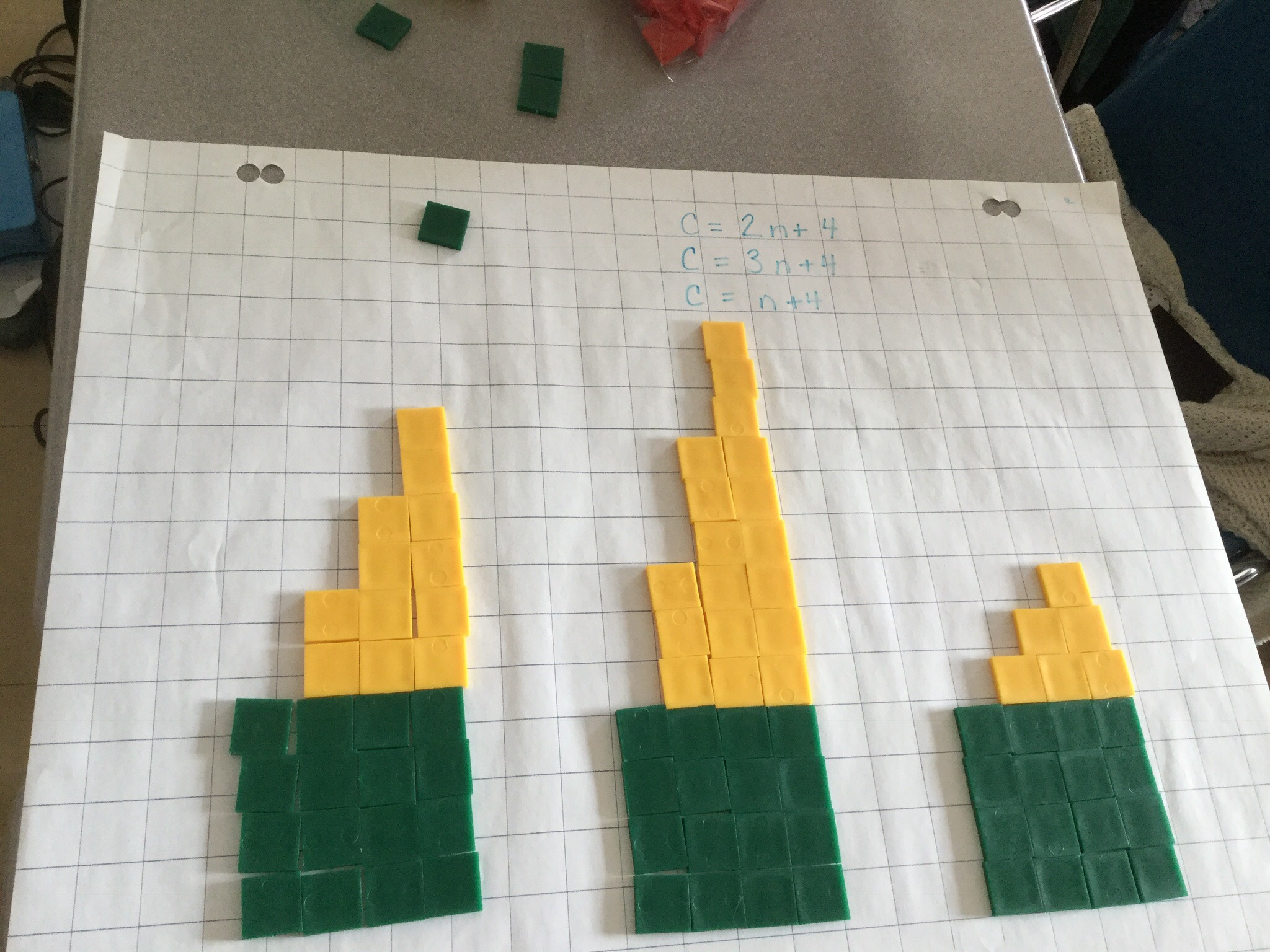
Each of the patterns had something in common. Here you can see figure 0,1,2,3 of each pattern with the constant in green and the growing pattern in yellow. We’ve noticed how the coefficient in the pattern shows us the “stairs”. The bigger the number the steeper the stairs.
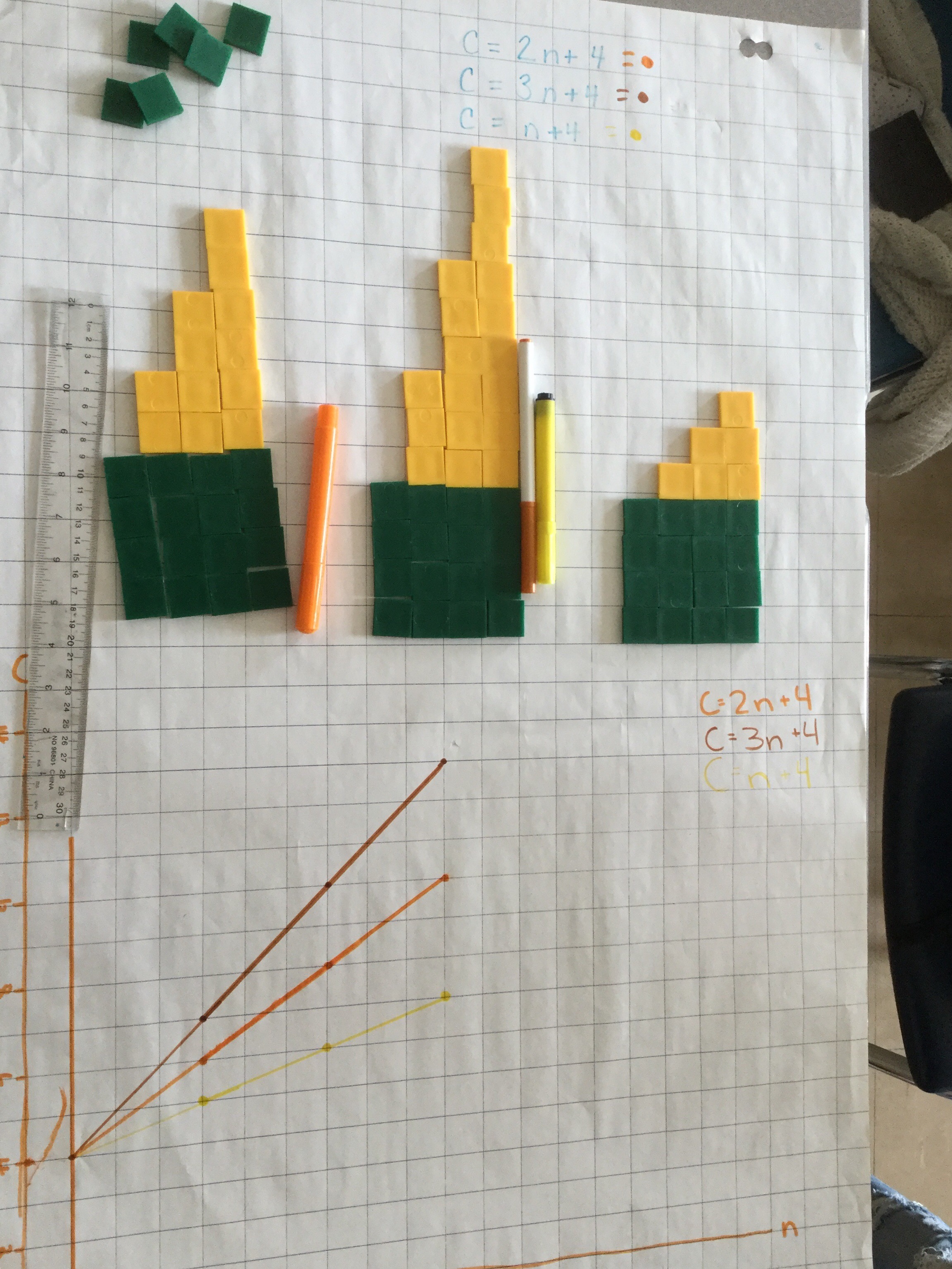
We graphed figure number on the horizontal axis and the number of squares vertically.
We would have done more, but we had a lockdown drill. We will continue this inquiry tomorrow.
The Mu of a Shoe
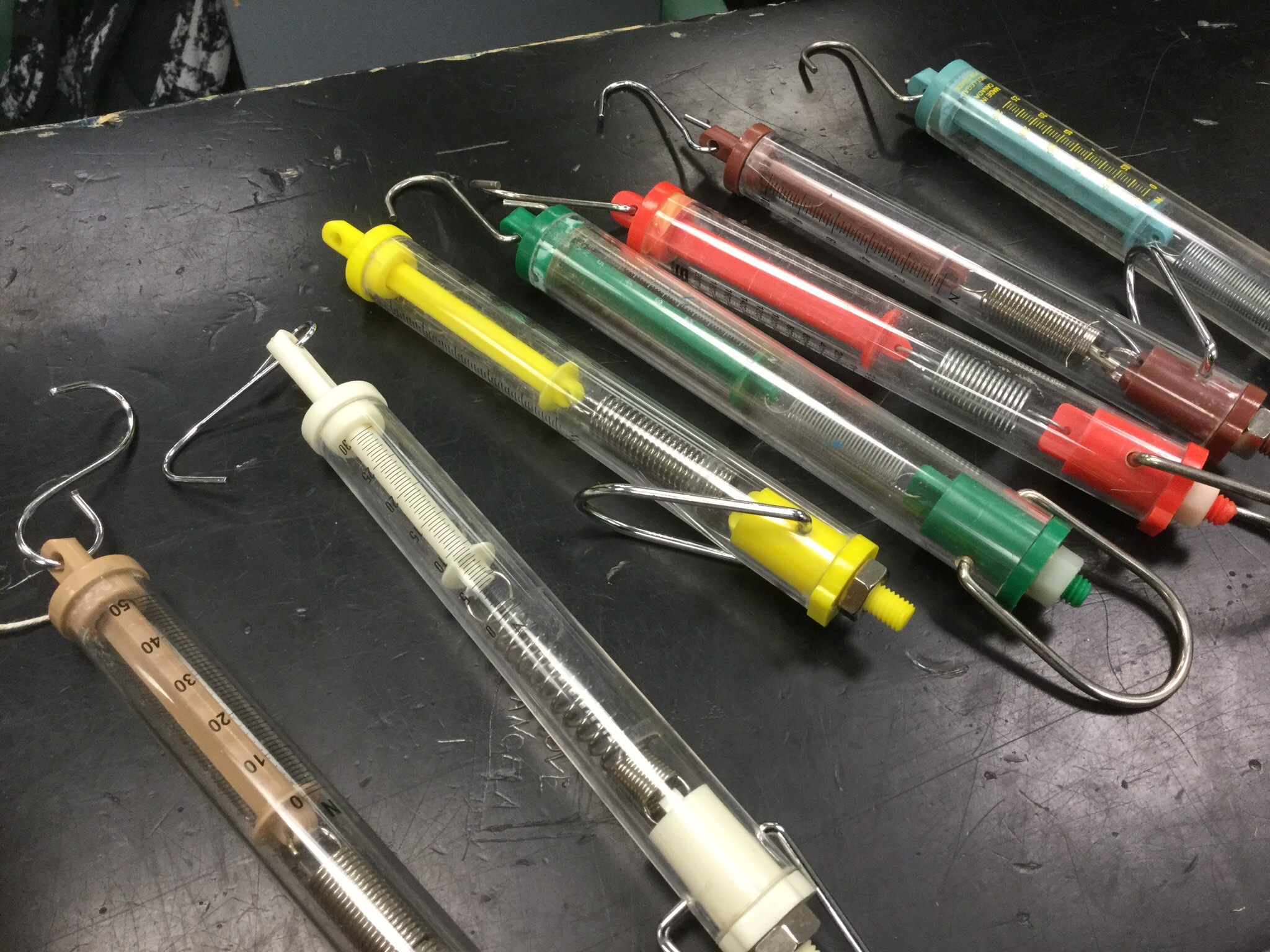
These are spring scales. They are used to measure the weight of things, and the forces on things.
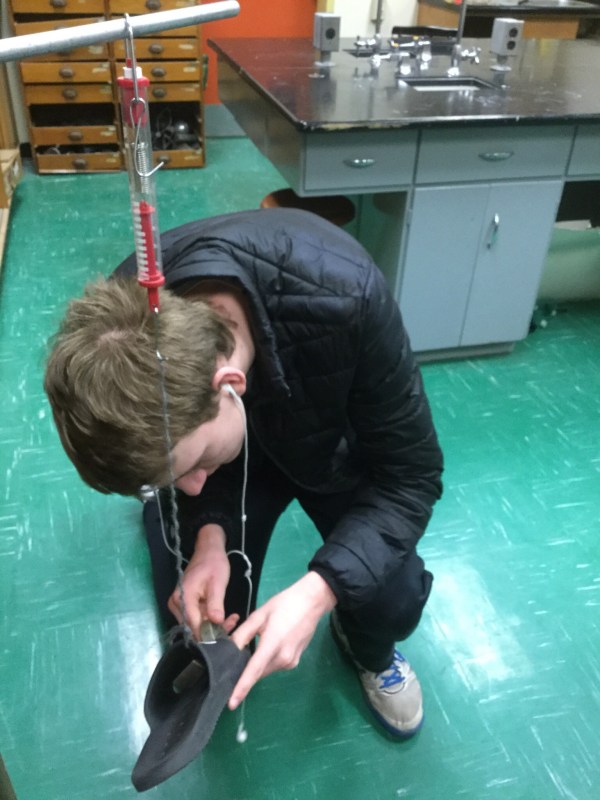
We measured the weight of the shoe, and then we pulled he shoe to determine the force of friction on the shoe. We added mass and repeated the procedure.

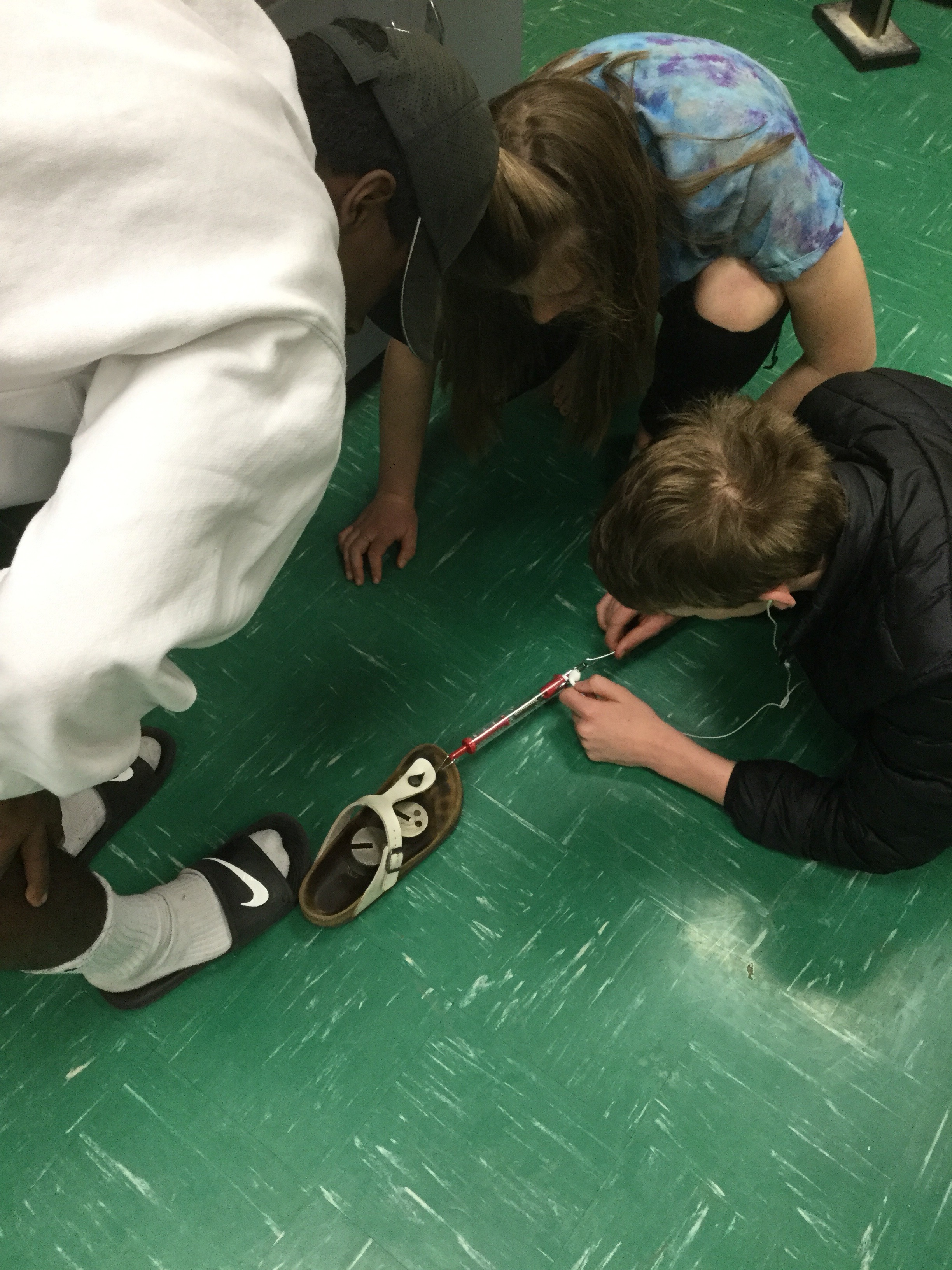
We noticed the force to get the shoe moving is bigger than the force to keep the shoe moving.
All of these forces are bigger when the mass of the shoe is bigger.
We tried all of this experiment again but on a wet floor. The goal is to determine the coefficient of friction between the show and dry floor and the shoe and wet floor.
Solve Me Mobiles
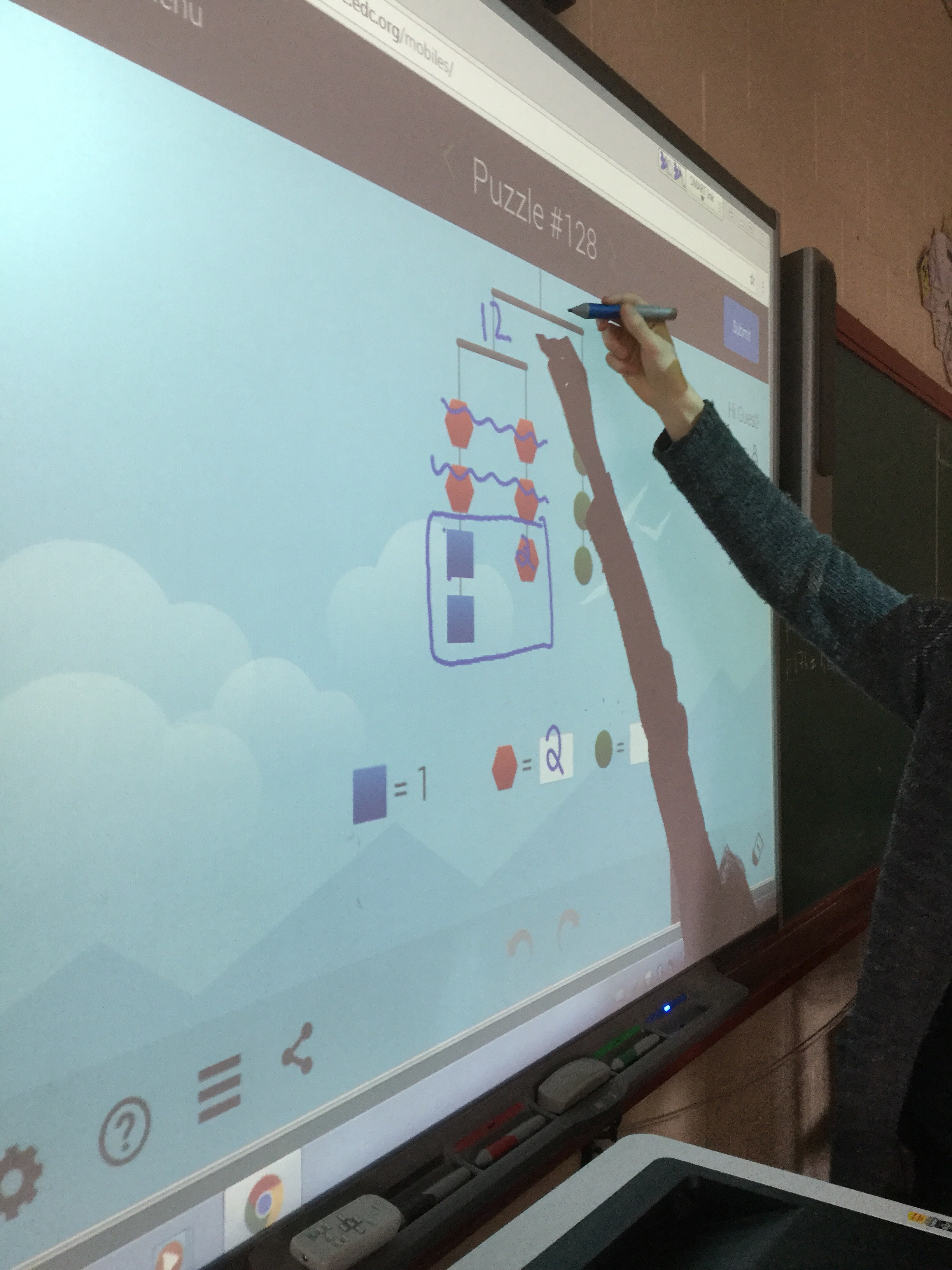
Today we worked on a fun puzzle game available online. It’s called “solve me mobiles”. Using logic and algebraic reasoning the goal is to determine the value of each coloured block. We are building equation solving skills and intuition through this game. They are pretty fun! Give it a try here.
Physics today
We had an interesting problem today (3.5 #3). It involved two inline skaters holding on to a rope. One skater pulled the rope, hand over hand. We were given the force that they pulled with, and the distance they were separated, and the mass of each skater, and had to figure out the time it would take them to meet.
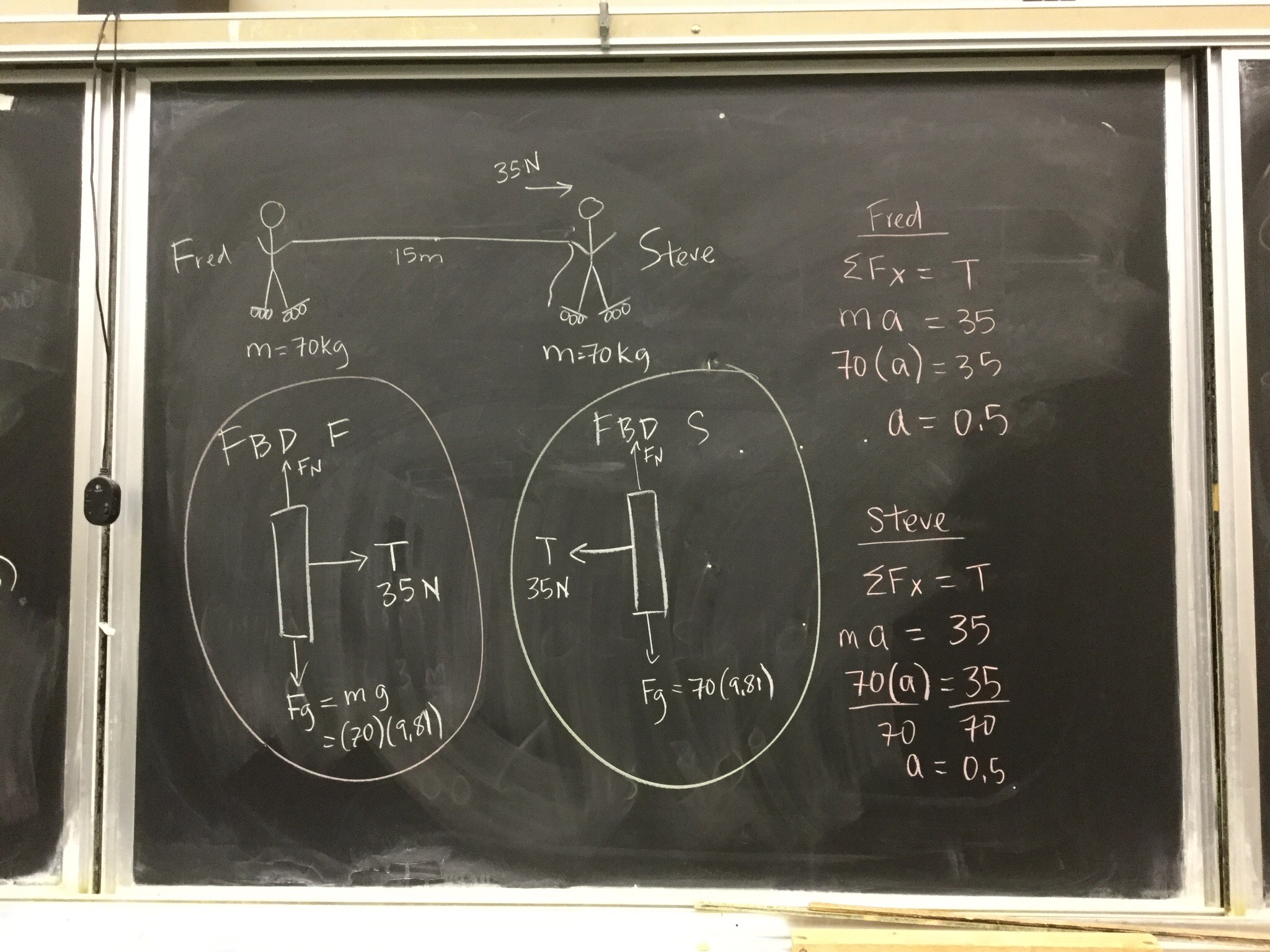
After looking at free body diagrams there was still some confusion about what would happen, so we modeled the situation.

We had two classmates on rollerblades pull on a ruler (no rope here today) and noticed that they both moved towards each other. We knew now that they would meet in the middle.
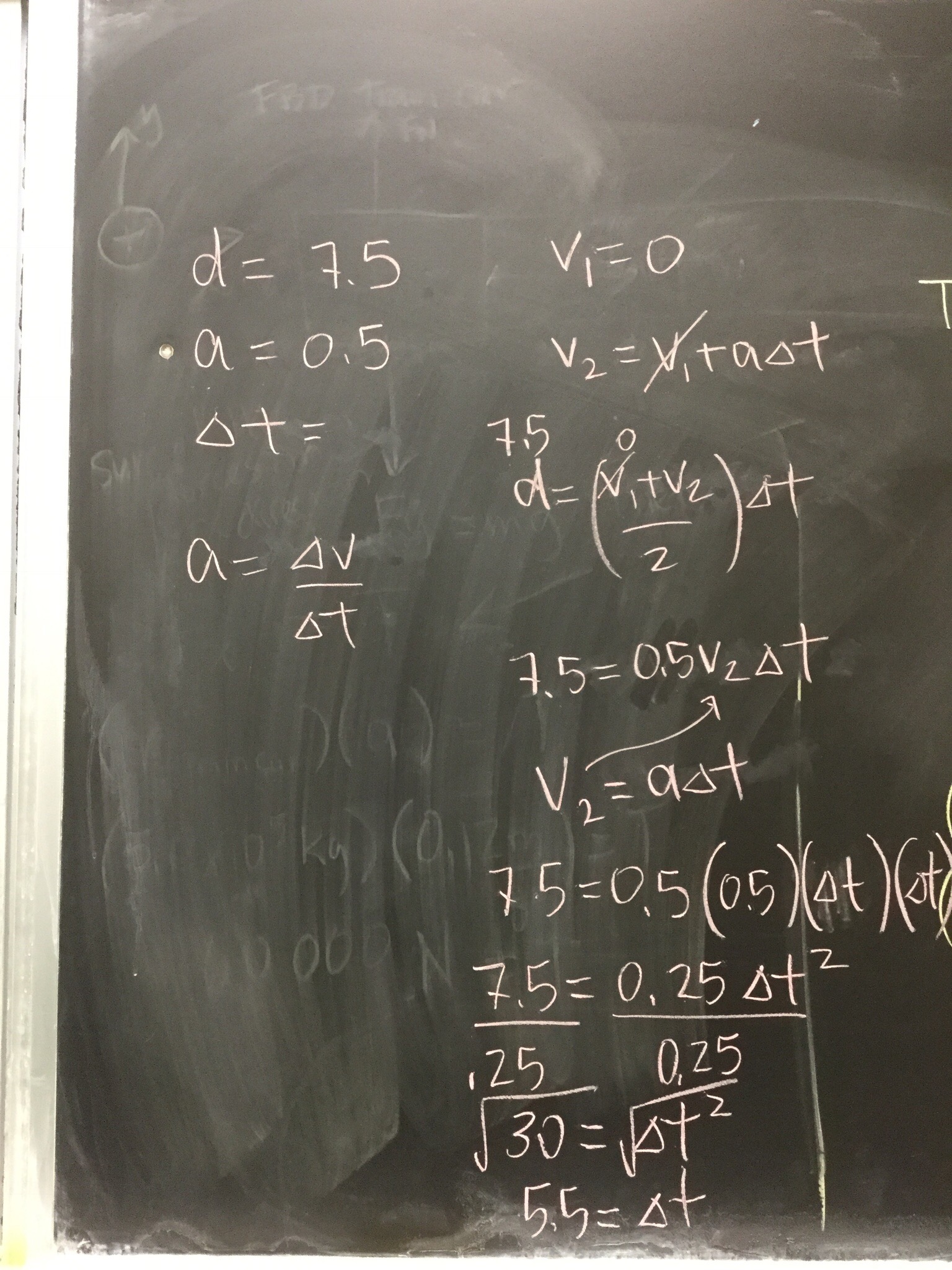
Here’s the math that we did to show how we figured out the time it would take. We needed our kinematice equations from last unit to help us out.
It is satisfying to be able to solve tricky problems.
Building patterns and connecting them to algebra
Today we explored visual patterns again, and worked on connecting the pattern growth to an algebraic model.
When given the same term 3 we tried to make different possible patterns.
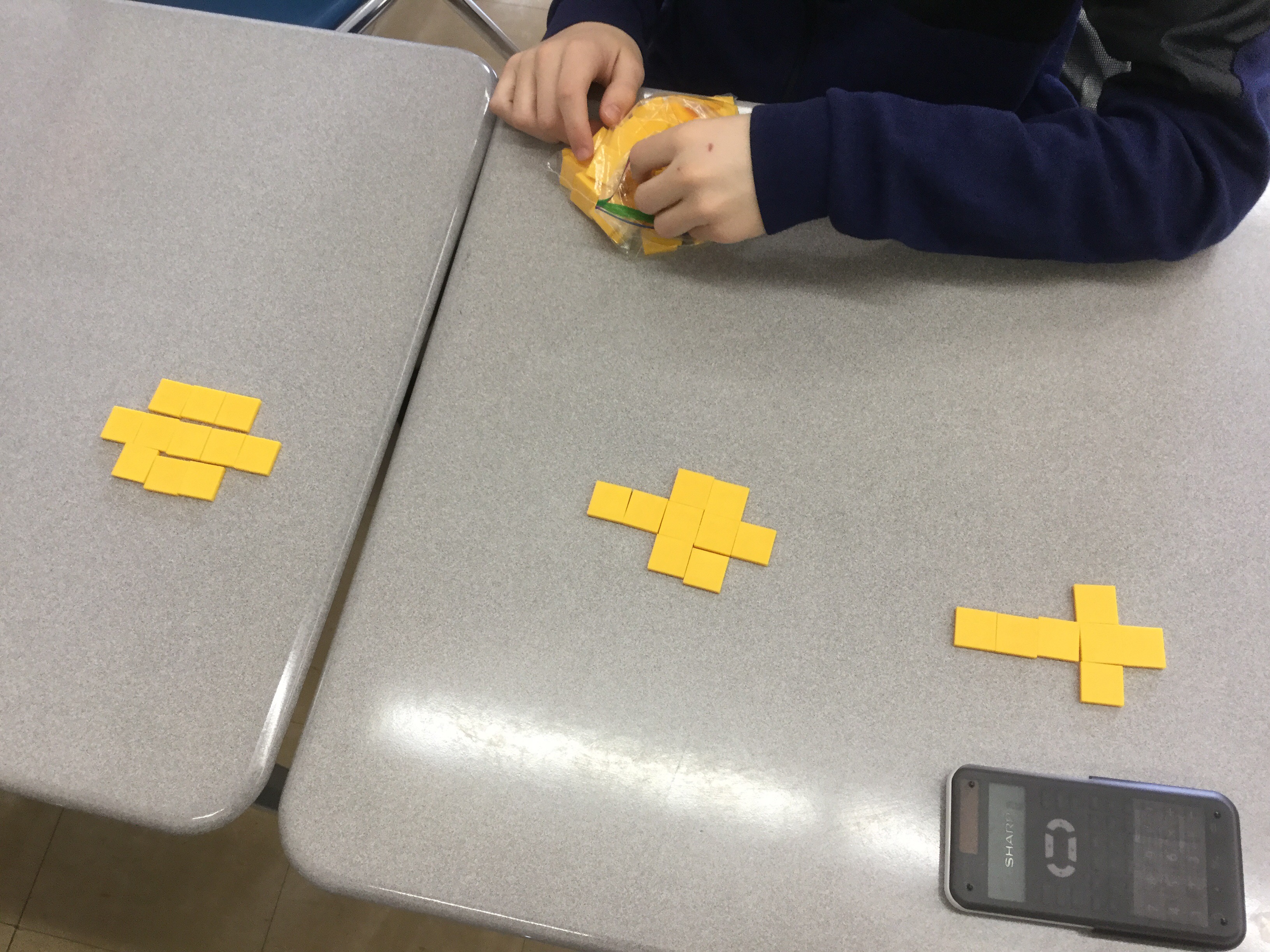
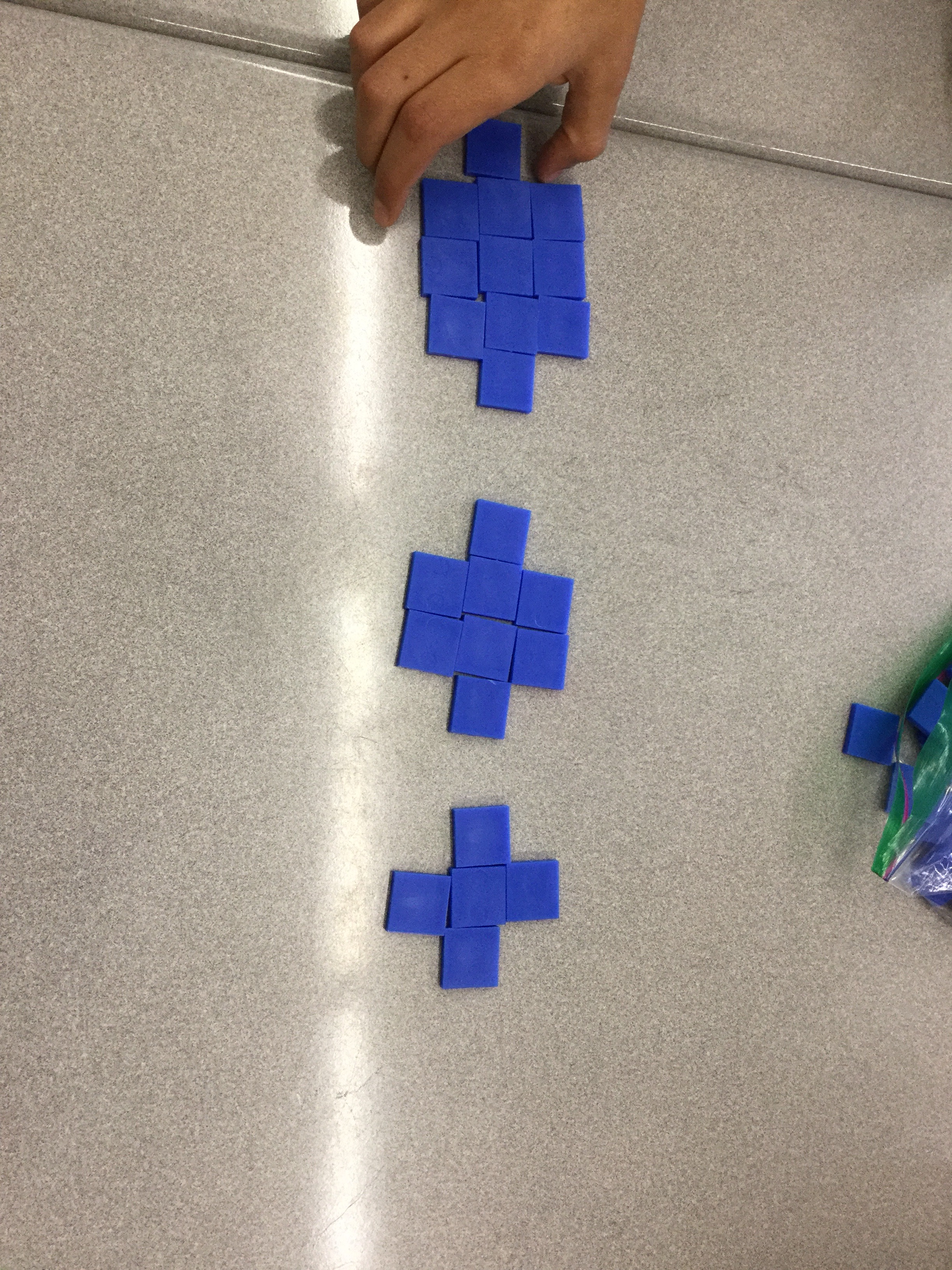
We made 3 of them, then explored the algebra that gets us from term number to the number of tiles.
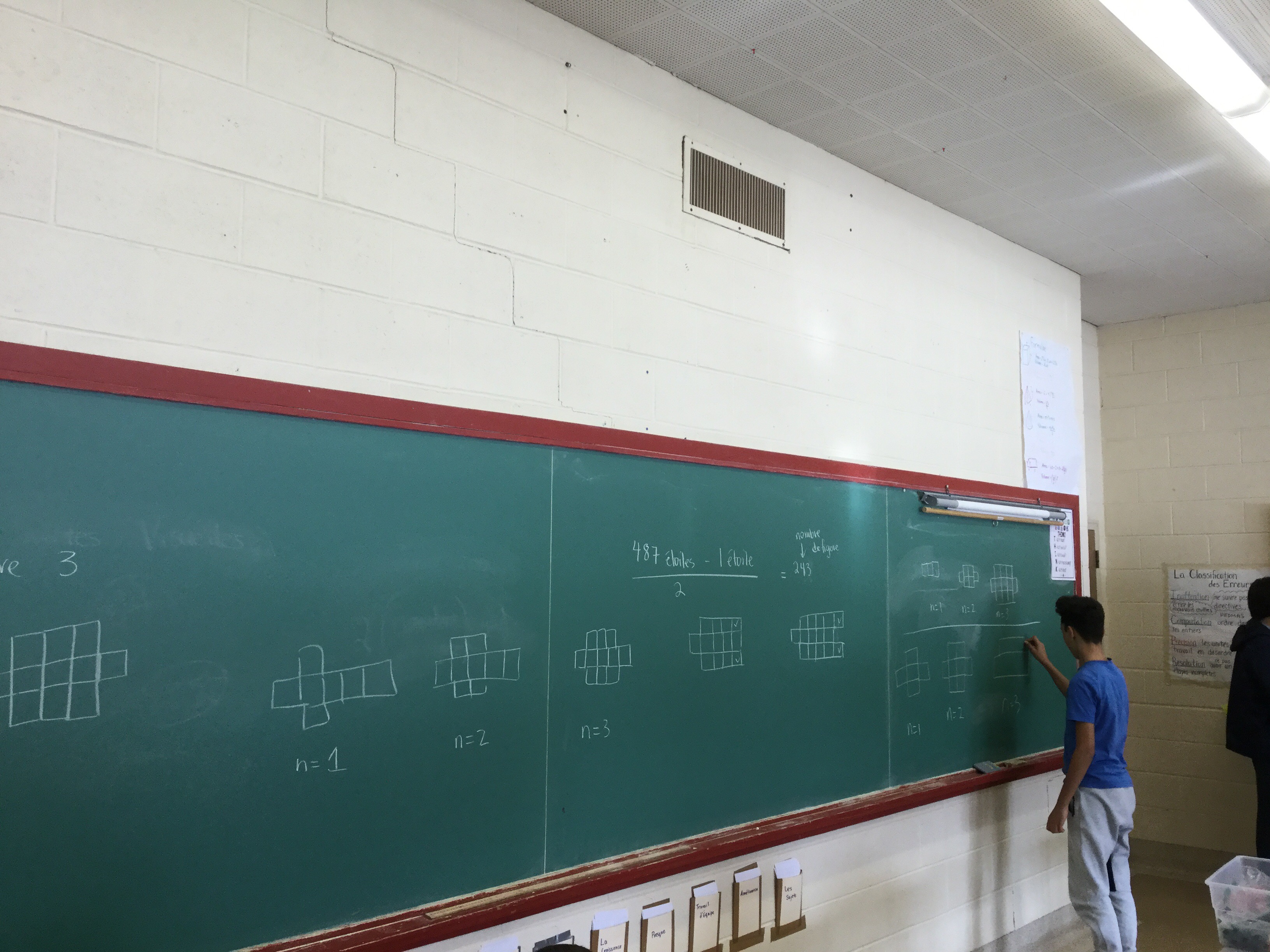
We then colour coded the constant term (what stays the same in the pattern, aka term 0) and related that to the constant in the equation
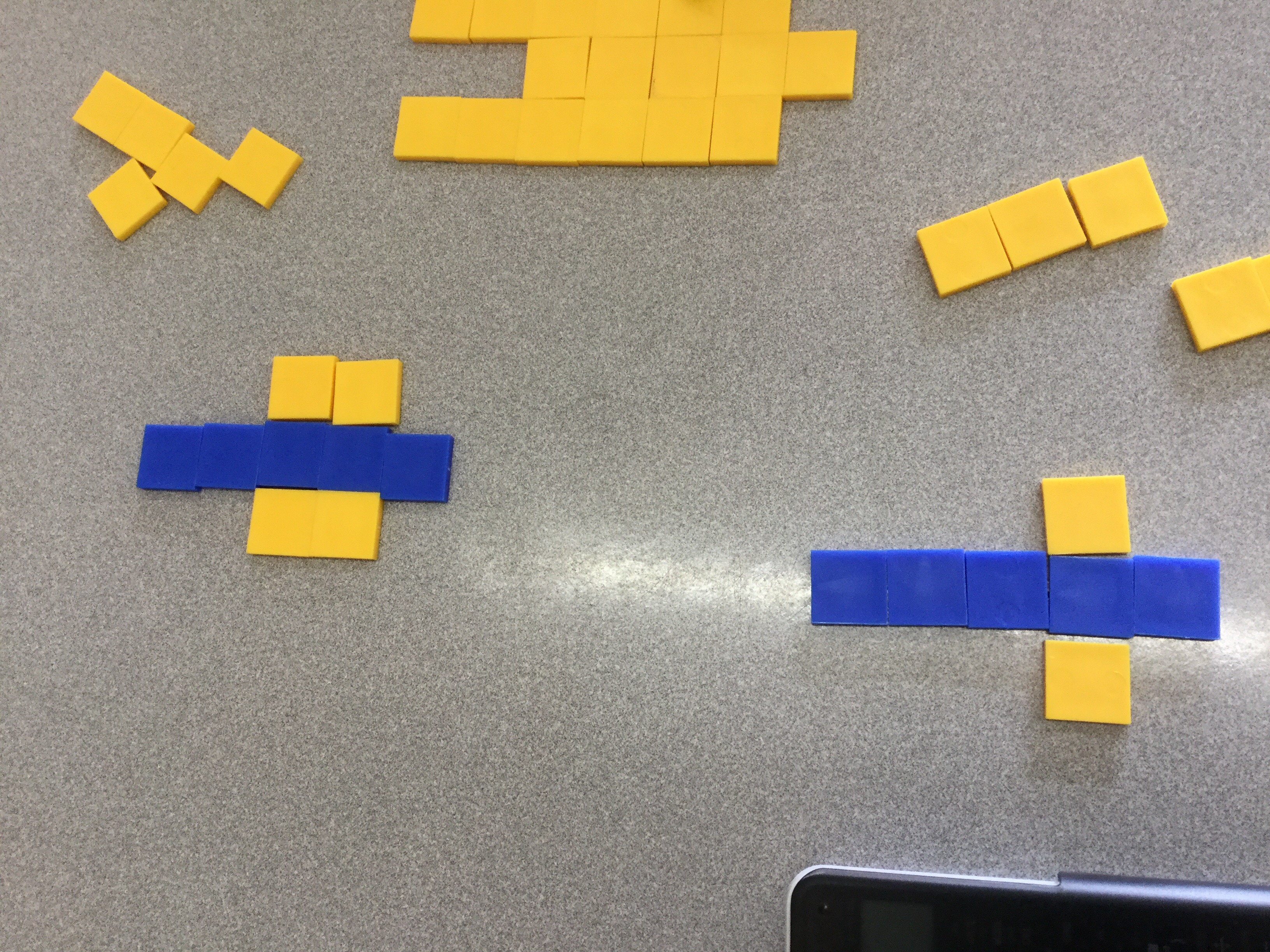
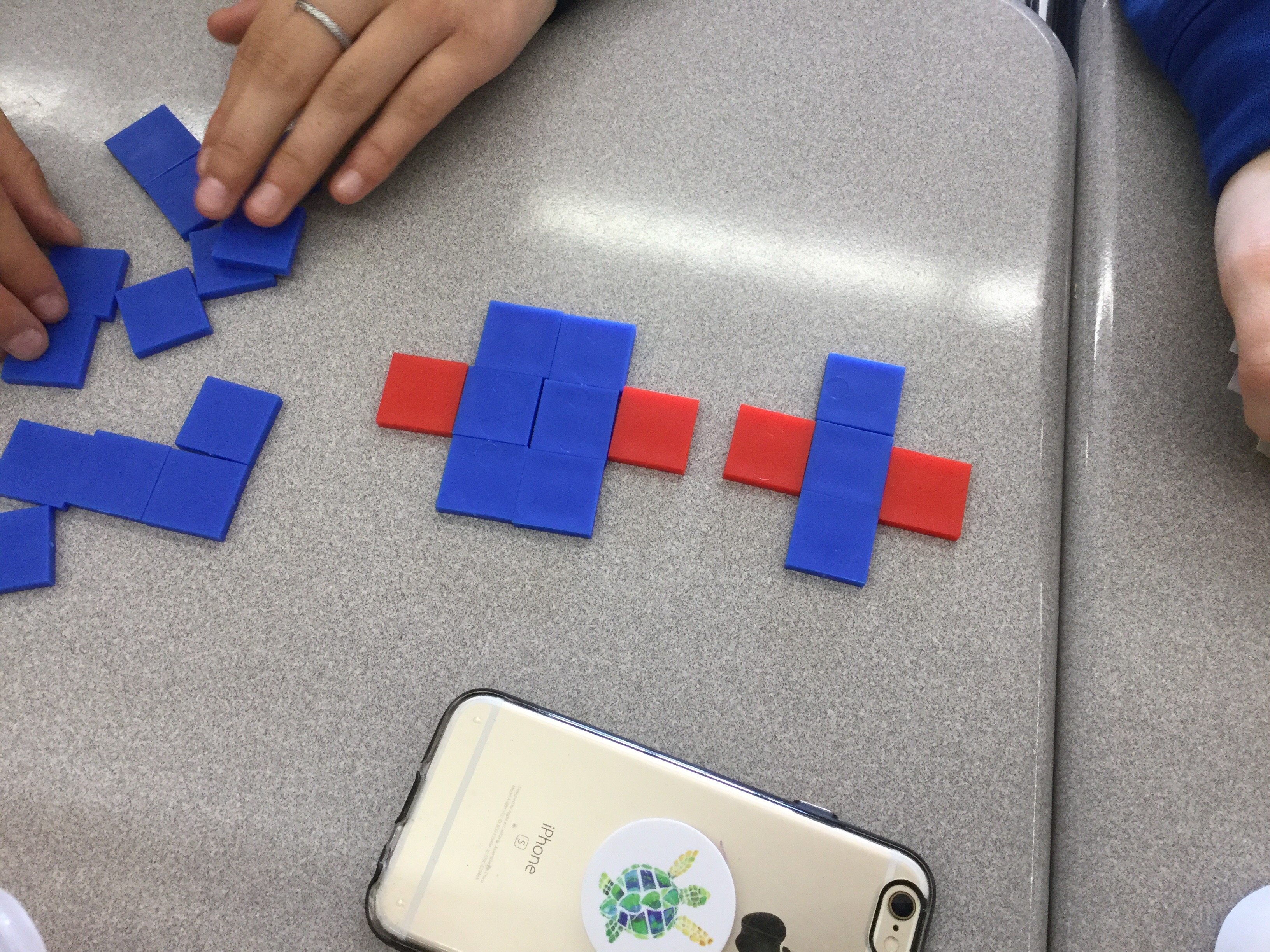
We tried many different patterns, some were linear, some were not. It was a good challenge to make the pattern rule and test it out by building more terms, or by making tables and charts, or using algebra.
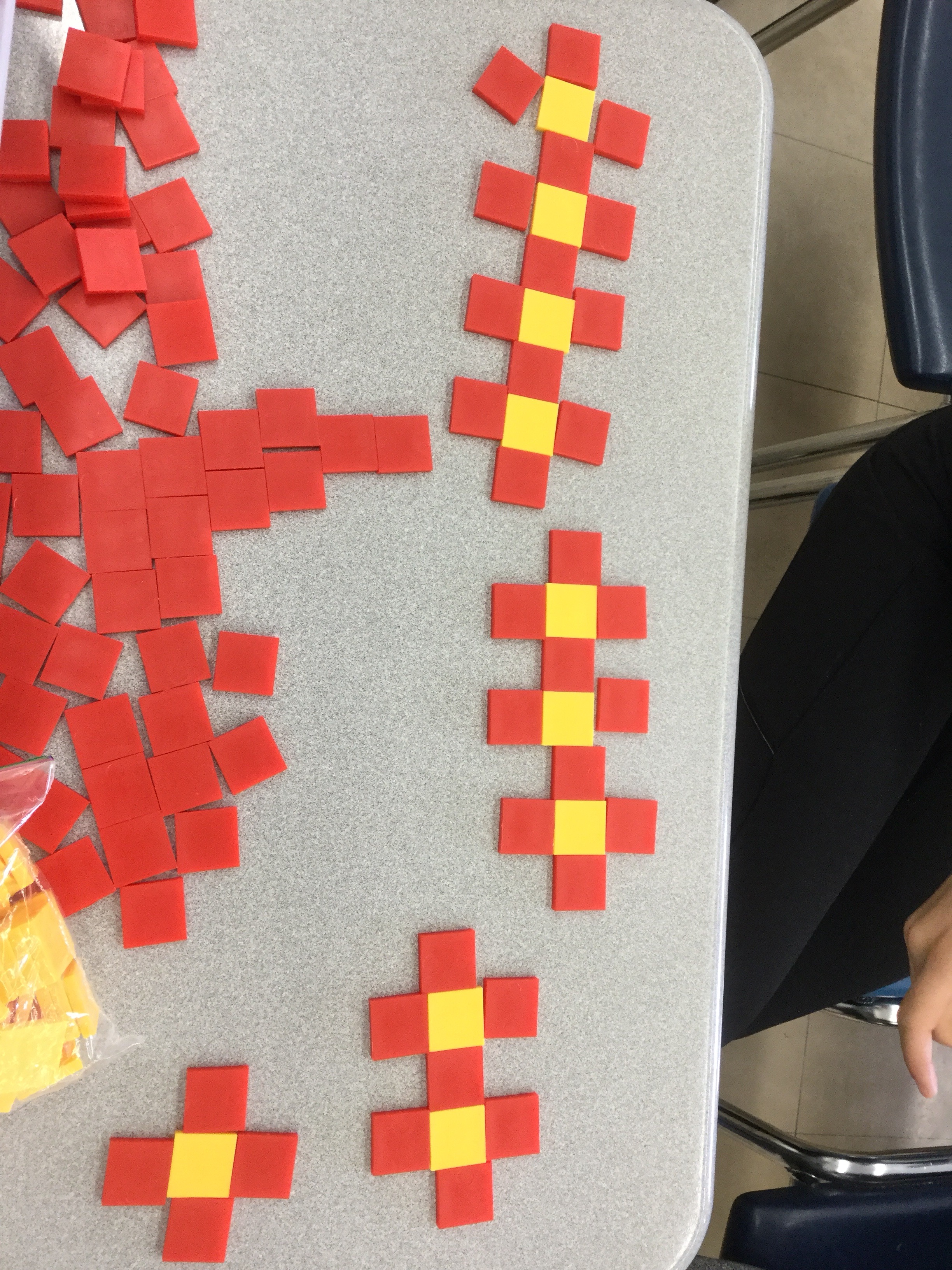
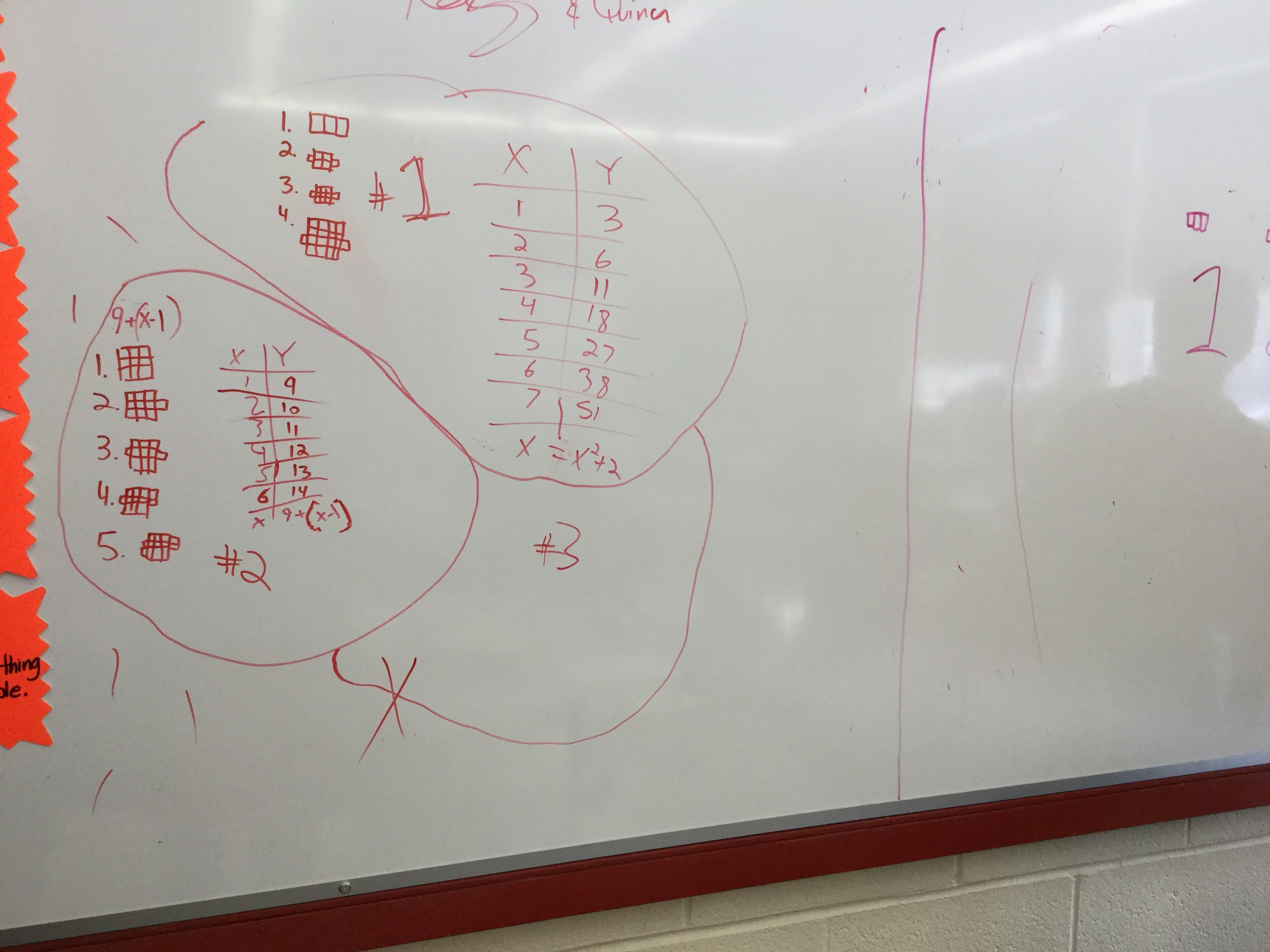
In grade 10 we worked on similar things today. We showed all the different ways to visualize patterns and create algebraic expressions from the visualization.
Here’s an example:

We looked at figure 3 in many different ways.
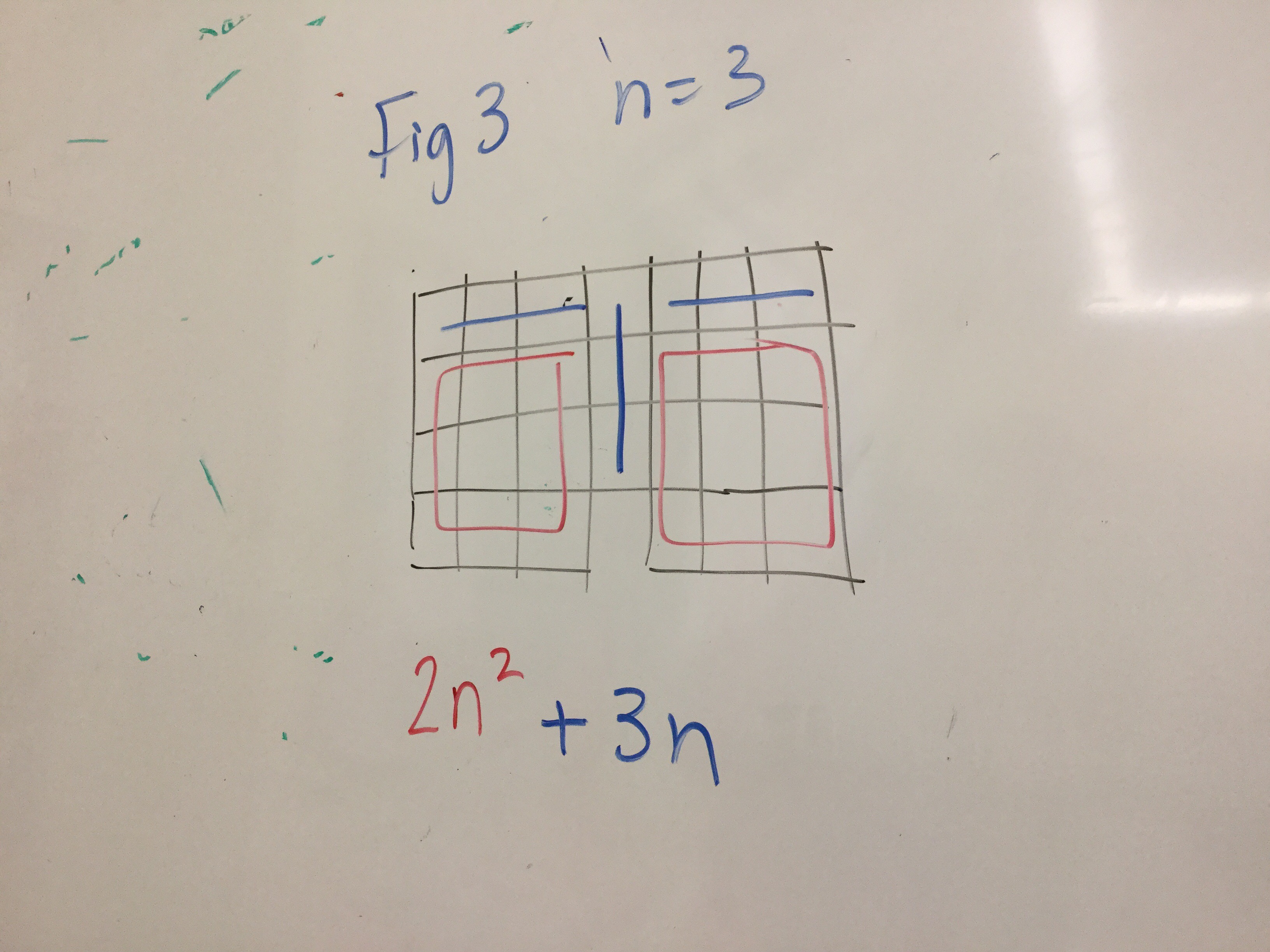
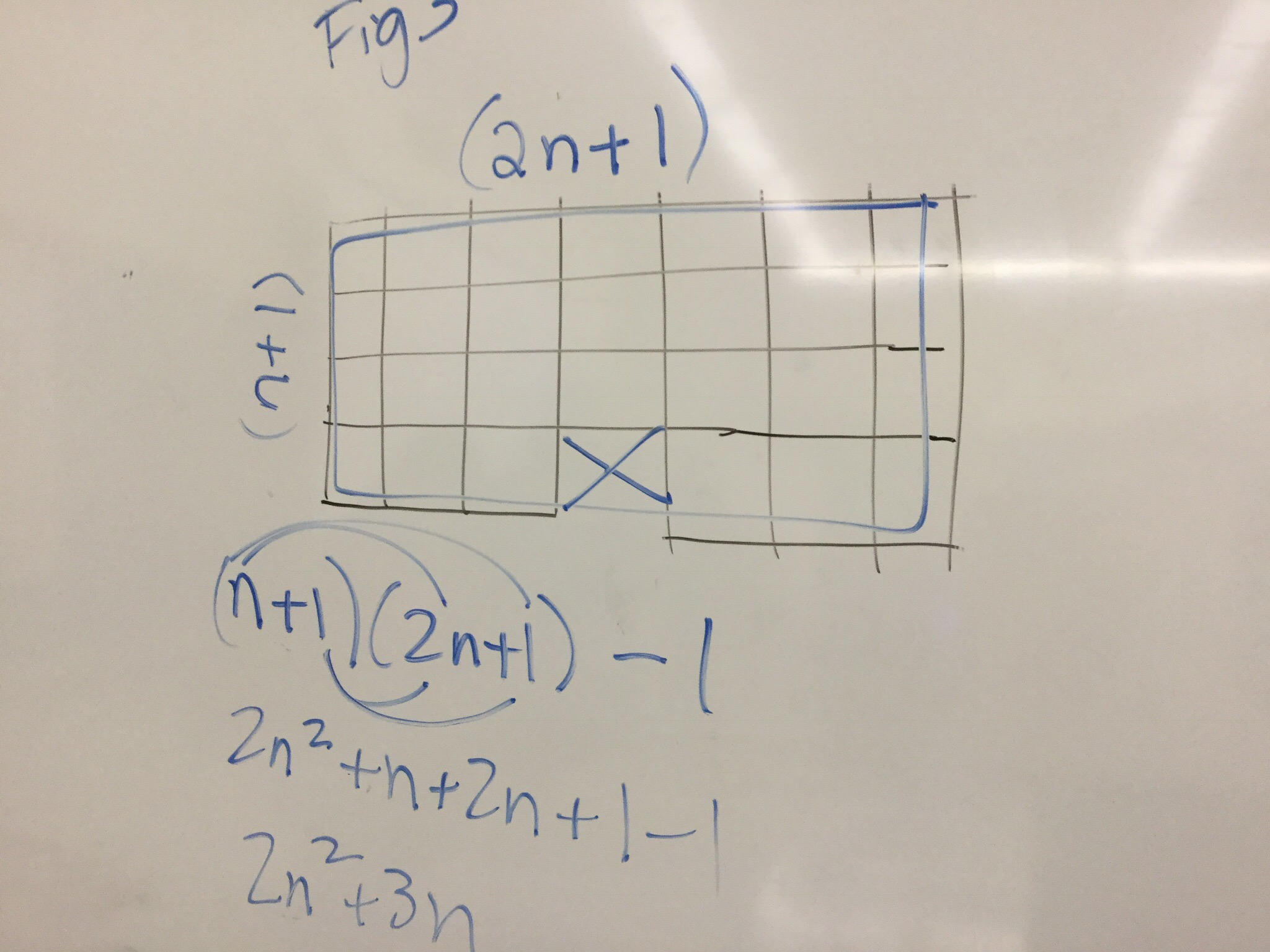
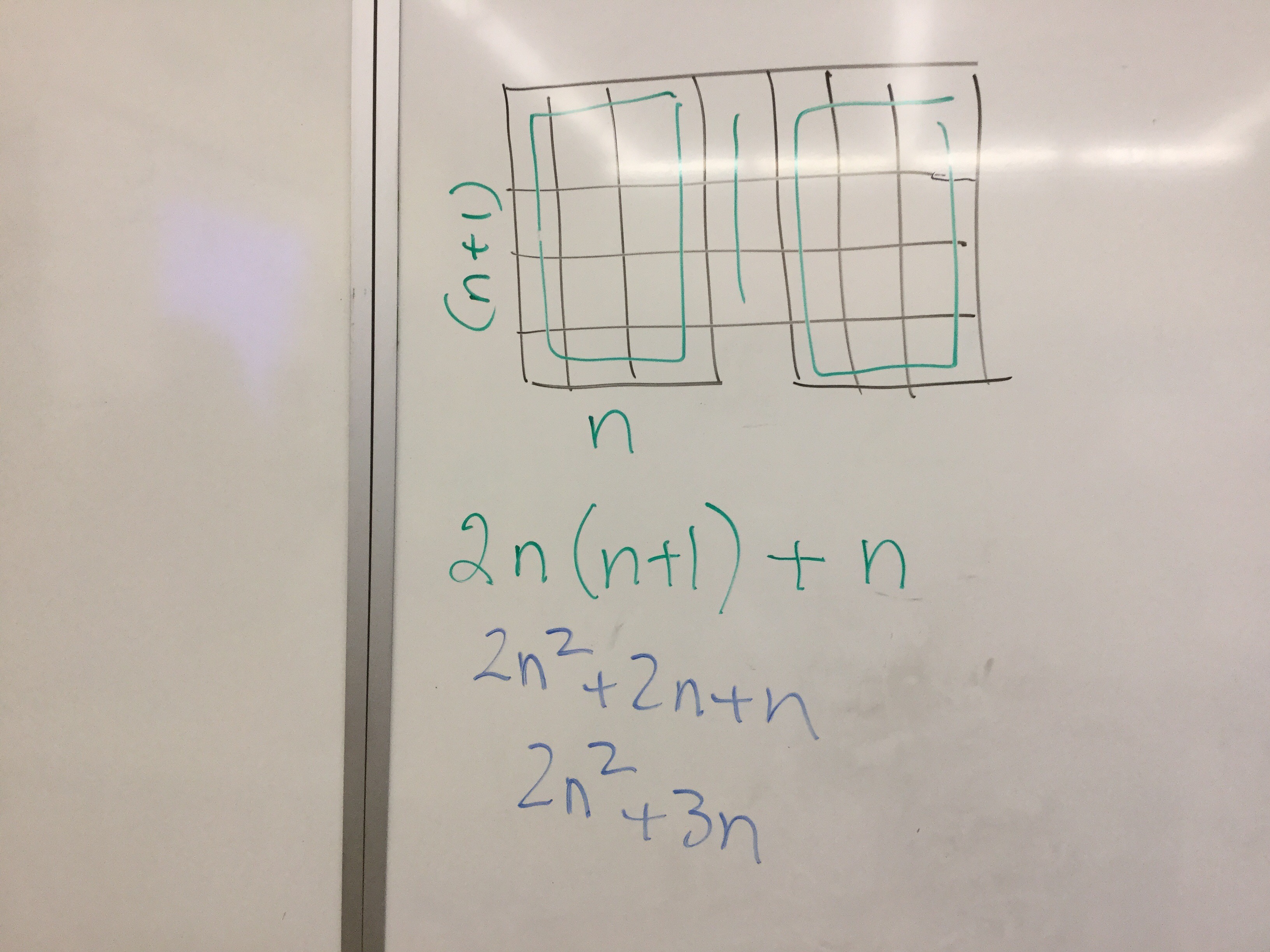
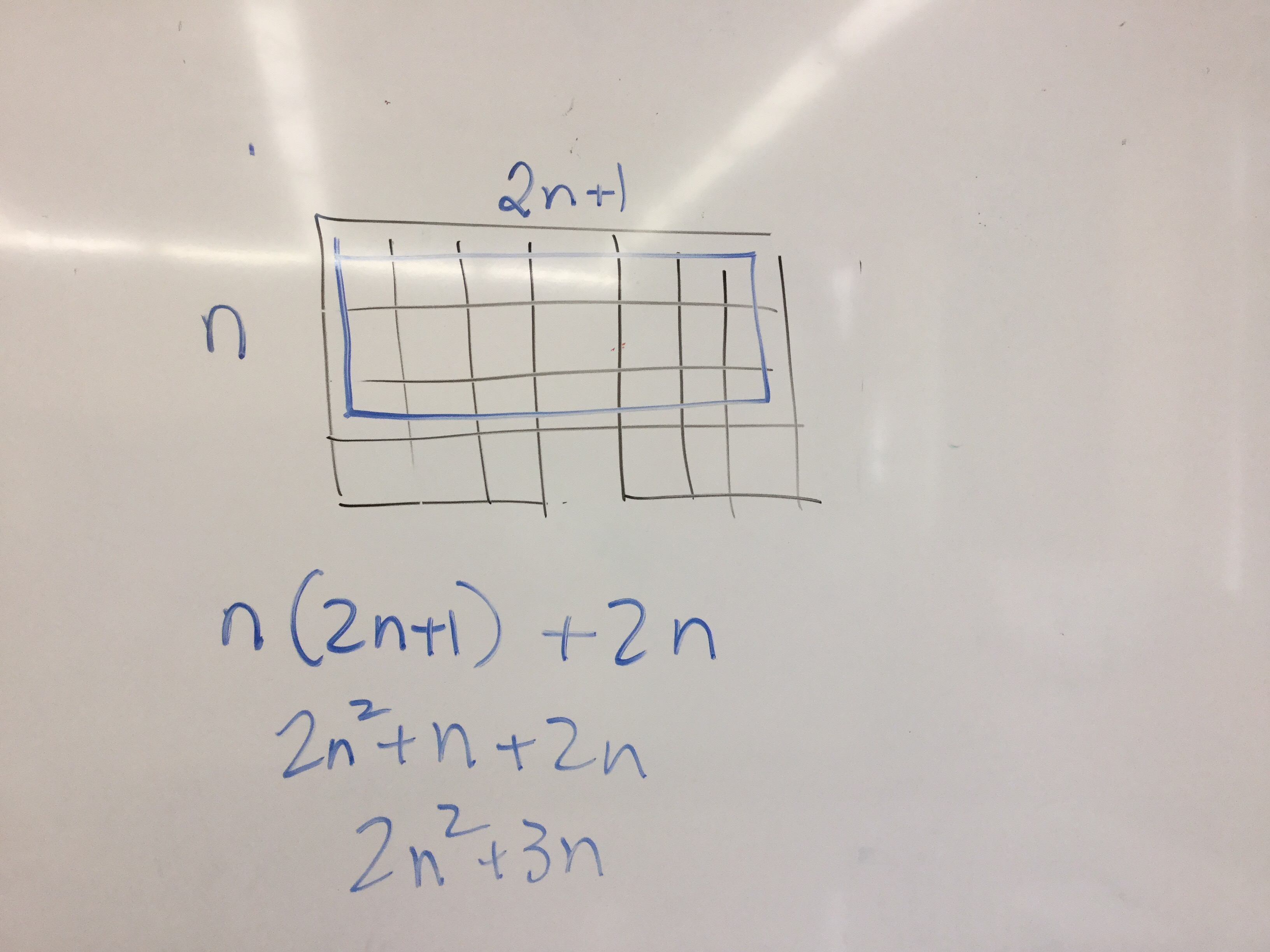
It’s neat to see how no matter the way you visualize it, and no matter the expression you create, it simplifies to the same thing in the end.
Working on the walls
We are factoring a lot these days!

Today we took over all the walls to practice in groups.
No homework tonight, get a good sleep before the literacy test tomorrow grade 10s!
Graphing bean growth
Today we started graphing our bean growth. We know that they will continue to grow over the next few weeks so we will leave some space to add more points to our graph.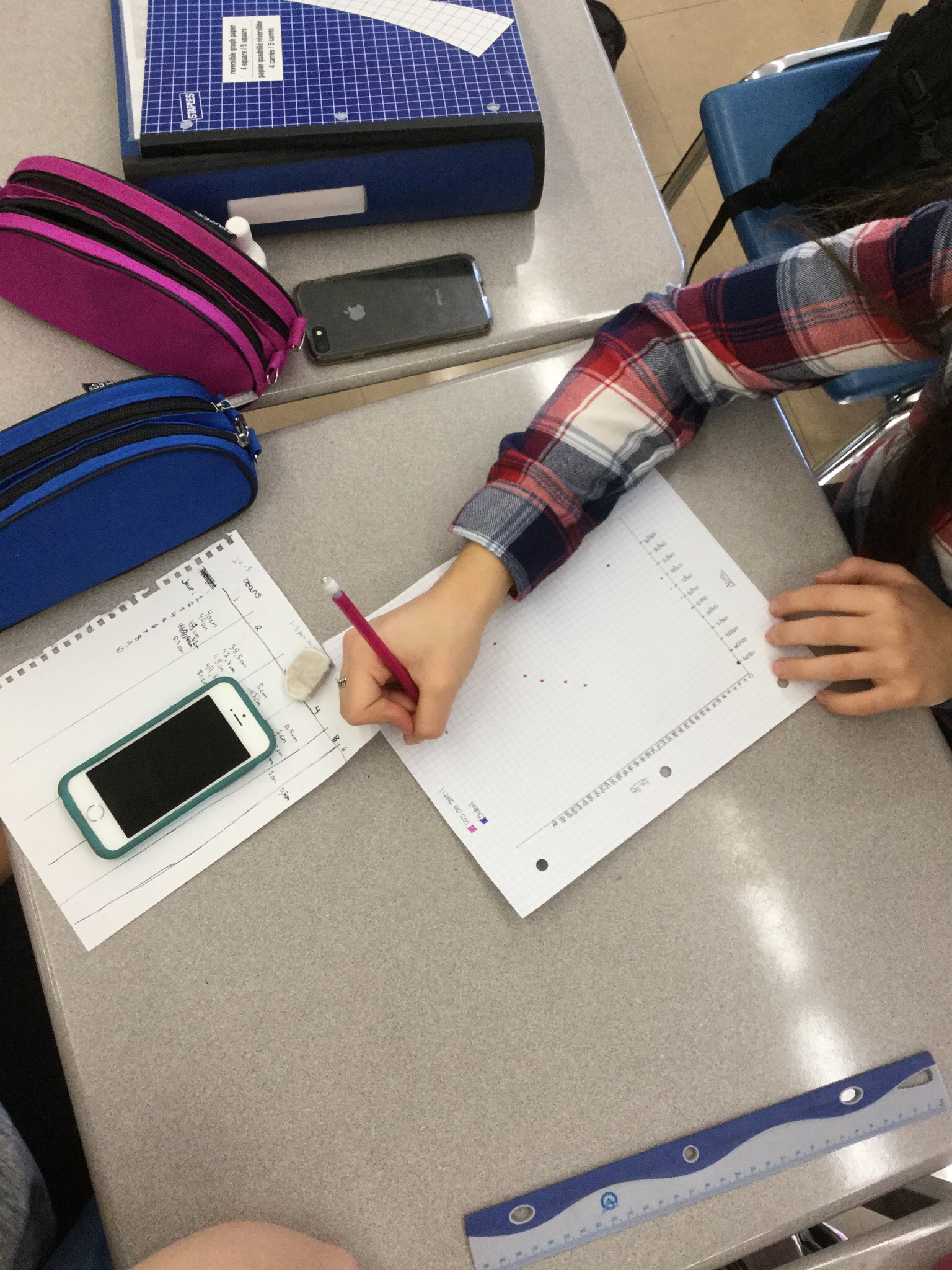
We made sure that the axes have reasonable scales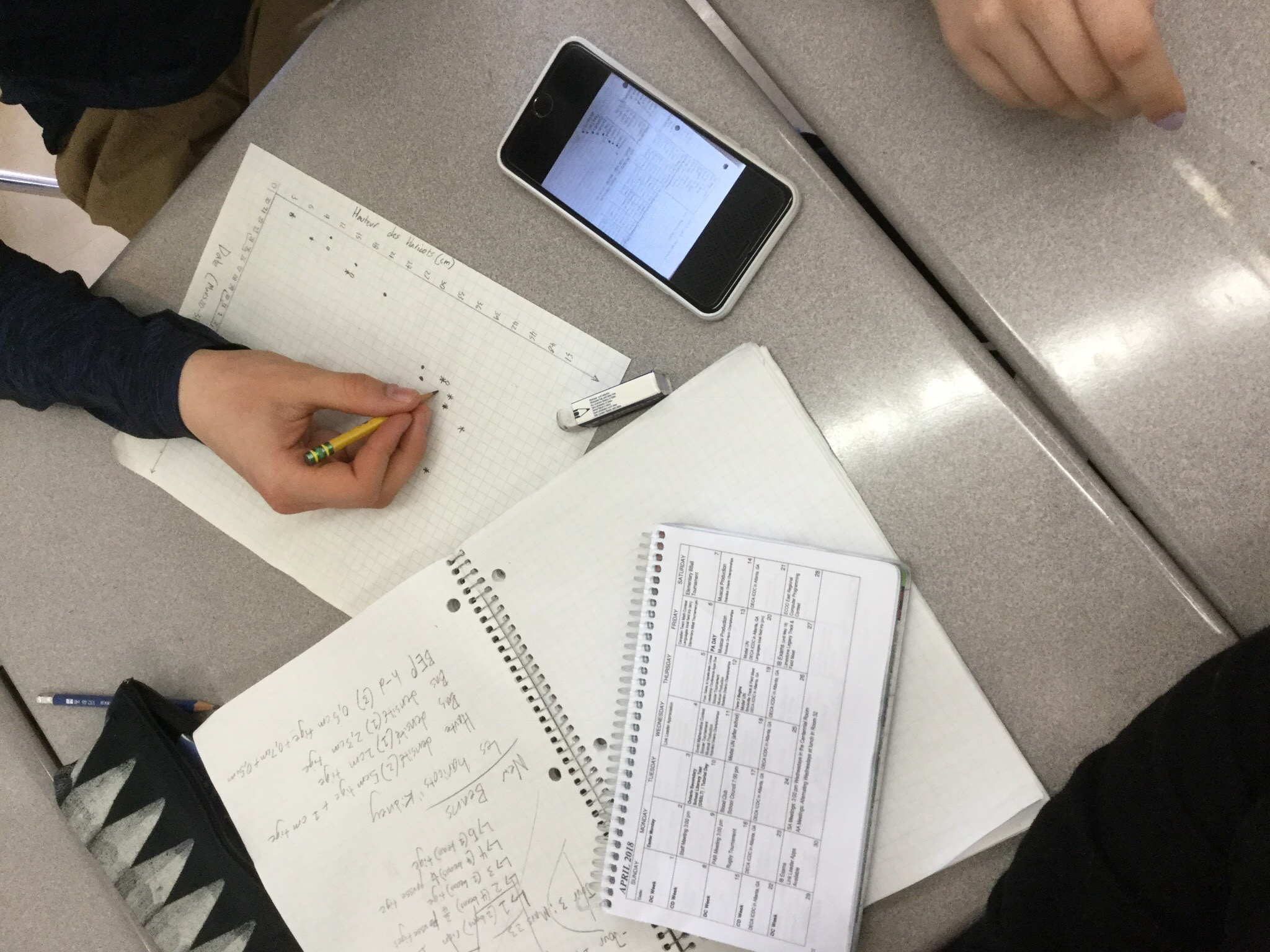
And that we graphed our beans wih a legend so we can make sense of the results.
We had to figure out how to account for weekends, when we didn’t record data. We can always interpolate later using our trend line.
Beans update
The beans in the dark are looking long and spindly. They aren’t growing as fast as they were. We will graph all the growth next week and see what the trends look like.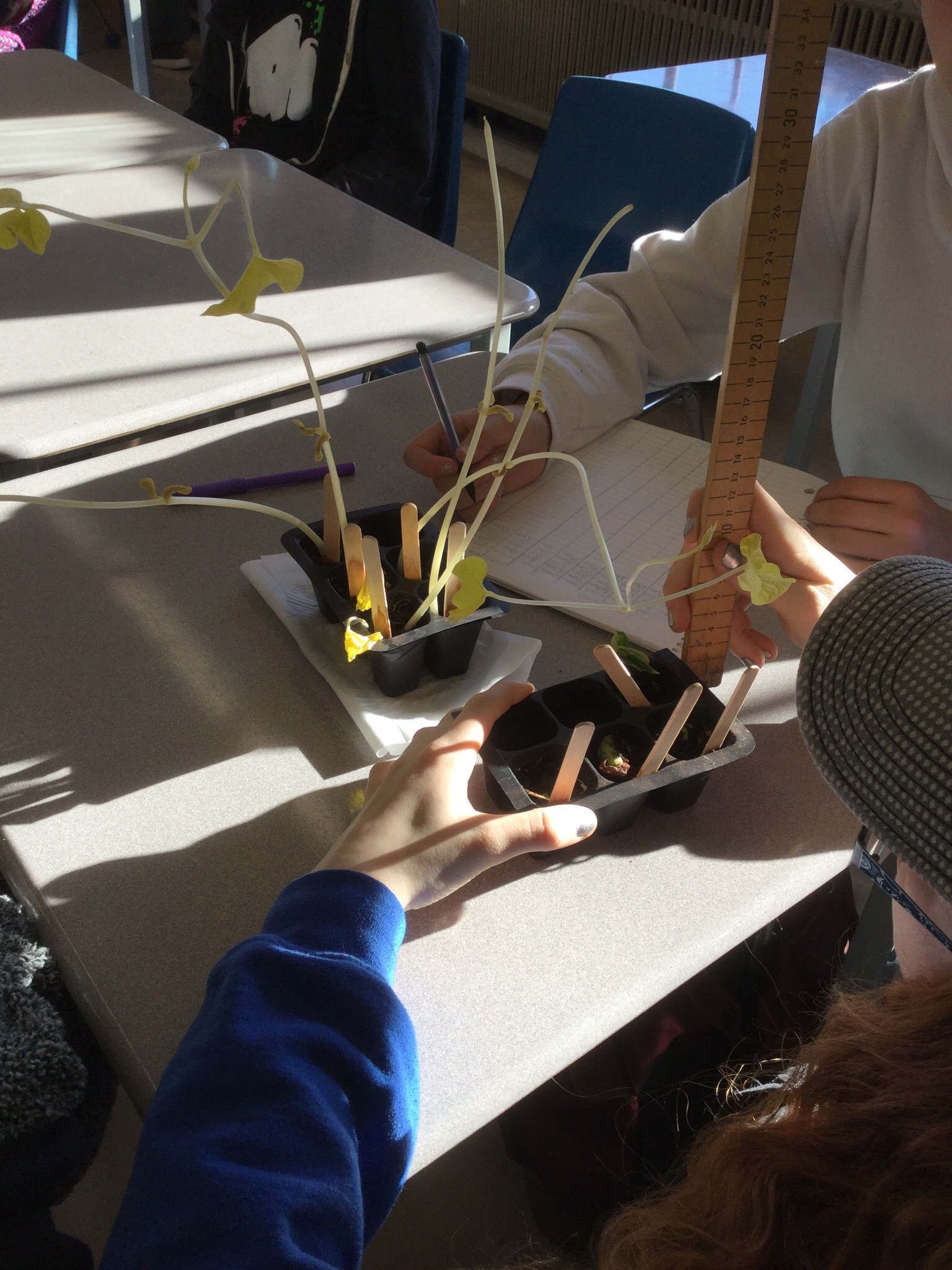
Factoring
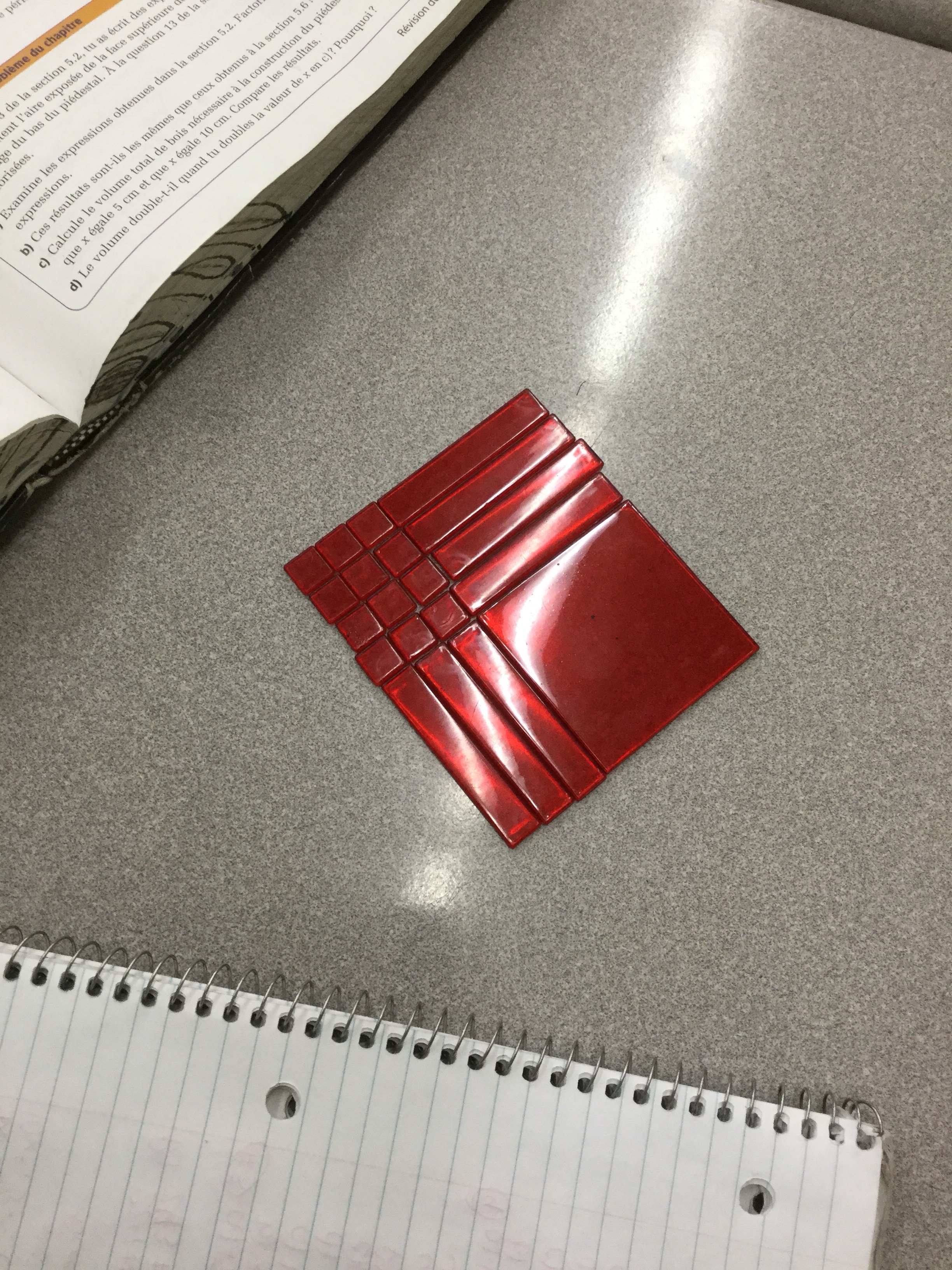
We are working on factoring algebraic expressions. Today we visualized this by makingg rectangles out of algebra tiles.
The area inside the rectangle is the trinomial x^2+7x+12 and the factors are the length and width of the rectangle (x+3)(x+4). This is the only combination of length and width that work for this polynomial. We also noticed that there is a pattern. 3+4=7 (the middle coefficient of the polynomial) and 3×4=12, the constant term.