A different kind of quiz
Things were a bit different today! We had a bit of a search for our quiz questions. They were all hidden in eggs around the room.

 Each colour of egg had a different question.
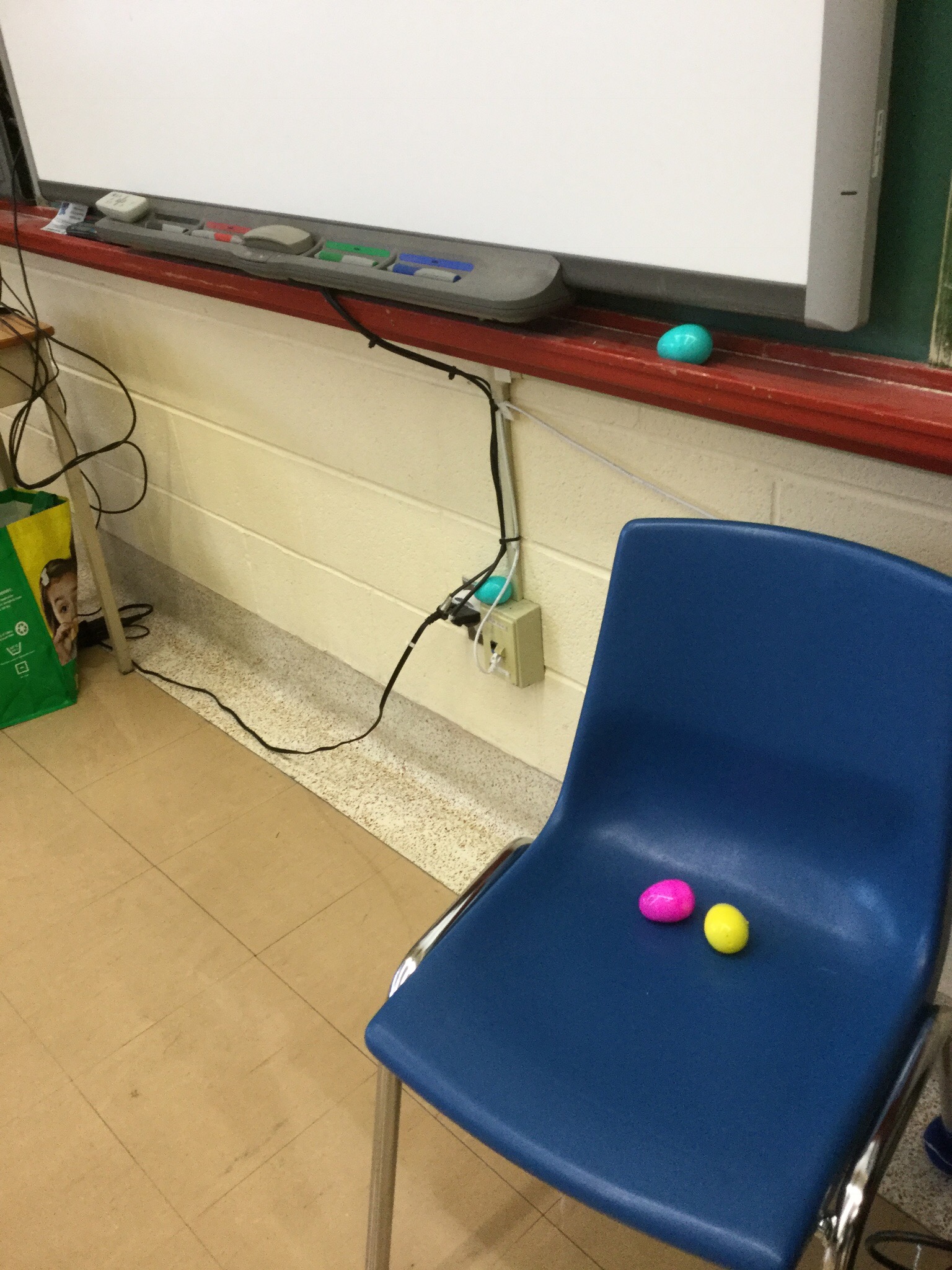
After we solved that question we hid it again for our classmates to find
We are working hard to understand how to add and polynomials and what exponents mean. We represent them visually, in expanded form, or with algebra tiles to help us work with them.

It’s important to practice how to use calculators to evaluate expressions with exponents.

What is engineering?
Today in physics class we are listening to a presentation about what engineers do and what problems engineers can solve.
“Speed dating” math style
Today we worked on our math review using a “speed dating” set up. Partners sit across the table from each other and both solve the question in front of them. Once both get the question, one side of the table stands up and shuffles one position to their left. They will be sitting wih a new person and working on a new question. They will have an expert sitting in front of them who ensures their expertise gets passed along. After 5 minutes the “experts” will shift one space to their left and have a new partner and a new question.

This method of review is good because everyone is working in a team, and gains knowledge and confidence working together. Caution is needed to make sure that each question should take about the same amount of time to solve.
Beans!
Today we looked at our beans. There had been a tiny bit of growth when we checked them on Friday, but now hings are looking very exciting for some groups!

We planted them in small containers.

And put them in the sun or in the drawer


We are looking forward to measuring some progress soon!
Representing exponents
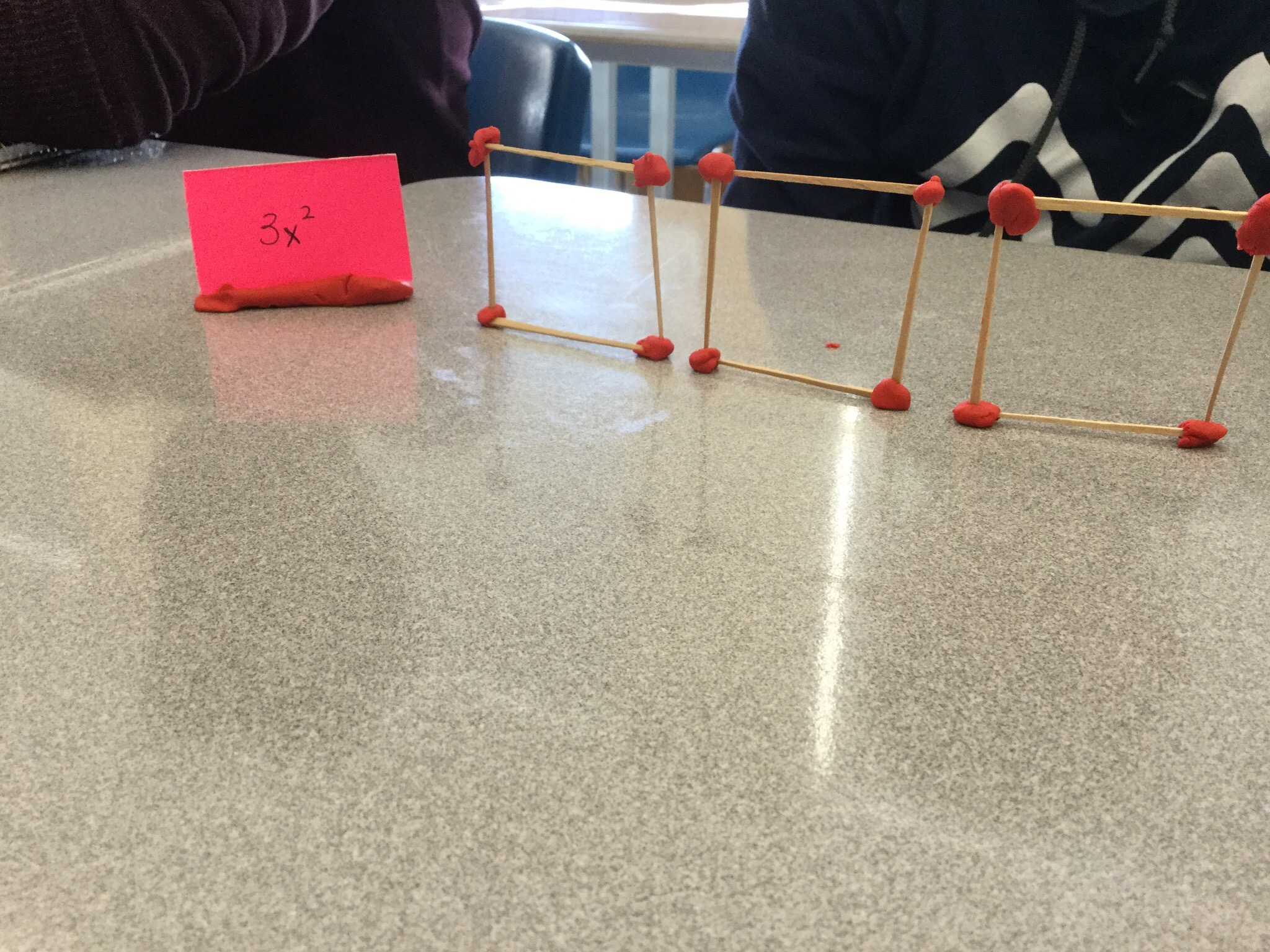
Today we looked at representing exponents in a visual way. We used a toothpick to represent x, and we built x squared by making a square with side length x.
We can represent multiple ideas using these tools. Here are 3 x squared
If the number is in brackets and included in the base, it changes things.
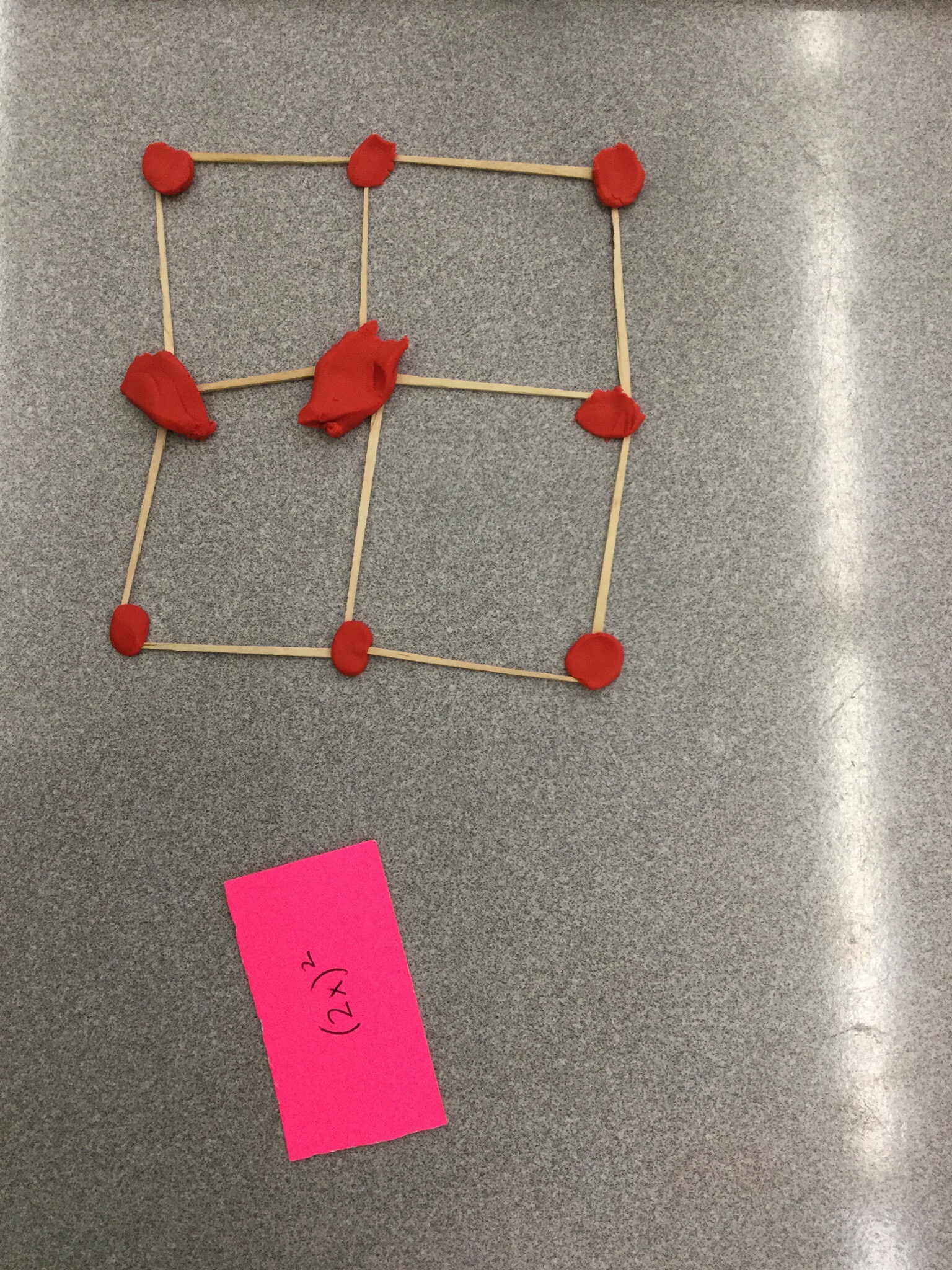
Here is one square with dimensions 2x. Inside it we can see that there are 4 x squares in the expression (2x)squared.
We were able to build x cubes too
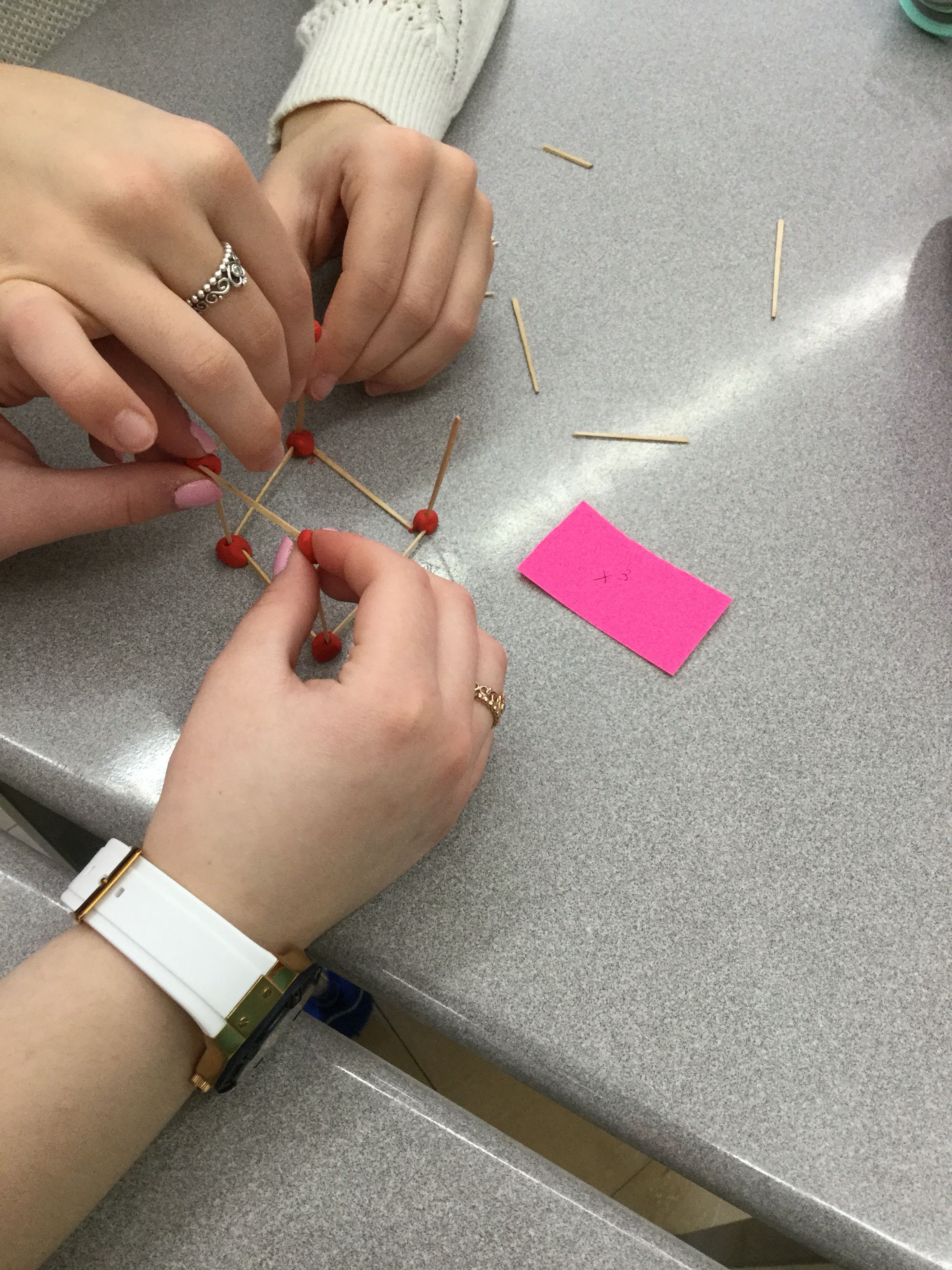
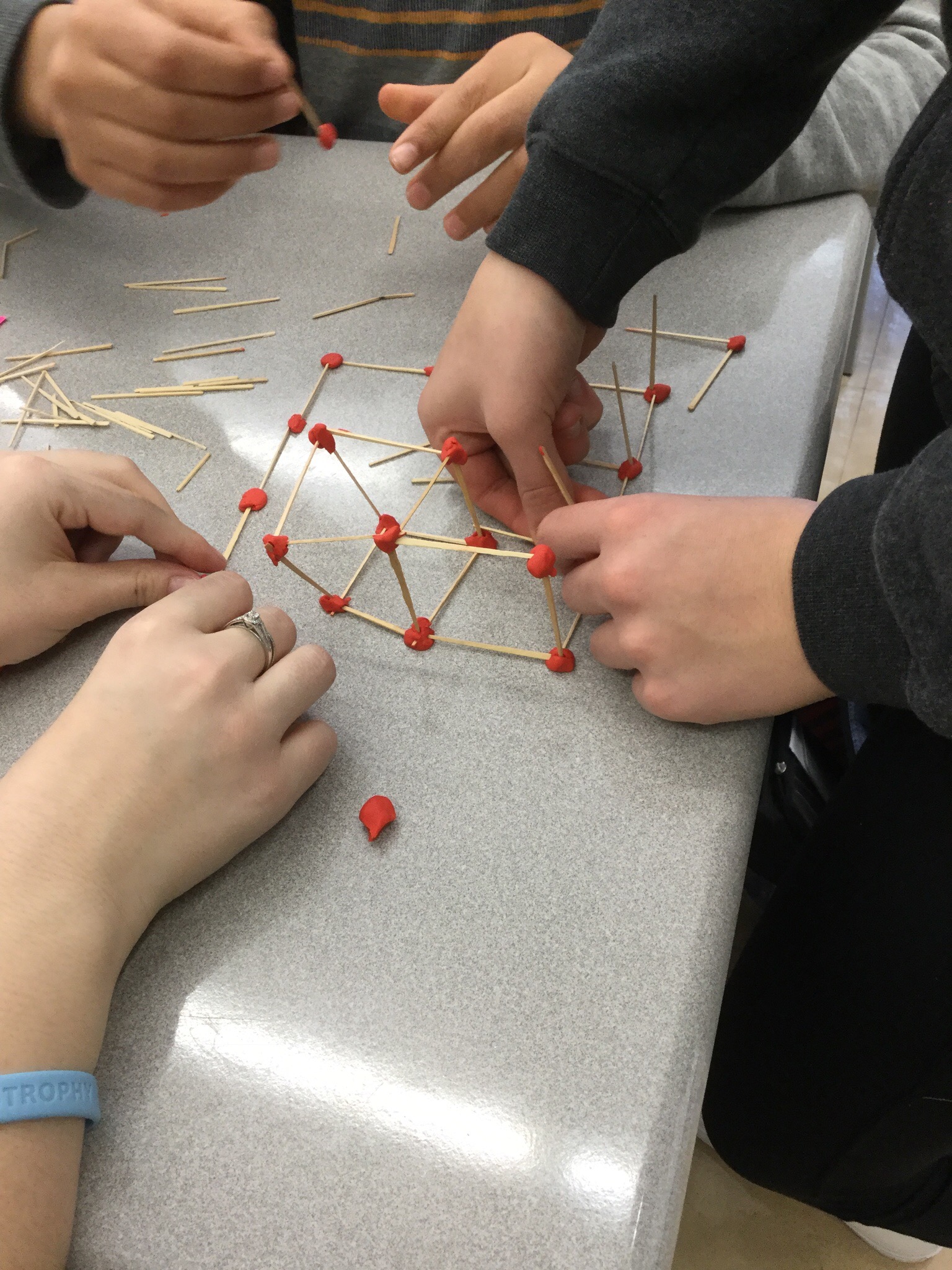
It was harder to build bigger models like (3x)cubed because of the structural limitations. We tried though!
 We had a creative approach using plastecine that worked nicely
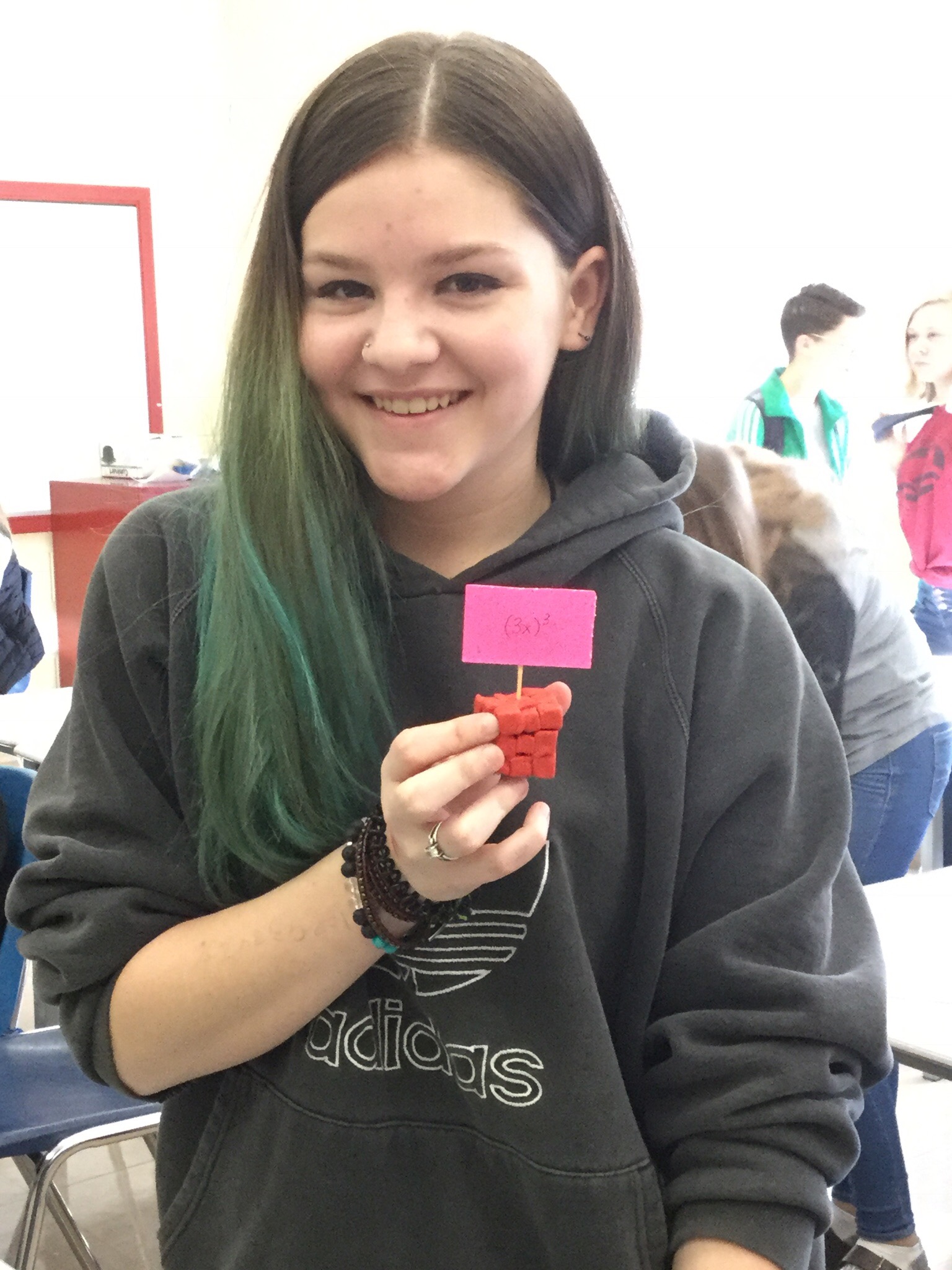 There are 27 little cubes in there!
Phone Hotel Experiment
Today we opened a phone hotel. We ate these cookies and used the box to give our phones a rest. We don’t always need technology, and it’s nice sometimes to be fully involved in what we are doing, and not distracted by intereuptions.
At the end of the class we had a look at what we missed. Some of us had 16 notifications! That would be a lot of distractions over the course of a 72 minute class.

Playing music with a bottle
We experimented in grade 9 today with bottles and the sound that they make when you blow over the opening. This note will change with more or less liquid in the bottle. We explored that relationship between the height of the air column and the frequency produced.
The frequency was measured with the app “sonic tools” (it’s free).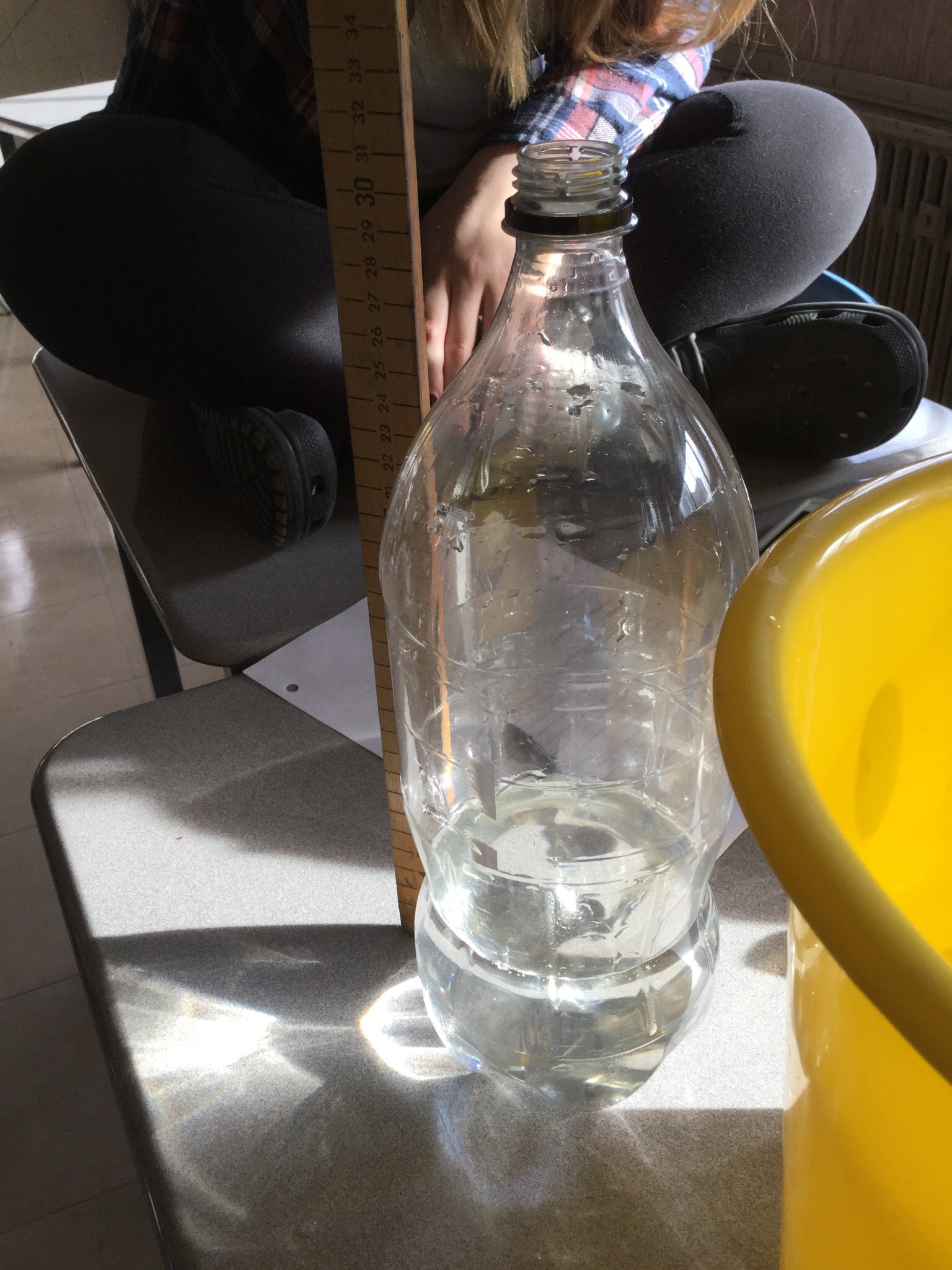
Some groups used big bottles, others used small bottles. We did multiple trials to be sure our data was accurate.
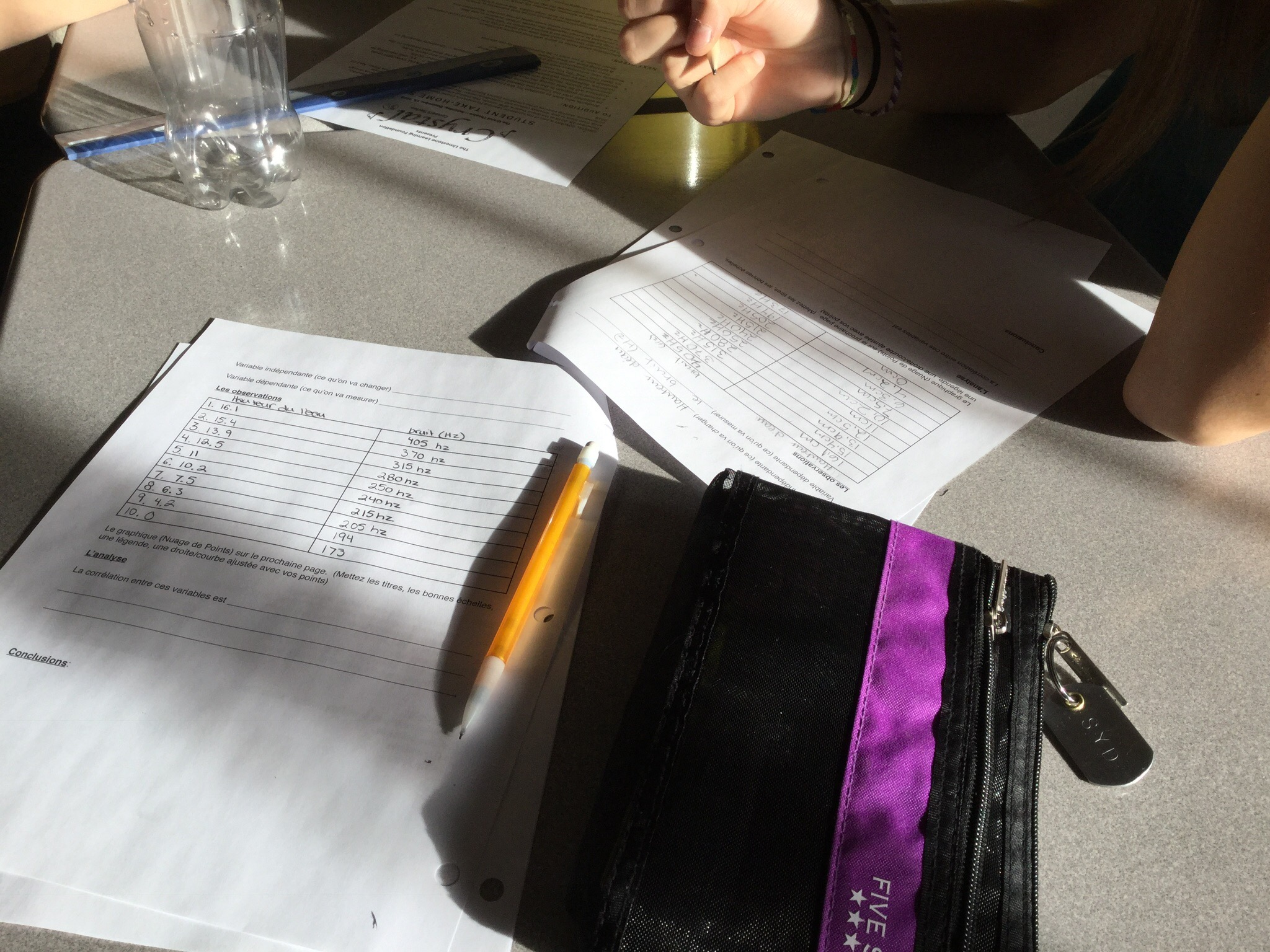
We then plotted our data and are working on answering some questions.

Problem solving
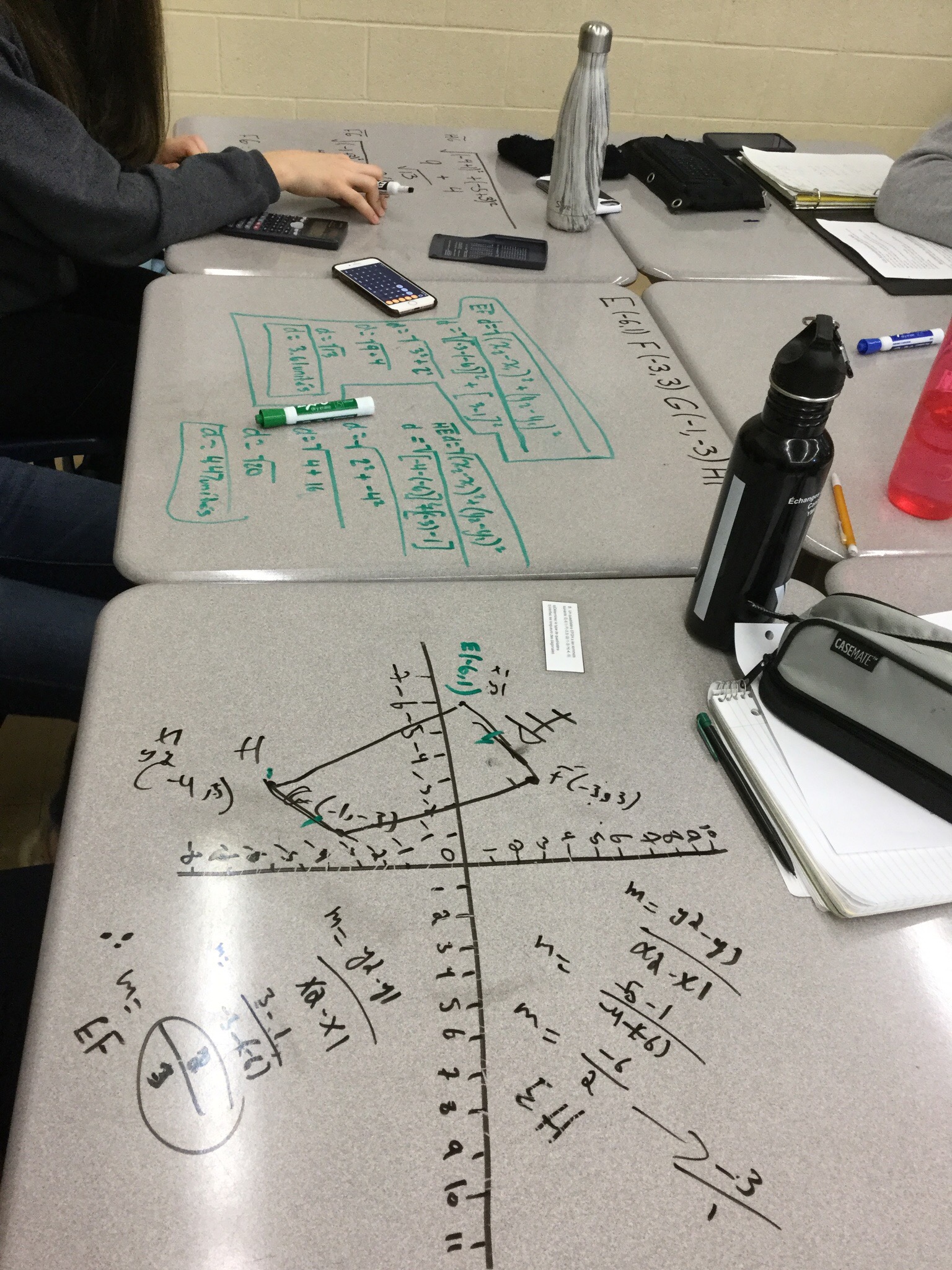
In grade 10 we are working on proving concepts using analytic geometry. We are also working on how to make a plan and solve problems.
We worked hard before the break to solve problems out loud, and take note of how our peers tackled problems, and setbacks. This has helped us get more practice and confidence.


We are now better able to tackle problem solving independently.
Beans!
It’s spring today so we are planting beans!
We designed experiments in groups and decided what variables we will change and what we will measure. We need to keep a lot of variables constant during our experiments. We will keep track of our observations and see how our beans sprout over the week.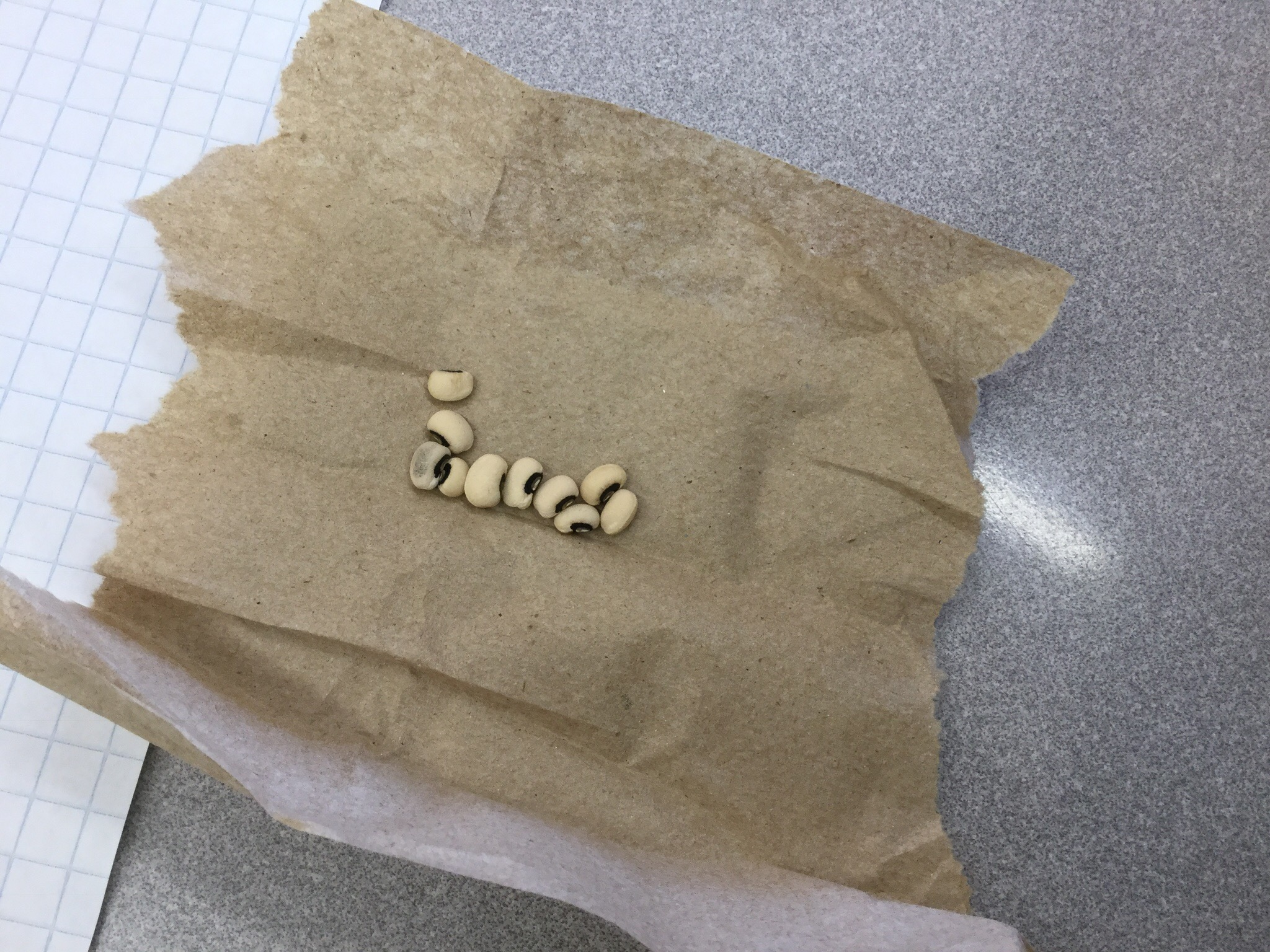


Belated Pi day
We looked at he relationship between diameter and circumference todah
We made a graph showing all of our class data
We noticed it is linear, positive and shows a strong correlation. We can use a line of best fot and interpolation and extrapolation to solve problems.
We also noticed that the rate of change is 3.14 (perfect for pi day)
We sang a pi day song (to the tune of oh christmas tree) and talked about irrational numbers.

And finally ate some pies!