Differences of squares
Grade 10s started off today multiplying binomials, and headed towards multiplying a special sort of binomials (ax+b)(ax-b). Some of us use a box multiplying method, others use a distributive property model with arrows, and others build a model with algebra tiles.
Here’s an example of (2x+3)(2x-3) which simplifies to 4x^2-9. The -6x and +6x terms cancel out.

We played around with making questions that have only big red squares and small red squares in the expression, (spoiler alert: it isn’t possible, the colours have to be opposite) then we moved to working backwards, and factoring expressions that are made of different coloured squares.
Here’s an example:

We noticed that when the terms are both square numbers, and the signs on the terms are opposite that they can be factored in a special way. The binomials in the brackets are all the same except one sign will be different.
-36x^2+25=(-6x+5)(6x+5)
A different way to work
Today we’re trying something new. We’re flipping things around, and standing up at the boards, working on vertical surfaces in groups. The groups are randomly chosen by drawing cards from a deck.
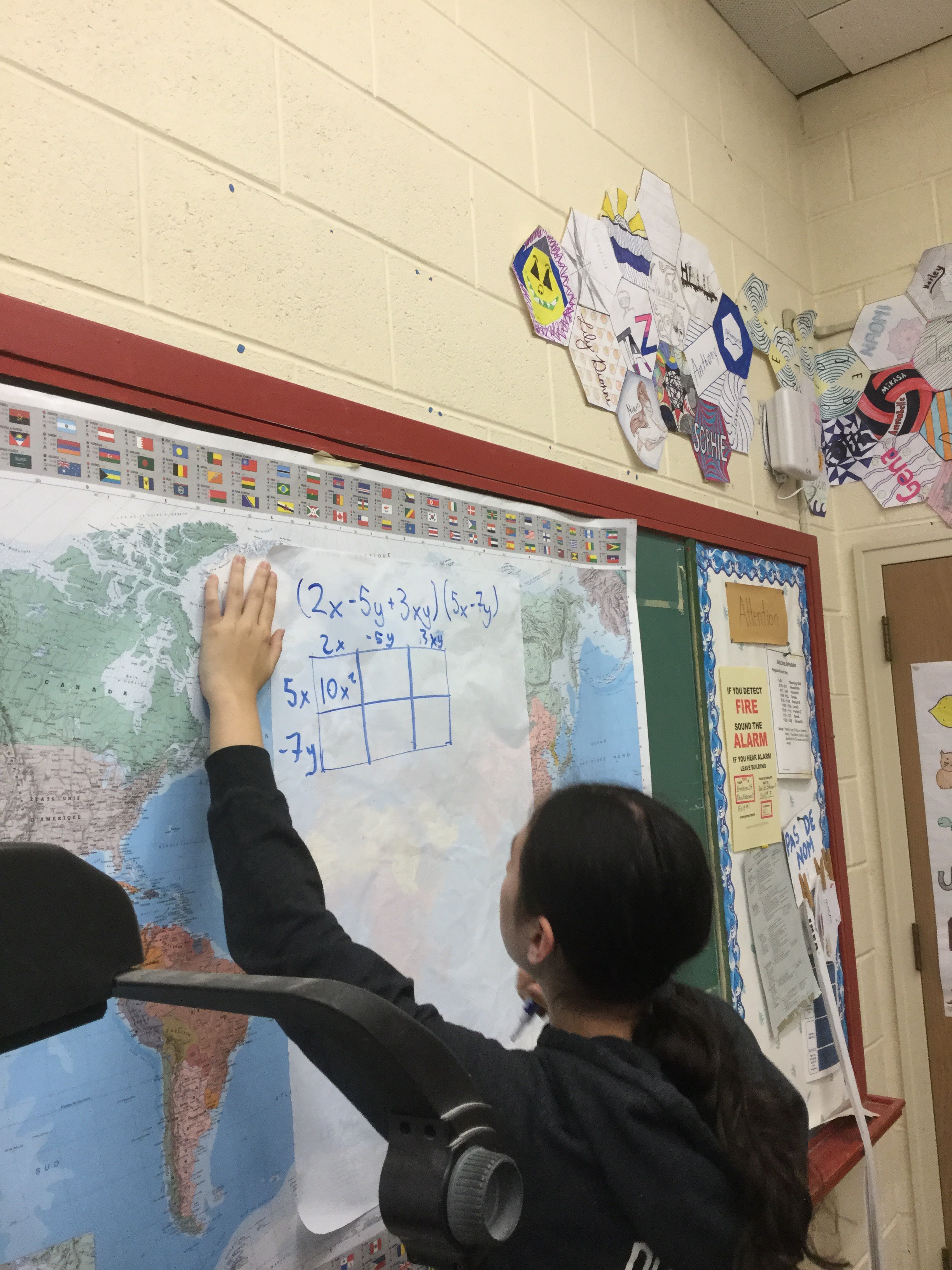


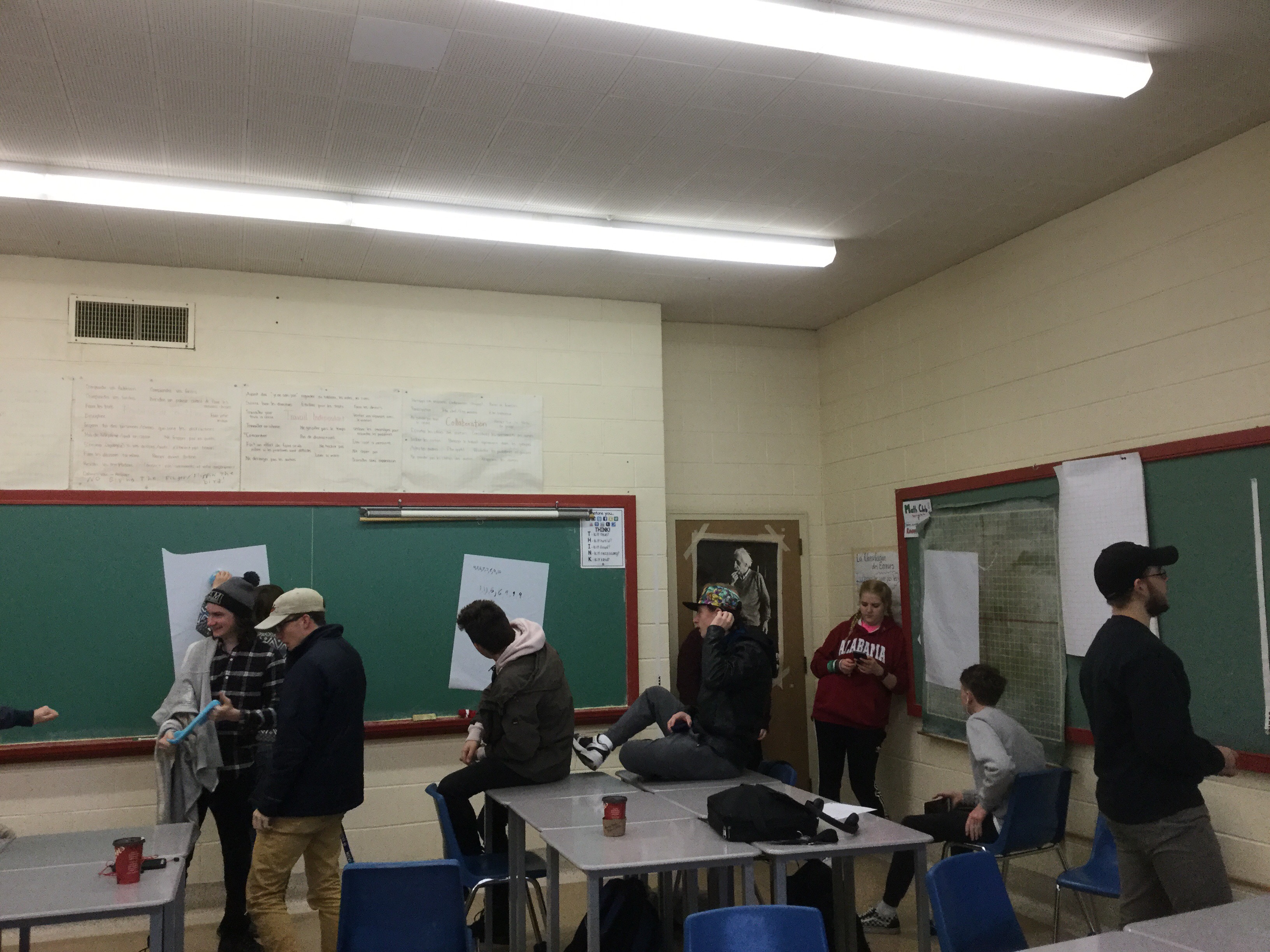
We sometimes are helping other groups, and we can get inspiration and hints by looking around the room.
Grade 11s are working on creating data sets with different restrictions on mean median and mode. Grade 10s are working on factoring differences of squares, and grade 9s are solving equations.
We’re even making up our own more challenging problems to extend our thinking.
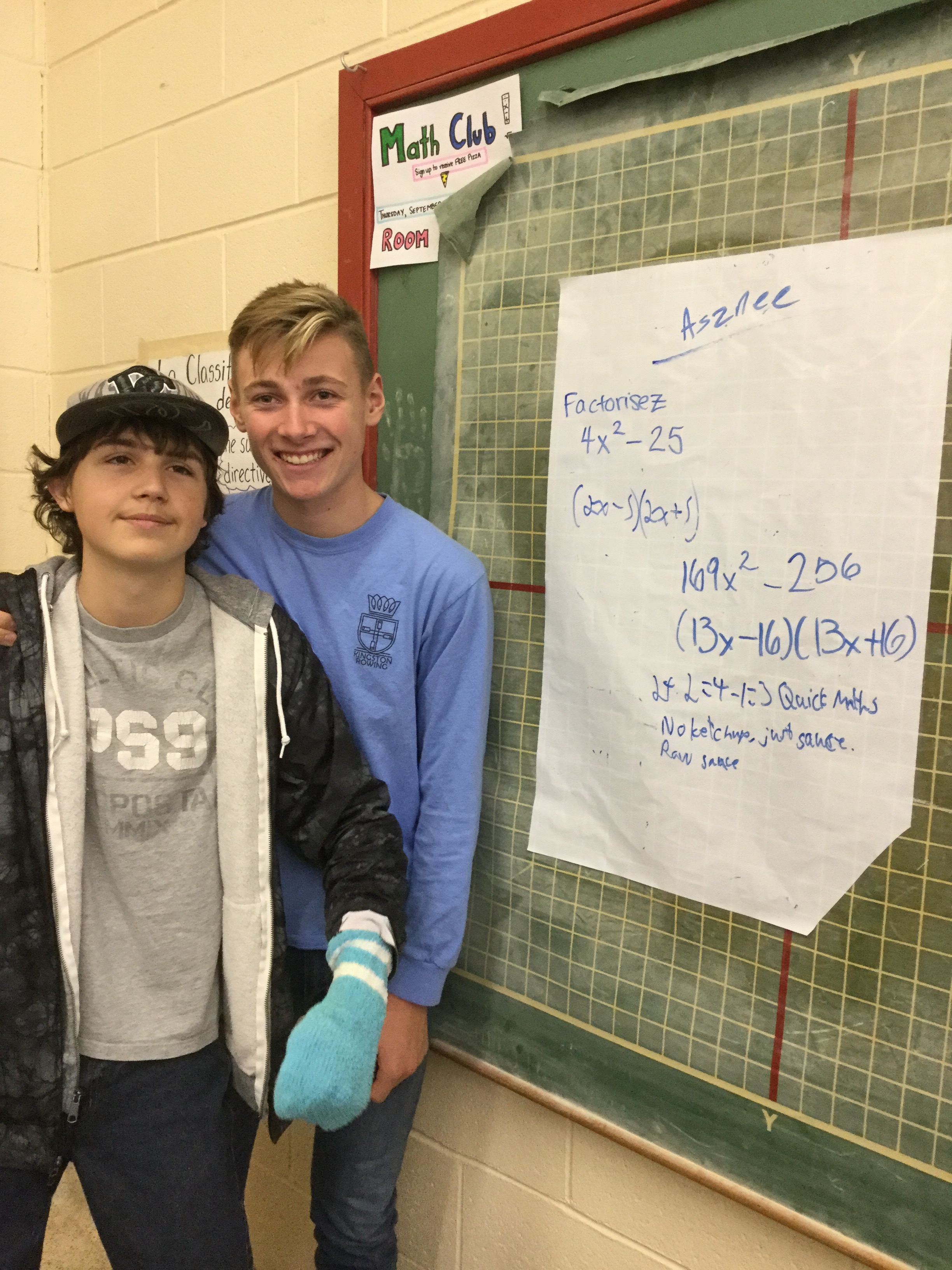
Multiple representations
We’ve been working on factoring trinomials and multiplying binomials a lot this past week in grade 10. We can do it with the distributive property, and decomposition and with algebra tiles.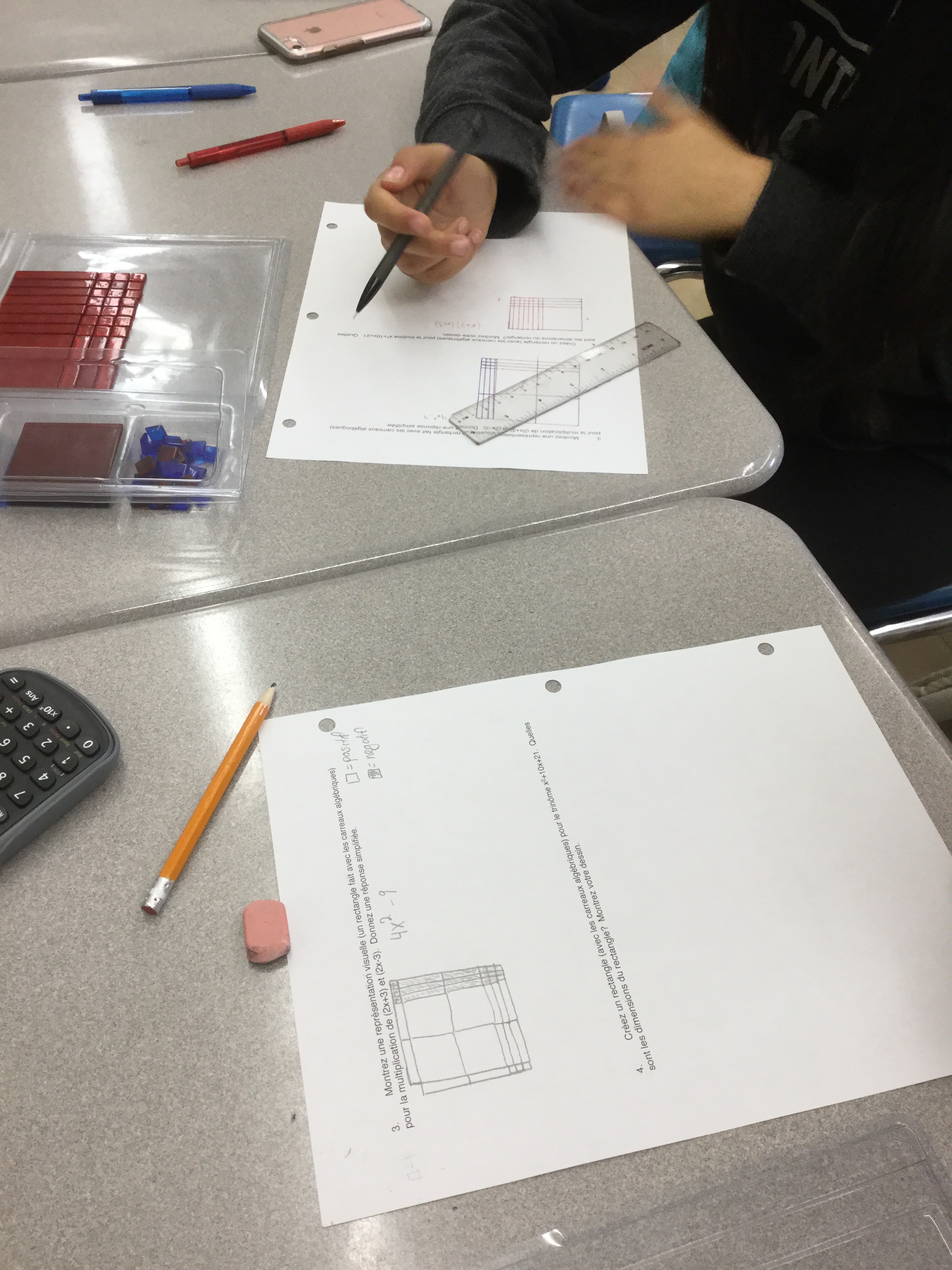
Some of the expressions we get are pretty neat. This one will simplify to 4x^2-9.
The next representation we’re connecting is the graphical. We looked at some equations in desmos today to notice some things about them. X and y intercepts were some good hangs to consider.

Circle Graphs
We braved the cooler weather today to go collect primary data outside.
Some of us observed clothing colours, hats/no hats, types of headphones, methods of transportation, shoe type, drivers distracted or not at the stoplight, or if they were wearing a poppy or not.
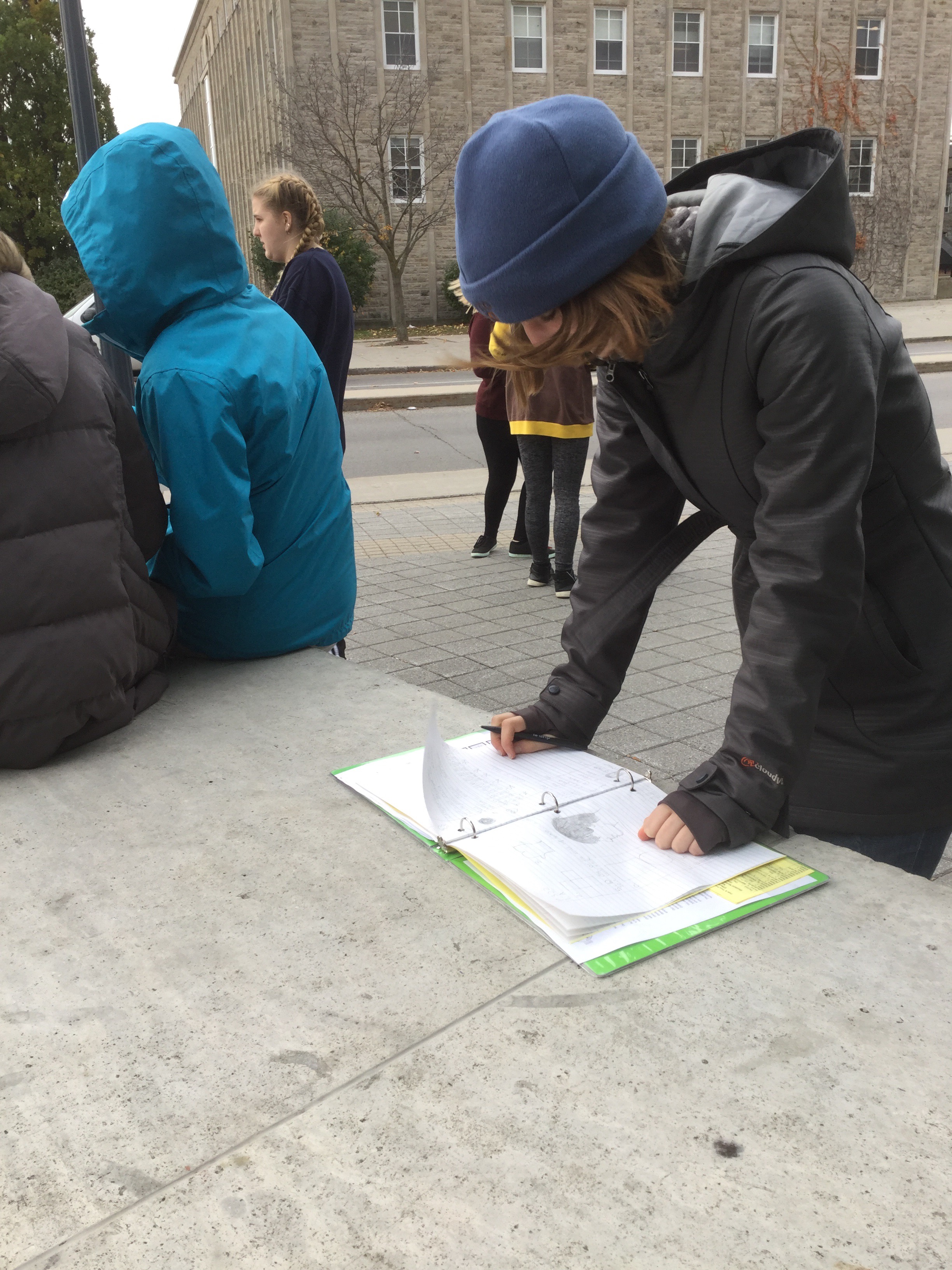
We made tallies on paper and on phones
We stayed out for almost 15 minutes then went to get some other tallying materials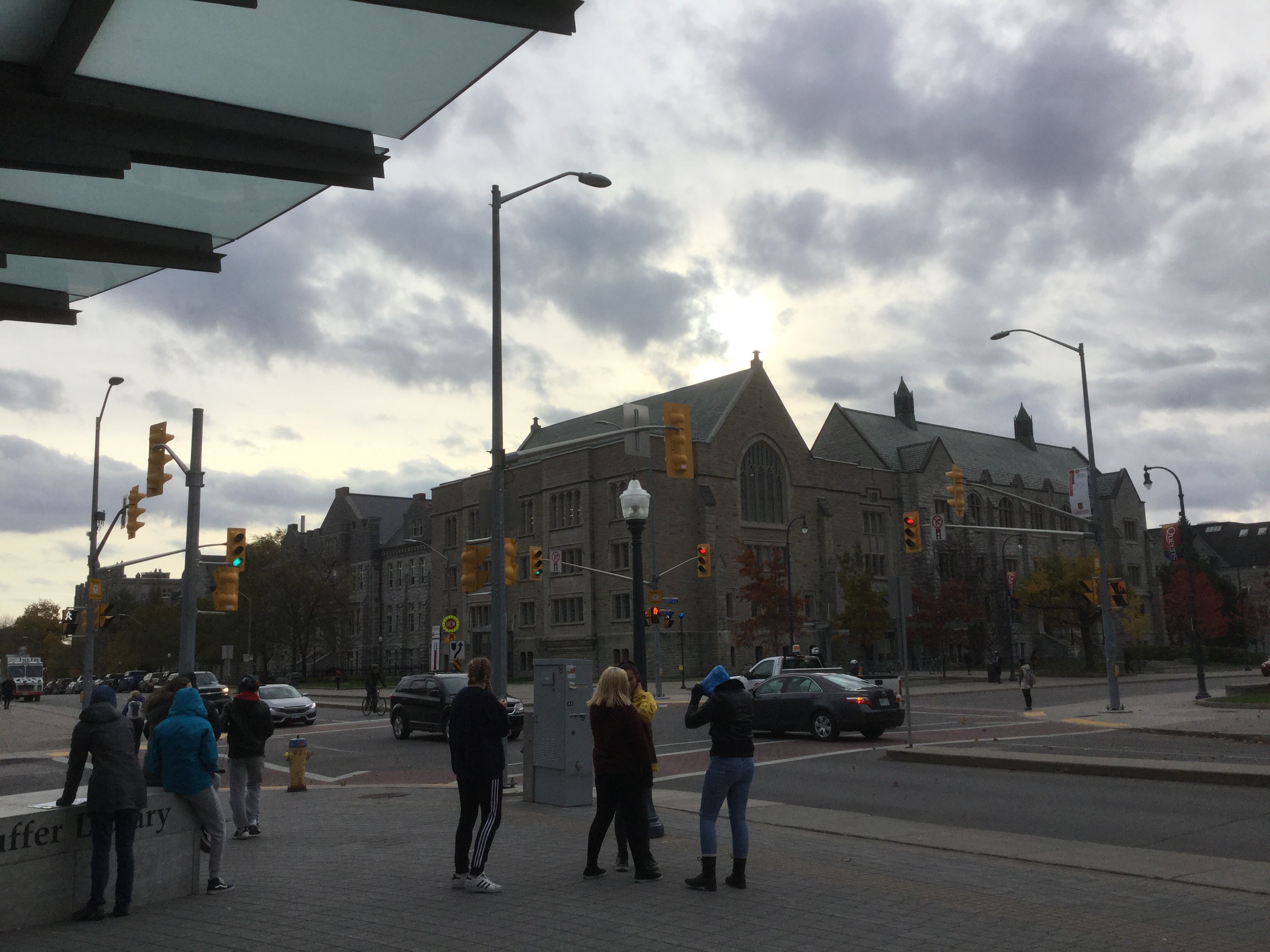
We got a box of 50 timbits (but there were only 48 in the box), and we separated them by type, and made a circle graph from that data.


Test day inspiration
 We are ready! We have the proof!

Guest speaker:civil engineering technology
We had a guest speaker today who told us all about civil engineering technology at St. Lawrence college. She was a KC grad, and is excited to share about her educational journey.
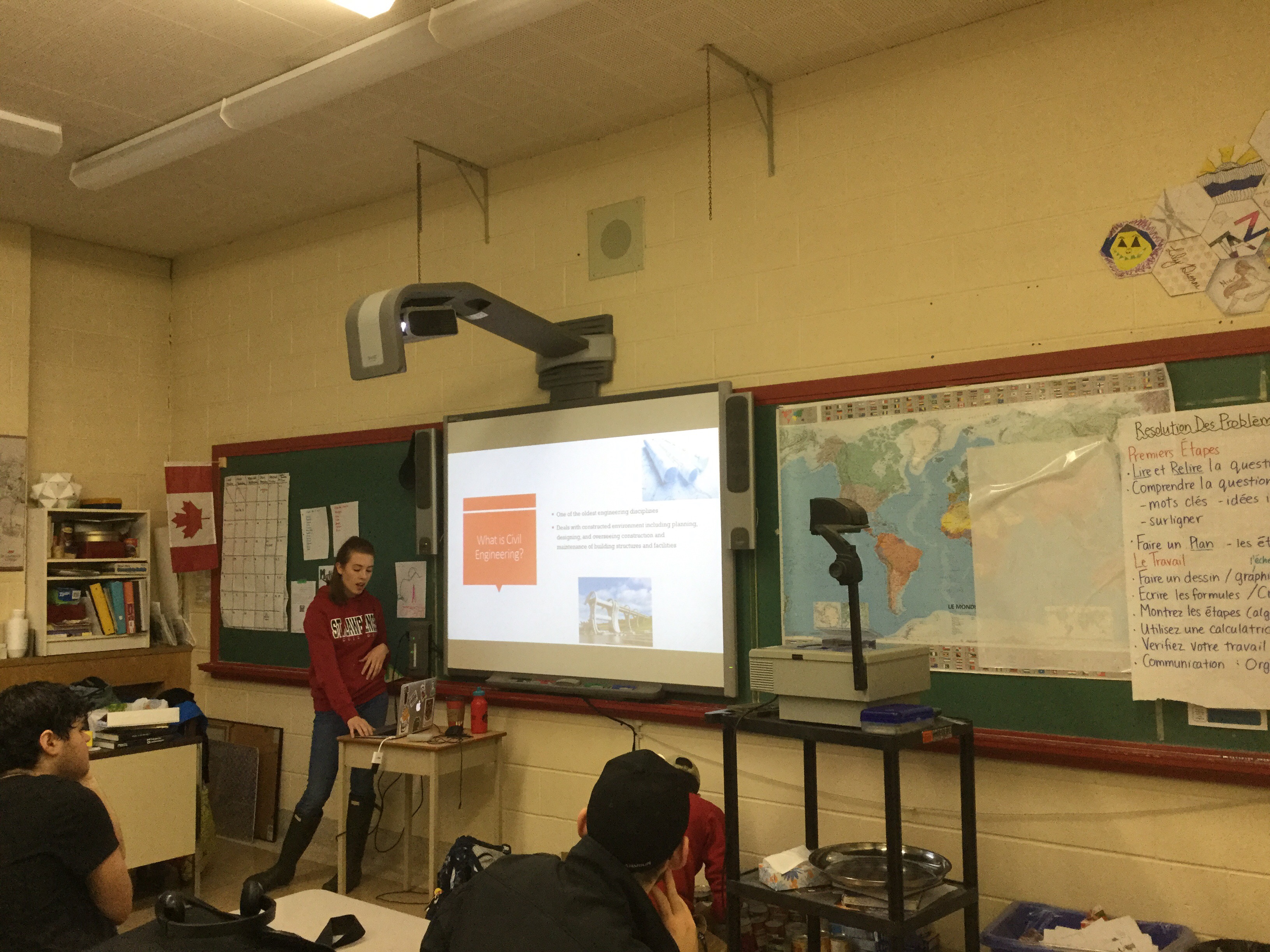 She brought us a challenge: to make a popsicle stick bridge.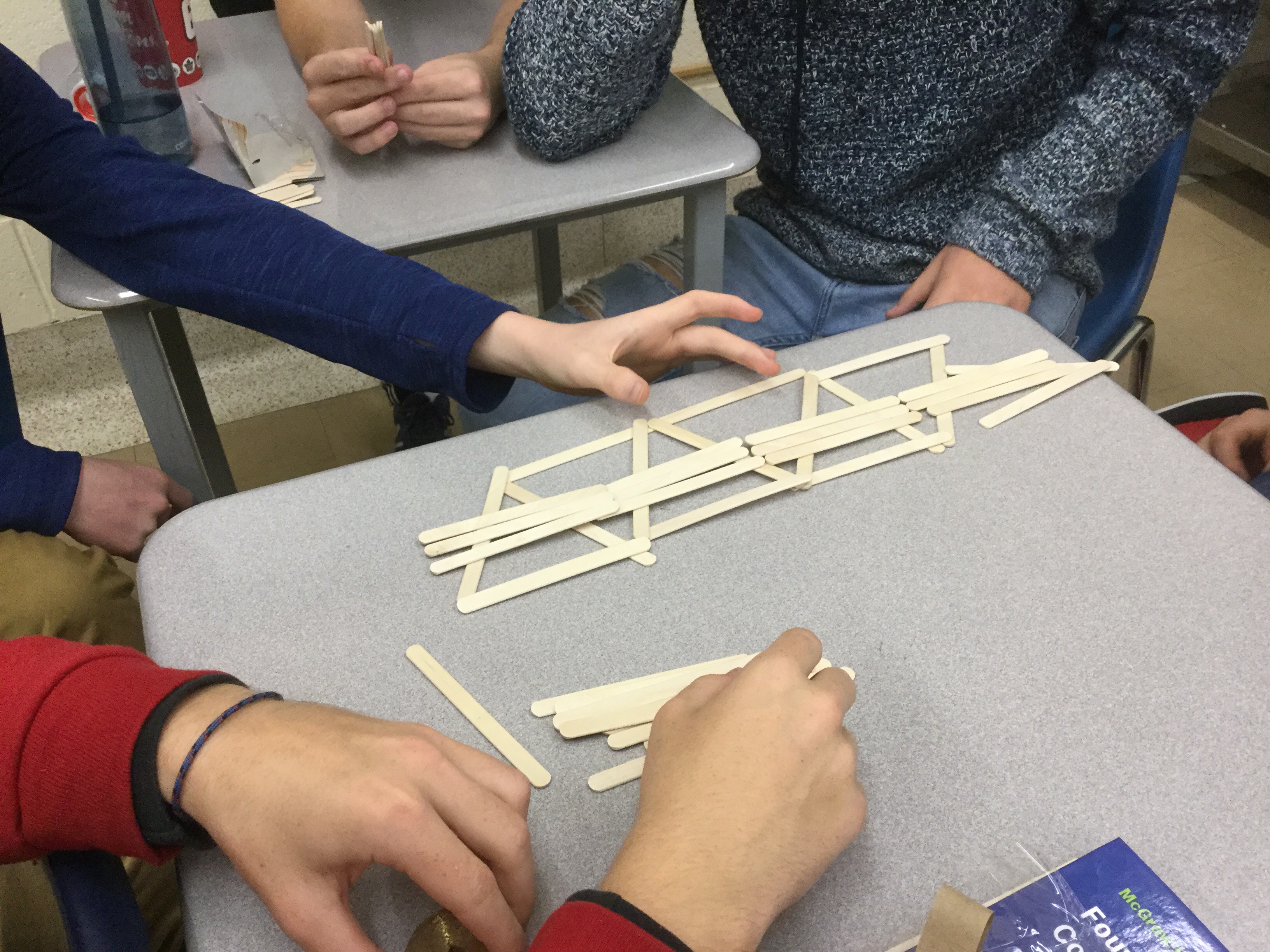
Here were many different approaches to the activity.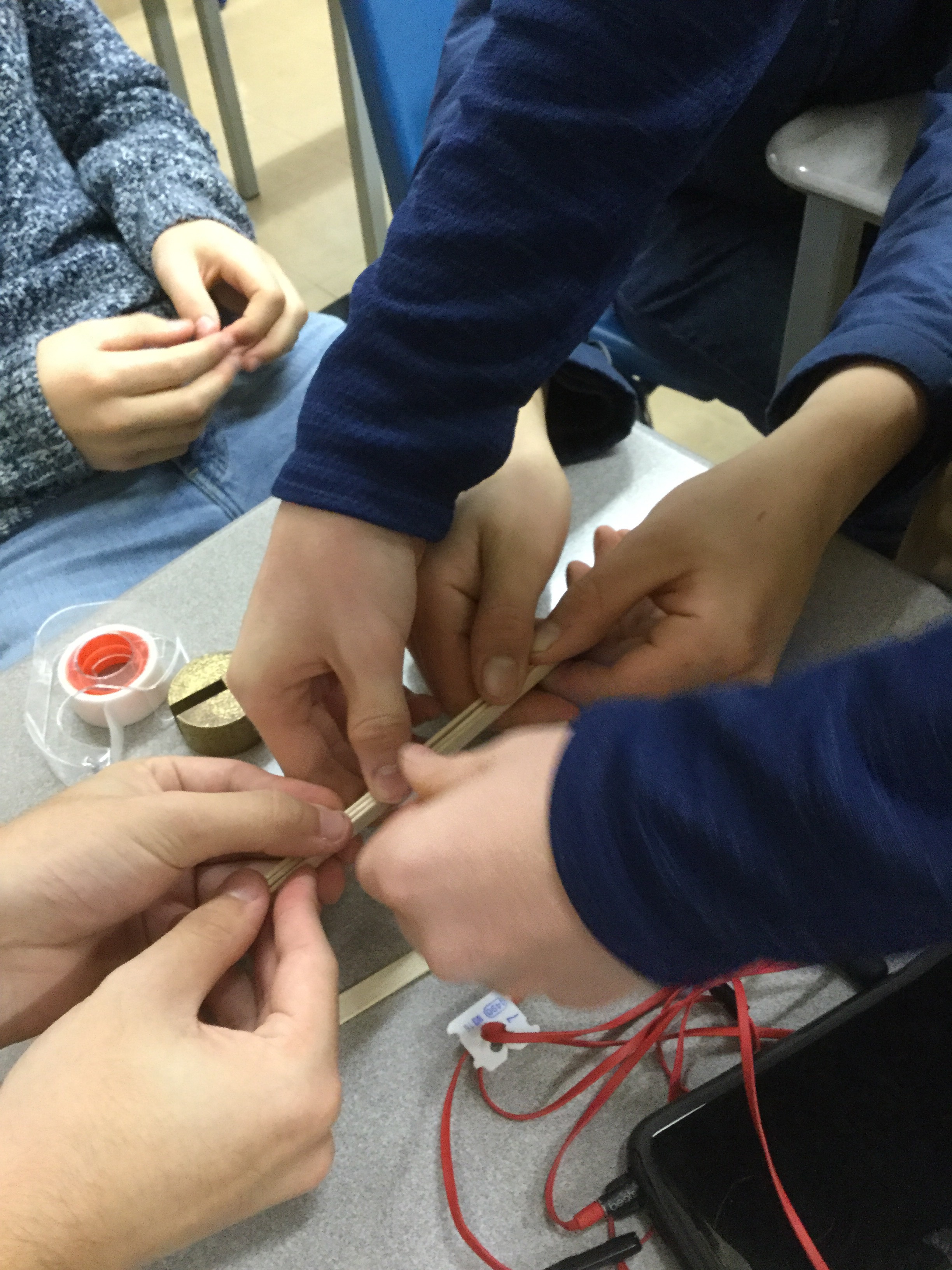
The bridge needed to span 1 foot and be free standing.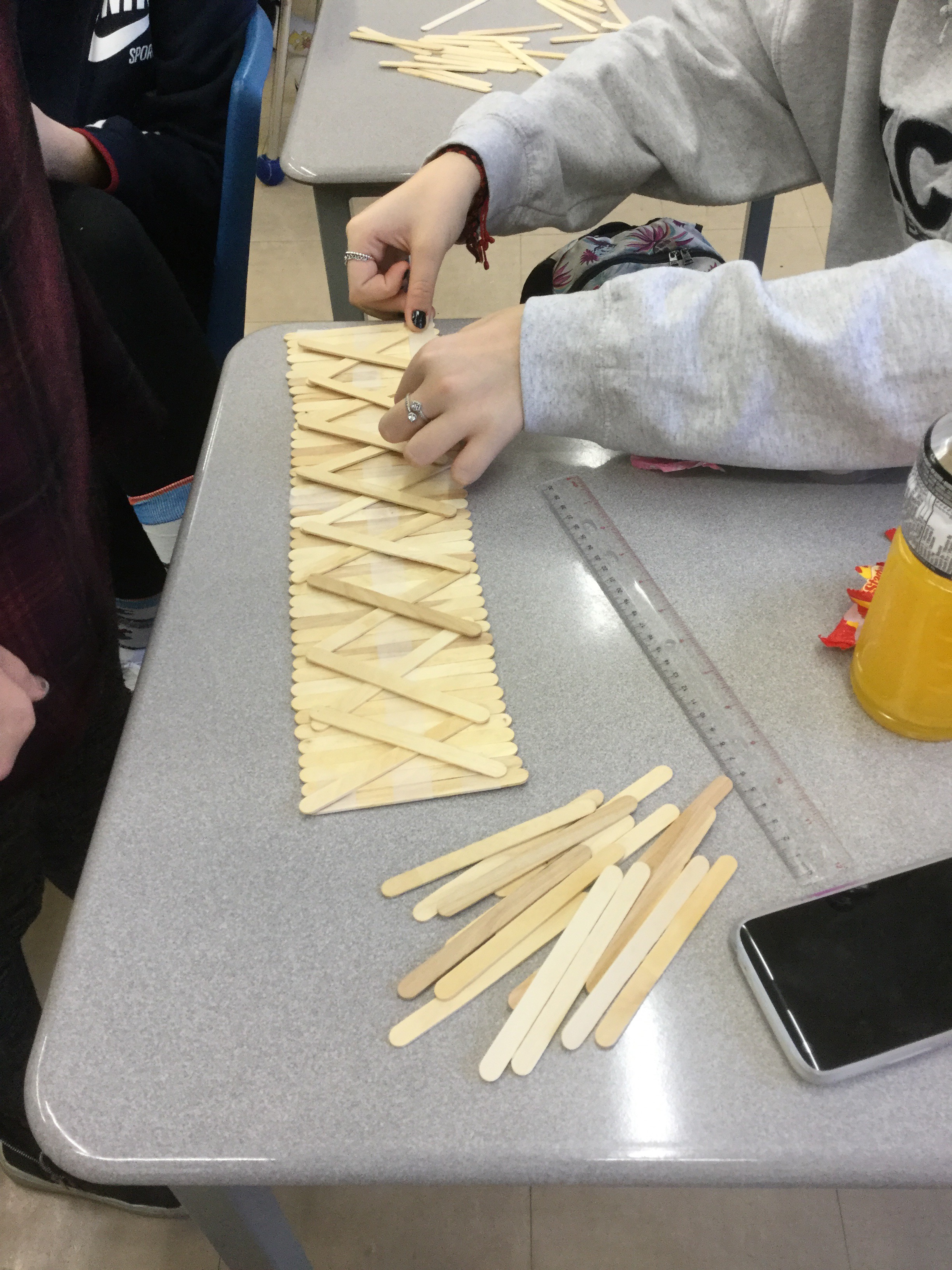
It was made of popsicle sticks and tape only.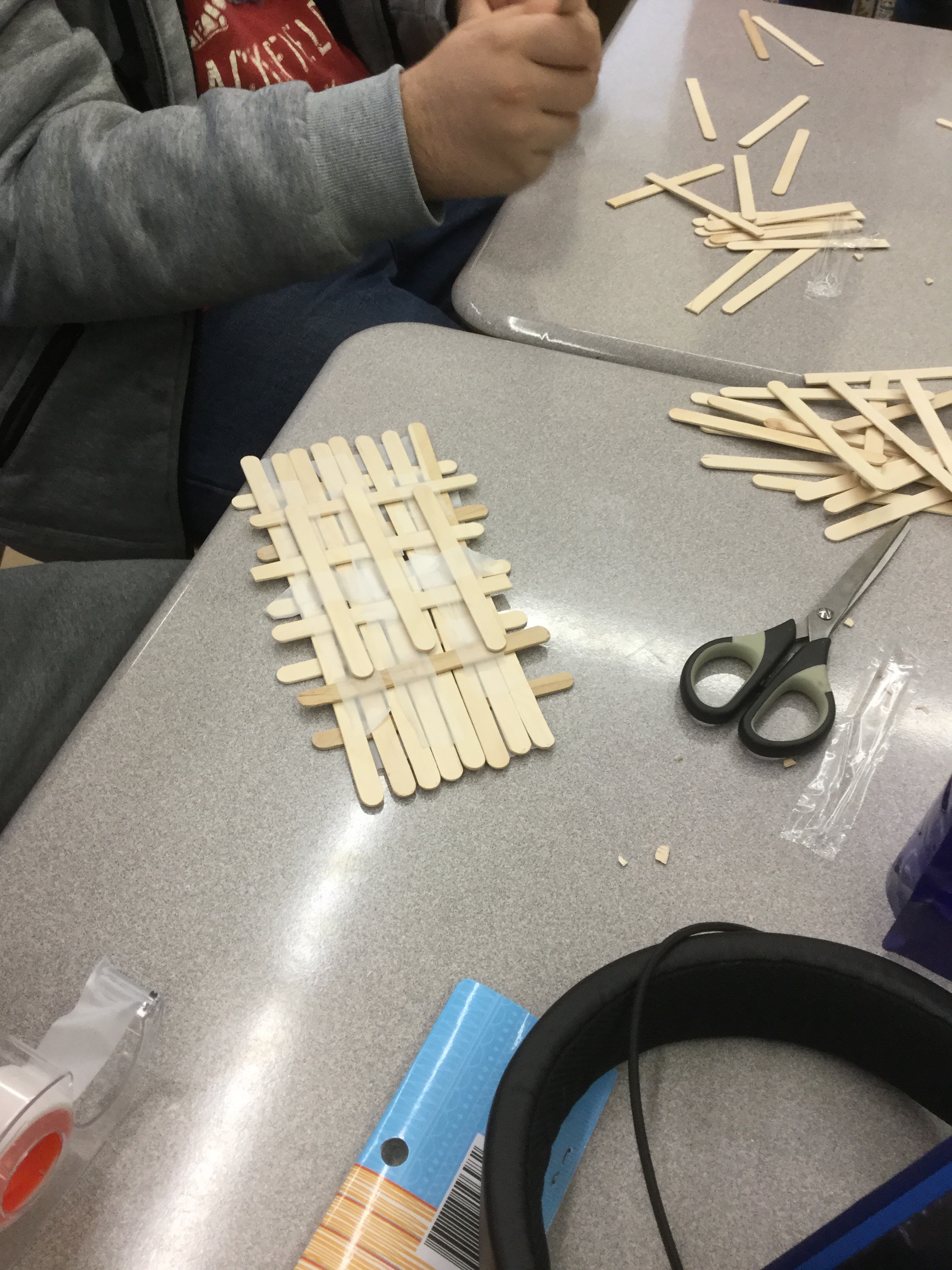
This bridge did very well, but was not long enough to actually span the gap.
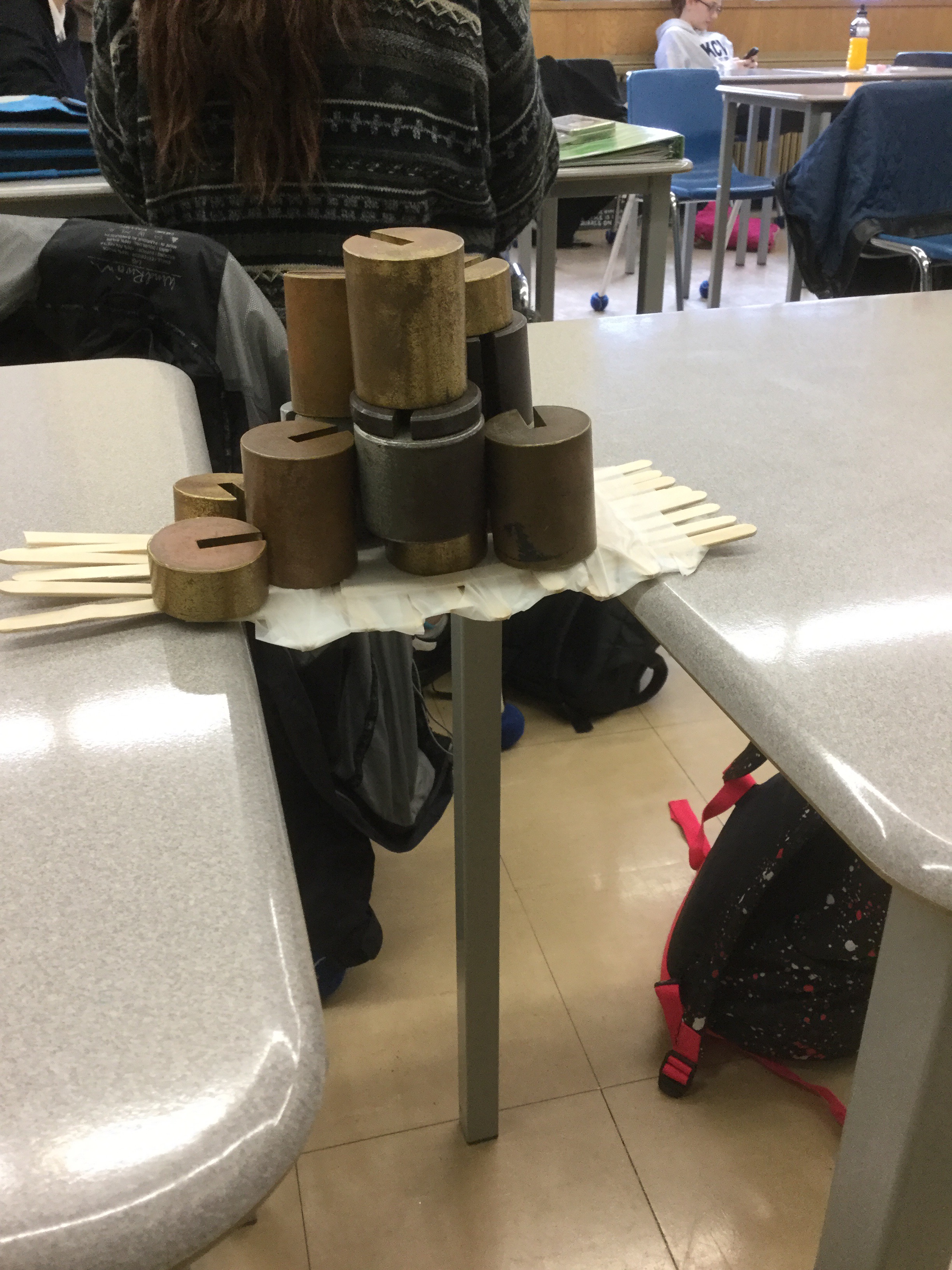
It was a good challenge to accomplish a goal as a group with limited time and limited materials.
Algebra tiles
Today we are looking at representing this kind of expression with algebra tiles.
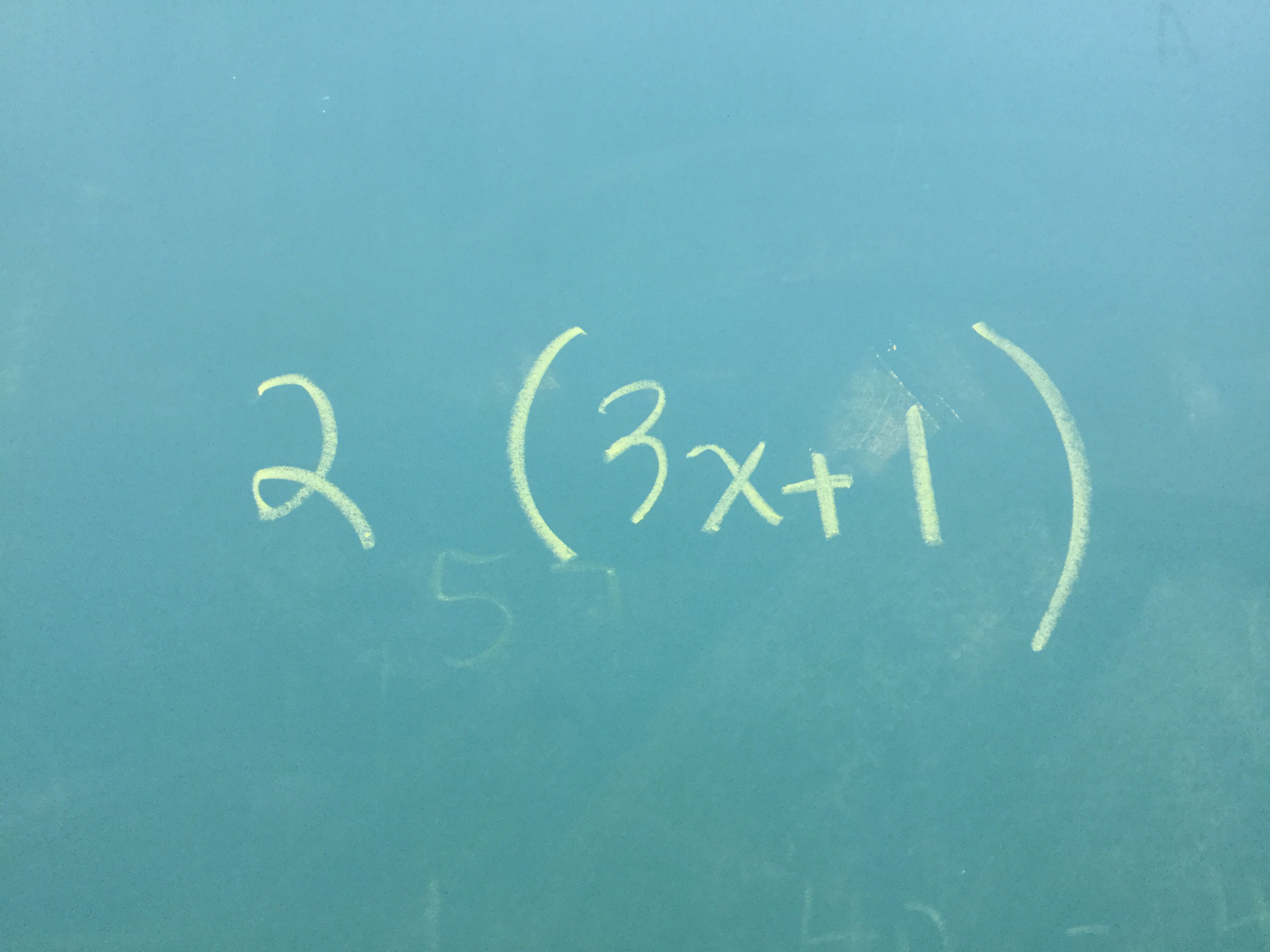 We can show it as two groups of 3x+1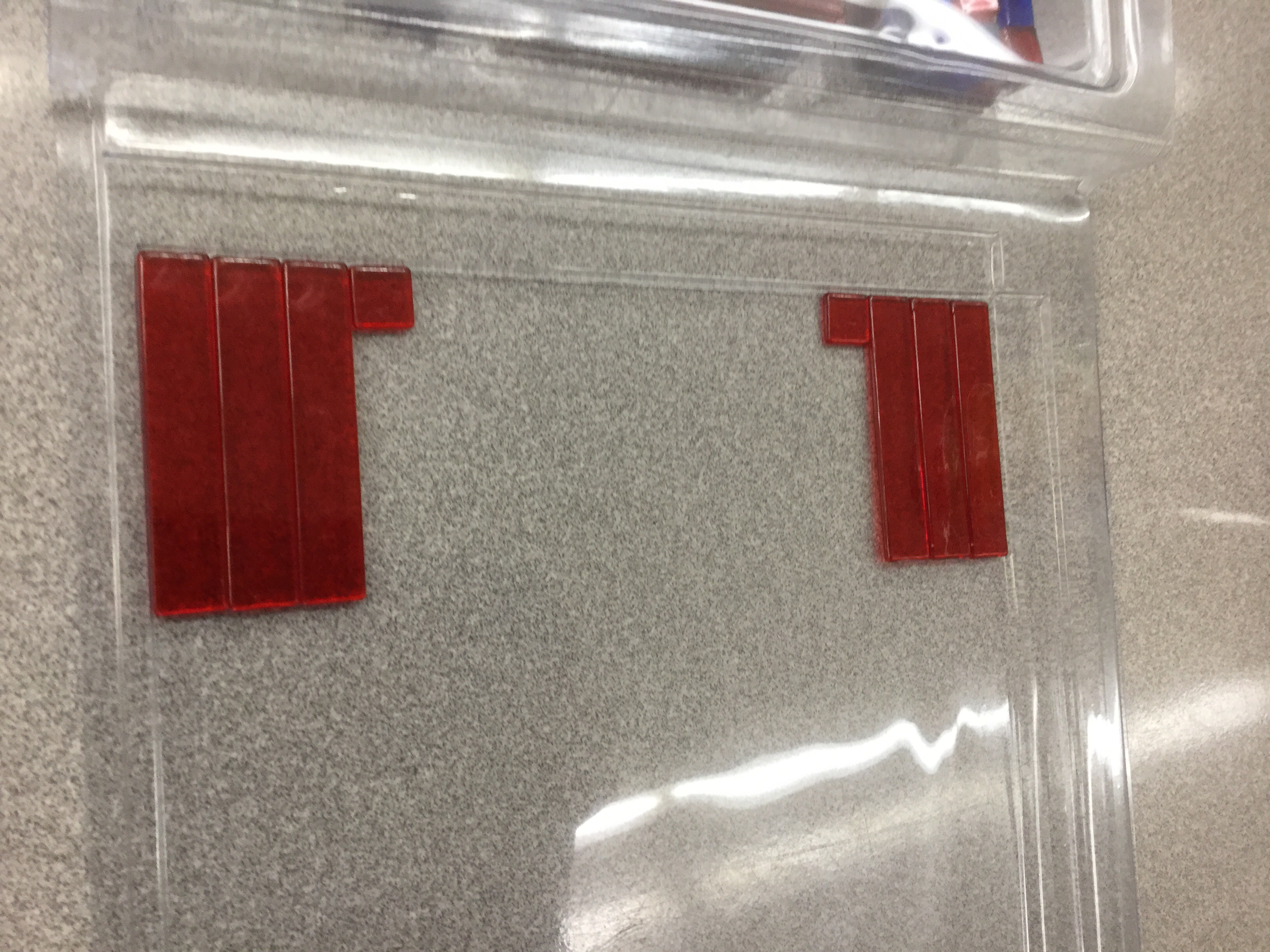
Which is the same thing as 6x+2
But we can also see each expression (the 2 and the 3x+1) as dimensions of a rectangle.
The product of these two dimensions would be the area of the rectangle. We fill in a rectangle with length of 3x+1 and width of 2 and we get 6x+2 as an answer.
The area model is particularly useful when multiplying expressions with variables in both length and width.

X(2X+1)=2X^2+X
Discovering Formulae
We looked at the formulae for volume and surface area of spheres today.
We used oranges and a grapefruit as our spheres. First step was to determine the radius, diameter and circumference of the sphere.

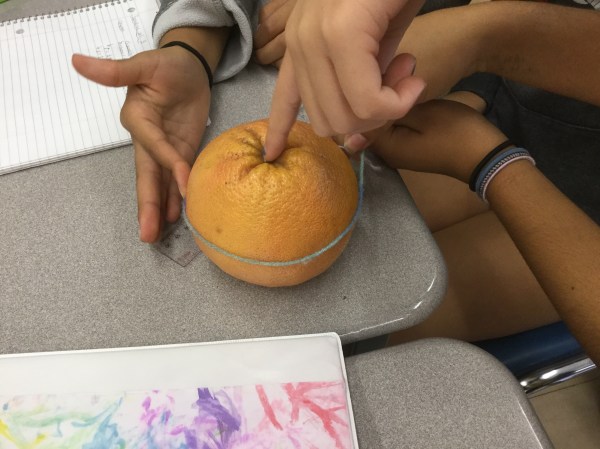
The next step involved peeling it, and making the peels into a rectangle. We measured the dimensions of the rectangle, and then calculated the area of it, using length times width.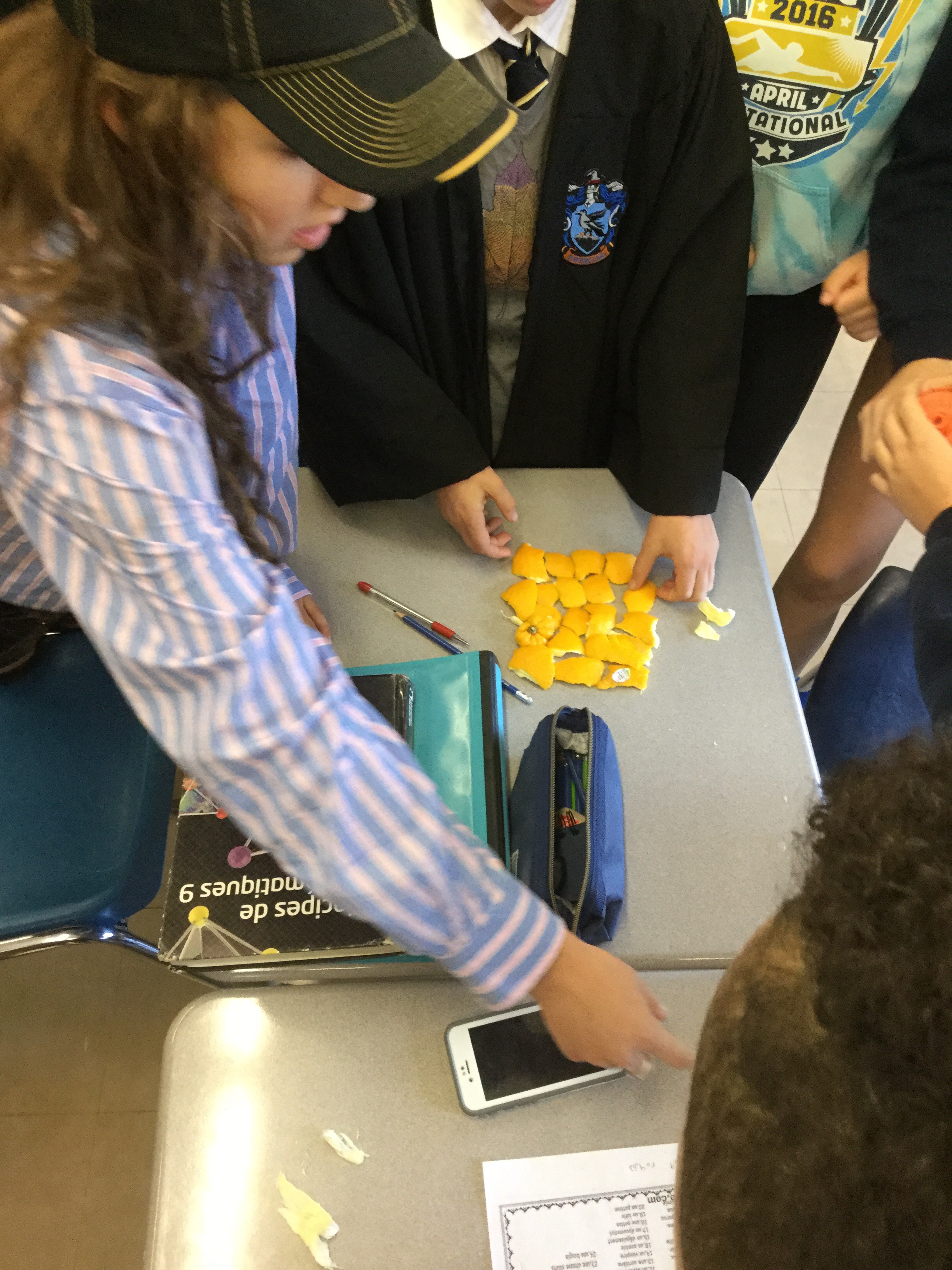

The next step was to relate the values we found. We compared the square of the diameter with the area, since we need to compare things with similar units.
Our groups had a variety of answers, but most of them were close to Pi times diameter squared is equal to the area of the sphere.
We used our algebra skills to show that (pi)(d^2) is the same thing as 4(pi)(r^2).
To determine the volume of a sphere we used a tennis ball a juice concentrate container and a displacement tank. We cut the juice concentrate container so it had a height equal to its diameter (which is conveniently the same as the tennis ball).

We used the displacement tank, and submerged the tennis ball, and held it until the water stopped pouring out. We collected the water in the juice container.
It filled the cylinder 2/3 of the way.
We used algebra skills to examine the formula for the cylinder (replaced height by 2r, since the height is equal to the diameter, which is twice the radius). The new formula for cylinder volume is Pi(r^2)(2r) which becomes 2(pi)(r^3)
Since the sphere displaced water equal to 2/3 of the cylinder’s volume, the sphere’s volume is (2/3)(2)(Pi)(r^3) which simplifies to (4/3)(Pi)(r^3).
Grade 9s, this is what will be on your test

Pyramids and Perseverance
Today’s task was to make a pyramid with a volume of 300 cubic centimetres. What was interesting was each group independently decided to use dimensions of the base as 10cmby 10cm and the height 9cm.
One group realized at first that the height of the triangles on the side needed to be longer than 9 in order to have the pyramid height be 9. After a bit of reasoning, they divided the base in half, and used that along with the 9cm height and used the Pythagorean theorem to calculate the hypotenuse, which is the slant height, and the height of each triangle. 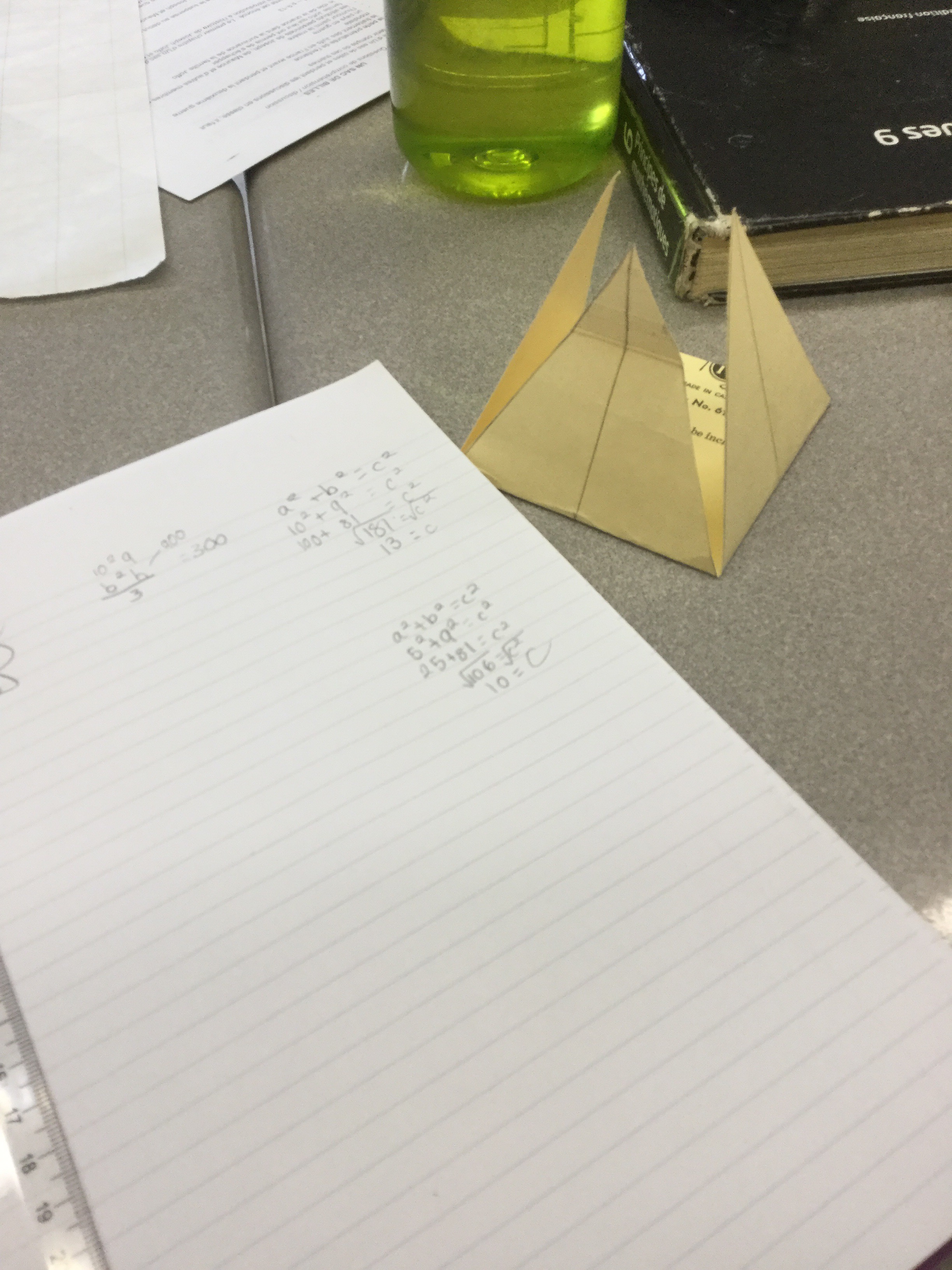
Other groups decided that the 9cm should be the height of each triangle, which ended up with a slant height of 9cm.

This makes a pyramid that is too short!
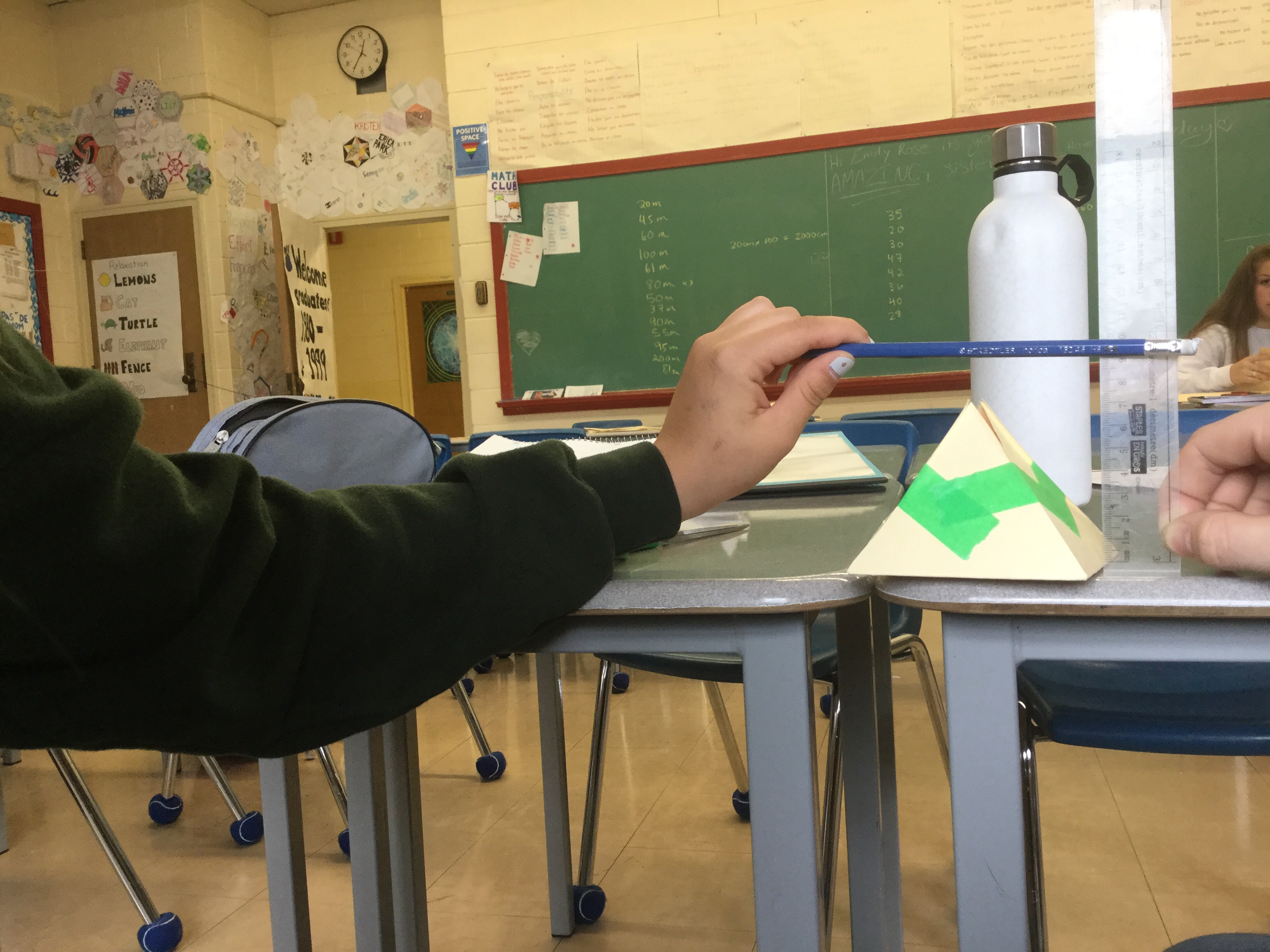
Another group measured 9cm along the edge of the pyramid.
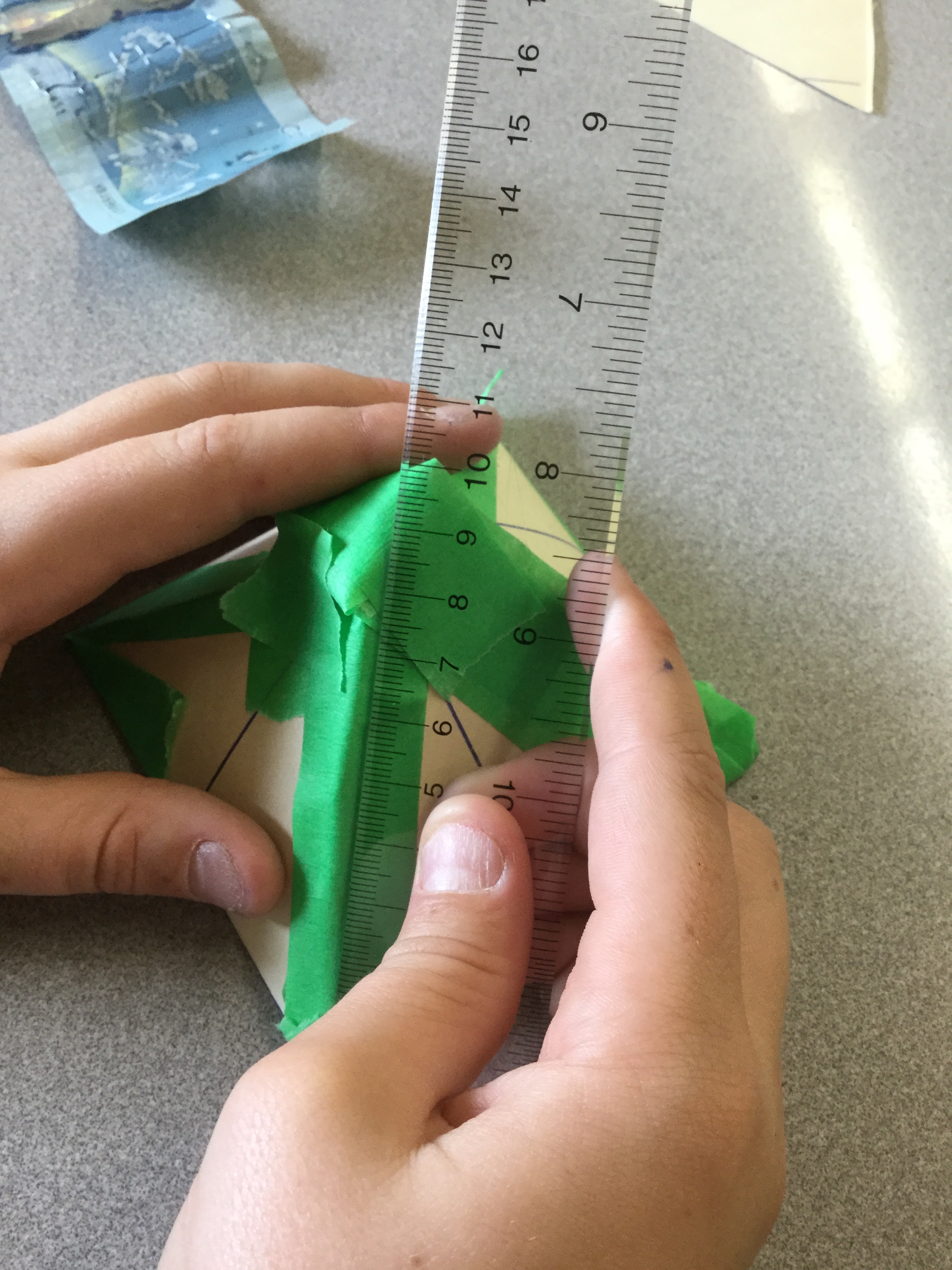
This pyramid was even shorter than the other!
Some groups needed a few iterations before their pyramids were the right height. Persistence pays off thought! We persevered through several challenges today!
We calculated surface areas, and then set out to design a square based prism with a volume equal to our pyramid. We’ll build towers, and figure out the surface area of the combined solid.
 Ms. Bearse's Site
