Beans!
 Look at that blossom! The beans are no longer getting taller. Their energy is being used for other purposes….like blooming.
Analyzing our Errors
We are looking at our first test, and figuring out what went wrong for the questions we didn’t do well. We are classifying our errors (inattention, computation, precision, and problem solving) and writing out solutions. It’s interesting to see the patterns emerge. Some of us need to pay more attention!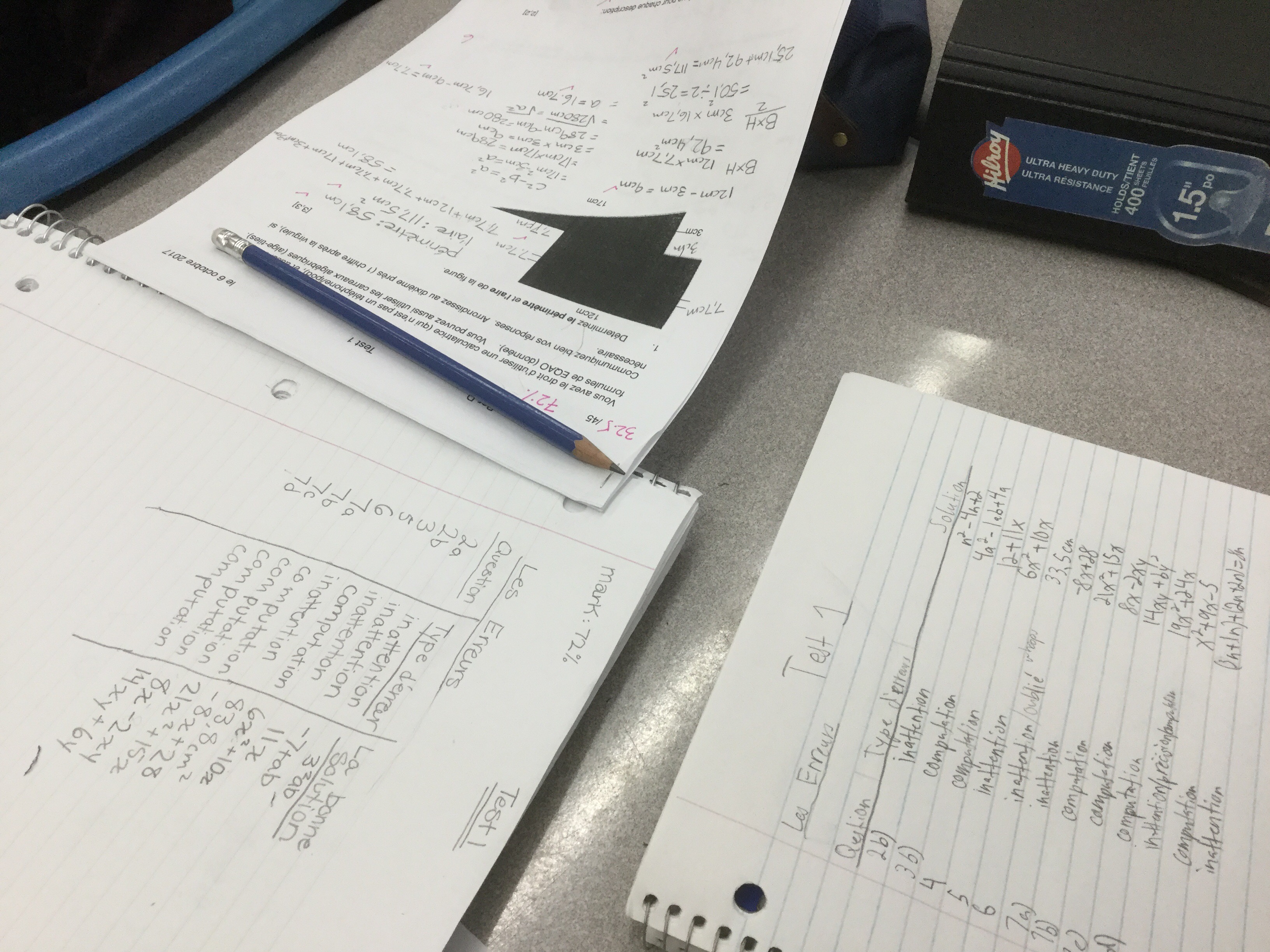
Exploring exponents
We looked at exponents today, and built models using toothpicks.
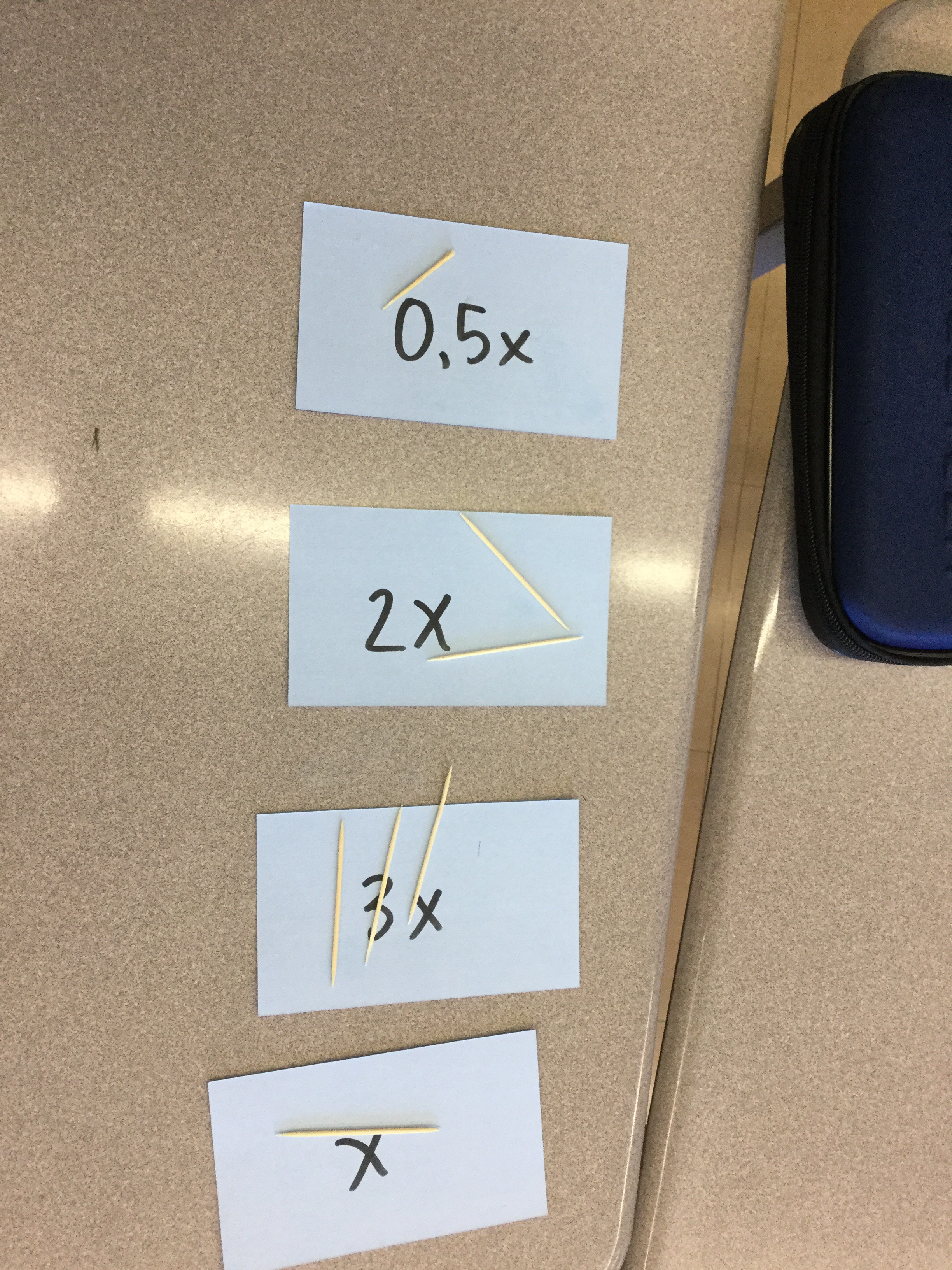
We looked at the effect of the brackets, and the coefficients
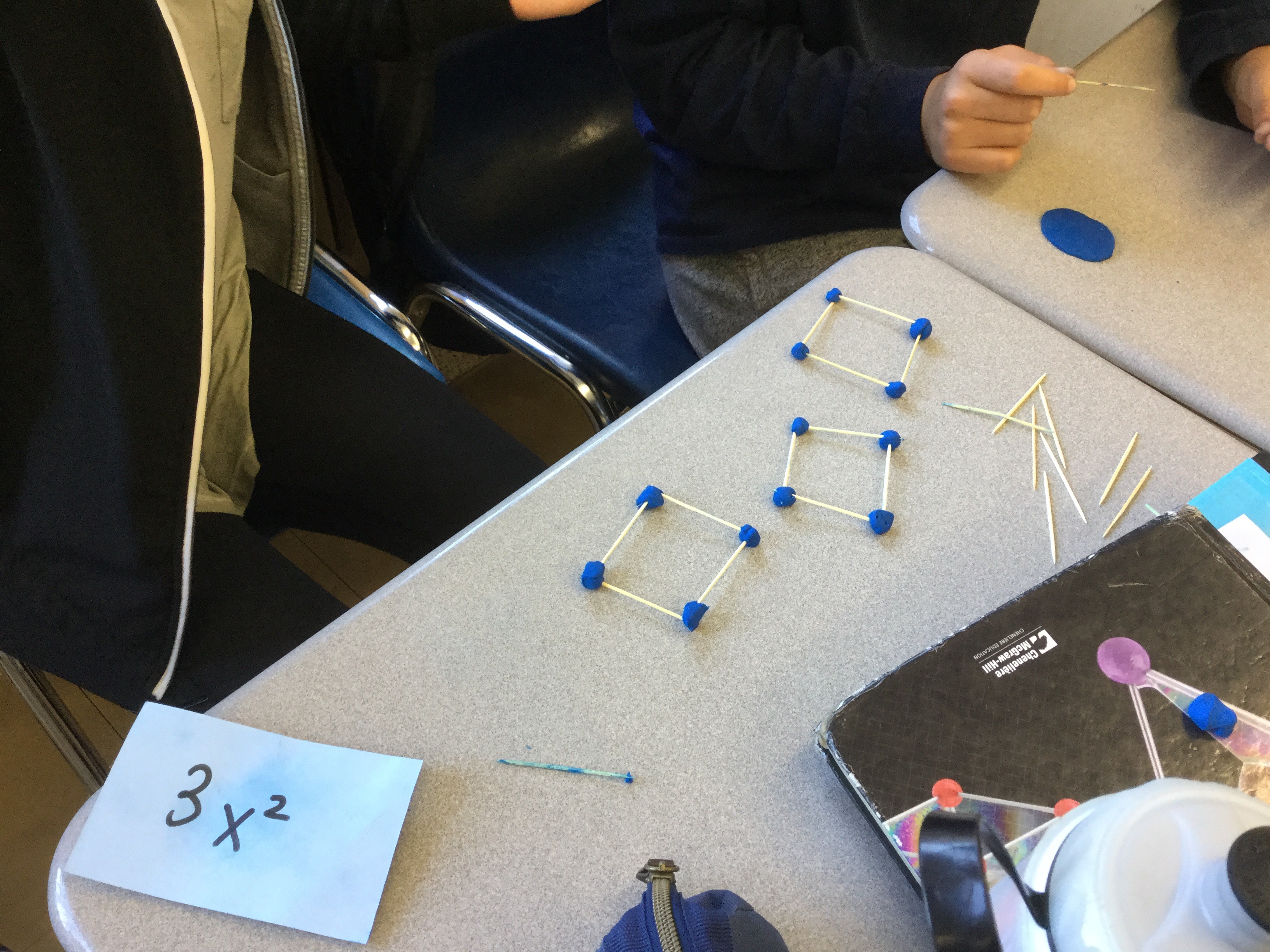

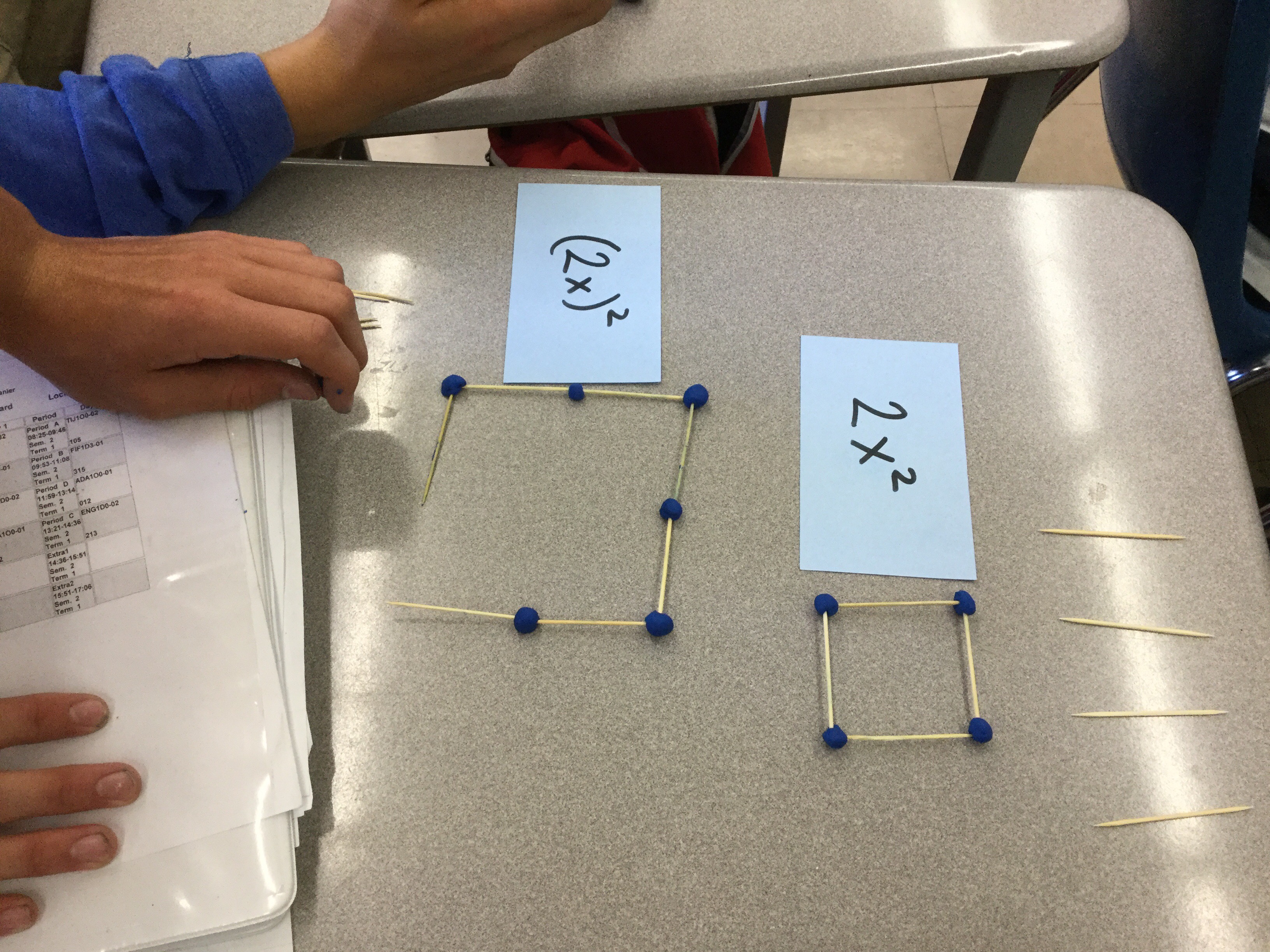
We also looked at what squared and cubed mean.
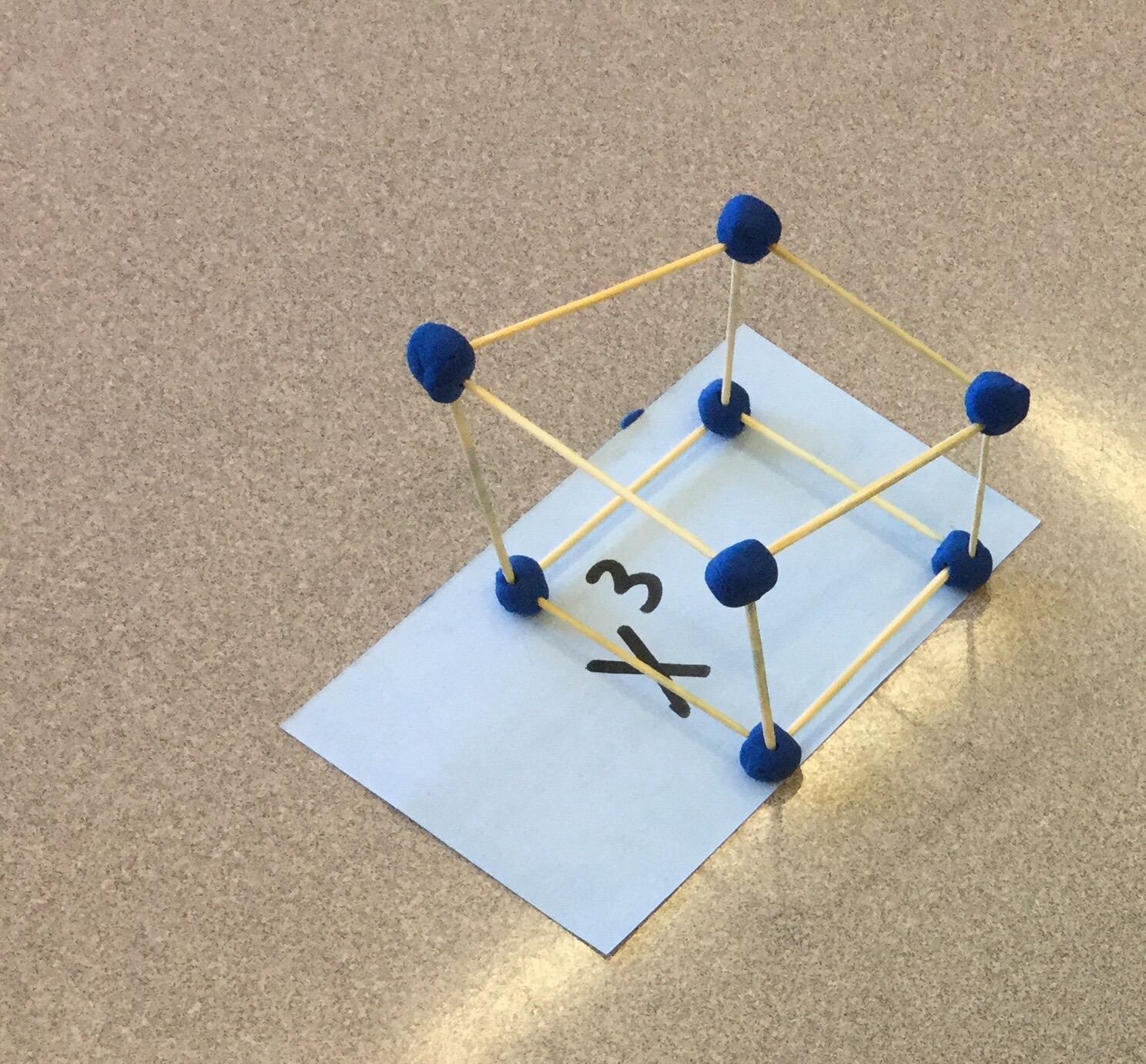


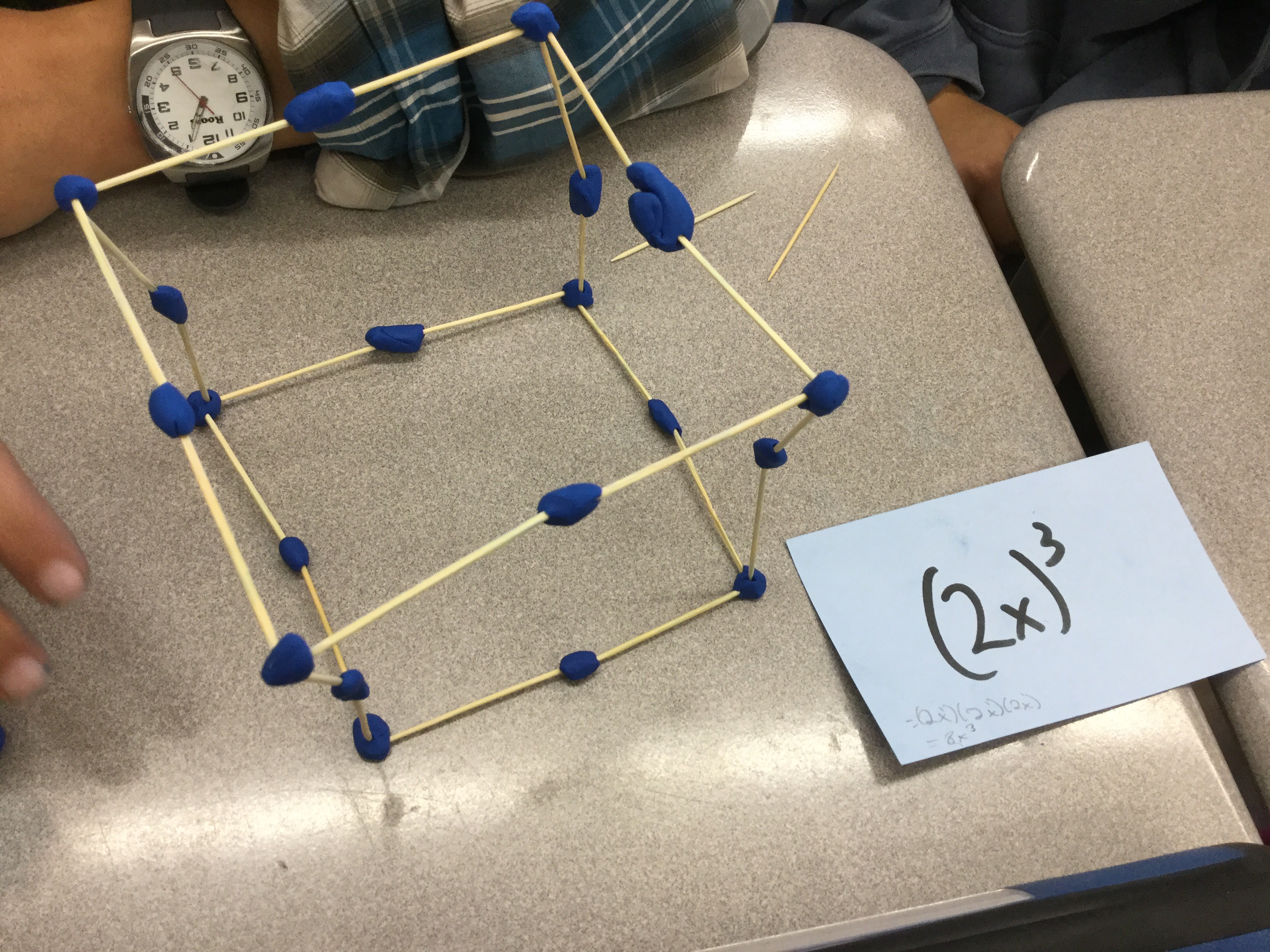
We noticed that within this big cube, with side length 2x, we can fit 8 little cubes with side length x. We can expand the expression (2x)^3 to be (2x)(2x)(2x) which is 8x^3.
Building from drawings
Today we looked at how to convey information for fabrication by means of drawings and also paragraphs. We made models using plasticine. We noticed how important dimensions are, and how hard it is to be precise.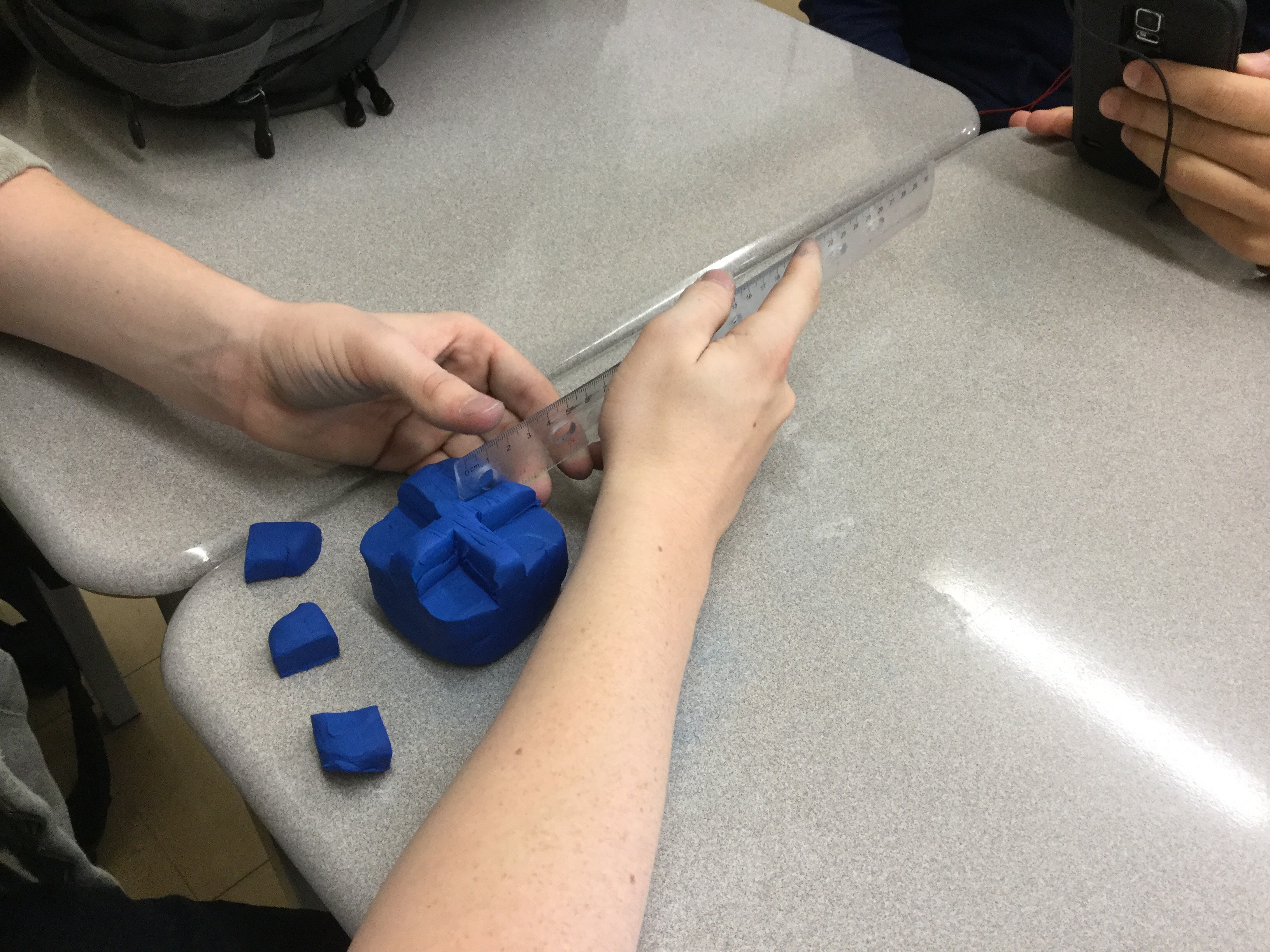
Learning about College
 We are learning about St Lawrence College today.
Technical Drawing
What do you notice? What do you wonder?
Representing 3D objects
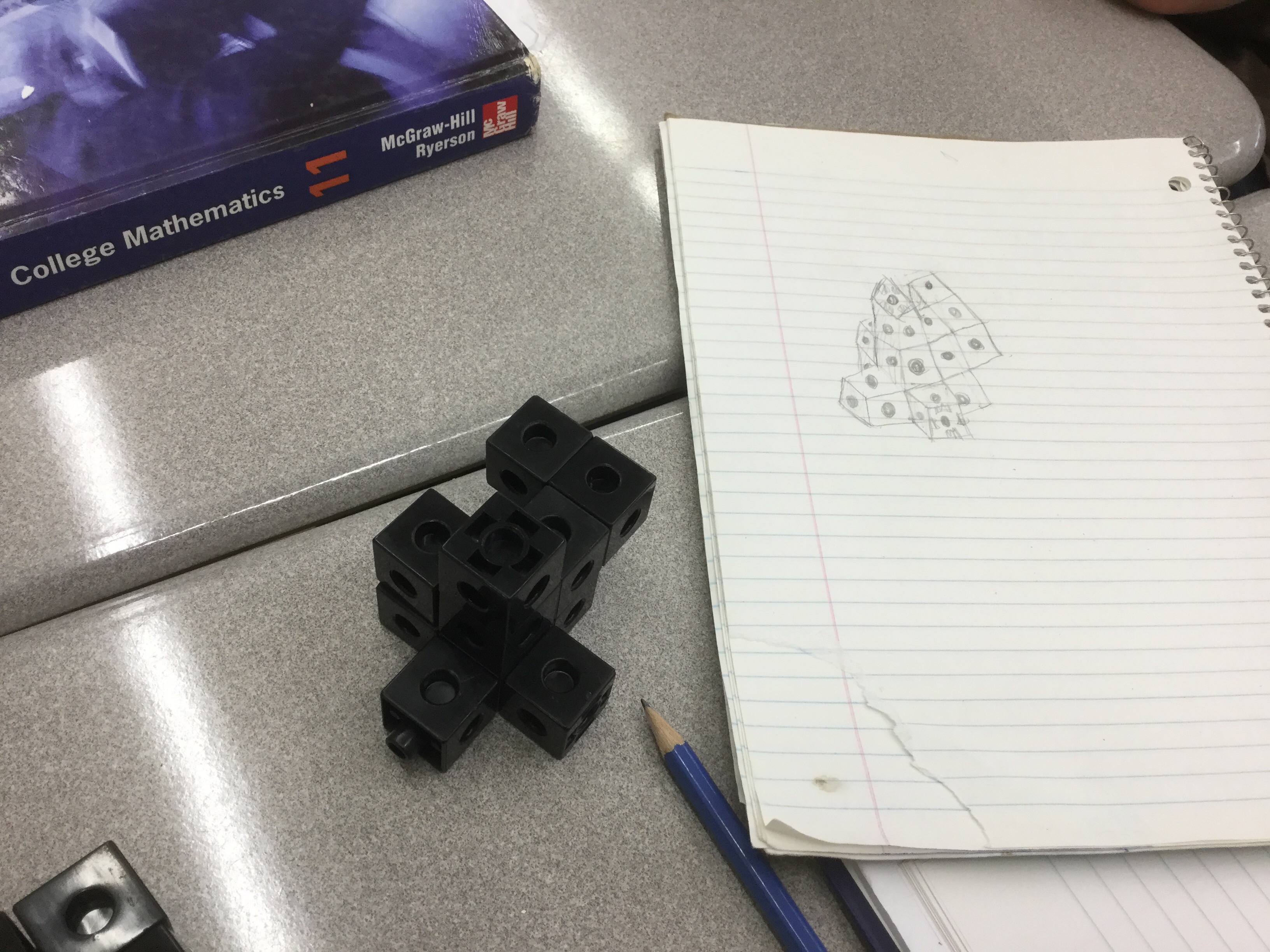
We are working on communicating via drawings. We worked in making isometric drawings…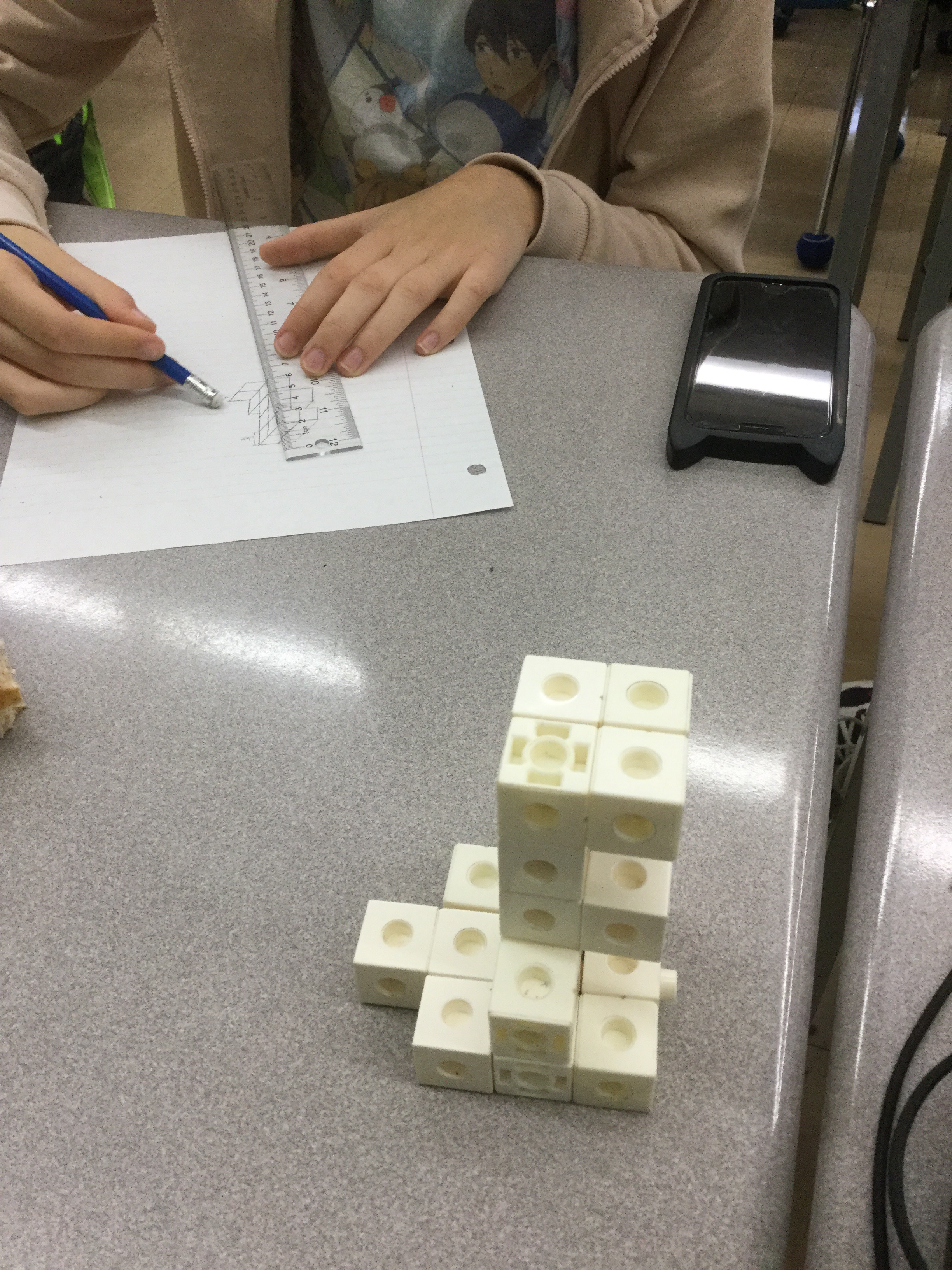
And also orthographic drawings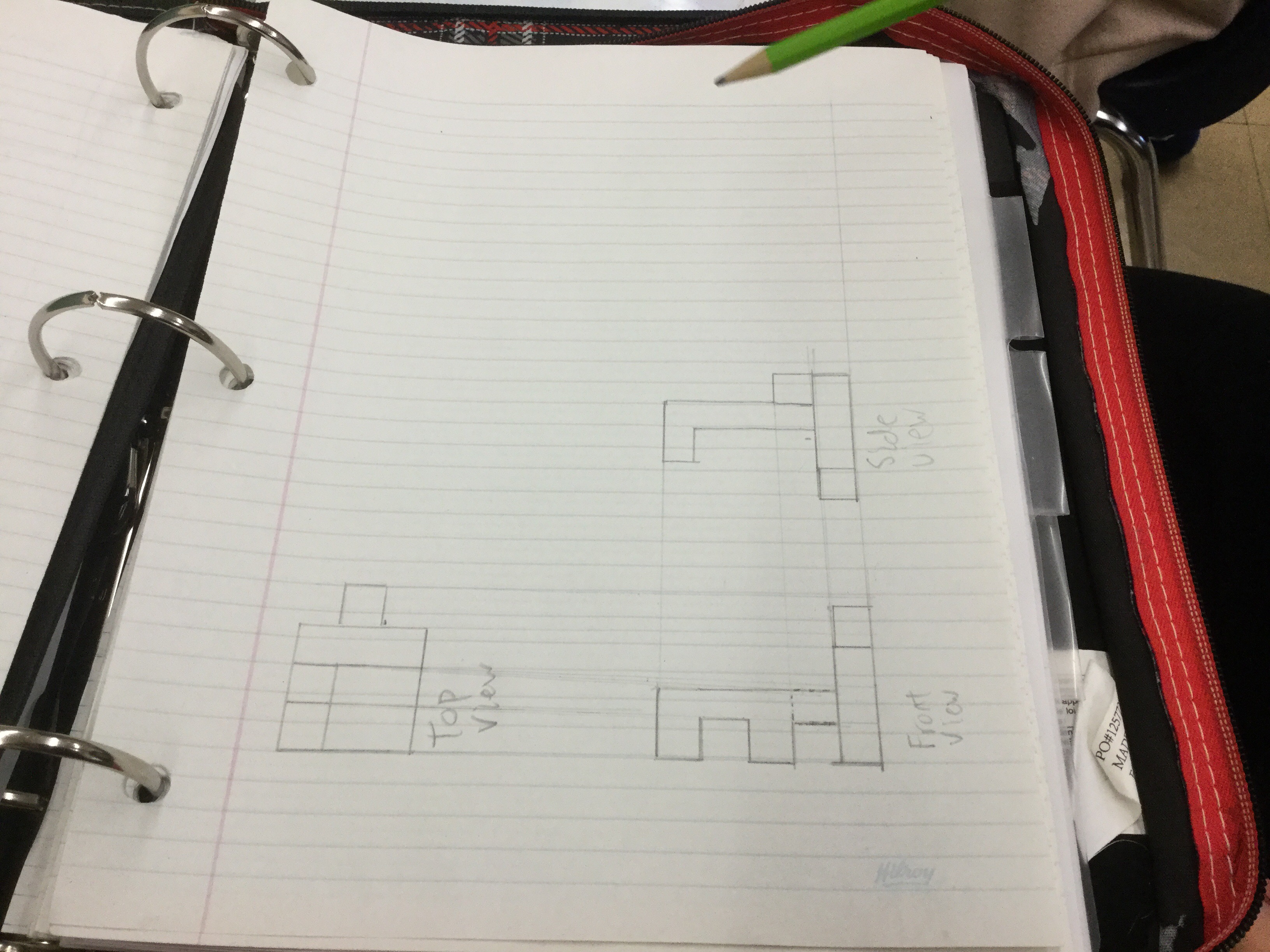


Paired review
Today we worked on reviewing trigonometry with grade 11s and linear systems with grade 10s. We used a method of partner work where peers will be helping each other and working with a variety of people, so we are building our math skills and our people skills too!
Partners sit across the desk from each other and both work on solving a math problem on a card in front of them. After everyone has the right answer we start with one side staying as the expert in that problem, and their partners across from them will shuffle one seat to their right and be the one trying the new problem in front of them. They have the help of the expert across the table if they need it. The goal is for the new person to the question to become an expert in that question, because the other side of the partnership, the old expert will be moving one seat to their right.

The strategy is nice because everyone is doing math for most of the class time, and everyone has an expert nearby that can help them if they are struggling.
It’s hot at KC
We’ve had a few hot days this week, and it’s getting hard to focus in our math classroom. The grade 10s took a field trip today to do a work period in an air conditioned hallway at the Queen’s ARC.
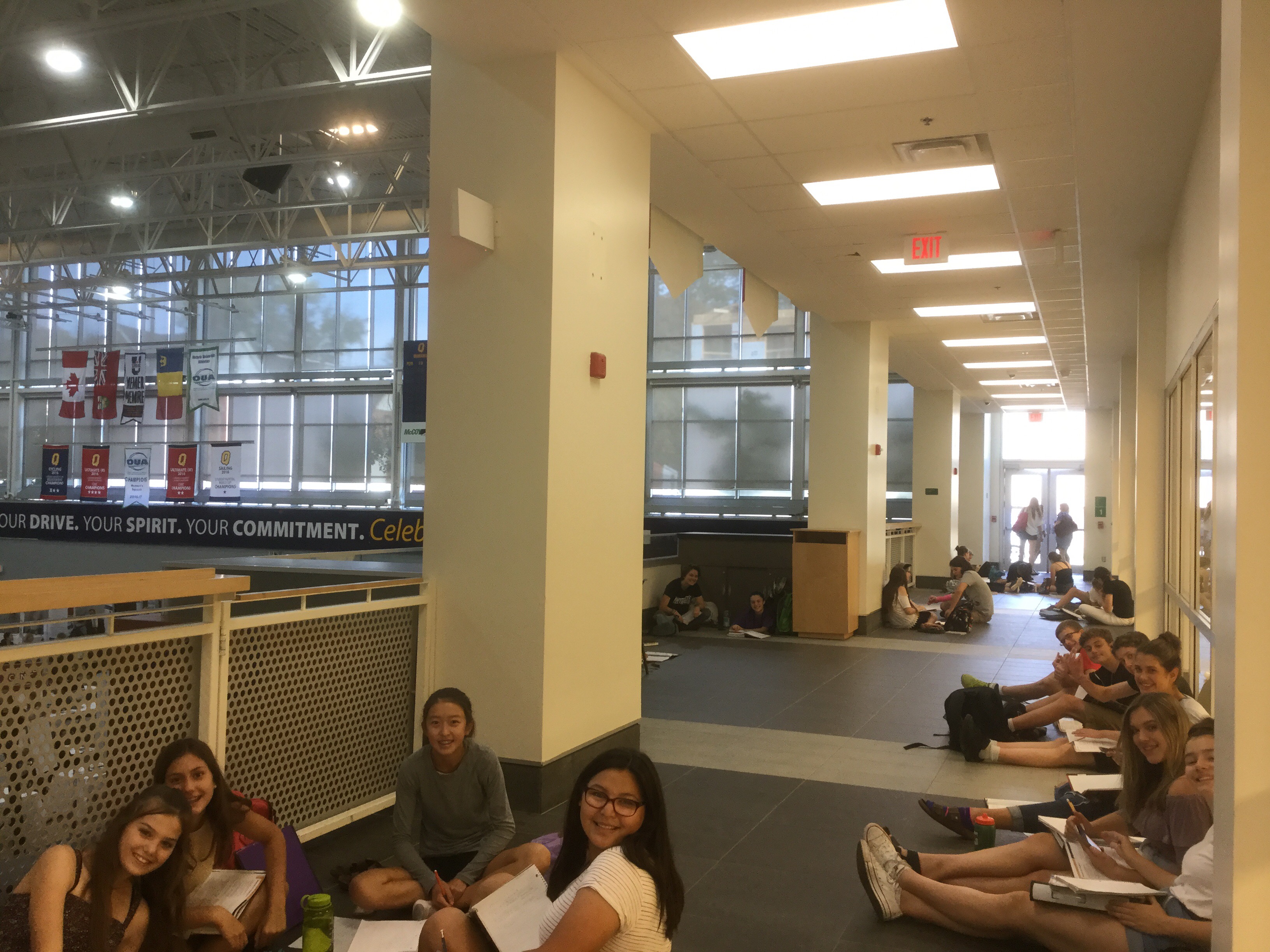
Everyone worked really hard! Good job team 🙂
Working with Algebra Tiles
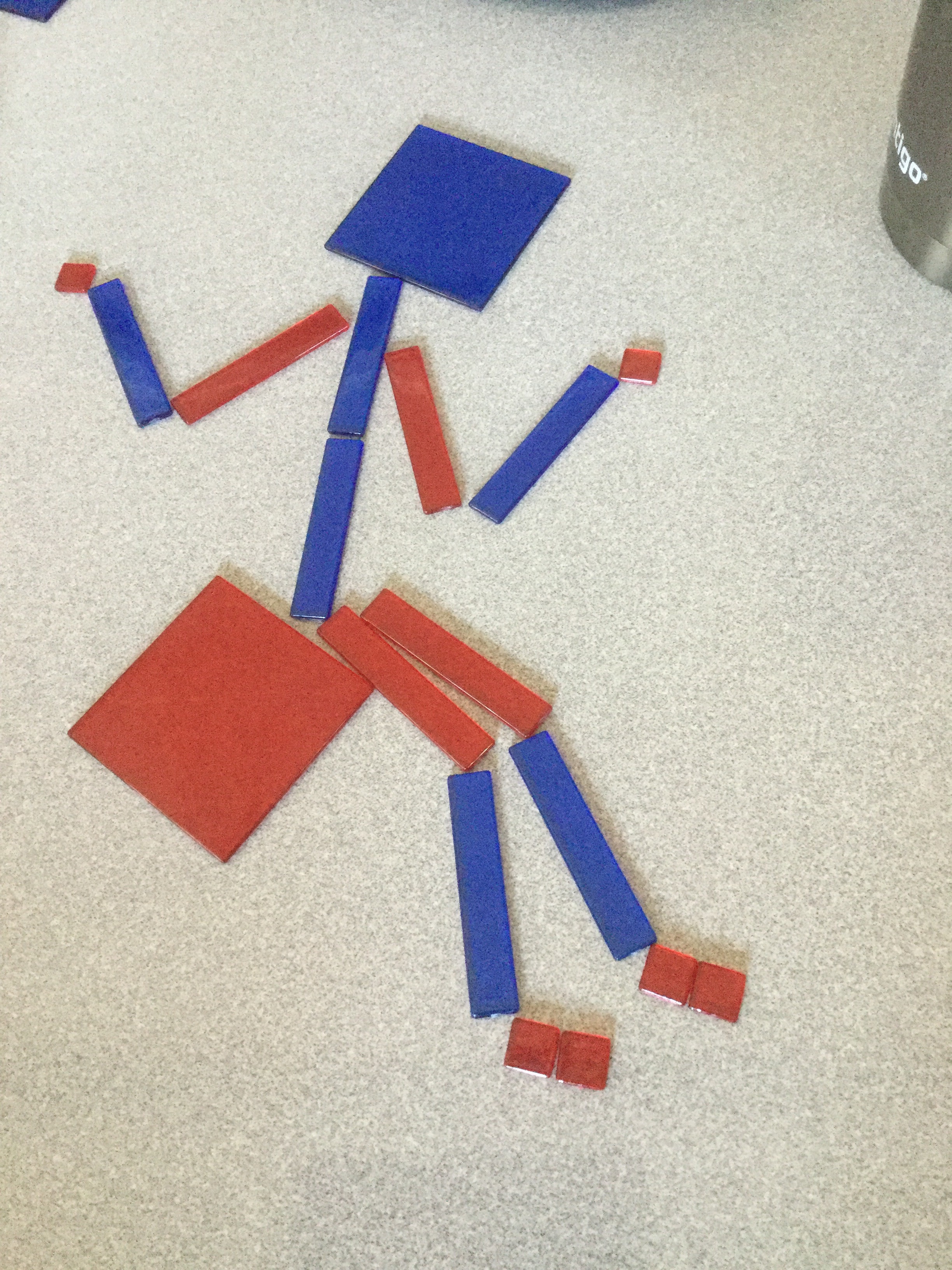
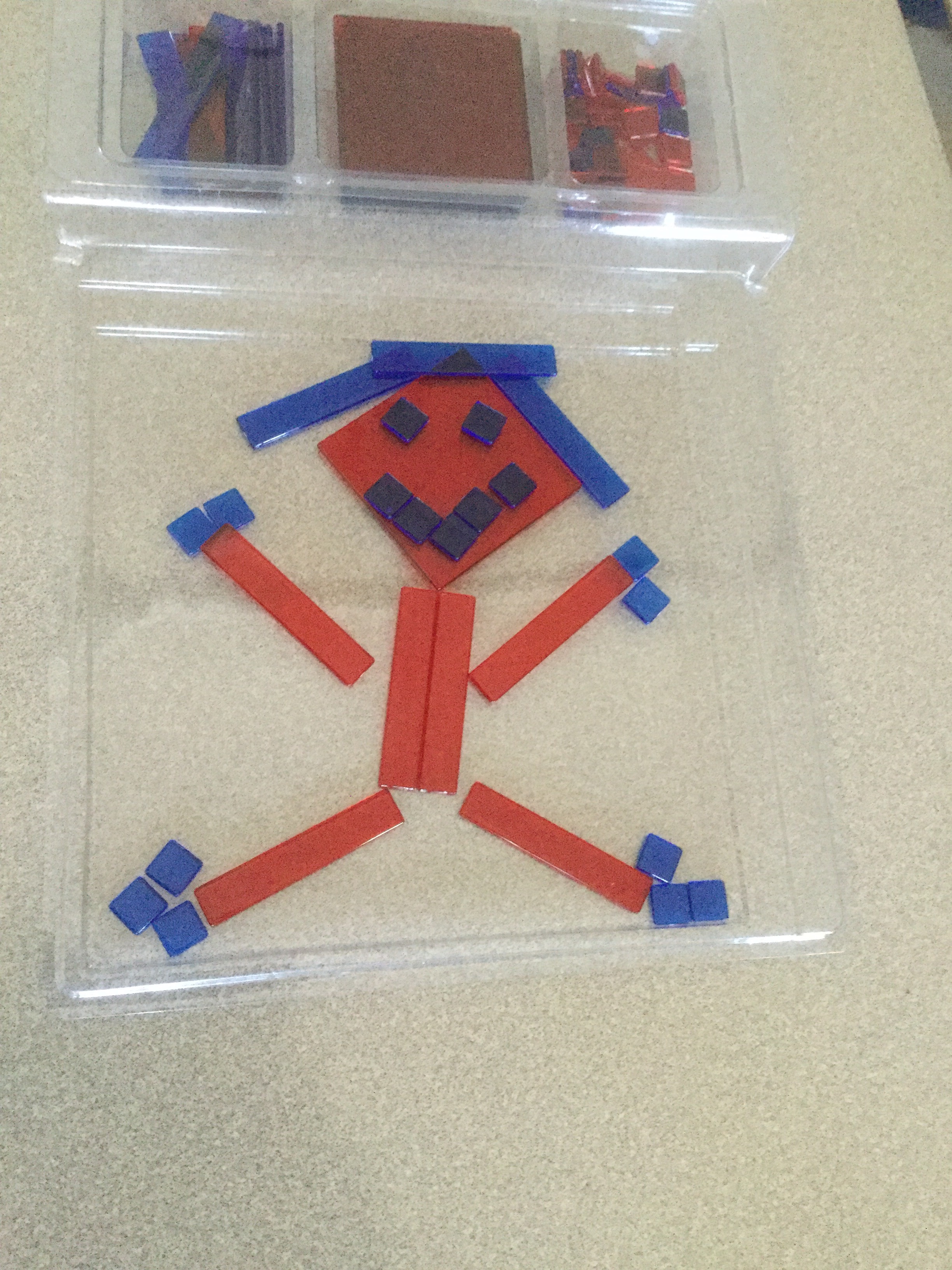
Algebra tiles are manipulative math tools that allow us to visualize a variety of math concepts. We are learning about how to represent expressions and simplify expressions using algebra tiles.
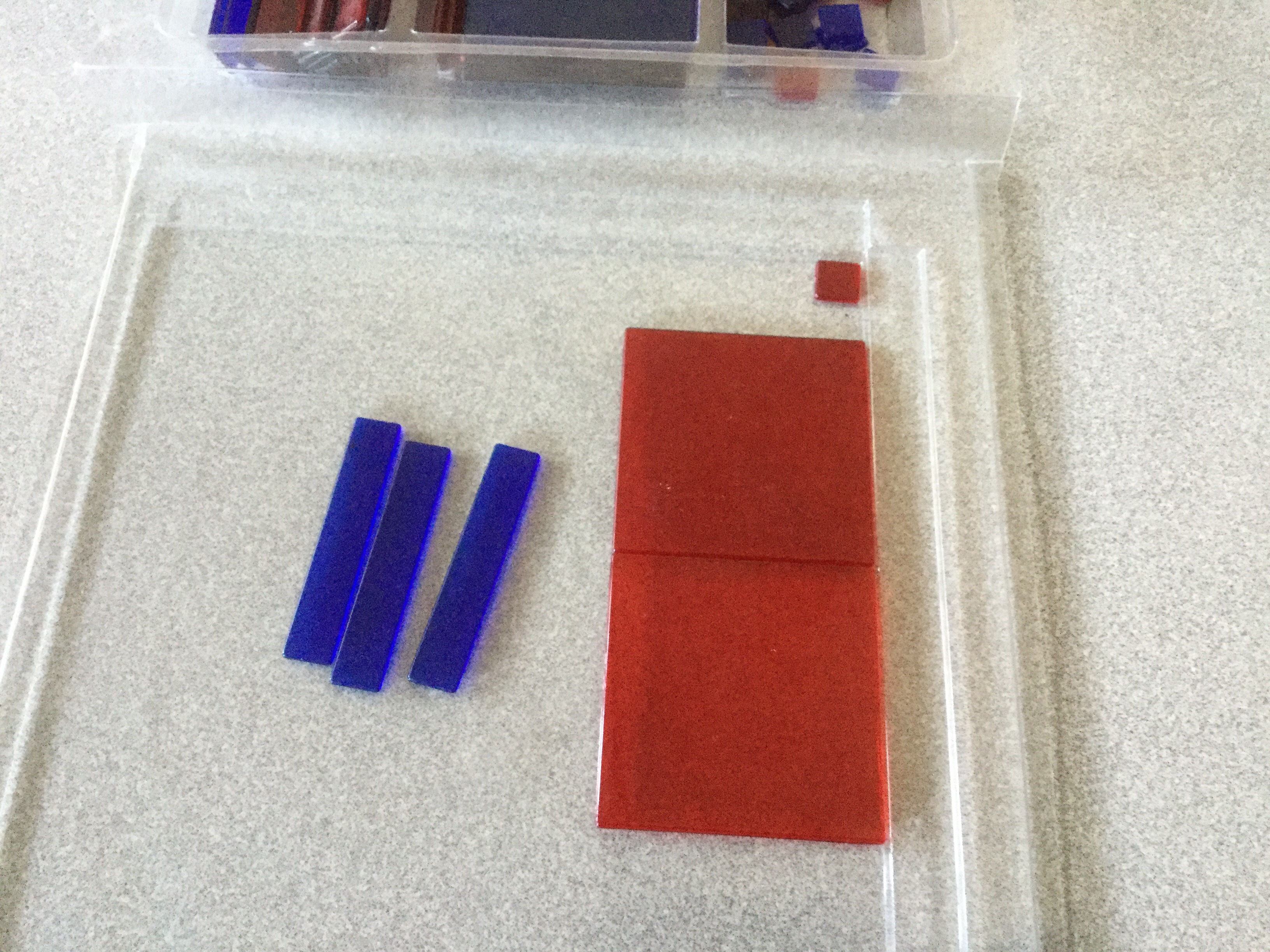
The small squares represent 1, the rectangles represent x, and the big square represents x squared. Reds are positives and blues are negatives.
We made pictures with the tiles, and then had to simplify them by eliminating all “zero pairs” (identical tiles in opposite colours add up to zero)
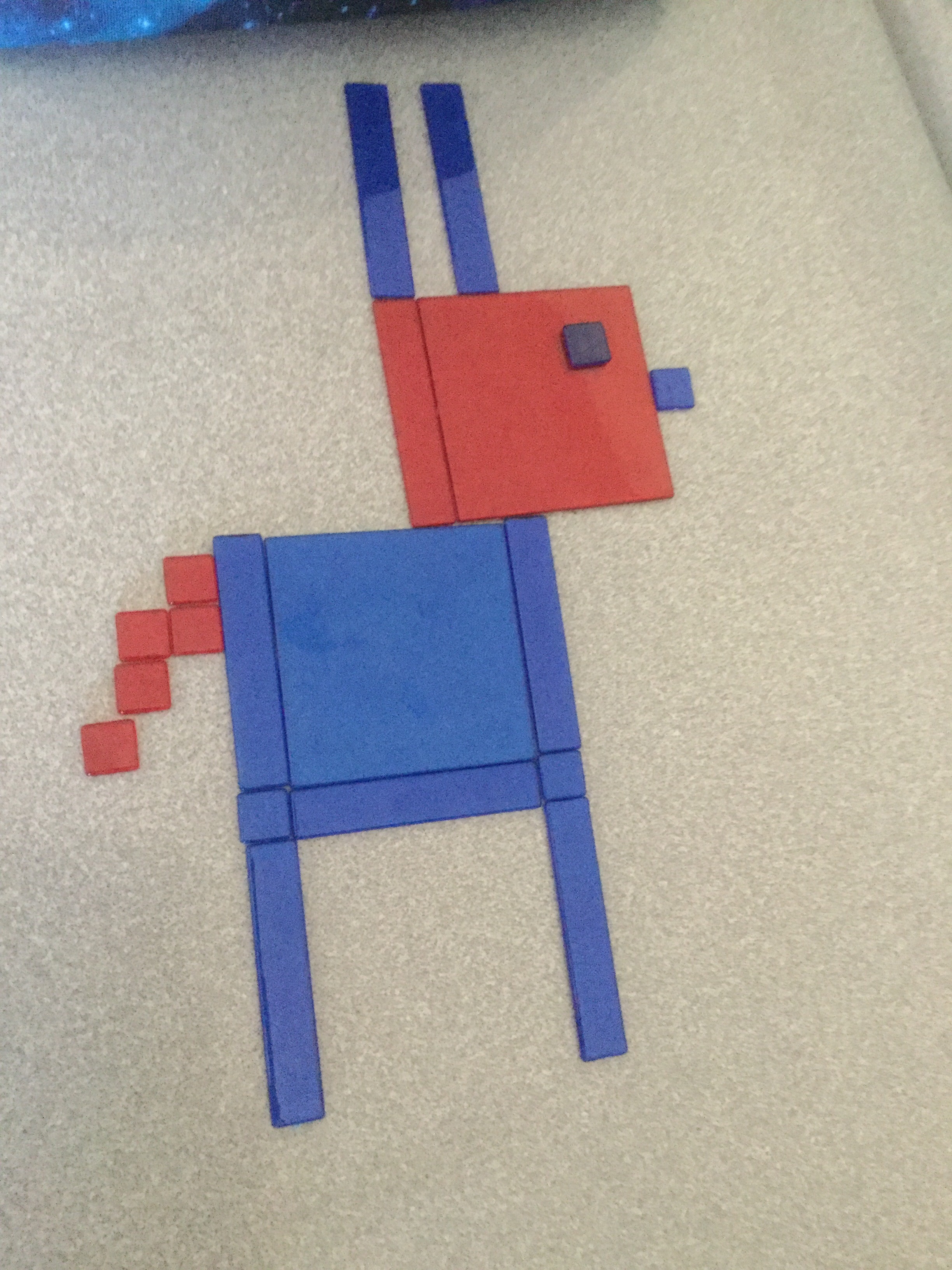
 Cool bike!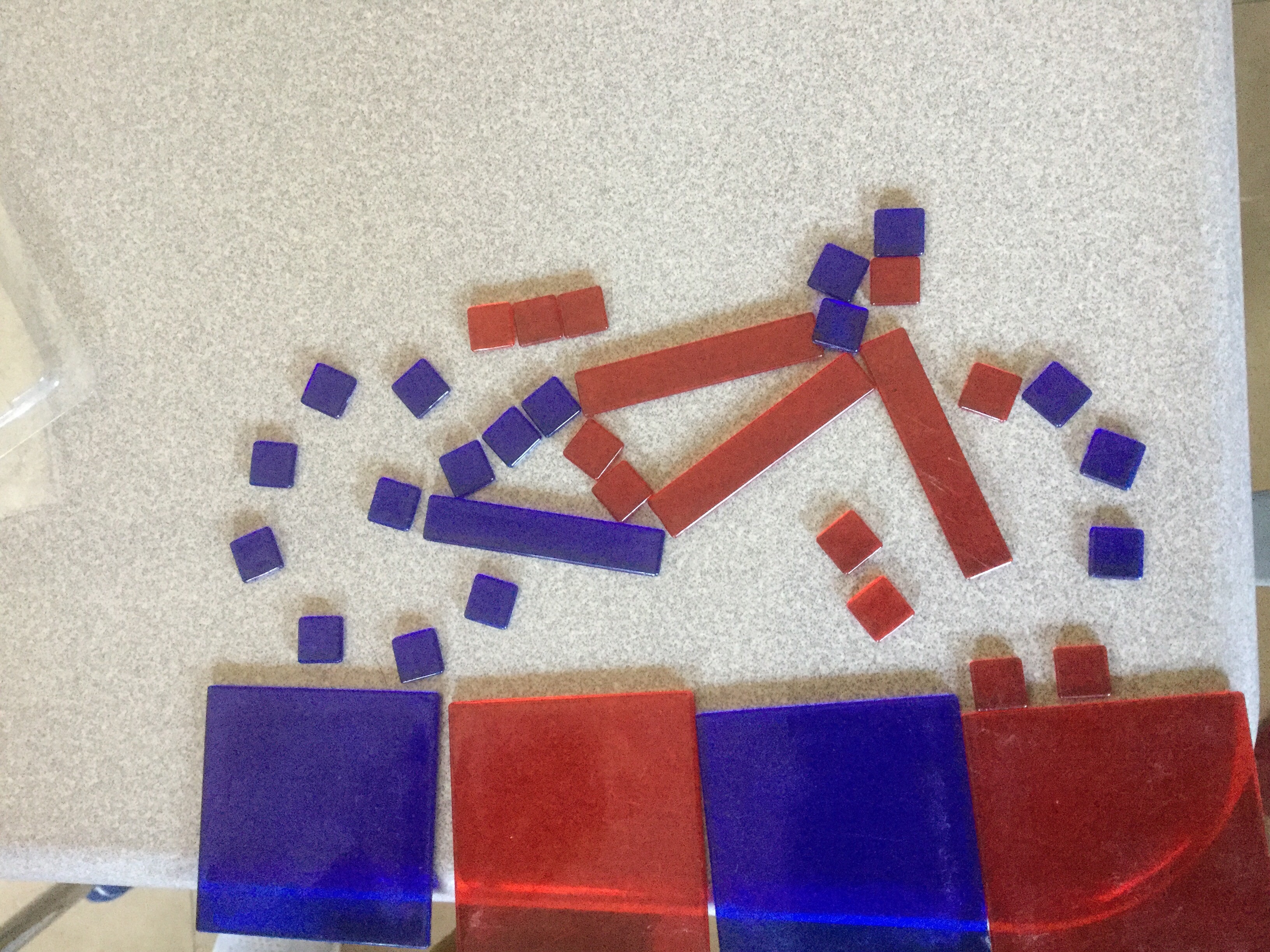
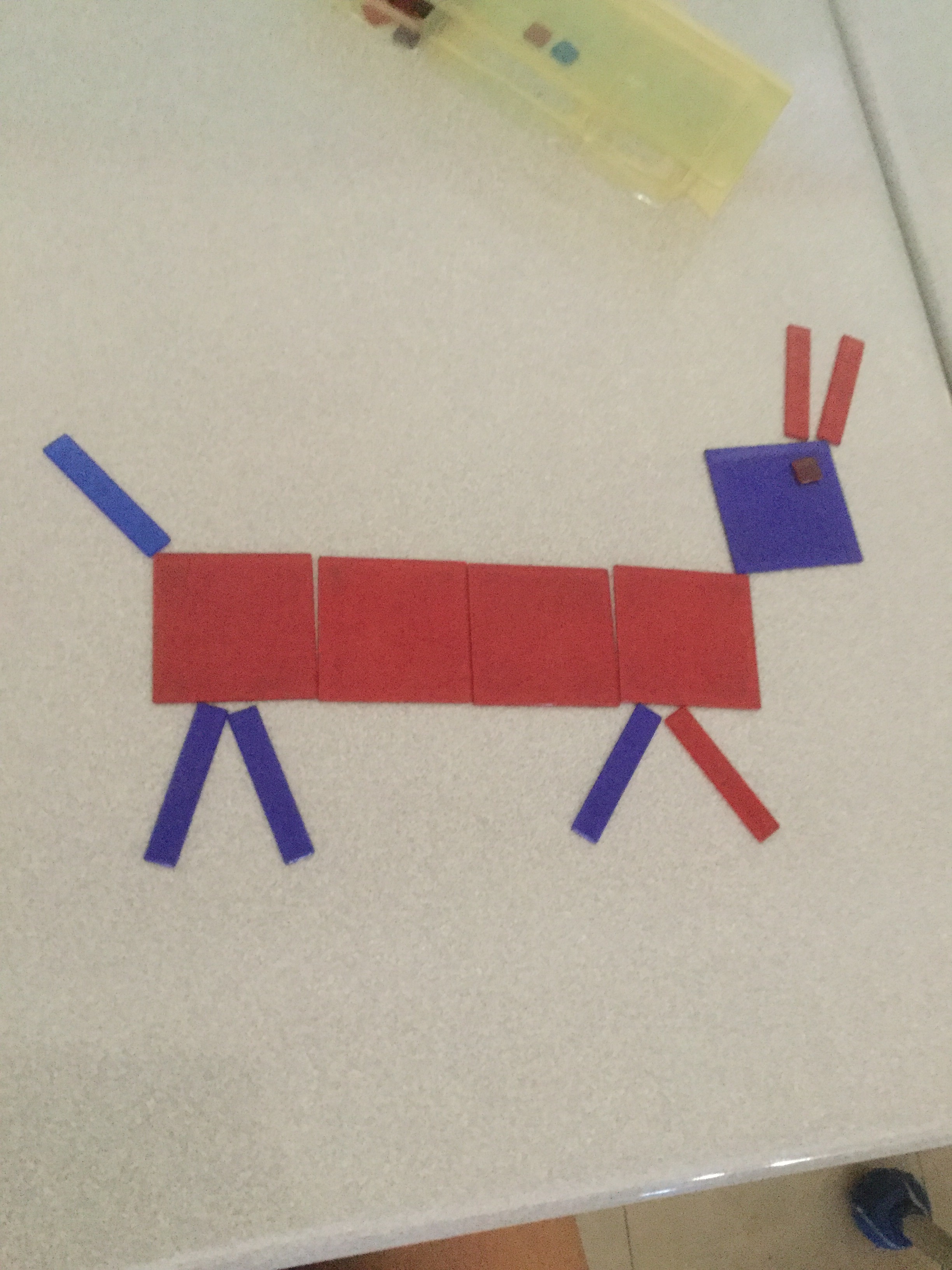 This may have been a dog….we’re still not sure.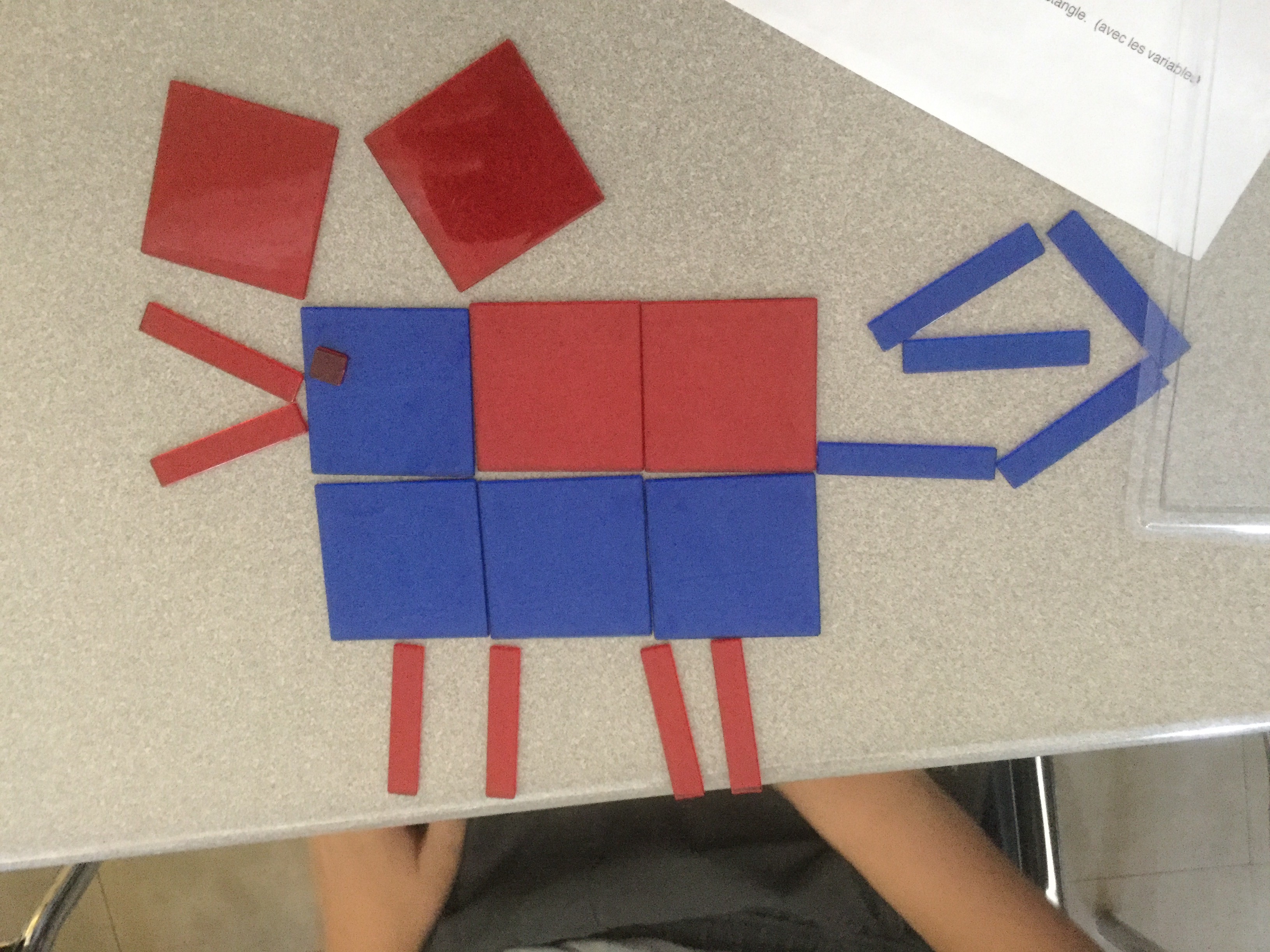
In the end, the simplified versions look something like this.
 Ms. Bearse's Site