Sod Problem
What do you notice? What do you wonder?
lesson credit and dimensions of sod and garden
Explaining our solutions
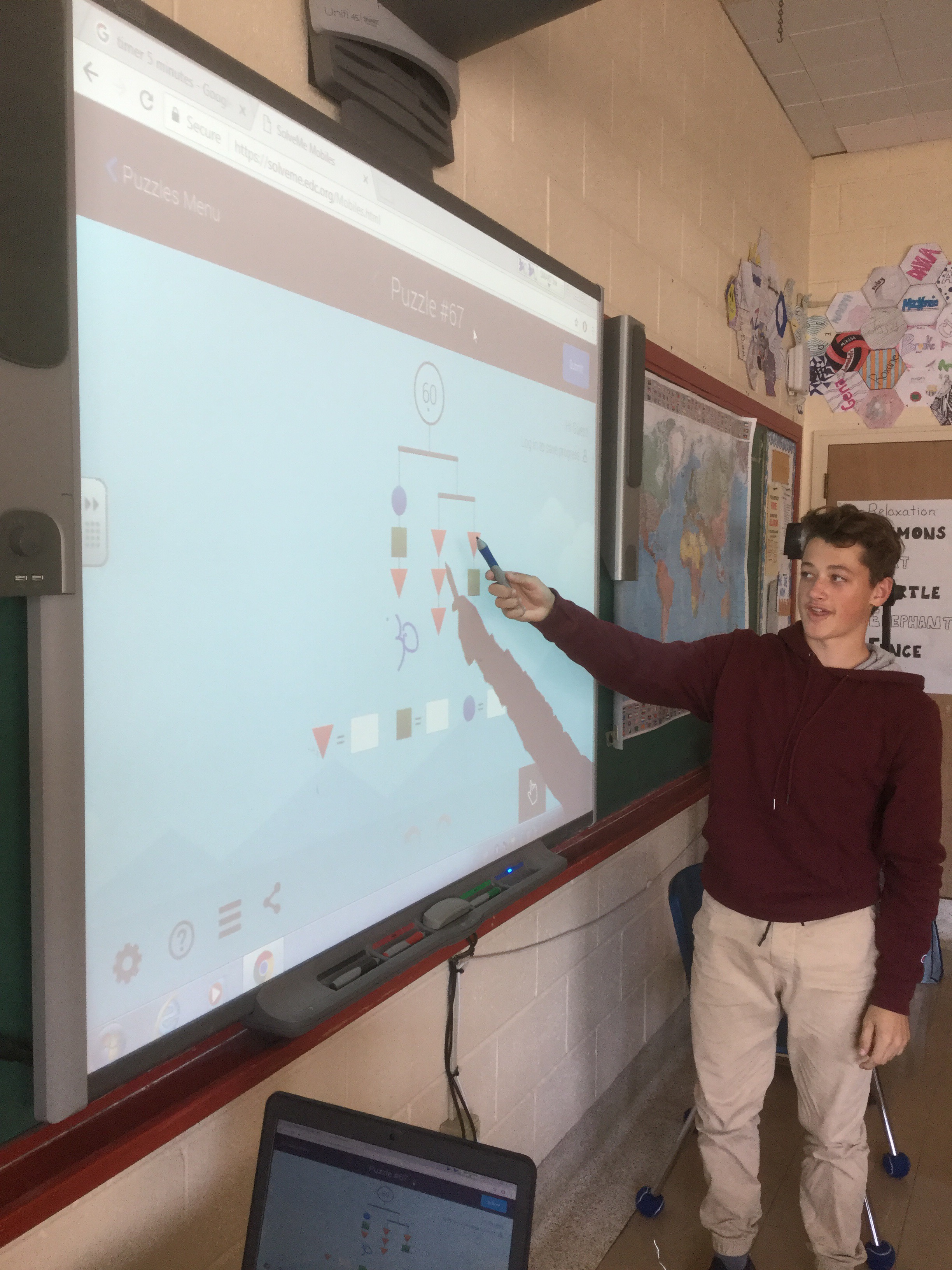 We looked at a new puzzle today, these are called “solve me mobiles”. We came up with some good strategies for solving for the unknowns.
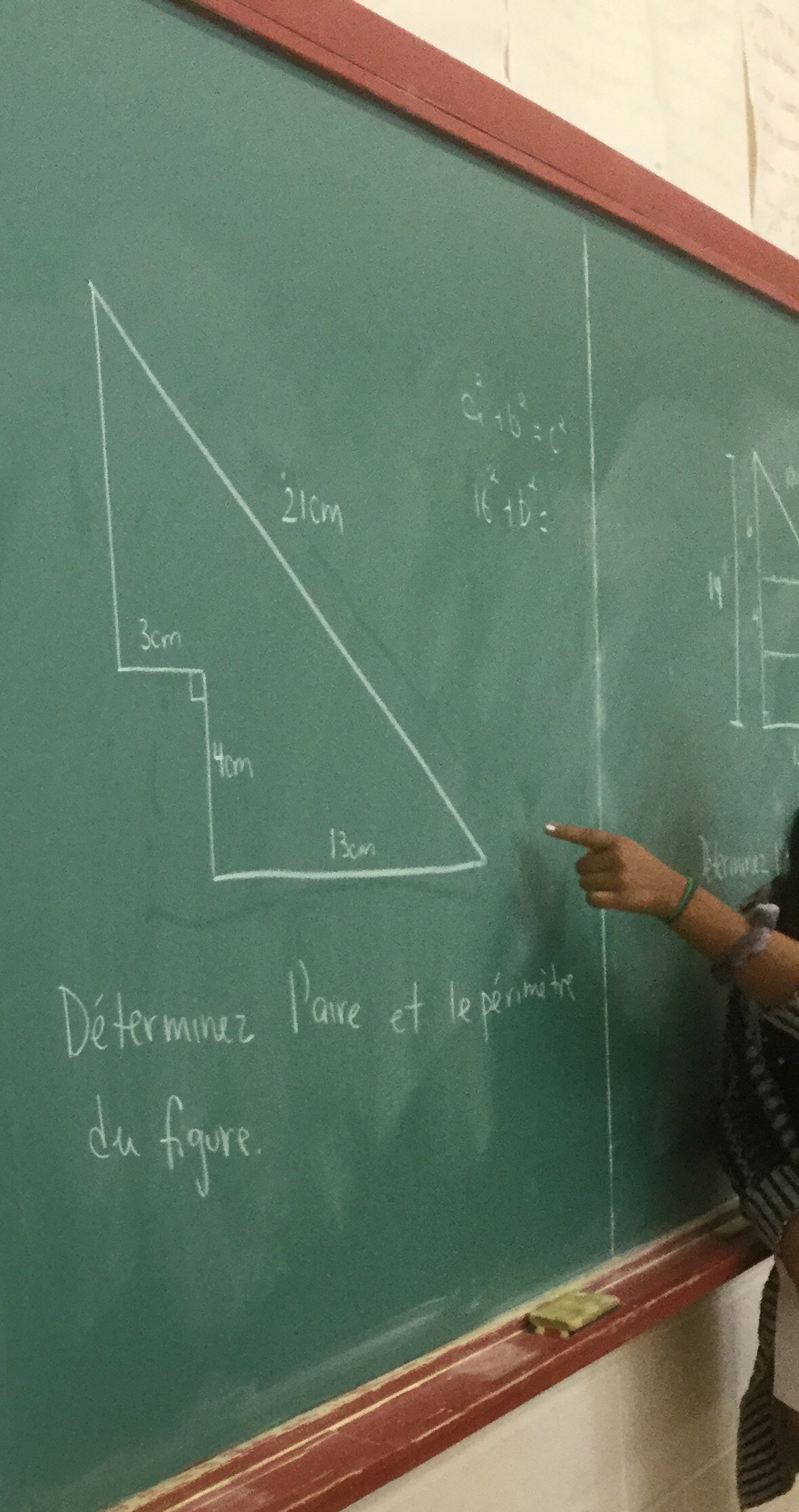
We also applied our knowledge of Pythagorean theorem to help us solve a tricky area and perimeter problem. We will be practicing how to explain our strategies and how to communicate our answers a lot this term!
Beans!
Grade 9s have made up experiments involving beans. We’ve talked a bit about what variables are, and how one variable might depend on another.

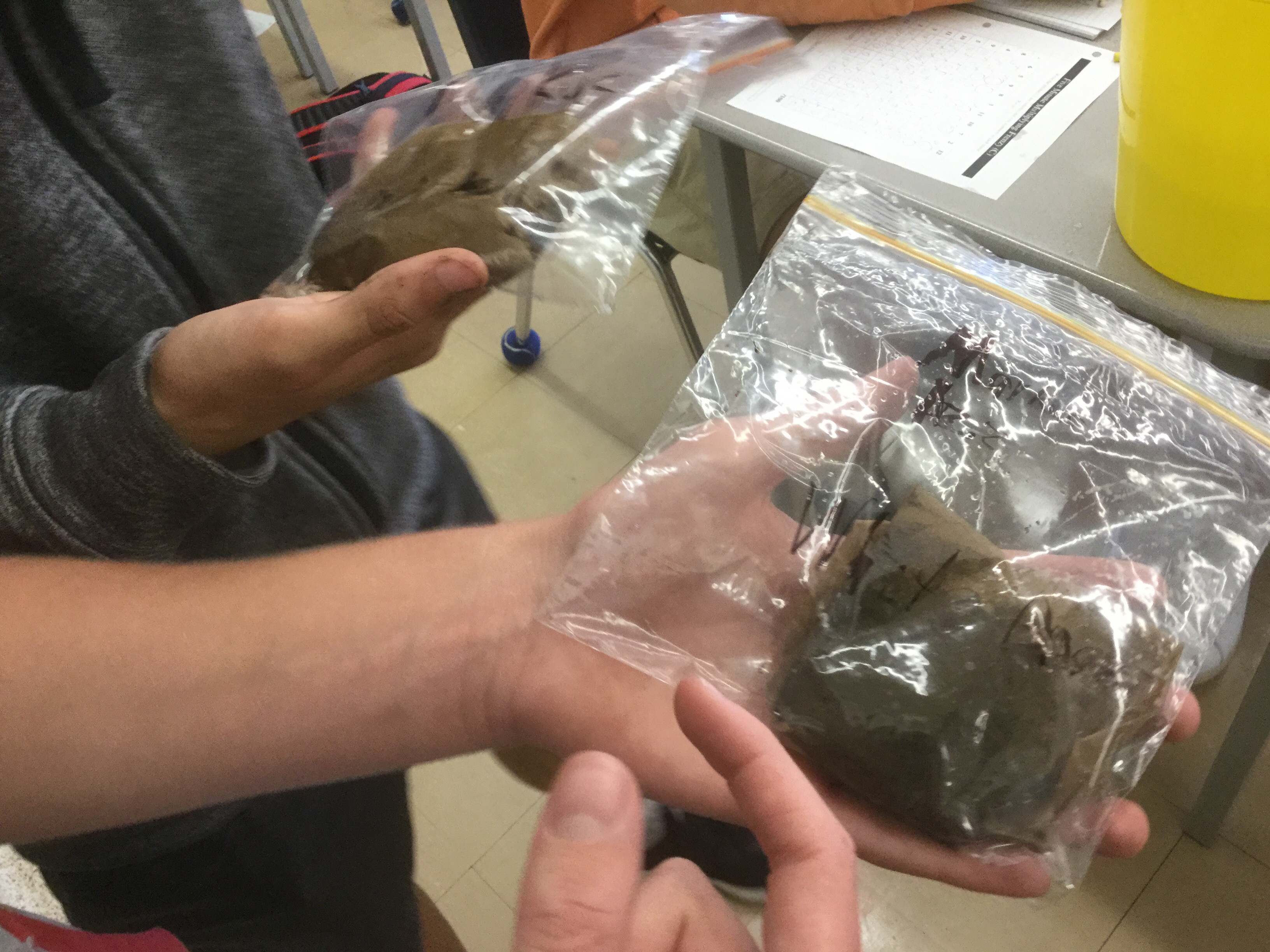
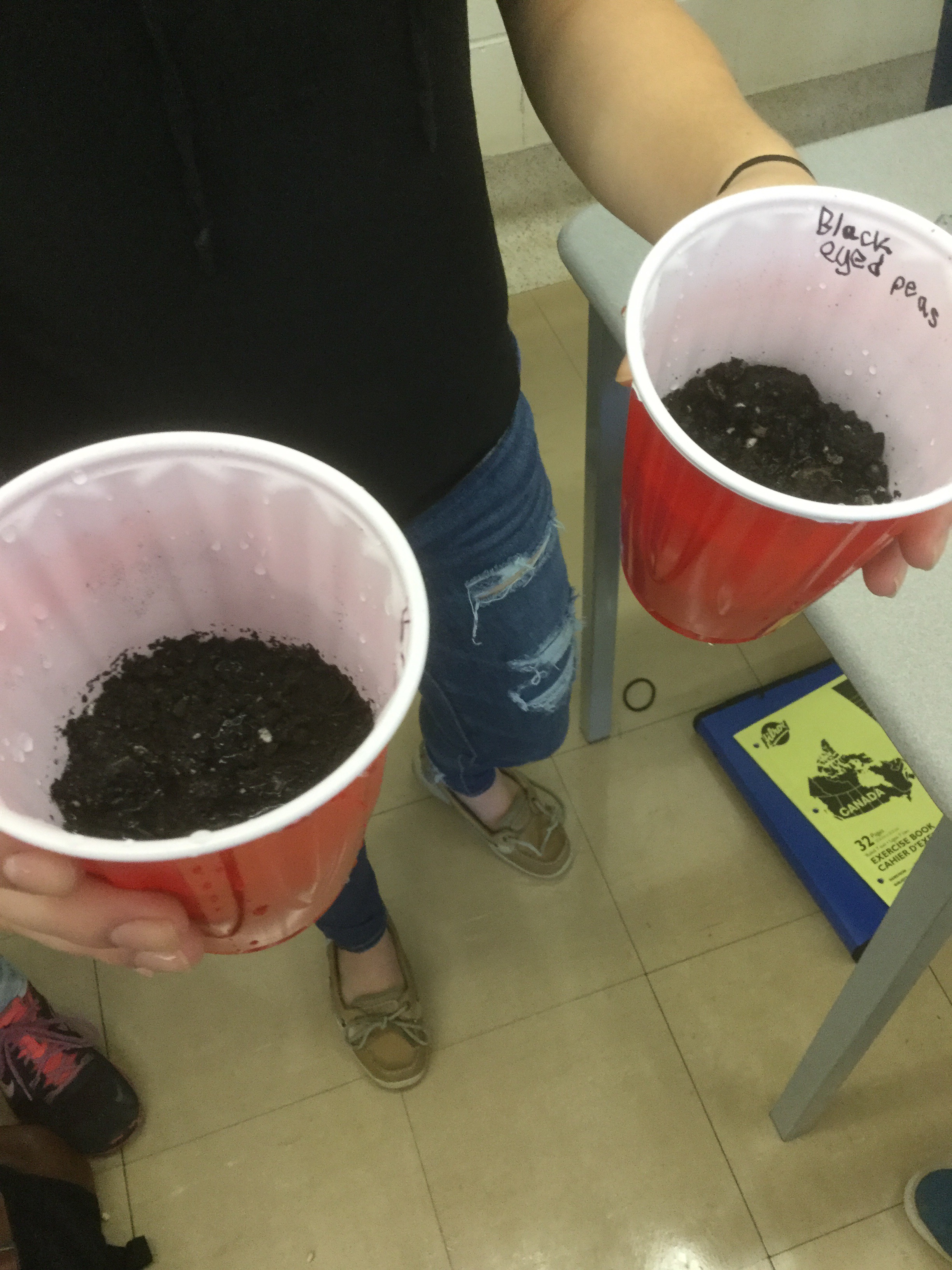
We’re looking forward to seeing how the beans grow over the next little while, and see which variables affect the growth the most.
Thought Provoking Video
Here’s something to think about as we start the school year. There are interesting points made about technology, and patience.
In math class we know that it will often take a lot of hard work to accomplish our goals. We need to be patient with ourselves, and keep working to move forward with our skills. It is important also to acknowledge the appropriate use of technology, and to try to keep ourselves balanced, and to develop good solid connections with the people we have in our lives.
How tall are we?
Today we used the “cup” as a unit of height. Each group had only 4 cups and had to determine how many cups tall one group member was.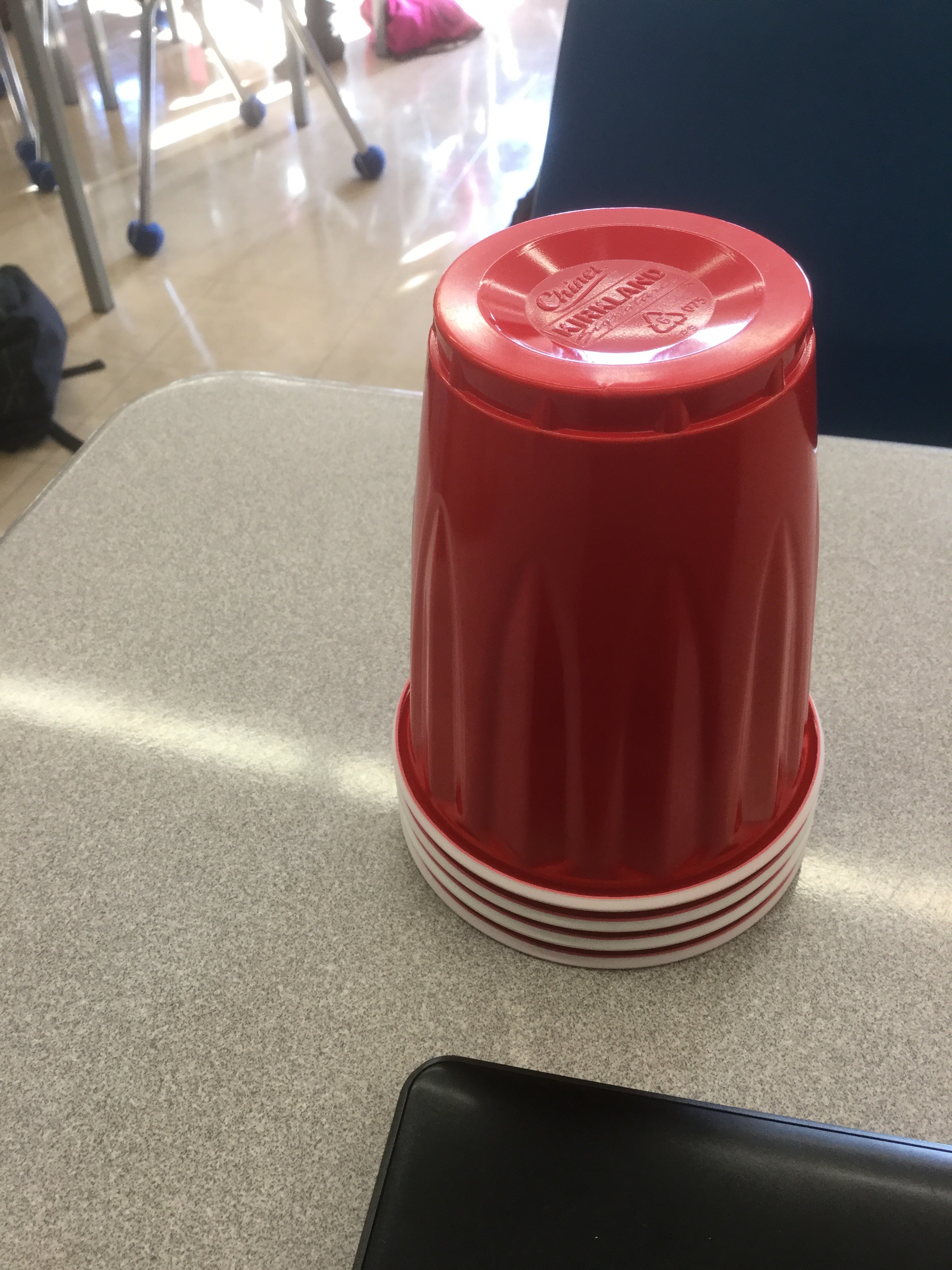
There were no restrictions given on how to arrange the cups or how to solve the problem.
Some groups wanted to use string, some wanted meter sticks, some wanted rulers…
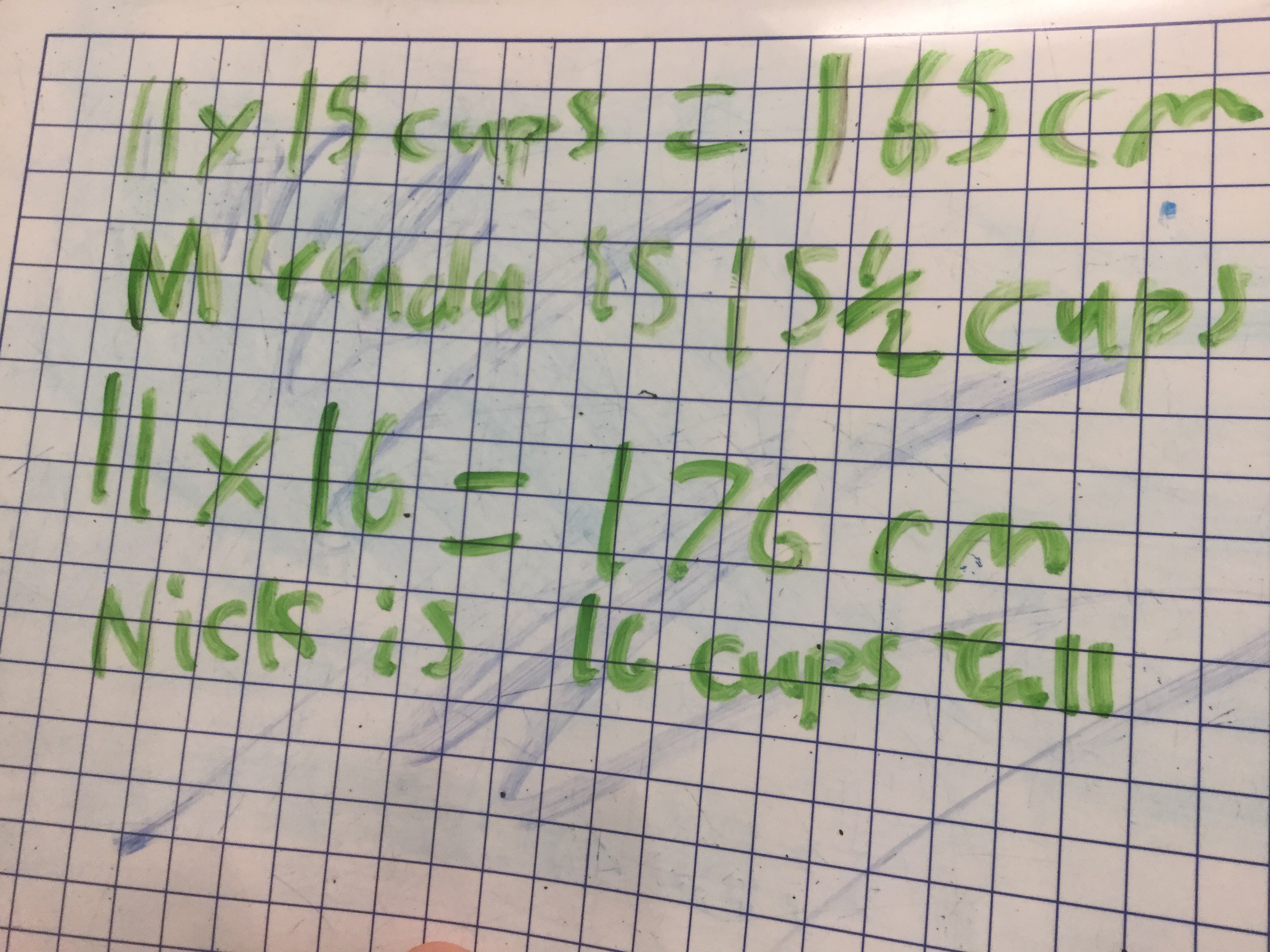


Some groups used dividing, and some used multiplying….some used trial and error.

We stacked cups in the end to verify that our math was correct.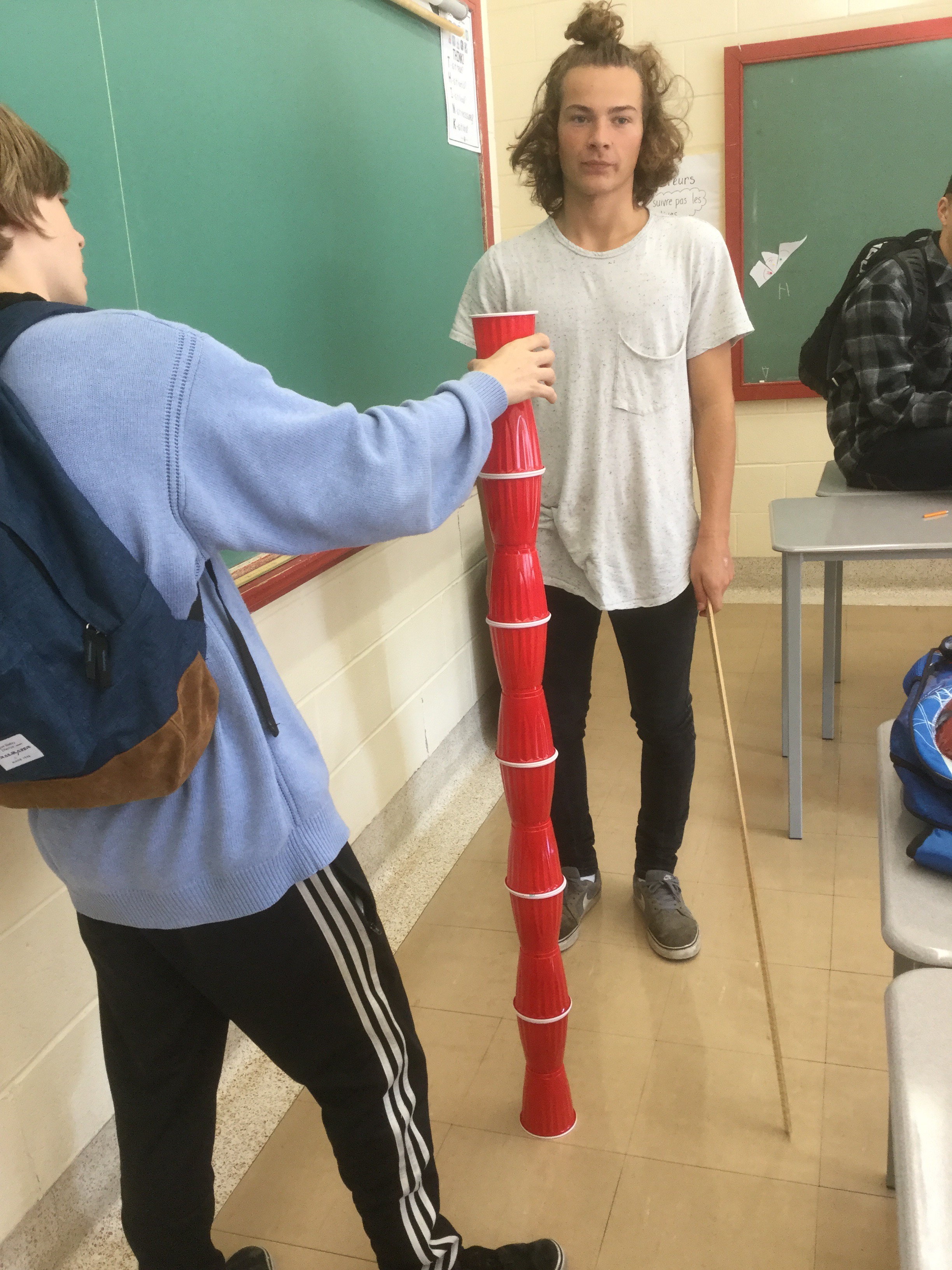
Most of us had calculated pretty accurately!
Sky scrapers
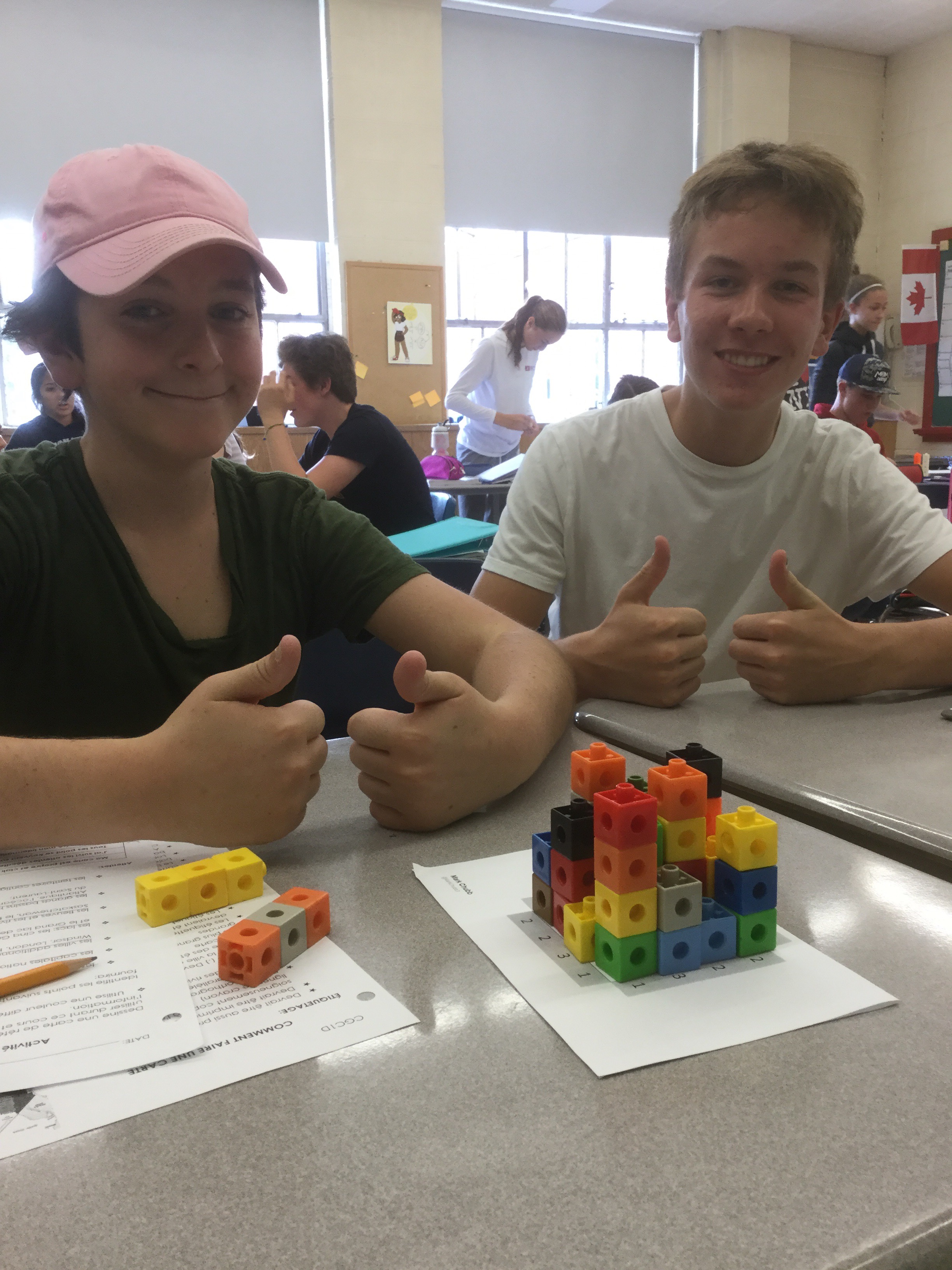
Today’s challenge has been an open question about a city plan. In the 4×4 square grid there are buildings that are either 4,3,2, or 1 story, but only one of each height in each row or column.
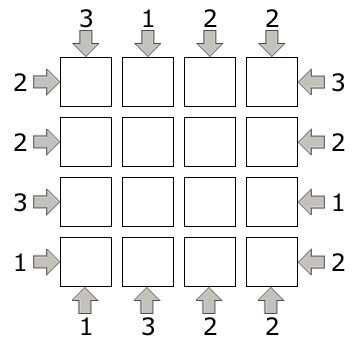
The numbers on each side represent the number of buildings that can be seen from that vantage point.
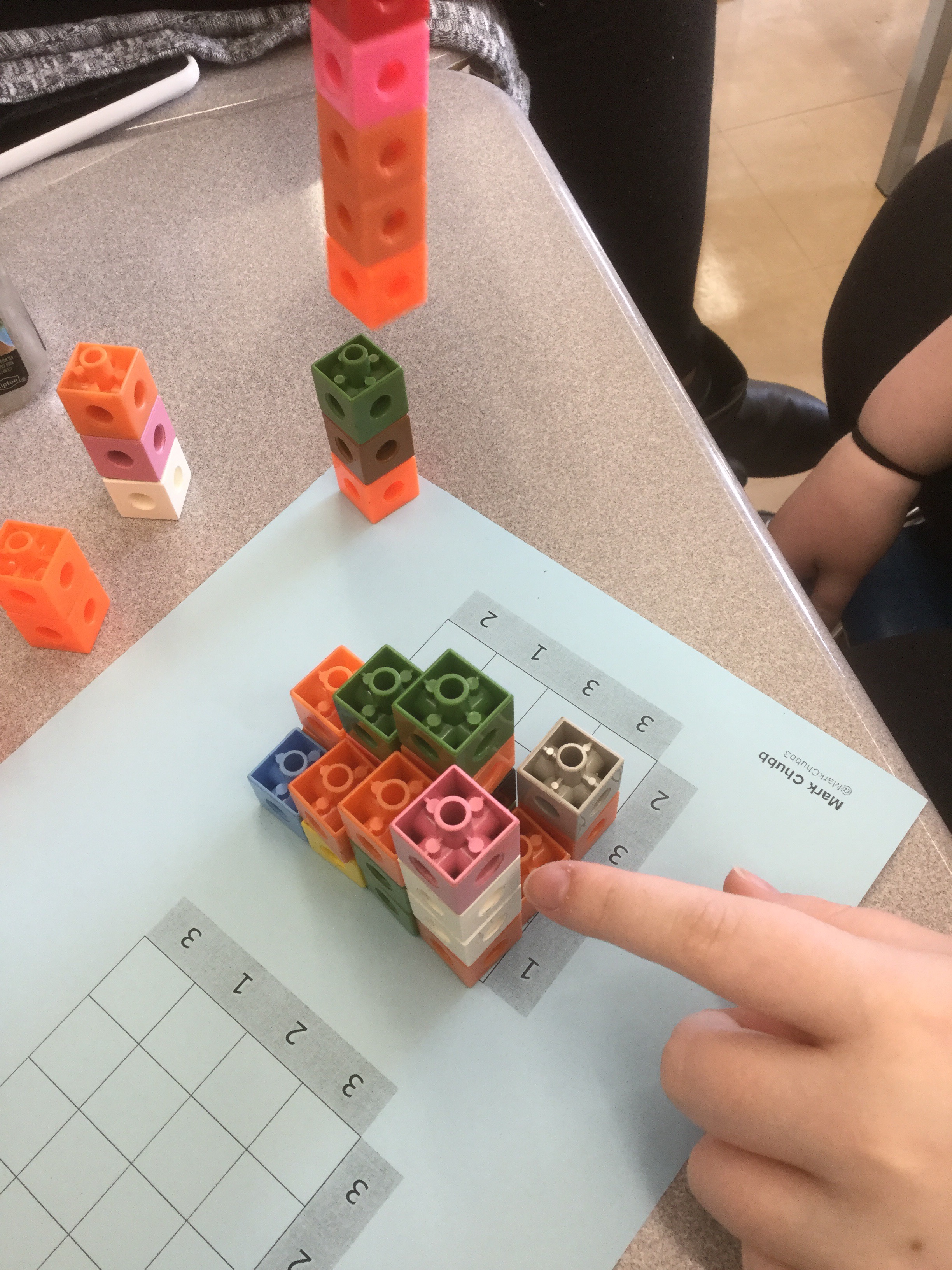
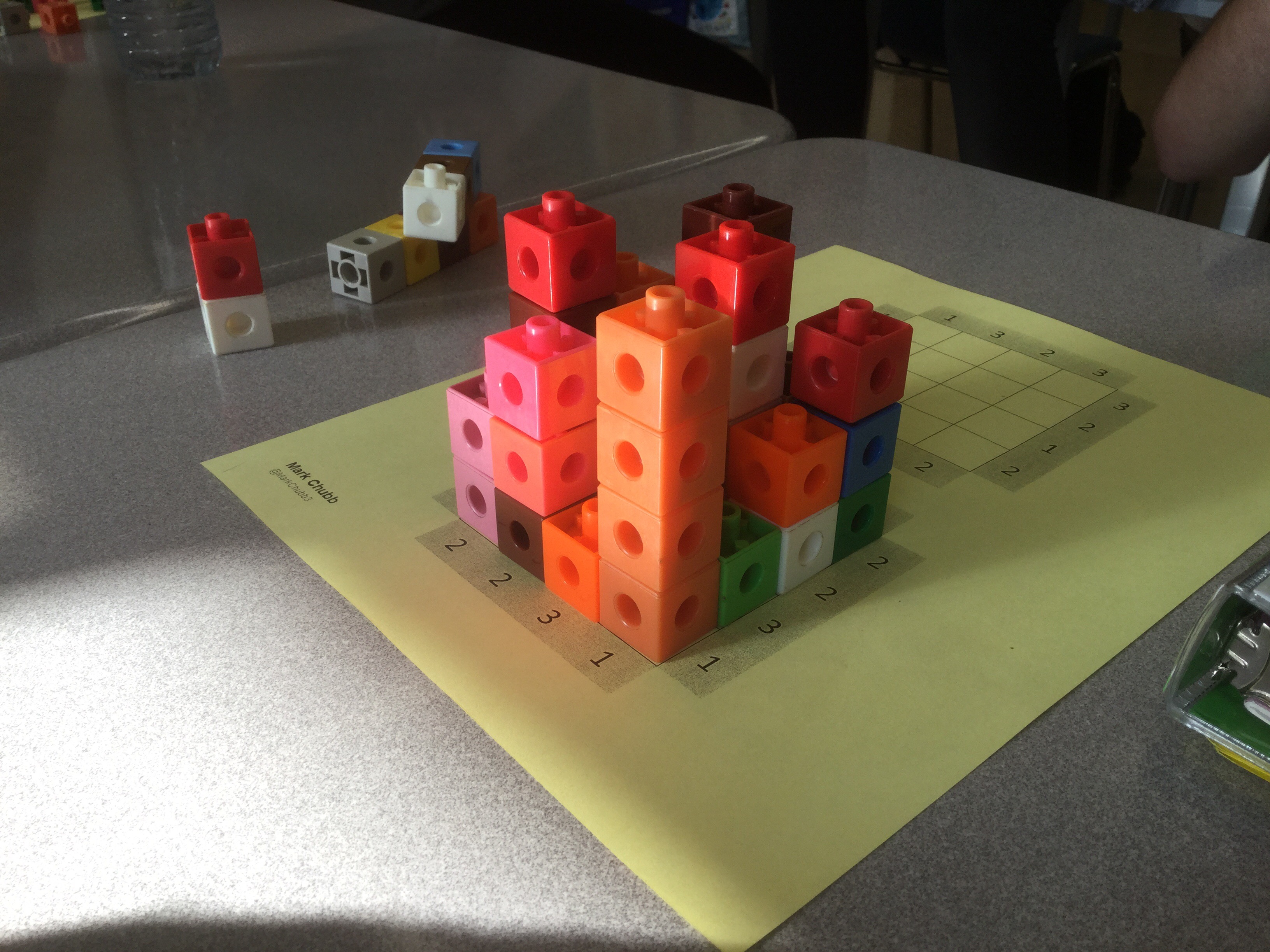
We looked at different strategies for solving the problem, and how to use manipulative like linking cubes to help us.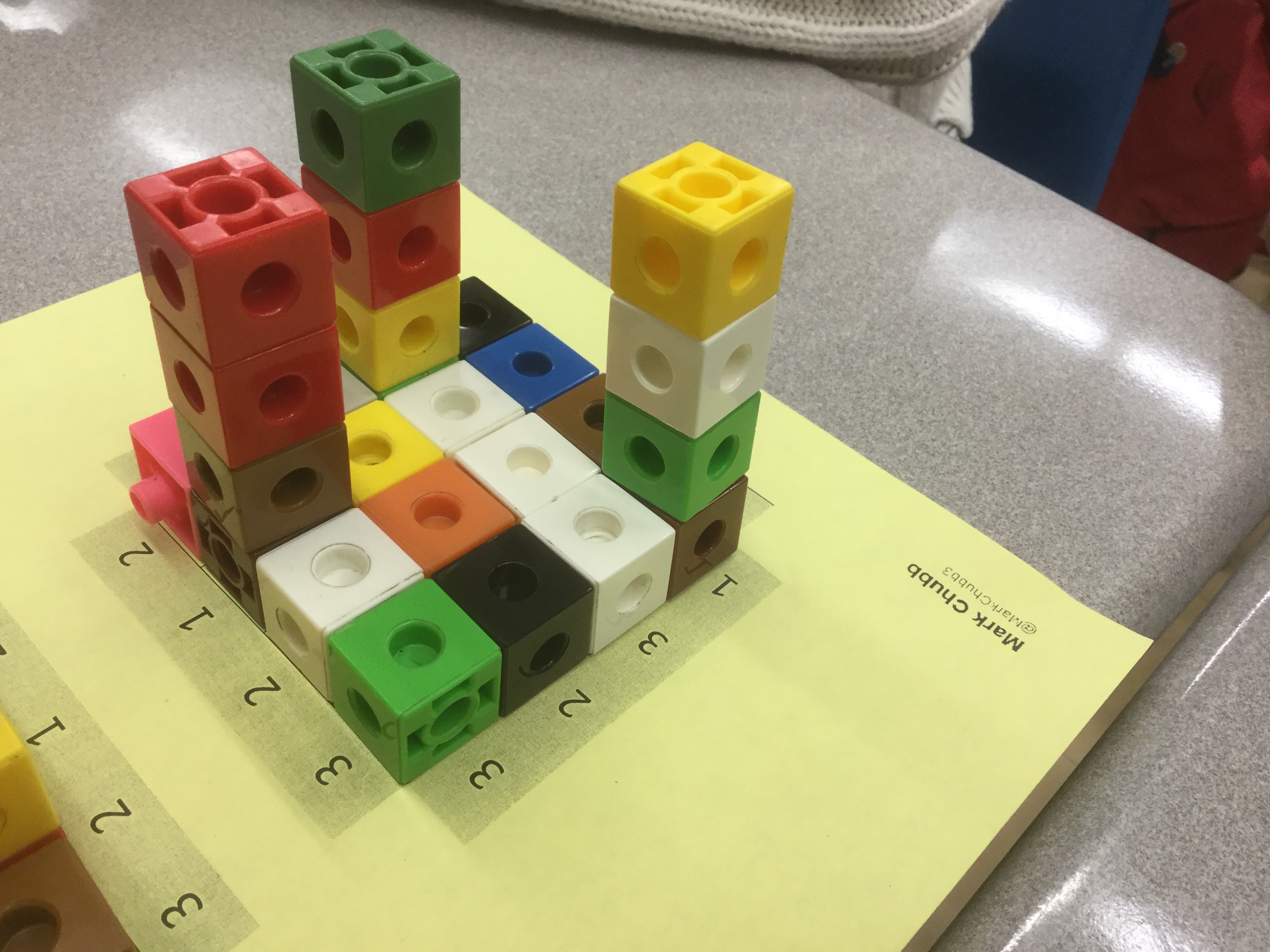
With practice we got pretty good!
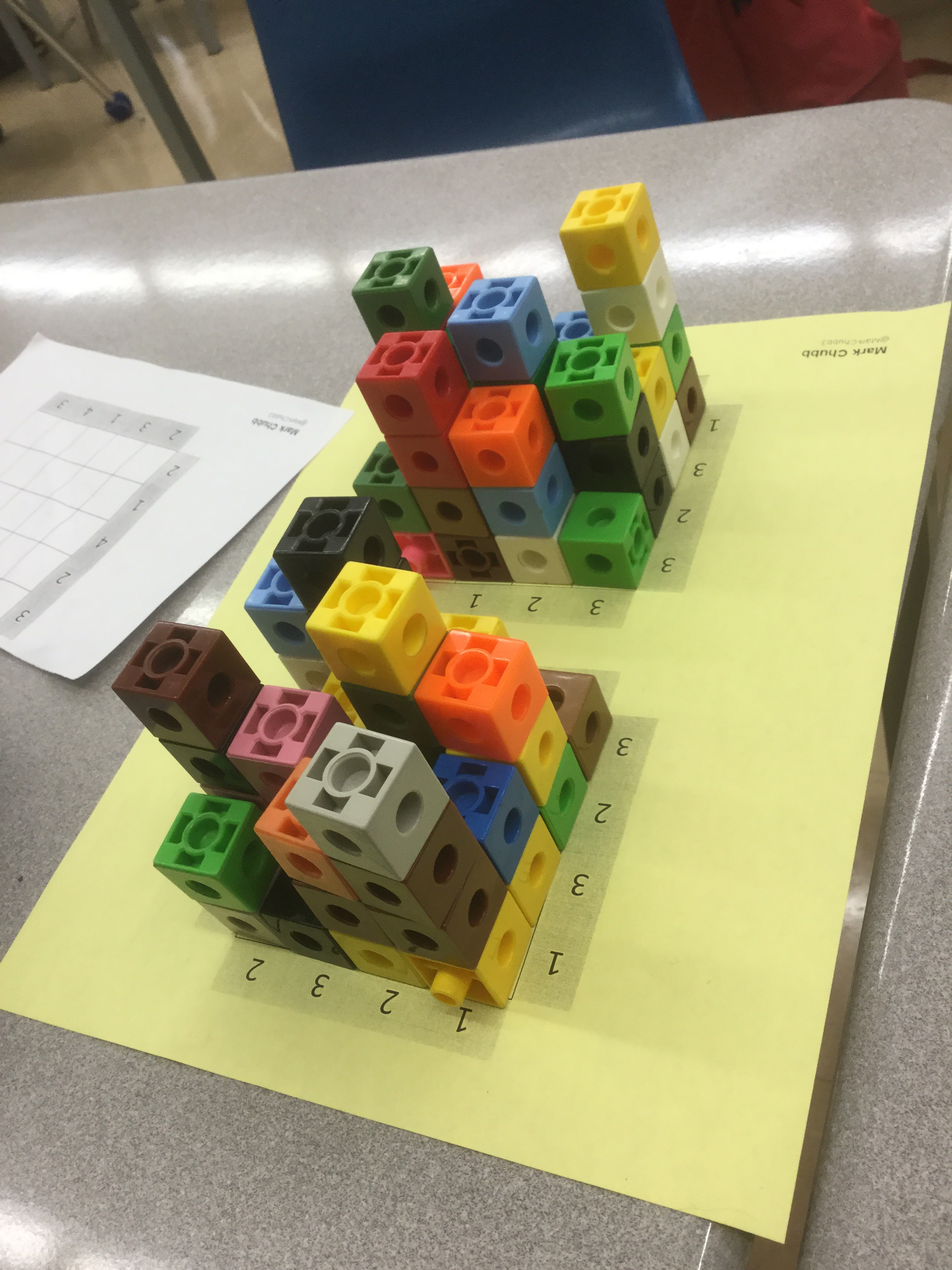
When faced with challenging problems, we have choices….we can give up and say “it’s too hard”, or we can keep trying….looking for new strategies, talking it over with other people, or sometimes just diving in and using trial and error.
Some of us wanted an extra challenge and worked on a 5×5 grid!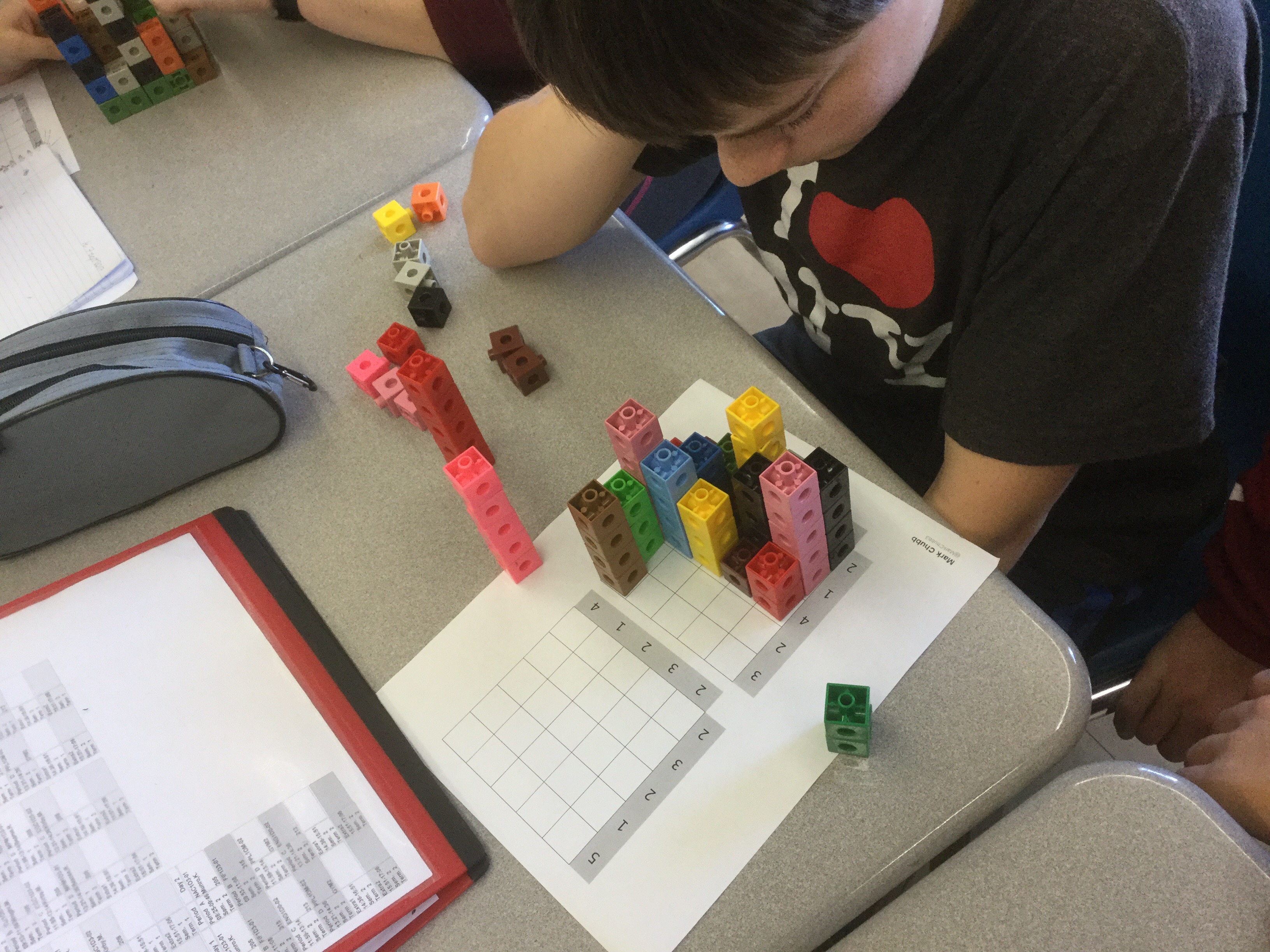
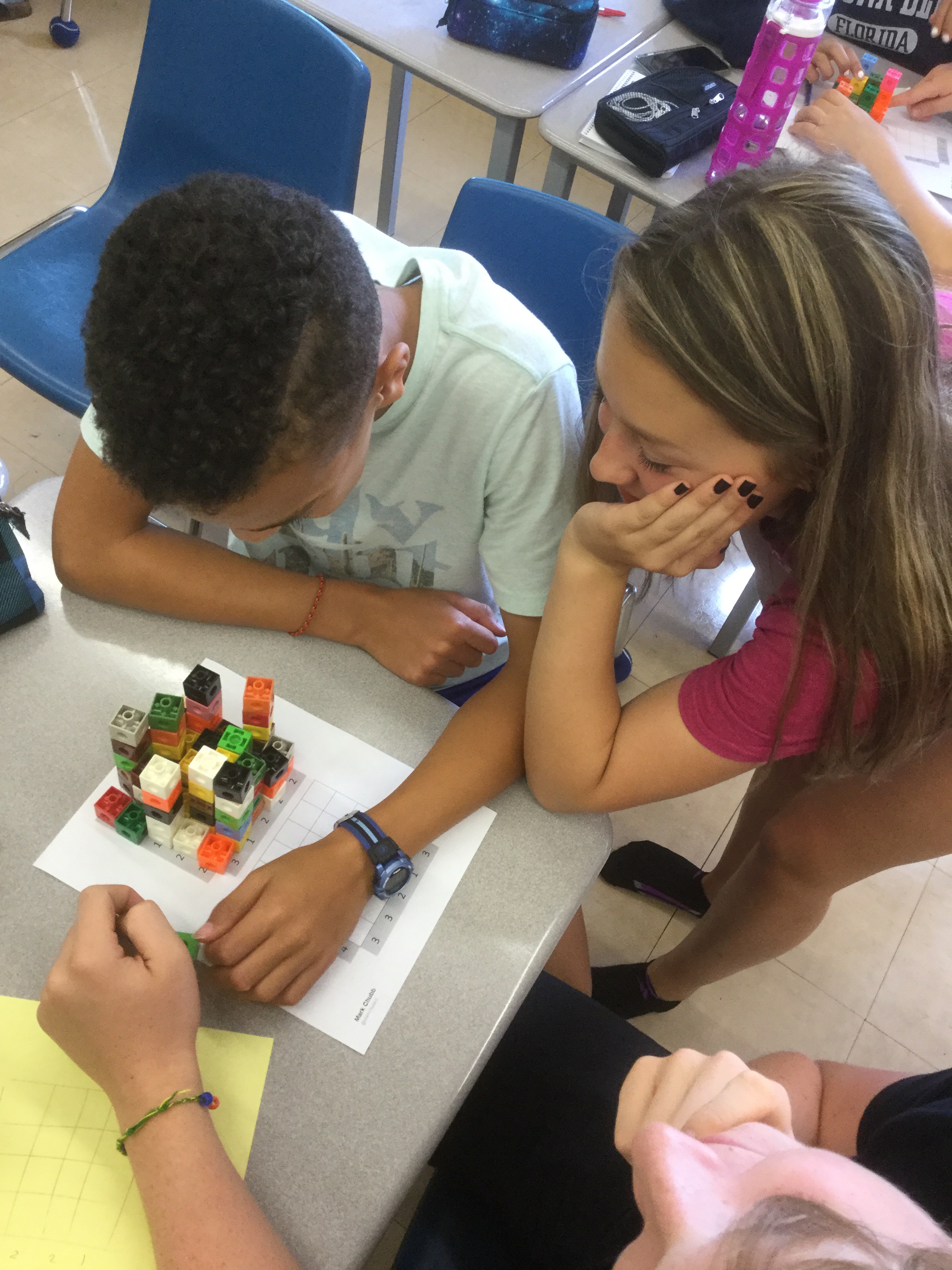
We looked at strategies to solve these problems easily, and had our expert talk us through the process.
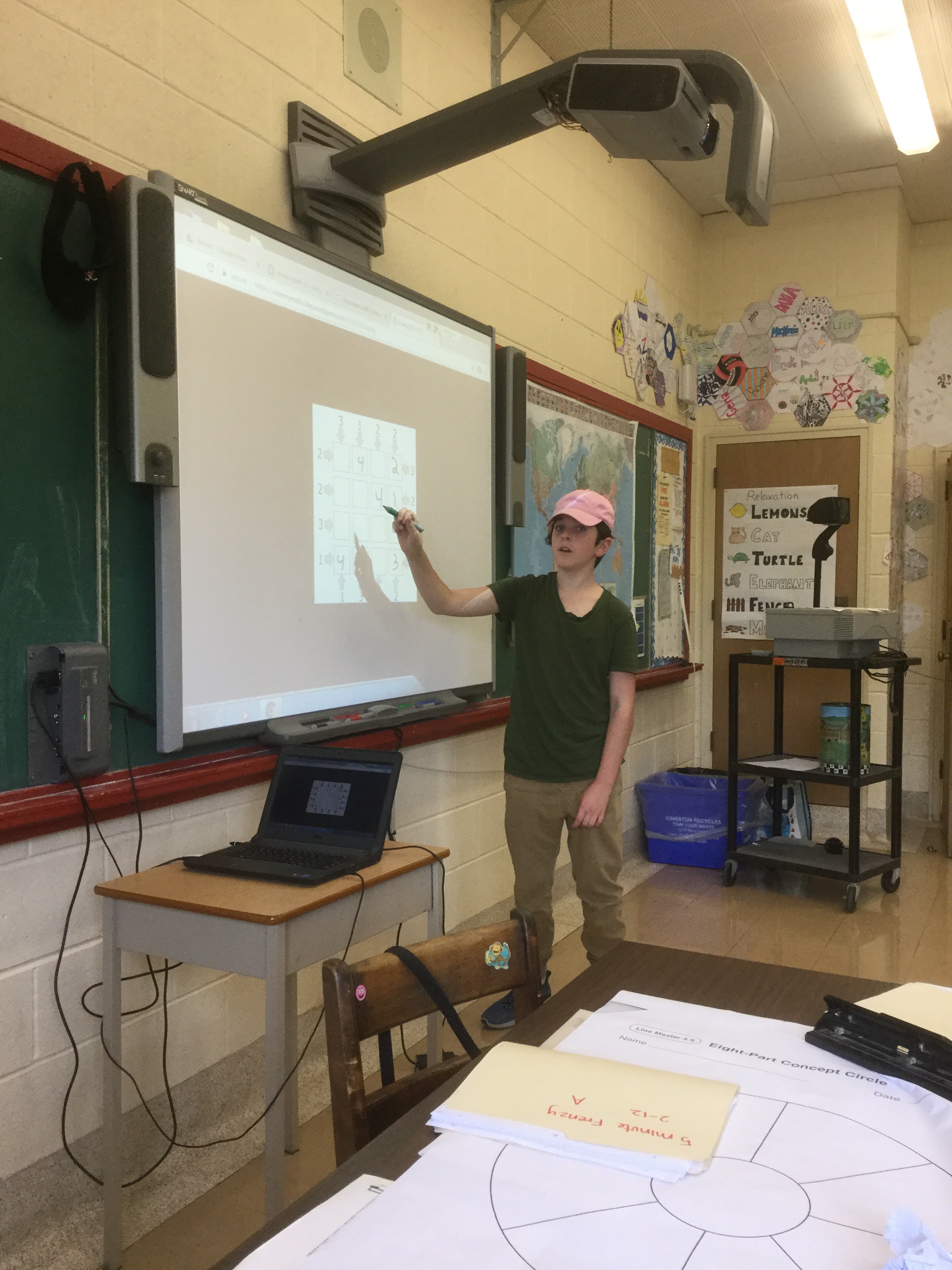
Great work!

Representing 10
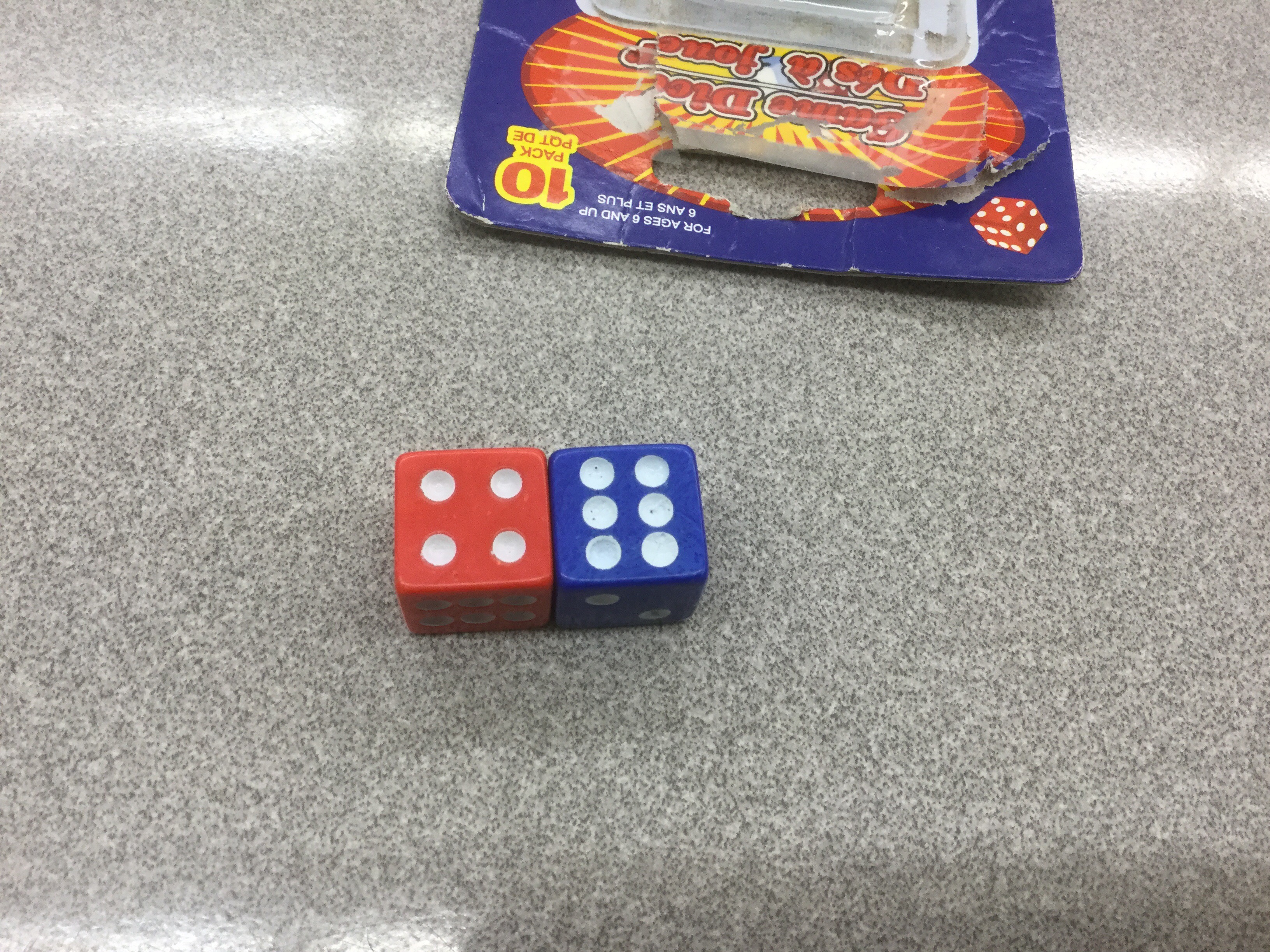
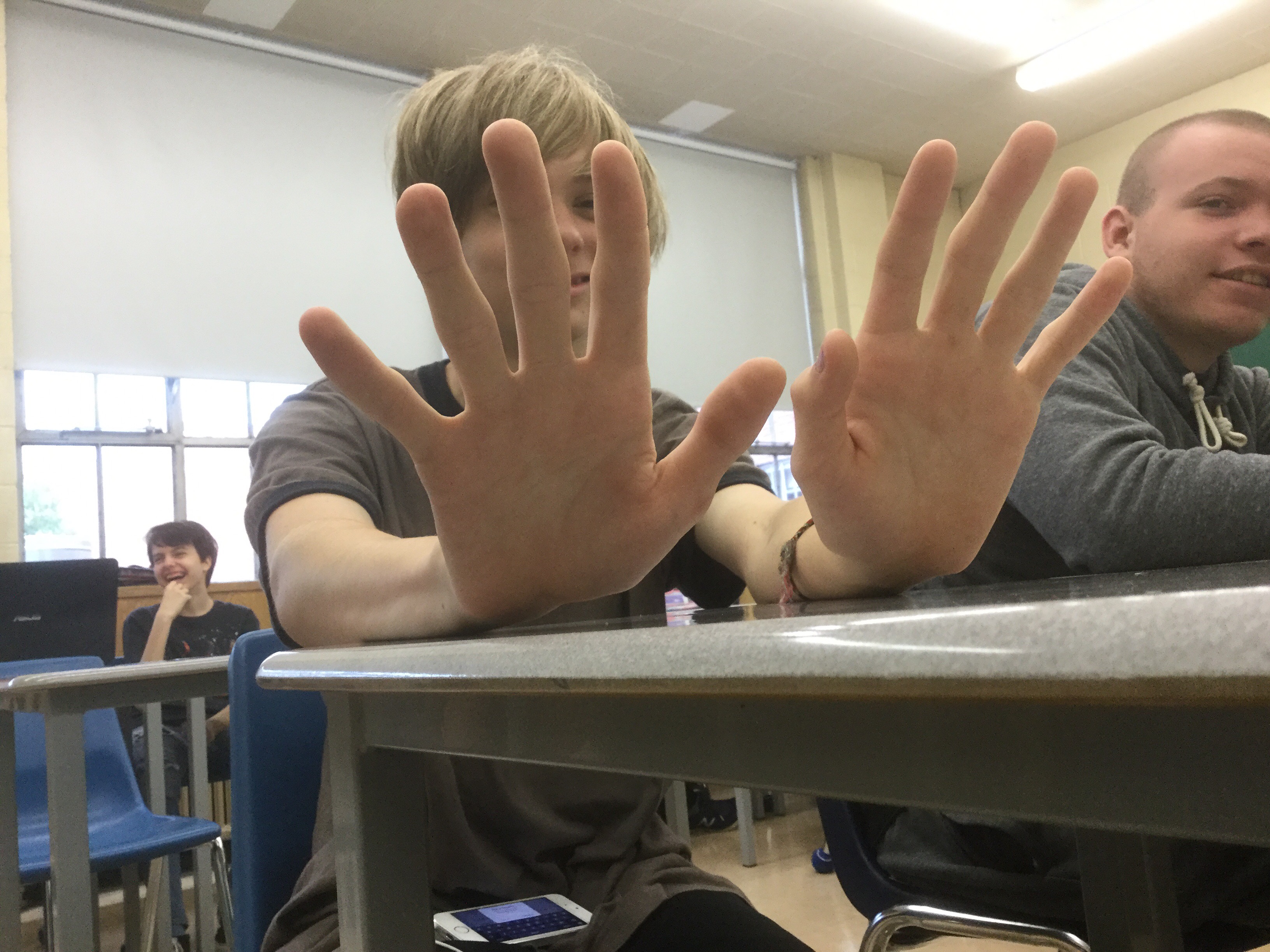
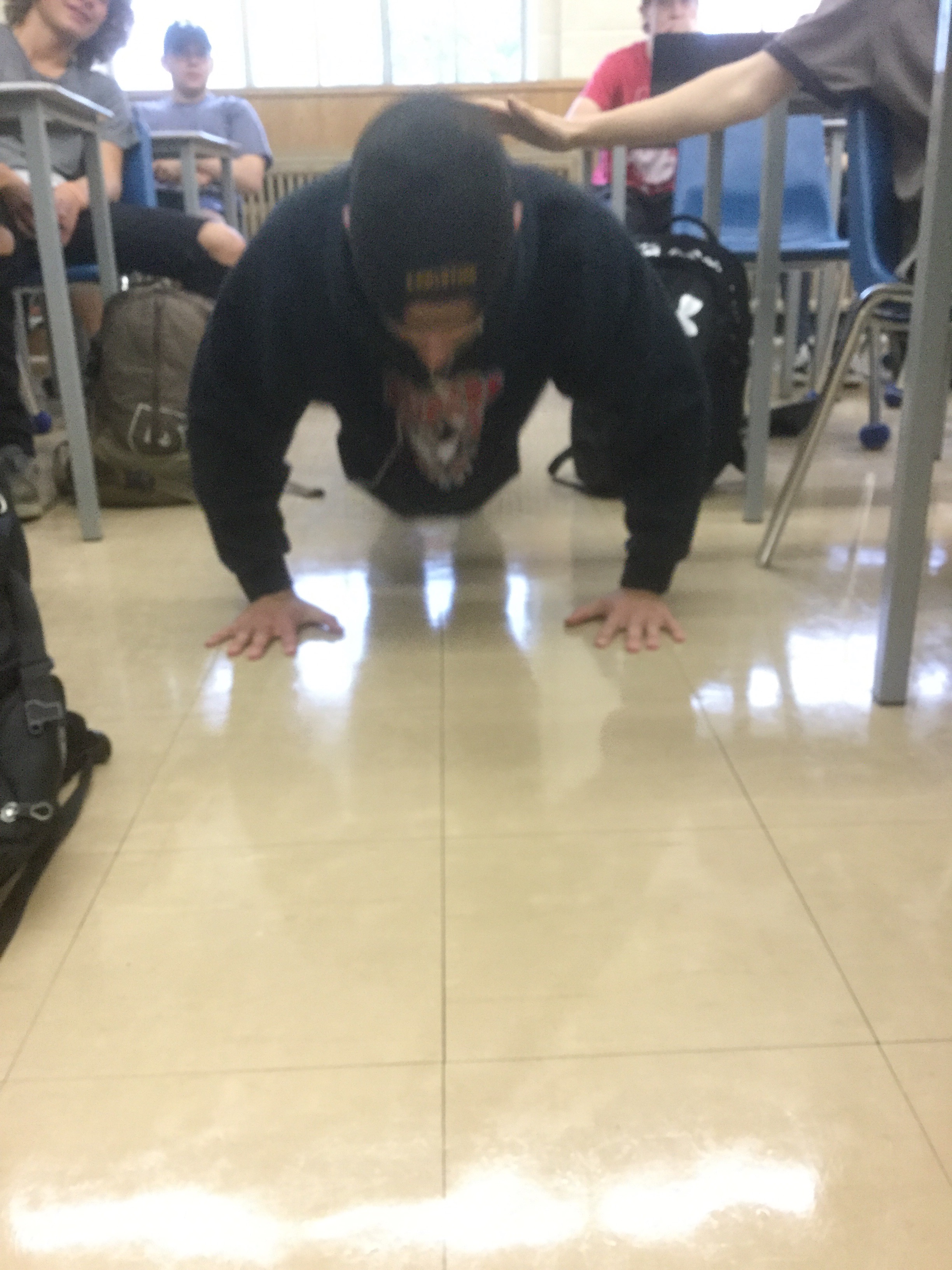
Today’s intro challenge was to show 10 in as many ways as possible, and there were some impressively creative methods shown!
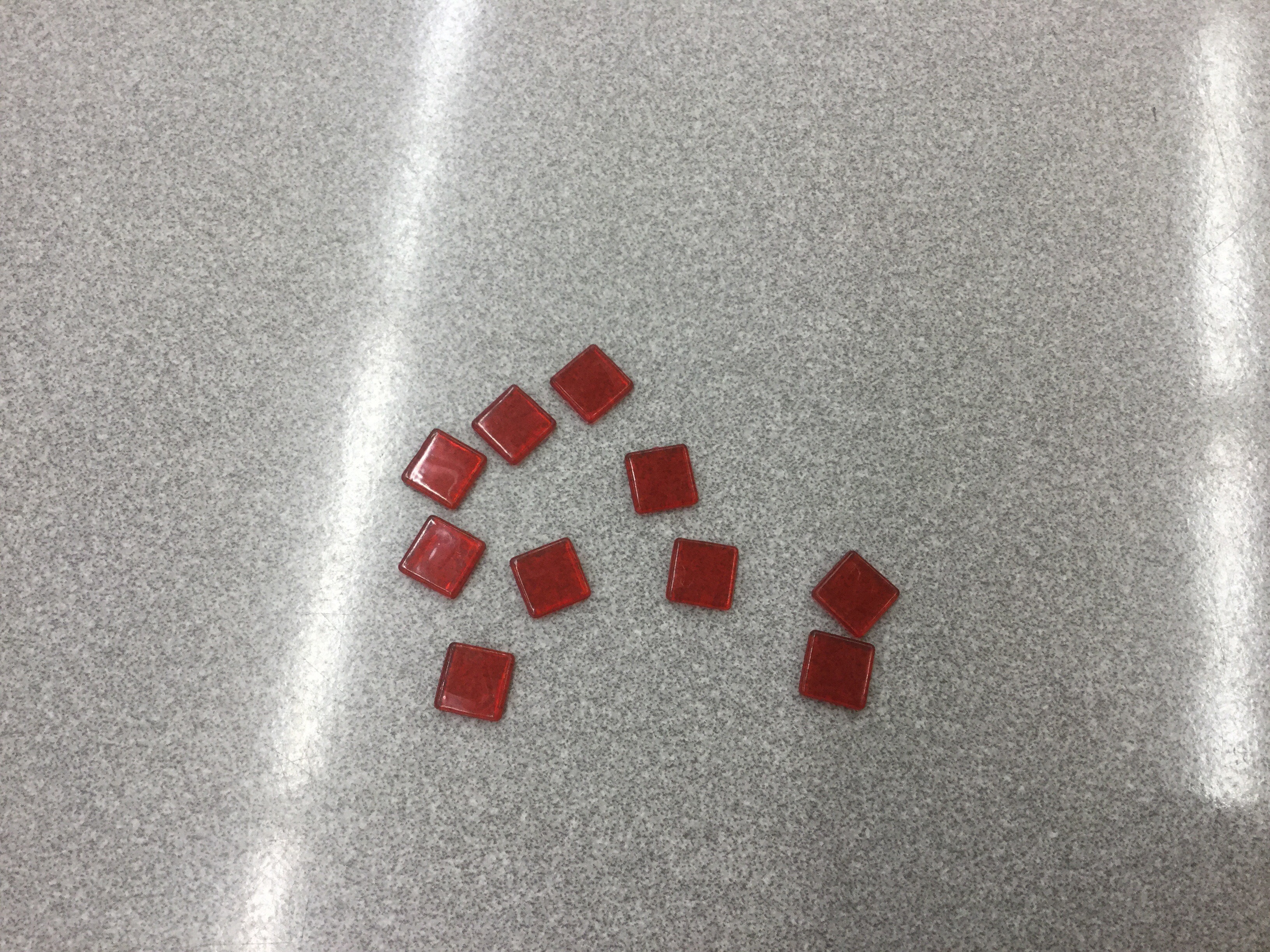

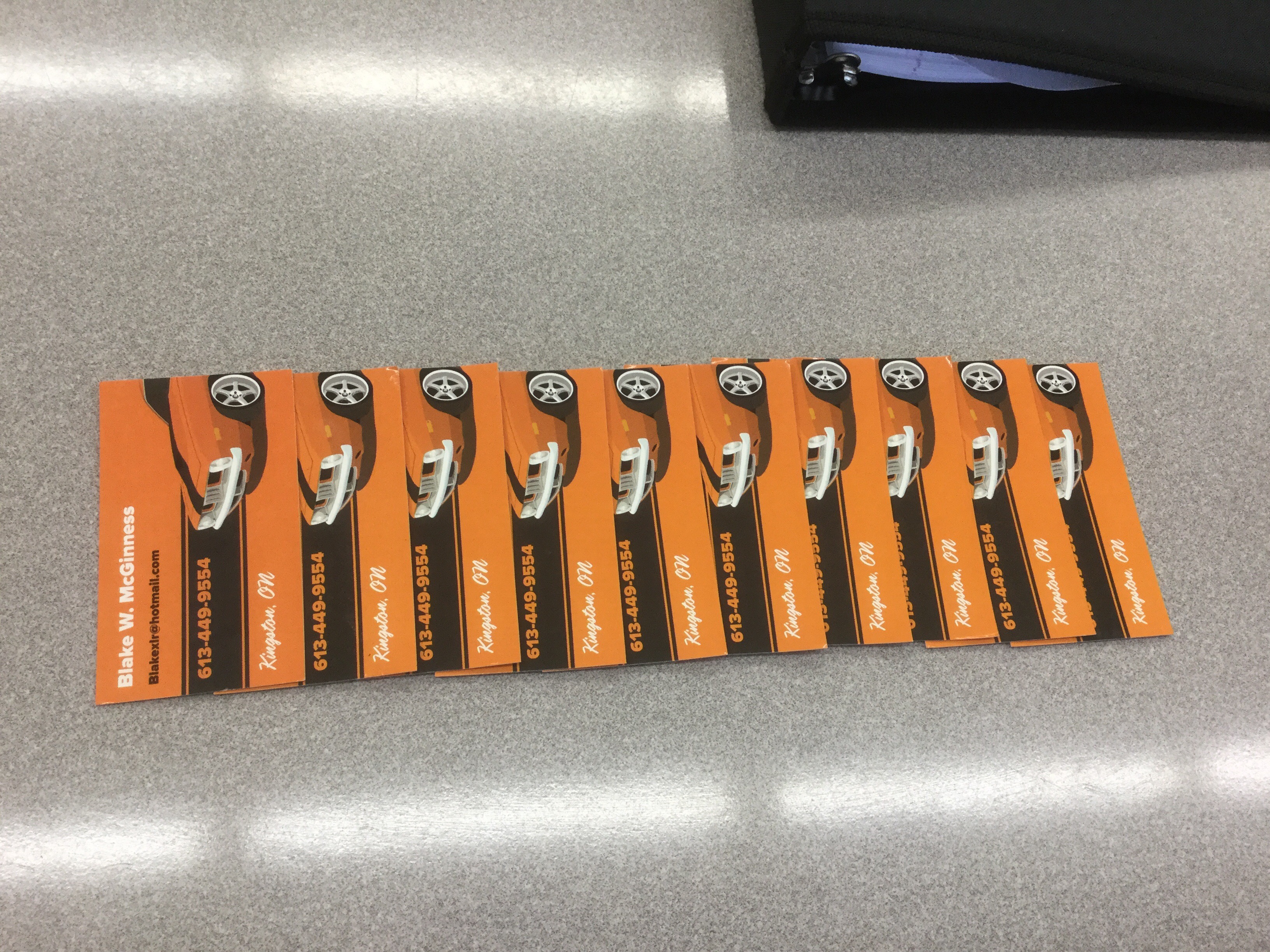
We can count out 10 things individually, or put them in an array, like the business cards.
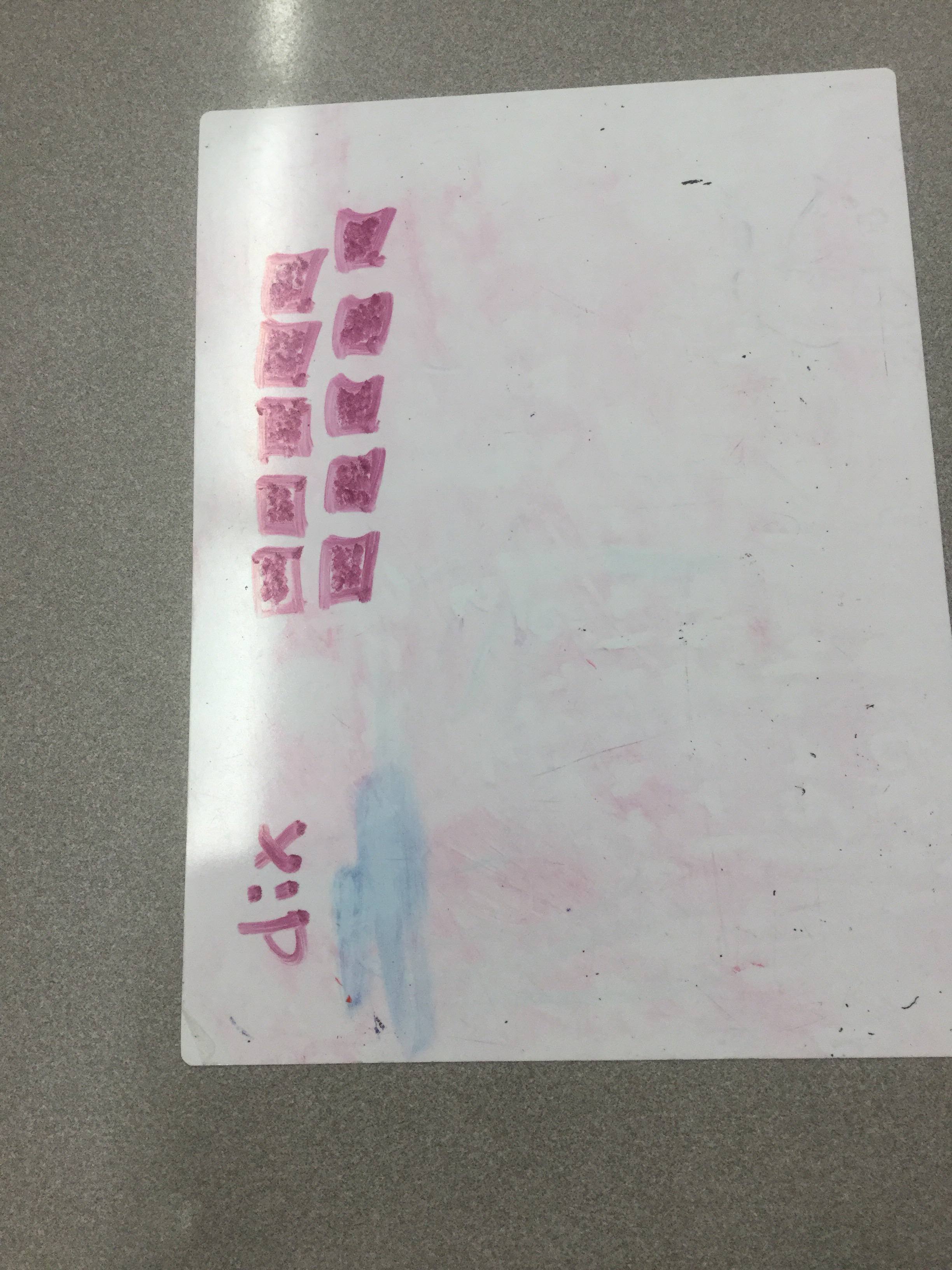
Here’s a different array, a 2 by 5 array.
Some used money, showing adding and subtracting.


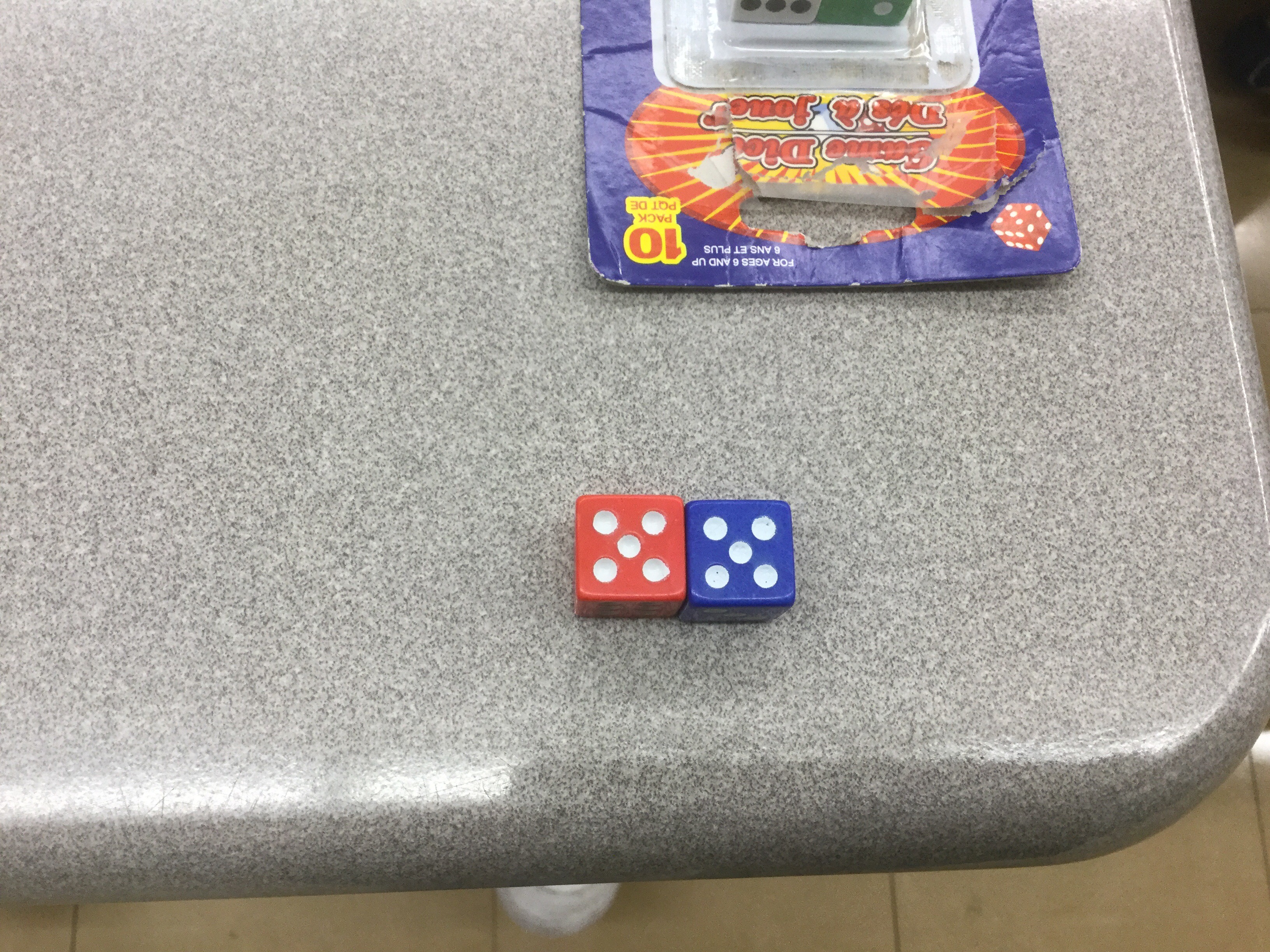
Some used dice to show how to make 10.

We even saw some languages!

And of course, everyone’s go-to manipulative for “10” is hands!
We also even had a push up representation!
Impressive!
We used our skill to decompose numbers and add and subtract, and also to help us when we multiply big numbers using the area model.
Which one doesn’t belong!
We are looking at 4 numbers and determining reasons that each number could be the one that doesn’t belong. This takes a bit of creativity sometimes! It’s neat to see that sometimes there are lots of different ways to figure out which one doesn’t belong.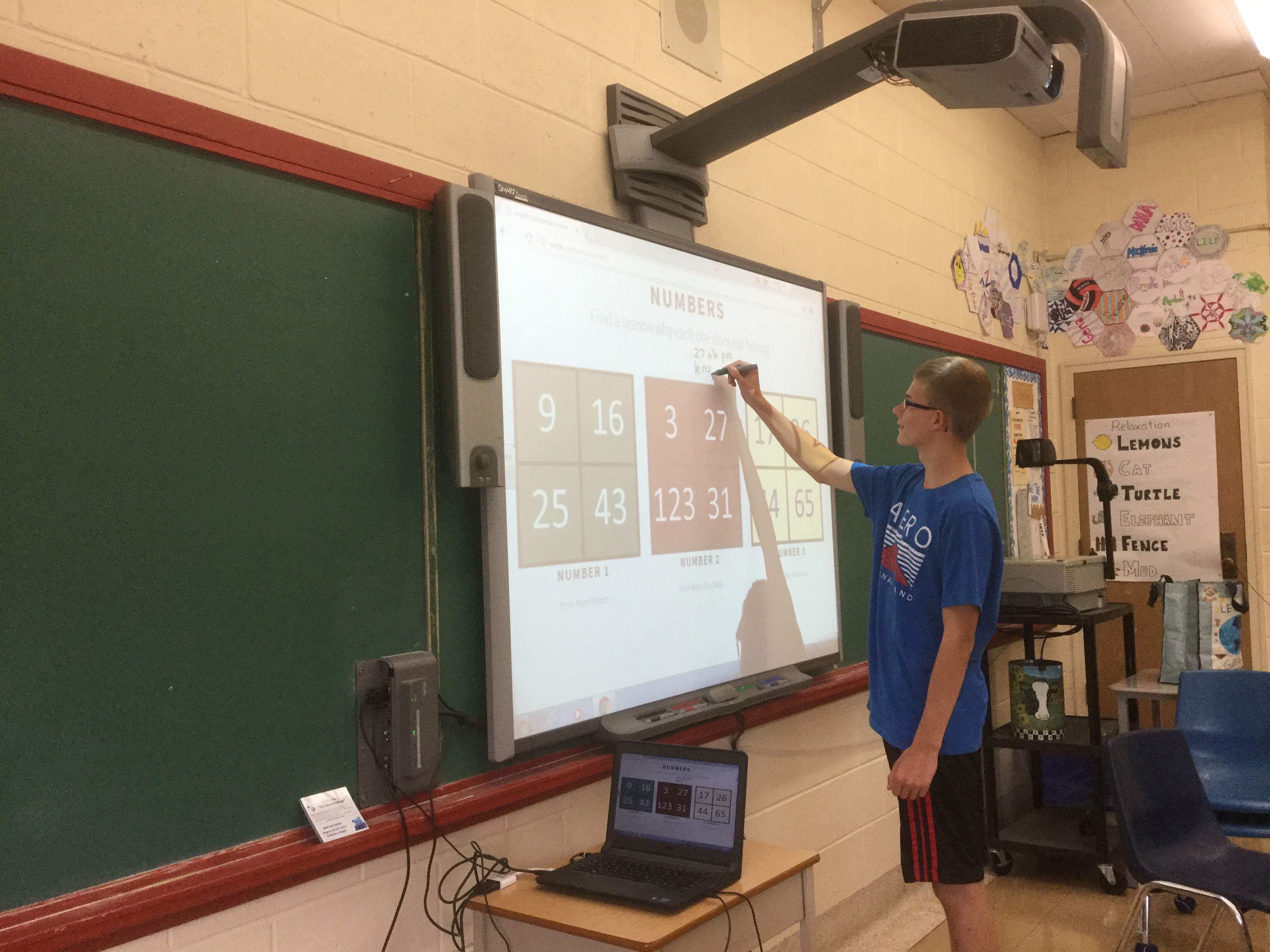
This website is for students in Ms. Bearse’s classes at K.C.V.I. for 2017-2018. Please click on your course to get more specific information.
There is a calendar for each class that will show test dates and homework assigned. Photos of our activities will be posted below.
Daily Schedule
Period A: grade 11 college math (room 208)
Period B: grade 10 academic French Immersion math (room 208)
Lunch
Period C:
Period D: grade 9 academic French Immersion math (room 208)
If you’re having difficulties with concepts that we’re learning in class please let me know.
Here are some learning skills rubrics for self evaluation
There is help available at school on Wednesdays in the library after school from the HYPE tutors from Queen’s. There are also volunteer and paid tutors available.
What questions can we ask.
 Today we had 3 red cups and 2 white cups on each table. The goal was to ask questions. We came up with long lists of questions that we could answer, or questions that we were wondering about.
Some of us focussed on comparing the two cups, some calculated volumes and others calculated surface areas.

Some of us played the cup game and then we got down to business….
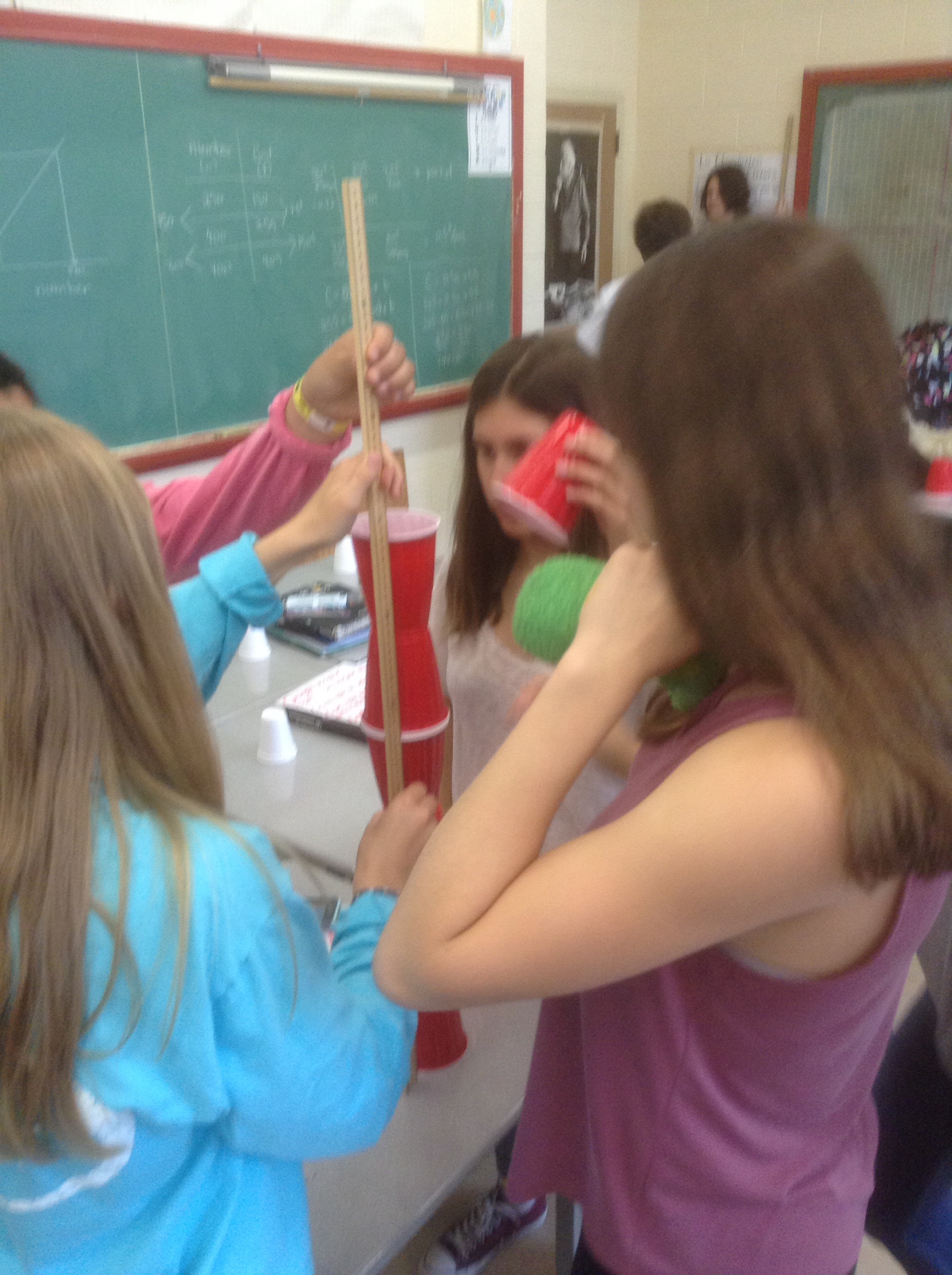
Some of us stacked the cups, and figured out how many cups we need to make a stack as tall as the tallest group member.

We finally worked on the big intense challenge: if white cups stack from the desk, and red cups stack from the floor, is there a magic number of cups that would create equal towers?
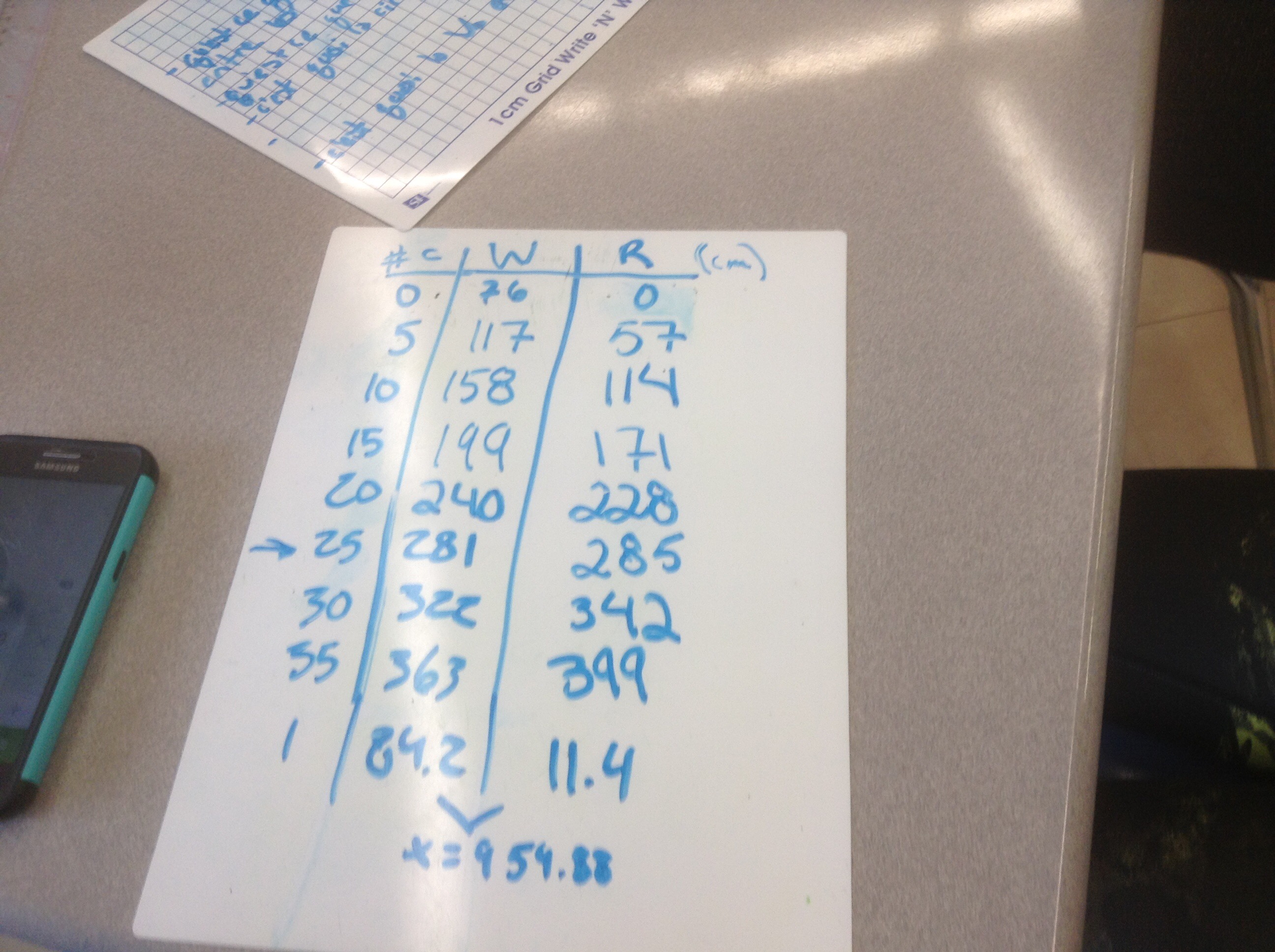

We made tables and graphs
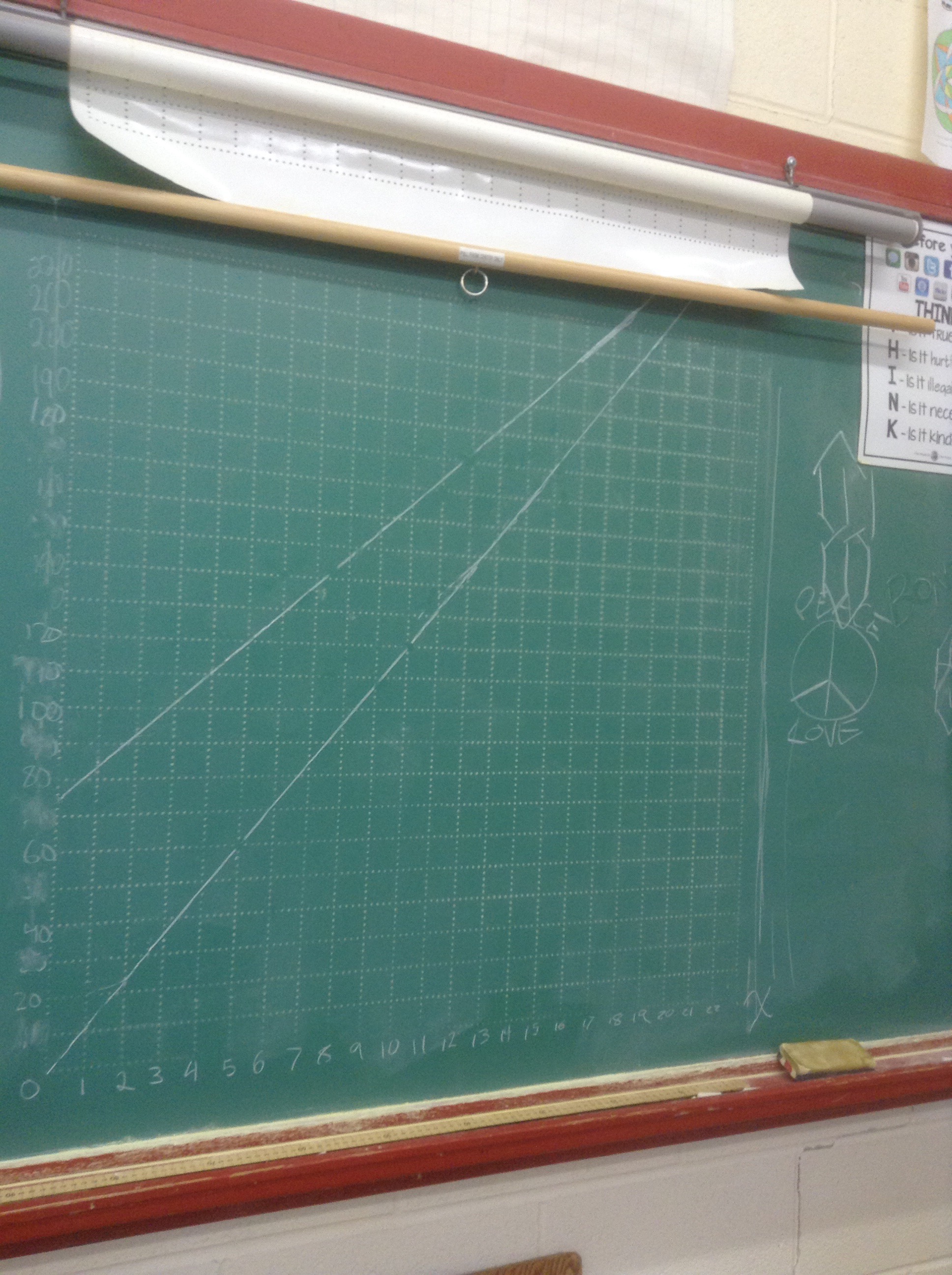
And finally we tested our calculations


