Math investigation Day today!
Today we are writing culminating math investigations in grade 9. We are showing lots of graphing algebra and problem solving skills.

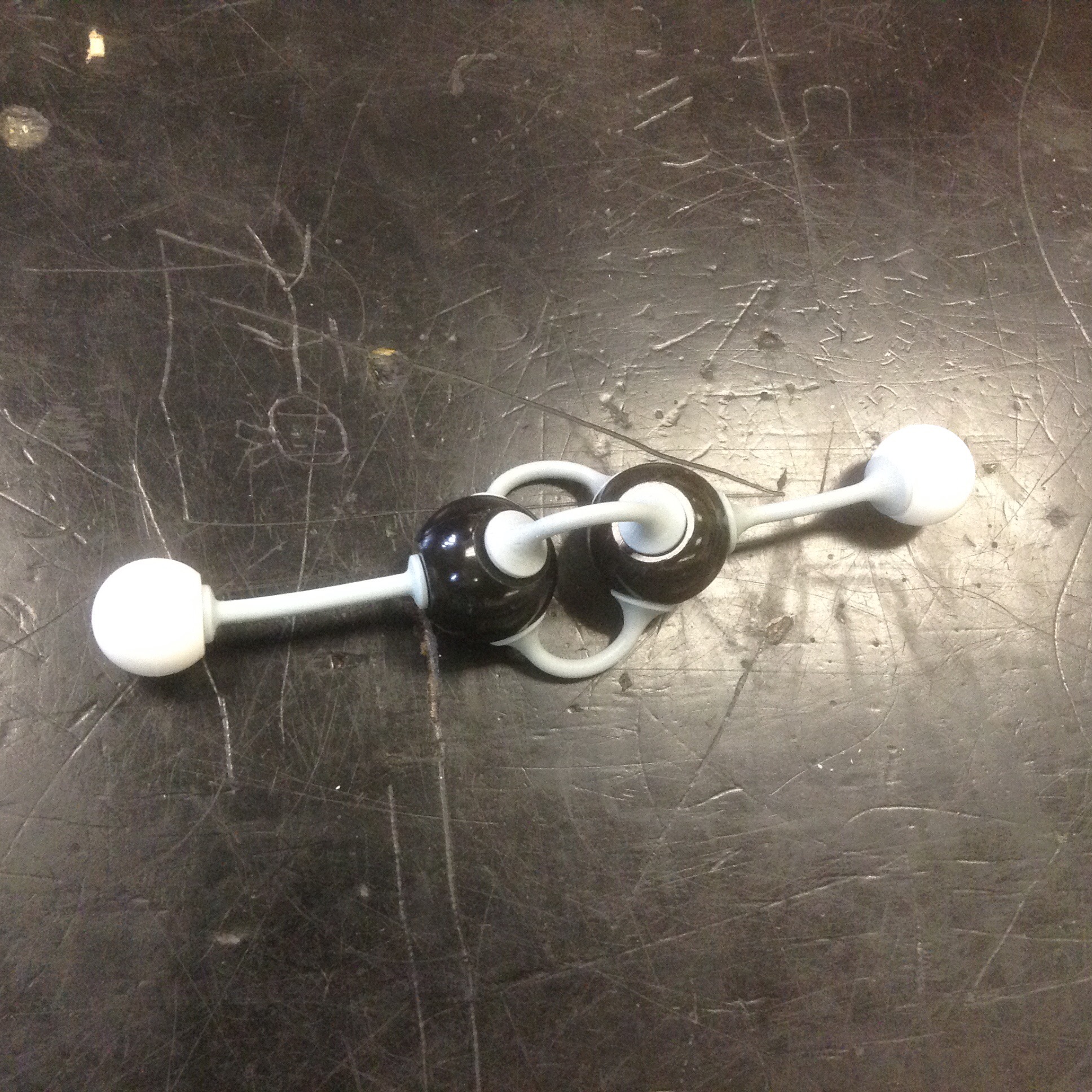
Building Molecules
We are learning about organic chemistry, and are having fun making 3-D models of molecules to see what they look like.



Eating Beans!

Our beans are now large enough to eat!
Results of our single displacement reaction
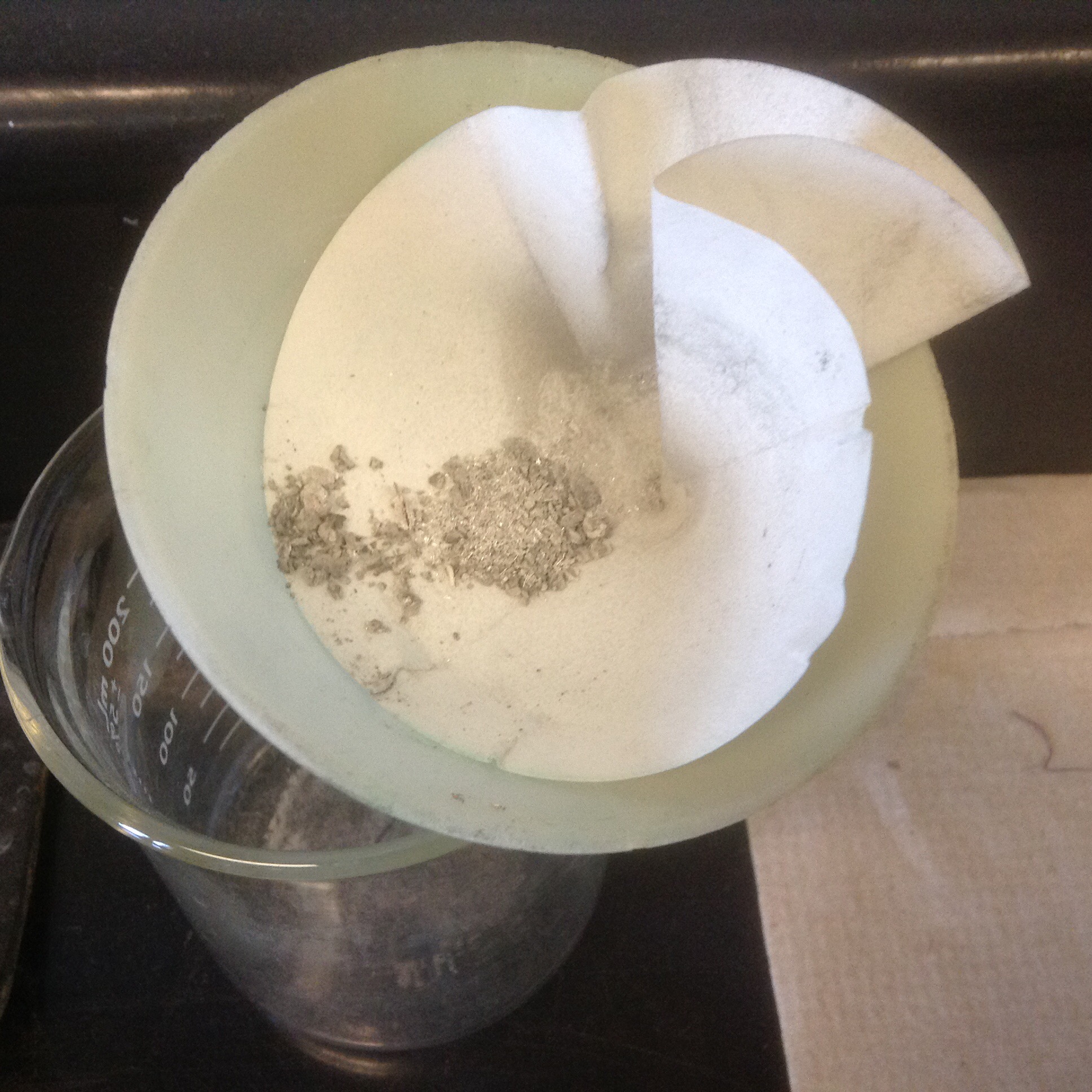
We successfully displaced silver from silver nitrate by using copper wire. Our copper wire became much thinner during the experiment, and our liquid turned blue. The silver we created was filtered out, and we did some calculations to determine the percent yeild of our experiment.

Geometry Fun
We are looking at what happens when you join the midpoints of sides for any quadrilateral, or triangle. 
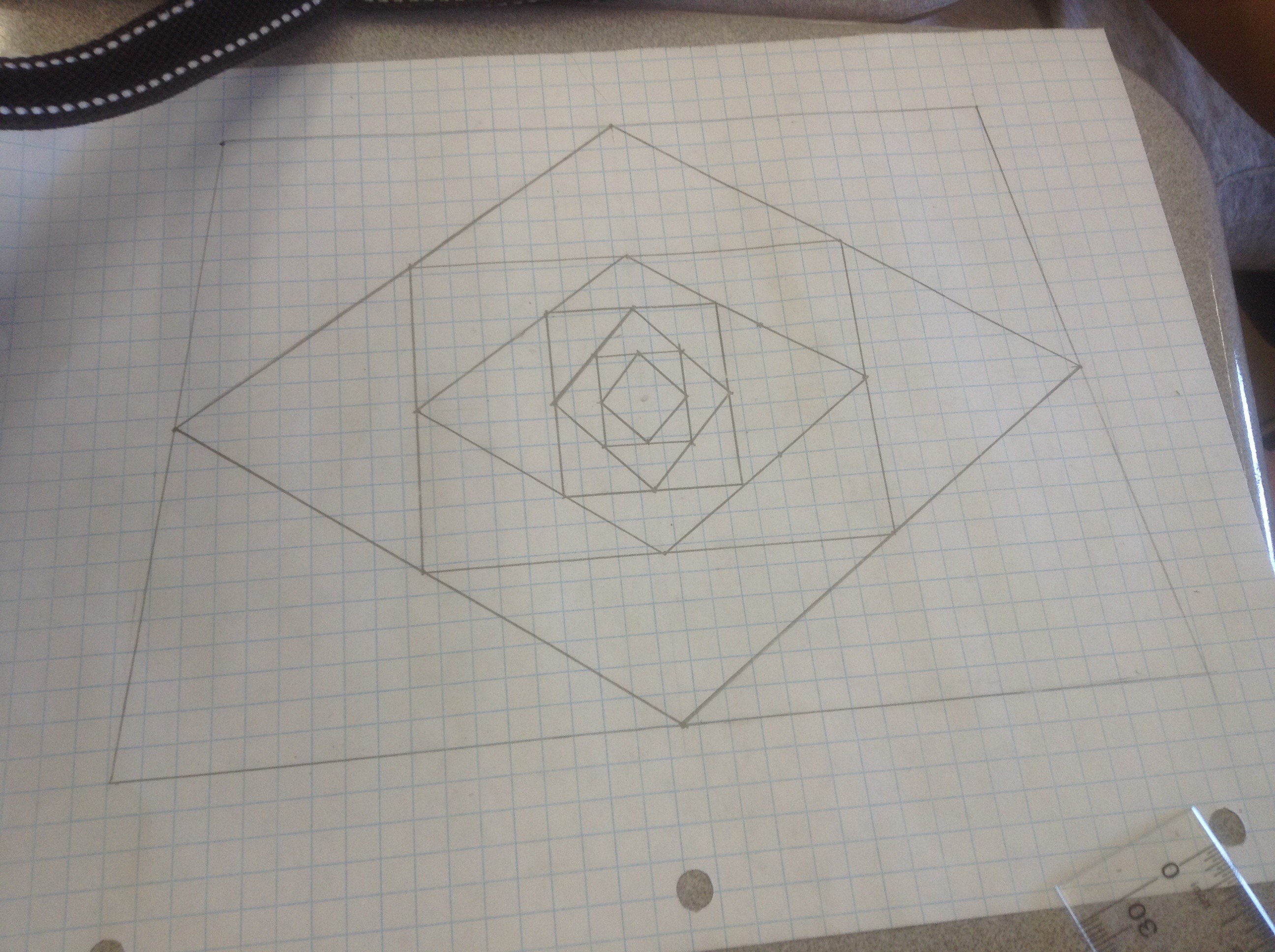
We also are constructing hexagons to decorate the class wall.

Single Displacement Electrochemical Reaction
Today we are doing a lab and showing off our skills with stoichiometry and electrochemistry. We took the mass of a sample of copper wire, and added it to a solution that we made with silver nitrate crystals and distilled water. Since we know the mass of the crystals, we can calculate the number of moles of silver nitrate we used. We can predict the number of moles, and the mass of silver we’ll produce, and the mass of copper that we’ll use up.
Pretty quickly we saw evidence of a reaction! We’ll see the full results, and finish the experiment tomorrow.
.
Good job everyone!
McGyvering a battery using coins
A battery can be made using coins, salt and vinegar. All you need is some paper towel!
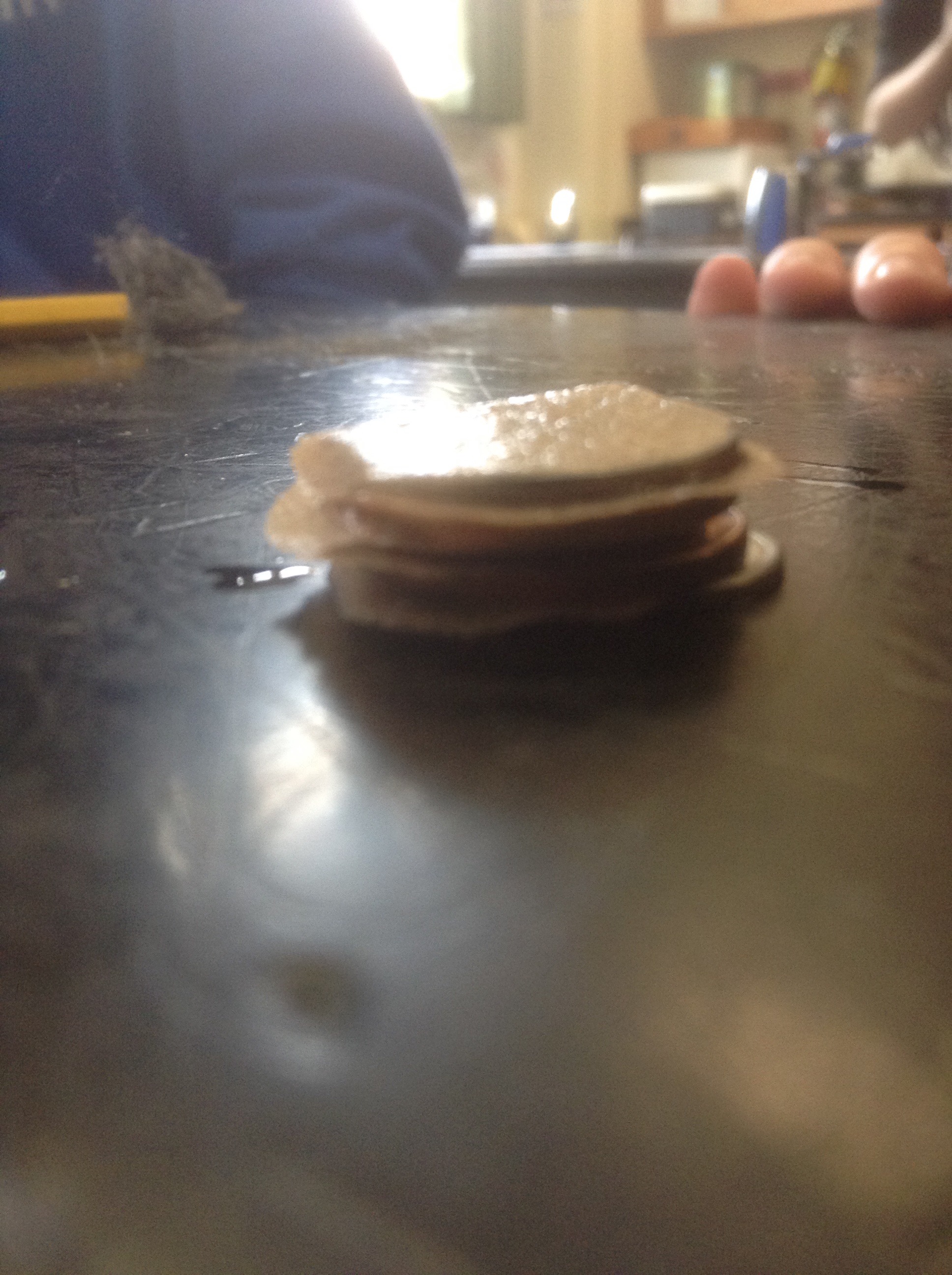
We made a solution out of salt and vinegar and dipped small circles of paper towel in it.
We stacked a penny, soaked towel, dime, soaked towel etc. Coins can’t touch, and papers can’t touch.
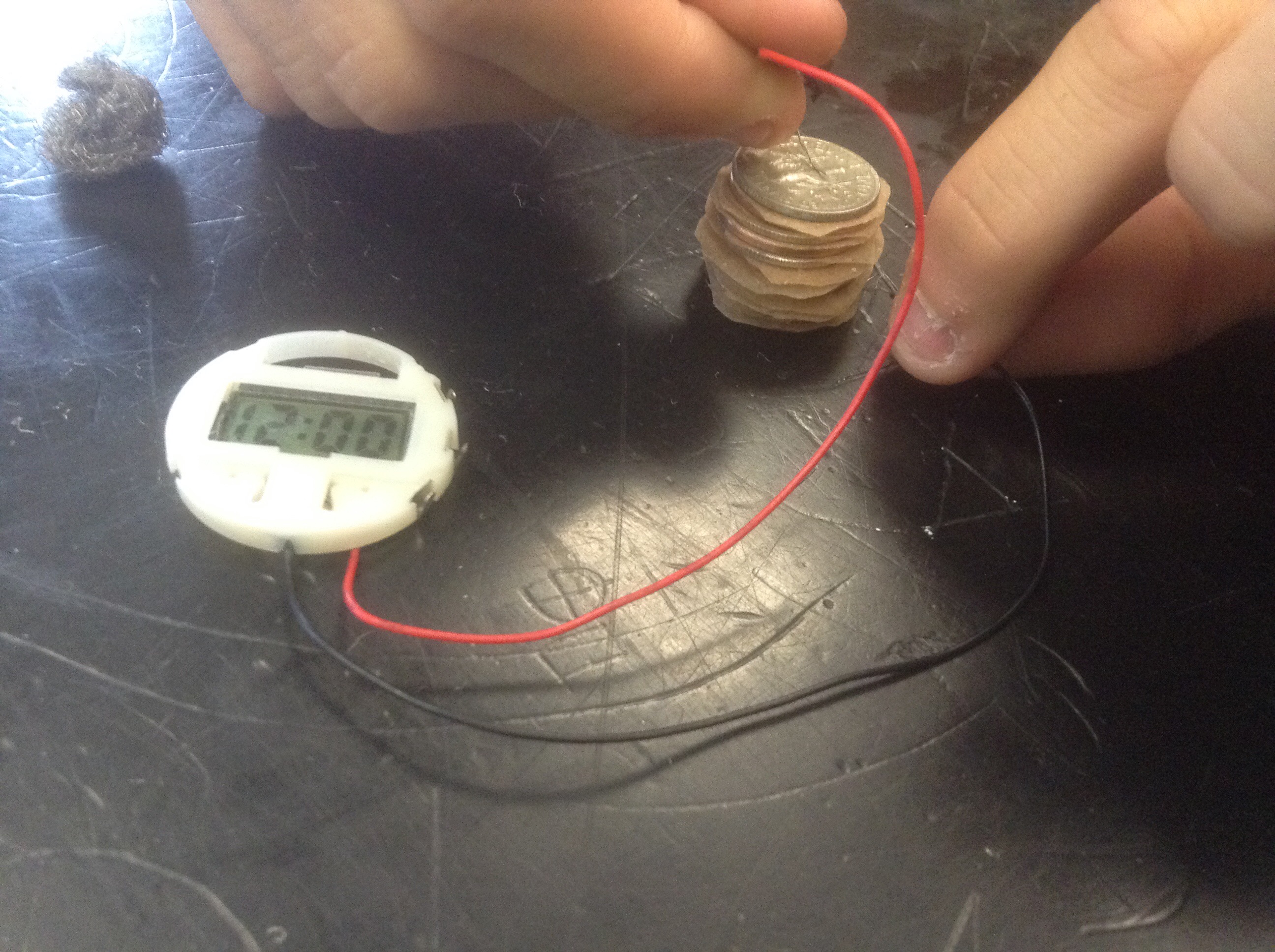
When the stack gets tall enough, there is enough potential difference to light up a clock face.
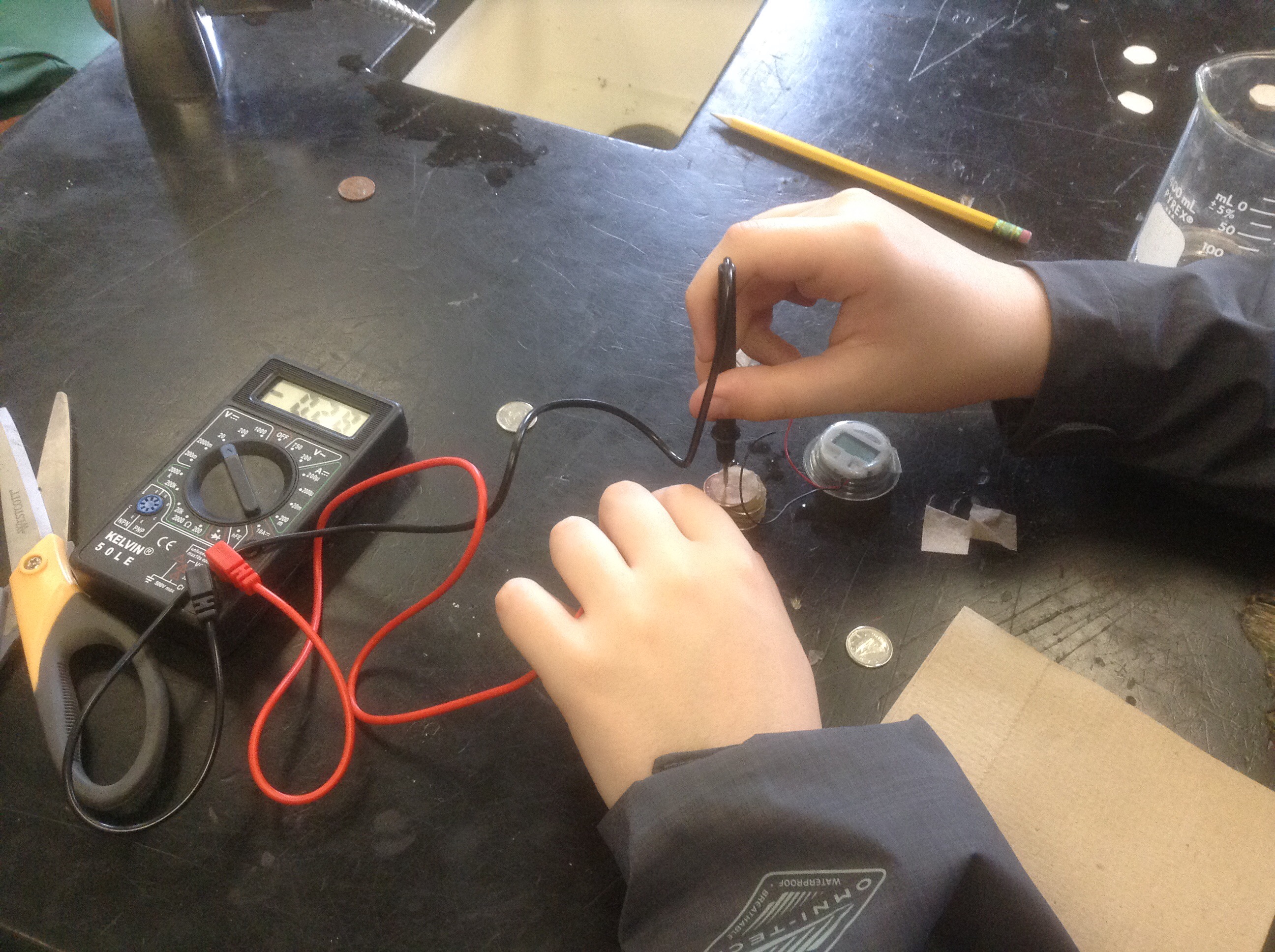
We used the multimeter to check the voltage across the battery.
It’s pretty neat to see how we can make a battery using household materials.
Exploring knots and Rope Length


Ropes of different diameters will consume more length of rope for each overhand knot tied.
Given a short piece of thick rope and a long piece of thin rope, determine wheter there will be a point of intersection on the graph.
Given a small piece of thin rope, what will the knot data look like? (Parallel to the other thin rope.)
Given a different rope that loses 2 cm per knot, if you wanted to create an intersection point, what length of rope is required?
Cleaning Silver with Redox reactions
Tarnish is silver sulfide. Place a tarnished piece of silver in a pyrex dish lined with aluminum foil. Sprinkle baking soda on it and then add boiling water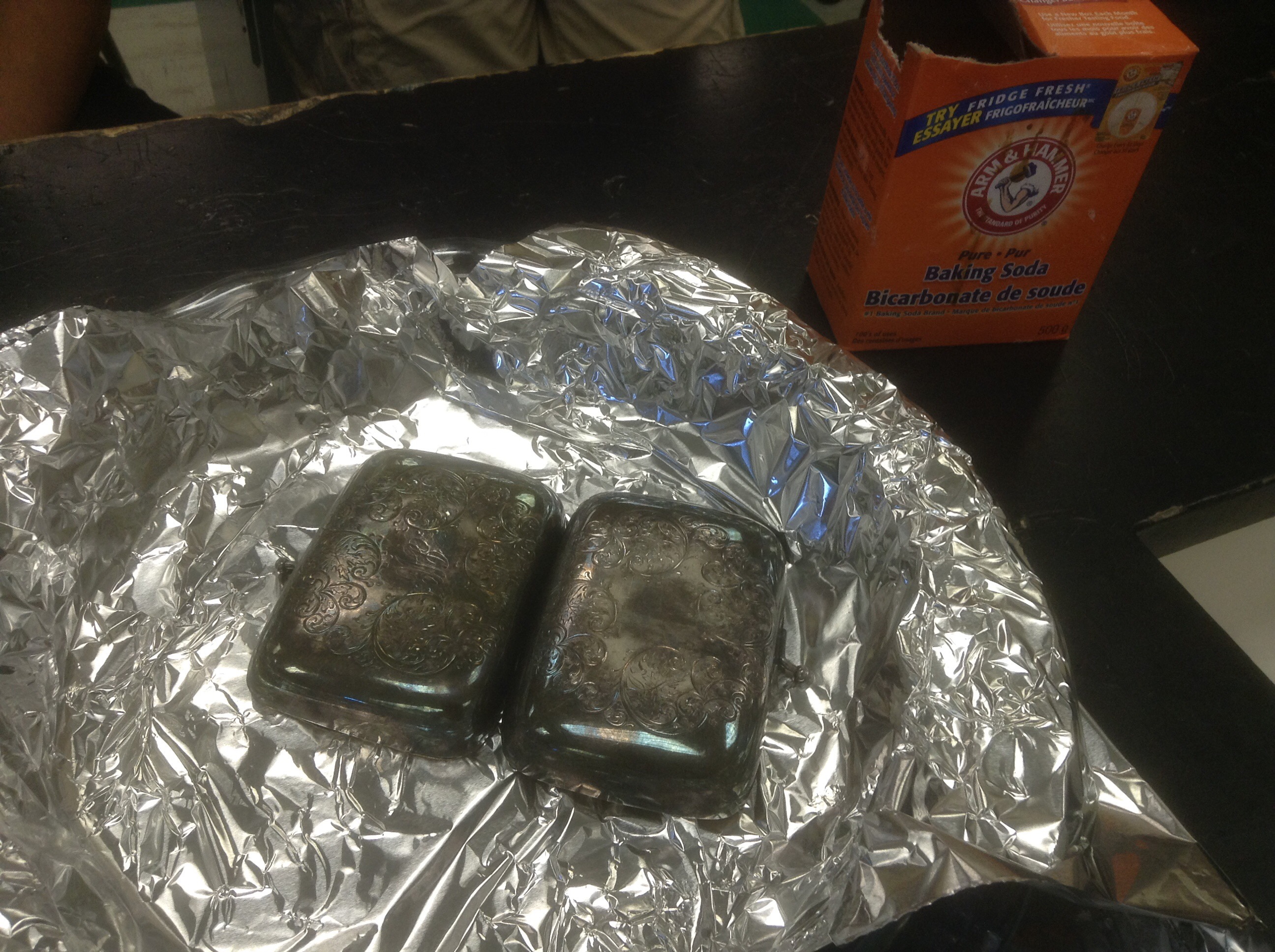
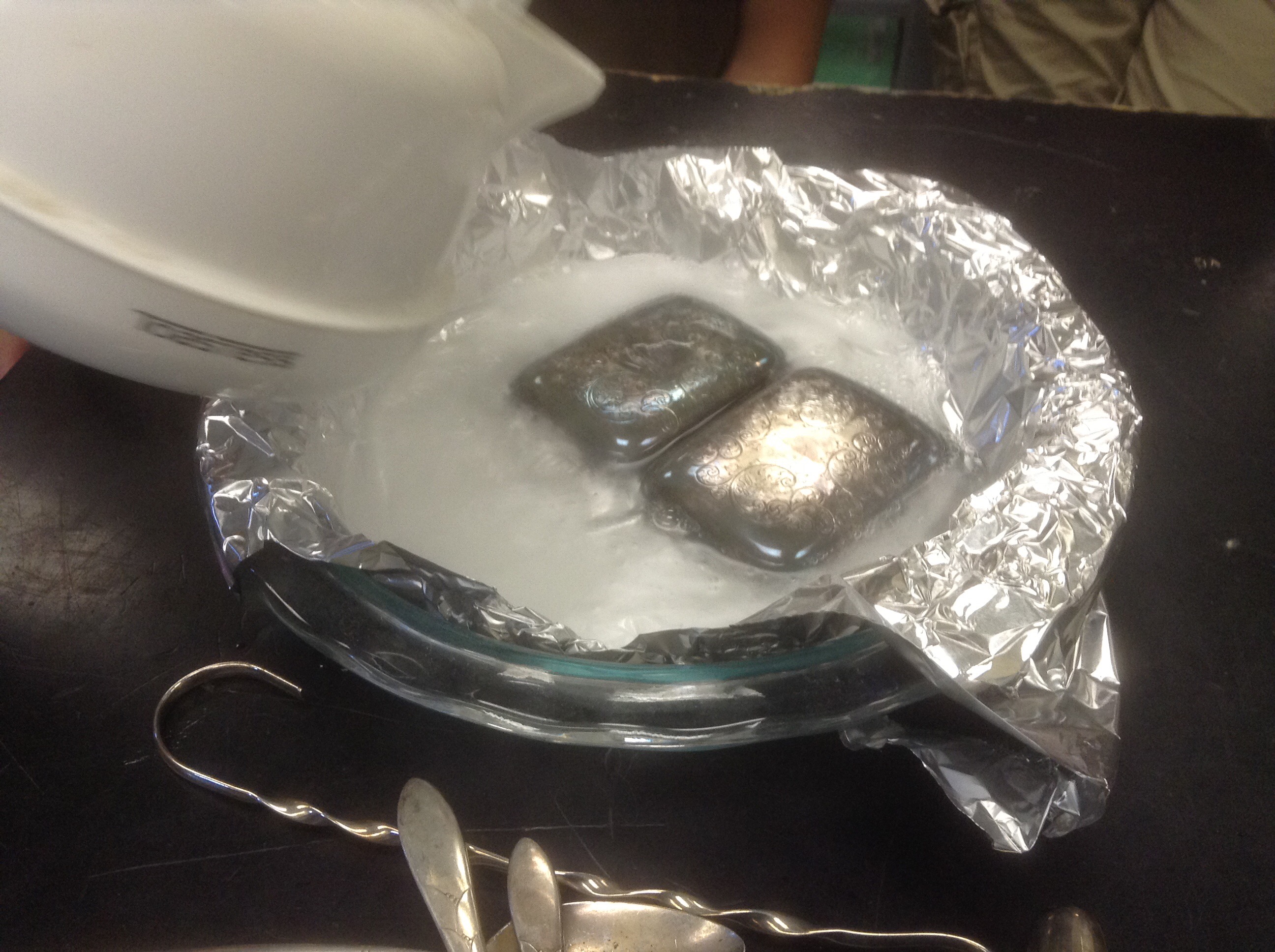


No polish needed! The sulfur is now bonded to the aluminum. We also smelled some sulfur too. The silver is clean! Aluminum lost electrons, and was oxidized. Silver gained electrons so it was reduced.
Exploring with Volume and water Depth
We are determining which option is the best for removing water from a bucket. Option 1: 3 scoops from a small cup. Option 2: 1 scoop from a large cup. The catch is that no water could be used to help determine the answer. We measured with string, and rulers, and calculated using formulae. The cups were not cylinders, so that meant we needed to make some decisions about how to model the cups. 

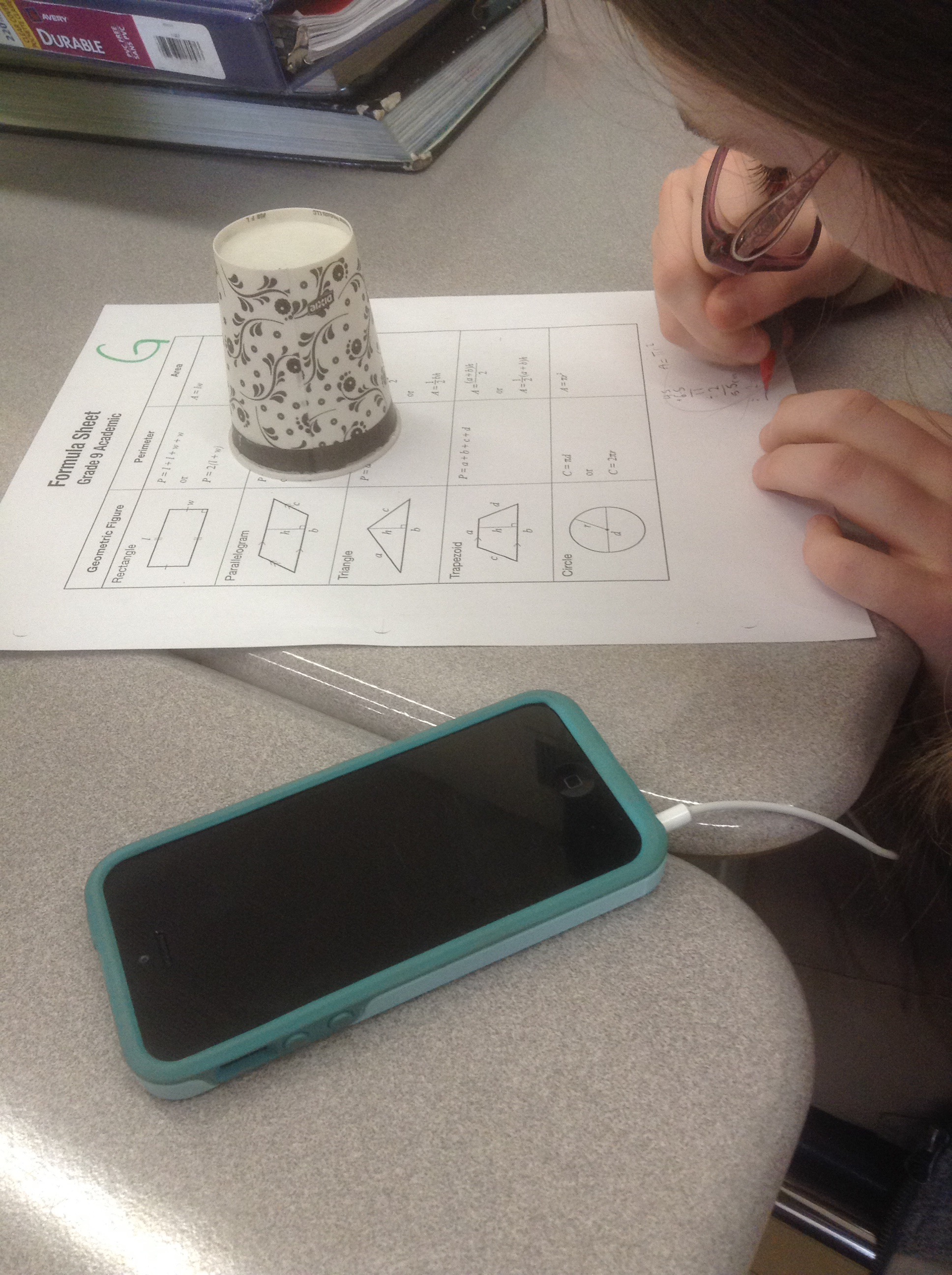
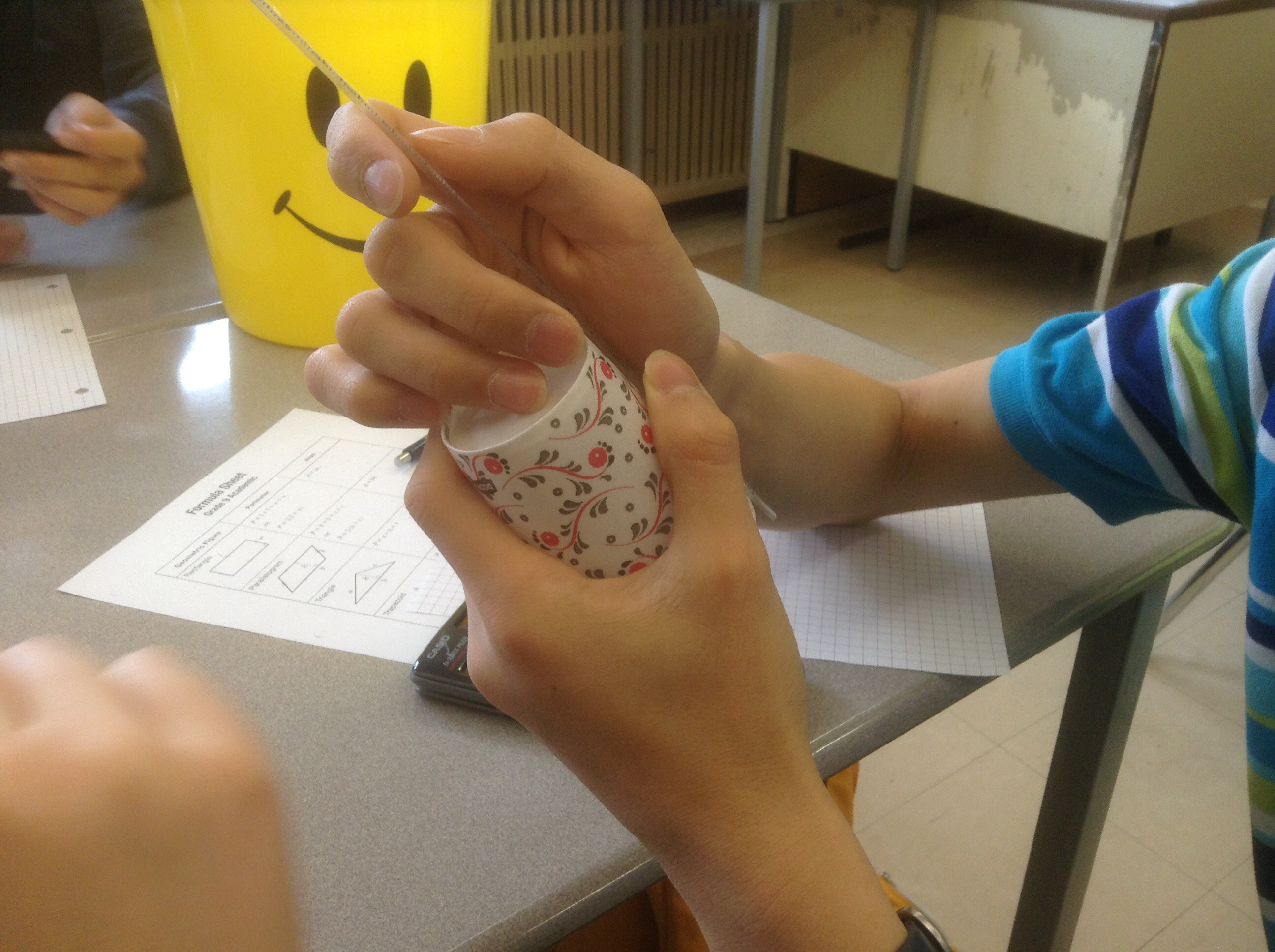
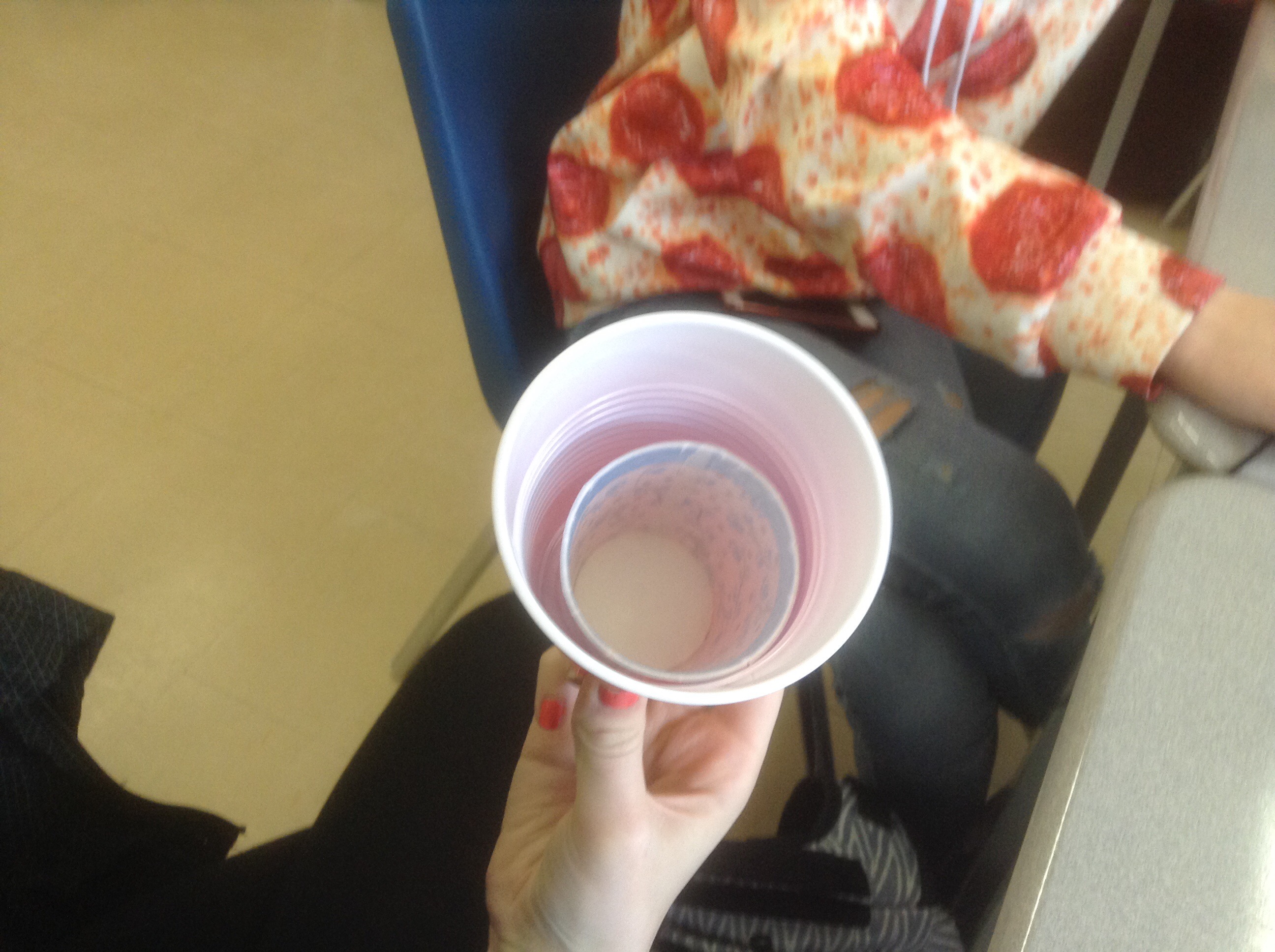
Once we chose the cups to use, we scooped water out of a big bucket and watched the height drop. This showed a linear relation, which we then found equations for.
 Ms. Bearse's Site