Nos données de Télévision
Voici le graphique que nous avons fait en utilisant les dimensions horizontales et dimensions verticales de nos télévisions. Ici c’est le format de desmos.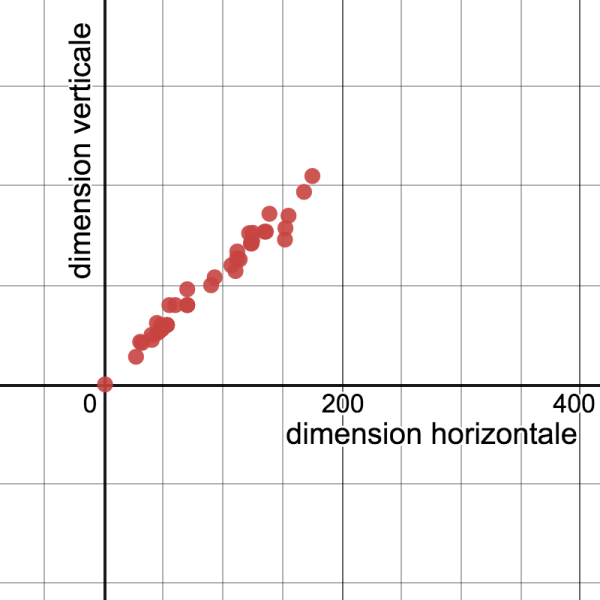
et ici c’est le format de google sheets. Avec les deux formats nous pouvons faire les droites/courbes ajustées.
Nous allons pratiquer comment faire interpolation et extrapolation en utilisant les deux graphiques. Une télévision avec la dimension verticale de 200cm aura une dimension horizontale de ___cm? Une télévision avec la dimension horizontale de 80po aura une dimension verticale de ____po?
Beans!
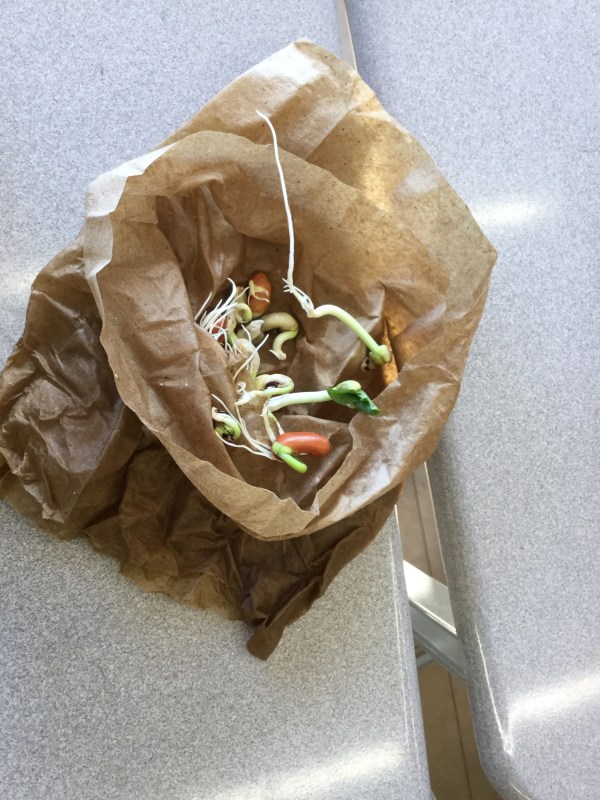
Grade 9s planted their beans today, but first we calculated the percentage that germinated. Some groups had some stinky rotting beans too.
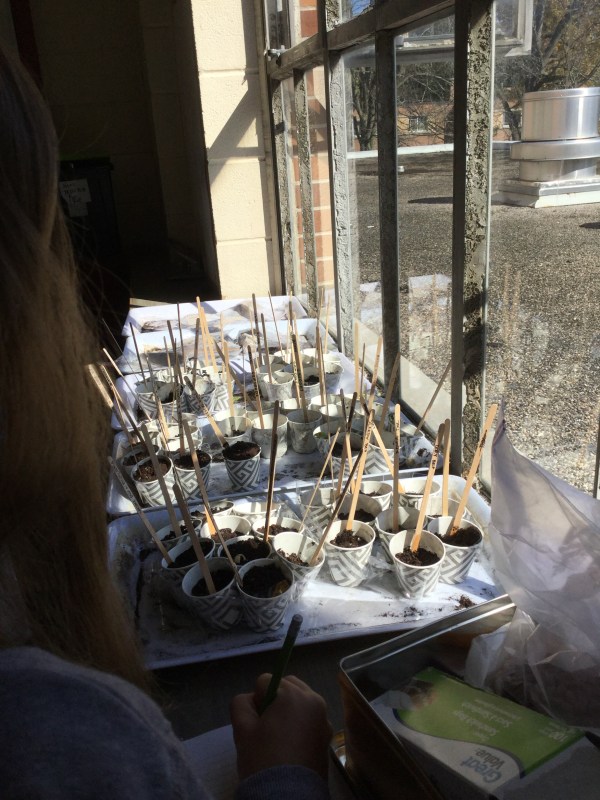
We put them in cups of soil and made sure that the roots were covered.
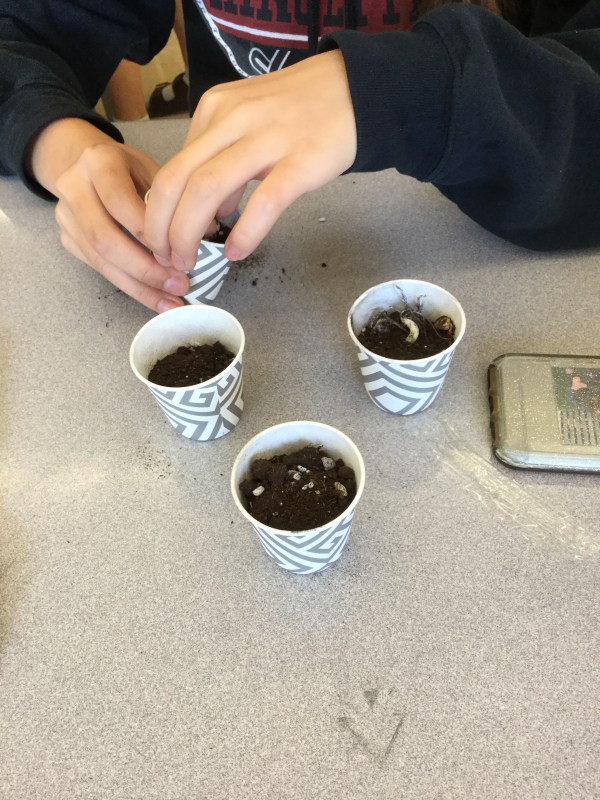
We gave each bean a name, and labelled them all so we know what type of bean is growing and we can track their growth rate.  Some plants are already above the soil!
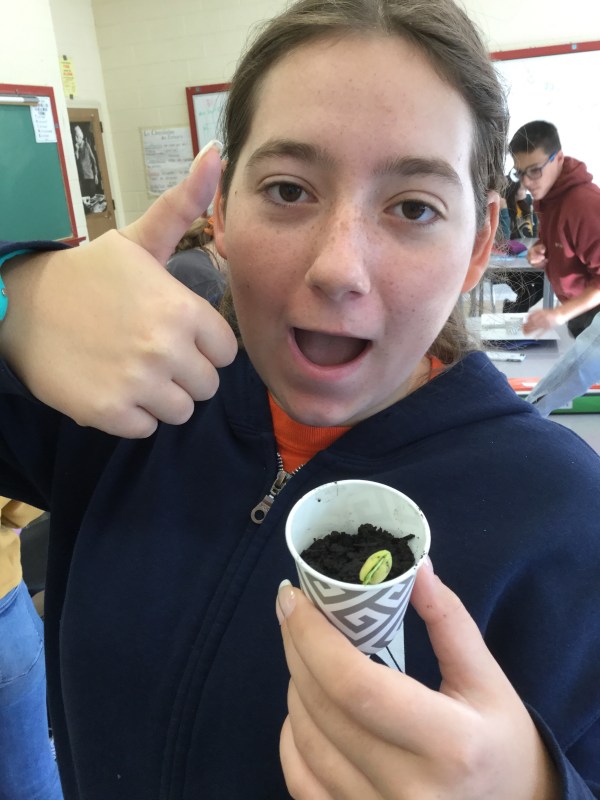
Our beans are on the windowsill, ready to soak up the sun.
Grade 9s are at the park tomorrow for their fun day.
Solving systems
Grade 10s are working hard on solving systems of equations, and interpreting word problems. We spent some focused quiet work time today, and made good progress.

Correlation
Grade 9s measured the televisions in their homes last night. We compiled the data today to see if TVs length and width are related.
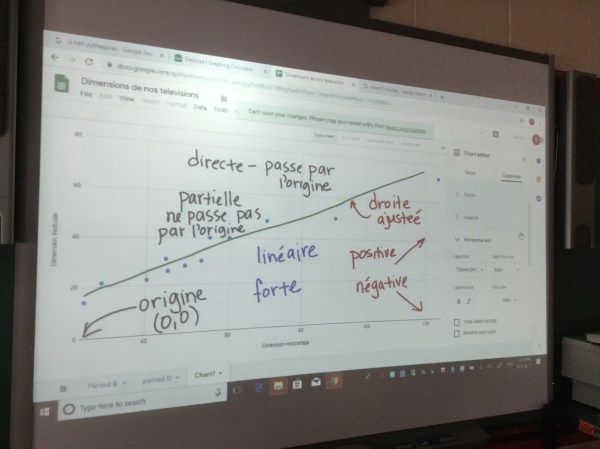
We looked at lines of best fit for linear graphs, and curves of best fit for non linear graphs. We talked about direct and partial, negative and positive, and strong and weak correlation.
We looked also at what interpolation and extrapolation are, and how to use the line of best fit to estimate values.
Solving tricky triangle problems
Grade 9s are working on solving some challenging problems.
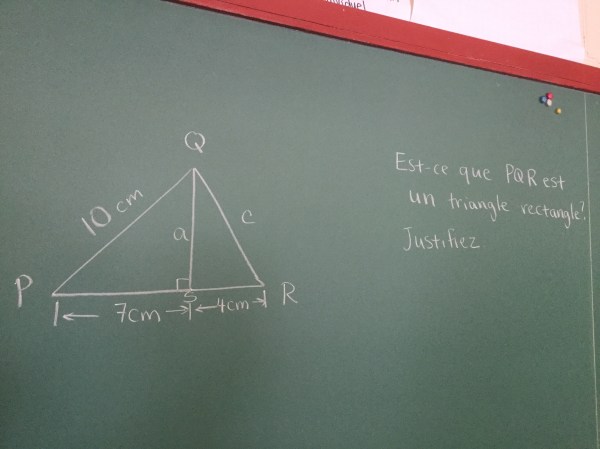
We are asked to prove whether triangle PQR is a right triangle or not.

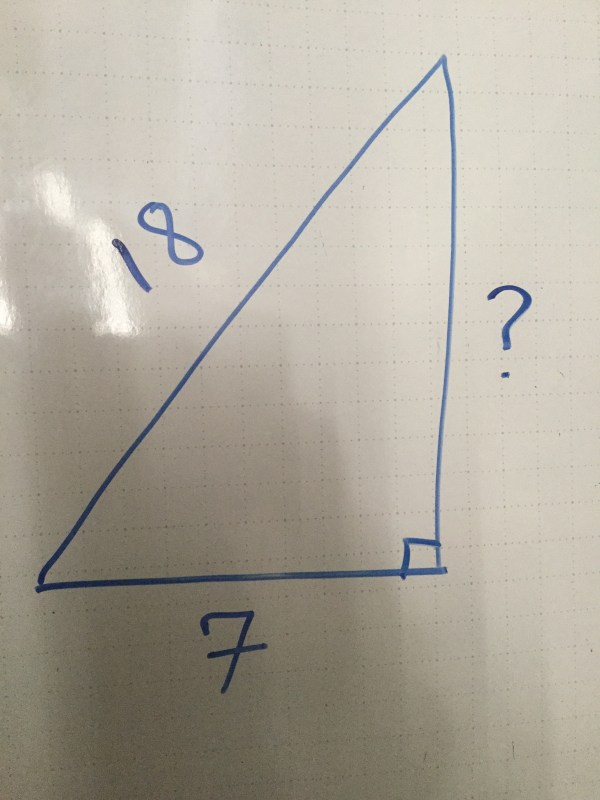
We looked at calculating missing sides with the pythagorean theorem.
Some of us were thrown off by the potential hypotenuse being the base of the triangle, or by the fact that we were having to prove something instead of solving something.
We needed to use the pythagorean theorem again to show that 10^2+8.2^2=11^2 was not true, so it is not a right angle triangle.

The pythagorean theorem is only true for right triangles, so if the pythagorean theorem doesn’t work, we can assume the triangle is not a right triangle.
So many strategies!
We are working on multiplying, and using many strategies to solve problems.
We looked at 6×8 today, which we can break into 5×8 and add that to 1×8, or also by using subtraction find 8×8 and subtract 2×8.

We can also double the 8 and halve the 6 and multiply 3×16 to get 48.

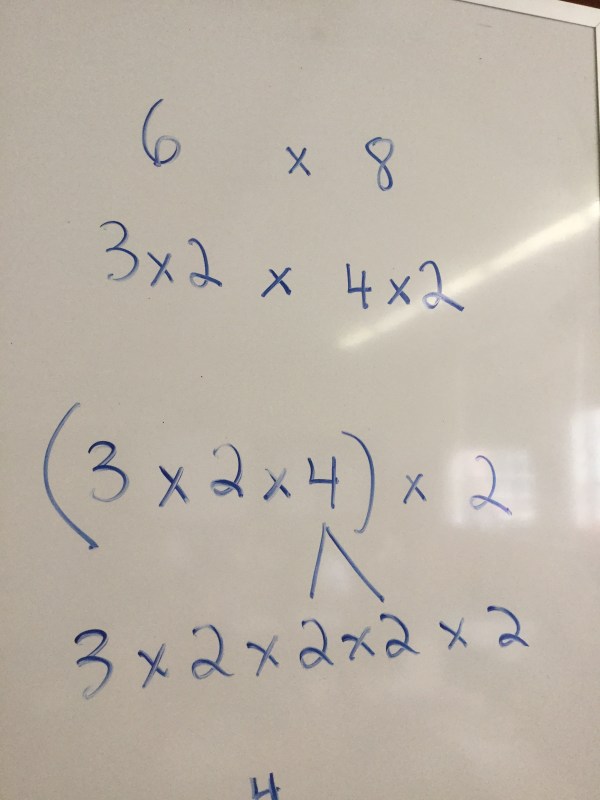
Another way is to halve both the 6 and the 8 and then multiply our resultant by 4 (by 2 twice).

We can decompose the numbers into factors and multiply them in any order.
We can write down 1+1 so many times! Actually, we made it into an array so we could keep track. The array was 6 by 8. We can divide this array up into rectangles with friendly numbers and then add up the rectangles. Here it would be 6×4 and another 6×4 each one is 24 and 24+24 is 48.
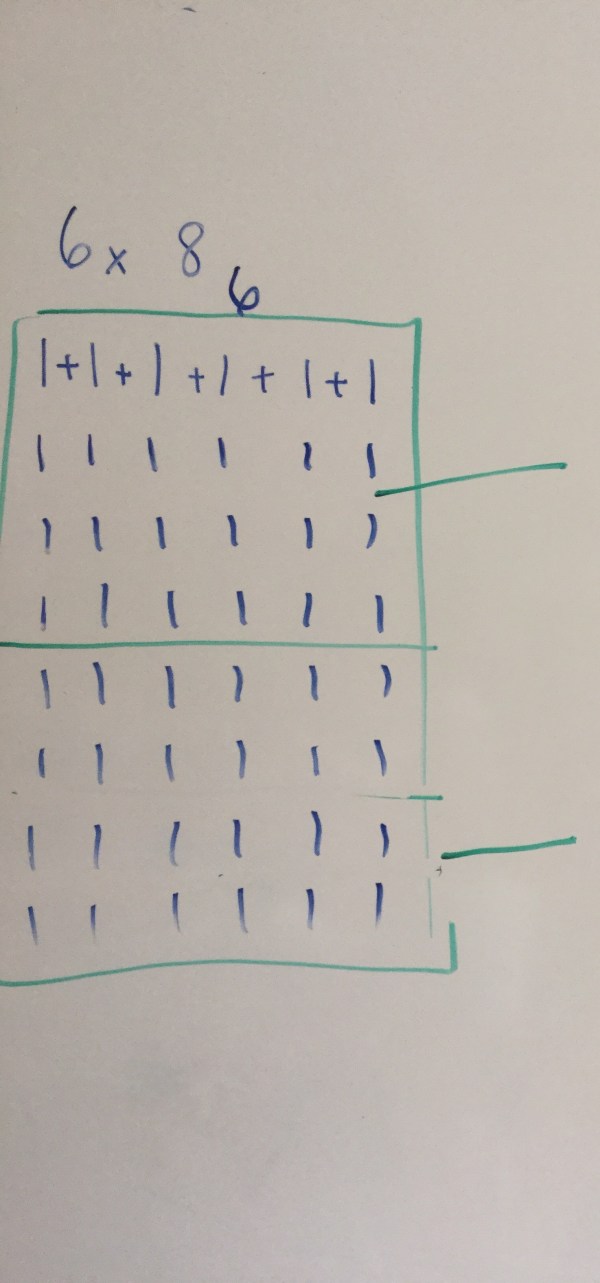
Another really neat observation was that when the numbers hat we multiply are different by 2, we can say that the answer will be one less than the middle number’s square.
E.g. since 8-6=2 we know the answer to 6×8 is 7×7-1. We tried it with smaller models, and showed how it works with a visual model.

Area and perimeter
Today grade 9s got their formula sheet which can be used on all tests, quizzes and the eqao test. We practiced how to calculate area and perimeter of composite shapes.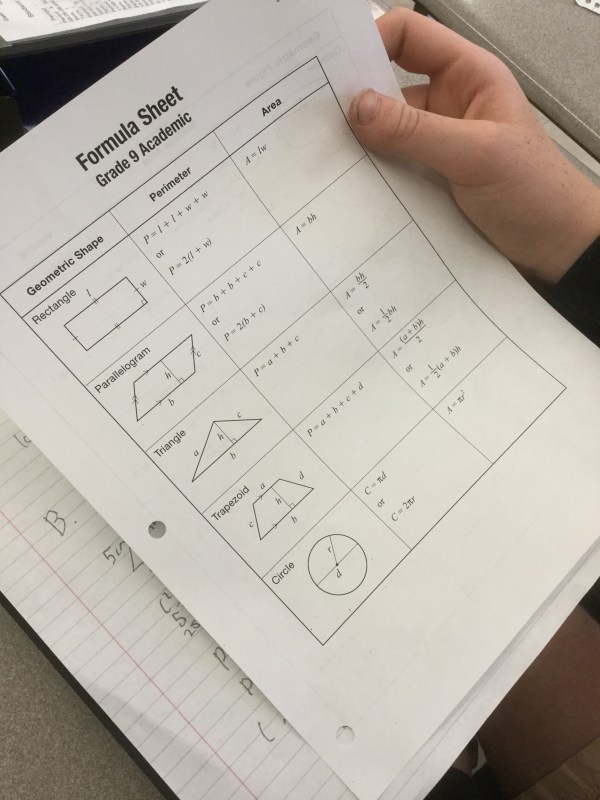
 we looked at the different ways to break up a composite shape to calculate the area. We also looked at how to calculate the length of missing sides. Sometime we’ll need to use the pythagorean theorem to help us.
 we learned the area of a trapezoid song, and sang it in a round!
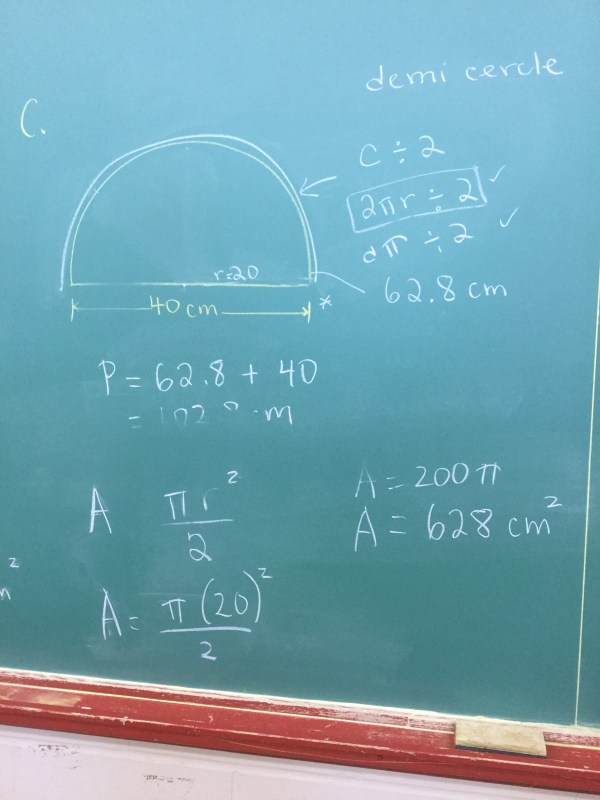 we looked at circles, and circumference and area calculations as well.
 and finally we looked at how to determine the perimeter of a shape when we know the area. In this case we needed to divide the area by a side length to find the missing side length. We worked with fractions and saw how to divide, multiply, and add fractions to solve.
Here’s the trick for dividing fractions!
 we know that the second fraction in the division question is named the “divisor”, so we can flip the divisor, or flip da-visor…and then we multiply.
Systems of equations
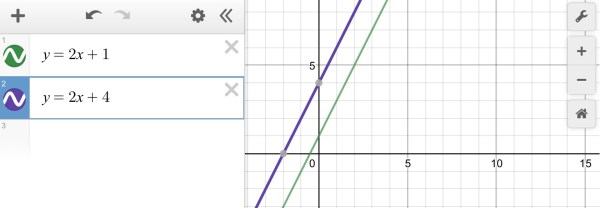
Grade 10s are working on solving systems of equations. We’ve looked at using substitution and elimination to solve problems within a context. Today we looked at equations out of context, and we made the connection that the solution that is the end result of elimination or substitution represents the intersection of the two linear equations.

Most linear equations will intersect once, and that point can be found by substitution, elimination or graphing (desmos makes it really quick to find).
Some systems will not be easy to solve. Some will end up with an equation like 0=0 at the end. Others will end up with something like 0=5.
In the case of the first, 0=0, we know that is true, so it’s like the math says…yes. As in every point is a solution. When two lines are identical we have that case.

When we see something like 0=5 that is not true, so it’s like the math says…no. As in there is no solution. This means the lines are parallel and do not intersect.
Pythagorean theorem in grade 9
We looked today at a quilt, and made a list of math questions we could solve about the quilt. 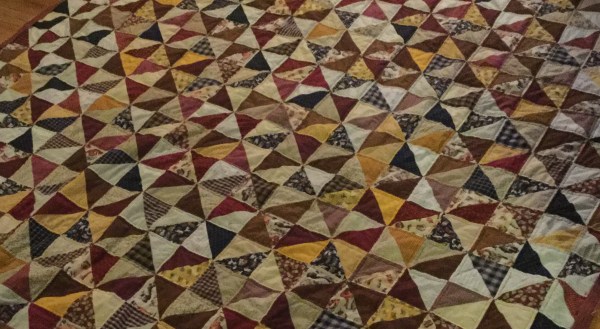 We calculated area, volume, and perimeter, looked at the number of squares and number of triangles, we talked about types of triangles, and angles. We converted measurements from imperial to metric, and then worked together to figure out how long the diagonal would be.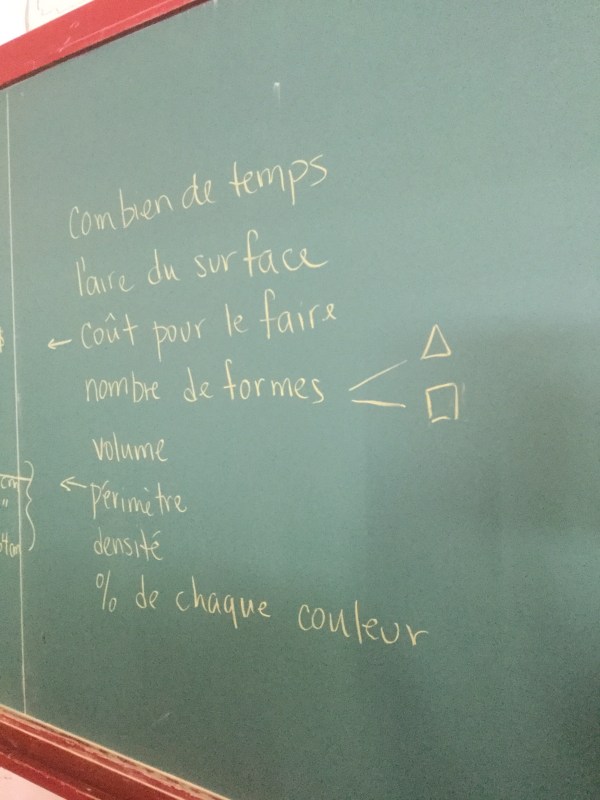
We looked at pythagorean theorem, and watched the video that shows the area method of solving.
We can use this method to help us solve for any missing side, the hypotenuse or the legs (cathètes).
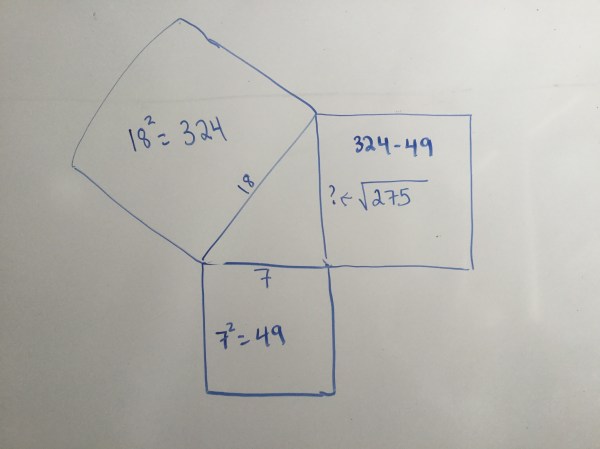
We check that our answer makes sense…the hypotenuse should always be the longest side.
Planting beans in grade 9
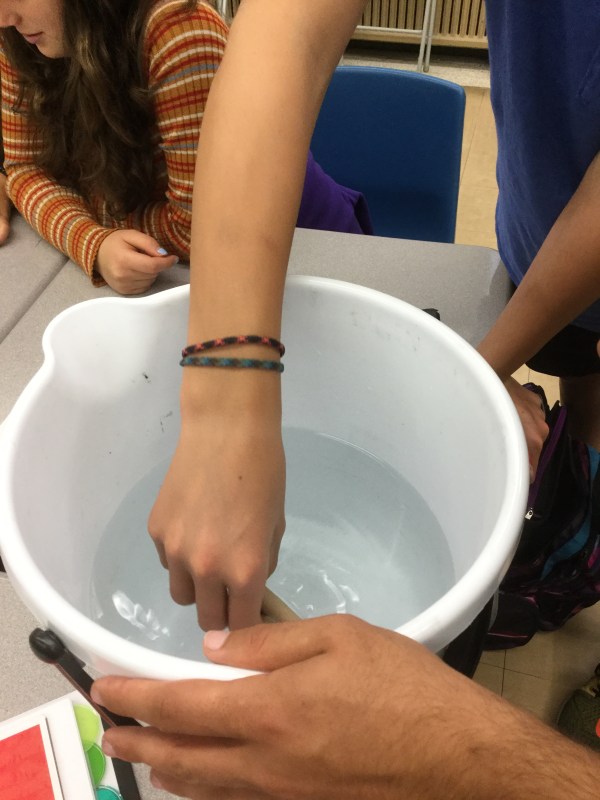
We are starting an experiment in grade 9. We are germinating beans and will be planting them after they sprout, and measuring their growth over a few weeks.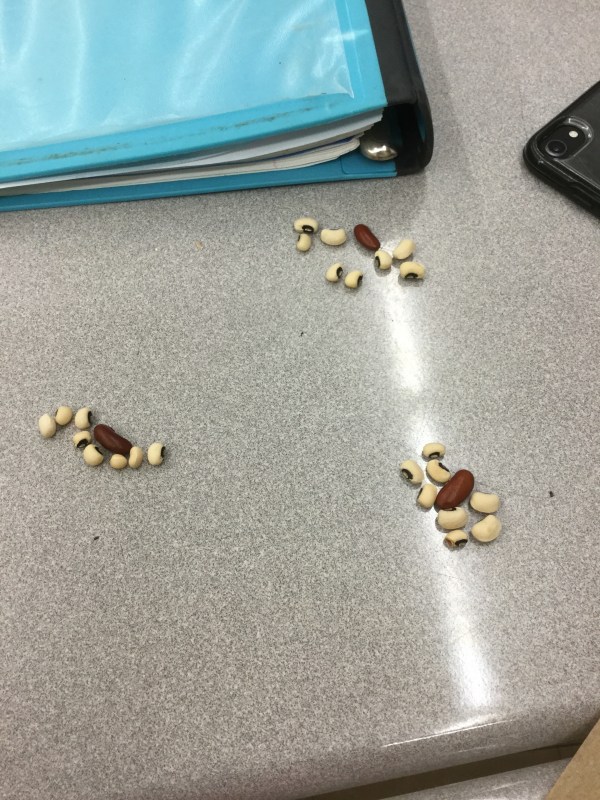 we wrapped the beans in paper towel and dunked the packet in water, and put it in baggies to germinate.
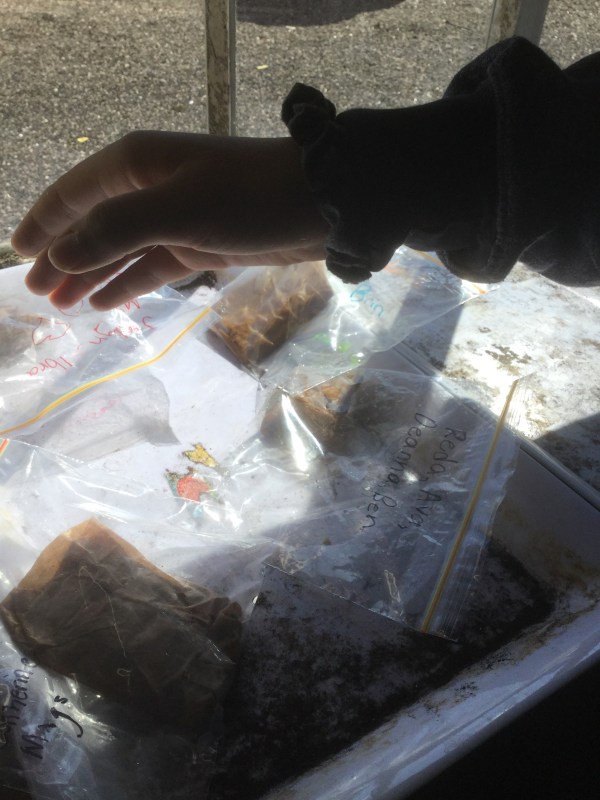
 we put our names on the baggies and left them on the windowsill.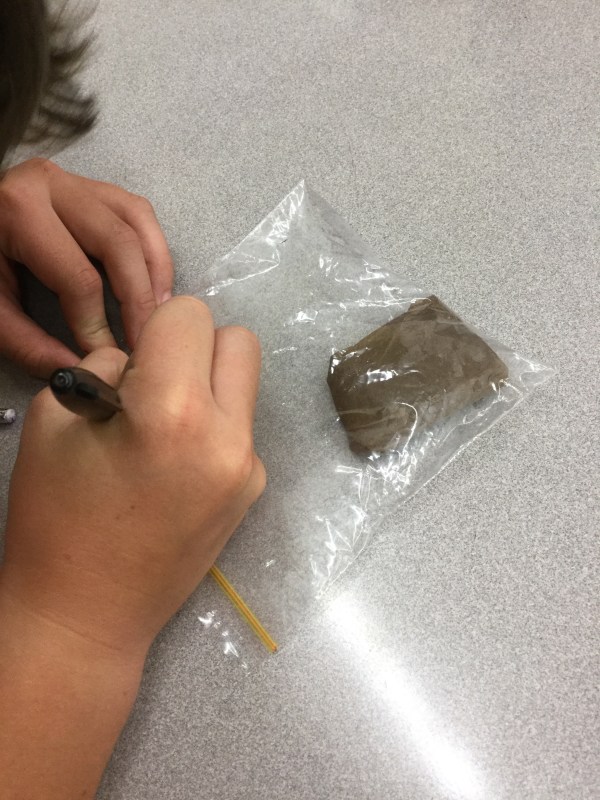
 Ms. Bearse's Site