Friday in grade 10

We explored the 3act task to find out which rectangle had the biggest area. Many of us thought that the biggest area would be a square. We didn’t notice that the rectangle didn’t always have the same perimeter, so this case was very different to our experience from grade 9.
We made tables and looked for patterns. We know how to calculate area (length times width), and we noticed how the length and width were changing. Some groups noticed that the area has a constant 2nd difference, so we know it’s not linear.
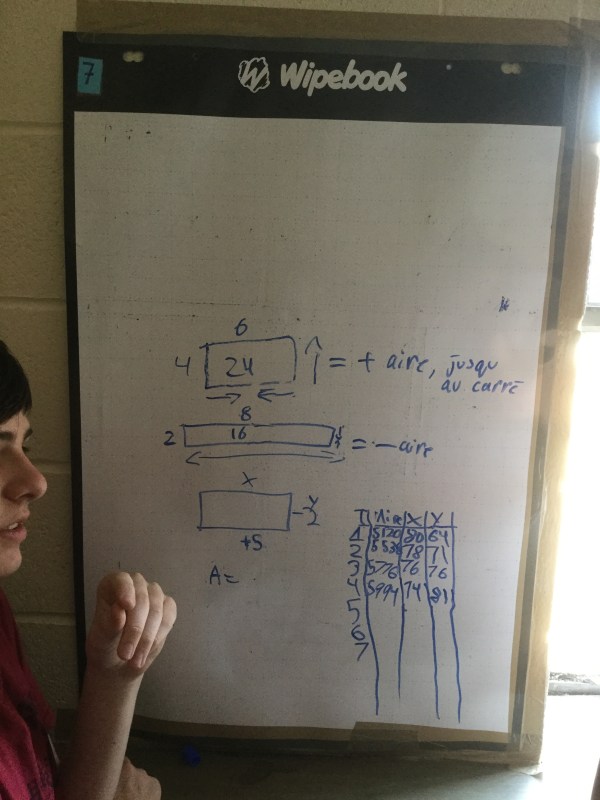 some of our groups started to use variables, and develop expressions.
We will come back to these explorations in the future. Good work this week grade 10s. There will be a practice sheet posted to the google classroom, along with the quiz solutions.
Friday in grade 9

We are working on collecting a set of data. We are multiplying each day, and tracking how many questions we can do in 5 minutes. We’ll graph our progress after a few weeks.

We looked at some strategies that can help make multiplying by 12 easier. We also saw that these strategies could help with 7s as well. We split the 12 up into 10 and 2, and we can split a 7 up into 5 and 2. An area model is a quick way to represent this.

Next we looked at a 3 act task called crazy taxi.
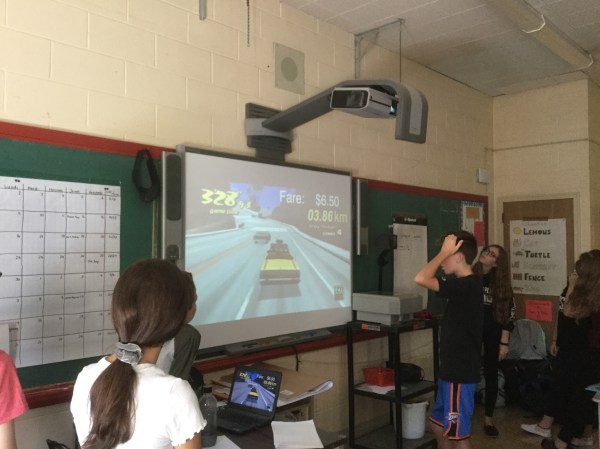
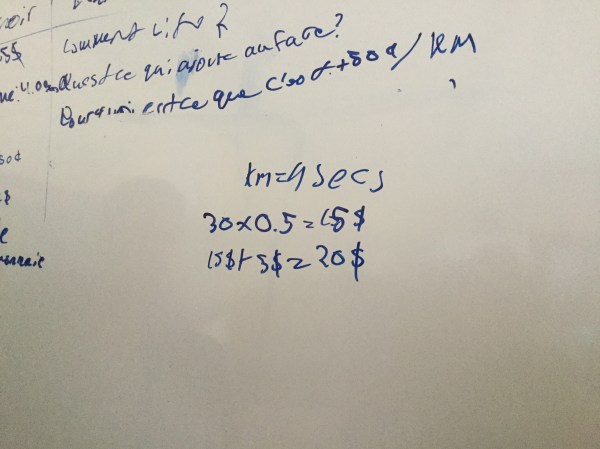
We connected how long the taxi was driving to how much the fare was. We are working on representing our work in different ways, like equations, and tables of values.


We also sent emails home to keep families up to date about what we’re doing in math. For homework, please try to sign up on knowledgehook and explore some of the challenges.

Knowledgehook
Grade 9s: have a look at knowledgehook. We’ll be trying some of these activities over the term.
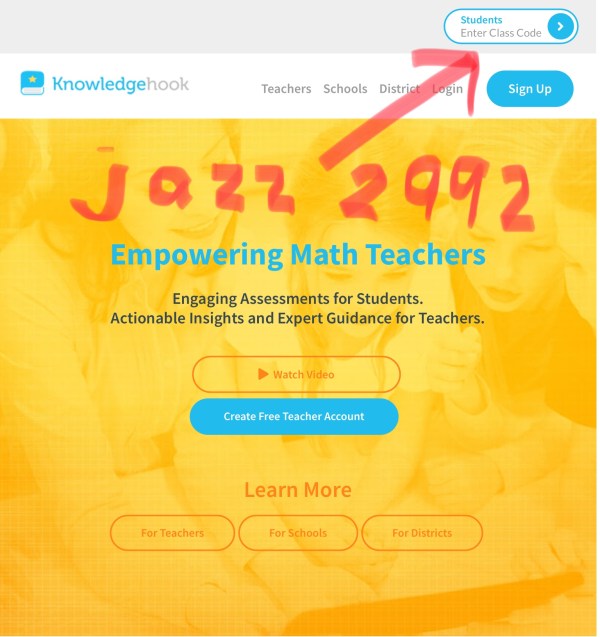



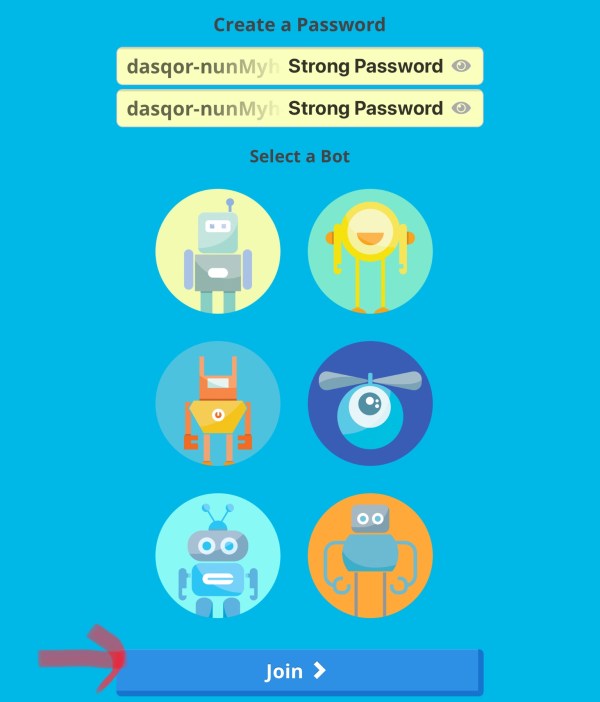 this account was used last year, so that’s why there are already missions listed…. you can go to them or to the “all skills” button.
Problème en 3 parties 10e
Problème en 3 Parties 9e
Partie #1
Partie #2
Combien coutera un voyage de 30km?
Quelle distance peut-on voyager avec 50$
Partie #3
3 act math
Today in grade 9 and 10 we worked on 3 act math problems. These problems are sparked by a video/situation, we notice things, we ask questions, we get more information and then we do math to solve the problems we can. The 3rd act is when the solutions is given and we can check our work.
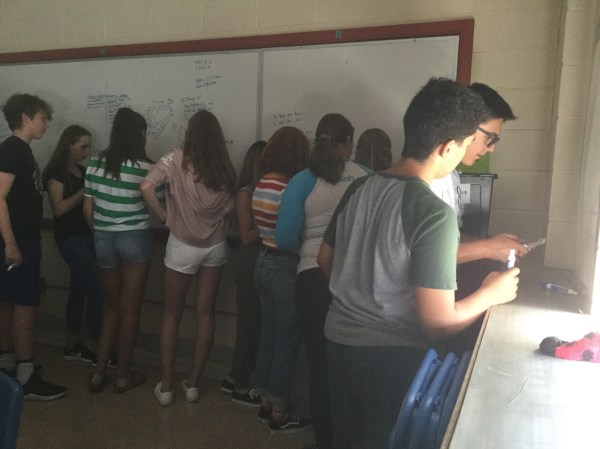
We are standing up when we are doing our work because it’s good to be up and moving, and it keeps us from being passive. Also, having our work on the boards can be helpful for our classmates to see and get hints, or we use the work that’s presented and discuss things like how to present a good solution, and various strategies used to get to the answer.
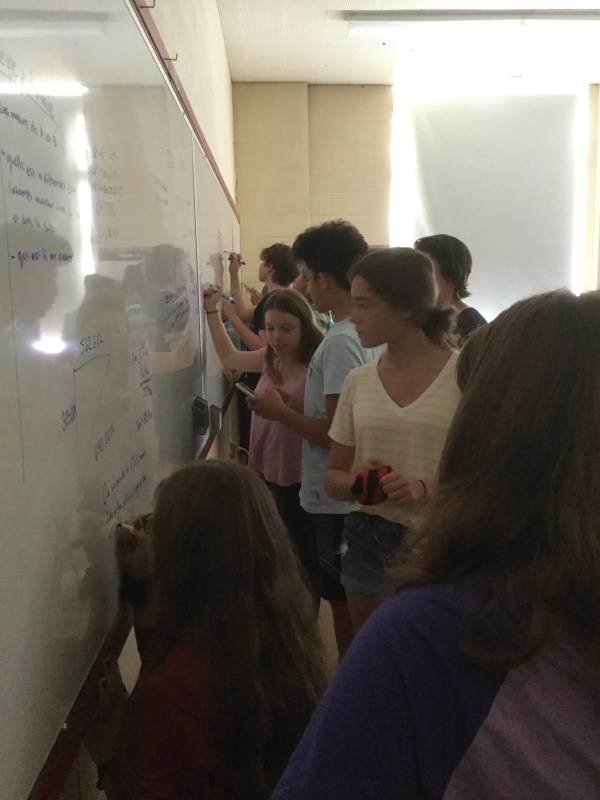
We have 1 marker per group, and everyone takes turns writing, and calculating, and thinking about what’s next.
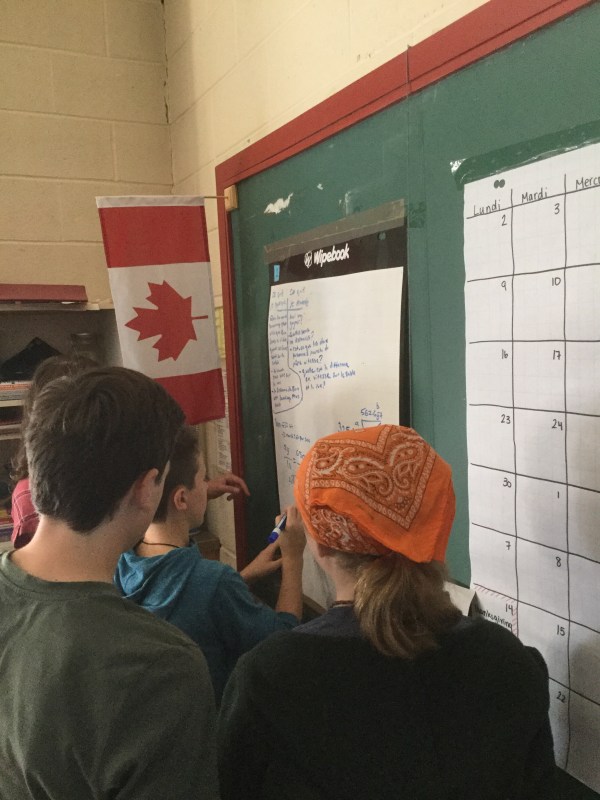
At the end of the problem, we can always check with other groups to see if our solutions make sense, or figure out where we went wrong.
Time flies when we’re doing math!
Problèmes en 3 parties 10e
Problème A
Partie #1
Partie #2
Partie #3
Problème B
Partie #1
Partie #2
Partie #3
Problème C
Partie #2
Partie #3
Taco Cart
Developing group norms
It’s really important to set a good tone in math class, and that’s why this week we are focused on collaboration, problem solving, and critical thinking skills. Today’s task sounds simple, circling all the numbers in order from 1 to 100 on a handout.

Students all worked diligently, but found the task a bit frustrating, as the numbers are not presented in order, and they are all different sizes. After 10 minutes nobody had finished the task.
We then looked at the same task in groups, to see the benefits of working together.
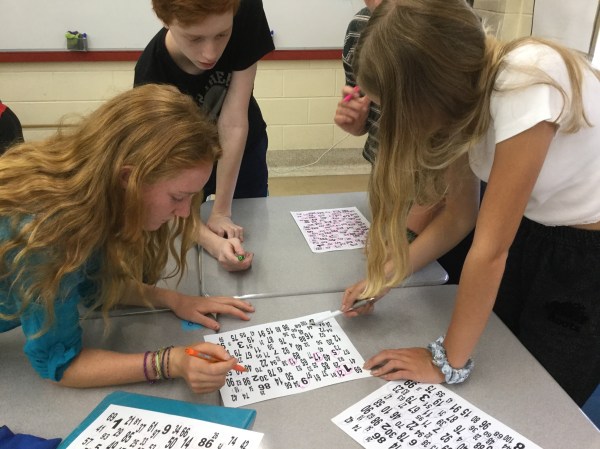 groups were very focused, and got close together. Some helped point out the next number, or said numbers out loud to keep everyone on track.
Words were encouraging and celebratory. Excitement was in the air as numbers got circled faster and faster. Groups noticed that the colours were all in zones, so different strategies were devised.

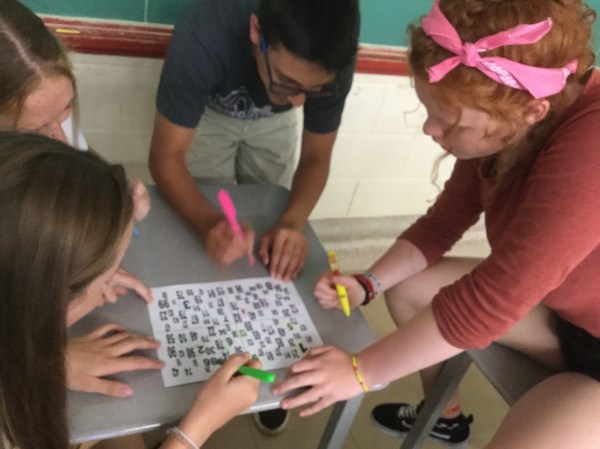
Groups eliminated extra furniture, stood up, and got pumped to do the fastest round possible.
The individual round was slow. Nobody finished in 10 minutes. By the end, after practice, teamwork, and strategizing, groups finished the task in 2 minutes!
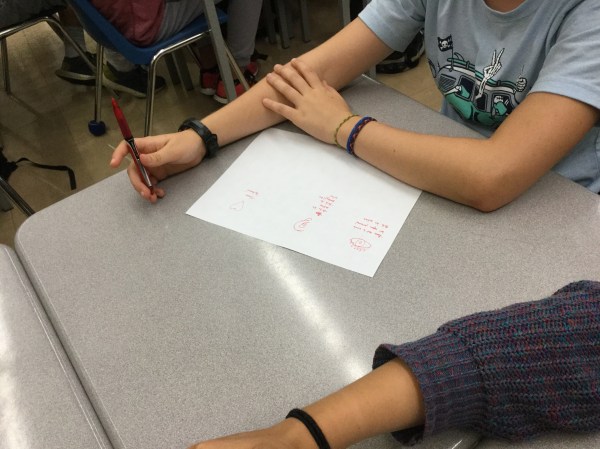
We made lists of what good group work looks like, sounds like, and feels like, and then shared our lists with the class. We have now co-constructed our expectations for group work in math class.
Grade 10s did a similar activity, but rather than numbers, their sheet had expressions that equalled the numbers.

The process was similar.
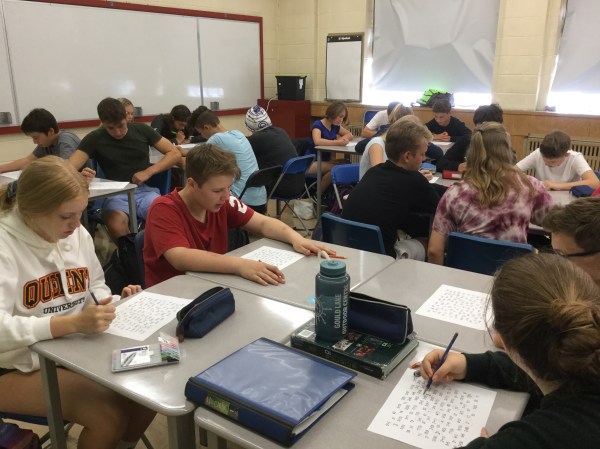
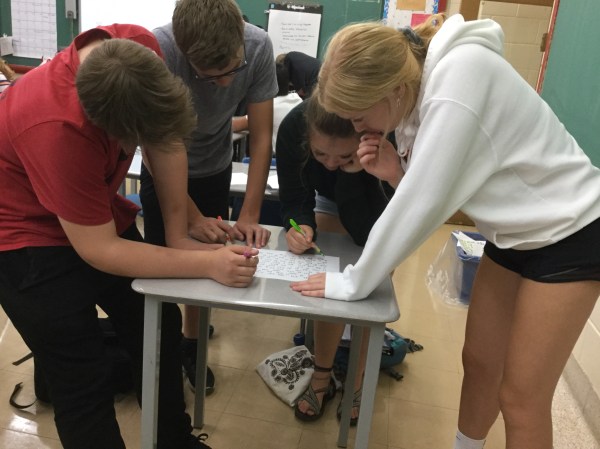
The grade 10s were primed for this because they remembered what we did last year, so they knew to look for patterns, and they already had some pretty good group work skills that we have been practicing all through grade 9.
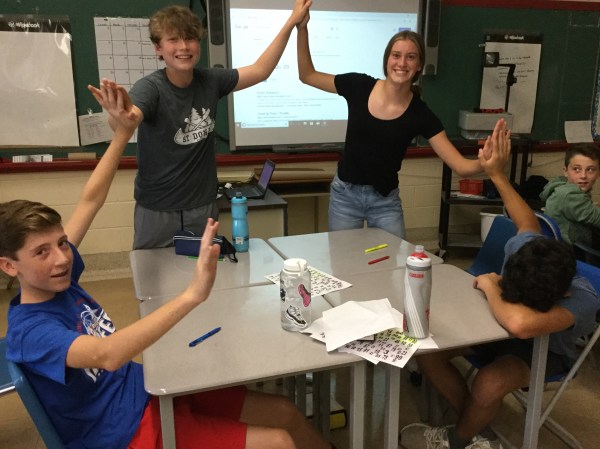
Tomorrow we will see some group work in action!
Here are our group norms we came up with


First day of grade 10
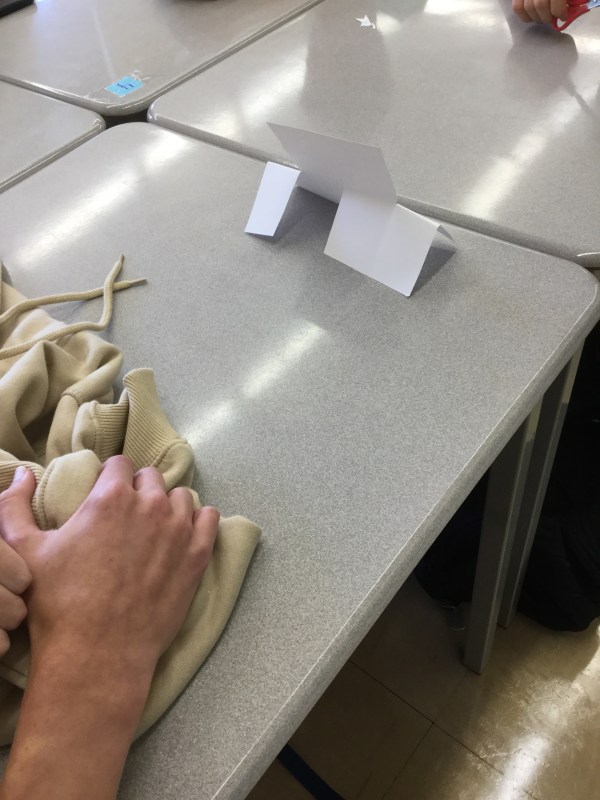
We started out with a challenge….to reproduce a shape out of paper.
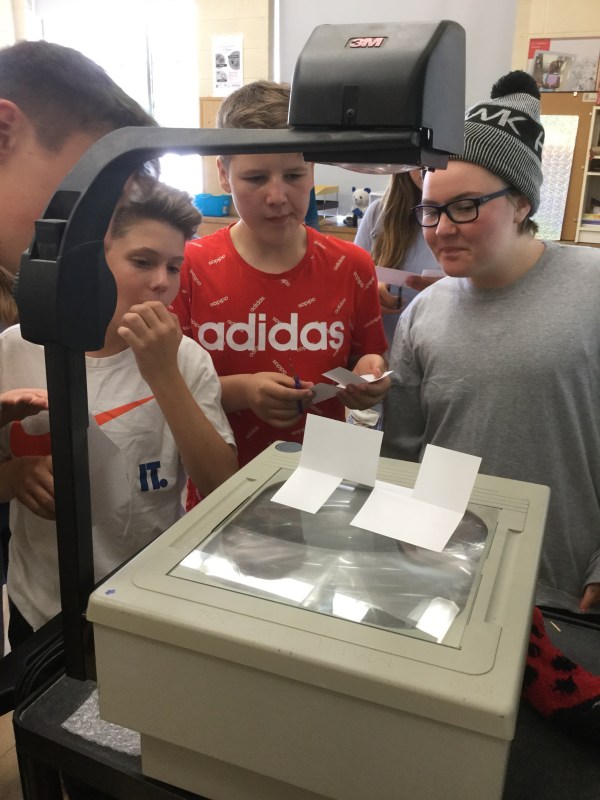
It is a shape that at first looks nearly impossible to build.
We struggled for a while, and eventually most groups figured out the trick. We paid attention to the words that were spoken during the activity, and our moments of frustration. We are working to have a growth mindset where we love challenges because they stretch our brain.
We then worked in our teams to solve the previously posted tug of war problem and worked on our representation and communication of our solutions.

We will continue to practice working at the boards over the next week to solidify our routines.
 Ms. Bearse's Site