Well…this is wild!
So this is the 3rd day of bus cancellation. We have a plan. Class will run on Thursday, and the exam schedule will be bumped by a day.

Swimmers, our meeting is now rescheduled (again) to Thursday at lunch. Come with your forms and money for EOSSA. If you have not yet signed up for races, please do so now! Email me, or contact Brooke.
Grade 10s that means your test is thursday, exam is Friday morning at 8:30.
Grade 9s that means your interviews are on Friday afternoon and on Monday. Here’s the handout you’ll get tomorrow if you want to have a look now.


The school is open today. If you are coming, please be safe. If you are not coming, I’m available by email if there are any questions.
Tuesday January 22
 Triboard transportation has been cancelled yet again due to the cold temperatures. Schools are open (but a bit cold, so dress warmly if you are coming). I will be available by email to help out if you are staying home. Culminating assessments are going to be pushed to Wednesday.
Swimmers here is the OFSAA form that you need to bring signed to our meeting on Wednesday at lunch: release_of_liability_form
Grade 10s: I hope you are all working on review! mpm2d3 exam review 2019. Your test will be Wednesday.
Grade 9s: The final task has been cancelled, and we will spend our time preparing for excellent interviews, and completing our portfolios.
Monday January 21
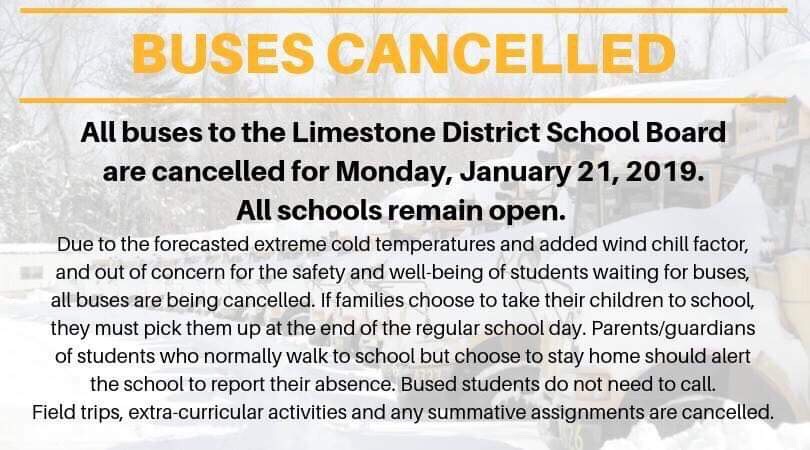 Grade 9s, your task is cancelled, and grade 10s your test will be Tuesday.
Stay warm everyone! If you can get to school safely and want to get caught up on work, or ask questions, please come find me in our classroom. It’ll be toasty warm in there (as always).
I will be reachable by email if you are working from home and have questions.
What a week!
Grade 9s have worked incredibly hard (and ate a lot of cake) this week. They have finished EQAO testing and should be proud of their accomplishments. Test scores look pretty high over all. Final EQAO results will be available at midterm in the fall, but for now we have good estimations, and reasons to celebrate.
I am proud of everyone for their excellent attitude, perseverence, and collaboration over the course of the term. We have done a lot of thinking about our learning, and reflecting on what helps us, and where we tend to make mistakes.
We are better at reading questions, picking out important information, asking good questions, communicating our reasoning in multiple formats, knowing that if we get stuck there’s more than one path to get to the answer, and being able to ask for help when we need it.
Today we prepared for our culminating task. We looked at the following photos.
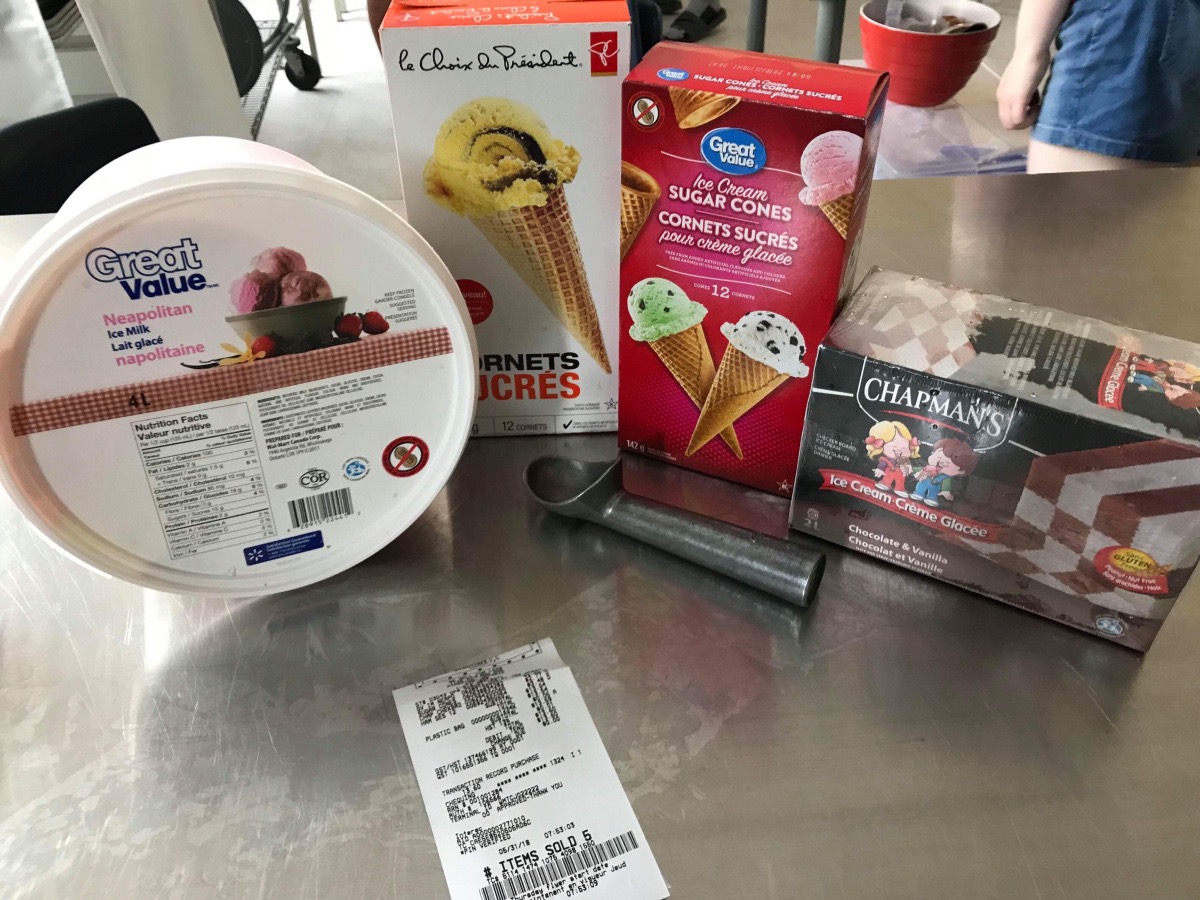

And we noticed a theme! We next brainstormed as many good quality thinking questions about the scenario. We categorized them according to the curriculum by “number sense and algebra”, “linear relations”, and “geometry and measurement”.

Some of us wanted to know how many people you could feed with all that. Some wondered how long you could sustain yourself with that number of calories. Some asked about how many cones you’d need if you scooped all the ice cream.
 Others got creative about packaging. Some talked about optimizing the surface area to volume ratio of the containers, or calculating empty space in the box of cones.

Some talked about prices, comparing prices of different brands, or of different package sizes. Some talked about going into business selling ice cream cones, and if you wanted to make enough money to afford new shoes, how many cones would you need to sell, and at what price, knowing that there are also costs involved in operating an ice cream truck!

Others talked about stacking cones in a tower, and how many cones you’d need to make a stack 10 feet tall.
It was impressive creative thinking!
On Monday we’ll have a new scenario presented and work similarly to brainstorm, and choose our 3 questions to answer. Tuesday we’ll work independently and answer them.
Eqao is almost done!
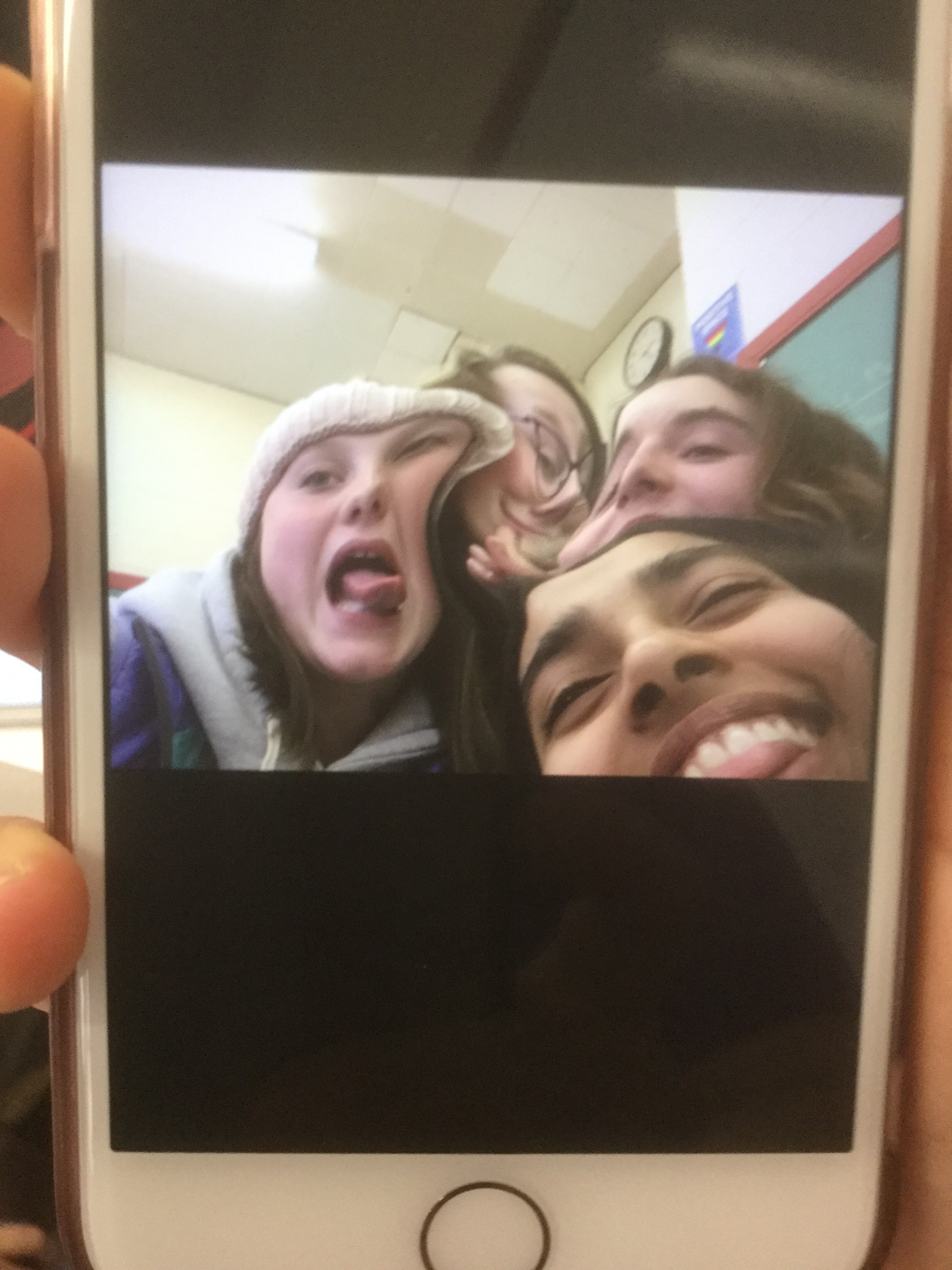 We’re all feeling a little silly. Final day of EQAO is tomorrow. Work hard everyone, and do your best!
Practice EQAO today
Grade 9s are trying a practice EQAO test today to get the feel of things before the real test on Tuesday/Thursday next week.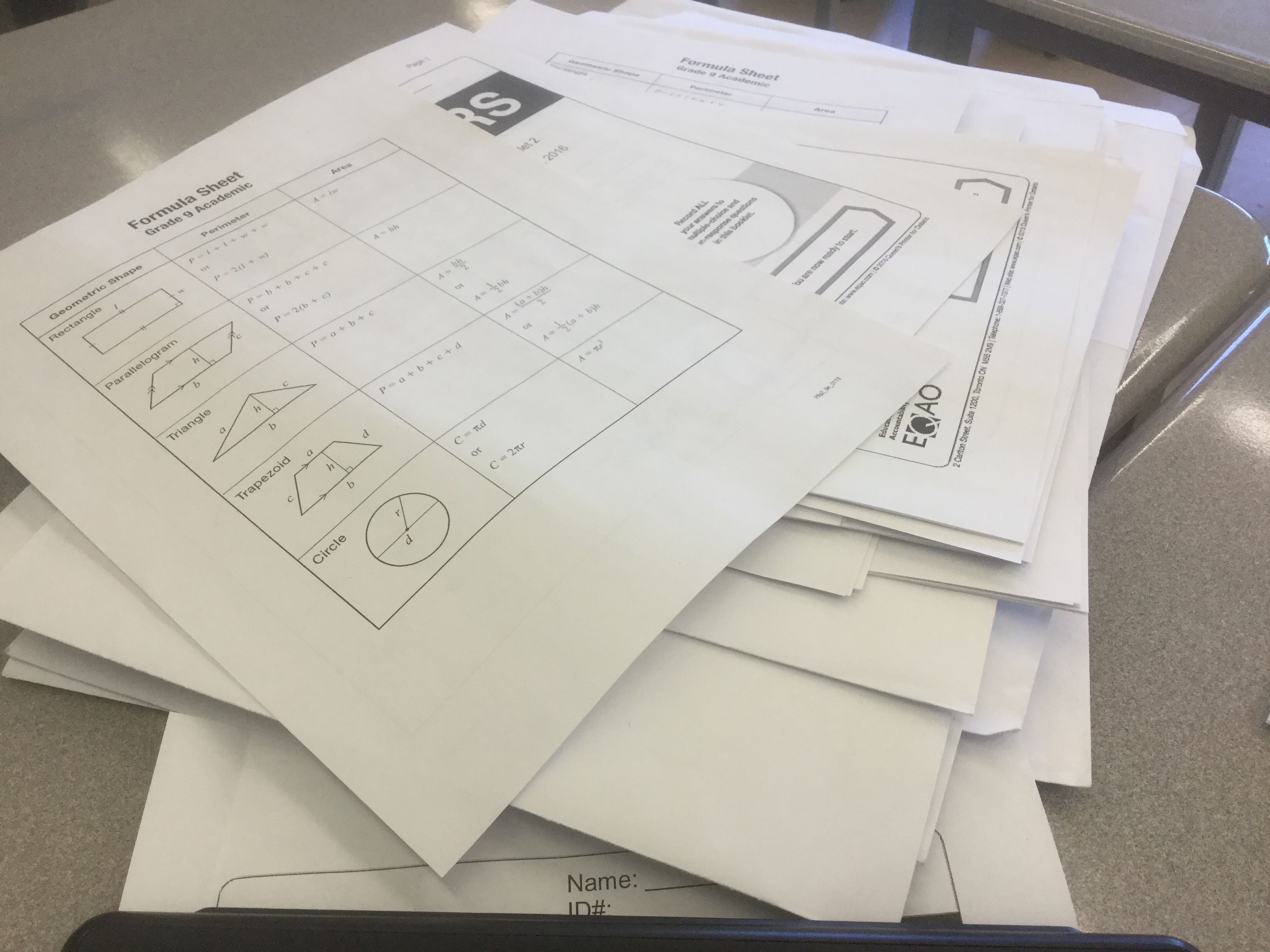
For Tues/Thurs bring a calculator and be sure to have eaten and gone to the bathroom first! Leave backpacks in lockers.
For more practice over the weekend check out 5 years of past tests on the eqao site in English and here in French. (Our test will be written in English).
Equations of lines
We are finding linear equations using all sorts of information. We can find an equation if we are given 2 points.
We can graph the points and sketch our line. Our graph can help us find the slope by using a triangle and comparing the rise and run. We can also use a table and look at the difference in y values and x values and show the slope as the change in y value divided by the change in x value.
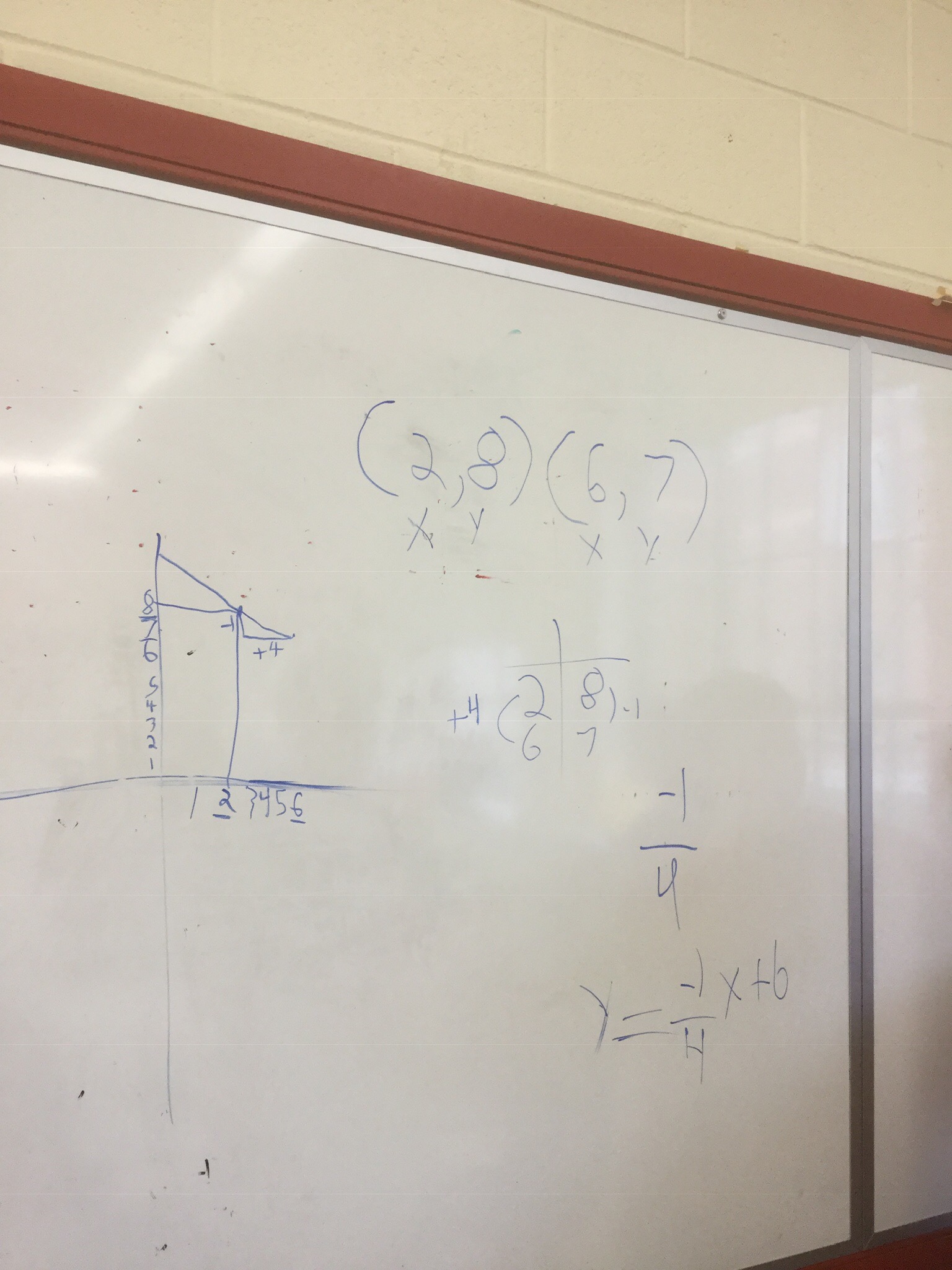
The next calculation is to figure out the “b” value or the constant.
Here’s a different question, where a table was used to find the constant (the value of y when x=0). The slope was found (-4/7 or -0.57) and then the table was filled in where for each increase in 1 for x, the y value decreased by 0.57.

Another way to solve for the b value is to substitute the value of one given point for x and y in the equation y=mx+b.
Y=-0.57x+b
Sub in the given point (4,-9)
-9=-0.57(4)+b
-9=-2.28+b
-9+2.28=-2.28+2.28+b
-6.72=b
(Note, the difference in value from above is due to rounding)
We looked at some complex problems where we are looking for a line that is parallel to a given line, and has the same y intercept as another given line. We needed to isolate y in the equations and then extract the useful information (either m or b) and use that to create our new line.

We’re working hard and helping each other

Trigonometry
Grade 10s are working with similar triangles and trigonometry.

We started with a 90 degree angle and the sides 10cm and 9cm in one triangle, and 27cm and 30cm in the other. Using our knowledge of the pythagorean theorem we calculated the hypotenuse. We also used our learning from Monday to calculate the value of the angles using our trig tables. We had the option to use the ratio for sine, cosine or tangent since we knew all 3 sides.
We noticed that the angles are the same in both triangles, and the side lengths are proportional. This is always the case! We have 2 similar triangles. We also looked at the areas and compare them. Our big triangle has sides that are 3 times the length of the small triangle sides. The are of the big triangle is 9 times the area of the small one. Thats 3^2 (three squared). This relationship holds true for similar triangles. If the proportionality constant is “k” between the sides of the triangle, it will mean that the areas have a proportionality constant of “k^2”.
We looked at a situation where we can use similar triangles.
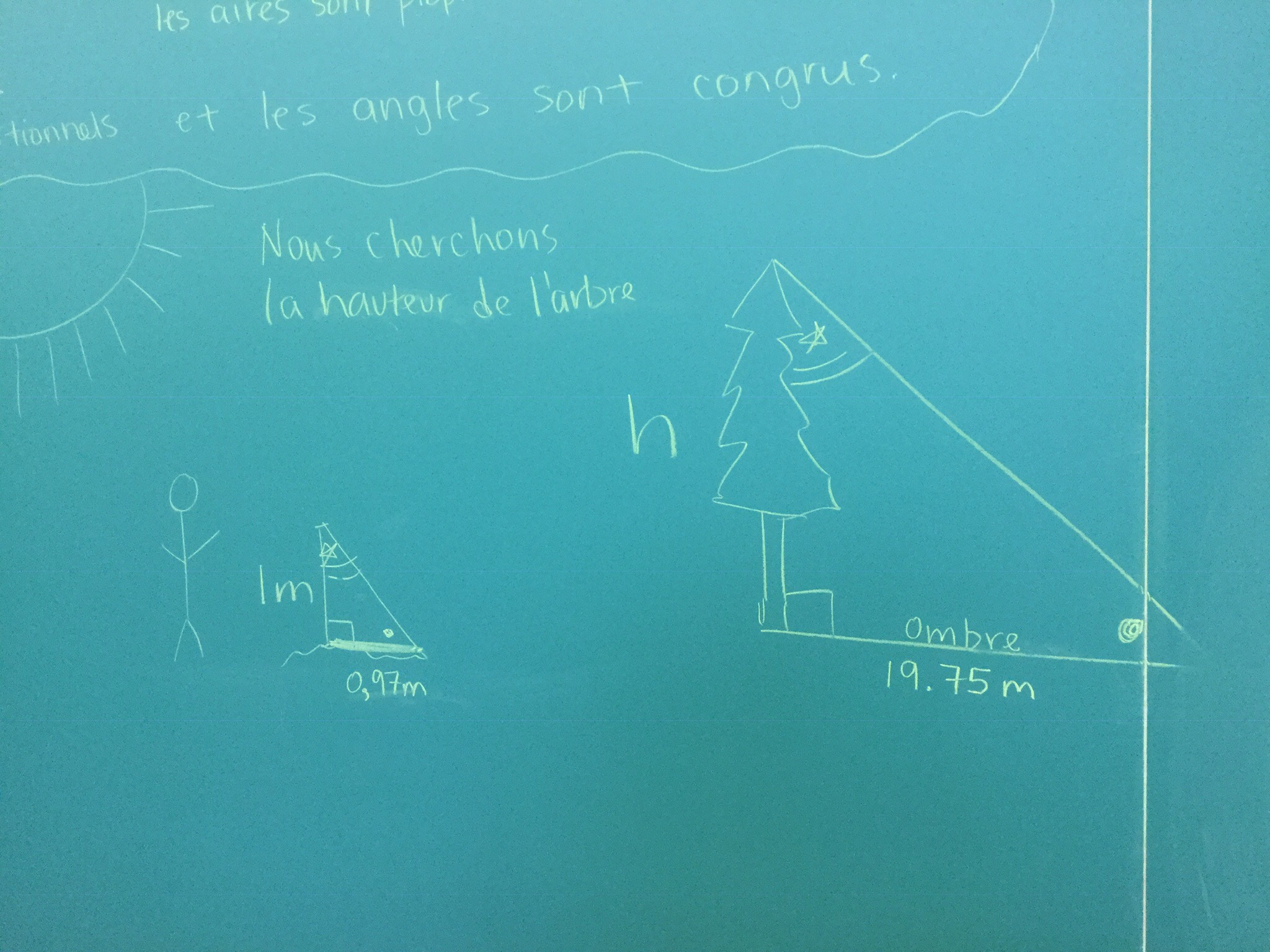
We can determine the height of an object by using shadows.
Parallel and Perpendicular
We’ve been working a lot with lines since coming back from the break. We already looked at parallel lines a while back. We know they don’t cross each other, and they run like train tracks always separated by the same distance. We now can identify that they are increasing or decreasing at the same rate, or they have the same slope (“même pente”)….in fact we have been doing lots of chanting out loud… when someone say “parallèle” the response is “même pente”, and most of us have this word association stuck in our minds.

We know that the slope is the coefficient of x when the equation is written with y isolated. This is the y=mx+b form. The b value is the constant, the initial value, the y intercept (“ordonnée à l’origine”).
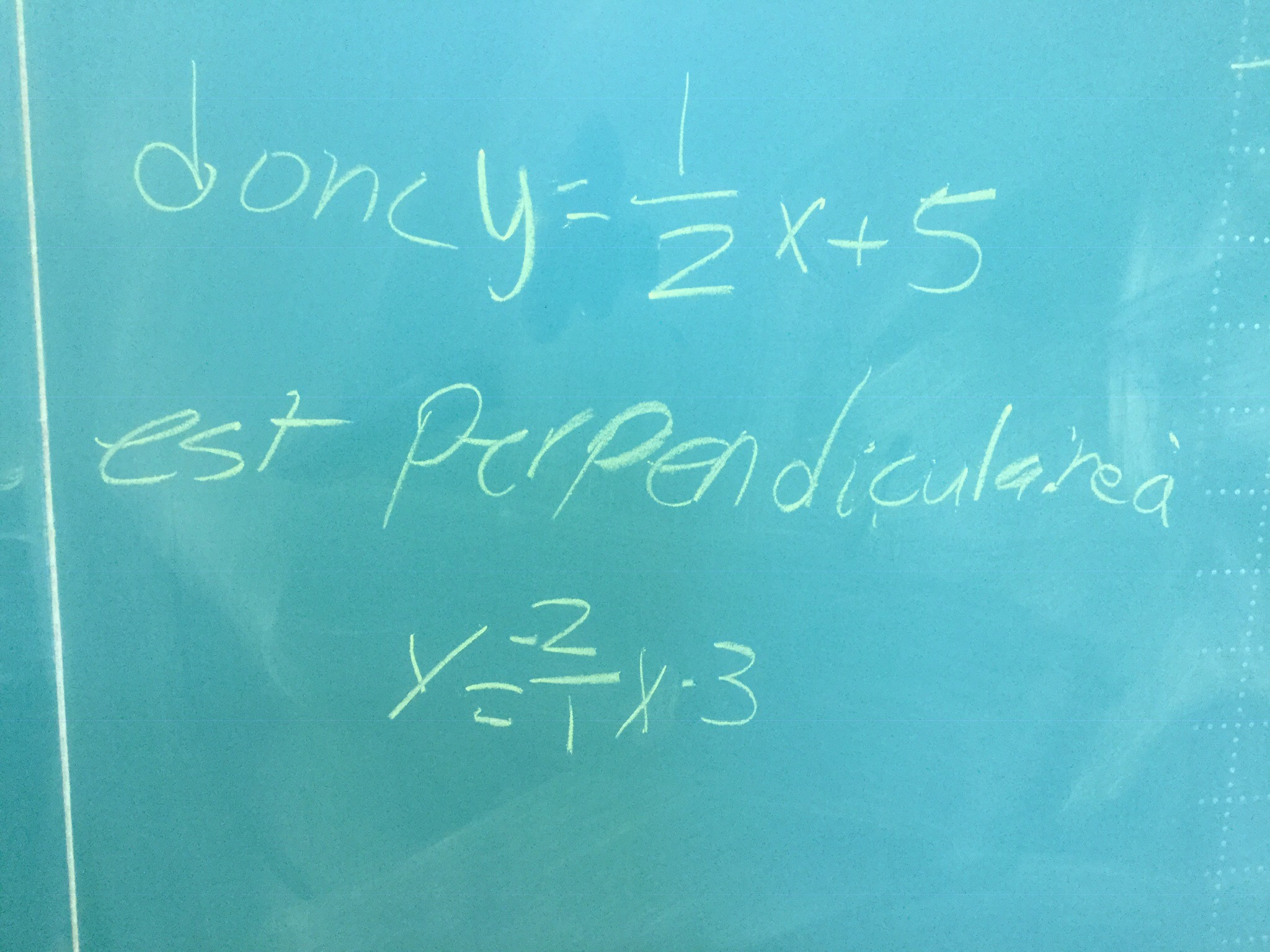
We learned that perpendicular lines intersect, and always form a 90 degree angle. If one slope is positive the other is negative, if one slope is 0 the other is undefined (indéfinie). If one slope is steep, the other is not. That’s the only way they’ll have a 90 degree angle between them.

The slopes are related. This example has one slope of 1/2 and the other of -2/1. The fraction is inverted, and one is positive and the other is negative. We determined a process for finding a perpendicular slope is to invert the fraction and to multiply by negative 1. Our chanting and word association continued, and when someone says “perpendiculaire” the response is “inverse négative”, the rhythm is a bit catchy.
We see the slopes as the x coefficients again, when y is isolated.
Solving equations
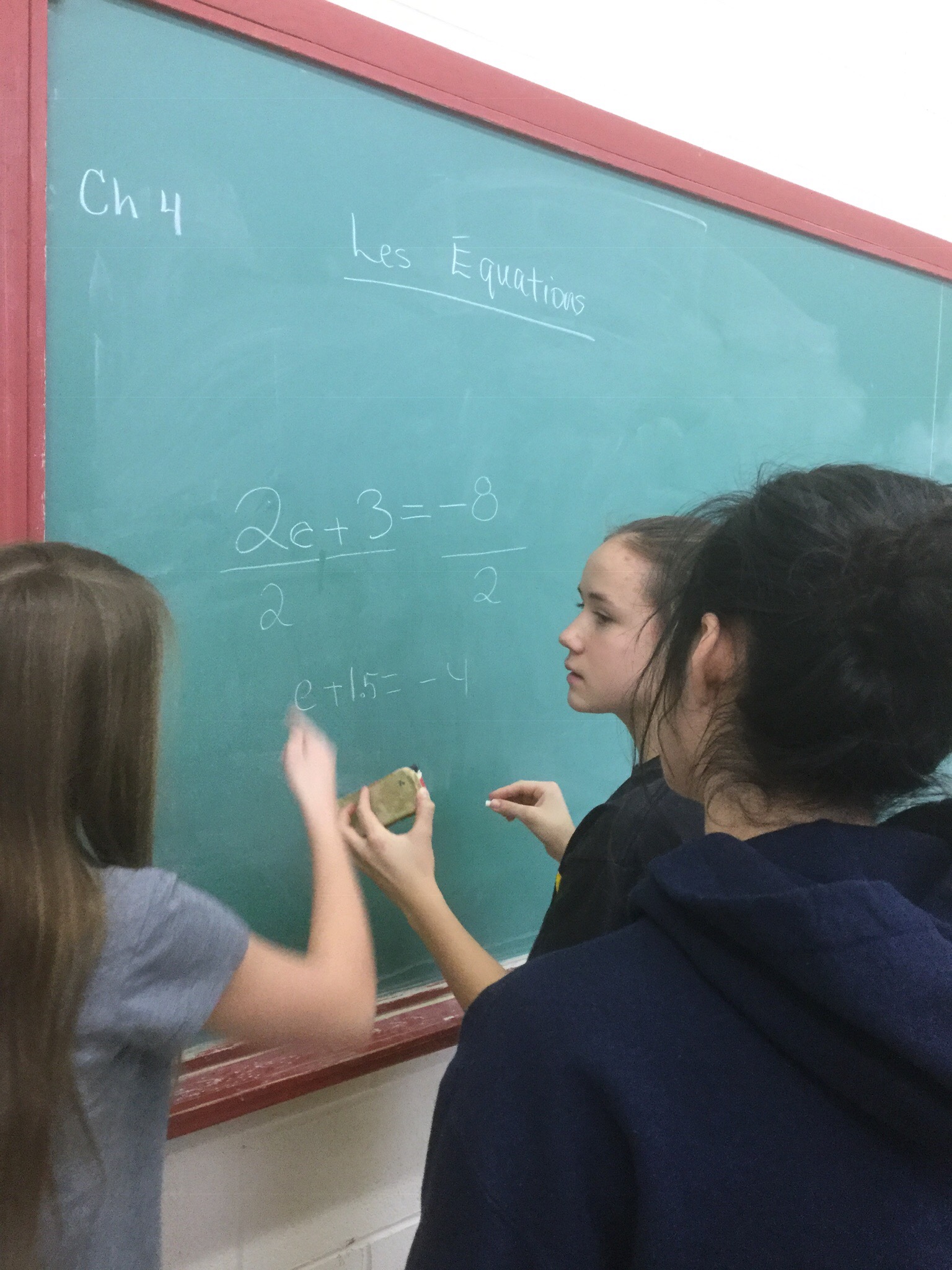
Today we started to work with equations (they are like two expressions on either side of an equal sign). We used algebra and our visual representations help us solve the equation. We do the same things on both sides, and our goal is to isolate the variable.
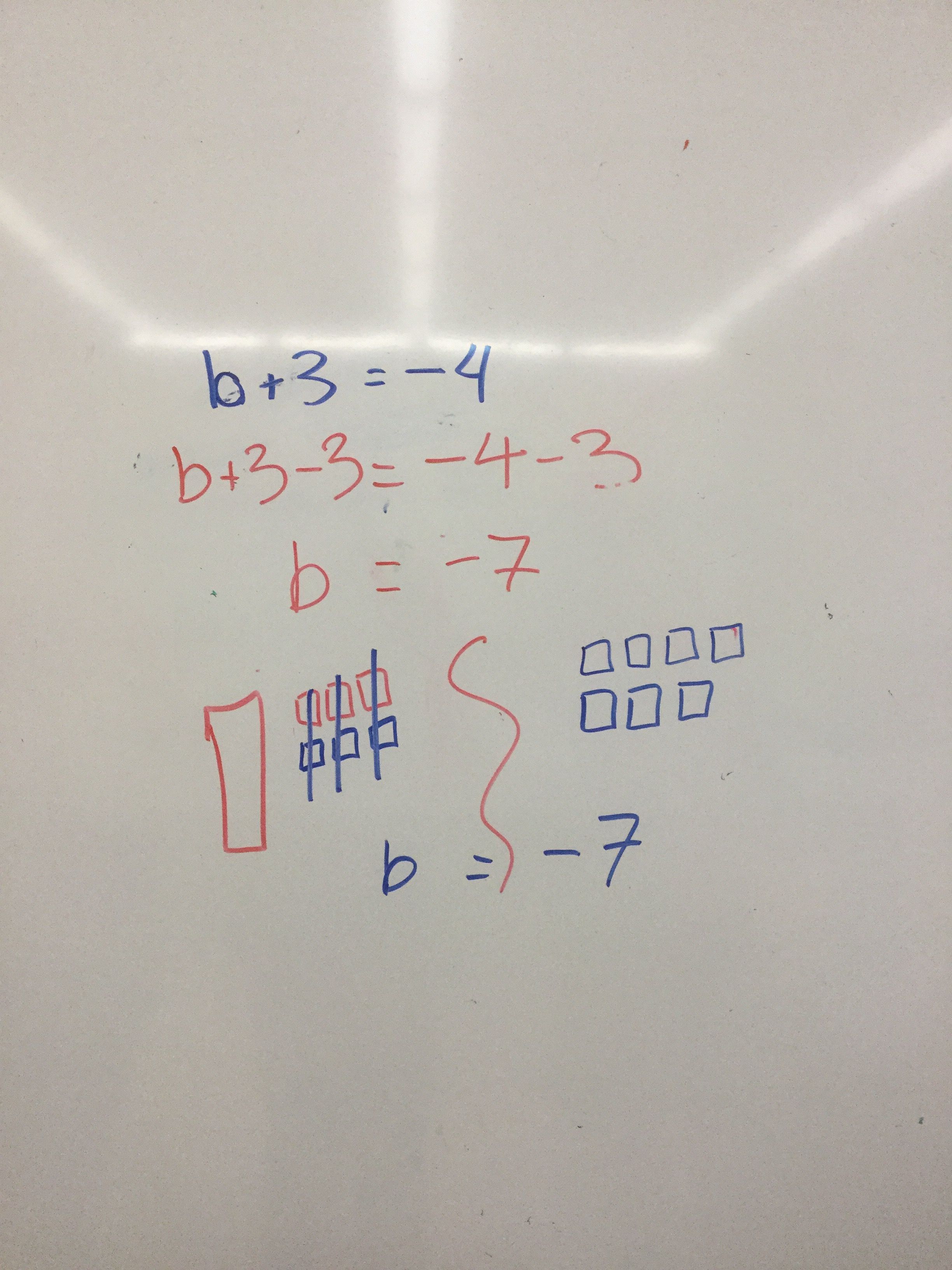
We worked through several different types of questions. Some of us had different approaches to solving…. like here we divided every term by 2 (the coefficient) first.
Some groups tried to add 2 to both sides to start….but at the end it didn’t verify. (We couldn’t substitute our answer into the variable and have both sides remain equal). Their next step was to restart with a new first step. In this case they divided by 3 on both sides, and then have f-2=6 so f=8.
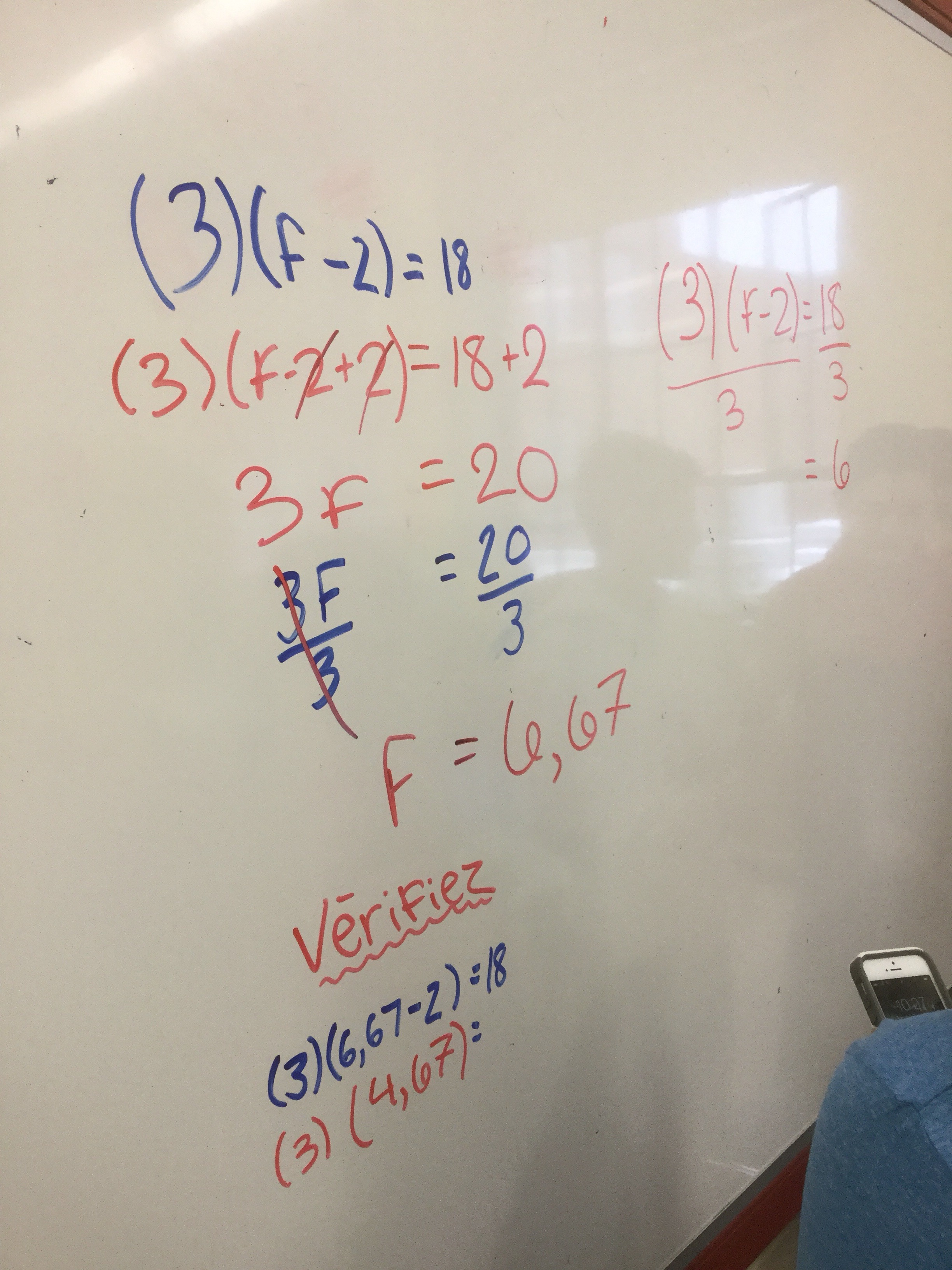
We are learning lots, and getting more confident with our new skills.
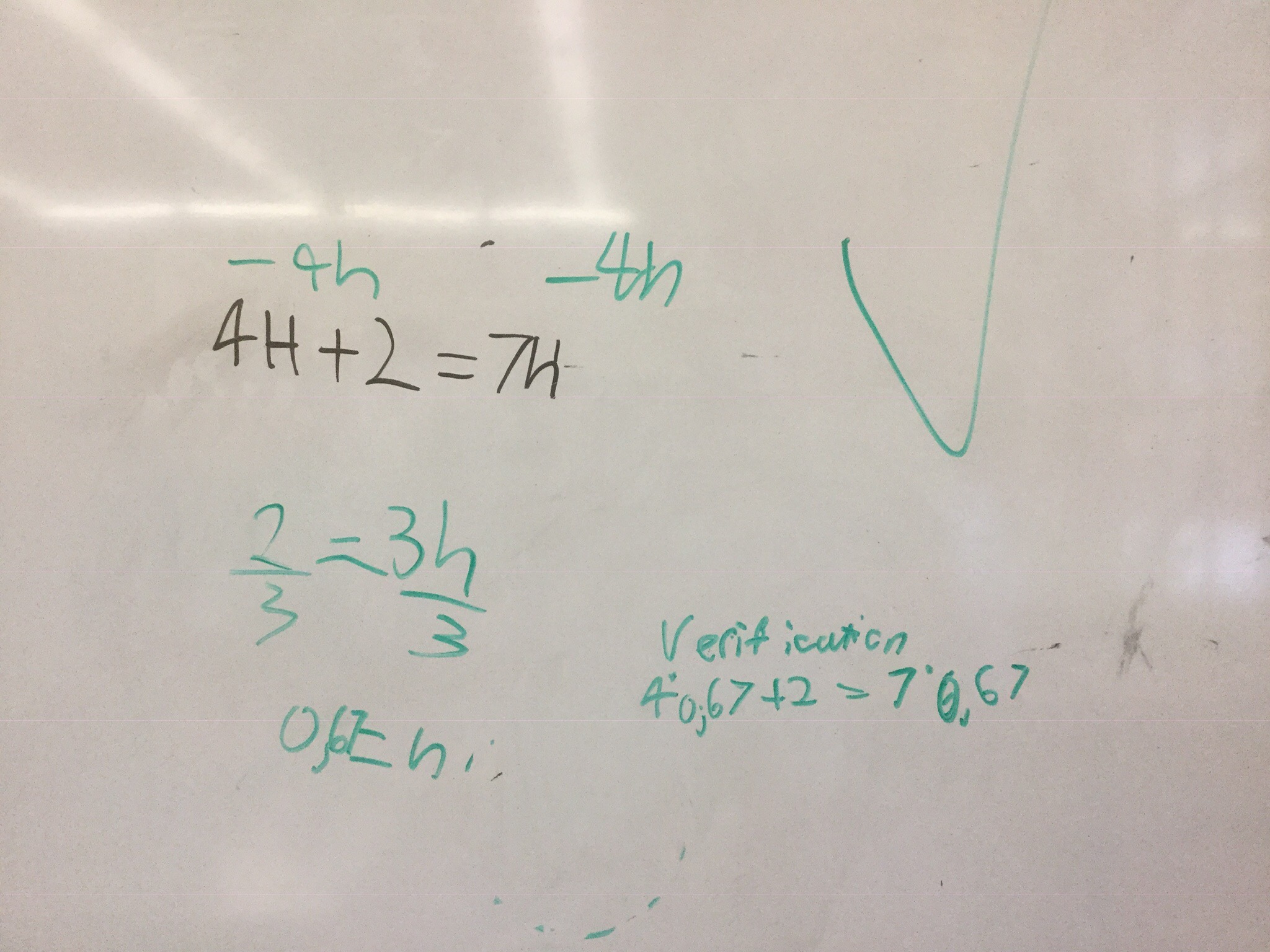
The next step was to manage equations with variables on each side of the equal sign. We need to choose a side, and use algebra (opposite operations) to make sure that the variables are on one side, and constants on the other.
Our final type of equation had fractions. We can eliminate fractions first by multiplying by the denominator on both sides. This is one strategy of many that we used to manage fractions.
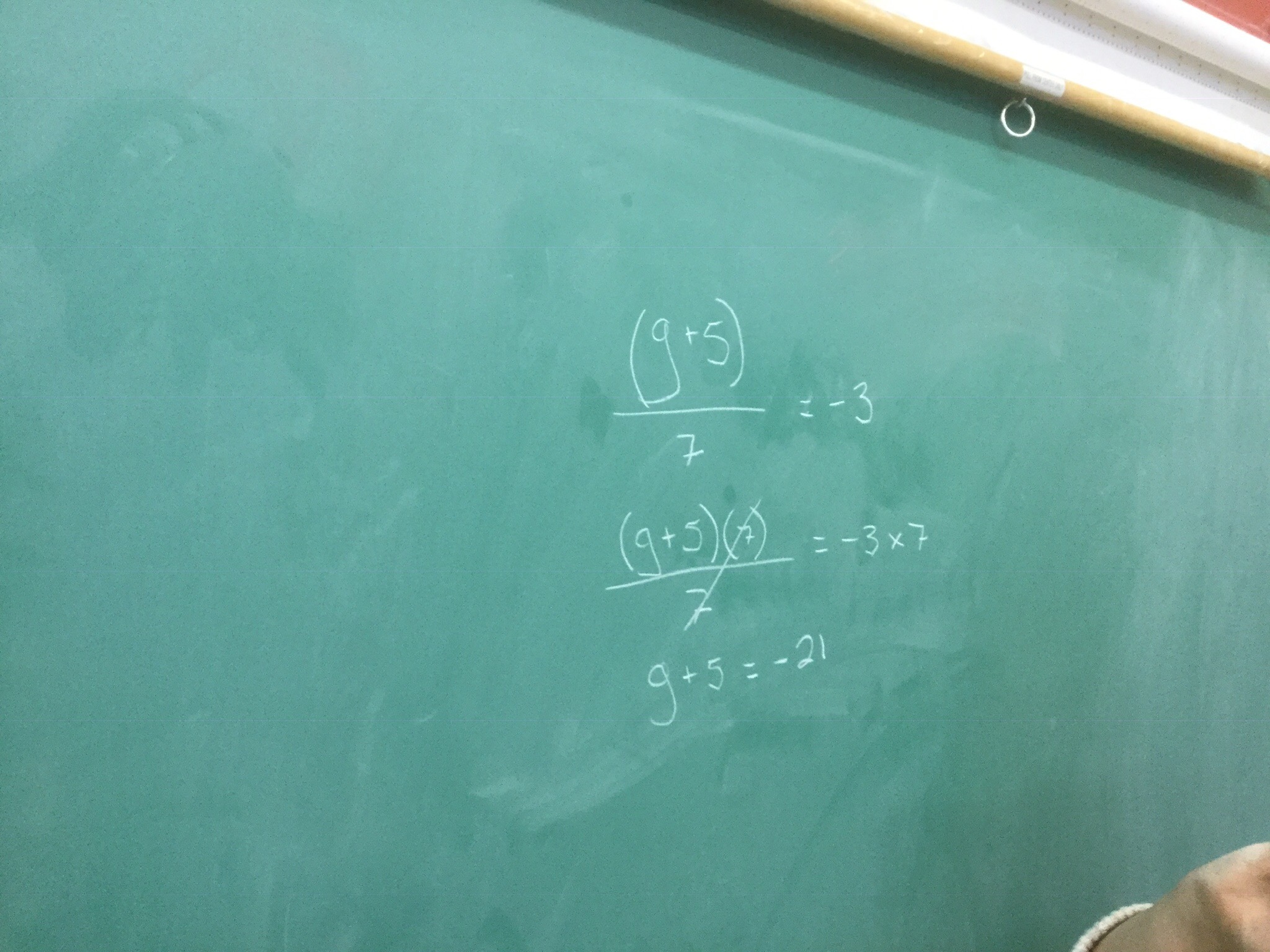
We’re practicing a lot this week, and making good progress.
 Ms. Bearse's Site