Linking equations to graphs of parabolas
How are these two connected?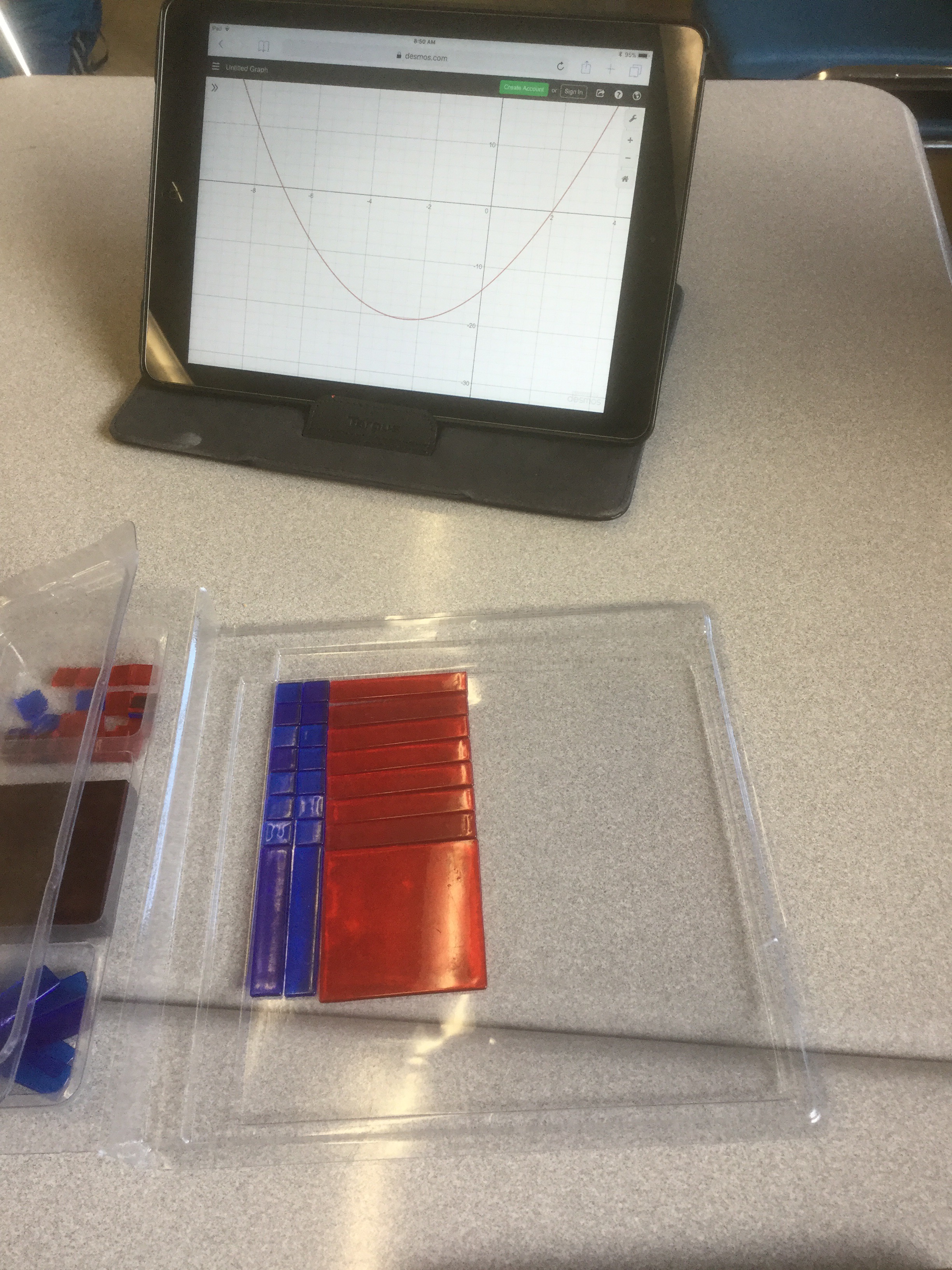
We are using algebra tiles to visualize polynomials and factor them (make them into rectangles and the dimensions are the factors), and then relating that to the graph.
Here’s the example we worked through together

We notice that the dimensions of the rectangle are related to the roots (x intercepts/zeros) of the parabola. We know that the axis of symmetry is at the midpoint of the roots (and we know how to calculate midpoints!) if we sub in the axis of symmetry for x, we can calculate the y value of the vertex. We see that the constant is the y intercept (ordonnée à l’origine).
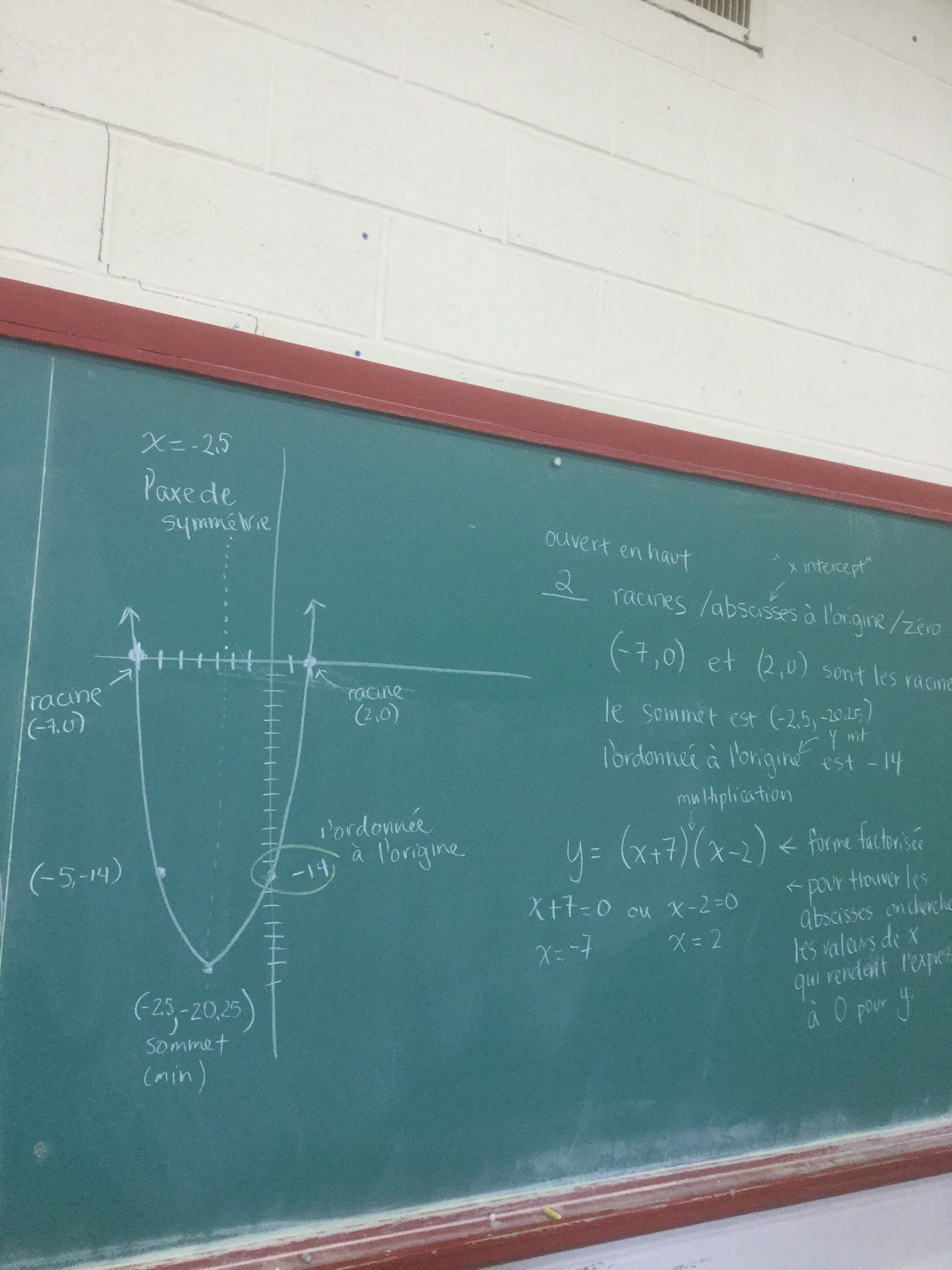
To figure out the roots, we look at factored form y=(x+7)(x-2) in order to find where the graph crosses the x axis, we need to make “y” be 0, since on the x axis the y value is always 0. For the result of a multiplication to be 0, on of the two things multiplied together MUST be 0 too. We have 2 options, either (x+7) is 0…so x=-7 or (x-2) is 0…so x=2. Those two values correspond to where the parabola passes the x axis.
Graphing Pumpkin Data
We looked at our data today. We used google sheets because of how easy it is to insert formulae into cells to calculate more things from our data.


We noticed one data point for circumference was really off, graphically it was separated from the others. We learned the vocabulary for outlier (valeur abbérante)
Our graph showed a weak negative correlation for circumference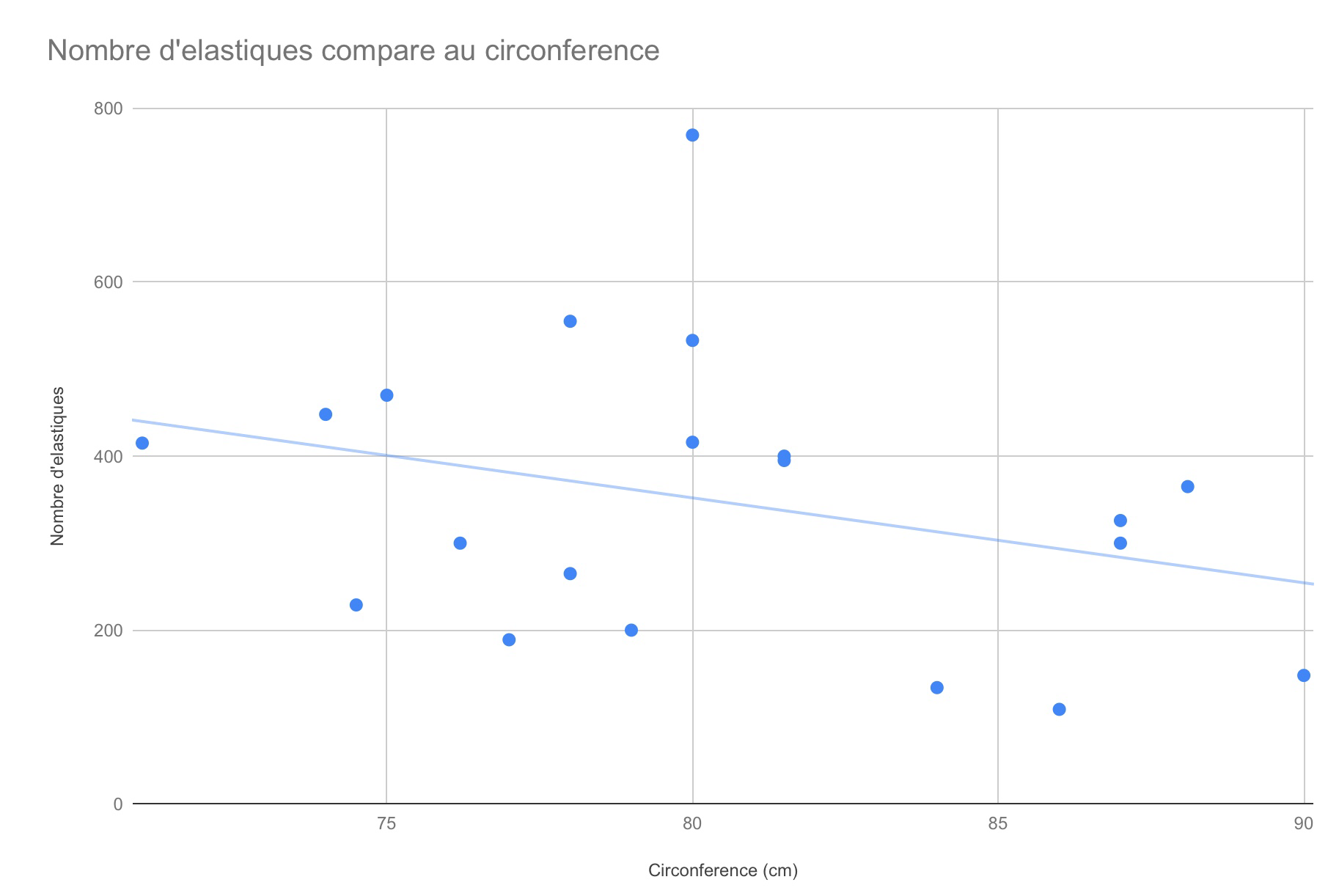
The graph with thickness showed a weak positive trend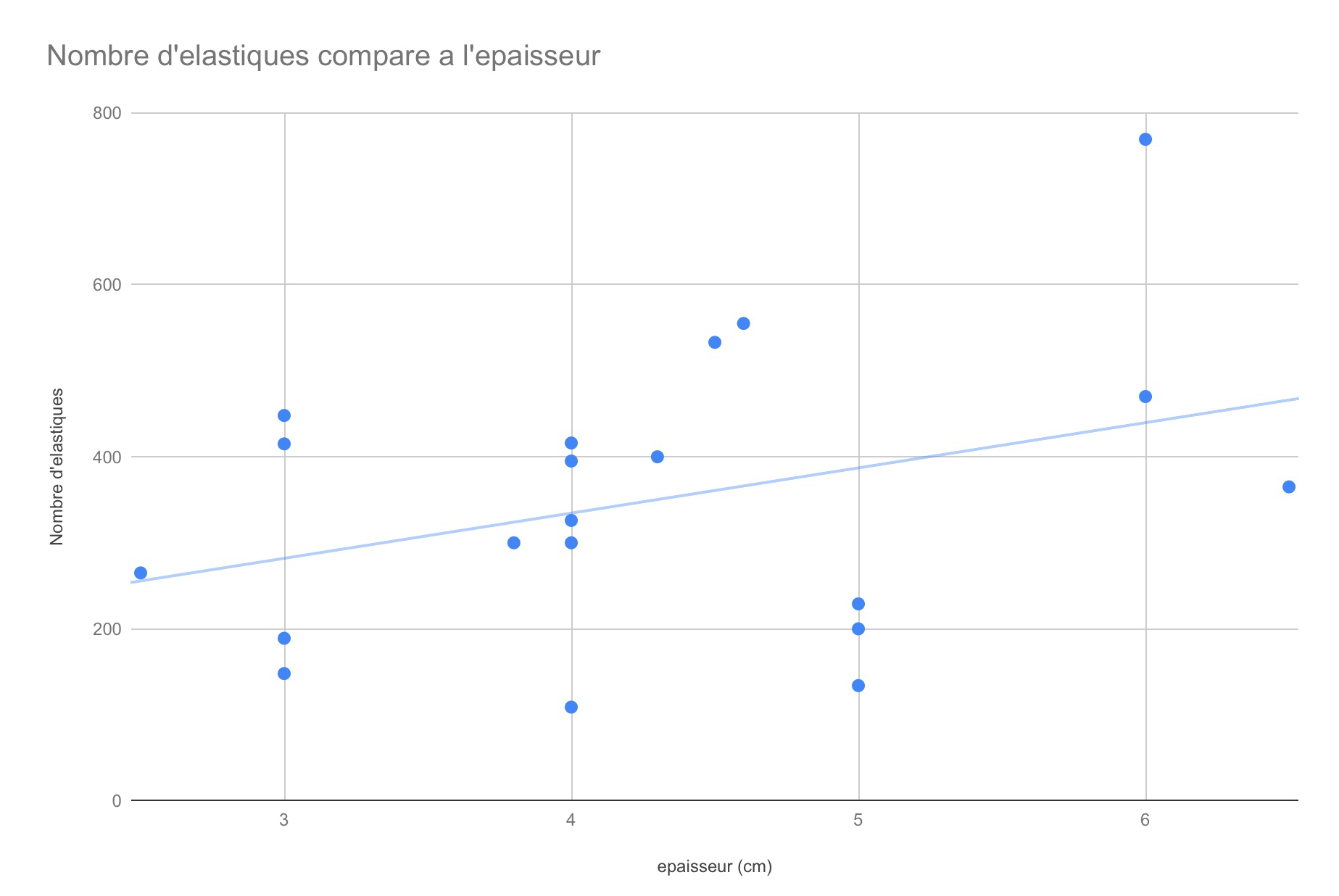
And there was no real trend visible with the height of the pumpkin.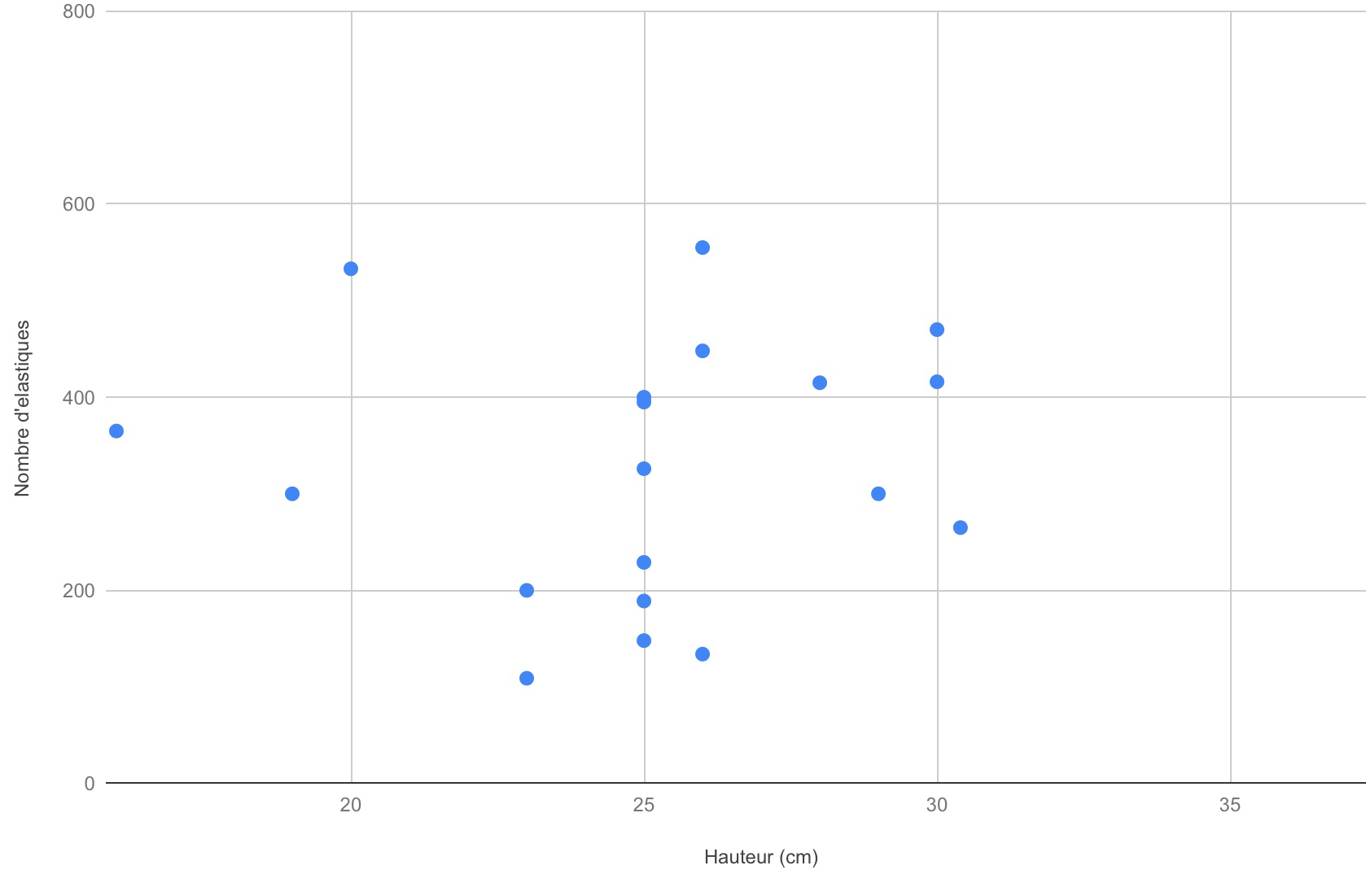
We explored how to enter a formula in a cell to calculate the radius from the data for circumference, and from that we can calculate volume, area, cross sectional area, and try to find more strong correlations.
We noted that we didn’t have pumpkins that were the same variety, also we didn’t apply the elastics consistently among all groups, which led to more variation.
Exploding pumpkins
Safety first! We exploded pumpkins today using elastic bands. We made some measurements first, and put our safety glasses on, and started applying elastic bands.
We kept track of how many bands we added, and noticed that the pumpkins started to change shape.
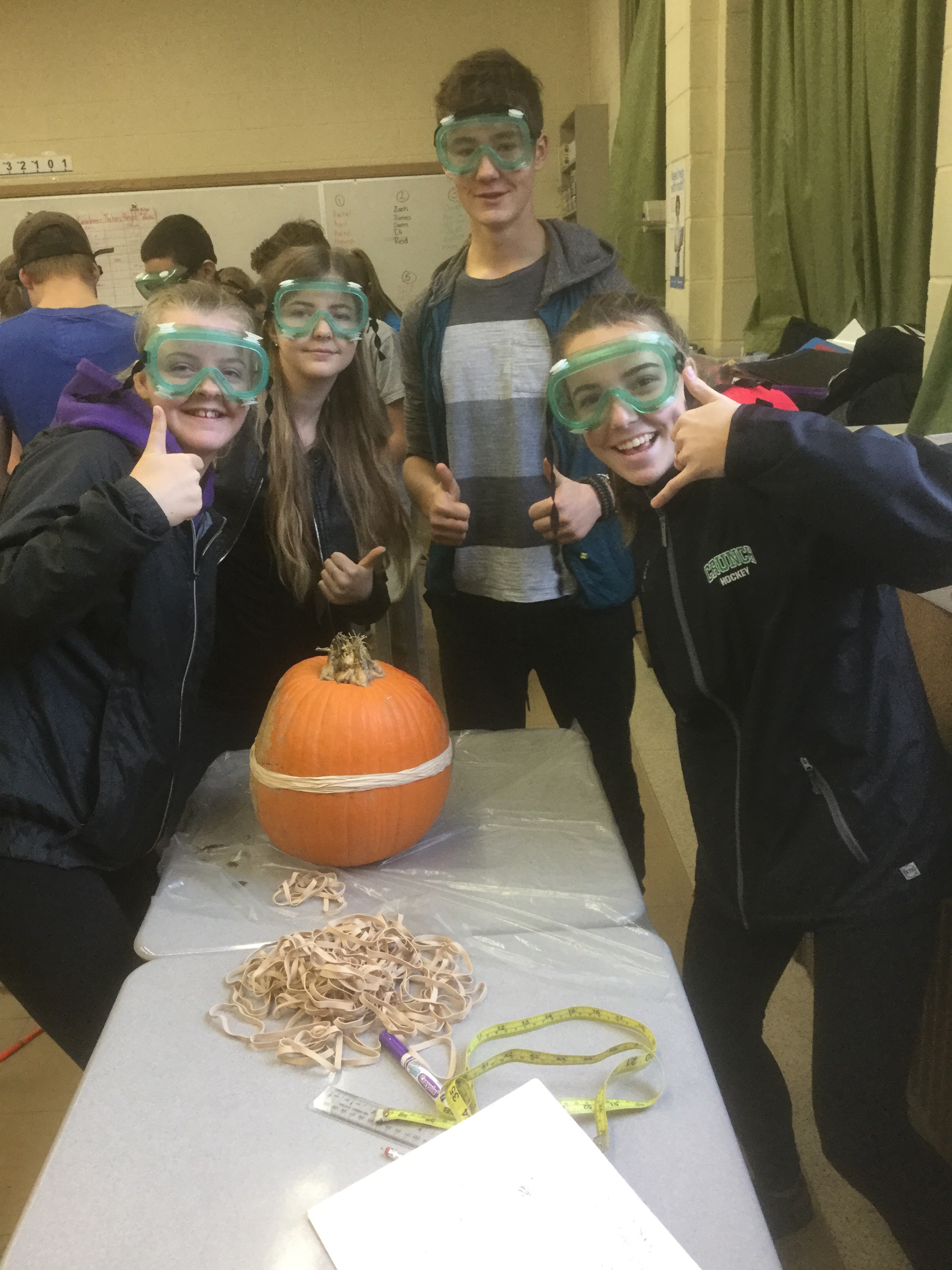
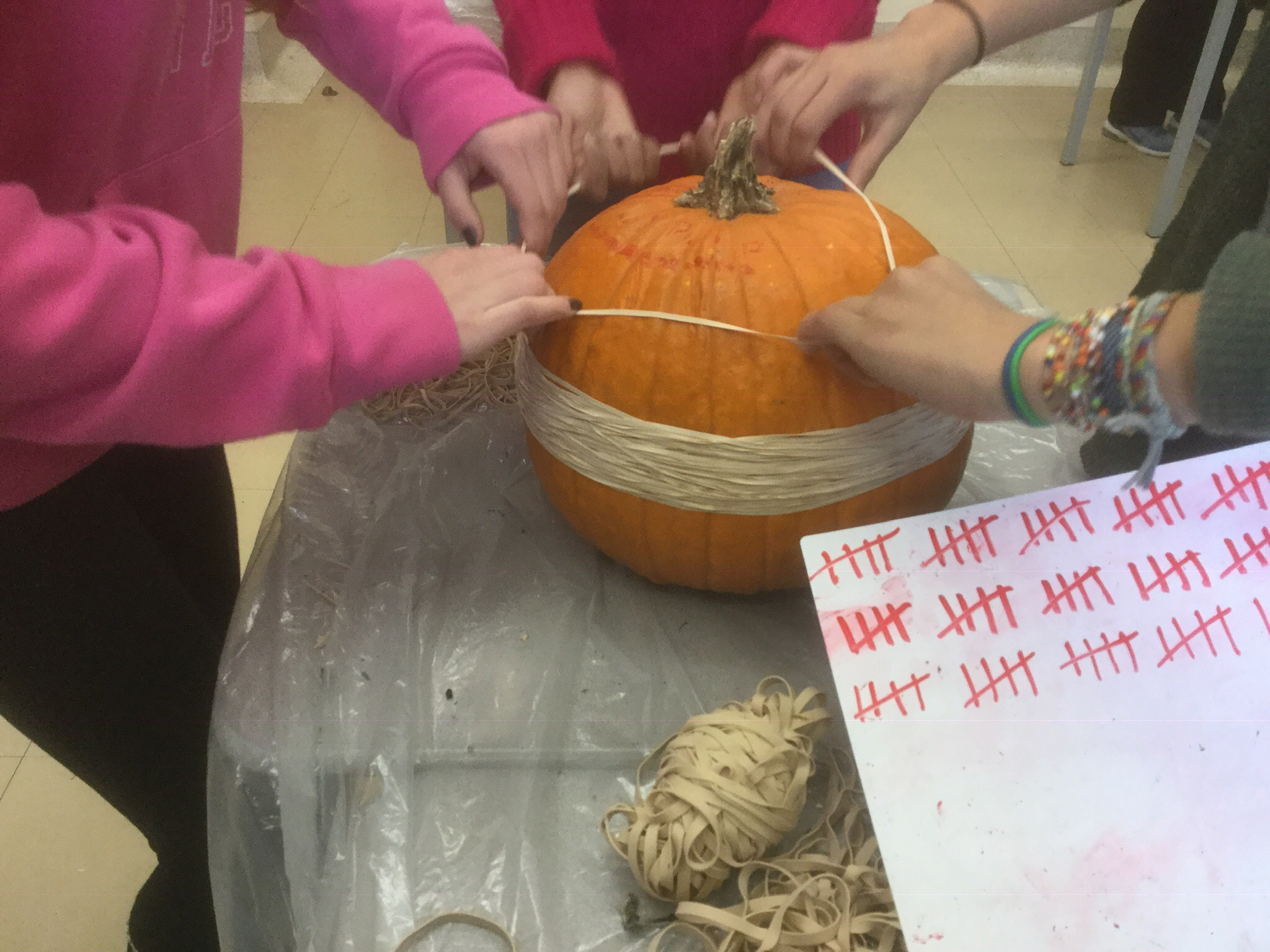
We recorded our progress with our devices as it got close. We wanted to catch the moment when it exploded.

The following are stills from one of the videos

You can see the moment
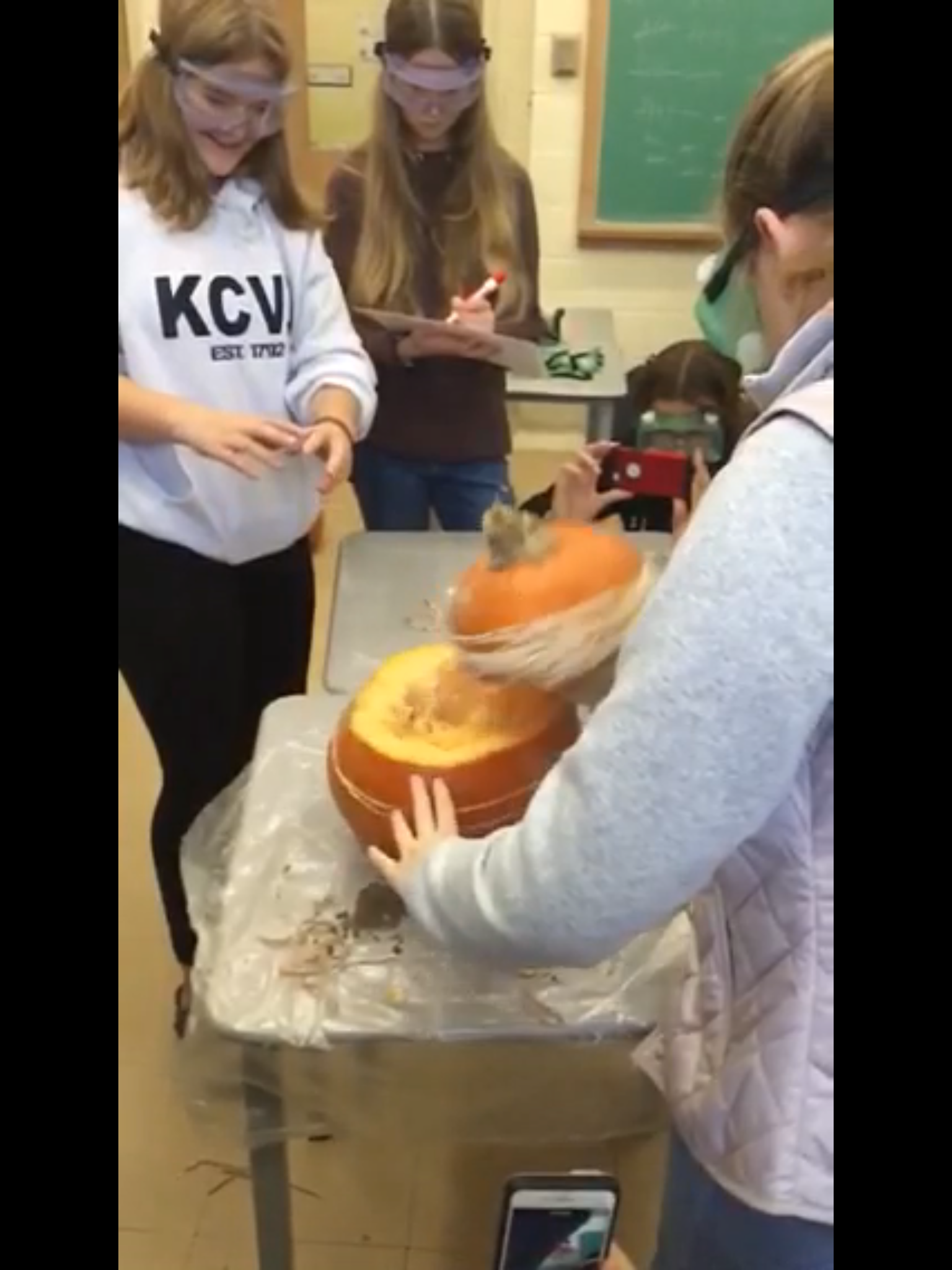
It was pretty exciting

At the end, we measured more things, including the wall thickness.

We removed all elastics and bagged up the pumpkins for donation to a farm and also a wildlife sanctuary. We will be analyzing the data next week to look for trends and correlations.

Factoring Trinomials that have Negatives
Algebra tiles are a great help when factoring trinomials.
We looked at a few. The first question happened to be impossible, but now we know why. We also were able to modify the question to create other options that are similar that do factor.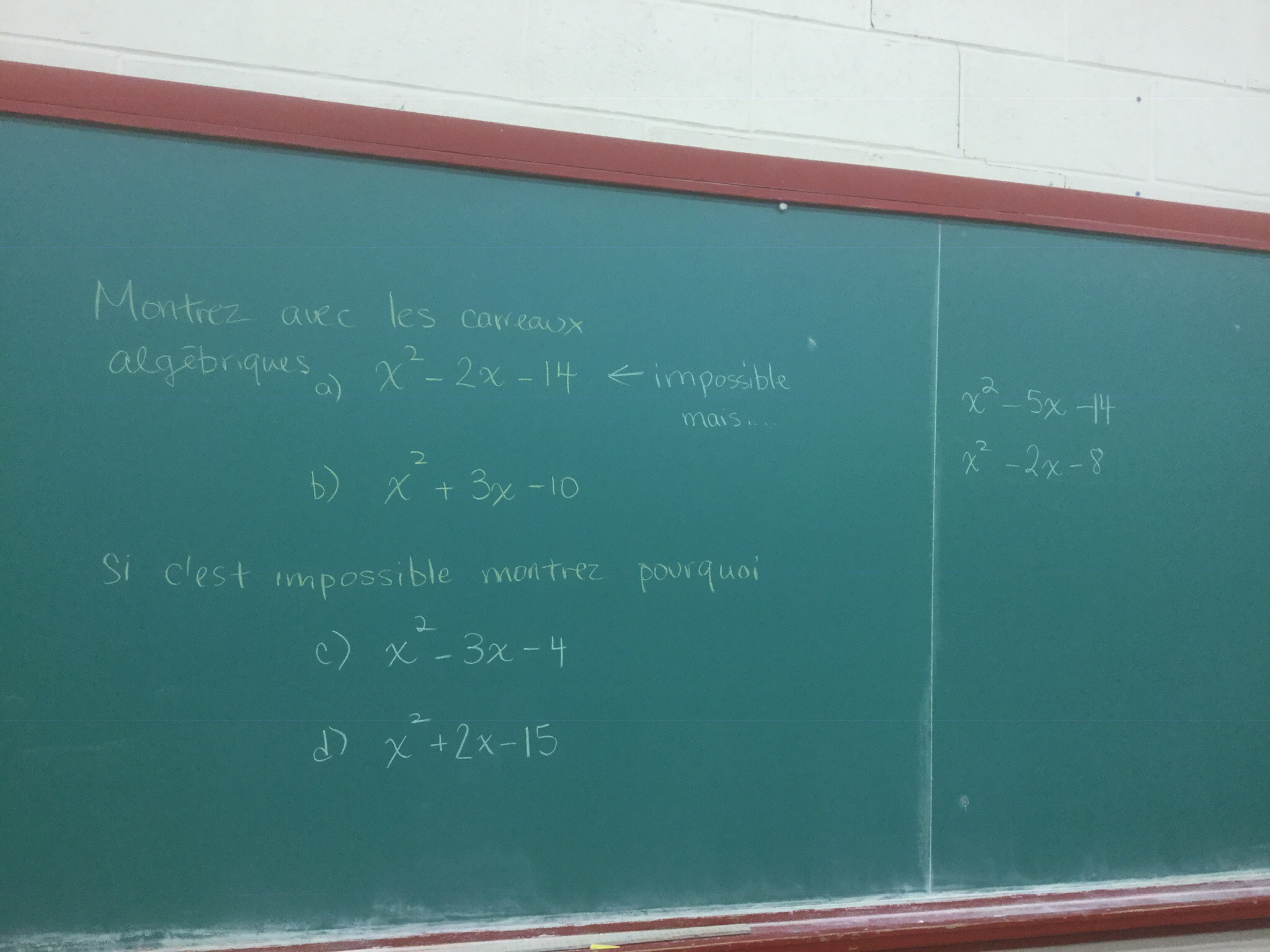
We are building rectangles out of these expressions.
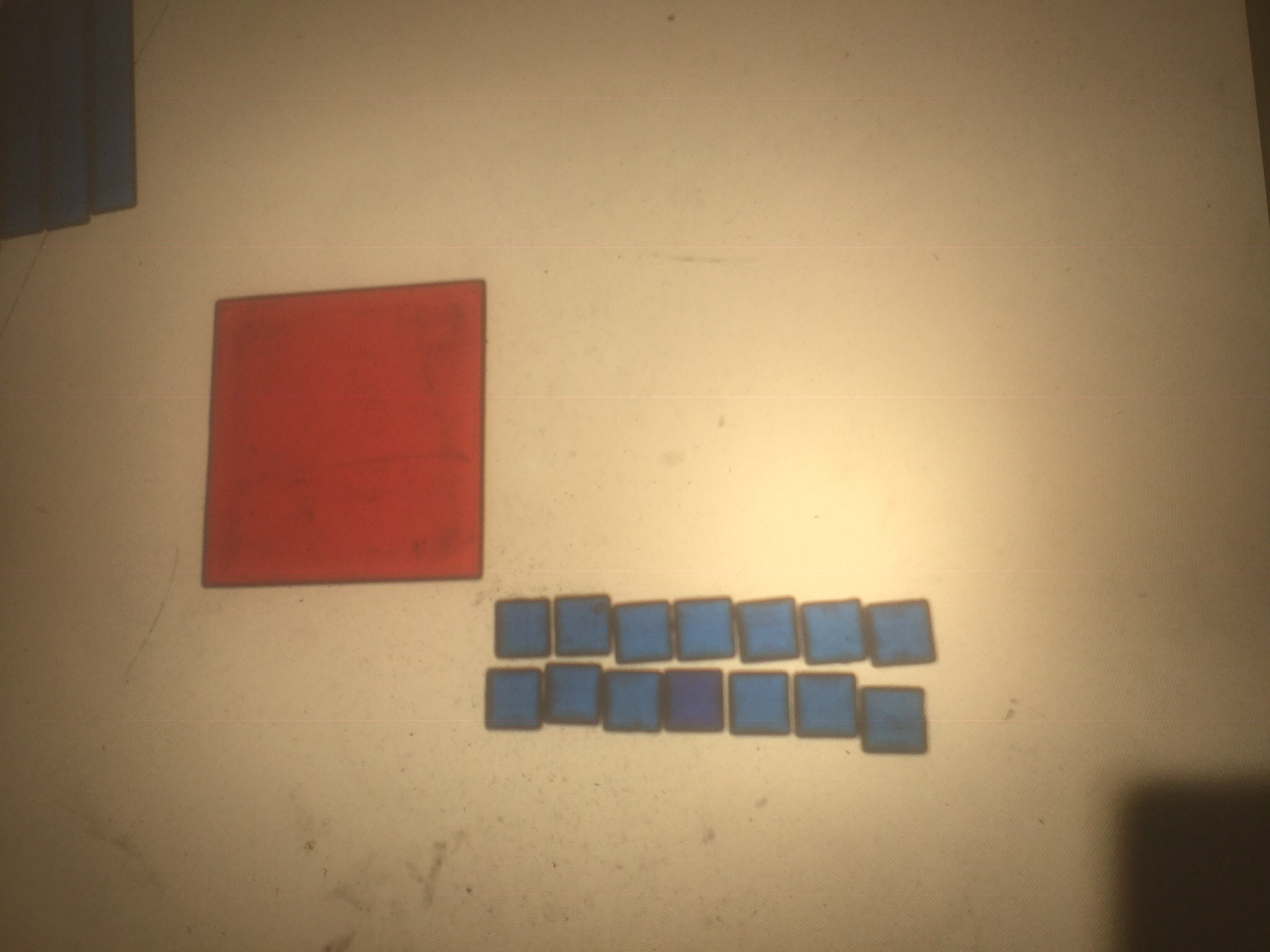
Here’s the start of my rectangle. I look at different ways I can arrange 14 that make rectangles (either 1×14 or 2×7). I put my units in their rectangular arrangement diagonal to the x squared.
Next I try to fill in the gaps in the rectangle using my x rectangles.
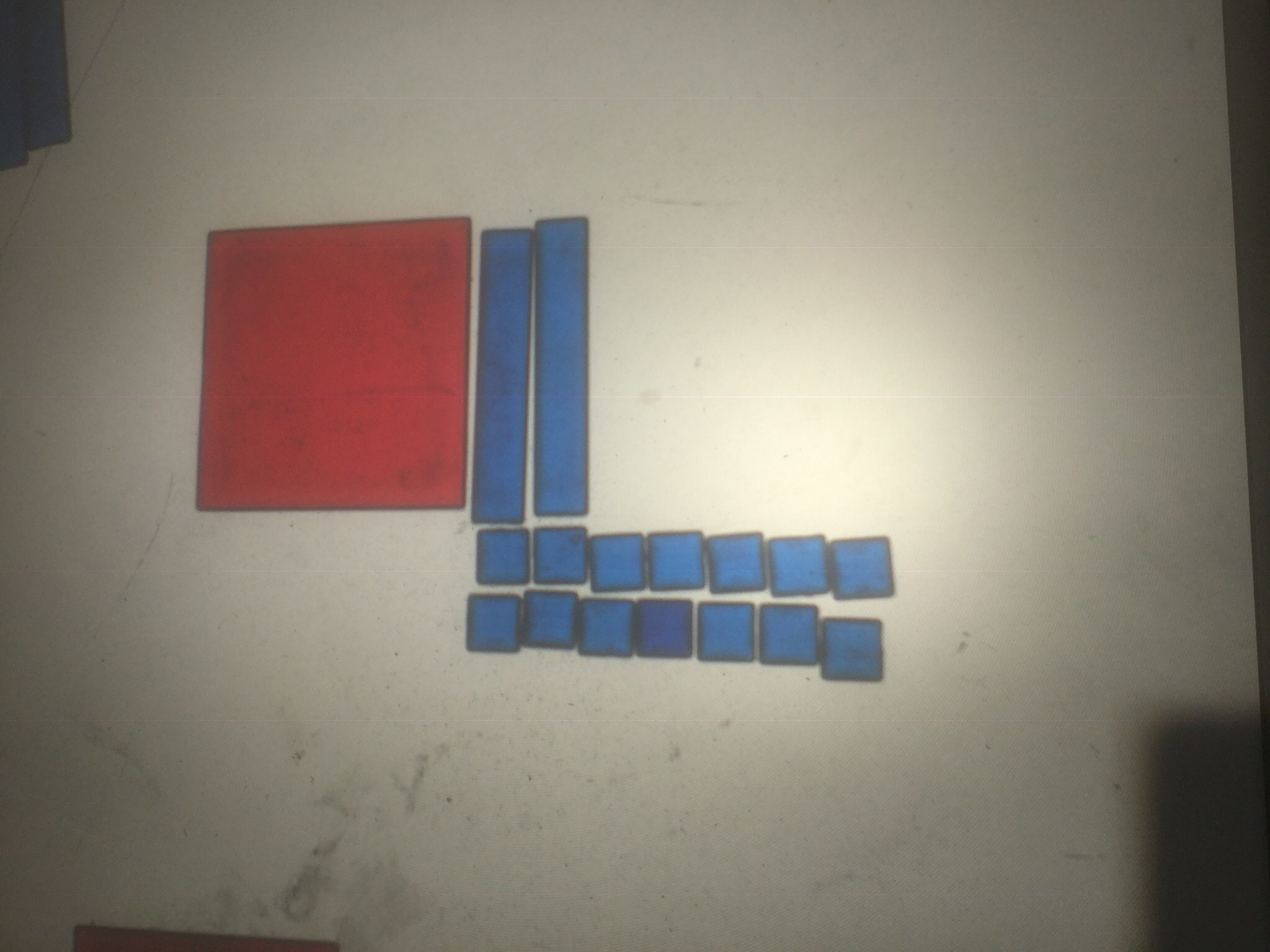
At this point the rectangle is not full, so I’ll add some zero pairs of xs. I know I need to put the positives so that they will multiply with the negatives to result in negatives in the bottom right corner.

My rectangle still isn’t full, and if I had arranged my squares 1×14 it would make another rectangle that wouldnt be complete. We know that this is an impossible question, but that we could easily make a rectangle out of the following, which simplifies to x^2-2x-8
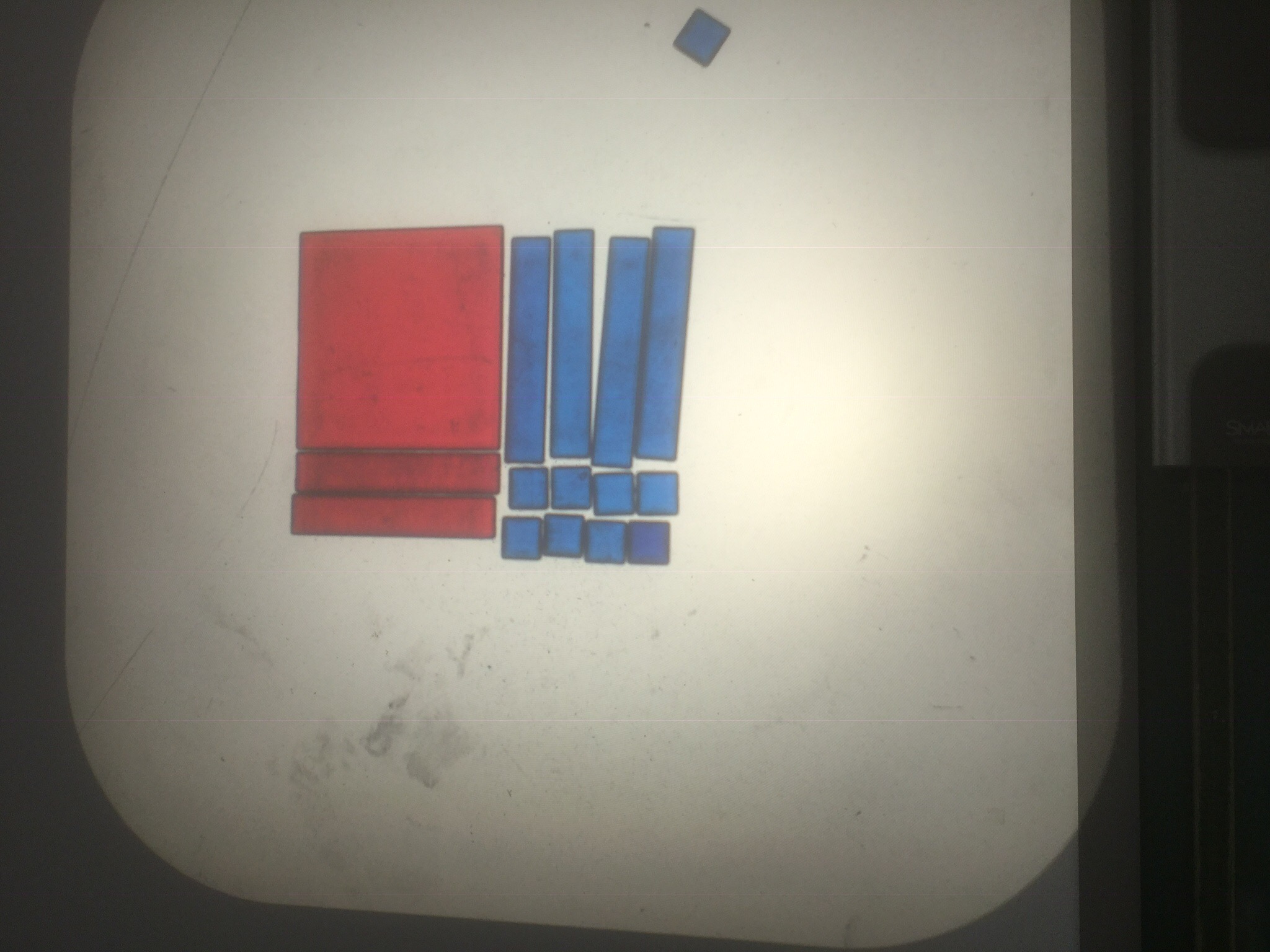
Or the following, which simplifies to x^2-5x-14.

After a lot of exploring we noticed something that is always true about the numbers in the rectangle and the numbers in the expression. We are looking for a way to form the constant term into a rectangle with dimensions that will add up to the x coefficient.
All the angles
Today grade 9s explored transversals (sécantes) and the angles created as the line cuts a pair of parallel lines.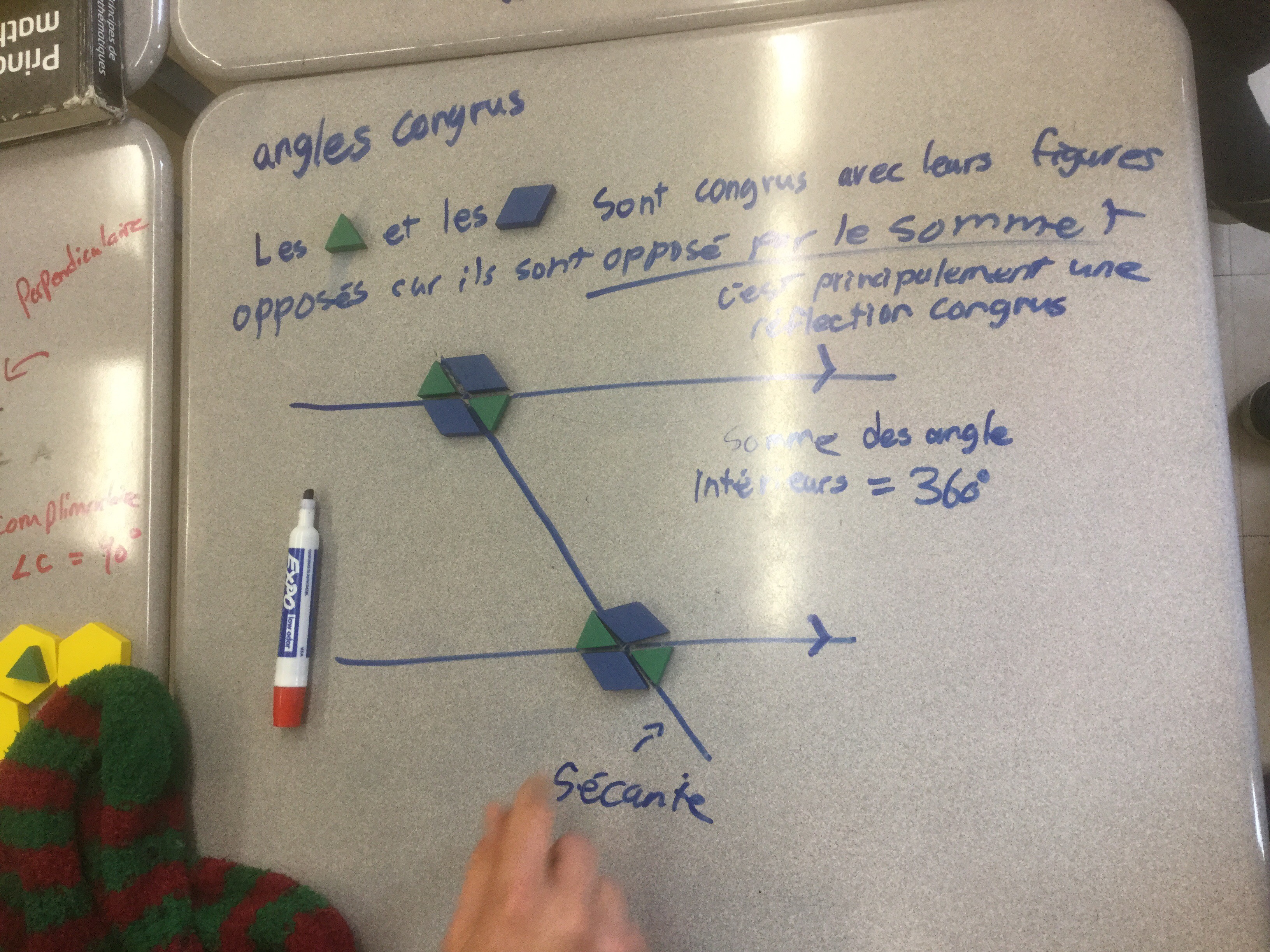
There are many congruent angles produced. Above, note how the green and blue are opposite each other for each x pattern? They are called opposite angles “les angles opposés par le sommet”
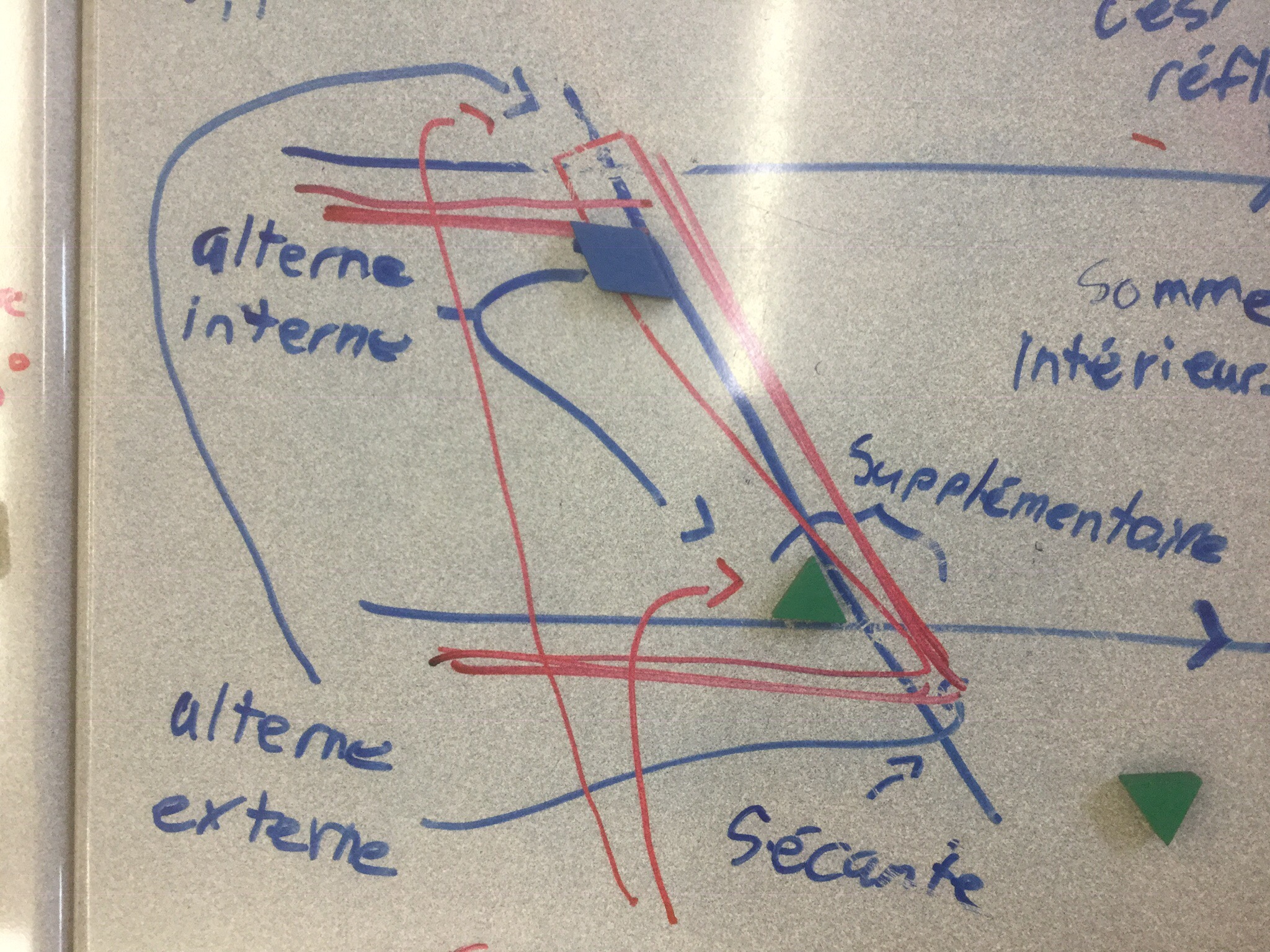
Here are “alternating internal angles” or alternes-internes that follow a z pattern.
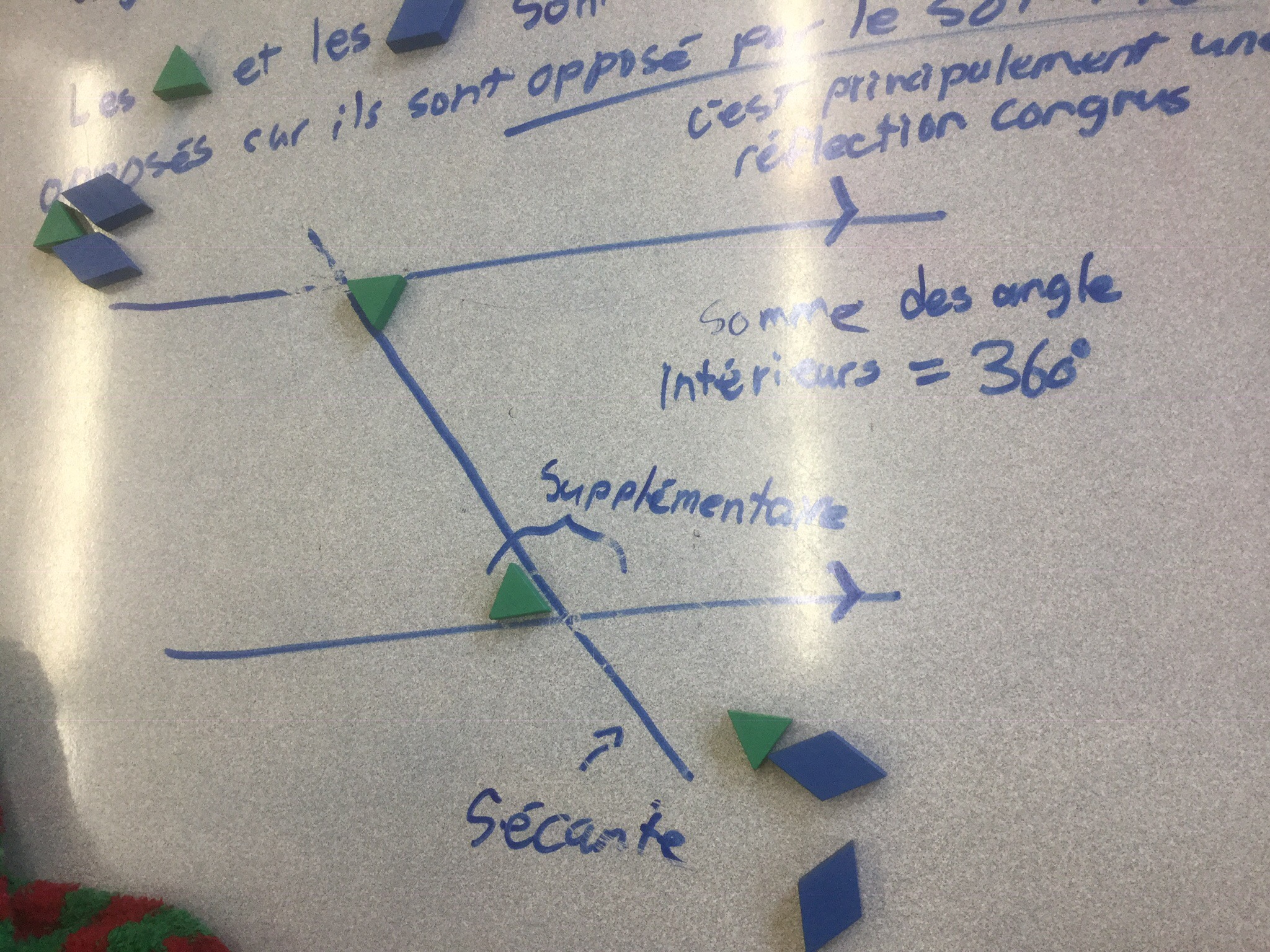
Here are corresponding angles (les angles corréspondantes) that follow an f pattern.

There are angles that are supplementary that are on the inside of a c pattern.
Celebration of Knowledge
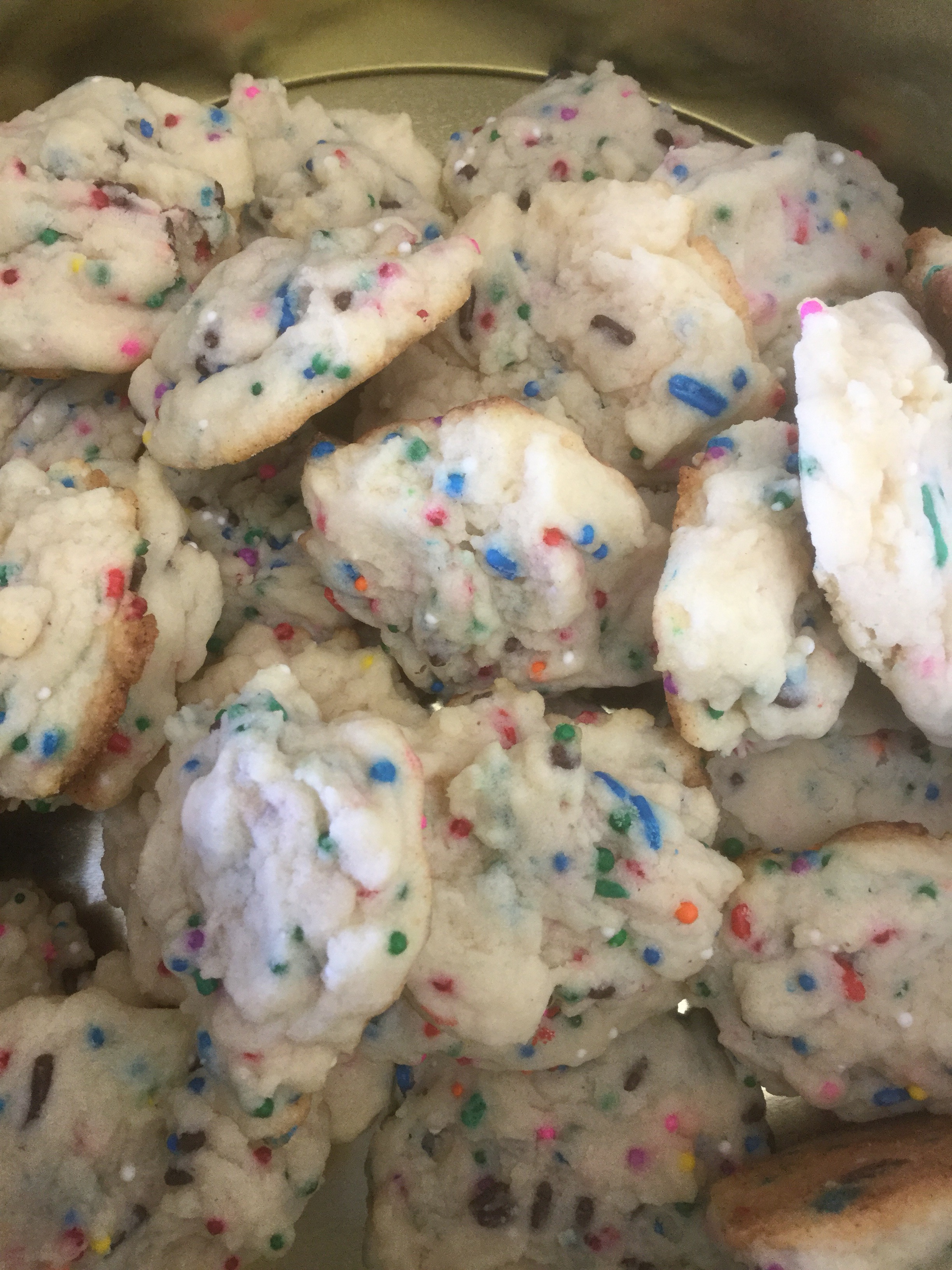
Grade 9s and 10s had summatives today. Everyone worked really hard, and we celebrated our knowledge and ate cookies too!
Monday’s adventures
Grade 10s carved a pumpkin this morning, the final decision was to carve pumpkin pi (so very mathy)
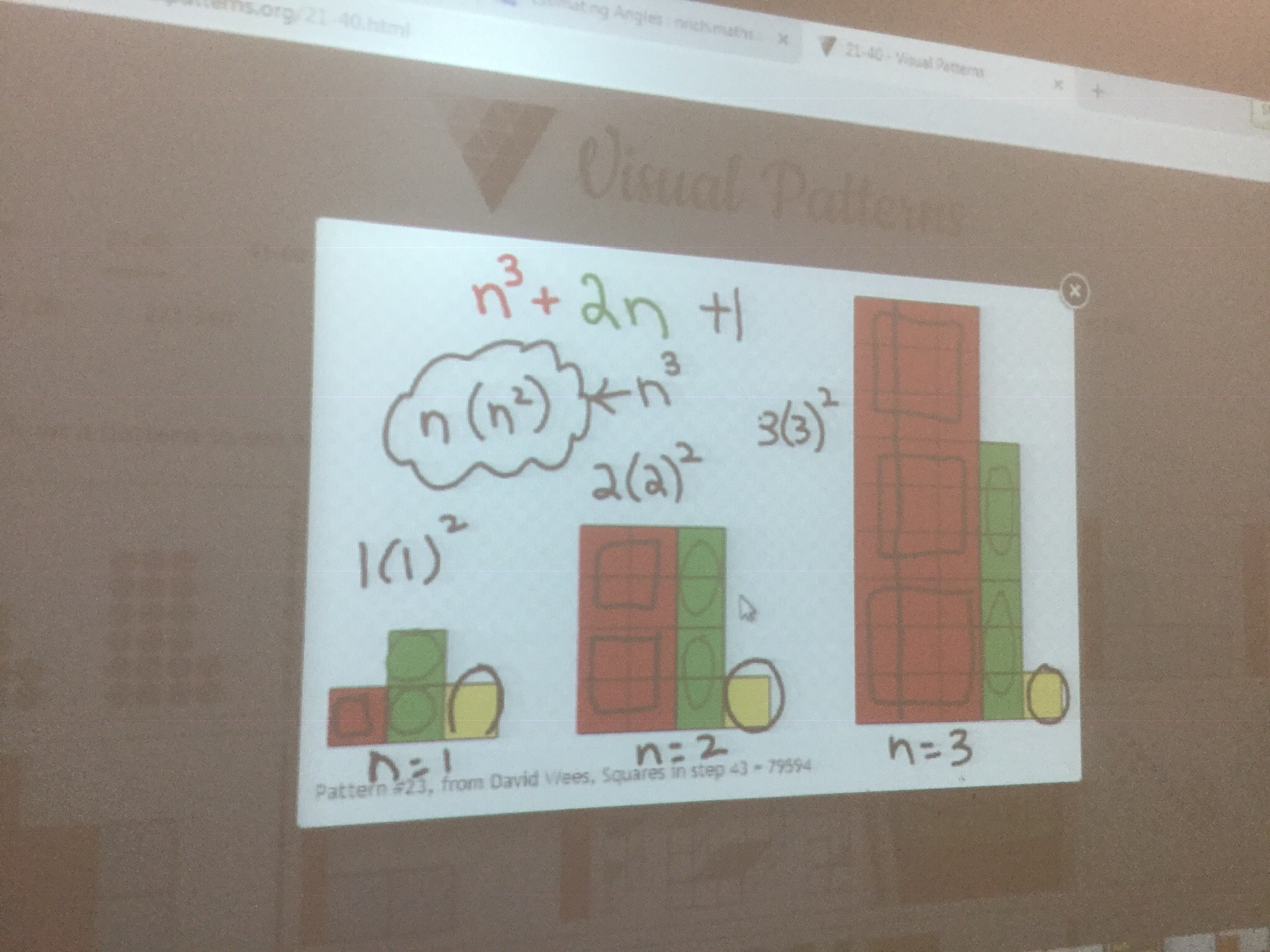
Grade 9s had a look at patterns. This is one that’s a bit challenging. It’s interesting to see how our skills can transfer to more complex patterns. The colours help a lot with this one.

We know the yellow is the same all the time which is the constant. The green we can see is 2 groups of “n”. The red is what is more complex.
We found squares of “n”. There is 1 square in the first, 2 squares of 2 in the second, and 3 squares of 3 in the third. We see there are n groups of n squared. n(n^2)=n^3 but we’ll talk about this more in a few weeks.
Another interesting pattern we examined is this one.
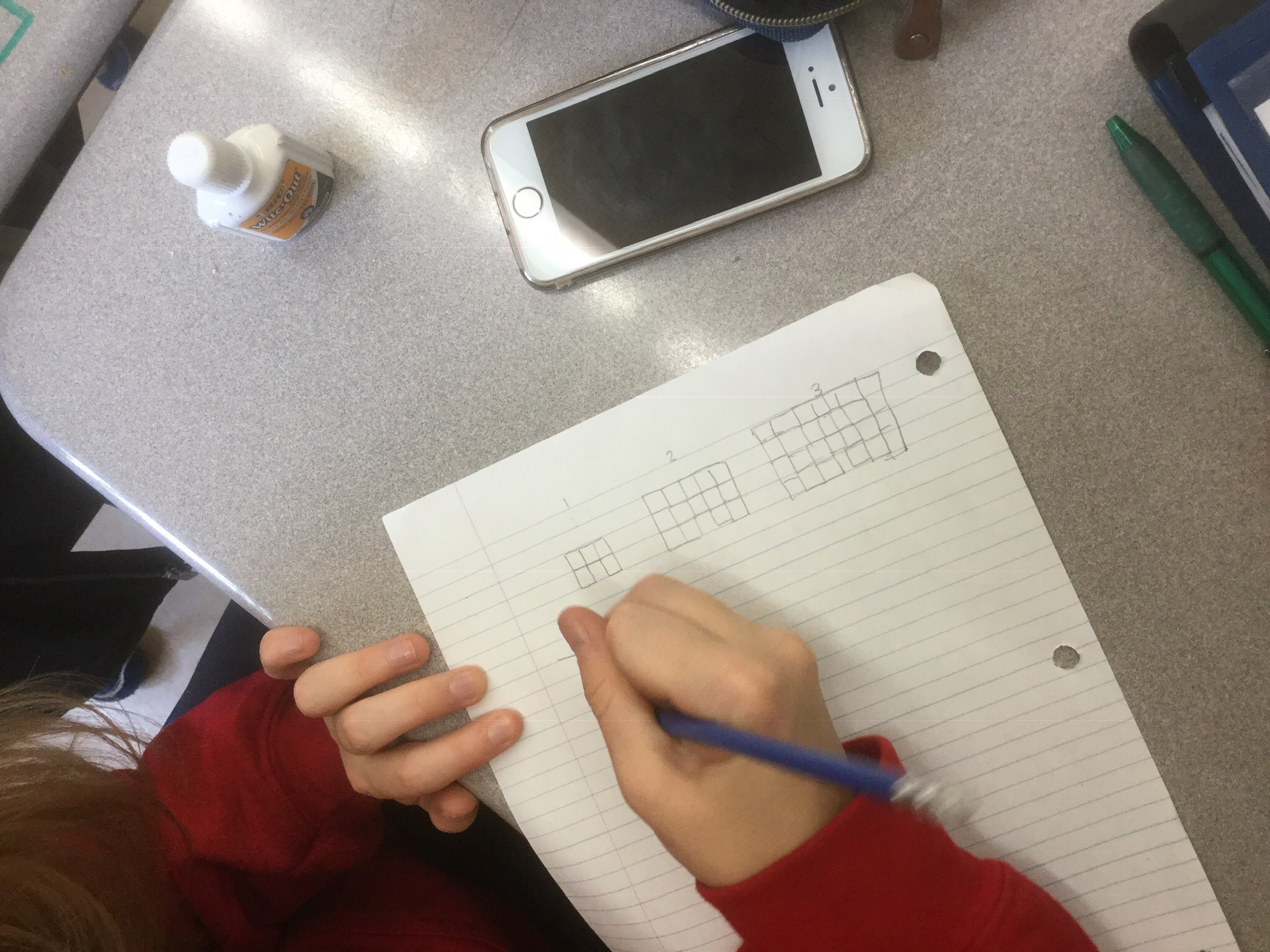
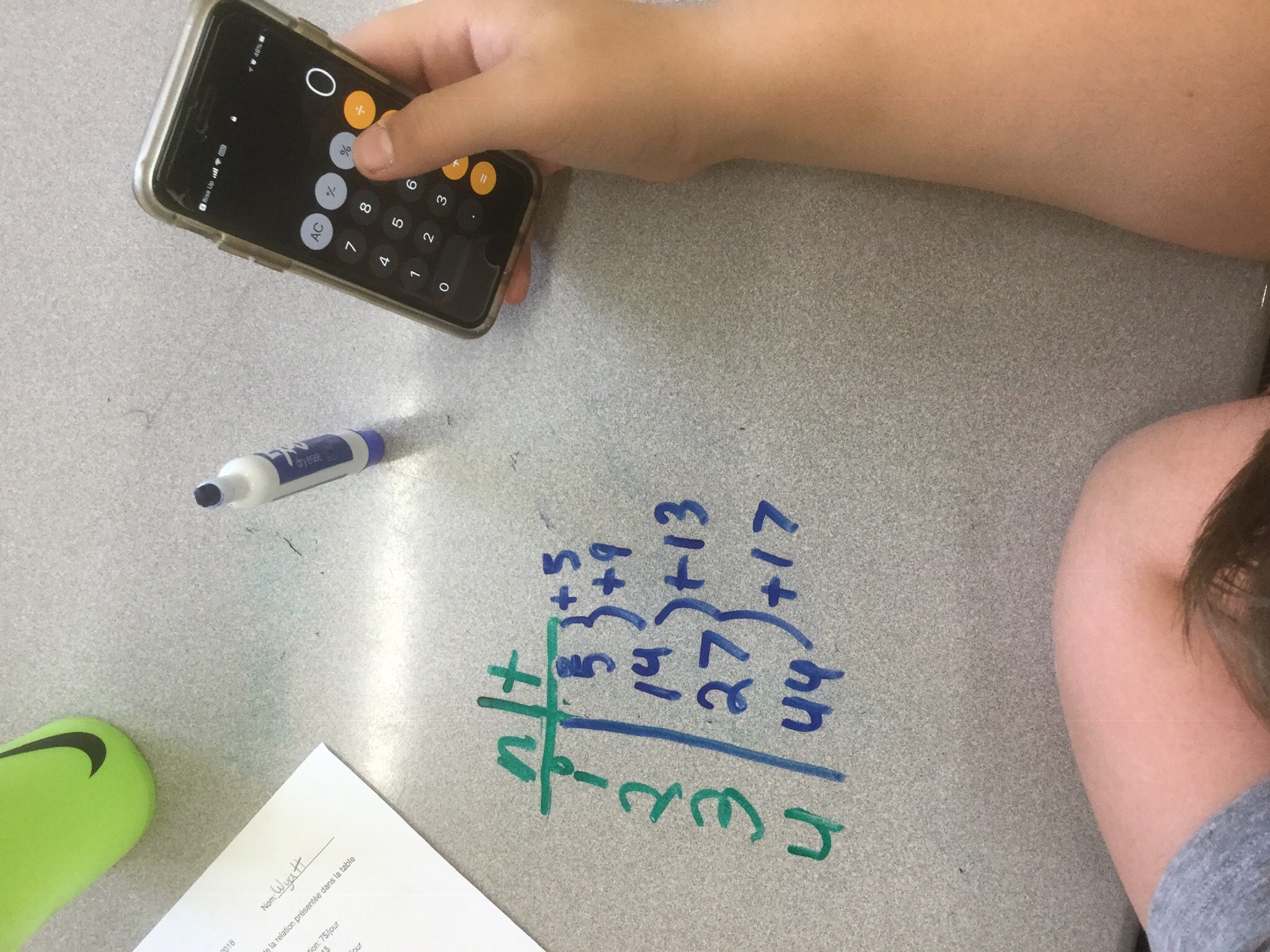
We used our representations…some explored tables…and saw how the dimensions changed for the rectangle.

Some made tables for the number of squares in the figures, and noticed the differences are not consistent. This means it is non linear. We later noticed that the differences increase by 4 each time.
Some examined the shape in visual groupings and looked for patterns there. Note the middle number in the set is equal to “n”.

We can look for groups of “n” here too. We can find squares of “n” and then rows/columns of “n” also.

Here’s another we looked at. We are working on being flexible with the way we look at a question. We are looking at the number of white squares in each figure. This representation is 4n+4.
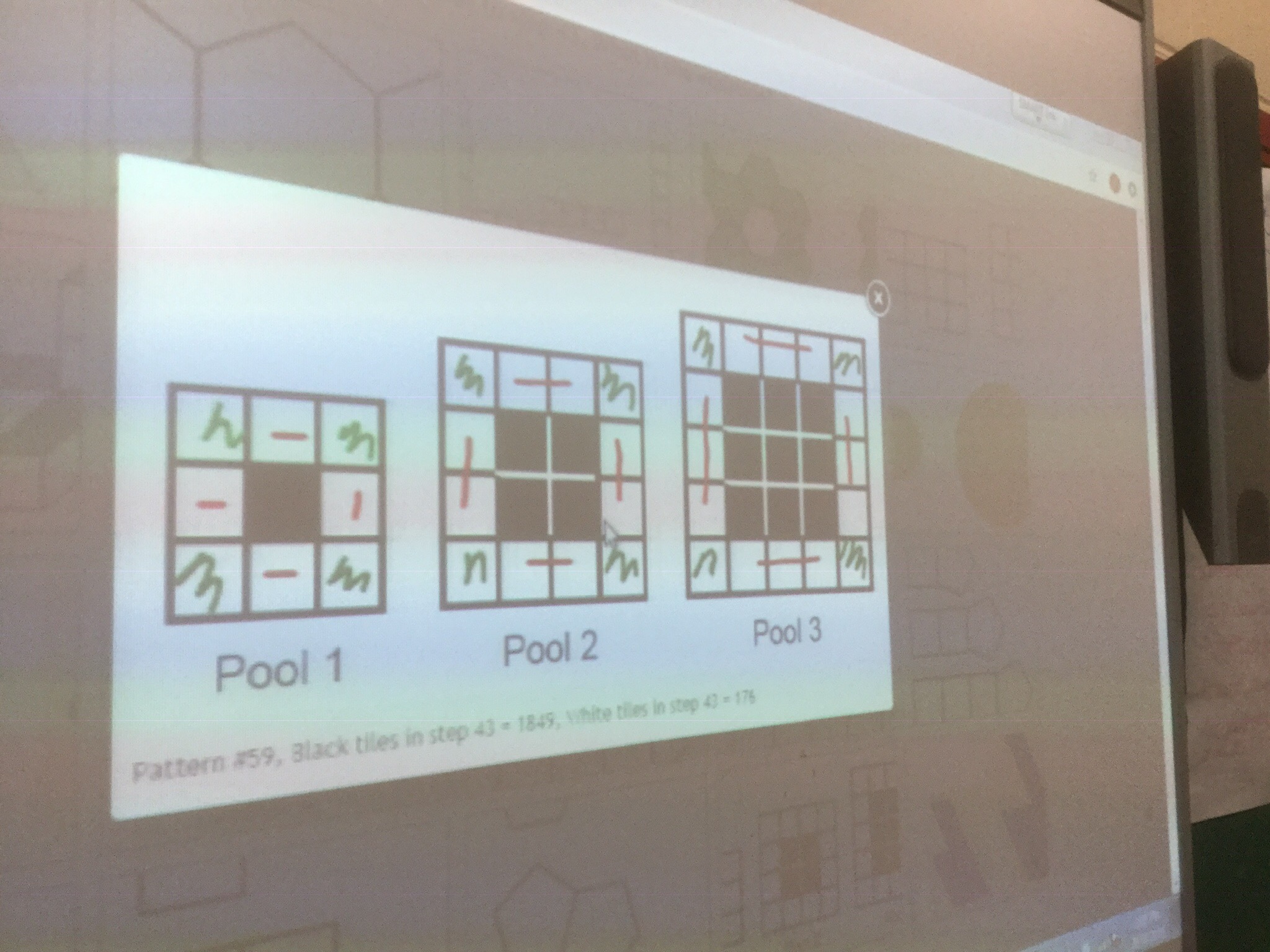
We can also see 4 groups of (n+1).
Or we can see 2 groups of (n+2) and 2 groups of n.
Here we see a large square minus a small square.
We’ll see later how all of these expressions are actually equivalent.
“Show me the math”
It’s amazing what math grade 9s can show with a bucket of polygon tiles and the instruction to “show me the math”
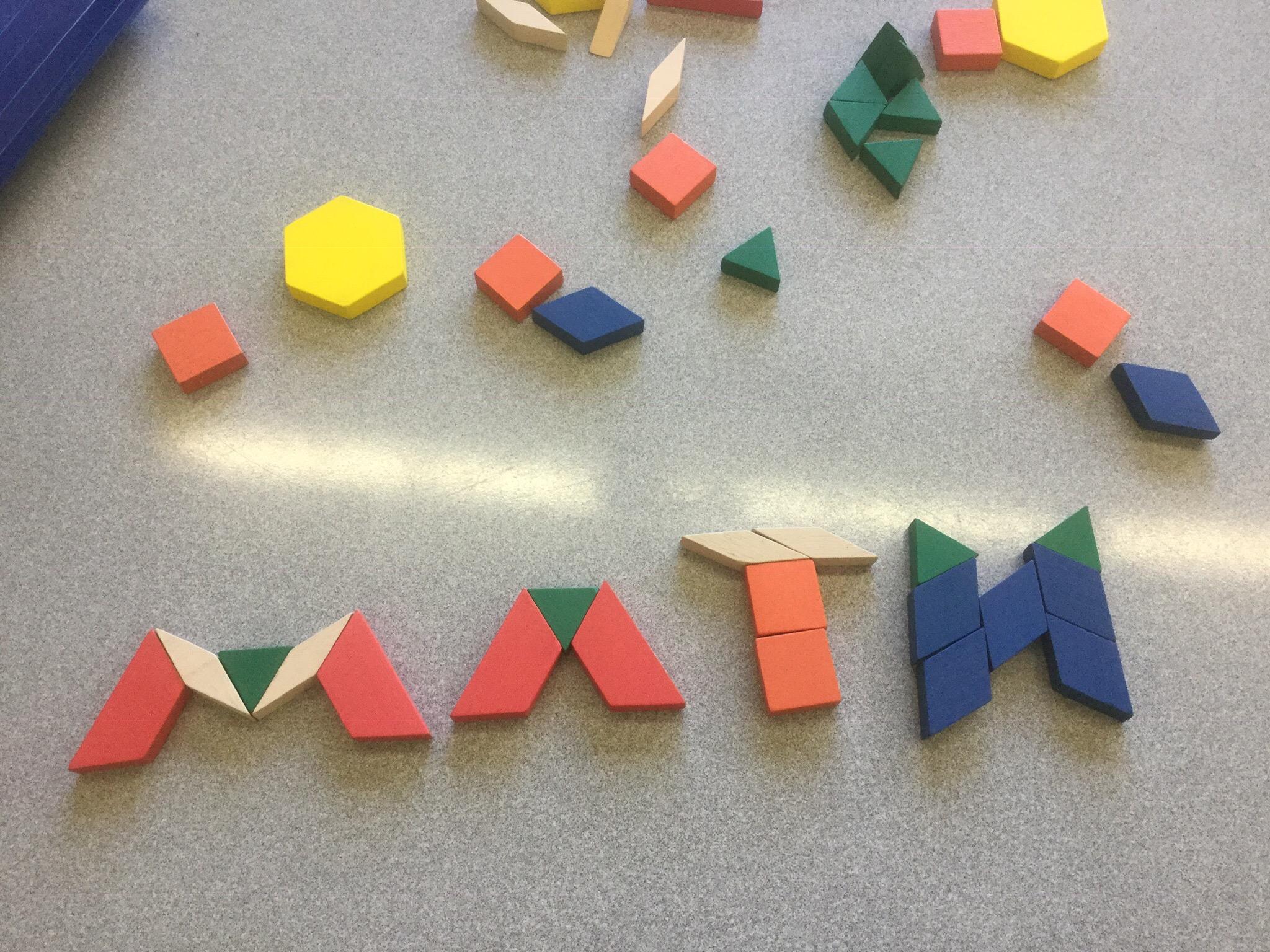
We saw rotational symmetry
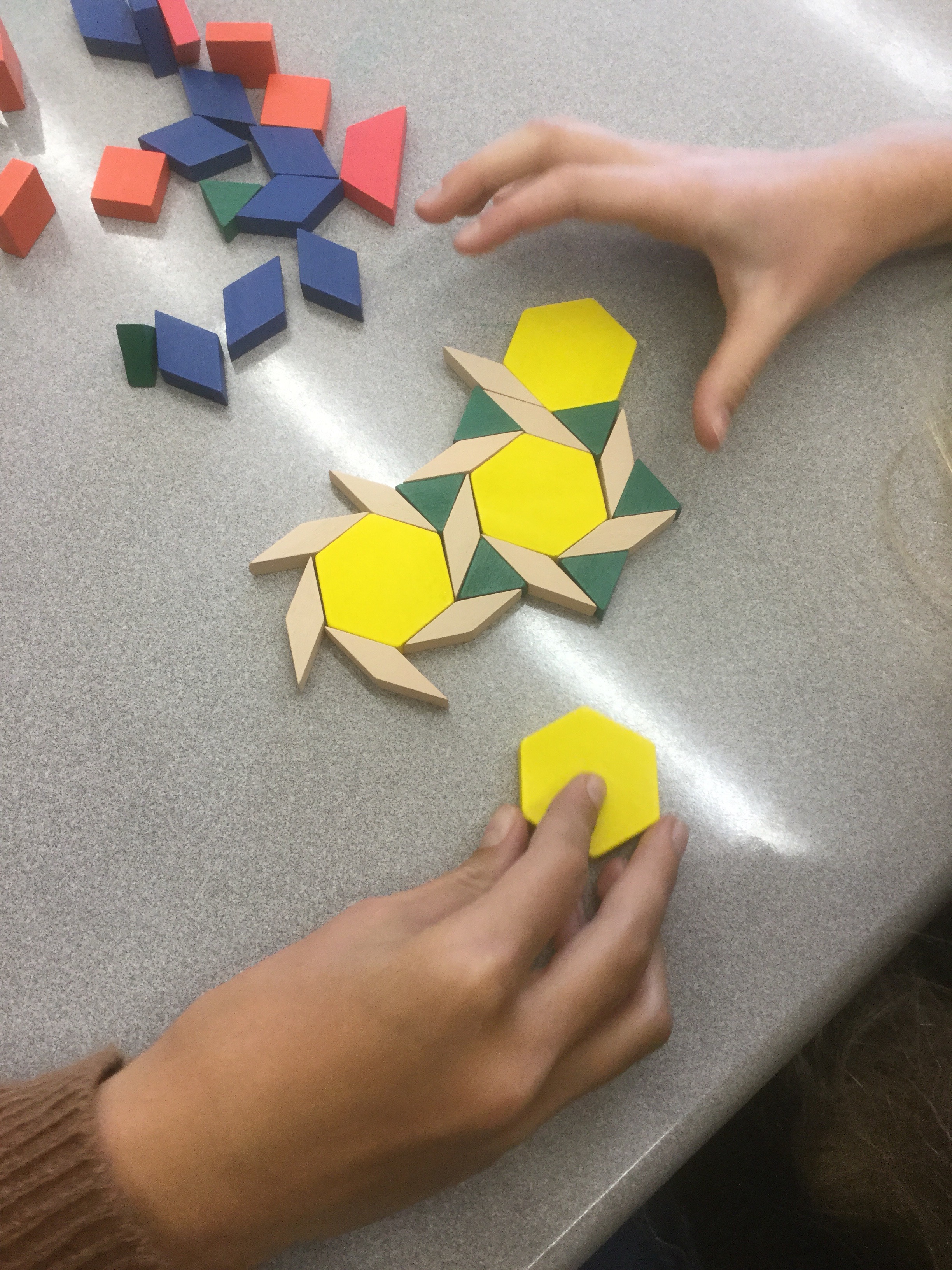
Parallel lines, and symmetry about an axis.

We saw hexagonal based prisms…

Proved that hexagons can be made up of trapezoids (red) rhombuses(blue) or equilateral triangles (green)

Some showed fractions….that 2 rhombuses are 2/3 of a hexagon….but so are a trapezoid and a triangle (which happen to represent 1/2 and 1/6 respectively) so we know that 1/2+1/6=2/3

We saw that honeycomb pattern made up of hexagons…and trapezoid combos

And when we ran out of those they were made of rhombuses and triangles too

Some made pictures…here’s a very symmetrical owl

Some patterns filled the space perfectly
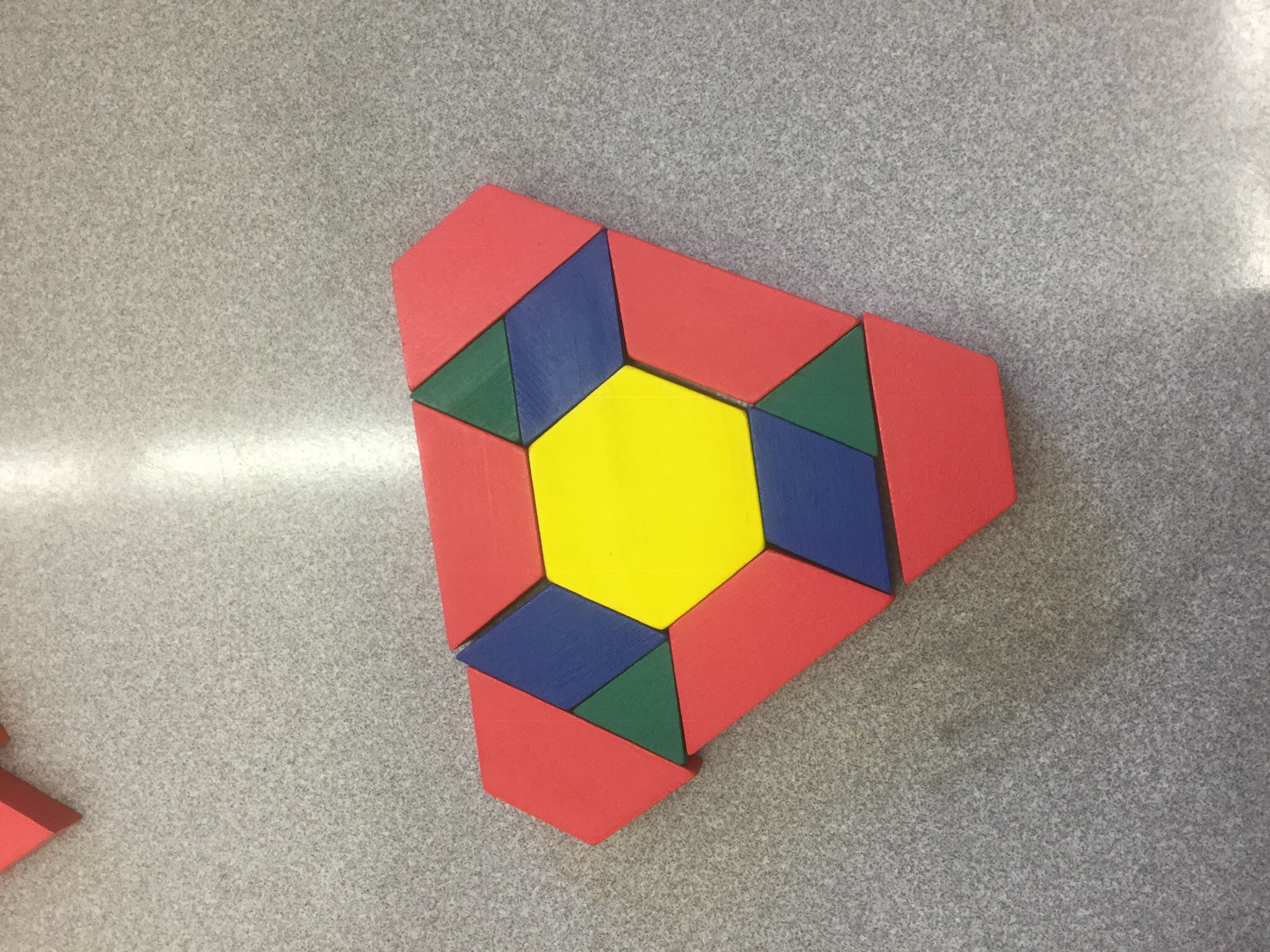
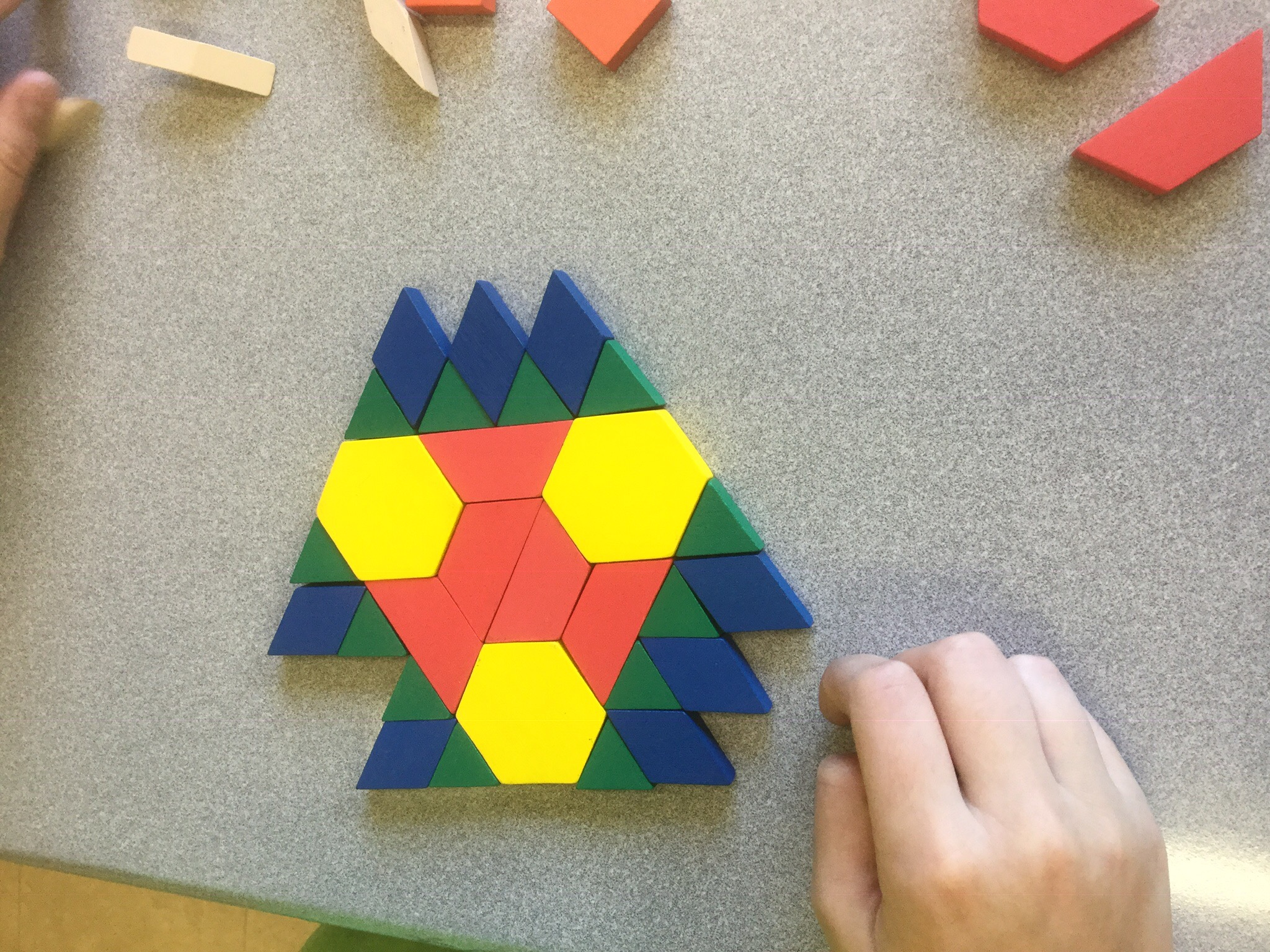
Others were showing patterns in rings.

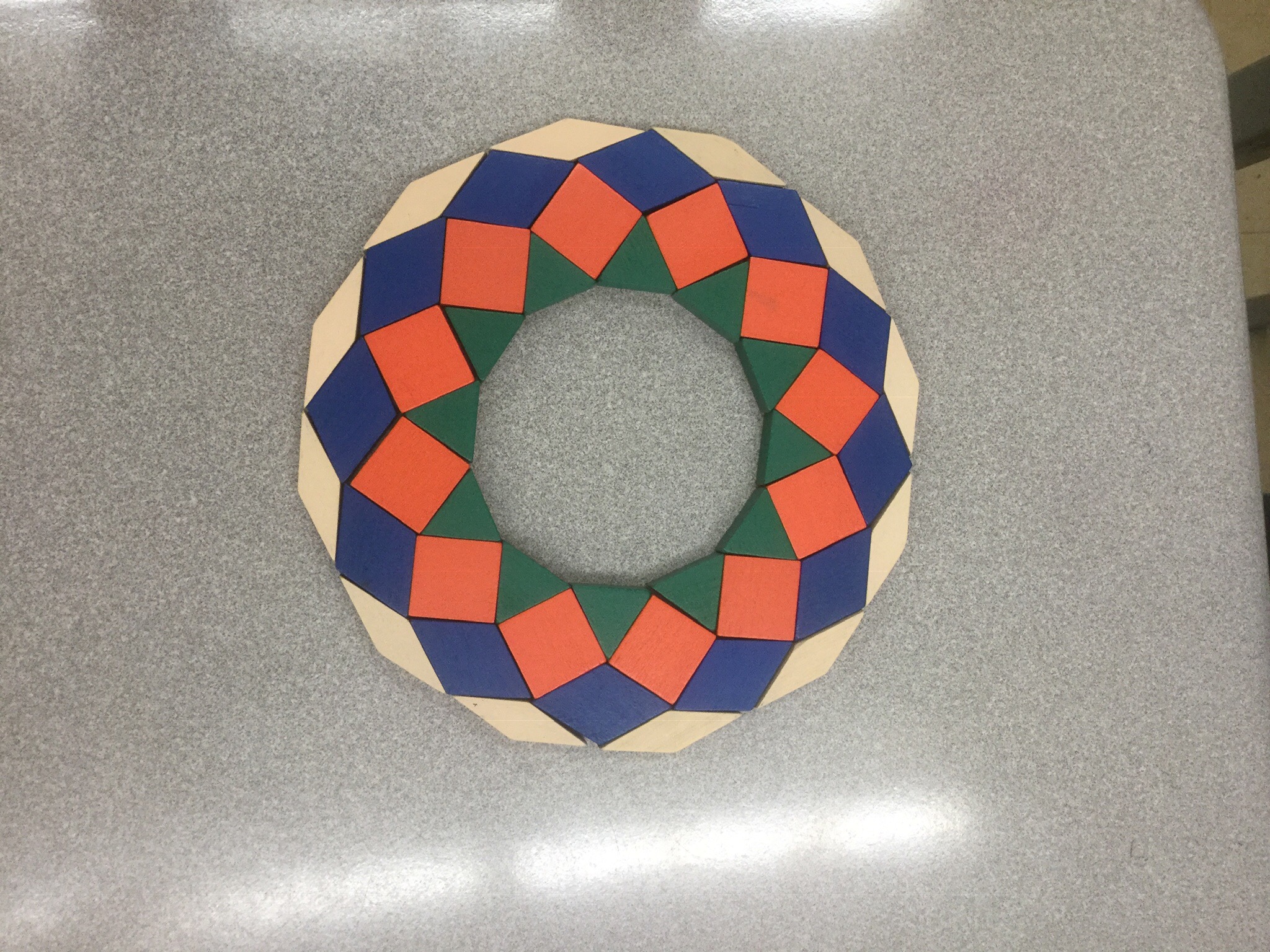
And some patterns looked like they were missing something. This one below caused some concern. Many people wanted to fill the gap beside the square. We wondered if a thin rhombus would fit.

We examined the rhombuses to see if we could figure out about the angles inside. We saw that 12 of them fill the whole way around the central point. We know that a full circle is 360 degrees, so each acute angle is 360/12 which is 30 degrees.

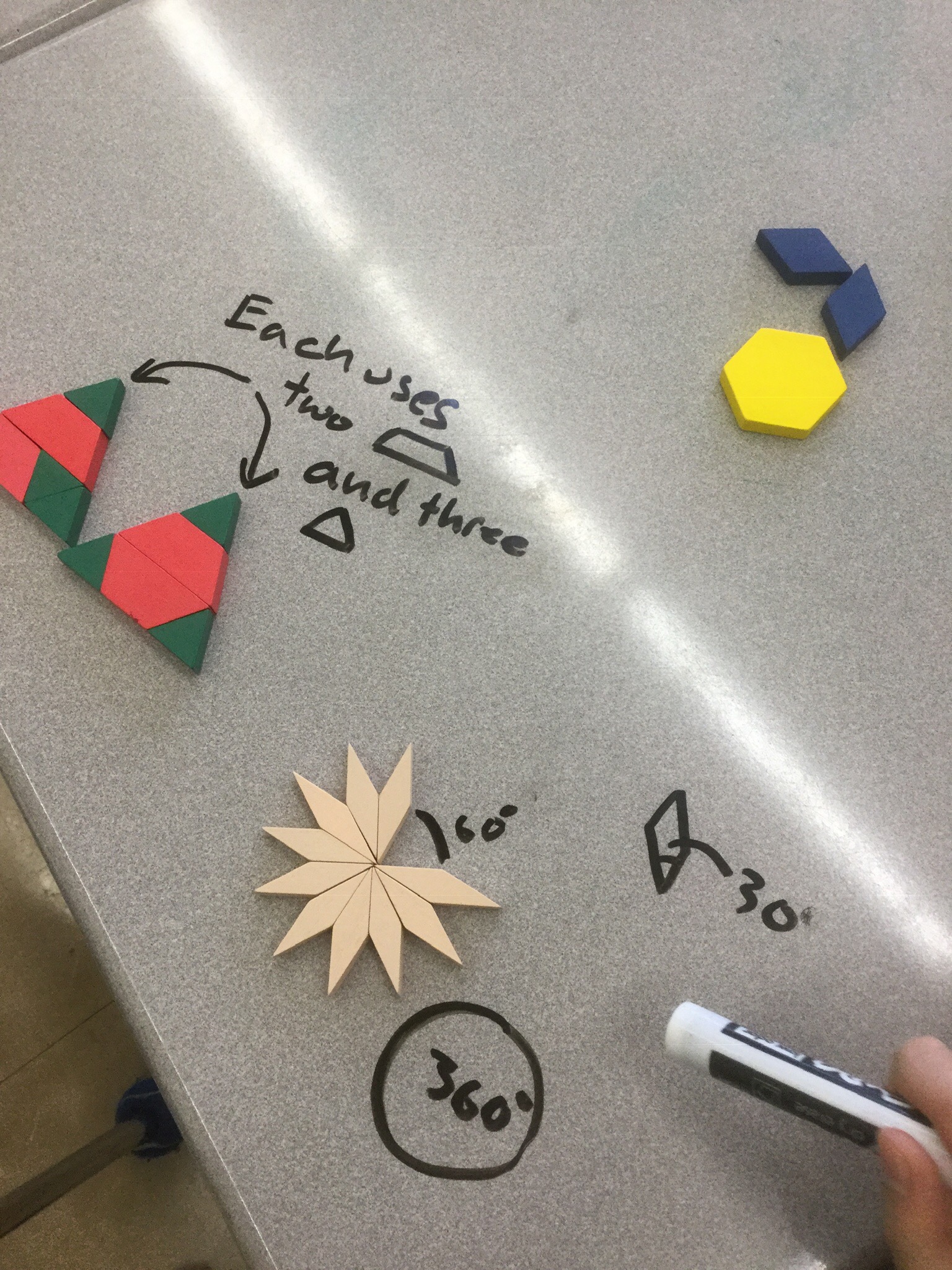
We know that a quadrilateral has 360 degrees, and if you remove two 30 degree angles, there are 300 degrees left for the other two congruent obtuse angles. Each obtuse angle must be 150 degrees.
We could go on and on about more angle discoveries…and we will be looking to do more this coming week.
Period B patterning
Period B got into patterning and polygons. We looked at how many degrees there are in a triangle. If we add up all the angles….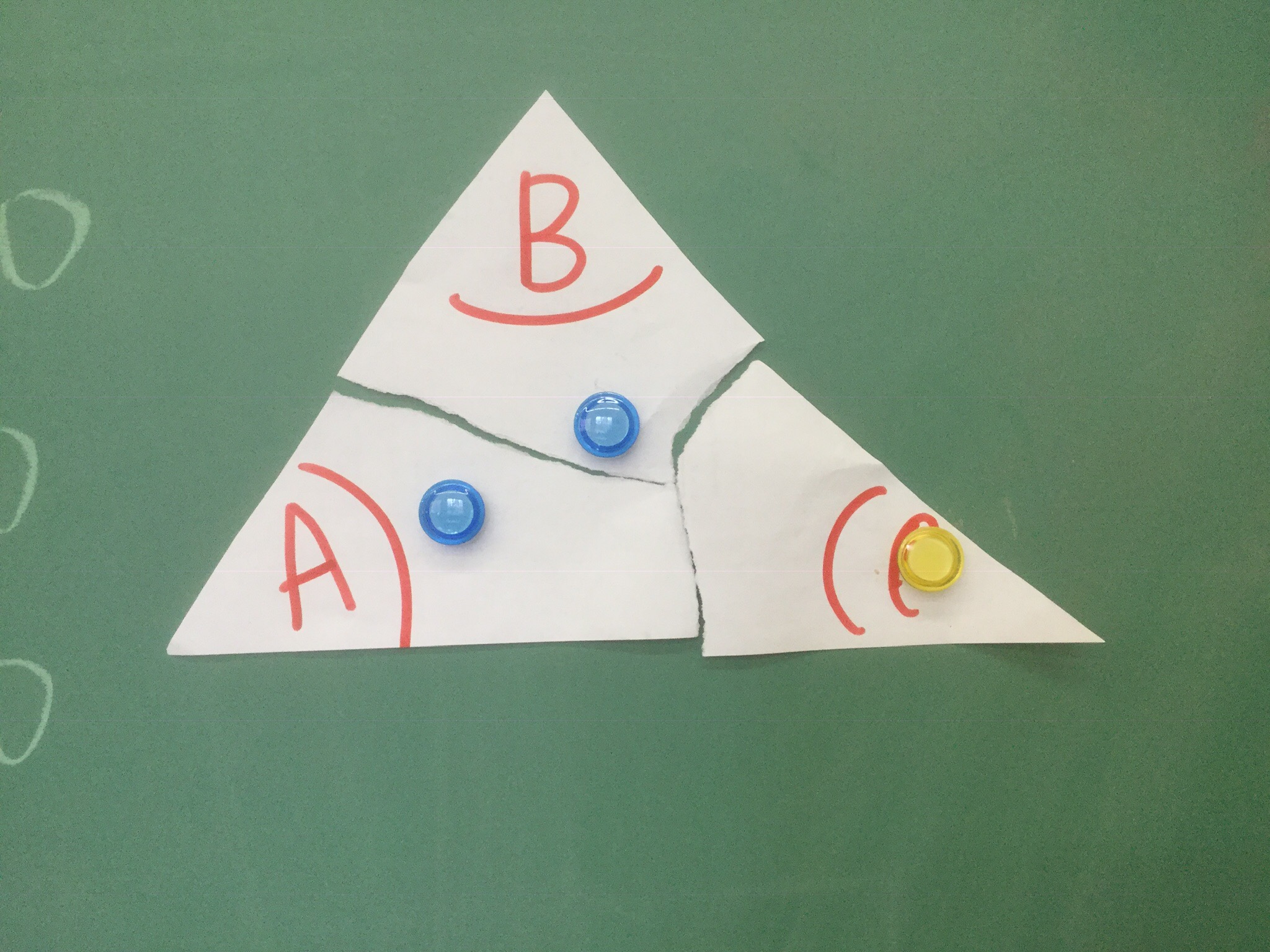
We get 180 degrees! The angles are supplementary, and make a straight line.

We looked at a lot of polygons. We drew diagonals from one point to the other corners.
We counted the number of triangles that we created too.
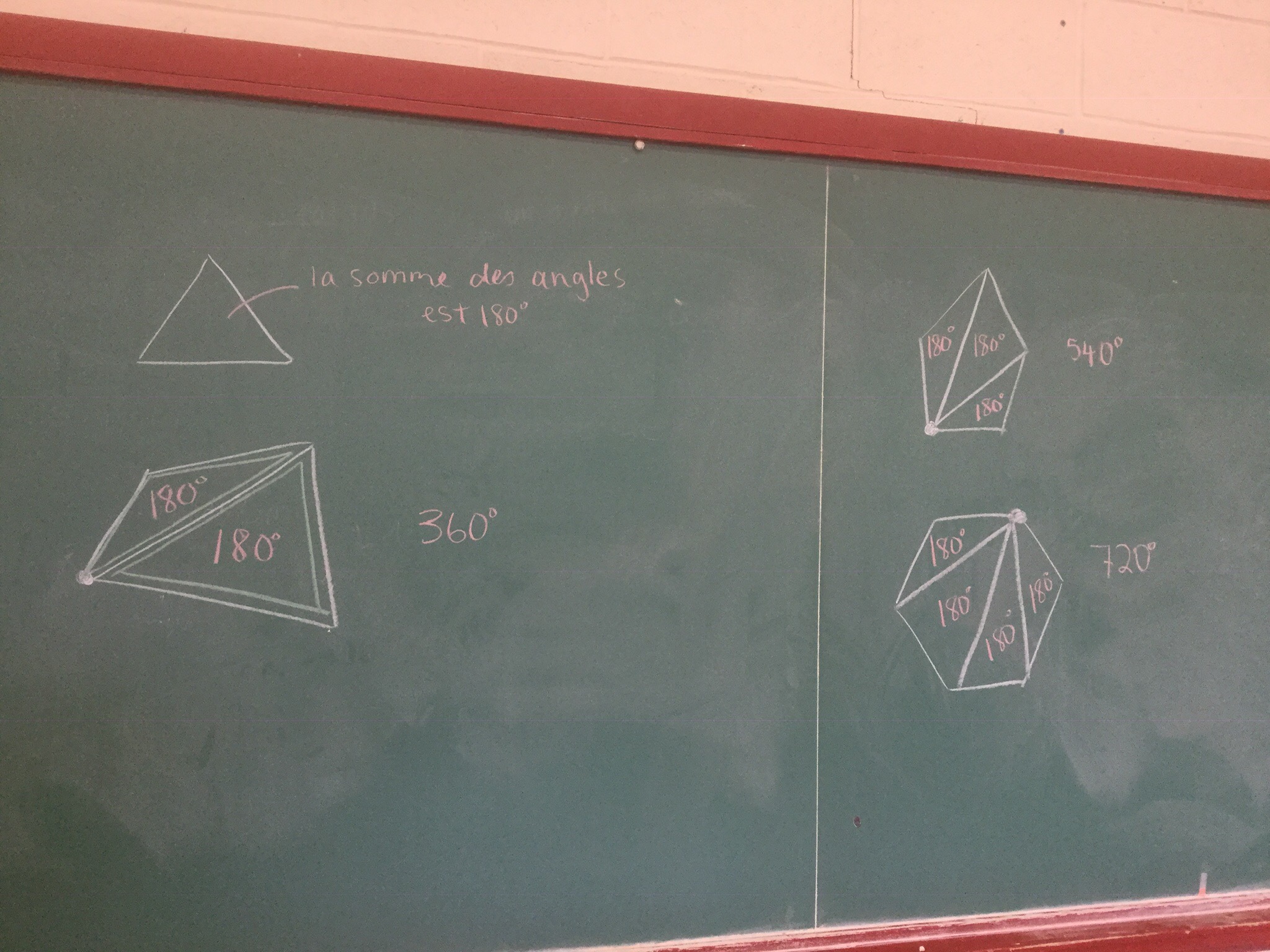
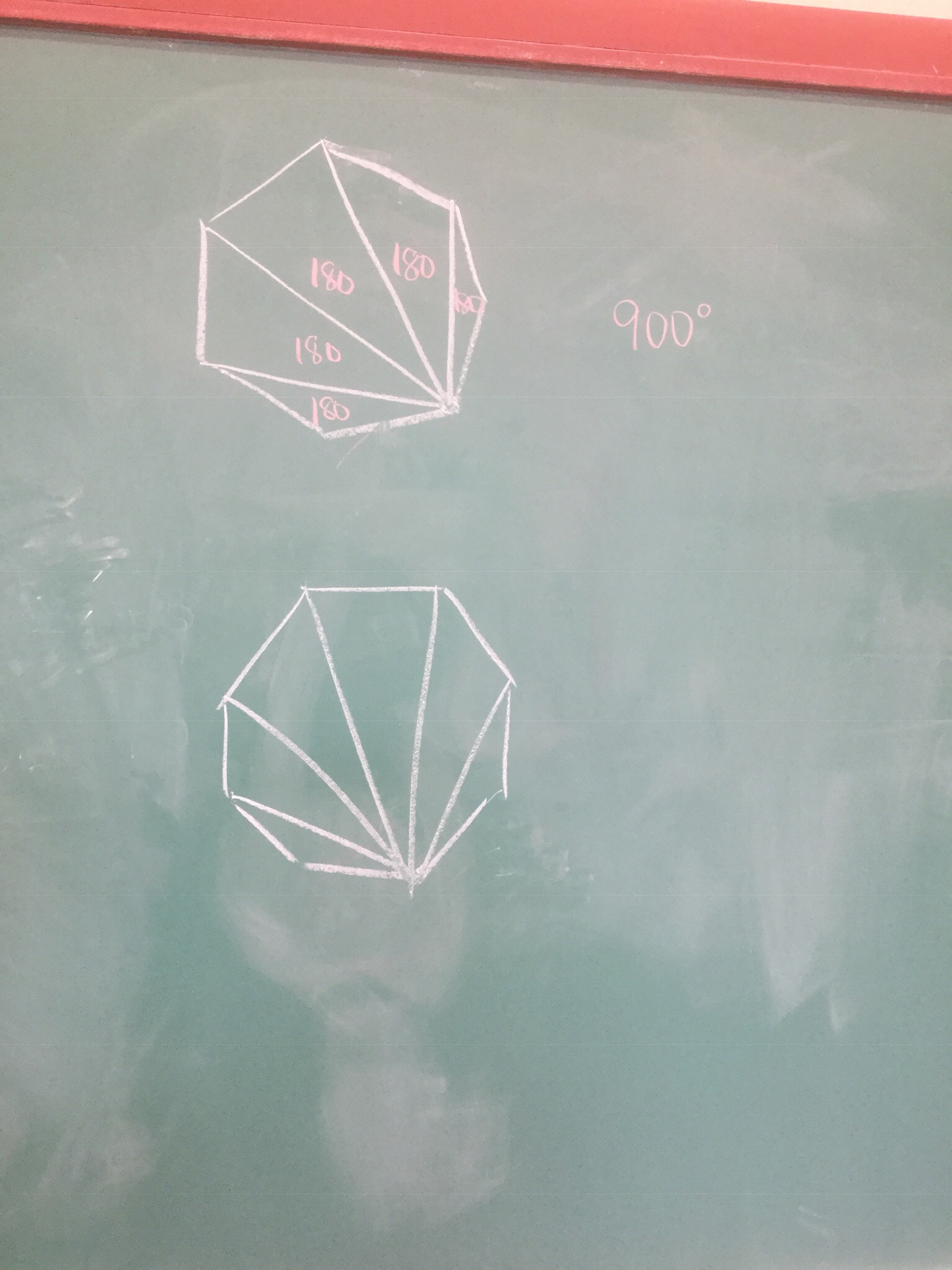
Here is the table for the number of diagonals, and the equation we made.

Here’s the table and equation for the number of triangles.

And then we did another table and equation for the number of degrees in the polygon.
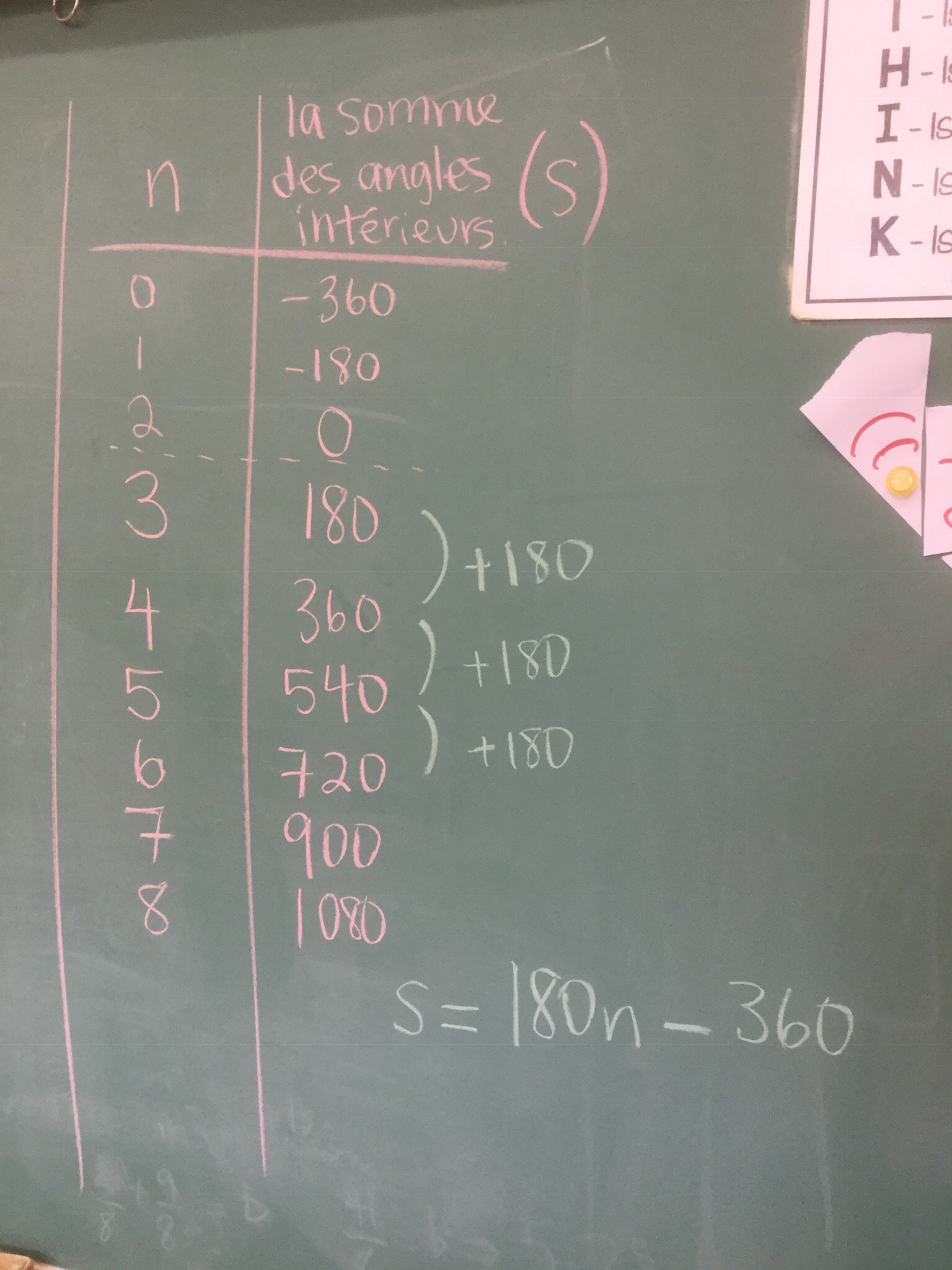
We then looked at if a shape had 100 sides, what the sum of the internal angles would be, and if it was regular (all congruent angles) what each angle would be.

We tried one with 1000 sides too!
As the shape gets more and more sides, the shape looks closer and closer to a circle. The internal angles get closer and closer to 180 degrees.
Practice EQAO
In grade 9 there is a provincial test at the end of the term. We are doing some practice today with multiple choice questions dealing with linear relationships.
We put the questions up on the wall, and had 4 minutes at each station to give them a try.


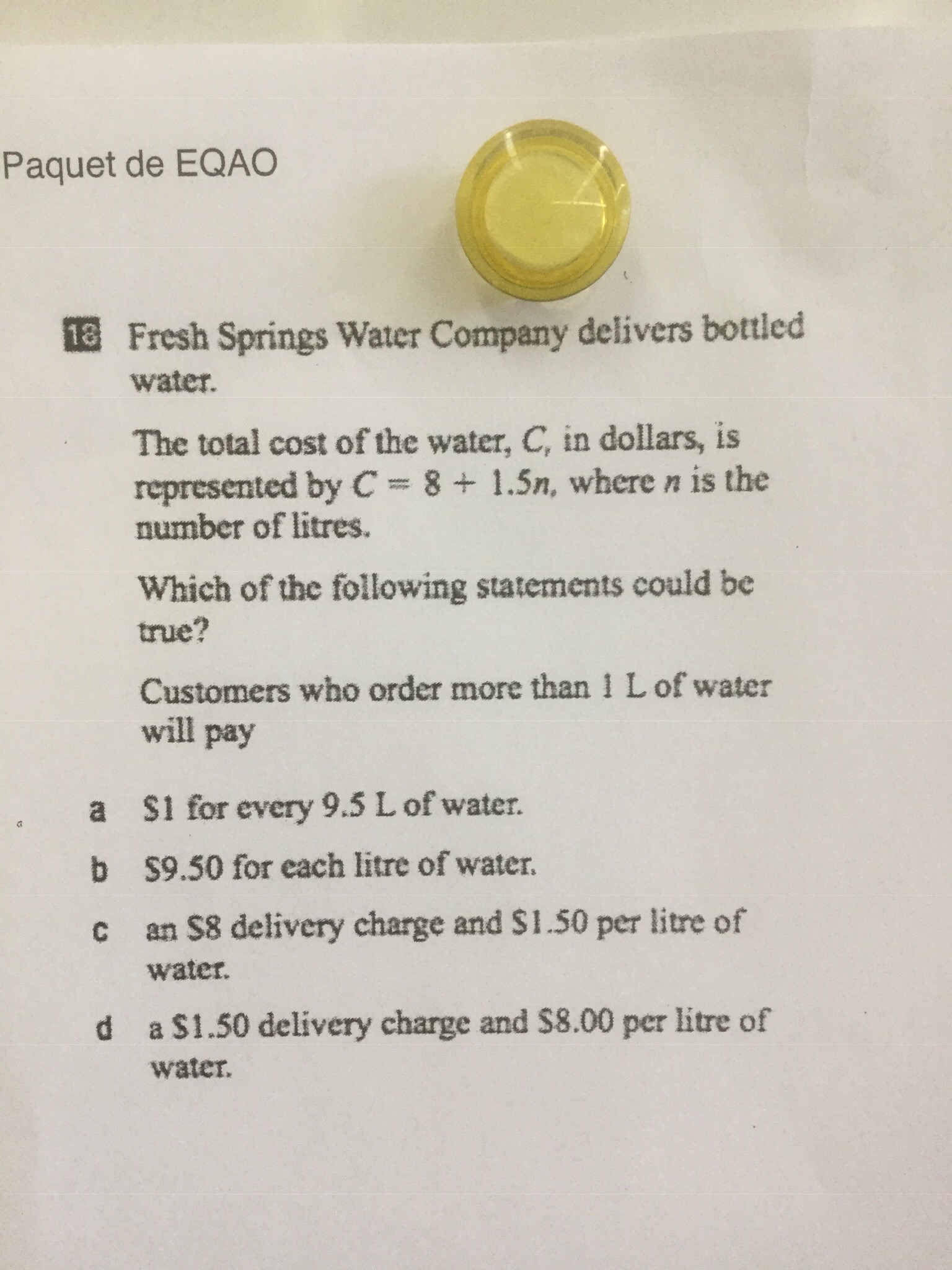


We are finding that sometimes we are missing key details when we read the questions. It’s important to read them a few times, and highlight key words.
With multiple choice questions we can work through them as we would normally approach a question, or we can also work backwards with the answers given. Sometimes we can eliminate ridiculous answers first and then think further.
Although we don’t HAVE to show our reasoning for multiple choice, it is often a really good way to verify our answer.

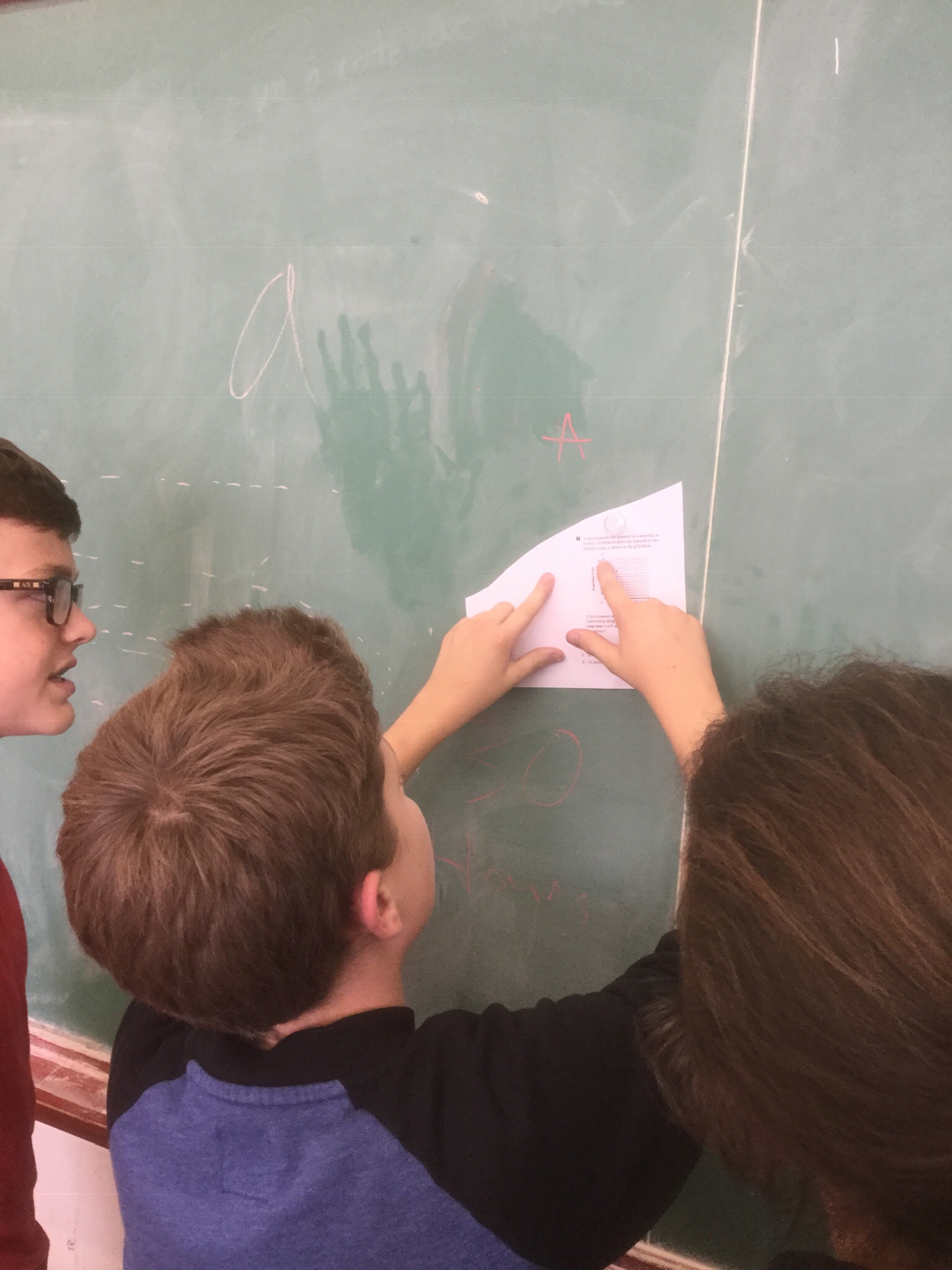
Sometimes it helps to draw on the question….to show where the line will go.
Past years of EQAO tests are available on their site. Note: we write the English version of EQAO.
 Ms. Bearse's Site